




Abstract
In Judo, one of the combat sports, athletes must endure high intensity, long-term training sessions that extend for long durations to achieve outstanding performances. Authentic leadership plays an essential role in this combat sport by supporting players who may experience slower growth and in enduring the rigorous and long-term training. Despite this leadership type being essential for fostering development and success in judo, few studies have been conducted on authentic leadership in the context of sports. This study investigated the relationship between judo coaches’ authentic leadership and judo athletes’ self-management and perceived performance; it also investigated the mediating effects of self-management on the relationship between authentic leadership and perceived performance. We used a convenience sampling method to recruit 274 Korean judo athletes. We conducted frequency analysis, confirmatory factor analysis, reliability analysis, correlation analysis, and structural equation modeling. The results showed that judo coaches’ authentic leadership had a significant effect on athletes’ self-management, but no significant effect on their perceived performance. Additionally, judo athletes’ self-management had a significant effect on perceived performance. Further, self-management had a mediating (complete) effect on the relationship between judo coaches’ authentic leadership and athletes’ perceived performance. Our results show that judo coaches’ authentic leadership does not directly affect athletes’ perceived performance, but has an indirect effect through the mediating effect of self-management. In other words, judo coaches’ authentic leadership can directly enhance athletes’ self-management and indirectly enhance athletes’ perceived performance, thereby suggesting that it is an important factor in athletes’ performance progress.
Introduction
Judo was first introduced as an official event at the 1964 Tokyo Olympics and has gained worldwide popularity over the last half century. 1 Countries from around the world compete to recruit excellent foreign coaches to reduce performance gaps with sports powerhouses; for individual events that originated in Asia, such as judo and taekwondo, Asian coaches from South Korea and Japan are increasingly preferred,2,3 because experienced coaches and their personal qualities play an important role in improving athlete performance in interpersonal sports such a judo.3,4 South Korea is recognized as a world-class judo powerhouse because it has won the third largest number of Olympic medals in judo, behind Japan and France, since judo's inclusion as an official Olympic event. 5 Therefore, in order to improve the leadership ability of judo coaches worldwide and the performance of judo players, it can be said that the process of confirming leadership, which is an index to measure the capabilities and qualities of Korean judo coaches who achieve excellent results worldwide, is meaningful.
Traditional leadership styles are largely one-way in nature:6,7 charismatic leadership, which relies on the leader's human charm; 8 transformational leadership, in which followers’ values, beliefs, and desires change through the leader's leadership; 9 and servant leadership, 10 a relatively recent style that focuses on building mutual trust by supporting and helping followers humanly, with a passive, one-way direction in which influence flows from the leader to the followers.
Judo is a combat sport in which athletes must endure high intensity, long-term, and extended training sessions for long durations to achieve an outstanding athletic performance. 11 In this context, authentic leadership may hold greater significance than other leadership styles, such as transformational leadership. In transformational leadership, the leader helps athletes pursue continuous improvement to achieve their goals, as well as promotes followership among athletes; this is operationalized through promoting an organic organizational structure and in a relatively short period.9,12,13 Meanwhile, authentic leaders patiently wait for, support, and guide athletes over an extended period. Specifically, they act as mentors and caregivers, nurturing authentic players by fostering a relationship of trust through positive role modeling, which in turn is characterized by qualities such as honesty, integrity, reliability, transparency, and consistency.12,14–17 These characteristics allow for authentic leaders to play a more crucial role (vs. other leadership styles) in the lives and performance of judo athletes, especially high-performance ones.
In the past, judo coach's coercive and authoritative one-way technology instructions were the norm in Korea. 11 However, recently, the Generation Z judo players, born between the mid-1990s and the early 2010s, are independent and passionate.11,18 Therefore, in order to teach young judo players, away from the authoritative attitude of the coaches of the past, authentic leadership is required. Specifically, it is important to implement the idea that the coach and player are on an equal footing and communicate with each other, with the coach considering the player's opinion and condition and waiting for them to solve any problems on their own. 19 In order to become a good coach, it is necessary to grasp the changes and trends of the times, understand what players want and expect, and provide guidance through interactive communication. 12
With the above in mind, in this study, we focused on authentic leadership, which refers to the way coaches’ leadership allows players to actively develop leadership and contributes to authenticity between players and coaches. In other words, coaches and players communicate interactively and share their visions and goals for the game.
Theoretical background
Authentic leadership
Authentic leadership comprises leadership that is consistent with the leader's inner self, that is, leadership that seeks authenticity. 13 Authentic leaders recognize both their strengths and weaknesses, convey consistency between the two, and strive to integrate members’ strengths to nurture them into becoming authentic leaders without relying solely on the individual leader's leadership. 20 In other words, authentic leadership is a behavioral pattern that promotes greater self-awareness and internalized moral perspectives, balanced information processing, and relational transparency in leaders who work with members based on their positive self-development. 19 In this study, authentic leadership consisted of three sub-factors: human communication, balanced coaching, and sincere attitude. Human communication refers to personal relationships other than training, while in balanced coaching the athlete's opinion is considered. In other words, it refers to an equitable guidance method including objective behavior that respects the athlete's opinion. 16 Finally, sincere attitude refers to one's own beliefs, character, and ethical behavior as an educator. 21 In summary, authentic leaders inspire members through leading by example, incorporating the principles they realized through self-reflection, and thereby building trust through behavioral integrity to help everyone naturally accept a common purpose. 16
Previous studies on authentic leadership have primarily focused on performance in the business field, such as the follower effect, leader effect, and organizational effect. 22 More recently, the sports field has begun to conduct studies on authentic leadership,23–25 such as a study analyzing relationship aspects between coaches and athletes, including coaches’ authentic leadership and the quality of relationships, trust in coaches, and coach–athlete exchange relationships; a study analyzing psychological aspects, such as motivational climate, resilience, psychological happiness, and psychological well-being; and a study analyzing outcome aspects such as team performance and perceived performance. A common feature of these previous studies is that authentic leadership has been found to induce a positive effect on organizations and their members, and to focus the behavior of the organizations’ members toward achieving goals. This study aimed to investigate causality between the antecedent variable, judo coaches’ authentic leadership, and certain psychological aspects in athletes.
Self-management
We focused on self-management, which comprises actions that athletes employ to control, regulate, and manage themselves in an effort to maintain and change their own behaviors to achieve successful sports performance. 26 For judo athletes, self-management is also an essential element in goal achievement, and includes body management, such as weight control and injury prevention; interpersonal management in sports clubs and daily lives; and lifestyle and training management, such as maintaining a well-regulated, planned lifestyle with individual learning and training. 27 Self-management is the driving force that shapes an individual's life; it helps one modify certain behaviors that one wishes to control or change, as well as develop a sense of responsibility and autonomy regarding behavior. 28 Judo is a weight-classified sport in which competitors try to dominate their opponents by throwing, pushing, choking, and twisting them. Given two people with similar builds, for one to dominate the other requires greater strength, speed, and technical ability. Therefore, it is essential that judo athletes practice body management through regimens for weight control and sufficient sleep, practice training management by working to gain greater strength and improve techniques, and practice interpersonal management by learning others’ effective techniques. These self-management behaviors have a positive effect on athletes’ performance because they facilitate emotional stability during sports competitions.29,30
Previous studies on self-management have confirmed that it is affected by coaches’ leadership, which includes charismatic leadership, transformational leadership, and servant leadership.31,32 In addition, studies have shown that self-management positively affects athletes’ confidence, exercise flow, sports coping strategies, and sports performance.33,34 Self-management constitutes individual athletes’ internal, external, and environmental factors; it also encompasses psychological and behavioral strategies that help individuals become well-versed in the physical and mental factors that will facilitate goal achievement. Therefore, self-management is a major factor in performance. 28
Perceived performance
This study also focused on athletes’ perceived performance in terms of their outcomes. Performance is the level of proficiency expressed through an athlete's physical strength, tactics, psychology, and competitive techniques. 35 The purpose of professional sports is to win competitions, so athletes must have athletic ability, physical strength, psychological skills, and crisis management skills. 36 Moreover, an athlete's performance is the result of complex and organic interactions among various factors, including physical performance and psychological abilities.37,38 Psychological abilities have a significant impact on performance, and athletes’ psychological characteristics (personality) not only directly affect physical performance but also play a mediating role in the relationship between athletes psychological, technical, and tactical skills and their sports performance.39–41 However, it is difficult to measure performance during intense competitions.42,43 It is more efficient to measure performance in terms of athletes’ perceptions; therefore, perceived performance was used as a performance measure in this study.43,44 Perceived performance in this study includes sub-factors such as performance success (a sense of success in performing exercise), performance maturity (practical experience in exercise performance, problem-solving ability), and psychological maturity (desire for achievement, continuity, and enjoyment of exercise). 16
Conceptual framework
Relationship between authentic leadership and self-management
Authentic leadership is a theoretical framework that emphasizes positive changes in players through the coach's authentic behavior. In this study, it includes human communication, balanced coaching, and sincere attitude. For athletes, a coach has a high position and authority similar to a boss in a general organization, and the coach's position itself can control the psychology and behavior of players.
45
Depending on the kind of leadership the coach shows, the players’ behavior and psychology can change. Recent studies23,25,46 have found that authentic leadership affects certain relationship aspects, such as trust in the coach and quality of the relationship, as well as psychological aspects, such as mood, motivation, resilience, happiness, and well-being. In particular, Jung and Choi
15
explained the relationship between the sports coach's authentic leadership and the athlete's self-management, reporting that communication has a positive effect on the athlete's body management and training management, and that balanced coaching has a positive effect on the athlete's lifestyle management. Based on the above previous studies, this study established the following hypothesis.
H1. Judo coaches’ authentic leadership affects judo athletes’ self-management.
Relationship between authentic leadership and perceived performance
There are many ways to measure an athlete's performance; however, in judo, it is difficult to quantify performance because it is affected by several factors, such as opponents, referees, and conditions. Thus, it is preferable to use a method to measure the performance perceived by the athlete himself.
47
According to previous studies,23,25,46 the coach's authentic leadership has a positive effect on the psychological and relational aspects of players, team performance, and athlete's perceived performance.14,46,48 Specifically, authentic leadership in which sports coaches encourage self-growth based on reflective thinking, share the process of team management with players, respect players’ opinions, and sincerely approach players has a positive effect on the whole team's achievement, the ultimate goal of a sports organization.
46
In particular, the coach's authentic leadership forms a positive culture in the sports field, helping to improve the players’ perceived performance.14,46,48 Therefore, in this study, the following hypothesis was established based on previous studies.
H2. Judo coaches’ authentic leadership affects judo athletes’ perceived performance.
Relationship between self-management and perceived performance
Self-management refers to an athlete taking responsibility for their actions and making intentional choices, preparing mentally, and trying to overcome difficulties to change their behavior.
18
It has been confirmed that self-management is a factor that positively affects the athlete's confidence, exercise commitment, sports coping strategy, and performance ability.18,33,34 In particular, self-management encompasses the internal, external, and environmental factors of an individual athlete, and is one of the psycho-behavioral strategies present in various aspects, from training to private life, as well as physical and mental aspects, to achieve individual goals. It refers to being thorough with oneself, and as a result, it is reported as a factor that has a major impact on athletic performance.33,49 Based on this causal relationship between self-management and perceived performance, there is a need to utilize self-management as a strategic criterion for improving athletes’ performance.
50
Based on these preceding studies, this study established the following research hypothesis.
H3. Judo athletes’ self-management affects their perceived performance.
Relationship between authentic leadership, self-management, and perceived performance
Looking at the studies that have investigated the relationship between authentic leadership, self-management, and perceived performance, it has been confirmed that the sports coach's authentic leadership has a positive effect on the athlete's self-management and perceived performance.14,15 In addition, the athlete's self-management has a positive effect on perceived performance.
18
In other words, through preceding studies, it is possible to infer causality that judo coaches’ authentic leadership will affect self-management and perceived performance of athletes, and self-management of athletes will affect perceived performance. Based on these previous studies and the above research hypotheses, a research hypothesis for mediating effect verification was established.
H4. Self-management has a mediating effect on the relationship between judo coaches’ authentic leadership and judo athletes’ perceived performance.
Purpose of the research
To the best of our knowledge, no previous studies have empirically investigated the relationship between a coach's authentic leadership and athletes’ self-management. However, several leadership factors related to authentic leadership were found to positively affect self-management; therefore, we inferred that judo coaches’ authentic leadership will affect athletes’ self-management. In addition, since previous studies have shown that coaches’ authentic leadership and athletes’ self-management promote perceived performance, we predicted that judo coaches’ authentic leadership and athletes’ self-management will have an effect on perceived performance. Therefore, we conducted this study to verify the structural relationship between judo coaches’ authentic leadership with athletes’ self-management and perceived performance, and to empirically investigate the mediating effect of self-management on the relationship between authentic leadership and perceived performance. This study is significant in that it identifies the structural relationship between factors that have not been previously investigated; it also presents a theoretical basis for how coaches’ authentic leadership is experienced by judo athletes during training and matches, and how athletes’ self-management affects their perceived performance. This study is also relevant because it investigates the performance of judo athletes in South Korea, and the findings have practical implications for South Korea's global judo powerhouse.
The research hypotheses are as follows:
H1. Judo coaches’ authentic leadership affects judo athletes’ self-management.
H2. Judo coaches’ authentic leadership affects judo athletes’ perceived performance.
H3. Judo athletes’ self-management affects their perceived performance.
H4. Self-management has a mediating effect on the relationship between judo coaches’ authentic leadership and judo athletes’ perceived performance.
The research model is presented in Figure 1.
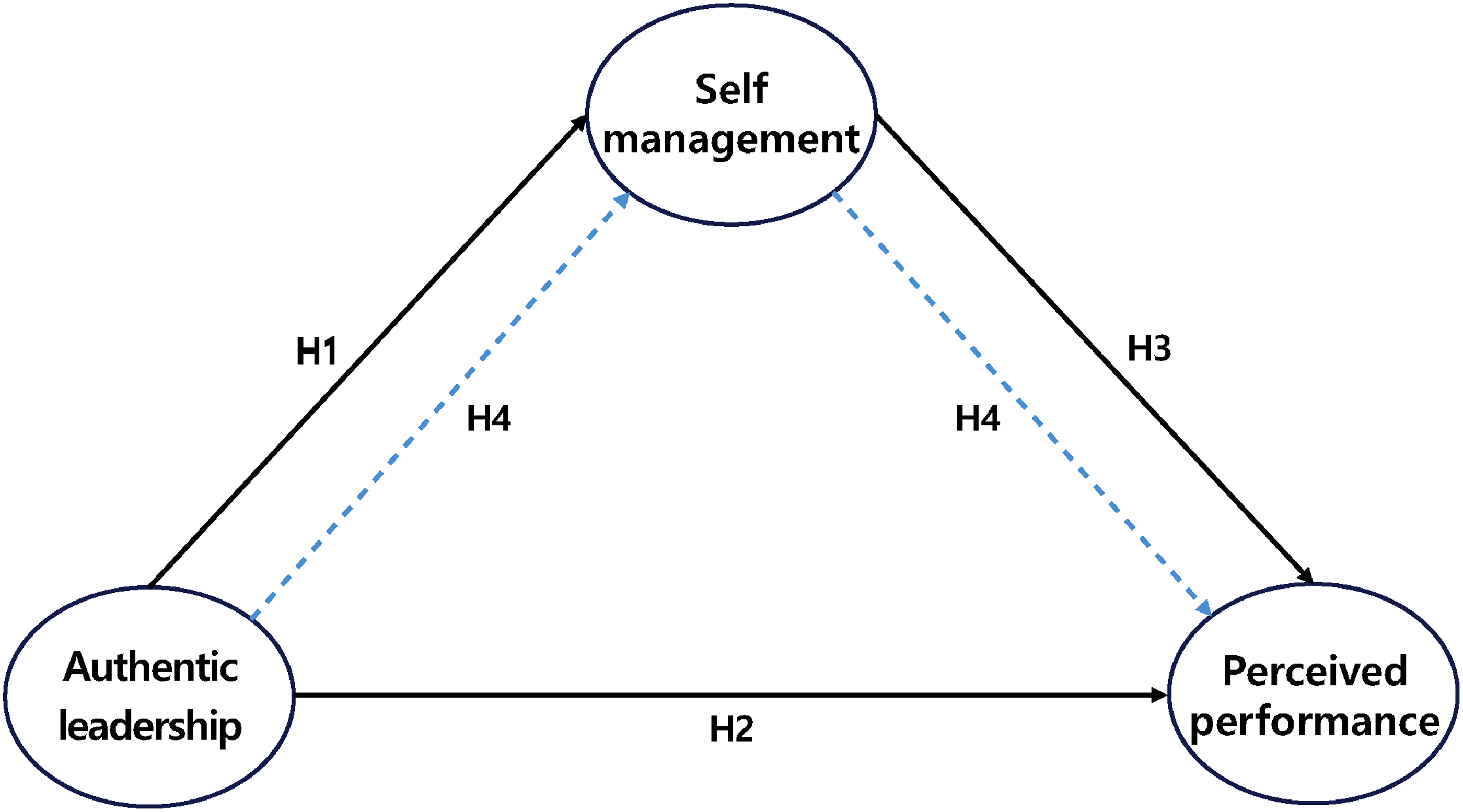
Research model and hypotheses.
Materials and methods
Participants
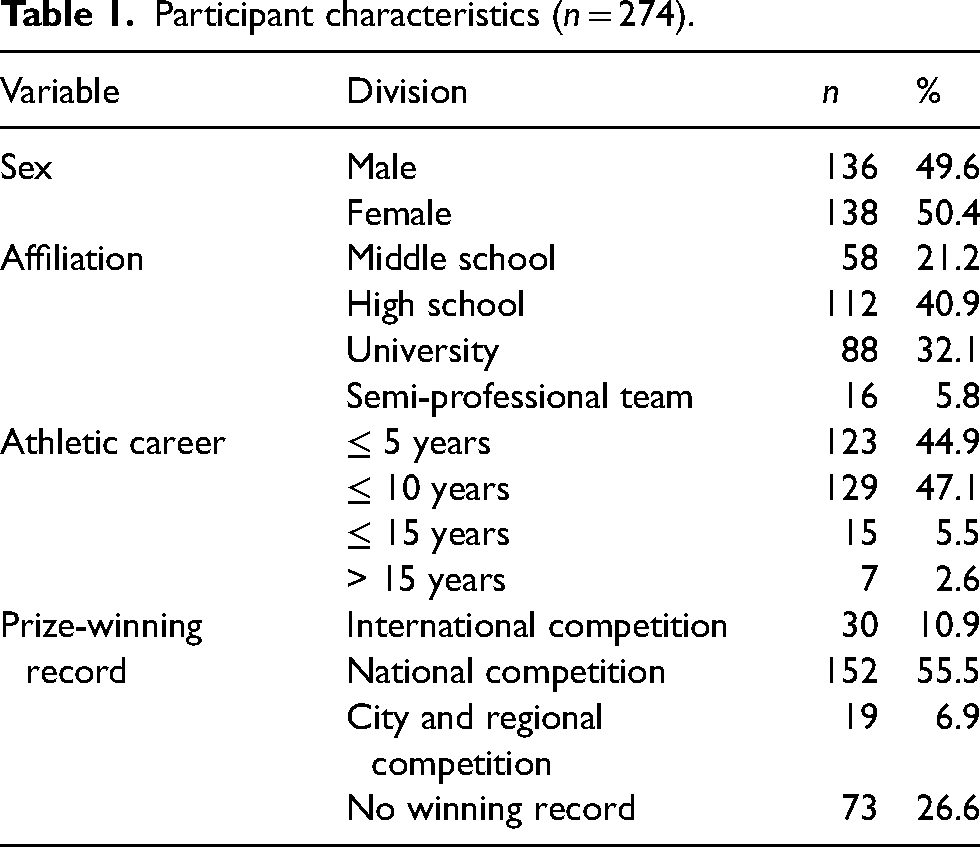
We used a convenience sampling method to recruit participants from a population of judo athletes registered in the Korean Sport and Olympic Committee in 2022. We administered a survey to athletes from school and semi-professional teams where the researcher (a former judo athlete and coach) had an existing relationship with the coaches. The school and semi-professional teams’ coaches were informed of the study purpose. Next, the researcher fully explained the study purpose and procedures to the athletes and obtained their written consent to participate. Data were collected from 287 participants, and data from 274 participants were used for the final analysis after excluding 13 questionnaires that were judged invalid because of lack of consent or irregular item response patterns. The study was conducted according to the guidelines of the Declaration of Helsinki and approved by the Korea Public Institute Review Board (protocol code P01-202306-01-006). Table 1 shows the participant characteristics.
Participant characteristics (n = 274).
Measurement tools
For data collection, we prepared a questionnaire with a total of 43 items, by utilizing and adapting items from the following standardized scales developed in prior studies. First, Hong and Lee 16 redeveloped a scale to measure sports coaches’ authentic leadership with 16 items based on the Authentic Leadership Questionnaire developed by Walumbwa et al. 19 This was modified and supplemented in the current study to meet our research purpose, then validated. The resulting scale comprises three sub-factors with a total of 11 items: four items on human communication, four on balanced coaching, and three on sincere attitude. Second, to measure self-management, we modified and supplemented the Athletes’ Self-Management Questionnaire, which was developed by Heo 49 to measure athletes’ self-management by referring to the Psychological Skills Inventory for Sport (PSIS), 51 the Ottawa Mental Skills Assessment Tool (OMSAT), 52 and Test of Performance Strategies (TOPS) 53 individual athlete-centered measurement tools, which identify top-level athletes’ cognitive and behavioral characteristics. Furthermore, because the above studies were individual-centered, Heo 49 referred to the studies of Vealey 54 and Loehr 55 and added sections interpersonal relationships and daily life to the scale. Our study's self-management scale comprises four items on body management, five on lifestyle management, and five on training management. Third, for perceived performance, we modified and supplemented Lee's 56 scale, which was developed to subdivide existing perceived performance scales by combining the Perceived Performance Scale developed by Mamassis and Doganis 57 and the Task and Ego Orientation in Sport Questionnaire (TEOSQ) developed by Duda. 58 Our study's perceived performance scale comprises five items on performance success, five on performance maturity, and four on psychological maturity.
The questionnaire's content validity was verified by an expert council consisting of three people, one with a doctorate in sports psychology and two with doctorates in the physical education field. With the exception of general characteristics items, a 5-point Likert scale ranging from 1 (strongly disagree) to 5 (strongly agree) was used in the questionnaire.
Questionnaire validity and reliability
We conducted analyses to establish our questionnaire's validity and reliability. First, we performed a confirmatory factor analysis to establish the questionnaire's validity. The results showed acceptable construct validity, where the goodness-of-fit values were χ²(df) = 771.553 (398)/p < 0.001, SRMR = 0.048, TLI = 0.909, CFI = 0.922, RMSEA = 0.059, as shown in Table 2. Second, Hair et al. 59 recommend the verification of convergent validity (AVE .5 or higher) and construct reliability (CR .7 or higher) to establish convergent validity for the confirmatory factor analysis results. The AVE values were 0.541–0.753, and the CR values were 0.773–0.898, thereby verifying convergent validity. Third, we performed a reliability analysis using Cronbach's α coefficient. The resulting coefficient values were high: 0.830–0.867 for authentic leadership, 0.815–0.854 for self-management, and 0.765–0.807 for perceived performance, thereby verifying internal consistency.
Validity and reliability analyses.
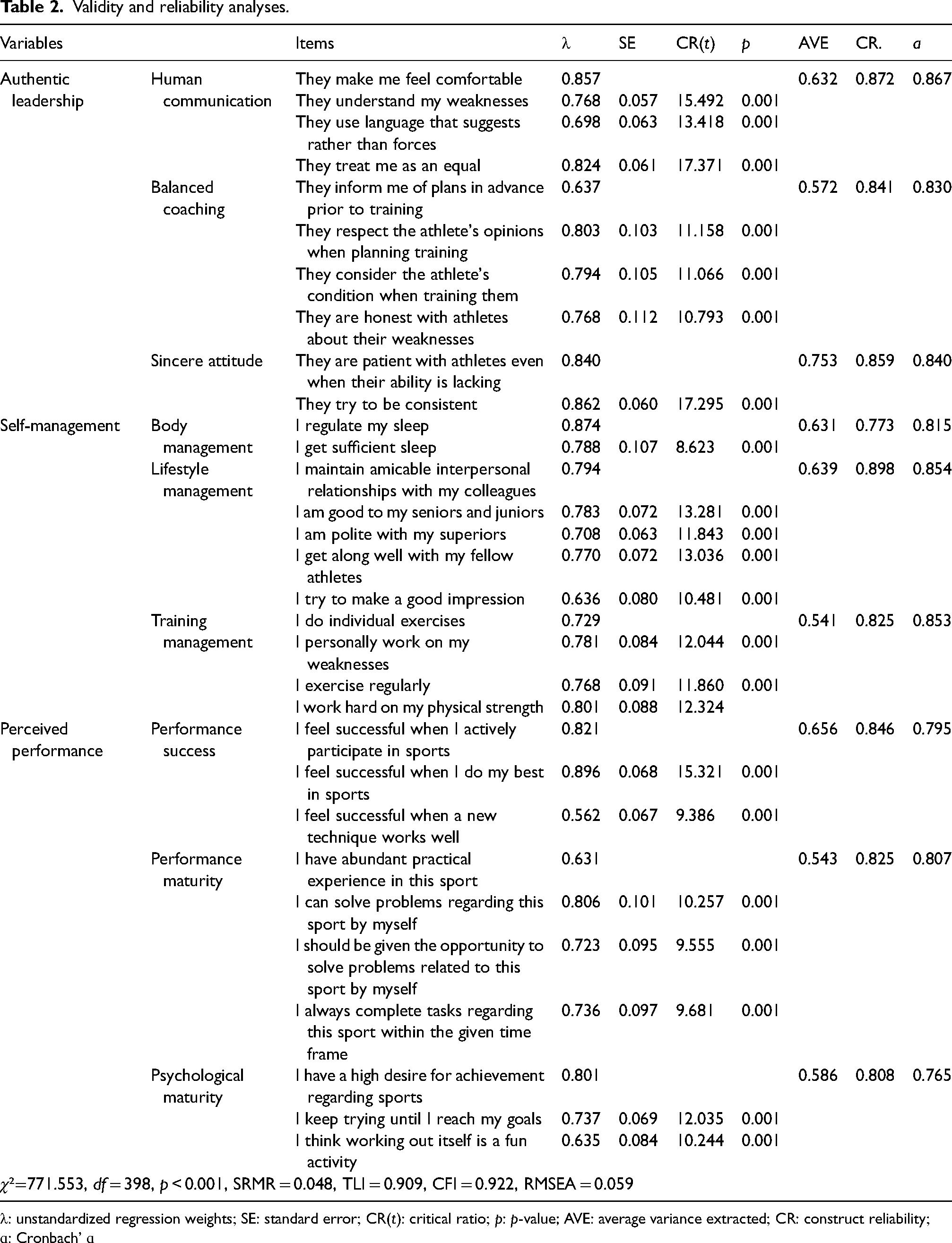
λ: unstandardized regression weights; SE: standard error; CR(t): critical ratio; p: p-value; AVE: average variance extracted; CR: construct reliability; ɑ: Cronbach’ ɑ
Data analysis
We used IBM SPSS Statistics, version 21 (IBM, Armonk, NY, USA) and AMOS 21 (IBM, Chicago, IL, USA) for statistical analyses.
After conducting the reliability and validity tests described above, we performed a Pearson's correlation analysis to identify relationships between the sub-factors. Next, we conducted structural equation modeling to test the study hypotheses.
Results
Pearson's correlation analysis
The correlation analysis results are shown in Table 3.
Pearson's correlations between authentic leadership, self-management, and perceived performance.
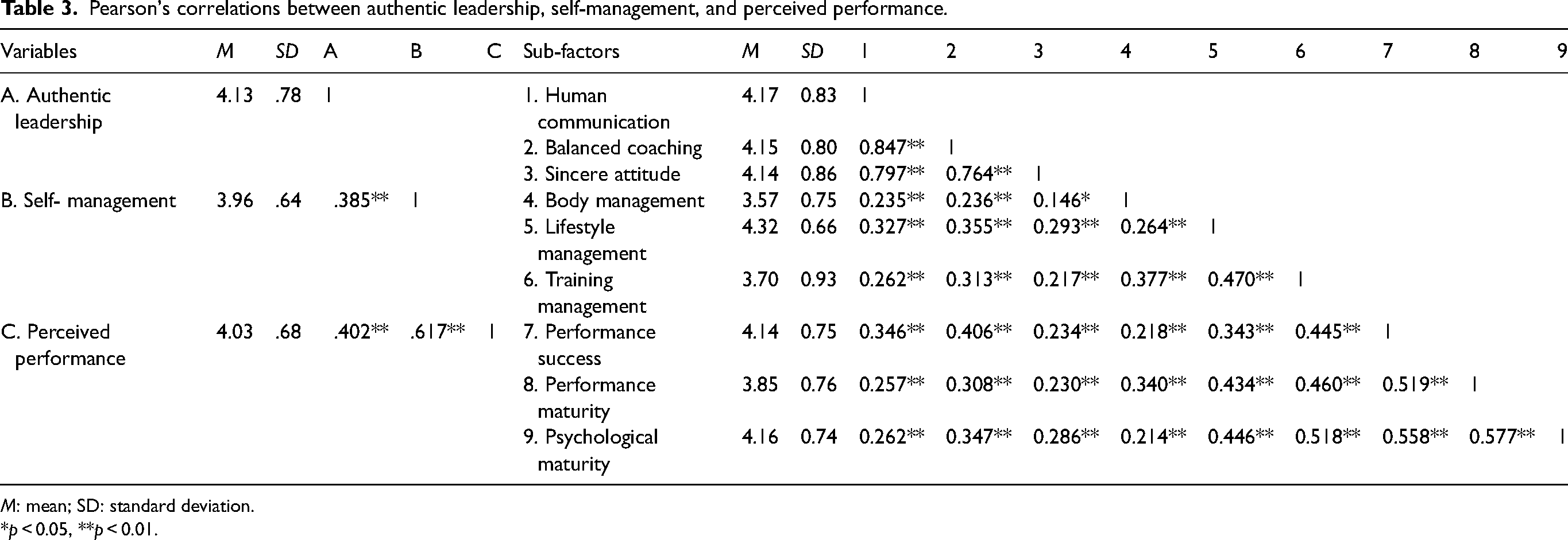
M: mean; SD: standard deviation.
*p < 0.05, **p < 0.01.
Factors’ correlation analysis
First, we found a statistically significant positive (+) correlation between authentic leadership and self-management (p < 0.01). Second, there was a statistically significant positive (+) correlation between authentic leadership and perceived performance (p < 0.01). Third, there was a statistically significant positive (+) correlation between self-management and perceived performance (p < 0.01).
Sub-factors’ correlation analysis
First, we observed a statistically significant positive (+) correlation between authentic leadership (i.e. human communication, balanced coaching, and sincere attitude) and self-management (i.e. body management, lifestyle management, and training management) (p < 0.05, p < 0.01). Second, results showed a statistically significant positive (+) correlation between all authentic leadership sub-factors and the perceived performance sub-factors (i.e. performance success, performance maturity, and psychological maturity) (p < 0.01). Third, we found a statistically significant positive (+) correlation between all self-management sub-factors and all perceived performance sub-factors (p < 0.01).
The study's correlation coefficients were between 0.146 and 0.847, which did not exceed 0.85, the threshold for multicollinearity proposed by Kline. 60 Therefore, multicollinearity between sub-factors was not a problem in this study.
Research model goodness-of-fit
We performed structural equation modeling to verify the study hypotheses. Previous studies61,62 reported the following goodness-of-fit indices according to criteria that considered the simplicity of the model, provided clear standards of interpretation, and were not sensitive to sample size: SRMR (0.5 or less), TLI (0.9 or higher), CFI (0.9 or higher), and RMSEA (0.1 or less). Using these criteria, our study results yielded the following values, thereby confirming that the fit criteria were met: χ²(df) = 55.579(24)/p < 0.001, SRMR = 0.040, TLI = 0.960, CFI = 0.974, RMSEA = 0.069. Therefore, we concluded that the model was a good fit to the data.
Hypothesis testing
The study purpose was to investigate the relationship between judo coaches’ authentic leadership and judo athletes’ self-management and perceived performance, and the mediating effect of self-management on the relationship between authentic leadership and perceived performance. The hypothesis testing results are shown in Table 4 and Figure 2.
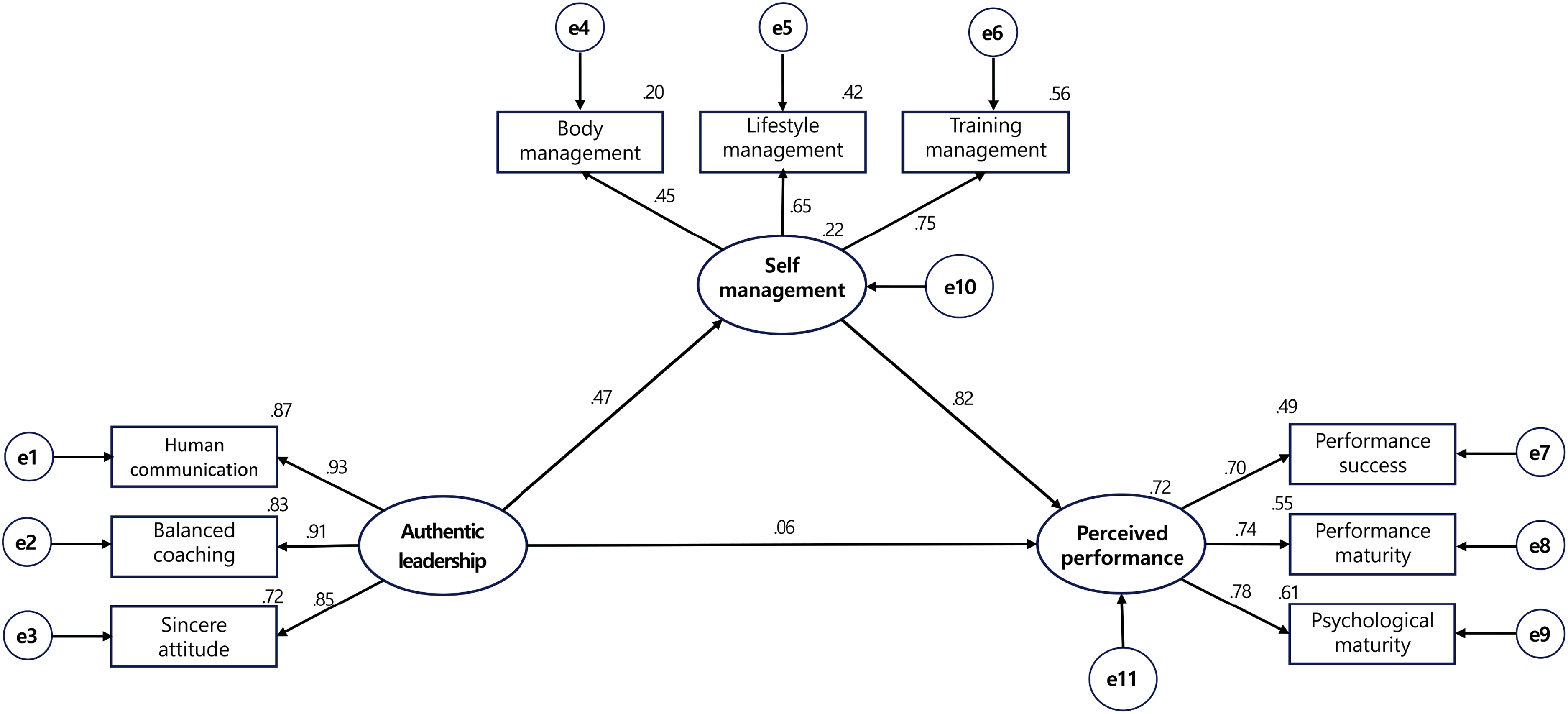
Structural equation modeling analysis results.
Research model path analysis and fit index.
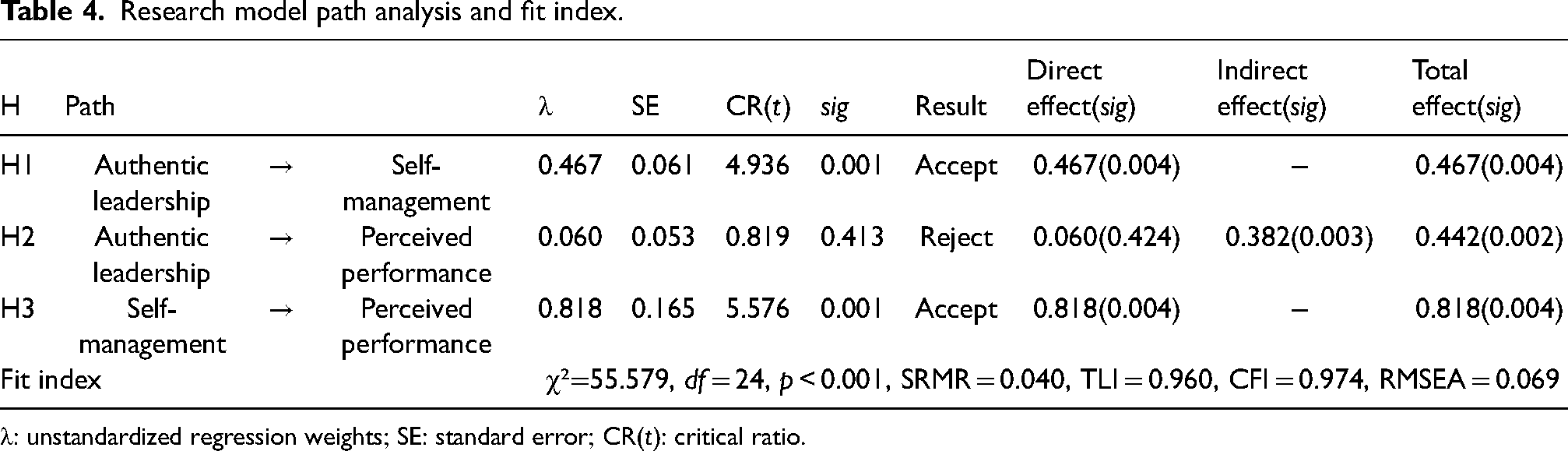
λ: unstandardized regression weights; SE: standard error; CR(t): critical ratio.
First, we found that authentic leadership had a statistically significant positive (+) effect on self-management, with a path coefficient of 0.467(t = 4.936) (p < 0.001). Therefore, the first hypothesis (H1) was accepted.
Second, we found that authentic leadership had no statistically significant effect on perceived performance, with a path coefficient of 0.060(t = 819). Therefore, the second hypothesis (H2) was rejected.
Third, we found that self-management had a statistically significant positive (+) effect on perceived performance, with a path coefficient of 0.818(t = 5.576) (p < 0.001). Therefore, the third hypothesis (H3) was accepted.
Fourth, we conducted a bootstrapping analysis to verify the mediating effect of self-management on the relationship between judo coaches’ authentic leadership and athletes’ perceived performance. Previous studies63,64 reported that the partial mediation and full mediation models must be compared in terms of their χ² values and degrees of freedom to verify the mediation effect; χ² value of 3.84 or less and degrees of freedom of 1 or less indicate a complete mediating effect. To confirm this, we performed a bootstrapping analysis with the confidence interval set at 95% and included 2000 repetitions. The results showed that self-management had a complete mediating effect on the relationship between authentic leadership and perceived performance. We observed the following differences between the partial and full mediation models: Δχ² = 0.605, Δdf =1, and indirect effect significance level of p < 0.001. Therefore, the last hypothesis (H4) was accepted (see Table 5).
Mediating effect analysis through bootstrapping.
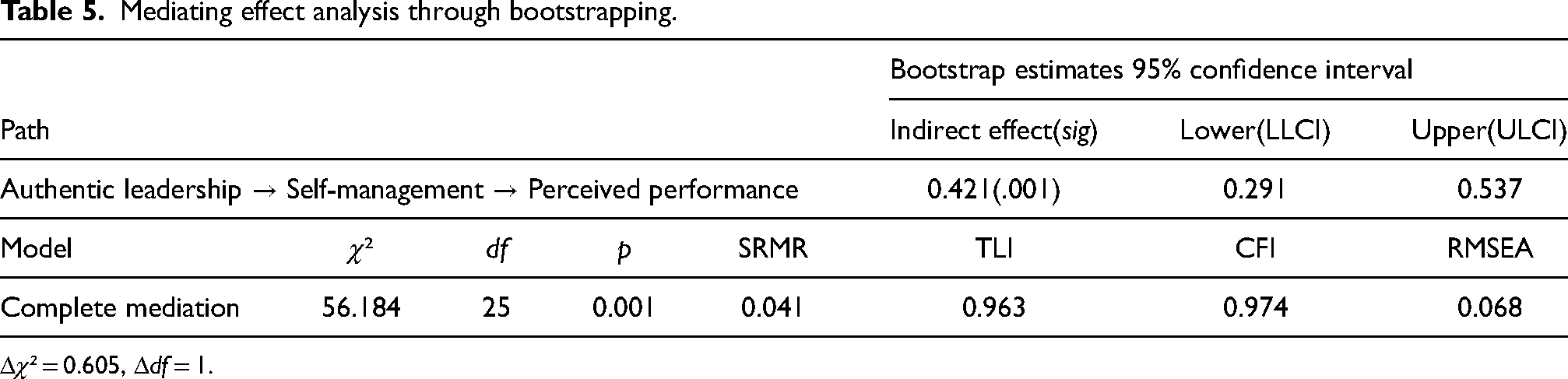
Δχ² = 0.605, Δdf = 1.
Discussion
The study purpose was to determine the relationship between judo coaches’ authentic leadership and athletes’ self-management and perceived performance, and to investigate the mediating effect of self-management on the relationship between authentic leadership and perceived performance.
Among judo coaches’ capabilities, this study focused on authentic leadership and found that it has a positive effect on athletes’ self-management. Since we found no previous studies that investigated the relationship between coaches’ authentic leadership and athletes’ self-management, we are unable to pursue an in-depth discussion on this topic. However, our study results are in line with those of a previous study 65 indicating that the head of an educational institution showing authentic leadership by promoting positive self-development, transparency among members, and a balanced method of handling work in the organization has a positive effect on teachers. For instance, teachers understood themselves better, experienced increased motivation and confidence about learning and learning opportunities, and developed better environments and resources. Our results are also supported by Yoon and Lee's study, 66 which reported that authentic leadership helps members learn and develop their capabilities in a self-directed manner by viewing themselves as active beings. In addition, this result can be partially supported by the finding that sports coaches’ human communication, self-growth, and balanced coaching of authentic leadership positively help athletes’ interpersonal management, mental management, body management, and training management of self-management. 15 Therefore, our results can be understood in the following way: when judo coaches show consistent authentic leadership, such as by understanding athletes’ weaknesses and being patient with them, and treating athletes as equals by respecting their opinions and condition when planning training, athletes’ self-management improves, such that they take the initiative to manage their own training and lifestyle.
Second, we found that judo coaches’ authentic leadership had no significant effect on athletes’ perceived performance. This result differs from that of a previous study, 17 which reported that golf coaches’ authentic leadership had a positive effect on athletes’ perceived performance. In addition, our result also differs from that of a previous study 67 that reported a positive impact of authentic leadership on the trust and teamwork outcomes of healthcare staff. An athlete's performance is not solely the result of the individual athlete's efforts; it is formed by numerous situational factors, and the coach factor is very closely related to athletes’ performance. 68 This may indicate that perceived performance cannot be improved solely through coaches’ authentic leadership as experienced by judo athletes. In other words, judo coaches’ authentic leadership alone (e.g. using gentle speech, being honest about the athletes’ faults, and trying to be consistent) does not directly affect perceived performance, in which athletes perform their best, gain abundant practical experience, and have a high desire for achievement.
The result indicating that judo coaches’ authentic leadership alone does not directly affect perceived performance can be attributed to the characteristics of the judo sport and the sports coaching culture that is unique to South Korea. Many injuries occur in judo owing to techniques, such as throwing and twisting one's opponent. 69 This may be why a sense of tension must be maintained during training. Given the risk of injury, judo coaches follow forceful rather than soft leadership styles to ensure athletes’ safety. 18 Furthermore, despite many changes, the traditional hierarchical coaching method is still widely practiced in South Korean sports coaching. 11 For judo athletes who are accustomed to the sport's characteristics and the somewhat forceful and hierarchical coaching methods unique to South Korea's sports coaching field, coaches’ authentic leadership may be an unfamiliar leadership style, and thereby may not directly affect perceived performance.
Third, we found that judo athletes’ self-management had a significant positive effect on perceived performance. This result is consistent with that of a previous study, 50 in which judo athletes’ self-management (i.e. body management, mental management, and training management) was reported to help performance. The result is also similar to that of a previous study by Kim, 70 in which judo athletes’ self-management (i.e. interpersonal management, training management, and mental management) had a positive effect on perceived performance. Furthermore, this result is supported by Kim and Nam's finding 35 that gymnasts’ self-management (i.e. body management, interpersonal management, and training management) had a positive impact on sports performance abilities. Therefore, our study results can be explained as follows: judo athletes’ perceived performance improves when they take care of their body and health, such as by getting sufficient sleep, maintaining amicable interpersonal relationships with their seniors, juniors, and team colleagues, and ensuring regular participation to effectively manage their training.
Examining sports performance strategies, So 71 reported that athletes must be able to control and regulate themselves mentally and physically, and that this self-management ability results in successful sports performance during both practices and their best performances in competitions. Therefore, our results can be explained as follows: judo athletes must have the ability to manage themselves by practicing self-control and self-regulation, which becomes the basis for excellent performance. Therefore, judo athletes should work to manage themselves to achieve good performance. For instance, keeping a training journal to record exercise schedule and intensity, state of sleep and physical condition, diet, self-reflection, and weather conditions could help athletes practice self-management. Our results show that judo athletes’ self-management is the basis for achieving excellent performance.
Finally, we found that self-management has a full mediating effect on the relationship between judo coaches’ authentic leadership and athletes’ perceived performance. As mentioned earlier, we found that authentic leadership had no direct effect on perceived performance. However, our mediation analysis results show that authentic leadership can have an indirect influence through the mediating effect of self-management. These results are similar to those of Kim et al. 72 who reported that judo coaches’ charisma, individualized consideration, and intellectual stimulation leadership styles have an indirect effect on perceived performance through self-management. Our results are also in line with those of Lee 73 who reported that gymnastics coaches’ transformational leadership does not directly affect athletic performance but has an indirect effect on athletic performance through the mediating effect of self-management. This is a significant finding and suggests that judo coaches should increase authentic leadership behavior to improve athletes’ self-management. Authentic leadership means that judo coaches should continuously communicate with athletes to better understand them, show a balanced type of coaching behavior by taking athletes’ condition into consideration, and uphold a sincere attitude by being consistently patient with athletes, even when their ability is lacking. Coaches’ educational efforts are also needed to cultivate athletes’ self-management ability. Therefore, coaches should continuously educate athletes by using their knowledge of the following: their experiences as an athlete and coach, the body management methods they have learned, coping strategies for matches, and weight management methods. 35 Our results show that judo coaches’ efforts play an important role in enhancing athletes’ performance.
Academic contribution
This study made three academic contributions. First, reliable data could be provided for studies that have investigated the relationship between coaches’ authentic leadership and athletes’ self-management. As a result of searching for previous studies that investigated the relationship between these two variables, only those studies’ results that were derived using regression analysis could be confirmed. However, regression analysis is a statistical analysis method that ignores measurement errors, and there is a possibility that it may not be accurate. 74 Meanwhile, structural equation model analysis not only explains social phenomena better by considering measurement errors, but also increases the reliability of the analysis results. Therefore, it can be said to provide reliable basic data in investigating the relationship between authentic leadership and self-management.
Second, the structural relationship between the three variables, which has not yet been verified, was revealed. Although it is possible to find studies that have identified the relationship between authentic leadership and self-management, authentic leadership and perceived performance, and self-management and perceived performance, no study has been found that has identified the structural relationship between the three variables. In other words, this study can be said to have contributed to shedding light on the role of authentic leadership and self-management to enhance judo players’ perceived performance.
Lastly, a new theory is provided as different results are derived from previous studies. As suggested in the Discussion section, previous studies have shown that the coach's authentic leadership has a positive effect on the athlete's performance. However, in this study, a direct valid relationship between the two variables was not derived. This indicates that there are differences depending on the event, environment, and research subject, and it can be said that this study provides a theoretical basis for judo coaches to keep in mind when using authentic leadership.
Practical implications
For athletes, peak performance is of paramount importance. The same goes for judo players, and in order to improve their game, not only the coach's role but also the individual athlete's self-control and effort are important. In this study, we found that athletes’ self-management is essential to improve their performance. Specifically, body management such as sleep control and weight control for complete condition management is essential. Furthermore, it is equally important to have good relationships with fellow players who participate in training together, and to have steady and regular personal training to address one's poor performance, acquire skills and strategies to overcome difficulties in the game, and become a better player.
Meanwhile, the role of the coach in improving the athlete's performance is also emphasized. In particular, coaches who teach middle and high school students who have difficulties with self-management should consider educating them on how to properly do this. As shown in the results of this study, it is necessary to understand through recommendation rather than coercion, and there is a need to plan training that can teach players how to manage their condition. In addition, it is necessary to educate players on how to use a diary that can record sleep time, weather, training time and intensity, training schedule, weight, physical condition, and so forth outside of training time. This could help players improve their self-management.
Limitations and suggestions
Since this study involved Korean judo athletes and training sites, the generalization of our results is limited, such as to judo players and training sites in other countries. An expansion of this study that targets athletes from other sports and in other countries will provide meaningful information and increase the generalizability of the results.
Based on our study findings and limitations, we provide the following suggestions for future studies. First, further research exploring judo in other countries or examining other non-combat sports should be conducted to advance knowledge in the sports field. Second, our finding that judo coaches’ authentic leadership does not directly affect athletes’ perceived performance raises concerns that coaches’ authentic leadership will not be considered as helpful to athletes’ performance. However, we also found that performance is enhanced with self-management, thereby showing that judo coaches’ authentic leadership is an important factor in athletes’ performance. Therefore, follow-up research should be conducted to broaden the leadership types studied to identify the leadership styles that coaches should pursue to improve judo athletes’ performance.
Conclusions
This study investigated the relationship between judo coaches’ authentic leadership and judo athletes’ self-management and perceived performance, and the mediating effect of self-management on the relationship between authentic leadership and perceived performance.
The results indicate that coaches play an integral role in securing judo athletes’ excellent performance and that judo coaches should enhance athletes’ self-management through authentic leadership to ultimately improve judo athletes’ perceived performance.
Footnotes
Acknowledgments

Declaration of conflicting interests
The author(s) declared no potential conflicts of interest with respect to the research, authorship, and/or publication of this article.
Funding
The authors received no financial support for the research, authorship, and/or publication of this article.