



Abstract
Sport psychology consulting services are commonly used by elite athletes in developed countries, but little is known about the athlete's perceptions of such services in developing countries. The present study examined the accessibility, receptivity, and perceived benefit of sport psychology services (via a sport psychology services questionnaire) through a cross-sectional survey of elite athletes (N = 32; Mage = 23.06 years, SD = 5.81) from 12 nations of the Oceania region who participated in the Gather, Adjust, Prepare, Sustain programme. These nations were Vanuatu, Fiji, Tuvalu, Tonga, Solomon Islands, Cook Islands, Norfolk Island, Niue, Nauru, Kiribati, Samoa, and Papua New Guinea. The results revealed that only a quarter of the athletes had ongoing access to sport psychology consulting services. Over half reported that they were receptive to sport psychology services and perceived that these types of services would be beneficial. The most desired services related to performance enhancement (e.g. performance under pressure). The athletes reported mixed levels of knowledge regarding mental skills, and most knowledge concerned the use of mental skills in competition. Specifically, most athletes rated their knowledge of mental skills at either the low (e.g. imagery) or high (e.g. goal setting, focus, and self-talk) range, and relatively fewer athletes rated their knowledge in the mid-range. The athletes demonstrated interest in learning more mental skills to enhance their performance. These findings indicate that a need exists for sport psychology service providers among athletes in the Oceania region. Existing non-local providers may also consider supplying services through digital modalities.
Introduction
The contribution of psychology to sport science has resulted in a growth in the provision of sport psychology consulting services to support athlete development. 1 Sport psychology services (SPS) are often concerned with assisting athletes in finding strategies to reach and maintain peak performance. 2 Services may focus on development of cognitive, emotional, and behavioural techniques 3 but also extend to broader psychosocial and mental health issues. 4 Incorporating mental skills training into an athlete's programme provides several well-established benefits.5,6 Keilani et al. 7 provided evidence that mental techniques such as progressive muscle relaxation, biofeedback, autogenic training, breathing techniques, and imagery/visualization are effective in improving performance in sports. However, the access, usage, and knowledge of services provided by sport psychology service providers are not consistent across all regions of the globe.8,9 The present study aimed to examine the receptivity to, and perceived benefit of, SPS of elite athletes in developing nations from the Oceania region. The study also aimed to collect data on the athletes’ knowledge and use of mental skills for training and competition.
Sport psychology service providers are more frequently utilized by elite athletes than recreational or amateur athletes, with a large proportion of athletes reporting a positive perception of sport psychology.10–12 Nonetheless, opinions vary across athletes and sports. 11 For example, athletes who were male, young (14–18 years old), or involved in contact sports were more likely to report a negative perception towards sport psychology service providers than those who were not. They were also least likely to seek psychological support as compared with older female athletes in non-contact sports.13,14 In further support of individual differences, Wrisberg et al. 15 found that female athletes and those with past positive experiences of SPS reported more positive perceptions of SPS and were more likely to seek support.
A study with Irish elite athletes by Woods et al. 12 examined access to, and receptivity of, sport psychology consulting services. Administration of the SPS questionnaire 15 showed that the athletes had low accessibility to SPS but were willing to seek SPS for enhancing performance, improving focus, and building confidence. Incidentally, these same categories were identified by the athletes as being the most beneficial to themselves or their team. Further analysis revealed positive previous experiences of sport psychology consulting services significantly increased athlete receptivity to future SPS. In the interview component of their study, Woods et al. 12 showed that athletes reported being more likely to access sport psychology consulting services if: (a) they had a better understanding of what benefits they would bring; and (b) if there were existing support networks, resources (e.g. time and money), and information about how to contact a consultant.
The research conducted to date has identified a range of perceptions about sport psychology consulting services and how these can differ across athletes. A broader framework of athlete attitudes towards sport psychology service providers has been constructed around the potential barriers and facilitators to help-seeking.10,13,14 Four attitudinal barriers have been proposed by Martin et al. 13 : stigma and labelling of athletes who seek support as having psychological problems, low confidence in the effectiveness of SPS, hesitation to discuss issues openly, and a preference to work with a consultant from a similar cultural background. Lavallee et al. 16 reported that Irish elite athletes held a generally positive attitude towards SPS. However, when responses were examined within the framework of barriers to seeking sport psychology consulting services, some differences emerged between Irish athletes and athletes from New Zealand, the United Kingdom, Germany, and the USA. These differences emerged for stigma tolerance, confidence in SPS, personal openness, and cultural preference. For example, reports of cultural preference for Irish athletes were lower than for athletes from New Zealand and the USA, but higher than athletes from the United Kingdom. The region of origin for athletes may thus be an important factor that shapes attitudes towards sport psychology consulting services.
The introduction to global sport in the greater Pacific region (hereon, Oceania) has formed linkages between modern, highly commercialized team sports that have facilitated the rise of Oceanic athletes in global sport. 17 For elite Oceanic athletes, sport emerged as an increasingly critical path of mobility, positioning this cohort of athletes within interlinked local, state, regional, and global sporting economies. 17 Understanding the way athletes perceive the benefits and use of SPS in the greater Oceania region is important because it may highlight global inequities and direct resources towards areas that could benefit from receiving extra support from sporting organizations. For the Oceania region, resource constraints exist within the high-performance sport environments, and these barriers (e.g. socioeconomic challenges) can restrict athlete development and performance. 18 Specifically, for the countries belonging to the Oceania Commonwealth Games Associations (CGA) such as Vanuatu, Fiji, and Tonga, there have been more specific constraints identified, including the provision of adequate resources to improve mental health and associated help-seeking. 9 Therefore, the barriers of cultural preferences and openness to sport psychology consulting services may be particularly relevant when considering athletes from developing nations. A lack of prior experience and knowledge of SPS may be a factor given that sport and the progression of elite athletes in developing nations are secondary to more fundamental national issues such as health and education. 19 Collins and Buller 20 suggested that social exclusion in high-performance sport may be due to a lack of appropriate performance resourcing. Specifically, the athletes who are not adequately resourced feel particularly excluded when compared with those who are. Economic disparities between developing nations and developed nations highlight the resource constraints within the high-performance sport environments of developing nations that restricts athlete talent development in these areas.9,18 Connor and McEwen 21 suggested that most of the sport development among developing nations relies heavily on foreign aid, and therefore, documenting the requirement of external support may be necessary for raising awareness more broadly.
There is currently little information about perceptions and receptivity towards sport psychology consulting services among athletes from developing nations. The Oceania region is unique because it consists of developed (e.g. Australia and New Zealand) and developing (e.g. Papua New Guinea, Vanuatu, and Tuvalu) nations. The relative proximity of the developing nations to Australia and New Zealand has the potential to facilitate sharing of resources and the local development of athlete support, including SPS. The present study aimed to provide information on sport psychology consulting help-seeking and receptivity to sport psychology consulting services and mental skill techniques among elite athletes in the developing nations of Oceania. Firstly, we hypothesized that the athletes of the Oceania region would be receptive to sport psychology consulting services, although actual usage would be low. Secondly, we expected that the athletes would perceive that there are benefits of SPS for themselves and their team. Lastly, we hypothesized that this cohort of athletes would have some knowledge of established mental skills in training and competition settings, although the implementation of these skills would be limited.
Method
Participants
The athletes of 12 nations of the Oceania region (and Commonwealth nation participants) were invited to participate in the Gather, Adjust, Prepare, and Sustain (GAPS) project on the Gold Coast, Queensland, Australia. The programme ran over three camps spanning an 18-month period (December 2016, July 2017, and January 2018), with each camp running for 5 days. The GAPS programme was open to all Oceania CGA (Vanuatu, Fiji, Tuvalu, Tonga, Solomon Islands, Cook Islands, Norfolk Island, Niue, Nauru, Kiribati, Samoa, and Papua New Guinea) with at least one athlete from each association participating. Involvement in GAPS was restricted to the top 50 athletes of the region and to the main Oceania competition sports (athletics, boxing, swimming, lawn bowls, and beach volleyball). The athletes were nominated by each nation's leading sport organization (e.g. Commonwealth Games Association or National Olympic Committee) using individual performance rankings or potential to perform. The programme provided athletes the opportunity to experience high level coaching and support services, as well as gain access to advanced equipment for training and performance assessments. The athletes were also provided the opportunity to voluntarily participate in a range of research projects that assessed the athletes’ physical and psychological characteristics. The present study reports the outcomes of a survey that assessed accessibility of and receptivity to SPS, and knowledge of mental skills. The survey was completed by the athletes during the first GAPS camp. The athletes completed the questionnaire in person as part of the GAPS session. The questionnaire was completed on paper, and the data entry was performed by members of the research team. The findings of a project that examined athlete mental wellbeing are reported elsewhere. 9
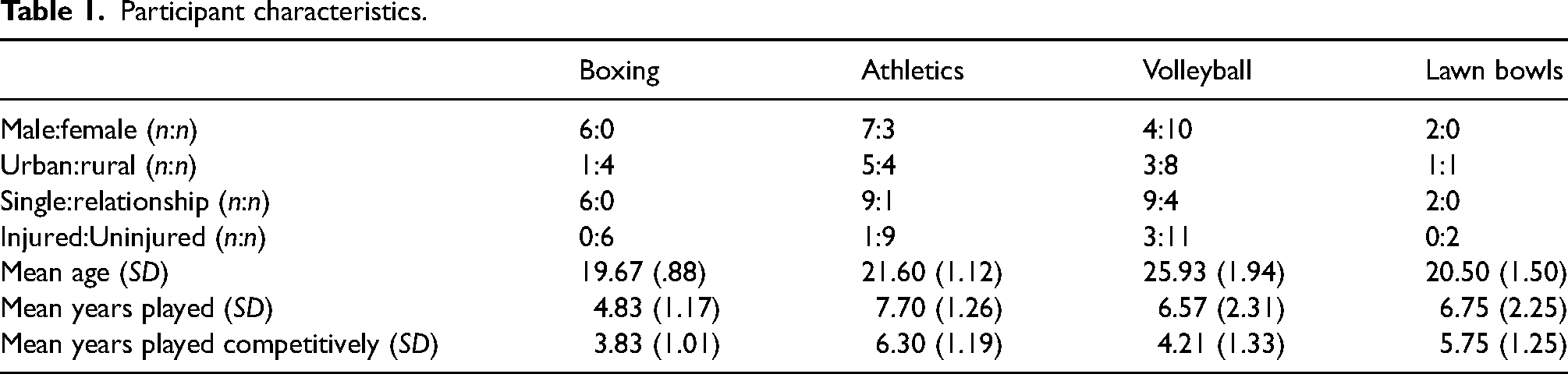
The final sample consisted of 32 athletes (19 men, 13 women) with a mean age of 23.06 years (SD = 5.81). Of the eligible cohort of 50, some athletes (n = 18) from the programme were unavailable or chose not to participate. The athletes were predominantly from urban (n = 10) and semi-rural (n = 10) areas within their respective regions, with some athletes reporting being from rural areas (n = 7). The cohort were mostly single (n = 26) with five athletes indicating they were in a relationship. The athletes were competing in volleyball (n = 14), athletics (n = 10), boxing (n = 6), or lawn bowls (n = 2) and had played their sport on average for 6.61 years (SD = 6.20) with mean time spent in an elite competitive level of sport being 4.89 years (SD = 4.09). Four athletes reported an existing physical injury that affected their ability to train at optimal levels. See Table 1 for a summary of participant characteristics.
Participant characteristics.
Materials and procedure
This study was approved by the University Human Research Ethics Committee (2016/888). The athletes completed a self-report questionnaire, composed of separate sections, during a series of data-collection activities that were integrated into GAPS. The athletes provided informed consent prior to commencing the questionnaire and, if required, they were provided with language support to complete the questionnaire by the research team, who are experienced in working with athletes from the Oceania region, or by their teammates. The language support involved providing definitions or native language translations for terms that were not clearly understood by the athletes. They were informed that their data would be treated confidentially. All data was anonymized and was retained for 5 years in a password-protected electronic file as per the university ethics policy, and in the investigators’ password-secured computers before being destroyed. Questionnaires were destroyed once the data has been entered into an electronic file. The questionnaire initially collected sociodemographic information (e.g. age, gender, country of origin, etc.), sport played, duration engaged in sport, duration and frequency of sport practice, and current status and severity of sport-related injuries, which were free responses. The next part of the questionnaire (SPS questionnaire) contained additional items that were based on those developed by Wrisberg et al. 15 and refined by Woods et al., 12 which measured the athletes’ receptivity to, and perceived benefits of, sport psychology consulting services, as well as the knowledge and use of SPS. Overall, the questionnaire developed by Wrisberg et al. 15 was designed to assess the respondents’ willingness to seek mental skills training for a variety of purposes, such as the respondents’ understanding of the perceived benefits of mental training for themselves and their teams, and the athletes’ attitude towards the three possible roles for a sport psychology consultant at their institution. For example, the stem for the questionnaire regarding willingness was ‘How willing would you be to seek assistance for help with the following situations?’ followed by categories such as ‘Helping to perform under pressure’.
The SPS questionnaire examined receptivity to receiving sport psychology consulting services by the athletes answering questions on a series of self-report rating scales that measured their willingness to engage with, and the perceived benefit of, a range of services. The SPS questionnaire was found to be reliable for both willingness (α = 0.89) and for perceived benefits (α = 0.90). The athletes were also asked whether they had received these psychology services in the past. The questionnaire was originally created to assess the willingness of NCAA Division-1 Student Athletes to seek specific sport psychology consulting services, their perception of the benefits of sport psychology consulting services to themselves and their team, and lastly the accessibility and provision of SPS at their institution. 15 Following Woods et al., 12 we made some changes to ensure appropriate terminology for the sample (e.g. ‘college’ was replaced with ‘coaching facility’). The questionnaire also contained items related to the athletes’ mental health, which were used for another study. 9
Sport psychology consulting services measures
For the sport psychology consulting services measures included in the questionnaires, the athletes were asked to read a definition of sport psychology consulting services to ensure consistent understanding regardless of prior exposure. The next items asked the athletes about their prior use of sport psychology consulting services and for the specific areas they had used the services (e.g. ‘Building my confidence’). The next section asked about the athletes’ willingness to seek assistance, and the perceived benefits of this assistance, in a range of areas (e.g. ‘Helping to perform under pressure’). The athletes responded on a scale from 1 = not at all to 5 = extremely.
Mental skills measures
The next component of the questionnaire asked about the participants’ use of evidence-based mental skills (see Keilani et al. 7 ). As per Keilani et al., 7 the stem of the question referred to ‘How often do you use each of the following techniques when training?’ while the mental skills identified followed in categories. These mental skills included self-talk, imagery/visualization, biofeedback, goal setting, and attentional focus/concentration. The athletes reported their knowledge of mental skill techniques (e.g. ‘imagery/visualization) on a rating scale from 1 = low to 7 = high, and how often they used each of the techniques when training and competing on a scale from 1 = less than once a year, 2 = once a year, 3 = monthly, 4 = fortnightly, 5 = weekly, 6 = most days, and 7 = every day.
Statistical analysis
Data analysis was conducted using SPSS (IBM Statistics version 28). Descriptive statistics were calculated and Likert scale responses were condensed for the SPS questionnaire as per previous work. 12 Specifically, Likert scale options were condensed to form low (1 and 2), medium (3), and high (4 and 5) categories. 12 Chi-square tests of independence were performed to further examine the athletes’ ratings of willingness to seek assistance from and perceived benefits of SPS to themselves and/or their team. For mental skills, the chi-square expected frequencies assumptions were violated, and therefore, we did not conduct further analysis with that data.
As per Wrisberg et al., 15 multiple chi-square analyses were conducted to determine whether significant dependence existed between the athletes’ willingness to seek assistance and benefits of mental training for themselves and their team. For each analysis, expected cell values were calculated based on marginal totals for the rows and columns. A significant chi-square indicated that ratings were dependent at some level on the characteristic. In these cases, adjusted standardized residual values were examined to determine where the dependency existed. As per Haberman, 22 a conservative alpha (p < 0.01) was adopted to determine significant dependence, and a minimum standardized residual of ±2.58 was used to evaluate deviation from expected cell values. Where significant associations were observed, effect sizes are listed. 23
Results
Experiences with sport psychology consultants
The use of sport psychology consulting services was not a standard practice that was available to the athletes participating in the present study. Only eight athletes, out of 32, reported that they had a sport psychology consultant available to them. Of this subgroup, seven participants had received these types of services and they reported mixed reasons for receiving these services. The most common services provided were ‘Improving focus and concentration’ (n = 7), ‘Helping perform under pressure’ (n = 6), ‘Building my confidence’ (n = 5), ‘Improving my communication skills’ (n = 5), ‘Learning new mental skills for my sport’ (n = 5), ‘Improving my performance at competition’ (n = 5), ‘Dealing with an injury’ (n = 4), and ‘Coping with a personal relationship issue’ (n = 4). Fewer athletes reported using sport psychology consulting services for ‘Coping with a mental health issue’ (n = 3), ‘Addressing a problem in the relationship with my coach’ (n = 3), ‘Dealing with burnout’ (n = 3), ‘Relaxing in between training’ (n = 3), and ‘Addressing a problem in the relationship with another team member’ (n = 2).
Of this subgroup, six participants answered further questions regarding their sport psychology service engagement. Five athletes had received sport psychology consulting services between one and three times, and one athlete had received services five or more times. The effectiveness of these past sport psychology consulting services was rated as highly effective by five athletes and moderately effective by two athletes. One athlete reported that they had a dissatisfying experience in the past. There were three athletes who reported that they were currently receiving SPS with two of these receiving services weekly and one receiving the services as needed. A coach had referred all three athletes to seek the services, and two of these athletes had received additional referrals from a fellow athlete.
Receptivity to SPS
The athletes indicated that they would be mostly willing to receive services from sport psychology consulting service providers. As can be seen in Table 2, the athletes reported that they would be most willing to receive sport psychology consulting services for the purposes of performance enhancement, mental skill acquisition, improving communication skills, and for enhancing enjoyment of their sport. The spectrum thus encompassed performance and motivational factors for the athletes.
Obtained frequencies and percentages (in parentheses) for receptivity of sport psychology consulting services to Oceanic athletes (N = 32).
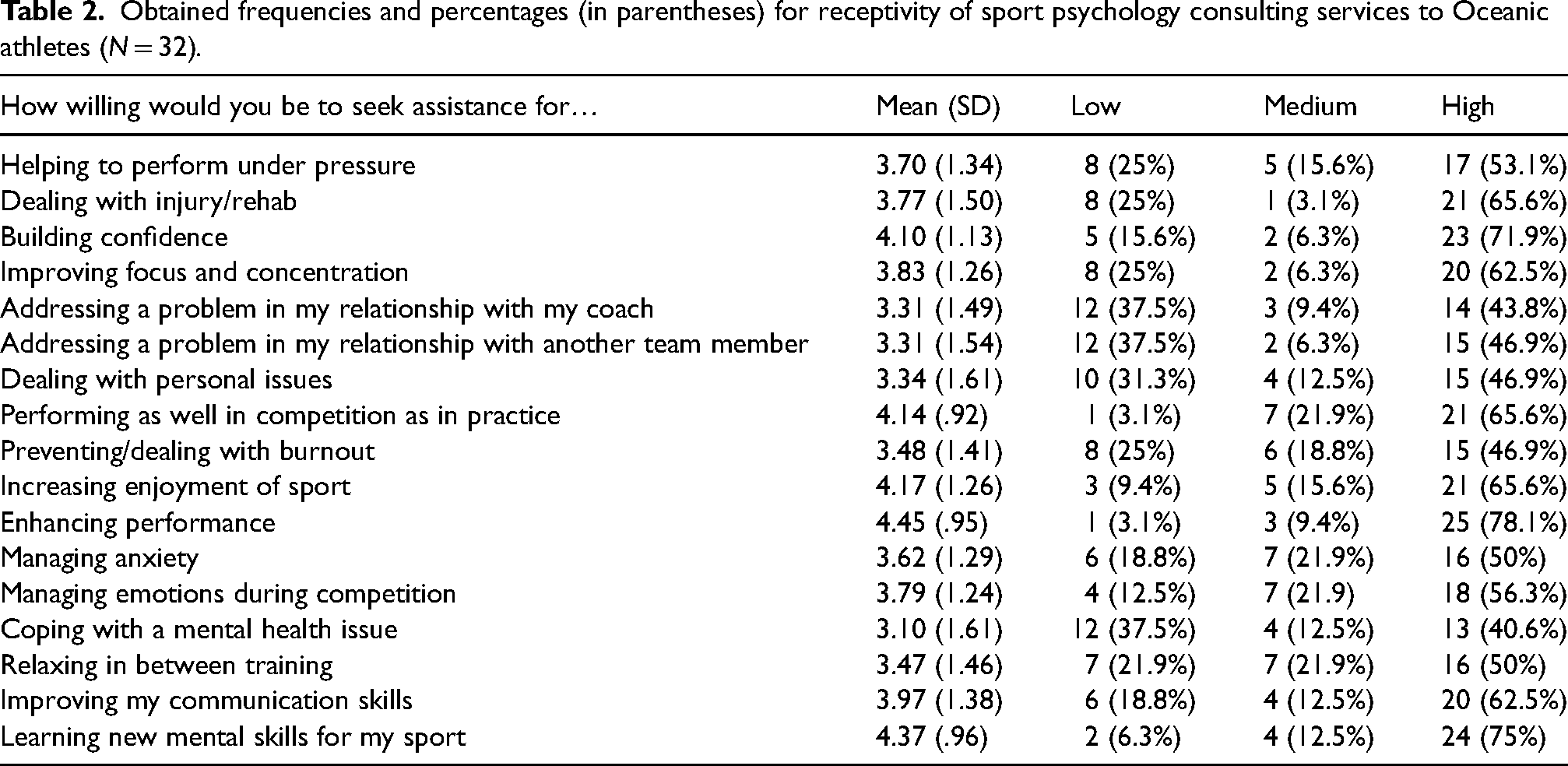
The chi-square analyses indicated six categories (35%) reached significance (p < 0.001) with large effect sizes (Cohen 23 ). These categories were as follows: dealing with injury/rehab χ2 (4, N = 30) = 16.33, p = 0.001, w = 0.738; building confidence χ2 (3, N = 30) = 12.40, p = 0.006, w = 0.643; increased enjoyment of sport χ2 (4, N = 29) = 33.59, p < 0.001, w = 1.076; enhancing performance χ2 (3, N = 29) = 27.14, p < 0.001, w = 0.967; improving my communication skills χ2 (4, N = 30) = 25.67, p < 0.001, w = 0.925; and learning new mental skills for my sport χ2 (3, N = 30) = 24.13, p < 0.001, w = 0.897. In each of these categories, the ratings for ‘extremely’ were different than the expected frequencies, as shown by standardized residuals outside the cut-offs (±2.58). The calculated standardized residual for these items were as follows: dealing with injury/rehab zresidual = 3.27, building confidence zresidual = 3.06, increased enjoyment of sport zresidual = 5.06, enhancing performance zresidual = 4.37, improving communication skills zresidual = 4.49, and learning new mental skills for my sport zresidual = 4.20. The athletes thus rated that they were more extremely receptive to these services than expected by chance.
Perceived benefits of SPS to the athlete and their team
The athletes in the sample reported that SPS would be beneficial across several topic categories. As shown in Table 3, the athletes reported that sport psychology consulting services would be useful for mental skills (e.g. confidence and concentration) and communication skills. In addition, the athletes perceived that SPS could benefit in the generalization of performance from practice to competitive situations as well as increasing the overall enjoyment of their sport.
Obtained frequencies and percentages (in parentheses) for benefit of sport psychology consulting services to Oceanic athletes (N = 32).
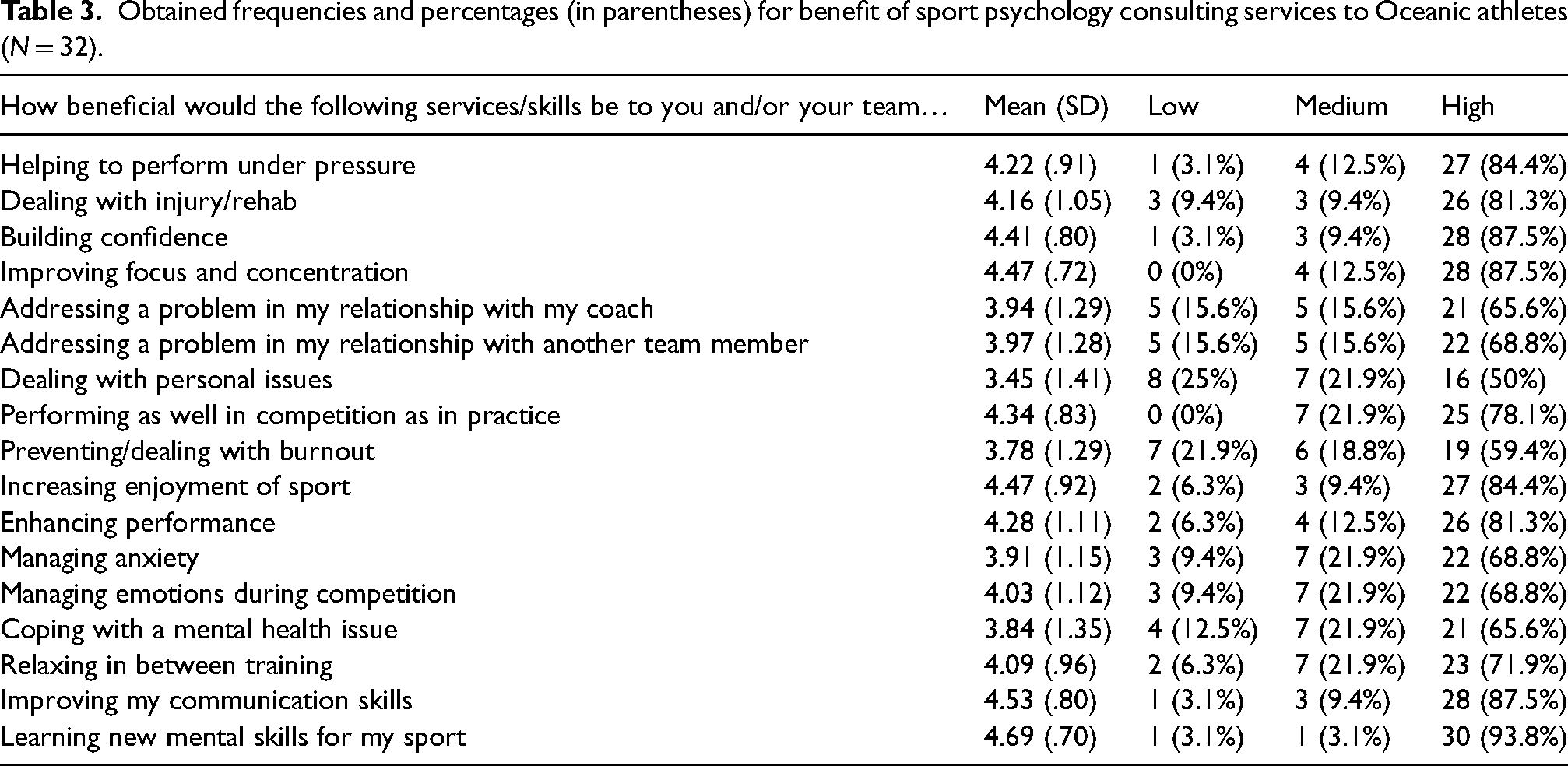
Chi-square analyses showed that 13 of the categories (76%) reached significance (p < 0.001) with large effect sizes (Cohen 23 ). These categories were as follows: helping perform under pressure χ2 (3, N = 32) = 15.75, p = 0.001, w = 0.701; dealing with injury/rehab χ2 (4, N = 32) = 24.25, p < 0.001, w = 0.871; building confidence χ2 (3, N = 32) = 22.25, p < 0.001, w = 0.834; improving focus and concentration χ2 (2, N = 32) = 10.94, p = 0.004, w = 0.585; addressing a problem in my relationship with my coach χ2 (4, N = 31) = 17.23, p = 0.002, w = 0.746; addressing a problem in my relationship with another team member χ2 (4, N = 32) = 19.56, p = 0.001, w = 0.782; preventing/dealing with burnout χ2 (4, N = 32) = 13.94, p = 0.007, w = 0.660; increasing enjoyment of sport χ2 (3, N = 32) = 33.25, p < 0.001, w = 1.019; enhancing performance χ2 (3, N = 32) = 21.75, p < 0.001, w = 0.824; managing anxiety χ2 (4, N = 32) = 14.56, p = 0.006, w = 0.675; managing emotions during competition χ2 (4, N = 32) = 19.25, p = 0.001, w = 0.776; improving my communication skills χ2 (3, N = 32) = 34.25, p < 0.001, w = 1.035; and learning new mental skills for my sport χ2 (3, N = 32) = 49.50, p < 0.001, w = 1.244.
Of the items that were significant, the only response option that was different than the expected frequencies with standardized residuals outside the cut-offs (±2.58) was the extremely option. The standardized residuals for these items were as follows: dealing with injury/rehab zresidual = 3.40, building confidence zresidual = 3.53, addressing a problem in my relationship with my coach zresidual = 3.53, addressing a problem in my relationship with another team member zresidual = 3.79, preventing/dealing with burnout zresidual = 3.00, increasing enjoyment of sport zresidual = 4.95, enhancing performance zresidual = 3.89, managing emotions during competition zresidual = 3.40, improving communication skills zresidual = 4.95, and learning new mental skills for my sport zresidual = 6.01. As such, the athletes perceived that these services were more extremely beneficial than expected by chance.
Knowledge and utilization of mental skills
Knowledge of mental skills was mixed among the athletes. Further inspection of the data revealed that most athletes rated their knowledge at either the low or high end of the range and relatively fewer athletes rating their knowledge in the mid-range (see Table 4). On average, the athletes indicated low levels of knowledge for imagery/visualization and biofeedback, and high levels of knowledge for goal setting, focus, and self-talk.
Obtained frequencies and percentages (in parentheses) for knowledge ratings for athletes’ (N = 32) of mental skills.

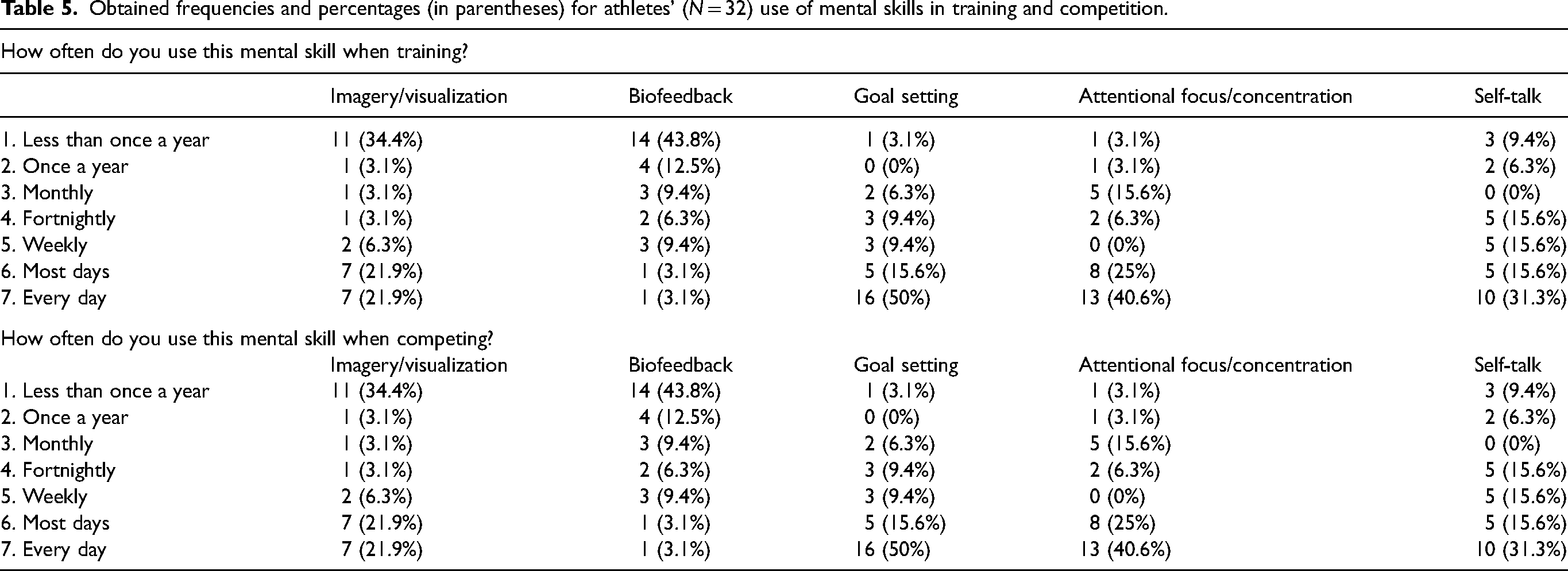
As can be seen in Table 5, the athletes used mental skills more regularly during competition than during training. There was a change across all skills to use ‘every day’, in the instance of competitions although this was particularly evident for goal setting, attentional focus/concentration, and self-talk. Overall, the skills for which athletes reported having more knowledge (i.e. goal setting, focus, and self-talk) were also the skills that were used more regularly in training and competition.
Obtained frequencies and percentages (in parentheses) for athletes’ (N = 32) use of mental skills in training and competition.
Discussion
The current investigation is the first to report the views of elite athletes from developing nations in the Oceania region towards sport psychology consulting services. The overarching aim of this study was to provide information on sport psychology service utilization and receptivity to sport psychology consulting services and associated mental skills training. We hypothesized, firstly, that athletes of the Oceania region would be receptive to sport psychology consulting services, although actual usage would be low. Secondly, that athletes would perceive that there are benefits of SPS for themselves and their team. Thirdly, we hypothesized that the cohort would have some knowledge of established mental skills in training and competition settings, although the implementation would be limited. Regarding the first hypothesis, the data suggests that despite the low usage of sport psychology consulting services by the athletes, they are, nevertheless, receptive. Confirming the second hypothesis, the athletes perceived benefits of SPS to themselves and their teammates. In relation to the third hypothesis, despite reporting a mixed level of knowledge around mental skills, a high proportion of these athletes used several mental skills (i.e. goal setting, focus, and self-talk) more frequently around competition time compared with during training. In addition to documenting perceptions around sport psychology consulting services, the findings of the present study have practical implications for sport psychologists practising in the greater Oceania region and nearby countries (e.g. Australia and New Zealand). Moreover, the outcomes have implications for the equitable provisioning of sport psychology consulting services for athletes in this important region of the world.
Sport psychology services
The survey data identified that this athlete cohort had limited access to sport psychology consulting services within their support network, which closely mirrors the findings of Woods et al. 12 in their study with Irish athletes. The small proportion of participants who did have access to SPS found the service helpful with only two of eight athletes being dissatisfied. Low social support is an established key risk factor for general mental health issues24,25 highlighting the importance of both formal and informal support networks for athletes. Moreover, the athletes in the current sample chose to access sport psychology consulting services ‘as needed’. SPS are thus not part of the overall support structures for these athletes, and they may not be seeking sport psychology consulting services when problems emerge. Increased accessibility to sport psychology consultants is warranted for both preventative and remedial purposes.
Sporting clubs and organizations in the Oceania region may enhance accessibility of SPS through capacity building at the local level and by leveraging existing support frameworks with nearby developed nations. Sport psychology practitioners in other regions may increase availability of their services to Oceania athletes through remote-based delivery (e.g. internet-based video meetings and social media). The online modality is especially salient as access to media in the Asia-Pacific region is diversifying with evidence suggesting increased community access and use of internet and mobile phones. 26 The benefits of online service delivery include the ability to offer client support. This is particularly salient for athletes who live in remote locations or are away at competitions. In addition, online delivery facilitates the synchronous sharing of information among athletes, coaches, and other support staff, and it can be used to give instant visual feedback in practical settings. 27 Although there may be some disparity in access for remote areas, online delivery of SPS could be offered as a package to the national sporting organization who will likely have the technological resources even if individual athletes do not. Price et al. 28 indicate that online service delivery is being used effectively with athletes in developed countries and have provided recommendations for remote service delivery to athletes by sport psychology consultants.
The present results suggest that athletes are receptive to sport psychology consulting services, which benefit both performance and psychosocial elements. These categories included willingness for consulting around enhancing performance and learning new mental skills. These topic areas are consistent with previous findings,12,15,29 which indicate that athletes are more likely to seek SPS for topics perceived as overtly performance enhancing (a distinction originally made by Wrisberg et al. 15 ). In further support of findings from Woods et al., 12 the athletes in the present study also revealed that they had an interest in building communication skills and increasing enjoyment of sport. These results are encouraging as they indicate that the athletes from the Oceania region are receptive to improving their skills and the appreciation of sport in areas other than performance enhancement.
The athletes in the current investigation reported that SPS would be extremely beneficial to them across several domains, most of which aligned with those for which they were most receptive. However, more athletes than expected reported that sport psychology consulting services would be extremely beneficial to injury rehabilitation and building confidence, even though these topic categories did not reach significance for willingness. This divergence in the relationship between perceived benefit and willingness has been reported in previous research.11,12,30 For example, Woods et al. 12 have suggested that willingness to seek SPS for assistance with building confidence, improving focus, and performing as well in competition as in practice is mediated by prior positive previous experience of sport psychology consulting services. A statistical examination of this suggestion was beyond the scope and aims of the current study, and therefore, future research may be conducted to explore these underlying mechanisms in Oceania athletes.
The positive attitudes and willingness to engage in SPS among athletes in the current study are consistent with previous qualitative investigations among a variety of athletes in developed countries.11,12,30 More specifically, Wrisberg et al. 15 highlighted that those athletes with a negative perception of SPS often had no prior sport psychology experience or education, potentially indicating limited knowledge and understanding of sport psychology. Gee 31 has shown that the athletes who had a poor understanding of the sport psychology process were more reluctant to seek out psychological services because of their lack of knowledge. Previous data suggests that if athletes know and understand more about the sport psychology process and the benefits, they may be more inclined to participate and have a more positive perception.30,31 The present findings indicate that elite athletes in the Oceania region are aware of the benefits and are receptive to SPS regardless of their previous experience. It may be that currently, the benefits of SPS are a greater part of elite athlete narratives, and therefore, a positive relationship between sport psychologists and elite athletes may not be as contingent on first-hand exposure as previously suggested. This positive relationship may be a result of recent reductions in stigma around the mental health of elite athletes. 32
Mental skills
The present findings suggest that Oceania athletes had mixed knowledge around mental skills for improving sport performance. The athletes showed less knowledge around visualization techniques and biofeedback, whereas they reported higher levels of knowledge in goal setting, attentional focus, and self-talk. Further, they indicated that these were the same skills they used sometimes in training and, increasingly frequently, around competition. Research has demonstrated the benefits of mental training on psychosocial elements of athletes in high level sport, particularly enhancing recovery, managing anxiety, and improving performance. 33 Given the evidence suggesting that mental training is associated with success of athletes,7,34 sports psychologists who provide development of these types of skills among these remote groups could pioneer highly beneficial programmes. Opportunities for positive early experiences with sport psychology consultants have potential to build a culture around the delivery for these types of services to athletes who may benefit from this assistance due to social disadvantage.20,21 Our data supports the willingness of elite athletes from Oceania in learning and developing skills related to enhancing performance, and therefore, practitioners are encouraged to provide applied services for this group.
Limitations and future directions
There are several limitations of this study that should be noted when interpreting the results. Firstly, the number of survey respondents in total represents a small proportion of the athletes in the Oceania region, and therefore, the findings may not be applicable across the entire spectrum of elite athletes in this region. Future research with a larger sample of Oceania athletes could extend on the present findings and increase confidence in their generalizability. Additionally, we did not include questions about athlete willingness to SPS delivered via technology, which is something that could be investigated in future research. Further, the sample contained a diverse range of sports that extant literature suggests may have an impact on the willingness of athletes in receiving sport psychology consulting services.14,35 Research with more homogenous athlete samples or which specifically analyses group differences would be beneficial in providing a more comprehensive understanding among this cohort. Also, having researchers and/or teammates provide translation of a measure is recognized as a limitation. In future, the measures utilized could be translated prior to administration. Lastly, the small sample precluded more complex analyses regarding relationships between variables and underlying mechanisms. Nevertheless, the population of interest in this investigation has received little research attention to date. These findings provide novel evidence for a relatively unexplored research context.
Conclusion
In conclusion, the present study is the first to document the views of elite athletes from developing countries in the Oceania region regarding sport psychology consulting services. Despite limited accessibility to these types of services in the area, the athletes are receptive to SPS and are of the view that these services would be beneficial to them and their teammates. As such, enhanced provisioning of SPS for athletes from Oceanic regions where there are limited resources may be an extremely valuable service. We recommend that future efforts be directed to ensure that visibility and accessibility are improved for athletes as well as their support networks. Practitioners taking this approach could have an active role in facilitating effective partnerships through governing bodies and pioneer sport psychology service availability to regions that may benefit from this type of assistance. The role of organizations from more affluent nations positioned close by, such as Australia and New Zealand, should be leveraged in providing more equitable provisioning of sport psychology consulting services to the greater Oceania region.
Footnotes
Acknowledgements
The authors thank Duncan Free OAM, Christopher Nunn OAM, and Richard de Groen for their support of this project during GAPS. Thanks to Robin Ramme for the assistance with data collection.
Declaration of conflicting interests
The author(s) declared no potential conflicts of interest with respect to the research, authorship, and/or publication of this article.
Funding
The author(s) disclosed receipt of the following financial support for the research, authorship, and/or publication of this article: The reported research was part of the GAPS (Gather, Adjust, Prepare, Sustain) project and was funded, in part, by the Commonwealth Games Federation.
