



Abstract
While applied performance analysts (PAs) are a well-established applied sports science practitioner group, there is no clear definition of the purpose of an analyst, their key relationships, or the expertise required to execute the role successfully. This research sought to understand how PA practitioners and educators perceive their role as applied PA practitioners. Twenty-seven applied PAs and educators with applied PA experience participated in six online focus groups, completing an online survey in advance. Reflexive thematic analysis of transcripts and survey data generated an overarching theme: embedded applied PA practitioners have a value co-creation role within performance ecosystems which is inhibited by poor professional infrastructure and a lack conceptual clarity for the role. Five sub-themes are reported; the (a) why, (b) what, and (c) how of professional practice; d) the impact of stakeholder misunderstanding on PA practitioners; and (e) issues with professional recognition, development, and renumeration opportunities. This study demonstrates applied PAs’ role as curators, translators, influencers, and educators aiming to add value to the decision-making of a wide range of stakeholders. It highlights a potential deficit in applied practice in ‘value capture’ which may be perpetuating the problems practitioners reported with stakeholder misconceptions and undervaluing of their role. It is hoped this paper will inspire those invested in applied PA practice to create a shared understanding of how they can add value within the performance ecosystem so the profession can evolve and thrive.
Introduction
Applied performance analysts (PAs) are a well-established applied sports science practitioner group, having operated within performance sport ecosystems for over 20 years. 1 Until recently, this group of practitioners and their perspectives on practice have been largely absent from the body of performance analysis (PA) literature,2–4 reflecting a lack of emphasis on the study of applied practice in PA. Investigations which have captured the lived experiences of applied PAs reveal a group of dedicated and passionate practitioners who face several challenges including general role ambiguity,5,6 ad-hoc recruitment and job insecurity,7,8 poor working conditions,9–11 widespread use of unpaid internships and poor salaries,1,12 continually having to ‘prove their worth’ in an often volatile micro-political climate,7,8,13 and a general uncertainty about what skill set is required as the profession and technology rapidly evolve. 14
In response to media coverage of poor conditions for analysts, 15 O’Donoghue's 2013 editorial 12 (p. iii) made the case that ‘sports performance analysis is a skilled profession requiring knowledge of sports performance, intellectual ability, practical skill and the ability to work professionally with a squad. The profession should not be undersold’. Ten years later, it is timely to explore if the lived experience of applied PAs’ is indeed one of esteemed professionals and examine if the concept of applied PA as a profession has developed. This is particularly pertinent in the broader sports science sphere given the human redundancy which will impact roles as task automation becomes more prevalent through technology and computer developments. 16 As more and more students graduate with aspirations of becoming applied PAs, there is a duty of care on established practitioners and representative organisations to consider how we can better understand the evolving role in order to provide PA practitioners with guidance, regulation, and clear pathways in which to practice and thrive as professionals.
The key characteristic of any profession is being able to define who they are—and who they are not—as a group of practitioners. 17 A profession can be said to have a distinct body of knowledge, a specialised and unique set of skills, practitioners with the ability to make judgements with integrity in uncertain environments, and a community who perform oversight and monitoring of professional practice.18,19 Martin, 20 considering the discipline of sports psychology, adds the additional criteria that professionals should be able to make a living in the role. Many applied PAs are making a living within the performance sport industry, and they are increasingly being described in the literature as professionals,1,7,21 with their activities termed ‘professional practice’.22–24 The capacity to harness technology to capture ever increasing volumes of performance data, coupled with the time demands on modern coaches, ensures the continued demand for the services of applied PAs in sport. Despite this, the ‘trappings’ of professional practice such as demonstrable theoretical and practical expertise, guides for practice, codes of practice, organisation, and regulation, 18 are largely absent in a role which deals with increasing volumes of athlete data. 25 A series of editorials26,27 track the evolution of PA as a discipline from a working group of the British Olympic Association 28 to the formation of the International Society of Performance Analysis in Sport (ISPAS), as it became ‘apparent that Performance Analysts need some sort of support body’ 29 (p. i). ISPAS began the process of accrediting PAs in 2006. 30 It does not currently provide structured professional development programmes or a guide for practice for applied practitioners.
Martin et al.'s 2 framework for professional practice in applied PA provided a comprehensive overview of the mechanics of practice—i.e. the components and processes which contribute to the understanding of what applied PAs do. However, this approach does not fully capture the behaviours and actions which determine the successful delivery of these processes. The ever-evolving nature and volume of data now available to inform decision-making in sports organisations and the critical mass of people employed in applied PA in such a variety of roles demand a deeper assessment of practitioners’ function and purpose. Without this clarity, it is very difficult to educate consumers about what they can and should expect from applied PA or indeed appropriately prepare applied PAs for the realities of their role. This research sought to understand how a large and varied group of leading PA practitioners and academics perceived the role of an applied PA practitioner.
Methods
Following ethical approval, six independent online focus groups comprising elite applied PAs and leading academics in the field (Table 1) were convened with the dual purpose of validating a proposed framework for professional practice 2 and capturing the lived experiences of applied PAs. A deductive analysis was conducted to determine the validity of the proposed framework and is reported in Martin et al., 2 while an inductive analysis was implemented to consider the participants’ perspectives of their lived experience as analysts and educators/researchers in the field. Capturing the complexity of professional practice requires a philosophical position such as critical realism as it conceptualises industrial relationships, processes, and networks as continuously changing based on human agency. 31 A critical realist position recognises that all of the perspectives expressed are the individual's interpretation of their experience; however, it also provides scope to notice how the collective experiences might be observed as a phenomenon which impacts a group, such as applied PA practitioners. 32 All analysis and interpretation draw on existing knowledge and life experience within the research team, and we acknowledge our biases relative to this study acquired though our collective experience of professional practice, research, lecturing, accreditation processes, and consultancy.
Details of focus group structure and participants.
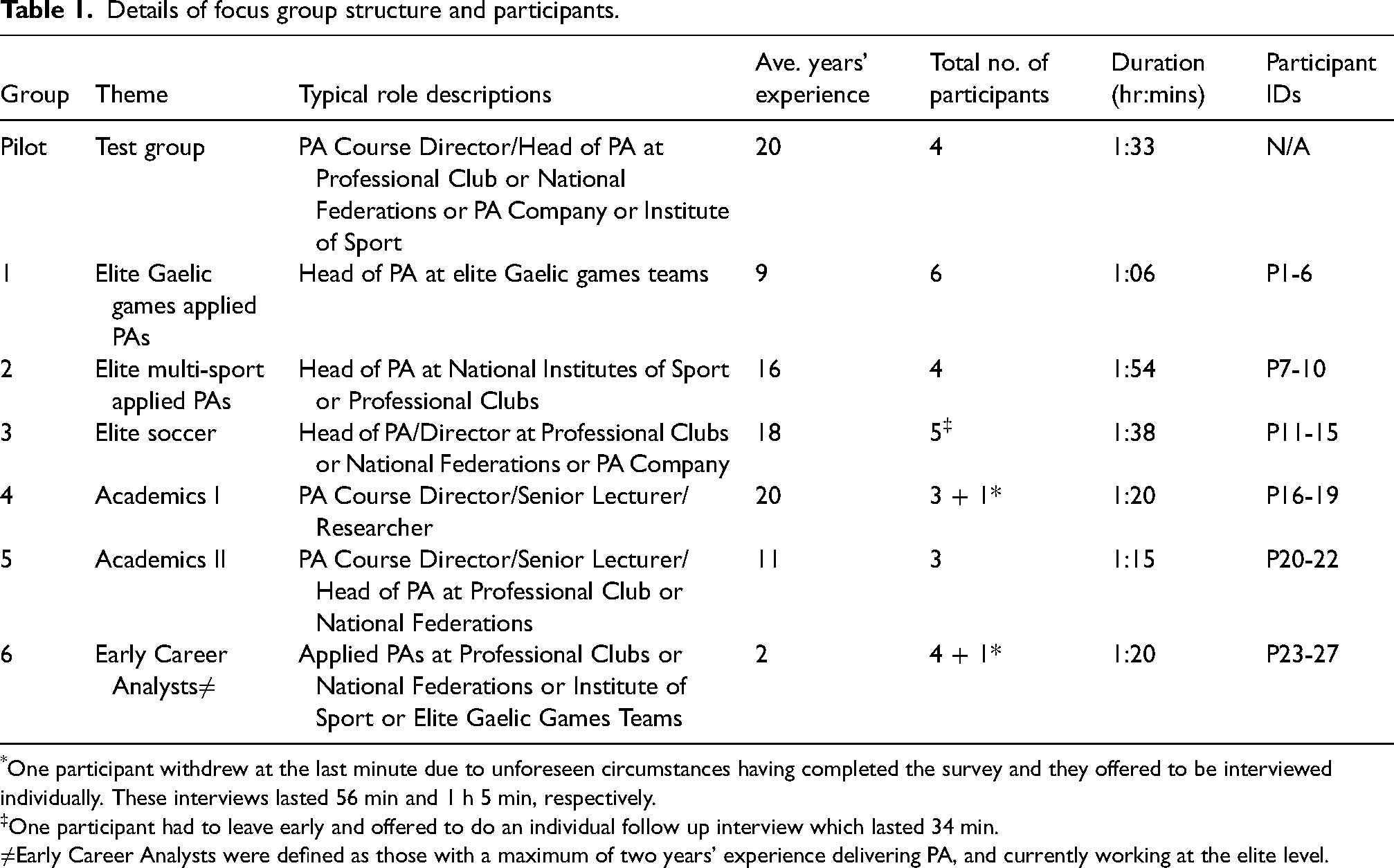
*One participant withdrew at the last minute due to unforeseen circumstances having completed the survey and they offered to be interviewed individually. These interviews lasted 56 min and 1 h 5 min, respectively.
One participant had to leave early and offered to do an individual follow up interview which lasted 34 min.
≠Early Career Analysts were defined as those with a maximum of two years’ experience delivering PA, and currently working at the elite level.
Participant sample
The professional networking site LinkedIn was used to recruit participants. The duration (maximum 2 years’ experience for Early career analysts and minimum 5 years’ experience in elite sport as lead applied PA for all others) and nature of participant experience were a key consideration for inclusion. The aim was to recruit a diverse range of experiences in different sports and environments through purposive sampling. Academic participants were involved in the development of applied PAs practitioners, and most were still practicing elite applied PAs (Table 1). Participants were currently working in a variety of countries/continents: Africa (1), Europe (1), North America (1), and Oceania (2), but were predominantly British or Irish (22) due to constraints with logistics and contacts. A quarter of the sample were female participants (7/27).
Procedure and analysis
Six focus groups and three follow-up interviews were conducted (Table 1), via Zoom (Zoom Video Communications Inc., 2016). These were recorded and transcribed verbatim. Participants were asked to complete a survey prior to attending the focus group where they were invited to comment on the components of the proposed framework for practice and 25/27 participants did so. Braun and Clarke's 33 six-step reflexive thematic analysis process was used to analyse the focus group and qualitative survey data as this was flexible enough for different concepts to come to the fore at different stages as decisions were made about how best to interpret data and code to higher order themes. We did not seek to arrive at consensus among the coders, but rather to deepen the interpretation of the data and allow voices to be heard and themes to develop in a collaborative and nuanced approach. 34 A total of 128 codes were generated in phase 2 of the initial inductive analysis. In this phase, transcripts were coded by the first author and then reviewed by the final author, allowing codes to be refined and agreed. Data trustworthiness and richness were achieved through the triangulation of survey data with focus group transcripts, and the use of QSR NVivo (Version 12, www.qsrinternational.com) ensured a transparent audit trail for decision-making. 35 Potential themes were identified and discussed in phase 3, and several iterations of the themes were mapped and reviewed by the first and final authors. Authors 2, 3, and 4 challenged the assumptions underpinning themes as the final mapping took place adding to the credibility and confirmability of findings. 35 Participant comments are presented as quotations to support the credibility of the interpretations and the explanations put forward 36 and are referenced by the participant number. Quotations were reported verbatim; however, words or phrases such as ‘like’, ‘so’, ‘kind of’, and ‘you know’ were removed where that did not impact the meaning of the comment.
Results
Inductive analysis of qualitative survey data and focus group conversations generated five sub-themes (Figure 1), three regarding the characteristics of professional practice: the why, what, and how, and two concerning how the broader issues and constraints which impact professional practice. The ‘Why’ was the aspiration to add value to decision-making processes such as recruitment, training, selection, and tactics. Considering ‘What’ applied PAs do, participants discussed processes that applied PAs undertake in generating, translating, and designing learning opportunities to co-create valuable knowledge. In terms of ‘How’ valuable knowledge was co-created, a strong theme of ‘embeddedness’ within the performers’ organisation was evident, which allows applied PAs to build the necessary relationships, credibility, and contextual intelligence to deliver optimally on their role. The impact of broader issues within the profession on practice was captured in two final sub-themes: how the lack of definition and conceptual clarity for the applied PA role leads to stakeholder misunderstanding and undervaluing of practitioners and their work and how the lack of professional infrastructure for practitioners inhibits professional recognition, development, and renumeration opportunities. The overarching theme was that embedded applied PA practitioners have a value co-creation role within performance ecosystems which is inhibited by poor professional infrastructure and a lack of conceptual clarity for the role. This value co-creation role involves working with stakeholders to generate, curate, and translate data which leads to better decision-making. This section explains the term performance ecosystem and presents the five sub-themes and the lower order themes which they are built upon with quotes to illustrate their meaning.
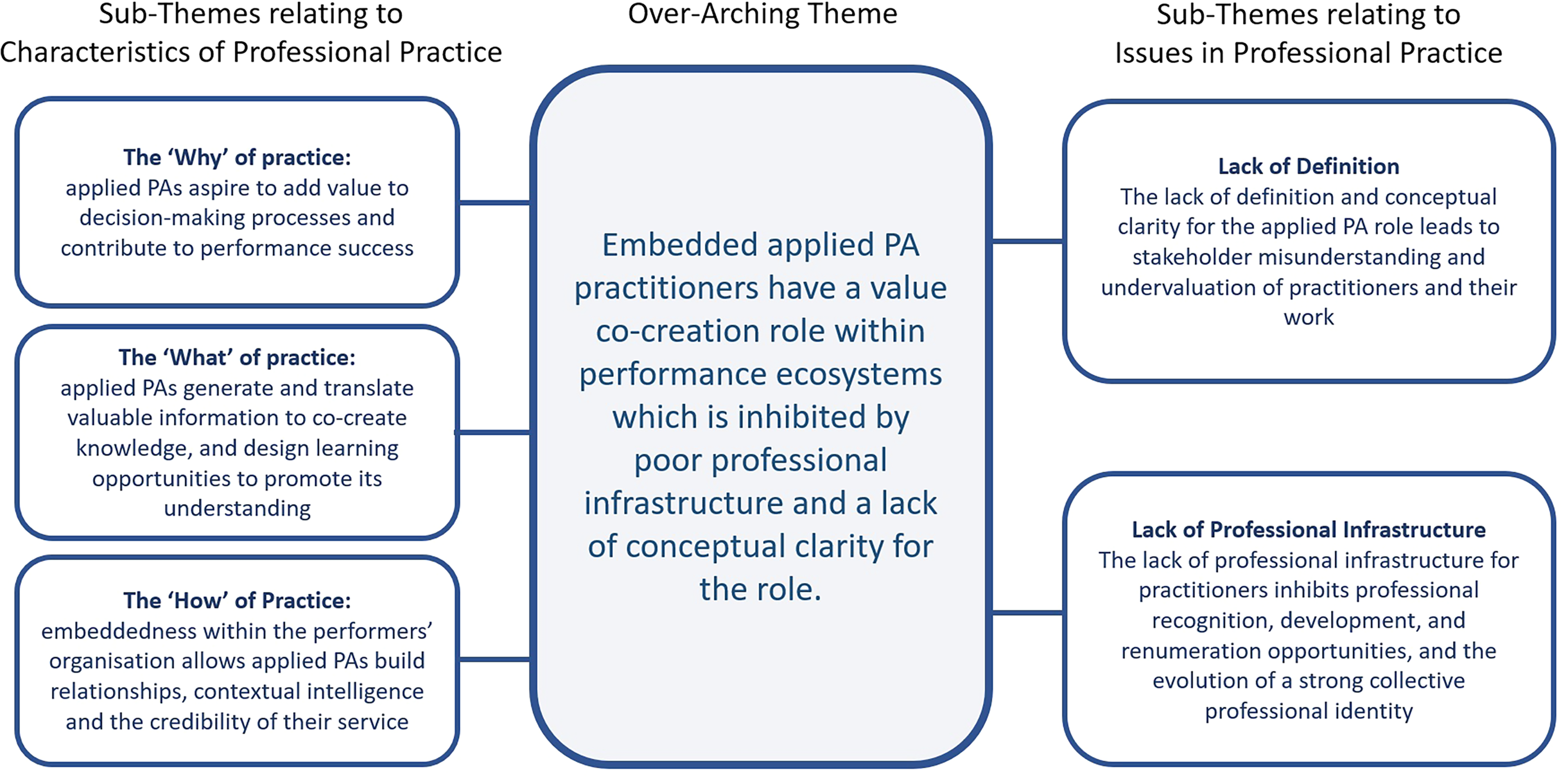
A summary of the themes which were generated from a survey and focus group conversations with 27 elite applied PAs and academic experts about their perceptions of the role of an applied PA.
A performance ecosystem
The term ‘performance ecosystem’ is used to reflect the work environments described by applied PAs. The diverse range of internal and external stakeholders that applied PAs reported dealing with are captured in a network diagram (Figure 2), illustrating the importance of a contextual intelligence and relationship management skillset for applied PAs. Several participants referred to how their presence within these performance ecosystems afforded them the opportunity to observe the environment, the culture, and dynamics which contextualise their practice. This embeddedness within the performance ecosystem is interpreted as a key distinguisher between ‘applied PAs’, as defined later, and others who work in the PA industry (Figure 4). Participants felt that presence was key to sustaining relationships and building sufficient contextual intelligence to function and have influence within the complexity of the performance ecosystem: So when you’re going into these cultures and environments, go and smell it, go and really, actually, purposefully go into that environment, not just with your technical hat on, but with all the other things that are really important. … looking at the environment and working out how you’re going to work in this environment, and deliver in this environment, and connect with people in this environment. Also, you need to be looking at the organisation, what is the culture, what the behaviour is, what's accepted, not accepted… P10
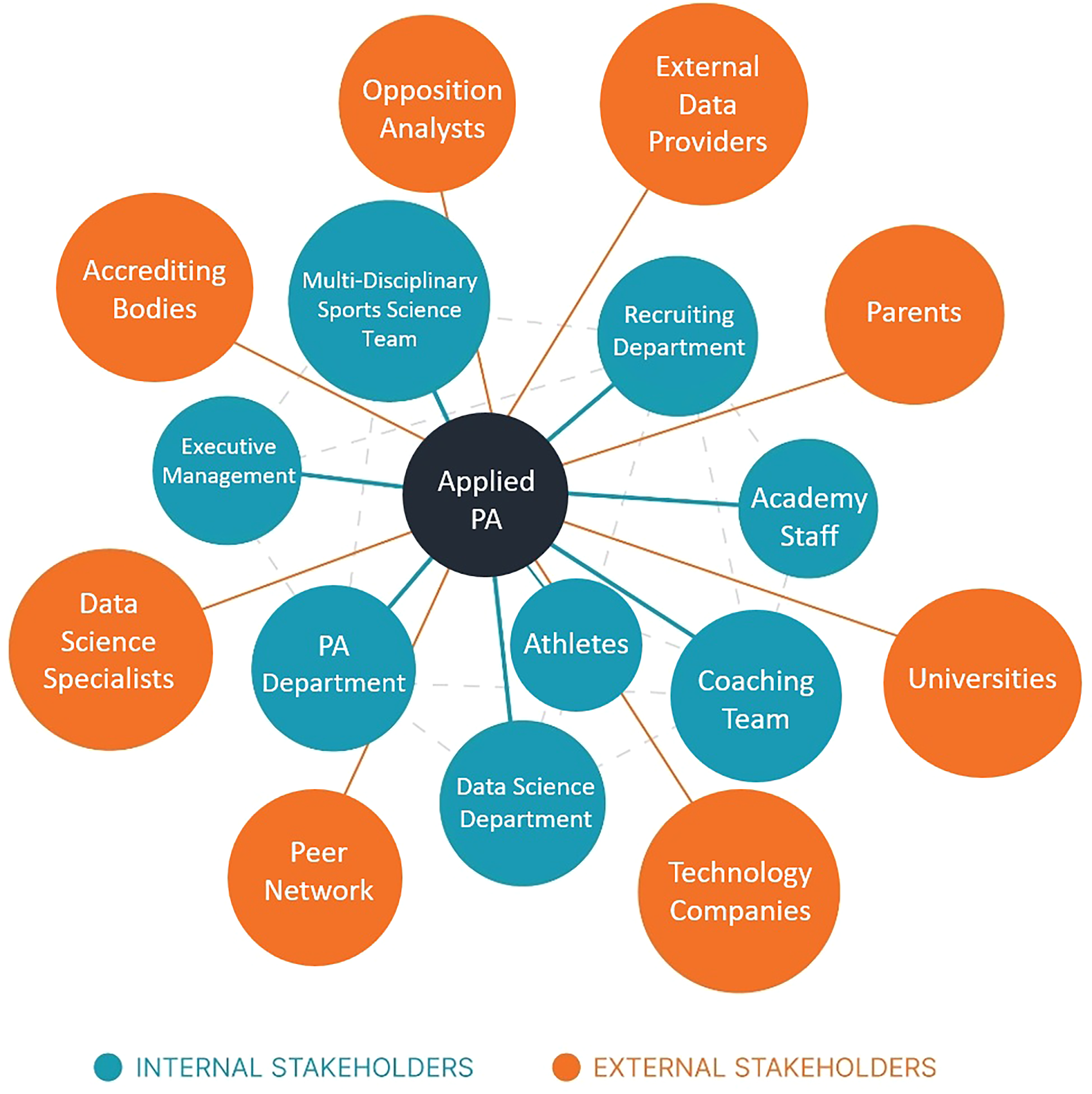
A network diagram of the stakeholders applied PAs engage within and externally to their organisation identified by focus group participants. The dashed lines represent assumed relationships within a performance ecosystem.
The ‘why’ of practice: applied PAs aspire to add value to decision-making processes
The whole point of the work we do is to inform future decision-making and learning. P16
As articulated in the quote above, participants felt their purpose was to add value to decision-making processes which may in some way contribute to successful sporting performance. The potential to impact sporting performance is understood as another distinguishing factor between applied PAs embedded within a performance ecosystem and others who work in the PA industry (Figure 4). Participants connected the purpose of their practice to having a voice and agency to influence or add value to decision-making, although this was not always a given: [You] can only attempt to influence so much. Again, credibility through consistency with your coaches is a crucial barometer of how hard to push some things. Subtle influencing [is] often the way. P8
I think it [the level of advocacy] comes down to those things, analyst experience and… analyst knowledge within the sport, …therefore, does the coach trust what you’re going to say? P21
In the dataset overall, the positive aspects of the applied PA role did not receive as much airtime as the challenges. When participants did express high motivation and enjoyment of the role, it was commonly in the context of feeling that they had contributed in a meaningful way: Sometimes, and my preference, where I felt I was getting more job satisfaction when it was more interactive, and you had more input and there was more discussion back and forth. And I think… you felt like… you're on a level with the head coach or the manager and you were actively involved… P12
I was massively valued in terms of being able to give an opinion, being heard, not always following through, but that's their job. The staff we had …that was one of their biggest strengths. They would absorb multiple bits of information …and decide what went to the players. And it might be, 10% of what we gave them. But at the end of the day, if they felt like that was enough, then that's what they felt was the right way to do it. And… for us, we felt we'd done… [our job] P13
The ‘what’ of practice: applied PAs generate and translate valuable information to co-create knowledge and design learning opportunities to promote its understanding
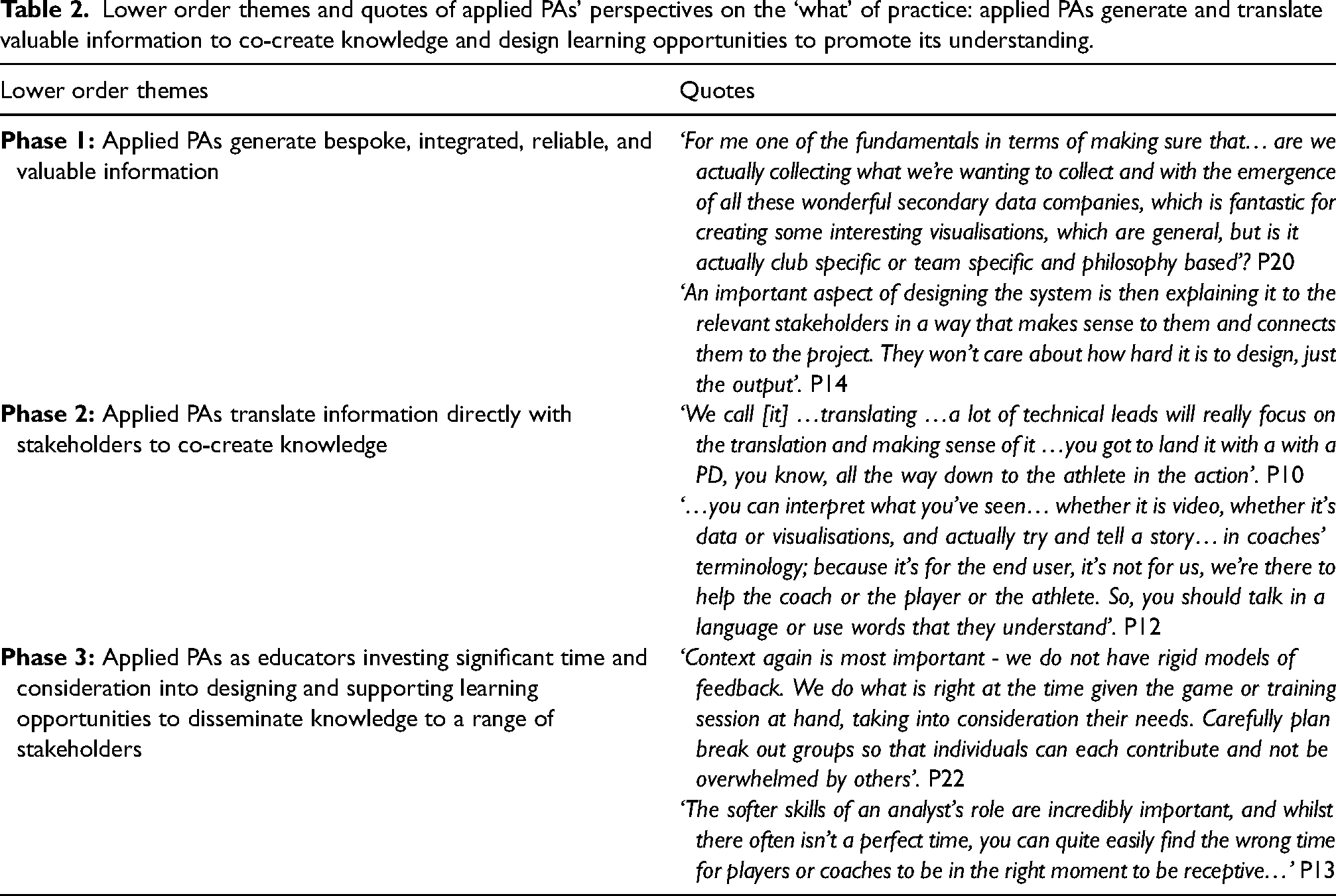
Study participants identified knowledge co-creation and dissemination within an organisation as the ‘What’ of practice. Analysis of the data generated three lower order themes which could be said to be phases to this process: (a) to generate bespoke, integrated, reliable, and valuable information; (b) to translate information directly with stakeholders to co-create knowledge; and (c) to play a role as educators, investing significant time and consideration into designing and supporting learning opportunities for a range of stakeholders (Table 2).
Lower order themes and quotes of applied PAs’ perspectives on the ‘what’ of practice: applied PAs generate and translate valuable information to co-create knowledge and design learning opportunities to promote its understanding.
The ‘how’ of practice: embeddedness within the performers’ organisation allows applied PAs to build relationships, contextual intelligence, and the credibility of their service
For me, the actual doing is …being immersed in the environment and actually undertaking it. P22
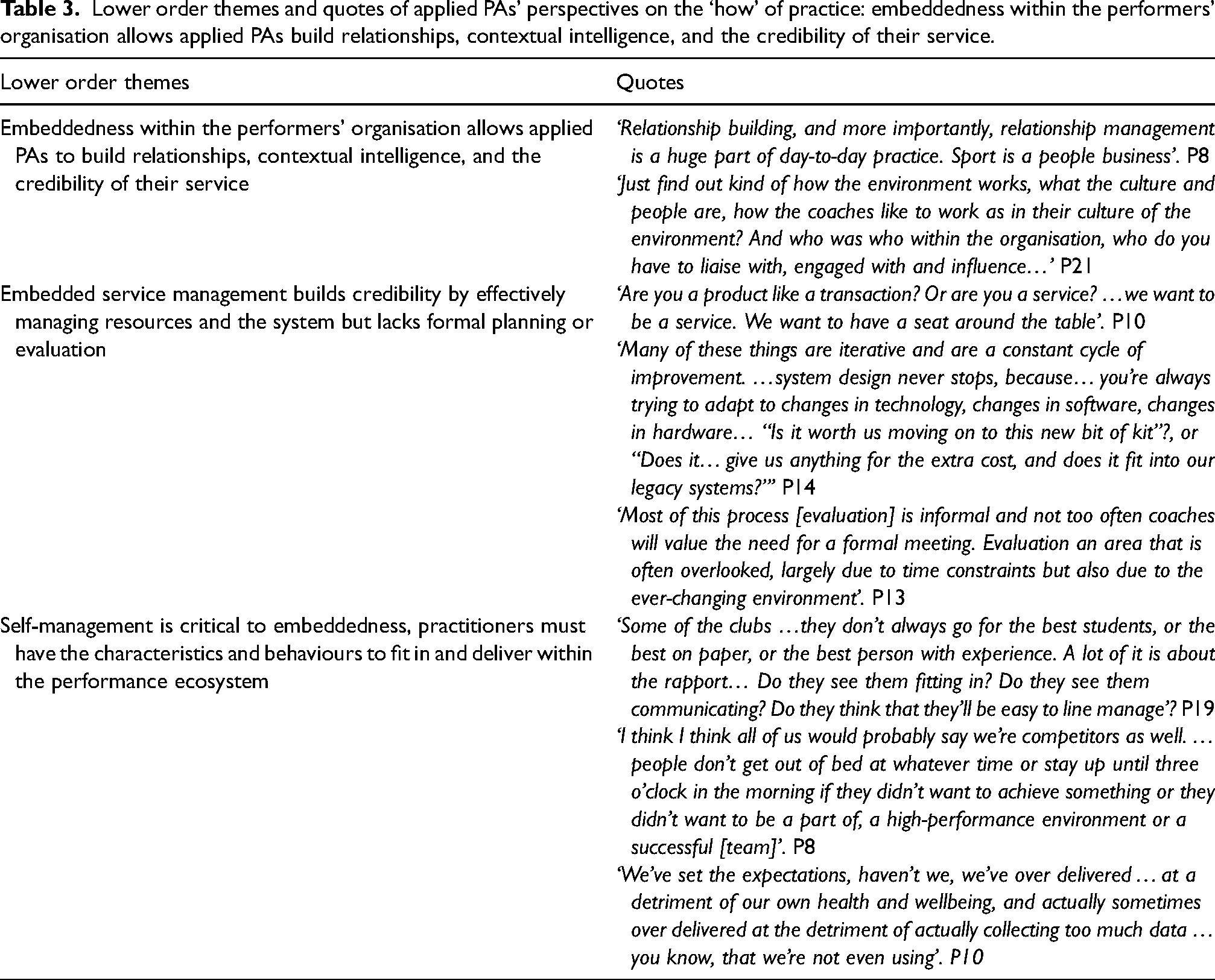
The quote above is reflective of this sub-theme identifying the embedded nature of the role of an applied PA within the performers’ organisation, a sense of belonging and contributing to something bigger. Participants connected embeddedness to their ability to build and foster strong relationships, to build their credibility as practitioners and the credibility of applied PA as a service, and to gain the contextual intelligence which drives their professional decision-making. The identification of embeddedness as fundamental to enabling effective practice led to its interpretation as the ‘How’ of applied PA practice. The lower order theme participants described were grouped into three aspects of professional practice which underpin embeddedness: (a) relationship management with diverse stakeholders in a highly political context; (b) self-management within the demands and expectations of the organisation; and (c) service management in an embedded context (Table 3).
Lower order themes and quotes of applied PAs’ perspectives on the ‘how’ of practice: embeddedness within the performers’ organisation allows applied PAs build relationships, contextual intelligence, and the credibility of their service.
The lack of definition and conceptual clarity for the applied PA role leads to stakeholder misunderstanding and undervaluation of practitioners and their work
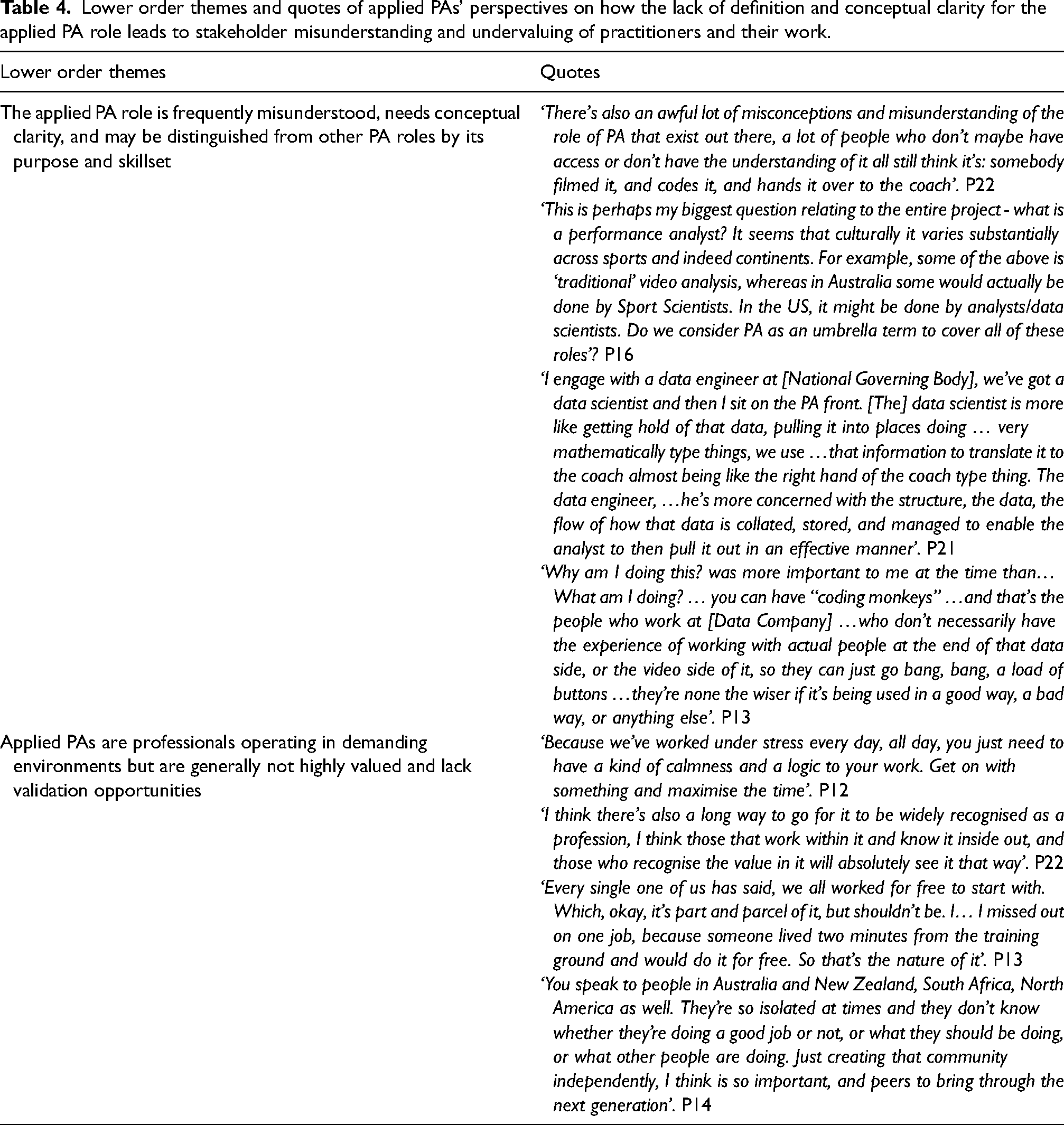
Whether applied PA is actually a profession arose in several focus groups, with opinions expressed that it is a profession to those who understand and value it. Many participants felt that PA was poorly understood by stakeholders, and this was linked to a perceived lack of value placed on the service and on practitioners (Table 4). Some focus groups highlighted that the purpose of embedded applied PA practitioners is to contribute to sporting success in some way, which differentiated them from others in the discipline. In considering the interface with data science, participants expressed a view that there was a delineation of the roles where the embedded applied PAs were more likely to be the data translators who commissioned and managed data models and systems, rather than build them. This difference in skill set and purpose was the first of two lower order themes. The second captured the lack of value placed on practitioners as reflected in poor pay and conditions (Table 4).
Lower order themes and quotes of applied PAs’ perspectives on how the lack of definition and conceptual clarity for the applied PA role leads to stakeholder misunderstanding and undervaluing of practitioners and their work.
The lack of professional infrastructure for practitioners inhibits professional recognition, development, and renumeration opportunities and the evolution of a strong collective professional identity
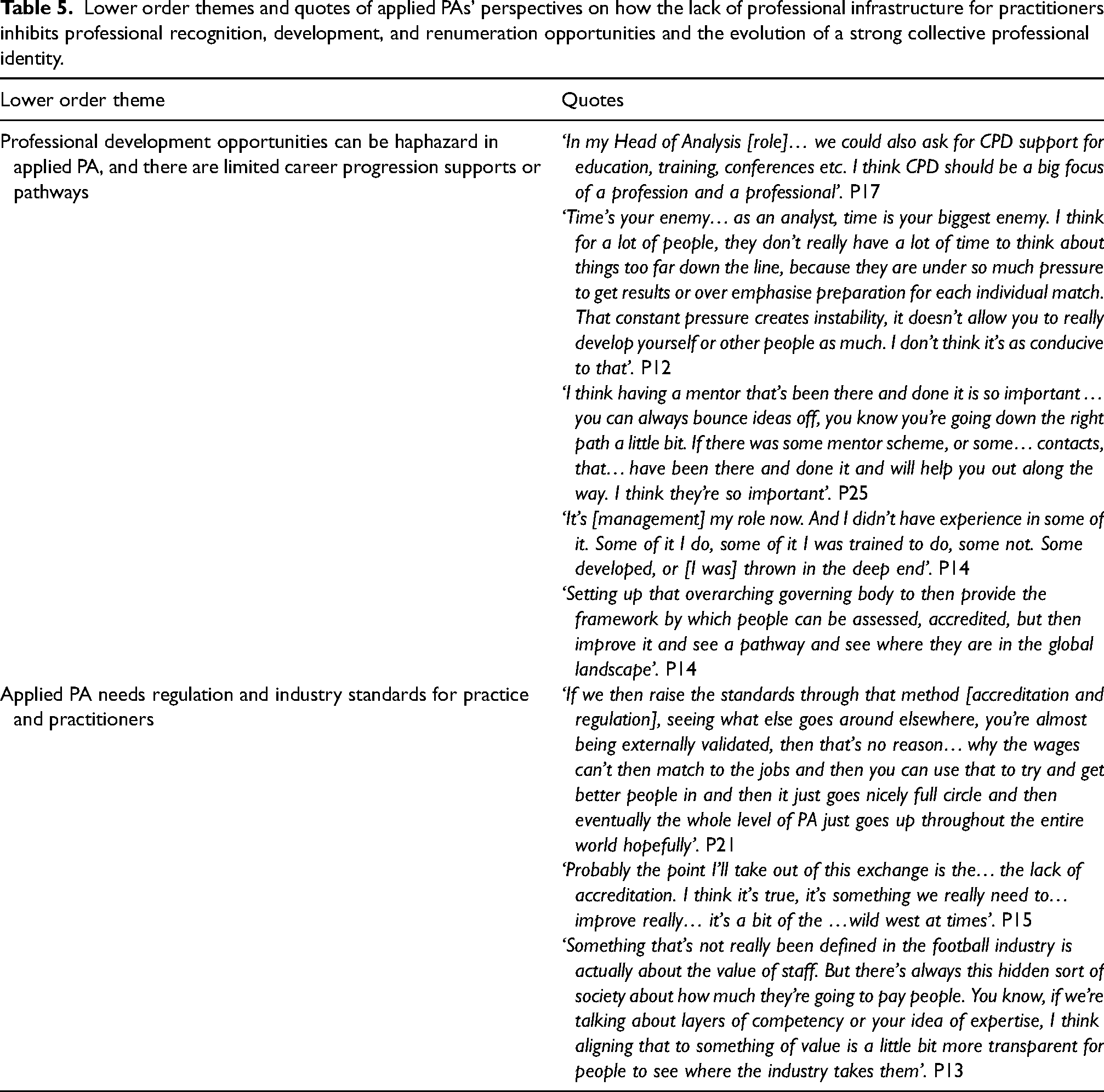
Participants in general demonstrated a strong sense of ‘kaizen’ or philosophy of continuous improvement and the need for effective professional infrastructure to support this was a prevalent theme, with lower order themes around the lack of professional development opportunities and industry regulation (Table 5). While several participants were accredited to different bodies including the ISPAS, it was clear that this was a voluntary exercise, generally not sought by employers nor viewed as essential to career progression. The perceived lack of value and recognition of the profession was linked by many to the absence of mandatory professional standards and a regulatory framework. The introduction of regulation through robust accreditation would potentially be welcomed by practitioners and would assist in filling the gap in professional validation which was identified.
Lower order themes and quotes of applied PAs’ perspectives on how the lack of professional infrastructure for practitioners inhibits professional recognition, development, and renumeration opportunities and the evolution of a strong collective professional identity.
Discussion
This study set out to understand how applied PAs perceived their role within the performance ecosystem as part of a larger study to understand the practical components of the role itself. 2 Inductive analysis of the findings identified that applied PAs provide a value co-creation role within performance ecosystems, achieved through embedded practice, in order to contribute to performance success. This discussion is structured in two sections, framing the findings of this study through the lens of existing literature in PA, professional practice in sport, and value co-creation. The first section examines the idea of applied PA as value co-creation considering the lessons of value co-creation in other service ecosystems.37,38 Section 4.2 discusses the importance of role definition and conceptual clarity to participants in their day-to-day practice and explores the opportunity to reimagine applied PA as a credible, dynamic profession, essential to the translation, integration, and optimisation of data within performance ecosystems.
Applied PA as value co-creation
Applied PA practice has not previously been considered through the lens of knowledge co-creation or the broader body of literature regarding value co-creation in the service and consultancy industry. 38 The first phase of knowledge co-creation is to design a system which will collect valuable, reliable information. Practitioners, and their stakeholders, placed considerable value on collecting, curating, and integrating bespoke information, tailored specifically to the needs and demands of the context. Many authors in the sports domain have linked contextual intelligence—a thorough understanding of the needs and motivations of stakeholders—and the capacity to design a system which uses stakeholder terminology and language, to the success of subsequent knowledge translation, user understanding, and acceptance.1,39–43 It is increasingly acknowledged that the second phase of knowledge co-creation, translation, is a key function of applied PAs;1,6,14,44 however, there has been limited exploration within academic literature of how knowledge translation occurs effectively in applied PA contexts. 2 Rothwell and colleagues 40 posit that knowledge translation and integration are so important that practitioners should consider themselves as ‘learning designers’ 40 (p.60), a perspective with which study participants strongly identified. It is clear from the current data that applied PAs invest significant time and consideration into designing and supporting learning opportunities for a range of stakeholders, through formal and informal meetings and the use of technology platforms to communicate video or data in particular ways. Data visualisation aside, there is little guidance specifically for applied PAs in the academic literature as to how to design and deliver context-appropriate learning opportunities for stakeholders, which is challenging given the rapidly evolving technological landscape.41,45
The ‘How’ of successful practice is the extent to which applied PAs develop relationships, credibility, and contextual intelligence through their self- and service management while embedded in the performance ecosystem. The concept of embeddedness has not previously been named in research relating to applied PA practice but is clearly evident in many accounts of practice spanning the past 20 years.46–48 The findings tally with the increasing body of literature acknowledging that applied PA practitioners operate in a highly political environment,49–51 and the strategies applied PAs use to function effectively which were previously reported7,8 were echoed in the current study. Given the wide range of internal and external stakeholders applied PAs manage (Figure 1), participants consistently identified the importance of developing the contextual intelligence to enable them to have a meaningful presence within the performance ecosystem. Others in sport science called this ‘putting in face-time’, 52 creating ‘touchpoints’ 53 or ‘visibility’, and ‘getting a day-to-day feel’ for organisational dynamics. 1 Performance sport is widely acknowledged as an emotional business, 54 with significant pressure and emotional stresses on athletes, 55 coaches 6 and managers/performance directors, 57 and sports scientists. 58 Appreciating the pressure points for individuals allows for the development of contextual intelligence which can be described as an understanding of the organisational culture and stakeholder motivations, philosophy, needs, and decision-making processes. 59
A philosophical debate as to the nature of applied PA practice has not taken place in the literature; however, the word ‘service’ to describe applied PA activity is seen sporadically.1,8,9,44,60–62 In a service ecosystem, the term ‘service’ can be defined as ‘the application of one's resources for the benefit of another actor’. 63 Applied PAs working within PA departments in performance ecosystems can be seen as service providers to the coaching or commercial departments, similar in function to the human resources or marketing functions. Many of the applied PA service management activities described by participants focused on system oversight and resource management. The lack of evaluation of practice in PA was highlighted recently by Robertson, 64 and the difficulty in measuring the impact of applied PA is frequently cited.65,66 Thus, there has been little exploration as to how to measure the effectiveness of the practitioner or the value they bring to organisational processes. de Oliveira and Cortimiglia 38 propose a generic conceptual framework which can be applied to service ecosystems to examine how value is co-created and measured. Applying our participant perspectives to adapt de Oliveira and Cortimiglia's framework, 38 value co-creation in applied PA practice is illustrated (Figure 3). The ‘existing conditions’ comprise stakeholder needs and motivations, expectations and understanding of PA, the quality of existing relationships, and the resources and capabilities of stakeholders to create value. The phases of the applied PA's ‘value co-creation process’ identified by participants form the central element of the graphic, while the ‘outcomes’ are co-created knowledge, stakeholder understanding, and the potential to add value to decision-making processes. The five ‘enablers/barriers’ listed: relationships, time, expertise, funding, and expectations, are well evidenced in this study and previous work.1,7,48 This cannot be said of the applied PA's ‘value capture’ component of the model as there is limited evidence of how this occurs, or if it happens at all, within the current data or in the body of PA literature. Considering applied PA practice in this way highlights that value capture is potentially the missing link in the value co-creation process. The failure to capture and report how practitioners add value to the organisations in which they function perpetuates the lack of understanding of what applied PAs do and how they can add value, thus existing conditions do not change. This can be said of practice within individual organisations, but also of the profession as a whole.
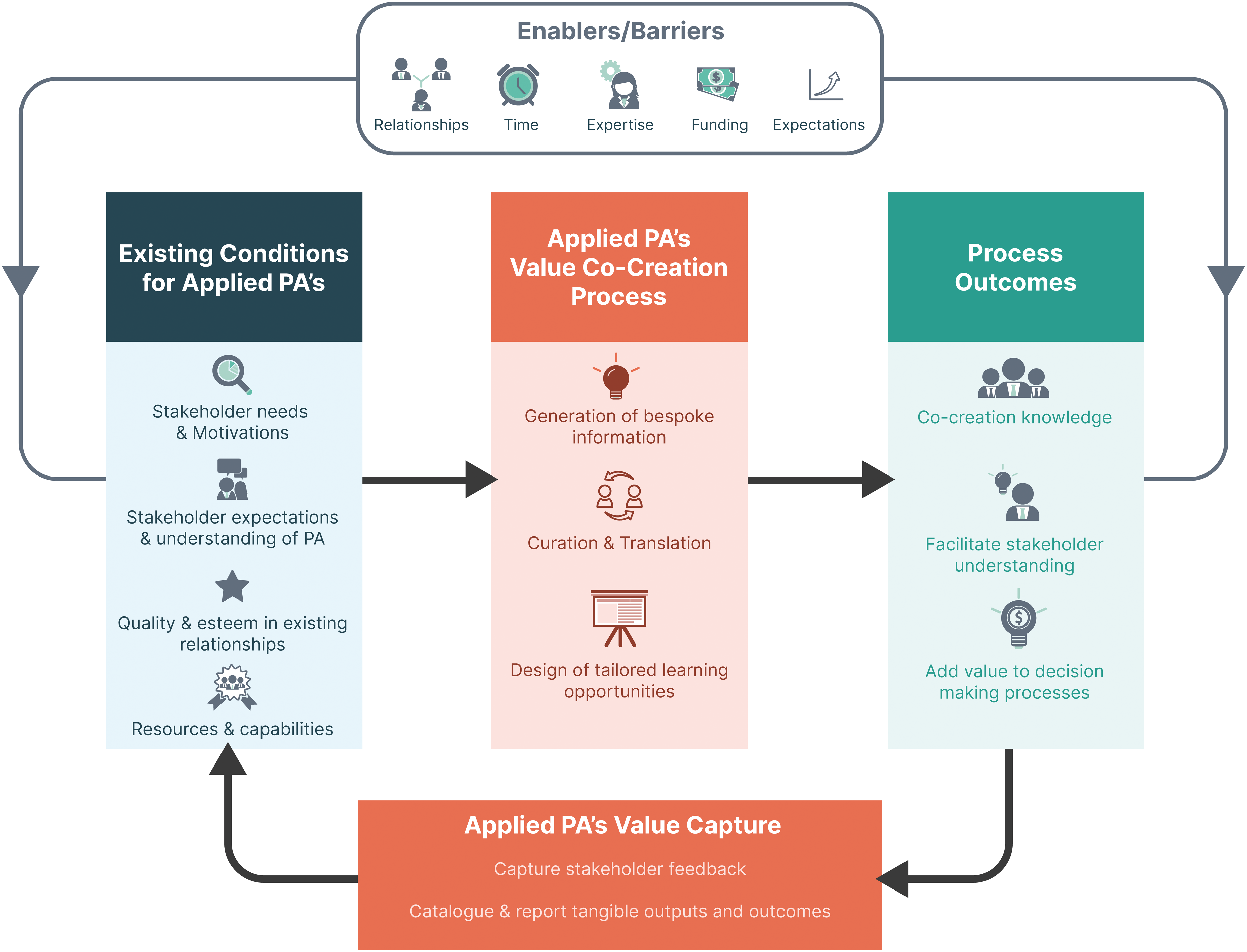
A conceptual model for the value co-creation process in applied PA practice adapted from de Oliveira and Cortimiglia. 38
The framing of applied PA practice as value co-creation presents an opportunity to rethink the role in a future-focused manner, beyond the inertia of the status quo. There is potential for applied PAs to be central to the optimisation of resources within a performance ecosystem where the quality of decision-making is increasingly seen as a key frontier in competitiveness. 67 This would be done by providing evaluation data on how efficiently organisations are using time, technology, or data in a given setting. Through a systematic approach to identifying inefficiencies within sports organisations, applied PAs can be key to loss aversion, providing significant value for decision makers.
Defining and reimagining the role of applied PA professionals
There is no clear definition of the purpose of an applied PA, their key relationships, and the expertise required to execute the role successfully. It seems that in the infancy of the discipline, the lack of definition of PA was a deliberate strategy to avoid limiting the potential horizons of its development. 68 This led to the transdisciplinary evolution of PA, epitomised by early practitioners such as Professor Mike Hughes who applied an engineering and elite coaching background to sports PA. While this may have been optimal in the early evolution of the profession, the lack of a defined conceptual framework seems now to be a limiting factor in the development of practitioners, their practice, and their aspirations to be perceived by stakeholders as valued professionals.7,10
In consultancy work, the perceived value of the service is often inextricably linked to the competence of the individual delivering it. 69 Without a clear conceptual understanding of applied PA practice, it is difficult to determine what skills and competences aspiring applied practitioners actually need to thrive. Our data reveal a two-dimensional challenge in conceptualising the role. The first is to consider what differentiates applied PAs from other practitioners operating under a sports PA umbrella, and the second is to conceptualise a definition which embraces the diversity of practice and roles for applied PAs. While there is huge overlap between the functionality of roles under a sport PA umbrella, their delineation allows for a more purposeful examination of the applied PA role, its characteristics, and particular functions. The recognition of an ‘other’ group is an important step in creating boundaries for a profession and building a collective professional identity. 70 In order to support the discussion, an attempt has been made to illustrate possible delineation of the various roles which fall under the broad discipline of Sports PA (Figure 4), while acknowledging that many in the industry will deliver multiple roles simultaneously. This mapping differentiates the applied PA (Role 1) from practitioners collecting and analysing data in Roles 2, 3, and 6—where the analyst has no agency in how the data may be applied within a performance ecosystem to contribute to successful performance. This is not unproblematic given the definition of the word ‘applied’ as ‘something put to practical use, rather than being theoretical’. 71 Some aspects of all the roles could be considered the application of PA knowledge, particularly Roles 2, 3, and 6, highlighting a significant issue with terminology. Rather than creating new terminology, a pragmatic approach was adopted to refine the existing vernacular with the addition of the word ‘applied’ to ‘performance analyst’. This role is differentiated from those PA practitioners not embedded in a performance ecosystem by its purpose: to operate within the performance ecosystem and contribute to successful sporting performance, in a similar fashion to the description of ‘applied sports psychologists’. 72
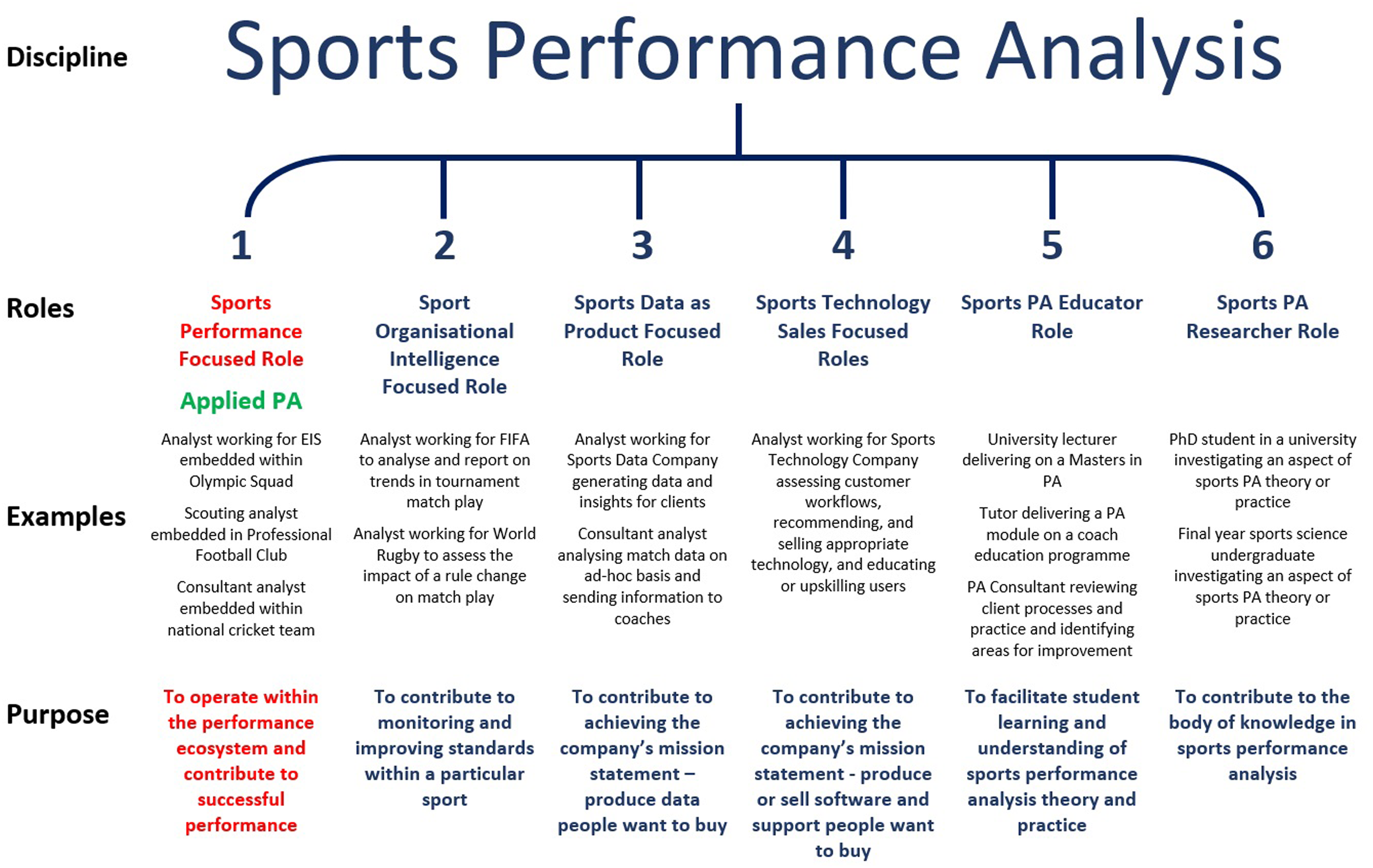
Mapping the diverse roles practitioners may carry out within the Sports Performance Analysis discipline, differentiated by their purpose and expertise. Many practitioners operate in multiple roles simultaneously.
The second challenge to a conceptualisation of the applied PA roles is the diversity of practitioners and roles within Role 1. A conceptual model of the profession must accommodate this range of practitioners, from novices doing basic coding tasks, to Heads of PA who manage PA systems serving multiple arms of the performance ecosystem. A profession should have a unique body of knowledge which is ‘applied’ by practitioners, 18 forming the basis of curricula delineated for the profession, and validated by standardised professional regulation designed to certify the knowledge and skills of practitioners. 72 It is critically important to the development of the profession to achieve a clear understanding of the balance of technical and analytics skills, versus the sport knowledge, and pedagogical and professional skills required for practice. This would bring much greater clarity and direction to educational programmes, particularly given the significant time investment required to acquire technical proficiency. It would provide a strong foundation to regulate and validate practice via accreditation and also be helpful in isolating the ‘distinct knowledge base’ which applied PAs claim to ‘profess’ and ‘apply’.18,72,73 This is important as it appears many applied PAs are practicing without a code of conduct, practice guidelines, occupational health guidance, and potentially professional indemnity insurance. In general, the applied PAs in this study did not see themselves as data scientists, despite the overlap in skill set which is evident. This is a similar delineation to the one made between a business analyst (analogous to applied PA) and data scientist in a recent classification of job roles and required skill sets in Big Data professions. 74 On the basis of the new insights on applied practice revealed in this study, the definition of the role of applied PA previously submitted by Martin and colleagues 2 was amended as follows:
An applied PA is an embedded practitioner who applies PA principles to generate valuable information, translates this information to co-create knowledge, and designs learning opportunities so that knowledge can be understood and can add value to stakeholder decision-making and performance outcomes.
A value proposition 75 -type strapline for this value co-creation role would be
Applied PAs generate, curate, and translate data which leads to better decision-making,
where data includes video and curate means to support the selection of the right data for the right people at the right time. It is important to note that this definition is likely to be sensitive to geography and cultural understandings of the role as discussed in our previous work. 2
A similar discussion about role definition is taking place among academics concerned with the Sporting Director role in professional football with Parnell and colleagues
73
identifying how the lack of clarity was causing problems in how these professionals were perceived and the negative impact this had on their practice. They made six recommendations to remedy this. Considering these recommendations to re-imagine applied PA, they are presented as follows:
Conceptual clarity—clearly defined remit and role descriptors for the applied PA role for employers and for employees; Education—the further development of continuing professional education to support the applied PA role; Recruitment and development pathways—the creation of clear career structures and pathways within sporting organisations for the recruitment and development of applied PA practitioners; Research on Applied Practice—a distinct body of context-specific knowledge to inform the practices of the applied PA; Regulation and support—an independent and inclusive professional membership body to support members; Ethics and code of conduct—a clearly defined set of values and ethical principles to guide professional practice.
These recommendations are similar to calls in other emerging professions (sports psychology, coaching, and clinical exercise physiology)72,76,77 for conceptual clarity, regulation, and a shared, easily communicated understanding of the purpose of each role. Who in PA could or should lead this is a critical question to arise from this study. Is brand identity and professional regulation best developed through a single-discipline international organisation like ISPAS, or through the existing national sports science associations like BASES, who have recently established a Special Interest Group on PA? Is it perhaps through sport's governing bodies or the affiliation of analysts within a sport to form representative bodies such as the recently formed Association of Professional Football Analysis? It is hoped that the findings of this study can act as a stimulus to prompt debate and action from those in leadership positions in applied PA as to how we as a collective can address the issues presented here and help shape a thriving profession.
Conclusion
This study brings the applied PA practitioner as a person to the fore, a significant departure from previous conceptualisations of applied PA in literature, where the practitioner was largely invisible, and their role undefined. Applied PA practice has been conceptualised as value co-creation and practitioner embeddedness within a performance ecosystem. Embeddedness was identified as potentially the key factor in how applied PAs build the relationships, credibility, and contextual intelligence to enable value co-creation. The mapping of applied PA service provision to a generic framework for value co-creation in service ecosystems reveals a significant weakness in our understanding of how practitioners can capture and demonstrate the value which they aspire to add. This study brings to the fore a problem in how applied PA is understood and perceived as a profession which poses significant constraints for practitioners in their day-to-day practice but is also a potential threat to the development of applied PA as a viable and thriving profession. These misunderstandings reinforce the need to define and conceptualise the role, and this study begins this process, bringing a new understanding of applied PAs as translators and educators influencing decision-making, in addition to their well accepted role as information generators and curators.
This research offers a conceptualisation of applied PA practice which is a first step in developing a much more nuanced understanding of this role, providing a platform to generate debate, collaboration, and action among the applied PAs community. As technology and data become ever more embedded in decision-making in sport, there is a significant opportunity for applied PAs to position themselves and brand the profession as essential to the translation, integration, and optimisation of data and decision-making within performance ecosystems. The creation of this brand requires clarity of identity and purpose. It is hoped that this paper can provide a catalyst for those invested in applied PA practice to come together to create a shared understanding of how they fit and add value within the performance ecosystem now, so that in this era of digital transformation, the profession can evolve with technology and find new ways to co-create value.
Footnotes
Acknowledgements
The authors would like to sincerely thank all the participants for giving their time so generously to this study.
Declaration of Conflicting Interests
The author(s) declared no potential conflicts of interest with respect to the research, authorship, and/or publication of this article.
Funding
The author(s) received no financial support for the research, authorship, and/or publication of this article.
