



Abstract
Objectives
Applying Bronfenbrenner's Bio-Ecological Systems Theory and PPCT model recommendations, this study examined whether specific or multiple factors were associated with participation status in Australian youth swimming; a context known for high dropout rates.
Methods
Participants were continuing (N = 99) and former (N = 104) swimmers, aged 8–18 years, who competed at club-national level in New South Wales, Australia. Participants completed an online survey, examining socio-demographic, participation history, and coach-created motivational climate characteristics (using the EDMCQ-C). To identify influential factors, a combination of T-tests, Odds Ratios, and MANOVA analyses were used. To confirm the presence of coach-motivational climate types and their association with participant status, cluster analyses with follow-up Odds Ratios were used.
Results
Except athlete age and sex, other socio-demographic, participation history, and family sport history participation were not associated with dropout. Meanwhile, EDMCQ-C analyses identified three cluster types of coach-created climate (empowering, disempowering, and neutral), with disempowering and empowering types, respectively, associated with dropout and continuation. The neutral climate was associated with low-moderate EDMCQ-C sub-scale scoring and was neither associated with dropout nor continuation.
Conclusion
Findings identify the influence of coach-created motivational climates and not athlete-related factors on continued Australian youth swimming participation, highlighting coaching implications.
Introduction
Youth sport participation benefits and the dropout problem
Sustained childhood and youth sport participation can provide a platform for favourable longer-term health trajectories, with existing evidence suggesting multiple positive physical, psychological, and social developmental benefits. 1 Studies indicate children who are actively involved in sporting clubs, and who maintain sporting engagement throughout adolescence, potentially consolidate lifelong health behaviours.2,3 Some identified benefits include increased aerobic fitness, 4 lower body fat, 5 enhanced bone health, 6 and reduced likelihood of symptom presence associated with psychological conditions, such as depression and anxiety. 7 As a consequence, community organisations (e.g., sport clubs) in multiple locations (e.g., public and private spaces) and sport practitioners can be viewed as important facilitators for sporting and physical activity provision. However, juxtaposed against health benefits and possibilities is the issue of early-stage dropout, where empirical literature highlights that a high proportion of children and youth intentionally withdraw from youth sport settings.8,9 For instance, in Australia, approximately 10% of children, aged 8–10 years, withdraw from organised sports each year, equating to approximately 250,000. 10 Therefore, when considered from either societal health or sporting organisational/practitioner standpoints, understanding why high dropout rates are occurring and the potential factors and processes involved becomes important. Research needs to examine these components to identify how participation can be maximised and health benefits attained.
Social-ecological frameworks for understanding youth sport dropout
Social-ecological theoretical frameworks are valuable for helping conceptualise and understand how a potential milieu of individual, social and environmental factors, and their interactions over time (i.e., processes), may associate or account for behaviours (i.e., dropout within sporting contexts) and longer-term developmental outcomes (e.g., health indices). For these purposes, we applied Bronfenbrenner's Bio-ecological Human Development Theory11,12 as a guiding overarching lens (not for theory testing purposes per se) and the accompanying Process-Person-Context-Time (PPCT) model 13 for methodological assessment guidance in the present study. Bronfenbrenner's theory proposes how positive (functional) or negative (dysfunctional) development (e.g., psychological, social, and physical health) outcomes occur via frequent and sustained social exchanges in developmental activities within micro-system contexts. While acknowledging the potential (in)-direct influences of meso- (e.g., school; hobbies/recreational groups) to exo-system (e.g., national sport policy; culture) factors. 14 On the capability to engage in developmental activities, Bronfenbrenner centrally proposes the heightened importance of relational social exchanges between individuals (e.g., sport participants and coaches).
Within activity micro-systems, continuing interactions over time are proposed to bi-directionally impact the psycho-socially functioning individual (given their pre-existing characteristics) determining directional development (positive or negative). As such, the theory identifies how coach instructional and communication strategies, non-verbal behaviours, values and other coaching micro-climate features, all convey information and meaning. Participants, and others (e.g., parents, siblings), experiencing micro-systems then (sub-)consciously interpret and evaluate such information. These subsequently affect psychological perceptions (e.g., competency, belonging, personal valuing), behavioural decisions (e.g., continued participation) and longer-term developmental directions.12,13
Coach-created micro-climates and youth sport dropout
In alignment with Bronfenbrenner, 13 coaches can be considered as the nucleus of youth sport micro-systems, as they are often responsible for implementing the structure and content of learning and training activities over micro-macro time periods.15,16 Further, given their responsibility, they can also substantially determine the pattern and nature of social interactions and experiences (i.e., social agents). Thus, when occurring regularly, characteristic micro-system climate features may develop or emerge, as identified in independent sport psychology literature. Framed within individual motivational theoretical perspectives of Achievement Goal (AGT) 17 and Self-Determination (SDT)18,19 Appleton et al. 20 refer to psycho-social environments created intentionally or unintentionally as coach-created motivational climates, given their impact on participant motivation. Duda 21 (and colleagues) previously identified two dichotomous types of coach motivational climate (i.e., empowering or disempowering), comprising five components. An empowering climate is characterised by coach behaviours of high task-involvement, autonomy-support, and social support20,22,23 with correspondingly low ego and participant control. By contrast, disempowering climates are characterised by high ego-involving (e.g., result focussed) and controlling (e.g., authoritarian; pressuring; coercive) instructional and social interactional behaviours, with low task-involvement, autonomy, or social support.21,24,25 Previously, psychometric instruments (e.g., Perceived Motivational Climate in Sport Questionnaire – 2; PMCSQ-2 26 ; Motivational Climate Scale for Youth Sports – MCSYS 27 ) have been used to identify the low-high presence of underpinning characteristics, which then determine the orientation toward a given climate. 26 Whether other types of coach-created motivational climates exist is relatively unknown. To our knowledge, only one other study 28 has shown the existence of additional coach-created motivational climates during their assessment of burnout symptoms in Finnish student-athletes. They identified four coaching climate types: extremely disempowering, disempowering, empowering, and intermediate using latent profile analysis.
Existing motivational climate studies indicate empowering climate characteristics are associated with favourable impacts on participant cognitions, affect, and motivation. 29 For instance, the Promoting Adolescent Physical Activity (PAPA) project, 21 identified that when empowering climate characteristics were successfully deployed in child and adolescent youth soccer settings across Europe, enjoyment and higher rates of participation were positively affected and sustained respectively. However, within the context of dropout literature and social-ecological explanations, the association between (dis)empowering climates on actual behavioural outcomes (i.e., dropout) has not been identified, warranting further examination. More specifically, the assessment of coach-created micro-climate types can help identify coach behaviours, social exchanges, and psychological micro-climate characteristics which may detrimentally affect youth participation in the short term and hypothetically affect longer-term (dys-)functional development (see Figure 1 for a diagrammatic summary). To date, existing literature examined only motivational climate associations with the intention to dropout/continue (e.g., Fenton et al. 29 and Castillo-Jiménez et al. 30 ) with no consideration given to other factors occurring in parallel.
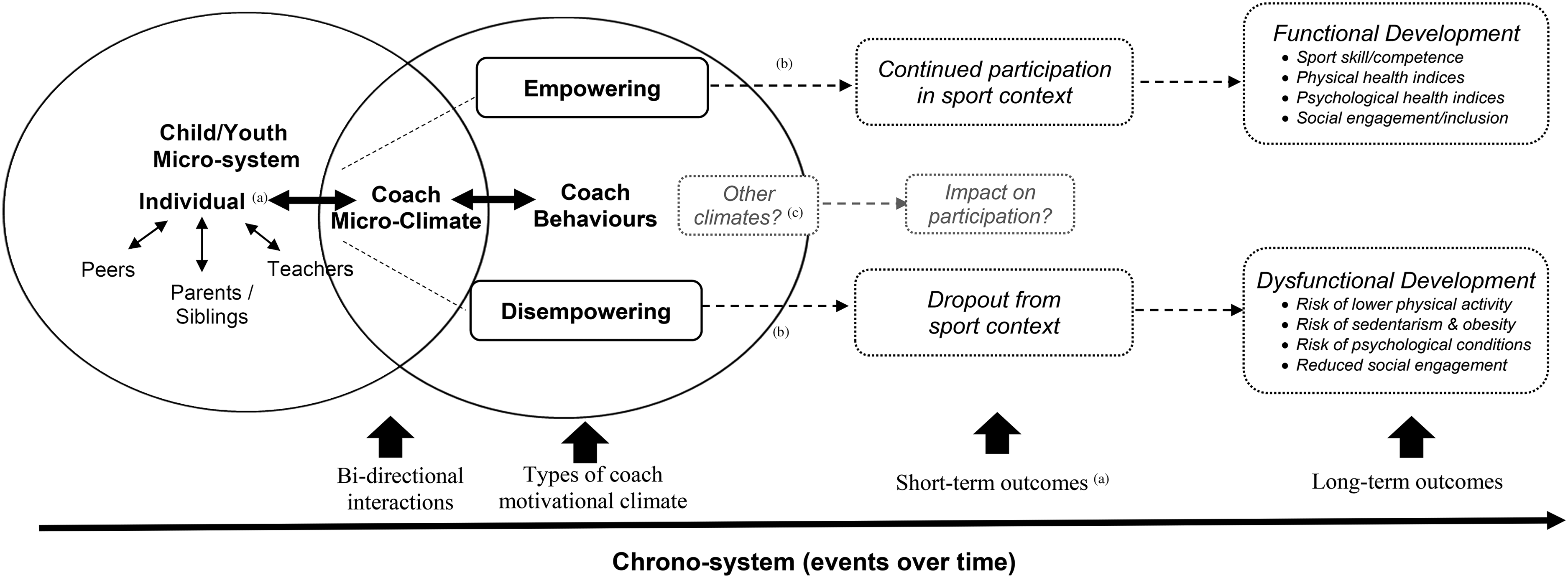
Visual summary of how individual interactions with coaching climates may associate with short-term (dropout) and potential long-term development outcomes aligned with Bronfenbrenner's (1979; 2005) bio-ecological theory of development.
Study purposes
Predominantly informed by social-ecological frameworks and youth sport dropout literature, the present study had two main purposes. The primary purpose was to examine whether specific or multiple factors discriminated, and thus were associated with, participation status in Australian youth swimming; a context where high dropout rates are known but an understanding of all the factors and processes involved are not. 8 A combination of personal (e.g., age, sex), athlete micro-system (family-sport history) and coach-created motivational micro-climate factors were therefore assessed.
Prior evidence led us to hypothesise that starting age of swimming participation 31 and family sport history (athlete micro-system factors) 15 would independently associate with participation status (Hypothesis 1). Given the theoretical importance of relational interactions and social exchanges within activity contexts, we also hypothesised coach-created micro-climates would associate with participation status. Specifically, swimmers perceiving and rating participation within disempowering climate features would associated with dropout, while empowering coach climates would associate with continuation (Hypothesis 2; see Figure 1). While examining swimmer ratings and their alignment toward coach motivational climate types, a simultaneous and unique purpose, was to explore whether alternative climate types existed (i.e., Exploratory hypothesis).
Methods
Participants
Following University ethics approval (App No: 2020/682), participants were 203 continuing (female n = 45, male n = 54) and former (i.e., had dropped out; female n = 71, male n = 33) swimmers aged 8–18 years (M = 13.01 years; SD = 2.35) who were (formerly) registered with Swimming New South Wales (SNSW) 1 , Australia. Inclusion criteria stipulated for continuing swimmers to have been registered with an SNSW affiliated club for three consecutive years (i.e., 2018–2020) and who had re-registered for the 2020/2021 season. Participants were permitted to compete at varying standards, ranging from club to national level. Continuing swimmers had been swimming for a mean of 8.60 years (SD = 2.91) and were often involved in initial “learn to swim” lessons, commencing at 3.35 years (SD = 2.51). They competed on average at 8.73 (SD = 8.27) meets per year and reported 3.40 training hours per week (SD =1.33). Former swimmers were those who had registered for the three consecutive years between 2018 and 2020 but had not re-registered in 2020/2021. Former swimmers had been swimming for a mean of 10.34 years (SD = 2.89) and initially commenced (structured) swimming lessons at 3.70 years (SD = 2.29) on average. In the season prior to dropout, they were competing at 9.11 (SD = 7.60) meets per year on average, with 3.07 (SD = 1.37) training hours of involvement per week.
Recruitment and procedure
For continuing and former participants, an email invitation with a link to an online Research Electronic Data Capture (REDCap) survey was distributed to their parents/carers/guardians by SNSW via email. The study was also promoted on SNSW social media channels (e.g., Twitter and Facebook). Participant and parent/guardian individual informed consents were obtained prior to beginning the online survey. To help ensure question understanding and response accuracy, participants aged 15 years and under were encouraged to complete the survey with parental support. 32 The survey took 20–25 min to complete.
Survey content
Informed by Bronfenbrenner's11,12 theoretical propositions, Bronfenbrenner and Morris 13 consolidated the bio-ecological systems framework into the PPCT model offering a methodological approach to better understand how differential developmental outcomes (i.e., dropout or continuation) may occur in a given context. In the PPCT model, to identify factors influencing individual development, they emphasised the need to understand: (i) ‘process’, referring to the nature of recurrent interactions and established feature characteristics between social actors in the micro-system; (ii) the ‘person’, referring to understanding the biological, psychological, social, and behavioural characteristics of those examined, and the potential for these factors to also influence or moderate developmental behaviours; (iii) the ‘context’, referring to understanding the stable or changing feature of the micro-system relative to broader historical, meso-macro-system factors (i.e., the structure and culture of provision in a given sport in a given location); and (iv) ‘time’, referring to assessment and understanding time-related characteristics within micro-systems. These can be considered as micro- (e.g., frequency, duration & intensity of training), meso- (weekly/monthly structure of youth sport programs), and macro-time (e.g., stable competition and training characteristics over year(s)) characteristics. Understanding Time-characteristics are deemed important, as the effect of developmental activity engagement and social interactions upon (un-)expected outcomes necessitate time.
Based on PPCT model recommendations and study purposes, the REDCap survey contained three subsections. The first subsection captured potential socio-demographic and background swimming participation history (person & time). The second assessed family sport participation history (process). The third assessed perceptions of the coach-created motivational climate, referring to the practices of their most recent coach (process). Dropout or continuation were identified and categorised at the point of participant recruitment, reflecting a developmental outcome resulting from person-process-context-over time interactions.
Participant socio-demographic and swimming participation history
Participants were asked nine questions relating to age, sex, and swimming participation history, including age upon initiation of structured swimming lesson, number of hours per week at swimming training and competition, and the number of competitive meets attended during the last competition year.
Family sport history
To capture family sport participation history, decision-tree optional items adapted from Fraser-Thomas et al. 15 were applied. Six items examined biological parent/legal guardian and sibling support (i.e., who was influential during their swimming involvement participation), as well as their background in swimming participation and competition if applicable. Involvement in other broader sport participation and level of competitive involvement was also examined.
Coach-created motivational climate
An adapted version of the Empowering and Disempowering Motivational Climate Questionnaire-Coach (EDMCQ-C) 20 assessed the motivational climate characteristics of swimming coaches as perceived by participants. The EDMCQ-C consists of 34 items which associate with five lower-order dimensions, aligned to two Empowering and Disempowering constructs (i.e., 17 items each). The Empowering construct contains five items assessing autonomy support (e.g., “My coach gave us choices and options”), three items on social support (e.g., “My coach really appreciated us as people, not just as swimmers”) and nine items evaluating task-involving climate (e.g., “My coach encouraged us to try new swimming skills and techniques”). The Disempowering construct includes seven items assessing ego-involvement (e.g., “My coach yelled at us if we made mistakes”) and 10 controlling coach behaviour items (e.g., “My coach paid less attention to us if we displeased him or her”). All items were rated based on considerations of what their main coach normally said or did most of the time during training and competition over the last year of involvement (i.e., 2020/2021 season). Item responses were provided on a 5-point Likert scale (i.e., 1 = strongly disagree, 5 = strongly agree). Previous research has identified young athletes’ scores on the EDMCQ-C as valid and reliable. 20 Cronbach's α in the present study ranged between 0.83 and 0.87, suggesting a high level of internal consistency. 32
Data analysis
Study data were collected and managed using REDCap electronic data capture with participant identity and data remaining confidential and unknown to researchers. Data analysis occurred in SNSW with support from external collaborators. Initial data screening involved the removal of participants with incomplete data in survey sub-sections as well as pre-data analysis checks for outliers and meeting statistical assumptions for parametric data (e.g., normality).
Hypothesis 1: To identify associations between swimmer socio-demographic, participation history, and family sport participation history variables with participation status (dropout vs continuing), descriptive analyses were conducted. Independent T-tests examined mean differences in socio-demographic (i.e., current age, age at first swimming lesson) and sport participation history data (i.e., number of swimming meets per year and training hours per year), with 95%Confidence Intervals (CI) used to determine effect sizes. 33 As sex and family sport history variables were frequency count based, Odds Ratios and 95%CI were utilised for comparisons.
Hypothesis 2 and Exploratory Hypothesis: To address these hypotheses, several independent but inter-related steps were conducted. The first step was to conduct a cluster analysis, which is a data reduction technique designed to (i) group similar observations in a dataset (i.e., create classifications of homogenous group ratings); (ii) identify new relationships, and (iii) conduct assenting analyses of previously identified groupings best fitting to data.34,35 To identify the potential number of clusters within coach-motivational climate ratings, a hierarchical cluster analysis was utilised with a range of solutions considered (3–6 cluster). The Ward's method 36 sing Squared Euclidean distances, agglomeration schedule, and supporting dendrogram was deployed on standardised ratings for the five sub-scales to identify the best-fitting number of clusters. Following the identification of the cluster number, a K-mean cluster analysis then verified the solution by examining iterations to convergence, distances between centroids of clusters, and outlier checking. K-cluster ANOVA tables were used to identify variables contributing the most to the cluster solution.
Based on K-means cluster analysis findings, in a second step, Odds Ratios and 95%CI then examined the odds likelihood of coach-created climate types relating to participation status. In other words, were former swimmers more likely to cluster rate with disempowering climates, while continuing swimmers with empowering climates? In the final step and remaining aligned with the original research question, a Multivariate Analysis of Variance (MANOVA) compared participant z-scores ratings on the five EDMCQ-C subscales according to participation status (dropout vs continuation). Prior to MANOVA, all relevant assumptions were completed while Cohen's 32 criteria were used to determine effect sizes. All statistical analyses were conducted using IBM-SPSS (Version 25.0) with alpha set at 0.05.
Results
Hypothesis 1: When examining athlete micro-system factors, dropout swimmers were older at the time point of data collection compared with continuing swimmers. There were no other differences between dropout and continuing swimmers on participant swimming-related characteristics. In terms of swimmer sex, male swimmers were less likely to have dropped out compared to females. No other family swimming or sport participation history was associated with participation status (see Table 1). Findings only partially contrasted with our initial hypothesis.
Summary of participant socio-demographics, swimming training history, and family micro-climate sport history according to participation status.
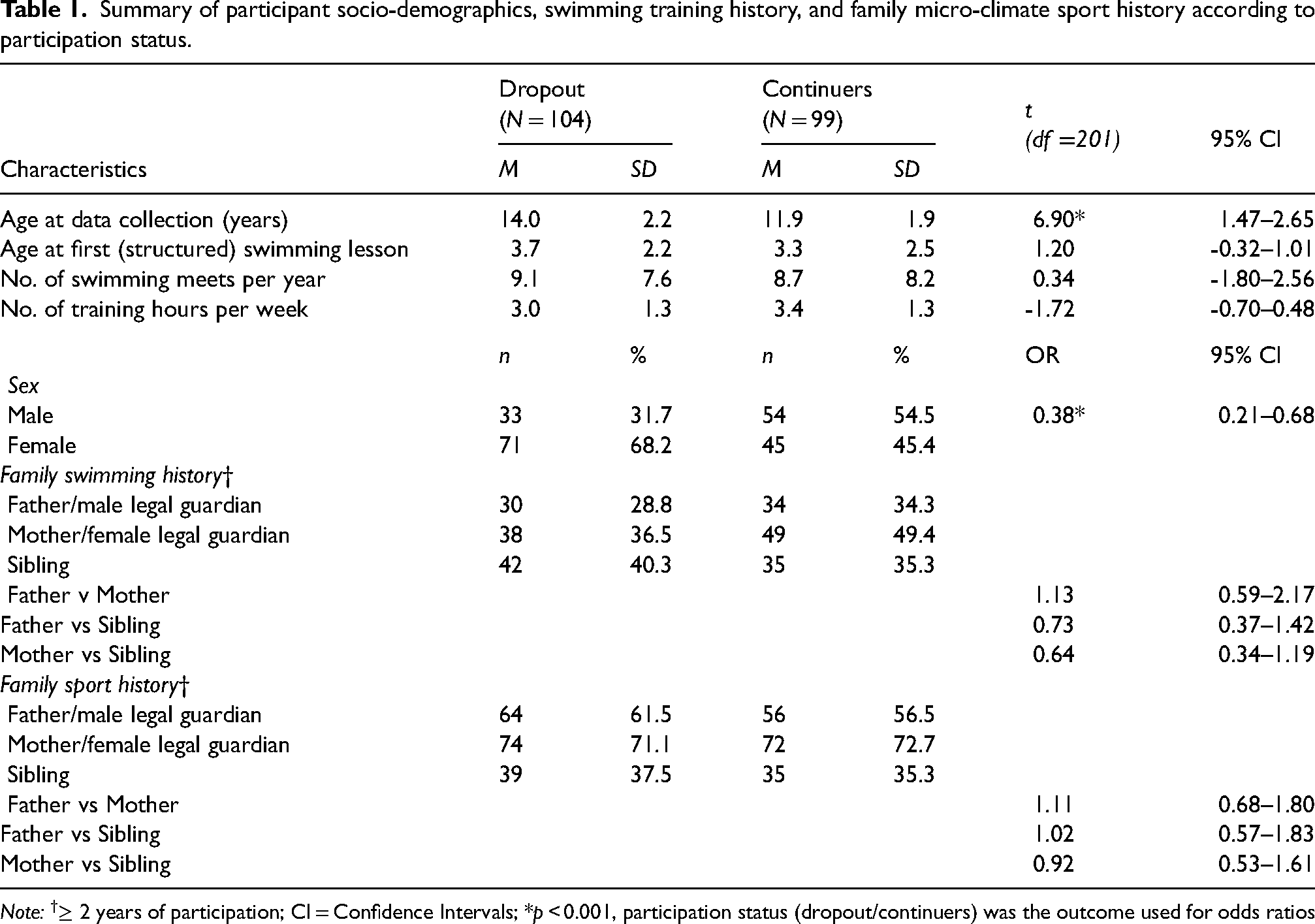
Note: †≥ 2 years of participation; CI = Confidence Intervals; *p < 0.001, participation status (dropout/continuers) was the outcome used for odds ratios
Hypothesis 2 and Exploratory Hypothesis: Hierarchical cluster analysis identified a three-cluster best-fitting solution with an even distribution of cluster members (i.e., n1 = 82; n2 = 50; n3 = 71). In the K-means cluster analysis, the ANOVA table confirmed all five EDMCQ-C subscales significantly contributed toward the three cluster groups (all p < 0.001). Figure 2 summarises the descriptive z-scores ratings for the three cluster groups according to the five coach-created motivational climate subscales. The z-scores for each sub-scale clustered accordingly into the empowering and disempowering coaching climate types. Meanwhile, the third neutral cluster had z-scores residing marginally higher or lower than mid-point anchor ratings (i.e., 3 - neither agree nor disagree on original EDMCQ-C scoring) across all five sub-scales.
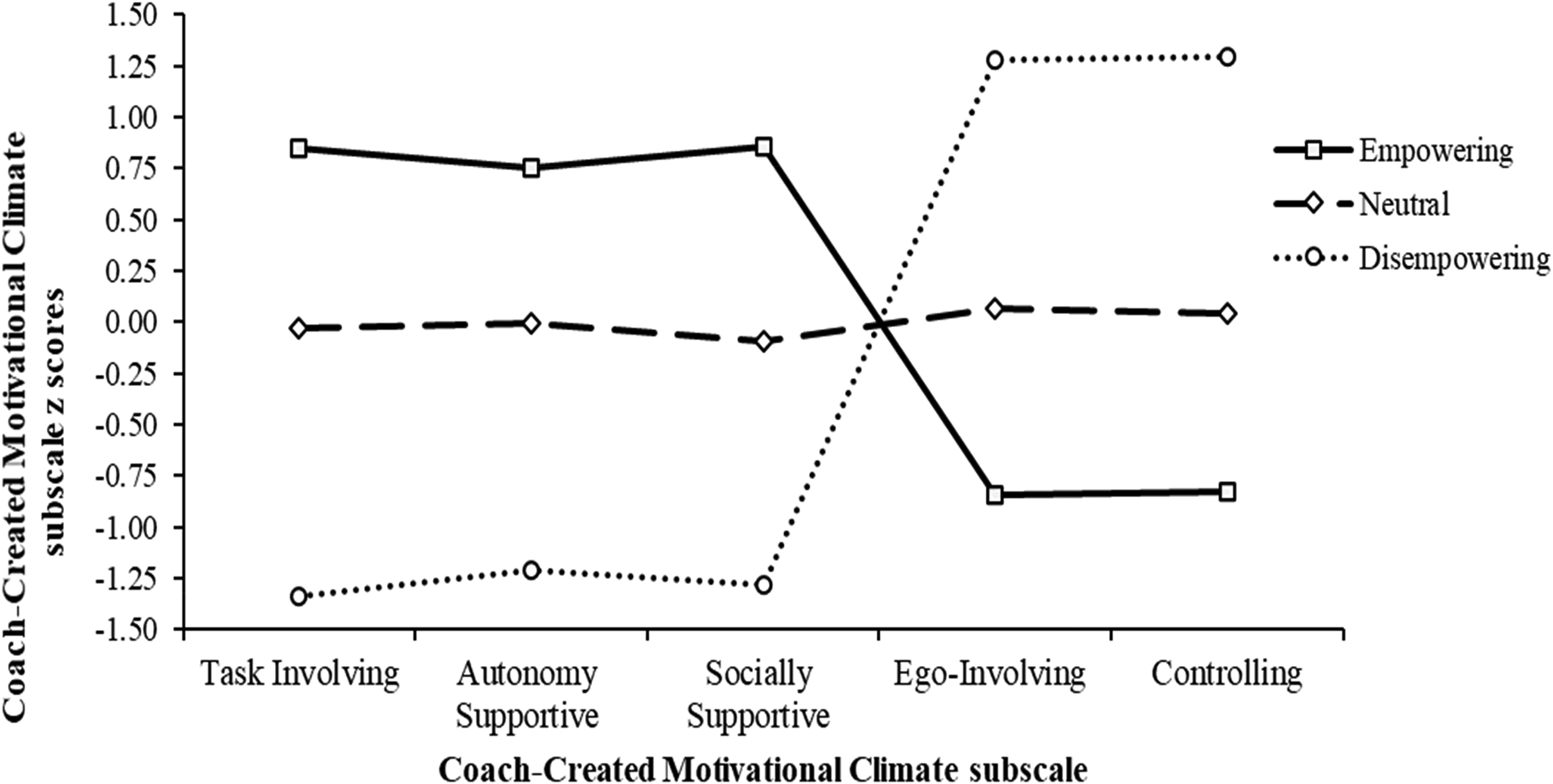
Mean z score ratings for coach-created motivational climate subscales according to identified cluster profiles.
Five one-way between-subjects ANOVA's identified differences between cluster ratings across each EDMCQ-C subscale: task-involving (F(2200) = 265.74, p < 0.001), autonomy- support (F(2200) = 145.78, p < 0.001), social-support (F(2200) = 248.99, p < 0.001), ego-evolving (F(2200) = 226.99, p < 0.001) and controlling (F(2200) = 217.79, p < 0.001). Follow-up Tukey's HSD comparisons identified the empowering cluster contained coaching climates significantly higher in perceived autonomy-support, social-support, and task-involving features, along with significantly lower ego-involving and controlling coaching behaviours (all p's < 0.001) relative to the neutral and disempowering clusters. The neutral cluster contained scores rated significantly higher and lower - relative to the disempowering and empowering clusters respectively - on perceived autonomy-support, social-support, and task-involving features (p < 0.001). The neutral cluster also reported consistently lower ratings on ego-involving and controlling features relative to the disempowering cluster, whilst remaining higher than the empowering cluster (p < 0.001). The disempowering cluster was higher on ego-involving and controlling behaviours (p < 0.001) and consistently lower ratings on perceived autonomy-support, social-support, and task-involving sub-scales relative to the neutral and empowering clusters (exploratory hypothesis confirmed).
To examine Hypothesis 2, the neutral cluster was excluded with participation status distributions examined across empowering and disempowering clusters (n = 134). Chi-square identified a significant association between participation status and the two opposing clusters (empowering vs disempowering; X2 = 12.762, p < 0.001). Dropout swimmers were more than three times as likely (OR = 3.79, 95%CI = 1.79−8.01) to associate their coach with a disempowering vs. empowering climate, and were 74% (OR = 0.26, 95%CI = 0.12−0.33 less likely to have experienced an empowering vs. disempowering climate.
The one-way MANOVA examining EDMCQ-C subscale ratings according to participation status identified a significant overall between-group effect (continuers vs dropouts) across all motivational climate subscales, with a large effect size (F(5197) = 5.69, p < 0.001; Wilks’ Λ = 0.87; partial η2 = 0.12). Tukey's HSD post-hoc tests showed dropout swimmers had significantly higher ratings on ego-involving (F(1201) = 14.04, p < 0.001, partial η2 = 0.06), and controlling (F(1201) = 8.80, p < 0.003, partial η2 = 0.04) subscales. Continuing swimmers provided significantly higher ratings on autonomy-support (F(1201) = 10.54, p < 0.001, partial η2 = 0.05); social support (F(1201) = 14.35, p < 0.001, partial η2 = 0.06) and task-involving (F(1201) = 23.93, p < 0.001, partial η2 = 0.10) subscales. Differences in task-involving ratings had a large effect size (e.g., η2 = 0.10), while social support and ego-involving ratings had moderate effect sizes (see Figure 3 for a visual summary). Both odds radio and MANOVA results confirm Hypothesis 2.
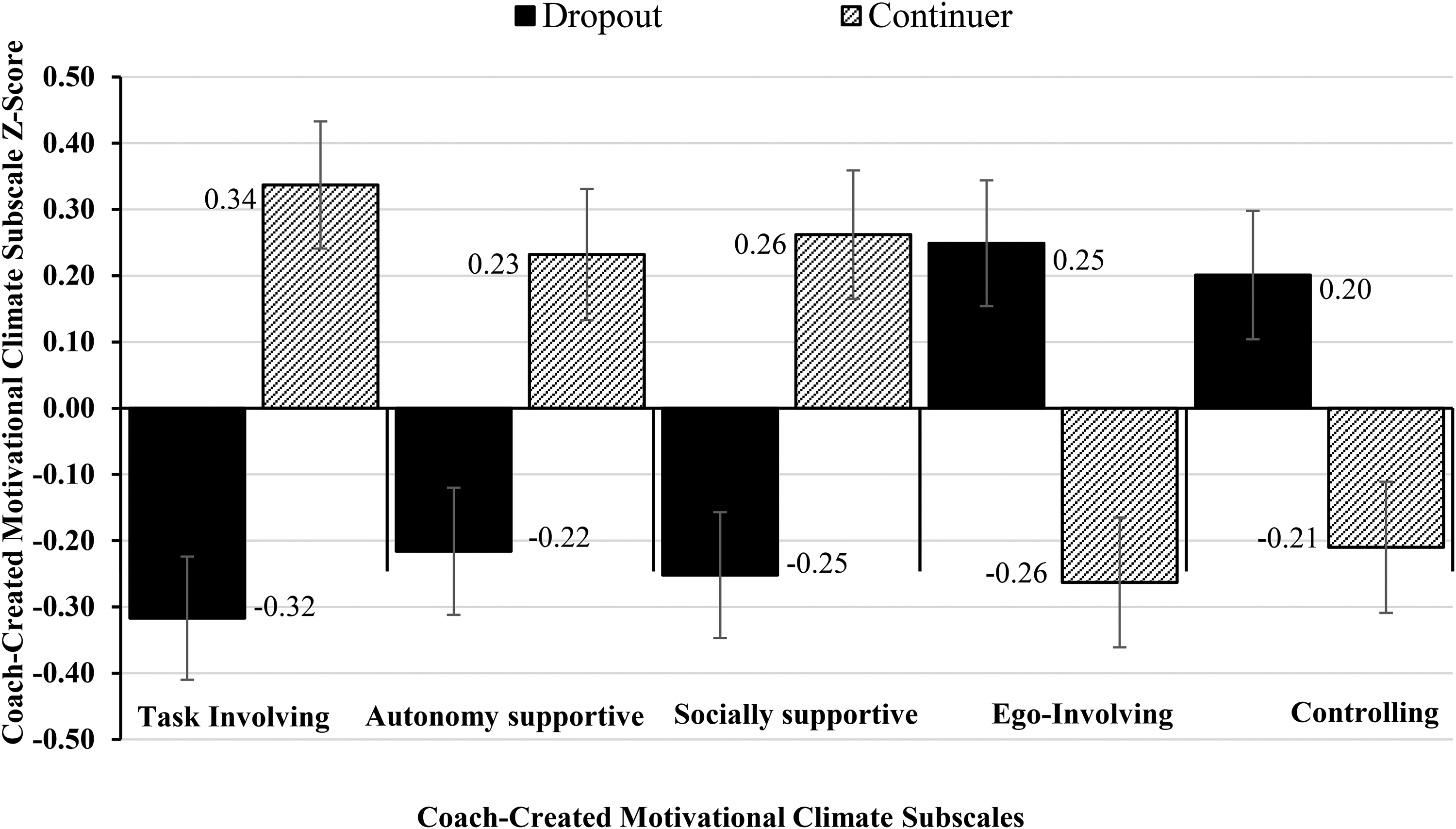
Summary of MANOVA analysis assessing EDMCQ-C subscale z scores according to participation status.
Discussion
Uniquely examining the simultaneous behavioural outcomes of actual dropout vs continuation (as opposed to intentions), this study assessed whether micro-system factors and coach-created micro-climates affected participation status in a sample of Australian youth swimmers. Supporting Hypothesis 1, swimmers who dropped out were older and were more likely to be female. Multiple explanations could account for the findings. For instance, increasing age could relate to specific, or a combination of processes, including changing or competing interests15,37; participation and competitive structure within swimming 8 ; changed meaning/purpose of swimming involvement in older age groups 38 ; and changing social relationships (coach and peer dynamics).37,39 More sex-related explanations could relate to perceived social norms and expectations 40 ; prioritisation of alternative activities (e.g., education) 41 ; changing body shape and performance regression, 42 all of which have been connected with dropout.
In contrast with our hypothesis and prior literature,9,15,31 swimmer and family participation history factors were not associated with participation status. Here alternative explanations may be accountable, including methodological issues of study recruitment and response bias (see limitations). Further, in the present study, only crude (categorical) indices of prior (family or sibling) swimming or sporting involvement were captured; thus, participation history variables may not have been accurately measured. Other scaled indices, such as measures of psychological support, reflecting parent interest or encouragement, 43 may be better to consider. An alternative explanation could be the overriding relationship strength between coaching climate types on participation, and effectively nullified other potential relationships.
Supporting Into et al.'s 28 initial findings, results also confirmed the existence of a third, neutral, coaching climate. The neutral climate was neither empowering nor disempowering; did not associate with participation status; but still can be considered sub-optimal. Again, several explanations could be relevant. Swimmers, for example, could be accurately identifying a sample of coaches with low-moderate consistency behaviours across (dis)empowering constructs. A second explanation suggests coaches may behave differently in different contexts. Indeed, coaches may utilise different social interactions strategies with athletes during training and competition contexts or according to specific situations. 44 Thus, swimmers may have rated their coaches as ‘neutral’ reflecting an overall balance, rather than being consistently high/low on (dis)empowering sub-scales. Within swimming, constraints (e.g., ear and body immersion) also affect instructional and communication strategies, with non-verbal behaviours - for example - more frequently utilised. As, the use and interpretation of such less personable behaviours may reduce social interaction, incorporating social support and relatedness as well as information exchange; thereby affect coaching climate perceptions. An alternative position suggests swimmer perceptions (e.g., competing interests; fatigue) as well as social (e.g., peer relationships) and (e.g., training times) cognitions could also affect climate ratings. Changing (lowering) ratings over time from empowering-neutral climates may also act as pre-cursors to swimming dropout.
Related to Hypothesis 2, strong relationships were identified as former swimmers were more than three times as likely to associate their coach with a disempowering climate and were 74% less likely to experience an empowering climate. These results align with Fenton et al.'s 29 and Castillo-Jiménez et al.'s 30 findings where empowering climates were positively related to intention to continue; while perceived incompetence, lack of autonomy, and relatedness (disempowering climate) increased intention to dropout in English grassroots-national soccer, netball, and hockey. Our findings confirm coach motivational climates are not only associated with athletes’ intentions but also with actual behaviour.
Present findings extend upon existing coach-created motivational climate literature23,24 and confirm the informative value of social-ecological frameworks toward understanding behaviour. While our findings align with Duda's 20 integrated framework, the existence of a neutral coaching climate as well as influence of age and sex-related reasons for dropout goes beyond the view of key active agents affecting individual motivation (i.e., a coach within Duda's integrated framework). Instead, the social-ecological view considers the possibility of alternative multi-layered factors, simple-complex processes (e.g., individual characteristics, social interactions, context features) as affecting dropout. 45 These factors and processes (un-)consciously affect psychological interpretation, coaching climate perceptions, motivation toward activity engagement, and subsequent behavioural outcomes.
Limitations
The current study is not without limitations. The potential for recruitment and reporting bias cannot be discounted. 46 Participating former swimmers (and their parents) may have had genuinely more negative (disempowering) experiences and were, therefore, potentially more motivationally inclined to report on negative experiences. However, it is possible that recruied continuing swimmers may have had disproportionally positive experiences in their respective coaching climates. Thus, such recruitment or recall bias may not truly reflect the broader population, with a wider participation base along with revised study recruitment strategies recommended. Finally, social-ecological frameworks caution when externalising findings. Present factors and processes influencing dropout in the present study may (or may not) be valid at different time-points, other geographical locations, or in other sports contexts.
Implications
Considered together, current findings implicate the need for sport governing bodies and localised organisations (e.g., regional associations, clubs) to understand the factors and motivational drivers, across PPCT levels, currently leading to youth swimmers being exposed to sub-optimal psychological climates. Such organisations should help enhance conceptual knowledge of coaching climates and their impact on swimmer development via coach education. Implementing personal/peer review and self-reflection for evaluation could be valuable toward facilitating coach behaviour change and optimising climates. Certainly, coaches learning to implement behaviours, communication strategies, values, and conduct aligned to an empowering climate will predictably protect against dropout. Such implementation will also increase the likelihood of youth swimmers attaining the physical, psychological, and social developmental outcomes from longer-term involvement.
Future research should continue utilising social-ecological frameworks. The assessment of greater personal socio-demographic, social interaction, contextual, and time-related characteristics will help achieve a more comprehensive understanding of the factors and processes leading to both (sub-)optimal coaching climates and their impact on participation. Present findings suggest investigation of sport organisational structures, policies, and cultures. Contexts with an early-age performance emphasis and where coaches are evaluated on performance-associated metrics could be key ecological factors accounting for the prevalence of disempowering or neutral climates. Further research is also necessary to validate and understand neutral climate characteristics and its potential impact. Equally, research investigating the effectiveness of coaching climate interventions within context reporting high-dropout rates will be informative.
Conclusion
In the context of regional Australian youth swimming, coach-created motivational micro-system climates discriminated between sport dropout and continuation behaviour. While former swimmers were older and more likely to be female, other sport background and family sport participation history were not related to dropout. Cluster analyses identified the presence of a third neutral coach-created motivational climate, with low/no orientation toward the EDMCQ-C (dis)empowering constructs. While not influential to dropout, the neutral, no-impact, sub-optimal, psychological climate is still concerning. Together, findings emphasise the importance of sport systems and coach education to promote empowering climate implementation within coaching practice.
Footnotes
Acknowledgements
The authors would like to thank Swimming New South Wales and Swimming Australia for their collaboration and support.
Declaration of conflicting interests
The author(s) declared no potential conflicts of interest with respect to the research, authorship, and/or publication of this article.
Funding
The author(s) received no financial support for the research, authorship, and/or publication of this article
