



Abstract
Continuous coach education courses (CCEC) are considered a crucial vehicle for exposing coaches to topics (e.g., nutrition, mental health, positive youth development) not addressed in their initial coach training. CCEC can help coaches develop well-rounded coaching practices based on youth's physical, social, emotional, and psychological needs. The purpose of the study was to analyze the distribution of CCEC offered in Portugal between 2014 and 2020. Descriptive and inferential statistics were used to analyze (a) the number of CCEC offered; (b) hours devoted to each topic; (c) the types of organizations who delivered CCEC; (e) the format of CCEC (i.e., online or in-person); (f) the geographical distribution of CCEC throughout Portugal; (g) the number of coach participants per topic. The results indicate that courses addressing mental health, social justice, positive youth development, and sleep hygiene are seldomly delivered in Portugal, meaning that coaches have few opportunities to be exposed to and learn about these important topics. Thus, our results suggest CCEC in Portugal may not be extending coaches’ knowledge much beyond topics covered in their initial coach training. The lack of breadth in training may help perpetuate the emphasis on the technical, tactical, and physical development of youth with the Portuguese youth sport system. Based on the results, implications for youth development are offered.
Introduction
The role of youth sport coaches goes beyond the teaching of physical skills and includes other responsibilities such as fostering athletes’ psychological skills, promoting proper nutrition, facilitating a good sleep hygiene, as well as facilitating many other aspects of development that are crucial for youth to thrive in today's society. 1 Given the growing number of roles that coaches are expected to occupy in the twenty-first century, 2 many sport systems have acknowledged the need for coach development opportunities that help prepare coaches to meet the expectations of coaching as a contemporary profession. Specifically, coach development opportunities have been associated with increased coach effectiveness and positive developmental outcomes for athletes (e.g., sport skill development, autonomy).3,4
Across Europe, including Portugal, individuals who wish to coach youth are required to take coach education courses as part of their certification process. 5 In recent years, coach development systems have evolved, with coach developers becoming increasingly aware of the importance of preparing coaches to develop appropriate strategies to foster positive developmental outcomes 6 considering the complex sets of challenges that have emerged due to the COVID-19 pandemic in relation to addressing youth's physical, social, emotional, and psychological needs.2,3 Coach education courses vary with respect to delivery format (e.g., online/in-person) and coach developer profile (e.g., university professors, former coaches). Nevertheless, initial coach education courses are typically structured according to three key components: (a) general coaching material that is not sport-specific and includes the fundamentals of coaching such as pedagogy, didactics, ethics, adapted sports, training methodologies, first aid, doping, and anatomy; (b) specific coaching material on skills needed to coach particular sports that include modules such as technical and tactical development, sport management, and physical conditioning; (c) a practicum. 5 For example, in Portugal, the level one coaching certificate, in it's general coaching component, includes two hours of ethics, two hours of adapted sports, five hours of first aid, doping, and anatomy, 15 h of pedagogy and didactics, as well as 12 h of training methodologies. The level two coaching certificate includes 19 h of training methodologies, 12 h of pedagogy and didactics, 3 hours of traumatology in sport, 2 hours of doping, 2 hours of ethics, 2 hours of adapted sports, 8 hours of physiology, 8 hours of psychology, as well as 4 hours of nutrition. Both levels one and two enable individuals to coach children and youth. The modules with the least number of hours are ethics, adapted sports, nutrition, doping, and traumatology in sport. After coaches complete the general and specific coaching components, as well as the practicum, they are required to engage in continuous coach education courses (CCEC) as a part of their professional development process to maintain their coaching credentials. 7
In Portugal, coaches must attain three coach certification credits every three years (i.e., 5 h of in-person training or 10 h of online training represent 1 credit) to renew their credentials. The fundamental purpose of CCEC is to expose coaches to topics not addressed in their initial coach training. 7 Such topics include nutrition, sleep hygiene, mental health, and positive youth development, amongst others. The premise is that exposure to such CCEC can help coaches develop well-rounded coaching practices that are designed to address youth's evolving physical, social, emotional, and psychological needs. In light of the many needs of youth that went less fulfilled during the COVID-19 pandemic (e.g., opportunities to engage in physical activity, in-person interactions with peers 1 ), it is especially important to examine the distribution of CCECs to ascertain whether they are meeting their intended purpose of extending coaches’ development beyond the basic requirements of their particular sport. This line of inquiry can help provide a comprehensive understanding about the contribution of CCECs towards coach effectiveness and positive developmental outcomes for athletes before and during the COVID-19 pandemic.
The purpose of the present study was to explore how CCECs were being offered in Portugal between 2014 and 2020. This time period was chosen because it provided a global and significant overview of the delivery of CCECs before and during the COVID-19 pandemic. Portugal was chosen because the government has extensive and detailed publicly available records on CCECs delivered. The research questions guiding this study were: (a) How many CCEC courses were offered each year from 2014–2020? (b) What format were the CCECs delivered in (i.e., online or in person)? (c) How many CCECs were delivered for each topic? (d) How many hours were allocated to the delivery of each CCEC topic? (d) Which types of organizations were delivering CCECs and how were CCEC topics delivered according to organization? and (e) in which locations across Portugal were CCECs delivered and how were CCEC topics delivered according to location?
Method
Data source
Using public records (see https://ipdj.gov.pt/revalida%C3%A7%C3%A3o-de-tptd) from the Portuguese Institute of Sport and Youth, data on CCEC offerings in Portugal from 2014 to 2019 (pre COVID-19) and 2020 (during COVID-19) were analysed for this study. These public records encompass the 8488 CCEC delivered in Portugal during the aforementioned timespan, including information on title, duration, and organization who delivered the course.
Procedure
Based on the information provided by the Portuguese Institute of Sport and Youth about the CCECs, the research team used an inductive approach and analyzed the content of CCECs, which resulted in the development of 10 overarching CCEC topics: (a) strategy/tactics which are CCECs that focus on aspects such as game strategy and skill development; (b) sport pedagogy and didactics refers to the fundamentals of what is effective coaching and how to coach; (c) sport psychology includes aspects such as anxiety in sport, leadership styles, and motivation towards sport participation; (d) health promotion alludes to CCECs focused on promoting a physically active lifestyle, sleep hygiene and mental health, among other aspects; (e) refereeing connects to the rules of the game; (f) sports management is centered around managerial aspects of sport; (g) biomechanics and physiology includes aspects such as the quality of movement and the physiological impacts of certain training methods; (h) parasport refers to creating opportunities for athlete development within parasport; (i) ethics encompasses aspects such as moral development, values, and positive youth development; (j) general sport topics. It should be noted that the category ‘general sport topics’ included CCECs where little information was provided concerning the specific contents delivered (e.g., a course that focused on handball without reference to the specific handball contents covered). Based on the data, the research team also identified seven types of organizations that delivered the CCEC in Portugal: (a) sport federations; (b) regional associations; (c) sport clubs; (d) universities; (e) polytechnic institutes; (f) private companies.
Analysis
IBM SPSS Statistics 27 software was used to explore data and conduct analyses. Intial analyses involved checking for missing data. No data were missing. Descriptive statistics (mean, minimum, maximum, and confidence intervals) were calculated to provide an overview of the course duration and frequency. Given the lack of research in this area, descriptive findings relating to each of the research questions were followed up with subsequent exploratory analyses. More specifically, categorical variables were expressed as frequencies and interpretations were based on descriptive data. It is important to highlight where CCECs are being offered at a greater or lesser frequency to better understand potential inequitable developmental opportunities for coaches who live in certain areas or lack access to certain organizations. Moroever, this information is important for potential future targeted interventions designed to change the landscape of CCEC in Portugal. Statistical significance was fixed at p < 0.05. Post hoc tests were performed using a multiple regression approach to analyze contingency tables. 8
Results
How many CCEC courses were offered each year from 2014 to 2020?
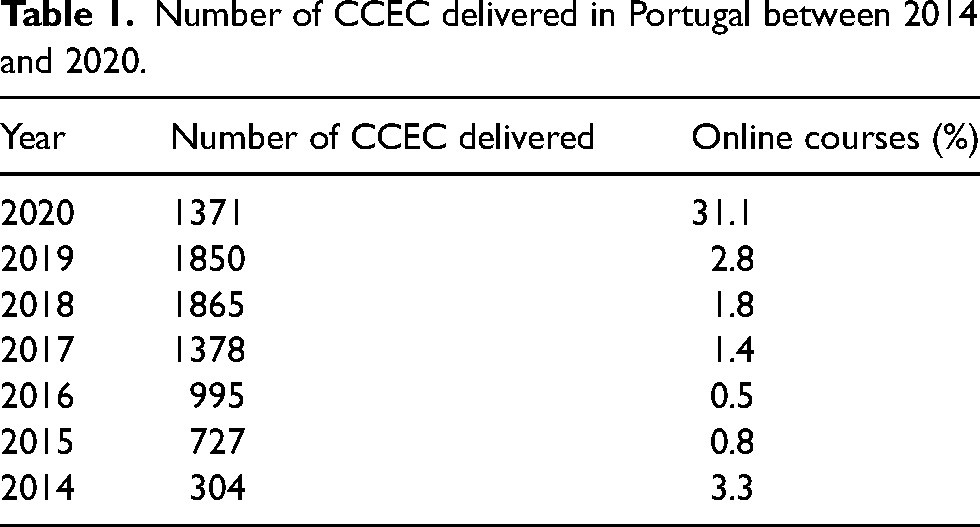
Table 1 offers an overview of the number of CCECs delivered between 2014 and 2020 and the distribution of CCECs according to course format (i.e., online or in-person). There has been a sizable increase (i.e., more than 400%) in CCECs offered from 2014 to 2017, representing a fairly steady growth trend over a 6-year span with only a few exceptions. Notably, there was a decrease in CCECs from 2018 to 2019 and 2019 to 2020, but both were still higher than 2017, and much higher than 2014–2016.
Number of CCEC delivered in Portugal between 2014 and 2020.
What format were the CCECs delivered in?
Prior to 2020, almost no CCECs were delivered online (range = 0.5%–3.3%; see Table 1 for all percentages). In 2020, 426 out of 1371 CCECs (31.1%), were delivered online, representing a nearly tenfold increase in the number of courses delivered online compared to previous years.
How many CCECs were delivered for each topic between 2014 and 2020?
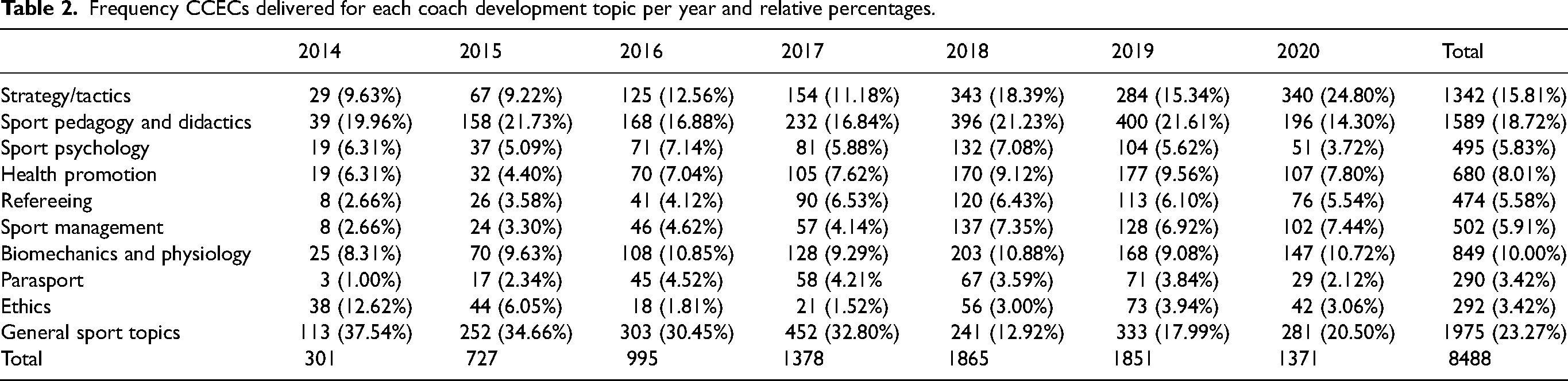
A total of 8488 continuous coach education courses were delivered between 2014 and 2020. The number of CCECs delivered for each coach development topic varied. CCECs on sport-specific topics were delivered most frequently (n = 1975; 23.3%) and CCECs on parasports (n = 290, 3.4%) and ethics (n = 292, 3.4%) were delivered the least frequently. See Table 2 for how frequently each coach development topic was delivered and their relative percentages related to the total number of CCECs delivered each year.
Frequency CCECs delivered for each coach development topic per year and relative percentages.
How many hours were allocated to delivering each CCEC topic?
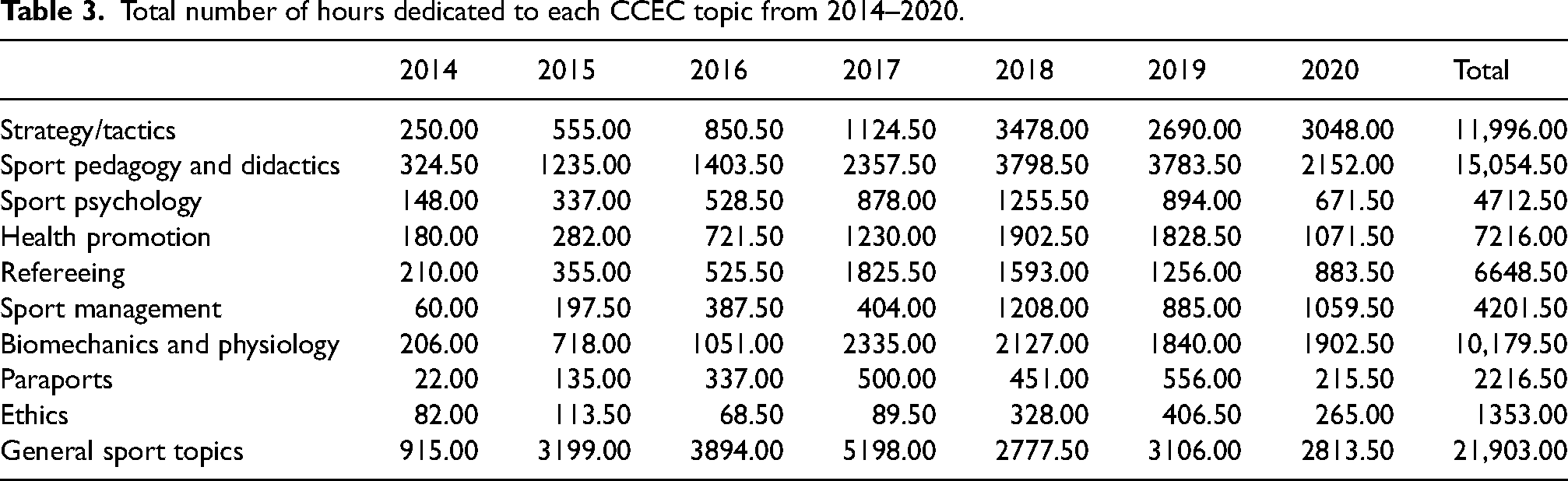
From 2014 to 2020, the greatest number of training hours were dedicated to general sport topics (21,903 h) and the fewest hours of CCEC training were dedicated to topics related to parasport (2216.5 h) and ethics (1355 h). See Table 3 for the total number of hours dedicated to all coach development topics.
Total number of hours dedicated to each CCEC topic from 2014–2020.
Which types of organizations were delivering CCECs and how were topics delivered according to organization?
CCECs were delivered by sport federations, regional associations, sport clubs, universities, polytechnics, and private companies. For frequencies of CCEC topics delivered by each type of organization. See Table 4 for results.
Actual counts for CCECs delivered by organization.
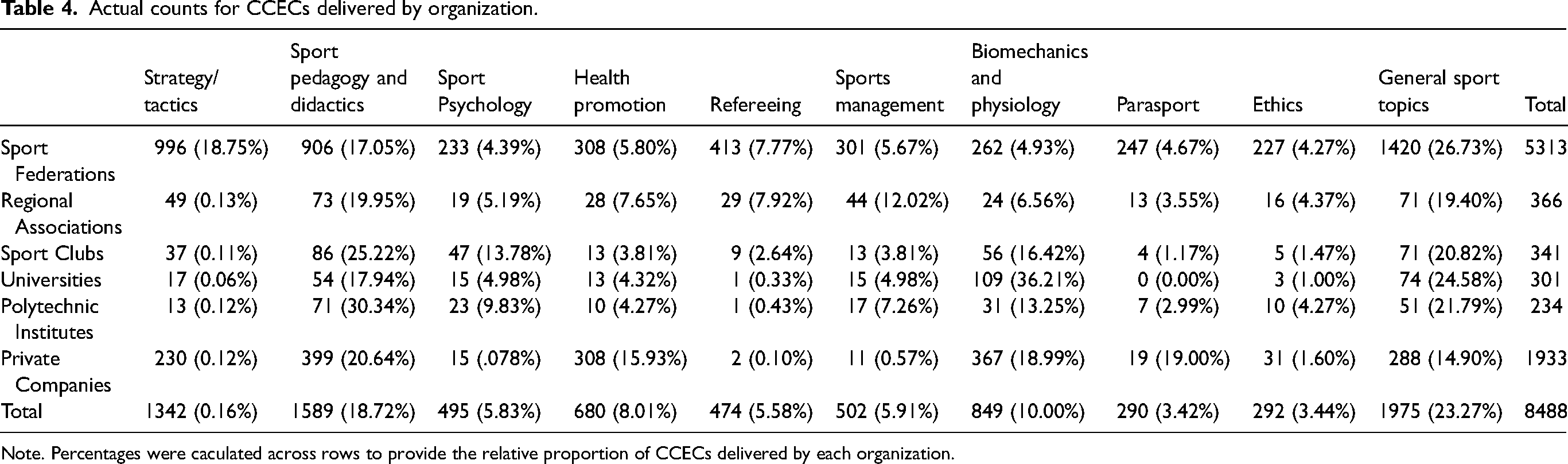
Note. Percentages were caculated across rows to provide the relative proportion of CCECs delivered by each organization.
In which locations were CCECs delivered in Portugal and how were CCEC topics delivered according to location?
In total, 7938 CCECS were delivered in-person (550 were delivered online). CCECs were delivered in-person in Lisboa, Porto, Braga, Setúbal, Aveiro, Leiria, Santarém, Faro, Coimbra, Viseu, Madeira, Açores, Viana do Castelo, Vila Real, Castelo Branco, Guarda, Évora, Beja, Bragança and Portalegre. For frequency of CCEC topics delivered at each location see Table 5.
Actual counts for CCECs delivered by location.
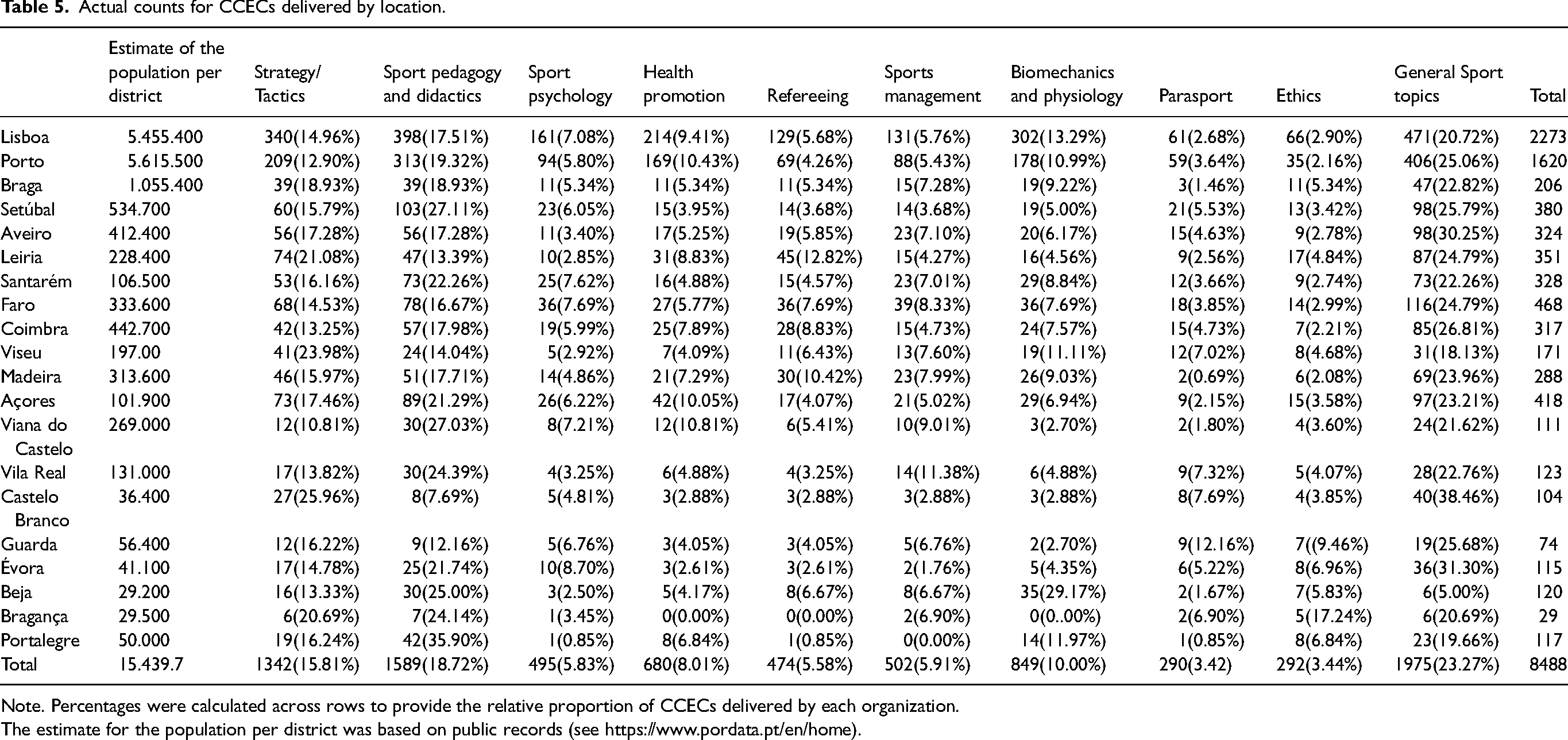
Note. Percentages were calculated across rows to provide the relative proportion of CCECs delivered by each organization.
The estimate for the population per district was based on public records (see https://www.pordata.pt/en/home).
Discussion
The purpose of the study was to explore how CCECs were being offered in Portugal between 2014 and 2020. There was a substantial increase in the number of CCEC offered between 2014 and 2017, probably due to the fact this was a period where coaches needed to renew their coaching certificates and government policies have attempted to increase the number of CCECs delivered. This highlights the efforts made by sport organizations, including the Portuguese Institute of Sport and Youth, to provide coaches with opportunities for their professional development. It should be noted that, although coaches may be extrinsically motivated to participate in CCECs to renew their coaching certificate, CCECs can provide relevant resources for coaches to increase their effectiveness and openness towards learning. 9
Despite the fact that the COVID-19 pandemic made sport organizations deal with many issues concerning dropout and interruption of all competitive events, which impacted the number of CCEC delivered, it is an outstanding achievement that so many courses were still offered in 2020. However, considering the objectives of CCECs, most were centered around general sport topics, which did not align with the need to provide different and meaningful learning opportunities, and is cause for concern.
Considering all years analyzed, when put together, CECs on general sport topics were delivered most frequently (n = 1975; 23.3%) and CCECs on parasport (n = 290, 3.4%) and ethics (n = 292, 3.4%) were delivered the least frequently. Therefore, it is important to pose the following question: given that, during the Covid-19 pandemic, no competitive events were taking place (no competitive pressures faced by coaches), should it not have been the ideal time to focus on other elements of coaching and have CCECs genuinely meet their fundamental mandate? Furthermore, it should be noted that topics such as ethics and parasports are not extensively covered in the introductory coaching courses (alongside topics such as sport psychology and health promotion). However, the greatest number of training hours were dedicated to general sport topics (21,903 h) and the fewest to parasport (2216.5 h) and ethics (1355 h).
Within the Portuguese sport system, as potentially in other countries, there is an overemphasis on performance to the detriment of other relevant developmental outcomes. Indeed, previous research within the Portuguese sport system has supported this assumption.10,11 This finding also entails that in the Portuguese sport system, during the COVID-19 pandemic, coaches had few opportunities to learn about topics such as mental health, social justice, positive youth development, and sleep hygiene which were undoublty emergent issues and undermines the purpose of CCECs. Recent research has indicated the importance of creating meaningful learning opportunities that help coaches consider these important contemporary issues that are still affecting countless youth in countries around the world.9,12
Future CCEC offerings in Portugal may want to touch further upon notions of social justice, mental health, nutrition, and other less explored yet equally important topics which are now paramount in contemporary society. 13 If coaches are to use sport in a meaningful way, innovation must be constant and topics explored in CCEC must evolve with society to account for how youth learn and interact with their peers. 14 One consideration to nurture constant innovation is to further tap into the expertise of sport scientists in universities and polytechnic institutes who play important roles in generating and disseminating knowledge. 15 Based on the data, sport federations and universities appear to be main entities responsibles for the overemphasis on sport-specific topics and deliver little content on ethics, which should warrant reflection.
Sport scientists could be further called upon to create evidence-informed coach education material that is then delivered by trained coach developers operating in sport federations. If changes in coach education are to integrate knowledge that is consistent with society's evolution (ethics, psychology, pedagogy, and many others), stronger partnerships between sport scientists and sport organizations may need to be fostered. In this sense, “knowledge brokers” (i.e., intermediary developing relationships between producers and users of knowledge) could assume a mediating role and contribute to an increase in CCECs informed by the latest research findings of sport scientists affiliated with universities and polytechnic institutes. 16 Recent research has acknowledged the need to expand coach education to consider notions of social, emotional, and mental health, social justice life skills as well as trauma-informed practices.1,9
We should also have in mind that many coaches may still attend CCECs only to renew their coaching certificates and completely disregard topics beyond performance and sport skill development in their practices because they perceive that there is not enough time and opportunities for them to become knowledgeable about other topics. Findings showed that most regions across Portugal had substantial opportunities for coaches to learn about sport-specific topics, with much less opportunities provided for courses related to ethics. Although Guarda, Evora, Bragança, and Portalegre provided coach learning opportunities on ethics and/or parasport more frequently from a relative propotion standpoint, the total number of courses remains small throughout Portugal. Considering these regions have approximately the same size and population (Porto and Lisbon being the more populated areas; see Table 5), attention should be paid to delivering more diverse CCECs across all regions in a more equitable way for all coaches to become better prepared to meet athletes’ developmental needs.
Therefore, the current coach education system in Portugal appears to perpetuate the status quo by emphasizing technical, tactical, and physical development over other equally relevant outcomes, a reality that compromises the fundamental objectives of CCEC. This begs the question, should sport organizations offer the types of courses coaches want to attend (market-driven approach) or should sport organization consider coaches’ learning needs (needs-driven approach)? For coaches to think they need CCEC centered around themes such as social justice, nutrition, physical activity, mindfullness and mental health, exposure may be key. For example, coaches may not appreciate the importance of a social justice CCEC if they do not know about the relevance of social justice in the lives of their participants. In tandem, the reward system in place within the Portuguese sport system needs to value outcomes/metrics that go beyond performance. Otherwise, coaches will continue to prioritize CCEC on strategy/tactics and sport-specific topics so long as winning and performance remain the main metric by which they are assessed.
Within sport systems, policy makers may need to consider how a broad range of developmental outcomes is tied to funding and assessment of sport organizations’ practices. Such strategy may help provide the necessary “nudge” so coaches recognize the value of integrating these materials in their coaching practice. As positioned by Whitley, 17 sustainable behavior change is influenced by the extent to which organizations include a series of “nudges” that induce behaviors such as developing more CCEC on topics that are currently underexplored and assessing coaching practices based on a broad range of variables (e.g., strategies to foster appropriate nutrition, sleep, positive youth development, social justice, etc.).
Careful consideration needs to be paid towards the need to potentially combine a market-driven and a needs-driven approach if CCEC are to fulfill their role of exposing coaches to themes that are unaddressed in introductory courses. In other words, in its current form, the CCEC system is for the most part not enabling coaches to be sufficiently exposed to themes that extend beyond the introductory courses. Interestingly, ‘ethics’ and ‘parasport’ were addressed by sport organizations in some regions at rates higher than expected, which may be interpreted as an indicator that coaches want to expand their knowledge to other areas of expertise.18,19 More research is needed to examine sport stakeholders’ needs in contemporary society so sport organizations can then identify and combine them with their own mandates/mission statements and strategies to induce implementation. Future research into who/what instigates the choices of topics for CCEC may be useful and enable an understanbding about how decision-makers come to decide which topics will be covered in CCECs in different regions (e.g., is it based on perceived coach needs?; on the expertise of coach developers available to teach?; is it a random attribution?). Future research could be conducted to understand how CCECs are operationalized across sport systems and account for potential cultural differences. Also, studies could explore further the advantages and disadvantages of online CCECs, as well as examine if the 31% online CCECs delivered in 2020 were maintained in 2021, 2022, or if it returned to baseline.
Conclusion
Although the COVID-19 pandemic has created challenges for sport systems across the globe, 20 there are also opportunities and reflections that may positively influence how sport organizations operate moving forward. The results suggest that coaches have few opportunities to learn about themes such as mental health, social justice, positive youth development, and sleep hygiene. Indeed, CCEC in Portugal appear, for the most part, to fail to extend the contents explored in introductory coaching courses, which may contribute to perpetuating the status quo in the Portuguese youth sport system where emphasis continues to lie in the technical, tactical, and physical development of youth. Based on our findings, the CCE system may not be meeting its objectives of helping coaches develop well-rounded coaching practices that address athletes’ physical, social, emotional, and mental needs. Moving forward, more attention needs to be paid to improving the overall quality of the CCE system in Portugal. This study represents a first step that we hope may inspire to improve youth's experiences in sport in a endemic world.
Footnotes
Declaration of conflicting interests
The author(s) declared no potential conflicts of interest with respect to the research, authorship, and/or publication of this article.
Funding
The author(s) disclosed receipt of the following financial support for the research, authorship and/or publication of this article: This work was supported by the National Funds through the FCT-Fundação para a Ciência e a Tecnologia, I.P., under the scope of the project UIDB/05198/2020 (Center for Research and Innovation in Education, in ED).
