



Abstract
Objective
Mindfulness can help athletes better regulate their emotions, and analyzing personality traits may help identify those who would benefit more from psychological intervention activities to optimize subsequent training effects. This study sought to examine the effects of mindfulness training on athletes’ competition anxiety and to consider the role of personality traits.
Methods
Fifty athletes (mean age = 21.87 years, SD = 1.62; 23 females and 27 males) were randomly assigned to a mindfulness group (n = 23), which received 8 weeks of mindfulness training, and a control group (n = 27) receiving no intervention. The athletes’ personality traits, mindfulness level, and competition anxiety were measured according to the study plan before and after mindfulness training, and at an 8-week follow up.
Results
Compared with the control group, mindfulness training had a positive effect on the level of mindfulness and self-confidence in the mindfulness group, as well as a greater improvement in cognitive/somatic state anxiety. Improvements remained stable from the end of training to follow up. Additionally, athletes with high activity and high extraversion had more improvement in mindfulness levels and cognitive/somatic state anxiety, respectively, while athletes with low neuroticism demonstrated greater improvement in self-confidence.
Conclusions
Mindfulness training helps to reduce athletes’ competition anxieties, and personality traits might affect the improvement effect to a certain extent, which provided a reference for optimizing mindfulness training and developing more personalized psychological training for athletes who display certain personality traits.
Introduction
Mindfulness-based psychological training is a method that emphasizes not evaluating and responding to one's situation and internal state so that individuals can instead focus their attention on the clues related to the current task, thus improving their physical performance and mental state. Currently, mindfulness training has been widely used in clinical psychology, education, competitive sports and other fields, and research on mindfulness training has shown that its effects include relief from anxiety and depression,1,2 and improved cognitive-emotional learning processes. 3 Mindfulness helps individuals view their experiences in the present moment with greater clarity and objectivity and become more peaceful after accepting their internal feelings and emotions naturally. 4 In other words, emotional regulation strategies adopted by individuals with high levels of mindfulness can help them better adapt to situations prone to emotional fluctuations. In the field of sports psychology, mindfulness-based approaches have also been frequently used in recent years to encourage athletes to adopt a nonjudgmental acceptance of all thoughts and emotions. 5 Research suggests that mindful athletes were more likely to experience a state of energetic concentration and full involvement during sports performance. 6 Mindfulness-based intervention can also reduce athletes’ difficulties in emotion regulation, which is beneficial to improve their emotion processing ability. 7
It is worth noting that athletes not only need to improve their proficiency in technical movements during competition and training but also cope with potentially threatening specific emotions. Competition anxiety is representative of this kind of emotion, which is characterized by the cortisol awakening response of individuals when dealing with different degrees of external or internal threats. 8 It has also been defined as a trait and/or state-like response to stressful situations related to sports, that individuals consider as potential stress, resulting in a range of cognitive assessments, behavioral responses, and/or physiological arousal. 9 Studies have found that competition anxiety was significantly related to the incidence of sports injuries and performance deterioration of athletes 9 ; athletes in a state of high anxiety will be affected in their thinking ability, 10 and more monitoring errors will occur. 11 Sparks et al. 12 believed that the various requirements for competitive athletes increase the pressure for successful performance, and pressure increases anxiety, which might affect their performance. Therefore, adopting a series of strategies to regulate such emotions has become an indispensable part of an athlete's preparation for competition. Considering that the concept conveyed by mindfulness enables individuals to reduce emotional arousal with fewer resources, it can, to some extent, help athletes reduce their anxiety when facing stressful events such as competitions. 13 Therefore, it is necessary to explore the improvement effect of mindfulness on athletes’ competition anxiety and the persistence of the effect.
In intervention studies, a classic question is “what works for whom,” that is, the moderators of outcomes need to be better understood. 14 In the field of psychology, to determine those who can benefit more from intervention activities, participants’ personality traits or other stable psychological characteristics can be analyzed, and these specific influencing factors can be determined through the research results to optimize the efficacy of training. 15 It is worth mentioning that many scholars have expressed similar views in this regard. For instance, Nyklíček and Irrmischer 16 believe that it is theoretically and clinically important to identify a moderating factor that may influence the size and direction of intervention effects. Dreison et al. 17 suggested identifying specific groups who benefit more from mindfulness, in order to help managers make more informed decisions about whether mindfulness programs are worth implementing. Likewise, Wellenzohn et al. 18 indicated that testing the moderating effect of personality is of particular application because the degree of fit between person and intervention is related to the effectiveness of the intervention.
At present, some scholars have begun to explore the relationship between personality traits and the effect of mindfulness training. For example, de Vibe et al. 14 invited 288 medical and psychology students to conduct a randomized controlled experiment and found that after the mindfulness training of the experimental group, the students who scored higher in neuroticism had a more obvious reduction in their mental distress and a more obvious improvement in subjective wellbeing; and the higher the conscientiousness score was, the greater their stress scores dropped, suggesting that participants who scored higher on neuroticism and conscientiousness could benefit more from mindfulness training. Significantly, Krick and Felfe 19 found similar results in the police population; that is, police officers with higher neuroticism and openness could benefit more from mindfulness. These studies have shown that personality traits play a potential moderating role in mindfulness training, while groups with higher neuroticism or more vitality seem to benefit more. Regrettably, few studies have examined this in athletes.
Furthermore, previous evidence suggests that personality might be a useful to understand athletes’ predisposition to anxiety. 20 Therefore, scholars began to consider personality traits as a potential influencing factor to improve the ability to predict competition anxiety. In this regard, Balyan et al. 21 found that neuroticism in male athletes was positively correlated with somatic anxiety and physiological arousal but negatively correlated with self-confidence, thus believing that neuroticism was an important personality trait conducive to understanding athletes’ precompetition emotional and physiological states. Additionally, extraversion has been found to be negatively correlated with cognitive state anxiety, 22 and aggressiveness was a predictor of athletes’ competition anxiety. 23 In brief, these studies emphasize that personality traits are associated with competition anxiety to some extent, but there have been few intervention studies on the relationship between these two variables. In addition, compared with the Big Five personality model (neuroticism, extraversion, agreeableness, openness, and conscientiousness), the five personality dimensions in the Zuckerman-Kuhlman-Aluja Personality Questionnaire shortened form (ZKA-PQ/SF) were neuroticism, extraversion, aggressiveness, activity, and sensation seeking, among which neuroticism and extraversion were strongly correlated with similar scales in the Big Five, while activity correlated with conscientiousness, and sensation seeking with extraversion and openness. 24 ZKA-PQ/SF has been successfully used in athletes, 25 and the included dimensions (such as aggressiveness and activity) seem to better reflect the association with competition anxiety, which is suitable for research on related topics. Therefore, in the process of athletes receiving mindfulness training, it is worth exploring which personality traits can moderate the improvement effect on competition anxiety.
As noted above, the main purpose of this study was to examine the improvement effect of mindfulness training on athletes’ competition anxiety and to explore which personality traits may play a moderating role in this process. The expected results can provide a reference for sports psychologists and coaches to conduct subsequent research and training based on athletes’ personality traits to realize the pertinence of psychological intervention activities and to optimize and improve training. Based on previous research, our hypotheses were as follows: (1) After mindfulness training, the competition cognitive state anxiety and somatic state anxiety of mindfulness group athletes will decrease, and their self-confidence will increase, compared with the control group; (2) neuroticism and activity will play a moderating role in the process of mindfulness training, and athletes who exhibit these high traits can benefit more from it; (3) improvements would remain steady from the end of mindfulness training to the follow-up assessment 8 weeks later.
Methods
Participants
Participants were recruited from a local sports college. A notice was issued through the college's influential mobile platform inviting athletes to volunteer for the study. Athletes who satisfied the following conditions could participate: (1) at least 18 years old; (2) national athlete-level athletic certificates or specialization in a certain sport; (3) no mindfulness, yoga, or Tai Chi training within half a year; (4) no family history of mental illness or mental illness; and (5) time to continuously participate in weekly training. This study utilized a randomized controlled design. Eligible athletes were randomly assigned to the mindfulness/control group according to a computer-generated random number list.
A total of 57 athletes were recruited into the study, representing sports such as football, badminton, tennis, gymnastics, swimming, and boxing. Among them, in the process of 3 data collections, 6 athletes were lost to follow up, 1 athlete was removed due to lack of data; and finally, 50 effective subjects were included in the analysis, 23 were in the mindfulness training group and 27 in the control group. All the athletes who were eventually included in the analysis fully participated in all mindfulness courses. During the study period, all athletes participated in competitive competitions related to their sport. The mindfulness group consisted of individuals with the following traits: their mean age was 20.91 years (SD = 1.51), ranging from 18 to 24; male 11 and female 12; average training years were 7.35 years (SD = 4.36). The control group consisted of individuals with the following traits: their mean age was 21.22 years (SD = 1.72), ranging from 18 to 25; male 16 and female 11; average training years were 8.04 years (SD = 3.94).
Before the study, we used G*Power 3.1.9.2 26 to calculate the required sample size. Based on previous studies on the effect of mindfulness training on competition anxiety,27,28 we expect a moderate effect size of 0.06 in part eta-squared. Considering this, the calculation was set as follows: medium effect size (f = 0.25); α: 0.05; power: 0.80; number of groups: 2; number of measurements: 3; the required sample size was 44 participants, and the sample size of this study met the basic subject needs.
Measures
The Five Facet Mindfulness Questionnaire (FFMQ) consists of 39 items and was used to measure mindfulness levels. 29 The scale uses a 5-point scale (1: not at all; 2: less; 3: some; 4: very consistent; 5: completely consistent) and measures the following 5 factors: observe, describe, act with awareness, nonjudgmental, and nonreactive; the higher the score was, the higher would be the level of mindfulness. Cronbach's alphas were as follows: observe (T1—pretest = 0.84, T2—post-test = 0.84, T3—follow up = 0.85); describe (T1 = 0.88, T2 = 0.88, T3 = 0.89); act with awareness (T1 = 0.77, T2 = 0.85, T3 = 0.87); nonjudge (T1 = 0.77, T2 = 0.80, T3 = 0.78); and nonreact (T1 = 0.57, T2 = 0.54, T3 = 0.71). The revised and translated Chinese version of FFMQ validated by Deng et al. 30 was used in this study.
The Competition State Anxiety Inventory-2 (CSAI-2) consists of 27 items and was used to measure competition anxiety. 31 Results are measured on a 4-point scale (1: not at all, 2: somewhat, 3: moderate, 4: very strong) and items are based on the following 3 factors: cognitive state anxiety, somatic state anxiety, and self-confidence. The higher the score is, the higher will be the level of anxiety and confidence during the competition. Cronbach's alphas were as follows: cognitive state anxiety (T1 = 0.88, T2 = 0.90, T3 = 0.87); somatic state anxiety (T1 = 0.82, T2 = 0.86, T3 = 0.81); and self-confidence (T1 = 0.84, T2 = 0.87, T3 = 0.82).
The ZKA-PQ/SF consists of 80 items and was used to measure personality traits. 24 Results are measured on a 5-point scale (1: disagree strongly, 2: disagree somewhat, 3: not well determined, 4: agree somewhat, and 5: agree strongly). Items are based on the following 5 factors: aggressiveness (AG), activity (AC), extraversion (EX), neuroticism (NE), and sensation seeking (SS). Cronbach's alphas were as follows: AG = 0.86; AC = 0.87; EX = 0.82; NE = 0.70; and SS = 0.71.
Procedures
Participants completed a questionnaire before the first mindfulness training (T1). After 8 weeks of mindfulness training (T2), the questionnaire survey was completed again and followed up 8 weeks after the end of the training (T3). All participants signed an informed consent form before the experiment and were told that they could get a reward of 50 ∼ 100 RMB based on the completion of the task, and had the right to withdraw at any time during the experiment; after the experiment, every participant could receive a certain fee (100 RMB per person in the mindfulness group and 50 RMB per person in the control group, which were paid after the whole experiment, by mobile payment). The study was approved by the local college ethics committee (Ethical Approval Document No. 2021147H).
Research design
A 2 × 3 mixed experimental design was used to test the effects of mindfulness training on athletes’ mindfulness levels and competition anxiety. The group (mindfulness/control group) was the intersubject variable, the test time (T1 pretest/T2 post-test/T3 follow up) was the intrasubject variable; the dependent variables were mindfulness and competition anxiety levels.
The moderating effect of personality traits on mindfulness level/competition anxiety was examined by the interaction between personality traits and time. Based on the score of each personality trait in the mindfulness group, they were divided into high group and low group according to the top and bottom 27%, respectively, and the rest were medium group (e.g. the mindfulness group was divided into high/medium/low neuroticism groups according to their score on neuroticism). In other words, a repeated measurement design was used to test the moderating effect of personality traits. The group (high/medium/low) was the intersubject variable, the test time was the intrasubject variable, and the dependent variables were mindfulness and competition anxiety levels.
In addition to filling out the demographic questionnaire and the ZKA-PQ/SF scale at T1, participants underwent FFMQ and CSAI-2 assessments at T1, T2, and T3 to measure changes in mindfulness and competition anxiety levels.
Mindfulness training program
The mindfulness training was guided by two psychotherapists with rich experience in psychological intervention and assisted by four graduate students majoring in psychology, three undergraduate students majoring in psychology and one undergraduate student majoring in human movement science.
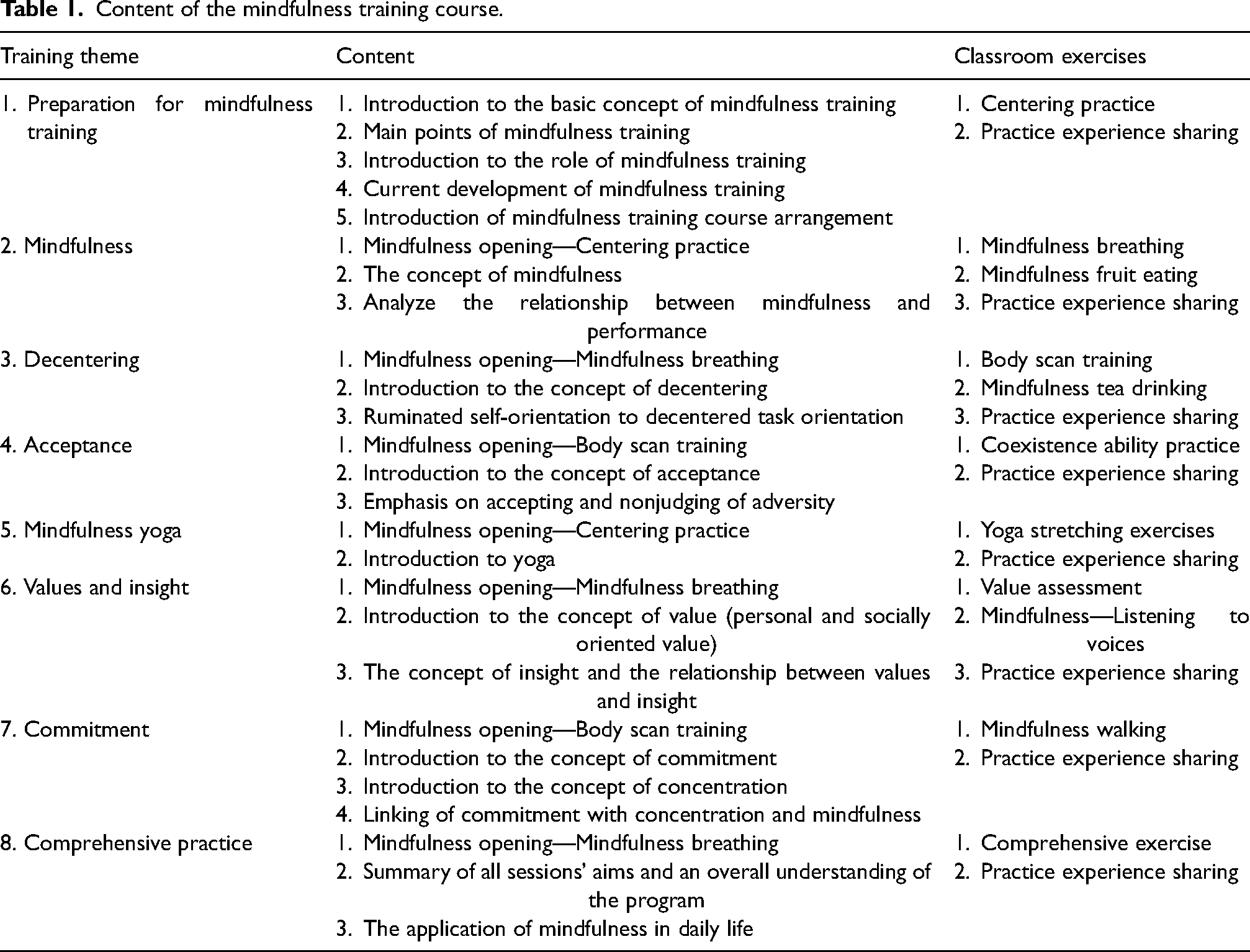
Based on the Mindfulness-Acceptance-Commitment approach (MAC), the book Mindfulness Training Manual for Athletes, designed by Si et al. 32 combined Eastern Zen philosophy and coping with adversity. A mindfulness training program (Mindfulness-Acceptance-Insight-Commitment, MAIC) has been developed from it, specifically for Asian athletes. The MAIC training program extracts three skills from Zen thought, namely “mindfulness,” “decentralization,” and “acceptance.” The goal is to help athletes better perceive and engage in the current behavioral process. In addition, MAIC also refers to the “values” and “input” in western third-generation cognitive behavioral therapy to provide direction for current behavior, promote the connection between values and specific behaviors, and realize the long-term persistence of values. In the current study, mindfulness training is conducted in 60 to 90 min classes once a week for 8 weeks; participants are followed up for 8 weeks after the training is completed. Combined with the team members’ experience with athletes and their knowledge of group psychological counseling, the course content was shown in Table 1. Mindfulness training was conducted in an airy, spacious, bright, and quiet classroom. After each training, the mindfulness instructor would arrange 15 min of formal mindfulness practice at home daily for 6 days a week for 8 weeks; before each course, members of the mindfulness group were free to share their experiences with the after-class practice as they wished.
Content of the mindfulness training course.
Data analyses
Data analysis was performed using IBM SPSS 26.0. Before proceeding to statistical analysis, normality (Shapiro-Wilk test) was checked. The χ-square/T test was used to compare the demographic information of the mindfulness group and the control group or the differences between the groups. One-way ANOVA was used to compare the differences in personality trait scores among different personality trait groups. Repeated-measures ANOVA was used to test the differences in mindfulness levels and competition anxiety between the two groups after mindfulness training, and this method was also used to examine the moderating effect of personality traits. If significant, between-group differences at each time point were tested at α = 0.05 (simple effect analysis). A p value of < .05 was considered statistically significant. For F-tests, partial eta-squared (η2) effect sizes are reported: η2 < 0.019: trivial effect size (T); 0.02 < η2 < 0.059: small effect size (S); 0.06 < η2 < 0.139: medium effect size (M); η2 > 0.14: large effect size (L).33,34 Meanwhile, effect sizes for t-tests were reported as Cohen's d: d = 0 to 0.19: trivial effect sizes (T); d = 0.20 to 0.49: small effect sizes (S); d = 0.50 to 0.79: medium effect sizes (M); d ≥ 0.80: large effect sizes (L).33,34
Results
Effects of mindfulness training on athletes’ mindfulness levels and competition anxiety
First, there was no significant difference between the mindfulness group and the control group with respect to sex (χ2 = 0.654, p = .419), age (t = 0.671, p = .505), or training years (t = 0.588, p = .560), and both had or were receiving undergraduate education. The scores of the mindfulness group and the control group at the T1, T2, and T3 stages are shown in Table 2. There was no significant difference in the FFMQ and CSAI-2 scores between the two groups in the T1 stage (p > .05).
Pretest, post-test, and follow-up outcomes of participants.
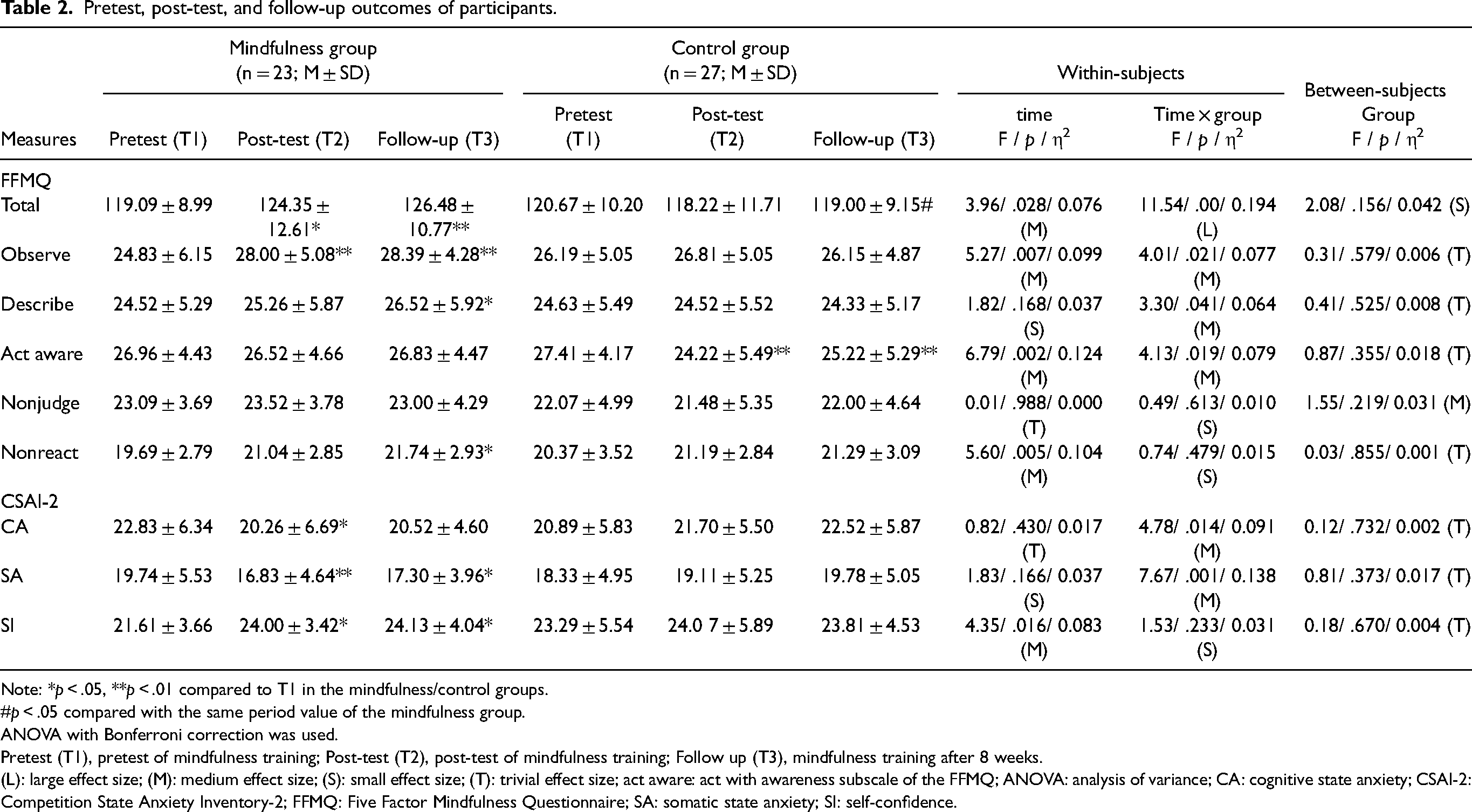
Note: *p < .05, **p < .01 compared to T1 in the mindfulness/control groups.
#p < .05 compared with the same period value of the mindfulness group.
ANOVA with Bonferroni correction was used.
Pretest (T1), pretest of mindfulness training; Post-test (T2), post-test of mindfulness training; Follow up (T3), mindfulness training after 8 weeks.
(L): large effect size; (M): medium effect size; (S): small effect size; (T): trivial effect size; act aware: act with awareness subscale of the FFMQ; ANOVA: analysis of variance; CA: cognitive state anxiety; CSAI-2: Competition State Anxiety Inventory-2; FFMQ: Five Factor Mindfulness Questionnaire; SA: somatic state anxiety; SI: self-confidence.
Repeated-measures ANOVA of the FFMQ total score showed a statistically significant interaction between group and time (F = 11.54, p < .01, η2 = 0.194), and large effect size was observed; simple effect analysis showed that the score of the mindfulness group at T2 and T3 was significantly higher than that at T1 (p < .05), while the score of the control group at T3 was significantly lower than that of the mindfulness group at the same stage (p < .05). In terms of the dimensions of the FFMQ scale, the trend of the “observe” score in the mindfulness group was consistent with the total score. Group × time interactions were also found for “describe” and “act with awareness” (describe: F = 3.30, p = .041, η2 = 0.064; act with awareness: F = 4.13, p = .019, η2 = 0.079), but the difference was that the mindfulness group had significantly higher “describe” scores at T3, while the control group had significantly lower “act with awareness” scores at T2 and T3 than at T1 (p < .01). The main effect of time was found to be significant in “nonreact” (F = 5.60, p = .005, η2 = 0.104), and the mindfulness group scored significantly higher at T3 than at T1 (p < .05) (see Table 2).
For the CSAI-2, repeated-measures ANOVA results for cognitive state anxiety scores showed a statistically significant interaction between group and time (F = 4.78, p = .014, η2 = 0.091), and medium effect size was observed; simple effect analysis showed that the mindfulness group scored lower at T2 than at T1 (p < .05). Similarly, a group × time interaction was found for somatic state anxiety (F = 7.67, p = .001, η2 = 0.138), and medium effect size was observed; simple effect analysis showed that the score of the mindfulness group at T2 and T3 was significantly lower than that at T1 (p < .05). The main effect of time was found to be significant in “confidence” (F = 4.35, p = .016, η2 = 0.083), and the score of the mindfulness group at T2 and T3 was significantly higher than that at T1 (p < .05) (see Table 2).
Examining the moderating role of personality
Based on the score of each personality trait, the mindfulness group was divided into high, medium, and low AG/AC/EX/NE/SS groups. Since there were 23 athletes in the mindfulness group, after divided according to the top and bottom 27% of each trait score, the number of participants in both high and low groups was 6 (23 × 27% ≈ 6), and in the medium group was 11. Analysis of variance showed that the difference in personality scores among the groups was statistically significant (p < .001) (see Table 3).
Descriptive statistics and difference analysis of personality scores of high, medium, and low personality trait groups (mindfulness group, N = 23; M ± SD).
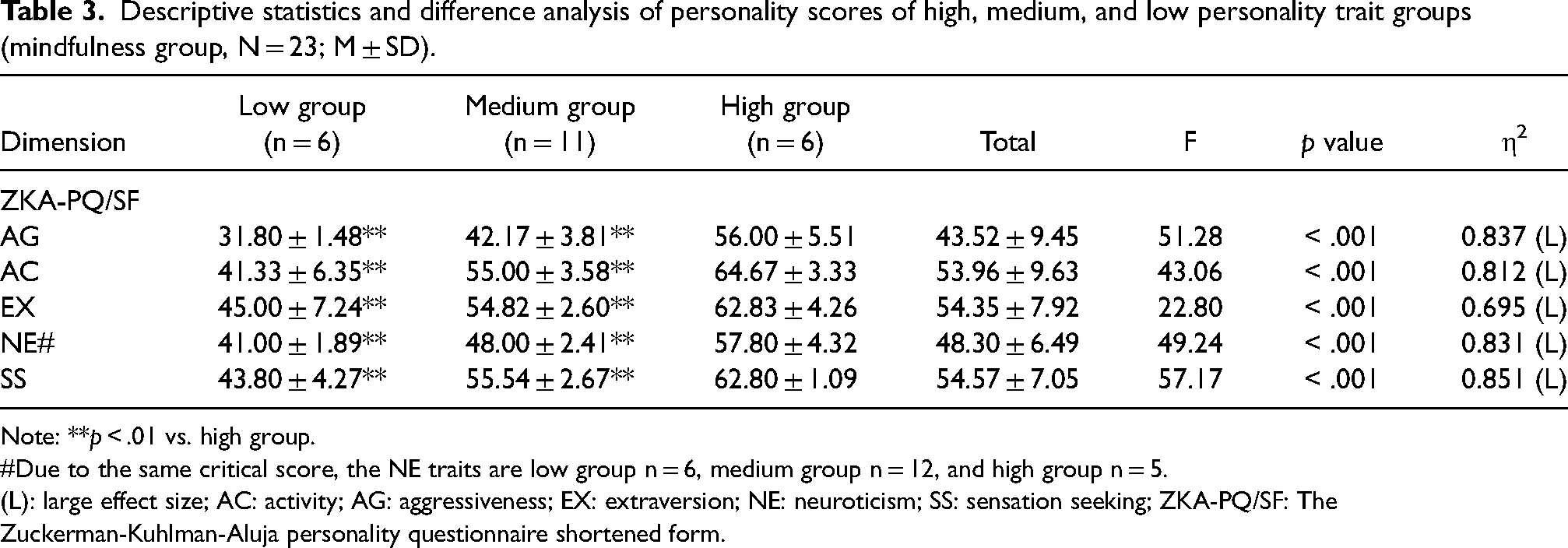
Note: **p < .01 vs. high group.
#Due to the same critical score, the NE traits are low group n = 6, medium group n = 12, and high group n = 5.
(L): large effect size; AC: activity; AG: aggressiveness; EX: extraversion; NE: neuroticism; SS: sensation seeking; ZKA-PQ/SF: The Zuckerman-Kuhlman-Aluja personality questionnaire shortened form.
In the next step, all five personality traits were included. For the level of mindfulness, the time × activity group interaction was significant (F = 3.20, p = .023, η2 = 0.242). The effects reflected that high-activity athletes showed stronger increases in mindfulness levels, as evidenced in the analysis based on activity groupings (Table 4 and Figure 1). Meanwhile, there was no significant difference in the scores between groups in T1 stage.
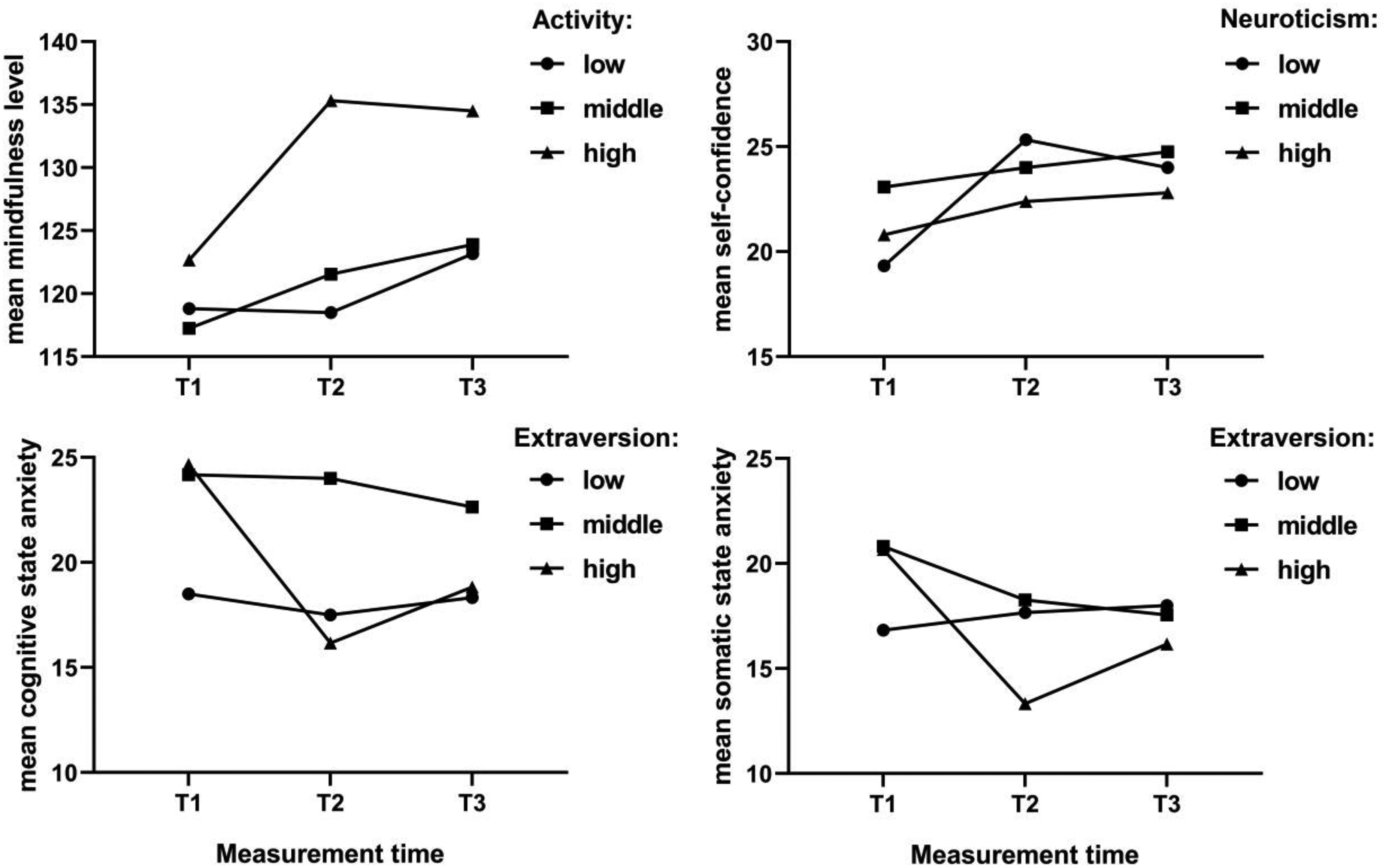
Mean numerical changes at three time points in the activity/extraversion/neuroticism groups (initial values of the ordinates were different).
Comparison of differences in mindfulness levels among activity groups at T1, T2, and T3.
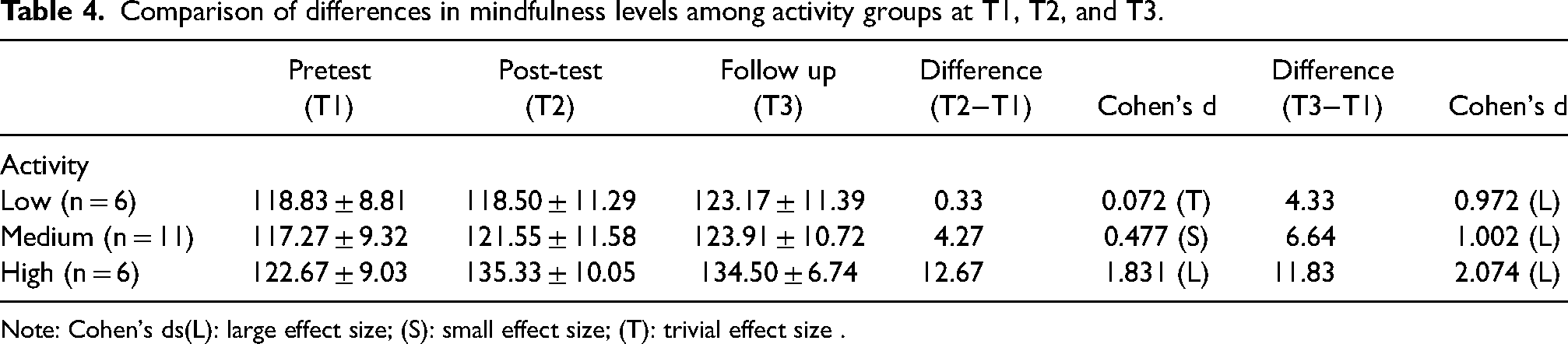
Note: Cohen's ds(L): large effect size; (S): small effect size; (T): trivial effect size .
For cognitive/somatic state anxiety, the time × extraversion group interaction was significant (cognitive state anxiety: F = 3.85, p = .010, η2 = 0.278; somatic state anxiety: F = 3.99, p = .008, η2 = 0.285). Again, effects reflected that athletes higher in extraversion showed a stronger decrease in cognitive/somatic state anxiety, as can best be seen in the analysis based on extraversion groupings (Table 5 and Figure 1). Similarly, there was no statistically significant difference in the scores of cognitive/somatic state anxiety among the groups in T1 stage.
Comparison of differences in cognitive/somatic state anxiety among extraversion groups at T1, T2, and T3.
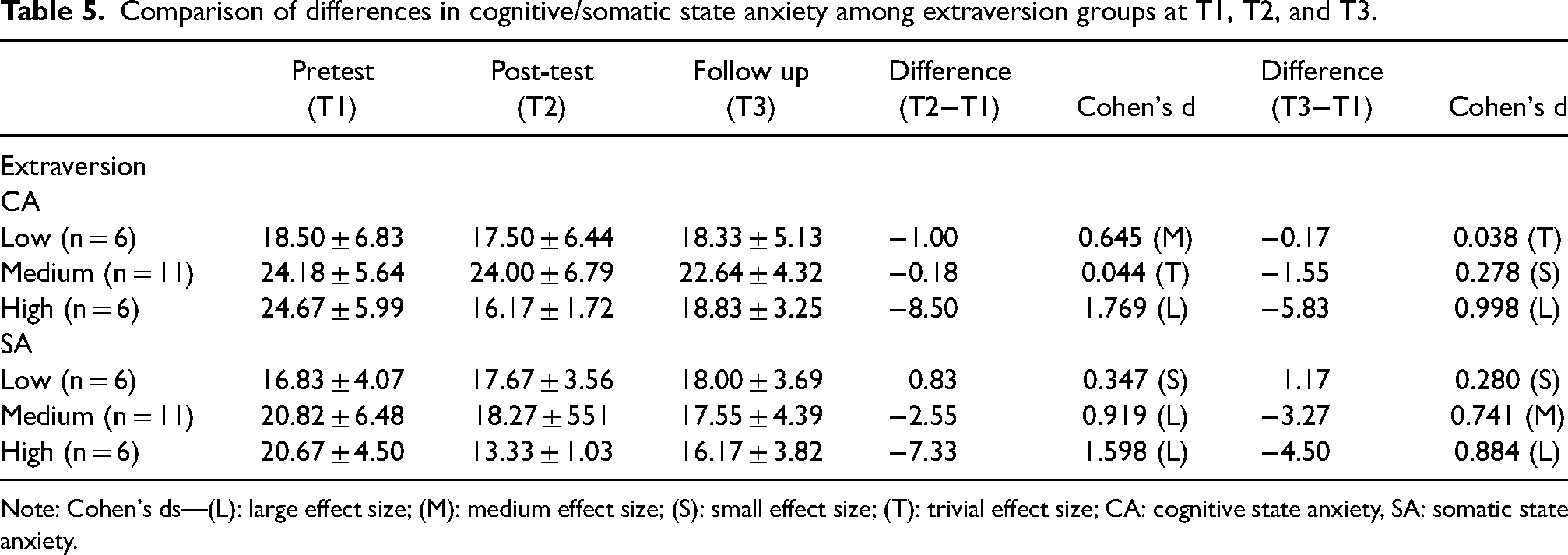
Note: Cohen's ds—(L): large effect size; (M): medium effect size; (S): small effect size; (T): trivial effect size; CA: cognitive state anxiety, SA: somatic state anxiety.
In the analysis of self-confidence, although there was no time × neuroticism interaction effect (F = 2.00, p = .112, η2 = 0.167), the interaction effect before and after mindfulness training (T1 and T2) reflected a stronger increase in the confidence level of athletes with low neuroticism, and this situation was also considered (Table 6 and Figure 1); there was also no significant difference in the scores of the groups in T1 stage.
Comparison of differences in self-confidence among neuroticism groups at T1, T2, and T3.
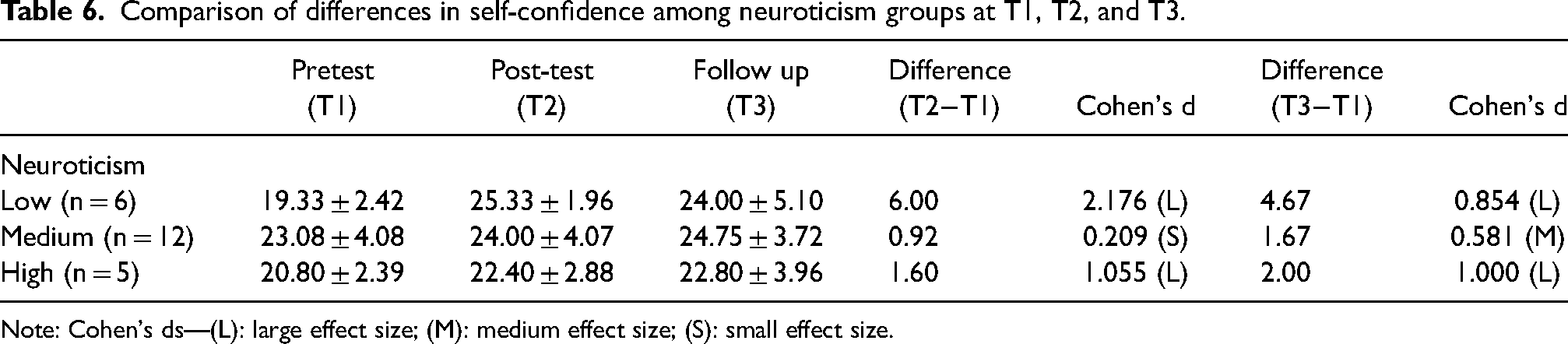
Note: Cohen's ds—(L): large effect size; (M): medium effect size; (S): small effect size.
Furthermore, when analyzing mindfulness levels and competition anxiety, no interaction was found between AG/SS and time, indicating that these two personality traits did not moderate the effects of mindfulness training in this study.
Discussion
The present study aimed to examine the effect of mindfulness training on athletes’ competition anxiety and the potential moderating effects of related personality traits on the level of mindfulness and competition anxiety during and after mindfulness training. Our study found that athletes in the mindfulness group had increased levels of mindfulness and self-confidence and decreased cognitive/somatic state anxiety after mindfulness training; athletes with high activity increased more in mindfulness levels, athletes with high extraversion showed better improvements in cognitive/somatic state anxiety, and athletes with low neuroticism showed greater self-confidence. These findings could help sports workers formulate more personalized psychological interventions based on the characteristics of athletes, optimize training, and improve performance.
First, previous studies have shown that mindfulness training can improve the mindfulness level of athletes, and the improvement of this level was considered to be one of the effective ways to promote athletic performance7,35; our study confirmed this by comparing the results of the mindfulness group and the control group. But in the current study, the Cronbach’s alphas of “nonreact” in FFMQ was relatively low in T1 and T2 stages, which might be due to differences between Easterner and Westerner understanding of mindfulness 30 ; and Arthur et al. 36 believe that “nonreact” is the cornerstone of the concept of mindfulness, which might be less reliable among less mindful people so these factors might have an impact on “nonreact.”
In terms of competition anxiety, consistent with findings from previous studies and meta-analyses,37,38 our study found an overall decrease in cognitive/somatic state anxiety and an increase in self-confidence among mindfulness group athletes. Importantly, this positive effect was not only visible immediately after the training, but somatic state anxiety and self-confidence remained stable at 8-week follow up, reflecting the relative durability of the effects of mindfulness training. Meanwhile, our results were similar to those of self-talk and imagery training, which were commonly used in sports psychology training.39,40 But in contrast, we also demonstrated the persistence of mindfulness effects. It was also worth noting that the Transactional Model of Stress and Coping (TMSC) proposed by Lazarus and Folkman 41 holds that when individuals perceive that their abilities cannot cope with current stress, anxiety will be generated, and bad misinterpretation of stressful situations will also increase the intensity of anxiety in athletes. Mindfulness supports athletes to take an open and nonjudgmental approach to current thoughts and feelings, preventing them from being involved in unpleasant critical judgmental thoughts about themselves (rivals, fans, coaches, etc.). 42 Hence, it can be considered that integrating mindfulness into the training process of athletes is very helpful in improving their psychological adjustment abilities during competition.
Regarding the moderating effect of personality, the activity trait showed a significant moderating effect on the level of mindfulness. Specifically, the higher the activity is, the greater will be the benefit. Highly active individuals often remain active, energetic about their work, and willing to accept challenging work. Previous research has demonstrated a positive relationship between activity and conscientiousness 24 and that groups with high conscientiousness may be more conscientious in adhering to psychotherapy and thus more likely to gain the benefits. Meanwhile, other studies have found that because the highly conscientiousness groups tend to pursue perfection, 43 they are more susceptible to the influence of learning or training pressure. Thus, they experience increased responsiveness to pressure, and therefore can gain more from mindfulness activities. Consequently, it can be assumed that high-activity athletes generally approach the task/challenge more positively, they take mindfulness training more seriously, which was the main reason that their levels of mindfulness improved more.
Extraversion showed a moderating effect on cognitive/somatic state anxiety in CSAI-2. From the analysis results, high-extraversion athletes can obtain better improvement effects from mindfulness training. Studies have shown that extraversion was negatively correlated with athletes’ cognitive anxiety intensity 22 and was a protective factor against anxiety. 44 In other words, extroverted athletes who were characterized by high confidence and positive emotions were more likely to have positive changes in anxiety during competition because of their tendency to be active and assertive and their tolerance for stress and frustration. Therefore, it is reasonable to believe that after mindfulness training, highly extroverted athletes will respond more positively to competitive events, both cognitively and somatically.
Additionally, neuroticism was found to modulate self-confidence during mindfulness training (T1 and T2). Unexpectedly, the low neuroticism athletes’ self-confidence improved more during these two periods. Combined with explanations from studies on similar topics, it may be noted that these people were more likely to benefit from mindfulness because they have higher negative emotions.14,16 However, the target group for the above study did not involve athletes, and it is worth noting that previous studies have shown that athletes generally have lower levels of neuroticism, so applying previous findings about the moderating effects of neuroticism to our study participants seems inappropriate. 45 To a degree, athletes with low neuroticism were more inclined to interpret events positively, and it took less time for their basic cognitive-emotional shifts after mindfulness, which helped boost their confidence levels during competition.
There were several limitations to this study. First, the participants in this mindfulness training were athletes of various sports. Although competition anxiety is a common emotion during competition, future research might consider a more detailed exploration of a certain sport; and it is also possible to consider classifying and exploring athletes based on demographic characteristics (i.e. gender, ethnicity). Second, when testing the moderating effect of personality traits, this study was exploratory in nature and the sample size of athletes was relatively small, so future studies might consider larger sample sizes. Third, the measurement used in this study was only self-report, and future studies using psychophysiological evidence would also be useful. Finally, other variables, such as athletes’ satisfaction with competition training and the relationship between athletes and coaches, may also have an impact on the effect of mindfulness training, and these factors might include in future studies for further exploration.
Conclusions
In summary, this study found that mindfulness training could help to relieve athletes’ competition anxiety, and preliminarily found that personality traits might play a potential moderating role in this process. Athletes with high-activity and high-extraversion showed more improvement in mindfulness and cognitive/somatic state anxiety, respectively, while athletes with low Neuroticism showed more relative improvement in self-confidence. The identification of such possible moderators might help to distinguish which athletes benefit more from this type of training, provide a theoretical basis for the targeted improvement of athletes’ psychological state and the improvement of sports performance, and provide a reference for follow-up research on how to optimize the effect of psychological training. However, we believe that these findings need to be replicated before additional and clearer conclusions can be drawn about which groups of athletes should be the best targets for mindfulness training.
Footnotes
Acknowledgements
The authors want to thank all athletes who participated in the study.
Authors’ contributions
HF and YG conceived the study. YG, RW, and HF collected the data. YG, JL, and XW analyzed the data. YG, RW, and HF drafted the paper.
Data availability statement
The datasets of the current study are available from the corresponding author on reasonable request.
Declaration of conflicting interests
The author(s) declared no potential conflicts of interest with respect to the research, authorship, and/or publication of this article.
Funding
The author(s) disclosed receipt of the following financial support for the research, authorship, and/or publication of this article: This work was supported by the Fundamental Research Funds for the Central Universities of China [Nos. BSUJG2022KCSZB05 and 2020030 to Dr H. Fan, Nos. 20212032 to Mr Y. Gan].
