



Abstract
The aims of this study were to determine the feasibility of the injury prevention program (IPP), to examine the reliability of perceptual response to an IPP and to analyze the acute effects of both external and internal demands of in-court training sessions in the IPP. Twelve young basketball players participated in a national team (NT) training camp (120 total individual samples). While players only completed five exclusive in-court training sessions, the IPP was always performed before such in-court practices in the rest of the sessions. The rating of perceived exertion (RPE) was determined at the completion of each IPP. Training load (TL) measures during in-court practices were collected using indoor tracking system, and individual heart rate monitors. Independent t-tests and analysis of variance were used to compare between-sessions TL measures and to test the main effect of RPE in TL. The mean RPE of all IPP sessions was 14.7 ± 0.86. Moreover, there was moderate reliability (ICC = 0.69) between IPP sessions for the RPE and an acceptable coefficient of variation (CV = 4.45%). Furthermore, after IPP, subjects significantly covered more distance per minute (total, ≤ 6 km/h and 6.1–12 km/h) and performed a higher number of body impacts per minute (total, very light and moderate do heavy). Also, the main effect of RPE during IPP sessions was significantly observed in distance covered per minute (total and 12.1–18 km/h) during in-court training sessions. This IPP could serve as a feasible and reliable strategy to implement during NT preparation.
Keywords
Introduction
Sports injuries negatively influence team performance due to absence from regular training and competition, 1 which can be especially problematic in the national team setting, where only a short period of time is available to enhance player readiness, and the prevalence of injuries is usually high (2.55 injuries/athlete/month). 2 Furthermore, NT setting comprises discontinuation of injury prevention or TL monitoring performed in a club setting,3,4 and an increase in physical demands and TL,5–7 which may increase the likelihood of injury. That said, to have all players available to practice and compete prior to international competition is paramount to align modifiable intrinsic injury risk factors (e.g. muscle imbalance, physical fitness and balance/coordination) with potential mitigation strategies, such as exercise-based prevention programs. 8 This mitigation strategy can be particularly important when most of youth basketball national team players can be classified in terms of injury risk stratification as “High risk athlete” or “Load sensitive,” 9 because experience higher training loads during national team training camp,6,7 and the vast majority of youth basketball national team players only practiced basketball since early age (i.e. 10 years old). 10 This pattern of early engagement in youth sport includes a scarce number of opportunities to experience a variety of load adaptive stimulus, resulting in fully develop neuromuscular patterns which protect against injury. 9 In this regard, previous study in youth basketball national team players demonstrated who engage in more specialized early engagement in youth sport (6–10 years old) showed a decreased jumping and sprinting abilities comparing with their peers. 10 Moreover, the engagement in early sports specialization before pubertal growth may promote deteriorated biomechanics that can propagate through maturational development in young. 9 Thus, it is important to positively influence load capacity during high-demand scenarios, such as national team training camp, enhancing physical qualities and decreasing the risk of injury. 11 In this regard, multi-componente IPPs, including core, proprioception and eccentric exercises have been largely implemented in football national teams, though their effects require further studies. 8
Exercise-based interventions focused on reducing lower-limb injuries or attenuating risk factors in basketball have been previously mainly analyzed from a team club perspective.12–14 For example, an 8-week multicomponent training protocol (stretching, strength, plyometrics, agility and warm-down) improved influenced positively anterior cruciate ligament injury risk factors in high-school female basketball players. 13 Similarly, a decrement in both ankle sprains and low-back pain was found after a sensorimotor training program. 14 Also, one single bout of inertial eccentric-overload squat was beneficial for improving lower-body power performance without patellar tendinopathy complaints. 12 Notwithstanding, these promising results, the application of these strategies and their effect in very limited time periods, such as national team training camp still lacks a robust body of evidence.
Nevertheless, one of few studies including strength and conditioning program carried out in NT setting reported a beneficial 8-week program at physical performance in national handball team players. 15 Specifically, the program focused in muscle hypertrophy and long interval running on the first 5 weeks followed by 3 weeks emphasizing strength, power and short interval running resulted in significant improvements at agility (2.5%), maximal strength (one-repetition maximum [1RM]; 5.4–22%) and aerobic fitness levels (25%), previously to Olympic Games. 15 From the methodological perspective, different types of trainings (aerobic, anaerobic, agility and strength) were combined with handball training, 15 but little is known concerning the acute effects of strength and conditioning programs in specific in-court practice. In this regard, one of few studies analyzing the effect of including strength training before training sessions, demonstrated performing hypertrophic-based strength training (10–12 RM) before in-court training session, resulted in increased external load and higher heart rate values during handball small-sided games. 16 Notwithstanding, there is a lack of scientific information about exercise-based IPPs in NT setting, including the knowledge of their feasibility and acute effects, defining appropriate criteria for exercise-based injury prevention program design and scheduling to have all your players available to practice and compete.
In this regard, the objectives of this study were, determine the feasibility of the injury prevention program, and examine the reliability of perceptual response to an injury prevention program (IPP) and analyze the acute effects of the IPP in external and internal demands of in-court training sessions. We hypothesized that present IPP is feasible and reliable training solution, but significantly influences training demands during in-court training sessions.
Methods
Participants
Twelve young (U-16) male basketball players (age: 15.99 ± 0.47 years; height: 188.59 ± 7.89 cm; body mass: 80.98 ± 14.78 kg; body fat: 14.83 ± 5.83%) were selected by the Portuguese national coaching staff to participate in the NT preparation for the FIBA U-16 European Championship Division B (July 2017). Written informed consent was obtained from all participants and their parents before the beginning of this investigation. The present study was approved by the institutional research ethics committee and conformed to the recommendations of the Declaration of Helsinki.
Procedures
Using a descriptive design, all data were gathered over 10 training sessions according to a prior schedule for third and fourth weeks (which includes 6 training sessions per week) of preparation to participate in the FIBA U16 European Championship Division B. These national team training camps includes 5-weeks of preparation, as described elsewhere.6,7 The IPP was conducted before the in-court team practice (five sessions). Each training session occurred with a 24-h interval between sessions. The team coaching staff designed, directed and supervised all team practices, which were mainly based on specific basketball skills and team tactical principles.
Training load analysis
Before each in-court training session, microsensors (SPI-Pro X II, GPSports, Canberra, Australia) and chest-worn HR monitors (Polar T34, Polar, Kempele, Finland) were securely attached to the players, as well as hip-worn individual tags (NBN23, Valencia, Spain), by the same investigators to ensure testing accuracy and reliability.
The NBN23® microprocessor system technology was used for time-motion variable collection. This indoor tracking system is based on radio-frequency and standard Bluetooth Low Energy channels and is supported by the Quuppa Intelligent Locating System™, which is reliable for capturing players’ displacements in indoor team sports. 17 The variables recorded were the total distance covered (m), relative distance per minute and the distances in different speed zones 18 : zone 1 ≤ 6 km/h (stationary per walking), zone 2 from 6.1 to 12 km/h (jogging), zone 3 from 12.1 to 18 km/h (running) and zone 4 > 18 km/h (high-intensity running). The microsensors were coupled with a 100-Hz triaxial accelerometer that works independently from the satellite system and allows impact and Body Load (BL) measures to be recorded both indoors and outdoors. 19 BL is a proprietary measurement calculated as the accumulated rate of change in acceleration across the three vectors (x, y and z) based on the following formula 20 : BL = [√(xn − xn−1)2 + (yn − yn−1)2 + (zn − zn−1)2)*0.01.
Body impacts were calculated using commercially available software (Team AMS; GPSports, Canberra, Australia). They were grouped into six g force zones 19 : zone 1, 5.0–6.0 g (very light impact); zone 2, 6.1–6.5 g (light to moderate impact); zone 3, 6.5–7.0 g (moderate to heavy impact); zone 4, 7.1–8.0 g (heavy impact); zone 5, 8.1–10.0 g (very heavy impact) and zone 6, >10.1 g (severe impact). In addition, the relative impacts per minute and total impacts performed (independently of the zones) were computed.
HR data were recorded continuously with individual HR monitors and reported relative to the participants’ peak HR (HR peak), taken as the highest HR recorded throughout the testing and training period. 21 The HR peak zones were defined as: zone 1 (50–60%); zone 2 (60–70%); zone 3 (70–80%); zone 4 (80–90%) and zone 5 (90–100%). The Edward's training impulses (TRIMP) was calculated based on the following formula 20 : TRIMP (AU) = (time spent in zone 1 * 1) + (time spent in zone 2 * 2) + (time spent in zone 3 * 3) + (time spent in zone 4 * 4) + (time spent in zone 5 * 5).
Body impacts were calculated using commercially available software (Team AMS; GPSports, Canberra, Australia). Raw accelerometer and heart monitor data were subsequently transferred from Team AMS to Microsoft Excel for further BL, and TRIMP.
Injury prevention program
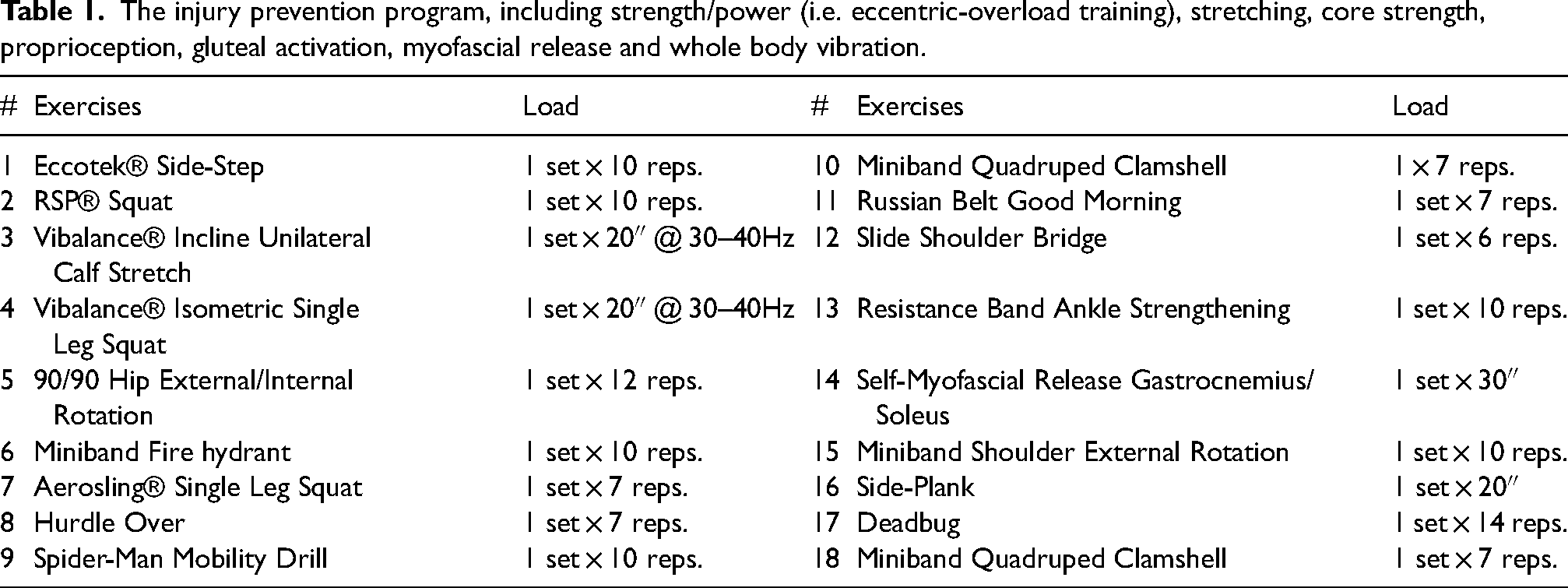
The circuit-based IPP, consisting of 18 exercises (Table 1 and Figure 1), was designed and conducted by a qualified strength and conditioning coach and one certified physiotherapist. These exercises were selected because they are acknowledged as the most important for lower-limb non-contact injury prevention12–14,22 and high-intensity actions improvement. 23 One isoinertial flywheel training device was used to perform half squat (RSP Squat, Pontevedra, Spain; Inertial load 524.55 kg·cm2) and other to sidestep (Eccotek Training Force, Byomedic System SCP, Barcelona, Spain; Inertial load 480 kg·cm2). Whole body vibration exercises were carried out on Vibalance Platform (Byomedic, Barcelona, Spain; amplitude 1–2 mm). One minute of passive recovery was provided between sets and exercises. The RPE was determined using the 6–20 linear Borg scale at the completion of each IPP, before the in-court practice. In-court sessions were grouped into three categories, based on RPE at the completion of each IPP: Light to Somewhat Hard (≤14, n = 19), Hard (15, n = 32) and Between Hard and Very Hard (16, n = 9).
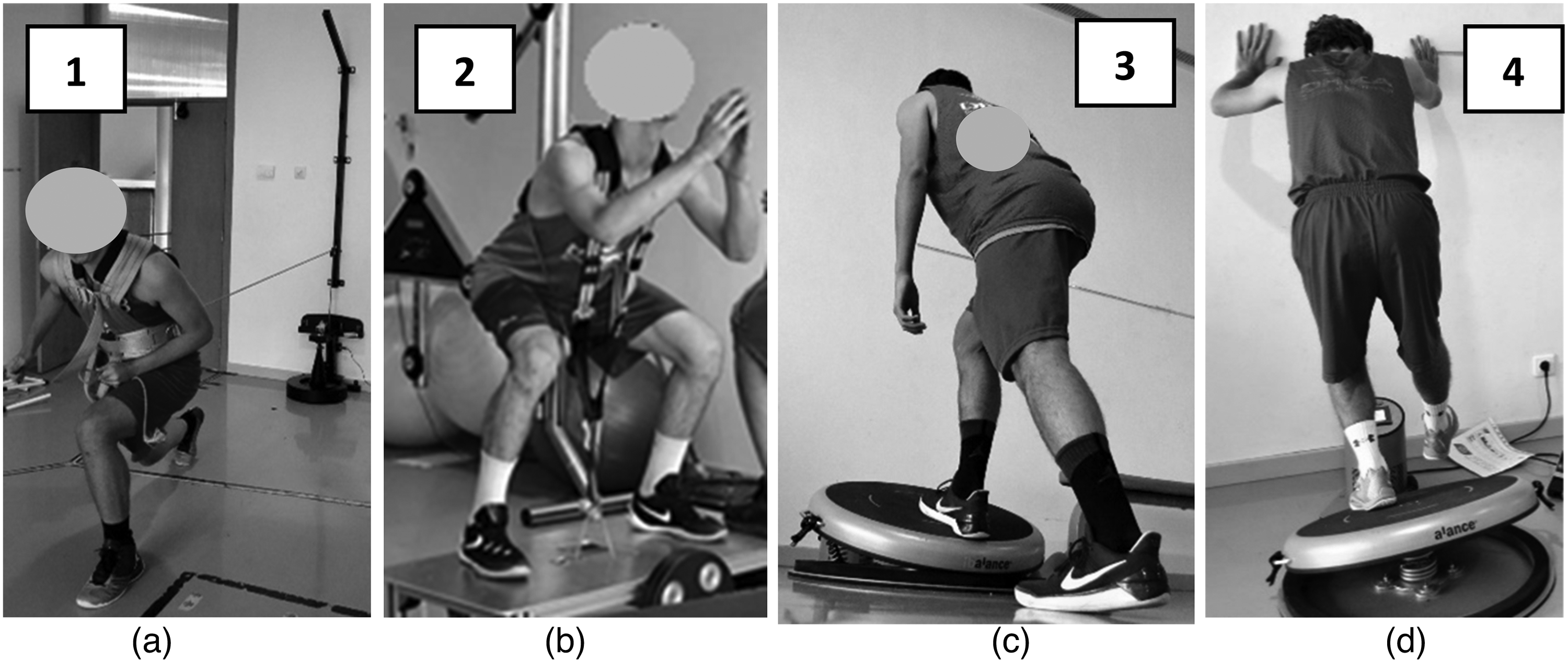
Eccentric-overload and whole body vibration exercises included in injury prevention program. (a) Eccotek® Side-Step; (b) RSP® Squat; (c) Vibalance® Incline Unilateral Calf Stretch; (d) Vibalance® Isometric Single Leg Squat.
The injury prevention program, including strength/power (i.e. eccentric-overload training), stretching, core strength, proprioception, gluteal activation, myofascial release and whole body vibration.
Statistical analysis
Data are presented as mean ± SD. Between-sessions reliability of RPE was computed using an average measures two-way random intraclass correlation coefficient (ICC) with absolute agreement, inclusive of 95% confidence intervals (CI) and the coefficient of variation (CV). The ICC was interpreted as follows: poor (<0.5), moderate (0.5–0.74), good (0.75–0.9) and excellent (>0.9). 24 Coefficient of variation values were considered acceptable if <10%. 25 Normality of data distribution and homoscedasticity were confirmed using the Shapiro–Wilk statistic and Levene's Test for equality of variances, and thus, parametric analyses were used. Independent t-tests were used to compare dependent variables between the training conditions (no IPP vs. IPP). Effect sizes (ES) of the between-group differences were evaluated using Cohen's d (d). Effect sizes were interpreted as minimum (>0.41), moderate (>1.15) and strong (>2.70). 26 Univariate analysis of variance (ANOVA) test and Tukey's post hoc test were used in conjunction to examine the differences between in-court sessions grouped considering RPE at the completion of each IPP. The threshold values for Omega Squared (ω2) were > 0.04 minimum, > 0.25 moderate and > 0.64 strong effect. 26 All statistical analyses were performed using SPSS software (version 24 for Windows; SPSS Inc., Chicago, IL, USA). All graphs were constructed in computing environment R (Version 1.2.1335, RStudio, 2019), using ggplot2 package. 27
Results
The perceptual response of the IPP for whole period of analysis and for each session are displayed in Figures 2 and 3. The mean RPE of all IPP sessions was 14.73 ± 0.86 and ranged from 12 to 16 arbitrary units, corresponding to a “light” to “hard” effort (Figure 2). Moreover, there was a moderate to good reliability between IPP sessions for the RPE (intraclass correlation coefficient [ICC] = 0.694, [95% CI 0.33; 0.90]; Cronbach's alpha [α] = 0.717; Coefficient of variation [CV] = 4.45%, [95% CI 3.09; 5.62]; Figure 3).
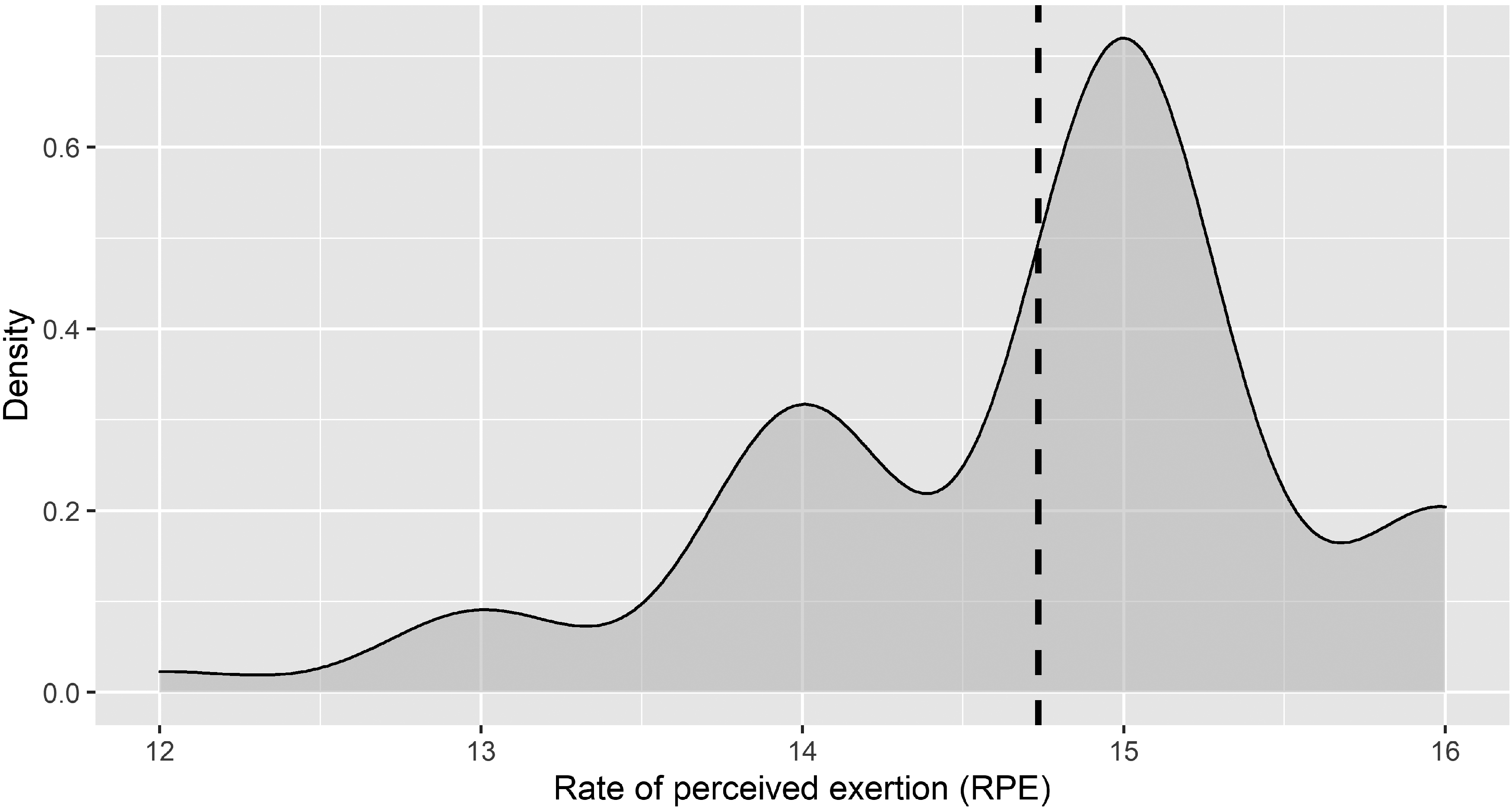
Density plot showing distribution for rate of perceived exertion.
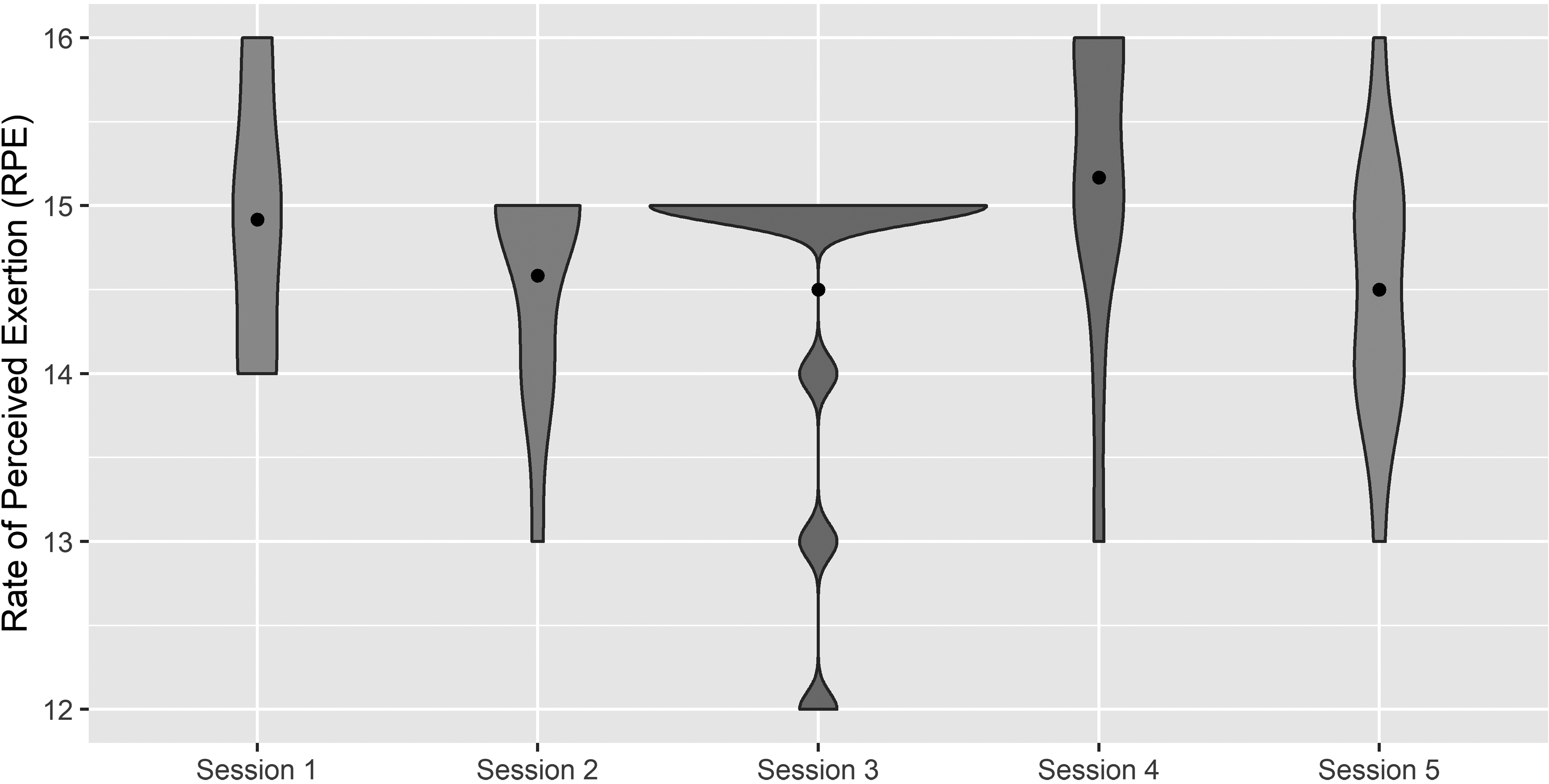
Description of rating of perceived exertion (RPE) across the injury prevention program sessions (mean ± SD).
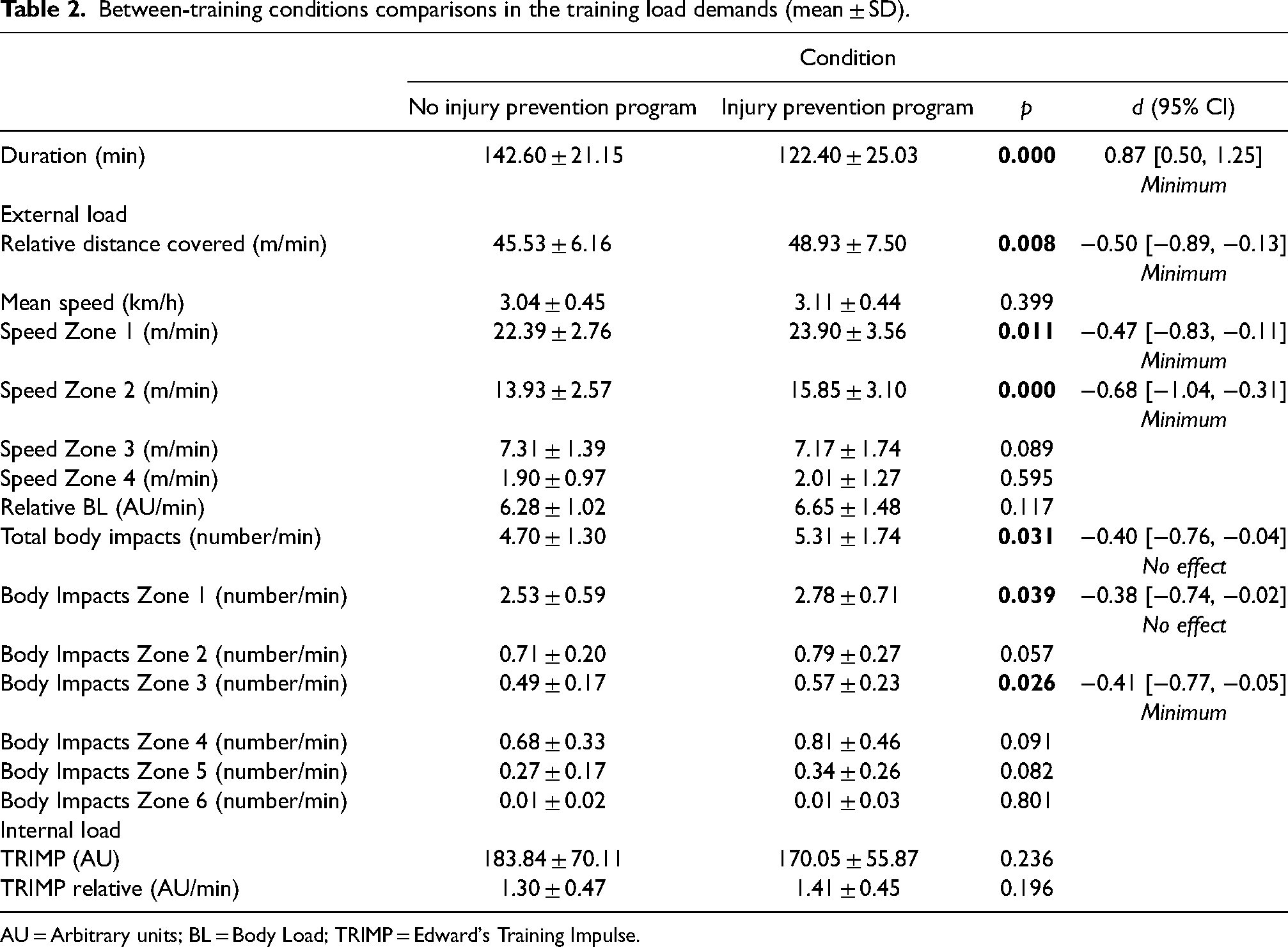
Significant between-conditions (no IPP vs. IPP) differences were found for the absolute distance per minute (total, ≤ 6 km/h [speed zone 1] and 6.1–12 km/h [speed zone 2]) and performed higher number of body impacts per minute (total, very light [Body Impacts Zone 1] and moderate do heavy [Body Impacts Zone 3]) distance covered, distance covered in speed zones 1 and 3, absolute BL and TRIMP (no effect to minimum effect; Table 2).
Between-training conditions comparisons in the training load demands (mean ± SD).
AU = Arbitrary units; BL = Body Load; TRIMP = Edward's Training Impulse.
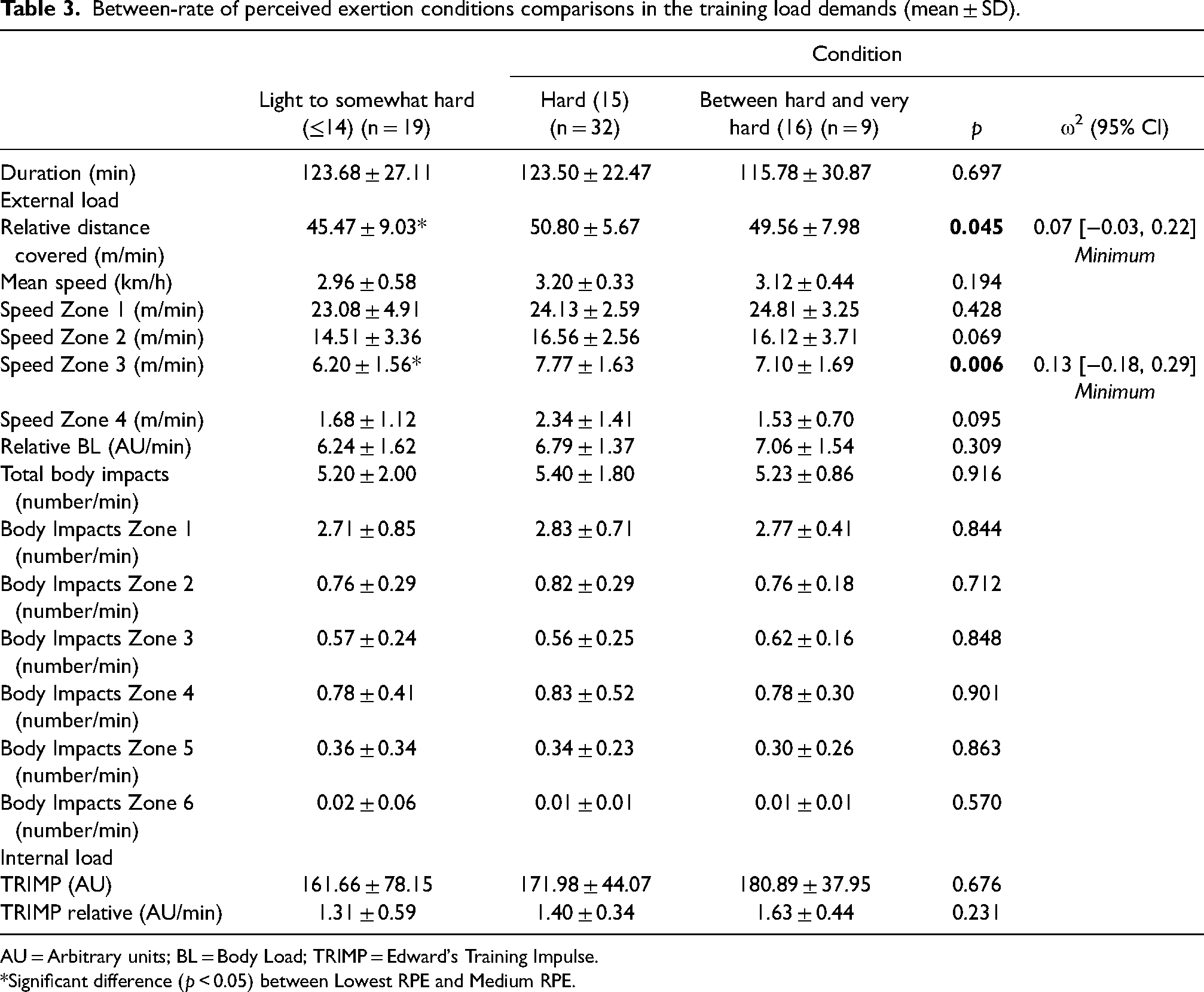
Significant between-conditions (clusters of RPE) differences were found for the distance covered per minute (total and 12.1–18 km/h [speed zone 3]; minimum effect) during in-court training sessions (Table 3).
Between-rate of perceived exertion conditions comparisons in the training load demands (mean ± SD).
AU = Arbitrary units; BL = Body Load; TRIMP = Edward's Training Impulse.
*Significant difference (p < 0.05) between Lowest RPE and Medium RPE.
Discussion
As far as we know, this is the first study to evaluate the feasibility and perceptual response of an injury prevention program (IPP) and, to analyze the acute effects of the IPP in external and internal demands of training sessions, in NT setting. Players rated the IPP from “light” to “hard” (mean RPE = 14.73 ± 0.86). We found that current effects of the IPP include more distance covered per minute (total, stationary per walking and jogging), but also performed a higher number of body impacts per minute (total, very light and moderate do heavy). Moreover, Light to Somewhat Hard RPE (<14) resulted in lower distance covered (total and running), during technical-tactical training sessions.
We can claim that the present IPP may be a feasible and reliable strategy to implement in NT setting. In fact, the reliability of the present perceptual response is similar to other warm-up strategies analyzed in collegiate soccer players. 28 Authors found an acceptable CV for RPE values after performing FIFA 11+ protocol (5.07%), dynamic warm-up (4.27%) and “light” to “somewhat hard” ratings for both protocols. 28 Considering that FIFA 11+ was an effective injury prevention multicomponent protocol in elite male basketball players, 29 practitioners can be comfortable implementing the current IPP in NT setting considering similar structure and reliability.
Furthermore, considering perceptual response (mean RPE = 14.73 ± 0.86), the IPP represents a vigorous intensity effort, corresponding to 77–95% of HRpeak, 64–90% of maximum oxygen uptake (VO2máx) and 70–84% of 1RM, highly recommended to improve cardiorespiratory and muscular abilities. 30 In fact, strength and conditioning program with identical physiological demands lead to enhancements in different physical qualities during the training camp prior to international competition. 15 Thus, the current IPP may elicit an optimal dose–response relationship, able to improve physical performance and reduce injury risk. In fact, the participation in well-rounded strength and conditioning programs (resistance training, motor skill, balance, speed and agility) can reduce the relative risks of injury in youth, 31 and multicomponent protocols (flexibility, core, combined contractions, balance and eccentric training) has been adopted to guarantee players availability to train and compete, in NT setting. 8 Moreover, other training methods (i.e. eccentric overload training) have been beneficial to improve agility, sprinting and jumping. 23 That said, considering the feasibility of present training protocol, athletes could benefit of developing different physical qualities, during national team training camp.
The ability of RPE to detect useful changes in TL over a different time frame as well as the stronger relationship with physiological variables, such as %VO2máx, blood lactate and %HRpeak, 32 have been observed in different training settings. These observations may suggest the possible interference of previous physical exercise in the TL parameters during intermittent activity, such as NT in-court training. A new finding from this study is that IPP involvement resulted includes higher distance covered per minute (total, ≤ 6 km/h and 6.1–12 km/h), and higher number of body impacts per minute (total, very light and moderate do heavy), but similar internal load. These results are in contrast to previous research conducted with senior-level handball players. 16 The authors observed an increment of internal loads (i.e. HR) during small sided-games after performing heavy strength training, comparing with the absence of previous strength training. In 3 × 3, a high percentage of time spent above 90% of HRmax was reported, particularly after lower body strength training. Conversely, in 6 × 6, most of the time was spent below 75% of HRmax, but total body training induced higher time spent above 90% of HRmax. 16 These statements suggest that different factors than previous activity's intensity contribute to the TL parameters during technical-tactical training situations. In a NT setting, the training contents, sequence, and, consequently, TL differed according to the training objectives for each phase of preparation. For example, during the preparation for the Commonwealth Games, the national field hockey team's early preparation explored multipurpose tasks resulting in higher TRIMP (708 > 362.7 AU) rather than late preparation, based on technical-tactical situations. 33 Similarly, the strength and conditioning program followed by the Danish handball national team before the Olympic Games comprised of a progression from higher volume and lower intensity to lower volume and higher intensity in strength and aerobic exercises. 15 Thus, it is acceptable that NT technical staff may have designed the technical-tactical training situations to minimize the potential for overtraining and maximizing the player's readiness.
The examination of the effect of RPE in TL parameters provides a deeper understanding of the effect of IPP in technical-tactical training sessions. The acute effects of the IPP includes more distance covered per minute (total, ≤ 6 km/h and 6.1–12 km/h), but also higher number of body impacts per minute (total, very light and moderate do heavy). Moreover, Light to Somewhat Hard RPE (<14) resulted in lower distance covered (total and 12.1–18 km/h) during technical-tactical training sessions, and similar external demands comparing to the Hard RPE, and between Hard and Very Hard RPE scenarios. Despite higher values of RPE corresponds to higher values of blood lactic acid concentration after strength exercises at different intensities, 34 resulting in higher fatigue by inhibition at muscle contraction and glycolysis, 35 the exposure to present IPP contradicts these principles. In fact, subjects in the present study may have experienced post-activation performance enhancement, that is, improved voluntary performance because of changes in muscle temperature, muscle/cellular water content and muscle activation levels. 36 In this regard, the body of evidence reports acute improvements in sprinting, jumping and throwing following the completion of a high or moderate intensity resistance training, plyometric or maximal isometric activities, 37 which can lead athletes to experience higher external demands during technical-tactical training sessions. This phenomenon can be potentiated using inertial flywheel devices because exert high eccentric demands on athletes, and consequently higher gains at mechanical, morphological and neuromuscular levels, such as increased voluntary activation of agonists during eccentric contractions, motor unit firing frequency, motor unit synchronization, intermuscular coordination and tendon stiffness are obtained. 38
However, eccentric exercise induces high creatine kinase (CK) activity, 39 a key enzyme located within skeletal muscle fibers, associated with disruption of the muscle cell membrane and high tension-producing exercises, 35 which has been widely studied as an indirect marker of muscle damage in team sports. 19 Notwithstanding, athletes performed higher number of impacts at zones 4, 5 and 6 associated with higher CK activity, 19 after IPP irrespective of RPE. Despite exacerbated biomechanical activity induced by eccentric exercise, subjects can benefit from protection against muscle damage from subsequent eccentric bouts, because of several neural, mechanical and cellular adaptations, 39 leading to higher external demands.
In fact, regular technical/tactical training plus eccentric-overload training (i.e. Leg Curl and Half Squat) was beneficial, compared to technical/tactical training alone (i.e. without strength training), in improving jumping (7.6%) and sprinting abilities (1.0–3.3%) as well as to minimize both muscle injury incidence (14.2%) and severity (47.7%), 22 in particular during the matches. These observations seem to sustain that IPP allows subjects to perform shock absorption activities (i.e. body contact). The correct potentiation induced by IPP may permit the tolerance for moderate-to-high workloads and, consequently, to decrease the likelihood of incurring non-contact injuries during training camp, due to tolerable workload fluctuations. 5 Combined IPP might reduce injury rates in young athletes; in particular, of load-sensitive athletes 9 during high-demanding scenarios, such as national team training camp, and consequently, avoid long-term consequences, which may lead to the early dropping-out of talented basketball players.
The main limitation of the study was the administration of a standardized IPP that did not take into consideration between-training variations. Furthermore, it is possible that minor injuries occurred but players didn't report them. However, considering the uniqueness of the data collection sessions (i.e. U-16 national team), it is difficult to find other research conditions to implement this kind of study. Furthermore, it would be of interest to analyze other performance variables, such as biochemical variables (e.g. Creatine kinase, etc.) and neuromuscular performance (e.g. countermovement jump, sprinting, maximal voluntary contractions, etc.) to better understand the acute effects of present IPP, but also develop intervention studies on preventative strategies.
Conclusions
We found that the IPP is a feasible and reliable training strategy, which corresponds to “light” to “hard” effort. Moreover, the inclusion of an IPP before the training session influences some training load variables (i.e. distance covered and the number of body impacts), depending on perceptual response. The present multicomponent IPP can be implemented for NT players within very limited contact time, before the training session, but some influence in training load variables should be expected. However, the effectiveness of current IPP to induce gains in physical performance and reduce the risk of injury requires further research. Finally, with the ever-increasing demand for good results in the world of international youth basketball, these findings may assist the practitioners in the training design during NT preparation and foster players availability to train and compete.
Footnotes
Declaration of conflicting interests
The author(s) declared no potential conflicts of interest with respect to the research, authorship, and/or publication of this article.
Funding
The author(s) disclosed receipt of the following financial support for the research, authorship, and/or publication of this article: This work was supported by the Fundação para a Ciência e a Tecnologia (grant number UID04045/2020).
