



Abstract
Canadian strength and conditioning (S&C) coaches demographic characteristics are unknown but are necessary to assess the current state of the field. A sample of 215 Canadian S&C coaches were recruited through the Canadian Strength and Conditioning Association's newsletter, the National Strength and Conditioning Association's (NSCA) Canadian Facebook group, and the principal investigator's professional network. Mean age of the sample was 34.1 years (±8.6) years, 77.7% were male, and 90.7% did not consider themselves to be a visible minority. Participants most commonly reported working in the private sector (34.9%), at a university (19.1%), and with provincial or national sport organizations (19.1%). The most common salary range reported was $40,001–$50,000 and $50,001–$60,000 (Canadian dollars) at 13.5% each. The most common certifications reported by Canadian S&C coaches was the NSCA-Certified Strength and Conditioning Specialist (CSCS) (84.4%). The highest education obtained was reported as Bachelor's (54.9%) and Master's degrees (37.8%), and 83.6% reported having degrees directly related to the field of S&C. The archetype demographics of Canadian S&C coaches presented as mid-thirties, male, non-visible minority, with a Bachelor's degree, and the NSCA–CSCS certification. The definition of these characteristics will inform future Canadian S&C coaches, mentors, and inform future research in this area.
Introduction
The Canadian Strength and Conditioning Association (CSCA) was founded in October 2018 in order to support and serve strength and conditioning (S&C) coaches in Canada. 1 There are several related organizations in Canada such as the Coaching Association of Canada, Canadian Society of Exercise Physiology (CSEP), and the Certified Personal Trainers Network, however none of these are truly specific to S&C in the Canadian setting. Other countries also have dedicated S&C associations in addition to their exercise science and coaching associations. In particular, there are the National Strength and Conditioning Association (NSCA: United States of America (USA)), United Kingdom Strength and Conditioning Association (UKSCA), and Australian Strength and Conditioning Association (ASCA). While these non-Canadian associations are beneficial to S&C coaches in Canada, the sporting context, administrative systems, and culture in these countries differ from those in Canada, which is why the formation of the CSCA was considered to be essential by many in the Canadian S&C profession. However, with the formation of the CSCA, the characteristics and profile of Canadian S&C coaches lacks clarity, and to our knowledge has yet to be studied. Thus, it is necessary to define and research the characteristics of S&C coaches in Canada in order to inform the professional development of Canadian S&C coaches. Furthermore, comparing and contrasting with research done on S&C coaches in the USA and other countries would help to determine potential next steps in the development of this field in Canada. This would better allow the CSCA to serve developmental coaches working towards achieving expertise with the knowledge of the current characteristics of Canadian S&C coaches and that of more established organizations in other countries. The focus of comparison will be on S&C coaches featured in “Profile of a Strength and Conditioning Coach: Backgrounds, Duties, and Perceptions.” 2
Assessing the demographic characteristics of S&C coaches in Canada closely mirrors research conducted with NCAA S&C coaches.3–5 In these studies, the authors examined NCAA Division I, II, and III S&C coaches for information pertaining to their demographic characteristics, educational background, competitive and coaching experiences, duties, and opinions of the head S&C coaches. Pullo 5 studied NCAA Division I football S&C coaches, Martinez 4 looked at NCAA Division I head S&C coaches, and Haggerty 3 examined NCAA Division II and Division III head S&C coaches. Additional studies will be used for comparison but the above-mentioned research most closely resembles the methodology of this study.
The NSCA was formed in 1978, 6 whereas as mentioned above, the CSCA was only recently formed in 2018 despite being closely located and overlapping in many sporting practices. This represents a 40 plus year gap in the domestic acknowledgement of professionalization of the field of S&C. It is important to mention that the NSCA does service internationally, including Canada, but does not aim to specifically meet the needs of a certain country or region. The examination of Canadian S&C coaches will serve as an evaluation and point of comparison upon which future strategy and direction can be applied in order to advance the field of S&C in Canada and potentially other countries. Hence, the objective of this research was to examine the demographic characteristics of S&C coaches in Canada.
Methods
Experimental approach to the problem
To examine the demographic characteristics of S&C coaches in Canada, a cross-sectional online survey of Canadian S&C coaches was employed. The survey was developed based on previously published S&C research studies and included questions pertaining to participant's demographics, education, coaching experience, facility characteristics, staffing in S&C, sport coaching expertise, S&C educational resources, and how to advance the S&C field in Canada. Frequency distribution and descriptive statistics was used to analyze the data and generate a unique descriptive profile of the Canadian S&C workforce.
Subjects
Ethical approval was granted by the host institution's Interdisciplinary Committee on Ethics in Human Research (Approval #: 20210399-HK). The study consisted of a cross-sectional online survey study for Canadian S&C coaches. To participate in the study, participants needed to be a Canadian S&C coach and be able to read and understand English. Participants were recruited for participation via the CSCA, the NSCA Canada Facebook page, and the principal investigator's professional network. The survey was posted on the CSCA website and sent out to recipients of their newsletter. Additionally, the survey was distributed among professional email lists of S&C coaches in Canada, as well as shared on social media encouraging respondents. The principal investigator contacted several prominent coaches with well-established professional networks and asked for their help in distributing the survey.
Measures
A survey was developed for this study by adapting surveys from previous S&C research studies3–5 and coaching expertise. 7 Adapting these previous surveys allowed the use of an instrument that permitted consistent comparison to previously researched groups. The survey consisted of questions related to participant's demographics, education, coaching experience, facility characteristics, staffing in S&C, and sport coaching expertise. The survey took roughly 20–45 minutes to complete. The survey also included questions about S&C educational resources, how to advance the S&C field in Canada, sport coaching expertise, and COVID-19-related S&C questions. The COVID-19, educational, field advancement, and expertise questions are not included in this manuscript; however, this data will be analyzed for future publications. The survey was administered and completed electronically via Qualtrics survey software.
Population, distribution, and return of pilot study and survey instrument
To assess the acceptability and efficacy of the questionnaire, five S&C coaches were administered the survey electronically and asked to provide feedback. Feedback was provided to improve the survey and focused on efficacy, content, formatting, and wording of the survey. This feedback was used to make modifications before finalizing the survey.
Design and analysis
Frequency and descriptive statistics were used to analyze the data. The focus of this analysis was on the demographic characteristics of Canadian S&C coaches and a comparison of the demographics, education, certification, and experience of Canadian S&C coaches to those featured in the Hartshorn et al. publication. 6 The comparison of S&C coaches was somewhat limited due to the type of data available from each previous study.
Results
Participants
A total of 215 out of 259 respondents were included in the analysis. Subjects that did not complete the survey were eliminated from the sample and incomplete surveys were analyzed for the complete portions. The cut off for inclusion was the survey had to be 19% complete, which included survey questions related to their primary work environment, age, sex, salary, and years of experience. No response rate can be calculated, as no specific mailing or recruiting list was used.
Demographic characteristics
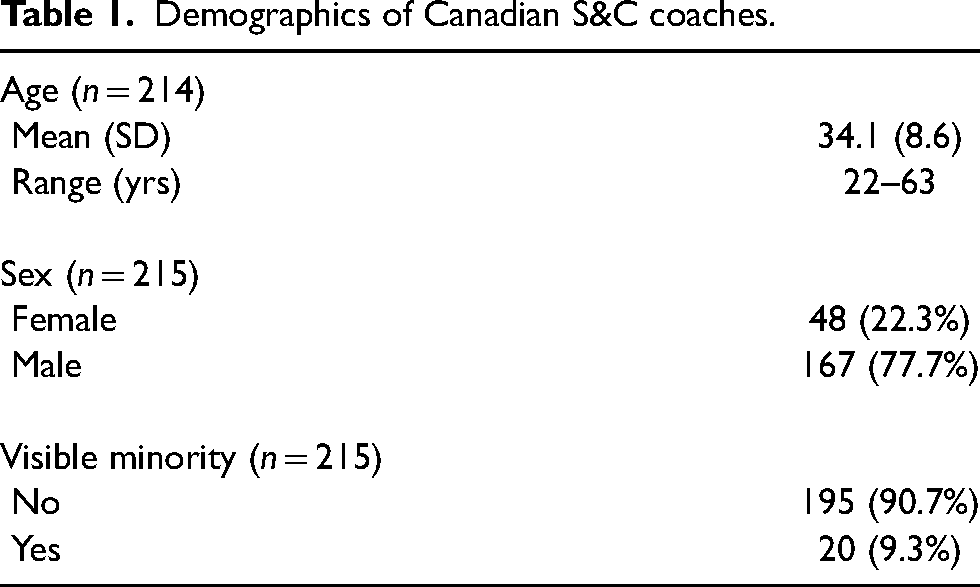
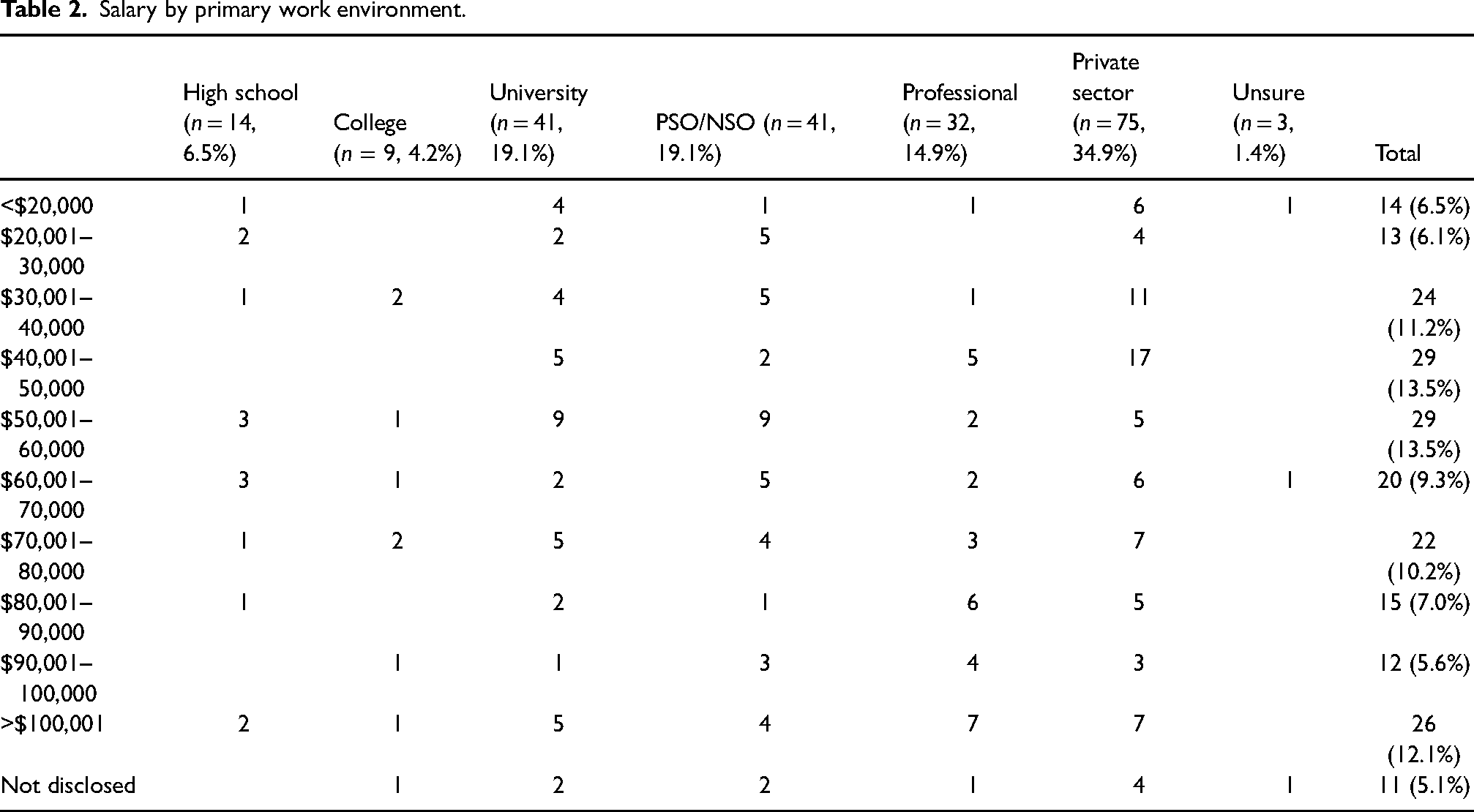
Demographic characteristics are presented in Tables 1 and 2. To summarize, participants mean age was 34.1 (±8.6) years, 77.7% were male, and 90.7% did not identify as a member of a visible minority group. Participants identified their primary work environments as: private sector (34.9%), university (19.1%), and provincial or national sport organizations (PSO/NSO) (19.1%). The mode salary range reported was both $40,001–$50,000 and $50,001–$60,000 (Canadian dollars) at 13.5% each (Figure 1).
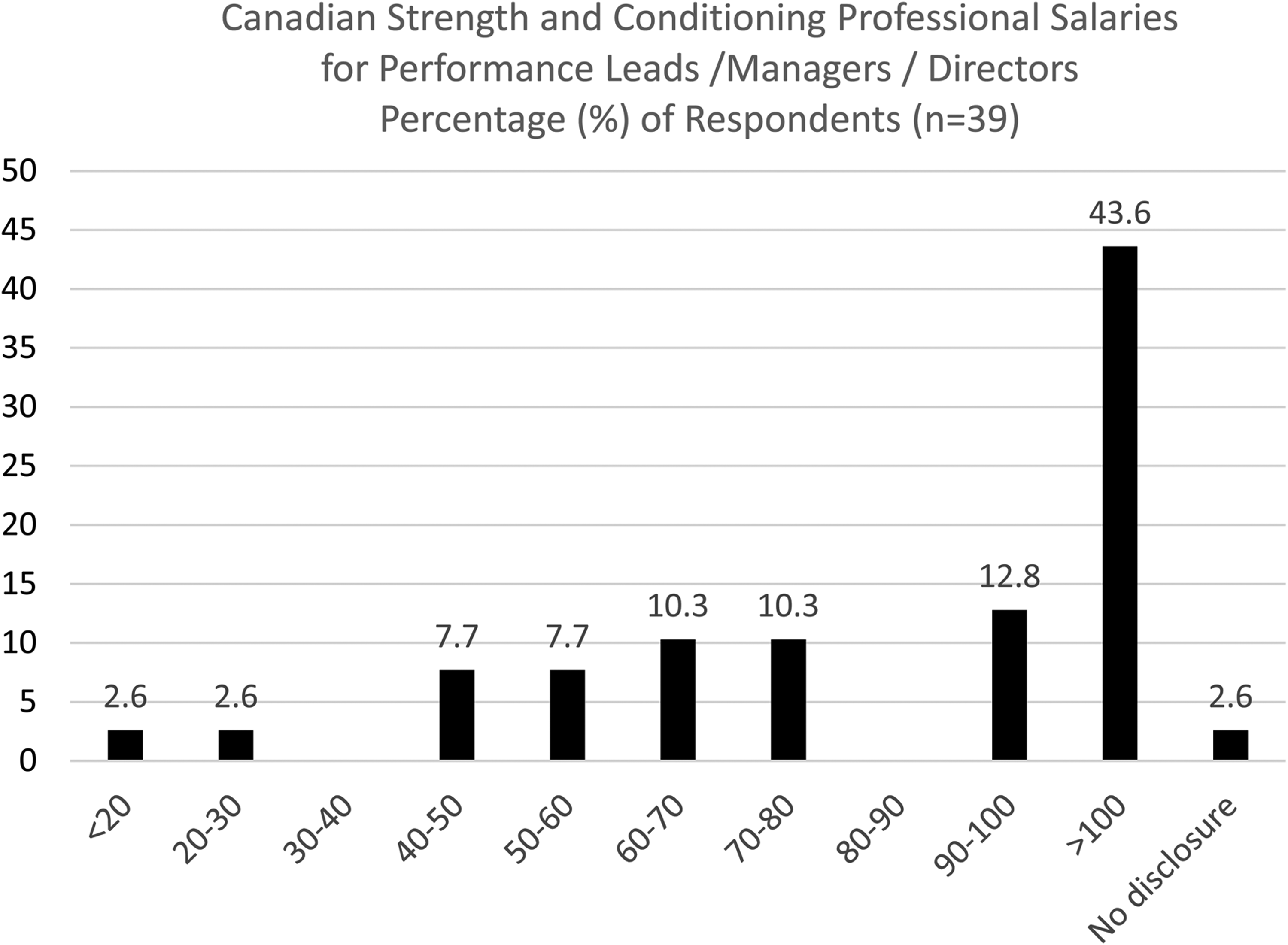
Canadian Strength and Conditioning Professional Salaries for Performance Leads, Managers and Directors. Percentage (%) of Respondents (n=39).
Demographics of Canadian S&C coaches.
Salary by primary work environment.
Certification
The top three certifications reported by Canadian S&C coaches included the NSCA-Certified Strength and Conditioning Specialist (CSCS) (84.4%), followed by National Coaching Certification Program Weightlifting (Trained or Certified, NCCP WL) (24.5%), and CSEP-Certified Exercise Physiologist (CEP) (14.1%) (see Table 3).
Certifications by primary work environment (n = 192).
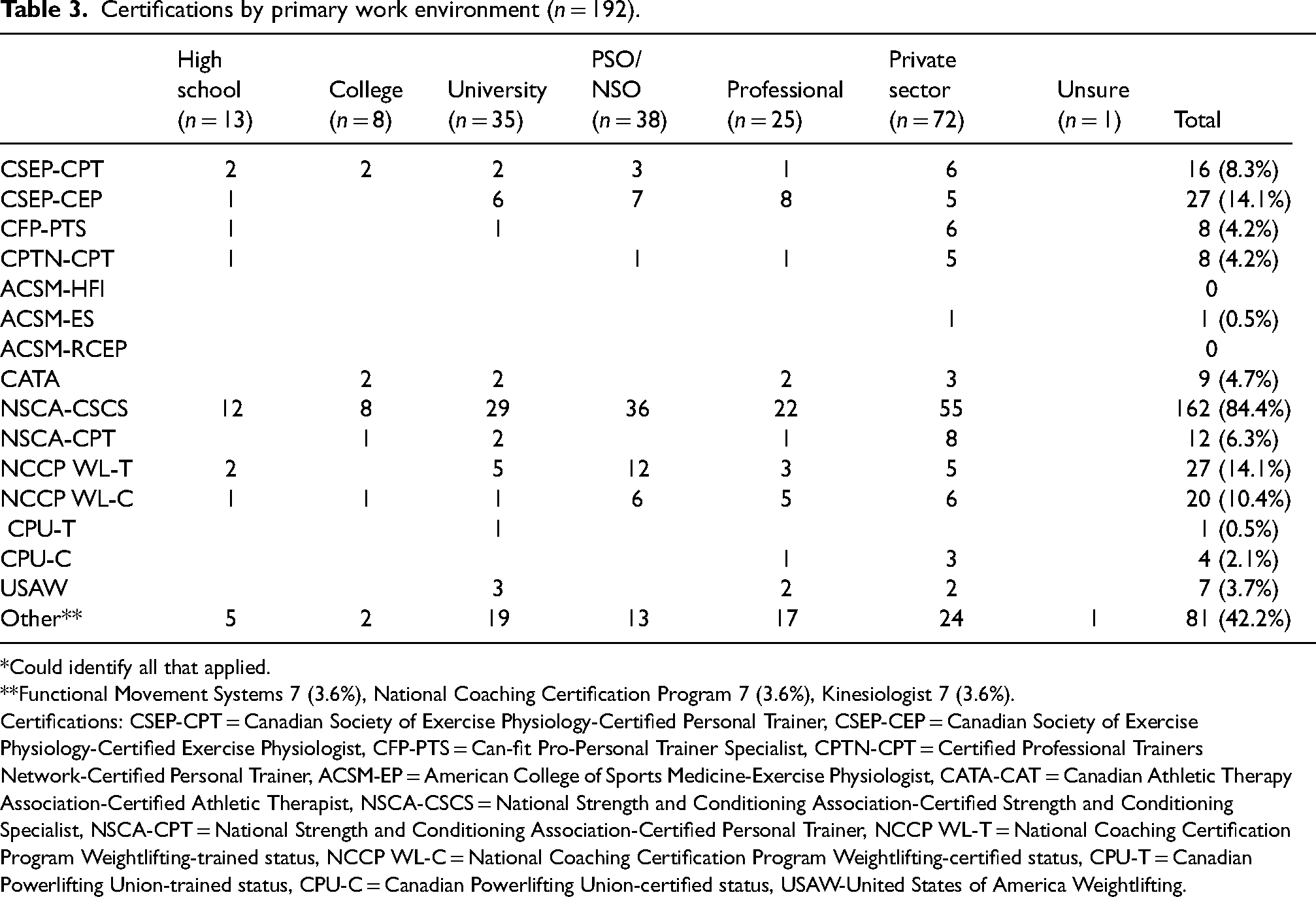
*Could identify all that applied.
**Functional Movement Systems 7 (3.6%), National Coaching Certification Program 7 (3.6%), Kinesiologist 7 (3.6%).
Certifications: CSEP-CPT = Canadian Society of Exercise Physiology-Certified Personal Trainer, CSEP-CEP = Canadian Society of Exercise Physiology-Certified Exercise Physiologist, CFP-PTS = Can-fit Pro-Personal Trainer Specialist, CPTN-CPT = Certified Professional Trainers Network-Certified Personal Trainer, ACSM-EP = American College of Sports Medicine-Exercise Physiologist, CATA-CAT = Canadian Athletic Therapy Association-Certified Athletic Therapist, NSCA-CSCS = National Strength and Conditioning Association-Certified Strength and Conditioning Specialist, NSCA-CPT = National Strength and Conditioning Association-Certified Personal Trainer, NCCP WL-T = National Coaching Certification Program Weightlifting-trained status, NCCP WL-C = National Coaching Certification Program Weightlifting-certified status, CPU-T = Canadian Powerlifting Union-trained status, CPU-C = Canadian Powerlifting Union-certified status, USAW-United States of America Weightlifting.
Educational background
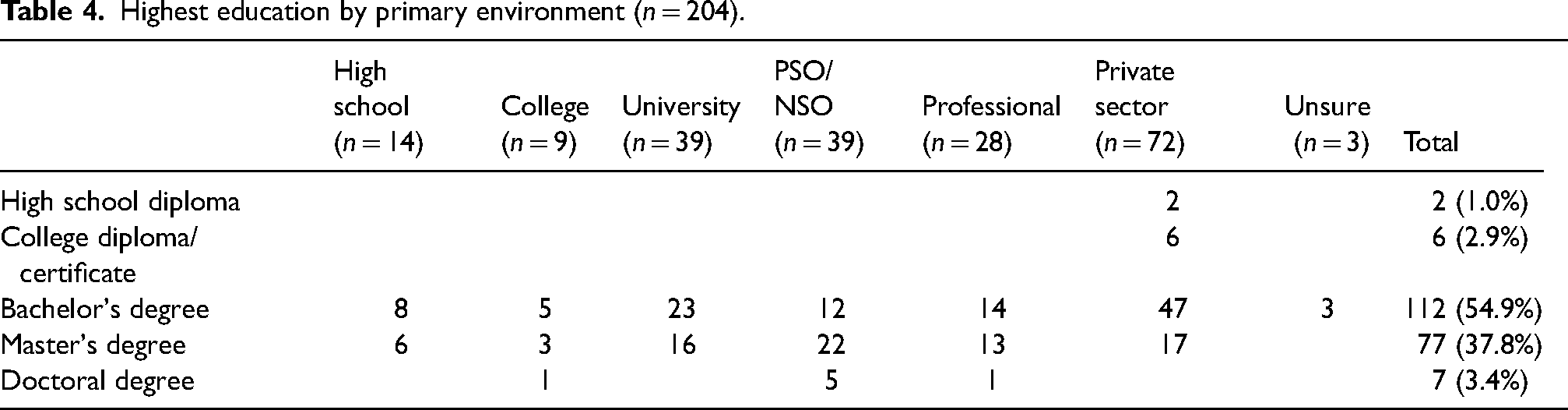
The highest education obtained by Canadian S&C coaches was reported as Bachelor's degree (54.9%) and Master's degree (37.8%) (see Table 4). A large majority (83.6%) of Canadian S&C coaches reported having degrees directly related to the field of S&C with Kinesiology being the commonly reported degree (45.0%) (see Figure 2).
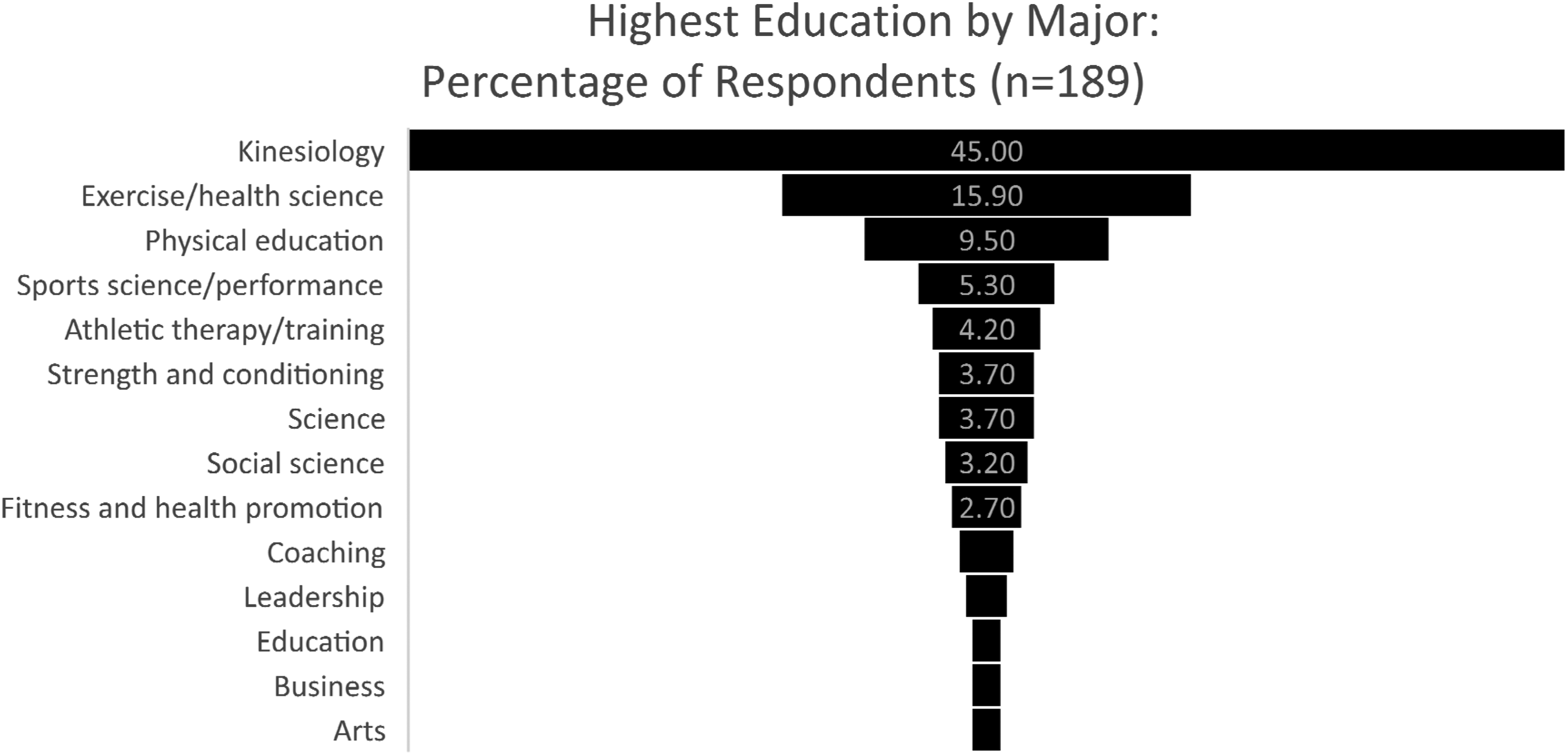
Highest education by major: percentage of respondents (n=189).
Highest education by primary environment (n = 204).
Professional status and experience
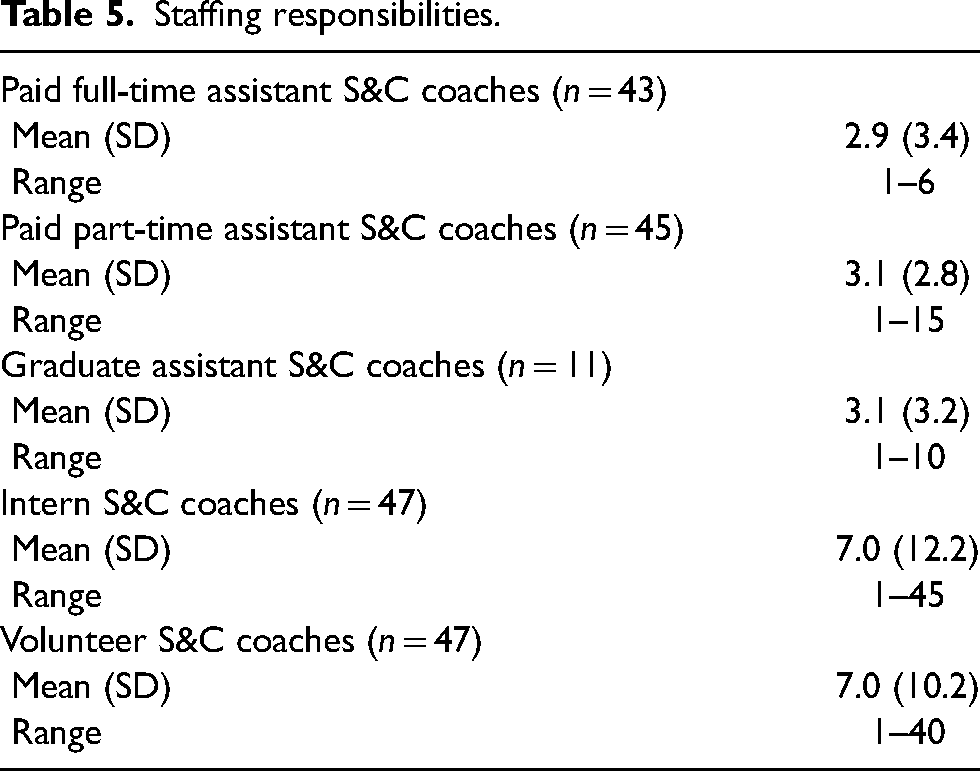
The majority of Canadian S&C coaches categorized their job title as head S&C coach (64.2%), followed by performance lead/manager/director at 20.9%, and assistant S&C coach at 17.1% (see Table 5). Head S&C coaches reporting having a mean of 2.9 paid full-time assistant S&C coaches, 3.1 paid part-time assistant S&C coaches, 3.1 graduate assistant S&C coaches, 7.0 intern S&C coaches, and 7.0 volunteer S&C coaches (Figure 3).
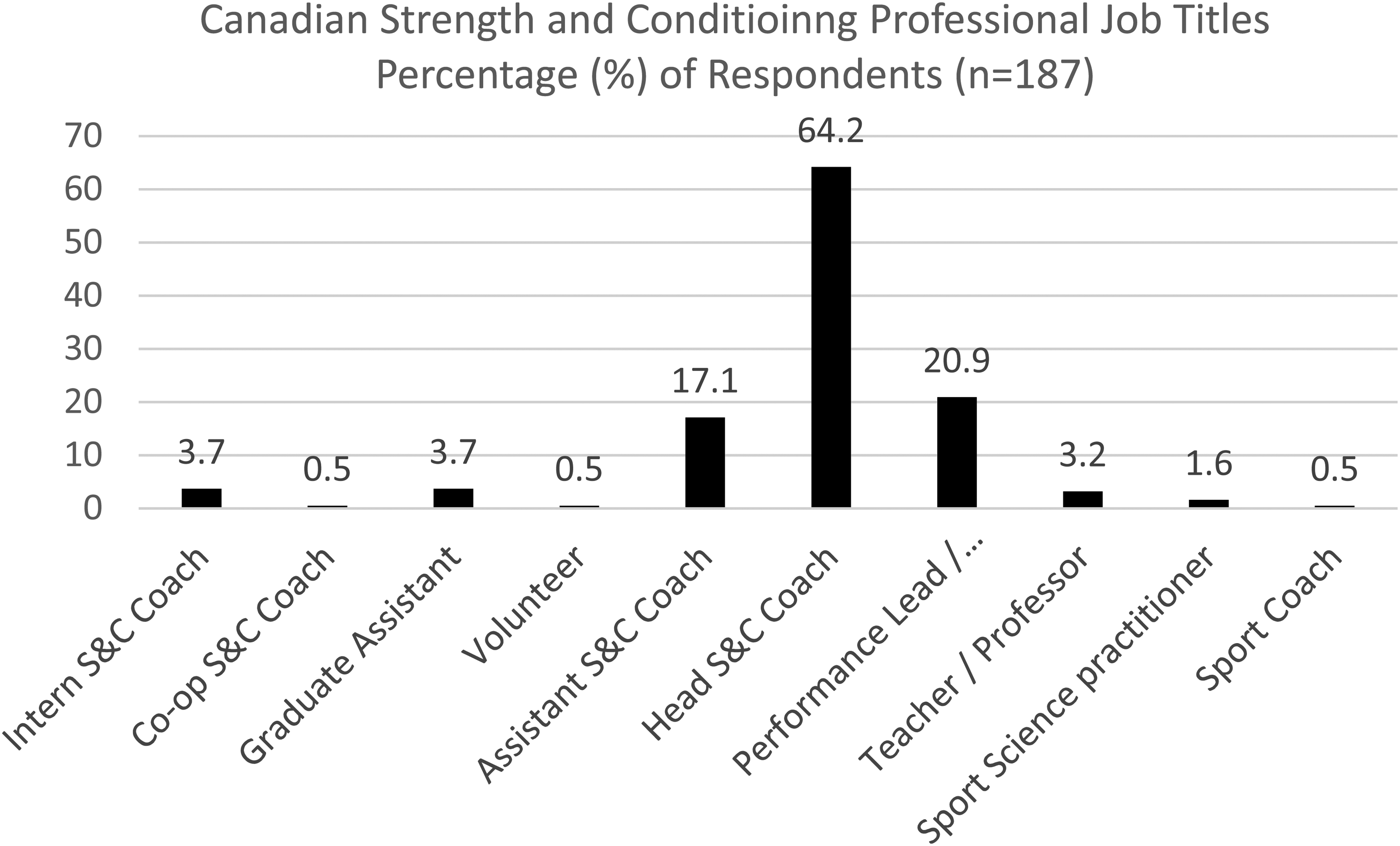
Canadian strength and conditioning professional job titles. Percentage (%) of respondents (n=187).
Staffing responsibilities.
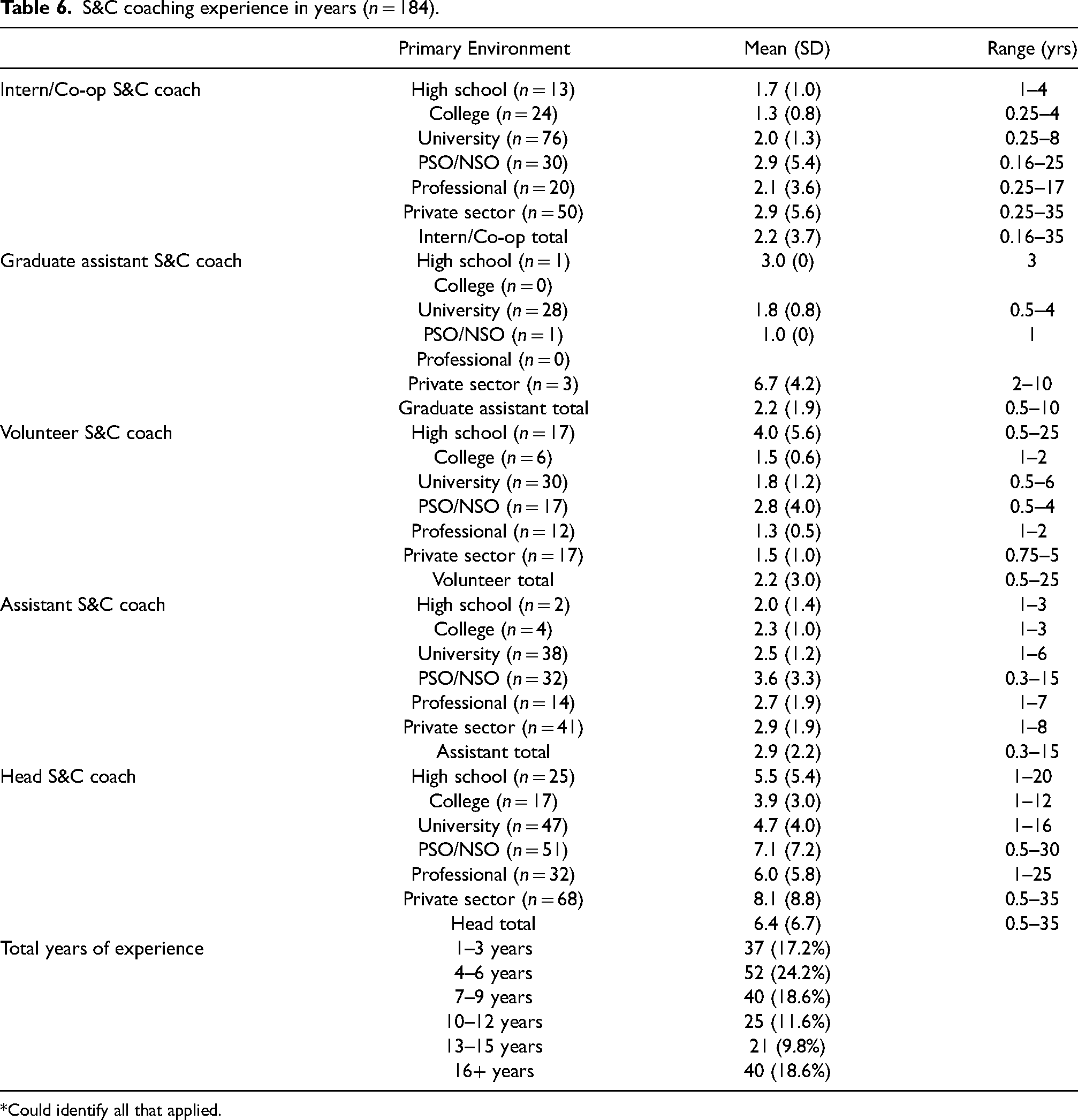
Canadian S&C coaches reported a mean of 2.2 years of experience as an intern/co-operative work experience S&C coach, 2.2 years of experience as a graduate assistant S&C coach, 2.2 years of experience as a volunteer S&C coach, 2.9 years of experience as an assistant S&C coach, and 6.4 years of experience as a head S&C coach (see Table 6).
S&C coaching experience in years (n = 184).
*Could identify all that applied.
When reporting on total years of S&C coaching experience 17.2% reported having 1–3 years, 24.2% had 4–6 years, 18.6% had 7–9 years, 11.6% had 10–12 years, 9.8% had 13–15 years, and 18.6% had 16+ years of total S&C coaching experience (see Table 6).
Duties
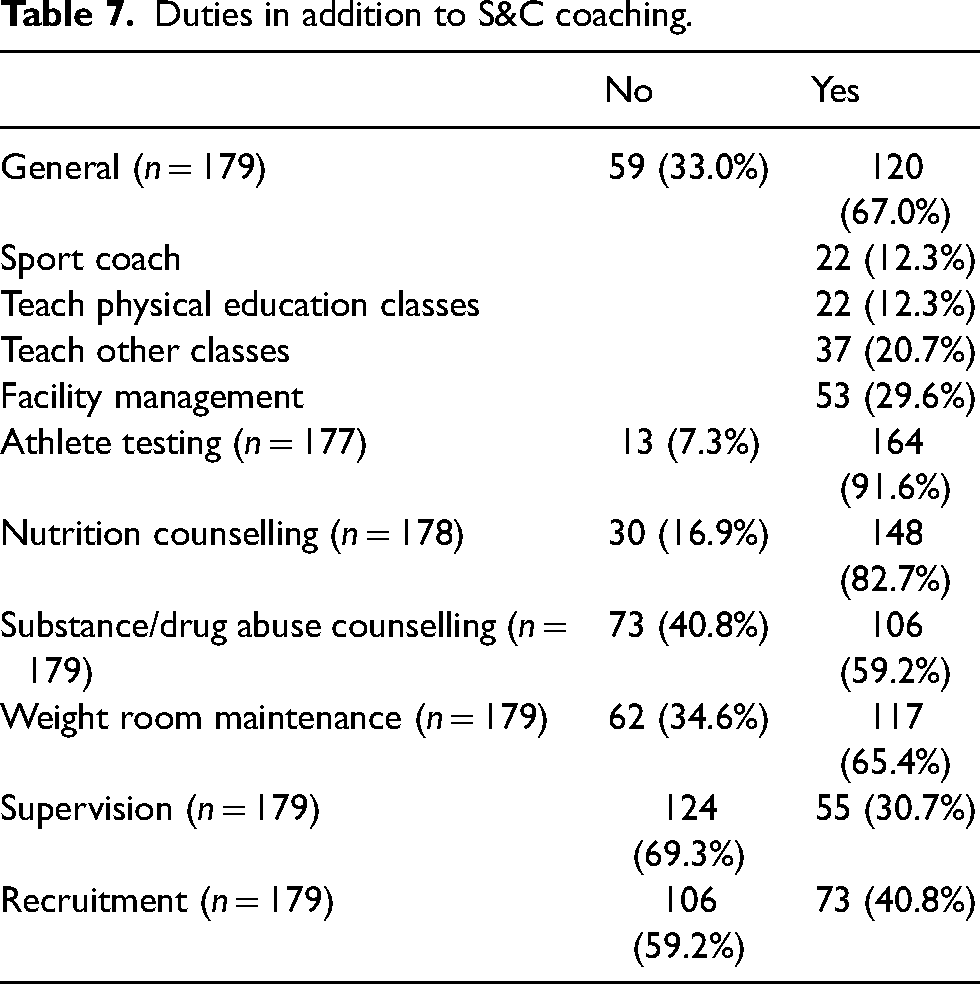
In addition to S&C coaching, 67.0% of Canadian S&C coaches reported as having other duties. The most commonly reported additional duties included athlete testing (91.6%), nutrition counselling (82.7%), weight room maintenance (65.4%), substance/drug abuse counselling (59.2%), and recruiting (40.8%) (see Table 7).
Duties in addition to S&C coaching.
Career goals
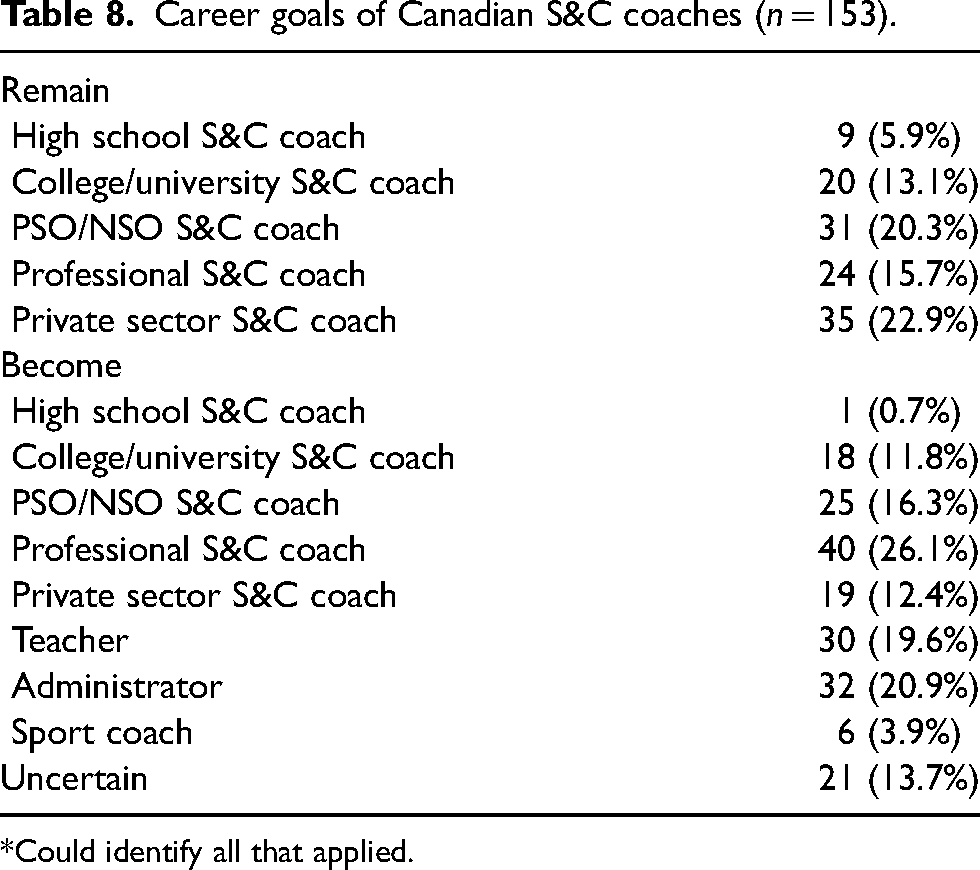
Among Canadian S&C coaches that wanted to remain in their current sector, the top reported categories were private sector S&C coaches (22.9%) and PSO/NSO coaches (20.3%) (see Table 8). A large number of coaches responded that they wish to become S&C coaches in the professional sector (26.1%) and athletic administrators (20.9%) (see Table 8). Notably, 13.7% of respondents reported as being uncertain about their career goals at that time.
Career goals of Canadian S&C coaches (n = 153).
*Could identify all that applied.
Discussion
The demographics of Canadian S&C coaches were 34.1 years (±8.6) years, 77.7% were male and 90.7% did not consider themselves to be a visible minority. They work in the private sector (34.9%), at a university (19.1%), and with provincial or national sport organizations (PSO/NSO) (19.1%). Canadian S&C coaches reported $40,001–$50,000 (13.5%) and $50,001–$60,000 (13.5%) (Canadian dollars) as their annual salaries. Canadian S&C coaches reported the NSCA-CSCS (84.4%) as most common certification (Table 9). Bachelor's (54.9%) and Master's degrees (37.8%) were possessed by Canadian S&C coaches, and 83.6% reported having degrees directly related to the field of S&C (Table 9). Canadian S&C coaches presented as mid-thirties, male, non-visible minority, with a Bachelor's degree in a related field, and the NSCA–CSCS certification. Another major finding surrounded other duties of Canadian S&C coaches with a particular interest in counselling athletes in areas not directly within the scope of practice of an S&C coach such as nutrition and substance/drug abuse. An emergent theme that was not expected was that of the performance lead/manager/director position as the reported job title among Canadian S&C coaches and the associated salaries in these positions.
The education, certification, and experience levels of SC coaches, modified from Hartshorn et al. 7
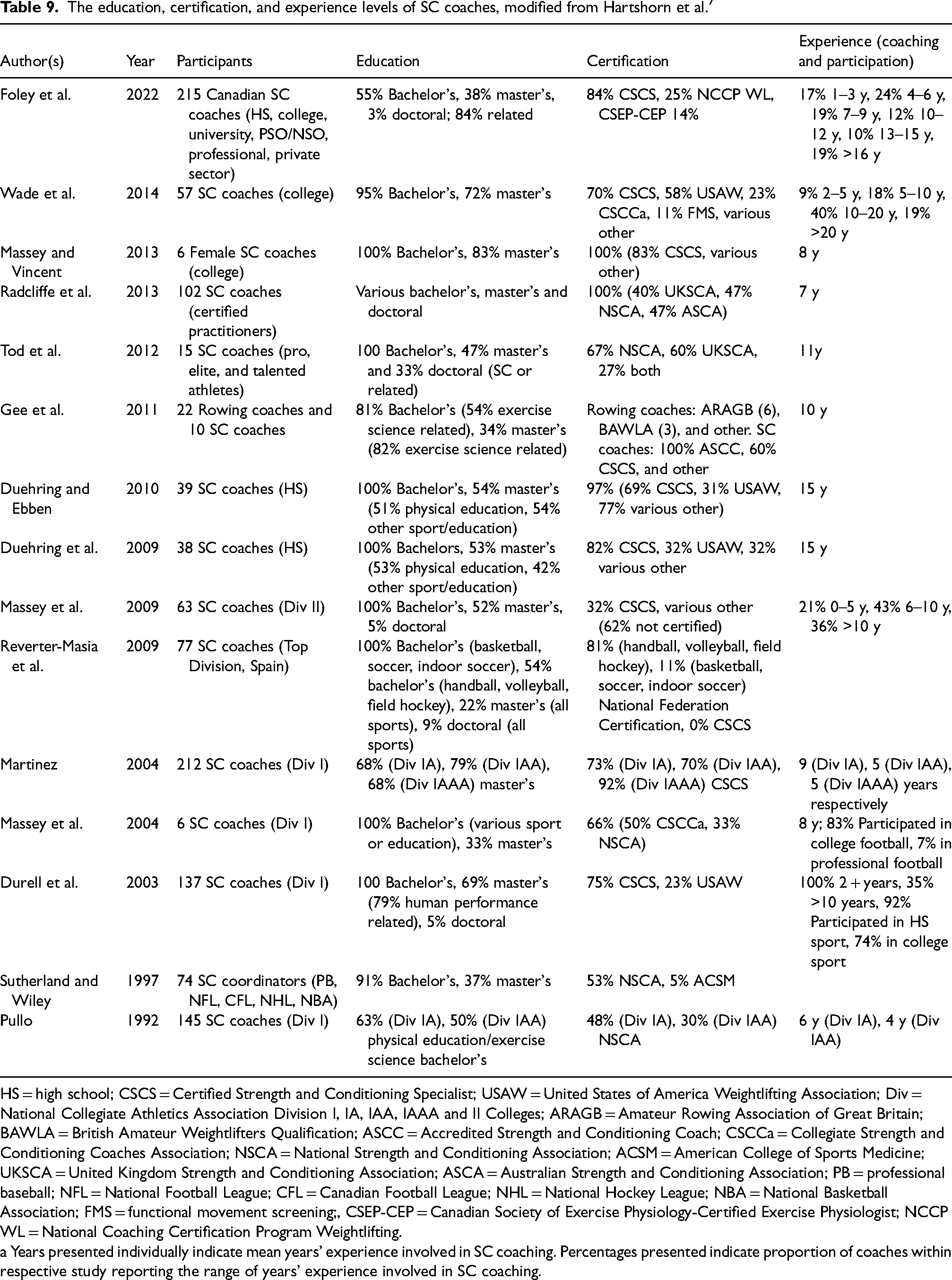
HS = high school; CSCS = Certified Strength and Conditioning Specialist; USAW = United States of America Weightlifting Association; Div = National Collegiate Athletics Association Division I, IA, IAA, IAAA and II Colleges; ARAGB = Amateur Rowing Association of Great Britain; BAWLA = British Amateur Weightlifters Qualification; ASCC = Accredited Strength and Conditioning Coach; CSCCa = Collegiate Strength and Conditioning Coaches Association; NSCA = National Strength and Conditioning Association; ACSM = American College of Sports Medicine; UKSCA = United Kingdom Strength and Conditioning Association; ASCA = Australian Strength and Conditioning Association; PB = professional baseball; NFL = National Football League; CFL = Canadian Football League; NHL = National Hockey League; NBA = National Basketball Association; FMS = functional movement screening;, CSEP-CEP = Canadian Society of Exercise Physiology-Certified Exercise Physiologist; NCCP WL = National Coaching Certification Program Weightlifting.
a Years presented individually indicate mean years’ experience involved in SC coaching. Percentages presented indicate proportion of coaches within respective study reporting the range of years’ experience involved in SC coaching.
Regarding certification, the majority of Canadian S&C coaches possess the NSCA-CSCS certification (84.4%), which is based out of the USA from an organization formed in 1978 2 and based on the profession in a country that has a very different athletic landscape than Canada. A survey of advertised job descriptions by Vernau et al. 8 found that 45% of the positions were seeking a NSCA-CSCS certification with most of those advertisements arising from North American jobs. The next two most popular were Canadian certifications and training programs from the NCCP WL (24.5%) and CSEP-CEP (14.1%). This is important information for those that are either aspiring to be a Canadian S&C coach as well as those that mentor future coaches. It is well established that young Canadian S&C coaches are advised by mentors to get the CSCS, and the CSEP-CEP if coming from an academic or laboratory background.
The results indicated that while approximately 55% of Canadian S&C coaches earned a Bachelor's degree, approximately 40% had a Master's or higher degree. The Vernau et al. 8 job description survey noted that the 73% of the advertisements stated that a bachelor's degree was an essential requirement, while only 4% stipulated the essential need for a master's degree. However, 27% of the job descriptions suggested a master's degree was desirable. When comparing the Canadian S&C coaches’ education to those from the “Profile of a Strength and Conditioning Coach,” 2 the Canadian S&C coaches had a slightly lower percentage of coaches with master's degrees with the exception of the studies that focused on high school S&C coaches9,10 and a study that examined top S&C coaches in Spain. 11 There was a similar extent of Canadian S&C coaches reporting degrees related to S&C as the other groups profiled. Overall, 83.6% of Canadian S&C coaches reported having degrees directly related to the field of S&C. The degrees included in this category were kinesiology (45.0%), exercise/health science (15.9%), physical education (9.5%), sports science/performance (5.3%), athletic therapy/training (4.2%), and S&C (3.7%). Hence, the majority of Canadian S&C coaches are working towards developing specific professional knowledge related to their field, 12 which is consistent with the findings and recommendations of Stone et al. 13 when examining American S&C coaches.
Based on the trends regarding total years of experience, it seems that there could be an issue with career longevity and sustainability of Canadian S&C coaching careers. Only 40% of the respondents reported as having 10 or more years of experience in the field even though the vast majority of Canadian S&C coaches have advanced education and an industry specific accredited certification. This finding may have been influenced the decline of survey responses in years of experience beyond the reported range of 4–6 years. The most comprehensive comparison to date is the review by Hartshorn et al., 2 which only included 15 studies (1992 to 2014: # of subjects ranging from 6 to 212 S&C coaches), one of which was on the S&C qualifications of sport coaches and not S&C specialists. The Canadian S&C coaches reported the highest proportion of S&C coaches with six or less years of experience and also the fewest with greater than 10 years of experience. Some explanations for this finding could revolve around the recent rapid growth in this new and young profession in Canada, the average age of respondents, and the possibility that many experienced coaches did not fill out the survey. Hopefully as the profession matures in Canada, there would be a greater proportion of experienced (i.e., 10+ years of experience) S&C professionals. Another possible factor contributing to these numbers are coaches transitioning into administrative roles and no longer identifying as an S&C coach. Of the respondents, 20.9% said that they want to become an athletic administrator. Another potential issue regarding career longevity and sustainability, would be whether S&C coaches need to transition into administration? Do some of these S&C coaches decide that they would prefer to try and continue to have an impact by creating better environments and systems for S&C coaches through administration rather than foregoing direct professional instruction, coaching, mentoring or contact?
S&C coaching is an all-encompassing support staff position and predictably, 67.0% of respondents reporting as having duties in addition to S&C coaching. What was notable in this section was that a large proportion of Canadian S&C coaches reported being involved in nutrition counselling (82.7%) and drug/substance abuse counselling (59.2%). These statistics are in contradiction to the job descriptions skills reported by Vernau et al., 8 who found that 47% of advertised job descriptions expected a “good amount” sport and research knowledge while skills or knowledge of injury/rehabilitation and nutrition were requested in 16% and 6% of the job descriptions respectively. These additional duties could be considered outside an S&C coach's scope of practice, as well as outside their scope of expertise. Specialists, such as dietitians and counsellors/psychologists, are typically responsible for nutrition and drug/substance abuse counseling, however it is not uncommon for S&C coaches to support athletes in these areas. Since the majority of Canadian S&C coaches are providing nutrition and drug/substance abuse counselling, it is important to acknowledge the need for proper training, appropriate hiring, and accurate definition of roles and responsibilities. As with most important issues, athletes/clients will engage with someone that they trust first. S&C coaches often spend many hours per week, year-round, with their athletes and develop a trusting relationship. Therefore, it is not a surprise that Canadian S&C coaches are filling these roles for athletes, however it is important to ensure they are prepared, meet liability requirements, and are compensated for their ability to offer this support outside of what would be considered their standard duties.
According to the Vernau et al. 8 job description survey, S&C job titles included trainer/coach, (76%), S&C (45%), with terms such as “performance” and “scientist, or specialist” only appearing in 12% and 14%, of the job descriptions respectively.
The most commonly identified primary work environment was private sector S&C coaches, university, and PSO/NSO S&C coaches. Even though it was not an option on the survey, 20.9% of Canadian S&C coaches wrote performance lead, performance manager, or performance director as their job title. In many integrated sport or human performance environments it is common for there to be an individual that oversees all performance-related responsibilities and serves as the lead for the performance staff that can include S&C, therapy, sport science, and sport medicine. It has become a common progression for sport science and sport medicine practitioners, including S&C coaches, to work their way into these roles after several years in the field. Based upon the responsibilities in these roles and the experience that is required, the range of salaries reported by those in these roles was unexpected. While the majority (56.4%) of performance lead/manager/directors reported as making over $90,000 many (20.6%) also reported as making under $60,000 including some (5.2%) that make under $30,000, which is simply not congruent with the qualifications and requirements of such an advanced role.
Future directions for Canadian S&C coaches
The findings of this study with regard to demographics tend to generally agree with those that have been established in the NCAA research such that Canadian S&C coaches are mostly mid-thirties, male, non-visible minority, that have at least a bachelor's degree, and a CSCS certification. This is not surprising given that many mentors in the Canadian S&C community tend to use the NCAA as an example career path for aspiring and growing Canadian S&C coaches. The main difference that emerged between the comparison studies and Canadian S&C coaches was the prevalence of a master's degree and years of experience. Canadian S&C coaches reported a lower proportion of master's degrees than those in the comparison studies with a few exceptions; studies focused on high school S&C coaches and on top S&C coaches in Spain. This shows an inconsistency with the commonly given advice to Canadian S&C coaches that a master's degree is necessary in order to start and progress their career. Although a master's degree is not necessary to begin and progress one's career, it may be advisable based on the fact that the comparison studies had it at a higher rate in countries that are more mature with respect to S&C coaching. As far as certification, the NSCA-CSCS proved to be consistent across many of the comparison groups and Canadian S&C coaches. Canadian S&C coaches reported having 2–3 years of experience as an intern, co-operative education student, graduate assistant, volunteer, and assistant S&C coaches. These statistics are similar to the UK where 72% of respondents reported that their internship was voluntary, 14 but the majority of internships in the UK lasted for 10–12 months rather than the Canadian experience of 2–3 years. It is assumed that most, or at least some, of this experience was before gaining the title of head S&C coach therefore it is recommended that hopeful Canadian S&C coaches accumulate practical coaching experience early and often in their young careers in order to progress toward more senior S&C coaching positions. Despite sporting systems varying around the world, there were more similarities than differences when comparing this Canadian research to the Hartshorn review. 2 Strengths of this research were a large sample size and quantity of information across Canadian S&C coach demographics, backgrounds, and opinions on the field in Canada. Having not been previously researched, this information can inform future directions such as comparison to Canadian sport coaches, between expert and non-expert Canadian S&C coaches, and further comparison to S&C coaches in other countries. Although limited by the defined criteria, this data will hopefully contribute to providing a career road map for the aspiring Canadian S&C professional and informing future research in this area in both Canada and abroad.
Footnotes
Acknowledgements
We would like to thank the respondents to the survey for their co-operation and contributions to the S&C profession.
Declaration of conflicting interests
The author(s) declared no potential conflicts of interest with respect to the research, authorship, and/or publication of this article.
Funding
The author(s) received no financial support for the research, authorship, and/or publication of this article.
