



Abstract
The aim of this study was to explore: (a) football coaches’ perceptions of visual exploratory activity (VEA) and (b) the practice activities designed by coaches believed to develop VEA. Semi-structured interviews were conducted with nine coaches who held the UEFA A or B Licence in coaching football. All coaches worked in an English professional football club's academy and held different coaching positions. Thematic analysis of the data identified three themes: Importance of VEA, Development of VEA and Delivery of VEA (e.g., practice design, visual aids, technology and questioning). The interviews revealed that all coaches hold VEA as an integral part of player performance yet are unsure of how to develop this behaviour. They deemed that VEA should be developed at a young age to enable players to reach an elite level of performance. Despite these views, coaches did not feel that VEA should be a particular focus on individual sessions and believed the VEA behaviour would be drawn out from practices used by coaches. There was a range of activities (N = 33) discussed by the coaches when they were asked to draw and provide examples of practices that they would use to develop VEA. The percentage of planned practices that were deemed active decision-making activities (70%) was greater compared to non-active decision-making activities (30%). This study has implications for the planning and interventions coaches place on practices to develop VEA. Future research should consider investigating the impact different types of practice have on performers’ VEA.
Introduction
Skilled performance in dynamic, time-constrained environments can be underpinned by a performer's ability to visually explore their environment to create opportunities for action.1,2 The dynamic nature of team sports, such as football (soccer), requires players to attend to the movements of team-mates and opposition players to guide future actions with the ball.3,4 Previous research has recognised the importance of perceptual-cognitive skills, such as pattern recognition, 5 anticipation 6 , and visual search 7 in skilled football performance. More recently, studies in football have examined ‘visual exploratory activity’,8,9 ‘visual exploratory behaviour’ 10 and ‘scanning’,1,3 which collectively refer to head and body movements that involve looking away from the ball to guide the prospective control of future actions. The importance of visual exploratory activity (VEA) in competitive environments has been highlighted in performance analytical studies, with higher VEA frequency related to higher pass accuracy in English Premier League football1,11 and youth European Championship tournaments. 3 However, despite recognition from researchers and coaches 12 regarding the importance of VEA to skilled performance, little research has investigated effective practice designs to develop the frequency and quality of VEA in football.
The importance of engaging in VEA to support effective performance with the ball has primarily been understood through an ecological approach to visual perception. From an ecological perspective, the reciprocal relationship between perception and action underpins the ‘online’ pick-up of information as an active process in controlling movement.13,14 In ever-changing environments, such as team sports, it is critical to engage in VEA to attune to affordances (opportunities for action) and prospectively control future actions.9,15 For example, skilled football players can attend to spaces to dribble into, and team-mates to pass to, by engaging in exploration in the preceding seconds before receiving the ball. As the player moves with the ball, information in the environment will alter, which invites new affordances as perception and action are coupled. 16 Thus, in order to guide the detection and attunement to affordances in their environment, it has been proposed that football players must engage in effective VEA to identify the most effective action with the ball. 8
Generally, increased VEA has been linked to improved performance with the ball, but various contextual factors can influence VEA frequency. The frequency of VEA can be specific to the positional demands within the team, with more central positions (e.g., central defenders and central midfielders) recording higher scans per second than wide positions.1,9 Furthermore, the proximity of opponents can influence VEA frequency, with players typically engaging in more frequent head movements away from the ball when not under immediate pressure.1,3 These findings suggest the use of VEA as prospective control, which refers to the ability of players to adapt behaviour in advance to the constraints and opportunities in the surrounding environment. 13 When in possession of the ball and prior to receiving the ball under relatively loose pressure from opponents, this allows opportunities to engage in VEA to control future actions. Under tight pressure, such as an opponent being less than 1 m away, players may engage in less VEA as there is an increased risk of losing possession by looking away from the ball to plan future actions. 1 If players can perform more VEA while under tight pressure, they may be able to overcome this pressure more effectively. Understanding these constraints should guide coaches’ design of practice activities to improve the quality of players’ VEA.
In developing skilled football players, practice and coach instruction related to improving VEA could be an important factor to aid player development. 4 The frequency of VEA has been shown to differ across youth age groups, with under 19 players exploring more than under 17 players in European Championship football matches. 3 Older players also made more head movements in the exploration phase when under simulated football laboratory conditions. 8 Whilst the perception of affordances will be grounded in a football player's technical and physical capabilities, coaches could work with youth football players to develop the ability to scan for information. Increased VEA would lead to the potential for increased opportunities with the ball, and an analysis of youth midfielders has shown that higher VEA frequency is associated with more forward passes. 4 As there may be a ‘ceiling effect’ in elite international football players when training VEA, 17 understanding how football coaches design practice for youth players can inform empirical research to improve perceptual skills in developing football players.
In attempting to train VEA, researchers have used off-field interventions which have used imagery scripts.9,17 When studying academy football players throughout a season, using a six-week imagery intervention increased VEA frequency for central midfielders, which was associated with more successful action completion. 9 Such interventions can be effective in increasing VEA frequency, combined with an increased understanding of player scanning behaviours through video analysis, to supplement technical practice. However, to calibrate any increases in VEA to on-field actions, researchers and coaches are encouraged to understand how to train VEA in representative situations. 2 To maintain perception-action coupling, players should be able to search for representative information in practice environments to inform actions with the ball. 18 In order to develop representative training interventions for VEA, there needs to be an understanding of how football coaches currently attempt to train VEA in practice sessions.
In recent research, the experiential knowledge of experienced football coaches has been studied using online surveys to understand VEA in applied practice. 12 Findings from the survey of 303 football coaches indicated that the majority of participants occasionally focussed on developing VEA in practice sessions. Football coaches with greater experience and higher qualifications typically reported a more positive attitude to coach VEA and highlighted that VEA training should be introduced at an early age and can be encouraged through direct instruction, applying constraints, and questioning of players. 12 However, coaches who rarely trained VEA (low delivery) reported barriers to training perceptual skills, such as difficulty in designing practice, and a lack of resources in understanding VEA. To overcome such barriers, interviews with experienced football coaches can illustrate examples of practice activities to improve VEA in youth football players. Therefore, the aim of the current study is to understand how experienced coaches working within a professional football academy conceptualise VEA, and how they apply that conceptualisation in their design of practice activities.
Method
Participants
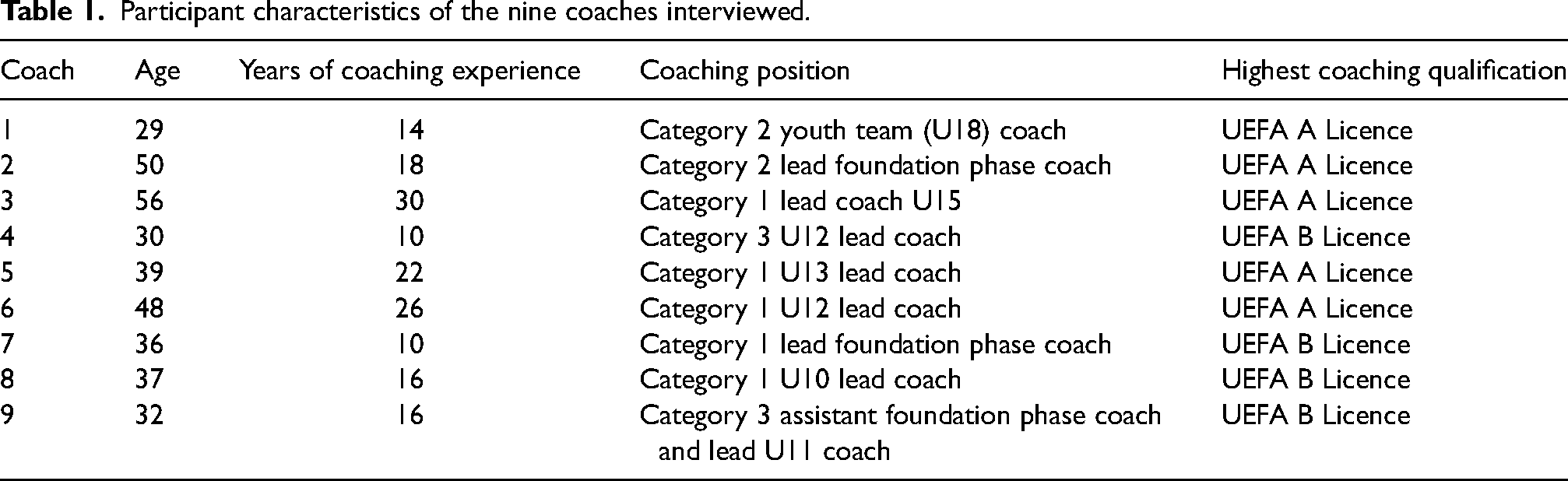
Nine male football coaches working within an English Football Association Academy in the top four leagues of professional football in England (Premier League, Championship, League 1 and League 2) were recruited for the study. All nine coaches were selected because they were responsible for coaching an academy team and held the UEFA A (n = 5) or B (n = 4) Licence in coaching football (mean ± SD age: 40 ± 9.6 years; coaching experience: 18 ± 6.8 years; Table 1). The Elite Player Performance Plan (EPPP), 19 a youth development scheme, determines the hierarchy of association football academies in England; Category 1 academies are graded the highest. The lead author's institutional research ethics committee granted ethical approval. Informed consent was obtained from the coaches and their clubs prior to data collection.
Participant characteristics of the nine coaches interviewed.
Procedure
Data was obtained through semi-structured interviews to gain a deeper insight into each coach's perspective of VEA. Semi-structured interviews were selected so that the coaches could respond to open-ended questions and provided the researcher with the opportunity to probe these responses. 20 The interview guide was adapted from the guide used in the exploration of practice on youth football player's VEA. 21 A pilot interview was conducted with a UEFA B Licence coach to determine the organisation of questioning and questions that were relevant to the study. 22 Following the pilot interview, a review took place between authors and minor adaptations were made to improve the structure of the interview guide and modify questions that were posed. 23 These changes centred around developing follow-up questions when gaining the coaches’ perspectives of VEA.
The interview guide was split into three sections. The initial section contained questions on the coach's background in coaching (e.g., Please could you tell me how you initially got into coaching?); this aimed to create an environment where the participants felt comfortable talking in the presence of the interviewer whilst being recorded. 24 The second section posed questions surrounding the coach's perceptions and experiences of delivering practice sessions to develop VEA (e.g., Do you think that VEA holds more importance at specific ages?). For the final section participants were invited to draw practices from their own experiences they felt would develop the player's VEA. They were asked to draw and annotate the practices on a sheet of A3 paper. The coaches were asked to provide a description of the practice they had chosen and the role VEA played in these practices. A visual method of data collection was chosen as prior studies have validated the technique as a useful method of data collection. 25 Prior research in this field has found that the method increases participants’ recall and self-reflectiveness.26,27 The full interview guide is available from the corresponding author upon request.
All interviews were conducted face to face by the lead researcher in a location selected by the participants (eight at the participant's training facility and one at the home of the coach). The interviews lasted between 32 and 48 min (mean ± SD time: 41 ± 4.5 min). All interviews were recorded through a Smart Recorder 7 mobile application (Version 2.1, 2009–2013 Roe Mobile Development) and transcribed verbatim for data analysis.
Data analysis
Interview
The lead researcher conducted the interviews and led the analysis. A six-phase model for conducting thematic analysis was used for the study. 28 These phases include familiarisation of the data, generating initial codes, searching for themes, reviewing themes, defining and naming themes, and producing the report. During the thematic analysis, the lead researcher adopted an inductive approach where similarities and differences were searched for in the data and described in themes. 29 After repeatedly reading through the data the initial coding of information that was relevant to the project aims took place. These initial codes were developed into broader themes which were reviewed and refined by the research team. On completion of defining and naming themes, the lead author reviewed the raw data codes and themes. The second and third authors examined the categorisation of data into themes and critically discussed this with the lead researcher as critical friends. These discussions ensured that the first author had considered alternative interpretations and had a robust rationale for the proposed organisation of data.
Practice examples
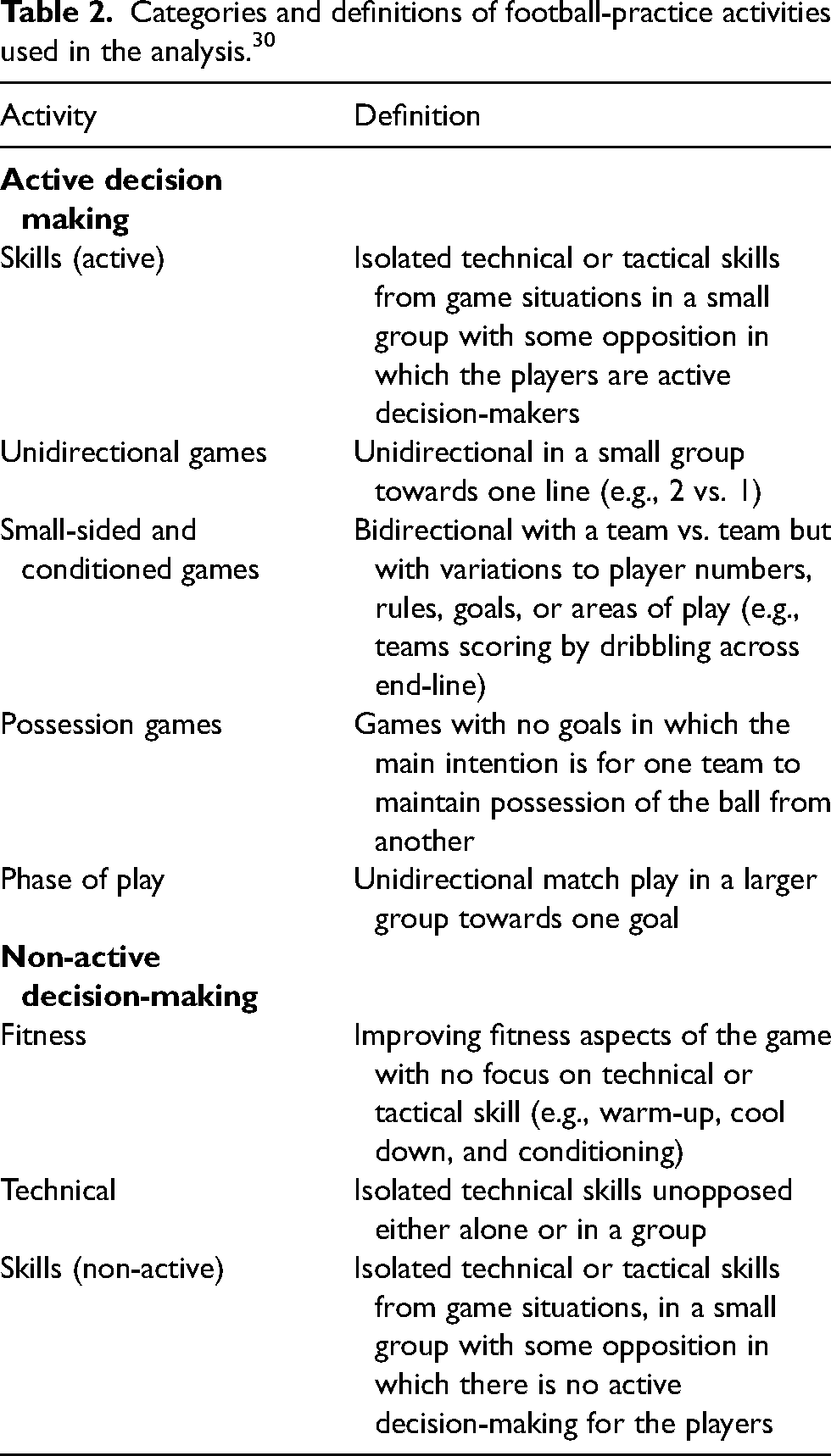
The examples presented by coaches were categorised into football related practices as defined by Roca and Ford 30 (Table 2).
Categories and definitions of football-practice activities used in the analysis. 30
Research quality and rigour
To improve the methodological rigour of the study, several steps were undertaken to ensure the trustworthiness of the data. 31 Initially purposive sampling of participants was employed with specific criteria (coaching qualification; current coaching role) used to ensure that information was obtained from highly qualified coaches who were knowledgeable and experienced within their field. 32 To gain the coaches’ trust and to facilitate an in-depth discussion each participant was provided with an explanation of the objective of the study prior to interviews commencing. The interviewer had extensive experience in coaching football (14 years), including coaching in a professional football academy and holding the UEFA A Licence qualification, which were all contributing factors to facilitating rapport and engagement with the participants. Finally, the coaches were offered opportunities for member reflections and no further changes were made. Throughout the data analysis process, the co-authors acted as critical friends to the lead author. 33 This involved the lead author presenting their interpretation of the data through each stage of the analysis process. The co-authors questioned decisions that were made at the different stages and offered alternative interpretations and explanations of the data until consensus was agreed. 34
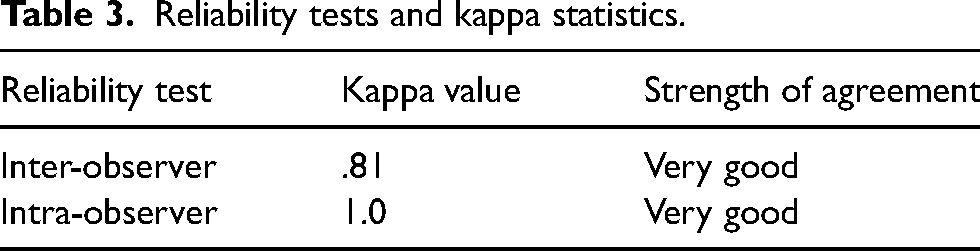
To assess the reliability of the coding of coaches’ practice examples, inter-observer and intra-operator reliability analyses were conducted. 35 For inter-observer reliability, an analyst, who had five years of experience in analysing soccer, viewed all 33 practices. Prior to analysing the practices, the observer was provided with the categories and definitions of football-practice activities from the work of Roca and Ford. 30 The intra-observer reliability was conducted by the first author re-analysing all 33 practices drawn. This was carried out six weeks after the initial analysis in an attempt to reduce the potential of a learning effect from occurring. Kappa was utilised to assess both inter-observer and intra-observer reliability for all practices drawn by the coaches (see Table 3). 36
Reliability tests and kappa statistics.
Results and discussion
The aim of the current study was to understand specific practice activities to improve VEA in developing football players, from the perspectives of experienced coaches working within a professional football academy. The present study explored: (a) football coaches’ perceptions of VEA and (b) the practice activities designed by coaches believed to develop VEA. The results of this study start to bridge the gap between VEA and practice design and begin to provide an applied insight into the type of practices that coaches consider effective to develop VEA with players. Thematic analysis of the data identified three themes: the importance of VEA, the delivery of VEA, and the development of VEA. The themes will be discussed in three separate sections which will include key quotations from the coaches interviewed.
The importance of VEA
During the interview process many of the coaches referred to elite football players from recent years when discussing VEA. The coaches identified that players such as Paul Scholes, Frank Lampard, Andrea Pirlo and Cristiano Ronaldo use VEA effectively to guide their subsequent actions: I think if you take a player like Frank Lampard [when he was] at Chelsea, I think he is one of the best scanners in the game. If you watch him when he is not on the ball the guy does not stop looking around. Constantly he knows where his team mates are, constantly knows where the opposition are, constantly knows whether he can play early or whether he's got to have a touch and feed it into feet, knows when he can knock it in behind, knows when he's got to hold on to the ball and buy some time for his teammates. (Coach 1)
These examples align with the findings of 11 who found that better players (i.e., those who had received a prestigious award at some point in their career) explored the playing area more frequently than their peers. One of the players highlighted was Frank Lampard. 11 It is important that coaches are able to recognise the key attributes elite performers have that make them successful. This can aid them in the coaching process and provide players with role models to observe good habits that may support their development. 37
In the present study, all of the coaches identified the importance of VEA in football. The comments provided by the coaches support previous research that highlights the importance of VEA within the game of football.1,3,4,11,12 Coaches’ specific comments were consistent with findings that emphasised that players need to conduct VEA effectively to support their subsequent action with the ball
8
: I think it is huge, players knowing what they need to do prior to receiving the ball, where space is, it is crucial in supporting the decision-making process. (Coach 2)
Oh, without a doubt, scanning is massive, we say to the players and we keep saying to them how can we speed up the play? How can we make our passes more effective? How can our game play become more fluent? And it comes back to simple pre-movement, shoulder check, having ideas, seeing pictures before you receive the ball. (Coach 7)
The coaches specifically commented that VEA plays an integral role in decision-making: It is a big part of their tactical understanding and that is one of the four corners that we have to try and develop. (Coach 9)
The coach's views are supported by previous research that found players who conducted VEA prior to receiving the ball in central areas of the pitch performed more forward passes, executed more passes into the attacking half, performed more turns when opportunities arose, and experienced less defensive pressure. Prior research also found a positive relationship between VEA and pass completion as players who explored the surrounding area more frequently made more successful passes to their teammates.
11
Coaches felt that the ability to play through 360 degrees was integral to effective decision making particularly for certain positions. I don't think there is a session that I do where I’m not saying to the players “get your heads up, get your heads up, look around you” look not just ahead but look over your shoulders try and go 360 because football is 360 degrees. (Coach 2)
I especially think it is vital for a central midfield player, it is a position I played in myself and it's so important to know what is going on around you when you are in the middle of the park. (Coach 1)
A number of studies examining perceptual-cognitive skills in football have tended to present players with different game scenarios on a two-dimensional video screen6,38 (for a recent review see 39 ). Such presentation requires players to solely utilise their foveal and peripheral vision as they only need to explore the 180 degrees visual field in front of them rather than detect players located behind them, something crucial for players in an actual game. 4 More recent research used a skill assessment and training tool called the Footbonaut when investigating the association between visual exploration and passing performance in high-level U13 and U23 football players. 8 They found that U13 midfield players completed passes more quickly than other positions, and hypothesised that their superior performance may result from playing in more confined and high-pressured areas of the pitch and thus experiencing a higher degree of 360-degree play than their peers. This finding is consistent with the views of the coaches in the current study, who identified the central area of the pitch as a highly pressured area requiring more extensive exploration of the playing space. However, in an analysis of 11v11 match play in high-performance 16-year-old footballers, it was found that players conducted less extensive visual exploration when in central areas of the pitch compared to other areas. 40 These findings suggest that training situations designed to enhance VEA should be position-specific. 40 Furthermore, whilst research has emphasised the need for training activities to be representative of competitive environments, the finding that players scan less within the middle third of the pitch suggests that practice activity design may occasionally need to deliberately deviate from the performance environment in order to optimally facilitate the development of VEA, as will be discussed further in a later section.8,40
The development of VEA
The coaches felt that for players to develop proficient VEA they need to start developing this behaviour at a young age. Despite some views that players have an ‘innate’ perceptual capacity, research has found that an individual's perceptual skills can be acquired and significantly developed from an early age with high-level coaching.
41
This view is in line with that reported in a survey of coaches who suggested that the training of VEA should be introduced at the Under 8 age or earlier.
12
I would consider it to be a fundamental of the game and when you talk about fundamentals it's 5–11 years of age. So, it would need to be taught at that age for me, I don't think I would stop coaching it … you know, you look at [Andrea] Pirlo you would never reach major point where you don't need to do that anymore. But it would be the same logic that he already knows how to pass the ball, so I would say it's as important as the receiving skills, the sending skills you teach at 5, 6, 7, 8 and 9 [years old]. (Coach 4)
Some coaches contemplated whether VEA can be developed at a later stage. They questioned that if this behaviour is not encouraged from a young age the children will not be able to develop this perceptual skill to a proficient level. Coach 3 reported: … because I’m not sure once you get to 14 if you’ve never done that that you can pick it up, I’m not sure you can. I’m trying to do it with 16- and 17-year olds now and it's not natural to them and they’ve not done it before they’ve never been shown it before. (Coach 3)
I think the older you start doing it the more difficult it becomes. (Coach 4)
Experimental evidence would appear to contradict these coaches’ views. In partial support of the coaches’ views, 17 showed ‘ceiling effects’ when attempting to develop VEA in elite adult players (aged 21–24 years old), again using an imagery-based intervention. However, more recent research improved the frequency of VEA in 16 and 17-year-old academy football players using a six-week imagery intervention. 9 The potential to develop VEA in late adolescence is also supported by research that found that under 19 players explored more than under 17 players in European Championship football matches. 3 Further investigations using longer interventions, and exploring different ways of integrating physical practice, are needed to address how the development of VEA can be optimised in various populations of football players. The final theme from our analysis may provide some guidance as to the nature of this physical practice.
The delivery of VEA
The coaches all had a positive attitude towards the coaching of VEA and the crucial role it has on player development. These attitudes are shared with coaches who hold higher coaching qualifications and experience.
12
Moreover, these findings suggest that the crucial factor in determining the use of coaching practice to develop VEA is the qualification and experience of the coach.
12
It therefore appears that VEA is an area of expertise that is being addressed later in coach education. As a result, it could be recommended that football associations need to introduce VEA earlier in the coach education syllabus. Despite these positive attitudes, it appeared that most coaches would not have VEA as a dedicated focus during a training session. This finding is perhaps surprising given that all the coaches stressed the importance of VEA for football performance. It could be argued that some of the coaches may not be providing an environment for the players to acquire the necessary skills for successful performance.
24
However, it may be that these coaches do not need to focus heavily on VEA during training sessions as the players they work with may have already developed their VEA behaviour to a proficient level.
17
Coach 1 and Coach 9 recognise the acquisition of VEA without a primary focus on developing this facet of visual perception: It is an undercurrent I adopt throughout my sessions, I wouldn't say “oh tonight boys were going to work on your visual senses”. I would put that into any session that I’m doing. (Coach 1)
It's interesting because I wouldn't say that I go into a practice thinking I’m going to develop their visual skills. (Coach 9)
The coaches reported a variety of methods that they have used in attempts to develop performers’ VEA within coaching sessions. The most common method that coaches reported that they used to deliver VEA was practice design, and specifically the use of opposed activities. Ok, yes loads of players, loads and loads of players have struggled with this. I think there's players who play at a really, really good level that will struggle to truly play through 360 degrees. They could do the first bit where there's a bit of interference but nobody is going to take the ball off them. But as soon as you add a bit of pressure it would probably be the receiving that's the problem rather than knowing where the person is. (Coach 4)
The boys need to understand the game and that decision-making process is only going to come when it is semi opposed or opposed so the scanning is the foundations of that; if they do not know what is going on around them then it doesn't matter how well they strike the ball from A to B because they will never have it. (Coach 4)
Practice design has been deemed an integral part of the coaching process and it is crucial coaches consider how activities are designed to best facilitate the learning and acquisition of expert performance.
30
It is therefore surprising that many of the coaches are unsure of what type of practice is best used to develop VEA, perhaps due to a lack of empirical research on VEA practice design: I would be very interested to know what type of practices would improve their visual skills. (Coach 9)
This view was shared by coaches who identified a lack of knowledge, resources, and the fact that VEA was difficult to coach as barriers to developing this behaviour. 12 It was suggested from this work that future research focussing on practice design to develop VEA needs to initially take place before evidence-based interventions can be implemented.
Some of the coaches discussed their experiences using visual aids to develop players’ VEA; these aids included different coloured bibs, headbands, hats, and holding up hands for players to search for during practice. There's been some work that I have seen by [coach name] who you may or may not know. The hats, so they have to look up, the colours, you know I think all that probably has a place but it is not proven so it's not quite used. (Coach 6)
The need for coaches to employ representative learning design has been emphasised18,40; that is, practice activities which completely surround players with functional environmental information. In this context, functional information includes gaps, angular relationships, and runs made by teammates and opposition. 42 In some cases, the visual aids described by the coaches in this study (e.g., holding up hands) may be considered artificial modifications to the game environment which, while encouraging VEA, are doing so in a manner which is not specific to the information required to guide action. In contrast, other visual aids (e.g., the use of headbands, or shapes on bibs to identify teams rather than bibs themselves), encourage VEA by making relevant information more difficult to detect. Reflecting the latter use of visual aids, the research found that players were more likely to perform VEA in an unopposed passing activity using shapes on bibs to denote teammates and opposition compared to within small-sided game play. 21 Thus, visual aids may act to exaggerate the value of VEA for players, promoting its use. However, the extent to which improvements in VEA from such training transferred into gameplay was not examined. While research has begun to explore the effect of various visual aids on performance and learning,43,44 further research is required to understand how visual aids can be optimally integrated into practice activities to accelerate the development of VEA.
There has been significant development of technologies within football over recent years and the advances in performance analysis have led to clubs employing professional analysts across all age groups.
45
As a result, coaches are increasingly using video to provide feedback to players,46,47 as was the case for several coaches within this study with respect to VEA: I like to use more video clips …. They need to be able to recognise themselves. We have done stuff in the past where I have taken my iPad out to a session, filmed the player for two minutes, pulled him off and shown him exactly what I mean. (Coach 9)
I can definitely think of some players that I have worked with … at Academy level and at first team level who maybe don't scan as well as they should do and I think if you have a situation with that you would look to highlight it on your analysis on your DVD so you would sit down with the player and say look you know try and show them visually that there not doing it and draw out the success when they do it. (Coach 2)
This use of video analysis is a positive step forward in the coaching process as it shows coaches are working with, and value, other disciplines to support player development. 48 It also shows that different aspects of the game are being combined and not focussed on in isolation. It has been revealed that analysts play an important role in delivering feedback and relaying post-match information to the manager, wider coach team and players. 49 However, it has also been recognised that there is a need for players to be provided with the resources and support necessary to utilise video feedback in a positive and productive manner. 47 Inappropriate use of video feedback can result in unnecessary anxiety, embarrassment and ultimately, demotivation. 47 Consequently, recent research has explored greater player involvement within video analysis.46,50 For example, an online video sharing and tagging programme to facilitate player engagement in video analysis, reflection and learning. 46 While the coaches in the current study understood the potential impact of video footage, as illustrated in the above quotations, their practice may be improved by transitioning from coach-led to the player-led analysis of the footage.
It is widely accepted that coaches need to include performers as co-learners within sessions to create an effective learning environment.24,46 To achieve this, coaches have been recommended to move away from using high levels of instructional behaviours and towards the use of questioning.
51
This view in the literature aligned with the perspectives of some of the coaches, who saw the benefits of questioning as crucial to developing player knowledge and understanding of VEA: Mosston and Ashworth's stuff [teaching styles] around Q and A [Question and Answer], convergent discovery, divergent discovery, I’m much more that end of things anyway so you will be pulling it out through Q and A anyway. I very rarely stop practices but I might speak to kids within it as we’re going on, even simple things like when you played it over there, or when you received it last did you know what was behind you? What other pictures did you see at the time? Or did you see that person there? (Coach 8)
Previous research in this field has found that coaches predominantly ask more convergent questions as opposed to divergent ones, with the latter thought to promote higher level thinking.24,52 In addition, professional top-level youth football coaches tend to pose more leading questions that fail to move beyond recall and place excessive importance on gaining an immediate response. 53 These elements within questioning can be seen in the quote above from Coach 8, who in his example provided mostly convergent type questions. It is suggested that coaches may benefit from support in the planning phase to develop questions that promote the development of player performance. 54 Moreover, a more complete consideration of the adoption of questioning in coaching may draw upon other instructional perspectives in the literature, such as implicit learning (for a recent review, see 55 ) in order to facilitate the practice of coaches in their support of player development.
Practices
Each coach presented a range of activities when they were asked to provide examples of practices that they would use to develop VEA. A total of 33 practices were drawn by the nine coaches (Table 4).
Frequency and percentages of active decision-making and non-active decision-making practice activities drawn by coaches.
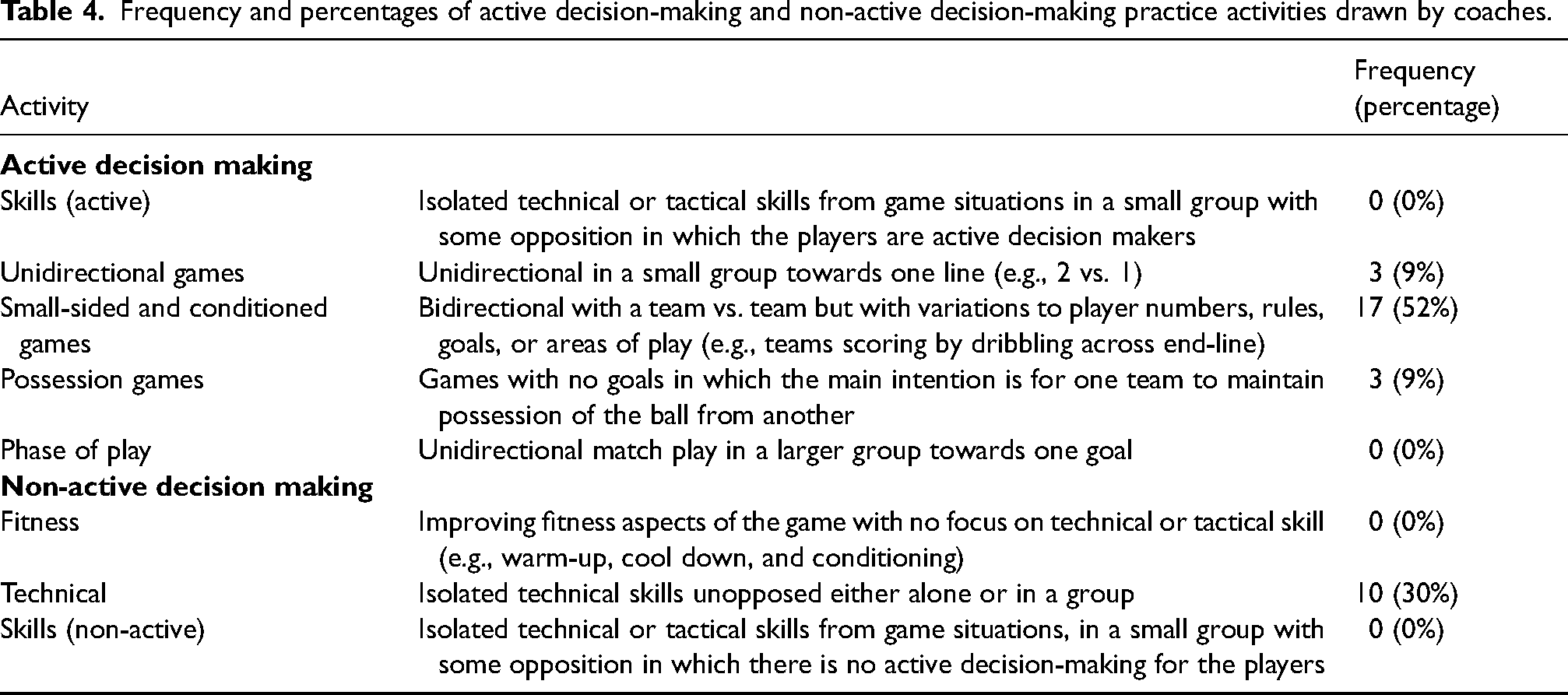
The percentage of planned practices that were deemed active decision-making activities (N = 70%) was greater compared to non-active decision-making activities (N = 30%). The finding that nearly one-third of the designed practices are classified as non-active decision-making is concerning. Non-active decision-making activities can be defined as ‘activities that do not contain the active decision-making found in the full version of the game for the players’ (p. 3).
30
Previous research has suggested that this type of practice does not usually require players to visually search the environment for opportunities to act (i.e., affordances), as they are already aware of the next intended pattern of play prior to receiving possession of the football.
56
The key implication here is related to the design of these practices, because if these practices involve the players knowing the next intended pattern of play then there would be no need to perform VEA. However, if a non-active decision-making practice is designed where the players are unaware of the next intended pattern of play then these practices could still provide opportunities for the players to conduct effective VEA. An example drawing from one of the coaches and their description of this type of practice can be seen below (Figure 1). … so a big circle with a circle inside. It works better with groups of three so you have something like this with two boys on the outside one working in the middle, could be working in the smaller circle or not. Sometimes you could start in the circle, but I would start like this. One ball between the three. So there, if you have x1, x2 and x3 number one is playing into number two as number one plays in he's now finding a new space around the outside the ball is then passed to number three. (Coach 4)
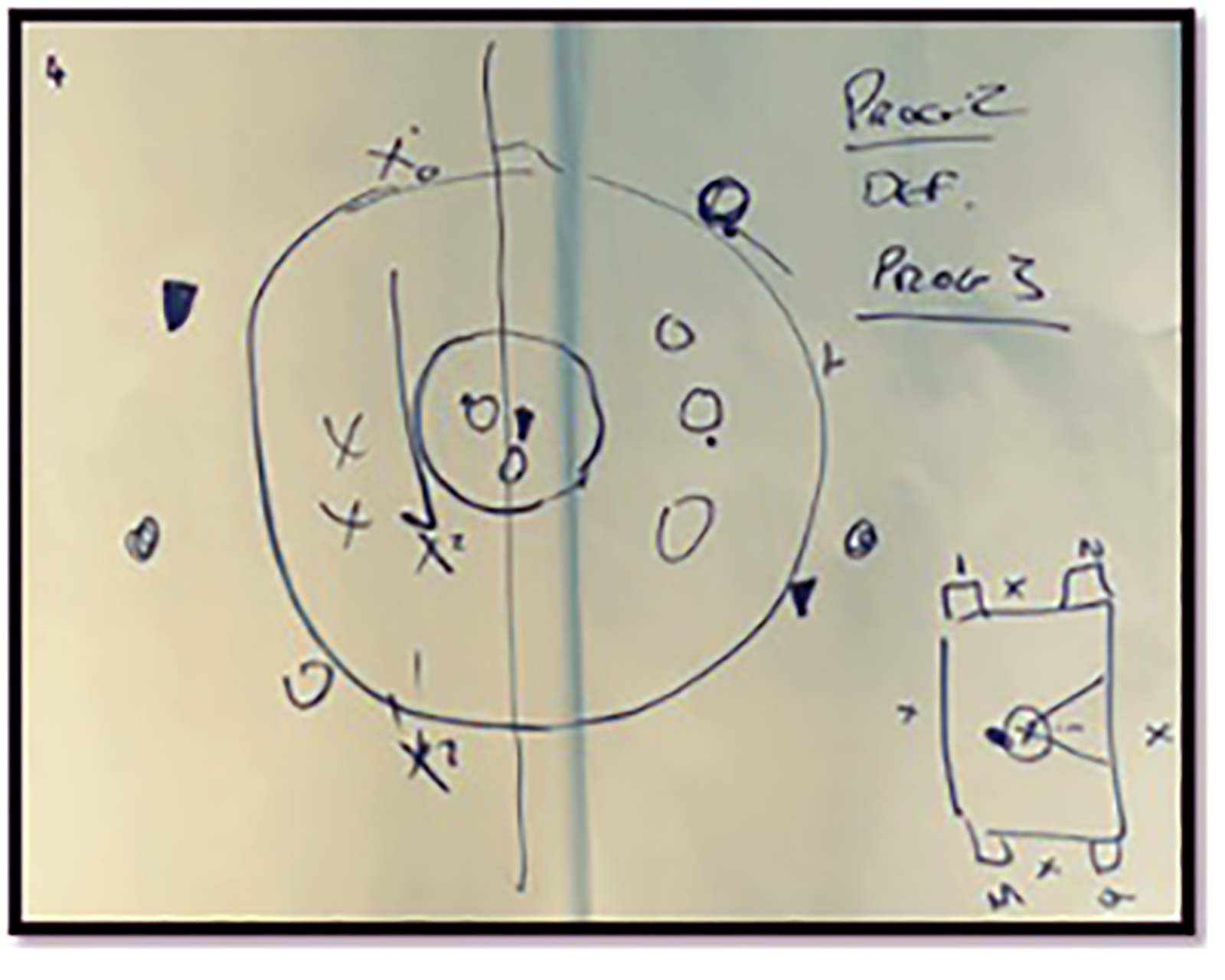
Coach 4 example drawing for non-active decision-making practice to develop VEA. VEA: Visual Exploratory Activity.
It is important to note that the information that the players will attend to in the environment during a non-active decision-making practice is likely to be different from an active decision-making activity. 57 The variations of non-active decision-making activities need to come under scrutiny as some coaches may employ more complex and sophisticated unopposed practices than their counterparts. As with the above example, this practice may be useful to raise the players’ awareness of VEA behaviour, but we cannot determine the value of such practices as this has not been investigated in sufficient depth. Research found that this type of non-active decision-making activity increased the frequency of scanning within the immediate activity but there is no evidence to see how this transferred into a game. 21 Future research needs to investigate this type of practice activities and how it transfers to the real game.
From the drawings, 23 (70%) practices were deemed as active decision-making activities. Active decision-making activity has been defined as ‘activities practiced in small groups or teams that contain active decision-making for the players that is the same or similar to the full version of the football game’ (p. 3). 30 This supports findings that more active decision-making activities appear to take place than non-active decision-making activities in youth football practice.30,58
The analysis of the active-decision making activities contained within Figure 2 revealed that practices 1 and 3 were classified as small-sided and conditioned games, with practice 2 classed as a possession game. … so, if you score if you get the ball to the other side (practice 1), that can be 2v2, 3v3, 4v4 whatever you want, however many players you have got. I mean I used that practice for quite a lot of different things but I would certainly use it for that one. Because you’re having to look, then you’re having to get on the half turn, so that would be one ….I had a square with say X's then (practice 2), so 4v4 in middle you can play off the outside players, you can play a wall pass off the outside players the idea, keep possession and then I might have a floater in there as well to make the wall passes, but when its tight you have got to look….And then I always have a goal (practice 3); I try and use a goal whenever I can and so playing through the thirds where they, it's not rocket science but it's does the job. Playing through the thirds so you can link up play, obviously my emphasis is always play forward whenever you can. (Coach 3)
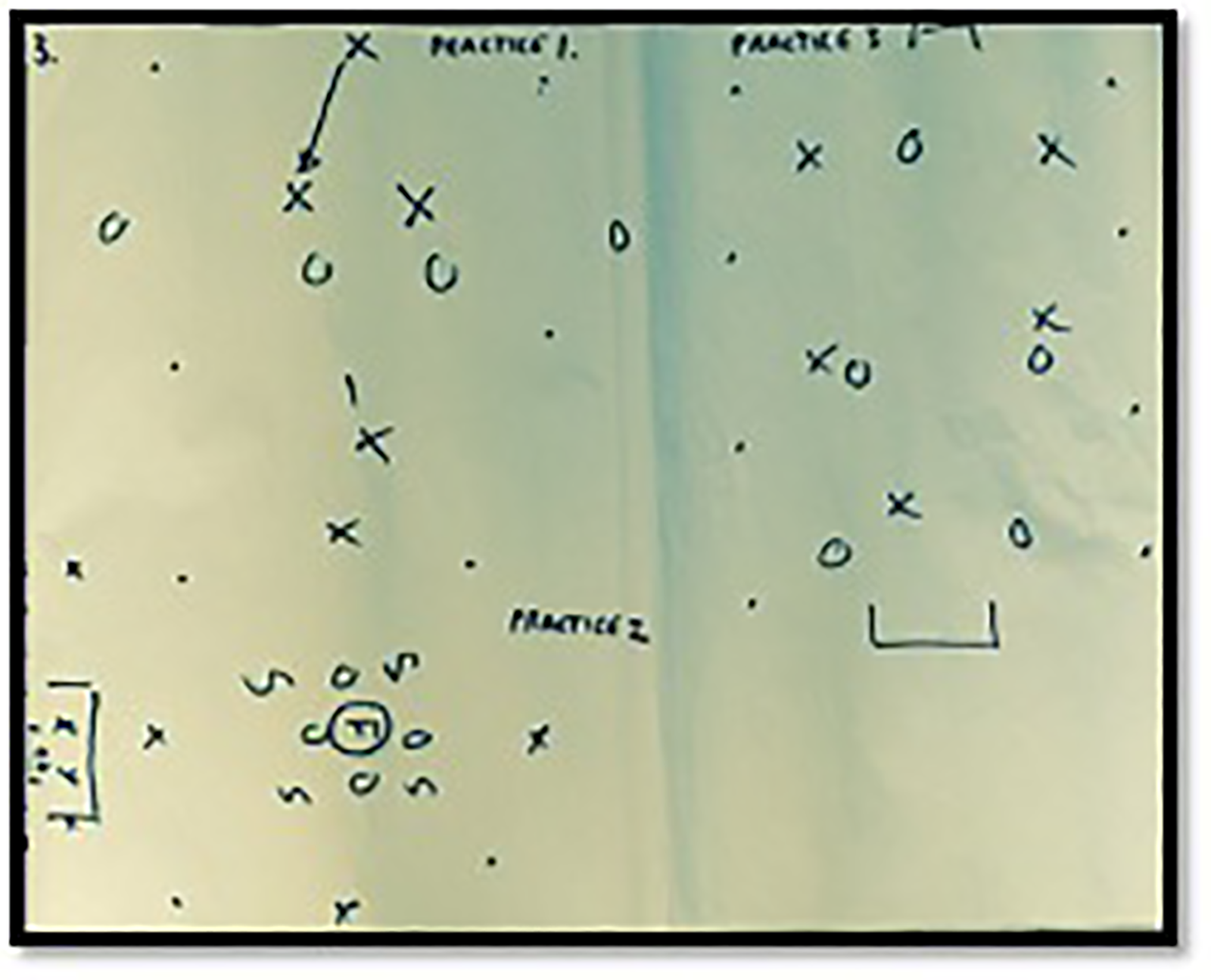
Coach 3 drawing for active decision-making practices to develop VEA. VEA: Visual Exploratory Activity.
It was interesting only 3 (9%) of the active decision-making activities were classified as possession games and 17 (52%) were deemed as small-sided and conditioned games. The coaches’ views on small-sided and conditioned games are seen as positive, as the affordances involved are more consistent with those of the actual game. Of these small-sided and conditioned games only three did not have any conditions placed on them except the smaller pitch dimensions and reduction in playing numbers. A series of three versus three games were investigated where the size of the pitch was adapted to alter the constraints of the task. Findings revealed that players explored more frequently when playing on a pitch with less space per player compared to playing on a pitch with the same amount of space as a full-size, 11v11 match. 10 This suggests that a reduction in time and space actively encourages players to search their surroundings to anticipate play and act more quickly with subsequent actions after receiving the ball.
The remaining 14 small-sided and conditioned games had various conditions and modifications placed on them. The most common condition was placing players in zones, commonly splitting the pitch into thirds, and encouraging the ball to travel through these areas before a goal is scored. Despite this being the most common modification, the coaches also suggested changing the position of goals, that is, back-to-back and increasing the number of goals players had to score. The importance of understanding how constraints on tasks can impact players’ ability to perceive affordances and prospectively control their actions has been discussed. 10 It is therefore suggested further investigation needs to take place into the impact of different conditions and modifications placed on games to support coaches in developing VEA behaviour.
Conclusion
The aim of this study was to develop an understanding of the practice activities designed by experienced coaches working within a professional football academy in order to improve VEA in developing football players. The current study explored: (a) football coaches’ perceptions of VEA and (b) the practice activities designed by coaches believed to develop VEA. The key findings of the study were that coaches hold VEA as an integral part of the player performance which should be coached from a young age. Despite these beliefs, many coaches did not feel it necessary to dedicate the main focus within sessions to VEA. Coaches emphasised the importance of developing VEA from a young age, and a proportion questioned whether it was possible to develop VEA in late adolescence. Within sessions, coaches recommended delivering VEA primarily through the design of practice activities, supported by visual aids (e.g., headbands), video review, and questioning. However, coaches desired additional evidence in support of various visual aids. In addition, there was scope for additional sophistication in coaches’ use of activity design, use of video analysis and questioning. The selection and development of coaching practices and interventions must continue to evolve to support player development and future research must investigate the impact that different practice designs have on player VEA and the transfer to competitive performance. 10
Supplemental Material
sj-docx-1-spo-10.1177_17479541221122412 - Supplemental material for Visual exploratory activity and practice design: Perceptions of experienced coaches in professional football academies
Supplemental material, sj-docx-1-spo-10.1177_17479541221122412 for Visual exploratory activity and practice design: Perceptions of experienced coaches in professional football academies by David Eldridge, Chris Pocock, Craig Pulling, Philip Kearney and Matt Dicks in International Journal of Sports Science & Coaching
Footnotes
Declaration of conflicting interests
The author(s) declared no potential conflicts of interest with respect to the research, authorship, and/or publication of this article.
Funding
The author(s) received no financial support for the research, authorship, and/or publication of this article.

Supplemental material
Supplemental material for this article is available online.
References
Supplementary Material
Please find the following supplemental material available below.
For Open Access articles published under a Creative Commons License, all supplemental material carries the same license as the article it is associated with.
For non-Open Access articles published, all supplemental material carries a non-exclusive license, and permission requests for re-use of supplemental material or any part of supplemental material shall be sent directly to the copyright owner as specified in the copyright notice associated with the article.
