



Abstract
The literature lacks an understanding of the physical demands of team sports with unlimited substitutions (player interchange rotations). Because of this characteristic of the game, it is necessary to analyze the physical requirements through player rotation rather than analyzing global averages. The objective of this research is to investigate the relationship between high-intensity activities (HIA; sum of accelerations, decelerations, and high-speed running actions) performed per interchange rotations and match time variables (playtime, rest time, and work–rest ratio) in elite futsal players. A retrospective observational design was used. Twelve matches from an elite male team competing in the Premier Spanish Futsal League were analyzed using a local positioning system, yielding a total sample of 17 players. The number of HIA performed per interchange rotation varies between players and allows the identification of three distinct activity profiles—lower HIA (10 HIA), medium HIA (28 HIA), and higher HIA (38 HIA). Furthermore, these profiles were found to be stable alongside the existing interchange rotations throughout the match. Playtime (F = 40.9, p < .001) and work–rest ratio (F = 15.6, p < .001) are the time variables that best differentiate match activity profiles. Players with more playing time (4.6 ± 1.0 min) and a work–rest ratio equal to or greater than 1 (1.1 ± 0.6 a.u.) have a greater ability to repeat HIA per rotation.
Introduction
Futsal is a team sport characterized by the high-intensity nature of its efforts, as previously described in terms of its high physical demands.1,2 According to previous research, during a futsal match, players covered approximately 4 km, which corresponds to 135 m sprinting (>18 km/h) and 3 high accelerations and decelerations per minute.3,4 Futsal players must achieve fast straight movement speeds by developing power, strength, and agility, which results in a greater ability to sprint, brake, or change direction. 3 Furthermore, the ability to run at high speeds and accelerate/decelerate was the variable with the highest correlation power between different kinematic, mechanical, and metabolic variables, as well as the most important predictor of different activity profiles. 1 As a result, it can be considered the most direct and reliable predictor of high-intensity activities (HIA) in futsal. 1
However, research has shown that these variables (high-intensity running, accelerations, and decelerations) account for a significant component of the high-intensity external load, imposing distinct and disparate physiological and physical demands on players. 5 Furthermore, while accelerations have a higher metabolic cost, 6 decelerations have a higher mechanical load, 7 likely caused by high-eccentric force impact peaks and loading rates promoting damage in soft-tissue structures. 8 As such, the frequency of high-speed running actions and high-intensity accelerations/decelerations completed during match play are commonly associated with decrements in neuromuscular performance capacity with higher post-match muscle damage. 9
Besides the high demands of futsal matches, recent investigations have found that elite futsal players can maintain physical performance between the first and second half of the match.1,10 This evidence has been linked to the fact that players are regularly interchanged on and off the court, allowing for periods of rest interspersed with periods of activity (work–rest ratio). Players’ interchange is implemented during futsal matches for a number of reasons; however, given the high-intensity nature of the match, interchanges are arguably most commonly used to delay the onset of fatigue.11,12
This idea is supported by other recent research, which found that players performed two interchanges on average in each half, and had similar lactate concentrations (8.46 3.01 vs. 8.17 2.91 mmolL1) and heart rate values (89.61 2.31 vs. 88.03 4.98% HRmax) in the first and second halves. 13 Furthermore, we know that energy metabolism pathways, particularly system phosphagen, play an important role in futsal, 14 and that adenosine triphosphate-phosphocreatine (ATP CP) replenishes after nearly 3 min, 15 which could be done while players are on the bench.
Previous research in team sports with unlimited substitutions, such as futsal13,16 (without local positioning systems), basketball,17,18 and field hockey, 19 produced contradictory results, with the authors confirming a decrease in players’ physical performance throughout the game. These disparities in results could be attributed to changes in coaching strategy (type of play of each player; game pace; and strategy of play) or other situational and contextual factors (game result; game balance; and number of fouls) that slowed the game’s pacing or influencing the players’ ability to maintain the physical performance. From a strategic standpoint, managing the number and length of player interchanges is critical in futsal in order to anticipate substitutions caused by fatigue, foul trouble, poor performance, tactical changes, or other team strategic factors, and thus achieve positive effects on match outcome.20,21
Despite the perceived benefit of such practices, futsal research provides little evidence to support such assumptions. Nonetheless, it is assumed that a variety of situational factors can influence the magnitude of HIA during the match. For instance, the current time of occurrence within the match half or period, the number of players’ interchanges, the minutes played by the player, the accumulated load in the period immediately preceding the HIA, the strength of the opposition or the current score, among others things. 22
In practice, to improve performance, it is necessary to understand the variability in the activity profiles of players to create training segments that better replicate the specific demands of match-play and periods of recovery similar. 23 Despite the significant practical applications that this information can provide for coaches, the impact of interchange rotation management throughout the match on HIA has never been described.
Hence, this study aimed to (1) quantify the HIA between players’ interchanges in the match and (2) identify the effect of match time and work-rest ratio along the interchanges on the high-intensity activity profile of elite futsal players.
The obtained results might help to determine the most adjustable work–rest ratio to improve futsal players’ performance, the effect of playing time and players’ interchanges in HIA, and the effect of variations of previous variables in the HIA profile of elite futsal players.
Material and methods
This study included seventeen professional futsal players (age: 28.8 ± 2.4 years, weight: 73.7 ± 6.2 kg, height: 175.9 ± 5.9 cm) from a Spanish elite team that competes in the Premier Spanish Futsal League as well as the Union of European Football Associations (UEFA) Futsal Champions League. Based on a preliminary power analysis (Cohen’s d effect size (ES) of 0.8, probability of error of 0.05, and power of 0.89), a sample size of 15 futsal players is required. The eligibility criteria defined were only players with more than one rotation were included in the study; rotations lasting less than 15s were excluded; and goalkeepers were not included in this study because they are not in a position with common player interchanges.
A retrospective observational study was undertaken to quantify and analyze high-intensity external load activities in elite futsal players during 12 official matches. Four games played at home from each season (2018–2019, 2019–2020, and 2020–2021), with the balanced result, were examined in order to increase the sample size in the same competitive period. Players averaged four to five rotations per game, resulting in 450 interchanged rotations. The experimental procedures used in this study were carried out in accordance with the Declaration of Helsinki and were approved by the local Ethics and Scientific Committee.
During the entire match, players were tracked using a local positioning system (WIMU Pro™, Realtrack Systems, Almeria, Spain). The sampling frequency of the tracking system was 18 Hz. About 30 min before the warm-up, the units were turned on. The following systems have been installed on the court: 6 ultra-wideband antennas were installed 5 m from the court’s perimeter line. Recently, the WIMU PRO system demonstrated a high intraclass correlation coefficient (ICC) for the x-coordinate (0.65), a very high one for the y-coordinate (0.85), and a good technical measurement error of 2%. 24
The external load data was only analyzed when the players were competing on the court, excluding resting time after substitutions and inactivity time between periods. It was decided not to analyze the specific data collected while one of the teams implemented a fly goalkeeper (fly Gk + 4 vs. 4 + Gk) due to the technical-tactical and physical specific demands of those moments of the match.
WIMU PRO software (SPRO™, Realtrack Systems SL, version 946) was used for the computation of each physical demand measure of interest in each player rotation. Since players keep and may need to perform HIA while the ball is out of play 2 both ball in play time (corresponds to the time the ball is in play) and total time (corresponds to the total time of the match, including the time while the ball is out of play and the 1-minute discount periods that both coaches are able to request in each half) were recorded.
More particularly, the following physical demand variables were measured and reported: number of high-speed running actions (>18 km·h−1); number of high-intensity accelerations (≥3 m·s−2); and number of high-intensity decelerations (≤−3 m·s−2). The sum of these three variables was measured on each player to calculate the average of the number of HIA per player interchange.
The match periods were divided into 5 min thresholds: Period 0—(starters first half); Period 1—(0–5min); Period 2—(5–10min); Period 3—(10–15min); Period 4—(15–20min); Period 5—(starters 2nd half); Period 6—(20–25min); Period 7—(25–30min); Period 8—(30–35min); and Period 9—(35–40min). The rest time before each player interchange, the work–rest ratio, and the accumulation of match time, rest time, and the work–rest ratio throughout the match were also registered and analyzed.
The normality of the data was tested with the Kolmogorov–Smirnov test. Mean ± SD for each data interchange rotation were analyzed. A two-step cluster with log-likelihood as the distance measure and Schwartz’s Bayesian criterion was performed to classify players using the number of HIA. 25 The obtained clusters were used as an independent variable to analyze the differences between players’ rotation and match period. Afterward, a one-way ANOVA was conducted to identify which variables best differentiate the previously obtained clusters. Pairwise differences and post hoc comparisons were tested with Bonferroni post hoc test. ES was presented as partial eta-squared (ηp2) and interpreted by the following criteria: small (ES ≤ 0.06), medium (0.06 < ES ≤ 0.14), and large (ES > 0.14). 26 All data sets were tested for each statistical technique’s corresponding assumptions. Statistical significance was set at 0.05 and the computations were carried out using IBM SPSS Statistics for Windows (version 28.0, Armonk, NY: IBM Corp.).
Results
Table 1 shows the average time values that the players spent on the field and on the bench during each interchange rotation, as well as the number of different HIA.
Mean time on court and bench durations per individual player rotation and counting of different high-intensity actions.
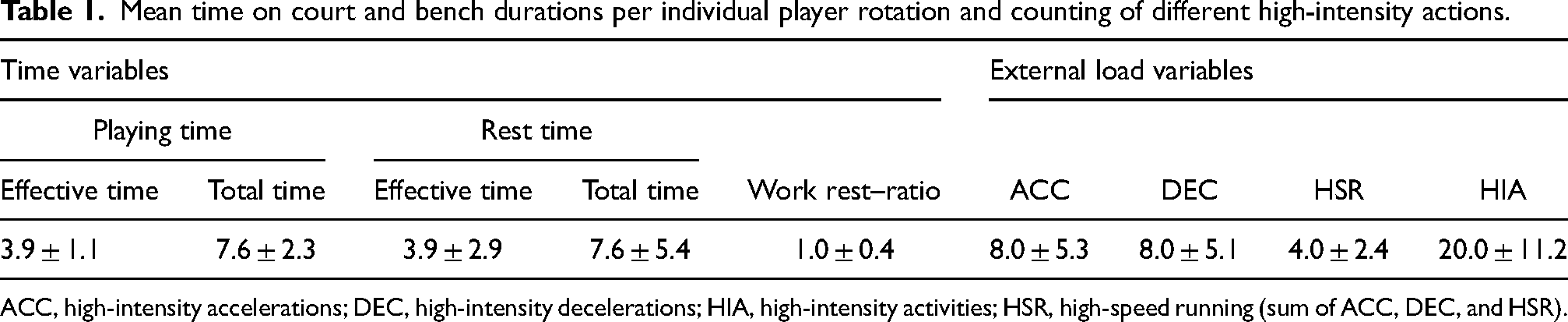
ACC, high-intensity accelerations; DEC, high-intensity decelerations; HIA, high-intensity activities; HSR, high-speed running (sum of ACC, DEC, and HSR).
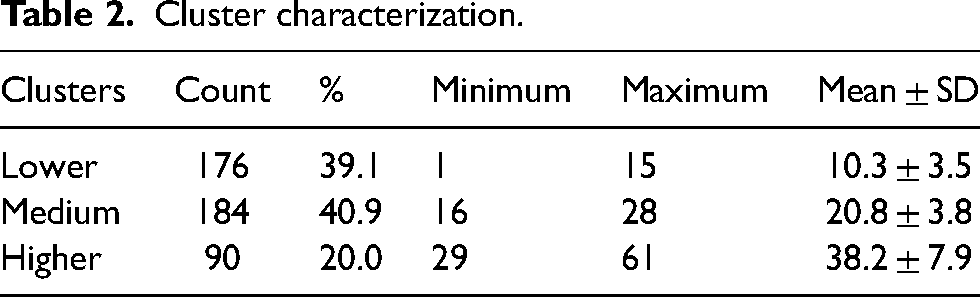
The cluster analysis classified the players into three distinct groups based on their average physical performance values: lower (≈10 HIA), medium (≈21 HIA), and higher (≈38 HIA), (Table 2). Figure 1 represents the distribution of the different activity profiles. The average silhouette measure of cohesion and separation was 0.6 (good quality).
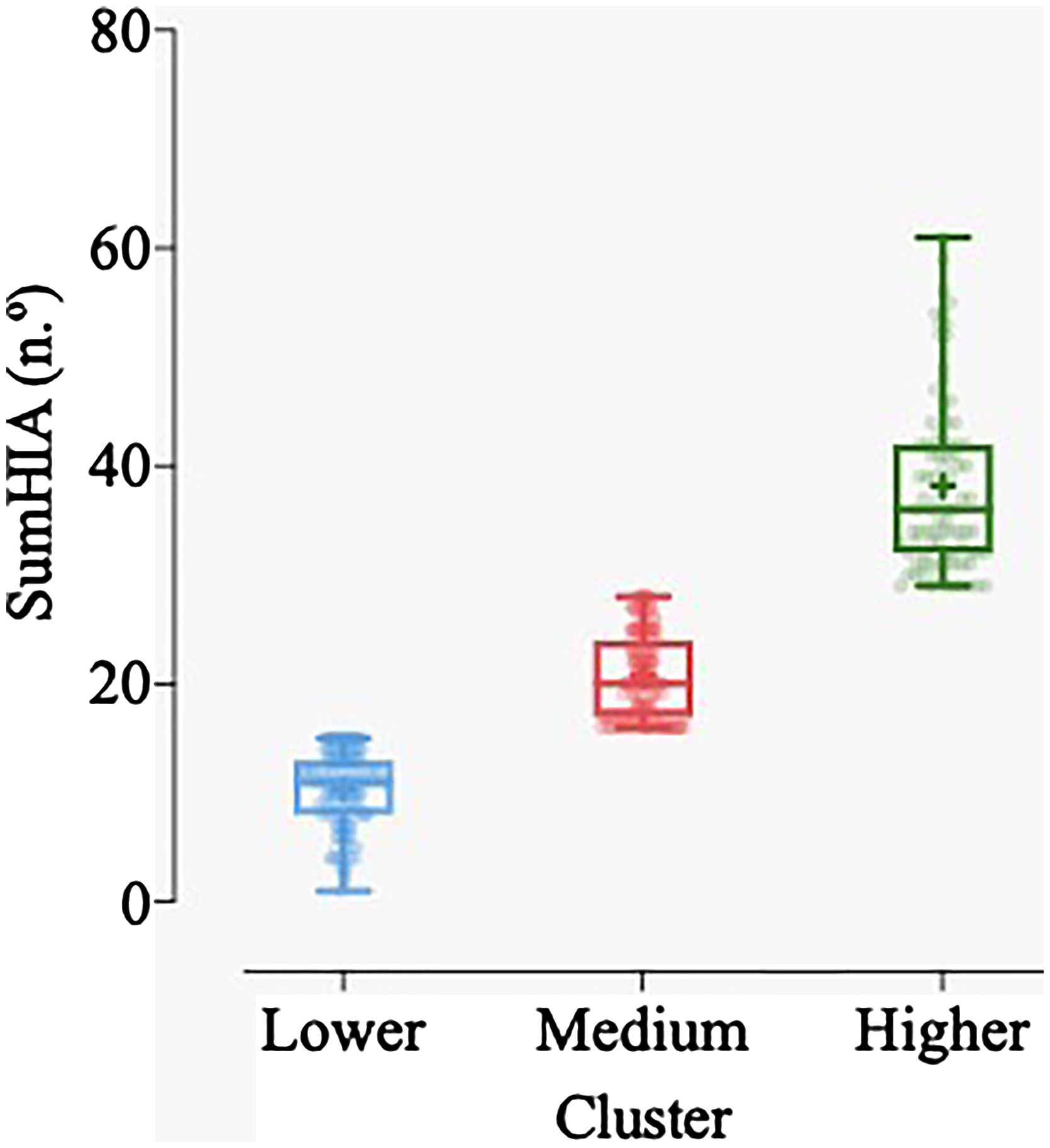
Clusters’ distributions. The whiskers connect all points, from the minimum to the maximum; +represents the mean; and the box middle solid line represents the median.
Cluster characterization.
No statistically significant differences were observed over the match rotations in the three different activity profiles (Figure 2).
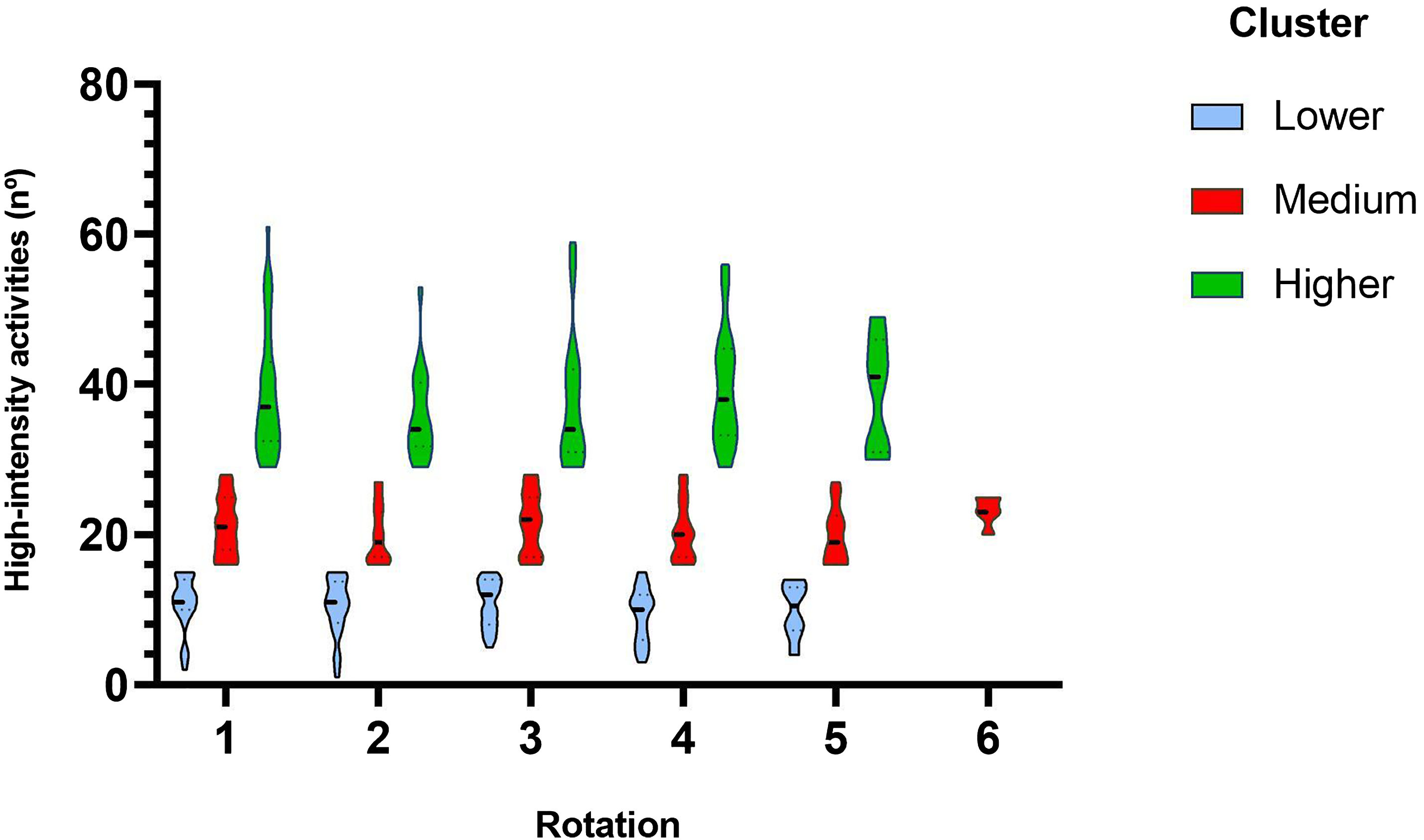
The mean and distribution of HIA between match interchange rotations for the three clusters.
Through the periods (Figure 3), the same analysis revealed a small wave of HIA in the activity profiles over the match. However, no significant differences were registered between match periods.
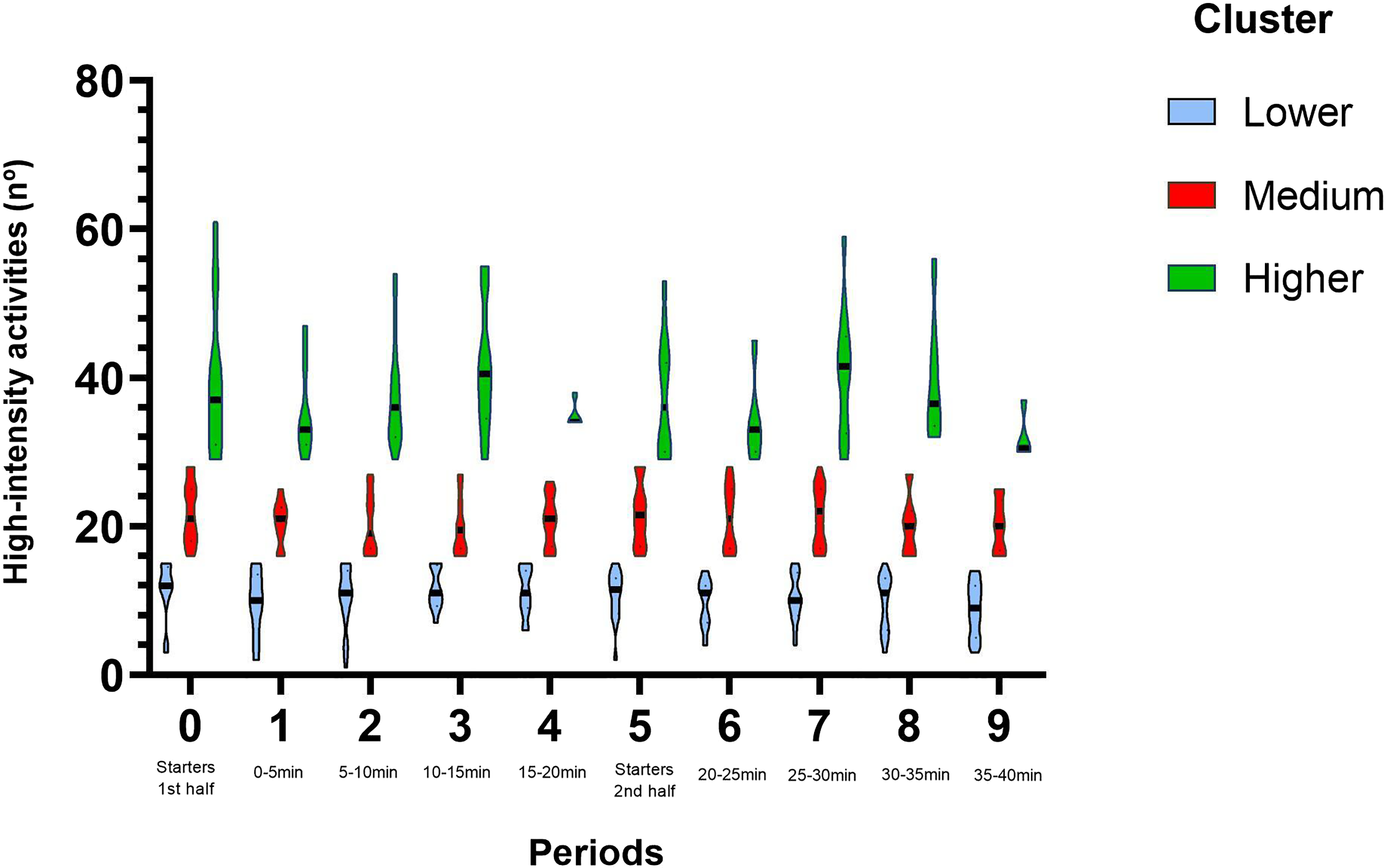
The mean and distribution of HIA for the three clusters between match periods.
Through a one-way ANOVA analysis of clusters (Table 3) it was possible to identify that playing time (F = 40.9, p < .001), work–rest ratio (F = 15.6, p < .001), accumulated work–rest ratio (F = 7.98, p < .001) and accumulated rest time (F = 7.66, p < 0.001) were the variables that most contributed to the differentiation of the players’ activity profiles.
Summary of clusters and ANOVA analysis.
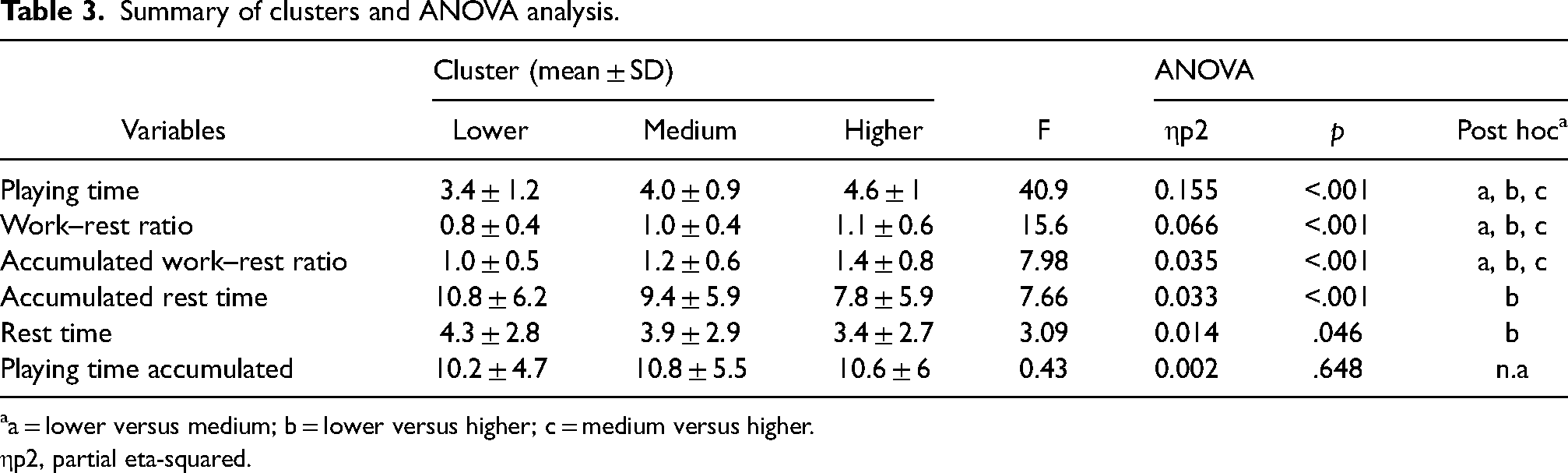
a = lower versus medium; b = lower versus higher; c = medium versus higher.
ηp2, partial eta-squared.
Discussion
In general, results revealed that elite futsal players from this study performed an average of 20 HIA per interchange rotation. Through a clusters analysis, it was possible to identify high variability in their activity profiles, being possible to isolate three distinct patterns: players with a low activity profile that performed an average of 10 HIA per interchange; players with a medium activity profile that performed an average of 21 HIA per interchange; and players with a high-intensity profile that performed an average of 38 HIA per interchange.
Data analysis of the temporal effects of interchange rotations on the frequency of HIA revealed that players were capable of maintaining a stable number of HIA during the match based on the activity profile. This data suggests that, regardless of the match context (result, strategy, number of fouls, model system, and opponent’s level), players maintain the ability to perform HIA.
The work–rest ratio is one of the factors that may justify a player’s ability to perform multiple HIA during the match.16,27 The players in this study competed for an average of 3.9 min per interchanged on the court and the same ball in play time on the bench, corresponding to an average of two to three interchanges per half with a ratio of 1:1. Our findings are consistent with the literature on energy systems, emphasizing the importance of developing a training program that specifically emphasizes the work-rest ratio (energy system) required to play futsal. The ATP-CP replenishment time is close to 20 s of rest, and the intramuscular reserve restoration time is approximately within the average time that elite futsal players are on the bench (3.9 min). 15
In this regard, the teams that use a higher frequency interchange rotation strategy predispose their players to be physically available for offensive and defensive actions, putting them closer to success. 21 This is probably due to the fact that after each interchange, there is an increase in the distance covered and the ability to sprint in futsal players. 13
The main findings of this study may generate some reflections on the concept of analyzing the physical demands and the most demanding periods of futsal matches. In a recent study, authors found that elite futsal players have the ability to repeat high-demanding scenarios in the course of a single match instead of being a “one-off” event. 2
As situational aspects play an extremely important role in the interpretation of physical demands, 22 the second aim of this study was to analyze the eventual relation between some match time variables and the frequency in which HIA are achieved along the interchange rotations that players perform during the match. Our results showed that the playing time and the work–rest ratio were the variables that most contributed to the classification of the match activity profiles of the players. Furthermore, the accumulation of the work-rest ratio and the rest time must also be taken into consideration.
This evidence brings a new discussion regarding the proposals that merely consider only the athletes’ ball in play time in relation to the total match time to calculate the values of the external load variables. In fact, this approach leads to an understanding that players who are less time on the court tend to present higher physical performance values per minute when compared to players with more playing time. 4 However, according to our results, when the physical effort per minute was calculated not considering the total playing time but the playing time per interchange rotation and considering the work–rest ratio, the players that spent more time on the court than on the bench were the ones that achieved the highest level of match effort. In our opinion, and given that futsal is a sport with unlimited substitutions, calculating the match effort per minute without considering the work–rest ratio of play does not provide sport scientists and coaches with a correct understanding of the impact that physical demands of futsal matches have on their players. In this sense, our study suggests that futsal players’ performance analysis should focus on the time that each player has per rotation, since it constitutes the clearest method to understand the real physical demands of a futsal match.
Finally, the fact that in our study the players with more resting time are those with less ability to perform HIA may be related to a decrease in body temperature17,28 which results in a limitation in the player’s ability to repeat HIA, which could mean that the first rotation in each half has the same impact in the players’ capacity to perform as the “warm up.”
Conclusions
The findings of our study led us to the conclusion that HIA can cause significant variation between elite futsal players. However, within each individual activity profile, these athletes can manage to maintain their profile stable during the forthcoming match rotations.
Furthermore, we observed that in a balanced team, the length of an on-field interchange rotation period has a clear impact on performance. Players with more playing time and with a work–rest ratio equal to or greater than 1 are the ones with the higher capacity to repeat HIA. On the other hand, players who accumulate more resting time and a work–rest ratio of less than 1 are less able to perform HIA.
The main findings of this study may generate some reflections on the concept of analyzing the physical demands and the most demanding periods of futsal matches. While recent research has analyzed and described the physical demands and therefore, the HIA that elite futsal players are exposed to during official futsal matches in terms of average values1,2 and in terms of the most demanding scenarios, 29 in this study, only the mean values of HIA per interchange rotation over the match have been considered. In this sense, we believe that further research should focus on investigating the fluctuation of the most demanding periods over the playtime that each player has per interchange, instead of focusing only on investigating the most demanding period in the match or in the mean values per team.
The results of our study allow strength and conditioning coaches to plan and design drills with individually optimized time variables to improve the most suitable physiological adaptations to the physical demands that players have per interchange rotation during the match. Furthermore, it is recommended that players who play less time and spend more time on the bench, have a preset rewarming to minimize the effect of physical inactivity as much as possible. Thus, it would be pertinent to find out if the space available for futsal players to warm up is sufficient and what kind of equipment could be allowed to boost their readiness to compete.
This study has some limitations that should be considered. Given the difficulty to collect data from professional futsal teams, only one team was analyzed, and some caution is required to interpret the data obtained. In turn, the fact that these data were collected in a high-level futsal team adds a lot of interest and can be very enriching in the possible knowledge produced. 30 In addition, we have only examined the quantity of interchange rotations. Future studies could further develop our findings by examining the most intense periods per interchange rotation, the influence of player position, and more situational factors on player’s performance outcomes. Finally, it would also be interesting to identify the technical-tactical actions associated with HIA to create a physical performance test based on the most frequent and specific high-intensity actions of match play.
Footnotes
Declaration of conflicting interests
The authors declared no potential conflicts of interest with respect to the research, authorship, and/or publication of this article.
Funding
The authors disclosed receipt of the following financial support for the research, authorship, and/or publication of this article. This work was supported by the Portuguese Foundation for Science and Technology (grant number SFRH/BD/148271/2019).
