



Abstract
Observational learning is considered powerful to promote (implicit) motor learning. While it is a common tool in practice, little is known about the effects of video instructions on movement execution. The aim of this study was to investigate the effects of watching biomechanically optimal (OPT) and suboptimal (SUBOPT) sidestep cutting (SSC) video instructions on movement execution. Ten male basketball players (age 15.5 ± 1.2 years, height 189.9 ± 3.1 cm, mass 75.4 ± 7.1 kg) from a Regional Talent Center performed anticipated 45° SSC tasks in baseline (BASE) followed by two counterbalanced experimental conditions. Subjects watched expert videos (matched by sex and height) of OPT and SUBOPT movement executions and were asked to imitate this to the best of their ability. Kine(ma)tic data was captured with 21 reflective markers and 2 force plates. After watching the videos, subjects displayed smaller ankle dorsiflexion angles (p < 0.001) and greater vertical ground reaction force (vGRF) (p = 0.012) in SUBOPT compared to OPT condition during initial contact (IC). Greater knee flexion and ankle dorsiflexion angles in the expert compared to subjects in the OPT condition were found (p < 0.001). Contrarily, subjects were able to imitate SUBOPT executions shown by the expert. This means that athletes worsen their movement execution when modelling a SUBOPT model. Coaches are advised to mainly use (1) OPT video instructions and (2) expert modelling with a relatively small gap in movement execution between the athlete and model.
Keywords
Introduction
Young talented athletes train on a daily basis to get the best out of themselves. These efforts can be disturbed by injuries, as they have a negative impact on their physical and mental development and performance. 1 A twofold increase in the incidence of anterior cruciate ligament (ACL) injuries in young athletes (13–17 years) was found from 2004 to 2014. More than 200 injuries per 100,000 person-years were found in boys from 13 to 17 years old in 2014. 2 Many ACL injuries occur during agility maneuvers with sudden decelerations or rapid direction changes, such as sidestep cutting (SSC), 3 which is the most fundamental movement in basketball defense. 4 During this movement, torso leaning and rotation in the opposite direction to the cut and foot placed away from the body results in increased peak valgus and peak knee internal rotation moment and is associated with increased knee joint load.3,5 Contrary, bringing the foot to the midline and keeping the torso upright with no rotation reduces knee joint load. 5
Therefore, to prevent injuries and improve performance, it is relevant to gain insight in how to teach athletes to obtain an optimal movement execution. Input for training design and injury prevention programmes related to motor learning is of great value for trainers, coaches and health care professionals. Current ACL injury prevention programmes seem effective in the short term6,7 but only in a relatively controlled setting. 7 Despite these programmes, the rate of ACL injuries has increased in recent years. 2 One reason for this could be suboptimal manner of teaching motor skills. 8 The key of traditional programmes is to explicitly focus on details of movement execution (the what, i.e. ‘bend your knee while landing’ and ‘keep your knee over your toes’), but how we teach athletes to get there is lacking.7,9 In contrast, with implicit learning the attention is directed to the outcome or the goal of the movement. 10 Research has shown that implicit learning results in improved motor performance and learning compared to explicit learning.11,12 When learned implicitly, motor skills will be less easily disturbed when aspects such as fatigue, 13 pressure or other environmental components play a role. 14 In sports, maintaining performance while dealing with high-demanding task situations is key to success 15 and might even diminish the risk of injury. 12
Observational learning is a powerful opportunity to promote implicit learning through self-exploration and self-organization.13,16 Learners can extract important information and requirements of the task, 16 especially when observation is combined with physical practice. 17 Thereby, the learner will explore, and then select the movement solution that fits best in his/her own body. 13 It is thought to be an effective way to enhance motor learning,12,18,19 leading to better retention 18 and transfer. 17 Imitation plays an important role in observational learning.8,20 By now, no consensus exists regarding the level of expertise of the model to be imitated. Some studies showed beneficial effects of observing experts compared to novices,21,22 whereas others found the opposite result in novices 23 or no differences between the level of expertise of the model. 24 However, performance of dart experts was decreased after observing novices with poor dart throwing. 22 This suggests that the difference in quality of movement execution between the model and the observer impacts motor performance. Therefore, care should be taken when selecting a model for observational learning.
For ACL injury prevention, previous research showed beneficial effects of observational learning using expert video instruction. 25 However, it is not known yet whether seeing a suboptimal video has a detrimental effect on movement execution. If so, sport and health care professionals should be aware of the possible negative effects of watching and imitating teammates when coaching how to not perform a skill. 26 Therefore, the aim of this study was to investigate the effects of watching biomechanically optimal and suboptimal SSC video instructions on movement execution. We were particularly interested to examine (1) if the subjects adapted their movement execution according to the experimental conditions and (2) if the subjects reached the level of movement execution shown by the expert.
Materials and methods
Subjects
Ten healthy left leg dominant (i.e. the leg they prefer pushing off and landing with) male basketball players (mean age 15.5 ± 1.2 years, height 189.9 ± 3.1 cm, mass 75.4 ± 7.1 kg) of the Regional Talent Centre Noord Basketball (Groningen, The Netherlands) participated in this study. The athletes played at the highest or second highest level of the Netherlands (one match per week) and trained eight times a week with a mean duration of 85 min per training. For inclusion, subjects had to be between 12 and 18 years old and have a height between 170 and 200 cm. We excluded potential subjects if (a) they were injured to the lower extremity, (b) had other relevant lower extremity injuries or surgery in the past year or (c) had (history of visual) impairments that could hinder imitating video instructions.
Apparatus
Two 50 Hz Basler video cameras (cameras with a 25-mm and 9-mm C-mount lens Basler Inc., Exton, PA, USA) were used, one filming the sagittal plane from a lateral view and the other filming the frontal plane from a posterior view. Trunk and lower body kinematics and vertical ground reaction force (vGRF) data were captured using a 100 Hz eight-camera motion analysis system (Vicon Motion Systems, Inc., Centennial, CO, USA), Vicon Nexus Software (version 2.7 Motions Systems, Inc., Centennial, CO, USA) and two 1000 Hz Bertec force plates (Bertec Corporation Columbus, OH, USA). High test and retest repeatability and good measurement accuracy of Vicon motion analysis have been reported previously.27,28
Procedures
Informed written consent of expert and subjects and/or legal guardians were obtained prior to inclusion. Ethical approval was obtained from the local Medical Ethical Committee of University Medical Center Groningen (ID number: METc 016.186.144). First, 16 reflective markers of 14 mm in diameter were placed according to the Vicon Plug-in-Gait lower body model (Vicon Motion Systems, Inc., Centennial, CO, USA). We placed five additional trunk markers on the sternum, clavicle, C7, T10 and right scapula. Body height and mass, leg length, knee and ankle width were entered into the Vicon Nexus Software (version 2.7.1) to make an accurate biomechanical model. This was followed by a static calibration consisting of standing still for 3 s in a T-pose on the force plates. 29 A flowchart of the data collection protocol is shown in Figure 1.
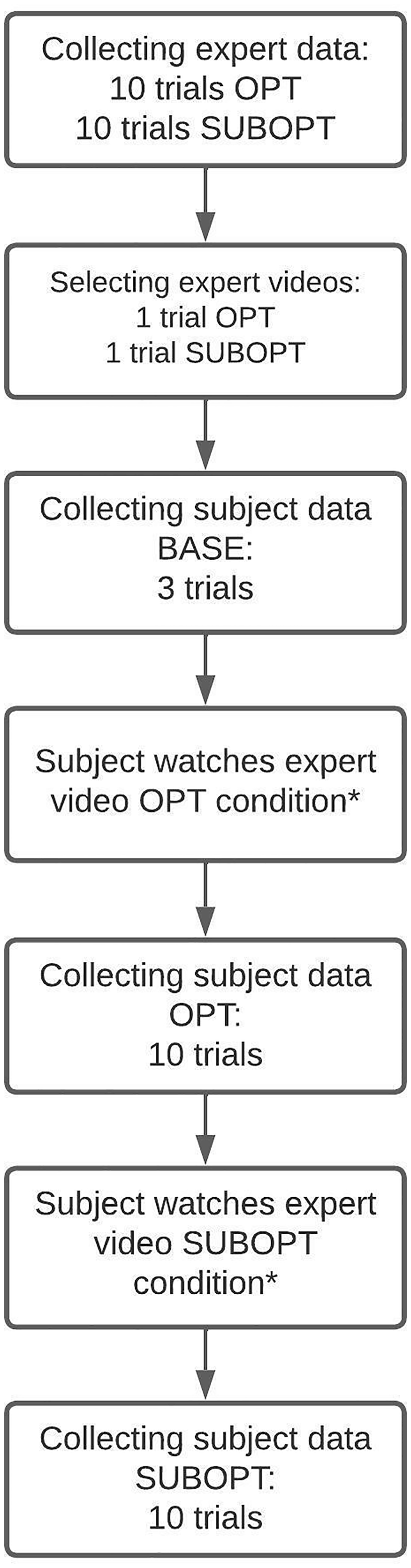
Flowchart describing the process of collecting (expert) data and selecting expert videos. *Optimal (OPT) and suboptimal (SUBOPT) condition were counterbalanced.
Collecting expert data
Frontal and sagittal plane videos of an expert performing a 45° anticipated sidestep cut were obtained before the start of the current study. This player (age 15.6 years, height 186.0 cm, mass 68.0 kg) from Regional Talent Centre Noord Basketball was selected by coaches and deemed to have excellent motor skills at this stage. We demonstrated the imposed optimal (OPT) and suboptimal (SUBOPT) executions using previously reported figures 5 and verbal instructions. The expert performed about 10 trials for each imposed execution where he clearly addressed an OPT or SUBOPT execution. No specific guidelines or test protocol was followed to collect these trials, but the expert was encouraged to find a way to imitate the reported figures as best as possible.
Research has shown that greater knee flexion angles and greater knee range of motion (ROM), 30 smaller knee abduction/adduction moment, 31 smaller knee flexion moment 32 and smaller vGRF 31 reduce the risk of an ACL injury. Therefore, we selected the expert videos based on a ranking of these five variables obtained from marker and force plate data. The trial with the best rank of the OPT trials (lowest knee joint load) and the worst rank of the SUBOPT trials (highest knee joint load) was chosen (Table 1). Video footage was analysed and checked to see whether these movement aspects that are linked to these variables are also visible on the video. Figure 2 shows part of the video of the OPT and SUBOPT conditions which were used as an instruction to the subjects. The execution shown in the OPT condition can be considered as favourable with a lower knee joint load. The execution in the SUBOPT condition is less favourable with a higher knee joint load.
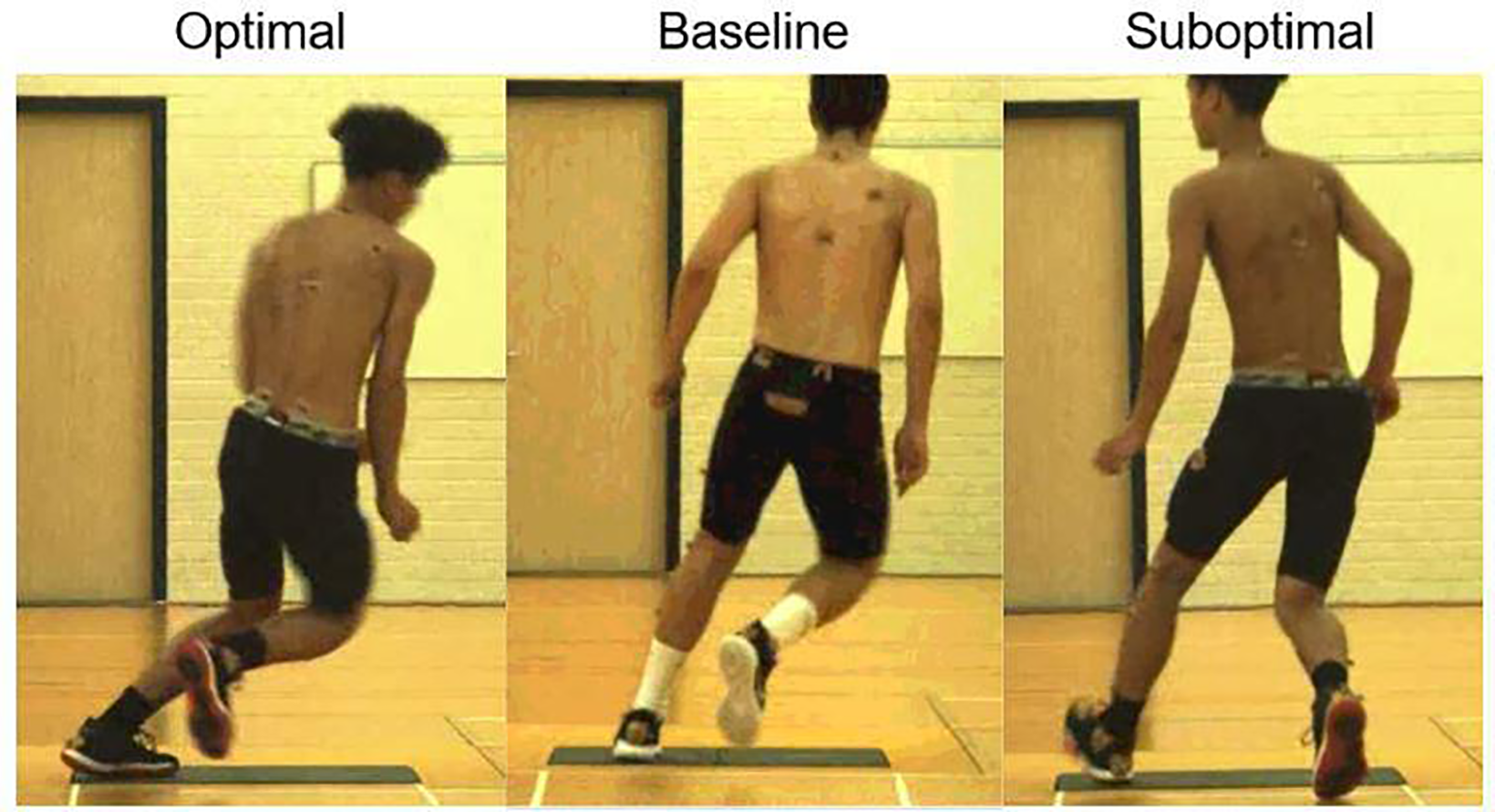
Optimal (OPT) (left, performing the movement ‘optimal’) and suboptimal (SUBOPT) (right, performing the movement ‘suboptimal’) conditions of an expert performing the sidestep cut at initial contact (IC). An illustrative baseline (BASE) trial of a subject is shown in the middle.
Values of variables corresponding to the conditions and one-sample t-tests results.
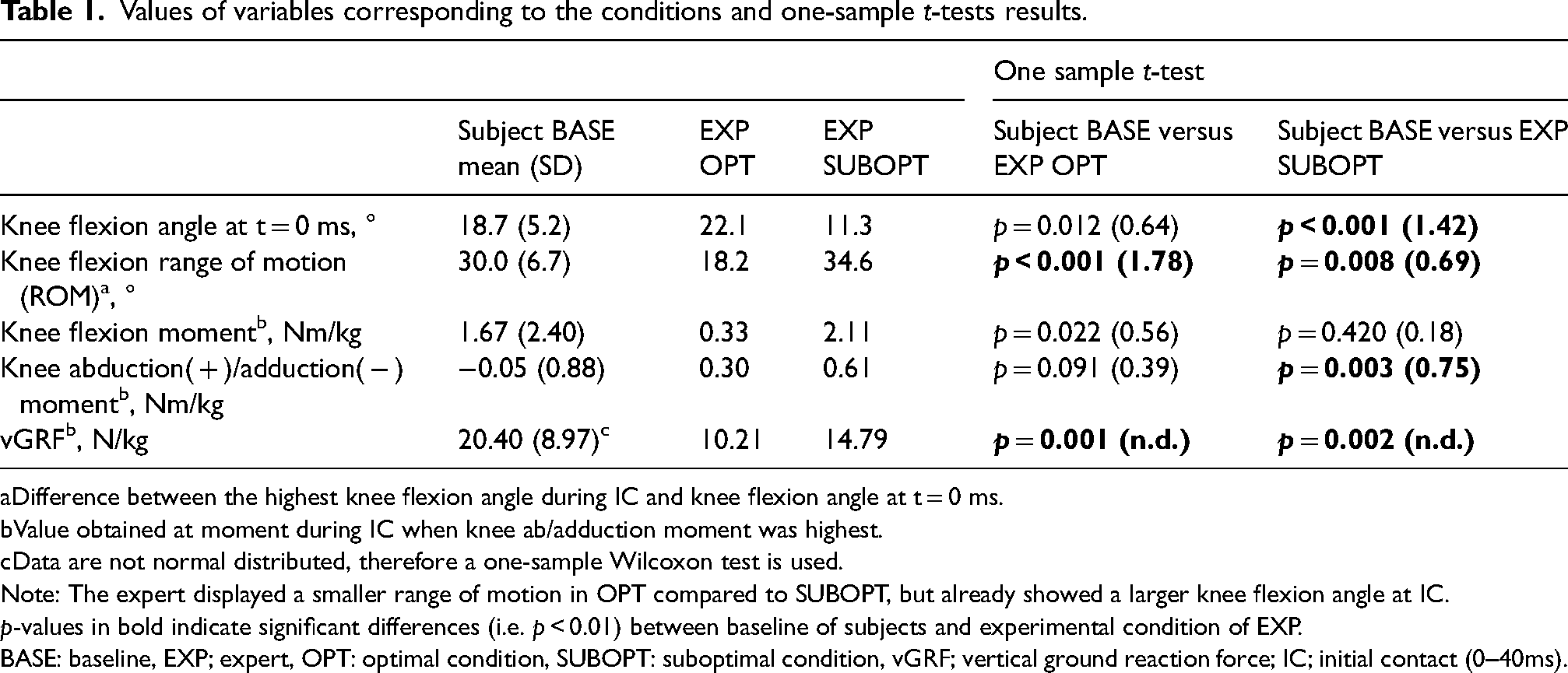
Difference between the highest knee flexion angle during IC and knee flexion angle at t = 0 ms.
Value obtained at moment during IC when knee ab/adduction moment was highest.
Data are not normal distributed, therefore a one-sample Wilcoxon test is used.
Note: The expert displayed a smaller range of motion in OPT compared to SUBOPT, but already showed a larger knee flexion angle at IC.
p-values in bold indicate significant differences (i.e. p < 0.01) between baseline of subjects and experimental condition of EXP.
BASE: baseline, EXP; expert, OPT: optimal condition, SUBOPT: suboptimal condition, vGRF; vertical ground reaction force; IC; initial contact (0–40ms).
Collecting subject data
The task chosen for this experiment was a 45° anticipated sidestep cut to the non-dominant leg direction (Figure 2). Subjects used a 5m approach run followed by a 1-foot landing on the force plate and a 45° change in the direction followed by running through a gate 5 m away from the force plates. A trial was defined as successful if the cut angle of 45° was in the non-dominant leg direction with the dominant leg on the force plate. The general instruction was provided by the investigator: ’run towards the force plate and after making the turn, you have to run through the gate’ for all conditions. After warm-up and familiarization, subjects conducted three baseline (BASE) trials. This was followed by 2 counterbalanced experimental conditions of each 10 trials. In line with research showing that subjects’ preferred feedback frequency was 35%, 33 OPT and SUBOPT video instructions were watched by the subjects before the 1st, 4th, 7th and 10th trials. The following instruction was given: ‘please have a look at the entire movement of the expert when making the turn, try to imagine how this feels and try to imitate the expert to the best of your ability’. 25 Subjects were encouraged to use a constant submax speed and were coached when they deviated from this pattern. The videos were randomly presented from the posterior frontal and sagittal sides. The subjects were given enough rest (at least 30 s) between the trials to reduce the potential effects of fatigue.
Data acquisition and statistical analysis
Primary outcome variables were flexion angles of the hip, knee and ankle, flexion/extension moments of hip, knee and ankle, abduction/adduction moments of hip and knee and vGRF over the entire stance phase (from first contact with force plate till toe-off). External moments and vGRF were normalized to body mass. The results focused on the first 40 ms ( = 0%–18%, initial contact (IC)) of the stance phase as many injuries happen within 40 ms after first contact. 3 A fourth-order zero lag Butterworth low-pass filter at 10 Hz was used to filter the data. A customized MATLAB script 9.6 (The MathWorks Inc., Natick, MA, USA) was used to compute variables of the tested leg. Trials were synchronized based on the first contact (vGRF >50 N). First, it was checked if the BASE level of the subjects was not already close to the level of the expert to rule out a ceiling or floor effect. Therefore, one-sample t-tests were performed to analyse the differences between BASE of subjects and experimental conditions of the expert for the five determining variables used to select the expert videos. To correct for multiple testing, Bonferroni corrections were used and alpha was set a priori at <0.01. Cohen's d was calculated as a measure of the effect size. Effect sizes were interpreted as very small (<0.20), small (0.21–0.50), medium (0.51–0.80), large (0.81–1.20, and very large (>1.21). 34 SPSS (version 27.0.0; IBM Corp, Armonk, NY, USA) was used for this first analysis. Second, a Python script (Python Software Foundation, Delaware, USA) was used to do statistical parametric mapping (SPM), using the open-source software package spm1D 0.4 35 (http://www.spm1d.org). A one-way repeated measures ANOVA test using SPM was performed to test differences between the conditions (BASE, OPT and SUBOPT) within the subjects. Paired t-tests with Bonferroni corrections (https://spm1d.org/doc/PostHoc/anova.html) were used as post hoc tests if significant different clusters (of time) within subjects were found. Lastly, one-sample t-tests with SPM were used to test differences between the expert and subjects for both experimental conditions (OPT and SUBOPT). The significance level for all tests with SPM was set a priori to <0.05. Additionally, a non-sphericity correction by adjusting the degrees of freedom was applied since the assumption of identical variance could not be justified.
Results
For knee ROM, vGRF, knee flexion angle at IC and knee abduction moment, significant differences were found between BASE of subjects and the experimental conditions of the expert (p < 0.01) (Table 1). The effect sizes ranged from medium to very large (0.69–1.78). This means that subjects were not at the level of the expert at the start of this study. The execution shown in the OPT condition by the expert was better than BASE of subjects. The execution in the SUBOPT condition by the expert was worse than BASE of subjects (Table 1).
Condition comparison within subjects
The analyses revealed significant differences during IC for the ankle flexion angle (p < 0.001), knee flexion moment (p = 0.040) and vGRF (p = 0.045) between all conditions (BASE vs. OPT vs. SUBOPT) (Table 2). This means that the video demonstration influences movement execution. Post hoc comparisons showed that subjects displayed smaller ankle dorsiflexion angles (p < 0.001) and greater vGRF (p = 0.012) in SUBOPT compared to OPT. No significant differences between BASE and either OPT or SUBOPT were found during IC (p > 0.05).
Comparisons between expert and subjects for the experimental conditions
Significant differences were found for the OPT and the SUBOPT condition (Table 2). The expert showed significantly greater ankle dorsiflexion (p < 0.001) and knee flexion angles (p < 0.001), greater hip (p = 0.050) and knee abduction moments (p = 0.036) and smaller vGRF (p < 0.001) in the OPT condition compared to the subjects during IC. The expert showed significantly greater ankle dorsiflexion angle (p = 0.013), greater knee extension moment (p = 0.048) and smaller vGRF (2 clusters; p = 0.013, p = 0.029) in the SUBOPT condition compared to subjects.
P-values (% of SP) of repeated measures ANOVA, post hoc tests and one-sample t-tests.
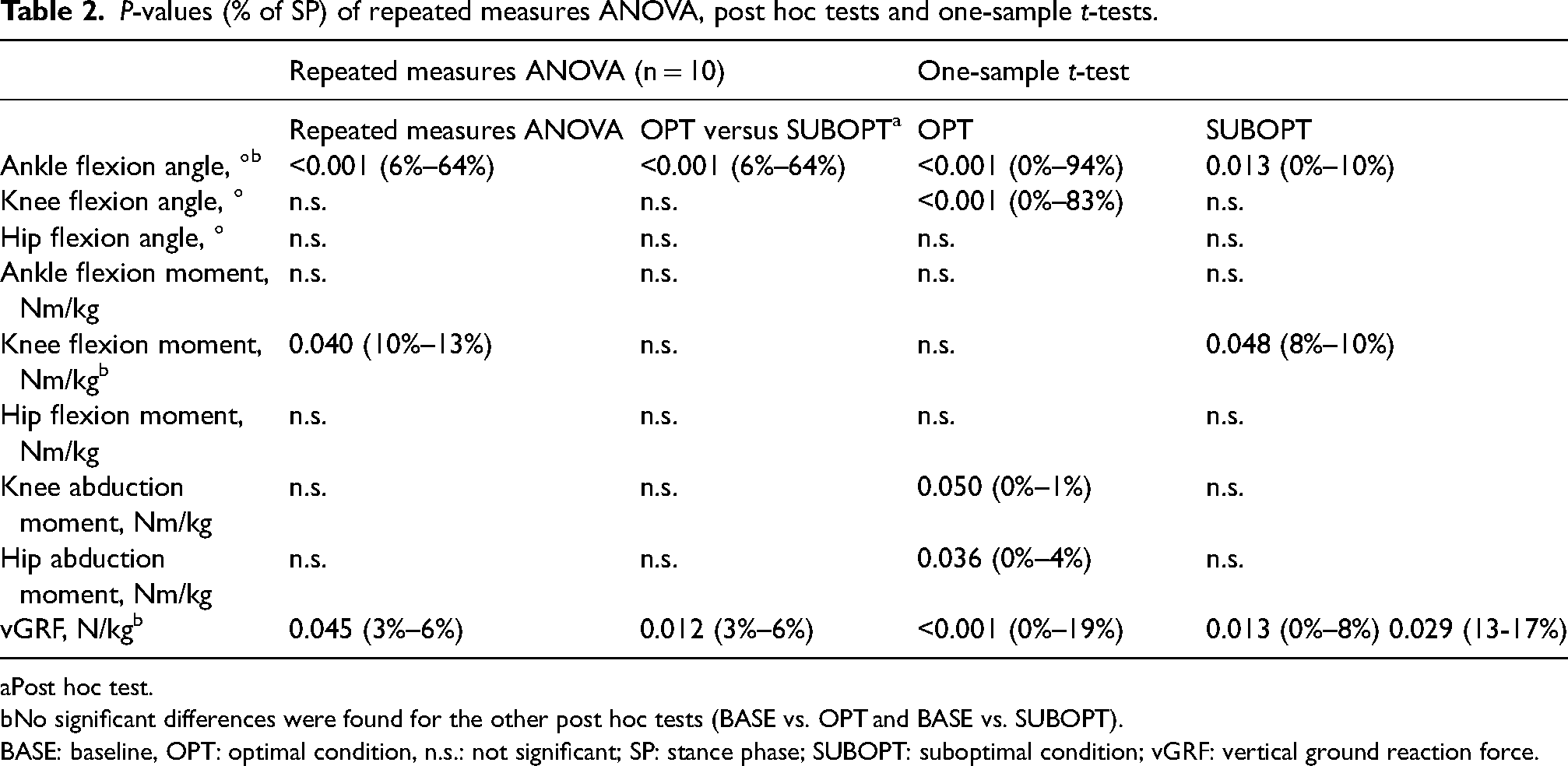
Post hoc test.
No significant differences were found for the other post hoc tests (BASE vs. OPT and BASE vs. SUBOPT).
BASE: baseline, OPT: optimal condition, n.s.: not significant; SP: stance phase; SUBOPT: suboptimal condition; vGRF: vertical ground reaction force.
Discussion
The aim of this study was to investigate the effects of watching biomechanically optimal and suboptimal SSC video instructions on movement execution. In more detail, this study examined (1) if the subjects adapted their movement execution according to the experimental conditions and (2) if the subjects reached the level of movement execution shown by the expert. Differences between the expert and subjects were seen for the OPT, which suggests that subjects were not able to imitate the expert. On the other hand, subjects slightly changed their movement execution in SUBOPT and showed similar knee and ankle angles compared to the expert in SUBOPT. This means that athletes deteriorated their movement execution when modelling a SUBOPT model.
Answering the first question, main significant differences between the three conditions (BASE, OPT and SUBOPT) of subjects for the ankle dorsiflexion angle, knee flexion moment and vGRF during IC were found. The post hoc tests did only show significantly smaller dorsiflexion angles and greater vGRF in SUBOPT compared to OPT. As Figure 3 shows the BASE performance was mostly an execution between the OPT and the SUBOPT condition. In light of injury prevention, the mean BASE performance of the subjects could be considered as low-risk. Subjects demonstrated a small knee abduction moment and a knee flexion angle of 45–50° during IC which are far away from the values corresponding to previously seen injuries (Table 1). 3 Three trials were collected in the BASE condition which may be an explanation for the relatively high variance seen in this condition compared to the OPT condition. However, no substantial differences in variance were seen between the SUBOPT and BASE conditions. Unexpectedly, no significant differences were found between BASE and either OPT or SUBOPT during IC. This means that the subjects had a tendency to perform more towards the shown condition during IC, but the change was not significant compared to their BASE performance. This may be explained by the fact that the subjects were only given the instruction ‘try to imitate this to the best of your ability’ but they did not know how their own BASE performance was relative to the OPT and SUBOPT shown by the expert. The expert was part of the same talent team as the subjects were part of. Therefore, it seems reasonable that they may have thought that their BASE execution was already similar to expert performance in OPT and they did not feel the need to change their execution to a large extent (i.e. only vGRF was different between OPT and SUBOPT). This mismatch between perception and actual task execution confirms that feedback, in addition to only instruction, is needed for one's own perception if one wants to optimize the learning curve. 36 In addition, a previous study found that male basketball players who received video feedback showed larger vGRF and knee flexion moment compared to the control and verbal feedback groups. 12 Moreover, video-overlay feedback in a landing task led to greater knee and hip flexion angles in females 37 and greater hip flexion angle and smaller dorsiflexion moment in males. 38 We also found changed movement executions for the sagittal plane. Subjects showed smaller dorsiflexion and knee flexion angles in SUBOPT compared to their BASE, although not significant (Figure 3(a) to (b)), possibly due to the large variance. The SUBOPT execution by the expert may have looked different (i.e. ‘weird’) as they are used to (e.g. excessive foot and trunk placement in the opposite direction of the cut, Figure 2). Therefore, the difference in movement execution between BASE and SUBOPT was probably more clear compared to BASE and OPT. Subjects may have thought that they needed to change their execution in order to reach the SUBOPT execution. Furthermore, this study solely used 10 trials for each experimental condition, it can be assumed that the effects would be more pronounced with more trials and or sessions.12,38
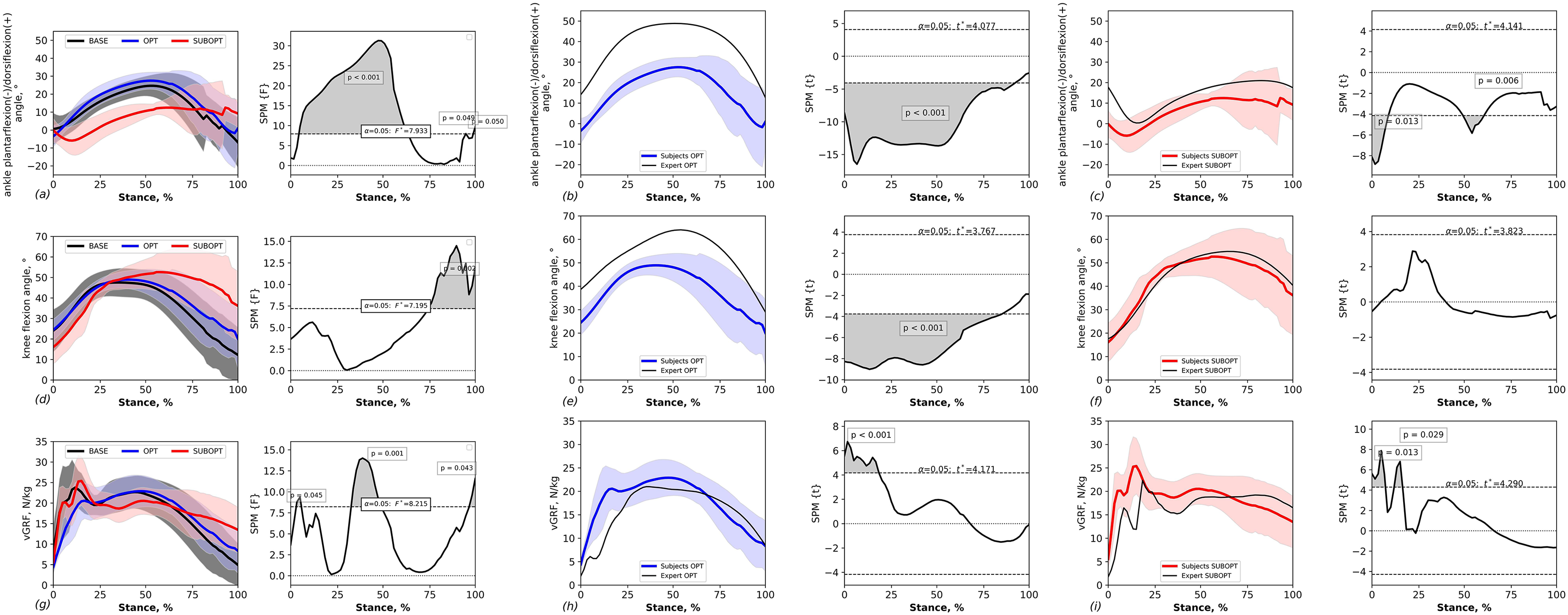
Left: mean trajectories and SD clouds. Right: RM ANOVA plot (a, d and g) and one sample t-test plot (b, c, e, f, h and i). The grey shaded regions indicate significant clusters (p < 0.05).
Answering the second question, subjects improved their performance in OPT compared to BASE, but were not able to close the gap between ankle angles, knee angles and vGRF with the expert (p < 0.05) (Figure 3(b), (e) and (h)). One of the reasons for this could be the large gap between OPT of the expert and BASE of subjects. This gap was possibly too large leading to OPT motor representations due to less similarity and therefore limit imitating possibilities. 39 Therefore, subjects may have stuck to their movement execution, which can also be seen in the small difference between their BASE and OPT (Figure 3(a) to (b)). Subjects may have needed more (verbal) instruction 12 or videos of themselves performing the task25,36,39,40 to change their execution. Regarding the SUBOPT condition, subjects showed similar ankle and knee flexion angles as shown by the expert (Figure 3(c) and (f)). This implies that the subjects were able to imitate the expert in SUBOPT regarding the ankle and knee angles. To further explore and better understand the data and the differences between conditions, we plotted the mean values of the first 40ms of all variables in 2D plots (Figure 4). Subjects demonstrated less variance among trials in OPT compared to BASE, whereas mostly similar or more variance was found in the SUBOPT compared to BASE during IC (Figure 4). Although speculative, the hypothesis we offer here is that subjects tried to change their movement execution in SUBOPT and ‘turn off’ their automatic movement execution. This solution led to changes in the sagittal plane, but not in the frontal plane and not for the vGRF. A previous study showed even greater vGRF after receiving an intervention with video feedback compared to verbal feedback. 12 In contrast, another study showed smaller vGRF after a video feedback intervention compared to pretest, 38 which makes it difficult to draw conclusions about the relationship between video feedback and vGRF. In addition, it should be noted that solely vGRF does not say everything as the position of the joints may determine the loads placed on the joints and also the potential of the muscles to counteract these loads. To conclude, in this controlled laboratory setting, subjects found a solution to slightly imitate the SUBOPT expert in the sagittal plane, but stayed away from the risky execution displayed by the expert in the frontal plane. On the other hand, we can say that the less variance shown in OPT revealed that subjects stayed close to their own execution.
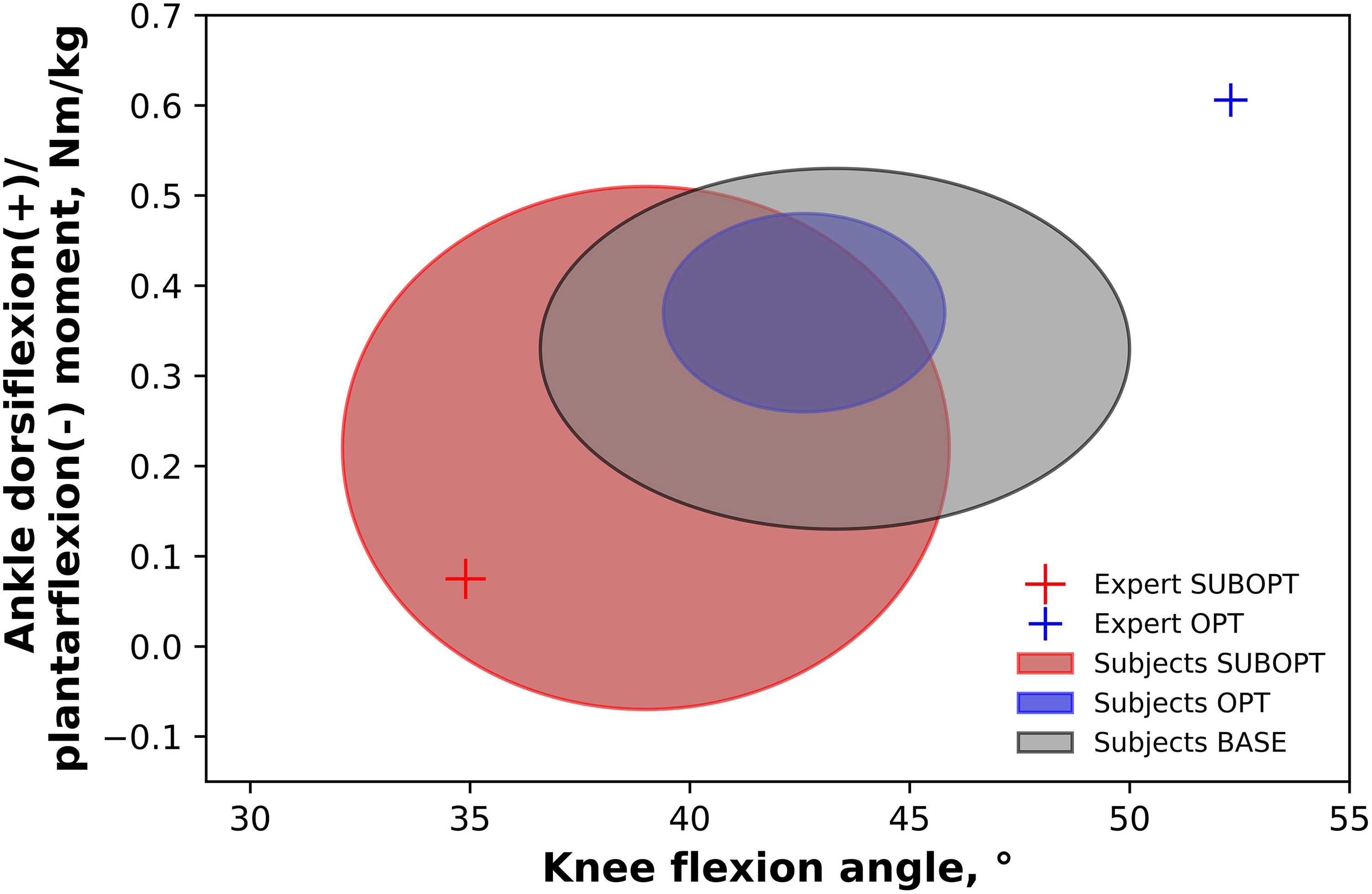
Mean values and SD clouds of the first 40 ms. Illustrative example of decreased variance in optimal (OPT) and large difference between OPT of subjects and expert. On the other hand, changes from baseline (BASE) of subjects to expert are seen in suboptimal (SUBOPT).
This is the first study that investigates the degree of imitating OPT and SUBOPT movement executions without specific instruction. This way of teaching movement skills stimulates self-organization and allows the athlete to explore how to get to the desired movement strategy (i.e. the model).16,41 Although it is stated that visual and motor familiarity with the observed action enhances observational learning capacities, 42 the current study added that subjects were able to model less familiar movement execution (i.e. SUBOPT) to some extent as well. This should be taken into account when using observational learning to enhance motor performance. Second, this study applied waveform analysis (i.e. SPM). Previous research has suggested the need for this type of analysis in contrast to peak analysis as it is superior to the over-simplification of discrete parameter analysis.14,43 Third, the expert was matched based on sex, height, mass, leg dominance and age of the subjects in order to trigger mirror neurons most optimally and heighten the model similarity for the provision of a strong representation of the skill. 44
Some methodological limitations should be considered when interpreting the results of the current study. First, one trial of one expert was selected for each condition. This expert was selected by the coaches and trainers to have good motor skills. Videos of several experts could have been collected to determine the best expert based on objective measurements. However, our expert was chosen based on the selection of coaches. In addition, he played for the national team under 16 and won silver at the European Championships (B division). Moreover, more expert videos could have been chosen to enhance the modelling effect by providing variations to the subjects 45 and to avoid using a one-sample t-test Second, our results are limited to a specific cohort of 10 young male basketball athletes. Although this is not unusual within biomechanical research (e.g.46,47) and our effect sizes showed medium to large effects (Table 1), caution should be taken when generalizing results to female athletes, less skilled athletes or other sports. Third, we did not standardize the approach and exit speed of the cutting task. With this, subjects may have changed their speed while trying to imitate the movement execution of the expert. However, we have verbally encouraged all the subjects and the expert in a standardized manner to use a constant and submax speed and coached them when they deviated from this pattern. Also, this was done by the same investigator to enhance consistency. Lastly, we used an anticipated SSC task which is less demanding and sport-specific compared to unanticipated SCC. 47 However, as this was the first study that investigated the differences between OPT and SUBOPT video instructions, we strived to standardize the task as much as possible.
Previous research showed that observational learning is an effective way to enhance motor learning by providing expert video instructions. 25 This study adds that (1) the difference between the instruction video and BASE execution should not be too large (i.e. the ∼20° difference found between OPT of expert and BASE of subjects) and (2) a decline of movement execution was found when imitating the SUBOPT movement execution. Therefore, coaches are advised to be careful in selecting video instructions. To promote the best learning opportunities, video instructions of exercises, especially OPT instructions, should be mainly used in such a way that the difference between athletes and the model is relatively small. In addition, it is also useful to show athletes their own movement execution to compare with the model and to overcome the mismatch between perception and actual task execution (i.e. intrinsic feedback or bodily awareness). To conclude, when an athlete is in the process of improving agility, coaches are suggested to have a (slightly) better athlete demonstrate his/her execution (live or video). The learning athlete can imitate this execution after watching a video of his/her own performance for comparison. In this way, observational learning can be used in a practical coaching session when a coach or sport physiotherapist wants to stimulate implicit motor learning.
An important topic to consider is the perception of a young athlete of his/her own movement execution. It would be insightful if future research examines the effects of perception of the execution. For example, if subjects think they are performing well, do they indeed show good movement execution? It would then also be helpful if we know after which feeling athletes prefer to receive feedback to help them improve. Furthermore, future studies should look at retention and transfer of observational learning to examine whether improved movement executions remain over time and during a practice or game.
Conclusion
From an injury prevention perspective, we wanted to examine the effect of observational learning on movement execution and therefore the possible preventive effects to reduce ACL injury risk. We showed that imitation of the cutting execution did not depend on optimal or suboptimal knee joint loading perse. It seems to depend more on the gap between the expert video and initial level of the subjects, which should not be ignored when teaching athletes motor skills. Coaches, trainers and sport physiotherapists are advised to use positive video instructions and to minimize the gap between model and athlete to gain useful benefits of expert modelling.
Footnotes
Acknowledgements
The authors would like to thank Dr. Mark Robinson for his advice about performing the SPM analysis and Julia Bombach, BSc for her help in data acquisition.
Declaration of conflicting interests
The author(s) declared no potential conflicts of interest with respect to the research, authorship, and/or publication of this article.
Funding
The author(s) received no financial support for the research, authorship, and/or publication of this article.
