



Abstract
Being involved in major sporting events, such as the Olympic Games, is a known stressor. A growing body of evidence has found the post-Olympic period to be a particularly difficult time for athletes, leading to depression-like symptoms. The impact of major sporting events on coaches’ and support staffs’ wellbeing is relatively unknown. The purpose of this study was to examine the experience of wellbeing for coaches and support staff post-Olympic Games. This included pre-Olympic Games and during-Olympic Games experiences that may contribute to post-Olympic challenges. Eight coaches and support staff who attended the Olympic Games completed semi-structured interviews and visual timelines to describe their wellbeing throughout the Olympic Games. Using interpretative phenomenological analysis, themes and timelines were generated that reflect the participants’ wellbeing experience. Participants described the Olympic experience as a “rollercoaster ride” of emotions, including feelings of excitement, exhaustion and low mood. The post-Olympic period was a time of particular difficulty. Suggestions to improve the wellbeing for individuals who attend the Olympic Games were identified.
The leadup, participation, and weeks following major events (e.g. international and/or multisport competition) can challenge coach and support staff wellbeing. 1 Specifically, the Olympic Games have been highlighted as having a potential negative impact on its participants. For example, in a qualitative study of Olympic athletes, 2 Olympic participation was associated with the “post-Olympic blues.” This was a period following the Olympic Games that involved negative affect, depressed mood, and feeling lost Athletes in the study attributed this phenomenon to coming down from the excitement of the Olympic Games and to organizational stressors (e.g. funding changes). Henriksen et al. 3 described an athlete as experiencing the post-Olympic blues as feeling a void with a lack of energy and drive. However, athletes are not the only individuals who take part in such major international sporting events. Consequently, the purpose of this study was to examine the experience of the post-Olympic period for coaches and support staff and the impact it has on their wellbeing.
International coaches experience many stressors, including conflict, pressure and expectation, athlete concerns, competition preparation, and isolation. 4 Kegelaers et al. 5 examined the self-perceived impact of coach stressors on elite-level coaches’ mental health and found that coach stressors were common and had a low to moderate impact on psychological and social wellbeing. Further, they found that organizational stressors were a positive predictor for symptoms of depression and anxiety. Didymus et al. 6 found in women coaches that workload stressors were positively associated with both physical and psychological strain. Not only do stressors threaten the wellbeing of coaches, they are also known to impact job performance. Both coaches and athletes report that coaching stress has a negative impact on their own and their counterparts’ performance.7–9 Many of the themes identified in a study of coaching stressors, 4 such as conflict, pressure, managing athletes psychologically, and isolation, may be most prevalent during the Olympic Games. For example, conflict was identified as a stressor that involves interference and forced collaboration that can come from outside sources and media, which may be more involved than ever during the Olympic Games. Pressure was identified as a stressor and may be at its highest during the Olympic Games because it is the largest multi-sport event worldwide. Similarly, managing athletes psychologically may be a more demanding time as athletes navigate such a major event. Finally, isolation and sacrificing personal time are stressors that may be prominent as coaches must travel across the world for the event. Indeed, player selection, representing a country, lack of time for preparation, managing the media, and separation from family were indicated as particular stressors for US Olympic coaches throughout the Olympic Games. 10
Although largely overlooked in the research literature, stressors associated with coaching also apply to the broader support staff involved (e.g. physiotherapists, strength and conditioning coaches) who are performers in the sport context. 11 Organizational stressors experienced by these support staff include relationships and interpersonal issues, physical resource issues, contractual and performance development issues, and organizational structure and logistical issues. 11 Additionally, an excessive workload, post-competition loss, and a feeling of isolation have been identified as risk factors to elite coach and support staff wellbeing, while effective organizational culture, transformational leadership, and access to quality social support were identified as protective factors. 1 For example, in a qualitative study exploring stressors experienced by physiotherapists working in elite sport, Kerai et al. 12 found that sports physiotherapists experience various stressors including workload, power relationships and ethical conflicts leading to outcomes such as work-life conflicts and job insecurity.
Despite numerous stressors, many coaches fail to utilize formal psychological support and skills.7,13 This may be due to individual (e.g. lack of interest in skills) and/or organizational (e.g. lack of time or resources provided in workplan) factors. In their review, Norris et al. 14 concluded that coaches experience multiple stressors, but their coping strategies and wellbeing remain poorly understood and under-researched. Thus, from both a wellbeing and a performance perspective, it is important to examine this topic more closely in order to better provide effective and accessible psychological support for coaches and other support staff.
Note that the study of the post-Olympic blues phenomenon, which occurs during the post-Olympic-phase (POP) 15 is in its infancy and much more work is needed to establish or discount the scientific validity of this construct. Alternatively, research has shown the POP to lead to an increase in self-confidence and motivation to train for athletes. 16 Coaches, support staff, and athletes share many elements of the Olympic experience, however, some research suggests differing levels of mental health symptoms. 17 Thus, an exploration of the wellbeing of coaches and support staff leading into, during, and following the Olympic Games, including potential post-Olympic blues, is warranted.
The present study builds upon previous research using athlete samples 2 by focusing on coaches and support staff and capturing the entire Olympic experience (before, during, and after), which may contribute to any post-Olympic challenges. We recognize that there is considerable debate among researchers regarding the definition of wellbeing. 18 For the purpose of this study, we have defined wellbeing as the ability to experience positive affect, cope with stressors, develop meaningful connections and work effectively towards personal or professional goals. Consistent with psychometric research on mental health, our definition of wellbeing includes emotional, social, and psychological components.19,20 The emotional component represents a hedonic perspective and includes feelings of positive affect. Aligned with a eudaimonic perspective, social and psychological wellbeing place an emphasis on functioning. Specifically, social wellbeing involves functioning with others, while psychological wellbeing involves a sense of self-actualization including mastery, purpose, and autonomy.19,20 Consistent with the dual continua model of mental health, these wellbeing factors, although related to mental illness, are distinct from the absence of mental illness.21,22
A secondary aim of this study was to identify potential supports for the wellbeing of coaches and support staff throughout the Olympic Games. Supports were broadly conceptualized as any factor or resource that may increase wellbeing or reduce the risk of reductions in wellbeing (e.g. social supports, organizational supports, etc.). The pre- and post-Olympic Games periods were also captured in efforts to identify preventative supports for coaches and support staff heading into Olympic participation. It is hoped that a specific focus on the Olympic Games experience for coaches and support staff will bring attention to any needed resources for this population.
Method
Ontology and epistemology
The present study followed a critical realism perspective. Critical realism supports a notion of realist ontology in that there is a reality or truth that exists independent of human construction. At the same time, it follows an epistemological perspective that access to this reality or truth depends on individual experiences, perceptions, and interpretations of what is observable. In other words, what we can know is and always will be limited and captures only a fraction of reality. 23 Accordingly, the present study was guided by an interpretivist epistemology. That is, knowledge is gained through our experiences and interpretations. 24 Taken together, these positions allowed variations in the views of each participant to be appreciated as they are various views of a single reality. Additionally, this view allows the researcher to interpret plausible mechanisms that impact wellbeing, as events may occur without awareness of the participants.
Qualitative approach
Interpretative Phenomenological Analysis (IPA) as described by Smith et al. 25 was selected for the present study. This approach was selected given its focus on the lived experience of participants 26 and the demonstrated utility of this approach when examining the Olympic experience of athletes. 2 IPA is phenomenological in that it seeks to understand the essence of individual’s experience and follows Heidegger’s philosophy in that each individual is embedded in their own experience of the world. 25 In using IPA, the researchers acknowledged that participants were experts in their own experience. This was shown in that participants were asked about their experience and were encouraged to share their views on what factors impacted their wellbeing and what may be helpful to support their wellbeing. The participants’ ideas on potential supports were noted throughout data analysis. Additionally, IPA uses a double hermeneutic, where the participants are interpreters of their direct experience and the researchers are interpreting the expressed experience of participants. 25 In this regard, the researchers took an empathetic and curious approach when analyzing the data. 27 While interviewing, the first author often reflected each participant’s own words to gather more information from participants while allowing them to expand on the ideas they presented themselves. As well, the results present carefully selected quotes that dually represent the participants’ experiences and provide a clear look into the information that was used in the researchers’ interpretations. Finally, IPA is an idiographic approach whereby value is placed on the individual experience of each participant, recognizing that there may be individual features and commonalities across experiences. 25 In the present study, individual experiences were presented in-depth in the timelines. As well, several quotes from various participants were used to represent the experience of the post-Olympic blues, a focal point of this study. This gives individual participants a voice while highlighting their unique description of a shared phenomenon. Upon the completion of creating individual notes for each participant and highlighting their unique story in data analysis, the researchers revisited each story to identify convergent and divergent experiences. Critical realism has been shown to align well with interpretative phenomenological analysis. 24 For example, both views recognize the role of individual experience of participants and researchers in constructing knowledge. As well, both can appreciate the value of both convergence and divergence in the data. In the present study, the researchers noted that there is an element of convergence as participants experience the same event, while acknowledging that divergence can exist both in unique elements of the experience and in their interpretation of the same phenomenon.
Participants
Four coaches and four support staff participated in the study. Inclusion criteria were individuals who attended a recent summer or winter Olympic Games prior to the COVID-19 pandemic as a member of Team Canada. Participants 1, 2, 4, and 6 were support staff, and participants 3, 5, 7, and 8 were coaches. For clarity, we noted a “(C)” following participant labels for coaches and a “(S)” for support staff. Participants included both head and assistant coaches, males (n = 5) and females (n = 3), a variety of supporting roles, and individuals with one to several (i.e. three or more) Olympic Games experiences. Each participant was interviewed about their most recent experience. Both team and individual sports were represented as well as medal winners and self-described “underperformers.” Please note that more detailed participant information was not provided to support confidentiality given the small population involved.
Researcher characteristics
IPA acknowledges that researchers act as interpreters of the participants’ experiences. Both researchers are active Mental Performance Consultants working with club, provincial, and national level coaches and athletes, including those who have attended the Olympic Games. The first author is completing his PhD in Clinical Psychology. His most relevant experience is attendance at the Canada Games (a multi-sport event where each province competes against one another, as countries do at the Olympic Games) as a Mental Performance Consultant. The first author was the primary contact for the participants, conducted the interviews, and completed the data analysis. The second author is a faculty member and researcher in sport psychology and attended the 2016 Olympic Games as a Mental Performance Consultant with Team Canada. She assisted in participant recruitment by having contacts with national training centers and national sporting organizations. She did not participate in the initial data analysis but served as a “critical friend” following the construction of the initial themes.
Procedure
Institutional research ethics approval was granted prior to data collection. Following approval, participants were invited to participate in the study via social media posts and targeted email invitations via Canadian Sporting organizations. Eligible participants subsequently provided informed consent and completed a one-time telephone interview individually discussing their wellbeing before, during, and following their most recent Olympic Games. Participants were asked to focus on each timepoint (i.e. pre, during, post) separately throughout the interview, although connections between timepoints were made and discussed. Participants were informed that wellbeing includes the ability to experience positive affect, cope with stressors, develop meaningful connections and work effectively towards personal or professional goals. 25 A semi-structured interview guide was created by the researchers to capture the Olympic Games experience. The researchers intentionally made questions open-ended and asked about factors known to impact wellbeing based on their applied and research experience. The interview guide was pilot tested prior to use with participants. The interview questions were open-ended (e.g. “tell me about your experience of wellbeing before the Olympic Games”) to capture the experience of the participant. At each time point, participants were first asked to tell the first author about their experience broadly speaking. Participants were subsequently asked about their experience relating to factors that have been shown to impact wellbeing (e.g. social support) and were asked about the most influential factors promoting and challenging their wellbeing at each time point. Each interview lasted approximately two hours. Following the approach taken by Howells and Lucassen, 2 after each interview participants and the first author collaborated to construct visual timelines of their wellbeing throughout the event. Participants were sent an example timeline for reference. The first author and the participants discussed key elements of the experience to include on the timeline. This created an opportunity for collaboration on the experience. These timelines took approximately 30 min each to construct.
Data analysis and quality
To immerse in the data, audio recordings and written transcripts were listened to and re-read multiple times following the interviews. The first stage of data analysis involved a thorough read of the transcript while taking initial exploratory notes on significant elements of the experience. In line with the study’s purpose, elements of the experience that either the participant or first author viewed as having an impact on wellbeing were noted. Note that the first author’s clinical experience undoubtedly provided a lens through which the data was viewed. This involved experience of pleasant or unpleasant affect, sources of support or demand, and ability to work towards one’s goals in an effective and sustainable manner. For example, in this stage, notes such as “burning the candle too much,” “familiarity helpful,” and “only when you look back do you notice” were taken. These notes were taken using the participants’ wording, when possible, to maintain closeness to the data. Notes were taken of elements that may be inherent to the Olympic Games experience (e.g. qualifying, increased attention to this particular event, supporting multiple individuals) and convergence and divergence associated with these events were attended to. Specific personal components that impacted the participants’ experience, although not necessarily an element of the Olympic Games, were also noted (e.g. unrelated family events, roles outside of sport). Subsequently, the first author examined these notes to identify repeating and/or related information to group into themes. Connections between subordinate themes were analyzed to identify superordinate themes that captured the key elements of the experience for each individual participant. These key themes were then examined in conjunction with the timelines to ensure the information in timelines was captured by the themes. Once the subordinate themes and larger themes were identified, the two authors met to discuss if the themes represented the experience of the participants and whether the themes created an informative and valid representation of the experience. This process was performed for each case individually before moving to the next participant or identifying any common themes. Participants were provided with the opportunity to review the study results with the first author following data analysis. Five of the participants completed the follow-up and stated that the themes accurately captured their experience.
In conducting this study, several steps to ensure research quality as explained by Smith et al. 25 were followed. In-depth interviews were conducted while being sensitive to the interaction taking place, providing empathy, validating the experience of the participants, and keeping them engaged and at ease while sharing their experiences. It is likely that the first author’s clinical experience providing psychotherapy aided in building rapport and providing validation to the experience of clients. The quotes presented in the results have been edited for clarity while maintaining their meaning. The researchers included several quotes in the results and added each verbatim quote in the supplemental materials to provide the participants a voice, be sensitive to the raw data, and allow the reader to check the interpretations being made by the researchers. Finally, the inclusion criteria for participant selection were developed to ensure relevancy to the topic. Furthermore, recent guidelines provided by Nizza et al. 28 describing characteristics of high-quality IPA research were consulted. These guidelines highlight that high-quality IPA research constructs a compelling and unfolding narrative, develops a vigorous experiential or existential account, has a close analytic reading of participants’ words and attends to convergence and divergence. The present study followed these guidelines by carefully selecting quotes that build upon each other to form a narrative, focusing on the key experiential and existential meaning in developing themes, by providing transparency in the interpretative process through the interpretation of quotes provided, and highlighting shared elements of experience in themes and quotes, while highlighting each individual unique experience in the timelines.
Results
Individual timelines were presented as a way to reflect the idiographic nature of IPA. See Figures 1 and 2 for timelines. These timelines were selected to present the experience of a support staff (Figure 1) and of a coach (Figure 2). Timelines for the remaining participants are presented in Supplemental material. Note that Participant 8 (C) did not complete a timeline. They had started it during the interview and wanted to complete it independently and did not send a completed version upon follow-up. Overall, the results yielded eight major themes that represent the experience of participants’ wellbeing throughout Olympic participation. These themes are presented in Figures 3 to 5.
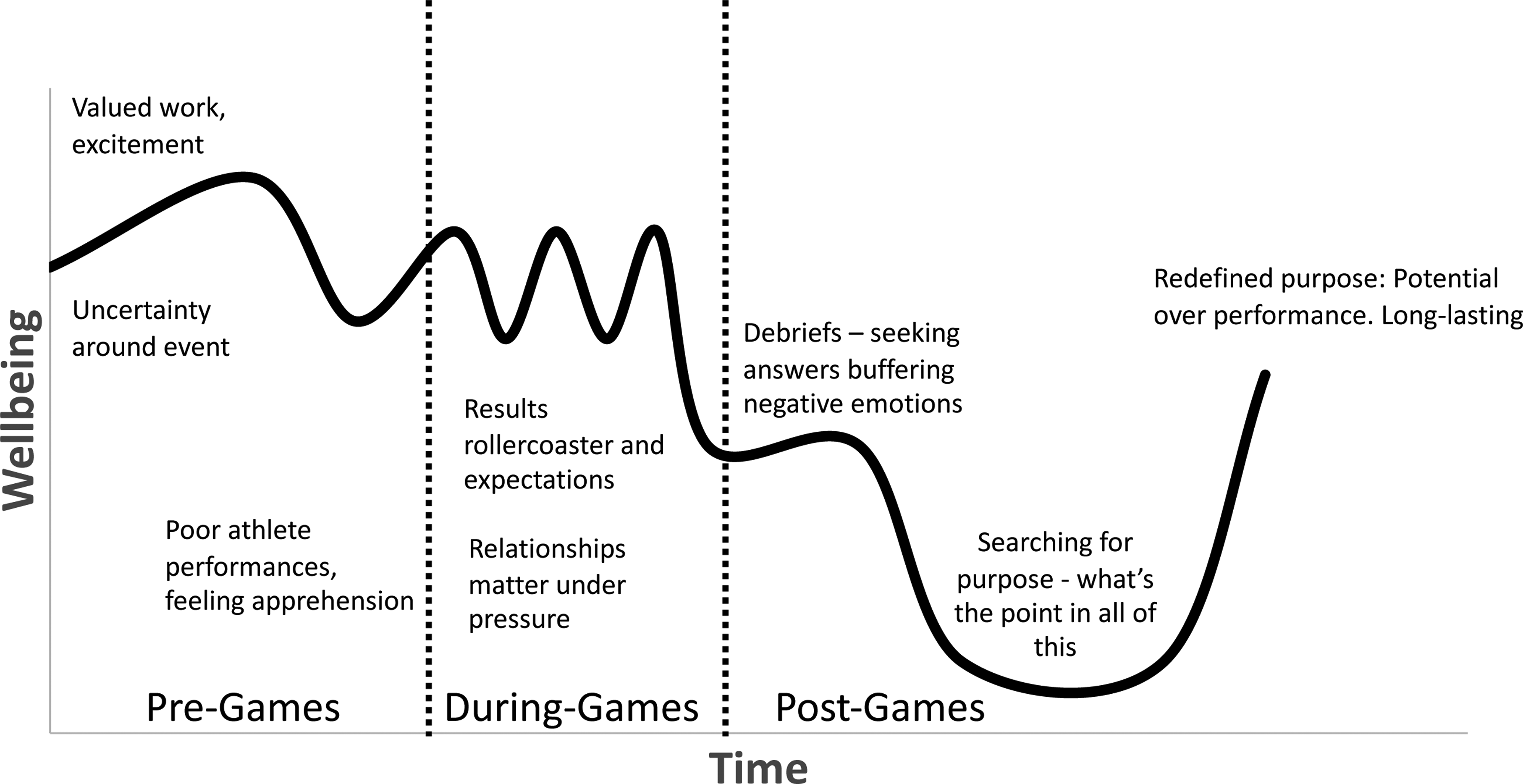
Participant 1 (S) timeline.
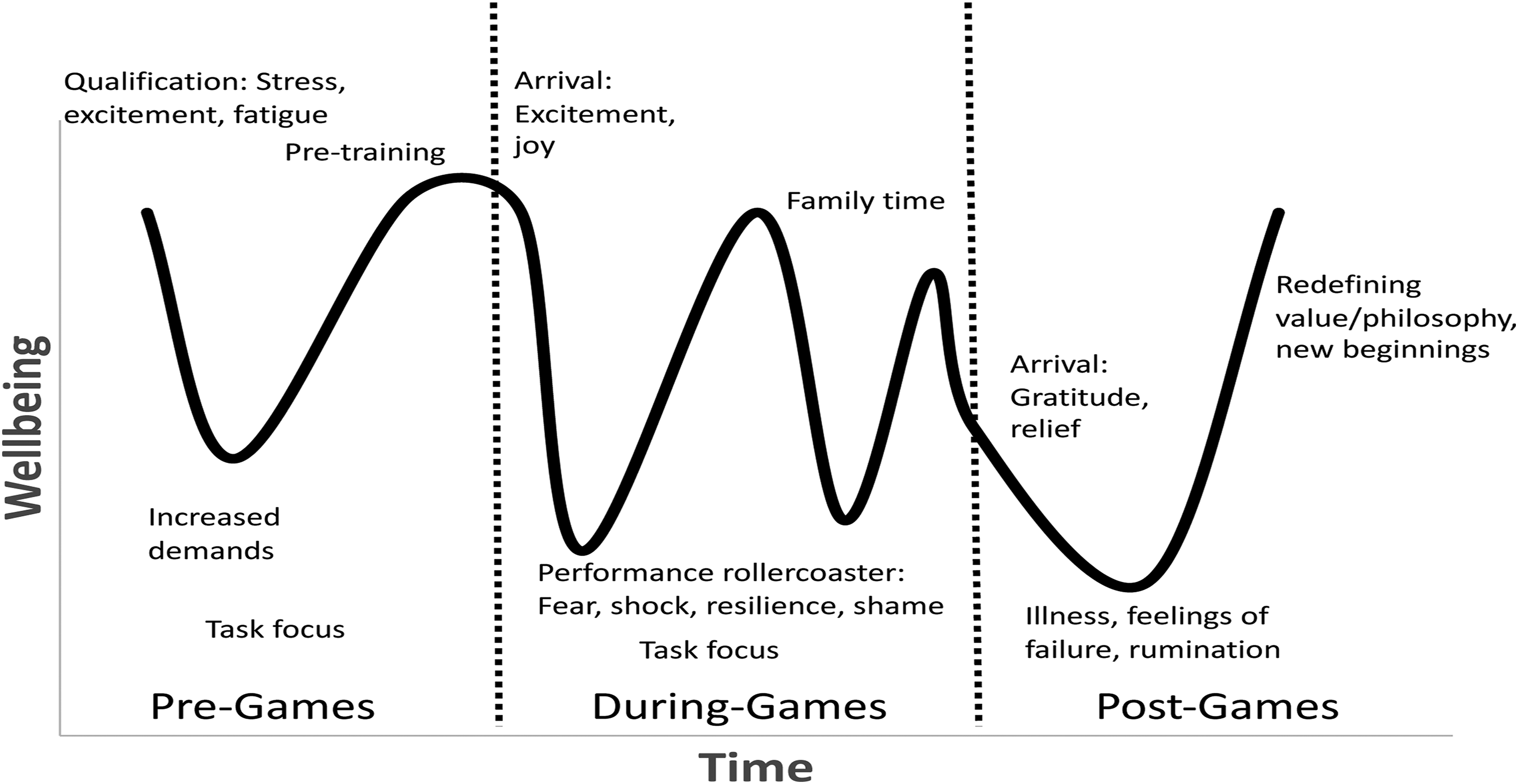
Participant 3 (C) timeline.
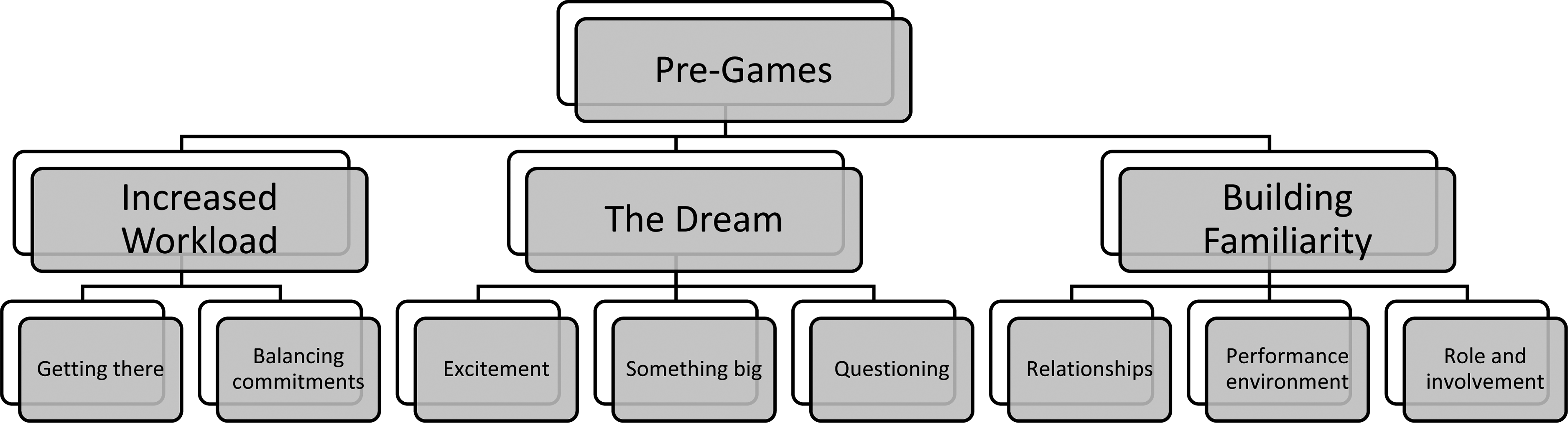
Pre-Games experience of coaches and support staff.
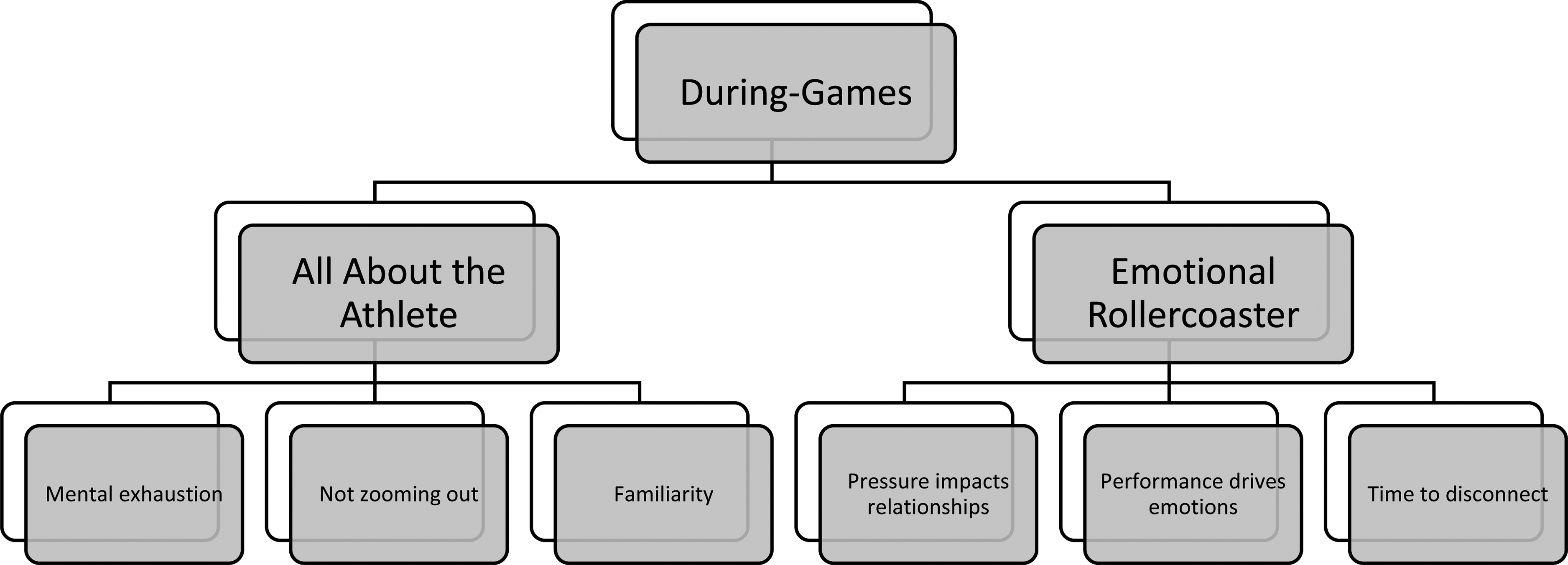
During-Games experience of coaches and support staff.
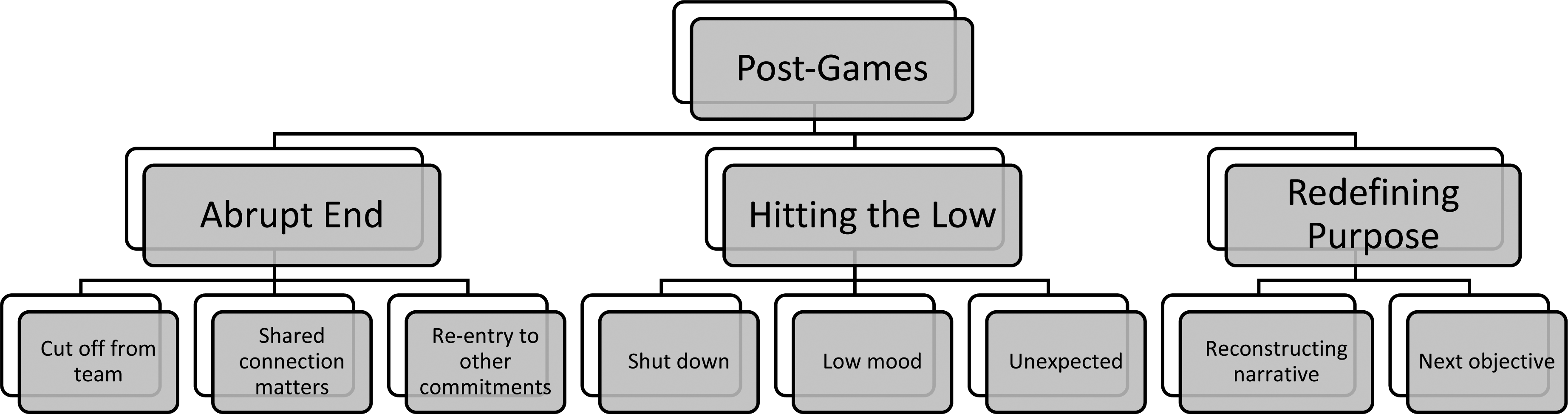
Post-Games experience of coaches and support staff.
Pre-Games
The participants described the pre-Games period as a time involving an increased workload to qualify and prepare for the Olympic Games. This was seen by the researchers as an unsustainable work-life balance that eventually created difficulties post-Olympic Games. Nonetheless, this period was also exciting for participants because they were working towards being a part of such a significant event. The researchers interpreted this increased stress and sacrifice as a first challenge to the wellbeing of participants, but one that was not fully appreciated at the time due to the excitement of being involved in the Olympic Games. Participants worked towards building familiarity with their role, other people, and what the Olympic Games will be like during this time.
Increased workload
Many of the participants viewed the pre-Games experience, including preparation and qualification, as involving a significantly increased workload. Coaches particularly emphasized the increased demands associated with the media and managing the brand of the team. Additionally, participants described the pursuit as all consuming, impacting sleep, time with family, and difficulty managing other commitments. We interpreted this increased workload as draining to the participants, as their goal of preparing for the Olympic Games came into conflict with other valued commitments (e.g. family). It’s super time consuming and you have to put most things aside to actually get there to start with. There’s a lot preparation—you have to give up what people would think is normal life. You’re pretty much 24/7 working towards that goal … I lived out of a suitcase basically I’d come home open up my suitcase, put it on the floor, pack it up the next week, crawl back into it and head off again. So that way it was really difficult to keep up with everyday jobs. (Participant 7 (C))
Here, there is a discrepancy between the participant’s lifestyle in pursuit of the Olympic Games and what is a “normal life.” This discrepancy was interpreted as a stressor for the participant, as their experience was not only demanding, but unconventional, and thus, would be more difficult for the participant and others to make sense of.
Participant 3 (C) recognized the impact of this workload on their wellbeing and noted, “Under slept. Didn’t eat well. Sat, spent long hours at my desk. Literally, nothing that we would recommend to people in terms of wellbeing.” When asked what they would do differently to support their wellbeing they added, “not work so hard.”
Participant 5 (C) explained how hearing the experiences of others post-Games was helpful and that it would have been a helpful resource to discuss with others going through the same stresses heading into the Olympic Games. Hearing other people share some of their experiences has been really beneficial. Going into the Olympic Games hearing other people would probably have the same pluses for me. Just knowing that they have the same stresses. Things they’re doing to get ready. Expectations they’ve had in the past. How things have gone. Whether present at Olympic Games or major competitions I think that would be a great resource.
Participant 6 (S) shared a similar view on supports. I found it quite valuable to establish connections with other sports so you’re not just sitting in your silo and worried about your [sport]. There’s [other sports], experiencing very similar hurdles and you can start tackling them together. Or at least sharing the misery together. Whichever one it is *laughing*. So those were huge supports leading into the Games.
The dream
Despite the increased workload, participants described themselves as motivated and excited to be a part of a dream experience. This involved fulfilling their own personal dreams and helping athletes achieve their own. Participants described participation in the Olympic Games as such a major event, unique from other competitions. This was viewed as the driving force that helped participants make personal sacrifices and contribute significant time and effort towards success at the Olympic Games. For me it was a dream to have the opportunity to go to the Olympic Games … The excitement of going down to participate in the Olympic Games. Knowing your family is going to be able to watch this event which is atypical from a lot of our competitions. It was a pretty exciting time personally and that’s what my driving emotion was at the beginning. It was like wow here we go to the Olympic Games. (Participant 5 (C))
For Participant 5 (C), part of what made this experience unique was how interested their family was. The significance of the Olympic Games added excitement, but also engendered apprehension or questioning as many of the participants wondered if anything was missing from their participation.
Building familiarity
Participants reported building familiarity as an important task to complete in the pre-Games period. This involved building relationships with athletes, coaches, and staff, gaining exposure to the Olympic environment, and developing an understanding of their own role within the team. The researchers interpreted this experience as important to the participants’ wellbeing by providing role clarity, connection, and a sense of purpose. Indeed, one participant explained the importance of having an opportunity to build familiarity as an important support to their wellbeing. You’re already in that environment early enough that before the Games even begin you’re already familiar with the food, the environment, with everything. I think that takes care of some of the stress as well as you’ve already been acclimatized to the environment. (Participant 8 (C))
One participant had their role change during the pre-Games period, which they described as a stressor. So my responsibility changed leading into the Games. I ended up with more responsibilities than I was originally meant to have. A bit of a stressor there and given that it is the highest level of performance for these athletes that they’ll achieve in their careers. I wanted to make sure that I understood the role and knew what I was doing to make sure that I wasn’t going to be a problem for them. (Participant 6 (S))
The researchers interpreted the familiarity as important in reducing uncertainty and fostering a sense of belonging and purpose within the team to promote positive wellbeing. Understanding the role entering the pre-Games period was particularly important to support staff as their involvement was described as more variable compared to that of a coach. Sometimes as a support staff you’re not quite sure like how’s my role going to mesh in what’s going on and so the year that leads into the Games sometimes you’re trying to figure out how that best works. I felt really positive because I felt we were doing a good bunch of valuable work. (Participant 1 (S))
This participant felt more secure in their role because they saw the value in their work and also felt as though the other team members did as well.
During-games
Participants described two salient themes for their experience at the Olympic Games. This involved a complete investment of focus and energy towards supporting the athletes and an emotional rollercoaster that included a spectrum of emotions. The researchers interpreted this as a period where participants made sacrifices and overlooked their own needs to focus on supporting athletes. The researchers also noted how impactful athlete performances were on the participants and the teams of which they were a part.
All about the athlete
Participants described the during-Games period as being all about the athletes. They expressed having complete focus on their role of supporting athletes at the Olympic Games. This complete focus was described by participants as constantly “being on” and a form of mental exhaustion. The emotional draining is just if your brain is constantly, if your hamster is constantly spinning on the wheel. You’re not sleeping cause you’re constantly thinking about what do I have to do tomorrow, what if this happens, what if this happens like what am I going to do, how am I going to react. (Participant 6 (S))
With such a complete focus on supporting athletes, the participants described an experience of not mentally zooming out or taking the time to self-reflect. As Participant 4 (S) mentioned, “I didn’t reflect on that [how I felt] until after and it was like woooh didn’t realize it was heavy until it was done.” The researchers interpreted this as the participants trying to do the best they can at their job, while not fully recognizing the impact on their wellbeing at the moment. However, a few of the participants did note the importance of disengaging from the task at hand (e.g. having non-sport-related conversations). While focusing on supporting athletes, participants indicated that the familiarity developed in the pre-Games period was an important part of being successful.
Emotional rollercoaster
Many participants interpreted the during-Games experience as an emotional rollercoaster. This involved initial excitement to arrive at the Olympic Games. However, the pressure from participating in the Olympic Games was described as revealing any pre-existing concerns within team relationships. Once the competitions began, the participants described their emotional state as one with many ups and downs directly tied to performance. The researchers interpreted this emotional rollercoaster as occurring because participants associated performance in their role with the performance of the athletes. If anything caused me any type of difficulty with wellbeing was just seeing so many people on highs and lows and trying to navigate how best to keep it a little bit even keel. So there’s that pressure obviously. You wanna do well. I think anybody who says that’s not there somewhere I think they would be lying. The pressure is to win, you might only get one shot at it. So there is fear of not doing well. You know there’s millions of people watching, you want to do everybody proud. (Participant 8 (C))
In reading this quote, the researchers recognized how much the participant cared about performance. This high level of caring, combined with the pressure, added a stress from the fear of potential failure. At the same time, this participant recognized the emotional rollercoasters of others and was challenged with trying to help others navigate it, while experiencing their own mixture of emotions.
When athlete performances were poor, this was described as impacting both the team dynamic and the individual themselves. While experiencing the emotional rollercoaster throughout the Olympic Games, participants described an emotional dissonance at times, where they would feel one emotion and present themselves differently for the sake of the athletes. This dissonance and the toll are displayed in the following quote from Participant 6 (S). Your brain is constantly, my brain was constantly thinking of all the what ifs and probably going to the well of extremely negative situations and how I would handle them if they happened. But your outward facing persona is this like everything’s fine calm, cool collected. Your brain is running down all these wells of negative emotions and you’re trying to outwardly project a calm, cool, collected, everything’s fine attitude … and so to have that persona constantly it is like extremely draining because you know that your brain is going a mile a minute in seven thousand directions but what the people around you need is to know that everything is fine. (Participant 6 (S))
Finally, one thing that was described by all participants as helpful was having time to disconnect from the task at hand. This included time talking to family, time to exercise, or time to connect with staff and coaches and discuss other topics.
Post-Games
Participants acknowledged the post-Games period as an emotionally challenging time. This involved a rapid cut-off from a group that spent so much time working together in preparation for the Olympic Games, an emotional low involving physical and mental exhaustion, and a moving forward period that involved identifying the next task and redefining purpose and values. This was also a time with the least amount of support. The researchers interpreted the blues as resulting from the challenges pre-and during-Games catching up with participants as well as a loss of the excitement and drive of working towards such a major event.
Abrupt end
Many of the participants described an abrupt end to the Olympic experience. This abrupt end was highlighted by a sudden cut-off from team connections. Participants highlighted this transition as difficult, given how much time, energy, and effort they have collectively put towards success at the Olympic Games. I think the hardest part was after feeling all that excitement with the Games and with these people with the team and not having those contacts anymore. I felt like that was hard … we didn’t really have as much interaction with the team when we left. I remember leaving the airport and then saying “ok so bye” and that was it. (Participant 2 (S))
Here, Participant 2 (S) uses the term “hardest” in describing the post-Games period while contrasting it with the excitement surrounding the Olympic Games. This disconnect from the team appears to reflect the ending of the exciting experience.
The loss of team connection was likely challenging to many participants in part because it limited options to share and discuss the experience with others who could relate. Many participants identified sharing the experience as important, particularly with individuals who went through the same thing. I can call home and talk to my mom but she doesn’t know the NSO [National Sport Organization] world, she doesn’t know the Olympics. She’ll probably just talk to me and calm me down but doesn’t understand the magnitude of the situation because it’s specific to that example. (Participant 7 (C))
Indeed, Participant 8 (C) had a different experience where their family was included throughout the Games. This participant highlighted this as a positive, because it provided an opportunity to share and discuss the experience with family. Nonetheless, Participant 8 (C) described the following about the post-Games experience. I think the biggest reality came for me from post Games. That was probably where I was not as prepared for a lot of it. Where I think [the organization], the COC [Canadian Olympic Committee], everybody involved I think they—a lot of people do an incredible job leading you up to a gold medal [performance], and then it’s sort of you’re on your own.
Finally, this abrupt end to the Olympic Games included re-entry into other life commitments such as family, or other jobs. The participants described making many sacrifices to pursue the Olympic Games, and this made reconnecting with these areas of their life challenging. For Participant 1 (S), family was a particular area that required attention following sacrifices for the Olympic Games. I know a lot of people had a lot of stress of re-entry into their families and it’s a little bit cold turkey right? You’re with everybody every week. And you’re being motivated by trying to achieve something so good. And then it just ends … If you needed to sort things out because you’d been away for a long period of time, stuff at home isn’t particularly smooth when you’re away. So you’re trying to smooth that back over after coming home. (Participant 1 (S))
Hitting the low
Most participants described hitting the low, which involved both physical and psychological components. Participants described experiencing a physical and psychological exhaustion following the completion of the Olympic Games. For a few of the participants, this involved physical illness. Participants expressed markedly low mood and associated experiences, including irritation, and ruminating thoughts. The researchers viewed the increased workload and overlooked personal wellbeing as catching up with participants and contributing to this crash. I remember feeling a bit less patient with my kids. I remember that and—me feeling bad for I wasn’t there leading up to the Games and then I come back and I’m not patient with my kids like it didn’t make sense to me. So it didn’t make me feel very good. (Participant 2 (S))
Participant 2 (S) explained acting uncharacteristic. They may not have been aware of the increased stress from the Olympic Games, which could plausibly explain increased irritation.
Many of the participants described the post-Olympic period as the most challenging. This challenge was associated with low mood and how unexpected it was for them. Even the minority of participants who had heard of the post-Olympic blues previously described being caught off guard by just how much it impacted them. Participants described not fully understanding why they were feeling this way. This was one of the most consistent themes across participants. Participant 5 (C) stated, “Post Games was quite interesting because I remember still feeling quite sad. I remember on the flight feeling quite sad, landing quite sad.” The following quotes show how participants made sense of this element of the experience. Participant 1 (S) explained how the low carried over to his personal life. I don’t think there was a separation between the two (work and personal life) in terms of my emotional carryover. I wasn’t able to compartmentalize it. I didn’t really realize or appreciate the situation that I was in. No idea. Stuff was just generally either stressful, disappointing, harder than it needed to be.
Participant 7 (C) described the experience as unexpected and highlighted how the increased workload leading into the Olympic Games contributed. I would have never thought that but that was the hardest part. All of a sudden, you have different goals but you don’t realize how exhausting the four years leading up to it were and how much of a high you were probably on, and how much of a low you’re going to hit. And unfortunately it hits before you know and sometimes it’s irreversible so it was difficult. It was the most difficult for the athletes and I was surprised by how it affected myself actually.
Participant 4 (S) expressed an emptiness and not knowing how they were supposed to feel. Not fully understanding the emotional experience was shared across participants. The researchers interpreted this as likely exacerbating the experience of hitting the low. The kind of come down or that sort of emptiness after. The fact that there is emotional recovery I guess. The feeling of everything we did was for this one event, and now the event happened and what is it we’re supposed to feel or do in that time period after? We’re not robots what are we supposed to do in that period moving forward. Are we supposed to be pissed off or are we supposed to feel low? (Participant 4 (S))
Finally, for Participant 3 (C), hitting the low involved frequent negative cognitions about themselves. They stated, “In the context of my mind at that moment, it’s a general state of rumination. Just one of not feeling capable, being ineffective, just the calming but useless state of self-loathing that certainly we see in high performance sport right?”
When asked about what supports were or would be most helpful for participants, the most frequent response was having an opportunity to discuss the experience with an individual familiar with it. Participant 2 (S) stated, “I think discussing with people that are living the same thing would have been awesome.” Similarly, Participant 4 (S) noted, “Even for someone to say what you’re experiencing is completely normal given the last 6 weeks and this is what it should look like and if this happens do this.” The researchers interpreted this as something that would help validate the participants’ experiences and help them makes sense of their feelings, as participants mentioned the post-Olympic blues caught them off guard and the post-Olympic period was a time when they did not know how they should feel. I think it would have been something like a mentorship program. Somebody who’s been there, done that, knows what they’re doing and can be your resource to help you guide you through it and just be that person that knows what you’re going through and can and empathize right off that bat and probably provide some sort of guidance on the situations that you’re in. (Participant 6 (S))
It was noted that the focus of this support should be on the individual and their wellbeing, rather than a formal debrief with a performance focus. Participant 1 (S) explained their suggestion of a wellness plan delivered with high-quality mental performance consultants with therapeutic skills. Not focused on the Games per se, it’s actually focused on you and your life being more enjoyable and fulfilling and you tackling the things you need to tackle. It’s a little bit broader than you being able to tackle the game scenario it’s actually being able to handle the pressures of life.
Participant 7 (C) also explained, “It’s one thing to sit down and have a debrief and someone’s taking notes but you don’t say what you really feel. I’m sure lots of people didn’t and if you know somebody else is feeling the same as you then you can put things into perspective.”
Redefining purpose
Following the low, participants eventually made their way through it through a process of redefining purpose, which involved self-reflection and identifying the next steps. It wasn’t until 18 months after the Games that it started to come back up, the feeling started to come back up and like I said the feelings lasted way longer than I expected and I didn’t really understand what was going on at the time. (Participant 1 (S))
The participants indicated that they were eventually able to move past the low that they experienced through a process of redefining their purpose and the purpose of supporting athletes at the Olympic Games. For some participants, this involved shifting away from a strictly results-based focus, as explained by the following participant. The researchers interpreted this as an important process because it allowed participants to see the significant work and sacrifice they committed to the experience as worthwhile in the absence of positive results. And that’s what I’ve realized. The judgement, the acceptance or the shunning of others based on performance. If you live your life only seeking validation through those sources you’re going to continually deal with internal distress. That’s probably the biggest take home that I’ve taken. (Participant 3 (C))
The quote above shows how Participant 3 (C) had a clear redefinition of purpose. One that moves away from the pressure and high expectation of performance results. They acknowledge how that focus added internal distress and had to redefine their value in order to support their wellbeing.
Finally, the participants emphasized the importance of having their next task to work towards and look forward to. For participants, this ranged from personal events, other employment opportunities, or the next event with the sport. The researchers interpreted this as fulfilling the gap left by the Olympic goal now being accomplished. Working on the next task may have provided increased personal fulfillment, social interaction, and behavioral activation to reduce the post-Olympic blues. I think that new goal or new thing to be looking forward to really changed perspective. You’re able to put the performance into the section that it deserves. Which is something that needs to be reflected on and improved. But you’ve got a new thing to look forward to, and you’ve got excitement going on there. And you’ve got new responsibilities that you can’t just sit around and wallow about how the team executed. I think I landed in a spot that really helped me get through the stresses and disappointment of the Games quite quickly. (Participant 5 (C))
Discussion
The purpose of this study was to examine the experience of the post-Olympic period for coaches and support staff and the impact it has on their wellbeing. The present study addressed a gap in the literature by presenting an in-depth interpretation of the experience of wellbeing for coaches and support staff at the Olympic Games. In focusing on the post-Olympic period, it was important to capture the pre-Games and during-Games periods to understand the experiences that set the stage for the post-Olympic period and to identify preventative supports. The results highlight that these coaches and support staff who attended the Olympic Games viewed the experience as demanding and filled with both supports and challenges to wellbeing. The experiences of participants across the pre-Games, during-Games, and post-Games periods while undoubtedly unique, shared many common experiences. Aligned with interpretative phenomenological analysis, supports described throughout the discussion reflect those directly expressed by participants and those identified from the researchers’ interpretations of participants’ experiences.
The pre-Games period was identified as a highly demanding and exciting experience. Making an Olympic team can be a defining moment and the pinnacle of an athlete’s athletic career. 29 Many of the coaches and support staff attributed a similar meaning to the Olympic Games and indicated it was an experience they would take with them long after the Olympic Games. Although the excitement was high, the pre-Games period was described as a significant commitment of time and energy that required personal sacrifices (e.g. reduced family time, less care of wellbeing). These personal sacrifices varied based on other priorities in the participants’ lives. Elite coaches describe their job as all-consuming to the point where it can interfere with family life 30 and an excessive workload can be a detriment to the wellbeing of coaches and support staff. 1 Similarly, sacrificing personal time and considerable time away from family can interfere with relationships and wellbeing (e.g. reduced sleep 4 ). This is consistent with the pre-Games period in the present study and participants described having to make up for this sacrifice upon return from the Olympic Games.
In supporting athletes during the Olympic Games, the participants experienced an emotional rollercoaster. Several factors may have contributed to this being an emotionally draining experience. First, participants described having an unwavering focus on the athletes. As a result, they likely neglected their own wellbeing. Some participants were able to disconnect and attributed this as meaningful to supporting their wellbeing. Second, athletes experience intense positive and negative emotions throughout the Olympic Games, 31 and coaches and support staff described empathizing with these experiences. While research shows empathizing with positive emotions can be a positive experience, sharing negative emotions can be exhausting. 32 Finally, participants explained that despite feeling negative emotions at times, they would project a positivity to serve the needs of athletes. Previous research has shown discordant emotional states (i.e. when outward projections do not match internal thoughts and feelings) require more emotional energy, are associated with poorer wellbeing.33,34 It was evident that the psychological demand of this experience was unsustainable and caught up with participants following the Olympic Games.
Consistent with previous research on athlete experiences, 2 the post-Olympic period was clearly indicated as the most psychologically challenging element of the Olympic experience. Indeed, athletes have identified the post-Olympic period as unexpected and distressing. 35 Participants described being caught off guard by the impact this experience had on their wellbeing, even if they were aware that it can be a challenging time. Participants in the present study identified with the loss of purpose and work-related support networks, which have been shown to negatively impact coach and support staff wellbeing following major games. 1 Participants in the present study also identified with many symptoms of what has been previously labeled the post-Olympic blues. In athletes, the post-Olympic blues has been described as a period involving depressed mood, general lack of interest in life, anxiety, irritability, and interpersonal hypersensitivity. 2 To our knowledge, the present study is the first to display the post-Olympic blues in coaches and support staff. Note that the experience described by participants involved combinations of low mood, a lack of pleasure in activities, irritability, lack of energy, inability to focus, and feelings of guilt. Physical illness was also present in a few of the participants as they described their bodies “shutting down” following the Olympic Games. Participants explained that so much effort went into “getting to a gold medal,” but that little to no supports or planning was in place for the post-Olympic period. This is consistent with the report of an elite sport psychology consultant who stated, 36 (p. 10) “We don’t prepare athletes enough for what happens afterwards.” Consistent with athlete experiences, 2 the participants had difficulty understanding that after such an accomplishment like participating in the Olympic Games, that they could hit such a low.
Participants described moving past the post-Olympic blues through a combination of reflecting on values, redefining purpose, and having the next task to work on. By reflecting on values and purpose, participants appeared to shift from an outcome goal focus (i.e. winning, or medaling) to a performance and process goal focus (i.e. providing effective support in various ways). This is consistent with recommendations to emphasize performance and process goals to reduce stress and anxiety, due to them being more controllable than outcome goals. 37 Regarding having a subsequent task to focus on, various examples were provided (e.g. family event, business event, another sport event).
Currently, our understanding of the post-Olympic blues is in its infancy, and research is needed to clarify the validity of this apparent phenomenon. This period appears to include features characteristic of both depression and burnout. At present, there is debate in the literature regarding the conceptualization of depression and burnout as unique, related, or similar constructs. 38 One potential difference is believed to be the pervasiveness, with depressive symptoms being more persistent across settings and burnout being constrained to the workplace. 38 Notably, in the present study, participants indicated that the complete drain of energy was felt across situations and that irritation was mistargeted to family members. However, rumination and negative thoughts about self-worth during this time appeared to be more constrained to their employment and participation in the Olympic Games (e.g. “what is the point in this”). A quantitative examination of this experience using validated measures of depression symptoms and burnout would provide meaningful insight into the post-Olympic blues by allowing for pre- and post-Olympic Games comparisons. Furthermore, it would be valuable for future studies to use a quantitative or mixed-method longitudinal approach to capture changes in wellbeing as they occur.
Results from the timelines highlight both the unique and shared elements of participants’ experiences. Interestingly, although each timeline displays its own unique experience, there are similar trends across the experiences. Athlete performances appeared to be a driving force on participants’ wellbeing in the pre-Games and during-Games sections, both in a positive (e.g. Participant 7 (C) pre-Games) and negative fashion (e.g. Participant 1 (S) pre-Games). Across participants, the during-Games portion appeared to have the most variance in wellbeing as performances occurred. There was a trend for the post-Games period involving the largest downward trend in wellbeing. Unique elements in the experiences across participants involved how performances went and interaction of personal life and work life. For example, Participant 4 (S) experienced a significant personal stressor in the pre-Games period that they carried with them through the experience. Participant 5 (C) had a positive personal experience that required attention in the post-Games period, which helped them to move past post-Olympic challenges. Although all participants experienced a low at some point following the competition, the onset, duration, and preceding feeling beforehand varied for participants. For example, some experienced a low when the competition ended while at the Olympic Games (Participant 5 (C)), some shortly after returning home (e.g. Participant 7 (C)), and some a little while after returning home (Participant 1 (S)). Timelines highlighted that some participants had unique experiences that appeared to buffer the onset of post-Olympic blues. This included vacation (Participant 4 (S)), the excitement of returning home (Participant 2 (S)), post-Olympic debriefs (Participant 1 (S)), and relief (Participant 3 (C)).
There are limitations to acknowledge when interpreting the results of this study. First, this study involved Canadian coaches and support staff and the experience of individuals from other countries may vary. Similarly, the roles of support staff were limited and did not include mental performance consultants. Given their unique role and skillset in managing stressors and promoting wellbeing, this population may have a varied Olympic experience. Additionally, interviews were conducted via telephone, which limits opportunities to interpret body language and facial expressions. As well, the interviews were based on retrospective accounts of experiences at the Olympic Games. Although participants were instructed to focus on their most recent Olympic Games experience, some participants had attended multiple Olympic Games, which may have impacted their retrospective accounts.
The present study provides an in-depth look at the wellbeing of coaches and support staff and several recommendations are put forth based on these results. First, in the pre-Games period, sporting organizations would benefit from managing the demands placed on coaches and staff and supporting their engagement in personal commitments. Second, coaches and staff may benefit from evidence-based strategies such as cognitive restructuring or reappraisal for managing the challenging cognitions and emotions that they experience at the Olympic Games. Third, participants indicated that guidance around what to expect following the Olympic Games and normalizing the experience would have been helpful. Sporting organizations are encouraged to educate coaches and support staff about the post-Olympic blues as part of Olympic preparation. Fortunately, short psychoeducational videos have been shown to be effective in informing athletes, coaches, and staff of this experience. 39 Fourth, participants voiced wishing that they had more opportunities to interact with members of their specific team following the Olympic Games. Organizations are encouraged to try and facilitate this to manage the abrupt cut-off following the Olympic Games. Fifth, participants stressed the importance of being able to discuss the experience with others who have gone through the Olympic Games. Consistent with research showing social support as a crucial factor in coach and support staff wellbeing, 1 providing support groups for coaches and staff to debrief the Olympic Games, not from a performance perspective, but from a personal wellbeing perspective, would likely support their wellbeing. Sixth, the participants benefited from a reflection on their values and goals following the Olympic Games. Mental Performance Consultants can support coaches and support staff by helping them identify their goals and values in preparation for the Olympic Games. The seventh structure around the post-Games period with respect to the next steps appears to be something that would help participants look forward to their next job. Many of these recommendations align with what were identified as essential components of a post-Olympic transition program for athletes. In this program, normalizing and discussing the psychological challenges following the Olympic Games and redirecting to future objectives were identified as key elements of the program. 35
Conclusions
Overall, this study provided an in-depth look at the wellbeing of coaches and support staff throughout their Olympic experience. The experience involved both supports and challenges to wellbeing. This was a demanding time for all participants in order to help athletes achieve Olympic success. Following the Olympic Games, participants experienced the post-Olympic blues. It is hoped that these results can normalize the post-Olympic blues and provide a first glance into potential supports to promote their wellbeing. Future research is needed to better understand the post-Olympic blues and the effectiveness of identified supports.
Supplemental Material
sj-docx-1-spo-10.1177_17479541221116880 - Supplemental material for Beware of the blues: Wellbeing of coaches and support staff throughout the Olympic Games
Supplemental material, sj-docx-1-spo-10.1177_17479541221116880 for Beware of the blues: Wellbeing of coaches and support staff throughout the Olympic Games by Christopher EJ DeWolfe and Lori Dithurbide in International Journal of Sports Science & Coaching
Supplemental Material
sj-docx-2-spo-10.1177_17479541221116880 - Supplemental material for Beware of the blues: Wellbeing of coaches and support staff throughout the Olympic Games
Supplemental material, sj-docx-2-spo-10.1177_17479541221116880 for Beware of the blues: Wellbeing of coaches and support staff throughout the Olympic Games by Christopher EJ DeWolfe and Lori Dithurbide in International Journal of Sports Science & Coaching
Footnotes
Acknowledgements
The authors would like to thank Nicole Yoannou for her assistance.
Declaration of conflicting interests
The authors declared no potential conflicts of interest with respect to the research, authorship, and/or publication of this article.
Funding
The authors disclosed receipt of the following financial support for the research, authorship, and/or publication of this article: This work was supported by the Mitacs (grant no. IT14113). Christopher EJ DeWolfe is supported by a Maritime SPOR Support Unit Student Award from the Maritime SPOR Support Unit (MSSU), a Scotia Scholars award from Research Nova Scotia, a Nova Scotia Graduate Scholarship from the Government of Nova Scotia, and a SSHRC Doctoral Fellowship from the Social Sciences and Humanities Research Council of Canada (SSHRC).

Supplemental material
Supplemental material for this article is available online.
References
Supplementary Material
Please find the following supplemental material available below.
For Open Access articles published under a Creative Commons License, all supplemental material carries the same license as the article it is associated with.
For non-Open Access articles published, all supplemental material carries a non-exclusive license, and permission requests for re-use of supplemental material or any part of supplemental material shall be sent directly to the copyright owner as specified in the copyright notice associated with the article.
