



Abstract
This study assessed current swimming coaching practices surrounding underwater fly kick. Ten elite coaches completed face-to-face interviews, and 56 coaches completed an online survey. Coaches use a range of methods both in and out of the pool to develop key aspects of fly kick. Sixty eight percent of coaches reported they do not have access to resources that would aid with their ability to develop fly kick. Results show that coaches are considering a range of variables when attempting to improve fly kick, with the three most important highlighted as kick frequency, kick symmetry and coordination. Coordination is reported as the variable presenting the greatest difficulties when coaching due to athlete's physical restrictions and individual differences, as well as difficulties in coaching proprioception. Coaches are using a variety of resources to inform their approaches in underwater fly kick, but report coach certification and education resources as having the lowest influence on their coaching methods. Generally, results indicate a lack of skill acquisition knowledge and education in underwater fly kick. Reflecting upon coaches’ views and approaches allows for further research to develop understanding of interventions used to improve fly kick, and aids with the transfer of key research findings into practice.
Introduction
Coaches play a central role in the athlete-performance relationship by providing optimal learning environments for athletes.1,2 This enables the development and progression of key skills, preparing the athlete to perform to their best ability in competition.1,3 Coaches often work with a support team of specialists, including strength and conditioning coaches, physiotherapists and biomechanists, to create the best learning environment for the athlete.1,2 However, coaches typically control which support provisions are provided, 1 meaning their value of scientific approaches and findings is critical in their delivery to athletes in training. 4 Coaches have the potential to be the key link translating scientific research into competitive performance, 1 however it is not currently clear to what extent this occurs.
It is understood that coaches tend to rely upon their experiential knowledge, rather than research to inform their approaches.5,6 Although experiential knowledge is an important aspect of the coaching process, 7 research has indicated that coaches are interested in including scientific-based approaches in their practice to provide a more holistic approach, but feel limited by barriers such as lack of understanding and access to resources.1,4 Additionally, the applicability of research findings limits their transfer to competitive environments; these are often laboratory based and not ecologically valid. It is also suggested that when research findings are employed within coaching settings, there is a time lag present,3,8 causing a delay in novel scientific findings translating to sport performance. Coach engagement with up-to-date research in specialised technical areas, supported by sports science practitioners, should be encouraged to ensure that coaching practices are built on evidence-based foundations.
Research in swimming tends to investigate technical aspects of performance,9–11 as opposed to swimming coaching methods. Recent research into coaching practices have reported findings detailing recovery strategies employed by swimming coaches, 12 performance analysis methods used in training to monitor skill progression 1 and coaches thoughts on specific stroke techniques. 13 Although frameworks exist for skill acquisition methods,14,15 these are not specific to swimming training. General skill acquisition methods have been investigated and discussed in Paralympic swimming coaching 5 and freestyle coaching, 16 both highlighting a disconnect present between applied coaching practices and recommendations from research. There is a need for more ecologically valid testing of current theories in swimming to provide appropriate recommendations to coaches as to best practice methods.
Underwater fly kick is a key skill in swimming, performed as part of the start and turn phases, where small improvements can lead to large competitive advantages for athletes. 17 In sprint events, the start accounts for up to 26.1% of overall race performance, 18 of which up to 95% of performance is accounted for by the underwater phase.17,19,20 Athletes travel at their fastest in the water during this phase of the race due to the increased velocity from the dive or push off and reduced wave drag acting upon the body below the surface of the water.21,22 The underwater fly kick technique has attracted considerable research, with authors investigating various determining factors in performance. For example, increasing kick frequency, 23 optimising individual's kick amplitude with respect to frequency and height 24 and maintaining symmetry of the kick between the up and down beats23,25 have all been identified as performance improving factors.
Although various key performance variables have been explored, there is a lack of investigation into how they can be improved in practice. Researchers may suggest an increased focus on a specific aspect, such as maximising vertical toe velocity, 26 or maximising the speed of knee extension. 27 Although coaches do use instructional approaches in swimming, where verbal cues could be used to focus on these elements, 5 coaches often also prescribe drills in training to improve aspects of technique through simplification. 16 The scientific research does not provide examples of interventions that could improve crucial aspects of underwater fly kick techniques. There is a lack of resources for coaches to aid with their current practices, aligning them with scientific research and advancing performance.
Through the coach certification process in the United Kingdom, coaches are provided with information on techniques relating to the start and turn phases of each swimming stroke. This is seriously lacking in information relating to underwater fly kick; the only stroke mentioning this aspect is the butterfly stroke:
The swimmer needs to enter the water as cleanly as possible and maintain a good streamlined position. As the swimmer feels their body slowing down, the fast dolphin kick is established. [At the turn] the body is extended into a streamlined position and then commences the underwater dolphin kicking action
28
There is no further explanation or discussion relating to the underwater fly kick. The freestyle and backstroke sections only discuss the maintenance of a good streamlining position in relation to the start and turn sections. 28
There are coach education resources available which briefly discuss the literature surrounding underwater fly kick, however these often do not recognise the importance of this skill in swimming performance, or more recently discussed variables such as kick symmetry 23 and toe velocity. 26 This is possibly due to their recent emergence and the time lag between research findings and their translation to practice. These resources discuss simple drills to improve streamlining and the undulation movement,29,30 but do not include details on how coaches can incorporate specific training methods to develop this skill. Additionally, there is a lack of guidance as to how such training should be periodised within the training cycle; some previous direction has been provided for team sports training,14,15 but this guidance is lacking and may differ significantly in swimming. Such information is also lacking within coach education and certification resources. 31 A lack of guidance as to appropriate and applicable skill acquisition methods means coaches may present athletes with a sub-optimal learning environment, 3 further highlighting the missing link between key research findings and their application in practice.
As outlined, coaches have few resources to which they can refer to when planning and delivering training sessions, highlighting an area where considerable impact upon coach behaviours could be made. Before resources directly applicable to key research findings can be developed, it is pertinent to evaluate what coaches are currently doing in practice to improve key skills in underwater fly kick. The aim of this study was to assess and understand current swimming coaching practices surrounding underwater fly kick through surveys and interviews. The research questions that guided the study are; (a) what do coaches believe are the most important variables in underwater fly kick performance? (b) what methods are coaches using to improve underwater fly kick? (c) what are the key coach education areas influencing coaching approaches in underwater fly kick?
Methods
This study followed interpretive philosophical assumptions, grounded in ontological and epistemological perspectives.32,33 To address the aims of this study, a combined approach of online surveys and interviews was utilised to gain the perspectives of a range of swimming coaches across the United Kingdom. Both groups answered the same questions, although interviews with elite coaches allowed for more in-depth answers to the open-ended questions. This allows for increased understanding of coaching practices at the highest level in the United Kingdom. Ethical approval was provided by the Faculty of Engineering and Physical Sciences Ethics Committee at the University of Southampton (ethics number: 54488.A4).
Participants
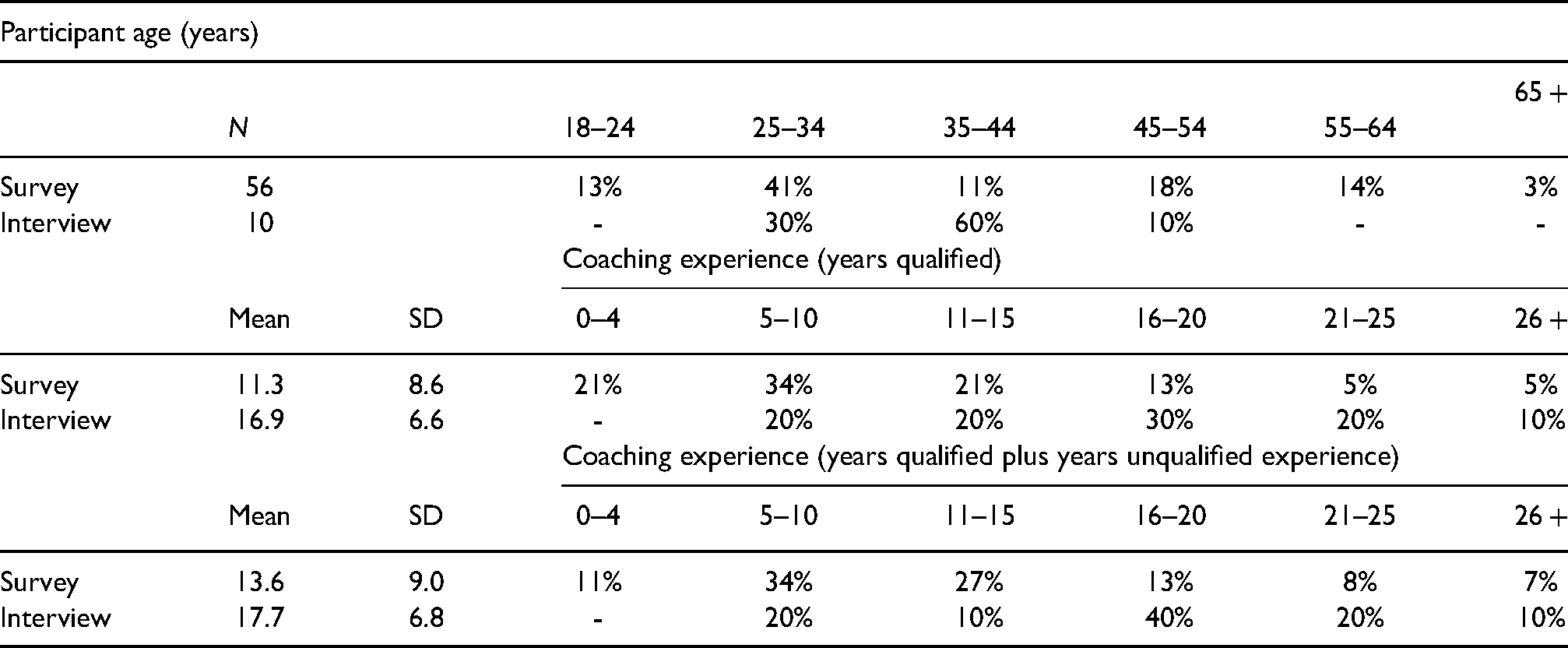
Fifty-six qualified swimming coaches completed an online survey, and ten elite coaches participated in structured interviews (Table 1). Although the exact number of registered and practicing swimming coaches eligible to participate within the United Kingdom is unknown, estimates range between 500 and 800. All participants were at least 18 years of age and held the minimum of an Amateur Swimming Association United Kingdom Coaching Certificate (UKCC) Level 1 Award for Coaching Swimming (or equivalent). Elite coaches were UKCC Level 3 qualified and had been selected to coach British Swimming Teams. Within the United Kingdom, UKCC Level 1 is the lowest level of swimming coaching qualification, and UKCC Level 3 is the highest level of qualification. Five percent of participants were UKCC Level 1 coaches, 49% were UKCC Level 2 coaches, and the remaining 47% were qualified UKCC Level 3 swimming coaches. At the time of interview and survey completion, all participants were coaching within the United Kingdom, representing 25 counties across the country. All participants received a participant information sheet and provided informed consent before completing their respective study.
Age and coaching experience of survey and interview participants.
Survey data collection
A survey was developed by the research team in collaboration with a member of the sports science and medicine team at British Swimming. Questions were validated using cognitive interviews with an experienced swimming coach (UKCC Level 3, over 15 years experience), a swimming teacher (Level 3 qualified swimming teacher, 9 years experience) and a sports science practitioner (British Swimming professional sports science and medicine practitioner with 15 years experience working within elite sport, 5 of which with British Swimming) (n = 3) to ensure flow, clarity and understanding, as well as providing an estimate of time for survey completion. Twenty-four subsequent changes added definition and clarity, ensuring consistency and maintaining focus. There were also three changes regarding question order to improve flow. The final survey contained 50 items arranged in five categories; (a) coach demographics, (b) importance of underwater fly kick, (c) current coaching methods to improve underwater fly kick, (d) importance of key variables in underwater fly kick performance, and (e) key influences on current coaching approaches.
The validated survey was converted into an online format using Microsoft Forms. Representatives from each county swimming committee were contacted to request that they share the online survey with clubs located in their county. Upon agreement, representatives provided a gatekeeper letter to the research team, and distributed further information and the online survey link. The link for the survey was also shared in the British Swimming Coaches Association newsletter and on the social media platform Twitter. An online survey completion rate of 76% resulted in the inclusion of data from 56 coaches.
Interview data collection
Ten elite coaches within the British Swimming system were recruited to participate in structured interviews. Individuals who completed the interview did not complete the online survey, as the questions asked were exactly the same. Structured interviews were conducted by the lead researcher, using the validated survey. Interviews took place either face to face or remotely; at international competition or over the video conferencing software Zoom 5.7.4 (Zoom Video Communications Incorporated, San Jose, California, USA). Interviews lasted between 21 and 60 min (mean duration 38 min), were recorded using a dictaphone, and were discarded once transcribed.
Data analysis
Simple answer questions from both the online survey and interviews were analysed using descriptives and frequencies. The open-ended responses from the online survey were pooled and a coding manual was developed to reflect the key themes discussed. The lead researcher familiarised themselves with the interview data by rereading the transcripts and a second coding manual was developed to reflect the key themes presented by coaches in the open-ended questions. Both online survey and interview coding manuals were validated by an independent member of the wider research team to ensure the key themes reflected the coaches’ answers accurately, producing 92% and 91% levels of agreement respectively. Once validated, answers from the online survey and interviews were collated. Exemplar quotations from the elite coach interviews are presented to characterise the themes observed and increase understanding of key results.
Statistical analyses were run on the collated interview and survey data to determine whether relationships existed between key variables. Once assumptions were confirmed, Spearman's rank correlations were calculated within the statistical software package SPSS Statistics 25 (IBM Corporation, New York, USA), with significance set at p < 0.05.
Results
Coaching characteristics
Table 2 provides descriptive information relating to the range of coach and swimmer levels represented within the presented results. There were significant relationships between coaching qualification level and swimmer level (r (64) = 0.65, p < 0.001) and swimmer age (r (64) = 0.053, p < 0.001). The most common age range coached by the participants was 10–14 years (50%), followed by 15–19 years (39%) and 20–24 years (11%). Eleven respondents coached athletes at a junior international level, with an average of three swimmers (± 2.45), and 16 coached athletes at a senior international level, with an average of three swimmers (± 2.51).
Coach and swimmer levels of online survey and interview respondents.

On average, coaches have access to 12.5 h (± 6.7 h) pool training per week (maximum 30 h, minimum 3 h). Pool time availability increased with increased coaching level. The mean ratio of short course to long course training time was 41:9 (± 2.6). On average, coaches plan for athletes to attend six short course competitions (± 3.9) and five long course competitions (± 3.6) per year.
Importance of underwater fly kick
Of the total available time, an average of 1.6 h per week was spent with a coaching focus specifically on underwater fly kick (± 1.4 h, maximum 8 h, minimum 0 h). The importance of underwater fly kick decreased with increasing race distance and decreased with increased pool length over the same race distance (Figure 1).
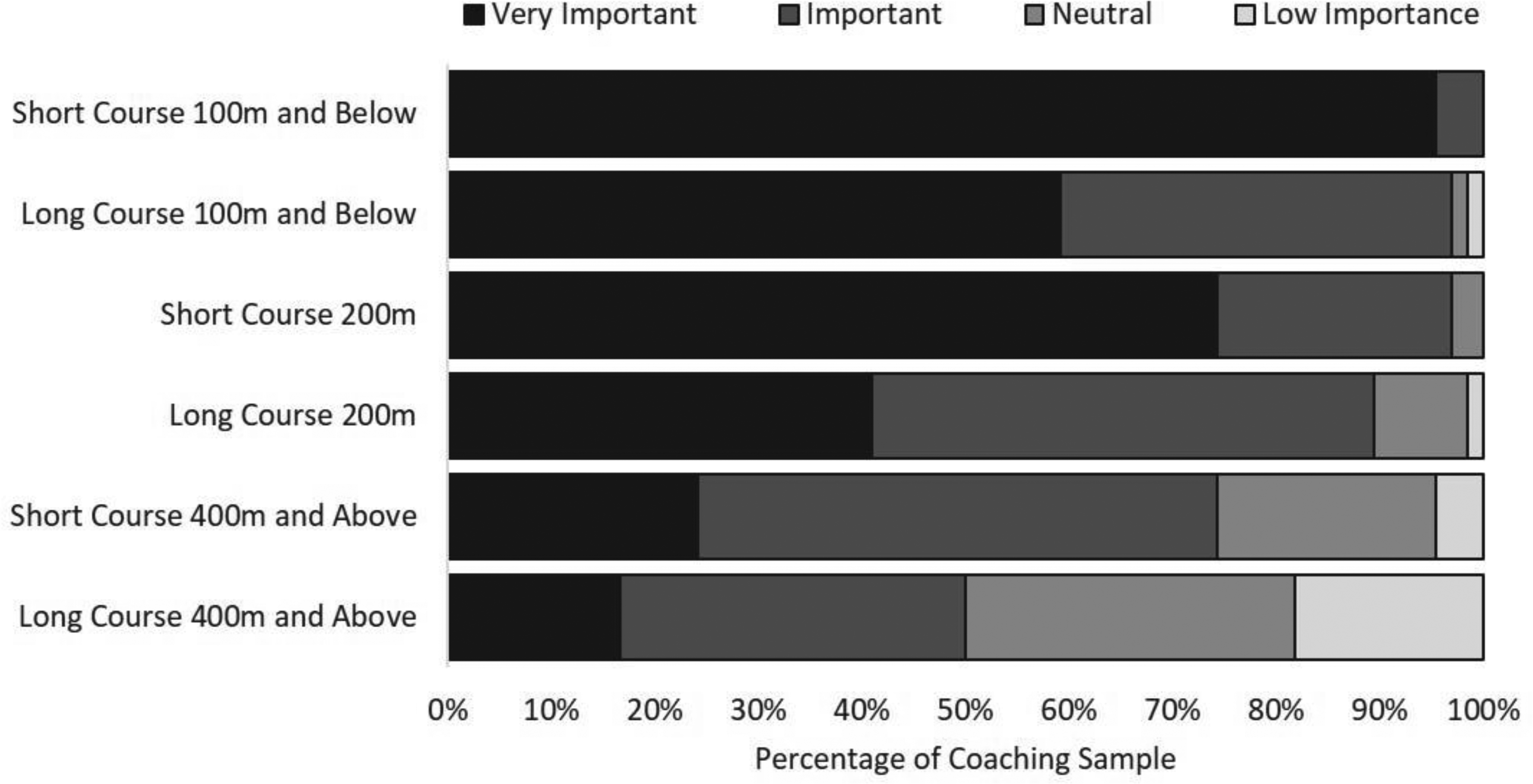
Importance of underwater fly kick at various race distances and pool lengths.
Coach opinion at all levels was split as to whether there is an existing gold standard technical model within underwater fly kick coaching; 44% believed there is a gold standard model of underwater fly kick performance, whereas 56% did not. Those coaches who did believe a gold standard technical model exists often cited the importance of the kick being initiated at the chest (n = 10):
It has to come from the chest to abs to thighs to ankles in one sort of fluidity. It has to be from the chest to begin with.
Coaches also discussed the importance of manipulation of kick amplitude (n = 8), and manipulation of kick frequency (n = 7), whether that was kicking at a set frequency or changing frequency through the duration of the underwater phase.
Two elite coaches stated that they have a technical model, which would be further modified for the individual athlete:
I do have a standard of what I want it to look like, and it's then modified from that based on shape, size, gender etc. when an athlete gets to 14–15 [years of age]
Current coaching methods in underwater fly kick
Coaches reported a high percentage of athletes currently struggling to perform a technically sound underwater fly kick technique (Figure 2). As swimmer level increased, the percentage of athletes struggling to perform underwater fly kick decreased (r (64) = −0.32, p = 0.009). A low percentage of athletes was reported to have a more natural ability to perform an effective underwater fly kick technique (Figure 3). In this case, as swimmer level increased, the percentage of athletes with a natural ability increased (r (64) = 0.39, p = 0.001).
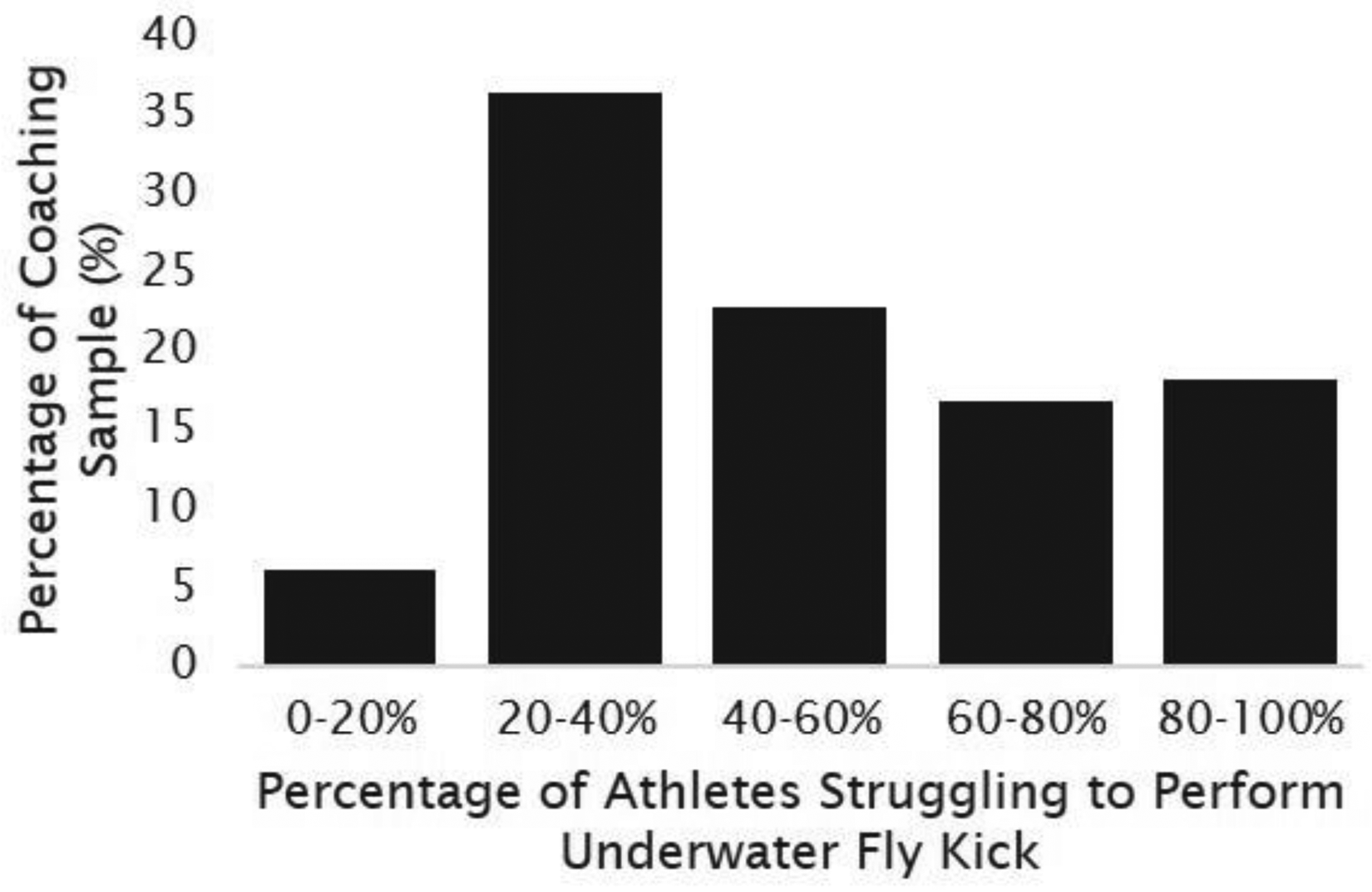
Percentage of athletes struggling to perform underwater fly kick.
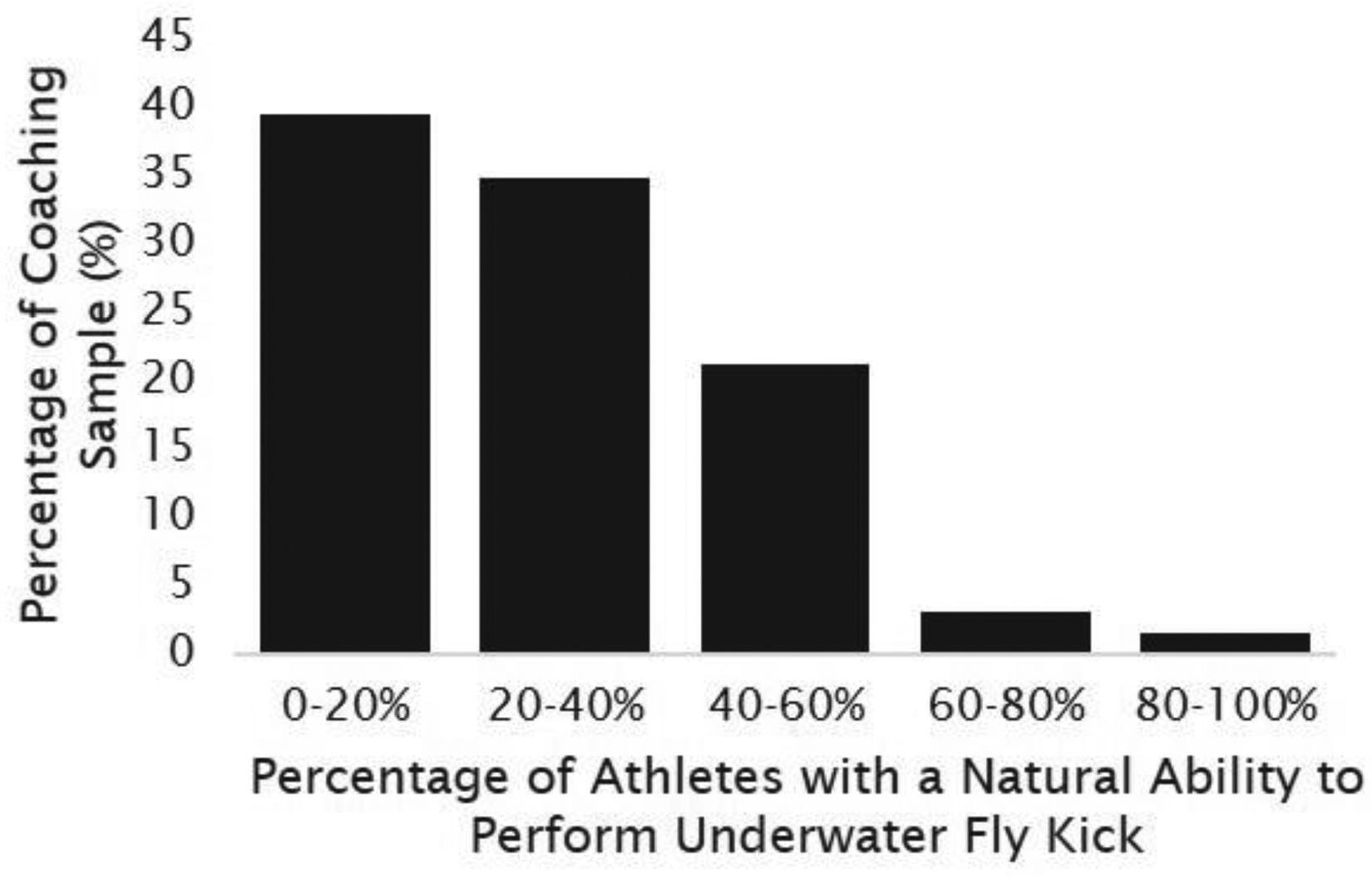
Percentage of athletes with a natural ability to perform underwater fly kick.
The most reported method of coaching underwater fly kick was coach observation and feedback to the athlete (99%), which is used for most of the time spent on underwater fly kick training; 1.4 h (± 1.4) per week. Eighty five percent of coaches use models (another swimmer or video) an average of twice per week (± 0.9), and video analysis and delayed feedback was reported by 56% of coaches as a method used to develop underwater fly kick (0.7 ± 0.6 h per week). Seventy one percent of coaches reported using other methods including drill work (n = 20) the use of equipment such as fins and kick boards (n = 12), dry land work (n = 11), the use of technical equipment (n = 4) and peer coaching (n = 4).
Although a high percentage of coaches reported using the above-mentioned methods, 68% reported that they did not have access to all the resources required to coach underwater fly kick to the best of their ability. When describing what resources they would need access to in order to improve their coaching of underwater fly kick, coaches mentioned underwater video (n = 19), increased research (n = 8), screens on poolside for viewing video footage (n = 6), increased coaching resources (n = 6) and access to videos of elite swimmers techniques (n = 5).
When reporting practice methods, 18% of coaches break down the underwater fly kick movement into subsequent parts. Thirty two percent coach the movement as a whole:
It's all about the feel again. In freestyle I think you can really separate the sections of the stroke out, but in fly kick it involves the whole body. It's fluid and it's how you feel that motion. It also happens so quick that it would be hard to break down.
A further 47% of coaches reported using a combination of these two practice methods:
I break the movement down to begin with, looking at the basics in terms of hitting a line, making sure your amplitude isn't too high or your knee bend is not too great, I’ll break those bits down. But then I’ll look at it as a whole movement post that point
Three percent of coaches used other methods (whole-part-whole method; n = 3). When discussing drill prescription in underwater fly kick, 39% of respondents prescribed drills to their athletes, and 58% used a combination of prescription and athlete's free choice of drills:
The more experienced the swimmer, the less prescriptive I am. Sometimes if there is a particular issue I might say try these two drills, they’ll probably help you, and if not we will find another one. I think it's a balance, sometimes they have the choice, and sometimes I’m a bit more prescriptive, it depends on what I want. It will also depend a bit on the age of the swimmer.
No coaches allowed complete free choice for swimmers in drill use. A small number of coaches reported using other approaches in drill prescription.
Ninety one percent of coaches use some form of external support to aid with the development of underwater fly kick; 80% use strength and conditioning, 23% use physiotherapy, 18% use pilates and 7% used other external training such as yoga and basic land training. The most mentioned benefits of this external support on underwater fly kick training are the development of core strength (n = 23), improving general flexibility (n = 23), and improving general strength (n = 17):
It is an all round thing, it will help everything, but I think more than anything it will help [fly kick]. It really helps with the core stability and the balance. I really do think that if you want to have a good underwater fly kick then you need a great core. That's something I’ve noticed, those who are good do have great cores. Flexibility and core is massively important for everyone but so important for underwater fly.
Key performance variables for underwater fly kick performance
Coaches ranked key performance variables identified within the literature on a Likert scale (1 = very important; 5 = not at all important) (Figure 4). As coaching level increased, the importance of shoulder range of motion (r (64) = 0.38, p = 0.002) and ankle range of motion (r (64) = 0.32, p = 0.01) increased. This trend was also observed as swimmer level increased for the importance of shoulder (r (64) = 0.33, p = 0.007) and ankle (r (64) = 0.39, p = 0.002) range of motion. As coaching level increased, the importance of hip speed of rotation also increased (r (64) = 0.24, p = 0.004). Coaches also presented other variables which they thought were important, including distance travelled underwater (n = 6), and the posture (streamlined position) and location of the initiation of the kick (n = 5).
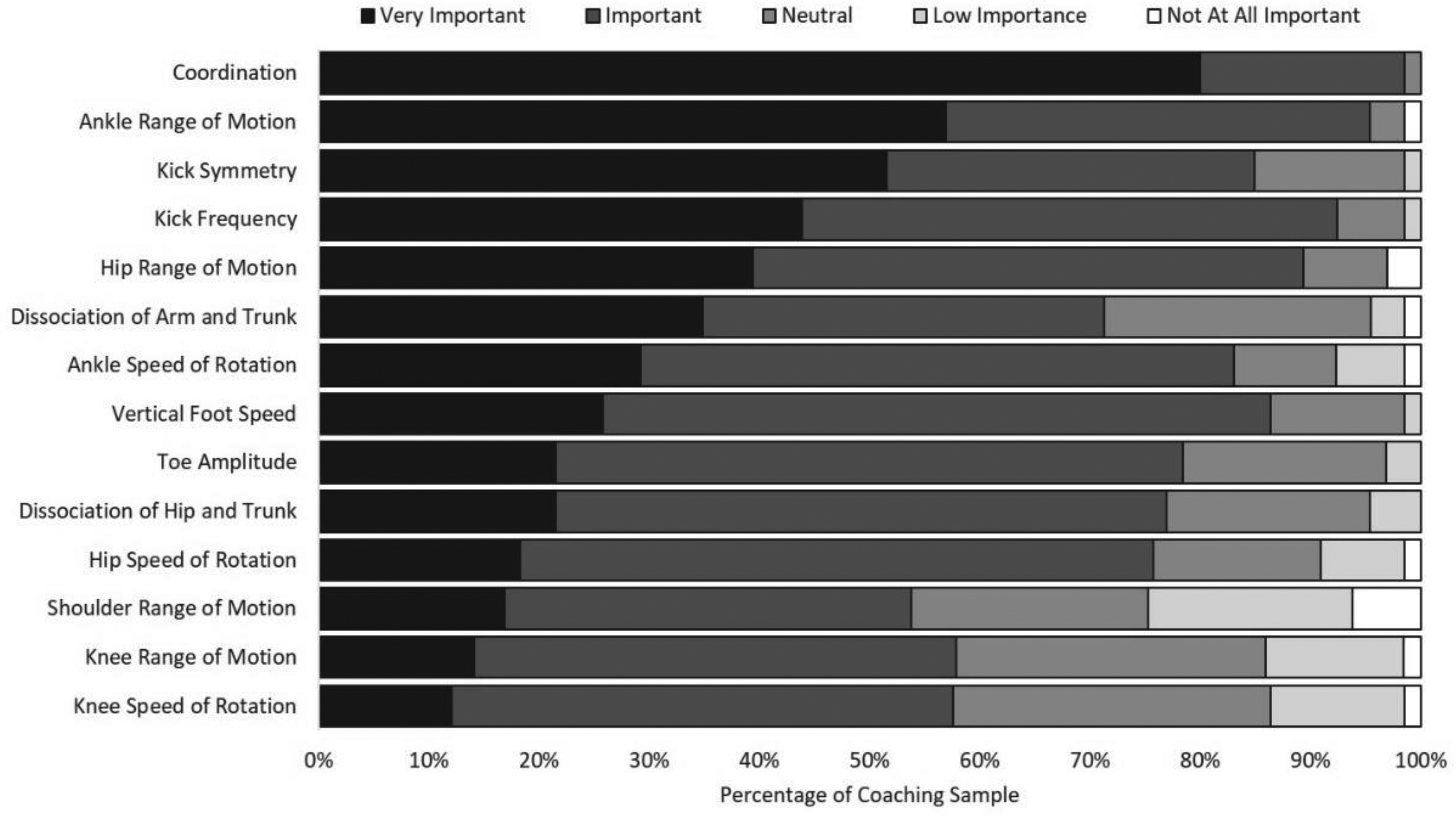
Participants ranked their top three performance variables and provided an intervention they might use in practice to improve athletes underwater skills. Seventeen variables were mentioned in the coaches’ top three most important variables for underwater fly kick, including six variables not provided to coaches in data collection; swimmer posture (n = 8), distance travelled underwater (n = 4), lumbar mobility (n = 2), underwater trajectory (n = 1), core strength (n = 1) and hypoxic abilities (n = 1). The top five variables, in order of most mentioned, are kick frequency, kick symmetry, coordination, ankle range of motion and dissociation of the hip and trunk segments (Table 3). The top four variables are ranked within the top four most important variables in Figure 4. A summary of the most common interventions relating to these is provided in Table 3.
Top five performance variables and associated interventions.
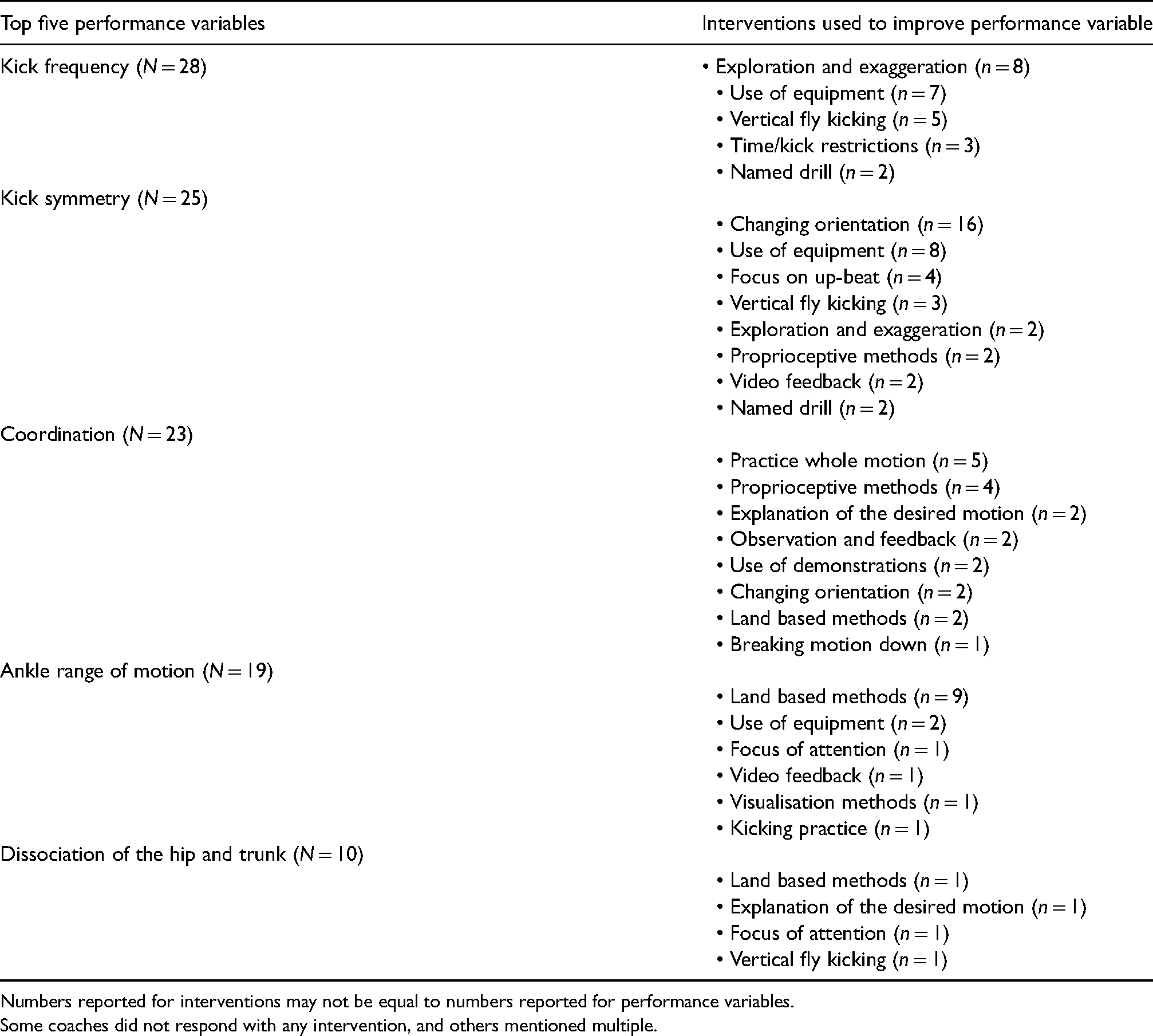
Numbers reported for interventions may not be equal to numbers reported for performance variables.
Some coaches did not respond with any intervention, and others mentioned multiple.
Although one of the most important variables, coaches ranked coordination as the most difficult skill to improve in underwater fly kick (n = 21), due to athlete's physical restrictions (n = 6), difficulties presented when coaching proprioception (n = 5) and differences between individual athletes (n = 3). Maintaining the kick for the full 15 m distance was ranked as the second most difficult skill to improve (n = 6) due to athletes struggling to meet the hypoxic demands of the task (n = 4) and maintaining consistency when fatigued (n = 2). Coaching to the individual needs of each athlete was ranked as the third most difficult (n = 5). This was generally due to athlete's genetic predispositions, or lack of, to perform underwater fly kick (n = 3).
Key influences on coaching approaches in underwater fly kick
Participants ranked key influences on their coaching practices (1 = extremely influential; 5 = not at all influential; 6 = not applicable) (Figure 5). As coaching level increased, the influence of athlete feedback on coaching practices increased (r (64) = 0.33, p = 0.006). The influence of athlete feedback also increased as swimmer level increased (r (64) = 0.27, p = 0.034). Conversely, as both coach level and swimmer level increased, the influence of certified coaching courses decreased (r (64) = −0.36, p = 0.006 and r (64) = −0.31, p = 0.012, respectively). The influence of both masterclasses and mentor coaching increased with increasing swimmer age (r (64) = 0.46, p < 0.000 and r (64) = 0.28, p = 0.025).
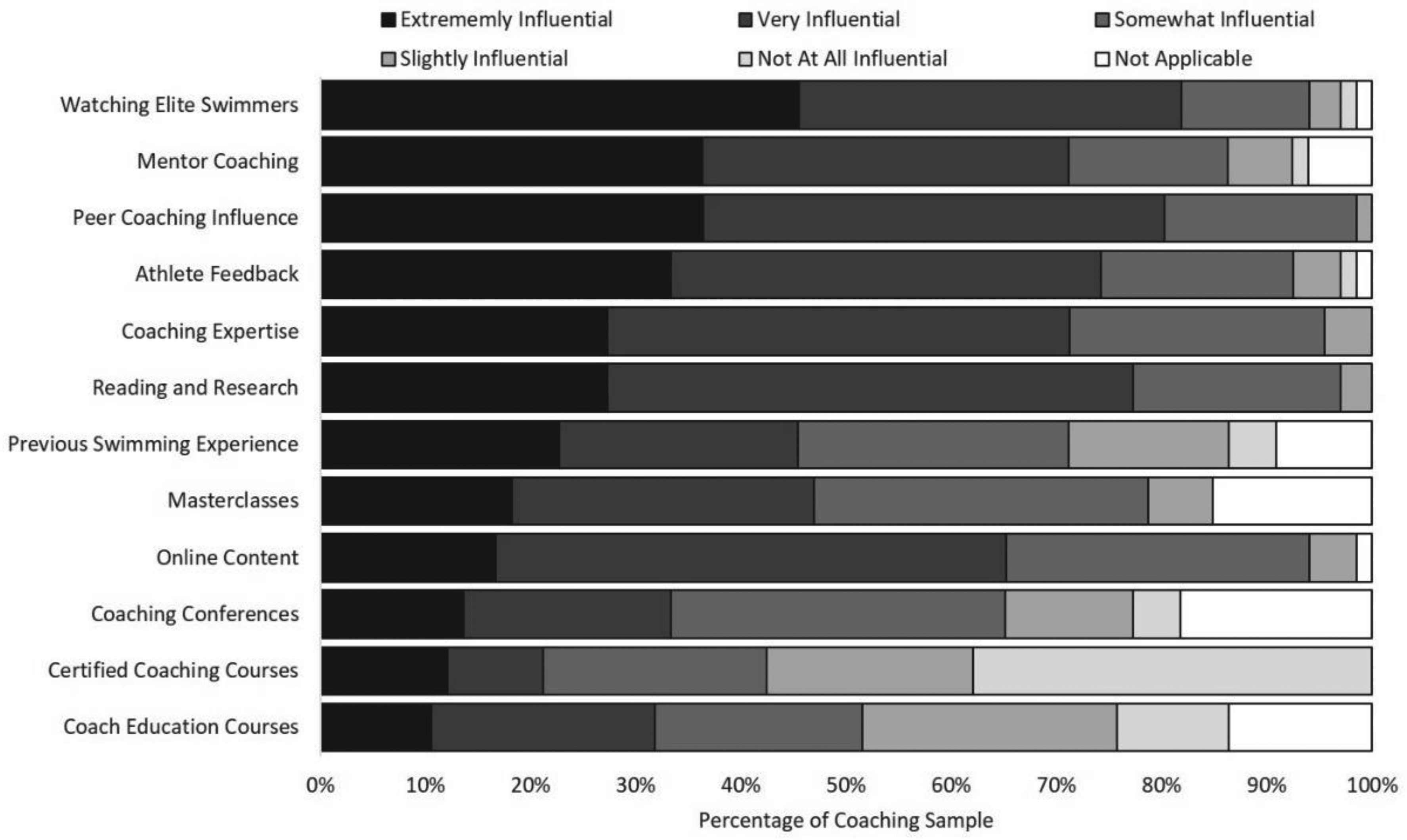
The influence of key coaching resources on participants approaches to coaching underwater fly kick.
Discussion
The purpose of this study was to understand and assess the current practices of swimming coaches surrounding underwater fly kick. Through online surveys and structured interviews, a range of qualified swimming coaches across the United Kingdom were able to share their views and experiences regarding current practices in coaching underwater fly kick.
Importance of underwater Fly kick
Coaches are aware of the important role underwater fly kick plays in overall race performance across all race distances, although relative importance increases in shorter race distances. Literature has previously discussed the importance of underwater fly kick, and starts and turns have been recognised by coaches as a crucial component of race performance. 1 Coaches spend roughly 13% of the total pool time available working specifically on underwater fly kick, which is likely less than the time spent on other strokes. Swimmers do have the opportunity to practice the underwater phase after every start and turn in training when swimming freestyle, backstroke or butterfly. However, if training is not skill-focussed then an athlete may revert back to an original, less effective movement pattern.43,44 It is therefore important for coaches to encourage maintained concentration on underwater fly kick techniques even when this is not the main focus of a session. Furthermore, this practice should be representative of competitive performance to ensure skill transfer to competition.45,46
Across all coaching levels, opinion is divided as to the presence of a gold standard technical model of underwater fly kick performance; 44% believed there is a technical model, whereas 56% did not. Kinematic data is often compared to a theoretical technical model which demonstrates the desired movement patterns for performance. 47 However, it has previously been stated that when learning a movement pattern, there is no pattern of desired movement, but rather a common pattern of coordination, which develops to the optimal movement pattern according to individual athletes. 48 As suggested by coaches, it may be that in underwater fly kick there are temporal or coordination models which provide a basic framework, but that the adjustments for individual differences, such as gender, height and limb length make this optimal for each athlete. This more individualised approach has been successful with the development of other key skills in swimming.47,49,50 Despite broad investigation into underwater fly kick performance, there remains a lack of information regarding a framework for coaches into key aspects of underwater fly kick and how this can be structured into training to maximise transfer of learning and skill development.
Current coaching methods in underwater fly kick
Coaches in the present study used observation and feedback almost constantly when working on underwater fly kick. In freestyle coaching, instructional approaches are used to convey information and provide feedback cues regarding technique. 16 Additionally, this approach allows for the correction of specific weakness within a stroke. However, a constant focus upon explicit verbal instruction and feedback could increase the chances of skill breakdown during stress due to overly concentrated attention on particular aspects of the task.51,52 This can prevent the athlete from processing valuable intrinsic feedback, leading to the overcorrection of minor technical errors. 52 Instructional approaches should facilitate the athletes search towards an effective coordination pattern rather than explicitly directing changes in their technique. 53 It is likely that optimal approaches will vary between athletes with different abilities, as beginners will be learning new skills, whereas their elite counterparts will be aiming to refine techniques. Further investigations into skill acquisition methods in swimming are required to inform these approaches, as has proved beneficial to specialist role athletes 54 and specialist coaches 14 previously.
Fifty six percent of coaches use video analysis feedback weekly when coaching underwater fly kick, similar to previous studies reporting 50% of swimming coaches using video weekly, 1 and 75% of Olympic coaches regularly use video feedback. 55 A visual display of an athletes own motion provides external feedback which can be more effective than solely instruction.52,56 It is therefore positive that a considerable proportion of coaches have access to this resource. Unfortunately, 44% of coaches in the present study do not have this access, or lack the time to utilise video feedback to its full potential, a finding reflected within wider swimming coaching research.1,57
Additionally, coaches previously reported a concentration on temporal parameters such as time to 15 m, streamlining and joint angular positions when using video analysis. 1 Coaches tend to provide qualitative analysis to gain a general view of a swimmer's technique rather than providing a quantitative analysis supporting their approaches. 1 This is reflected in the high ranking of both kick frequency and kick symmetry. However, coordination requires a more complex understanding of the whole body movement and segment sequencing, which cannot be understood from qualitative analysis alone. Indeed, a more in-depth analysis of the underlying kinematic factors influencing swimming performance is necessary to identify key weaknesses.1,58
Over half of the participants in this study are not able to access the resources required to be able to coach underwater fly kick to their best ability. The challenge of such a complex movement being performed whilst fully submerged may be the reason coaches feel they need access to resources such as underwater camera systems and viewing screens. It is likely that this issue is not solely related to the development of fly kick, but rather these resources would benefit the coaching of all swimming techniques. Previously, 38.8% of coaches have reported using two-dimensional video-based systems weekly to analyse swimming performance, 1 although it is unclear whether this is underwater video analysis. Unfortunately, the nature of the underwater fly kick exacerbates the need to view and understand motion underwater.
Thirty-two percent of coaches in the current study coach the movement as a whole, rather than breaking the movement down. A further 47% use a combination of the two methods. Skill decomposition can make information more manageable for the athlete, and allows for the transfer of learning of a specific skill. 59 However, breaking a movement down into constituent parts may not create transferable skills to the performance environment due to a break in the link between information and movement. 45 This was reflected by warnings that breaking down underwater fly kick too much will cause the swimmer to lose the feel for the motion. It may be the case that with other swimming strokes, part task practice methods are more effective, however when coaching a full body fluid motion such as underwater fly kick, issues may be encountered when coaches attempt to rebuild this motion in athletes. More skill acquisition knowledge surrounding the development of key skills in swimming is needed for coaches to select the most appropriate approach for the task in hand.
Swimming coaches have been shown to use drills to improve elements of technique by simplifying learning and reinforcing current techniques. 16 The results presented suggest coaches are using drills for both of these purposes during the coaching of underwater fly kick; either solely prescribing drills to develop elements of technique, or allowing a combination of prescription and free choice to reinforce learnt skills. This included drills to break the movement down and adding constraints to the skill such as using equipment. As discussed, prescribing drills that decompose the underwater fly kick skill may be in direct conflict with empirical findings, 16 whereas a constraints-led approach may encourage athletes to maintain the full body motion whilst adapting techniques to the environment.5,16 Coaches therefore need to be equipped with the knowledge allowing them to select the most relevant methods in skill refinement for the athlete and situation.
A large proportion of coaches reported using sports science provision to aid the development of underwater fly kick. Strength and conditioning has been reported as a highly valued sports science service provision, whereas coaches previously ranked medical related areas such as physical therapy and physiotherapy the lowest. 1 Coaches view strength and conditioning provisions in swimming as most important for starts and turns, 60 due to an increase in power development and strength. However, there has been more focus upon strength and conditioning benefits to the block phase in swimming starts, where parameters such as strength and power have been linked to increased performance.61,62
General strength and core work are key perceived benefits of external training, and so many of the movements included in such programmes will develop this even if the aim is not to improve underwater fly kick specifically. However, it is likely that there are land-based interventions that could be used to develop coordination and the sequencing of movement down the body, as well as dissociation of body segments as observed in other sports.63,64 An example of one such intervention is a shoulder stretch involving a torso twist whilst the feet are placed as wide as possible, requiring a dissociation of the hips and torso in a movement typically used in speed skating. 63 As these technical aspects of underwater fly kick performance are not well defined or understood, there is a lack of research investigating how to improve them. This is reflected within the identification by coaches of hip and trunk dissociation as a key variable to improve underwater fly kick, but a lack of clarity as to how coaches would approach this in practice.
Key performance variables for underwater fly kick performance
The results of this study indicate that coaches are considering a variety of variables when coaching underwater fly kick, including joint angular kinematics, temporal parameters relating to the kick and coordination. It may be the case that coaches do not have access to the resources they require to be able to assess the more complex aspects of underwater fly kick, and so previous investigations have reported more focus on temporal parameters. Additionally, as discussed, coaches will often only complete qualitative investigations using video analysis, 1 which would make the precise analysis of the presented variables difficult.
The results presented in the current study attest to the fact that coaches are considering a broad range of variables when coaching underwater fly kick. None of the variables presented were consistently rated as low or not at all important, demonstrating the detailed considerations coaches take when developing underwater fly kick. The variety of variables considered also highlights the complex nature of the underwater fly kick movement.
Kick frequency was highly rated within the coaches top three variables and is one of the most mentioned variables within the literature.24,41,42,65 Generally, findings have suggested that an increased kick frequency is correlated with increased underwater fly kick swimming velocity.23,41,66 When frequency is increased beyond a voluntary maximum however, a significant decrease in underwater swimming velocity is observed 41 explained by an increase in work done by the swimmer.65,67 This trade-off must be balanced to meet the demands of the race and the capacities of the individual athlete.
Coaches have demonstrated an understanding of this trade-off, mentioning the need to find an optimal kick frequency for the athlete. Coaching interventions used to improve fly kick reflect this aim, for example asking swimmers to explore a range of frequencies or using equipment to work at a set frequency. However it is suggested that if athletes wish to increase swimming speed when increasing frequency beyond their current maximal they would require regular training with this constraint, whilst maintaining optimal amplitude. 41 Time spent on task should therefore be increased to meet this goal.
Coaches highlighted kick symmetry as a key variable they consider when coaching underwater fly kick. The primary difference between human swimming and aquatic species is their ability to produce more equivalent timings of the up- and down-beats than humans due to their morphology. 24 Computational methods have demonstrated that in a prone swimming position the down-beat produces the majority of the propulsion in underwater fly kick,68–70 so it makes sense to reduce the time spent in the recovery phase of the up-beat whilst maintaining amplitude. In human swimming, trends have shown that more equivalent timings are correlated with increased velocity, and a slower velocity is related to increased relative time spent in the up-beat. 25
The most common intervention to improve kick symmetry was changing athlete's orientation. If a kick is not symmetrical when oriented laterally, then swimming direction will deviate from a straight line, providing immediate feedback to the athlete. Furthermore, mechanically, swimmers will experience altered levels of buoyancy in prone and supine orientations, which will be acting in different directions relative to the body. In a prone position, buoyancy will be pulling the swimmer towards the surface acting against the propulsive down-beat. In a supine position, buoyancy will be acting in the same direction as the down-beat. Although previous work has indicated that kick symmetry can influence performance, 25 there is a lack of research and understanding of the influence of orientation changes on kick symmetry, and whether there is a training effect present here.
Both kick frequency24,39,42,64 and kick symmetry24,25,68–70 are regularly discussed within the literature related to underwater fly kick, having been directly related to observed increases in performance. Although details relating to these key variables are not addressed within the coach qualification resources, it is encouraging that the coach opinions elicited in the present study align with the scientific literature.
Coordination was rated as the most important variable, although in underwater fly kick this area lacks considerable research and understanding. This is possibly due to the underwater nature of the movement, and the related difficulties in data acquisition to collect information relating to coordination. High level swimmers have been shown to present a specific motor coordination pattern of joint synergy between the ankle and the hip, 36 an idea developed further, where three synergies have been identified in elite male swimmers: synergy 1 – tilting the pelvis from the up-beat to the down-beat, synergy 2 – tilting the pelvis forwards during the down-beat, and synergy 3 – contributes to knee flexion and ankle plantarflexion. 37 However, it is difficult to define and understand these synergies in underwater fly kick due to both the complex nature of the full body movement, and the difficulties presented when capturing muscular activation patterns in a fully submerged setting.71,72 These are undoubtedly of great importance in the production of an effective underwater fly kick.
Although coordination was rated among the most important variables, it was also rated as the most challenging skill to improve in underwater fly kick. Although coaches and biomechanics practitioners recognise the importance of ‘feel’ in swimming performance more broadly, 73 there does not seem to be an understanding of what this is in underwater fly kick. There was a lack of consensus observed in the interventions used to improve coordination, further illustrating this lack of clarity. This is understandable, as there is little research touching upon the coordination of the whole body during underwater fly kick, and often this research is not presented in a way which coaches are easily able to access and understand, creating a barrier to its implementation into training. 74
Although only the top three variables mentioned by the coaches are discussed in detail, it is noteworthy that 17 key variables were mentioned in the coaches’ top three. This is beyond the number of variables provided to the coaches in the ranking section of the study, once again highlighting the range of variables coaches are considering in underwater fly kick performance. However, this range in selection also points towards a lack of consensus as to the most vital aspects to consider when improving underwater fly kick, as well as to a lack of direction as to what these are from key resources available to coaches currently.
Key influences on coaching approaches in underwater fly kick
The final section of this study demonstrates that coach approaches to coaching underwater fly kick are heavily influenced by multiple resources, including peer influence, elite swimmers and personal reading and research. This shows a positive move from coaches relying mostly upon experiential knowledge.5,6 The results of the present study demonstrate coach engagement with, and active application of, ideas highlighted within the research into their practices, despite a lack of advice about how these should be implemented. Senior coaches value athlete feedback more greatly, possibly due to higher level athletes’ heightened awareness of their techniques, where their input can build coaches knowledge. However, investigation into swimmer's perceptions of key skills in swimming is lacking.
It is worrying that coaches rated certified courses and coach education courses low, as these are designed to develop knowledge and skills in improving all aspects of swimming technique. This could be due to the amount of time that had passed since qualification, although there was no relationship present between years qualified and the rated influence of coaching courses. Another contributing factor is the quantity and quality of the information supplied. UKCC Level 3 syllabus contains a unit dedicated to each stroke, with a detailed explanation divided into aspects that can be developed to improve efficiency and performance. Conversely, for the start and turns chapter, the resources only mention simple parameters such as distance and depth of underwater phase and type of kick. 31
This lack of depth to coach education is not limited to the United Kingdom coaching system, as both Swimming Australia, 75 and the Fédération Internationale de Natation (FINA) coaching programmes 76 have a similar light touch approach to underwater fly kick development. As an element of the race often referred to colloquially by coaches as the 5th stroke, 29 education in this area could be improved globally. It is clear from the results presented that coaches are considering concepts far beyond those presented within the certification process, and in this way the education courses available are lagging behind the coaching knowledge. Furthermore, higher level coaches value these resources less than lower-level coaches, possibly due to increased access to other specific resources and support systems.
Within coach education, there is an additional lack of skill acquisition education for coaches to draw upon when delivering sessions. Skill acquisition is covered briefly within the UKCC Level 3 syllabus, 31 however this is as a rudimentary overview, and so coaches are not optimally equipped to provide the best possible learning environment to the athlete. Skill acquisition practitioners are available to aid coaches with the development of effective programmes, however their value is often overlooked due to the overlap in their role with coaches. 77 Their inclusion could bridge the present gap in knowledge, enhancing athlete development.
Strengths and limitations
This study provides a detailed insight into what coaches are currently doing to improve underwater fly kick in training. However, the limitations of the present study should be recognised. This study only included coaches from the United Kingdom, and it is possible that due to differing qualifications the approaches of international coaches are different to those observed. Some coaches included in this study did, however, qualify outside the United Kingdom and are now coaching within the British system, so this limitation may be minimised. No account was taken of gender, although there is no reason to suppose that there would be a difference between the genders in their approach to coaching underwater fly kick, as all coaches will have access to the same training resources. Additionally, social desirability bias may have affected results, where coaches respond to the perceived correct response. 78 Including observation of the coaches during training sessions may have reduced this bias. Finally, it should be noted that the sample size of this study was relatively small compared to the range of the estimated United Kingdom coaching population. With a larger sample size, more confidence could be gained when generalising the findings of this study to the coaching population.
Conclusions
The results of this study suggest that coaches are using a similar range of methods to coach underwater fly kick as are being utilised when developing other areas of swimming performance. There is a lack of consensus on methods to improve underwater fly kick, with coaches demonstrating a range of approaches. This is most likely due to the lack of skill acquisition education and technical information relating to underwater fly kick in coach education courses. Coaches should be encouraged to actively engage with sports science provision, including skill acquisition practitioners to deliver the optimal learning environment and develop athletes’ skills to their full potential.
Sixty eight percent of coaches are limited by a lack of access to resources, particularly lack of video analysis and access to key research. The key variables identified by coaches are in alignment with those that are frequently discussed within the literature: kick frequency, kick symmetry and coordination. This, along with a high rating of influence from a range of resources, shows a positive engagement of the coaches with scientific literature. Although coordination is amongst the most important aspects of underwater fly kick performance, this was also rated as the most difficult skill to improve in underwater fly kick. This reflects a distinct lack of understanding and research in this area.
The findings from this study will help inform the development of coach education resources to provide better provisions for swimming coaches aiming to improve underwater fly kick. These results will also guide the direction of future research, such as investigation into elite athletes’ perceptions of key performance variables in underwater fly kick. Athlete perspectives could be useful to swimming coaches as they can provide their first-hand experiences, and higher-level coaches have shown to value the feedback gained from these athletes when developing underwater fly kick in training. Additionally, experimental work could determine the effectiveness of coach suggested drill use in underwater fly kick training when compared to control conditions.
Footnotes
Acknowledgements
The authors thank British Swimming, and all coaches who participated in this study for their involvement and support.
Declaration of conflicting interests
The authors declared no potential conflicts of interest with respect to the research, authorship, and/or publication of this article.
Disclaimers
The views expressed in this article are the author's own and not an official position of the institution or funder.
Funding
The authors disclosed receipt of the following financial support for the research, authorship, and/or publication of this article: The work presented is part of a PhD funded by the English Institute of Sport and the Engineering and Physical Sciences Research Council.
