




Abstract
Velocity-based training (VBT) is a contemporary prescriptive, programming, and testing tool commonly utilised in strength and conditioning (S&C). Over recent years, there has been an influx of peer-reviewed literature investigating several different applications (e.g. load-velocity profiling, velocity loss, load manipulation, and reliability of technology) of VBT. The procedures implemented in research, however, do not always reflect the practices within applied environments. The aim of this study, therefore, was to investigate the perceptions and applications of VBT within elite S&C to enhance contextual understanding and develop appropriate avenues of practitioner-focused research. Fourteen high-performance S&C coaches participated in semi-structured interviews to discuss their experiences of implementing VBT into their practices. Reflexive thematic analysis was adopted, following an inductive and realist approach. Three central organising themes emerged: Technology, applications, and reflections. Within these central themes, higher order themes consisting of drivers for buying technology; programming, testing, monitoring, and feedback; and benefits, drawbacks, and future uses also emerged. Practitioners reported varied drivers and applications of VBT, often being dictated by simplicity, environmental context, and personal preferences. Coaches perceived VBT to be a beneficial tool yet were cognizant of the drawbacks and challenges in certain settings. VBT is a flexible tool that can support and aid several aspects of S&C planning and delivery, with coaches valuing the impact it can have on training environments, objective prescriptions, tracking player readiness, and programme success.
Keywords
Introduction
Velocity-based training (VBT) frequents strength and conditioning (S&C) literature, often being referred to as a way of training as opposed to more suitably as an encompassing approach with many applications.1–4 All of these applications, however, typically have one common denominator – the use of technology (e.g. linear position transducers, accelerometers, laser-optics, smartphone applications) to track and measure movement velocity.5,6 VBT can be implemented in many ways, such as testing and monitoring through load-velocity profiling7–9 and one repetition maximum (1RM) prediction;10–12 volume control through velocity loss thresholds or cut-offs;13–15 load prescription through the application of specific zones;16,17 autoregulation via load-manipulation; 18 or extrinsic motivation via external feedback. 19 This multi-faceted nature and the accessibility of velocity-based technology, therefore, makes VBT attractive to S&C coaches.
A range of VBT-specific devices are now available to S&C practitioners. Coaches must strike a balance between factors such as reliability, validity, useability, and cost (hardware and software) when purchasing such technology. Reliability and validity feature strongly in the literature (a recent systematic review 6 returned 44 research studies), with linear position transducers (LPTs) appearing to be the most reliable and valid tool.6,20 Typically absent from the literature, however, are more practical drivers such as feasibility, cost, and complexity, which has been deemed important in performance testing, 21 an area of S&C engrained with technology. Consequently, reliable and valid devices are typically more expensive, presenting a potential barrier for some teams and organizations with limited budgets. Understanding cost versus benefit is important in practice and the balance between ease of use and affordability is likely to steer the development of VBT technology.
A systematic literature search of VBT-related methods returns 146 peer-reviewed publications, with the most common topic of interest being the reliability and/or validity of VBT-related technology (31.5%), closely followed by load-velocity profiling (28.8%) and velocity loss (19.9%). Other topics of interest were 1RM prediction (8.9%), intervention studies (8.2%) and external feedback (4.1%). With an abundance of recent evidence, understanding how to optimise VBT in practice can be challenging and time-consuming. Recommendations from S&C literature are sometimes unachievable because of restrictions in time, equipment, personnel, or the unpredictability of applied practice.22,23 Furthermore, the rigorous and lingering nature of the peer-reviewed process means practical recommendations can quickly become outdated. 22 Practitioners will often develop their own coaching strategies through coach-conversations, social media, or trial and error.23,24 Gaining further insight into approaches being taken in practice, therefore, could help further understanding and bridge the gap between research and applied practice.
One area in need of further understanding is that of elite sport, with experimental literature often recruiting trained individuals, typically benchmarked against relative strength criteria (e.g. > 1.5 × body mass). Investigating the perceptions and experiences of elite S&C coaches could help further understanding of elite practice and inform future research. Therefore, the aim of this study was to evaluate the use of VBT within elite S&C contexts. More specifically, this study explored practitioners’ perceptions of VBT and how they implement VBT in practice and evaluated alignment to methods and recommendations published in research.
Methods
Research design and theoretical approach
Following conceptualisation of the research aims, semi-structured interviews were conducted, analysed, coded, and interpreted using reflexive thematic analysis and realist metatheory as described by Braun and Clarke.25,26 A semantic, inductive approach was adopted by which codes reflected content and meaning of participants’ words.25,26 Thematic analysis was employed to co-construct knowledge with coaches and bridge the gap between research and practice. There is a plethora of quantitative data investigating the efficacy, reliability, and practicalities of various methods of VBT within S&C, however, a paucity of studies evaluating its application within a real-world, applied setting.
Participants
Following institutional ethical approval (ER26914602) in accordance with the seventh revision (2013) of the declaration of Helsinki, fourteen high-performance male S&C coaches were recruited via purposive / opportunity sampling. Participants had a mean age of 34.8 ± 6.3 years (range: 29.8 to 49.8 years), with mean coaching experience of 11.6 ± 6.7 years (range: 6 to 26 years) in S&C (Table 1). Inclusion criteria included being employed or self-employed, working with professional athletes or coaching amateur athletes competing at a national or international level, and experience of implementing VBT into their practices. All risks and benefits were communicated verbally and in written form. Informed consent was obtained prior to data collection. Sample size was based on the principle of data saturation, with no new participants recruited when data failed to generate new discussion points. 27
Descriptive characteristics of the participants.
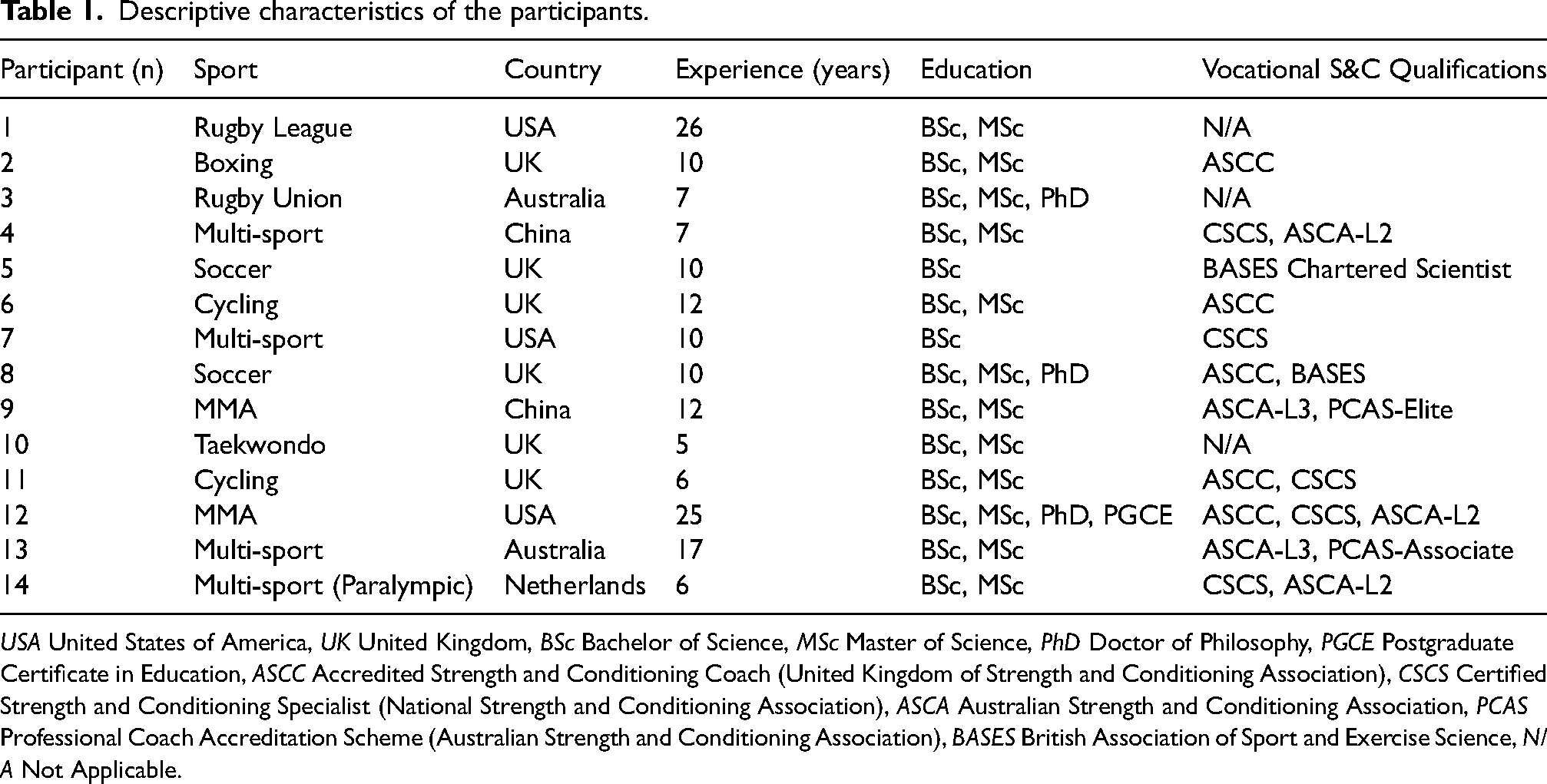
USA United States of America, UK United Kingdom, BSc Bachelor of Science, MSc Master of Science, PhD Doctor of Philosophy, PGCE Postgraduate Certificate in Education, ASCC Accredited Strength and Conditioning Coach (United Kingdom of Strength and Conditioning Association), CSCS Certified Strength and Conditioning Specialist (National Strength and Conditioning Association), ASCA Australian Strength and Conditioning Association, PCAS Professional Coach Accreditation Scheme (Australian Strength and Conditioning Association), BASES British Association of Sport and Exercise Science, N/A Not Applicable.
Procedures
Prior to data collection, an interview guide was created and agreed upon by the research team, which included practicing coaches and experienced researchers with expertise in qualitative methods. Pilot and bracketing interviews were completed to refine the interview guide, ensure that questions reflected the research aims, and to partition out subjective assumptions to meet the expectations of realist research.25,28,29 The interview guide consisted of three mains sections: the first was designed to settle the interviewee by talking about their background, providing their S&C ‘autobiography’ and coaching philosophy; the second focused solely on VBT-related technology, what they used and why they used it; and the final section focused on their use of VBT, detailing specific methods, why they implemented them, and any specific benefits or drawbacks they felt ascertained to VBT.
The semi-structured interview guide provided a framework for each interview. Participants were asked the same fundamental questions yet were free to explore thoughts, perceptions, practical experiences, with the flow of the interview being dictated by the coaches. All interviews were conducted remotely (Zoom Video Communication Inc, version 5.8.4, London, United Kingdom), with links and recordings password protected. All data was anonymized, and participant numbers used for any future reference of interview scripts. Following data saturation, all interviews were transcribed verbatim for data analysis by an external company.
Data analysis
Braun and Clarke's six-point approach to reflexive thematic analysis was followed,25,30 a method common in sport-related thematic analyses.31–33 This six-stage approach allows for a non-linear, iterative, and recursive data analysis, which is important for qualitative research. 34 Reflexive methodology promotes organic coding and theming, allowing for flexibility and depth of analysis.28,29 Importantly, reflexive thematic analysis recognises that researchers actively interpret data through the lens of their theoretical judgements and scholarly knowledge.29,30,35,36 The principal investigator is experienced in VBT research, publishing four studies to date in this area,7,10,15,20 and is a practicing S&C coach. Throughout data collection, analysis, and interpretation, the principal researcher distinguished their experiences from that of the participants to maintain credibility and transparency of the research, allowing for the deep exploration of answers without using leading questioning. 37
In conjunction with Braun and Clarke's reflexive thematic analysis model, Tracy's eight “big tent” criteria were considered to ensure the quality of the data. 38 VBT is prevalent in quantitative research5–7,10,15,20 and applied practice, making it a relevant, timely and worthy topic. A rich rigor of sample size, appropriate participant experience, interview length and depth, and data collection / analysis process (reflexive thematic analysis) was maintained throughout.39,40 A combination of self-reflexivity, triangulation, and member reflections ensured credibility in the data.38,41 At different stages of the thematic process, three members of the research team met to confirm and triangulate protocols and data (e.g. interview guide, codes, and themes).42–44 Finally, by utilising large descriptive quotes and direct language from the conversations, the findings will be meaningful to other S&C coaches, ensuring resonance. 38
Results
Fourteen interviews were conducted lasting a total of 18:11:40 h (mean = 01:17:59 h, SD = 00:15:45 min, range = 00:48:51 to 01:49:45 h). Data were organised in to three central order themes, and then further broken down into higher order themes: technology (drivers for buying), applications (testing, monitoring, programming, feedback, and educational tool), and reflections (benefits, drawbacks, and future use) (Figures 1–3). All themes were inductively developed based on the transcribed data. Anonymized raw data quotations are used as part of the main text to contextualise each theme.
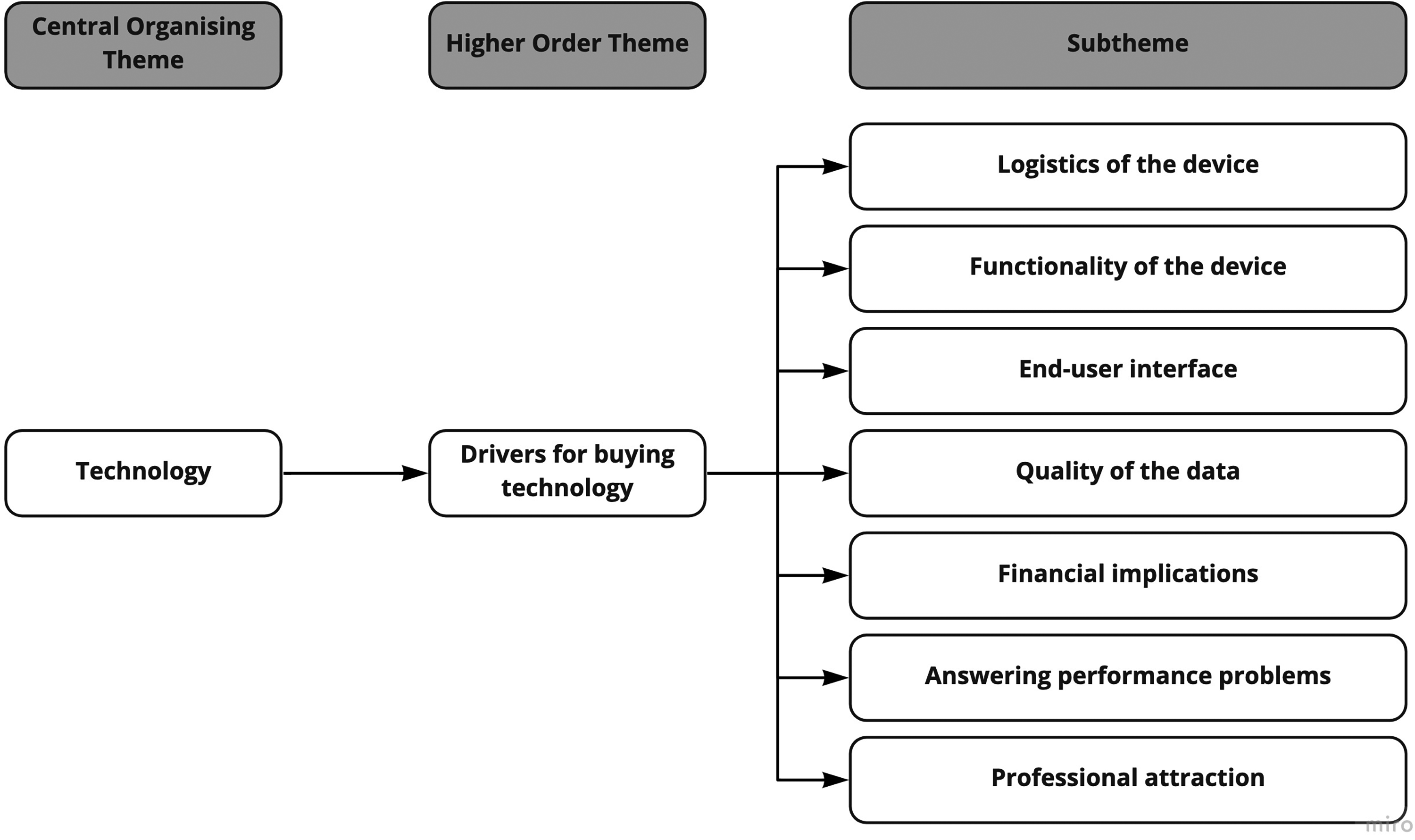
Schematic representation of the central order theme for technology, with accompanying higher-order and subthemes.
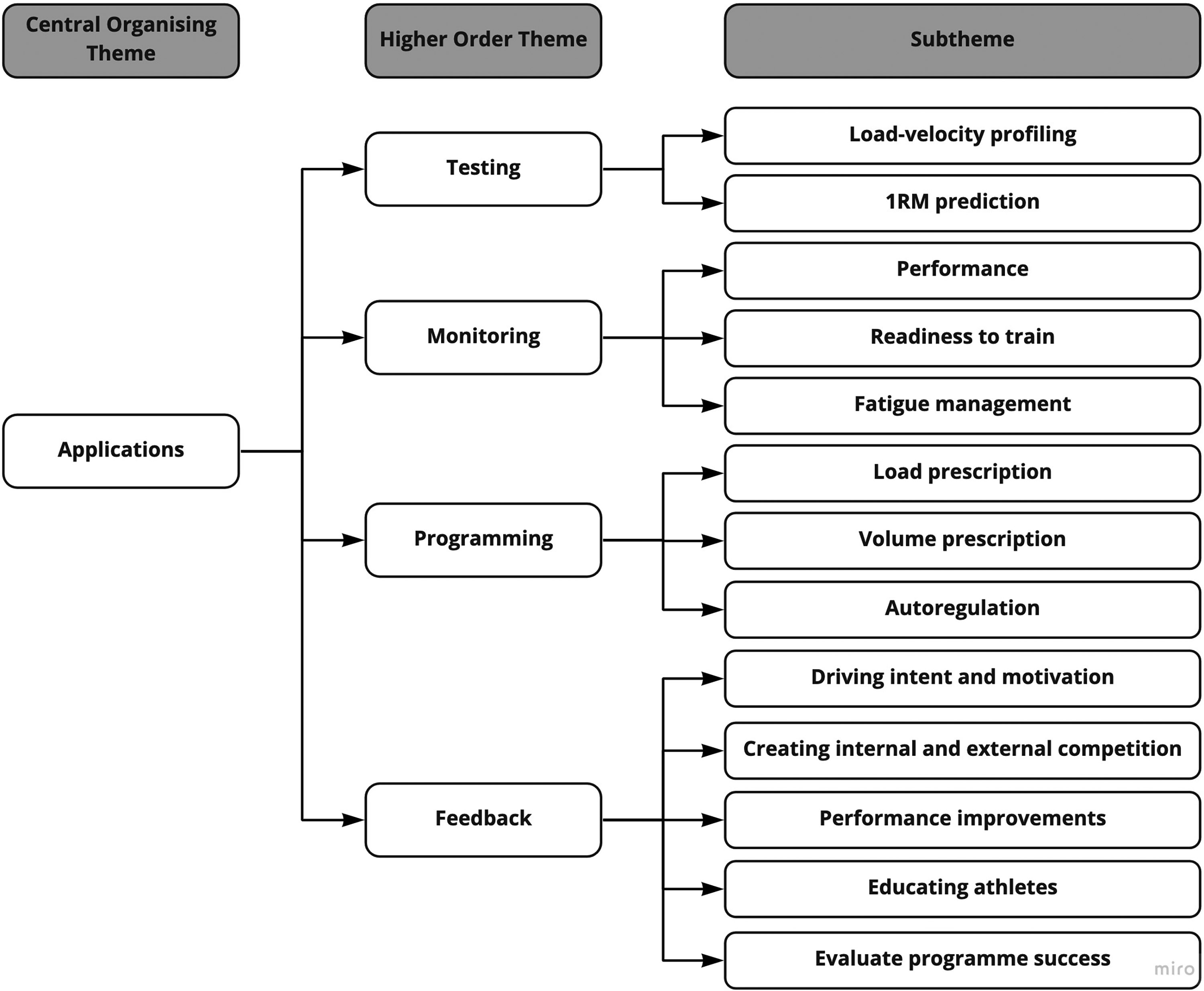
Schematic representation of the central order theme for applications, with accompanying higher-order and subthemes.
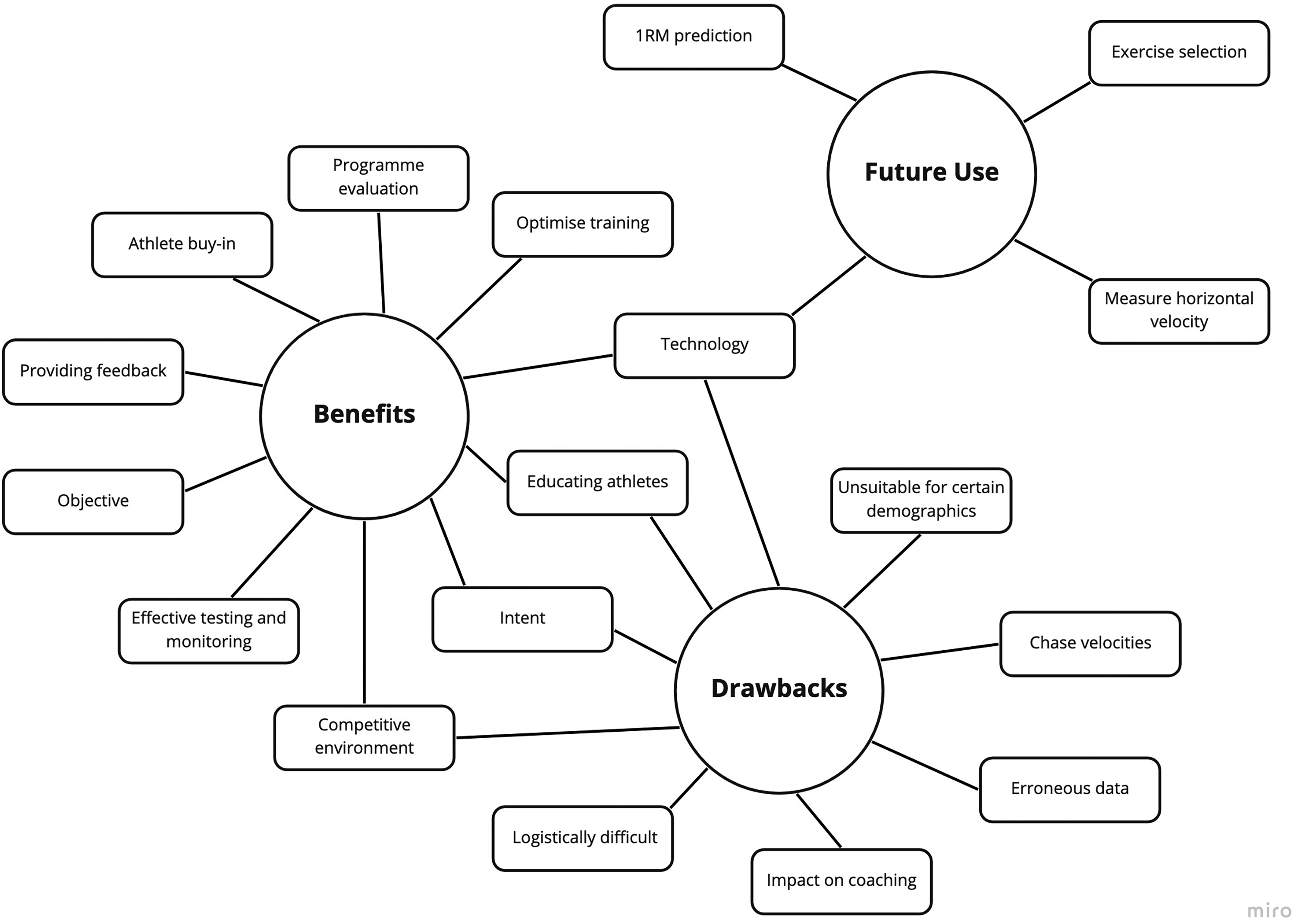
Schematic representation of the central order theme for reflections, with accompanying higher-order and subthemes.
Technology
The first central organising theme was technology, consisting of a single higher order theme, ‘drivers for buying technology’ (Figures 1). Participants utilised a variety of technologies, including LPTs (Gymaware, Tendo), inertial measurement units (IMUs; PUSH), infra-red laser optic technology (Flex), and 3D cameras (Elite Form). Many referred to Gymaware as the gold standard, with participants feeling the reliability of LPTs were their main attribute. IMUs, however, were considered to have superior user interfaces, flexibility, and price point. The 3D cameras were preferred because of squat rack integration and minimal footprint, whereas the infrared technology was seen as a valid wireless version of LPTs.
Drivers for buying technology
This higher order theme describes participants’ motivations for purchasing VBT technologies, and comprised seven subthemes: logistics of the device, functionality of the device, end-user interface, quality of the data, financial implications, answering performance problems, and professional attraction.
Logistics of the device was a salient reason for most coaches, which included accessibility and suitability of the device, and consistency across the organisation. A few participants indicated that having regular access to technologies that suited their training environments or were consistent with other departments in their organizations were essential, e.g., “there are others available but the ones that, the things that we wanted to do, such like trap bar jumps, clean pulls, landmine punch etc. this all really is the bar” (P2).
Function of the device represented how well the device worked, and included usability, portability, connectivity, being a stand-alone and wireless unit, integration, and reliability. When referring to usability, participants indicated that being simple and user-friendly was integral. Others felt the plug and play nature and quick set-up of some devices made them attractive choices. Interestingly, some coaches felt being simple for athletes to use was also important, promoting autonomy and intuitiveness within training sessions. “But if I was to be the one deciding the kit I would, I think for me I would take into account the ease of use. Like if we’re just looking for a general measure of meeting velocity if it wasn't horrifically unreliable then I’d probably go for the quickest and easiest one which the athletes can just work really easily” (P11).
Terms such as “feedback” and “visuals” emerged when referring to end-user interface. Participants suggested that the type of feedback that the device could provide was important, but that feedback must be robust, instant, and efficient. One coach also indicated that the visualisation of the feedback was important, preferring data to be presented as graphs and figures as opposed to just numbers. “Also, for me it's what it looks like, it's the platform that it's put on. Because I’ve seen some apps or some feedback and visually, they look poor, so I think they need to look good visually and display the right things. Yeah, I’ve always been keen on the visual aspect, and I’ve always seen data as, I don't want to see data as just numbers, I think we need some type of like a visual, a graph or a graphic in there” (P5).
The quality of the data (i.e. reliability and validity) was seen as essential for most participants, with a couple of coaches favouring validity, e.g., “…because if I trust the numbers to help guide my programming, if they’re not accurate I feel like I can't actually do my job” (P3). Despite this, it was apparent that financial implications (i.e. cost of the device and available budget) impacted which device coaches picked, e.g., “…it's probably cost, reward, and ability to actually implement in our setting” (P14). Interestingly, a few coaches felt answering performance problems or professional attraction were more important for their organizations. This referred to choosing technology that would influence performance programs or return to play strategies or would attract new members and athletes to their facility.
Applications
Applications represented the second central organising theme. Within this theme, four higher-order themes emerged: ‘testing’, ‘monitoring’, ‘programming’, and ‘feedback’. These were then broken down further into subthemes (Figure 2). Information regarding the phase of periodisation, frequency of use and exercise selection was also considered.
Regular VBT use within training was reported, specifically during maximal strength, strength-speed, speed-strength, and competitive phases (e.g. peaking or tapering), typically 1–3 sessions per week. VBT was employed during key lifts only, often involving a triple extension (e.g. Olympic lifting), a ballistic exercise (e.g. jump squat, trap-bar jumps), or lower and upper compound lifts (e.g. back squat, deadlift, bench press etc.). More advanced programming techniques such as contrast or cluster set training were mentioned, with one coach utilising VBT for overshoot repetitions (a heavy single repetition).
Testing
Load-velocity profiles (LVPs) was the main performance diagnostic reported, with varying protocols evident. Athletes were only profiled during key compound or ballistic lifts. Both the multi-point method (a profile constructed from multiple loads) and two-point method (a profile constructed from two loads) were utilised across the sample, e.g., “but if I need to do a quick and dirty estimation of their strength, then things like two-point methods and all that sort of stuff is really beneficial” (P3). Four different approaches for selecting loads emerged from the interviews, consisting of estimated or known percentages of 1RM (e.g. 40, 60, 80% 1RM), using absolute loads (e.g. 40, 60, 80 kg), selecting specific velocities (e.g. 1.0, 0.8, 0.6 m.s−1), or via relative load (1.4, 1.2, 1.0 kg / body mass). Some coaches also described the inclusion of ballistic (e.g. jump squat) exercise during the lighter loads of non-ballistic (e.g. back squat) LVPs. Linear regression was the only statistical approach reported, utilising the R2 value to determine the percentage of explained variance. One coach utilised the data to predict maximum force, velocity, and power. “So, from those three different loads you can then build essentially your power curve. Well, the first thing we’ll do sorry is draw that linear regression line. So, from your three different progressive loads you’ve got, you can then predict V-max at F-zero and F-max and V-zero” (P12).
LVP was utilised by some coaches to predict 1RM, typically using normative data (e.g. 0.25 m.s−1 represents velocity at 1RM, V1RM) as the point of extrapolation to determine changes in maximal strength or autoregulate load. One coach, however, undertook sets to failure to determine V1RM (≈ final rep velocity in a set to failure) to predict the maximal load, e.g., “I love using plus sets or APRE [autoregulatory progressive adjustable exercise] as a sense of getting velocity cut-offs and estimating 1RMs through those methods” (P4).
Monitoring
In this higher order theme, participants described subthemes of measuring velocity to monitor performance, readiness to train, and fatigue management. Approaches to performance or fatigue monitoring included acute measurement of velocity on a sessional basis to compare with historic data and identify increases in strength or residual fatigue. In some instances, this would then dictate the load or volume prescribed for the day. “And I like to use it to auto-regulate their load as well…using the history tab to see what they’ve lifted in the last session again it can help to direct us or direct that player to show them that they might be fatigued, they’re lifting the same load as the last session, but their velocity is a lot lower, so do they need to bring their load down because they are fatigued, they are, they’ve trained hard on the pitch and their fatigue is kicking in” (5).
Programming
Three main subthemes emerged from the higher order theme, programming. These applications included load prescription, volume prescription, and autoregulation. When utilising VBT to prescribe load, all coaches set velocity targets or velocity zones to achieve specific adaptations, e.g., “We saw that trap bar jumps performed at 1.2 to 1.4 per second in terms of mean velocity was the optimal zone for them to increase rate of force development” (P2). Zones were set via individualised LVPs, normative data taken from research, VBT experts, historical data, or coach experience. Most provided single-rep targets, with a couple of coaches preferring to prescribe average set targets, e.g., “When we get towards the games then we can train with that and just use velocity zones to say look, I want you to hit these zones for these repetitions” (P14).
Volume prescription described velocity loss thresholds to regulate volume, terminating a set when a specific drop in velocity occurred (e.g. 10%). One coach utilised VBT to ensure their athletes didn't train too close to proximity of failure (i.e. V1RM) to reduce the impact of fatigue. “…using more of a percent velocity loss during the set to determine how many reps to, or what point to stop…20 high quality reps in the push press, for example, and then I’ll say it doesn't matter to me how many sets it takes you to do it, but as soon as your percent velocity drops to 10% then I want you to stop your set” (P7).
The final emerging subtheme was autoregulation, which involved regulating load or volume in response to fatigue or strength improvements, and micro-adjusting load through generalised amounts (e.g. 2.5kg-5 kg) on an intra- or inter-session basis. “And as soon as they go over 0.5, you know, constantly then we’ll say that's not where we want you, we need to add a load to the bar, and then keep lifting as fast as you can. Again, if they go below 0.5 it might be one rep, then it doesn't matter, just make sure you keep it above; if they go under there numerous times then obviously the load is too heavy and then it gives us a great guideline as to how we can alter their loading prescriptions” (P9).
Feedback
The fourth and final higher order theme emerging from applications was feedback, which involved subthemes of driving intent and motivation, creating internal and external competition, performance improvements, educating athletes, and evaluating programme success. Feedback was the most mentioned application, potentially because of its simple nature.
Coaches described how VBT could be used to drive intent and motivate athletes, e.g., “…it's more of a way of, I suppose, increasing the intent surrounding how fast we’ve moved the bar… we’re quite big on wanting to drive intent and wanting to queue athletes” (P8). Specifically, external motivation was provided visually or audibly using the technology live within a session, helping to engage athletes, ensure maximal effort was applied during each repetition, and motivate athletes to train harder and faster. “We use it for extrinsic motivation, simple feedback, you know, it's a very simple tool that most people use for targeting; here's your target, hit your target, maintain an involvement, an engagement in the exercise” (P12).
VBT was seen as an effective way to create internal (with oneself) or external (with training partners) competition e.g., “I’m going to use it to create a bit of competition there or give them a carrot to chase on that front” (P6). Additionally, VBT was used to track long and short-term performance improvements (e.g. performing faster velocities at the same load or changes to LVP and/or power curves). This performance was then used to infer changes in physical qualities such as strength, power, and acceleration, relating this change to the relevant physiological adaptations. “I’m pushing them and the data's pushing them as well and there's other boys that have, they’ve got the same on the bench, but their velocity is going up. So that's another way that we can track load as well and use that to feedback to the coaches and to the players” (P5)
Finally, VBT was used to evaluate and educate coach and athlete. The feedback provided by VBT technology could create positive conversation between athletes, coaches, and performance staff. These conversations included evaluating loads and fatigue levels for the day, evaluating the success of a programme or whether changes are required short- or long-term. They were also used to educate athletes based on underpinning physiology and scientific principles. “No, it's still this is what you’ve hit, this is what you’ve got to and we will classify that as a good power effort. Or we missed a loading, the loading was too light because your velocities are creeping, and we need to put more load on the bar. So yeah, I use it for that type of double checking, is the programming correct, do you know what I mean”? (P12).
Reflections
The final central organising theme was coach reflections. Three higher-order themes emerged, which included ‘benefits’, ‘drawbacks’, and ‘future use’, with multiple subthemes emerging further (Figure 3). A few coaches expressed frustrations with traditional prescriptive methods (e.g. % 1RM) and their inability to account for confounding training factors (e.g. competition congestion, technical and tactical training etc.). VBT was thought to be a flexible alternative, objectively adjusting and benchmarking loadings for athletes on a regular basis. Similarly, many implemented VBT to reliably determine 1RM, assess performance, make programming decisions, and provide additional data for athletes and coaches.
Within this central organising theme, four subthemes emerged as both a ‘benefit’ and a ‘drawback’ (Figure 3). Technology was described as a benefit due to access to cloud-based portals, the integrative nature of some devices, and their portability, flexibility, and simplicity. A few coaches indicated, however, that technology could also be a drawback because of on-going costs/subscriptions, maintenance and repair requirements, availability, and potential connectivity issues. Educating athletes was thought to facilitate progression, promote autonomy and accountability, and provide athletes with training variety. Conversely, some coaches felt it was often difficult to educate athletes to an adequate level to exploit those benefits. The requirement to move with intent was criticized by some coaches, suggesting this was difficult if used with inexperienced individuals. Nevertheless, some saw this as an advantage, suggesting it could encourage athletes to train at their maximal intensity and promote high velocity movements, irrespective of the training age. Finally, some coaches saw the benefits of creating a competitive environment, however, others felt that it could dishearten those that were slower than the rest of the group, potentially meaning they avoid important exercises.
Benefits
The first higher order theme was benefits, which included optimising training, programme evaluation, athlete buy-in, providing feedback, an objective tool, and an effective testing and monitoring strategy as subthemes, in addition to the ones above. A consensus amongst most coaches regarding the ability to optimise different elements of the training process emerged. These included optimising adaptations across the force-velocity curve, managing volume and load prescriptions more accurately, tracking player readiness and managing fatigue, e.g., “…fantastic to track player readiness as well… are we doing too much? Are we doing too little? Are players fresh enough for the weekend? Who could do with more or less training?” (8), and individualising training. “Individualisation is like the biggest one where I think VBT is you’re able to individualise for the system, for the athlete every session every day basically in terms of what you’re asking them to do and what kind of state their central nervous system, a better term, is in during that specific session” (P7).
A few coaches discussed the ability to evaluate programmes and be an effective testing and monitoring tool. The acute tracking of an individual's physical performance and effectiveness of a block of training was beneficial to some coaches. Providing feedback was also described as a benefit to coaches, specifically as it could be used to drive athlete buy-in, motivate athletes, drive engagement, and quantify and regulate effort. “I’ve also heard that just hearing a sound, whether a clap or in this case a beep, can create a 7% increase in output as well. So, if you’re getting constant repetition of those sound feedback, that's continually driving intent, so that's another great purpose for it” (P9).
Finally, the objective nature of VBT promoted quantifiable strategies, providing confidence in decision making, e.g., “I think because it's objective you’re probably more likely to get stronger or get better improvements in the variables you’re chasing.” (P11)
Drawbacks
The second higher order theme was drawbacks, with subthemes of chasing velocities, unsuitability for certain demographics, erroneous data, logistically difficult, and impact on coaching arising. Some coaches indicated that VBT was unsuitable for some demographics, suggesting implementation of VBT must come at the correct time, and was potentially inappropriate with weaker or inexperienced individuals, e.g., “…but I guess there's times when it's inappropriate, and that would be, you know, essentially weak athletes who need just the building blocks, the fundamentals” (P1).
Chasing velocities emerged as a major drawback to many coaches. Providing velocity feedback frequented interview transcripts as negatively impacting exercise technique to achieve or beat a specific velocity, e.g., “…put that number in front of people to actually chase, that's what their intent and their thinking goes towards and then the technical aspects of how you want them to lift it, that kind of goes out the window” (P6). Erroneous data because of technical flaws or poor data quality also frustrated coaches, sometimes impacting prescriptions, load adjustments, and feedback. Logistical difficulties disadvantaged a few coaches, with some feeling VBT was problematic in team settings and could be labour intensive and time consuming to implement, reducing the flow of a session. A few coaches also indicated that VBT could negatively impact their coaching, presenting terms such as “iPad coach” and expressing concerns over coaches being distracted or lazy, and not always present within the weight room “…you don't want to become like an iPad coach where your athlete could be doing something that looks terrible, but the numbers look great and that's all I’m seeing” (10).
Future use
The final higher order theme was future use, with four subthemes emerging: 1RM prediction, integrated technology, measure horizontal velocity, and exercise selection. Several coaches indicated a desire to utilise VBT, specifically the LVP to predict 1RM regularly, however, current methods were unreliable, time-costly, and interrupted sessional flow. Additionally, a few coaches expressed a desire to utilise more integrated technology (e.g. synch multiple units to one iPad), measure horizontal velocity more accurately, and have a greater exercise selection available.
Discussion
The aim of this study was to evaluate the use of VBT within elite S&C. More specifically, this study explored practitioners’ perceptions of VBT, how they implement it in practice, and evaluated alignment to peer-reviewed research. Three central organising themes emerged: technology, applications, and reflections, with each one containing specific elements pertinent to the devices used, the approaches implemented, and the benefits and drawbacks of VBT.
VBT was seen to be complementary to traditional prescriptive methods (e.g. % 1RM) by coaches, with many suggesting it should be used to enhance current practices. A continuum of applications from simple feedback to full periodisation were described. Some coaches believed VBT offered greater accuracy in programming, ensuring the desired physiological adaptation was being elicited. Frustration with traditional methods (e.g. % 1RM) was also articulated, with some coaches lamenting poor flexibility with these methods, suggesting strength levels could vary by 18% per day and be affected by additional training, competition, or other confounding variables. Regular and simple programme evaluation was a well-articulated advantage of VBT. By tracking improvements across the full force-velocity spectrum, coaches were more confident in stimulating the correct physiological adaptations. One coach expressed the improvements visible across the full curve were upwards of 20% in some athletes, whereas maximal strength improvements (1RM) might only be 1–2%. Suchomel et al. 45 recently explicated athlete monitoring as having two overlapping purposes: managing fatigue and programme efficacy. Criticisms of methods such as % 1RM highlight difficulties in achieving both purposes. 45 An individual's 1RM (i.e. maximal strength) is fluid, and can be impacted by additional stressors such as poor nutrition, sleep deprivation, and residual fatigue.46–50 VBT, however, allows practitioners to account for such variation in strength through its basic principles. 45
Participants divulged other benefits of VBT. Feedback, in particular driving intent, creating motivation, and a competitive environment, were believed to be major advantages. Coaches expressed the positive impact VBT had on the training environment, promoting healthy competition between athletes, full engagement and buy-in to a training programme, and ensuring maximal intent was achieved during each repetition. Despite this important application of VBT, research in this area is limited. Weakley et al.19,51 found a 6.6–7.6% improvement in concentric barbell velocity at 65% and 75% 3RM back squat when providing visual or verbal kinematic feedback. Similarly, Garcia-Ramos et al. 52 found mean velocity was more reliable in lighter loads (e.g. 40% 1RM) when providing verbal velocity feedback during the bench press. This data suggests that simple velocity feedback can have a positive impact on training environments and kinetic and kinematic data, and is an avenue for future research.
VBT was used throughout different cycles of a periodized plan, with many coaches agreeing its place was best suited to key exercises when programming and testing. Some coaches preferred to utilise VBT during maximal strength phases, whereas others felt it was better suited to explosive blocks such as pre-competitive, peaking, tapering, or speed-strength. VBT was also implemented with traditional compound lifts, ballistic exercises, cluster sets, and contrast training, demonstrating its flexibility and utility within other forms of training.
Research investigating the efficacy of VBT in alternative loading strategies or training blocks is somewhat limited. Similarly, no longitudinal studies have been conducted to investigate the use of VBT over multiple training blocks or the course of a macrocycle (intervention durations are typically ≤ 8 weeks). Studies have investigated the impact of load manipulation and velocity loss as two methods of autoregulating prescriptions to optimise programming, however, these are often limited to maximal strength or traditional compound exercises.16–18,53–55 In practice, VBT seems to be more versatile, having a more prominent place within speed-strength-type training blocks or when utilising more explosive, ballistic-type exercises where the aim is to move light-to-moderate loads as fast as possible.
Implementing VBT during explosive training seems physiologically and mechanically logical. Sporting actions (e.g. sprinting, jumping, and change of direction) occur in time periods < 200 ms, 56 and therefore maximising the trade-off between force production and acceleration (F = ma) is essential for sporting success.57,58 Optimising impulse (Δ force / Δ time), rate of force development (RFD), and power (work / Δ time), and their associated neuromuscular adaptations (e.g. motor unit recruitment, intramuscular coordination, rate coding, musculotendinous stiffness) therefore, is the goal of most long-term periodised plans. 59 Lighter, dynamic effort training requires maximum intent and velocity to ensure acceleration of the barbell or system is maximised. VBT can provide necessary feedback to ensure this happens. Similarly, VBT can ensure loading is optimised (force × velocity trade-off) and individualised, maximising mechanical output. More research is needed, however, to determine the effectiveness of VBT to optimise load during a power-type training block and its appropriateness to physical performance.
When utilising VBT to autoregulate, most coaches set velocity zones or targets, adjusting load (kg) on the barbell to maintain velocity across the session. These zones, however, would often be based on generalised or normative data, individualised historical data, or coach experience and estimations. These zones would typically be squad wide, meaning all athletes would work at the same velocity irrespective of strength levels. Large between-participant variability in velocity during the free-weight back squat has been observed, suggesting that large, generalised zones would be suboptimal. 7 Conversely, Dorrell et al. 60 found no significant differences in strength and jump height improvements when performing a six-week intervention using group-based versus individualised load-velocity profiles, suggesting that the between-participant variability seen on an acute level may not impact longer-term adaptations. This study was only six weeks long however, potentially limiting the opportunity for improvements to be fully realised. Interestingly, coaches here described individualisation as a key benefit of VBT despite refraining from individualising targets based on LVP data due to the time cost of the protocols. Coaches preferred to adopt simple, quick, and generalised methods over complex, individualised approaches, meaning that normative data and pre-determined zones may be logistically more advantageous.
A variety of LVP-based protocols emerged from the interviews, including multiple ways to determine loads performed (e.g. %1RM vs. kg vs. kg/bm vs. velocity), number of increments (e.g. 2–6) and exercises used (e.g. back squat, loaded jumps, landmine punch throw, bench press). These different strategies used to profile athletes were often dictated by environment, personal preference, and experiential knowledge. For example, one coach used relative strength to set loads for a deadlift LVP, and then did a set to failure to determine last-rep velocity and estimate the V1RM. This method was established through a VBT practitioner workshop and blog posts. Interestingly, few coaches utilised peer-reviewed research for VBT-related decisions. Many were determined through social media posts, coach-conversations, or their own personal experience, conforming to previous research indicating only 1.8% of practitioners acquire knowledge from literature. 24 This highlights discrepancies between research and practice, with coaches suggesting access, time, and recommendations unsuited to applied environments as reasons. Further research such as the present study is vital to understand what happens in practice to ensure research can align better to practitioners’ requirements.
LVPs are diagnostic tools that investigate the relationship between load lifted and movement velocity. 7 These two variables possess an inverse association, typically in a linear fashion, with R2 values > 0.9 often being reported.5,61,62 Some coaches deemed the R2 value important, using a target of > 0.9 to determine a valid profile. Multiple LVP strategies have emerged from research, often utilised to provide specific velocities targets for athletes.11,63,64 Despite this recommendation, coaches in the present study utilised LVPs to determine performance changes over time, as opposed to as a prescriptive tool, with only a handful of coaches using the profile for predictive means. In fact, some coaches expressed their frustrations with profiling, suggesting it can be too time consuming and stagnate the flow of sessions. Importantly, most coaches strived for simple methods to assess and monitor their athletes, with profiling often being too complex to implement despite the availability and purported reliability of the two-point method. 8
The efficacy of VBT often relies on advanced technology. A variety of devices, including LPTs, wearable IMUs, infra-red laser technology, and 2D camera systems emerged from the interviews. Coaches typically used technology that fit their training environments, personal preferences, or was a result of circumstance (e.g. a loan or to stay consistent with other subdivisions). Despite the variety of technology being used, most practitioners considered LPTs as the “gold standard” because of their superior reliability and validity, agreeing with the literature.6,20 Interestingly, data quality was not a significant driver for buying technology. Price point and functionality trumped data, with coaches believing that if the device is not user-friendly, the quality of the data is obsolete. This information could be important for technology companies looking to break into this market, perhaps suggesting that more focus should be spent on usability over data in practical contexts.
Two of the main challenges for implementing VBT were set-up and administering time, particularly for the coach, and the impact chasing velocities have on lifting technique. Several participants expressed concerns over creating “iPad coaches”, i.e., too much time spent in session looking at data and troubleshooting technology. Similarly, coaches felt that velocity feedback sometimes encouraged athletes to disregard technique to move the bar as quickly as possible. Other drawbacks included erroneous data, malfunctioning technology, and difficulty implementing with large groups. It is important for practitioners to understand the challenges of using VBT to better plan and organise their practices, optimising the implementation and overcoming pitfalls where possible.
Conclusions
VBT is a versatile tool that can complement the programming, prescription, testing, and monitoring of athletes. S&C practitioners implement VBT in many ways, including profiling, autoregulation of load and volume, fatigue management, and as a feedback tool to drive intent, motivation, and create competitive environments. Despite the recent influx of peer-reviewed research, S&C coaches are developing novel strategies through CPD courses, social media content, and practitioner discussions that are not reflected in the literature to date. Coaches value quick and simple strategies – approaches that are often missing from the literature. Coaches, therefore, shape their practices with advice from others to fit VBT into their environments.
Education in this area is integral to further practice. VBT has many uses, however, practitioners need easy-to-digest information about the most effective ways to implement VBT specific to their environments and what technology fits their budgetary and training needs. Access to such information could help practitioners utilise strategies such as VBT more effectively. It is also the responsibility of researchers to ensure studies are practically led and flexible enough to suit multiple environments, bridging the gap between applied and peer-reviewed worlds.
Footnotes
Declaration of conflicting interests
The author(s) declared no potential conflicts of interest with respect to the research, authorship, and/or publication of this article.
Funding
The author(s) received no financial support for the research, authorship, and/or publication of this article.
