



Abstract
The present study aimed to examine the effect of a quiet eye training (QET) intervention compared to a technical training (TT) intervention on the visual control and performance of rugby union goal-kickers. Male rugby union players (n = 18, Mage = 21.35 years, SD = 2.03) were randomly assigned into a QET or TT group. Participants completed a pre-test, retention test 1, pressure test, and retention test 2 over six weeks, including a two-week intervention programme. The QET focussed on the QE and performance, while TT focussed on technical aspects of rugby goal-kicking. Each participant performed a total of 50 kicks that consisted of 15 kicks during the pre-test, retention test 1, and retention test 2, and five kicks during the pressure test. Using a Dikablis eye-tracker the QE was measured before (QE-pre), and during (QE-online), the run-up of the goal-kick. The results indicated that QE-pre durations increased from the pre-test to both retention tests and the pressure test for the QET group only (all p's < 0.05, all d's ≥ 0.08). The QET group also displayed longer QE-pre durations during the pressure and retention tests (all p's < 0.05, all d's ≥ 0.80), and longer QE-online durations during the pressure test (d = 0.73), compared to the TT group. Finally, the QET group outperformed the TT group during the pressure test (d = 0.72). Thus, overall, our results revealed that a short QET intervention benefitted attentional control and goal-kicking performance, particularly under high-pressure.
Introduction
In tightly contested rugby union matches (hereafter referred to as rugby), a single goal-kick can be the difference between winning and losing. 1 Indeed, in the 2019 Rugby World Cup in Japan, goal-kicks contributed to 75 of the 105 points scored during the semi-finals and final. Despite the importance of successful goal-kicking for overall team performance, research elucidating the factors that contribute to goal-kicking performance is relatively scarce. The goal-kick is a closed skill with a definite start and finish point, abstract in nature, and where the player attempts to kick an object (ball) to a stationary target (goal posts). 2 External factors such as distance and angle to the posts, weather and field conditions, as well as the competitive nature of the sport, contribute to the pressure a rugby player experiences when goal-kicking. 3 Other factors such as performance-contingent rewards and punishments, evaluative teammates and spectators, a player's ego, and the fact that the kicker only has one attempt, also increase psychological pressure. 4 This pressure can lead to an elevation in cognitive anxiety (or worry), which might disrupt attentional control and performance. 5 Thus, the ability to control attention when anxious is crucial in maintaining optimal performance in high-pressure situations.6,7 Subsequently, researchers have investigated various strategies that players can apply during task execution to optimize attentional control. 7 One intervention strategy that has shown promise is training a specific gaze behaviour termed the Quiet Eye (QE).8–10
The QE refers to the final fixation on a specific location or object in the visuomotor workspace within 3° of visual angle (or less) for a minimum of 100 ms2. The onset of the QE occurs prior to the final critical movement, and the offset occurs when the gaze deviates off the location or object by more than 3° of visual angle for a minimum of 100 ms2. Initial research found the QE to be a discriminating factor between successful and unsuccessful attempts, and between expert and novice athletes, in a range of sports.8,11 For example, in meta-analyses, moderately longer QE durations were observed between successful and unsuccessful attempts (d = 0.58), and the QE duration of experts was on average 62% longer than non-experts.8,11 Beyond these proficiency and expertise effects, studies have also found that the QE is sensitive to elevated cognitive anxiety (i.e. worry), with an increase in anxiety leading to reduced QE durations and poorer performance.12,13 Theoretically, these performance impairments may be explained by the predictions of the attentional control theory (ACT). 5
The ACT proposes that the decrease in performance observed during anxiety-provoking situations is attributed to a disruption in the balance of two attentional systems, namely the goal-directed (top-down) and stimulus-driven (bottom-up) systems.5,14 The goal-directed system is concerned with current goals, knowledge and expectations, while salient, conspicuous and potentially threatening stimuli influence the stimulus-driven system. 14 Heightened anxiety increases the stimulus-driven systems’ influence at the expense of the goal-directed system, consequently distracting the performer from task-relevant information to task-irrelevant stimuli, which can be detrimental to performance. 5 Studies using the QE as an objective measure of goal-directed attentional control has supported these predictions, observing decreases in the QE and impaired performance under high-anxiety.13,15,16
To prevent reductions in the QE and poor performance in high-pressure situations, researchers have explored the effects of QE training (QET) interventions, revealing promising results for both novice and expert performers in various sporting tasks including basketball free throw shooting, golf putting, shotgun shooting, and soccer penalty taking13,17–19. The first study to examine the effects of QET was conducted with basketball players, and found that QE durations increased, and free-throw performance improved, in both laboratory and real-world settings, highlighting the transferability of the effects of QET. 17 A more recent study investigated the effect of QET on basketball field-goal shooting among novice and intermediately skilled participants. 20 The results indicated that the QET group performed better than the TT group, but this was only evident for the novices, who improved their performance from the pre-test to transfer test. 20 A meta-analysis acknowledged the promising results from QET studies and called for the inclusion of QET as part of training programmes in practice. 8 In this regard, a recent review on choking (sub-optimal performance in pressure situations) interventions in sport concurred proving the QE to be an effective intervention to prevent choking in sport. 10 Despite the potential benefits of QET, it is still unclear how extended QE durations benefit performance, and thus more work is needed into underlying mechanisms. 7
The need to better understand the mechanisms underlying the benefits of the QE led researchers to investigate the role of the QE during multiple phases of motor skills (i.e. QE-pre, QE-online, and QE-dwell). 15 The QE-pre duration relates to the pre-programming role of the QE which involves the setting of movement parameters such as velocity and direction prior to task execution, while the QE-online duration reflects the retainment of attentional control during task execution for optimal performance. 15 The results from the research conducted to date have indicated that the role of the QE during movement execution (QE-online) is more critical to performance than the QE prior to movement execution (QE-pre), specifically in tasks demanding longer online movement durations such as golf putting, ten-pin bowling, and soccer penalty taking.21,22 A more recent study concurred, instructing researchers to examine the QE during multiple phases of motor skills. 23 Thus, it is important for QET research to investigate the effects of such training on different aspects of the QE (e.g. QE-pre vs. QE-online) to determine their relative importance for performance. In addition, previous research has found that gaze behaviour differs between laboratory and naturalistic settings, emphasizing the need to conduct experiments in representative environments.11,24 Indeed, the majority of previous QE studies have been conducted within a laboratory in a controlled environment, and thus there is a need to examine the QE in more ecologically-valid environments.12,25
To extend existing research, the current study aimed to examine the effect of QET versus technical training (TT) on the attentional control (i.e. QE) and performance (hits vs. misses expressed as kicking %) of rugby union goal-kickers in low and high-pressure conditions. The rugby goal-kick is an abstract task involving two visual workspaces (i.e. target and object) which typically requires players to fixate on the object to be manipulated. 2 Therefore, the current study will measure the QE duration on the object (rugby ball) and not the target (goal posts). It was hypothesized that the attentional control (i.e. QE-pre and QE-online durations) and performance (i.e. kicking %) of the QET group would improve following the intervention (in retention tests), while the attentional control and performance of the TT group would be relatively unaffected. Furthermore, during the pressure test, it was hypothesized that while the attentional control and performance of the TT group would deteriorate, the QET group would maintain effective attentional control and performance. In achieving its aim, the present study will extend the existing QET literature to a novel sporting task performed in situ (or a more naturalistic setting). Furthermore, from an applied perspective, the findings will reveal whether QET should be used by practitioners to improve rugby goal-kicking performance.
Method
Participants
Eighteen male rugby goal-kickers (Mage = 21.35 years, SD = 2.03) were recruited via convenience sampling. All participants were recognized kickers playing at university and regional level with a mean kicking experience of 7.67 years (SD = 2.03). Participants had to be injury-free throughout the course of the study and had the freedom to withdraw at any time. Institutional ethical approval was granted before the study started (NWU-00078-16-A1), and participants were required to provide informed consent. The sample size was calculated based on the effect size (d = 0.92) from an earlier QET study, 17 with a power of 80% and an alpha level of 0.05, which indicated that a minimum of 12 participants was required. 19
Design
The study followed a pre- and post-intervention design, also known as a between- and within-subjects (or mixed model) experimental design. The between-subjects factor was Group (i.e. QET vs. TT), while the within-subjects factor was Test (i.e. pre-test, retention test 1, pressure test, and retention test 2).
Apparatus
Participants used their own kicking tee, and standard size 5 Gilbert rugby balls (width 300 mm, circumference 620 mm) supplied by the research team. A mobile Dikablis eye tracker (Ergoneers, Germany), with pupil tracking at an accuracy of 0.05˚ of visual angle and a frequency of 60 Hz, was fitted to participants in a wireless setup mode. The wireless setup ensured full mobility and consisted of glasses, split box, battery, tablet, two cables, and a backpack. The eye tracker was calibrated for each participant according to the Dikablis manual, and recalibration was performed whenever the glasses moved from the initial position on the head. All kicks were recorded with a Sony Handycam digital video camera (HDR-PJ790VE, Sony Corporation, Tokyo, Japan) positioned behind the participant. All data collected were exported to a laptop for offline analysis using the D-Lab software programme.
Measures
Quiet eye
The QE duration was measured prior to the run-up (i.e. QE-pre) and during the run-up (i.e. QE-online) in both absolute (ms) and relative (%) time. QE-pre referred to the final fixation on the ball prior to the initiation of the run-up and continued until gaze deviated by more than 3° of visual angle for longer than 100 ms. The onset of QE-online started the moment the participant initiated the first step of their run-up with their gaze fixated on the ball and continued until gaze deviated from the ball by more than 3° of visual angle for longer than 100 ms prior to foot-to-ball contact.2,19 Relative time was calculated by determining the percentage (%) of QE duration as a function of total movement phase duration for the QE-pre and QE-online respectively. The QE-pre movement phase duration started the moment the participant became static after the walk back, before the initiation of the run-up while the QE-online movement phase duration started at the initiation of the run-up. Both movement phases ended at foot-to-ball contact. Previous studies on soccer penalty- and free kicks measured the QE durations on both the target (goal) and the object (ball).19,26 The current study limited QE measurements on the ball firstly due to the abstract nature of the rugby goal-kicking task and secondly due to the differences between soccer- and rugby goal kicking. For example, soccer players kick from the same location to the distal parts (left or right corner) of the goal below the crossbar, in the presence of defenders (free kick) and a goalkeeper while rugby players kick from different locations to the centre of the goalposts above the crossbar, with no additional defenders.
Goal-kicking performance
The outcome of a goal-kick attempt was either successful or unsuccessful. A kick was deemed successful if the rugby ball cleared the crossbar between the two posts, and unsuccessful if the ball did not clear the crossbar between the posts (i.e. missed left or right of the posts). The number of successful kicks was reported as a percentage of the total number of kicks performed (e.g. 5 successful kicks out of 15 attempted kicks = 33.33%).
State anxiety
The Mental Readiness Form (MRF-3) 27 was used as a shorter and more convenient alternative to the Competitive State Anxiety Inventory-2 (CSAI-2) 28 to measure cognitive and somatic anxiety before each test.12,29 The MRF-3 consists of three questions rated on an 11-point Likert scale ranging from “worried – not worried” for cognitive anxiety, “tense – not tense” for somatic anxiety, and “confident – not confident” for self-confidence. The validity of the MRF-3 was confirmed by a 0.58 correlation between the subscales of the CSAI-2 and the MRF-3 for cognitive anxiety, 0.59 for somatic anxiety, and 0.77 for self-confidence.
Procedure
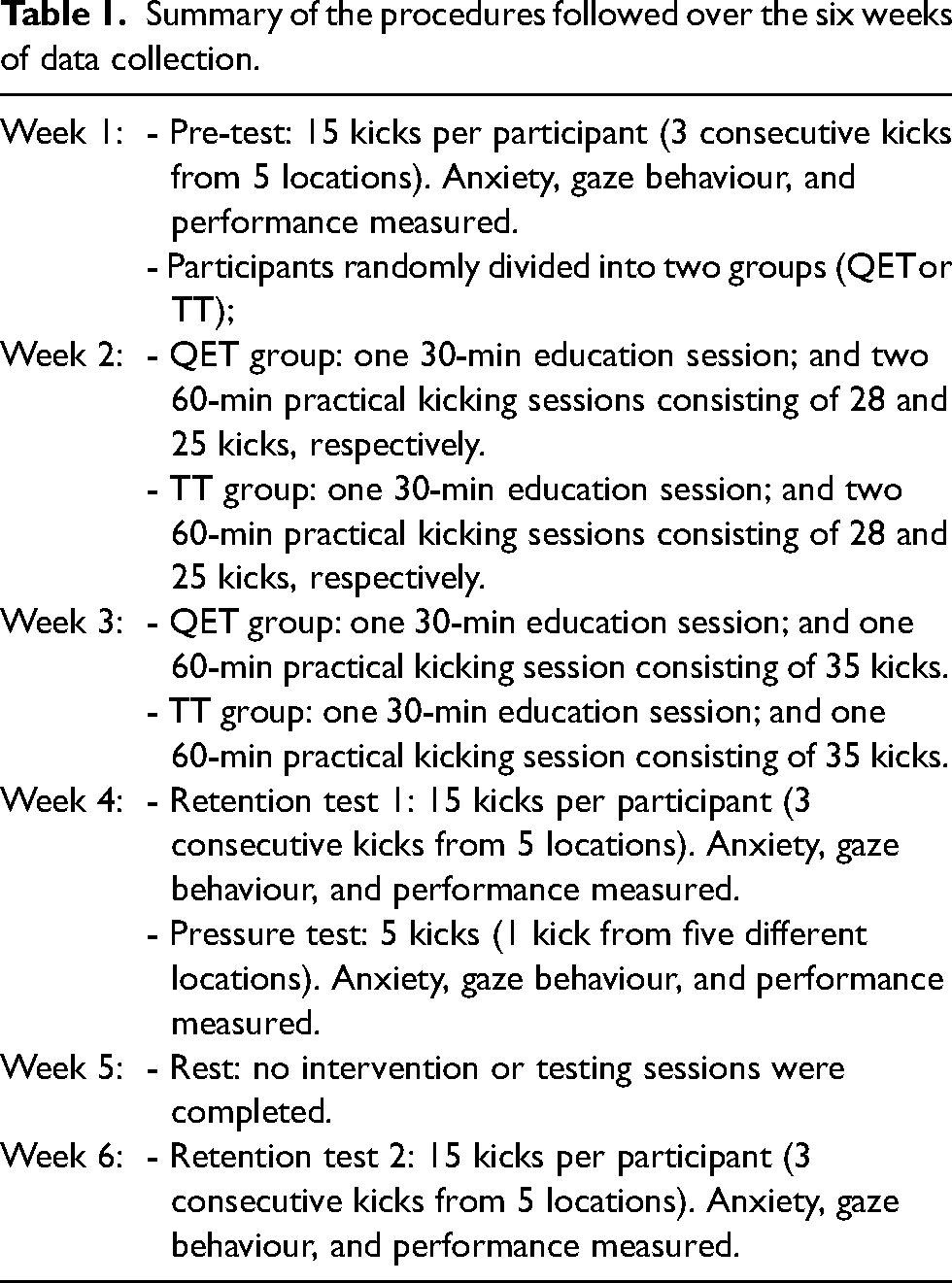
Data were collected over six weeks, and the study followed an A-B-A design (retention-pressure-retention) as utilized in previous QET studies.29–31 All participants started with the pre-test in week one, after which participants were randomly assigned to either a technical trained (TT) (i.e. control) or quiet eye trained (QET) group (i.e. experimental) via block randomization. Participants then followed the specific training programme assigned to them for two weeks (see Tables 1 and 2 below). In week four, retention test 1 was conducted, which included a replication of the pre-test In addition, the pressure test was conducted in week four. Participants then entered a week-long rest phase in week five, where they had no responsibilities related to the study. Finally, in week six, retention test 2 was completed, which was also a replication of the pre-test Two participants withdrew from the study prior to retention test 2 due to injury. The total amount of kicks was 870, however, equipment failure led to the removal of 47 kicks (5.5%) equally distributed between tests (range = 5.1% and 6.6%), bringing the total number of kicks analysed to 823. Kicks analysed per test equalled to 256 kicks in the pre-test (QET = 128; TT = 128), 256 in retention test 1 (QET = 134; TT = 122), 83 kicks in the pressure test (QET = 40; TT = 43), and 227 kicks in retention test 2 (QET = 129; TT = 98).
Summary of the procedures followed over the six weeks of data collection.
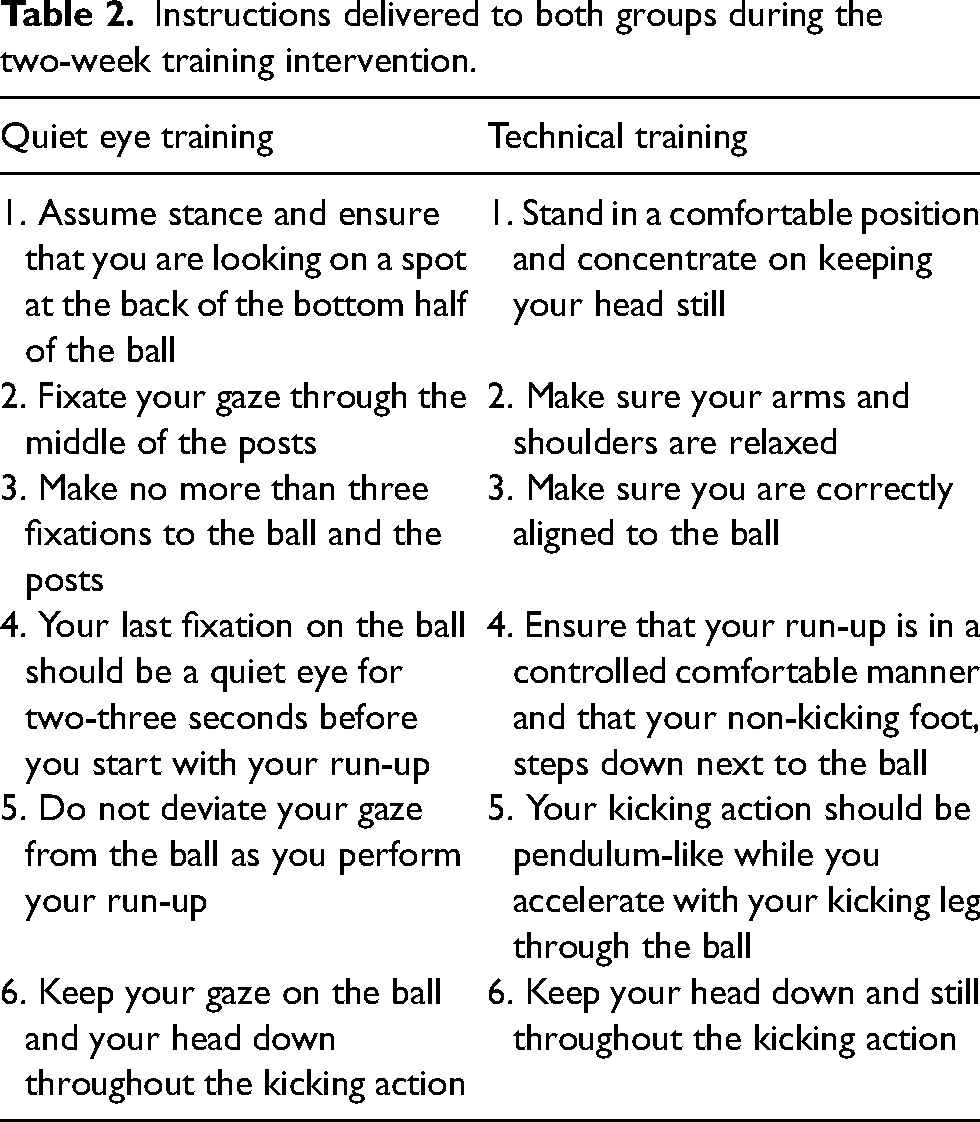
Instructions delivered to both groups during the two-week training intervention.
Procedures for the pre-test, retention test 1, and retention test 2
Participants individually reported to the rugby field where they started with a standardized 15-min warm-up, including approximately 10 kicks, five with and five without the eye tracker for familiarization purposes. This was immediately followed by the completion of the MRF-3 to assess cognitive and somatic anxiety. The eye tracker was then calibrated, after which the participants started with the 15 goal-kicks. All participants took three kicks successively from five different and pre-determined locations on the field in a specific order from 1–5 (see Figure 1). By selecting the locations on specific lines, the research team were able to accurately identify the locations over the six weeks of testing, meaning that the distance and angle to the post for each location were the same for all participants across the six weeks.
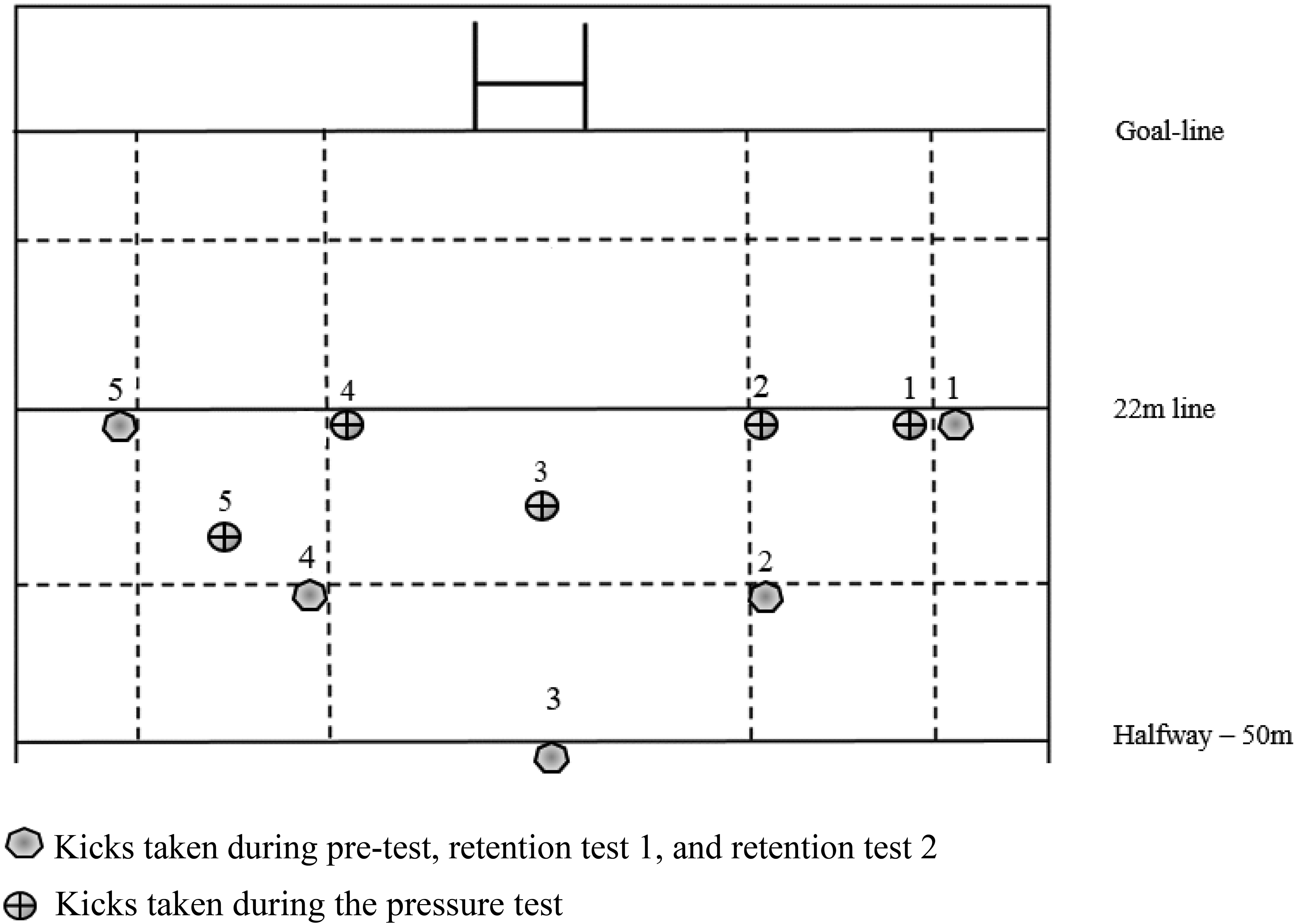
Kick locations during the low- and high-pressure tests.
Procedures for the pressure test
Similar to the retention tests, the pressure tests started with a warm-up and familiarization, followed by the completion of the MRF-3 to assess anxiety. The pressure test was adapted according to previous research, which included various techniques such as cash prizes (team and individual), non-contingent feedback, and a live scoreboard in an attempt to elevate psychological pressure.29,31 Before conducting the pressure test, the whole group was divided into two teams of equal strength based on the kicking results of the pre-test and retention test 1. Both teams had a similar training intervention representation, with four or five participants from the QET and TT group in each team. A scoreboard was used for the participants to monitor their contribution to their respective team's total score. Participants received non-contingent feedback on an individual basis just before the commencement of the first pressure kick. For example, a participant was informed that he currently fell in the bottom 30% of the group and another bad performance might lower his chance of winning any cash prizes. Finally, in contrast with the previous tests, the participants were initially unaware of the order and locations for the kicks, which is like an actual rugby match, where kickers are unaware of the time and location of kicks. Moreover, all participants were made aware that they only had one kick per location, and that the kicks either represented a conversion kick (2 points) or a penalty kick (3 points), which is also like an actual rugby match. Each participant had three penalty kicks and two conversion kicks, meaning that each kicker was able to contribute a maximum of 13 points to their team. After each kick, participants were informed where the next kick should be taken from and whether it was a conversion or penalty kick. The penalty and conversion scores were only used for scoreboard purposes during the pressure test The performance measure used for analysis remained like the other tests (i.e. percentage of successful kicks out of the total number of kicks). The scoring simulated match conditions with regards to goal-kicking points and the randomness of the type and location of kicks. All participants attempted one kick from five different locations in the same order (see Figure 1).
QET and TT protocols
The instructions during the different training interventions were adapted from previous QET studies and applied specifically to rugby goal-kicking (see Table 2).18,19,30 The number of instructions was identical to ensure consistency between both groups.
The education sessions for the TT group comprised of information related to technical training and the importance of pre-performance routines during task execution. 32 In contrast, the QET group watched a video about the effect of QET on soccer penalty taking (https://www.youtube.com/watch?v=UnXqmisYKpc) from previous research, followed by information on the QE and how it benefits sports performance.7,19 Practical training sessions were typical goal-kicking sessions on the field, with the instructions in Table 2 reiterated to each group every three to five kicks on average.
Data analysis
Data were analysed using SPSS statistical software (IBM version 26.0). First, descriptive statistics were calculated to report means and standard deviations. Next, Shapiro-Wilk tests indicated that all data were normally distributed and parametric statistical analyses were appropriate. Subsequently, for each variable (i.e. anxiety, performance, absolute QE-pre, relative QE-pre, absolute QE-online, and relative QE-online), a linear mixed model was conducted using a 2 (Group: QET vs. TT) × 4 (Test: pre-test, retention test 1, pressure test, and retention test 2) design, with significance set at 0.05. Follow-up post-hoc pairwise t-tests (degrees of freedom was specific to each test) with their p-values corrected through the Bonferroni method were used to examine significant main and interaction effects. To complement these inferential statistics, effect sizes (ES), which are independent of sample size and measurement scales, were reported. 33 Specifically, Cohen's d effect sizes were used to determine practical significance, with values of ≥ 0.8 considered large, ≥ 0.5 deemed moderate, and ≥ 0.2 considered small. 34
Results
Goal-kicking performance
The results for goal-kicking performance revealed no significant main effect for Group (F[1,15.63] = 0.14, p = .713) or Test (F[3,45.96] = 0.28, p = .839). The interaction effect also failed to reach significance (F[3,45.96] = 1.67, p = .187).
The only practically significant difference (ES) between the groups was observed during the pressure test, where the QET group (M = 48.89%, SD = 28.48%) outperformed the TT group (M = 33,33%, SD = 22.38%, d = 0.72). Within-group analyses for the TT group revealed moderate to small performance differences between all tests (all d's ≤ 0.45). In contrast, the QET group performed better during the pressure test (M = 48.89%, SD = 28.48%) compared to the pre-test (M = 48.15%, SD = 13.03%, d = 0.52) and retention test 1 (M = 44.44%, SD = 17.57%, d = 0.72). In addition, the QET group also performed better during the retention test 2 (M = 52.38%, SD = 15.00%) compared to retention test 1 (M = 44.44%, SD = 17.57%, d = 0.54).
The performance averages across all four tests (33% - 49%) are lower compared to international level goalkickers (41% - 70%) from similar kicking locations. 35 This finding was expected when considering the age (Mage = 21.35 years, SD = 2.03) and level of participation (amateur and semi-professional) of participants from the current study are lower compared to the elite goalkickers (Mage = 26.7 years, SD = 3.4 years) of the previous study. 35 Furthermore, the best kicker of a team will attempt goal kicks during a match, while the current study included all recognized kickers (2–3 kickers per team) from the rugby institute associated with the local university. In addition, a previous study on elite university-level ice hockey goaltenders also observed lower goaltending performance percentages during data collection tests compared to the match performance averages of the same participants. 36 (see Figure 2).
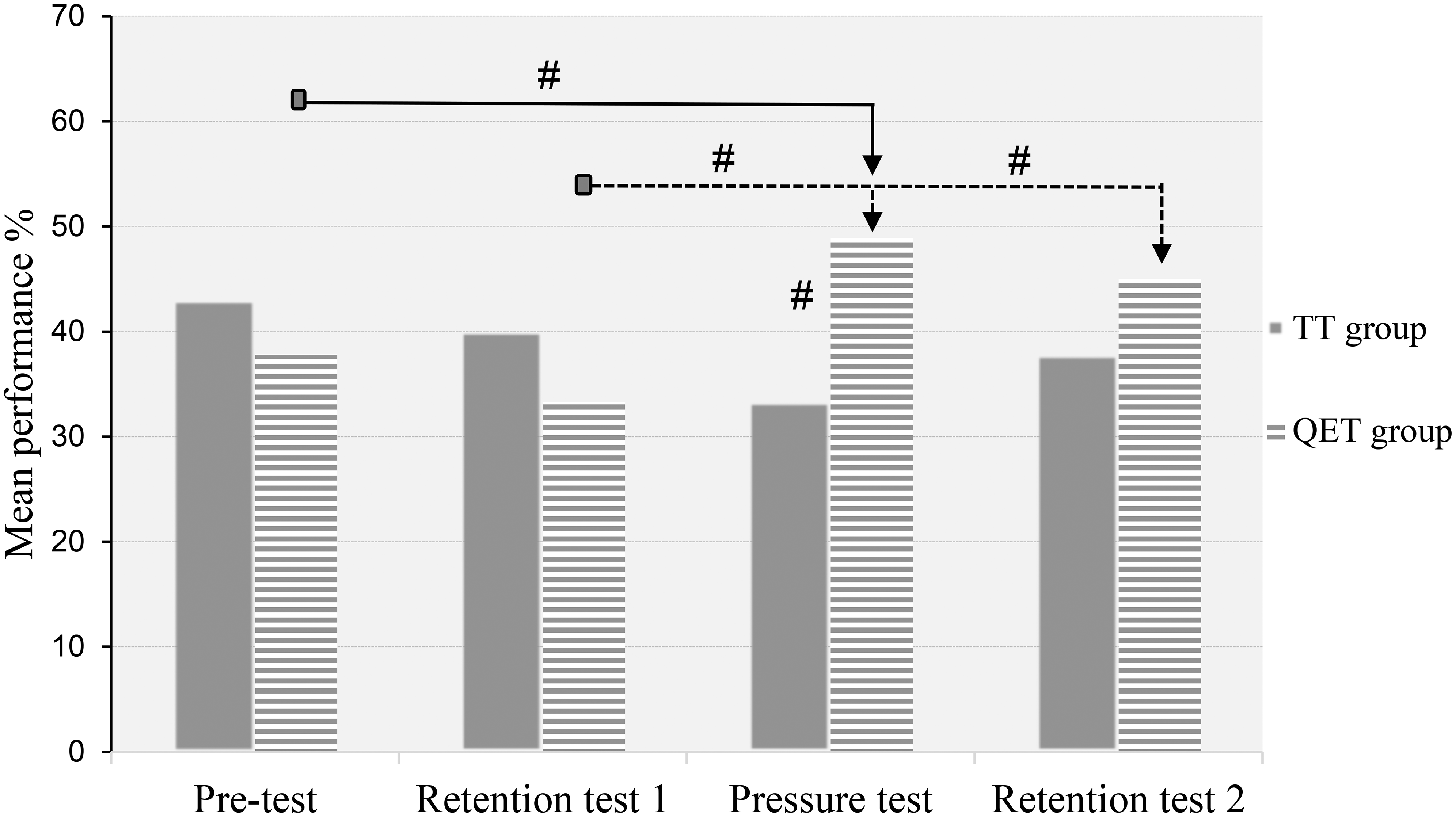
Mean performance of the QET and TT groups during all tests. # = d ≥ 0.52 moderate to large effect size.
State anxiety
Cognitive anxiety
The results for cognitive anxiety revealed no significant main effect for Group (F[1,16.2] = 0.5, p = .489), no significant main effect for Test (F[3,46.63] = 0.87, p = .464), and no significant interaction effect (F[3,46.63] = 0.84, p = .480). Limited practically significant (ES) between- and within-group differences were observed. However, between-groups, higher cognitive anxiety was reported by the QET group (M = 4.86, SD = 2.97) than the TT group (M = 3.56, SD = 1.33) during retention test 2 (d = 0.56). Moreover, within-groups, the TT group reported higher cognitive anxiety during the pressure test (M = 4.67, SD = 2.00) compared to retention test 1 (M = 3.33, SD = 2.20, d = 0.60) and retention test 2 (M = 3.56, SD = 1.33, d = 0.55). Similarly, the QET group reported higher cognitive anxiety during the pressure test (M = 4.78, SD = 1.48, d = 0.49) and retention test 2 (M = 4.86, SD = 2.97, d = 0.56) than the pre-test (M = 3.78, SD = 1.86). See Figure 3.
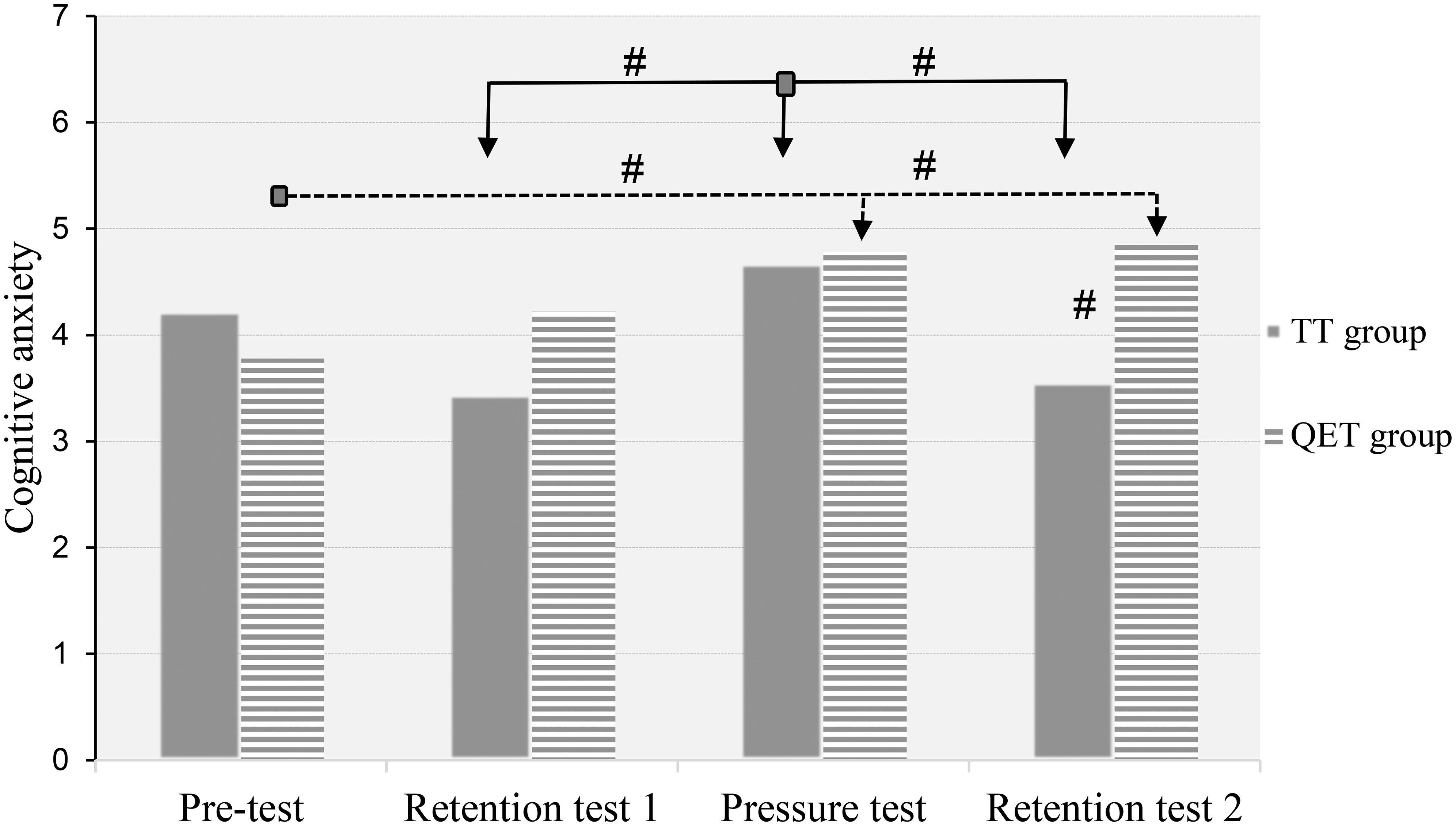
Mean cognitive anxiety of the QET and TT groups during all tests. # = d ≥ 0.49 moderate to large effect size.
Somatic anxiety
The results for somatic anxiety revealed no significant main effect for Group (F[1,16.26] = 0.09, p = .765) and no significant interaction effect (F[3,46.52] = 0.04, p = .988). However, there was a significant main effect for Test (F[3,46.52] = 3.73, p = .017). Post-hoc analyses indicated that on average, across both groups, somatic anxiety decreased from the pre-test (M = 5.11, SD = 1.53) to retention test 1 (M = 3.78, SD = 1.52, p = .035, SE = 0.46, df = 46.24), and increased from retention test 1 to the pressure test (M = 5.11, SD = 1.78, p = .035, SE = 0.46, df = 46.24). Thus, somatic anxiety was successfully manipulated during the pressure test
Practical significant differences (ES) revealed a similar pattern for somatic anxiety between the tests (see Figure 4). Specifically, for the whole group, somatic anxiety decreased from pre-test to retention test 1 (d = 0.74), followed by an increase from retention test 1 to the pressure test (d = 0.74). Both groups reported a decrease in somatic anxiety from pre-test to retention test 1 (both d's = 0.74) followed by an increase from retention test 1 to the pressure test for the TT group (d = 0.68) and QET group (d = 0.80) respectively.
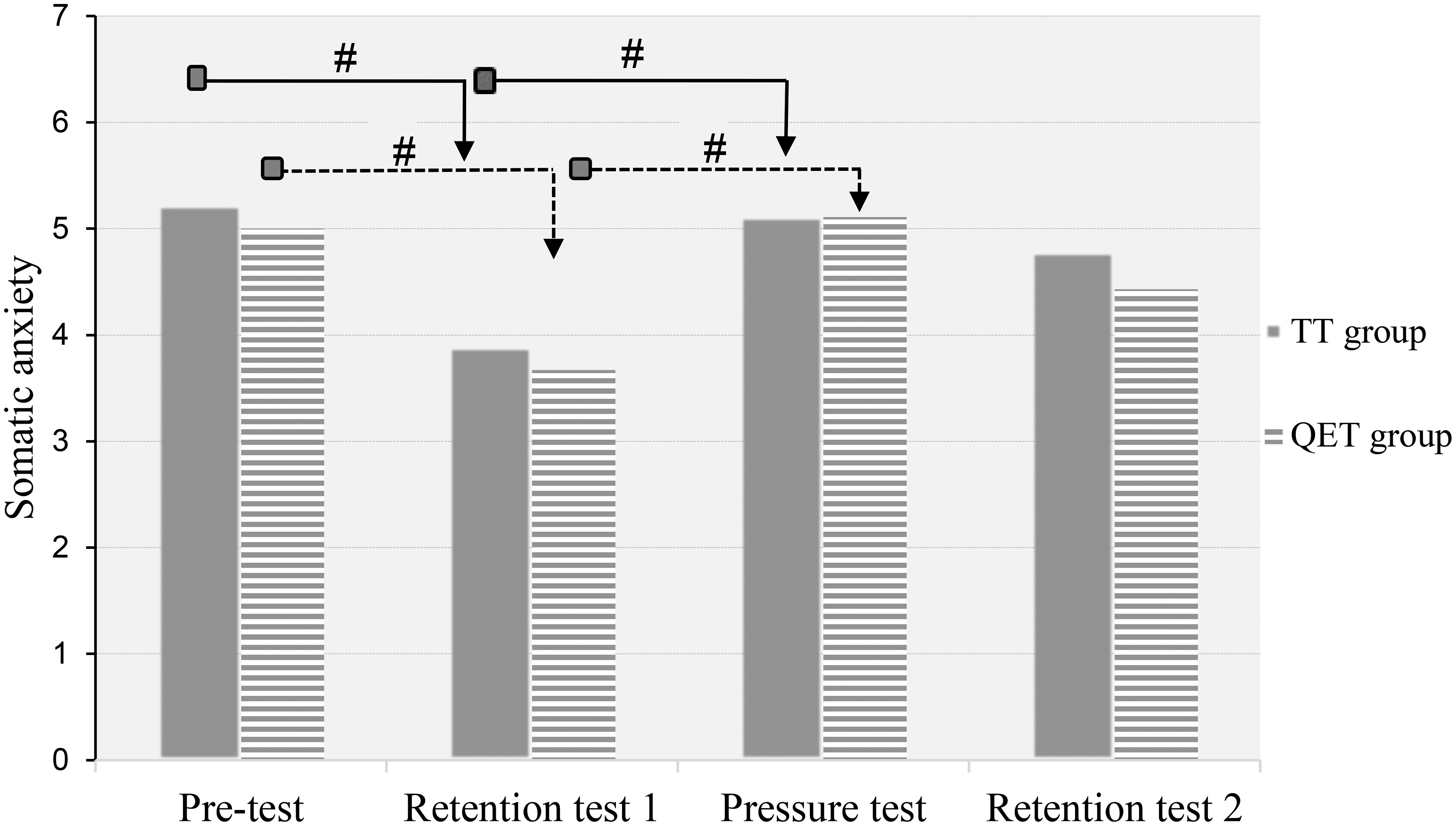
Mean somatic anxiety of the QET and TT groups during all tests. # = d ≥ 0.68 moderate to large effect size.
QE durations
Absolute QE-pre
The results for absolute QE-pre durations revealed significant main effects for Group (F[1,16.16] = 7.45, p = .015) and Test (F[3798.57] = 14.04, p ˂.001). Furthermore, the interaction effect was significant (F[3798.57] = 18.68, p ˂.001). Follow-up between-group analyses indicated no significant difference between the groups at pre-test (p = .198, SE = 455.84, df = 17.28). However, following the intervention, the QET group displayed significantly longer QE-pre durations than the TT group at retention test 1 (QET: M = 2992.24 ms, SD = 1391.33 ms; TT: M = 1237.81 ms, SD = 770.90 ms, p = .002, SE = 455.85, df = 17.29), pressure test (QET: M = 2450.60 ms, SD = 1453.29 ms; TT: M = 918.63 ms, SD = 726.37 ms, p = .006, SE = 480.96, df = 21.41), and retention test 2 (QET: M = 2324.61 ms, SD = 1420.53 ms; TT: M = 1248.84 ms, SD = 1309.70 ms, p = .027, SE = 458.40, df = 17.67; see Figure 5). Follow-up within-group analyses revealed that the QET group significantly increased their QE-pre durations from the pre-test (M = 1869.79 ms, SD = 1441.62 ms) to retention test 1 (p ˂.001, SE = 107.59, df = 798.10), and their QE-pre durations persisted to be longer in the pressure test (p = .006, SE = 107.59, df = 798.08) and retention test 2 (p = .003, SE = 800.05, df = 117.27) relative to the pre-test However, compared to retention test 1, the QET group displayed shorter QE-pre durations during the pressure test (p = .003, SE = 150.72, df = 798.07) and retention test 2 (p ˂.001, SE = 118.51, df = 800.05). The QE-pre durations of the TT group remained similar across all tests (all p's >.05) (see Figure 5).
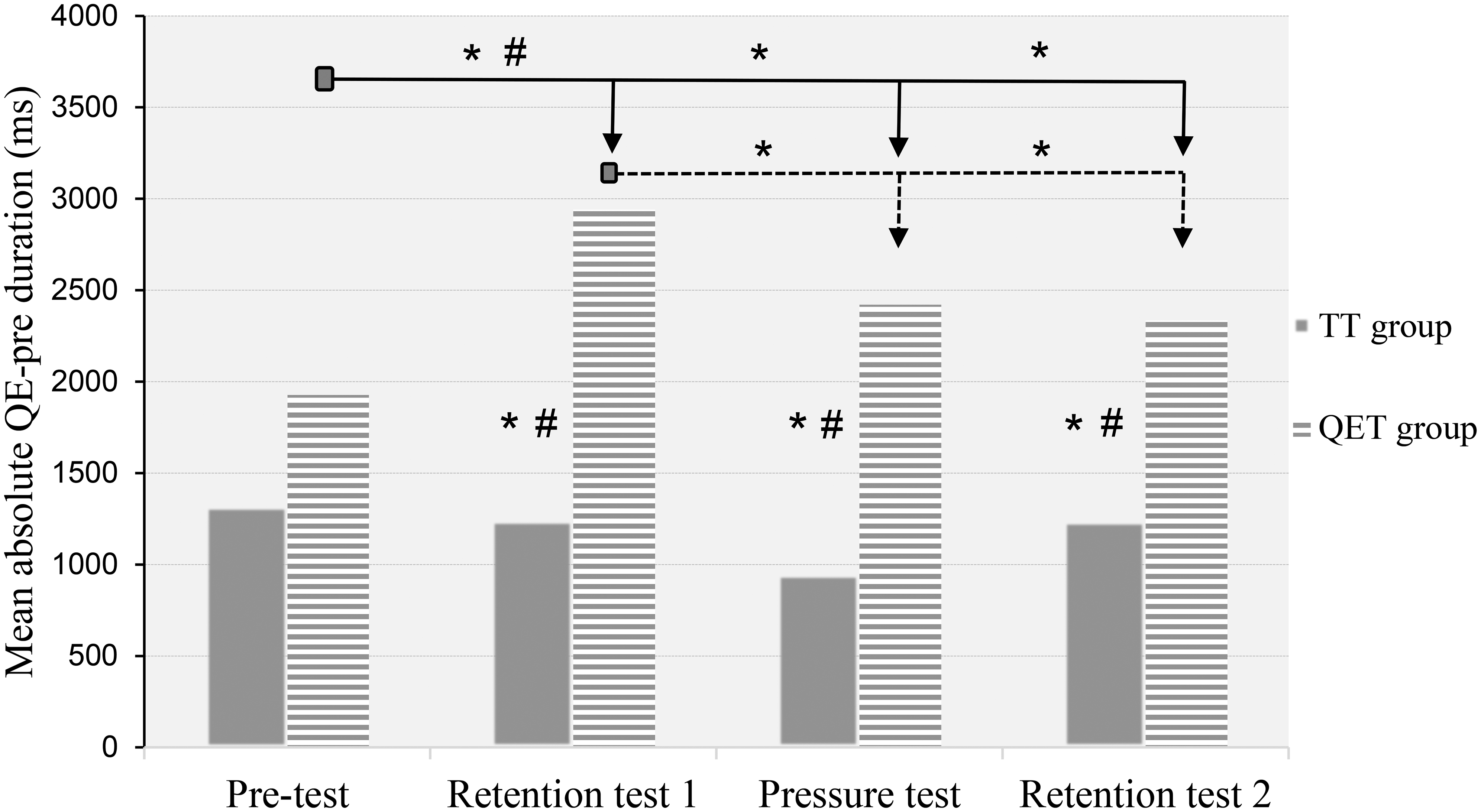
Mean absolute QE-pre durations of the QET and TT groups during all tests.* = p < 0.05 # = d ≥ 0.80 large effect size.
The longer QE-pre durations displayed by the QET group compared to the TT group also reached practical significance, with large effect sizes at retention test 1 (d = 1.35), pressure test (d = 1.17), and retention test 2 (d = 0.87). The only within-group practically significant difference (ES) was reached among the QET group, who increased their QE-pre duration between pre-test and retention test 1 (d = 0.80).
Relative QE-pre
The relative QE-pre results failed to show a significant main effect for Group (F[1,16.13] = 2.74, p = .117), while a significant main effect was found for Test (F[3798.41] = 6.33, p ˂.001). Furthermore, the interaction effect also reached significance (F[3798.41] = 8.38, p ˂.001). Follow-up within-group analyses indicated that the relative QE-pre values of the QET group increased from the pre-test (M = 13.53%, SD = 14.00%) to retention test 1 (M = 18.36%, SD = 12.50%, p ˂.001, SE = 0.81, df = 798.07) and decreased from retention test 1 to retention test 2 (M = 14.97%, SD = 14.57%, p = .001, SE = 0.89, df = 799.40).
Large between-group practical significant differences (ES) were observed at retention test 1 (d = 0.84) and the pressure test (d = 0.81) while retention test 2 (d = 0.54) resulted in a medium effect size between-group difference. The QET group displayed higher relative QE percentages than the TT group at retention test 1 (QET: M = 13.53%, SD = 14.00%; TT: M = 9.30%, SD = 5.59%), pressure test (QET: M = 15.48%, SD = 11.76%; TT: M = 6.80%, SD = 3.76%) and retention test 2 (QET: M = 14.97%, SD = 14.57%; TT: M = 9.22%, SD = 7.15%). The within-group differences failed to reach any meaningful effect sizes between all testing occasions (all d's < 0.5).
Absolute QE-online
The results for the absolute QE-online durations revealed no significant main effect for Group (F[1,16.23] = 2.93, p = .106) and no significant interaction effect (F[3798.92] = 1.43, p = .234). However, there was a significant main effect for Test (F[3798.92] = 9.94, p ˂.001). Post-hoc analyses indicated that on average, across both groups, QE-online durations increased from the pre-test (M = 636.03 ms, SD = 420.46 ms) to retention test 1 (M = 755.28 ms, SD = 470.15 ms, p ˂.001, SE = 30.61, df = 798.09) and retention test 2 (M = 720.55 ms, SD = 449.94 ms, p ˂.001, SE = 32.18, df = 799.95).
The only practically significant (ES) between-group differences were observed during the pressure test (d = 0.73) and retention test 2 (d = 0.57). The QET group (pressure: M = 871.21 ms, SD = 449.67 ms; retention 2: M = 896.90 ms, SD = 378.56 ms) displayed longer QE-online durations than the TT group (pressure: M = 542.01 ms, SD = 373.41 ms; retention 2: M = 642.30 ms, SD = 489.14 ms) on both occasions. See Figure 6.
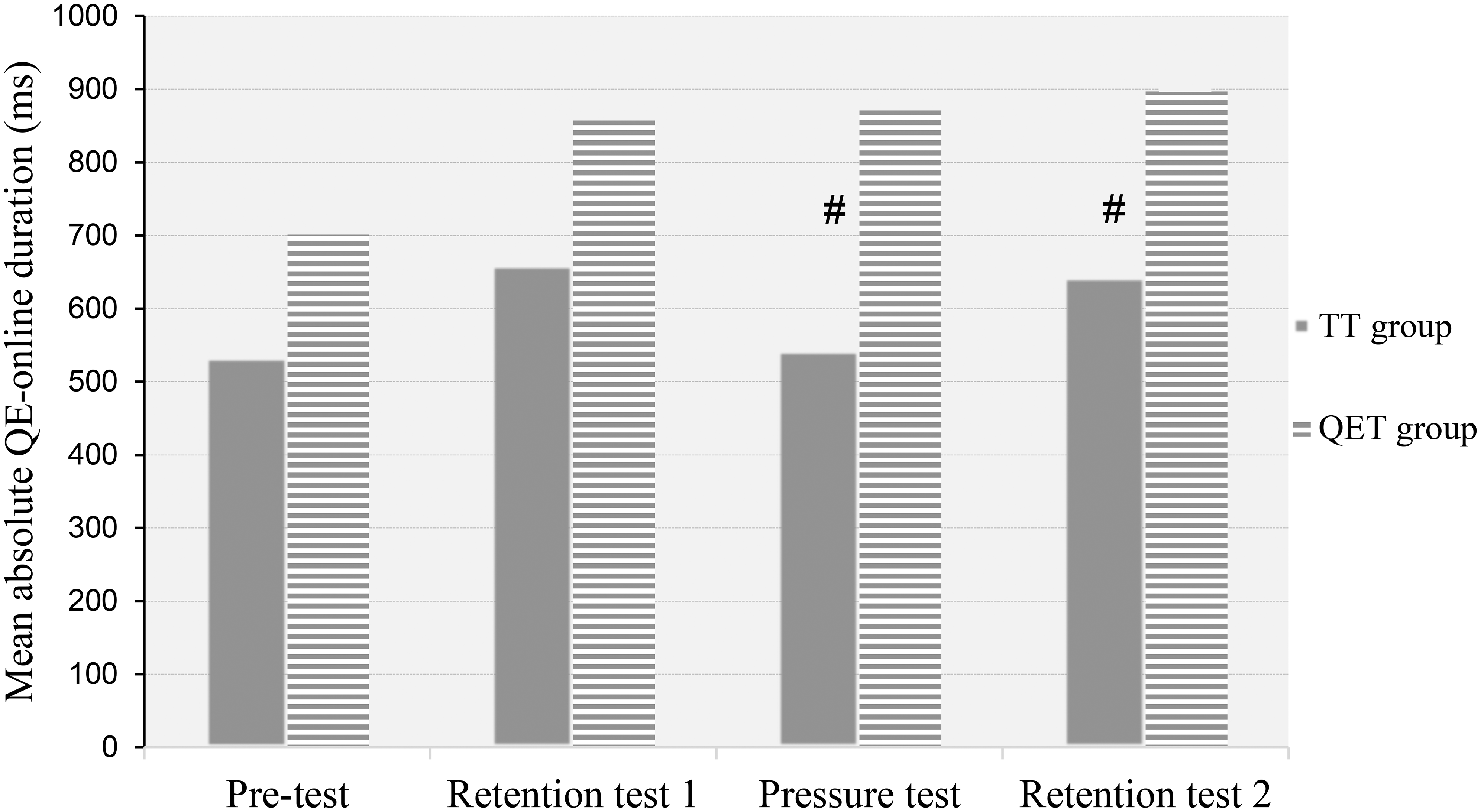
Mean absolute QE-online durations of the QET and TT groups during all tests. # = d ≥ 0.57 moderate to large effect size.
Relative QE-online
Similar to the absolute QE-online, the relative QE-online only yielded a significant main effect for Test (F[3803.99] = 6.71, p ˂.001), while no significant main effect was observed for Group (F[1,16.27] = 1.87, p = .191) or the interaction (F[3803.99] = 1.76, p = .154). Post-hoc analyses also indicated that the relative QE-online percentages increased from the pre-test (M = 32.43%, SD = 22.96%) to retention test 1 (M = 37.95%, SD = 24.47%, p = .006, SE = 1.67, df = 803.09) and retention test 2 (M = 39.55%, SD = 23.85%, p ˂.001, SE = 3.76, df = 19.12) for the whole group.
Similar to the absolute results, the only between-group differences that reached practically significance (ES) were found during the pressure test (d = 0.57) and retention test 2 (d = 0.52) with the QET group (pressure: M = 45.64%, SD = 25.10%; retention 2: M = 45.86%, SD = 24.40%) demonstrating larger QE-online percentages than the TT group (pressure: M = 31.99%, SD = 23.03%; retention 2: M = 33.24%, SD = 22.85%) during both tests.
Discussion
The ability to control attention during anxiety-provoking situations is vital for optimal performance. 7 The QE has proved to be an objective measure of goal-directed attentional control that aids performance particularly during high-pressure conditions.7,8 Considering the pressure and constraints associated with rugby goal-kicking, 37 extended QE durations might be a viable option for goal-kickers to incorporate into their pre-performance routine to potentially prevent performance breakdown under pressure. Therefore, this study aimed to determine the effect of a QET intervention versus a TT intervention on the QE-pre and QE-online durations and also the performance of rugby union goal-kickers in high and low-pressure conditions. The results suggest that QET led to longer QE-pre durations but not QE-online durations. Even though limited effects on goal-kicking performance were observed for the low-pressure condition, the results from the high-pressure condition revealed that QET did benefit performance with the QET group outperforming the TT group.
Absolute versus relative QE durations
The absolute and relative QE results were very similar with no contrasting differences. In general, the absolute QE results were more significant (lower p values) with larger effect size differences (larger d values) implying that absolute QE durations were more sensitive than the relative QE percentages. The authors' reason that typical routine behaviours utilized by rugby goal kickers before the run-up such as glances between the ball and goal posts, which are absent during the run-up, result in longer movement phases which in turn might affect the sensitivity of the analysis. 3 Therefore, for the current study, the absolute QE durations will be further discussed.
Retention tests
At the pre-test, no significant QE-pre or QE-online differences were observed between the groups, suggesting that the random assignment to groups was effective and that participants had similar gaze behaviours prior to receiving the training interventions. The QE-pre durations of the QET group increased from pre-test to both retention tests, proving that this element of the QE was trainable.7,8 However, following the week of no intervention (i.e. rest), the QE-pre durations of the QET group declined compared to retention test 1, implying that the effects of QET might not be durable over time and should not be limited to a one-off intervention but incorporated regularly into training to ensure the continuous attainment of longer QE-pre durations. In contrast, the TT intervention failed to impact QE-pre durations, supporting existing evidence in showing that TT does not directly affect gaze behaviour. 31 Consequently, the TT group displayed shorter QE-pre durations than the QET group during both retention tests, corroborating previous research which has shown that QET is superior to TT in producing longer QE-pre durations18,29–31. In this regard, the longer QE-pre durations displayed by the QET group reinforces that QET benefits attentional control during the pre-programming of set parameters prior to goal-directed tasks like the rugby goal-kick. 18
In contrast to the QE-pre findings, the whole group increased QE-online durations from pre-test to retention tests, similar to a previous study on the soccer penalty kick. 19 Expected for QET but perhaps unexpected for TT, both interventions benefitted visual control during the run-up. The current findings might be due to the final instruction delivered to the TT group “to keep your head down and still throughout the kicking action” and the QET group “keep your gaze on the ball and your head down throughout the kicking action”. Considering that head movement and gaze behaviour is closely coordinated,38,39 the authors argue that promoting minimum head movement during the TT and QET might have upheld visual control during the kicking action among the whole group. However, within-group analyses failed to reach meaningful changes in QE-online durations between the pre-test and both retention tests. A possible explanation is that the specific instructions given to both groups (see Table 2) mainly focused on gaze behaviours and movements before the run-up rather than during the run-up. Indeed, perhaps more emphasis could have been placed on the QE-online phase (i.e. during the run-up), similar to a recent study proposing instructions relevant to the respective phases of the basketball three-point shot. 23
Interestingly, concerning performance, neither QET nor TT improved performance from the pre-test to the retention tests. This finding contrasts previous research, which has typically found significant improvements in performance following QET, albeit often with novice or inexperienced participants in laboratory-based settings.18,30,40 Indeed, some research has shown that QET may be less beneficial for more experienced athletes. 31 For example, a recent study found that QET only benefitted the basketball shooting performance of novices but not intermediate-level basketball players. 20 Thus, the effects of QET on performance might be skill-level dependant. Indeed, the lack of improvement in performance in the present study could be due to a ceiling effect among the experienced rugby goal-kickers. Additionally, the performance measurement (percentage of successful kicks) might be less sensitive than the measures used in previous research, such as performance error.31,41 For example, the study by Vine and colleagues (2011) on the golf putting task found that the QET group performed significantly better than the control group regarding performance error, while the performance outcome (percentage putts holed) difference failed to reach statistical significance. Utilizing outcome (successful/unsuccessful) as the only measurement of performance in the current study might have lacked sensitivity, particularly among experienced participants. Therefore, the level of expertise together with the method of performance measurement should be considered when comparing and interpreting results from QET studies.
Pressure test
Similar levels of anxiety were reported between and within the QET and TT group at the pre-test and retention test 1. Therefore, any differences observed at the pressure test can be attributed to the successful manipulation of anxiety. The level of cognitive and somatic anxiety increased from retention test 1 to the pressure test for both groups and even though the increase in cognitive anxiety did not reach significance, the meaningful effect sizes achieved are in line with previous research.18,19,29,30 Anxiety was therefore successfully manipulated during the pressure test
In accordance with the predictions of the ACT, 5 but in disagreement with the findings of previous QET studies,18,19,29 the QE-pre durations of the whole group decreased from retention test 1 to the pressure test The current results suggest that an increase in anxiety during the high-pressure test might have disrupted the efficiency of attentional control, and particularly the goal-directed attentional system when executing the goal-directed movement of rugby goal-kicking.5,30 In contrast, QE-online durations did not decrease significantly from retention test 1 to the pressure test However, during the pressure test, the QET group displayed longer QE-pre and QE-online durations than the TT group, suggesting that QET may be more effective than TT in ensuring that attentional control is maintained during high-pressure situations. This is a finding that is consistent with previous research18,19,29–31 and could have helped the QET outperform the TT group. Indeed, while failing to reach statistical significance, it was clear from Figure 2 and the practical significance reflected by the large effect size (d = 0.72) that the QET group performed better than the TT group during the pressure test
The authors emphasize that the largest between-group performance difference (16%) observed during the pressure test should not be underestimated. Considering the high-pressure condition in the current study was a more accurate reflection of the goal-kicking task during a rugby match (i.e. scoreboard, only one kick attempt, conversions and penalties) than the low-pressure condition, one can assume that the high-pressure test results carry more ecological value. Previous results indicated that tasks should be performed in conditions that represent real-match situations as close as possible to promote the generalization of results. 24 Taken together, the findings of the present study concur with previous findings suggesting that QET could be incorporated into the pre-performance routine of rugby players, helping them to improve attentional control and to ensure that it is maintained under high-pressure.8,29 Indeed, previous QET research indicated that QET resulted in improved perceived perceptions of coping resources and perceived control and in turn permitted performers to appraise a high-pressure competition as a challenge rather than a threat. 29 Furthermore, the current results support the notion that the QE can be regarded as an effective intervention to prevent performance breakdowns (choking) under high-pressure situations in sport 10 and in this case rugby goal-kicking.
Underlying mechanisms of the QE-pre and QE-online
The current study contributes to existing QET results and also to the new research paradigm proposed lately which suggested that the QE should be investigated during multiple phases of task execution.8,23 The results indicate that the specific QET intervention predominantly affected the QE-pre duration, while the QE-online duration and performance were affected to a less significant extent. A possible explanation is the QET intervention of the current study was adapted from previous QET studies that focused on training the QE during a single phase, hence affecting only the QE-pre duration.18,29,30 Based on the current results the authors suggest that the influence of QET might be phase-specific and emphasize that future QET studies should aim to adopt the recently proposed QE research paradigm. More results regarding the effect of QET on the QE durations during different phases of task executions and subsequent performance might clarify the underlying mechanisms of the QE phenomenon.
Despite the interesting findings from the present study, the following limitations should be kept in mind. First, the anxiety measurements were only taken before each test Thus, the authors were unable to measure changes in anxiety caused by successful or unsuccessful kicks, kick difficulty, or environmental conditions.1,42 Even though we aimed to replicate a real match situation as closely as possible, particularly during the pressure test, it is uncertain whether the benefits to QE-pre, QE-online, and performance observed following the QET intervention transferred to real-world matches. Therefore, future research should try to collect data, and particularly kicking statistics, from real-world matches to more accurately determine the transfer effects of QET interventions.17,31 Another recommendation might be to further investigate the effects of a QET intervention for each individual respectively to control for individual variability. 22 Indeed, longer routine times or longer movement (run-up) times allow for longer QE durations but do not necessarily affect the QE duration or improve accuracy. Thus, future research should investigate the correlation between movement durations and QE durations during the different phases of task execution. Furthermore, it is also recommended that future studies continue to report absolute and relative QE values to better understand the role of the QE in different tasks that require different routines and movement phase durations. Finally, the intervention of the current study included a video as part of the QET but not part of the TT. Future studies should aim to be consistent with resources used during training interventions. 20 As with all in situ experiments, certain factors are impossible to control for (e.g. wind, temperature, pitch condition, external noises), which in any case is also uncontrollable during matches. However, it might still have affected the current results.
Conclusion
This study investigated the effects of QET and TT on the attentional control and goal-kicking performance of rugby players under both low- and high-pressure. The results revealed that the rugby goal-kickers benefitted more from QET than TT in preserving longer QE-pre durations. Moreover, during the pressure test, QE-pre and QE-online durations were longer for the QET group compared to the TT group, possibly resulting in the QET group outperforming the TT group. From an applied perspective, the results suggest that a brief QET intervention could be used to improve the attentional control of experienced rugby goal-kickers, and might minimise the adverse effects of anxiety on performance in high-pressure situations (e.g. a penalty-kick to win the match). However, further research should investigate the effects of longer QET interventions on multiple QE durations and subsequent performance among various levels of rugby goal-kickers.
Footnotes
Declaration of interest
None
This research study did not receive any specific grant from funding agencies in the public, commercial, or not-for-profit sectors.
Declaration of conflicting interests
The author(s) declared no potential conflicts of interest with respect to the research, authorship, and/or publication of this article.
Funding
The author(s) received no financial support for the research, authorship, and/or publication of this article.
