



Abstract
Visual attention has a significant impact on shooting performance in basketball. Over the past 35 years, researchers have explored individual concepts of visual attention, such as gaze fixation, the number and direction of saccades, and their effects on shooting accuracy. The last gaze fixation, also known as the quiet eye, was found to be particularly important. The aim of this paper was therefore to systematically review the literature to present how visual attention and the quiet eye contribute to shooting performance and how they are affected by anxiety, training, defensive pressure, and fatigue. The 26 articles selected were divided into two categories; the first category included studies that examined visual attention during free throws, and the second category included studies examining jump shots. In addition, we performed a meta-analytic comparison to determine whether the duration of the quiet eye differs with respect to temporal constraints. Results show that for both jump shots with or without defence and free throws, a longer quiet eye durations and a lower number of gaze fixations are associated with better performance. For a successful shot, the quiet eye phase must occur at the right moment, which is likely due to visuomotor reaction latency prior to elbow extension. Furthermore, improvement in shooting performance can be achieved through quiet eye training or traditional training. Nevertheless, individual factors such as quiet eye timing, systematic training, and visual attention in top basketball players of different playing positions need to be further explored as this will provide even more information for individual’s improvement.
Introduction
Proficiency in basketball demands players to master many specific skills 1 of which shooting is one of the most important, complex, and challenging. 2 It requires precision in order to throw a basketball through the basket rim and gain advantage over the opponent by scoring a point. During a senior game under FIBA rules, an average of eighty shot attempts are made by a single team. Of these, approximately 50% are two-point shots, 25% are three-point shots and 25% are free throws. 3 These shots are performed with different shooting techniques, in different tactical situations and from different positions on the court. Most common shots (free throws, perimeter shots and three-point shots) are usually finished with one hand extending above the head while jumping or standing on the floor. 3 Specific mechanisms that affect shooting performance have been identified, such as ball release height and velocity, angle of ball flight trajectory, stable movement execution, physical characteristics of the player, shooting distance and fatigue. 4 However, all these factors were not able to fully explain shooting accuracy. One important factor that has been shown to help better understand basketball shooting accuracy is visual attention.
Visual attention has been extensively researched in recent decades, and specific performance affecting eye movements have been identified: Gaze fixation, i.e., a stationary gaze (focal vision) toward a target5,6 and saccades, i.e., rapid, ballistic movements of the eye from one visual fixation point to another. 7 Regardless of the type of eye movements, the online processing of visual information and the shooting a basketball represent two mutually inclusive systems. 8 Understanding the coupling of these two systems enables better understanding of how precision is controlled during basketball shots.
During shooting movements in a dynamic environment, sensory information from the upper body, cervical region and vestibular organ enable efficient coordination of head, eye, and body movements.9,10 More specifically, focal vision orientation is an important factor in shooting accuracy because it affects perception of relevant environmental information during the preparation and execution of a shot.11,12 Focal vision fixation usually precedes head movement and is characterized by maintenance of stationary focal vision despite head movement. 13 Such fixation on a specific target is also referred to as the “Quiet eye” and is defined as the final fixation of gaze on a specific point within a visual angle of 3° or less that lasts for at least 100 ms. 14 The quiet eye as an objective measure of the location, onset, offset, and duration of gaze during the performance of a motor skill12,15 has three important functions. First, quiet eye onset occurs prior to finishing the final movement and is proposed to be involved in programing of the final hand movement and probably the entire body movement during the shot.12,16 Second, during the quiet eye period, task-relevant environmental stimuli are processed and incorporated into the preparation of the shot. 15 Finally, the quiet eye may be related to the processes inhibiting excursions of attention to other, less relevant sources of sensory information.17,18
The initial research on gaze fixations in basketball began in 1986 11 with the study of visual perception during jump shots and continued in 1996 focusing on free throws, where Vickers12,15 also introduced the term “Quiet eye”. This topic has interested various researchers over the last 35 years, who have studied visual attention and its properties under different conditions in conjunction with some other factors such as training, 19 anxiety 20 and fatigue. 21
Given the high importance of shooting performance in basketball and the extensive scientific evidence supporting the importance of quiet eye, we wanted to summarize the current state of knowledge on how visual attention contributes to accuracy in basketball shooting. Thus, the aim of this systematic review and meta-analysis was to synthesize the literature in the area of visual attention in basketball shooting, more specifically how visual attention and the quiet eye contribute to shooting performance in free throws and jump shots, and how these are affected by anxiety, training, defensive pressure, and fatigue. More specifically, we were interested in comparing the duration of the quiet eye phase during free throws and jump shots and determining whether quiet eye duration depends on temporal constraints that exist during jump shots.
Materials and methods
Search strategy
An initial search for scientific papers was conducted in the following databases: PubMed, ScienceDirect, SPORTDiscus and Scopus. After the initial search, we also conducted a search in Google Scholar. In each database, the search strategy combined the following terms: (player* OR athlete* OR basketball*) AND (“quiet eye” OR “visual fixation” OR “visual attention” OR “gaze” OR “visual information” OR “visual search strategies”). In ScienceDirect, an adapted search strategy was used due to limitation of Boolean connectors that could be used: (basketball) AND (“quiet eye” OR “visual fixation” OR “visual attention” OR “gaze” OR “visual information” OR “visual search strategies”).
Eligibility criteria
Articles were selected according to the Preferred Reporting Items for Systematic Reviews and Meta-Analysis (PRISMA) guidelines, which are shown in Figure 1. The selected articles were analyzed based on the following inclusion criteria: (a) they were published between January 1980 and March 2021, (b) they were written in English, (c) they were related to the free throw or jump shot shooting in basketball, and (d) they contained information on visual attention.
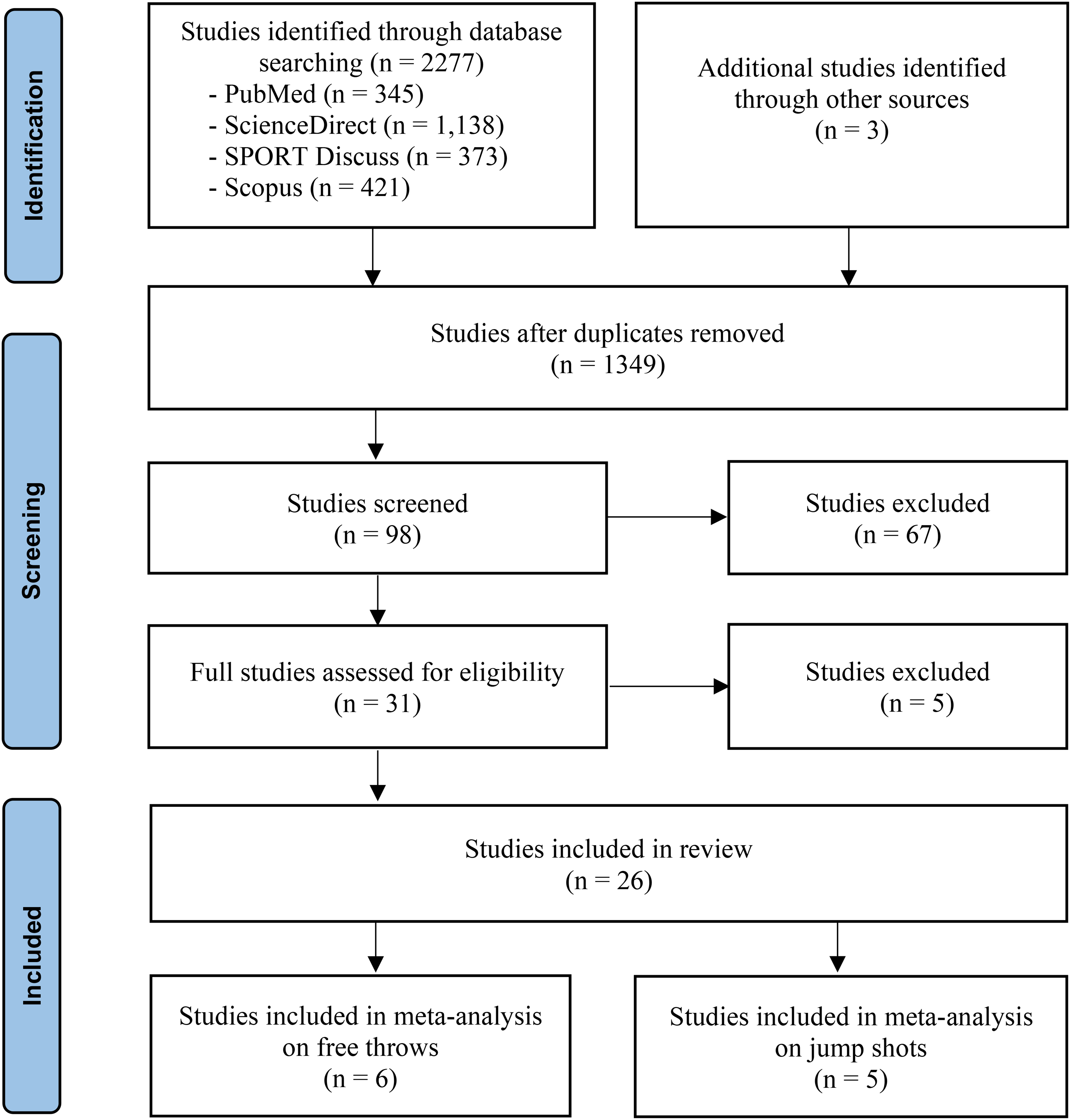
Flowchart showing the study identification process.
Data extraction and statistical analysis
Systematic searches, article screening, and data extraction were performed by three independent reviewers. Meta-analysis was performed in Comprehensive Meta Analysis (Comprehensive Meta Analysis V3, Biostat, Inc., 2021). I2 and Q statistics were calculated to measure the heterogeneity of effect size and Egger's bias test was performed to measure publication bias. Forest plots were created using MS Excel and Adobe Illustrator.
Grading the level of evidence
The grading of the levels of evidence was formulated using the adjusted criteria proposed by the PRISMA 2020 Checklist 22 (Table 1).
Grading levels of evidence of the studies.

Flow of the study selection process
After an initial screening, 26 studies were selected for the present systematic review. The selected 26 articles were divided into two categories. The first category included studies assessing visual attention during free throws and the second category included studies assessing jump shots. Of these 26 articles, 12 related to free throw shooting, 11 related to jump shooting and 3 articles examined both free throw and jump shooting. For 26 articles included in a review, we extracted the information about the experimental approach, the aim of the specific research, the sample characteristics, the quiet eye duration, and findings. 11 of the 26 articles that included information on quiet eye duration in ms were also included in the meta-analysis. For the meta-analysis, we used information on quiet eye duration in hits and misses separately. When this was not possible, we extracted information for the average quiet eye duration in shots, regardless of their outcome.
Ranking of the subjects
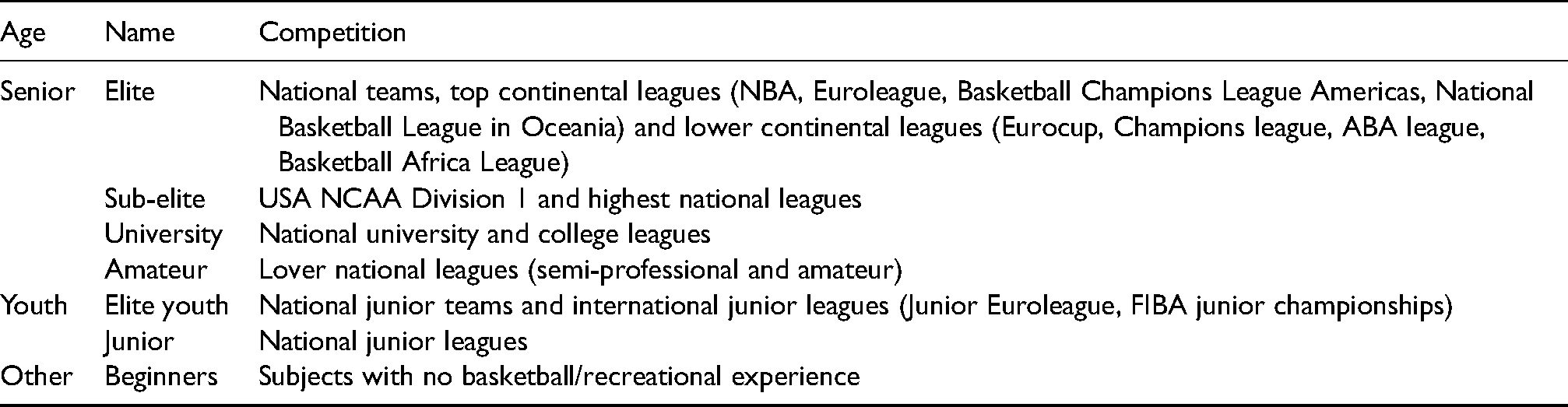
Due to differences in defining the expertize level of the participants in the different studies, we proposed an expertize classification table (Table 2). The categories were proposed based on the level at which the subjects were actively participated, in order to avoid different categorization of the expertize levels and to better understand how the participants’ quality level effects the gaze fixations. Since we did not find an official ranking of basketball competitions, we classified the competitions based on the available literature.23,24 In classification table, we divided individuals into three groups according to their age or basketball experience. Within each experience category, we roughly ranked specific levels of competition based on the quality of competition. For ease of notation, we added the names used in the results tables.
Ranking of subjects based on the level of play.
Results
Meta-analysis
Based on the reporting of quiet eye duration results (ms ± SD), six studies on free throws and five studies on jump shots were eligible for meta-analysis. The results of six studies (9 subgroups) on free throws are presented in Table 3 and Figure 2, the results of five studies (13 subgroups) on jump shots are presented in Table 4 and Figure 3, and the results of grading the levels of evidence are presented in Tables 5 and 6.
Quiet eye duration during free throws.
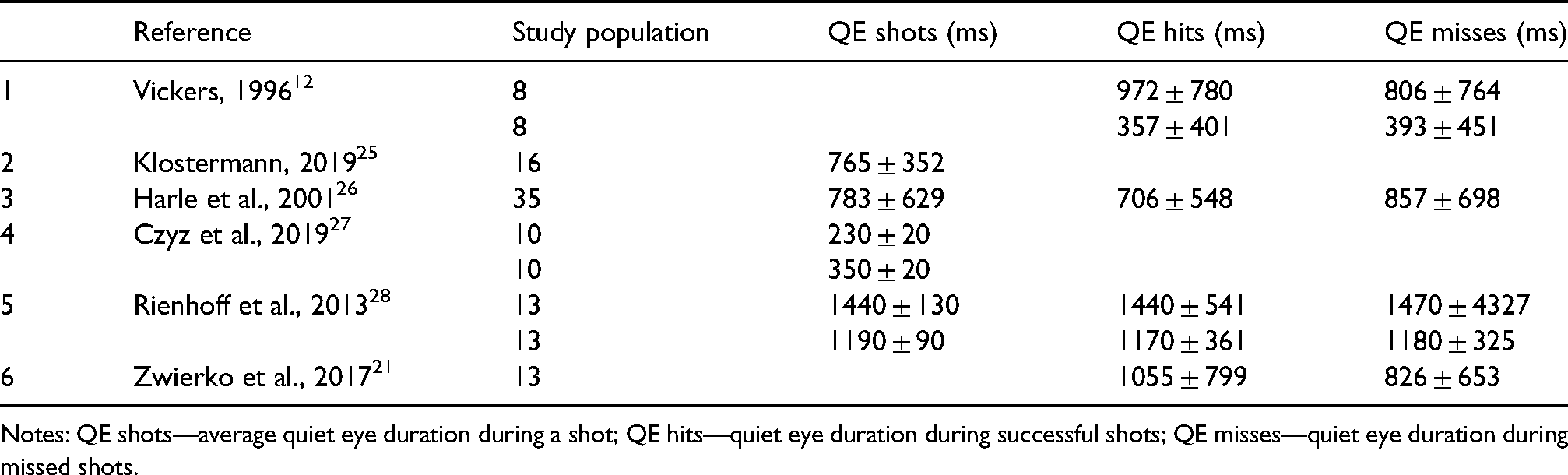
Notes: QE shots—average quiet eye duration during a shot; QE hits—quiet eye duration during successful shots; QE misses—quiet eye duration during missed shots.
Quiet eye duration during jump shots.
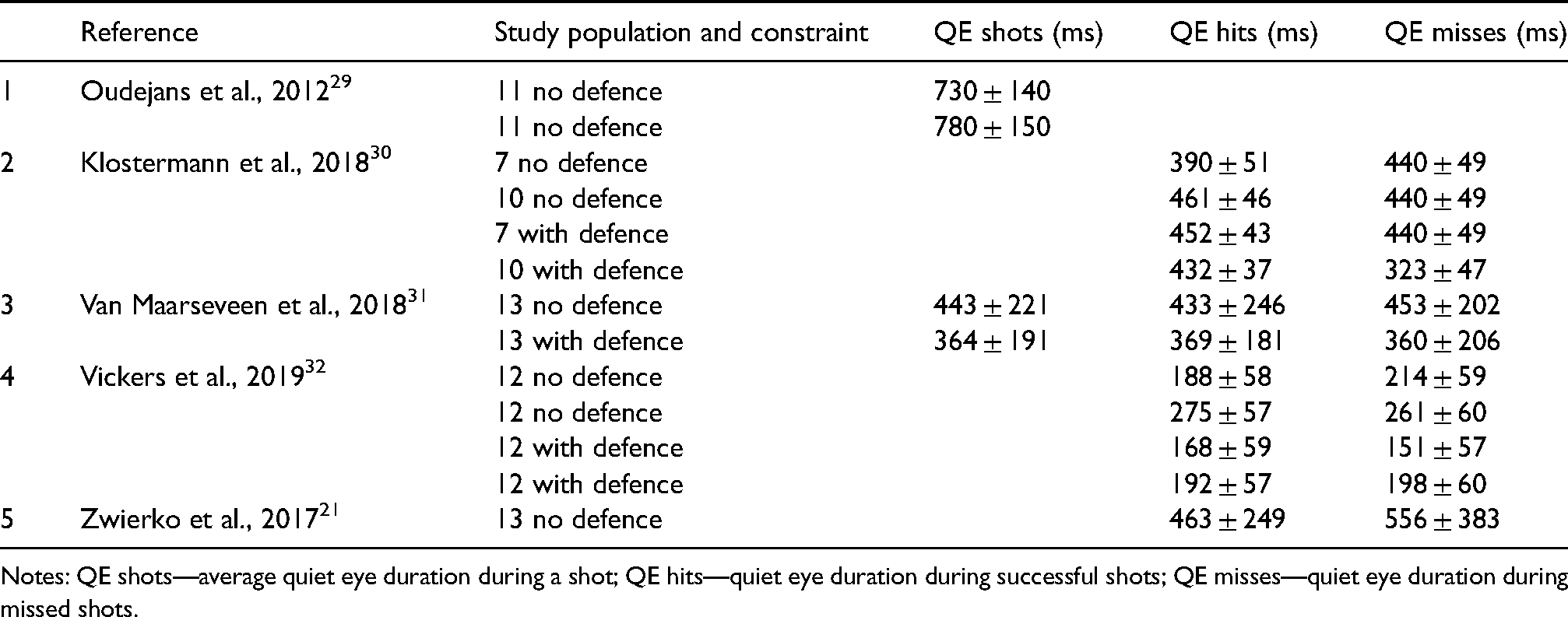
Notes: QE shots—average quiet eye duration during a shot; QE hits—quiet eye duration during successful shots; QE misses—quiet eye duration during missed shots.
Results of grading the levels of evidence.
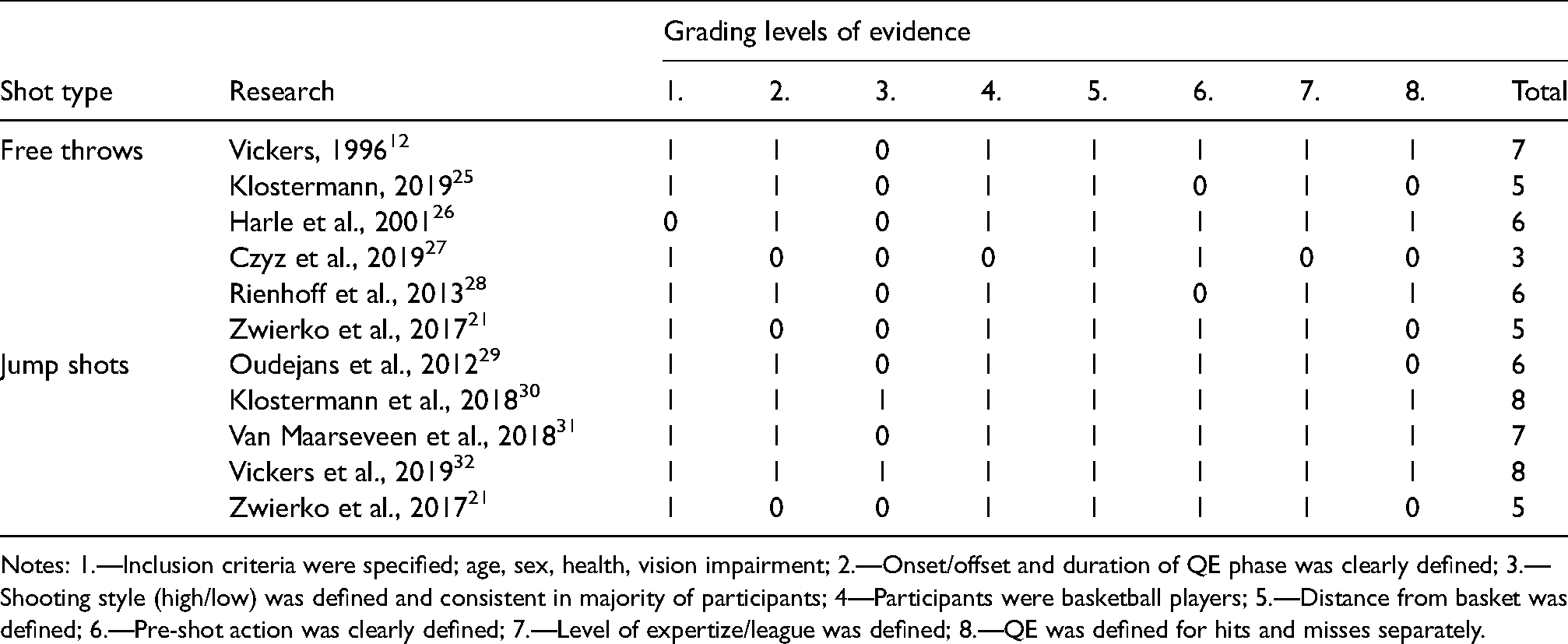
Notes: 1.—Inclusion criteria were specified; age, sex, health, vision impairment; 2.—Onset/offset and duration of QE phase was clearly defined; 3.—Shooting style (high/low) was defined and consistent in majority of participants; 4—Participants were basketball players; 5.—Distance from basket was defined; 6.—Pre-shot action was clearly defined; 7.—Level of expertize/league was defined; 8.—QE was defined for hits and misses separately.
Summary results for QE duration in free throws and jump shots across all included studies.

Notes: N—number of studies; n—number of groups; CI—confidence interval; I2—I index of heterogeneity; M—mean grade of included studies; SD—standard deviation.
Of the 11 total articles included in the meta-analysis, three reported quiet eye duration for shots independent of hits and misses and eight reported quiet eye length separately for hits and misses. For free throws, one study received the highest methodological score (8 points), two studies received six points, two received five points, and one received three points. For jump shots, on the other hand, two studies received the highest score, one study received seven points, one received six points, and one received five points (Table 5).
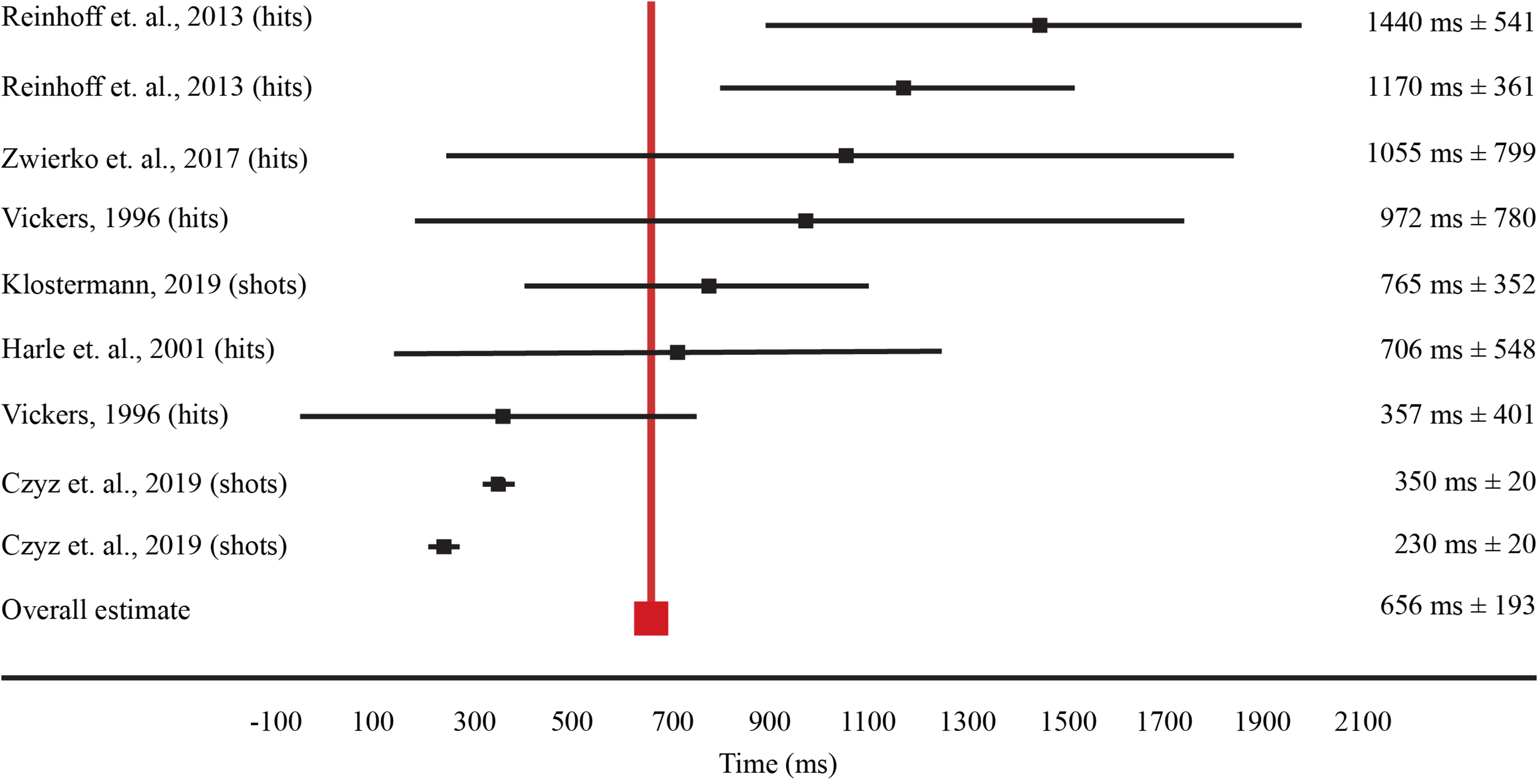
Forest plot of quiet eye duration in free throws with standard deviations. Notes: Hits—successful free throws; shots—free throws regardless of whether they are hit or missed.
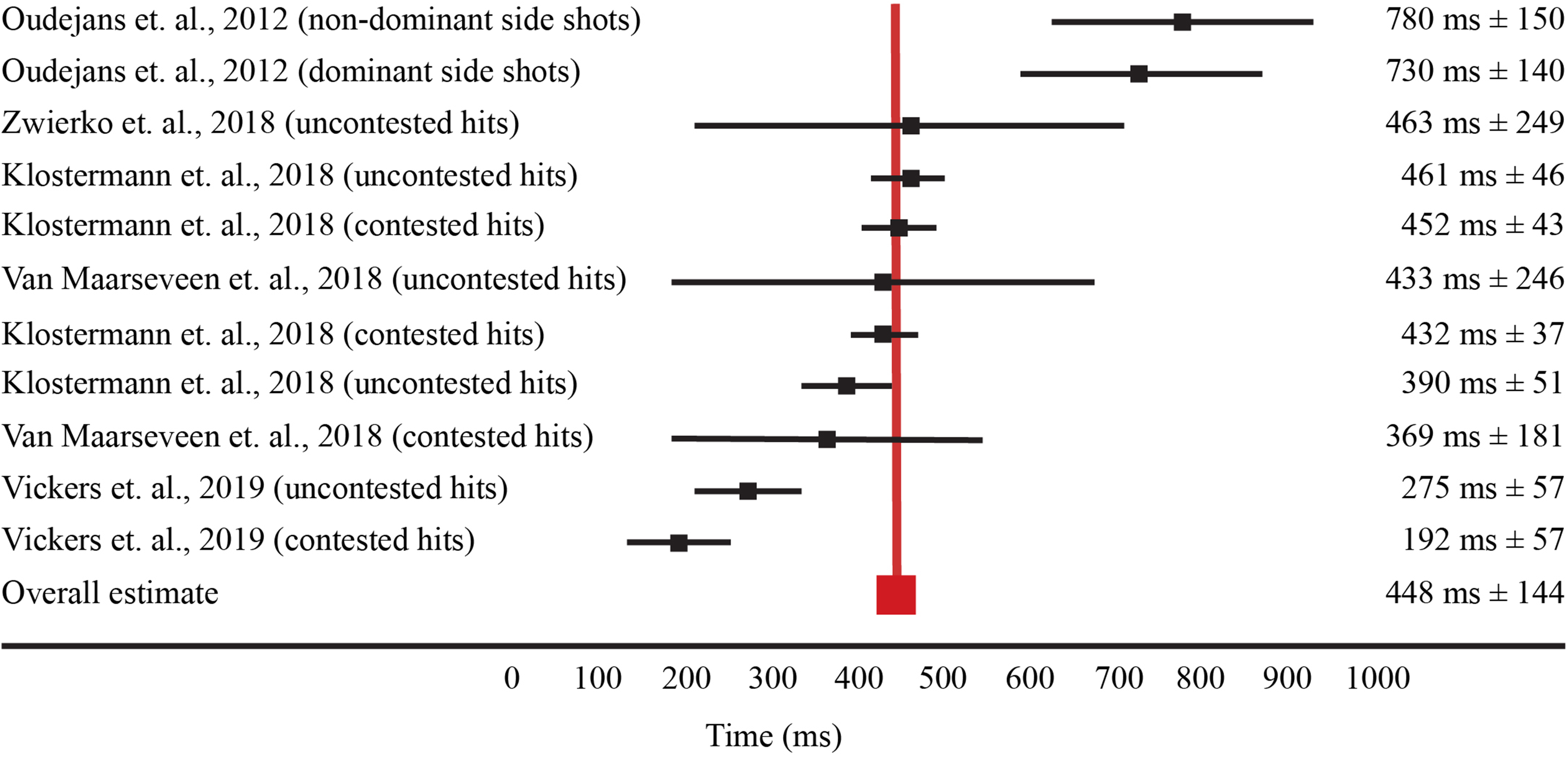
Forest plot of quiet eye duration in jump shots with standard deviations. Notes: Non-dominant side shots—jump shots after the pass from the non-dominant hand side or after dribbling with the non-dominant hand; dominant side shots—jump shots after the pass from the dominant hand side or after dribbling with the dominant hand; uncontested hits—successful shots without defence; contested hits—successful shots against the defence.
The results of the heterogeneity tests showed high heterogeneity in the studies investigating free throws (I2 = 84.91%) and moderate heterogeneity in the studies investigating jump shots (I2 = 40.83). 33 Egger's bias test 34 showed no publication bias for any of the measurement characteristics regarding quiet eye duration (p > 0.07 for all) (Table 5).
Systematic review
Specifications of 26 studies reviewed are presented in the following tables. Studies assessing visual attention during free throws are presented in Table 7A, 7B, and 7C, and studies assessing jump shots are presented in Table 8A, 8B, and 8C. The studies are divided based on applied method (eye-tracking or vision occlusion), the aim of the research, the sample, the actual quiet eye/gaze fixation durations, and the findings of the research. In findings, we included statistically significant results. The articles in each table are subdivided according to whether they examine the quiet eye phase or the quiet eye phase in conjunction with the additional factor.
Overview of articles addressing free throws.
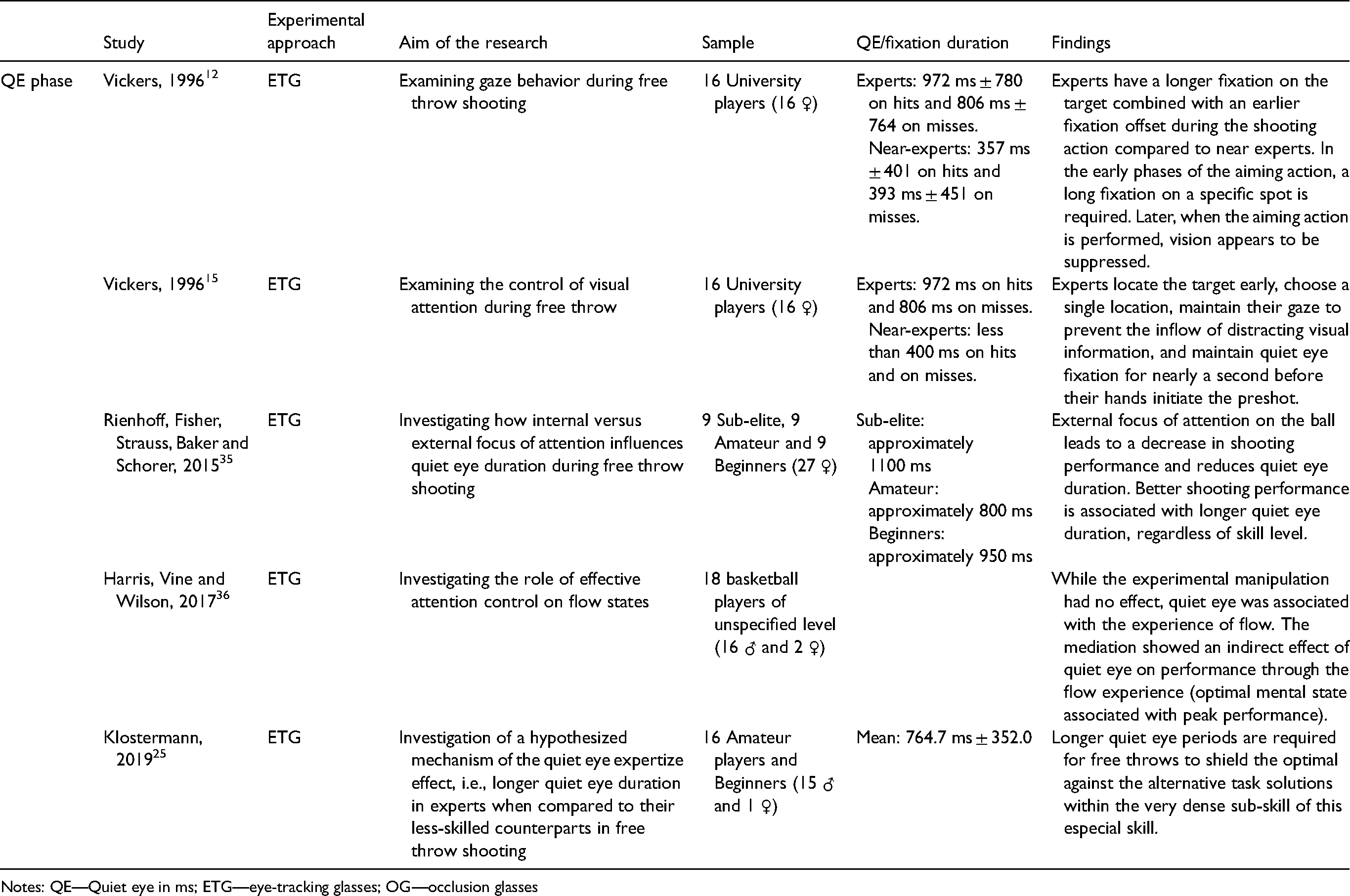
Notes: QE—Quiet eye in ms; ETG—eye-tracking glasses; OG—occlusion glasses
Overview of articles addressing free throws.
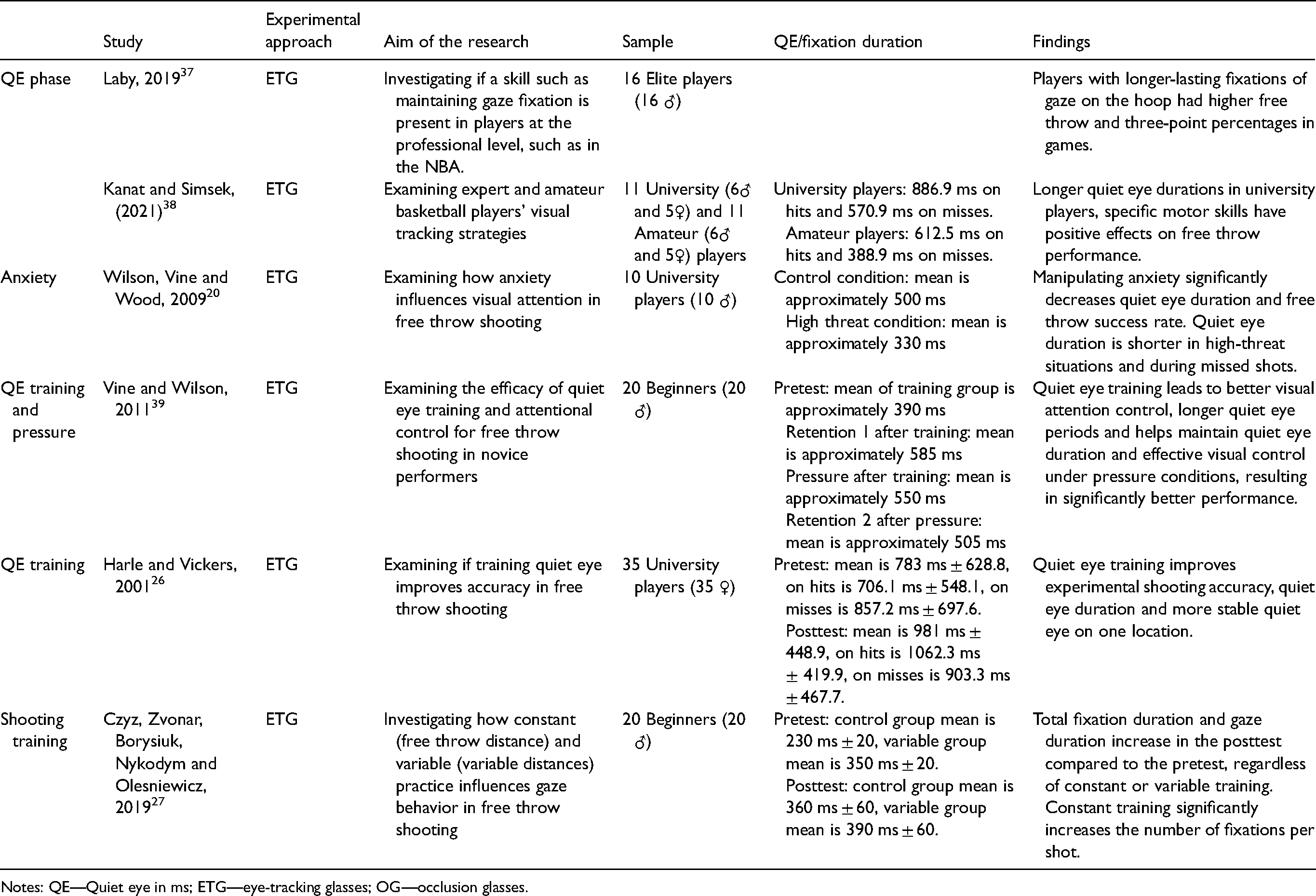
Notes: QE—Quiet eye in ms; ETG—eye-tracking glasses; OG—occlusion glasses.
Overview of articles addressing free throws.
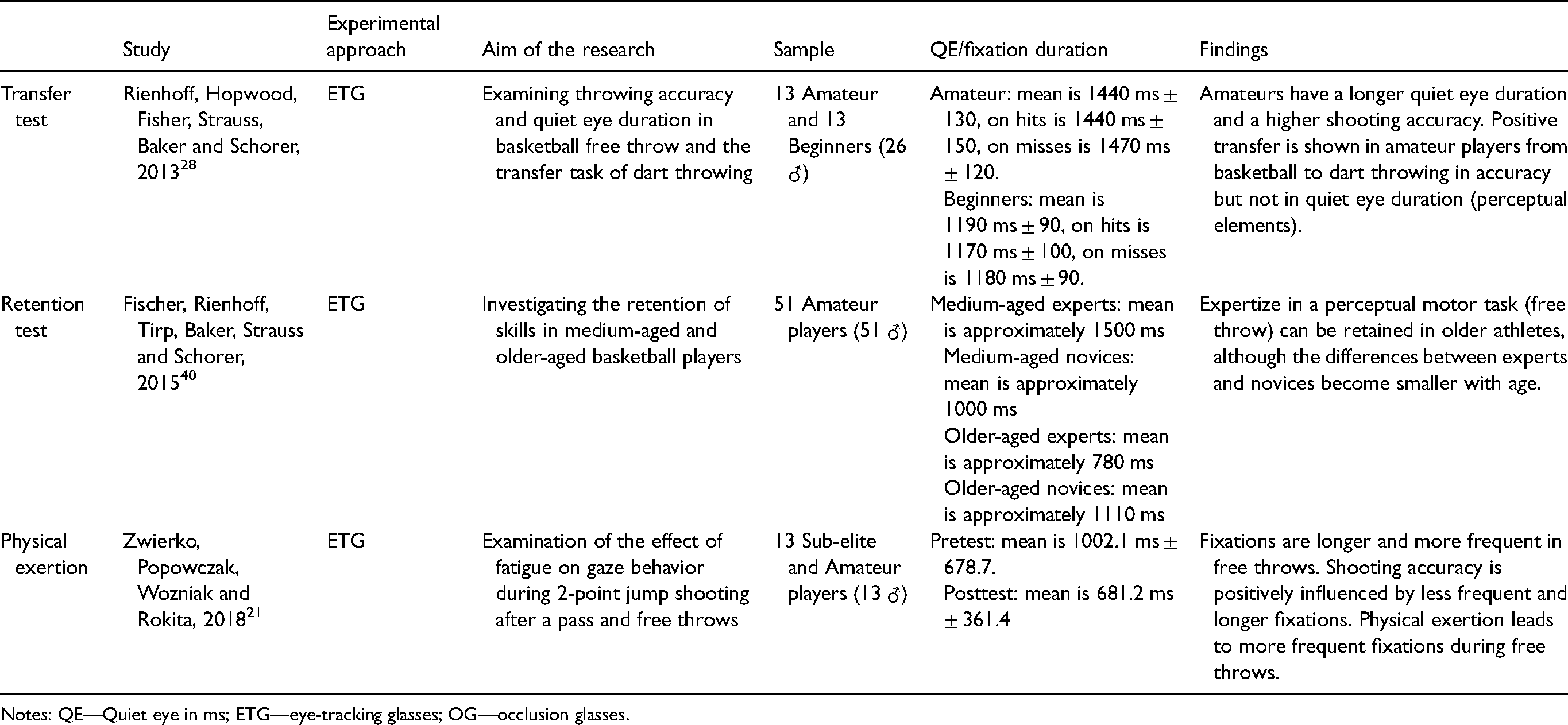
Notes: QE—Quiet eye in ms; ETG—eye-tracking glasses; OG—occlusion glasses.
Overview of articles addressing jump shots.
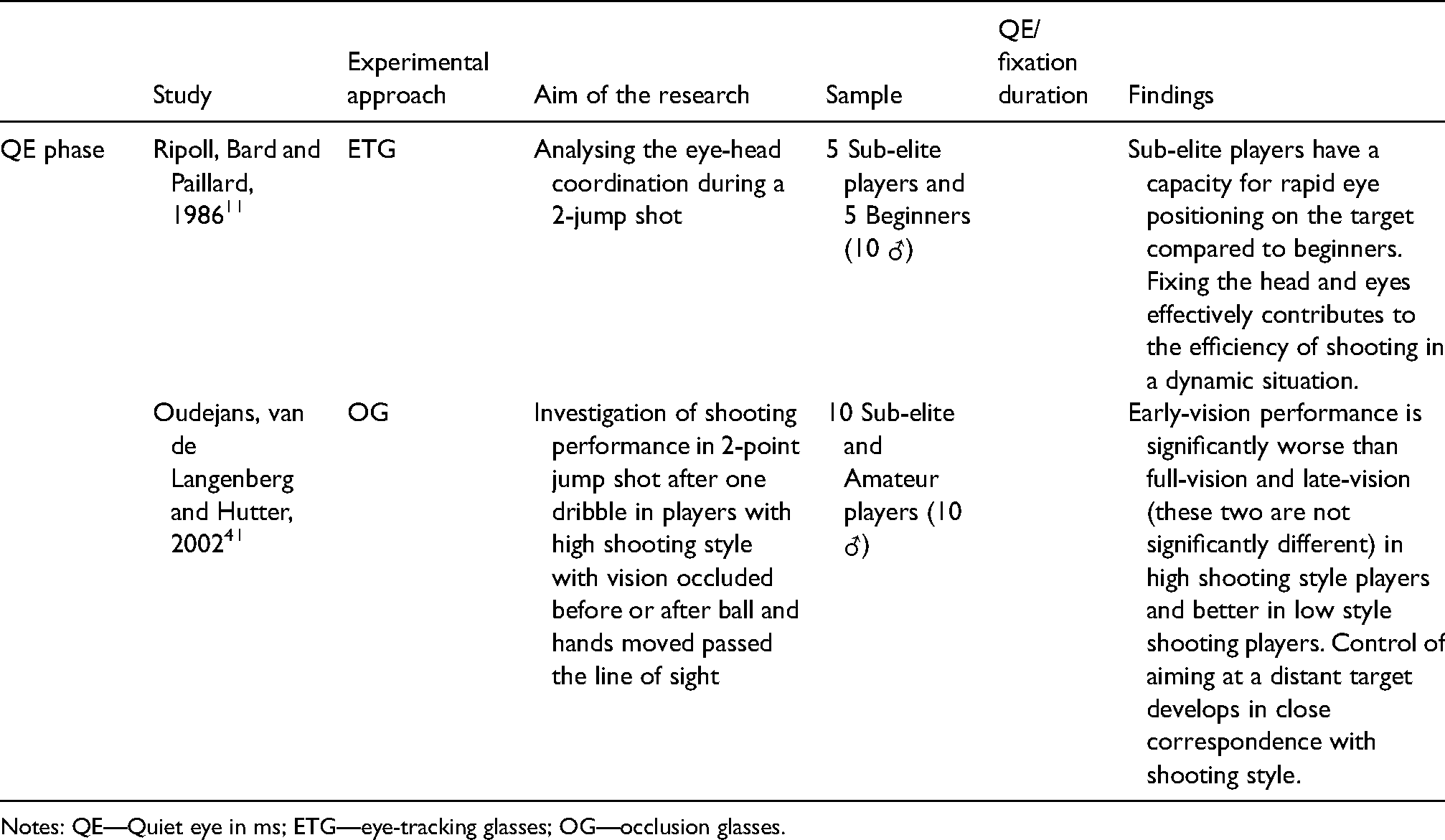
Notes: QE—Quiet eye in ms; ETG—eye-tracking glasses; OG—occlusion glasses.
Overview of articles addressing jump shots.
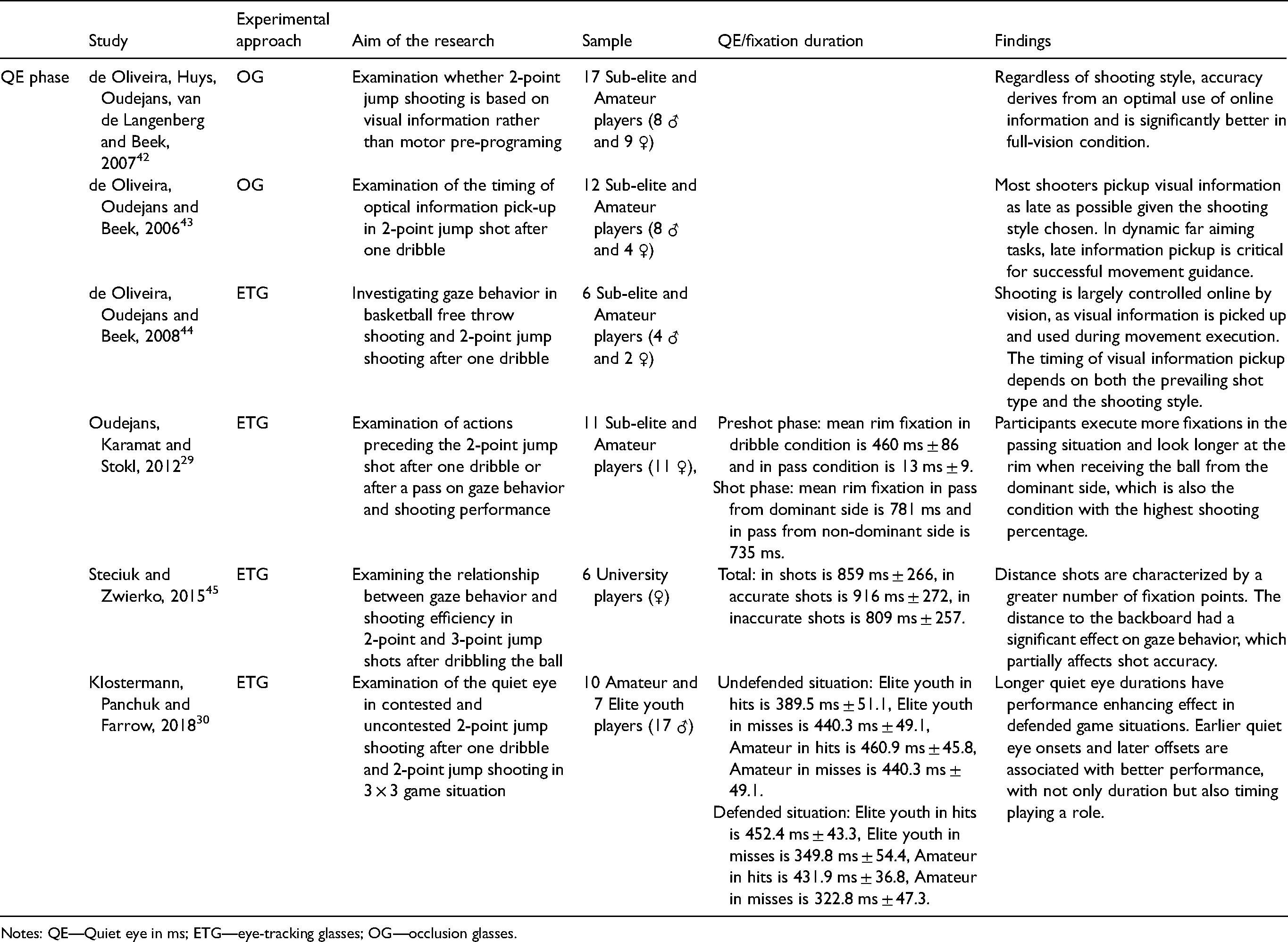
Notes: QE—Quiet eye in ms; ETG—eye-tracking glasses; OG—occlusion glasses.
Overview of articles addressing jump shots.
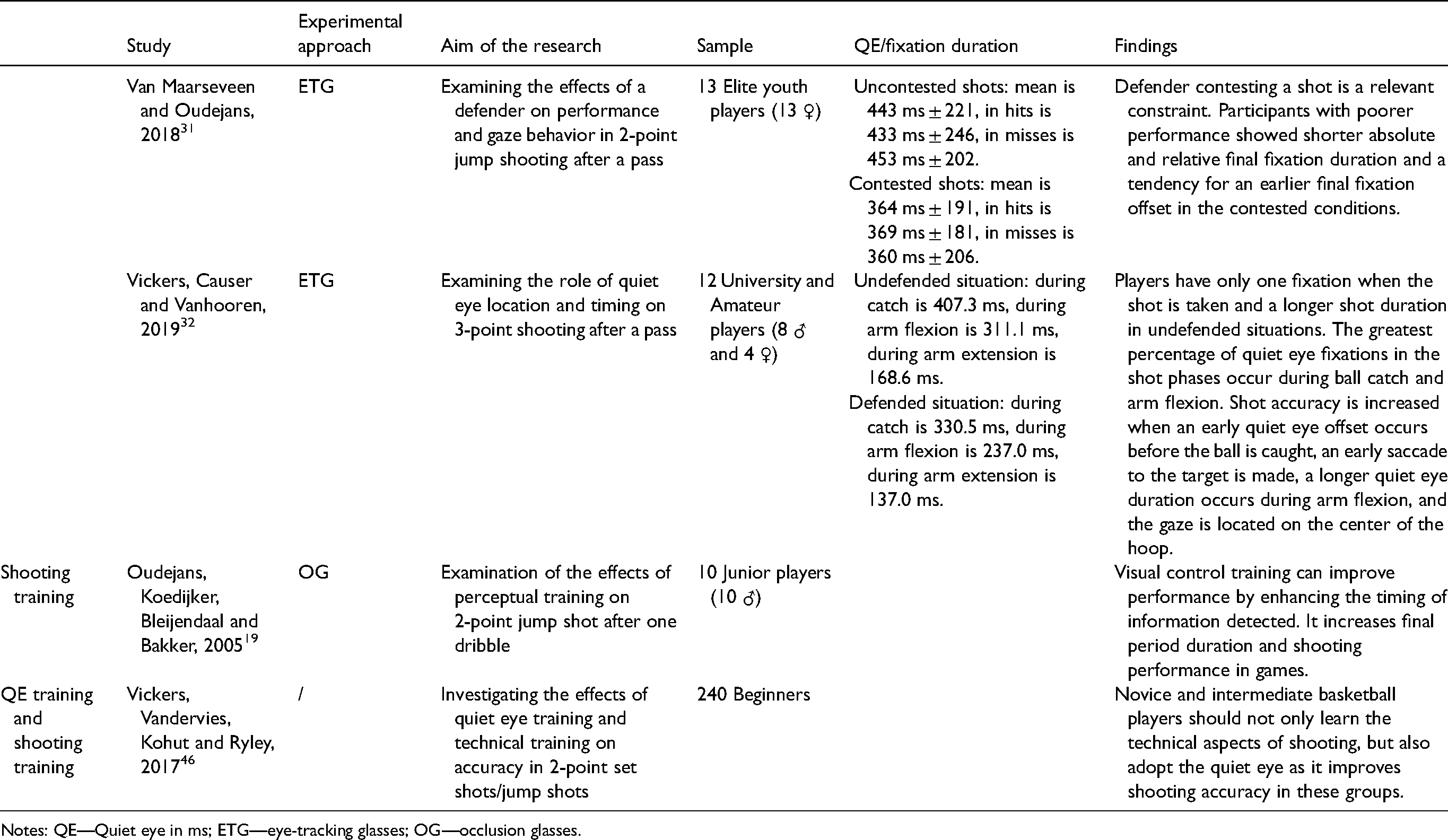
Notes: QE—Quiet eye in ms; ETG—eye-tracking glasses; OG—occlusion glasses.
Discussion
A review of the literature presented with important findings about basketball free throw and jump shot performance after a pass or off the dribble. The most commonly reported characteristics were the duration and optimal timing of gaze fixation, as well as the influence of training, defence (only in jump shots), fatigue, and anxiety on the quiet eye and resulting shooting performance. Visual attention characteristics, particularly the quiet eye phenomenon, have been shown to be an important factor influencing shooting accuracy. In addition, different characteristics of the quiet eye behavior were found for free throws and jump shots, which are likely due to differences in spatial and temporal constraints.
Quiet eye duration, onset and offset during free throws
Studies on the influence of visual information on free throw performance have found that the player’s quality level plays an important role in the length of the quiet eye phase and shooting accuracy. More experienced and often more skilled basketball players exhibited a longer quiet eye period compared to less skilled players.12,15,28,35,38 A longer duration of gaze fixation to the rim seems to be significant and was not only associated with better free throw performance but also with a higher three-point shooting percentage in the game. 37 Furthermore, a lower number of fixations was positively correlated with better shooting performance.12,15,21,28,35,39
From a technical perspective, it is interesting to see how the timing of the quiet eye period initiation affects shooting accuracy. Vickers12,15 and Wilson et al. 20 found that early fixation of gaze on a specific point of the basket had a positive effect on free throw shooting. In addition, Vickers 12 suggested that visual information appears to be suppressed during the execution of the shot.
Factors affecting quiet eye duration, onset and offset during free throws
The quiet eye is also affected by training. A two-year follow-up experiment by Harle and Vickers 26 proved that quiet eye training has a positive effect on final fixation duration. In addition, they observed delayed positive effects of quiet eye training on basketball game performance. Notably, this experiment is an asset to the coaching practice as it confirms the effects of such training on game performance. These findings were also confirmed by Vine and Wilson 39 in laboratory settings, who found similar results after a shorter eight-day quiet eye training. Regarding training, Czyz et al. 27 studied effects of regular shooting training, focusing on the number of repetitions under constant or variable training conditions. Their results suggest that both types of training increased the total duration of fixations and the number of gaze fixations during a shot. However, the increased number of fixations may have had a negative effect on shooting accuracy, as suggested by Zwierko et al., 21 but this was not analyzed and discussed. These results suggest that quiet eye training should encourage longer and less frequent fixation phases in order to positively affect shooting performance.
In addition to the positive effects of conventional shooting and quiet eye training described above, increased quiet eye duration was also found under conditions of increased anxiety. 39 The results indicate, that psychological pressure during free throws negatively affects the duration of quiet eye phase and shooting accuracy. 20 Therefore, it is important for basketball players to adequately prepare for such situations, which are common in competition.
Another common and constantly present factor in basketball is fatigue. Wilson and colleagues 47 reported that severe physiological stress at 85% of maximum heart rate resulted in a 19% decrease in free throw accuracy. Such decreased performance was associated with a decrease in quiet eye duration. Their findings were confirmed by Zwierko and colleagues, 21 who also found a significant increase in the number of fixations during a single shot when fatigued.
Because gaze fixations represent an attentional state, 48 Rienhoff et al. 28 studied the transfer of shooting precision accuracy to other precision tasks such as darts. They found a positive transfer from basketball shooting to dart throwing in terms of accuracy, but not in terms of quiet eye duration in more experienced basketball players. Similarly, Fischer et al. 40 found no transferability of quiet eye duration from basketball to darts.
Quiet eye duration, onset and offset during jump shots
For jump shots, studies have focused on similar variables as for free throws. The duration and number of quiet eye periods were studied under different conditions: when shooting from a standing position (set shots), off the dribble, or after a pass. The latter two were additionally studied with and without a defensive player. From a gaze fixation perspective, the main difference between free throws and jump shots is the highly dynamical movement of jump shots performed under additional temporal and spatial constraints such as flight characteristics and the presence of a defender. Therefore, it was expected that differences exist between the two types of basketball shots. Shooting accuracy in jump shots increases with longer quiet eye periods that begin during the arm flexion phase, and poorer execution of the shot is associated with shorter gaze fixation time.31,32 In addition, Klostermann and colleagues 30 reported a positive effect of a longer quiet eye phase on shooting accuracy when guarded by a defensive player in a dynamic 3 versus 3 small-sided basketball game situation. Two other studies were not able to confirm a positive relationship between total fixation time 45 or longer fixation duration 21 and shooting performance.
Regarding the importance of gaze fixation timing for shooting performance19,30,44 there are two opposing theories. One strategy suggests that it is important in jump shots to process updated visual information as movement execution unfolds and that accurate shots require visible information pick-up in the last phases of a jump shot. 43 Such theories could be supported by studies using the vision occlusion technique. 41 These showed that shooting precision with full vision and vision enabled only in the last phase of the shot (the moment when the ball is placed in the shooting position, from the greatest flexion of the arm at the elbow to the end of the extension of the arm at the elbow) did not differ statistically significantly in players with high shooting style. On the other hand, the scientists argue that the success of the shot is positively associated with the early fixation of the basket. 32
The discrepancies described above regarding the importance of the timing of gaze fixation on jump shot could be partly explained by the two studies arguing that this depends on shooting style41,44 as players with a low shooting style were more successful in situations where visual information is obtained in the early stages of the shot. Regardless of shooting style, visuo-motor response takes approximately 200 ms. 49 Therefore, in a fast shot such as occurs in game situations, it is difficult to expect movement corrections in the final shooting phase (elbow extension, which takes less than 180 ms—personal observations) by continuous detection and use of visual information until the ball is released. However, from the available literature it could be speculated, that more experienced players in particular are better able to adjust the timing of the quiet eye phase when performing a jump shot. The reasons why players develop an affinity for a particular quiet eye timing strategy are still unknown.
Factors affecting quiet eye duration, onset and offset during jump shots
An important constraint while performing a shot is the presence of a defender. Vickers and colleagues 32 found that shooters, while defended, decrease shot time and increase jump time. In contrast to these findings, Rojas et al. 50 and Klostermann and colleagues 30 reported a lower vertical center of mass and a shorter jump time in defended situations. However, the ball flight was longer, and the ball release height was higher, probably due to the increased release angles in the joints, especially in the shoulders. It appears that the presence of a defender demands changes in shooting kinematics, and forces the shooter to fix his gaze later during the shot.31,32 Based on the previously described observations of a shortened shooting time due to defensive pressure, late gaze fixation, and latency of the visual-motor response, 49 it can be suggested that preservation of earlier and longer gaze fixations during a contested shot is necessary to maintain shooting accuracy. 30 Since the pressure from the defence was presumably not closely controlled or maximal (defence trying to block a shot), it would be interesting to expose the shooters to such pressure. This could shed light on why better players have longer fixations and focus more on the shot rather than on other distracting information. Such insights would be important for preparing training interventions.
Interestingly, altering the availability of visual information during training can have a positive effect on jump shot performance.19,46 Individuals who underwent shot training in which they could only see the basket during the final stages of the shot improved jump shot accuracy on 2- and 3-point shots in official games to a greater extent than the control group. 19 These results were supported by the study of Vickers and colleagues, 46 which indicates the importance to add attentional training to traditional technical shooting training. Given the previous findings, it can be concluded that the ability to direct visual attention and adapt the mechanics of the shot to the demands of the situation in which the player is shooting the ball is an important skill in basketball. Consequently, individuals should probably train under increasingly variable conditions, with clear instructions to focus their gaze to a carefully defined point.
Because jump shots are a dynamic motor task, they can be performed under a variety of conditions. Oudejans et al. 29 found that jump shots are more successful when players perform the dribble with the dominant hand or receive a pass from the dominant hand side. They also concluded that shots after a pass are more accurate. Regarding the number of fixations, findings by Zwierko et al. 21 are in contrast to the studies that report a positive effect of a higher number of fixations on accuracy performance. Their results suggest that the success of a jump shot after a pass is positively affected by a lower number of fixations. It should be noted that Zwierko and colleagues mostly included subjects with high shooting technique and Oudejans et al. 29 included female basketball players in whom shooting technique was not specified. Female players are more likely to use lower shooting technique, which may have contributed to the differences in the above results. These studies also differed in the definition of shot duration. In the study by Zwierko et al., 21 fixations were observed from the moment players received the ball to the ball release, and in the study performed by Oudejans et al., 29 gaze fixations before receiving the pass (i.e. during the dribble or during the pass) were included. These discrepancies may contribute to different conclusions about the effect of fixation frequency on jump shot accuracy.
Finally, scientists have also studied the effects of fatigue on shooting performance. Results have shown that fatigue affects jump shot performance by altering movement kinematics of the shooter. The height of the jump during the shot and the height of the ball during the release decreased with increasing fatigue.51,52 Similarly, Zwierko et al. 21 reported that physical exertion also affects the area of visual attention, suggesting that the control of eye movements during dynamic shooting might be determined by individual differences in tolerance of intensity. 21 Overall, it would be useful to further investigate how moderate and high levels of physical exertion affect visual perception in basketball. Based on the available literature, we can only speculate that, similar to other sports, when physiological stress is highest, increased quiet eye focus on external task information leads to better performance. 53
Future research
We believe that future research should focus primarily on finding the information that is useful for practical work. In this regard, the research of dynamic situations with shots after a pass and off the dribble with maximum active defence, as in game conditions, would be important. Also, the results of systematic, continuous training over an extended period of time in senior and youth basketball would provide information on whether visual attention training is useful at all ages. With all this information, coaches would have a recommendation for economical training that would improve their players’ in-game performance. At the top senior level, where research is lacking, it would be valuable to study the quiet eye in players of different types/playing positions (roughly divided into guards, forwards, and centers). Since the differences between playing positions are quite distinct, we assume that the characteristics of visual attention also differ according to player type and game demands. Another aspect related to game situations would be the passing angle and its effect on the quiet eye. The results could be interesting as some coaches prefer the so-called in-out game to create an optimal passing angle and better conditions for the shooter. In future studies, it would also be necessary to record the duration of the quiet eye separately for hit and missed shots. This would give us a clearer picture of the difference in duration between successful and unsuccessful shots and the optimal duration of successful shots under temporal and spatial constraints.
We would also like to point out two things that should be considered. First, the definition of high and low shooting technique needs to be clearly defined in future articles and would allow us to better compare the results of different studies. The second point is a consensus on the description of players according to the level of competition.
Conclusions
Free throws and jump shots differ especially in terms of spatial and temporal constraints, which also affect the characteristics of visual attention. Nevertheless, the results show that regardless of the type of shot, longer quiet eye durations and a lower number of gaze fixations are associated with better performance. For a successful shot, the quiet eye phase must occur at the right moment, likely due to visuomotor reaction latency prior to elbow extension. In addition, quiet eye or traditional training may help improve shooting performance. This improvement is partly due to the longer duration of the quiet eye phase, which provides individuals with better conditions for executing a movement planning mechanism based on sensory information. Such an optimal and prolonged quiet eye phase also helps under the circumstances of increased fatigue, as the ability to focus on external task information leads to better performance. Future research should focus on finding information that is helpful in practical fieldwork: Quiet eye characteristics in top senior players, training of youth and senior players, and dynamic and complex game situations.
Footnotes
We would like to thank all the authors who responded to our request and provided us with data that we were able to use in the meta-analysis.
Declaration of conflicting interests
The author(s) declared no potential conflicts of interest with respect to the research, authorship, and/or publication of this article.
Funding
The author(s) disclosed receipt of the following financial support for the research, authorship, and/or publication of this article: This work was supported by the Javna Agencija za Raziskovalno Dejavnost RS (grant number P5-0147). Research programme Kinesiology of monostructural, polystructural and conventional sports, code: P5-0147, funded by Slovenian Research Agency.
