




Abstract
The rise of technology in sport has provided coaches with another tool to aid athlete development, but there is little research on its relationship to coaching practices. Research in non-sport domains has demonstrated a relationship between user trust in and use of technology. The user's confidence can also affect this relationship, where higher confidence is typically associated with less technology use. Minimal work has examined factors that influence technology use within the sports domain; therefore, the present study sought to determine whether coaching experience and coaching efficacy could predict golf coaches' use of technology in training. A one-time survey that gathered demographic information, and measured coaching experience, coaching technique efficacy, trust in technology and use of technology was completed by 83 registered Professional Golfers Association golf coaches and instructors. Results showed that coaching technique efficacy was predictive of coaches’ use of technology in training, where more technique efficacy resulted in increased use of technology. Mediation analyses showed that this association was mediated by their levels of trust in technology. There was no relationship between coaching experience and use of technology. Therefore, coaching technique efficacy, rather than experience, seems to be an important variable in predicting coaches' use of technology in training and instruction. Further, because higher efficacy predicted increased usage, the results illustrate the differences between the sport training environment and other non-sport domains regarding the factors that influence technology use. These findings are an important first step towards investigating how technology can be used by coaches to best improve athlete performance.
Introduction
The increased emphasis on performance coaching in the sporting landscape has resulted in the implementation of different tools and resources designed to improve athlete performance. Performance coaches, who tend to place a great amount of emphasis on recording, analysing, and monitoring their athletes, highly value these tools and resources as they can be advantageous to improving athletes' abilities. 1 However, the coaching process itself is highly subjective, resulting in ambiguity regarding the best ways to develop a training session or program to optimise an athlete's learning and performance. 2 The specific factors that contribute to differences in the usage of these resources by coaches have yet to be investigated and are important for resolving this ambiguity.
Technology is a resource that guides coaches' instructional behaviour and has revolutionised sports training. In 2020, it was estimated that the global sports technology market was valued at 11.70 billion USD. 3 Technology, also referred to as automation, has been defined as any system that can assess and perform at least part of a task an individual would be required to do.4,5 The use of technology in sport has increased exponentially in recent years and provided coaches with more opportunities to enhance the performance of their athletes. For example, Guadagnoli and colleagues 6 found that golfers who trained with the aid of video instruction demonstrated the largest performance improvement compared to self-guided and verbal instruction groups. This supports previous hypotheses which have suggested that technology may help provide more informational feedback to an athlete compared to a coach without the use of technology. 7 However, it remains unclear what factors influence a coach's decision to integrate technology into their training and instruction.
Training and instruction remain the most frequently used coaching behaviours and includes any behaviour that is directly intended to improve athlete performance.8,9 This may consist of the selection of instructional tools, training regiments, and type of feedback used, among others. 8 A coach's ability to provide effective instruction has been cited as a critical behaviour in the pursuit of optimal athletic performance and is directly influenced by coaching efficacy.10,11 Coaching efficacy has been defined as the extent to which coaches believe they have the capacity to influence the learning and performance of their athletes. 11 The dimensions of coaching efficacy include motivation efficacy, game strategy efficacy, character-building efficacy, and the focus of our current study, technique efficacy. Technique efficacy is particularly relevant to technology use in training because it refers to a coach's belief in their instructional and diagnostic skills. Coaches with high technique efficacy tend to engage in more behaviours related to training and instruction. More specifically, they demonstrate more effective tactical skills and feedback techniques, and more time and commitment to coaching than low-efficacy coaches. 11
There are many sources of coaching efficacy that seem to be particularly influential to developing a sense of efficacy. Coaching experience has been proposed to influence coaching efficacy, which directly impacts specific coaching behaviours. 11 Of particular importance to the present research, Kavussanu and colleagues 12 found that years of coaching experience predicted technique efficacy – such that more coaching experience allows for more mastery opportunities related to improving and developing technique, and in turn increased technique efficacy. The relationship between coaching experience and efficacy is well documented in the literature and may be applicable to how a coach interacts with technology when instructing athletes.
Although coaching experience has widely been considered a source of coaching efficacy, research in the human-automation setting has suggested that both experience and efficacy may have individual influences on automation usage.13–16 Another important concept that may influence technology use and be affected by experience and efficacy is technology trust. There is a substantial body of literature in the domains of industry, defence and security, and transportation regarding the relationship between a user's trust in and use of automation. 13 In relation to automation, trust can be defined as ‘the attitude that an agent will help achieve an individual's goals in a situation characterised by uncertainty and vulnerability’ 14 (p. 54). The amount of trust will vary based on how well the automation can execute a task and how well the operator understands the automated system's role and processes. 13 Therefore, the trust process is multi-dimensional and is dependent on the user, environment, and the automated system.
An individual's trust in technology is an important predictor of whether they choose to use technology. 14 It has been demonstrated that low levels of trust lead to less use, while high levels of trust lead to greater use.5,17,18 Other domains have focused on appropriate use of technology; in other words, using it only when it will increase performance. 14 While speculative, a similar conceptualisation may also apply to sport. A coach's over-usage of technology may diminish an athlete's ability to learn and in turn, their potential to improve performance. On the other hand, a coach that underuses technology may be missing out on the positive contributions that it can provide to athlete performance enhancement. 14 It is, therefore, important to investigate the factors that may influence technology use, including those that are specific to the coach in order to improve overall training and competition performance.
Lee and See 14 cited self-confidence – which is highly related to self-efficacy – as an important variable that guides trust formation and affects the decision-making process related to the use of technology. While distinct concepts, self-confidence and self-efficacy are highly related. Self-efficacy has been defined as the perception of one's capability to perform a certain task successfully, which can also be understood as situation-specific self-confidence. 19 Low levels of self-confidence in performing a task have been associated with high levels of trust in technology. 20 Along the same lines, high levels of self-confidence have been associated with low levels of trust in technology. 20 Furthermore, expertise also influences trust and is most often the result of extensive experience in one area.13,21 It has been demonstrated that individuals with greater subject matter expertise are less likely to rely on technology than novices.15,16 Therefore, experience and efficacy are two internal factors that may have an important, but separate, influence on a coach's trust in technology.
Previous research regarding technology in sport has focused on the validation of technologies and their role in performance enhancement and injury prevention.22–24 For example, Adesida and colleagues 23 conducted a systematic review and determined that wearable technology in sport has the potential to positively influence coaching practice and athletes' technique. Further research has also focused on athletes' attitudes and trust with technology. 25 Dithurbide and Neyedli 25 examined golfer's attitudes towards distance-measuring devices (DMDs) in a cross-sectional online survey, where it was determined that owning a DMD was positively related to their trust in technology and negatively related to their confidence in determining yardage without a DMD. Despite this study investigating a form of human-automation interaction in sport, the literature fails to provide specific evidence regarding how coaches interact with technology.
For this study, we chose to examine the sport of golf, as the use of technology, specifically in training and instruction, is very popular. Further, golf has grown into a more competitive sport with corresponding growth of professional coaching for training purposes. 26 These coaches use a wide variety of technological systems in their instruction that differ in both complexity and cost. For example, video instruction is relatively simple and cost-effective and allows a coach to analyse many different aspects of a swing, such as posture, set-up, and swing plane. Specific radar technologies, otherwise known as launch monitors, are also commonly used by professional golf coaches and instructors. These systems are highly complex, as they combine the use of video instruction with various quantitative output variables, such as club head speed, launch angle, spin rate, and more. The popularity of technology in the golf setting indicates that accessibility is not often a barrier and, therefore, understanding technology usage by coaches is highly pertinent in this setting.
To date, there is limited research investigating the use of technology by coaches in their instruction. Further, the internal factors that influence a coach's behaviours and their reliance with respect to technology have not been examined. Therefore, the purpose of this study was to determine whether coaching experience and coaching technique efficacy independently predicted the use of technology by golf coaches in the sport training setting. Coaches and instructors registered with a Professional Golfer's Association (PGA) were recruited and invited to complete an online survey that measured their coaching experience, coaching technique efficacy, use of technology, and trust in technology. It was hypothesised that coaching experience and technique efficacy would independently influence the amount of technology a coach uses in their instruction. We also hypothesised that these relationships would be mediated by a coach's trust in technology. Applying the findings of this study to a sport training setting is an important milestone in coaching research and will help determine why coaches interact with technology.
Methods
Participants
It was determined from a power analysis (conducted in G*Power2, goal: 0.8 power, with α = 0.05) – based on a previous study 25 – that at least 60 coaches would need to be recruited based on the effect size (partial R-squared = 0.16) for the relationship between trust and technology use. Participants who fully completed the survey were given the opportunity to enter a draw for a $100 gift card at a major golf equipment store. All participants provided informed consent and this research was approved by the host University's Research Ethics Board.
Eighty-six certified golf coaches and instructors completed an online survey. There were three participants who did not use technology (3.5% of sample); therefore, they were excluded, leaving 83 eligible coaches (mean age = 43.62 years; age range = 21–78 years). All participants were registered through a recognised PGA and had to be 18 years of age or older. Further demographic information can be found in Table 1.
Demographic information for 83 PGA golf coaches and instructors.
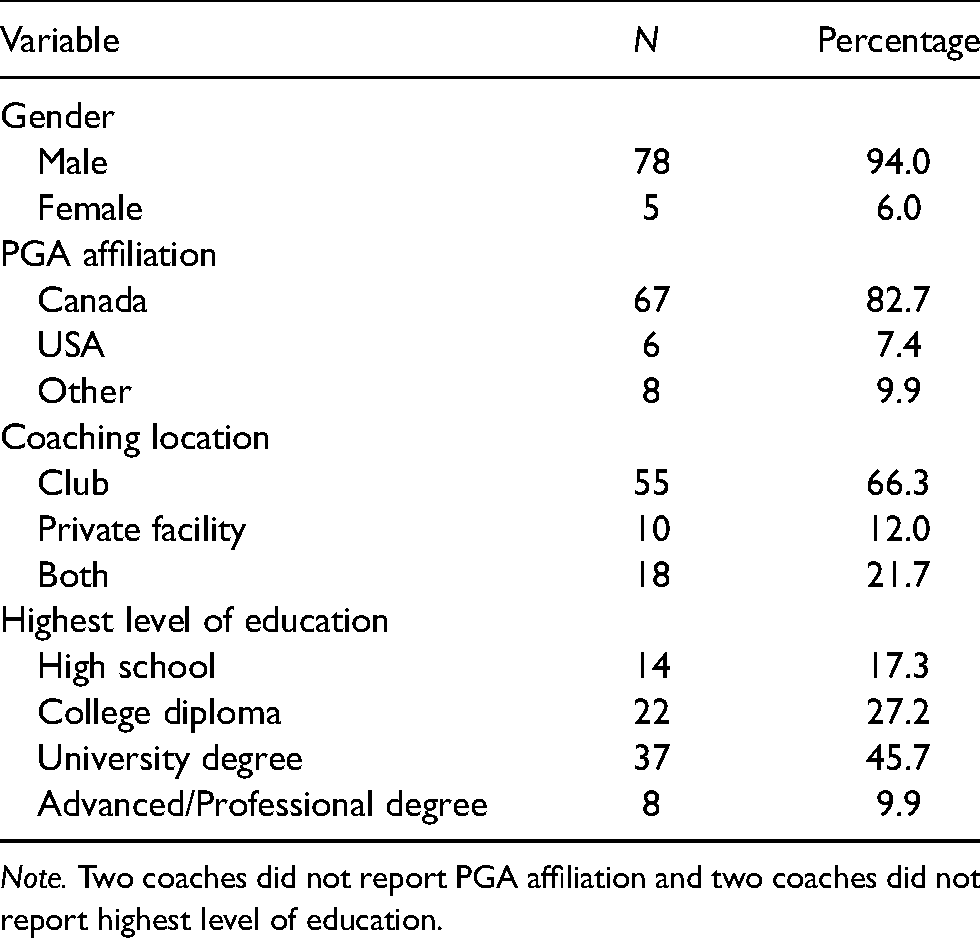
Note. Two coaches did not report PGA affiliation and two coaches did not report highest level of education.
Study design
Golf coaches were recruited through the use of social media (Twitter, Facebook, Instagram). Additionally, the PGA of Canada distributed an invitation to its members to participate in the study. Participants were invited to complete the survey, through the online survey software Opinio where all responses were collected anonymously.
Measures
The online survey comprised of questions regarding demographic information, use of technology, coaching experience, coaching efficacy, and trust in technology.
Demographic information & coach-specific questions
Coaches were first asked to provide basic demographic information, including their age, PGA affiliation, gender, and information regarding where they coach. Coaches then filled out coaching-specific questions including number of years coached, time spent coaching and educational backgrounds and certifications (e.g. high school, university degree, additional certifications, etc.). Time spent coaching was assessed by asking coaches ‘What proportion of your work time is spent coaching/instructing compared to other aspects of your work as a golf professional?’. Coaches were asked to indicate their response as a percentage, from 1% to 100%.
Use of automation in coaching and instruction
Coaches were then required to report their frequency of coaching with technology. This was obtained by asking coaches ‘In what percentage of your teaching do you use technology?’. Coaches were asked to indicate their response as a percentage, from 1% to 100%. These percentages were converted to proportions for data analysis.
Coaching technique efficacy
The participants then completed the technique subscale of the coaching efficacy scale, which is a reliable and valid measure of coaching efficacy. 11 As previously mentioned, technique efficacy is a particularly important variable when studying instructional behaviours and, therefore, was used in isolation as a measure of efficacy. Cronbach's alpha was calculated to confirm the internal reliability of the scale (ɑ = 0.80). This scale comprises 6 questions where participants indicated, on a 9-point Likert scale, their level of confidence with each stem (1 = not at all confident; 9 = extremely confident). All questions on this particular subscale were related to a coach's confidence in their instructional and diagnostic skills and provided researchers with an understanding of the coach's technique efficacy. 11 Response items were all prefaced by ‘How confident are you in your ability to:’, and individual items pertained to ‘demonstrate the skills of your sport’, ‘coach individual athletes on technique’, ‘develop athletes' abilities’, ‘recognise talent in athletes’, ‘detect skill errors’ and ‘teach the skills of your sport’.
Trust in automation in coaching and instruction
Finally, coaches reported their trust in technology using a modified, validated trust in automation scale. 27 Once again, Cronbach's alpha was calculated to confirm the internal reliability of the scale (ɑ = 0.90). This scale had the same questions as Jian and colleagues' 27 trust scale but was adjusted for a golf training setting. 25 The questionnaire included 18 questions where participants indicated, on a 7-point Likert scale, their level of agreement with each stem (1 = completely disagree; 7 = agree). The scale attempted to determine a coach's general attitudes regarding technology in sport and their trust in technology to improve instructional and diagnostic skills. Sample questions included: ‘I can trust the technology’, ‘The technology does not always provide me with good information to benefit my coaching/instruction’, ‘The technology's information will increase my coaching/instruction performance’, ‘The technology enhances my confidence in developing athletes' abilities’, and ‘My use of technology improves my confidence in detecting skill errors’.
Data analysis
All statistical analyses were performed using SPSS v.26 for Mac. Means were calculated for both the coaching technique efficacy and trust in automation scales across all respective questions to determine a total score for each variable. Specifically, for the trust in automation scales, reverse score questions were changed so a higher number indicated greater trust. Means, standard deviations, and Spearman's Rho correlations between variables were calculated for the number of years coached, use of automation, coaching technique efficacy score, and trust in automation score.
Two separate mediation analyses were performed on the data. The first mediation analysis tested identified coaching experience (represented as the number of years coached) as the independent variable, trust in automation as the mediator variable, and use of automation (as a percentage of practice time) in sport coaching and instruction as the dependent variable. The second mediation analysis tested identified coaching technique efficacy (represented as the mean score from the technique subscale of the coaching efficacy scale) as the independent variable, trust in automation as the mediator variable, and use of automation in sport coaching and instruction as the dependent variable.
For each mediation model, a total effects model was first created to determine whether the predictor variable (model 1 – experience; model 2 – efficacy) predicted automation use. If the total effects model was significant, the mediation model was constructed and 95% bootstrap confidence intervals were used to determine whether there was a significantly indirect effect (i.e. trust was a mediator between the predictor variable and automation use).
Results
Descriptive statistics and bivariate correlations among variables of the study are reported in Table 2. Importantly, the number of years of coaching experience was significantly correlated with coaching technique efficacy. Further, the proportion of technology used in training was significantly correlated with coaching technique efficacy and trust in automation, but not with experience (number of years coaching).
Descriptive statistics and correlations.
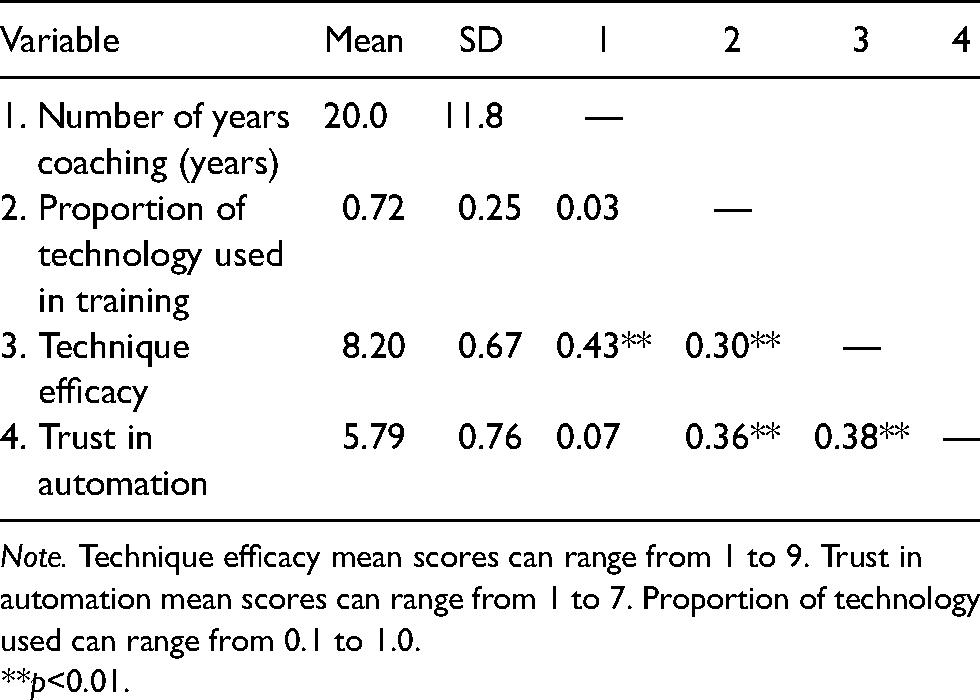
Note. Technique efficacy mean scores can range from 1 to 9. Trust in automation mean scores can range from 1 to 7. Proportion of technology used can range from 0.1 to 1.0.
**p<0.01.
Regression analysis determined that the total effect of the number of years of coaching experience did not significantly predict coaches' use of automation (F(1,81) = 0.00, R2 = 0.00, p = 0.99). Since coaching experience was not predictive of coaches' use of automation, no mediation relationship was possible.
Coaching technique efficacy did significantly predict the use of automation (F(1,81) = 6.32 R2 = 0.07, p = 0.01; β = 0.10, 95% Bootstrapped CI [0.02, 0.18]); however, once trust was entered into the model coaching efficacy no longer significantly predicted use of automation (β = 0.07, 95% p = 0.10, Bootstrapped CI [−0.01, 0.15]), suggesting a mediated effect. This mediation relationship was confirmed by a significant indirect effect via trust in technology (β = 0.03, 95% CI [0.01, 0.07], standardised β = 2.01; Table 3; Figure 1). Higher technique efficacy was associated with higher trust in automation, and higher trust in automation was associated with a greater proportion of coaches' time using automation (Table 3). These relationships are presented graphically in Figure 2.
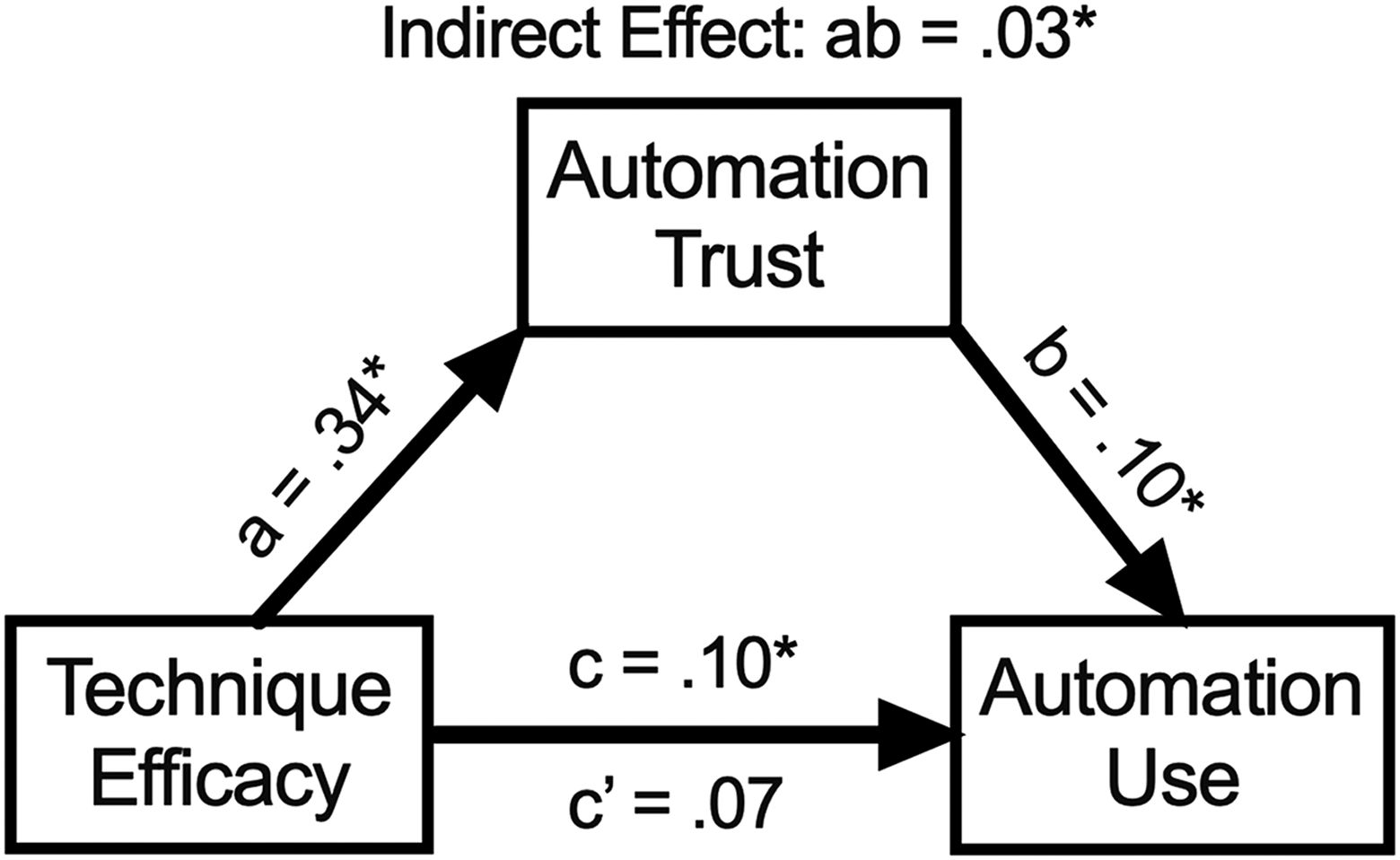
Coaching technique efficacy mediation model demonstrating that the effect of coaching technique efficacy (predictor variable) on coaches' use of automation (outcome variable) is mediated by their trust in automation.
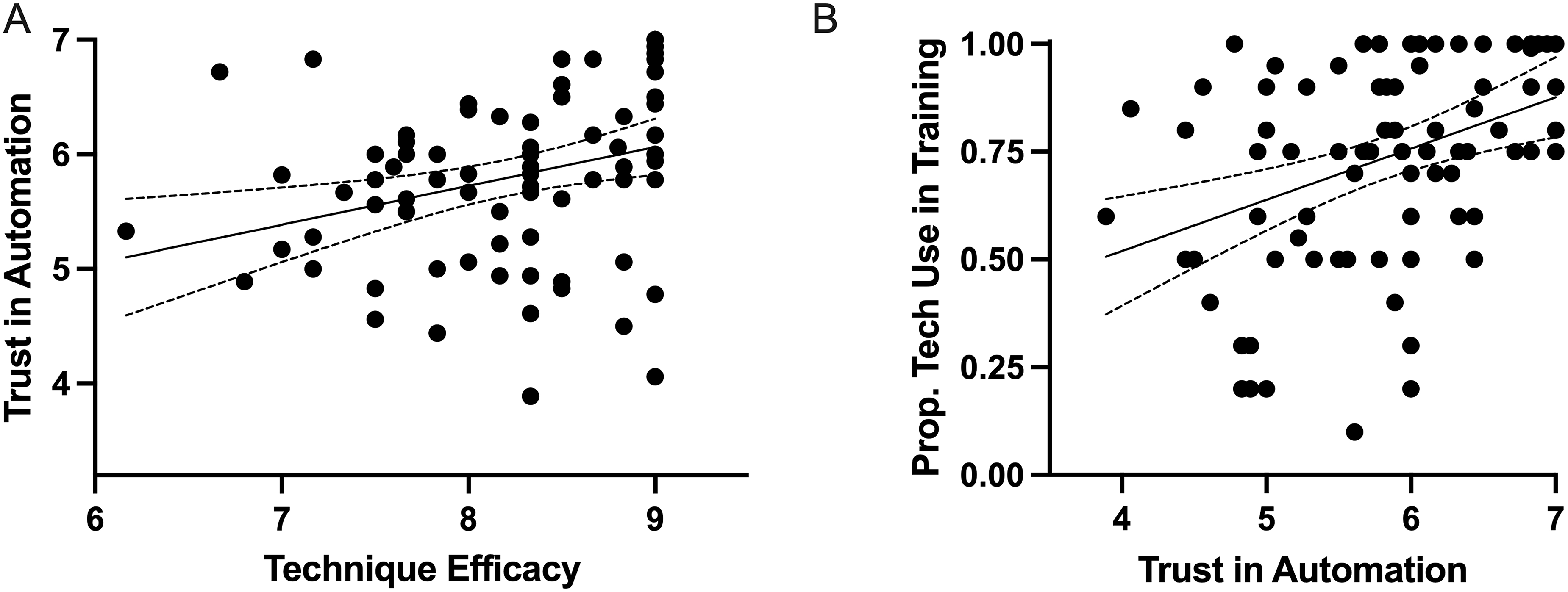
Regression analyses for the significant relationships between coaching technique efficacy and trust in automation (A) as well as trust in automation and proportion of technology use in training (B).
Coefficients for coaching efficacy mediation model.
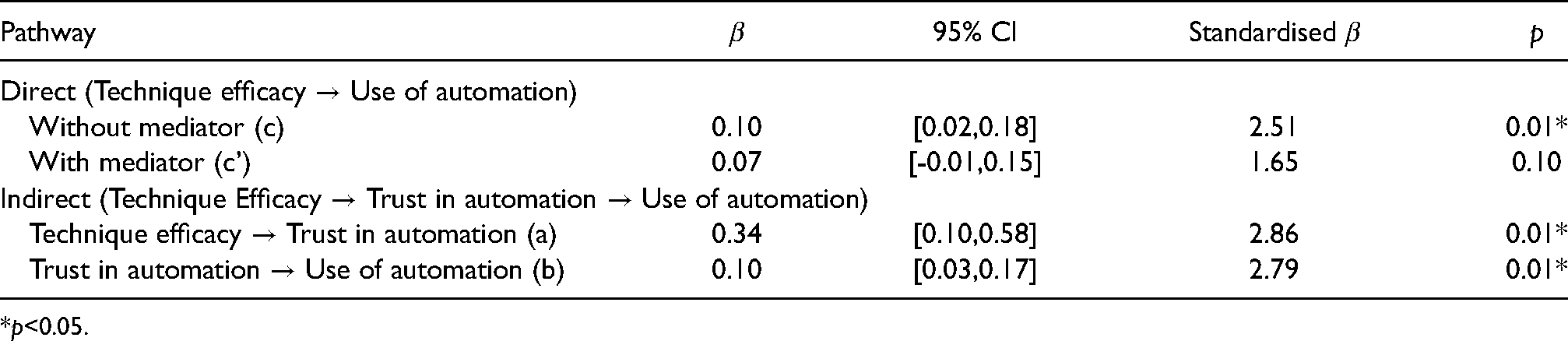
*p<0.05.
Discussion
The purpose of the present study was to determine whether coaching experience and coaching technique efficacy influenced coaches' use of technology in their instruction. It was hypothesised that both experience and efficacy would predict coaches' use of technology through their trust in technology. The results demonstrated that coaching experience was not associated with coaches' usage of technology. However, coaching technique efficacy predicted coaches' use of technology in training, where higher amounts of efficacy were associated with more use of technology. Importantly, this relationship was mediated by coaches' trust in technology. Therefore, the relationship between coaching technique efficacy and use of technology depended on trust in the technology.
Consistent with previous research in the domains of industry, defence and security,6,22,28 our results also showed that coaches who had greater trust in technology, used technology more. Trust formation is a complicated, multi-dimensional process that is influenced by many different elements. 13 The development and influence of trust greatly depends on the situation, which is influenced by external (e.g. the type of system, its complexity, and the difficulty of the task needed to be performed) and internal factors, such as experience and efficacy which our study focused on. 13 In a review of trust in automation, both experience and efficacy were found to contribute to the formation of trust between humans and automation. 13 The present study found that, in the context of coaching, only efficacy was predictive of coaches' trust in technology where higher technique efficacy was associated with higher levels of trust. In contrast, previous literature in the domain of transportation has found that higher levels of efficacy are associated with lower levels of trust, and vice versa. 20 Our results are not in line with previous research which could be a result of differences in the sport environment compared to other domains, such as the presence of a learner and the level of risk.
The level of risk (e.g. risk of life or limb) of a situation has been identified as an important influence on technology usage. 13 When greater risk is involved, users tend to reduce their usage of technology.29,30 Furthermore, higher risk conditions result in a tendency to reduce usage of complex technology but increase usage of simple technology. For example, fully autonomous self-driving cars are automated systems that require human trust and operate in high-risk environments. The inability of these autonomous vehicles to properly react and adapt while driving can result in severe injury or death. 31 In contrast, many sporting environments can be classified as low-risk, such that a mistake is not considered catastrophic. More specifically, the training and practice environment is even lower risk, as mistakes have no effect on competition performance and are sometimes encouraged. This suggests that in lower risk conditions, such as the sport training environment, a coach may increase their usage of complex technology and reduce their usage of simple technology. This is an important differentiation as the factors that have been previously identified to influence technology trust in other high-risk domains may not be transferable to the sporting environment.
As previously mentioned, external factors also influence trust formation with technology. 13 Although we did not directly measure the types of technologies used in instruction, the type of technology and its relationship to coaching diagnostics and coaching knowledge may be important. Many golf coaches and instructors use advanced radar technologies that measure numerous of variables, such as smash factor, spin rate, club speed, and attack angle. To truly understand the meaning and implications of these complex variables, a coach must have an understanding that is beyond simple mechanics. Chase and colleagues 32 identified knowledge as a key source of coaching efficacy and, therefore, a golf coach with higher levels of coaching efficacy may have more sport-specific knowledge which could explain why they used technology more.
Expert coaches have also been shown to use instructional approaches that are more flexible and efficient compared to novice coaches. 11 Therefore, those with higher coaching efficacy may increase the complexity of the training environment due to their more competent instructional skills. By increasing the complexity of the training environment, a high efficacy coach may have a greater ability to manage more aspects of instruction which could explain why they used more technology. Further research can explore the role that the type of system and other external factors, such as the presence of a leaner, play in the formation of coaches' trust in training technology.
Although efficacy is clearly an important variable in trust formation and has been proposed to be a result of experience, experience has also been suggested to have its own independent influence on trust in technology. 13 The present study's results do not support this previous finding and indicates that experience has a smaller effect on the amount of trust a coach has in technology. Consistent with previous literature, our correlational analyses did indicate that coaching experience is associated with coaching technique efficacy.12,33,34 That said, our study's findings indicate that coaching experience may be important for developing a sense of efficacy but is not what directly influences coaches' use of technology in training. A coach can have less experience, but high levels of technique efficacy that can be developed through other sources, such as success as a technical instructor, perceived skill level of athletes, and perceived social support. 11 Therefore, coaching experience may act as a precursor to coaching technique efficacy which can indirectly influence a coach's use of technology in training and instruction.
Our findings help better understand a coach's behaviour regarding technology usage in training. It is assumed that technology can help a coach improve athlete performance by delivering more informational feedback than they may be able to derive on their own. 7 This has been demonstrated on many occasions across a variety of sports, including golf.6,28 However, there remains no clear consensus regarding how well technology interacts with the ability of a coach to provide productive, performance-enhancing feedback to an athlete. For example, classic learning perspectives argue that information that distracts a learner from their error detection and correction mechanisms can undermine an individual's ability to retain information. 35 Therefore, if a coach is providing too much feedback from technology, the athlete may not learn as effectively and as a result, perform poorly in competition. Furthermore, the extent that an athlete trusts technology might interact with coach-related factors. This remaining uncertainty, which is a ripe area for future research, makes it difficult to apply the results of our study to appropriate technology usage. However, it can be suggested that technology usage in training itself is not detrimental, but that a coach's amount of reliance on technology may influence an athlete's learning outcomes.
This study is only the first step in understanding the relationship between coaches and technology, and how it may influence their behaviour and athlete performance, leaving ample opportunity for future research. Limitations include that some of the variables that coaches reported in the study can be difficult to estimate when self-reporting. Time can be a difficult variable to estimate retrospectively and therefore, the proportion of use was used to estimate technology usage as coaches reflect on their typical way of structuring practice. Future research could attempt to quantify technology usage by using record-keeping methods, such as time books. Observation of practice may also afford more exacting estimates of technology use and can provide even more detailed information including how and when coaches interact with technology in a training setting and how that influences their coaching behaviours.
It is noteworthy that our sample only comprised coaches who acknowledged using technology because so few coaches reported a lack of technology use. Thus, we had a selective sample. It is important to investigate the attitudes towards and trust in technology for coaches who do not use technology in order to understand the factors that may influence their decision to forgo technology in their practice. Second, the sample was largely comprised of male coaches. Previous research has indicated that some dimensions of coaching efficacy differ between genders, where male coaches report higher beliefs in their ability to coach 12 and that gender may act as a moderator between the proposed sources and dimensions of coaching efficacy. 34 It is important to investigate whether these differences influence coaches' use of technology in training. However, it is important to note that the substantial differences between the number of male and female coaches is representative of the PGA golf coach and instructor population. Finally, as acknowledged previously, the sport of golf is a technology-friendly environment which may limit the generalisability of our results. While golf provided an excellent platform to introduce these concepts to the literature, it is important to note that these results may not apply to all coaches or sports, particularly in sports or sporting environments where the use of technology is limited or inaccessible. Further research should be conducted in other sport environments to allow for broader application of these results.
Conclusion
To our knowledge, the present study is the first to investigate coaches' interactions with and attitudes towards technology usage in training. This study is also the first to investigate the importance of a coach's trust in technology. These findings indicate that a technically efficacious coach will tend to have more trust in technology which leads to more use of technology in training. Further, it was determined that coaching experience did not directly predict coaches' use of technology in training but may have acted indirectly as a source of coaching technique efficacy. The findings provide an initial understanding of a coach's decision to use technology in training and demonstrate that the relationship between efficacy and technology use in sport may differ from other domains. Looking ahead, as technology's presence continues to increase in the sporting environment, further research can support coaches' understanding of how to properly integrate these devices into their practice in order to best improve athlete performance.
Footnotes
Acknowledgements
The authors would like to thank the PGA of Canada for their support and help in participant recruitment. We would also like to thank Jeff MacDonald for his insights into the design of our study.
Authors’ note
A subset of the raw data will be stored on Dalhousie's Institutional Dataverse hosted on the Scholars Portal Dataverse website, which can be accessed for free by anyone. The data is stored on Canadian servers and will be kept in this repository indefinitely.
Declaration of conflicting interests
The authors declared no potential conflicts of interest with respect to the research, authorship and/or publication of this article.
Funding
The authors received no financial support for the research, authorship and/or publication of this article.
