




Abstract
Growth-related and overuse injuries are commonly reported in young gymnasts. Two risk factors of these injuries are growth and maturation, and training load. However, little is known regarding current coaching knowledge and practice in relation to these risk factors. To help understand current knowledge and practice, 44 coaches of competitive, young gymnasts, from 3 gymnastics disciplines (men’s artistic, women’s artistic, trampoline) took part in focus groups. The focus groups explored the awareness, experience and practice of coaches in relation to growth and maturation, training load and injury in competitive, young gymnasts. Data were analysed manually using an inductive thematic approach to identify core themes. The findings showed that coaches were aware of the physical changes and injuries that occur during the adolescent growth spurt. Both psychological changes and skill loss/confusion were also identified as challenges during this time. The knowledge and practice of monitoring growth and maturation, and training load did however differ between disciplines. Sports science and medicine practitioners were recognised as key stakeholders in helping manage and reduce the risk of injuries during growth. There appears to be gap between coach knowledge of growth and maturation, and training load, and practices such as monitoring training load and growth. Educating coaches and further research in these areas will aid coaches in reducing the risk of injuries in young, competitive gymnasts.
Introduction
A number of ‘Academies’ and ‘Performance Pathway’ systems now exist in both professional and Olympic sport. Through expert coaching and resources, these systems intend to develop talented youth athletes into senior elite athletes. There are, however, concerns over the injury risk associated with youth athletes.1,2
Growth and maturation and training load have been recognised as two risk factors of injury in youth athletes. The adolescent growth spurt has been identified as a time when youth athletes are at an increased risk of injury.3–5 During the adolescent growth spurt, the growth plates become more fragile and less resistant to forces.6–8 Additionally, the development of muscle and bone occurs asynchronously leading to an imbalance between growth and strength. 9 Coupled with repetitive loading through training, these changes during the adolescent growth spurt may increase the risk of injury. It has also been suggested that the development of sensorimotor mechanisms combined with rapid growth may contribute to changes in motor performance and therefore increase injury risk. 10 However, the research associating the development of sensorimotor mechanisms during the adolescent growth spurt and injury risk is currently limited. 10 Similarly, high training loads and sudden increases in training loads have been linked to an increased risk of injuries in youth athletes.2,11,12 Such risks are of particular concern in gymnastics, where the volume of training is evidently high,13,14 and a number of acute and overuse injuries have been reported. The most common injuries reported in young gymnasts include but, are not limited to ankle sprains, gymnast’s wrist, Osgood-Schlatter’s disease and spondylosis.14–19
However, little is known regarding coaches’ current knowledge and understanding of the adolescent growth spurt and training load, and whether these risk factors for injury influence coaching practice in gymnastics. Understanding current knowledge and practice in relation to growth and maturation, and training load will help identify areas required to further develop and support coaching practices. With this in mind, the aim of the investigation was to understand current coach awareness, knowledge and practice in relation to growth and maturation, and training load in competitive, young gymnasts. This study will establish areas for future research and education required by coaches to aid coaching practices in competitive, young gymnasts.
Materials and methods
Study design
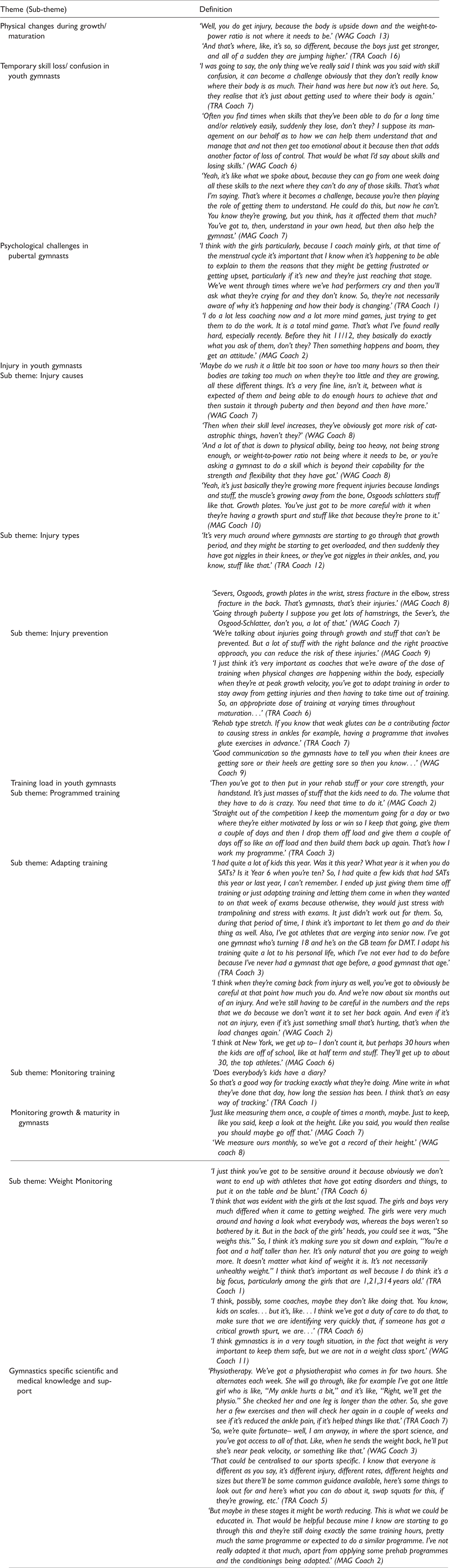
A qualitative research design using an interpretivism approach 20 by means of focus groups was chosen for this study to gain a ‘richer’ understanding of the current knowledge and practice of coaches in relation to the topic areas. The Consolidated Criteria for Reporting Qualitative Research 21 was used to demonstrate credibility of the study (Appendix 1).
Research team
The focus groups were conducted by a single moderator (T.S.Patel, MSc, CSCS, ASCC, PhD Candidate, Female) with no personal experience in gymnastics. Prior to data collection, the moderator had been embedded into the National Governing Body for approximately six months. The moderator had received focus group training (Conducting Focus Groups, Social Research Association) and completed a pilot focus group prior to the study. No relationships were established between the moderator and coaches with the exception of the National coaches (n = 6) who were already acquainted with the moderator. All other coaches were only aware of the PhD candidate role held by the moderator at the National Governing Body. The wider research team were aware that the participants’ knowledge of the moderator’s role within the National Governing Body may influence the findings in this study.
Participants
A purposive sample of coaches; who at the time were directly involved with competitive, young gymnasts (age 9–16) on the British Gymnastics pathway programme (Foundation, Development, Junior or equivalent) for men’s artistic gymnastics (MAG), women’s artistic gymnastics (WAG) and trampoline gymnastics (TRA), were selected to take part. A total of 70 eligible coaches were invited to take part via email invitation from the Head National Coach of each discipline. Two coaches openly declined to participate due to time constraints. Forty-four (28 Male; 16 Female) coaches (11 MAG, 15 WAG, 18 TRA), from different clubs across the country, with varying degrees of employment status (6 National Coaches, 4 Sub-contracted National Coaches, 3 Home Nation Coaches, 31 Club Coaches) and experience took part in the study. All coaches had a minimum of a level 2 coaching qualification in gymnastics. Coaches were provided with a participant information sheet and completed a written consent form to participate in the study, approved by the University of Bath Research Ethics Approval Committee for Health.
Focus groups
Coaches participated in a single, discipline specific focus group session. Eight focus groups were conducted in total (2 MAG, 3 WAG, 3 TRA) each with a minimum of 4 coaches and a maximum of 7 coaches. Only the moderator and coaches were present during the focus groups. All focus groups took place at the National Performance Centre (Lilleshall National Sports Centre, UK) between the middle of October 2018 and the end of January 2019. Focus groups were organised in accordance to each coach’s position within British Gymnastics’ pathway programme to encourage honesty and openness amongst all coaches. Focus groups were recorded on two audio recorders (H1n, Zoom, UK).
Consistent with the approach of Cumming and colleagues, 22 both written and verbal methods were used in the focus groups. At the beginning of each focus group, each coach was provided with a pen and pad of sticky notes and instructed to write on separate sticky notes “3 things which come to mind when thinking about growth and maturation in gymnasts”. Coaches were next instructed to work as a group to cluster their thoughts into themes. The total duration of the task was ∼5min. The moderator then asked the groups to explain each theme.
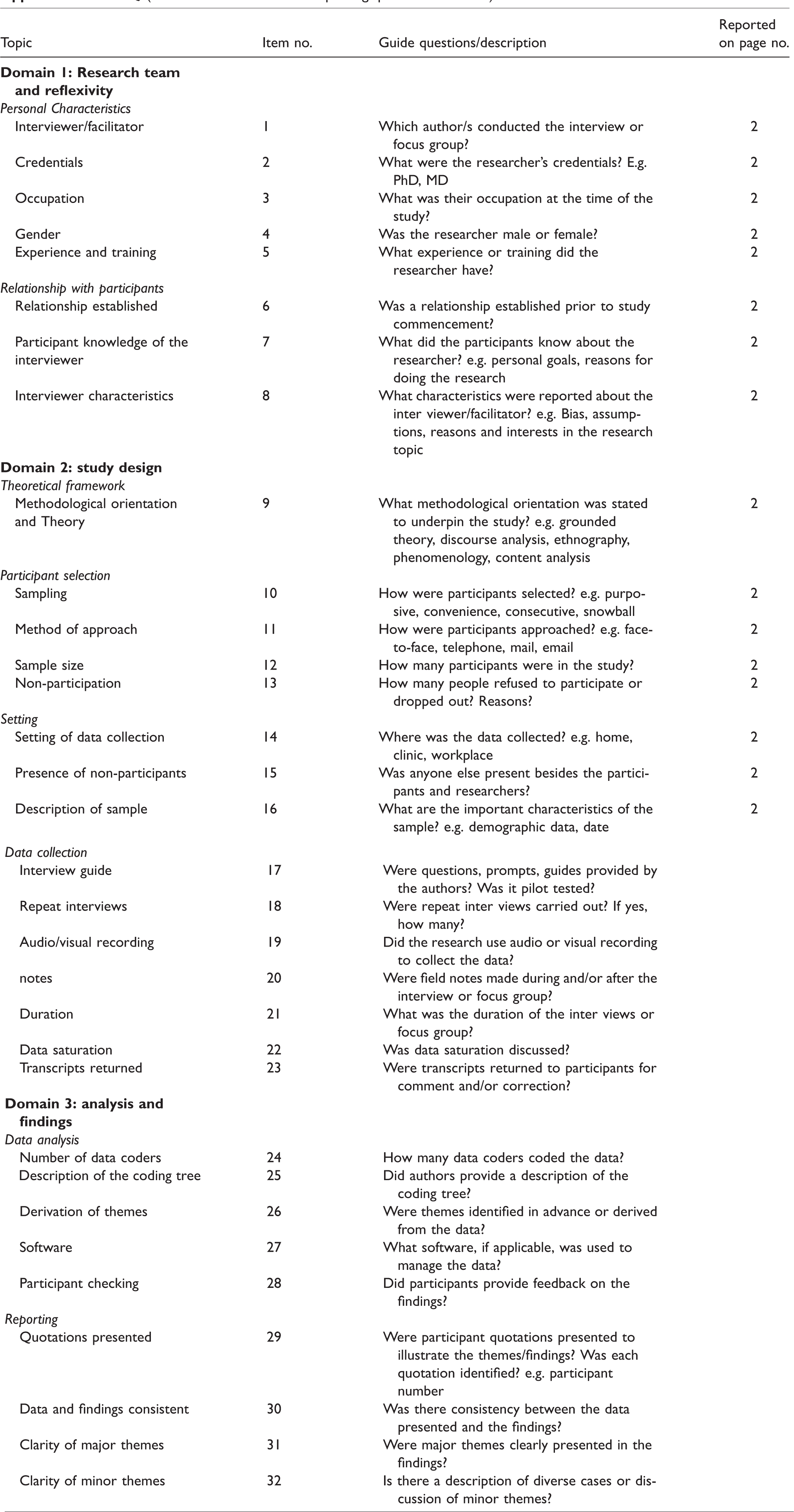
Conversation from the group activity led into the main interview section of the focus group. The main interview section was semi-structured in design and constructed from both the literature and observations of the moderator. The topic guide covered the awareness, experience and practice of coaches in relation to growth and maturation, training load and injury in competitive gymnasts (Appendix 2), which had been piloted with physiotherapists working in gymnastics prior to data collection. The semi-structured design allowed for flexibility of the questioning schedule and opportunity to explore additional topics not included in the original questioning schedule.
Analysis
Focus groups ranged between 65 and 114 min in length (mean = 81 min). No additional field notes were made during or immediately following focus groups. The data from the focus groups were professionally transcribed verbatim using an external company (TypeItWrite UK Ltd, UK) for analysis purposes. Any identifiable names were anonymised and replaced with pseudonyms. Transcripts were not returned to coaches to minimise any additional burden.
Transcribed focus groups were analysed manually by the moderator in Microsoft Excel (Microsoft® Excel for Mac, Version 16.21, Microsoft 2018). An inductive thematic analysis approach was used to analyse focus groups using the procedure described by Braun and Clarke. 23 The data was then collated into disciplines (MAG, WAG, TRA) to better understand the current awareness, knowledge and practice from each discipline.
Reflexivity
Discipline-specific interpreted findings were presented to all available coaches (participants and non-participants) through workshops during camps. During the workshops, coaches were given the opportunity to clarify and further discuss the findings for their discipline. This process was used as a form of synthesised member checking 24 to enhance trustworthiness of the interpreted data.
Results
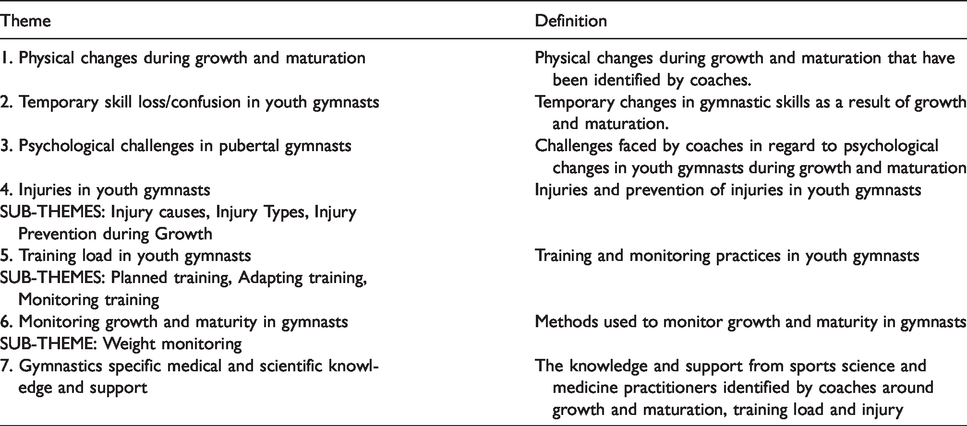
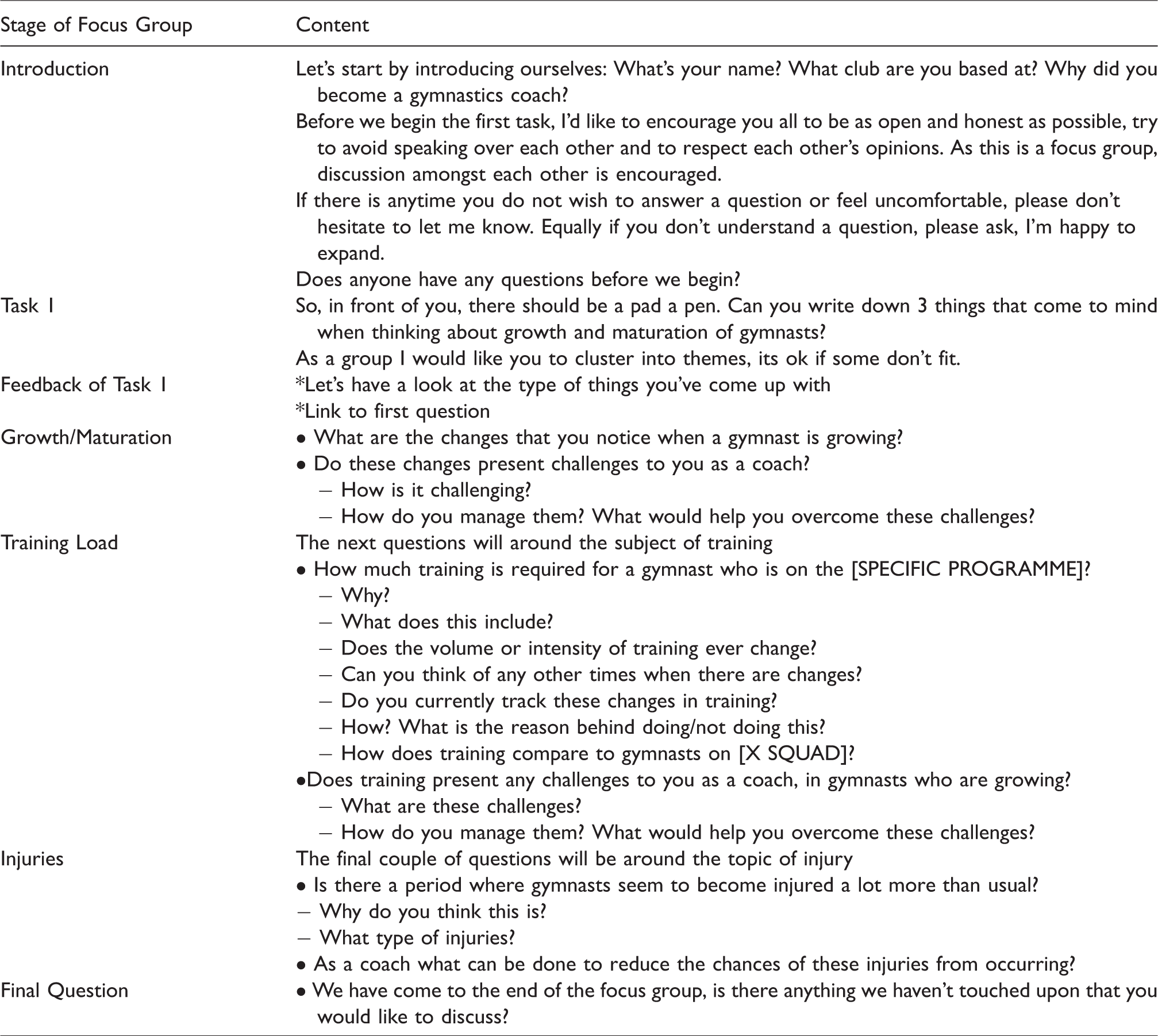
Seven core themes and seven sub-themes were identified through inductive thematic analysis using the focus group topics as an initial guidance. Definitions of core themes and a list of sub-themes are presented in Table 1. Overall, the majority of findings were similar across the three gymnastics disciplines. Further supporting quotes are presented in Appendix 3.
List of core themes, associated sub-theme(s) and core theme definitions.
Physical changes during growth & maturation
Coaches identified a number of physical changes that occurred in gymnasts during puberty. These changes included rapid growth in stature and mass, a change in centre of mass position, and changes in body composition. Coaches also described functional capacity changes where strength, power-to-weight ratio and flexibility all changed.
‘We've got big changes, physical changes, change of centre of mass, growth spurt, body weight so all the physicals together and the range really with those is there are large changes, growth spurts, quick changes and some gains, physical mass, which obviously affects the biomechanics of what they're doing, as well as it being a positive thing and gaining strength.’ (MAG Coach 1)
‘Because I tend to find, personally, that females sometimes have more … it tends to impact them a bit more. When they are going through puberty, and I see, like, for example, more of a shift in the alignment in their hips and so on …’ ‘… Because I tend to find foot alignment a lot worse in females than males …’ (TRA Coach 15)
Temporary skill loss/confusion in youth gymnasts
One of the main challenges identified by coaches in all disciplines was the temporary loss/confusion of gymnastics skills associated with periods of rapid growth. Coaches explained that gymnasts were unable to perform some of the skills that they were previously able to do as a result of their bodies changing. Changes in timing of the skill, coordination, body awareness, centre of mass and rotation were all factors that coaches associated with temporary skill loss/confusion.
‘Levers get longer. Kids can talk about losing skills. They need to learn the new perception of the limb lengths.’ (MAG Coach 6)
‘… But [pause] they are suddenly having a hard time holding a shape, for example. If they grow in height, then it’s very hard to hold a shape that they are used to conditioning at a certain height, even if it’s one or two centimetres, especially with the bars. Even if it’s … from a handstand, the full down, holding their shape in a dish shape, they suddenly are sticking their bum out and they don’t understand why can’t hold a plank hold. But that’s to do with their changing body.’ (WAG Coach 12)
‘When it's been a frustration thing, I think just positive re-enforcement and making sure they understand why it's happening, so going back to making sure that they know it's because they're growing. Just having that conversation that things might feel different, but it doesn't necessarily mean that you can't do the skill, or you might see something slightly different or you might land slightly different, it doesn't mean that the skill has totally changed. It's just a slightly different feeling. So, maintaining them strong, keeping them strong mentally more than anything through it.’ (TRA Coach 1)
Psychological challenges in pubertal gymnasts
Coaches from all disciplines expressed the psychological related challenges they had experienced with pubescent gymnasts. Coaches described gymnasts as experiencing more emotions such as crying, frustration, bad moods and a decrease in confidence. An increase in these emotions were attributed to gymnast’s hormones, injuries, loss of skills and gymnasts not understanding the changes happening with their body. During this time, coaches also described their gymnasts often displayed a lack of motivation and focus. Some coaches found their gymnasts were not compliant with instructions during this period of time. Two coaches linked these changes in behaviour, attitude and moods to dropout.
‘So, I've had Sammie for example, really good, progressing really well, had a quite quick rapid growth. She grew, I can't remember how much but it was quite a lot in a short amount of time. In the weeks following that or during that stage, her motivation, to me it looked like she didn't want to be there. To her, I don't think it was that, she was getting frustrated with everything. She couldn't do what she used to be able to do because of her body shape changes and the amount of hours she was doing, just because we were having to repeat or go back, made her feel negative … ’ (TRA Coach 2)
Injury in youth gymnasts
Sub theme: Injury causes
In all disciplines, rapid growth was perceived as one of the main causes of injury in young gymnasts.
‘Because, obviously, if they are going through their growth spurt, that’s when they are more prone to injury due to their bones and stuff like that.’ (TRA Coach 11)
‘Yeah, it's just basically they're growing more frequent injuries because landings and stuff, the muscle's growing away from the bone … (MAG Coach 10)
‘I think it's from twisting combinations on the floor. That's where I think mine came from, taking off like this.’ (MAG Coach 8)
Sub theme: Injury types
Growth related injuries including Osgood-Schlatter’s disease and Sever’s disease were commonly named by coaches in all three disciplines. Osteochondritis dissecans of the elbow was frequently mentioned as a common injury by artistic coaches. Coaches from all disciplines reported stress fractures of the back in their gymnasts. Additionally, MAG coaches identified stress fractures of the wrist.
‘It's just like the period of time where you're at risk of overloading the body and you get stress fractures and stuff, especially shin splints and the stress factors in your back, Osgood-Schlatter disease and ankle and knee, hip, joint problems.’ (TRA Coach 3)
Sub theme: Injury prevention
Coaches from all disciplines described methods used to prevent injury. MAG coaches spoke about a proactive approach towards injury i.e. using prehabilitation exercises or reducing training load. A few MAG coaches suggested this could be applicable to those gymnasts experiencing growth. Individual MAG coaches also prevented injury by lowering repetitions of more difficult skills, avoiding too much impact and using pain as an early indicator of injury.
‘You know, you can– if you're doing like 1,000 circles in a session on Pommel, you might say, let's just do 500 and save your wrists a little bit. I think it can be used as proactive.’ (MAG Coach 6)
‘Yes, injuries. I guess when they're growing, they're more susceptible to injuries. I guess it's our job to try and reduce that risk and like Missy said, try and pre-empt it and take the load off before so they can go through it as easily as possible.’ (WAG Coach 7)
Training load in youth gymnasts
Sub theme: Programmed training
In all disciplines, training comprised of apparatus work, and physical preparation, which includes, strength work, conditioning, prehabilitation and flexibility. Artistic gymnastics training also involved aspects of ballet and or choreography. Artistic coaches emphasised that a high volume of training was necessary to meet the performance requirements of the sport. The volume of training reported by coaches varied for gymnasts at similar levels in all disciplines, but particularly in the artistic disciplines. For example, MAG gymnasts on the Development programme were reported to be training between 18 and 30 hours a week.
(A) ‘My boys do between 30 and 32, 33 hours a week.’
(B) ‘I'm about 10– I'm about 10 hours less than that. So it's 22 hours for my elite kids. The boys that are in the elite performance squad do 20, 22 hours.’ (MAG Coaches 8 & 9)
‘Well, obviously, say two months before competitions, you normally start to introduce routines or half routines. And then it builds up the numbers. And then obviously you start to water it down number-wise. So, the week before you might only ask for one or two routines, whereas two- or three-weeks prior would have been five, six depending on’ (WAG Coach 1)
Sub theme: Adapting training
Training was adapted by many TRA and some WAG coaches during periods of rapid growth. Specifically, training was adapted by reducing training load, spending more time doing physical preparation, going back to basic skills and changing the surface for landings with the aim of reducing the risk of injury.
‘ … so, identifying, when they are in those, kind of, growth changes and maturation, that loading or planning needs to be, kind of, individualised and changed to ensure the avoidance of injuries, so a link-in to that.’ (TRA Coach 14)
‘I guess tying back to these things, the tracking, so knowing when they're in growth and then adjusting if you need to adjust, maintaining a good relationship when they're going through the difficult time.’ (WAG Coach 10)
Sub theme: Monitoring training
The majority of artistic coaches did not monitor training load. Conversely, the majority of TRA coaches monitored external training loads through diaries. A popular method of monitoring training is through the number of contacts a gymnast makes with the bed. A few TRA coaches additionally monitored the duration of training and the time of flight on the trampoline.
‘So, I've started recording the number of contacts in every session for each of the kids that I coach. So, we record the number of contacts and the length of the session so then I've got total volume of work they've done, and they can divide that by the time that they're on the trampoline. So, you can see is its high intensity where you've got lots of stuff done in a short amount of time or was it more stretched out. But that's only recently I've started recording stuff to that level of detail.’ (TRA Coach 4)
‘I think if we write things that have programmes, the adaptations are shown on the programme. But I don't record it.’ (WAG Coach 1)
Monitoring growth & maturity in gymnasts
Monitoring growth and maturity in gymnasts varied amongst each discipline. During workshop discussion sessions two MAG coaches explained how they monitored growth using stature and mass. In comparison, many of the TRA coaches monitored growth through regular measurements of stature and mass.
‘I am starting to get more on measuring height and weight more frequently to make sure that I'm keeping a track and I put it into a scatter graph. So, the top ten gymnasts I coach that are (on squad), I track them, and I do that every fortnight, just track to make sure and see what's going on. Obviously, I can identify when they go through growth spurts, when they're staying the same and what I can do.’ (TRA Coach 3)
Often when we come up here and someone will say, “She's grown,” and you can see it when you see them maybe every couple of months a lot more easily than when you're looking at them every day.’ (WAG Coach 10)
Sub theme: Weight monitoring
Across all three disciplines, the majority of coaches viewed weighing gymnasts in a negative manner. Coaches felt that weight monitoring was a sensitive subject and associated it with eating disorders. In particular it was highlighted by some trampoline coaches that female gymnasts reacted noticeably more to monitoring weight. A couple of coaches emphasised the need for weight monitoring to protect and keep gymnasts safe.
‘Yeah. So I don't– I don't really completely agree with the weighing stuff. And I think it's not good for their brains as well. And the skin fold thing, as well’ (MAG Coach 8)
‘Psychological. We used to. But the other psychological of it. And we had quite a big group of teenagers. And as you said, they were a group. And we tried not to make it a big thing so that they felt comfortable. And then they come running in and be like, oh, I need to go to the toilet. I've got to go to the toilet. I can't be weighed without going to the toilet … ’(WAG Coach 2)
Gymnastics specific scientific and medical knowledge and support
Coaches from all three disciplines discussed the additional scientific and medical support in relation to gymnastics. Scientific and medical practitioners were recognised for providing advice and support in regard to managing and reducing the risk of injuries.
‘If they get an injury, go to physio. They have a better knowledge. They helped me in that sense and said, “This is why he's growing. Keep measurements, keep strength testing,” which is always a good thing to do because we basically cover … ’ (MAG Coach 2)
‘Lenka, sometimes she's finished in an hour and then she does some stability work the physio has given her to help with the way her body is growing. There is always other stuff he can find for them to do.’ (TRA Coach 4)
‘I think that's probably, if I'm honest, an area that I need more guidance on. I know they're all different but more of a base number of how many and when, you know they're coming to it and through it. Obviously afterwards it's fine because you know they have to build it up again but it's the actual doing enough to keep them up there but not too much that you're hindering, or they might get an injury.’ (WAG Coach 7)
Discussion
Aligned with the current growth and maturity literature, coaches identified key physical changes during puberty such as an increase in stature and body mass, and changes in body composition. 25 In addition, coaches highlighted how these physical changes, alongside functional changes, contributed towards changes in performance. In particular, coaches agreed that this was a period where gymnasts temporarily ‘lost’ or became confused whilst performing skills that they were once able to perform. A temporary disruption in motor skills, often referred to as ‘adolescent awkwardness’, has also been noted in soccer.26,27 Although the exact cause of this phenomenon is unclear, it is likely associated with the development of sensorimotor mechanisms or temporary disruption of sensorimotor mechanisms during rapid growth. 10 In trampolining specifically, the term ‘lost move syndrome (LMS)’ has previously been used when a gymnast loses body position awareness or, awareness and technique of a particular skill.28,29 However, LMS has been labelled as a psychological condition and only researched from a psychological perspective29,30 but has not been investigated in relation to rapid growth. Although there is no existing literature specifically exploring skill loss in artistic gymnasts during rapid growth, changes in both rotation and postural control during a handstand as a result of growth have been noted in artistic gymnastics.31,32
Alongside a temporary loss or confusion of skill, coaches attributed more emotions to hormones, injuries and the overall changes that occur as a result of maturation. Adolescence is a time where emotions intensify and fluctuate more rapidly.33,34 This is due to a combination of physical, biological, social and cognitive changes that occur throughout this period.33,34 Additionally, adolescents are more sensitive to social evaluation as the brain continues to mature. 35 The emotions described by coaches may be a result of fluctuating and more intense emotions experienced by adolescent gymnasts combined with sensitivity to social evaluation. For example, a gymnast may become emotional as a result of constructive criticism from a coach. Research in the field of developmental psychology presents excellent guidance on understanding the psychological changes that occur alongside puberty33,34,36,37 which is likely to be applicable to adolescent gymnasts.
Coaches perceived gymnasts to portray a lack of motivation and compliancy to training throughout adolescence. A lack of compliancy and motivation towards training may partly be due to adolescence being a period where adolescents seek autonomy.36,37 Autonomy is a key component of intrinsic motivation and self-determined extrinsic motivation alongside relatedness and competence. 38 If an athlete’s autonomy, relatedness and competence needs are not met, intrinsic motivation and self-determined extrinsic motivation is negatively impacted, and athletes are subsequently predisposed to non-self-determined forms of extrinsic motivation (external regulation and introjection) and amotivation (state of lacking intention to act). 38 The described behaviours may be a result of gymnasts feeling a lack of autonomy if coached in an restrictive way. 39
One of the most commonly believed causes of injury in youth gymnasts was rapid growth. The adolescent growth spurt has previously been associated with injury in youth athletes.2,3,5 Two coaches suggested that a combination of high training loads and growth could be a cause of injury in youth gymnasts. Although there is currently limited evidence, it has been previously suggested that youth athletes are more vulnerable to injuries during growth, particularly when training loads are high and repetitive.2,40 Both high training loads and repetition are common characteristics of gymnastics training,13,41 specifically, gymnastics training involves repetition of the same skills and movement patterns. Additionally, coaches from the artistic disciplines associated injuries with an increase in the number of routines or skills performed and increasing the difficulty of skills. Consistent with the observations made by coaches, the incidence of injury has been found to increase when training load increases suddenly in youth athletes from other sports. 12 This emphasises the importance of monitoring training load in gymnastics to reduce the risk of injury. 42
In line with previous research on injuries in youth gymnasts, growth-related injuries such as Osgood-Schlatter’s disease, Sever’s disease, osteochondritis dissecans and stress fractures of the wrist and back were frequently mentioned by coaches.14–17 Coaches also described other acute injuries that their gymnasts experienced, which have been previously reported to occur in gymnastics.43–45 These included shoulder injuries in MAG gymnasts, lower limb injuries in TRA gymnasts and hamstring strains in WAG gymnasts.
Two primary mechanisms for reducing the risk of injuries were identified from the focus groups: modifying training during growth and prehabilitation. Suggested and/or practiced modifications to training included reducing training load, minimising impact and training skills in a safer scenario i.e., soft surface. It is likely that modifying gymnastics training during growth in these ways will reduce the repetitive forces and loading on an adolescent’s body at a time where it is more susceptible to injuries e.g., weaker growth plates.2,40 Training load has been previously modified in youth squash players ‘at risk’ of Osgood-Schlatter’s symptoms. 46 Subsequently, the number of days of training lost because of Osgood-Schlatter’s were reduced. 46 Prehabilitation was also identified by coaches as a mechanism for preventing injuries in gymnastics. Prehabilitation exercises have often been used in sport to prevent injuries, 47 where the evidence around the efficacy and effectiveness of training programmes that reduce the risk of injury are well-established (youth & adult) in other sports. 48 Research around prehabilitation exercises or equivalent training programmes that reduce the risk of injury in gymnastics is, however, limited and largely anecdotal or based on informed opinion. 49
The majority of coaches from the artistic disciplines did not monitor training load and therefore any modifications or adaptations to training, especially during periods of rapid growth are unclear. It is likely many coaches do not monitor training load in artistic gymnastics because of the complexity of the sport [multiple apparatus, different surfaces, skills vs routines]. On the other hand, the majority of TRA coaches monitored training load through training diaries. While there is no research on measuring training load in trampolining, many TRA coaches monitor the number of contacts the gymnast makes with the trampoline bed. Overall, more research in monitoring training load in gymnastics is required, particularly as monitoring training load can be a useful tool to help inform decision making, and therefore, reduce the risk of injuries. 42
Many coaches monitored growth and maturity using measurements of stature. In addition, MAG, TRA and a couple of WAG coaches used mass. These measurements were captured, on average, once a month. However, coaches from all disciplines expressed their concerns regarding weighing gymnasts. Monitoring stature and mass is a commonly used method to monitor growth and maturity, where current anthropometrics are plotted against growth curves. 50 Height and weight can be collected routinely in youth sport for the purpose of identifying and monitoring the onset and occurrence of the adolescent growth spurt. However, such strategies are limited in that they rely on retrospective analysis. For example, a child may be three-to-six months into their growth spurt before there is any evidence of a change in growth velocity. More recently, stature and mass are often collected alongside other measurements (seated height, parental height, age, sex) to predict when peak height velocity (PHV) will occur. 51 Identifying PHV is particularly important as it is a time when young athletes are at an increased risk of injury. 4 However, it was not clear from the focus groups how the majority of coaches used this information. In line with the literature, menarche and visual identification was additionally identified as a method of monitoring/assessing maturity by some coaches.1,52,53
Coaches recognised the additional scientific and medical support they received from practitioners, particularly during growth and maturation. Coaches also highlighted the need for further education in relation to supporting a gymnast during puberty. Educating coaches in these areas will likely help reduce the risk of injury alongside burnout and dropout in gymnastics. Other sports have supported the notion of coach education, particularly as a means of reducing the risk of injury.54,55
Although the study incorporates a number of gymnastics coaches across three disciplines [MAG, WAG, TRA], the findings cannot be generalised for all gymnastics coaches. The findings in this study are relative to coaches working with young, competitive, artistic and trampoline gymnasts in Great Britain, however identified considerations can be useful across disciplines and sports, particularly in terms of monitoring training load and growth for reducing the risk of injury. From a methodological standpoint, an appropriate number of focus groups were completed to reach data saturation. 56
The findings in this study show the current knowledge, awareness and practice of coaches regarding growth and maturation, and training load in competitive, young gymnasts. The study highlights the need for more coach education around the monitoring of growth and maturation, and training load. Education in these areas will aid coaches in their coaching practices and subsequently contribute to reducing the likelihood of overtraining syndrome, burnout and dropout alongside reducing the risk of injuries in young, competitive gymnasts. More coach education is also required in regard to coaching and supporting a gymnast during puberty. Additionally, the study emphasises the need for further research regarding monitoring training load in artistic and trampoline gymnastics.
In conclusion, coaches were aware of physical changes and injuries that occur during the adolescent growth spurt. In addition, psychological changes and temporary skill loss/confusion were identified as significant during this time. The knowledge and practice of monitoring growth and maturation, and training load did however differ between disciplines. Finally, sports science and medicine practitioners were recognised as key stakeholders in helping manage and reduce the risk of injuries during growth. More coach education and research are required around monitoring training load and growth to aid coaching practice and therefore reduce the risk of injuries in young, competitive gymnasts.
COREQ (COnsolidated criteria for REporting qualitative research) checklist. 21
Focus group guide.
Supporting quotes.
Footnotes
Acknowledgements
The authors would like to thank the coaches for their time in taking part in the study and the National Coaches for supporting the study. The authors would also like to thank Jason Laird, Jonathan Bucke and Lindy Laszig for their time in taking part in the pilot study.
Declaration of conflicting interests
The author(s) declared the following potential conflicts of interest with respect to the research, authorship, and/or publication of this article: The following authors, Alex McGregor and Karen Williams are employees of British Gymnastics. Author Louise Fawcett is an employee of the English Institute of Sport working with British Gymnastics. Author Tejal Sarika Patel is a contracted employee and partly supported by British Gymnastics.
Funding
The author(s) disclosed receipt of the following financial support for the research, authorship, and/or publication of this article: This work was supported by British Gymnastics and University of Bath.
