




Abstract
The aim of this review was to consolidate and synthesise rugby union (RU) and rugby league (RL) studies on tackle and RU studies on ruck technique for rugby stakeholders. Forty-nine studies were identified (20 in RL and 29 in RU). RL studies primarily focussed on identifying factors that impact tackling ability. Leaner, fitter players, with greater lower body strength, tended to have more proficient tackle technique. Experience and level of play were positively associated with tackling ability. These findings highlight the importance of developing tackle technique and physical qualities to allow players to progress to higher levels. Research in RU mostly focussed on identifying tackle and ruck techniques associated with performance measures and injury outcomes. Eleven tackle techniques and five ball-carrier techniques were associated with both performance measures and injury outcomes. These findings support national injury prevention programmes that advocate that safe contact technique is also effective technique. (152 words)
Introduction
In rugby union (RU) and rugby league (RL) players physically engage each other to compete for territory and ball possession.1,2 The most frequent form of physical engagement is the tackle3,4 – defined as an event where a player carrying the ball (the ball-carrier) is physically impeded by another player (the tackler).4,5 In an average professional 80-minute game, 160 tackles are made in RU and 590 in RL.6,7 In both RU and RL, success is determined, in part, by the ability to win these tackle contests.2,8 The tackle also has the highest injury frequency in both RU and RL, with tackle related injuries accounting for 54% of all injuries in professional RU, 9 and 47% in professional RL. 10 While the ball-carrier and tackler(s) actions before and during the tackle are largely similar in RU and RL, the actions of players after the tackle are different. In RL, the contest for ball possession discontinues after a completed tackle, with the attacking team maintaining ball possession for 6 tackles before handing over the ball, if still in possession (e.g., not scored a try or kicked the ball). In RU, the contest for ball possession continues until one or more players from each team are on their feet and physically contesting each other over the ball – this is known as a ruck. Once the ruck is formed, players are no longer allowed to play the ball and must ‘drive over’ it to make it available for their teammates to play. In professional RU, ruck related injuries accounted for 10% of all injuries 9 and like the tackle, the ability to dominate the ruck contest is associated with overall player performance and team success. 11
Proficient contact technique, for both the ball-carrier and tackler, is recognised as a leading factor in reducing tackle injury risk,12–14 while also increasing a player’s chances of tackle success.15–17 As such, international (World Rugby and the Rugby League International Federation) and national (for example, South African Rugby Union, New Zealand Rugby Union, Rugby Football League (UK)) governing bodies have invested substantial funding and resources into developing programmes that educate players, coaches and referees on the importance of proper technique during contact events.18–21 To assist these educational programmes, and in general, to optimise contact training, research on technical proficiency in RU (specifically for the tackle and ruck) and RL (tackle only) has also grown in recent years. Through analysing the patterns of movement of players immediately before, during and after contact, studies have identified specific techniques related to injury and performance, and what player qualities and contextual factors influence technical proficiency. For example, in RL, players with better physical characteristics, such as aerobic fitness and lower body strength, have better tackle contact technique.2,22,58
With that said, to date, research on tackle and ruck contact technique in RU and RL has not been consolidated and synthesised in a manner for stakeholders to assimilate. As this research is heterogenous (various outcomes, player qualities and contextual factors related to contact technique), a scoping review format is well suited for this purpose. 23 A scoping review is a type of knowledge synthesis that follows a systematic approach to map the existing literature on a field of interest. 24 They are commonly undertaken to determine the extent and range of studies on a topic; summarise and disseminate research findings; identify gaps in the existing literature; and determine the value and scope of undertaking a full systematic review. 23 The purpose of this scoping review was to systematically review studies on tackle contact technique in RU and RL, and ruck contact technique in RU, to determine the extent of research on this topic, and summarise and disseminate the findings.
Method
A systematic review of the scientific literature was conducted with the Preferred Reporting Items for Systematic reviews and Meta-Analyses extension for Scoping Reviews (PRISMA-ScR) guidelines. 25
Data sources and search strategy
Two reviewers (SdH and CP) independently searched three databases (SCOPUS, PubMed and Web of Knowledge) for eligible studies published up until 31 May 2020. The search strategy used consisted of a combination of the word ‘rugby’ connected through the Boolean term AND with either tackl*, ball-carr*, ruck, technique, contact skill, characteristic or mechanism. The papers were screened for eligibility at the title, abstract and full-text level. The reference lists of papers that met the eligibility criteria were searched, and any relevant papers were screened for eligibility at the title, abstract and full-text level. When disagreements on eligibility occurred, the eligibility criteria and the study were revisited for clarity and any disagreements resolved reaching consensus.
Eligibility criteria
The eligibility criteria for the review were as follows:
An original research study published in a peer-reviewed journal. The study was published in the English language. The study was on either RU or RL; including rugby sevens (included in RU total). The study analysed any technical movement pattern of a player in the tackle, ball-carry into contact, or ruck in the phases immediately before (preparation), during (execution) or immediately after (follow-through) contact. The study related the analysed technical variables to either a factor (physical measurements, age, experience, fatigue, context) or an outcome measure (performance, injury, level of play).
The following studies were excluded from the review:
Studies on wheelchair rugby. The study assessed tackles or rucks but did not include the involved players’ technical movement patterns in the analysis. The study analysed players’ technical movement patterns but did not relate the results to a factor or outcome measure.
Data extraction
The following data were recorded and extracted onto an Excel spreadsheet: publication details (title, author, year of publication), details of the sample (RU or RL, country, playing level, age group, sex, size, assessment environment), the techniques analysed, the factor(s) analysed, the outcome(s) measured, the statistics used, the level of significance and, if reported, the effect size (ES), and lastly the key findings.
Results
Forty-nine studies were included in the review. An overview of the search process can be seen in Figure 1. Twenty of the studies were in RL, 28 in RU and 1 study in rugby sevens.
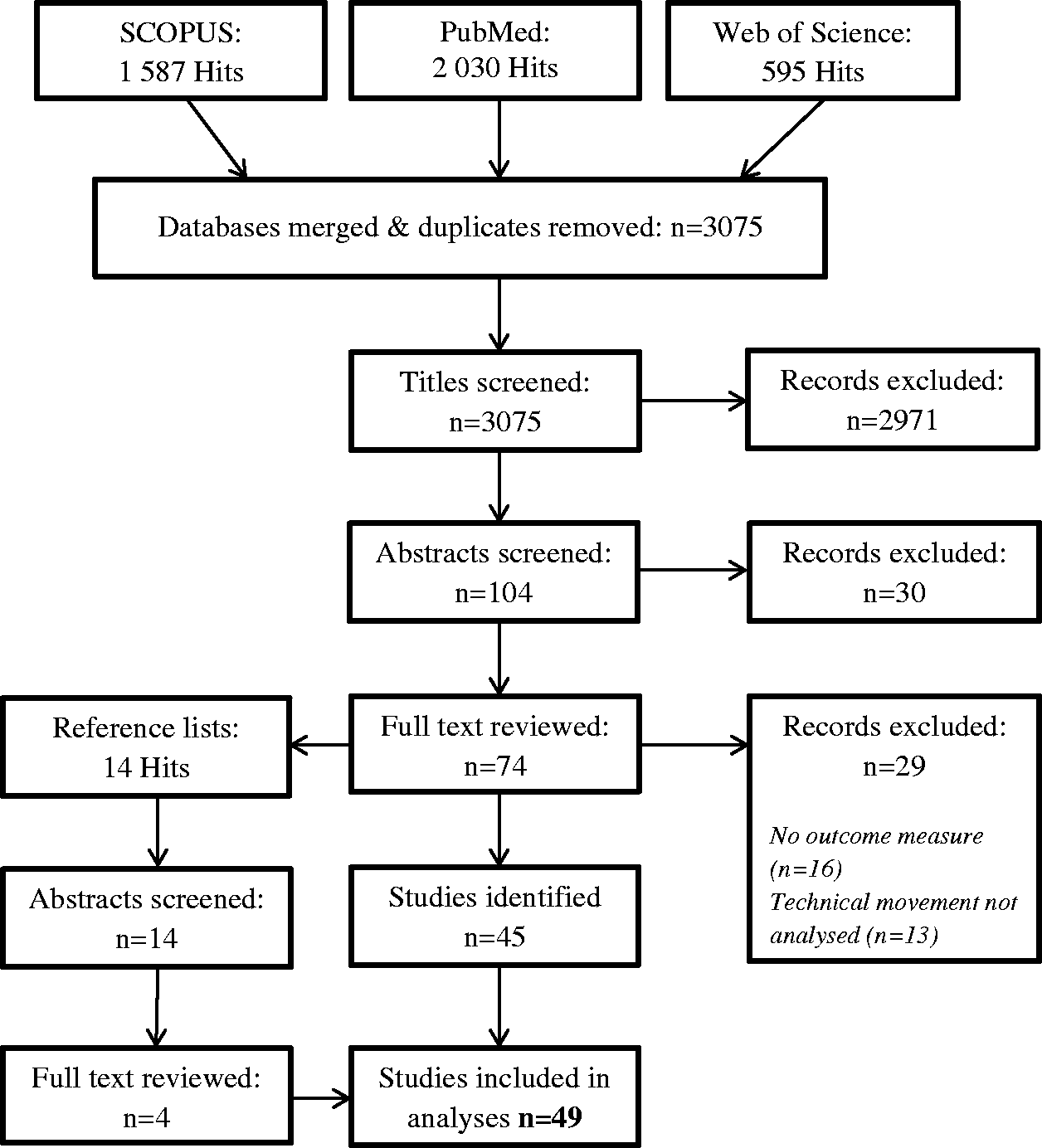
PRISMA flow diagram of literature search.
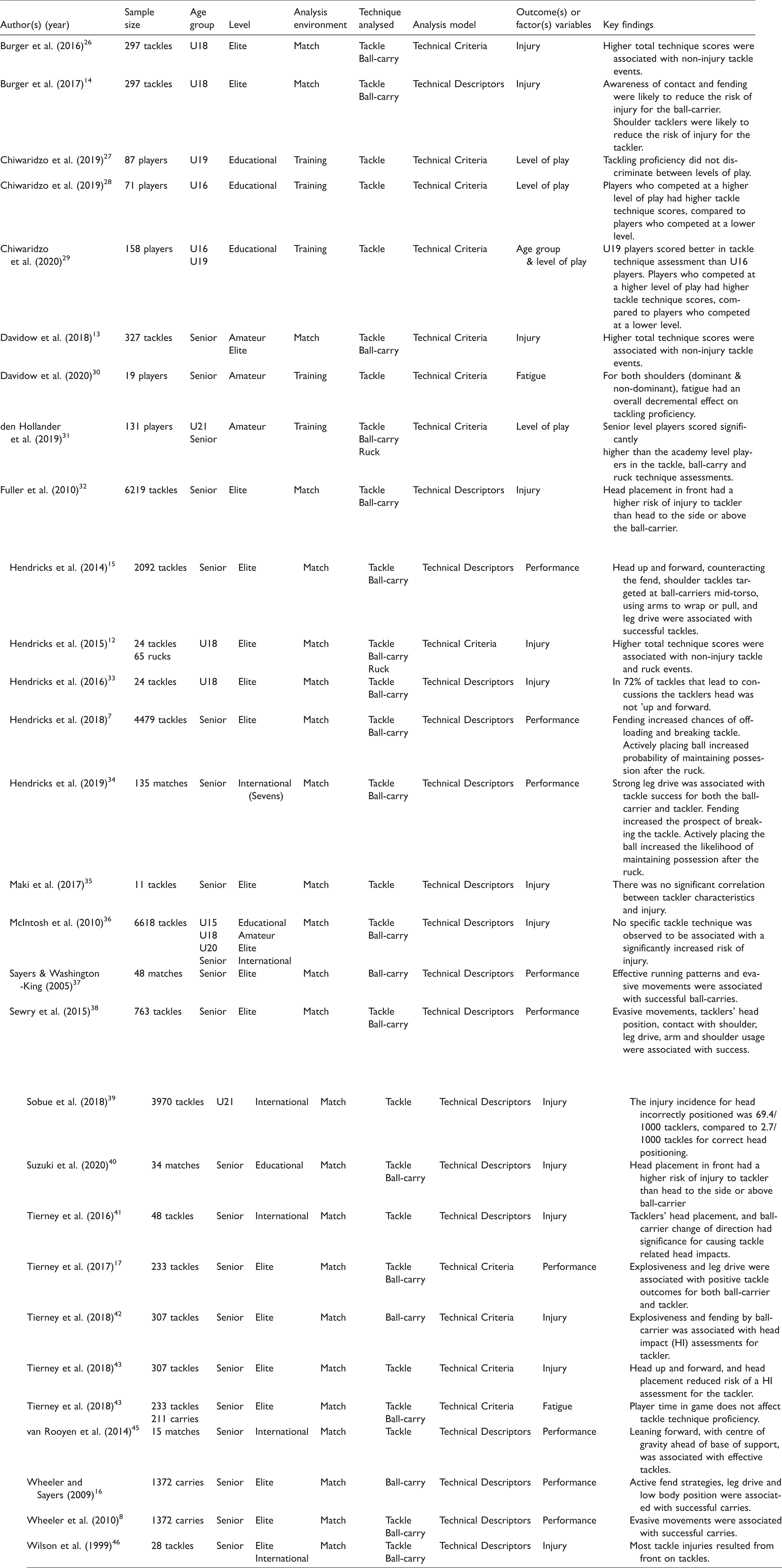
Tables 1 and 2 provide an overview of the studies in RU and RL, respectively. Ninety percent of RL studies (n = 18) only analysed the tackler’s technique, 10% (n = 2) analysed both the tackler and ball-carrier’s technique. Thirty-two percent of RU studies (n = 9) only analysed the tackler’s technique, 11% (n = 3) only the ball-carrier’s technique, 50% (n = 14) both the tackler and ball-carrier’s technique, and 7% (n = 2) the tackler’s technique, ball-carrier’s technique and the technique of a player in the ruck.
Summary of studies in rugby union (including sevens).
Summary of studies in rugby league.
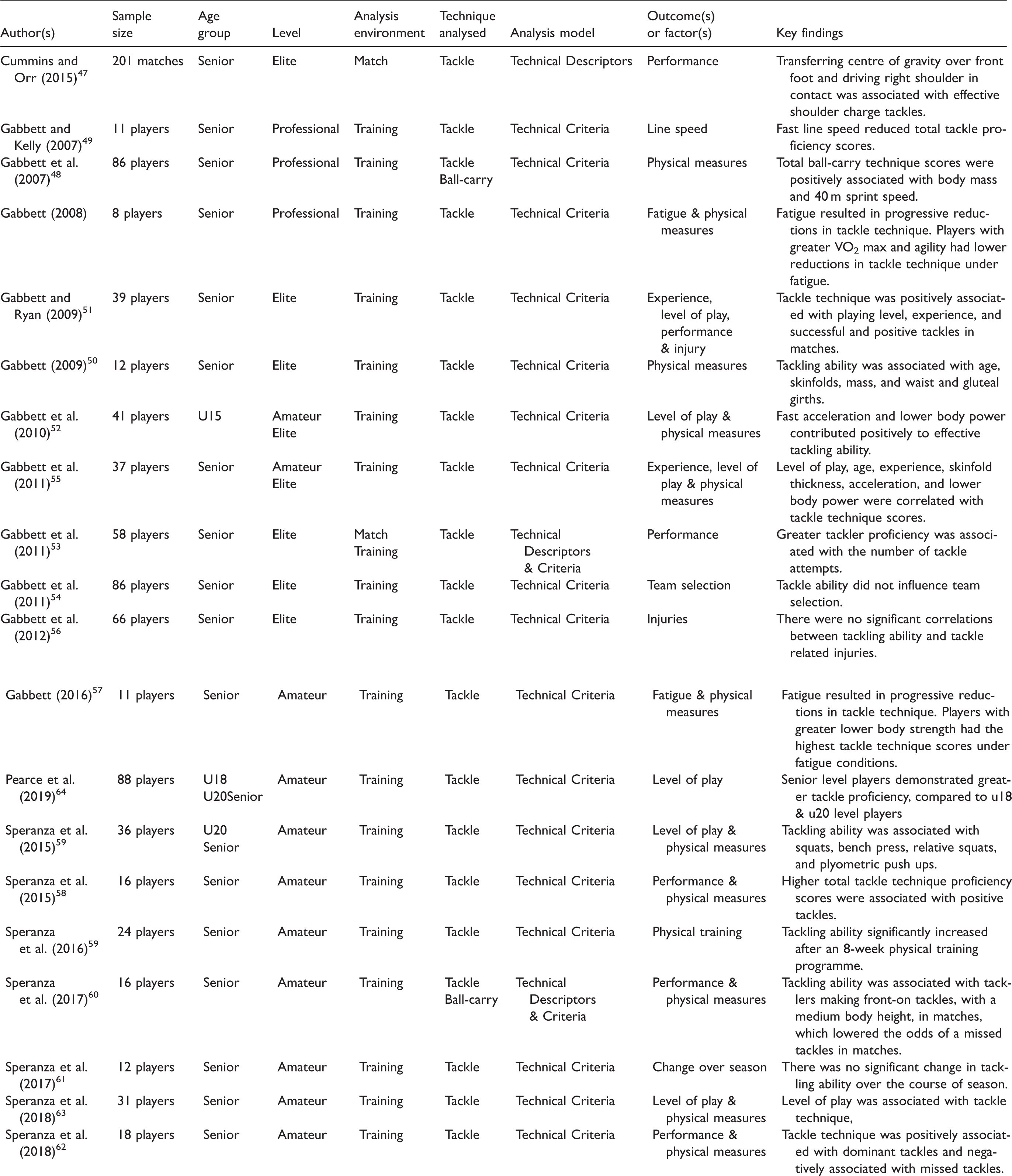
The majority of RU studies assessed the effect of contact technique on injury outcomes (n = 14; 50%) and performance outcomes (n = 8; 29%). In RL, 55% of studies assessed the effect of physical qualities on contact technique (n = 11). Other variables commonly compared to contact technique in RL included match performance (n = 6; 30%) and level of play (n = 6; 30%).
Techniques
Tables 3 and 4 provide a summary of the tackle and ball-carry techniques analysed in RU. Eleven tackle techniques and five ball-carry techniques were associated with both a reduced risk of injury and a higher likelihood of tackle success.
Tackle techniques associated with injury prevention and performance in rugby union.
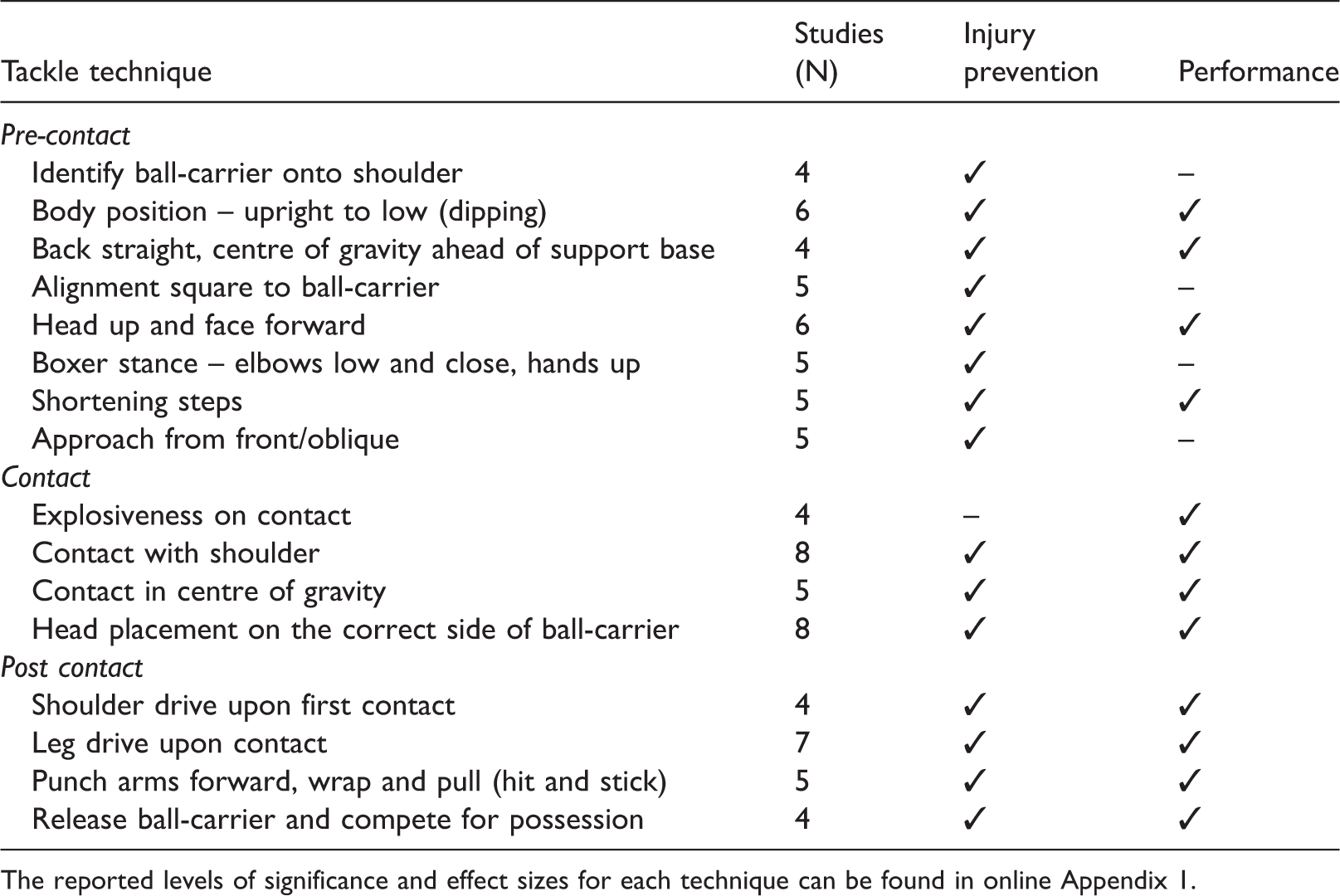
The reported levels of significance and effect sizes for each technique can be found in online Appendix 1.
Ball-carry techniques associated with injury prevention and performance in rugby union.
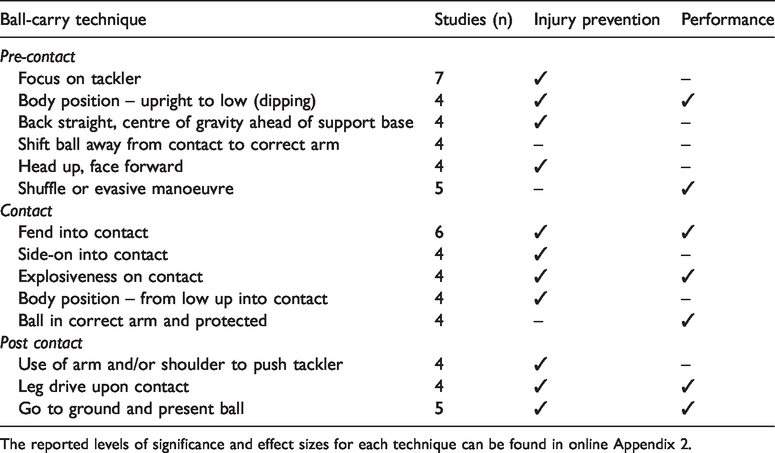
The reported levels of significance and effect sizes for each technique can be found in online Appendix 2.
Twelve of the 29 RU studies used technical criteria in their assessment of the tackle, ball-carry and/or ruck (41%). Nine of the 12 studies (75%) used the same standardised technical criteria consisting of 16 tackle techniques, 14 ball-carry techniques and 15 ruck techniques. The technical criteria were categorised into three phases of movement: pre-contact (preparation phase), contact (execution phase) and post contact (follow-through phase). Five of the nine studies reported a total score for the number of techniques performed, and three of the studies reported totals for each phase of movement. Three of the 12 studies developed their own technical criteria for the tackle, consisting of 10 tackle techniques (25%). The 10 technical criteria were consistent with the 16 tackle techniques described in the aforementioned studies. No additional techniques (to the technical criteria) were identified in the other 17 RU studies. Total tackle technique score was associated with contact related injuries in 2 out of 3 studies (p < 0.01; ES > 0.6). No performance related studies reported total tackle technique scores or scores for the phases of movement in the results. Similarly, total ball-carry technique score was associated with contact related injuries in 2 out of 3 studies (p < 0.01; ES > 0.6) and no performance related studies reported total ball-carry technique scores in the results. Total ruck technique was not associated with ruck injuries (p > 0.05; ES < 0.6), however making contact with the opponent’s centre of gravity, and wrapping arms around opponent post contact when rucking were negatively associated with injury outcomes in the ruck (p < 0.05; ES > 1.2).
Table 5 provides an overview of the relationships between total tackle technique scores and various player qualities and contextual factors. Body composition, lower body strength, experience and match performance were positively associated with tackling ability in at least 50% of the RL studies that included these variables in their analyses.
Factors associated with tackling ability in rugby league.
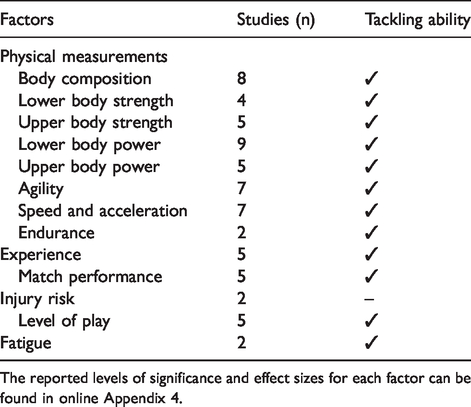
The reported levels of significance and effect sizes for each factor can be found in online Appendix 4.
Nineteen of the 20 RL studies (95%) used standardised technical criteria to assess tackle technique (criteria shown in online Appendix 3). The technical criteria were not grouped or categorised into phases, but all the studies reported a total score for the techniques performed. Five of the 19 studies (26%) included additional tackle techniques to the list of criteria (explosiveness on contact, lower body position, approach from front, head placement) and two included ball-carrier techniques (evasive movement, fend, side-on in contact, explosive, leg drive). No additional techniques were identified in the RL study that did not use the standardised technical criteria. Only six studies reported on the relationships between the individual tackle techniques and the study outcome (30%), in which four of the studies, 20%, showed the relationship between tackle technique and level of play (online Appendix 3). Contact with shoulder was the only technique not associated with level of play.
Discussion
The aim of this scoping review was to consolidate and synthesise RU and RL studies on tackle technique and RU studies on ruck contact technique for rugby stakeholders. Forty-nine studies were identified. These studies were similarly distributed between RU (59%) and RL (41%). Eighty-three percent of tackle contact technique studies in RU were based on video analysis studies during matches, and for most of them, both the ball-carrier and tackler were studied. Only two studies analysed ruck contact technique; one in matches 12 and one in training. 31 The studies in RU aimed to understand the relationship between contact technique and injury or contact technique and performance. In contrast, studies in RL analysed contact technique during controlled field sessions and focussed on the tackler. Also, the aim of most of the studies in RL was to identify factors that may affect tackle technique. The contrast in research studies between RU and RL highlights questions for future research on contact technique within the respective rugby code and potential collaboration opportunities.
Tackle and ruck contact technique has been studied by associating technical determinants with an outcome (deterministic model) or using a set of criteria that represents the ‘ideal’ form of the movement (diagnostic prescriptive model).65,66 In addition, tackle contact technique is typically divided into three phases, pre-contact (preparation phase), contact (action phase) and post-contact (follow-through phase), to focus the observation and interpretation.66,67 Technical proficiency scores – i.e. scoring ball-carrier, tackler and ruck technique using set criteria – have been particularly useful for both RU and RL. The scoring is straightforward, a player is awarded either one point or zero depending on whether a particular technical criterion is met or not. The sum of these points is subsequently used to represent the technical proficiency of the player, which is easy to interpret. The criteria have been shown to have good validity in training and matches,22,26,31 and therefore can be potentially considered as a diagnostic and monitoring tool.
Tables 3 and 4 summarise the techniques that are significantly associated with a reduction in tackle injury risk and an increased likelihood of tackle success in RU. This provides clear support for National and International Injury Prevention programmes that advocate that safe tackle technique is also effective technique. 68 It is worth noting that if a technique was not significantly associated with an outcome, it should not be interpreted as inconsequential and not worthy of coaching. From a practical perspective, an over-reliance on identifying statistically significant relationships can lead to false-negative findings, as a technique performed in both positive and negative outcomes would not be associated with either outcome, but may still have a decremental effect on performance or injury if not performed. Techniques not significantly associated with an outcome should still be coached and executed, while the significant techniques can be stressed and emphasised during training.
Experience and level of play were positively associated with tackling ability in RL.48,51,55 These findings highlight the importance of tackling technique for player development. The findings also suggest that players may need considerable exposure to executing the skill within the appropriate context demands to optimise technique development. Furthermore, aerobically fitter players with greater lower body strength tended to have more proficient tackle technique.2,22,58 Similarly, players with greater aerobic fitness and greater lower body strength had the best tackling ability under fatigued conditions. 57 This points out the importance of physical conditioning for enhancing tackle technique.
We identified 11 tackle techniques and five ball-carry techniques associated with both reduced injury risks and effective performance outcomes in RU (Tables 3 and 4). These findings show that safe techniques are also effective in winning the tackle contest. Four injury related tackle technique studies12,13,26,44 and four injury related ball-carry technique studies12,13,26,42 used the same diagnostic prescriptive model in their analyses. There is, therefore, scope for a systematic review on the relationship between the standardised technical criteria list used in these studies and tackle related injury events, to assess the quality of the individual studies, and the weighting of the relationship of the techniques and injury outcomes.
Currently, the diagnostic prescriptive model has been applied to three contact skills in RU (the front-on shoulder tackle, carrying the ball into contact and ruck clearing) and two contact skills in RL (under-the-ball and over-the-ball shoulder tackles). For future work in the area, we recommend that criteria for other types of tackles (smother, chop, double tackles) and ball-carrier actions (offload), ruck skills (sealing, poaching), and other contact events (scrum, maul) be developed. Only five of the studies (12%) provided sample size power calculations.14,32,39,55,56 There were similar findings in a review of video analysis studies in RU (3%). 69 Therefore, the question of whether studies were adequately powered can be raised. This is a limitation of the current body of literature, and, as such, we recommend future studies conduct and report sample size power calculations. Additionally, further research on the effect of ruck technique on injury risks and performance outcomes in RU is warranted.
Practical applications
Diagnostic prescriptive models of ideal contact technique can be used as a valid diagnostic and monitoring tool. Safe and effective techniques provide a framework of key techniques to emphasize during contact technique training. Exposure to contact training and physical conditioning are important to optimise contact technique development.
Conclusion
The aim of this paper was to consolidate and synthesise RU and RL research on tackle and ruck technique. We identified 29 studies in RU and 20 in RL. Studies in RU analysed tackles and rucks in matches, to understand the relationship between contact technique and injury risks or performance outcomes. Studies in RL analysed tackles in controlled field sessions, to identify factors that may affect tackle technique. The contrast in research aims highlight opportunities for future research within the respective codes of rugby.
In RU, 11 tackle techniques and 5 five ball-carry techniques were associated with reduced injury risks and positive performance outcomes. These findings support national injury prevention programmes that advocate that safe contact technique is also effective technique. The techniques identified by these studies also provide a framework of key techniques to emphasize during contact training.
In RL, aerobically fitter players with greater lower body strength had more proficient tackle technique. These findings highlight the importance of physical conditioning to develop tackle technique.
Deterministic models and diagnostic prescriptive models were used to analyse contact technique in RU and RL. Diagnostic prescriptive models were particularly useful to describe and compare contact technique within and between studies. However, these models have only been applied to three contact skills in RU, and two in RL. We, therefore, recommend additional diagnostic prescriptive models are developed for other contact skills in RU and RL. Furthermore, research on the effect of ruck technique on injury risks and measures of performance are recommended.
Supplemental Material
sj-pdf-1-spo-10.1177_1747954120976943 - Supplemental material for Tackle and ruck technical proficiency in rugby union and rugby league: A systematic scoping review
Supplemental material, sj-pdf-1-spo-10.1177_1747954120976943 for Tackle and ruck technical proficiency in rugby union and rugby league: A systematic scoping review by Steve Den Hollander, Chanda Ponce, Michael Lambert, Ben Jones and Sharief Hendricks in International Journal of Sports Science & Coaching
Footnotes
Declaration of conflicting interests
The author(s) declared no potential conflicts of interest with respect to the research, authorship, and/or publication of this article.
Funding
The author(s) received no financial support for the research, authorship, and/or publication of this article.

References
Supplementary Material
Please find the following supplemental material available below.
For Open Access articles published under a Creative Commons License, all supplemental material carries the same license as the article it is associated with.
For non-Open Access articles published, all supplemental material carries a non-exclusive license, and permission requests for re-use of supplemental material or any part of supplemental material shall be sent directly to the copyright owner as specified in the copyright notice associated with the article.
