




Abstract
This study aimed to investigate rugby league coaches’ perceptions of physical qualities for current and future performance, while also establishing the training practices of under-16 and under-19 players. Twenty-four practitioners (rugby coach, strength and conditioning coach) working within nine Super League clubs completed a questionnaire. The questionnaire required practitioners to rank eleven physical qualities (i.e. strength, power, acceleration, maximum speed, aerobic endurance, change of direction, agility, height, body mass, lean mass and fat mass) by importance for current performance, future performance and career longevity according to playing position (forwards, backs, hookers and halves). Practitioners were asked to provide detail on the frequency and duration of each type of training session completed during a typical week throughout each phase of the season; pre-season, in-season (early), in-season (mid) and in-season (late). Typically, practitioners ranked strength, power and acceleration qualities highest, and endurance and anthropometric qualities lowest. The importance of physical qualities varied according to each playing level and position. Training practices of under-16 and under-19 players differed during each phase of the season, with under-19 players undertaking greater training volumes than under-16s players. Overall, the physical qualities coaches perceived as most important were not reflected within their training practices. Rugby league practitioners can use this information as a reference source to design long term athletic development plans, prescribe training and during player development procedures. Moreover, these data can inform and improve training practices while influencing the design of pre-season preparatory phases and in-season periods.
Keywords
Introduction
Rugby league is an invasion team sport played internationally at both amateur and professional levels.1,2 The game is characterised by intermittent actions including recurring accelerations and decelerations, in addition to various collision activities (e.g. tackling, ball carrying). 3 During peak periods of a game, players cover 160–170 m · min−1, whilst completing 0.4–1.2 collisions · min−1.2,4 Given the physical nature of rugby league, players are required to possess a range of physical qualities including aerobic endurance, power, strength, and speed, alongside technical and tactical proficiencies in order to compete at the highest level.1,5 To date, extensive research has investigated the characteristics of rugby league match play,4,6,7 and the physical qualities of players across different age categories and playing standards.8–10
In order to develop rugby league players for elite competition, understanding the performance and development of physical qualities is essential. There are several studies available that describe the physical qualities of rugby league players,1,9,11–13 and their associations with match performance. 14 Height and body mass have been found to successfully categorise between playing position and level 1 and positively influence selection between elite and sub-elite categories in under-16 (U16) players. 15 Moreover, under-18 (U18) players who were taller and heavier were more likely to achieve professional status than their smaller and lighter counterparts. 16 Lower body power has been found to increase with playing standard, 17 across a season, 18 longitudinally, 19 and is associated with superior sport specific skills such as tackling 15 and ball carrying ability. 20 Muscular strength has previously been found to increase with age in academy rugby league players 19 and successfully discriminates between playing levels. 21 In addition, muscular strength is associated with superior tackling ability and linear speed22,23 and also a decreased risk of injury. 24 Furthermore, greater muscle strength results in enhanced recovery following match play. 25 Finally, aerobic endurance is considered important due to the requirement to repeatedly perform high intensity actions during a match, 3 and also augments recovery following a match. 25 Greater aerobic endurance also contributes to a higher playing level.17,25 Collectively, these findings highlight the importance of physical qualities for rugby league player development and performance.
Although a large amount of research exists on the physical qualities of youth rugby league players, this research typically reports the qualities (e.g. strength, speed) and statistically compares them between standards or playing positions. Currently, there is a lack of research quantifying the importance of physical qualities for performance and career progression within rugby league, from a practitioner (e.g. rugby league coach, strength and conditioning coach) perspective. Such research is important to inform training practices, influence long-term athletic development, and enhance player profiling and monitoring. Involving stakeholders in research is essential to increase adoption of findings into the field. 26 Additionally, information on an individual’s perception of a specific topic is an essential source for identifying and understanding areas that can be improved. 27
Without understanding key perceptions of those involved in the physical development of youth rugby league players and their training schedules, it is difficult to determine how long-term athletic development plans can be optimised. Notwithstanding the scientific literature pertaining to rugby league, there is little published information available describing the training practices of academy rugby league players. Strength and conditioning practices have been examined in elite rugby union,28–30 however, there are no data available specifying the frequency and duration of training sessions during different phases of the season in rugby league. Information relating to common trends in training practices could act as useful reference sources for those involved in the physical preparation of academy rugby league players. Therefore, the primary aims of this study were to examine the importance of physical qualities for current and future performance, and career longevity, and to determine the training practices in U16 and under-19 (U19) rugby league academies.
Methods
Participants and procedure
Twenty-four male rugby league practitioners (mean ± SD, age: 35.0 ± 7.4 years; coaching experience: 10.0 ± 4.5 years) from nine different clubs working within a Super League Academy in the UK participated in this study. All participants were either the Head of Youth (e.g. academy manager; n = 3), rugby league coach (n = 11) or strength and conditioning coach (n = 10). The U16 and U19 playing levels were chosen for this study as they are deemed development programmes in England where players are developed prior to progressing to professional status. English Super League Academies recruit players at 14 years old (U16 years, scholarship) before progressing into an U19 (now U18 for the 2020 season) academy. Players may then progress into playing adult (semi-) professional rugby league. Prior to all experimental procedures, ethics approval was granted from Leeds Beckett University research ethics committee (application reference 58776). Questionnaires were completed between April and August 2019 during the competitive season.
Coach details
Of the coaches who participated, all held at least a United Kingdom Coaching Certificate (UKCC) level 3 which is a requirement to coach at the current level. Thirteen coaches held UKCC level 3, while two coaches held level 4. Three coaches held post graduate diplomas in elite sport coaching. All of the S&C coaches held an undergraduate or postgraduate degree in sport and exercise science or similar. Five held a master’s degree in strength and conditioning, one participant held an MPhil, whilst two more were completing PhDs in strength and conditioning. Not all S&C coaches were accredited with a professional body, however, two were certified with the United Kingdom Strength and Conditioning Association (UKSCA), and one was accredited with the National Strength and Conditioning Association (NSCA). Two coaches were British Amateur Weightlifting Association certified. Other relevant qualifications included fitness instructor and 1st 4sport qualifications.
Questionnaire
In order to understand coach’s perceptions of physical qualities for current and future performance, and career longevity, a questionnaire was implemented via the lead researcher. Questionnaires were completed in an interview style, one on one with the practitioner in a private area and lasted 22 ± 6 min. The discussion started with a short briefing from the researcher which included a background to the study, details of the questions, the potential outcomes of the results, whilst also ensuring complete confidentiality and anonymity. The participant read the information sheet and provided their written consent prior to commencement of the discussion. The discussion was recorded once the participant provided written consent. The interview was designed to examine practitioners’ perceptions of the importance of physical qualities for both current and future performance, and career progression according to playing position. The groups (forwards, backs and hookers and halves) were chosen as the main positional groupings in order to identify all playing positions 1 and limit time constraints on participants. Additionally, the questionnaire was completed as an interview to allow further discussion where necessary. Practitioners were asked to rank the following physical qualities by their importance (1 lowest, 11 highest); strength, power, acceleration, maximum speed, aerobic endurance, change of direction, agility, height, body mass, lean mass and fat mass.
Each participant was asked to answer each question with regard to their current role (i.e. U16 (n = 8) or U19 (n = 16) practitioner). The questions were as follows: Question 1: What do you think are the most important physical qualities for U16 or U19 (dependent on practitioner level) rugby league players to possess to perform at the top level (e.g. be the best) in their respective competitions? Question 2: What are the most important physical qualities players need to develop to progress to the next playing level (e.g. U16 to U19/U19 to senior)? Question 3: What do you think are the most important physical qualities for career longevity (e.g. playing for 10 years in the Super League) in rugby league players? This was adapted from similar work by Cupples and O’Connor 5 on the ranking of important performance qualities. Each physical quality was defined precisely to the participants and related back to rugby league performance.
The second part of the discussion asked coaches to quantify their training practices (physical; gym, conditioning, speed, agility and rugby; skills, tackle, small sided games, and tactical). For example, gym was identified as ‘any training time spent in the gym developing physical qualities’. In addition, training sessions such as speed and agility were referred to as time focussed solely on isolated speed or agility repetitions and did not involve technical/tactical or skill-based activity. Practitioners were asked to provide an estimation of detail on the frequency (number of sessions per week) and duration (minutes) of each type of session completed during a typical week throughout each phase of the season; pre-season, in-season (early), in-season (mid) and in-season (late). Additionally, practitioners reported the duration/frequency of sessions on an individual basis rather than the team in order to avoid multiple responses. To ensure content and face validity questions were reviewed and pilot tested with four expert coaches. This process resulted in several alterations prior to the final approval.
Data analysis
All statistics were calculated using IBM SPSS 24.0 (SPSS Version 24, SPSS Inc. Chicago, USA). The questionnaire responses are reported using means and standard deviations (mean ± SD). Training volume was calculated by multiplying training session time (minutes) by frequency. Assumptions of normality were examined using the Shapiro–Wilk test and indicated that questionnaire responses were not normally distributed. Differences in the perceptions of the importance of physical qualities for position (forwards, backs and hookers and halves) between performance level (current performance, future performance and career longevity) were examined using Friedman analysis of variance (ANOVA). When required, the Wilcoxon signed-rank test with Bonferroni post-hoc correction was used to identify differences between performance levels.
Between age-group differences (U16 vs. U19) in training practices were assessed using an independent t-test and 95% confidence intervals calculated for real change. Mean standardised differences are reported as Cohen’s d and interpreted as trivial <0.2, small = 0.20, moderate = 0.60, large = 1.2 and very large = 2.0.31 The overall level of significance was set at p < 0.05.
Results
Importance of physical qualities
Table 1 presents the ranked responses of each of the three questions according to position and playing level. Findings demonstrated that practitioners ranked strength and power qualities highest for forwards at all levels. Body mass observed a gradual increase as playing level progressed. Change of direction for U16 players current performance was significantly (p < 0.05) higher than for career longevity. For backs, acceleration, power and max speed were ranked most important. Height, body mass, lean mass and fat mass were lowest ranked. Hookers and halves’ most important physical quality was acceleration, according to practitioners. Endurance for U19 players future performance was ranked significantly (p < 0.05) higher than U16 players current and future performance.
Ranked importance of selected physical qualities for current performance, future performance and career longevity according to position.
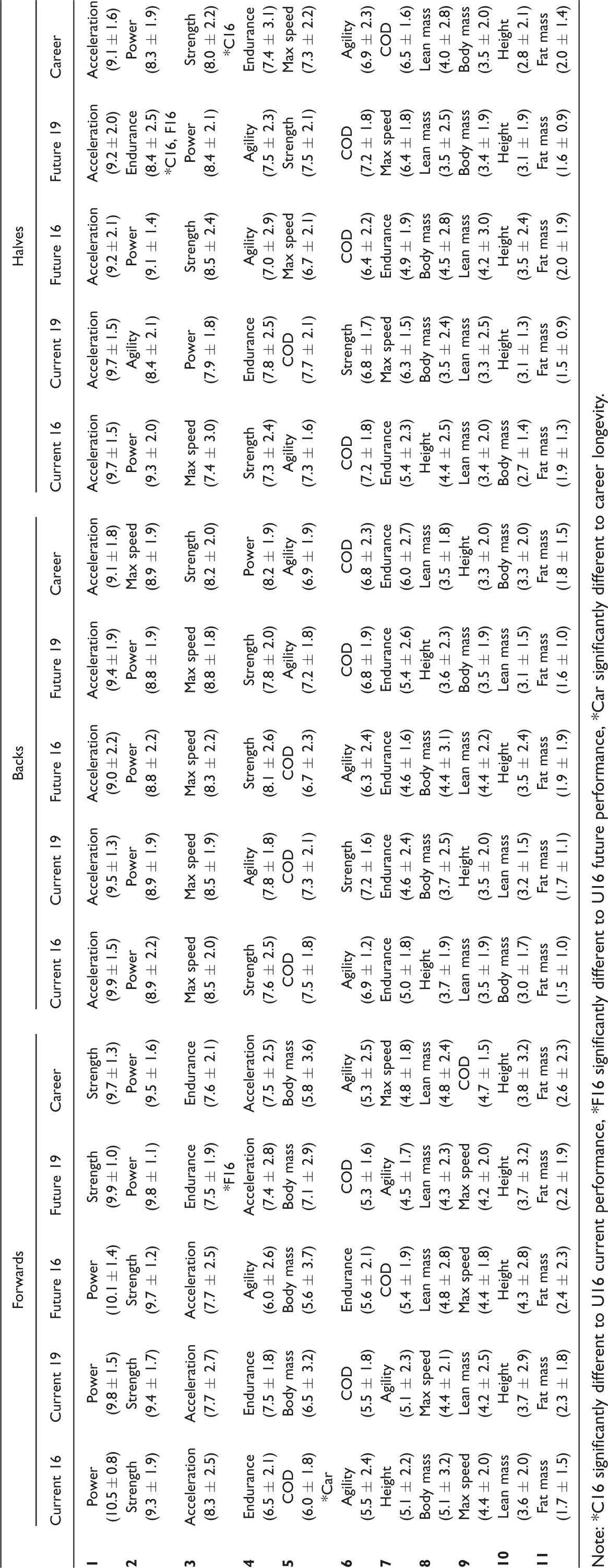
Note: *C16 significantly different to U16 current performance, *F16 significantly different to U16 future performance, *Car significantly different to career longevity.
Training practices
Under-16
Table 2 presents the training practices of U16 players. Tactical training volume for U16 players was significantly (p = 0.038, ES; 1.41) higher during in-season (late) when compared to pre-season.
Training session duration, weekly frequency and weekly volume of a typical training week for U16 players.
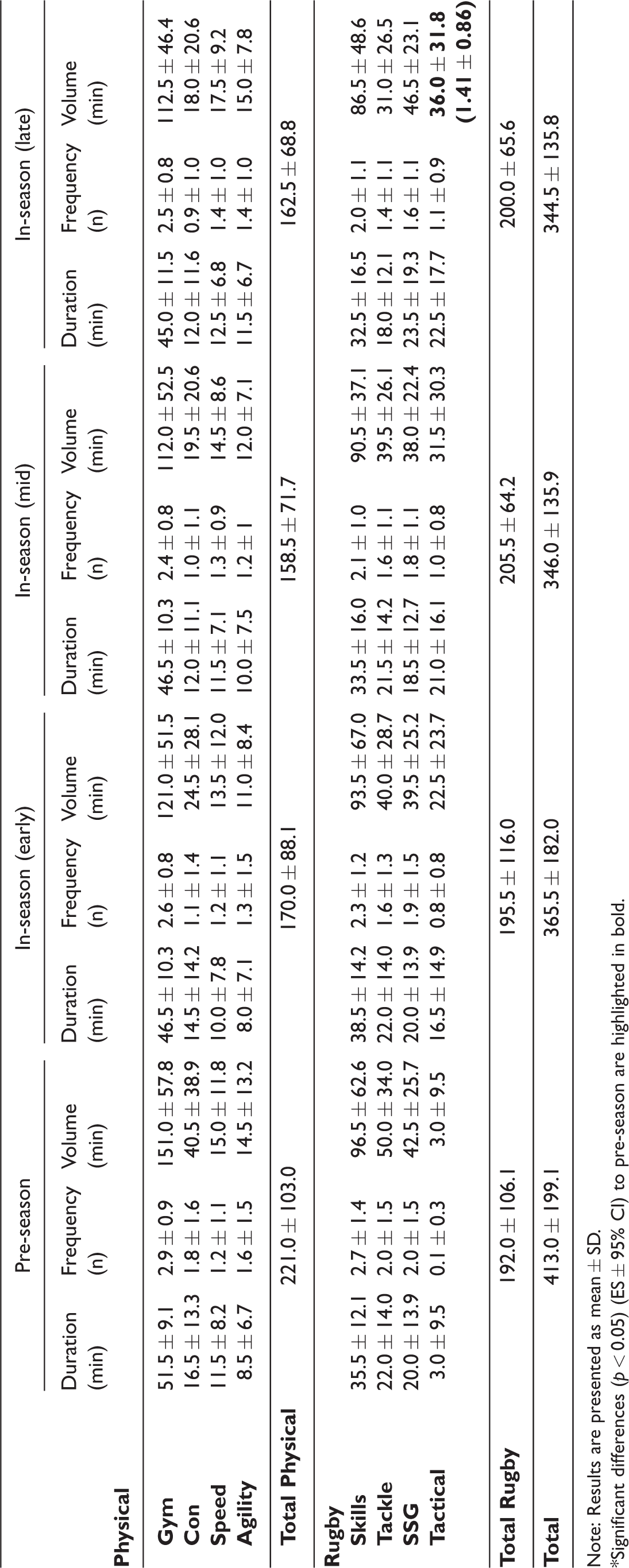
Note: Results are presented as mean ± SD.
*Significant differences (p < 0.05) (ES ± 95% CI) to pre-season are highlighted in bold.
Under-19
Table 3 presents the training practices of U19 players. Gym (p = 0.003, ES; 1.57), conditioning (p = 0.002, ES; 1.21), speed (p = 0.029, ES; 0.89), and total physical training (p = 0.001, ES; 1.61) volumes were significantly lower during in-season (early) compared to pre-season training. Tactical training (p = 0.045, ES; −1.32) was significantly higher during in-season (early) compared to pre-season training.
Training session duration, weekly frequency and weekly volume of a typical training week for U19 players.
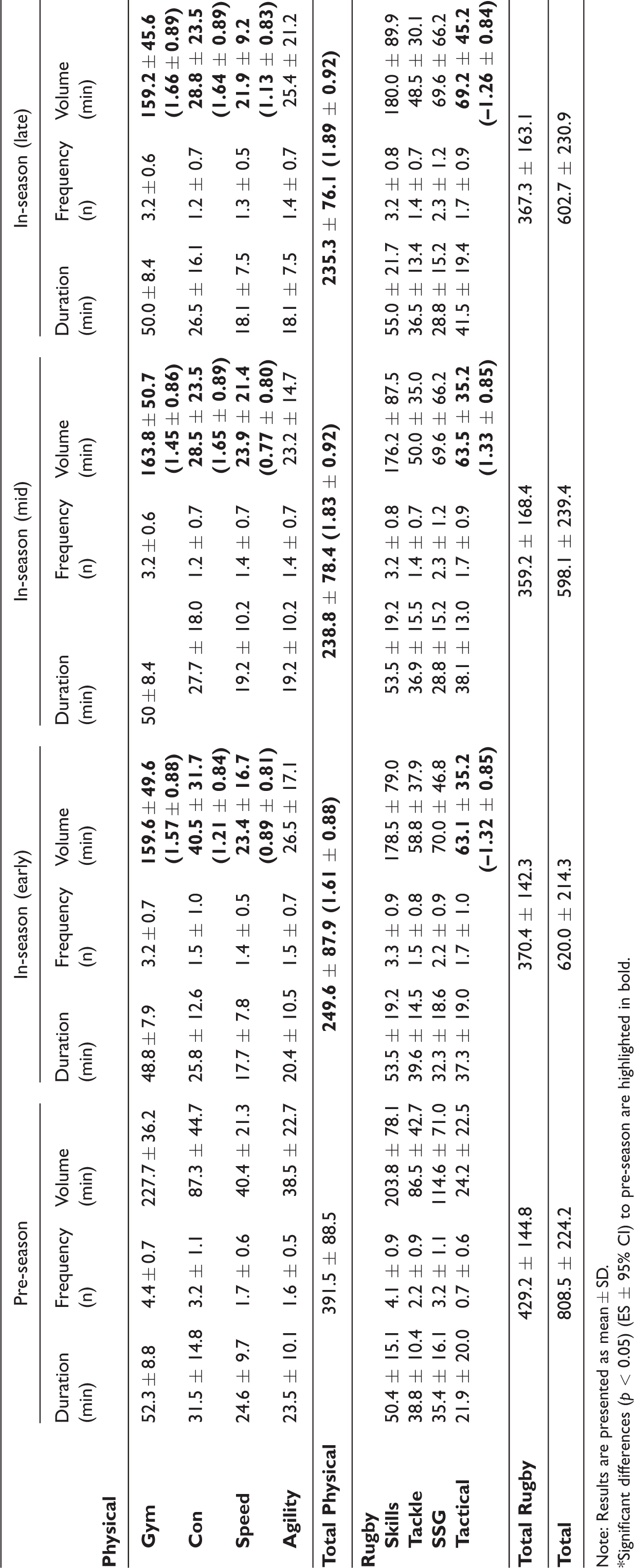
Note: Results are presented as mean ± SD.*Significant differences (p < 0.05) (ES ± 95% CI) to pre-season are highlighted in bold.
Gym (p = 0.006, ES; 1.45), conditioning (p = 0.001, ES; 1.65), speed (p = 0.024, ES; 0.77), and total physical training (p = 0.001, ES; 1.83) volumes were significantly lower during in-season (mid) compared to pre-season training. Tactical (p = 0.042, ES; 1.33) training was significantly higher during in-season (mid) compared to pre-season training.
Gym (p = 0.003, ES; 1.66), conditioning (p = 0.001, ES; 1.64), speed (p = 0.014, ES; 1.13), and total physical training (p = 0.001, ES; 1.89) volumes were significantly lower during in-season (late) compared to pre-season training. Tactical (p = 0.013, ES; 1.26) training was significantly higher during in-season (late) compared to pre-season training.
U16 vs. U19 practices
The volume of all types of training during the pre-season period were significantly lower (gym; p = 0.001 ES; −1.59, conditioning; p = 0.016, ES; −1.12, speed; p = 0.003, ES; −1.48, agility; p = 0.012, ES; −1.29, physical; p = 0.001, ES; −1.78, skills; p = 0.002, ES; −1.52, tackle; p = 0.038, ES; −0.95, SSG; p = 0.006, ES; −1.35, tactical; p = 0.011, ES; −1.23, rugby; p = 0.001, ES; −1.87) for U16 players when compared to their U19 counterparts.
Agility (p = 0.016, ES; −1.15), total physical (p = 0.043, ES; −0.91), skills (p = 0.013, ES; −1.16), tactical (p = 0.005, ES; −1.35) and total rugby (p = 0.005, ES; −1.35) training volumes during the in-season (early) period were significantly lower for U16 players when compared to U19 players. U16 player’s gym (p = 0.027, ES; −1.00), agility (p = 0.034, ES; −0.97), total physical (p = 0.020, ES; −1.07), skills (p = 0.009, ES; −1.28), tactical (p = 0.033, ES; −0.81) and total rugby (p = 0.013, ES; −1.21) training volumes during the in-season (mid) period were significantly lower than U19 players. Gym (p = 0.025, ES; −1.03), total physical (p = 0.027, ES; −1.00), skills (p = 0.006, ES; −1.29) and total rugby (p = 0.006, ES; −1.35) training volumes during the in-season (late) period were significantly lower for U16 players when compared to U19 players (Table 4).
Total training volumes of U16 versus U19 players during a typical week for each stage of season.
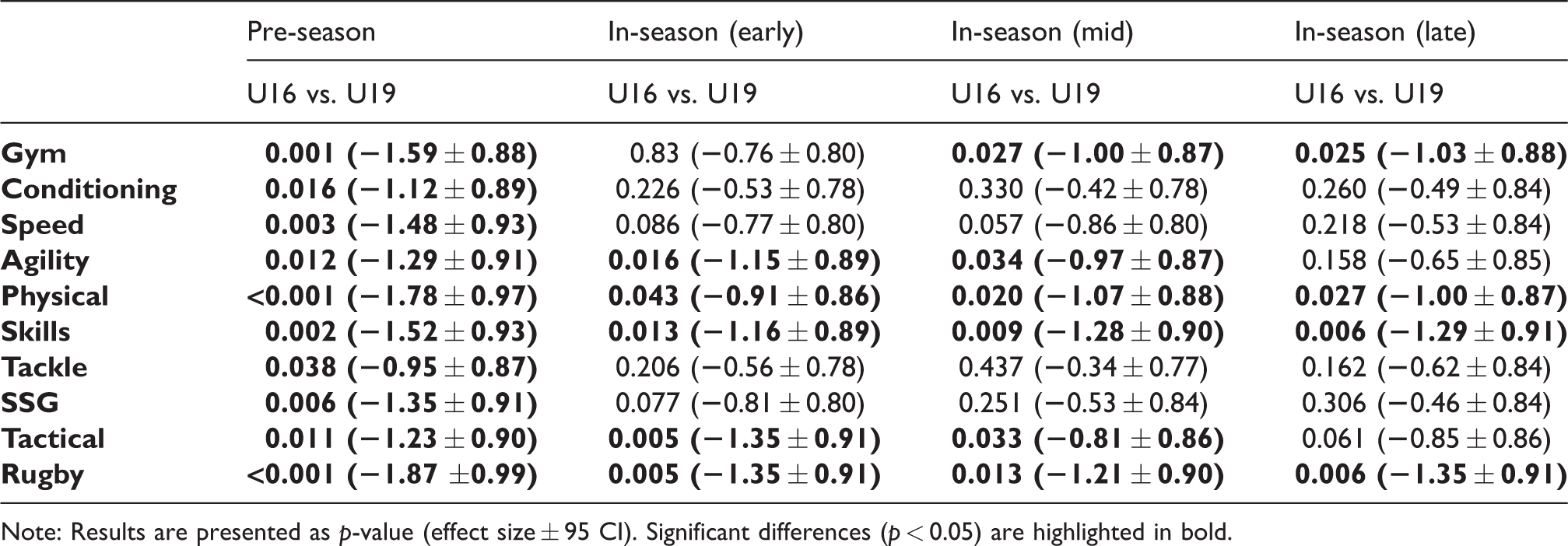
Note: Results are presented as p-value (effect size ± 95 CI). Significant differences (p < 0.05) are highlighted in bold.
Discussion
The present study is the first to examine rugby league coaches’ perceptions of physical qualities for current and future performance, and career longevity. In addition, we sought to establish the training practices of U16 and U19 academy players during different phases of the season. Findings demonstrate that practitioners typically ranked strength, power and acceleration qualities the highest. Anthropometric and endurance attributes were amongst the lowest ranked for all positions. For both age groups, total rugby training volume was greater than total physical training volume, while pre-season periods had the highest total training volume in comparison to the other season phases. Together, U16 and U19 player’s training practices appeared to focus on physical development during the pre-season, then tactical training volume during in-season. This study demonstrates the importance of physical qualities for rugby league performance and provides information on training practices to develop these qualities in academy rugby league players.
For forwards, power and strength were ranked as the two highest physical qualities at U16 and U19 age categories. Power was the highest ranked for U16 current and future performance and U19 current performance until a change to strength for U19 future performance and career longevity. These data are not surprising as strength and power are key attributes for performance in rugby league due to the contact element of the sport 3 and have been shown to differentiate between players across levels.8,11,32 Our results are in accordance with the positional demands of forwards during game play, where forwards tend to undertake more collision based actions, requiring enhanced relative strength. 1 Greater strength levels may also result in superior speed and power performance, 33 which is associated with enhanced tackling and ball-carrying ability.15,20 Collectively, the current findings and previous research suggest that strength is an essential physical quality for enhanced playing standard and future career attainment within rugby league forwards 1 . These rankings are further supported by details of the training practices. Academy players spend significantly more time in the gym during pre-season than any other phase of the season. Moreover, U16 player’s highest weekly training volume is accumulated in the gym, developing such qualities.
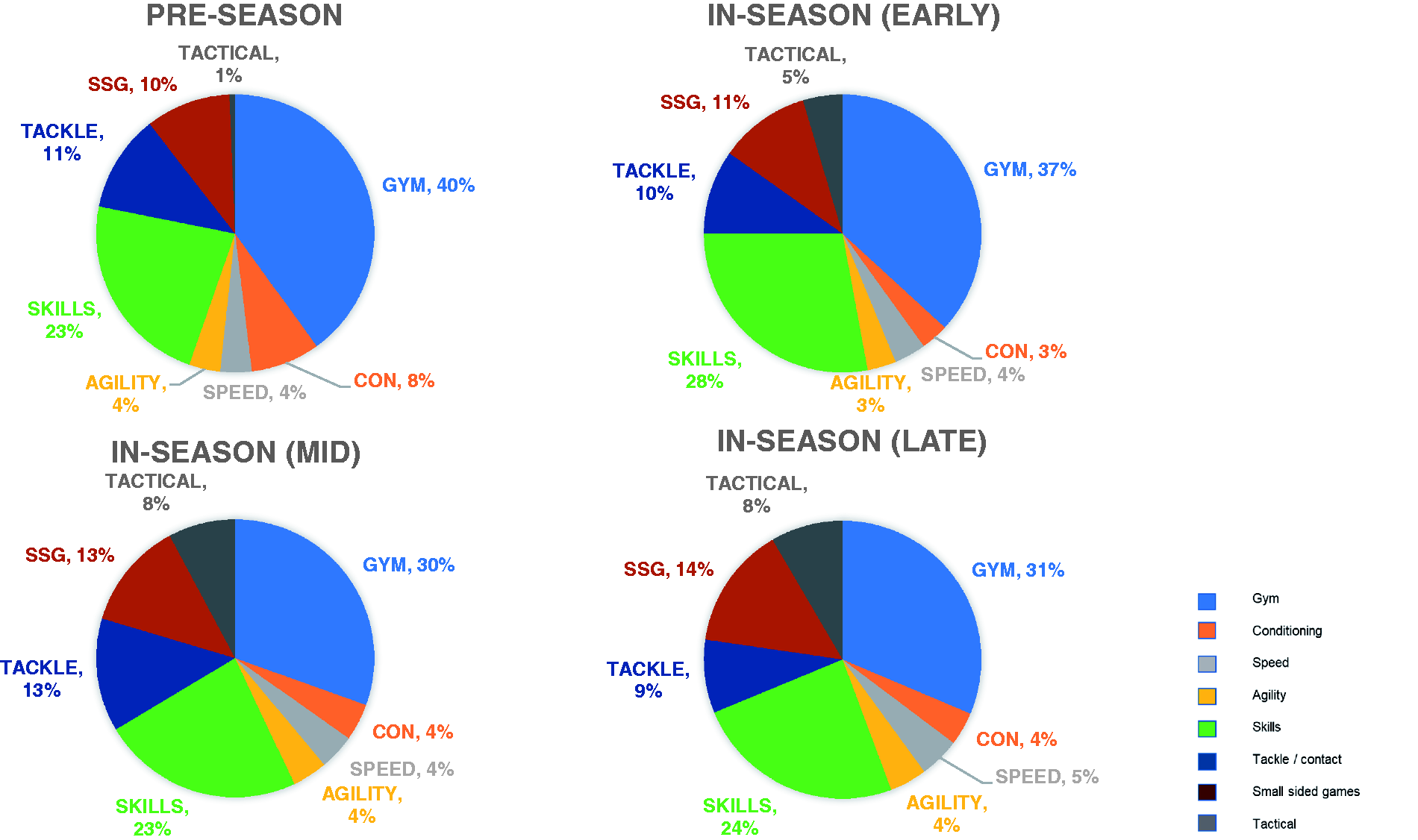
Distribution of training practices of U16 players during various stages of the season.
Acceleration (third and fourth) and aerobic endurance (third and fourth) were the next highest ranked physical qualities for forwards. At higher playing levels there was an increase in the importance of endurance, suggesting that endurance is an important quality for forwards for competing at higher playing standards and long-term career success. This is further highlighted as aerobic endurance for U19 player’s future performance was ranked significantly higher than U16 player’s future performance. This can be explained by older players requiring greater endurance to meet positional game demands and peak periods. 34 These results are in accordance with the training data, U19 players have significantly higher conditioning training volumes during the pre-season in comparison to all other phases of the season, and higher than U16 players conditioning training volume. Interestingly, maximum speed was amongst the lowest ranked physical quality for forwards. These results may be related to the positional demands, as forwards have typically slower speed than backs21,35 and mainly undertake short distance sprints (e.g. 5–10 m) during match-play.36,37 However, although forwards have lower speed in comparison to other positional groups, this may be due to their greater mass. 21 Body mass was ranked the fifth most important quality for forwards for U19 current and future performance, U16 future performance, career longevity, and eighth for U16 current performance. Such findings illustrate the increased importance of size for forwards as they progress through a playing pathway. However, these results may also be due to processes linked to growth and maturation, 38 and increased training volumes. Research conducted on a similar cohort suggested that these increases in body mass are related to improvements in lean body mass and fat mass content.18,39
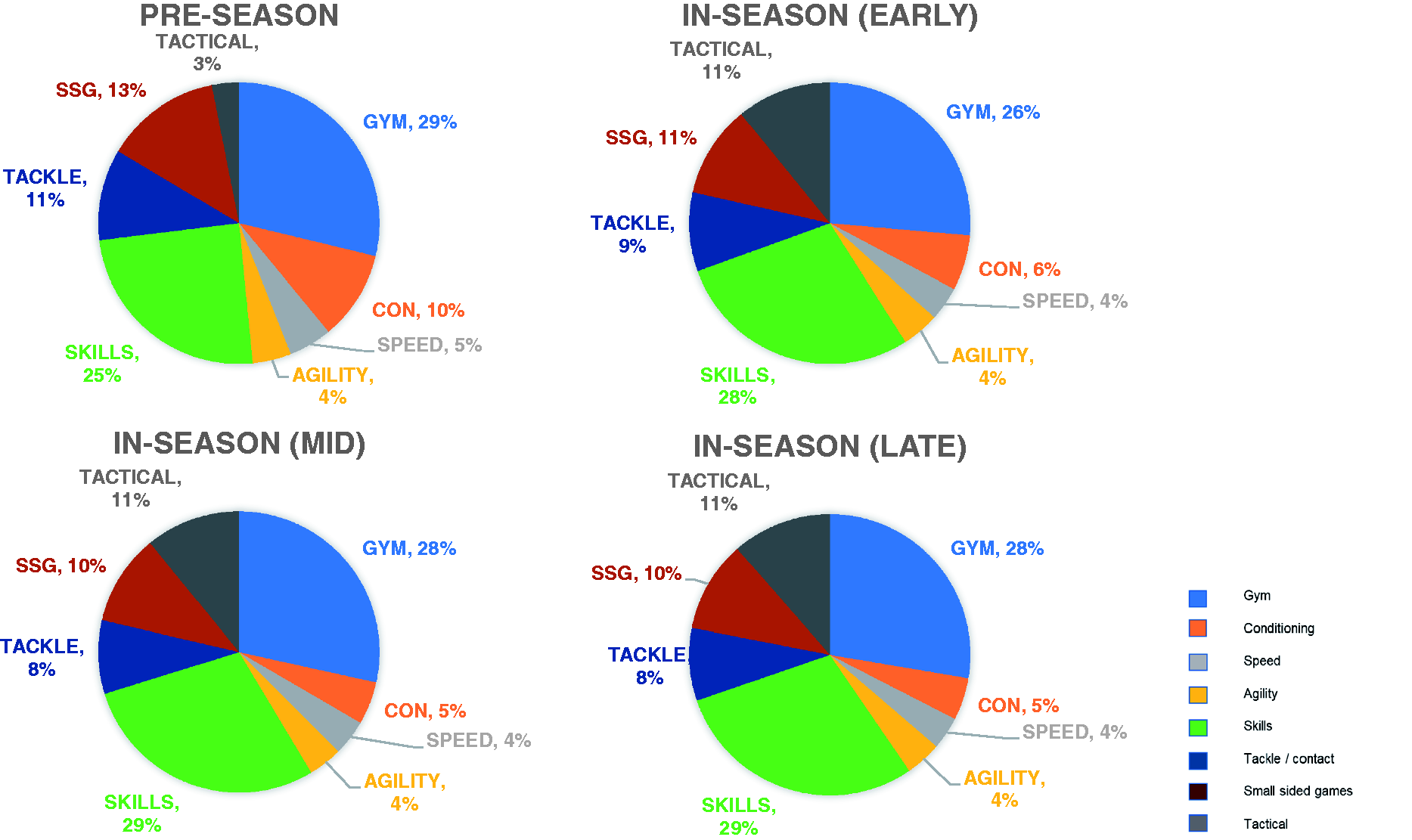
Distribution of training practices of U19 players during various stages of the season.
Anthropometric qualities including fat mass and height were ranked lowest overall for forwards. Lean mass observed a gradual increase in importance as playing level increased. These results may be linked to increased training or playing status at higher levels. 1 Previous research has shown low body fat percentage to be beneficial for both selection to higher playing standard and performance in rugby league.11,40 Height was deemed as the seventh most important quality for U16 players current performance and was second lowest ranked for the remaining playing levels. This is likely due to height being important at younger ages as taller players may have an advantage over their shorter counterparts in both selection and performance.1,15 Increased height post 16 years of age may not be seen as advantageous as players may have already been selected to positional roles based on their size.
For backs, acceleration was ranked as the most important physical quality for all playing levels which is likely due to the importance of player’s ability to move quickly in both attack and defence. 41 In addition, maximum speed was the second (career longevity) and third highest rank for the remaining playing levels which may be attributed to backs typically covering greater distances at higher speeds 1 and acceleration and maximum speed contributing to ball carries, line breaks and try scoring within rugby league.20,40 Interestingly, the ranked importance of speed related qualities for both forwards and backs contradict training practices. Speed training only accounted for ≤5% of both U16 and U19 player’s weekly training distribution throughout all phases of the season. During pre-season, U16 players accumulated 15.0 ± 11.8 min of speed training during a week whilst U19 players accrued 40.4 ± 21.3 min. Given the importance coaches place on speed qualities, training volumes could be increased in order to develop such qualities. Furthermore, gym training methods (strength, power and plyometrics) can contribute to speed development. 42
Power was ranked as second most important physical quality for all playing levels for backs, excluding career longevity. These results are to be expected owing to the relationship between vertical jump performance and tackling capability 15 and ball carries 20 in U17 players. Strength rankings varied throughout playing levels, its importance was ranked lowest (sixth) for U19 current performance and highest (third) for career longevity, which provides some useful information for practitioners and that strength should be a key aspect of development programmes for youth rugby league players.
Surprisingly, endurance was ranked seventh for all playing levels for backs. Our results could be explained by practitioners placing a greater emphasis on other physical qualities, which, in turn, would result in aerobic endurance development due to training volume and growth and maturation development. Moreover, as rugby league is an intermittent team sport, players can develop an ‘adequate’ aerobic fitness level but may require superior strength, power, etc., in comparison to other sports. This notion is further supported by data from training practices as ≤10% of U16 and U19 player’s weekly training is allocated to endurance development, however, players may still receive a stimulus from other types of training such as small-sided games. Anthropometric qualities including height, body mass, lean mass and fat mass were the lowest ranked by practitioners for backs. These results are comparable to previous research where height and body mass did not influence career attainment levels of 13–15-year-old UK rugby league players.9,43 A possible explanation for these findings is that backs require greater speed and strength qualities in comparison to anthropometric qualities.
For hookers and halves, acceleration was ranked highest for all playing levels, which is in accordance with the playing demands, hookers and halves are typically quicker over 10 m, with outside backs being quicker over greater distances. 1 Power was ranked second highest for U16 current and future performance, and career longevity, and third highest for U19 current and future performance. Agility, endurance and maximum speed all observed varying importance according to rugby league practitioners. The variation of ranking is interesting, given the importance of endurance for hookers, who generally complete numerous offensive and defensive actions. 44 However, endurance for U19 players future performance was ranked significantly higher than U16 players current and future performance. This highlights the importance of endurance when progressing through age grades and its contribution to a higher playing level. 1
Like backs, anthropometric qualities of height, body mass, lean mass and fat mass were ranked lowest for all playing levels. This may be attributed to these positions being involved in less collision activities than forwards. 45 In addition, hookers and halves are typically regarded as the main distributors and their roles involve catching, passing and creating opportunities for other players. 45 Our results display a variation in the ranked importance of physical qualities for hookers and halves, and do not follow a similar pattern like forwards and backs. This information is useful for coaches and practitioners involved in the physical development of U16 and U19 players. The findings provide a novel approach in identifying important physical qualities for rugby league players during different playing levels. Combining this information from the field alongside the vast amount of research in rugby league will support developmental programmes and talent identification processes. However, further research is needed to investigate how coaches examine physical qualities, using objective fitness testing data alongside subjective performance evaluations to inform player performance. By gaining an improved understanding of this process, coaches may develop more objective measures of physical qualities and fitness testing data within their club.
Training practices
This study quantified the training activities of U16 and U19 rugby league players and compared the activities between each age group and stages of the season (see Figures 1 and 2). Our results show that U16 players complete an average of 413 ± 199 min a week during pre-season, 366 ± 182 min a week during in-season (early), 346 ± 136 min a week during in-season (mid) and 345 ± 136 min a week during in-season (late). While these results are not abnormal, the variability from the mean is interesting and may be explained by the different clubs’ practices and philosophies. In the current study, during each phase of the season, total training volume was lower than in U15 and U16 English academy (365 ± 182 vs. 600 min) 46 and Australian youth (345 ± 136 vs. 515 min) 47 rugby union players. Although it is difficult to make comparisons to these studies as both used player-reported training diaries and included all sport and physical activities rather than the current study which was only professional academy training. Total weekly training volumes are similar to English adolescent rugby union players (301 ± 92; 349 ± 128 min).48,49 However, typically, U16 players in England also train and compete for their amateur club team, 34 so they are likely to have even greater training loads than reported by the coaches.
While not significant, pre-season training volume was greater than all other phases of the season, which mirrors senior rugby league training practices where an increase in training volume is typically observed. 50 Total physical (gym, conditioning, speed and agility) training volume was greater than total rugby (skills, tackle, small-sided games and tactical) during pre-season, which are not surprising given the numerous health and performance benefits associated with supervised training. 51 The primary objective of pre-season is to develop the physical characteristics of players 52 in preparation for the upcoming season. 10 In addition, pre-season training phase has been found to positively influence changes in body composition 10 and physical qualities 13 in U19 rugby league players. Tactical training volume during in-season (late) was significantly greater than during the pre-season period. This result is to be expected, as once the season begins, there is a shift in focus to tactical routines and technical performance.50,53 Interestingly, gym training volume for U16 players during each phase of the season was higher than any other type of training. These data further highlight the importance of physical qualities for youth rugby league players.
Our results show that U19 players complete an average of 809 ± 224 min a week during pre-season, 620 ± 214 min a week during in-season (early), 598 ± 239 min a week during in-season (mid) and 603 ± 231 min a week during in-season (late). Total physical training volume for U19 players was significantly higher throughout pre-season when compared to in-season (early, mid and late). During pre-season, players are physically overloaded in order to facilitate a super-compensatory response, and in turn, improve physical capabilities. 54 The total number of pre-season training sessions documented in the current study are greater than previously reported in academy rugby league, Dobbin et al. 10 reported 37 total pre-season training sessions, which is lower than our results (106). However, the aforementioned study only included resistance, conditioning and rugby sessions.
The decrease in training volumes observed during the in-season periods in the current study is likely attributed to practitioners concentrating on matches, attempting to maintain the fitness levels of players, focussing on technical and tactical variables and avoiding unnecessary fatigue. 55 In general, there was no change in training volume during the in-season training periods, which is in accordance with research carried out in senior rugby league. 50 Total in-season training volume observed a progressive reduction from pre-season, with a slight increase during the late in-season period. This may be attributed to an attempt at ‘peaking’ when competing in the latter stages of competition. 56 Traditional periodisation concepts suggest variations in training load and intensities, 57 and practitioners may have reduced training volume whilst increasing intensity. However, these alterations may have been lost due to the fact that coaches were asked to describe a ‘typical’ training week. In addition, we had no measure of intensity, as it was beyond the scope of this study, though this concept warrants further research.
Total weekly training volume for U19 players was greater than previously reported in adolescent rugby union.46,48,49 Moreover, all U19 training practices during pre-season were greater than U16s. Weekly skills training volume was significantly greater during all training phases for U19 players when compared to U16 players. Additionally, during the various in-season phases, U19 players had higher gym (in-season mid and late), agility (in-season early and mid) and tactical (in-season early and mid) training volumes than U16 players. These data are not surprising as U19 players are employed as professional athletes 16 and follow intense training regimes to ensure they are adequately prepared for senior professional rugby league, and conditioned to meet the demands of the Super League. 1 Given the importance of training to develop physical qualities and individual and team skills, whilst attenuating injury risk, 58 practitioners should adopt methods of monitoring and planning training activities during the long season. However, how coaches monitor physical qualities and training loads in rugby league are unknown and warrant further investigation.
Overall, training practices of academy rugby league players did not match all the required physical qualities for performance and development. For forwards, their most important physical qualities (strength and power) received adequate training as gym volume is similar to the suggested 2–3 sessions per week that are deemed sufficient for the development of strength in adolescents. 59 However, there is relatively little training time dedicated to acceleration – which was ranked third and fourth most important. The importance of endurance for forwards as they progress through levels increases, however, it seems that these qualities are not trained sufficiently, or that training does not match its respective importance. However, ‘rugby’ activities may provide a sufficient stimulus to develop endurance qualities. Moreover, owing to the increased importance of body mass throughout age grades, practitioners should focus on hypertrophy type training whilst educating players on correct nutrition principles. As a result, it would be important for these coaches to monitor changes in body mass to assist in programming, while influencing long-term development. 60
In contrast to forwards, backs’ and hookers and halves’ most important quality (acceleration) is not regularly trained, and subsequently not physically exposed. Nevertheless, acceleration qualities may be developed during ‘rugby’ activities such as SSG. On average, U16 and U19 players have weekly speed training volumes of 15 and 27 min, respectively. The importance of speed qualities for these positional groups are not reflected in the training practices. However, practitioners may employ plyometric style training in the gym in order to elicit speed development. 29 Backs’ and hookers and halves’ strength and power qualities seem to receive sufficient load. However, given the multidirectional running and positional demands of these positions, greater change of direction/agility and endurance type training could be employed to stress and develop such qualities. Although practitioners ranked anthropometric qualities as lowest, these should be closely monitored as appropriate body fat percentage is imperative for rugby league performance. 1
Although this study is the first of its kind and adds to the current understanding of physical development in rugby league, it is not without its limitations. Due to the cohort involved, club and individual philosophies may have influenced responses, given the subjective nature of the study, we acknowledge this as a limitation. Furthermore, the findings provide perceptions from rugby league practitioners working within the Super League, their opinions may be biased by the context. Additionally, Till et al. 61 showed that youth rugby league players have varying development rates, as a result, caution should be taken when extrapolating these findings to academy rugby league players and other adolescent team sport athletes. Moreover, training experience and age influences physical development in rugby league players, which may influence physical qualities. Caution should be taken when examining U16 players training volumes. In the current study, U16’s training volume is possibly higher than reported due to their participation with their amateur club but also in other sports, as shown in rugby union. 46 In addition, participants were asked to estimate weekly training practices at four timepoints across the season. Given the recall design of the study, the authors feel the data is representative of current practices, however, may be a limitation. Furthermore, responses are combined for all practitioners (rugby coach and S&C coach) and could be considered as a limitation. However, these differences warrant further investigation.
Conclusion
In conclusion, rugby league practitioners were found to have varying perceptions of physical qualities for current and future performance and career longevity. The findings suggest that strength, power and acceleration related qualities seem the most important for academy rugby league current and future performance and career development. Coaches rank these qualities as more important than endurance and size qualities. Training practices of U16 and U19 players differed during each phase of the season, with U19 players undertaking greater training volumes than U16s players. With rugby league practitioners constantly striving to improve their practice and identify physical qualities that may predispose athletes for a successful career, the current results demonstrate what is important for those involved in the physical preparation or coaching processes in academy rugby league. Practitioners should look to align their training practices with the qualities that are deemed most important. The findings demonstrate some inconsistencies in coaches’ perceptions and practice and provides some useful information for consideration. Given the multifaceted nature of academies, these data can be used as a reference source for coaches when monitoring physical qualities, prescribing position specific training programmes, designing annual macrocycles and long-term athletic development plans.
Footnotes
Declaration of conflicting interests
The author(s) declared no potential conflicts of interest with respect to the research, authorship, and/or publication of this article.
Funding
The author(s) received no financial support for the research, authorship, and/or publication of this article.
