




Abstract
Background:
Acute kidney injury (AKI) is a common and serious complication in hospitalized patients and an important determinant of outcomes in stroke. However, evidence from long-term, nationwide studies in this population remains limited.
Aims:
To examine temporal trends, factors associated with AKI, and clinical outcomes among patients hospitalized for stroke in Switzerland from 1998 to 2022.
Methods:
We analyzed nationwide Swiss hospital discharge data from 1998 to 2022, covering over 98% of all hospitals. Stroke and AKI were identified using ICD-10 codes. Multivariable logistic and linear regression models were used to assess factors associated with AKI and its associations with intensive care unit (ICU) admission, length of stay, ICU duration, and in-hospital mortality.
Results:
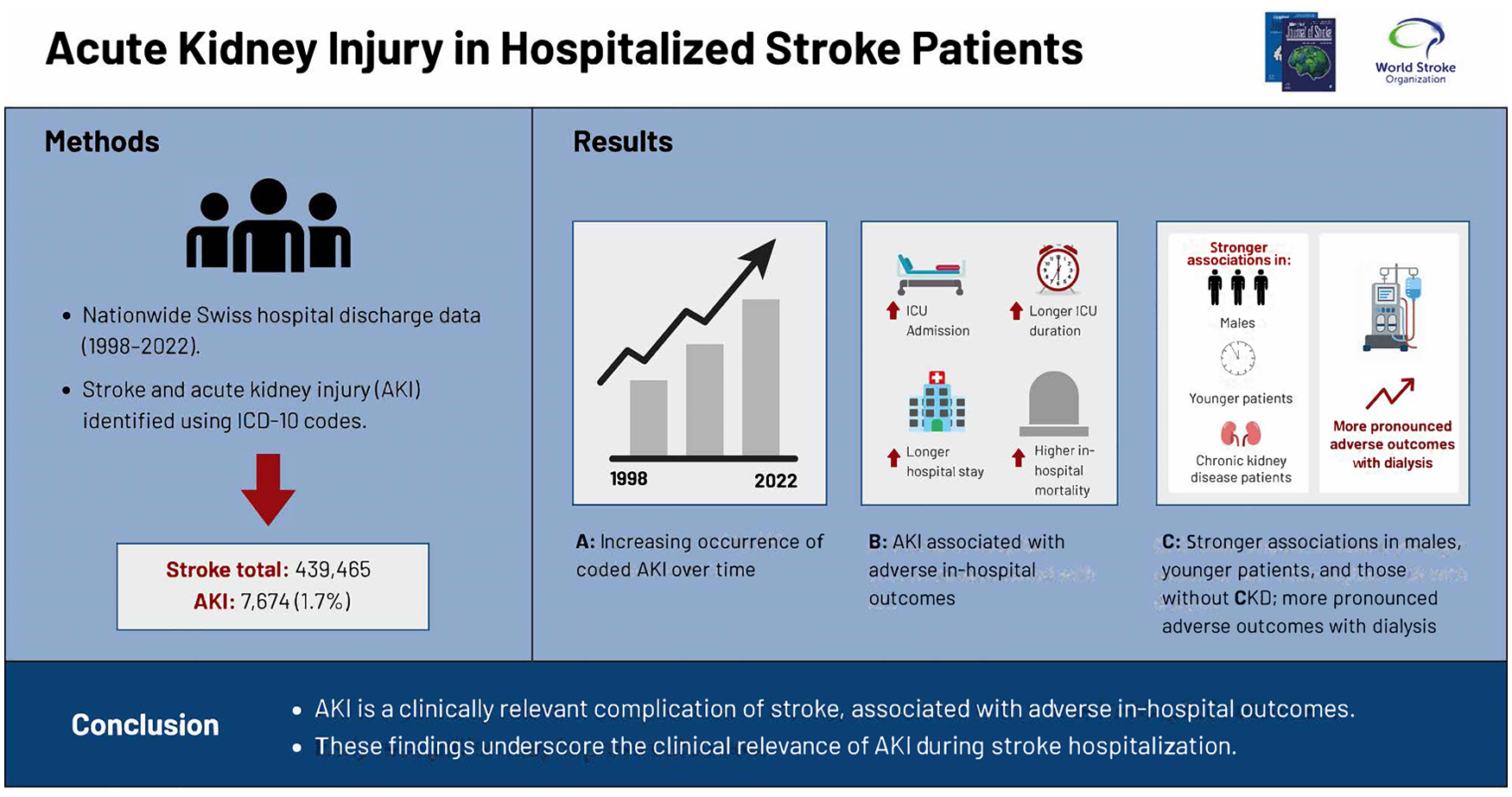
Among 439,465 stroke hospitalizations, 7674 (1.7%) were coded with AKI. The prevalence of coded AKI increased from below 1% in 1998 to approximately 4% in 2022, while overall in-hospital mortality declined from 10.4% to 5.1%. In multivariable regression, factors independently associated with AKI included older age, emergency admission, diabetes, hypertension, atrial fibrillation, heart failure, and chronic kidney disease, whereas female sex was associated with lower odds of AKI. AKI was associated with higher odds of ICU admission (OR 1.62; 95% CI 1.53–1.71), longer hospital stay (coefficient 0.12; 95% CI 0.11–0.14), and prolonged ICU duration (coefficient 0.33; 95% CI 0.28–0.37). In-hospital mortality was more than twice as high in patients with AKI (OR 2.40; 95% CI 2.25–2.56). The association between AKI and adverse in-hospital outcomes was stronger among male, younger, and non-CKD patients. Outcomes were worst among hospitalizations involving dialysis, with AKI associated with a markedly higher adjusted predicted probability of in-hospital mortality (0.47 vs 0.15 without dialysis).
Conclusion:
AKI was associated with greater ICU use, longer hospital stay, and higher in-hospital mortality among patients hospitalized for stroke.
Get full access to this article
View all access options for this article.