



Abstract
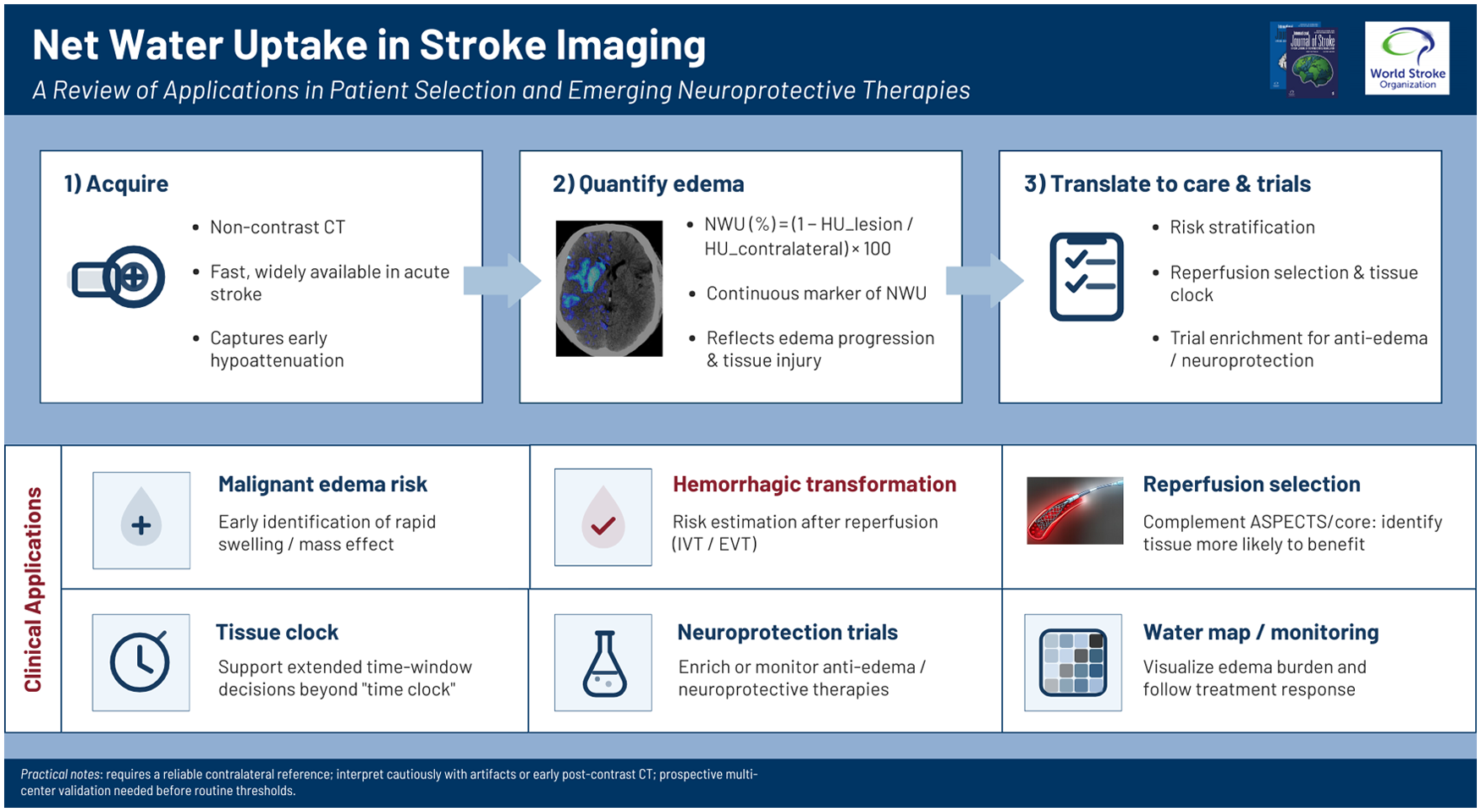
Net water uptake (NWU) is an emerging quantitative imaging biomarker for assessing cerebral edema in acute ischemic stroke. By quantifying the increase in brain water content within ischemic regions on computed tomography (CT), NWU offers a direct assessment of edema formation and its temporal evolution. Unlike conventional imaging markers such as infarct volume or ASPECTS, NWU provides specific information about the degree of tissue injury, which is a key determinant of clinical outcome. Observational studies have demonstrated that higher NWU is associated with malignant edema, hemorrhagic transformation, and worse functional outcomes, and that lower NWU may identify patients more likely to benefit from reperfusion and anti-edema therapies. This narrative review, based on a structured PubMed search of CT-based NWU studies in acute ischemic stroke, summarizes the technical methods for measuring NWU, its pathophysiological basis, and its potential clinical applications. We discuss the use of NWU for predicting outcomes, identifying patients at risk for malignant edema and hemorrhagic transformation, and selecting patients for emerging neuroprotective therapies. We also highlight the potential role of NWU in extending treatment windows and monitoring treatment response. Finally, we address the practical limitations of NWU, including situations in which reliable quantification is not feasible, and outline future directions for validation in multi-center cohorts and clinical trials before NWU-based thresholds can be adopted for routine decision-making.
Get full access to this article
View all access options for this article.