



Abstract
Background:
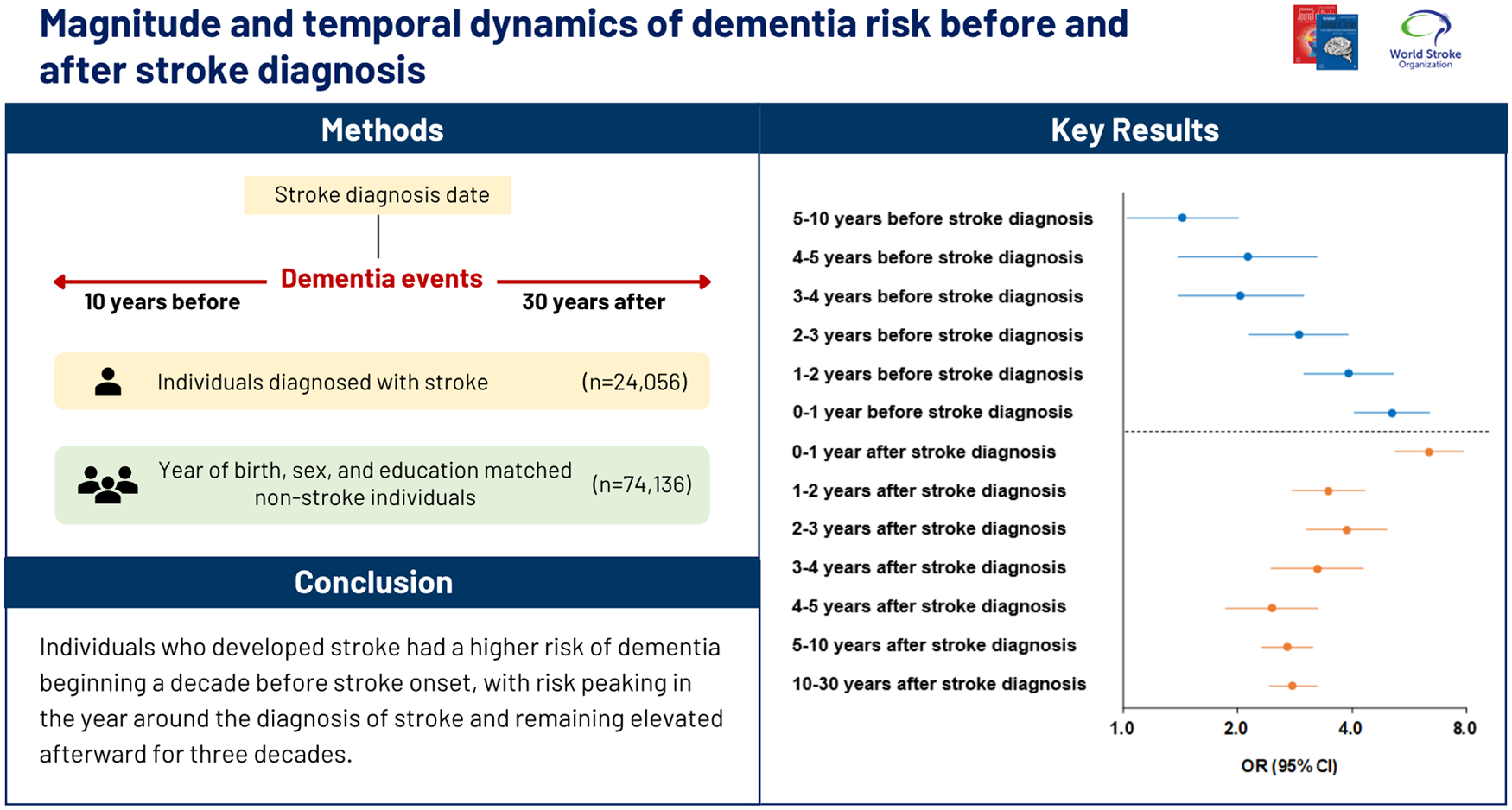
Stroke is associated with an increased risk of dementia, but the temporal dynamics of dementia risk before and after stroke diagnosis remain uncertain. This study aimed to examine the risk of dementia from 10 years before through 30 years after stroke diagnosis, compared with non-stroke individuals.
Methods:
We performed a case-control study using the UK Biobank data. We identified all participants diagnosed with stroke who had disease occurrence data available in the database. Controls were matched 3:1 for year of birth, sex, and education level. Conditional logistic regression was applied to estimate odds ratios (ORs) for incident dementia across different time windows before and after stroke diagnosis.
Results:
This study included 24,056 individuals with stroke and 74,136 matched controls. The risk of dementia was higher in individuals with stroke compared to non-stroke controls in each time window before stroke diagnosis, with ORs ranging from 1.43 (95% confidence interval (CI): 1.02–2.01, p = 0.040) in 5–10 years before diagnosis to 5.11 (95% CI: 4.06–6.41, p < 0.001) in 1 year immediately before stroke. Within the first year after stroke diagnosis, the risk of incident dementia was the highest (OR: 6.39, 95% CI: 5.20–7.87, p < 0.001). Similar results have been observed across sexes and different age groups.
Conclusions:
Participants who developed stroke had a higher risk of dementia beginning a decade before stroke onset, with risk peaking in the year around the diagnosis of stroke. These findings suggest the importance of prevention strategies at much earlier stages in individuals who are at risk of developing stroke and dementia.
Get full access to this article
View all access options for this article.
References
Supplementary Material
Please find the following supplemental material available below.
For Open Access articles published under a Creative Commons License, all supplemental material carries the same license as the article it is associated with.
For non-Open Access articles published, all supplemental material carries a non-exclusive license, and permission requests for re-use of supplemental material or any part of supplemental material shall be sent directly to the copyright owner as specified in the copyright notice associated with the article.
