



Abstract
In a prior set of experiments, we examined drivers of attentional selection within interactive search, specifically focusing on the role of effort. We concluded that searchers adopted an easy-first strategy, prioritizing selections with easy to process objects. However, we unintentionally overlooked the potential confound of time within these tasks and consequently, our analyses and conclusions. We have addressed this in the current manuscript by carefully controlling for and further exploring the role of time within interactive search. We utilized a novel methodology, which involved effortful interactive search for a target T shape attached to the underside of a set of virtual coins across two independent experiments. In Experiment 1, we manipulated effort while controlling for the confound of time. In Experiment 2, to obtain a richer understanding of the role of time within effortful interactive search, we manipulated both time and effort simultaneously. We observed a surprising set of results: first, effort appears to be the predominant driving factor of attentional selection across our tasks, and second, time is indeed an aversive attribute to attentional selection, especially so when paired with high effort, that is, high effort tasks that also take substantial time to complete.
Introduction
Many tasks in everyday life require direct interaction with our environment and the objects within it. One of the more common day-to-day tasks that requires this is search. For example, searching through a bag for a phone, searching kitchen cupboards for ingredients, or searching through an office drawer for a pen. These are all examples of interactive search tasks, a term coined by Sauter et al. (2020). Interactive search is an extension of visual search (for a review, see Wolfe, 2020) and involves scenarios wherein a searcher sets out to detect a target, or confirm its absence, through the uncovering of obscured visual information via object manipulation or via translation of their own physical position within the environment. Several studies have examined interactive search across a range of contexts including simple tasks such as searching through marbles, LEGO® pieces, and simple blocks for targets (Deverill et al., 2025; Gilchrist et al., 2001; Hout et al., 2022; Sauter et al., 2020) to more real-world tasks including searching through open terrain for target objects (Riggs et al., 2017) or entire houses for threats (Riggs et al., 2018). Likewise, interactive search is not limited to just the physical domain and has been assessed across a number of virtual domains as well. Typically, this has involved searchers using external peripherals to manipulate virtual objects (Dewis et al., 2025; Solman et al., 2012) or to change virtual displays (Drew et al., 2013; Godwin et al., 2024; Solman et al., 2013). In the current paper, we build on this existing literature via the examination of behaviors within a set of virtual interactive search tasks.
The “Easy First” Strategy
The starting point for the current project is a series of prior experiments wherein we examined the factors that drive attentional selection within interactive search, specifically focusing on the role of effort (Dewis et al., 2025). From a visual standpoint, attentional selection refers to the deployment of attention to relevant objects and areas of a scene due to the inability to process all objects within a scene at once (Wolfe, 2021). Many current models characterize this complex deployment of attention as being driven by a “priority map” populated from numerous factors including top-down (the current goals of the searcher – e.g., searching for an object of specific color) and bottom-up (the physical salience of a stimulus – e.g., a bright object among dull objects) inputs (Corbetta & Shulman, 2002; Itti & Koch, 2000; Wolfe, 1994), selection history and priming (Awh et al., 2012; Maljkovic & Nakayama, 1994), perceived reward (Anderson et al., 2011; Hickey et al., 2010a, 2010b, 2015), semantic knowledge (Henderson & Hayes, 2017; Le-Hoa Võ & Wolfe, 2015; Pedziwiatr et al., 2021; Võ & Wolfe, 2013; Võ et al., 2016; Wolfe et al., 2011), and potentially many others factors (Godwin et al., 2014; Wolfe, 2021; Wolfe & Horowitz, 2017).
Although there is a body of work looking at the effects of effort upon simple visual search tasks (Anderson & Lee, 2023), beyond our previous work (Dewis et al., 2025), we are not aware of any prior research examining effort in the context of virtual interactive search. With this in mind, in Dewis et al. (2025), we found that participants adopted what we termed as an “easy-first” strategy when engaged in interactive search. This conclusion was drawn from two experiments wherein participants searched for target T shapes among distractor L shapes that were embedded on the sides of a set of virtual cubes. Participants rotated and interacted with the virtual cubes by clicking and dragging on them with their computer mouse. In Experiment 1, we manipulated physical effort. Here, half of the cubes within each trial were made to be physically effortful to rotate by reducing their sensitivity to mouse inputs in comparison to the remaining cubes. In Experiment 2, we manipulated the quantity of shapes attached to the side of cubes – a proxy for “patch value” – the perceived value assigned to different areas containing resources (Charnov, 1976). Within each trial, half of the cubes were made to be “information-rich” (Nahari & El Hady, 2025) by embedding a shape onto each face of the cube, and the remaining half were made to be “information-poor” by embedding a single shape onto only one of their six possible faces. Across both experiments, cube types could be differentiated by their colors: this enabled participants to identify cube types without needing to physically interact with them first.
Overall, participants showed an extremely strong bias toward prioritizing cubes that were physically easy to rotate (Experiment 1) and easy to process (Experiment 2). Based upon these results, as noted above, we concluded that searchers adopted an easy-first strategy, focusing on objects that could be rapidly, easily, or with little effort rejected as distractors or accepted as containing a target. However, during the peer-review process, two anonymous reviewers raised the concern that our experiments had a potential confound: both the high effort and information-rich cubes in our experiments not only required more effort to examine, but more time to examine as well. Perhaps, the reviewers argued, our results were due to the search system prioritizing objects that could be searched more rapidly, than with less effort. From a resource standpoint, effortful tasks require energy to conduct. This increase in consumption of resources is likely one of the potential reasons high effort tasks are so aversive (Gailliot & Baumeister, 2007; Muraven & Baumeister, 2000; Shenhav et al., 2017). If we also consider the time a task takes to be an indication of the potential consumption of these resources, then engaging in strategies to reduce the time taken to complete tasks seems very logical indeed. Conducting research on effortful tasks while overlooking the role of time is therefore a valid concern. However, doing so was beyond the scope and design of the experiments reported by Dewis et al. (2025). It was not possible for high effort cubes to rotate at the same speed as low effort cubes in Experiment 1 as speed was used to influence their perceived effort; likewise, in Experiment 2, it was not possible to have information-rich cubes be explored exhaustively within the same time frame as information-poor cubes as interacting to reveal six shapes versus one would always take longer to achieve. Put simply, we overlooked the potential effects of time both in terms of our design and, as a consequence, our analyses and conclusions.
Current Experiments
Given the potential confound of time that we previously overlooked, within the current project, we returned to the question of effort being a driver of attentional selection while both accounting for, and further exploring, the effects of time. To do so, across two experiments, we asked participants to complete a virtual interactive search task for a target T shape among distractor L shapes, both of which were attached to the undersides of a set of four virtual coins. To reveal the hidden shapes, participants had to “flip” coins by clicking on them with their computer cursor. However, to ensure effortful interaction, following the initial selection, the coin moved around the display, requiring participants to chase it and repeatedly click it with their cursor before it flipped over, see Figure 1. A video of the task can also be found at this link: https://osf.io/56my7.
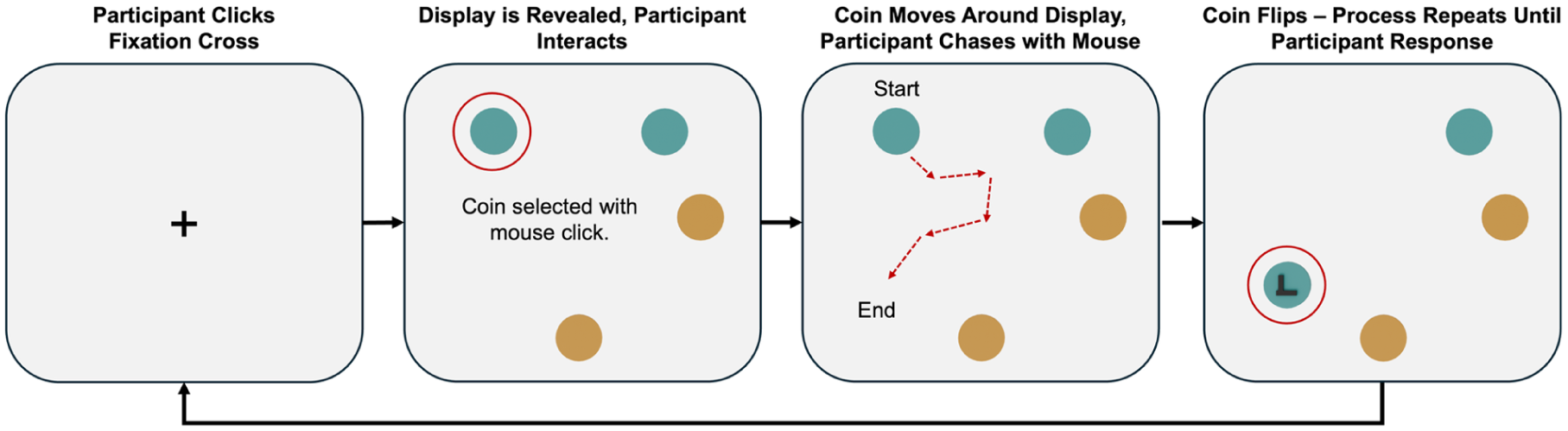
Basic trial procedure for Experiments 1 and 2.
Within the current literature, the consensus is that effortful tasks are deemed to be so due to the increased cost (both cognitive and physical) that they induce (see Otto et al., 2025; Schulze et al., 2025; Westbrook & Braver, 2015 for reviews). However, the different facets that influence these costs have been heavily researched over the years.
One potential reason centers around task difficulty and the perception of alternative options. Some have suggested that effort is purely a reflection of perceived task difficulty (Brehm & Self, 1989). In other words, tasks that are deemed to be challenging (e.g., complex division arithmetic versus simple addition arithmetic) are more costly and thus effortful than easier tasks. This take closely ties into the perception of alternative choices. Here, it is believed that engaging in a task is weighed against the next best available alternatives (Agrawal et al., 2022; Dora et al., 2022; Kurzban et al., 2013). Put simply, when engaging in a task, time and energy must be sacrificed that could be spent elsewhere on more rewarding tasks. Therefore, if the alternative option is more rewarding or is perceived as less costly than these will be prioritized and deemed as less effortful.
However, at the most basic level, it has been argued that attention itself is costly (Bruya & Tang, 2018). Situations where one must consciously focus on a task rather than completing it without thinking are believed to be effortful and aversive. This focus of attention is often referred to as cognitive control and is believed to be resource-limited (Westbrook & Braver, 2015). What exactly these resources are is less clear (see Otto et al., 2025 for more discussion regarding this). Some argue that they are related to the consumption of blood glucose (Gailliot & Baumeister, 2007) while others suggest they are instead related to one’s ability to quickly update and clear items held within working memory (Bossaerts & Murawski, 2017; Lieder & Griffiths, 2020). Either way, it is not possible to maintain cognitive control indefinitely; resources will eventually deplete, and attention must be momentarily released. A possible reason for this resource depletion is centered around the idea of updating working memory throughout a task (Master et al., 2024; Otto et al., 2025). Tasks that require high cognitive control typically require that the individual continuously update their working memory. In scenarios where a task continuously follows the same rules, less cognitive control can be applied. For example, in a search task, if a target is always red then cognitive control may be more likely to be relinquished as the task progresses, however, if the target changes color with every trial, then more focused attention is required to notice these changes. The consequence of this is that tasks that regularly change (either expectedly or unexpectedly) result in individuals needing to update their working memory more frequently than tasks that are consistent and do not change. This monitoring for change and the consequent continuous updating of working memory is believed to be costly to resources and therefore a key reason as to why individuals find tasks such as these effortful and aversive (Chatham et al., 2011; Jaeggi et al., 2010; Master et al., 2024).
Returning to our current set of experiments, as mentioned above, to ensure effortful interaction, participants chased coins that moved around the display. Across both experiments, a key aspect was to ensure that some coins were perceived as more effortful to interact with than others. To do so, we kept the previous literature in mind when designing our methodology. Here, two of the four coins within each trial moved around the display in a quick, unpredictable, and erratic manner, frequently changing directions and speed. In contrast, the remaining two coins moved in a slow and predictable manner. By doing this, half of the coins within each trial required substantially more focused attention to track and chase than the other two.
The reason for this is that to be best prepared to successfully chase and click on the coin, a participant needed to be aware of the moment it changed direction. In contrast, the remaining two coins moved in a very predictable and slow manner, and therefore, following the initial movement, constant focused attention was not strictly necessary. As such, coins that required high levels of focused control therefore also required participants to update their working memory more frequently and give greater consideration to the planning of where their next mouse move needed to be, thus increasing the likelihood that these coins would be perceived as more effortful.
In Experiment 1, we ensured the time taken to interact remained constant between all coins. Here, each coin required continuous chasing for a total of 2 s before flipping. Note that time here refers to interaction time and not response time (the total time taken by a participant to respond target-present or target-absent within a single trial). In Experiment 2, however, we further investigated the role of time by varying the time required to interact with certain coins. Here, some coins required 4 s of continuous chasing before they would flip, and some required 2 s before they would flip. It is important to clarify the differences between time and effort here. Although it seems likely that tasks that take longer would be perceived as more effortful, instead it appears to not necessarily be the duration of the task that determines the perceived effort but instead the cognitive processes (such as those previously listed) that occur within these tasks (see Kool et al., 2010 for a more detailed discussion on this). Within our design, the mechanism enabling effort is the uncertainty and the required consistent tracking of erratic coins. Therefore, increasing the time in Experiment 2 does not increase the level of effort but instead simply the duration for which participants must maintain this level of effort.
Across these two experiments, we were therefore able to shed light on whether Dewis et al. (2025) were correct in their conclusions despite overlooking the role of time.
Experiment 1
In Experiment 1, we began by investigating the role of effort within interactive search while carefully controlling for the potential confound of time spent interacting. As previously stated, participants were presented with a set of four virtual coins that required chasing and flipping to reveal a hidden T or L shape attached to their underside (see Figure 1). We specifically manipulated the effort required to interact with coins and have depicted this manipulation within the top panel of Figure 2. Here, two of the four coins within each trial moved around the display in a quick and unpredictable manner, frequently changing directions, making them require both substantial cognitive and physical effort to track and chase around the display. In contrast, the remaining two coins moved in a slow and predictable manner, making them much easier to track and interact with (i.e., required a low level of effort). Hereafter, we will refer to these coin types as low entropy and high entropy coins. To ensure the confound of time was controlled for, each coin only required continuous chasing for a total of 2 s before flipping over. Color was used to provide a means of differentiation between the coins to ensure participants could identify coin types without needing to physically interact with them first.
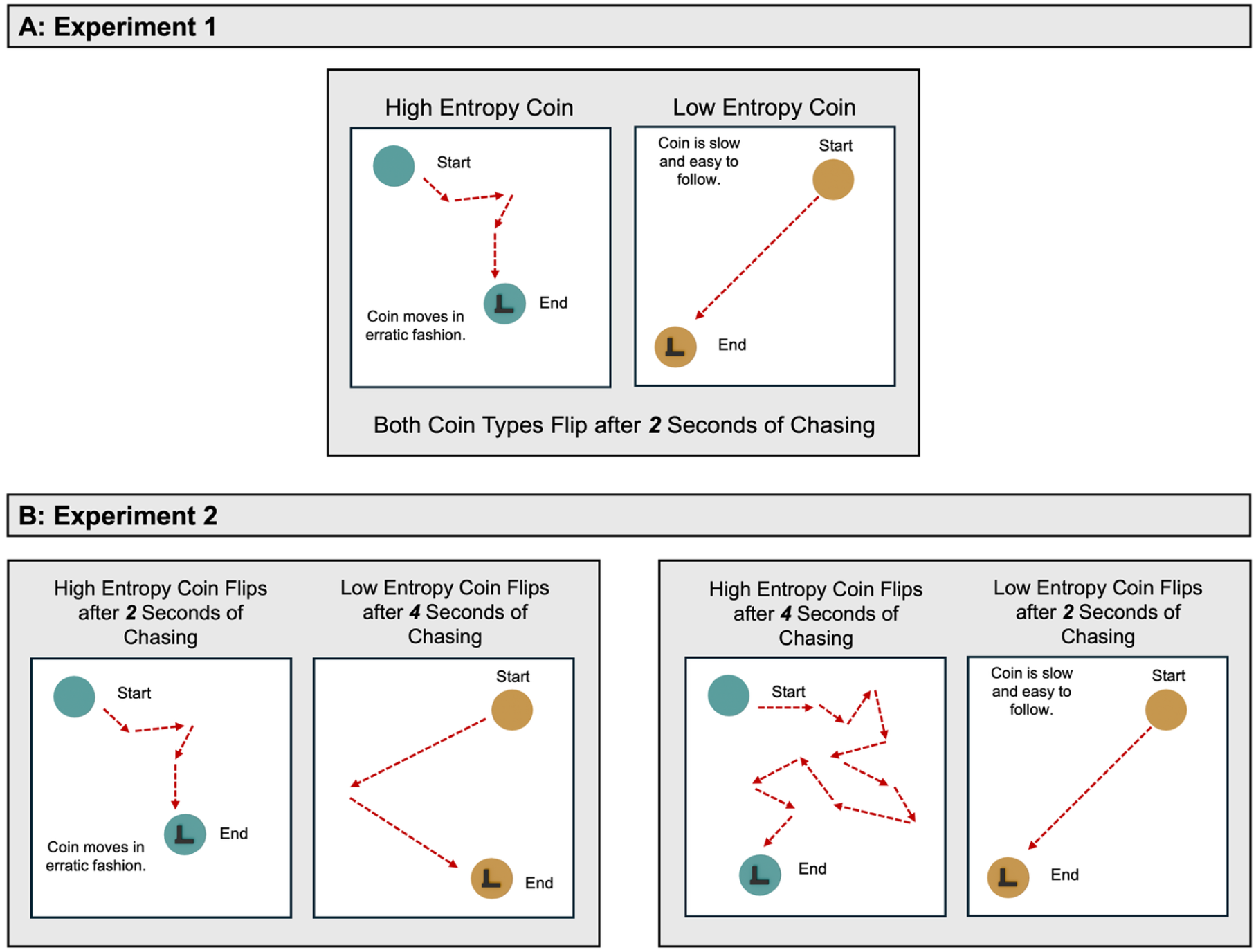
Experiment manipulation illustration.
If, as previously suggested by Dewis et al. (2025), effort is indeed an attribute that influences interactive search, then, within our experiment, we expected that while time was held constant, our effort manipulation should still influence attentional selection. As such, we predicted that the influence of effort would manifest itself as an increase in bias toward selecting the low entropy coins, even when they were not the next closest object to their current position. Furthermore, due to the low effort of doing so, we predicted that we would observe an overall increase in the number of low entropy coins flipped.
Overall, we have made an assumption here that prioritizing interactions with specific coin types would represent a strategy aimed at effort reduction. This assumption, however, is soundly built from the prior literature mentioned within the introduction and a result of strict controls between coin types and distribution of targets among them. In other words, there was no benefit for participants, other than reducing effort, that biasing selection toward low entropy coins would provide (e.g., they would not be more likely to find a target by focusing only on low entropy coins).
Method
Open Materials and Data Availability
This study was not pre-registered. We have shared the raw by-trial data and all analytic code on the Open Science Framework: https://osf.io/ajy9t/.
Ethical Approval
Ethical approval was given for Experiment 1 by the University of Southampton’s Ethics Committee on March 13, 2025 (ERGO NUMBER: 95398.A2).
Participants
A priori power analyses were conducted using the SIMR packing in R (Green & MacLeod, 2016; R Core Team, 2023) on pilot data from 15 participants. Target effect sizes were based on prior online interactive search research (Dewis et al., 2025; Godwin et al., 2024). These analyses recommended a minimum sample size of ~35 participants to achieve a power level of 0.80 for an effect size of 0.15 for the most complex interaction within our analysis. We over-recruited to a small extent a total of 38 participants from the University of Southampton (Age: M = 19.67, SD = 1.42, Gender: Female = 84.62%, Male = 15.38%) throughout March to May 2025 of whom received course credit for their participation.
Stimuli and Apparatus
Stimuli were created using the open-source software Blender (Hess, 2010). Virtual displays that contained these stimuli were then generated using Three.js (an open-source JavaScript library for displaying three-dimensional graphics within web browsers; Danchilla, 2012) and embedded into a standard jsPsych framework (an open-source JavaScript library for building web-based psychological experiments; De Leeuw, 2015).
The stimuli for Experiment 1 consisted of four different types of virtual coins with shapes attached to their undersides: low and high entropy coins with a distractor L shape attached, and low and high entropy coins with an attached target T shape instead. Coins were assigned a single independent color at the start of the experiment, which did not change throughout. This was to ensure that participants could easily differentiate between low and high entropy coin types. Coin colors were selected from a list of 16 ordered colors used in previous visual and interactive search experiments (Dewis et al., 2025; Menneer et al., 2007; Stroud et al., 2012). Each consecutive color was approximately equally spaced from the previous in CIE xyY space. To reduce the risk of biases toward specific colors, the color chosen for high entropy coins was always randomized at the start of the experiment. To ensure that colors were then maximally different from each other, the color selected for the low entropy coins was always eight steps away from the previous selected color in the list. The attached T and L shapes were black to ensure they were easily visible across the whole range of colors. The mapping of colors was stable within participants and randomized across participants.
For each trial, the search display consisted of two low entropy and two high entropy coins, which were randomly assigned to one of eight possible locations within the display. As shown in Figure 3, coins were placed within one of two concentric circles (inner or outer) each of which contained eight equidistant locations from the center of the display. A single trial could not contain coins in both the inner and outer circles simultaneously. Our reason for doing so was to reduce any biases that may result in participants simply selecting the coin closest to the center of the display. Fifty percent of trials were inner-circle trials and 50% were outer-circle trials.
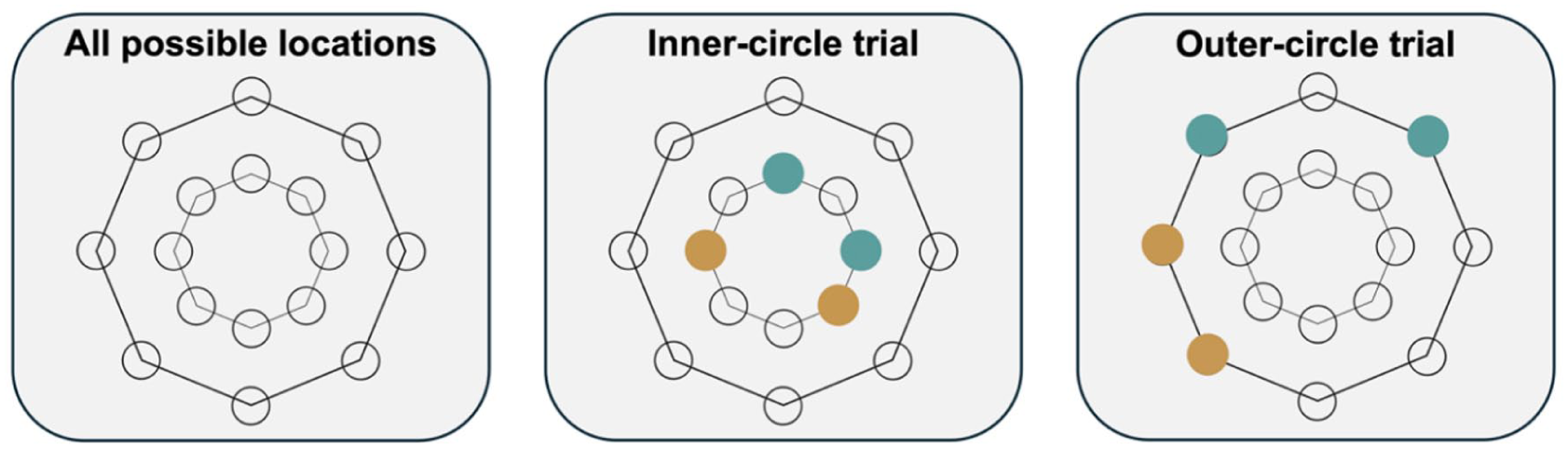
Coin placing procedure.
Participants used their own computers or laptops to complete the experiment. They were informed to press the M key of their keyboard if they believed that the display contained a target shape and the Z key if they believed that it did not. Participants interacted with objects by clicking on them with their computer mouse.
Design and Procedure
Following consent, participants were provided with detailed instructions on what to expect within the experiment, and how to interact with the coins. Within these instructions, participants were told the following regarding the stimuli: “Your task is to find the coin that has the T shape on. A target coin will not be present on every trial. Coin colors will vary but L and T shapes will always be black.” Following this, participants were then shown a short video of an example trial where the user selects and chases the coins, clearly highlighting the difference in entropy and colors. Once participants had read all the instructions and watched the example video, they completed a set of five practice trials with accuracy feedback. These trials allowed participants the chance to clearly learn the differences between coin types before beginning the real search trials. The real search trials contained no accuracy feedback. Each participant completed a total of 120 interactive search trials. To ensure participants began each trial with their cursor at the center of the display, a central fixation cross had to be clicked with the mouse before each trial’s search display was revealed.
To reveal the hidden shapes, participants had to “flip” coins by clicking on them with their computer cursor. Following the initial selection, the coin moved around the display. To avoid participants simply clicking once and waiting for the coin to flip, participants had to continuously click on the coin before it would eventually flip. If they did not do this, the coin would not flip. As previously described, coins were made to move in either an erratic manner (high entropy) or simple manner (low entropy). Consequently, following an initial selection, high entropy coins would dart away at a rate of ~330 pixels per second before slowing slightly to ~230 pixels per second. In contrast, low entropy coins moved at a consistent ~180 pixels per second. Likewise, on average high entropy coins changed direction ~2 times per second while low entropy coins changed ~1 time per second. 1 The search display remained visible until a response was made by the participant to end the trial. Following the participant response, the next trial’s fixation cross was displayed, and all steps were then repeated for 120 trials. This process is depicted in Figure 1.
The target was present on 50% of search trials and absent for the remaining 50%. Stimuli were evenly split between high and low entropy coin types. The order in which participants completed trials was randomized. The same color contingencies were used during the practice trials as were during the real trials.
Results
Data Cleaning
Before beginning analysis, all data underwent a number of preplanned cleaning procedures as used in previous online visual and interactive search experiments (Dewis et al., 2025; Godwin & Hout, 2023; Godwin et al., 2024). A breakdown of the number of trials removed for Experiment 1 can be found in Table 1.
Data Cleaning Steps for Each Experiment.
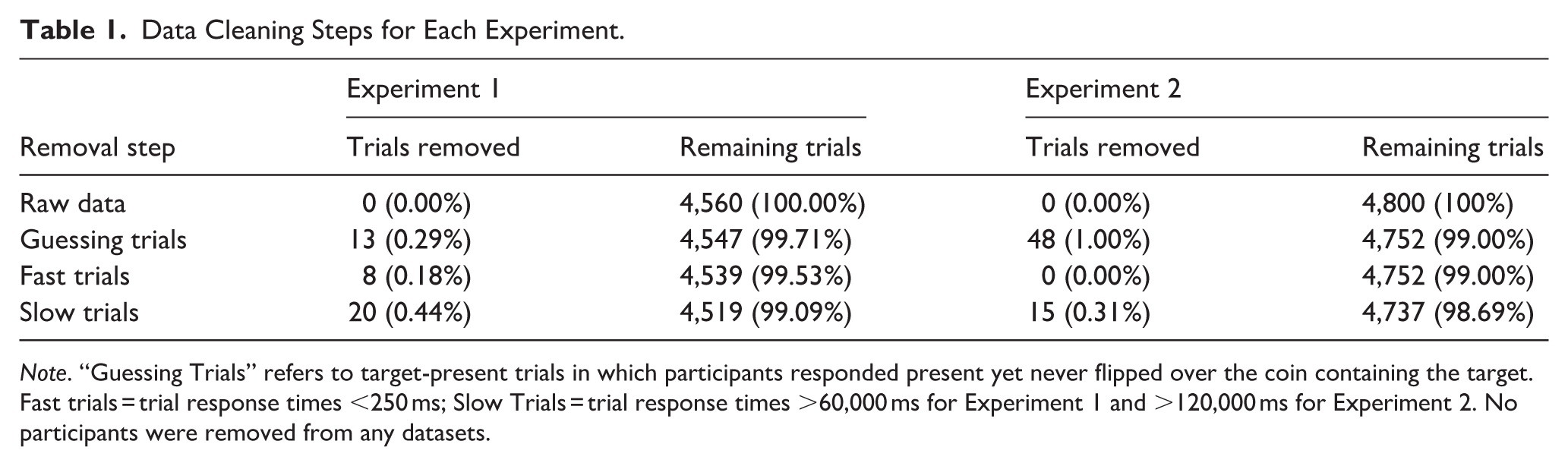
Note. “Guessing Trials” refers to target-present trials in which participants responded present yet never flipped over the coin containing the target. Fast trials = trial response times <250 ms; Slow Trials = trial response times >60,000 ms for Experiment 1 and >120,000 ms for Experiment 2. No participants were removed from any datasets.
The data cleaning process involved three distinct steps. In Step 1, we removed trials where participants had not flipped the coin containing the target yet still responded that the target was present. In such a scenario, if the target was never revealed, then participants had no way of knowing whether the target was present and therefore had to have been guessing on these trials, thus making them invalid. In step two, we removed any trials whose response times were shorter than 250 ms. This criterion was decided upon since chasing and revealing any single coin would have taken ~2 s. As such, it is implausible that a participant could have revealed a coin and responded within such a short time frame. We note that trials shorter than 2 s would also be invalid, however, we have taken a conservative approach here and chosen to remove as little data as possible by instead utilizing the standard cut-off of 250 ms. Finally, in Step 3, we removed any trials where participants took longer than 60 s to respond. Likewise, we determined this value to be a reasonable time for participants to have interacted with each of the four coins within a trial.
Following all cleaning procedures, the final dataset for Experiment 1 consisted of 4,519 (99.09%) trials from 38 participants.
Analytic Approach
In this study, we modeled regression coefficients using Bayesian generalized linear mixed-effects models via the brms package in R (Bürkner, 2017). The reliability of these effects was confirmed using Bayes factors (BFs), calculated via the bayestestR package in R (Makowski et al., 2019). Bayes factors are a likelihood ratio test between the null hypothesis and an alternative hypothesis. Bayes factors larger than 1.00 suggest stronger evidence toward the alternative hypothesis, and values smaller than 1.00 suggest stronger evidence toward the null hypothesis. As such, unlike within traditional null-hypothesis testing, BFs provide a means of interpretation for null effects. For the purpose of our discussion, we have deemed an effect to be trustworthy when both its 95% credible interval (CI) did not pass through zero, and its BF was larger than 3.20.
Where relevant, models used the following fixed factors: Coin Type (high entropy, low entropy) and Presence (target-absent, target-present). All models included random intercepts for Participant ID. This allowed for the small random variations between participants to be accounted for when modeling effects.
The study utilized three dependent variables. The first was the likelihood of selecting either of the two coin types. This was measured using a binary variable where 1 indicated that the first interaction of a trial was made to this coin type and 0 indicated that it was not. The second was the overall likelihood that a participant would select either of the two coin types as their second interaction. Again, this was coded as a binary variable with 1 representing that the second interaction of a trial was made to this coin type and 0 indicated that it was not. These analyses focused only on participants’ first and second interactions. Our reason for doing so was that participants’ third and fourth interactions were typically a mirror of their first and second interactions; as was also the case for Dewis et al. (2025). For example, if a participant’s first two interactions were to the low entropy coins, then their remaining interactions would be to the two outstanding high entropy coins, and vice versa. Finally, our third dependent variable was the number of coins flipped. This was measured as a count between 0 and 4 across each trial. We used relatively flat priors (M = 0.00, SD = 1.00) for all analyses, employed a Bernoulli distribution with a logit link when modeling binary variables, and a Poisson distribution when modeling the total number of coins flipped. Each model was fitted using four chains, with 11,000 iterations and 1000 warmup iterations. All Gelman–Rubin statistics were below 1.10 for all parameters, and visual inspection of the chains indicated good mixing.
Response Accuracy and Response Times
Overall, response accuracy was high for both target-present (M = 0.98, SD = 0.15) and target-absent trials (M = 0.99, SD = 0.11). Likewise, participants completed trials within a reasonable time for target-present (M = 10.93 s, SD = 6.44 s) and target-absent trials (M = 16.69 s, SD = 6.84 s). No further analyses were conducted on response accuracy or response times. Our remaining analyses focused on the order of interactions and the number of coins flipped.
First Coin Selected
We began by focusing on the first coin participants selected across each trial as a function of Coin Type. Descriptive statistics can be found in Figure 4, and model effects and BFs are within Table 2. Within this analysis, we uncovered a main effect of Coin Type on first selection choice (CI [−0.91, −0.75], BF10 = 2.05 × 10²³). Here, participants were, on average, more likely to select a low entropy coin as their first interaction than they were a high entropy coin. Overall, then, when time was held constant, effort still appeared to be a factor that influenced initial object selections within interactive search. This was in line with our predictions.
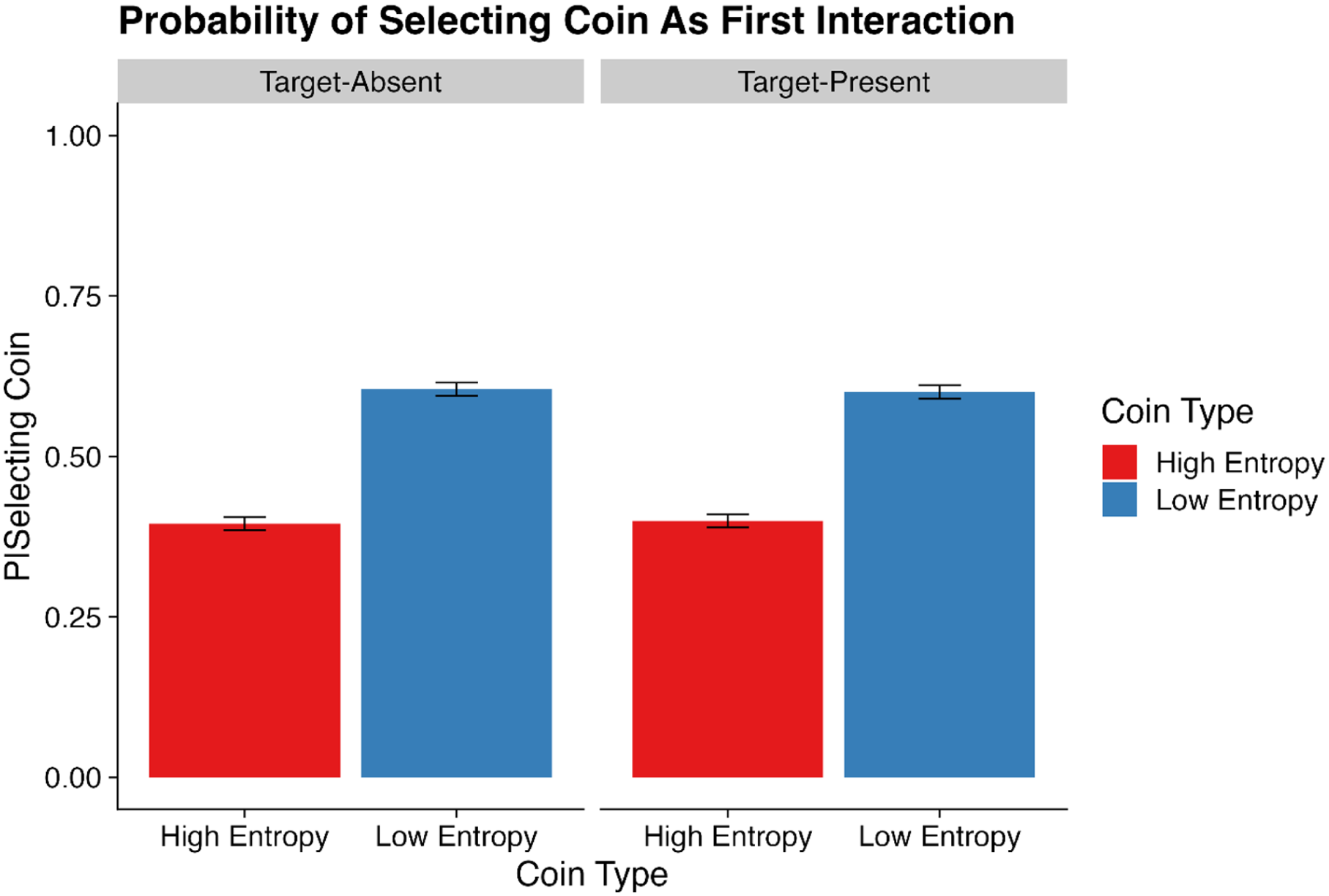
Descriptive statistics for Analysis 1, Experiment 1 — Probability of selecting coin.
Model Outputs for All Analyses – Experiment 1.
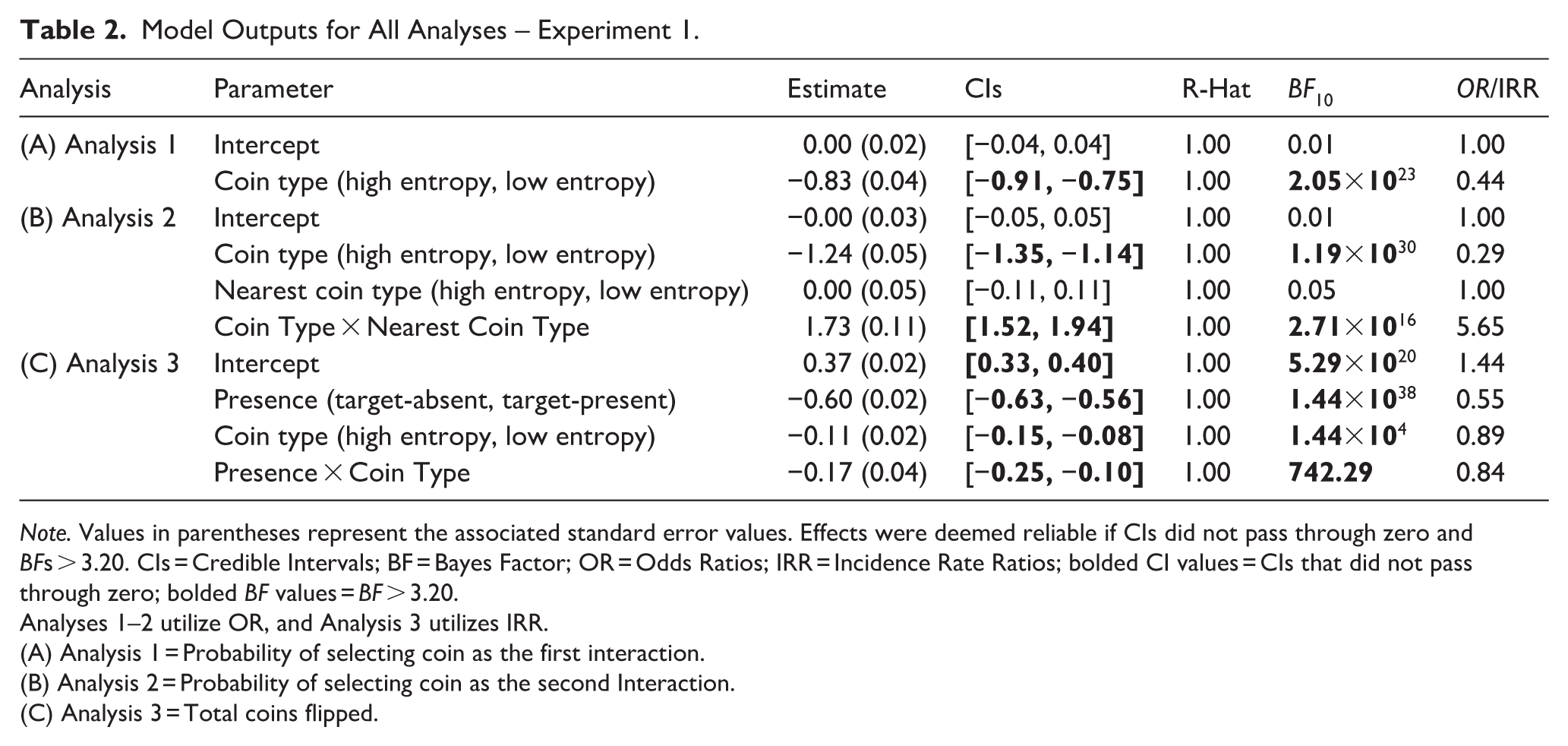
Note. Values in parentheses represent the associated standard error values. Effects were deemed reliable if CIs did not pass through zero and BFs > 3.20. CIs = Credible Intervals; BF = Bayes Factor; OR = Odds Ratios; IRR = Incidence Rate Ratios; bolded CI values = CIs that did not pass through zero; bolded BF values = BF > 3.20.
Analyses 1–2 utilize OR, and Analysis 3 utilizes IRR.
(A) Analysis 1 = Probability of selecting coin as the first interaction.
(B) Analysis 2 = Probability of selecting coin as the second Interaction.
(C) Analysis 3 = Total coins flipped.
Second Coin Selection
At the start of each trial, participants clicked on a central fixation cross to reveal the display. As such, this is where their attention should have been focused (Anwyl-Irvine et al., 2021). We have shown above that when all coins were equidistant from the center, participants had a tendency to focus their attention toward low entropy coins as their first selections. But was this still the case for their second selection, that is, once the remaining coins were no longer equidistant from the participant’s current cursor position? We addressed this by examining the likelihood that participants would select a specific coin as their second interaction with an additional model factor that measured whether the nearest coin was low or high in entropy. By doing so we were able to account for the role of coin distance within participants’ selection choices. In other words, this factor makes it possible to infer whether participants’ second choice selections were strategic or instead driven by spatial momentum, for example, selecting the next closest coin. As a reminder, should effort still have been a driver of attentional selection, then we expected an overall high likelihood that participants would select low entropy coins as their second selection, and an increase in this bias when the nearest coin to their current position was also low in entropy. Descriptive statistics can be found in Figure 5 and model effects and BFs within Table 2.
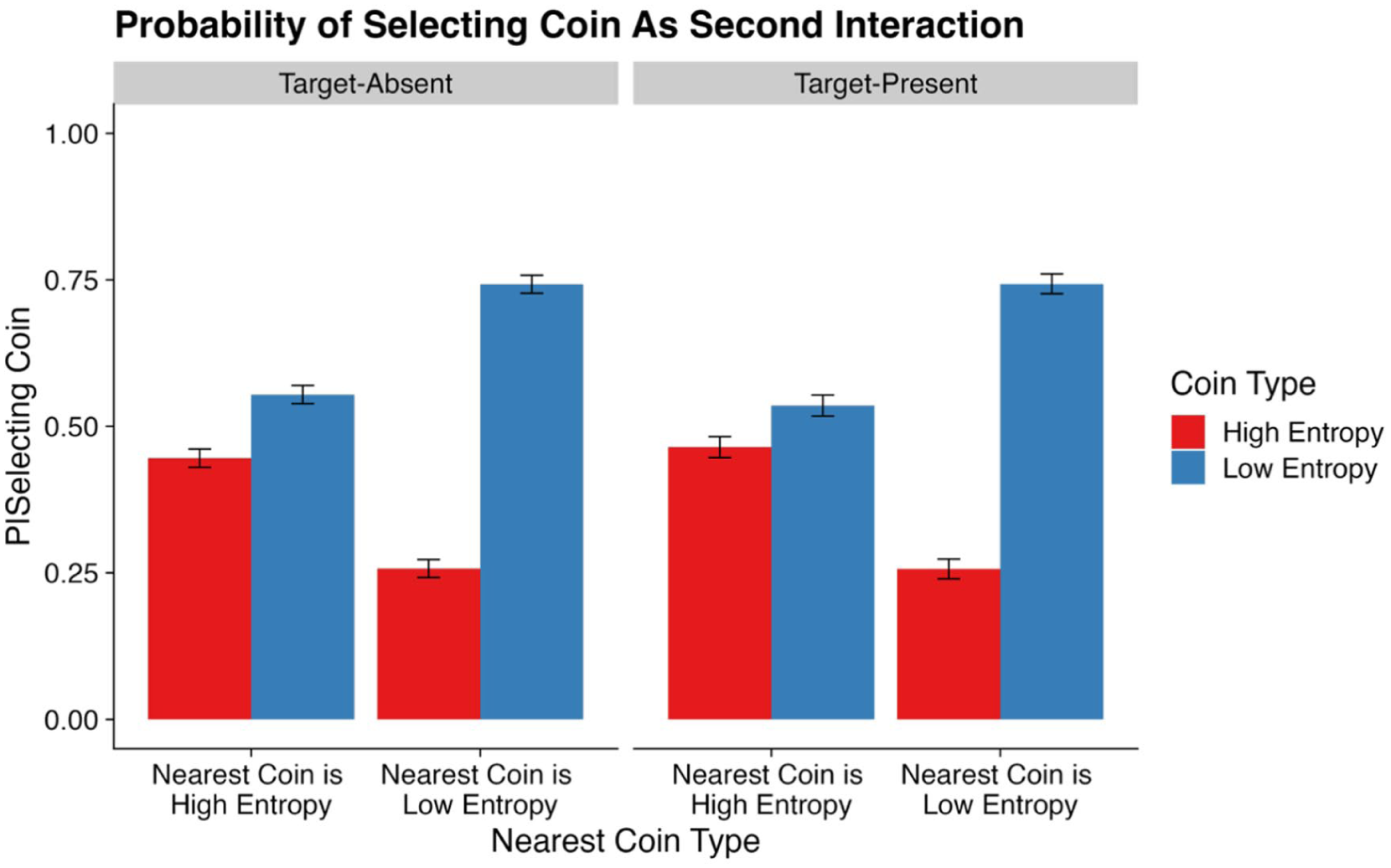
Descriptive statistics for Analysis 2, Experiment 1 — Probability of selecting coin second.
Within this analysis, we first observed a main effect of Coin Type (CI [−1.35, −1.14], BF10 = 1.19 × 1030). This suggested that participants predominantly opted to select low entropy coins as their second selection. Following this, we observed an interaction between Coin Type and Nearest Coin Type (CI [1.52, 1.94], BF10 = 2.71 × 10¹⁶). We conducted several post-hoc contrasts which showed that participants were more likely to select a low entropy coin over a high entropy coin both when the nearest coin was high (Estimate = 0.38, CI [0.24, 0.50], BF10 = 1.32 × 10⁴) and when it was low (Estimate = 2.11, CI [1.94, 2.27], BF10 = 1.47 × 1028). However, this effect was substantially stronger when the nearest coin was low.
Overall, our findings confirmed our predictions. As was the case for their first selection, participants also showed a bias toward selecting low entropy coins second. Furthermore, as predicted, this effect was amplified when the nearest coin was also low in entropy. Our findings further showed that participants were often willing (~54% of the time) to travel the extra distance to low entropy coins even when they were not the nearest coin. Conversely, participants rarely did this for high entropy coins (~25% of the time). Again, this was in line with our predictions. However, it is important to note that when the nearest coin was high in entropy, coin selection became more varied, with participants opting to select the high entropy coin ~45% of the time despite the associated increase in effort. As such, this implied that our effect may not have been as strong as was observed within Dewis et al. (2025) and that for second selections, closest coin type sometimes played a role. This was not directly in line with our predictions.
Total Coins Flipped
Our final analysis focused on search exhaustiveness, as measured by the number of coins flipped. Descriptive statistics can be found in Figure 6, and model effects and BFs within Table 2.
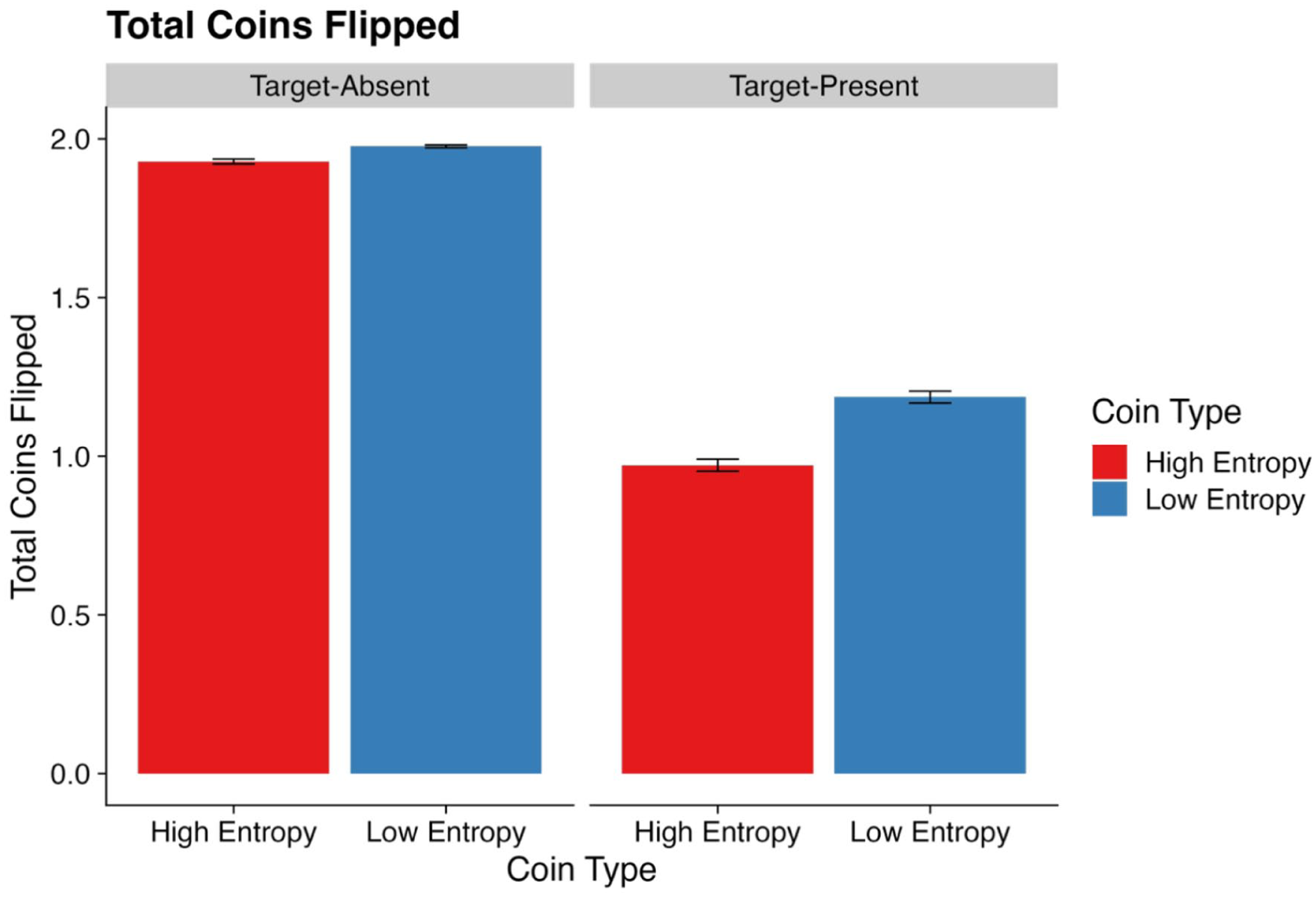
Descriptive statistics for Analysis 3, Experiment 1 — Total coins flipped.
Within this analysis, we found main effects for both Presence and Coin Type, both of which were subsumed by a Presence × Coin Type interaction (CI [−0.25, −0.10], BF10 = 742.29). Post-hoc contrasts were conducted to better understand the relationship of this interaction. Here, when controlling for coin type, participants flipped a greater number of coins in target-absent trials than they did target-present trials, for both low entropy coins (Estimate = 0.51, CI [0.46, 0.56], BF10 = 2.38 × 10²²) and high entropy coins (Estimate = 0.69, CI [0.63, 0.74], BF10 = 1.08 × 1036). However, when controlling for target presence, participants flipped a greater number of low entropy coins than they did high entropy coins within target-present trials (Estimate = 0.20, CI [0.14, 0.26], BF10 = 1.76 × 10⁵) but not within target-absent trials (Estimate = 0.02, CI [−0.02, 0.06], BF10 = 0.04).
To summarize, participants flipped more low entropy coins than they did high entropy coins but only within target-present trials. The reason for this interaction can be explained by a bias toward low entropy coins. When aggregated across trials, any bias toward specific coin types will result in an inflation in the number of flips for those coin types. In contrast, the near-exhaustive behavior displayed in target-absent trials compresses the differences between coin types. As such, across target-present trials, selection biases will at times lead to earlier discovery, thus earlier stopping, and thus higher flip counts for the preferred coin type. In other words, in target-present trials, the target should predominantly be found without needing to uncover all four coins. As such, if participants were predominately selecting low entropy coins, then they would have flipped more of these coins in trials where interacting with all four coins was not always necessary. This was in line with our predictions.
Discussion
In Experiment 1, we addressed the potential confound of time within effortful interactive search; a key factor that was unaccounted for within our previous research into effort and interactive search (Dewis et al., 2025). To do so, we asked participants to engage in an interactive search task for a target T shape attached to the underside of a virtual coin. Coins were interacted with by using a computer mouse to click on them. Following an initial selection, the coin moved around the display. Participants chased the coin around the display with their cursor continually clicking the coin. After 2 s of continuous chasing, the coin flipped over to reveal the obscured information. On each trial, two of the four potential coins moved in a quick and unpredictable manner (i.e., required more effort) while the remaining two moved in a slow and predictable fashion (i.e., required less effort). Based on the prior research by Dewis et al. (2025), we therefore predicted that participants would prioritize the selection of coins that required the least physical and cognitive effort to interact with.
When holding time constant, participants still prioritized low effort objects over high effort objects (i.e., low entropy vs. high entropy). We observed this within the first and second selections participants made across each trial. These findings were in line with our predictions. However, it is important to note that the results of our second analysis also indicated that the bias toward low entropy coins was weaker when low entropy coins required traveling a greater distance to select. As such, this suggests that the effect of effort observed here was not as strong as it was for the prior experiments conducted by Dewis et al. (2025). Finally, we further predicted that participants would flip more low entropy coins compared to high entropy coins. This was indeed an effect of which we observed but only for target-present trials. As discussed within the results section, this inflation of flips within target-present trials is not strictly a result of search exhaustiveness, but instead a combination of selection bias paired with early target discovery. Overall, our findings of high search exhaustiveness for target-absent trials were unsurprising given that this has typically remained high within interactive searches, despite increases in effort (Deverill et al., 2025; Dewis et al., 2025).
These findings provide valuable insights into the roles of effort and time within attentional selection. Primarily, when time is held constant, effort is still an aversive attribute that influences attentional selection within interactive search tasks, albeit not as strong as previously observed. Perhaps then, when effort is involved, time does indeed play an important role within the biasing of attentional selection for interactive search. Should this be the case, then determining which of the two is the primary driver of attentional selection within aversive effortful tasks is paramount. We addressed this within Experiment 2.
Experiment 2
Following our findings from Experiment 1, we conducted an additional study further investigating the interaction between effort and time, directly addressing the issue of how these two factors combine. We used the same approach as Experiment 1, wherein participants chased coins around the display, continually clicking them to flip them over. As before, effort was varied between coins. However, as we have illustrated within the bottom panel of Figure 2, we included an additional time manipulation into the paradigm wherein some coins required chasing for longer before flipping over. Here, participants were placed into one of two time conditions. In the “High Entropy Flipped Later” condition, the high entropy coins flipped over after 4 s of continuous chasing and the low entropy coins flipped over after 2 s of continuous chasing. In the “High Entropy Flipped Sooner” condition, the high entropy coins flipped after 2 s of continuous chasing and the low entropy coins flipped after 4 s of continuous chasing. Here, our goal was to better understand which of the two, between time and effort, was the predominant driving factor for attentional selection biases within our interactive search task.
As previously discussed, should participants prioritize objects that can be searched quickly, then an interaction should arise between our time and effort manipulation. Hence, we predicted that participants would become more biased toward low entropy coins, but only when they also flipped sooner. Likewise, when the high entropy coins flipped sooner, then regardless of the effort involved, we predicted that participants would be more likely to be biased toward these coins instead. As with the previous experiment, we predicted that this would be evident within participants’ first and second selections across each trial, and the total number of coins flipped for each coin type.
Method
All methodological details for Experiment 2 were identical to Experiment 1, except where described below.
Ethical Approval
Ethical approval was given for Experiment 2 by the University of Southampton’s Ethics Committee on March 13, 2025 (ERGO NUMBER: 95398.A2).
Participants
As with Experiment 1, a priori power analyses were conducted using the SIMR package in R (Green & MacLeod, 2016; R Core Team, 2023) on pilot data from 15 participants. Target effect sizes were based on prior online interactive search research (Dewis et al., 2025; Godwin et al., 2024) and the findings from Experiment 1. These analyses recommended a minimum sample size of ~40 participants to achieve a power level of 0.80 for an effect size of 0.25 for the most complex interaction within our analysis. The increase in effect size here was informed by the strong effects we observed within Experiment 1. As such, a total of 40 participants were recruited from the online participant recruitment platform Prolific (Age: M = 40.88, SD = 16.53, Sex: Female = 39.53%, Male = 60.47%) during May 2025. Participants were paid £9.00 for taking part.
The Prolific platform allows researchers to set several filters to restrict participation to certain sets of individuals. In Experiment 2, we utilized these tools to apply the following filters when advertising our study: Only include individuals who report themselves as fluent English speakers from the United Kingdom; Only include individuals with a Prolific approval rating of 95% or above. This means that in 95% of the studies they participated in, researchers deemed their data sets as acceptable, with no flaws or failures of attention tests; only include individuals who have reported having normal or corrected-to-normal vision; only include individuals who report having normal color vision. Our reason for doing so was to ensure the highest possible level of data quality.
Stimuli and Apparatus
The stimuli used in Experiment 2 were identical to Experiment 1. However, an additional manipulation of time was included. As such, depending on which condition a participant was assigned to, some coins took longer to flip than others. In the “High Entropy Flipped Later” condition, the low entropy coins flipped over after only 2 s of chasing, and the high entropy coins flipped over after 4 s of chasing. In the “High Entropy Flipped Sooner” group, the high entropy coins flipped after only 2 s of chasing, and the low entropy coins flipped after 4 s of chasing. This time and effort manipulation has been visually depicted within the bottom panel of Figure 2. As with Experiment 1, the mapping of colors was stable within participants and randomized across participants and never confounded with time.
Design and Procedure
The procedure for Experiment 2 was identical to Experiment 1 with the only difference being the additional time manipulation. A typical trial is depicted in Figure 1.
Results
Data Cleaning
All data underwent the same preplanned cleaning procedures as Experiment 1 before any analyses were carried out (see Table 1). However, we changed the upper time limit cut-off from 60 s to 120 s to allow for the increase in time it took to flip all four coins. Following all cleaning procedures, the final dataset for Experiment 2 consisted of 4,737 (98.69%) trials from 40 participants (20 within each time condition).
Analytic Approach
For Experiment 2, the same analytic approach was taken as Experiment 1. However, the models were adjusted to include an additional factor of Time Group (High Flipped Later, High Flipped Sooner).
Response Accuracy and Response Times
Overall, response accuracy was high for both target-present (M = 0.87, SD = 0.34) and target-absent trials (M = 0.97, SD = 0.16). Likewise, participants completed trials within a reasonable time for target-present trials (M = 12.71 s, SD = 9.39 s) and target-absent trials (M = 19.76 s, SD = 11.96 s). No further analyses were conducted on response accuracy or response times. Our remaining analyses focused on the order of interactions and the number of search objects revealed.
First Coin Selected
As before, we began by examining participants’ first interaction choice. Descriptive statistics can be found in Figure 7 and model effects and BFs in Table 3.
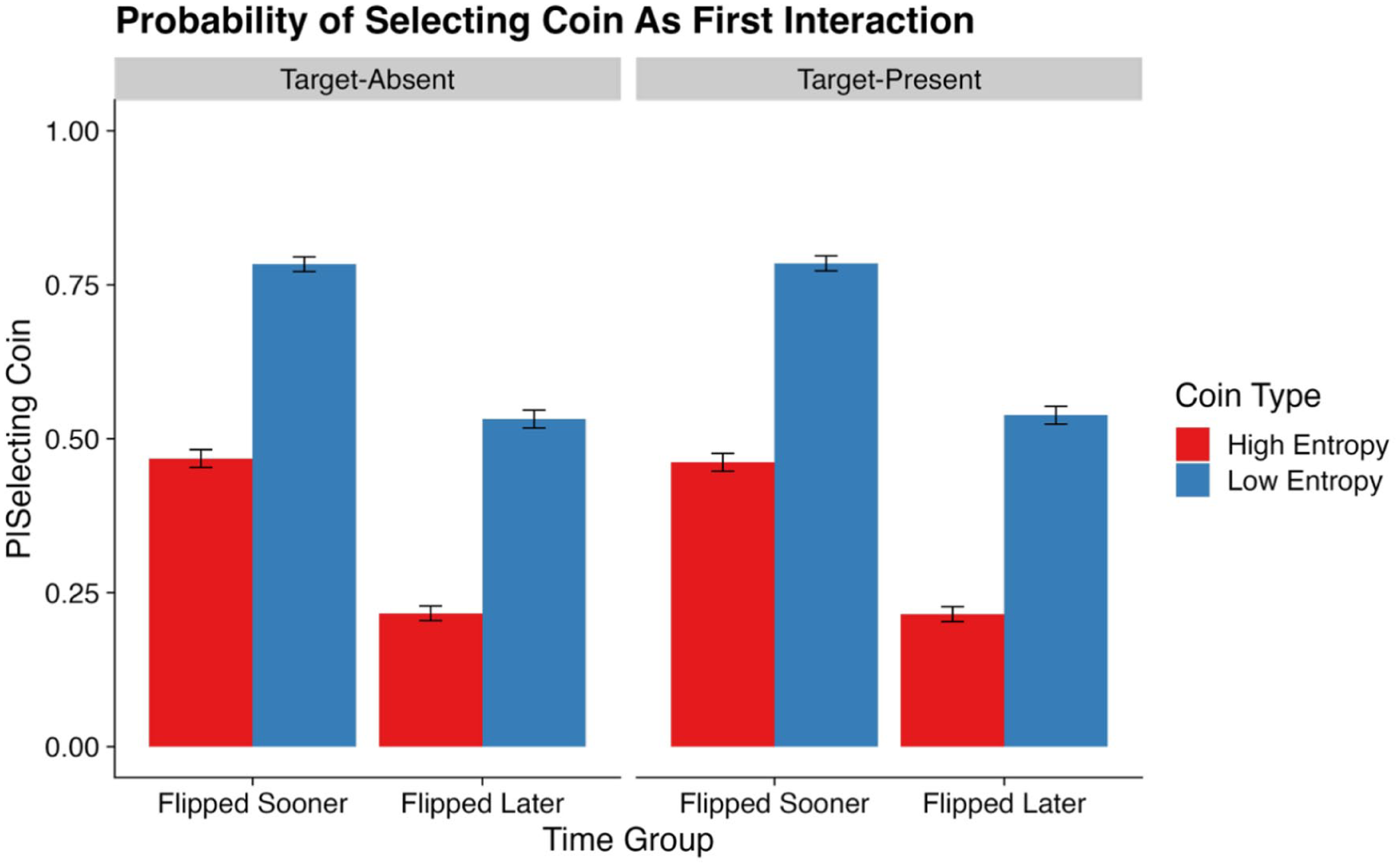
Descriptive statistics for Analysis 4, Experiment 2 — Probability of selecting coin first.
Model Outputs for All Analyses – Experiment 2.
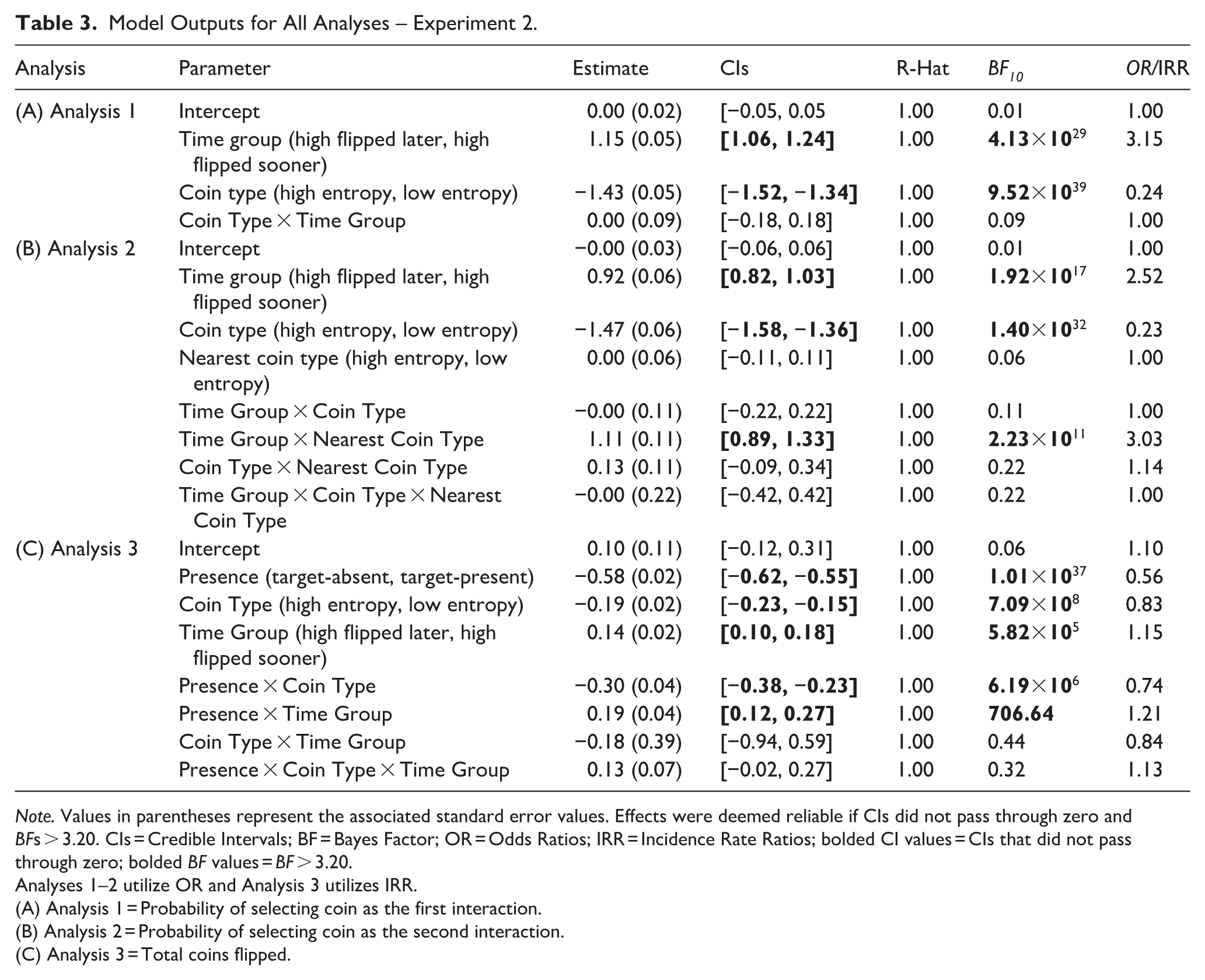
Note. Values in parentheses represent the associated standard error values. Effects were deemed reliable if CIs did not pass through zero and BFs > 3.20. CIs = Credible Intervals; BF = Bayes Factor; OR = Odds Ratios; IRR = Incidence Rate Ratios; bolded CI values = CIs that did not pass through zero; bolded BF values = BF > 3.20.
Analyses 1–2 utilize OR and Analysis 3 utilizes IRR.
(A) Analysis 1 = Probability of selecting coin as the first interaction.
(B) Analysis 2 = Probability of selecting coin as the second interaction.
(C) Analysis 3 = Total coins flipped.
Within this analysis, we observed a main effect of Coin Type (CI [−1.52, −1.34], BF10 = 9.52 × 1039) and a main effect of Time Group (CI [1.06, 1.24], BF10 = 4.13 × 1029). Here, we found that when accounting for the influence of Time Group, participants consistently prioritized interactions with the low entropy coins first over the high entropy coins. Likewise, for the main effect of Time Group, when accounting for the influence of Coin Type, participants consistently chose whichever of the two coin types flipped sooner.
Overall, then, participants prioritized strategies that minimized both effort and time. However, between the two, effort produced the stronger bias. This was not directly in line with our predictions. As a reminder, we predicted that time would be the stronger of the two influences upon attentional selection. However, these findings do provide further support for the effort hypothesis from Dewis et al. (2025).
Second Coin Selected
Next, we examined the likelihood that participants would select a specific coin as their second interaction. As with Experiment 1, we included a factor within the model to keep track of whether the nearest coin was high or low in entropy. Descriptive statistics can be found in Figure 8, and model effects and BFs within Table 3.
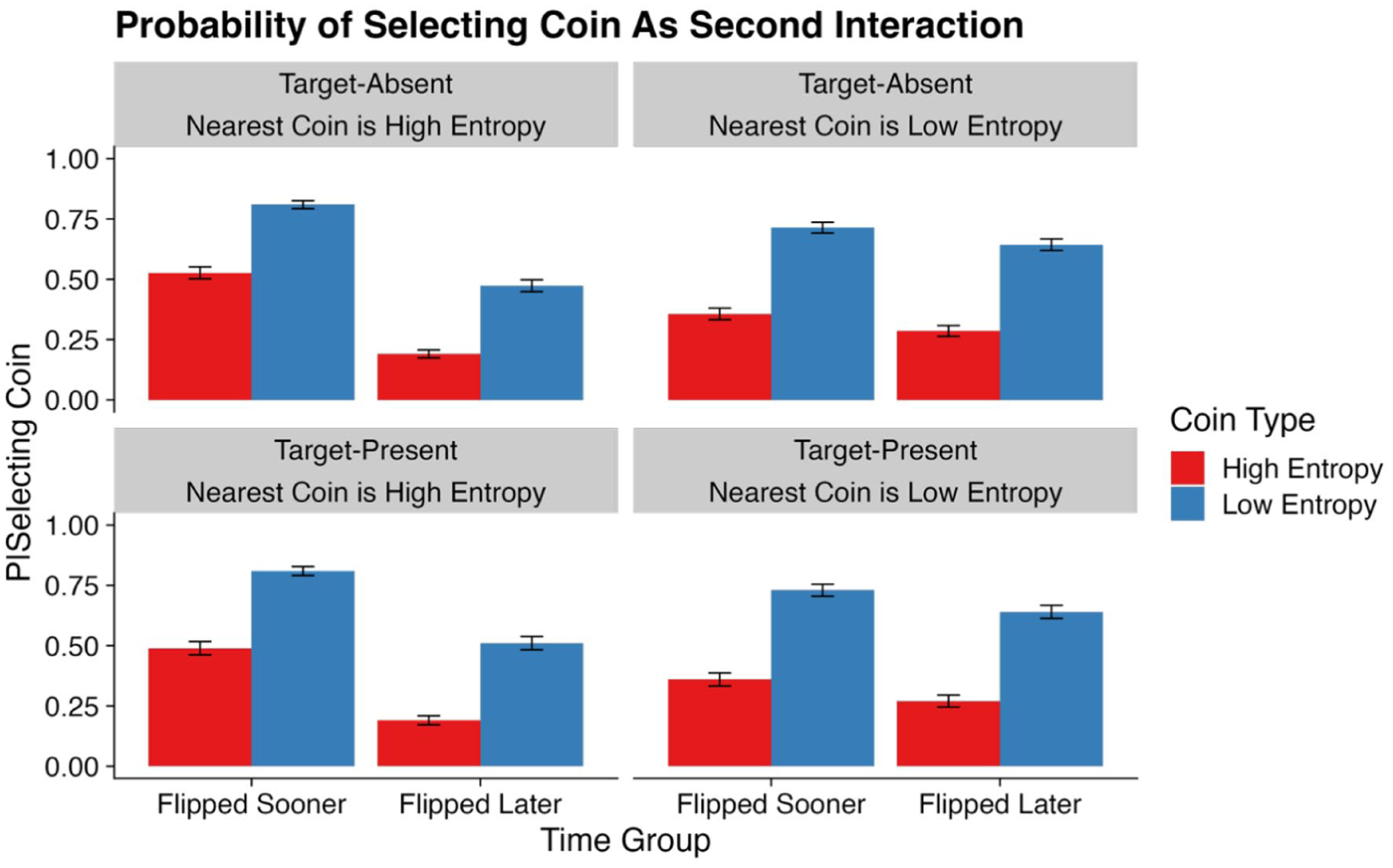
Descriptive statistics for Analysis 5, Experiment 2 — Probability of selecting coin second.
Within this analysis, we first observed a main effect of Time Group (CI [0.82, 1.03], BF10 = 1.92 × 10¹⁷). This suggested that when accounting for other factors, participants tended to select whichever of the two coin types flipped sooner. Next, we found an extremely strong main effect of Coin Type (CI [−1.58, −1.36], BF10 = 1.40 × 1032). Here, regardless of other factors, participants were consistently more likely to select a low entropy coin second than they were a high entropy coin.
Lastly, an interaction between Time Group and Nearest Coin Type was observed (CI [0.89, 1.33], BF10 = 2.23 × 10¹¹) and further explored using post-hoc contrasts (see Figure 9 for a visualization of this interaction). These post-hoc examinations revealed that participants selected the coin that flipped sooner more often than the one that flipped later regardless of whether the nearest coin was high in entropy (Estimate = −1.48, CI [−1.63, −1.33], BF10 = 1.07 × 1026) or low in entropy (Estimate = −0.37, CI [−0.53, −0.21], BF10 = 487.27). However, this effect was substantially stronger when the nearest coin was high entropy. Thus, suggesting that participants were on occasion willing to look past increases in time but only when the nearest coin to them was low in entropy.
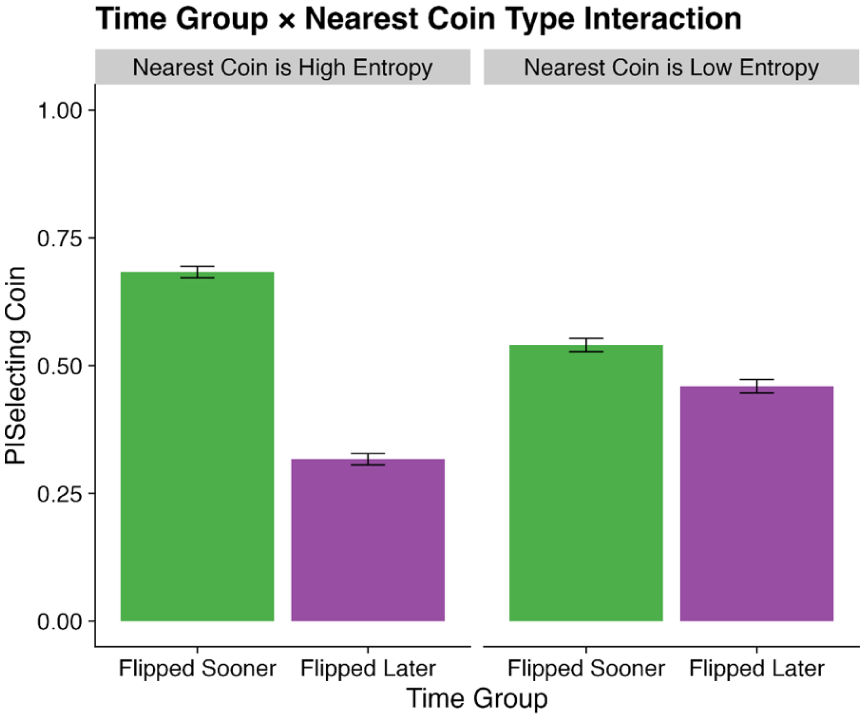
Visualization of Time Group × Nearest Coin type interaction.
To summarize, both time and effort played a role within participants’ selections. Participants’ second selection choices were predominately to either low entropy coins, or whichever of the two coins flipped sooner. Additionally, participants at times participants were willing to ignore increases in search duration provided that the nearest coin to them was low in entropy. These findings were not directly in line with our predictions regarding time but do further highlight an important intertwined relationship between effort and time.
Total Coins Flipped
Finally, we examined the number of coins flipped within each trial as a function of Presence, Coin Type, and Time Group. Descriptive statistics can be found in Figure 10, and model effects and BFs within Table 3.
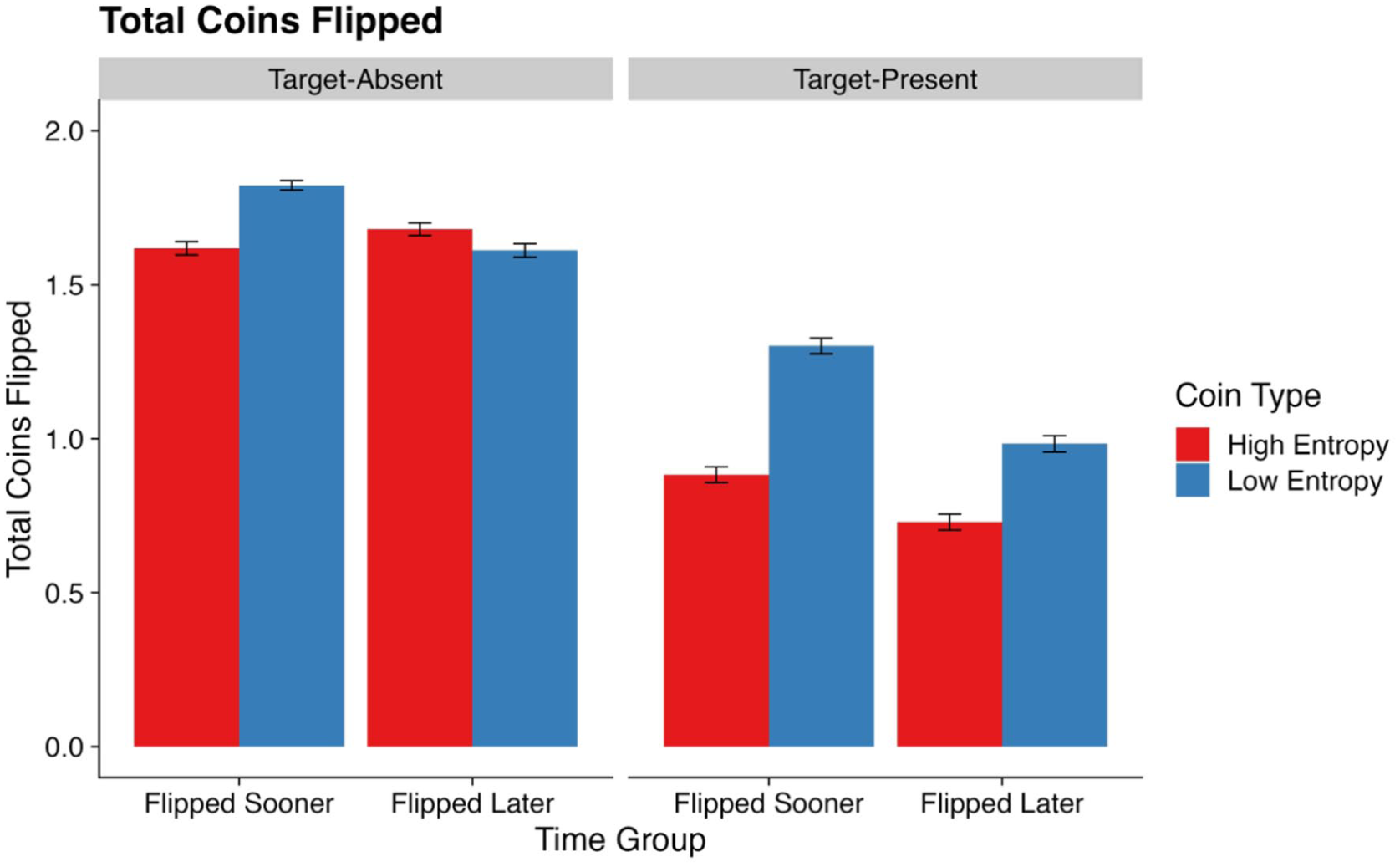
Descriptive statistics for Analysis 6, Experiment 2 — Total coins flipped.
This analysis revealed several effects all of which were subsumed by a Presence × Coin Type interaction (CI [−0.38, −0.23], BF10 = 6.19 × 10⁶) and a Presence × Time Group interaction (CI [0.12, 0.27], BF10 = 706.64). Both interactions were further examined using post-hoc contrasts.
Beginning with the Presence × Coin Type interaction, our contrasts revealed that participants flipped a greater number of low entropy coins compared to high entropy coins within target-present trials (Estimate = 0.34, CI [0.28, 0.40], BF10 = 9.09 × 10¹²) but not within target-absent trials (Estimate = 0.04, CI [0.00, 0.08], BF10 = 0.09). Next, within the Presence × Time Group interaction, analyses revealed that participants flipped more of the coins that flipped sooner than the ones that took longer to flip within target-present trials (Estimate = −0.24, CI [−0.29, −0.18], BF10 = 4.05 × 10⁵) but not within target-absent trials (Estimate = −0.04, CI [−0.09, 0.00], BF10 = 0.12).
Both interactions highlighted a bias toward what participants perceived to be the easier of the two coins. If participants predominantly selected a particular coin type, then in trials where all four coins did not need to be flipped (i.e., target-present trials), an overall increase in the number of flips for these coins should occur when summated across all trials. As with all other analyses, this was not directly in line with our predictions regarding the influence of time but does further highlight the combination of time and effort within interactive search. However, between these two, the strongest effect was the effect of entropy (effort).
Discussion
The findings from Experiment 1, where time was held constant, neatly highlighted that despite an influence of effort, time still likely plays a role in making effortful tasks aversive. However, it remained unclear which of the two between effort and time was the driving force within attentional selection. As such, we addressed this within Experiment 2. As before, we did so by asking participants to engage in an interactive search task for a target T shape attached to the underside of a virtual coin. However, participants were additionally split into one of two time conditions where either the low or high entropy coin required chasing for a longer duration.
Based on both Experiment 1’s findings and the previously mentioned reviewer comments, we took the stance that time would be the main driver of attentional selection within these effortful tasks. Therefore, we predicted that participants would prioritize selections with whichever of the two coin types required chasing for the least time, regardless of any associated effort.
Overall, our results showed a consistent interaction between time and effort within our task. However, this interaction was not directly in line with what we predicted. Here, we observed a bias toward low entropy coins within the first and second selections across each trial and the total number of coins flipped. Across all measures, this effect was strongest when low entropy coins also required less time chasing. In contrast, when high entropy coins required less time chasing, participants became considerably more varied in their selections but still predominantly chose the low entropy coins. In other words, time does appear to influence attentional selection, but only when paired with increased effort. This is likely why Dewis et al. (2025) observed such strong effects within their experiments, since their high effort manipulation also inadvertently resulted in increased interaction durations. Indeed, effort and time appear to be closely intertwined. However, within our interactive search experiments, effort appears to be the predominant driving force of attentional selection between the two.
General Discussion
The starting point for this current project was a series of prior experiments we conducted that examined attentional selection within interactive search, specifically focusing on the role of effort (Dewis et al., 2025). Within these experiments, participants searched for a T shape embedded on the side of a set of virtual cubes. Across both experiments, the effort required to interact with cubes was varied. Overall, we concluded that searchers adopted an easy-first strategy, focusing on objects that could be easily, or with little effort, rejected as distractors or accepted as containing a target. However, we had overlooked a potential confound within our paradigm: not only did high effort stimuli require more effort, but they also inadvertently required more time to examine as well. As such, we deemed it important to verify whether our previous results were due to the search system prioritizing objects that could be searched more rapidly, rather than with less effort.
We addressed the confound of time directly across two new sets of experiments wherein we carefully manipulated and controlled for time within effortful interactive search. Participants searched for a target T shape attached to the underside of a set of four virtual coins. Across both experiments, participants selected coins using their computer cursor. Following a selection, the coin moved around the display, and the participant chased it with their cursor, repeatedly interacting with it until it would “give up” and flip over to reveal the obscured T or L shape attached to its underside. Within each trial, coins were either easy or hard to interact with based upon a set of predetermined factors (entropy and time). Colors were applied to the coins to ensure participants could differentiate and form associations with specific coin types, that is, a red coin may have been perceived by the participant as the hardest coin to interact with and so forth. Our predictions were drawn from prior research into attentional selection (Awh et al., 2012; Wolfe, 2021; Wolfe & Horowitz, 2017) and our own prior research on effortful interactive search (Dewis et al., 2025).
In Experiment 1, we began by investigating the role of effort while carefully controlling for time spent interacting. Two of the four coins within each trial were high in entropy and moved in a quick and unpredictable manner, making them effortful to track and interact with. In contrast, the remaining two coins moved in a slow and predictable manner, making them less effortful to track and interact with (low entropy). To control for time spent interacting, each coin only moved around the display for a total of 2 s before flipping over. We predicted that participants would become biased toward selecting low entropy coins over high entropy coins in an attempt to reduce the effort involved in search. Overall, this was indeed what we observed within our results.
In Experiment 2, we further investigated the role of time within effortful interactive search. We utilized the same approach as Experiment 1 with an additional time manipulation integrated into the paradigm wherein some coins required chasing for longer (4 s) than others (2 s). Based upon Experiment 1’s findings, we predicted that participants would display a bias toward selecting objects that would flip sooner. However, our findings did not consistently show this. Instead, our results had two clear takeaways. First, participants prioritized selections with low effort coins over the coins that flipped quickly. Second, when high effort objects took longer to flip, participants developed an extremely strong bias toward selecting the low effort objects instead. This suggests that both effort and time are aversive factors that influence interactive search, however, all else being equal, searchers preferred to interact with objects that were low in effort.
Next, we return to the overarching aim of the paper, determining whether Dewis et al. (2025) were correct in their conclusions that searchers will prioritize interactions with objects that require the least effort to interact with. From a strategic standpoint, under the Performance Maximization account (Rachlin et al., 1981), searchers should choose a strategy that produces the greatest overall benefit-to-cost ratio while still allowing for the completion of the task as accurately and quickly as possible. Within our task, an optimal strategy would therefore have been to prioritize coins that flipped sooner. However, participants did not take this approach. While surprising, these findings align closely with numerous accounts of suboptimal search strategies within visual search (Bacon & Egeth, 1994; Folk & Anderson, 2010; Irons et al., 2012). Likewise, although not nearly as effortful as our interactive search task, when taking effort into account within visual search, as was the case here, there are several examples of individuals avoiding effortful tasks despite it being the quicker and more optimal approach (Irons & Leber, 2016, 2018; Zhang & Leber, 2024). Indeed, across both visual and interactive search, effort appears to be a very powerful influence of attentional selection. What remains unclear however, is just how much more influential effort is compared to time. To further understand this, we compared differences in selection bias as driven by effort between the two experiments (see Table 4). Should time have been heavily influential, then we would expect to see overall less bias toward low effort objects within Experiment 2 compared to Experiment 1. However, we observed the opposite. Instead, our results showed that the difference in bias between low and high effort coin types was stronger in Experiment 2 than Experiment 1. While the differences in bias were relatively small (~5.61% difference in likelihood scores between the two experiments), this finding, paired with those presented throughout Experiment 2, suggests that effort is the dominant factor between the two in guiding attentional selection.
Model Outputs for First Selection Choice – Coin Type and Experiment.
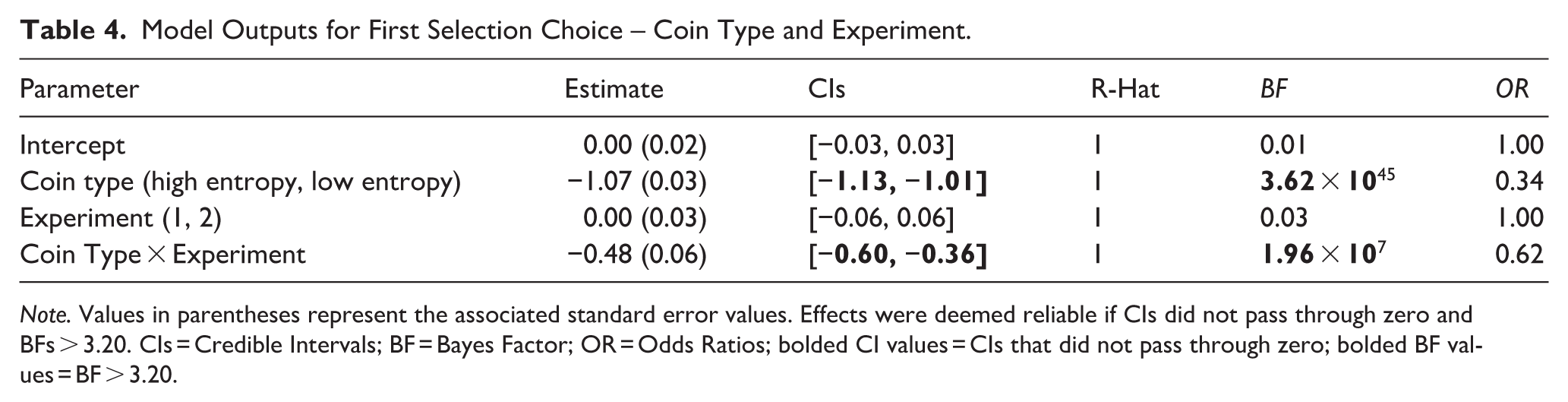
Note. Values in parentheses represent the associated standard error values. Effects were deemed reliable if CIs did not pass through zero and BFs > 3.20. CIs = Credible Intervals; BF = Bayes Factor; OR = Odds Ratios; bolded CI values = CIs that did not pass through zero; bolded BF values = BF > 3.20.
This prompts two important and logical follow-up questions: Should one update current models of search to account for these findings? And if so, how? To answer these questions, let us return to the prominent belief that attentional selection is guided by a priority map as discussed within the introduction of this manuscript. Visual search models that follow this approach, such as Guided Search (Wolfe, 2021), suggest that this priority map uses a weighted summation of top-down and bottom-up inputs in addition to many other factors that work in tandem to influence attentional selection in a “winner takes all” approach regarding map activation (Godwin et al., 2014; Wolfe, 2021; Wolfe & Horowitz, 2017). Since interactive search is an extension of visual search there is nothing inherently incorrect about this model of search, however, one could envision an adaption to the model by which it may extend and branch into a new section to account for search tasks where interactions are involved. As shown across the current set of experiments and those conducted prior by Dewis et al. (2025), the role of effort within this section should be explicitly included as an inhibiting influence upon the priority map. Of course, effort could be encompassed within the top-down input section of a model such as Guided Search and considered as a “goal” of the searcher with the aim of reducing effort. However, the takeaway here is that the role of effort appears to be more prominent within interactive search than visual search, and as such, models should emphasize this when considering interactive search. Perhaps, then, the better approach is to do as Hout et al. (2022) have done and build a separate yet highly related search model specific to interactive search with its roots in guided search. Under this approach, it is straightforward to update their model with a simple additional two-alternative forced choice regarding the perceived effort required to interact with an object and an update to their search termination sections acknowledging the high-level search exhaustiveness thresholds that seem to be applied to interactive searches.
Although effort appears to be the predominant factor throughout this study, we should not overlook the role of time. Despite being largely focused on resource collection within animals, the prior mentioned foraging literature makes heavy consideration to this under the notion of “handling time” (Charnov, 1976; Giller, 1980). Handling time refers to how long it takes animals to make use of the resources collected (Giller, 1980). However, handling time is typically closely tied with patch value (e.g., the quantity of resources within an object/area). Here, under an optimal foraging framework, patches that produce high levels of resources while also possessing low handling times will be prioritized. These models also make consideration to patches that contain little resources but possess extremely low handling times. Within the current study, from a foraging standpoint, the level of resources each coin produced was equal, allowing us to directly manipulate handling time. As is the case with foraging models, increases in handling time were indeed associated with a reduction in selection bias. Although we explored the role of time and effort within this manuscript, there is undoubtedly more to explore regarding the relationship between patch value and handling time. While models of foraging are useful here, their focus upon animal behavior and large-scale foraging decisions (e.g., when to leave the current berry bush and head to the next one, or when to leave an environment entirely and travel to a different one) leave much room for finer level exploration through an interactive search lens.
At a more general level, our findings once again bear particular importance for real-world practical applications of interactive search. Our results suggest that within real-world scenarios, searchers will de-prioritize interactions with objects that indicate either a high level of effort or time to engage with. Furthermore, objects that are both high effort and take a large amount of time to engage with or examine – for example, searching through and moving many heavy objects within a toolbox – will be deprioritized substantially more than those that will take less time and effort. What is currently unclear, however, is the extent to which these findings will generalize to interactions with real-world physical objects, and whether the basic principles here can be replicated beyond a computer screen and virtual interactive search.
Overall, then, while we still agree that searchers take an easy-first approach when conducting interactive search tasks, we believe it is important to consider time within this conclusion. Tasks that are both high in effort and high in time will be perceived as more aversive than high effort tasks that can be completed quickly. As such, we conclude that searchers first use a combination of both effort and time to determine what makes an object “easy” or “hard” to interact with in relation to all other objects, before prioritizing interactions with said easier objects.
Footnotes

Author Contributions
Dewis: Conceptualization, data curation, formal analysis, investigation, methodology, project administration, resources, software, validation, writing – original draft preparation. Godwin: Conceptualization, investigation, methodology, project administration, resources, software, supervision, validation, writing – review & editing. Metcalf: writing – review & editing, supervision. Warner: writing – review & editing, supervision. Polfreman: writing – review & editing, supervision.
Funding
The authors received no financial support for the research, authorship, and/or publication of this article.
Declaration of Conflicting Interests
The authors declared no potential conflicts of interest with respect to the research, authorship, and/or publication of this article.