



Abstract
Substantial individual variation exists in the frequency of gestures produced while speaking. This study investigated the associations between cognitive abilities, empathy levels, and personality traits with the frequency of representational gestures. A cartoon narration task and a social dilemma solving task were used to elicit gestures. Predictor variables were selected based on prior research on individual differences in gesture production and the cognitive and communicative functions of gestures in speech. Our findings revealed that an increased frequency of representational gestures was associated with higher empathy levels in the cartoon narration task. However, in the social dilemma solving task, a higher frequency of representational gestures was associated with lower visuospatial working memory, spatial transformation, and inhibition control abilities. Moreover, no significant relationships were found between verbal working memory, personality traits, and the frequency of representational gestures in either task. These findings suggested that predictor variables for representational gesture production vary depending on the nature of the gesture elicitation task (e.g., spatiomotoric vs. abstract topics). Future research should examine the relationship between individuals’ cognitive abilities, empathy and gesture production with across a broader range of topics and in more ecologically valid contexts.
Keywords
When speaking, individuals spontaneously produce hand gestures, which play a critical role in facilitating communication. These gestures not only assist the speaker in their thinking and speaking processes but also aid the listener in understanding the conveyed message (P. Wagner et al., 2014). Gestures can be observed across various age groups (Tellier, 2009), cultures (Kendon, 2004; Kita, 2009), and communication contexts (McNeill, 1992). Even infants aged between 9 and 14 months are capable of pointing to specific objects or events before they acquire speech (Camaioni et al., 2004; Colonnesi et al., 2010; Iverson & Goldin-Meadow, 2005). Congenitally blind individuals produce gestures at a rate comparable with sighted individuals, regardless of whether the listener is blind or sighted (Iverson & Goldin-Meadow, 1998). It is important to note, however, that gesturing is not obligatory in communication, and there are substantial individual differences in gesture frequency. Hence, this study aims to investigate the association between individuals’ gesture frequency and their cognitive abilities, empathy skills and personality traits.
Gestures can be categorised into various types. For instance, representational gestures are used to depict a concrete or abstract concept with the shape or motion of the hands (iconic gestures and metaphoric gestures in McNeill, 1992) or point to a referent in physical or imaginary space (concrete or abstract deictic gestures in McNeill, 1992). Beat gestures are simple and rhythmic hand movements used to emphasise the accompanied speech content (McNeill, 1985). Interactive gestures, characterised by an open-palm handshape, are employed to manage interactions between the speaker and the listener without conveying specific content from the concurrent speech (Bavelas et al., 1992). Finally, emblem gestures are conventionalized hand gestures that are understood by most members in a culture (Ekman & Friesen, 1969). In this study, we focused on representational gestures since a majority of existing research on individual differences in gesture production examined representational gestures (e.g., Gillespie et al., 2014; Göksun et al., 2013; Hostetter & Alibali, 2007; Hostetter & Potthoff, 2012; Nagpal et al., 2011; O’Carroll et al., 2015; Smithson & Nicoladis, 2013).
Earlier research on individual differences in gesture production primarily examined how group-level factors, such as gender (Rekers et al., 1981), age (Cohen & Borsoi, 1996; Feyereisen & Havard, 1999), and culture (Archer, 1997; Kita, 2009), influence gesture frequency. However, in recent years, the field has shifted its focus to how individual characteristics contribute to variations in gesture frequency. For example, individual differences in gesture frequency have been found to be associated with verbal and visuospatial working memory capacity (Chu et al., 2014; Gillespie et al., 2014; Göksun et al., 2013; Hostetter & Alibali, 2007; Smithson & Nicoladis, 2013), verbal and spatial skills (Chu et al., 2014; Hostetter & Alibali, 2007; see Özer & Göksun, 2020 for a review), fluid intelligence (Sassenberg et al., 2011; Wartenburger et al., 2010), empathy skills (Chu et al., 2014), and personality traits (Hostetter & Potthoff, 2012; Kopple, 2014).
This study expanded on previous research in three aspects. First, most existing studies investigated the relationship between gesture frequency and cognitive abilities, empathy skills, and personality traits separately. This study included multiple individual characteristics that have been found to be associated with individual differences in gesture frequency simultaneously in a single study to better understand the relative contributions of each factor to individual differences in gesture production. Second, prior studies predominantly used spatial tasks for gesture elicitation (e.g., Gillespie et al., 2014; Göksun et al., 2013; Hostetter & Alibali, 2007; Nagpal et al., 2011; O’Carroll et al., 2015; Sassenberg et al., 2011; Smithson & Nicoladis, 2013; Wartenburger et al., 2010), and only a handful used nonspatial tasks (e.g., Chu et al., 2014; Hostetter & Potthoff, 2012). Therefore, this study employed both spatial and nonspatial gesture elicitation tasks to explore correlations between individual characteristics and representational gesture frequency. Finally, although there has been evidence that representational gestures help speakers concentrate on task-relevant information and suppress task-irrelevant information (Kita & Davies, 2009; Melinger & Kita, 2007), no studies have directly examined the association between inhibition control ability and representational gesture frequency. Thus, this study introduces inhibition control ability as a predictor variable.
The choice of predictor variables is based on findings from prior studies on individual differences in gesture production, as well as evidence concerning the cognitive and communicative functions of representational gesture in face-to-face communication. In the following sections, we provide a rationale for our choice of predictor variables.
Cognitive abilities and gesture production
Visuospatial and verbal working memory
Working memory refers to the ability to retain and manipulate a limited amount of information in the short term (Baddeley, 2000; Daneman & Carpenter, 1980). Researchers have proposed that the use of representational gestures can enhance the activation of mental images in visuospatial working memory, assisting speakers in maintaining these mental representations (de Ruiter, 2000). Previous studies have shown that individuals produce more representational gestures to alleviate the demands on visuospatial working memory when describing objects or pictures that are not visible, as opposed to when they are visible (Morsella & Krauss, 2004; Ping & Goldin-Meadow, 2010; Wesp et al., 2001). Besides visuospatial working memory, it has been argued that representational gestures can also reduce verbal working memory load (Goldin-Meadow et al., 2001). Supporting evidence comes from studies where participants were asked to explain mathematical problem solutions while simultaneously engaging in either a verbal working memory task (memorising a sequence of letters) or a visual working memory task (memorising a pattern of black squares in a grid). The findings revealed improved performance in both verbal and visuospatial working memory tasks when participants were allowed to gesture, as compared with when they were prohibited from gesturing (Ping & Goldin-Meadow, 2010; S. M. Wagner et al., 2004).
The existing literature concerning the relationship between individuals’ working memory capacity and their gesture frequency is somewhat inconclusive. For instance, regarding visuospatial working memory, Chu et al. (2014) found that individuals with lower visuospatial working memory capacity tend to produce more representational gestures while explaining abstract phrases and social dilemmas. However, other studies found no correlation between visuospatial working memory capacity and the frequency of representational gestures elicited by a cartoon narration task (Smithson & Nicoladis, 2013) or a route description task (Arslan & Göksun, 2022). Similarly, regarding verbal working memory, some studies have demonstrated a negative correlation between verbal working memory and gesture frequency (Gillespie et al., 2014; Smithson & Nicoladis, 2013), while Chu et al. (2014) failed to establish a significant correlation. Therefore, this study aimed to replicate these findings and provide further insights into the interplay between working memory capacity and the production of representational gesture.
Spatial transformation
Spatial transformation ability refers to an individual’s capacity to mentally manipulate, rotate, twist, or invert spatial information or objects (Hegarty & Waller, 2005). Researchers have proposed that representational gestures can help speakers in transforming spatio-motoric information for verbal encoding (Kita et al., 2017). Evidence indicates that speakers tend to produce representational gestures more frequently when discussing spatial transformations of objects compared with static spatial relationships between objects (Trafton et al., 2009). In addition, Hostetter et al. (2011) found that speakers produced more representational gestures when describing a figure that required spatial transformation, compared with when describing the same figure without any transformation. Furthermore, encouraging the use of representational gestures has been found to enhance performance in spatial transformation tasks (Chu & Kita, 2011; Goldin-Meadow et al., 2012).
Research investigating individual differences in gesture production has revealed that individuals with lower spatial transformation skill produce more representational gestures when describing solutions to mental rotation problems (Göksun et al., 2013), as well as when talking about abstract topics (Chu et al., 2014). However, Hostetter and Alibali (2007) found that, when narrating a cartoon and describing motor actions, participants with high spatial transformation skill gesture at a higher rate than those with medium or low spatial transformation skill and the highest gesture frequency was observed in individuals with a combination of low verbal skill and high spatial transformation skill. Similarly, Arslan and Göksun (2022) showed that, when describing routes, younger and older adults with higher mental imagery skill (i.e., the ability to generate, maintain, and manipulate mental images; Hyusein & Göksun, 2023) produced representational gestures more frequently.
Inhibition control
Inhibition control refers to the ability to suppress one’s own thoughts, actions, or impulses to maintain focus on relevant information or goals (Friedman & Miyake, 2004). According to the Information Packaging Hypothesis proposed by Kita (2000), representational gestures facilitate the organisation of spatio-motoric information into suitable units for verbal communication. In this process, gestures help speakers direct their attention to visuospatial events, scenes, or objects relevant to the speaking task while inhibiting irrelevant information. This notion is supported by studies demonstrating that individuals produce more representational gestures when describing spatial figures that contain distracting information compared with figures without distractions (Kita & Davies, 2009; Melinger & Kita, 2007). For example, Kita and Davies (2009) asked participants to describe sets of lines and found that they produced representational gestures more frequently when the lines were overlaid with distracting shapes as opposed to no distracting shapes. Similarly, Melinger and Kita (2007) showed that participants produced more representational gestures when describing routes containing distracting directions, in contrast to routes without distractions. However, to date, no studies have directly investigated the relationship between individuals’ inhibition control ability and the frequency of representational gestures.
Empathy and gesture production
Empathy is characterised by the ability to recognise and understand the thoughts and feelings of others (Chu et al., 2014). Research has consistently shown that gestures play a crucial role in enhancing communication during conversations (Dargue et al., 2019; Hostetter, 2011). Therefore, individuals with higher levels of empathy may prioritise their communication quality, leading to an increased production of representational gestures to facilitate clear and effective communication with their listeners. Supporting evidence predominantly comes from studies comparing individuals with autism spectrum disorder (ASD), who typically exhibit lower empathy levels (Baron-Cohen & Wheelwright, 2004), and typically developing (TD) peers. These studies revealed that individuals with ASD produce fewer gestures than their TD peers (de Marchena & Eigsti, 2014; So et al., 2015). However, these studies did not specifically focus on representational gestures. Studies focusing on representational gestures have found similar representational gesture frequency between ASD and TD participants (de Marchena & Eigsti, 2010; de Marchena et al., 2019; Silverman et al., 2017).
Regarding the relationship between empathy and gesture production in typically developing individuals, Chu et al. (2014) found no significant correlation between empathy levels and representational gesture frequency. However, the gestures examined in Chu et al. (2014) were elicited by nonspatial tasks, such as defining English phrases and solving social dilemmas, leaving the correlation between empathy and representational gesture unclear in spatial tasks, such as narrating cartoon animations. Therefore, this study aimed to examine the link between empathy and representational gesture frequency with both spatial and nonspatial gesture elicitation tasks.
Personality traits and gesture production
While research has shown that personality traits can be linked to various behaviours such as academic performance, alcohol consumption, and tobacco use (Paunonen, 2003), there is a lack of research examining the relationship between personality and gesture production. Among different personality traits, extroversion has been found to have a positive correlation with gesture production. Extroverts are characterised by outgoing, impulsive, positive, and sociable qualities, in contrast to introverts who are often described as quiet, introspective, reserved, and drawn to solitude (Hostetter & Potthoff, 2012). While it is commonly observed that those who gesture more are perceived as more extroverted (Gifford, 1994; Lippa, 1998), only a few studies have investigated whether higher extroversion scores are associated with increased gesture production. Extraverted individuals, inclined towards social interactions, may use gestures to enhance their engagement in such interactions. However, findings on the link between extroversion and gesture production have been inconsistent. For instance, Hostetter and Potthoff (2012) found that individuals with higher extraversion scores produced representational gestures more frequently when describing nouns to a listener. However, Nagpal et al. (2011) and O’Carroll et al. (2015) found no significant correlation between extroversion scores and representational gesture frequency when participants were asked to describe objects or cartoon animations.
In addition to extraversion, Hostetter and Potthoff (2012) identified a positive correlation between neuroticism and gesture frequency. The authors speculated that individuals with high levels of neuroticism, prone to anxiety, fear, and low self-esteem, might rely more on gestures for effective communication due to heightened performance concerns compared with individuals with lower neuroticism levels. However, other studies have found no significant association between neuroticism and gesture frequency (Borkenau & Liebler, 1992; Campbell & Rushton, 1978). Moreover, Berry and Sherman Hansen (2000) found that more agreeable females, characterised by prosocial behaviours such as altruism, warmth, consideration, and cooperation, produced fewer gestures during non-directed conversations with other females. However, Hostetter and Potthoff (2012) found no relationship between agreeableness and gesture production. Concerning other personality traits, such as openness and conscientiousness, none have been shown to correlate with gesture production (Borkenau & Liebler, 1992; Hostetter & Potthoff, 2012).
In sum, studies investigating the link between personality traits and gesture production are scarce and often yield inconsistent findings. Furthermore, most of these studies, with the exception of Hostetter and Potthoff (2012), grouped various types of hand movements together without specifically focusing on representational gestures. To address these limitations, we examined the relationship between the frequency of representational gestures and individuals’ extraversion, neuroticism, agreeableness, conscientiousness, and openness. These personality traits were assessed using the Big Five Inventory (Goldberg, 1990), which is a widely used and well-established measure of personality traits known for its high reliability and validity (John & Srivastava, 1999).
The present study
The goal of the present study is to investigate how individuals’ cognitive abilities, empathy skills and personality traits are associated with the frequency of their representational gestures elicited by a cartoon narration task and a social dilemma solving task. Based on findings from existing individual difference studies and those concerning the cognitive and social functions of gestures, we included visuospatial and verbal working memory, spatial transformation, inhibition control, empathy and the Big Five personality traits (i.e., extraversion, agreeableness, openness, conscientiousness and neuroticism) as predictor variables. Correlational and multiple regression analyses will be conducted to determine the relative contribution of each predictor variable to the frequency of representational gestures. Since representational gestures have been shown to support cognitive processes, such as verbal and working memory, spatial transformation and inhibition control processes during speaking (Kita et al., 2017), we expected that individuals who were poor in these cognitive skills should produce representational gestures more frequently to support the cognitive processes during speaking, as compared with those who were stronger in these cognitive skills. Furthermore, representational gestures have also been shown to support listeners’ comprehension of spoken messages (Dargue et al., 2019; Hostetter, 2011). We expected that individuals with higher levels of empathy should be more motivated to communicate clearly to their listeners, and consequently should produce representational gestures more frequently, as compared with those with lower levels of empathy. We did not have any predictions regarding the relationships between personalities and representational gesture frequency due to mixed findings from existing research and the lack of theoretical motivations.
Methods
Participants
A total of 127 participants (aged between 18 and 40) were recruited from both the University of Aberdeen and the Aberdeenshire region. Participants were compensated for their participation either through course credits or a monetary reward of £7. Two participants who are not native English speakers and seven participants who sat facing the computer screen and did not have face-to-face interaction with the experimenter were excluded. This resulted in a final sample of 118 participants (86 females, 32 males, mean age = 21.49, SD = 3.02). The final sample size is sufficient for multiple regression analyses with 10 predictor variables, following Harrell (2001)’s recommendation of a minimum of 10 subjects per predictor variable for linear regression analysis. The study was approved by the Psychology Ethics Committee of the University of Aberdeen (PEC/3710/2017/9).
Tasks
Gesture elicitation tasks
Gestures were elicited by two communication tasks. In the cartoon narration task, participants first watched two animated cartoons (40 and 66 s, respectively). The first clip was from the Tweety and Sylvester series, depicting Sylvester chasing Tweety but ultimately being thrown into a bowling alley by Tweety using a bowling ball. The second clip was from the German cartoon series “Die Sendung mit der Maus” and showed a mouse and an elephant exercising on a pull-up bar, with the elephant accidentally breaking it, and a magician fixing it with his hat. After watching each clip, the computer screen turned blank, and participants were asked to describe what they had just seen to the experimenter.
In the social dilemma solving task, participants first read two social dilemmas one by one. The first story portrayed a character struggling to allocate her time between an old friend and her new friends who did not get along with the old friend. The second story depicted a character facing the decision of whether to inform her best friend about her boyfriend getting close to another girl. Once participants completed reading the story, they were asked to explain how they would solve each social dilemma and speculate on the thoughts and feelings of the other characters involved. The written stories remained on the screen until participants finished their explanations.
The order of the two tasks was counterbalanced across participants, but the order of the items within each task remained fixed. There was no time limit on participants’ descriptions. Gesture was not mentioned to the participants in the task instructions. The stimuli were presented on a computer monitor located to the side of the participant. During the tasks, participants were instructed to face the experimenter while narrating the cartoon clips and responding to the social dilemmas. The experimenter sat approximately 1.5 metres opposite the participant. During the communication, the experimenter maintained eye contact with the participants and provided generic supportive responses such as “yeah, okay and uh-huh” and head nodding whenever appropriate. The participants’ descriptions were captured by a Canon HD camera (25 frames per second) placed behind the shoulder of the experimenter (see Figure 1 for the setup).
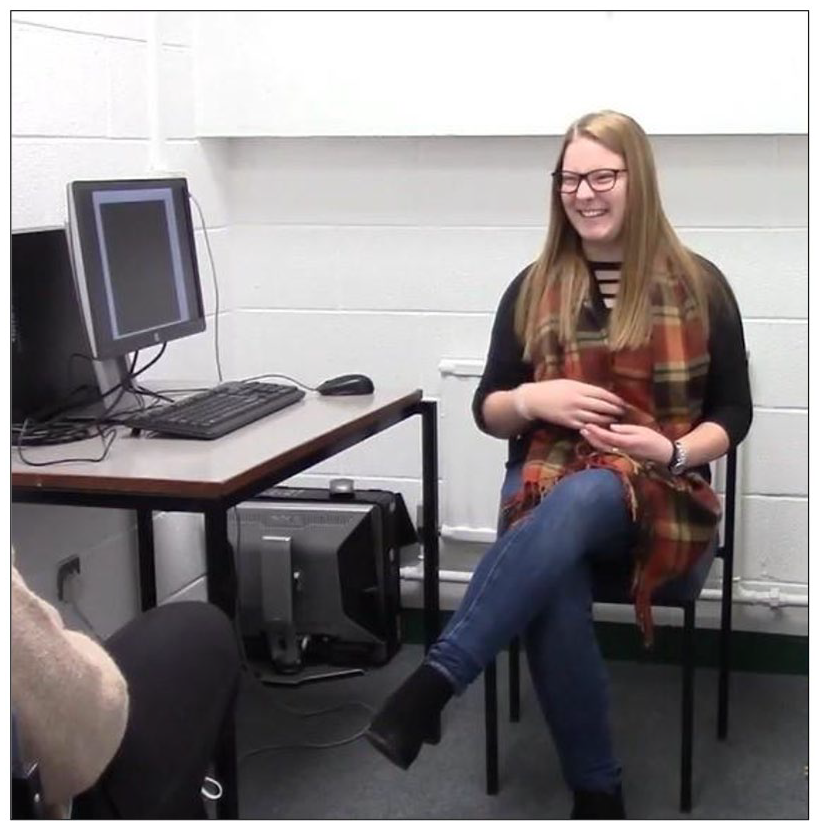
The experimental setup.
Digit span task
The digit span task, adapted from Chu et al. (2014), was employed to assess verbal working memory capacity. In this task, a series of non-repeating digits (e.g., 1, 7, 3, 5, 9) were presented at a rate of one digit per second. Subsequently, participants were required to recall the digits in the exact order of presentation. The task included two practice trials, one with a three-digit sequence and another with a four-digit sequence. Following the practice trials, there were 25 test trials that progressively increased in difficulty, ranging from five-digit to nine-digit sequences, with five trials at each difficulty level. If a participant failed to correctly recall all five trials at a particular level, the experimenter terminated the test. The performance was measured by the proportion of correct recalls, where a higher accuracy score indicated stronger verbal working memory ability.
Visual pattern task
The visual pattern task, adapted from Chu et al. (2014), was utilised to assess visuospatial working memory capacity. In this task, participants were presented with various visual patterns created using half-filled grids (see Figure 2 for an example). Each pattern was displayed for 3 s and was subsequently replaced by all white grids, with a letter in each grid cell. Participants were then required to recall the pattern by reading out the letters corresponding to the previously filled cells. The task included two practice trials, one with two filled cells and another with three filled cells. Following the practice trials, there were 25 test trials that gradually increased in difficulty, ranging from seven to 11 filled cells, with five trials at each difficulty level. If a participant failed to correctly recall all five trials at a particular level, the experimenter terminated the test. Performance on the task was measured by calculating the proportion of correctly recalled patterns, where a higher accuracy score indicated stronger visuospatial working memory ability.
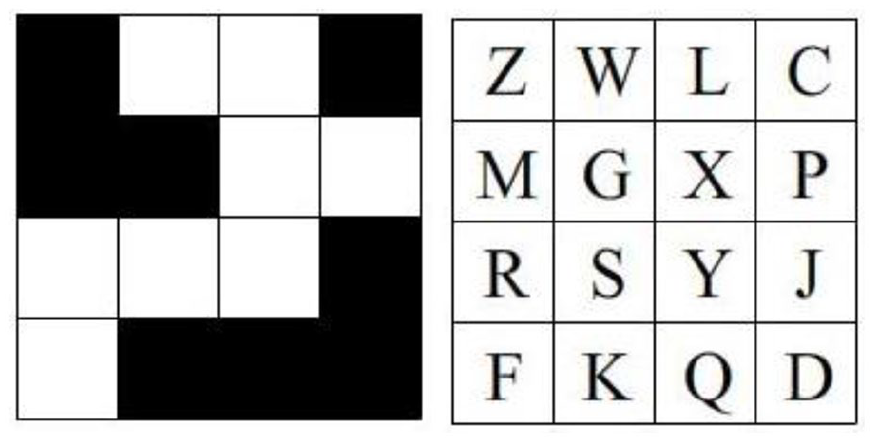
An example of the visual pattern task.
Mental rotation task
The mental rotation task, adapted from Chu et al. (2014), was employed to assess spatial transformation ability. In this task, participants were presented with three-dimensional abstract figures. The upper screen displayed two figures that were mirror images of each other in their canonical positions, while the lower screen displayed a rotated version (rotated by 60°, 120°, 240°, or 360° around the bisector of two axes) of one of the upper figures (see Figure 3 for an example). The task required participants to determine whether the lower figure was a rotated version of the upper left or upper right figure as quickly and accurately as possible by pressing the “z” and “m” keys on the keyboard. The task commenced with two practice trials, followed by 24 test trials that were presented in a completely random order. The performance was measured by the proportion of correct responses, where a higher accuracy score indicated stronger spatial transformation ability.
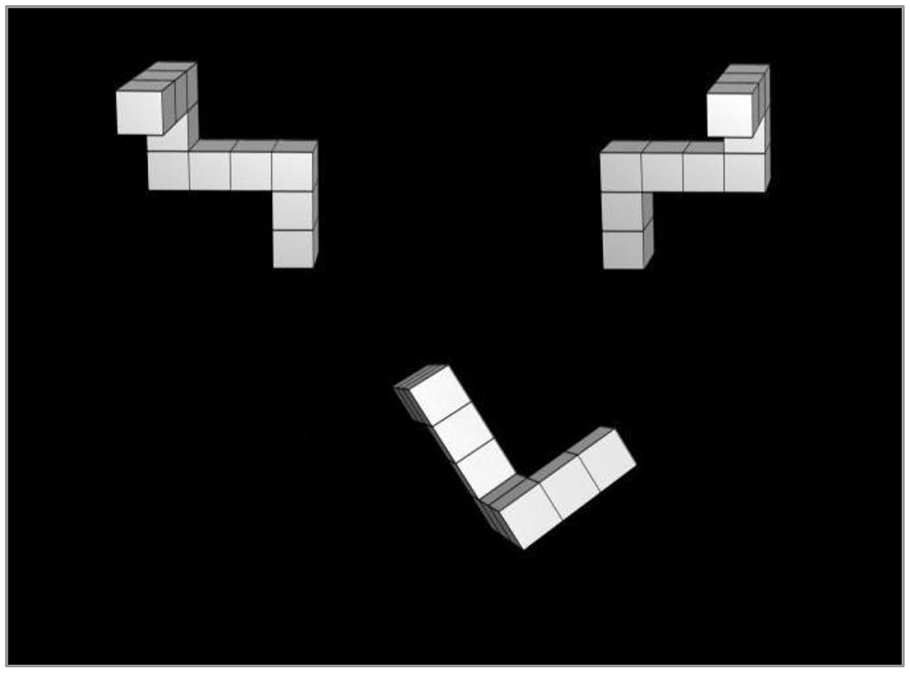
An example of the mental rotation task.
Flanker task
The flanker task, adapted from Eriksen and Eriksen (1974), was used to measure the inhibition control ability. In this task, participants were presented with three types of arrow sequences (congruent: “<<<<<” or “>>>>>,” incongruent: “<<><<” or “”>><>>” and neutral: “–>–” or “–<–”) and their task was to indicate the direction of the central arrow as quickly and accurately as possible by pressing the left and right arrow keys on the keyboard. Each trial started with a fixation cross for 250 ms, followed by a blank screen for 1,000 ms. After the blank screen, the stimulus remained on the screen until response. The response time limit was 1,500 ms. The interval between trials was 1,000 ms. There were 6 practice trials, followed by 72 test trials (24 trials in each type of arrow sequence) presented completely randomly. The performance was measured by subtracting the response time (RT) of incongruent trials from those of the congruent trials. Negative values of reaction time difference were used in the correlational and multiple regression analyses so that higher scores indicate better performance.
Empathy quotient
The Empathy Quotient (Baron-Cohen & Wheelwright, 2004) was used to measure empathy levels. The questionnaire consists of 40 empathy-related questions (e.g., “I can easily tell if someone else wants to enter a conversation.”) and 20 filler questions (e.g., “I dream most nights.”). Participants were instructed to rate their level of agreement with each statement using a 4-point Likert-type type scale (strongly agree, slightly agree, slightly disagree, strongly disagree). Each empathy item was awarded 2 points for showing strong empathy, 1 point for showing mild empathy, and 0 point for showing no empathy. The empathy level was measured by the total empathy score with a maximum of 80. Higher scores indicate higher empathy levels.
Big Five Inventory
The Big Five Inventory (John & Srivastava, 1999) is a 44-item self-reported questionnaire designed to evaluate various personality traits: extraversion (e.g., “is outgoing, sociable”), agreeableness (e.g., “likes to cooperate with others”), conscientiousness (e.g., “is a reliable worker”), neuroticism (e.g., “Is depressed, blue”), and openness (e.g., “Is original‚ comes up with new ideas”). Each trait is measured using 8 to 10 items. Participants are asked to rate the extent to which each statement describes themselves on a 5-point Likert-type scale (1 = strongly disagree, 2 = disagree slightly, 3 = neither agree nor disagree, 4 = agree slightly, 5 = strongly agree). The measurement of each personality trait was determined by calculating the average score of the corresponding items. A higher score reflects a greater strength of that particular personality trait.
Other tasks
Participants also completed a State-Trait Anxiety Inventory for Adults (STAI-AD). This task was designed to investigate individual differences in self-touch production.
General procedure
Participants were tested individually in a quiet room. The entire experiment took approximately 60 minutes. Participants first filled out the general consent form and the video-audio recording consent form. They then completed the two gesture elicitation tasks, followed by the digit span task, the visual pattern task, the mental rotation task, the flanker task, the Big Five Inventory, the State-Trait Anxiety Inventory for Adults, and the Empathy Quotient in a fixed order. Each task or questionnaire took approximately 5 to 10 minutes. Participants were debriefed and thanked at the end of the study.
Speech coding
Participants’ verbal responses in the gesture elicitation tasks were transcribed verbatim from the video recordings.
Gesture coding
The gesture coding was conducted using ELAN software (version 5.9), which enables frame-by-frame annotation for video recordings. The segmentation of gestures followed the procedure outlined in Kita et al. (1998). In the current study, we focused on the identification of representational gestures (Chu et al., 2014; Kita, 2000), which can be interpreted in the context of the accompanying speech as depicting actions, movements, objects, shapes and location, as well as abstract concepts and ideas. This classification comprises multiple subcategories, namely iconic, metaphoric and deictic gestures, as described in McNeill (1992). These sub-categories are sometimes differentiated in other gesture studies. Nevertheless, all these sub-categories were counted as representational gestures, as these gestures are used to either represent the semantic content or refer to an entity in speech by their hand shape, placement, and/or motion trajectory. In addition, nonhand body part movements that serve the same representational purpose, such as tilting the head to the side to indicate a person, a direction or a location, were also counted as representational gestures. The frequency of representational gestures was calculated as the number of gestures per 100 words (the number of gestures produced divided by the number of words spoken in each task and then multiplied by a 100).
Intercoder reliability check
A second trained coder independently identified representational gestures in both gesture elicitation tasks from a randomly selected group of 26 participants (22% of all participants). Agreement was counted when the two coders’ gesture segmentation fully or partly overlapped. The overall agreement between the two coders on representational gesture identification was 94.30%. The intraclass correlation coefficients (ICCs) from the two coders revealed high intercoder reliability (ICC = .996, p < .001).
Data trimming
To address the potential impact of extreme outliers on correlational and multiple regression analyses, all data points that fell outside 2.5 standard deviations from the mean were adjusted to be exactly 2.5 standard deviations from the mean. This approach has been used in previous studies, such as Miyake et al. (2000) and Chu et al. (2014), to prevent the influence of extreme values on the results while still retaining participants with extreme values. Only 1.27% of all observations were affected by this trimming procedure.
Results
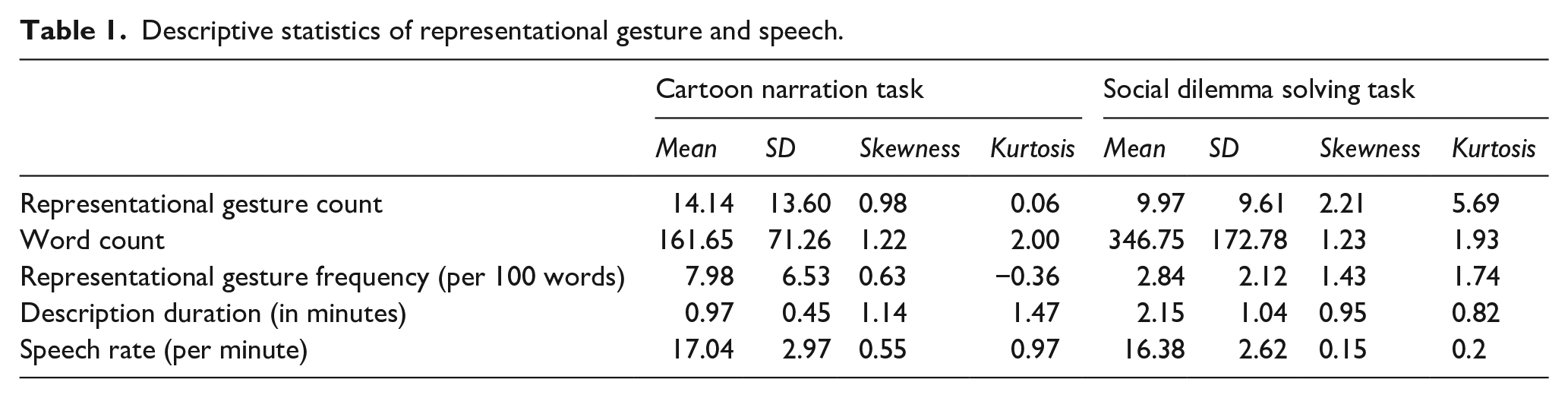
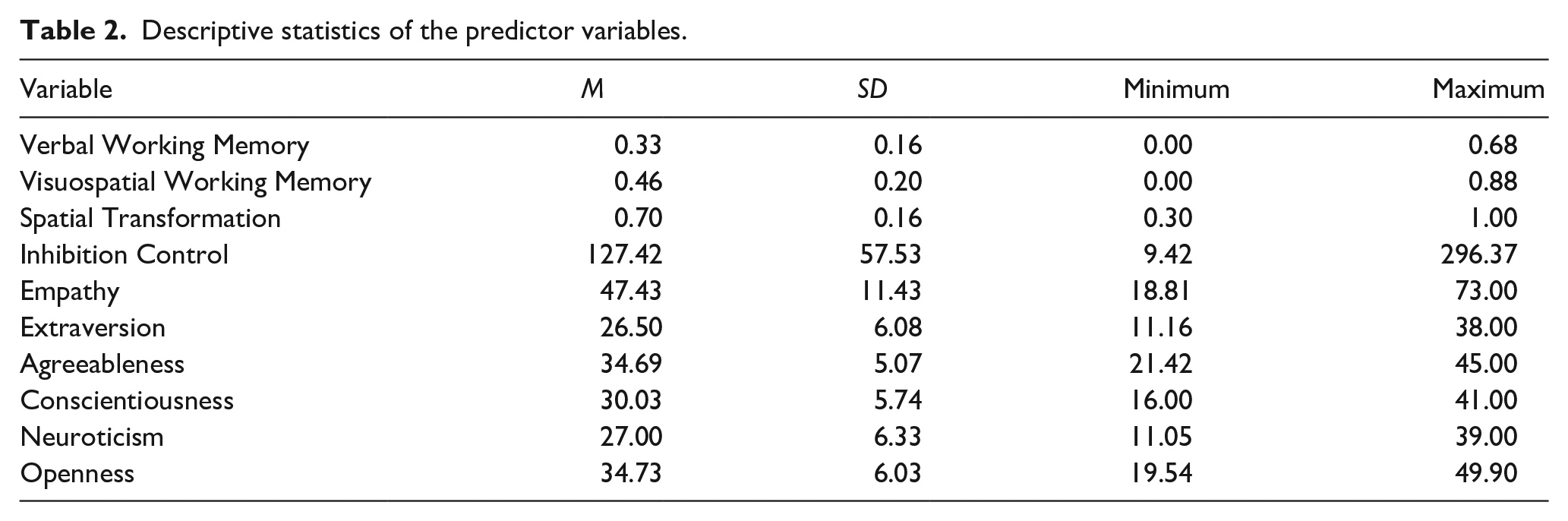
For the cartoon narration task, participants produced a total of 1,668 representational gestures; 86.44% of the participants produced at least one representational gesture, and 78.81% of the cartoon narrations contained at least one representational gesture. For the social dilemma solving task, participants produced a total of 1,176 representational gestures; 98.30% of the participants produced at least one representational gesture, and 84.75% of the social dilemma solutions contained at least one representational gesture. Descriptive statistics of representational gesture, speech, and the predictor variables are presented in Tables 1 and 2. Table 1 summarises the number of representational gestures, the number of words, representational gesture frequency (per 100 words), description duration (in minutes), and speech rate (per minute) with their corresponding standard deviations, skewness and Kurtosis values. Table 2 summarises the mean, standard deviation, minimum and maximum values for each predictor variable.
Descriptive statistics of representational gesture and speech.
Descriptive statistics of the predictor variables.
Pearson’s correlation analysis was conducted between all predictor variables and the dependent variables (see Table 3). First, the weak correlation (r = 0.25) between the frequencies of representational gestures in the two gesture elicitation tasks suggests that representational gestures might serve different functions in different types of gesture elicitation tasks (de Marchena & Eigsti, 2014). Second, the frequency of representational gestures in the cartoon narration task was significantly positively correlated with the empathy score but not with any other predictor variables (see Figure 4 for the scatter plot). This suggests that individuals with higher levels of empathy produced representational gestures more frequently in the cartoon narration task. Third, the frequency of representational gestures in the social dilemma solving task was significantly negatively correlated with the performance of the visual pattern task, the mental rotation task, and the flanker task (see Figure 5 for scatter plots; see supplementary material for all correlation coefficients). These results suggest that individuals with lower visuospatial working memory, spatial transformation and inhibition control abilities produced representational gestures more frequently in the social dilemma solving task.
Pearson’s correlation matrix showing predictor and outcome variables (N = 118).
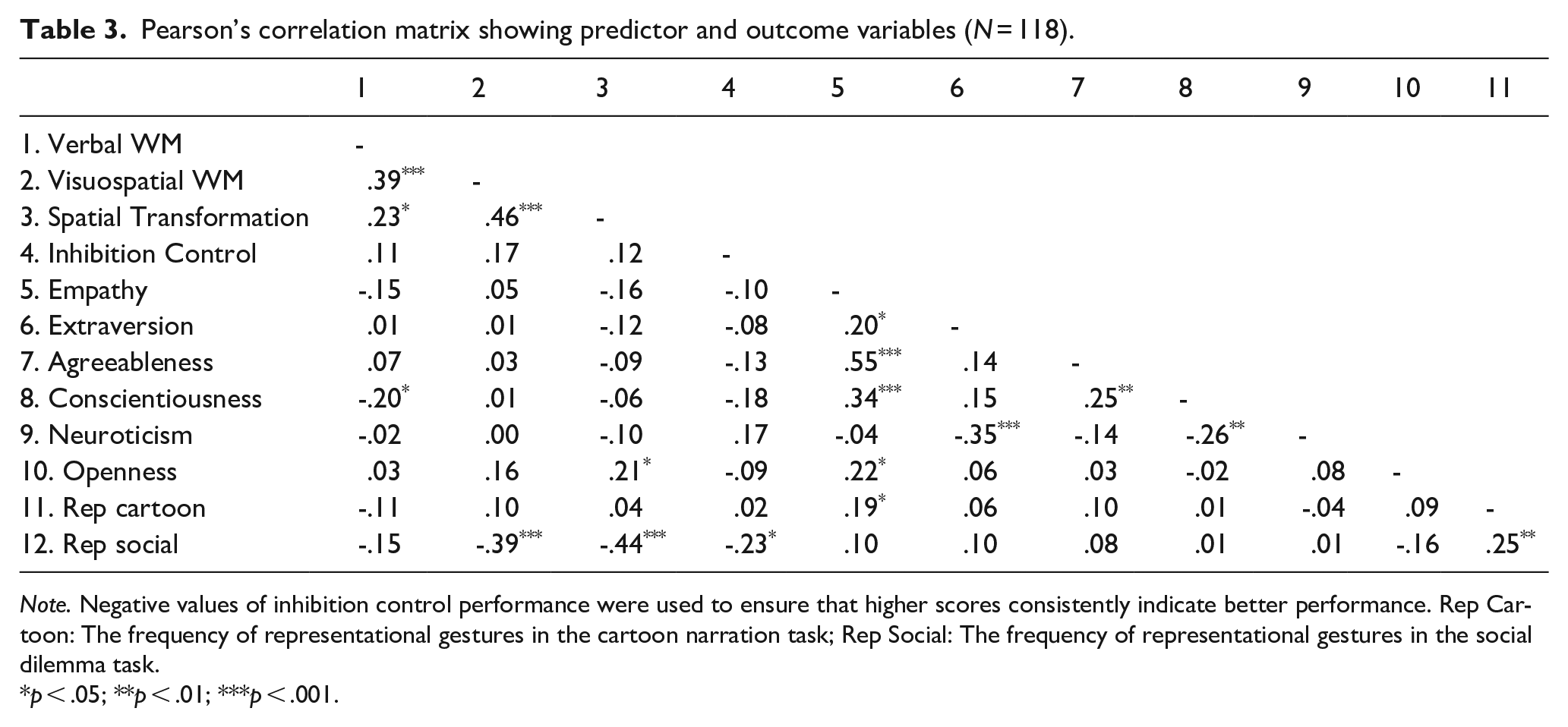
Note. Negative values of inhibition control performance were used to ensure that higher scores consistently indicate better performance. Rep Cartoon: The frequency of representational gestures in the cartoon narration task; Rep Social: The frequency of representational gestures in the social dilemma task.
p < .05; **p < .01; ***p < .001.
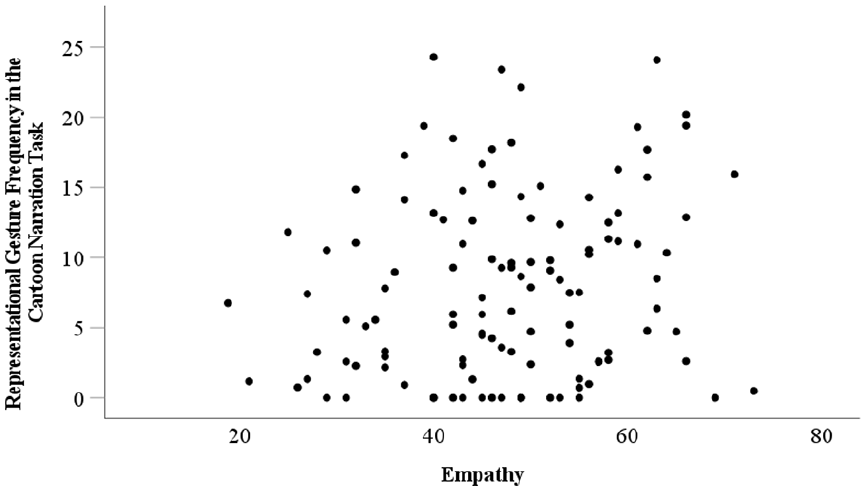
A scatterplot illustrating the correlation coefficient between empathy and the frequency of representational gestures during the cartoon narration task.

Scatterplots illustrating the correlation coefficient between visuospatial WM, spatial transformation performance, inhibition control performance and the frequency of representational gestures in the social dilemma solving task.
Considering the intercorrelation among predictor variables, multiple regression analyses were performed to evaluate each variable’s independent contribution to the frequency of representational gestures in both the cartoon narration and social dilemma solving tasks. All the predictor variables were standardised to ensure that that regression coefficients shared the same units, facilitating the comparison of each predictor’s relative importance. Prior to analysis, we verified the assumptions of multiple regression. The normality assumption of residuals was met, indicated by a unimodal and symmetric pattern in the residual histogram centred around zero, with no noticeable outliers. The homoscedasticity assumption of residuals was also met, as visual inspection of the standardised residual scatterplot indicated an equitable distribution both above and below zero along the horizontal axis, as well as to the left and right of zero along the vertical axis. All cases in the multiple regression analyses had a Cook’s distance below 1.00, suggesting the absence of influential outliers according to the criteria established by Cook and Weisberg (1982). In addition, the assumption of independence of errors was met, as none of the Durbin–Watson values falling below 1 or exceeding 3 (Field, 2009). Finally, there were no major concerns about multicollinearity, o correlation coefficients between predictors exceeded .6, and the variance inflation factor (VIF) values were well below 10 (range: 1.12–1.82; Field, 2009).
Multiple linear regression analyses using the forced entry method revealed that the model for the Cartoon Narration Task was not significant, R2 = .07, F (10, 107) = 0.83, p = .601, and none of the predictor variables was not a significant predictor of the frequency of representational gestures. For the Social Dilemma Solving task, the model was significant, R2 = .275, F (10, 107) = 4.068, p < .001. Table 4 displays the contributions of each predictor. The results revealed that individuals with lower visuospatial working memory, spatial transformation, and inhibition control abilities produced representational gestures more frequently in the social dilemma solving task.
Summary of multiple regression analysis in the cartoon narration and the social dilemma solving tasks.
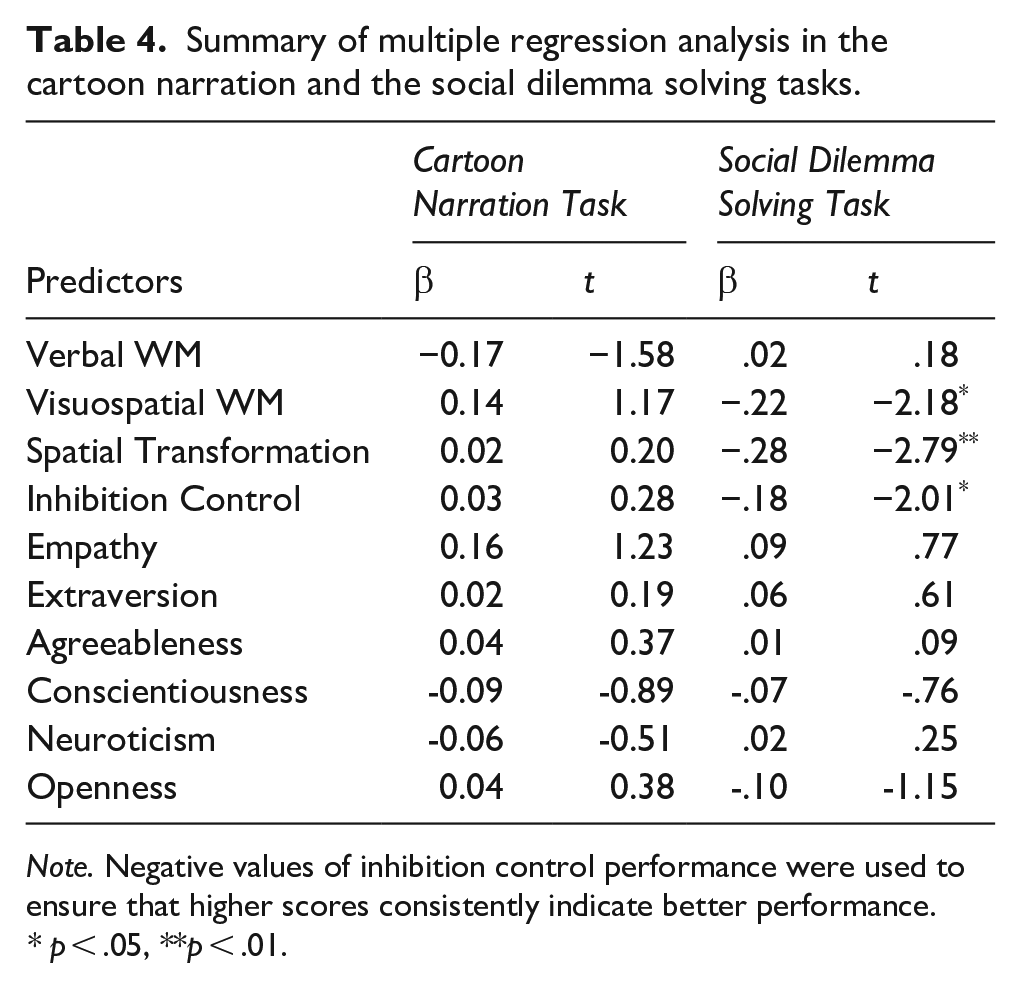
Note. Negative values of inhibition control performance were used to ensure that higher scores consistently indicate better performance.
* p < .05, **p < .01.
Discussion
The goal of this study was to examine the relationships between individuals’ cognitive abilities, empathy skill and personality traits and the frequency of representational gestures. The findings revealed that individuals with higher levels of empathy produced representational gestures more frequently in the cartoon narration task. In contrast, individuals with poorer visuospatial working memory, spatial transformation and inhibition control abilities produced representational gestures more frequently in the social dilemma solving task. These findings are discussed in greater depth below.
Cognitive abilities and gesture production
The findings revealed that none of the cognitive abilities were significantly correlated with the frequency of representational gestures in the cartoon narration task. This result might seem surprising, given the strong connection between representational gestures and the communication of spatial information (Trafton et al., 2009). Previous studies have shown that participants produced twice as many representational gestures when describing spatial topics compared with nonspatial topics (Lavergne & Kimura, 1987). Moreover, research has demonstrated that representational gestures are more effective in conveying spatial information compared with nonspatial information (Hostetter, 2011). However, it is important to acknowledge that, during spatial communication, representational gestures serve not only cognitive functions for speakers, such as reducing working memory load (Goldin-Meadow et al., 2001), enhancing spatial thinking (Hostetter et al., 2011) and facilitating attention focus on task-relevant information (Kita & Davies, 2009), but also serve communicative functions for the listeners by reinforcing the semantic content of accompanying speech (e.g., Dargue & Sweller, 2018) and adding additional information not presented in speech (e.g., Gunter & Weinbrenner, 2017; Holle & Gunter, 2007). Consequently, it’s plausible that individuals with lower cognitive abilities may employ representational gestures to ease their own speech production, whereas those with stronger cognitive abilities may use them to enhance listener comprehension.
In contrast to the findings from the cartoon narration task, we observed significant negative relationships between cognitive abilities and the frequency of representational gestures. This discrepancy might arise because representational gestures primarily serve cognitive functions rather than communicative functions when speakers discuss abstract topics. A meta-analysis revealed no benefit of representational gestures in comprehending abstract information (Hostetter, 2011). Therefore, individuals with poorer visuospatial working memory, spatial transformation, and inhibition control abilities might produce representational gestures more frequently in the social dilemma solving task to facilitate their cognitive processes during speech production. Furthermore, the observed difference regarding the relationships between cognitive abilities and the frequency of representational gestures in the cartoon narration task and the social dilemma solving task might be partly driven by the linguistic aspects of the speech production process in the two tasks. In the present study, participants’ speech rate was lower in the social dilemma solving task than in the cartoon narration task. This suggested that the linguistic complexity of the speech in social dilemma solving task might be higher, indicating a potentially greater cognitive demand compared with the cartoon narration task. Therefore, the significant relationships between the cognitive abilities and the frequency of representational gestures frequency were only found in the social dilemma solving task and not in the cartoon narration task. Future studies should investigate how linguistic complexities, such as word frequency, syntactic complexity, and information density, of the gesture elicitation tasks could affect the relationships between individuals’ cognitive abilities and their representational gesture frequency.
Our results replicated the findings of Chu et al. (2014) that individuals with lower visuospatial working memory and spatial transformation abilities produce representational gestures more frequently when discussing abstract topics. These findings align with the hypotheses that representational gestures support speech production by maintaining spatial images in working memory (de Ruiter, 2000; Wesp et al., 2001) and transforming spatiomotoric information for verbal encoding (Kita et al., 2017). Furthermore, a significant negative correlation between inhibition control ability and the frequency of representational gestures was observed. This aligns with the notion that gestures help speakers focus on information that is relevant to the task at hand and suppress task-irrelevant information during speech production (Kita, 2000; Kita et al., 2017).
It is worth noting that the present study found either no significant relationship or a significant negative relationship between spatial transformation ability and the frequency of representational gestures, while other studies identified a positive relationship between spatial skills and representational gesture frequency (Arslan & Göksun, 2022; Hostetter & Alibali, 2007). Arslan and Göksun (2022) found that individuals with higher mental imagery skills, defined as the ability to generate, maintain, and manipulate mental images, produced representational gestures more frequently in a route description task. However, they found no significant relationship between mental imagery skills and representational gesture frequency in tasks involving daily routine descriptions or story completions. The authors argued that the route description task required more motor plan activations than the other tasks, and representational gestures were particularly effective in illustrating motor actions that might be challenging to express verbally. Consequently, a significant positive relationship between mental imagery skills and representational gesture frequency was only observed in the route description task, not in the daily routine description or story completion tasks. Moreover, Hostetter and Alibali (2007) also revealed a significant positive relationship between individuals’ spatial transformation skills and their representational gesture frequency averaged across a cartoon narration and a package description task (e.g., explaining how to wrap a box with a piece of paper). Notably, the frequency of representational gestures in the package description task was approximately three times higher than in the cartoon narration task. Thus, the positive correlation between spatial transformation and representational gesture frequency may arise from participants with stronger spatial transformation skills generating more representational gestures in the package description task to visually demonstrate physical actions to listeners. According to Hostetter (2011)’s meta-analysis on the communicative function of gestures, representational gestures have the most significant communication benefits in motor topics, compared with spatial or abstract topics. Unfortunately, Hostetter and Alibali (2007) collapsed the representational gestures across the two gesture elicitation tasks and did not analyse them separately. Future studies should further investigate the how different types of gesture elicitation tasks influence individual differences in gesture production.
It is also noteworthy that the present study, consistent with Chu et al. (2014), found no correlation between verbal working memory and representational gesture frequency, even within the context of the social dilemma solving task. The discrepancy with studies revealing a significant negative correlation between verbal working memory ability and representational gesture frequency (Gillespie et al., 2014) could be attributed to different measures of verbal working memory employed in these studies. In this study, as well as in Chu et al. (2014), verbal working memory was assessed using a digit span task, where participants recalled a sequence of digits in the same order as presented. Conversely, Gillespie et al. (2014) employed the listening span and subtract two span tasks to measure verbal working memory. In the listening span task, participants assessed the validity of multiple sentences while also memorising and subsequently recalling digits presented amid the sentences. The subtract two span task involved participants repeating a randomly generated sequence of digits after subtracting 2 from each number. Both tasks involved not only maintaining verbal information but also inhibiting distractors such as sentence verification or mental arithmetic. Therefore, the negative correlation between verbal working memory and representational gesture frequency might stem from the inhibition component rather than the verbal information maintenance aspect of the tasks. Indeed, the present study observed a significant negative correlation between inhibition control ability and representational gesture frequency. Further research could experimentally manipulate the verbal information maintenance load and inhibition control load independently to assess their impact on the relationship between verbal working memory and gesture frequency.
Empathy and gesture production
Similar to Chu et al. (2014), we found no significant relationship between empathy and representational gesture frequency in abstract topics. In contrast, when talking about spatial topics, individuals’ empathy levels were positively correlated with the frequency of representational gestures. This suggests that in situations where representational gestures serve a communicative purpose, individuals with higher empathy levels tend to generate more representational gestures to enhance the quality of communication with their listeners. However, the empathy level was not a significant predictor of representational gesture frequency in the cartoon narration task in the regression analysis. This might be because empathy levels were significantly correlated with four out of five personality traits. When empathy and personality scores were entered simultaneously in the regression analysis, the contribution of the empathy score to representational gesture frequency might be weakened due to shared variance between the empathy and personality variables.
This finding is consistent with studies showing that individuals with autism spectrum disorder (ASD) produce fewer gestures compared with their typically developing (TD) peers (e.g., de Marchena & Eigsti, 2014; de Marchena et al., 2019; So et al., 2015). However, it contradicts findings suggesting comparable gesture production frequencies between ASD and TD groups (e.g., de Marchena & Eigsti, 2010; Silverman et al., 2017). This divergence in results may stem from the varying communicative values of representational gestures across different gesture elicitation tasks in various studies. For instance, in the current study, the correlation between representational gesture frequency and empathy was positive solely in the context of the cartoon narration task, but not in the social dilemma solving task. This discrepancy could be attributed to the fact that representational gestures fulfil a more communicative role in spatiomotoric topics compared with abstract topics (Hostetter, 2011). Similarly, in de Marchena and Eigsti (2014), individuals with ASD exhibited a lower frequency of representational gestures than TD peers, but this was evident only when the listener was trained to be attentive and engaged. In contrast, both groups showed comparable gesture rates in de Marchena and Eigsti (2010), where the listener remained neutral. Therefore, higher levels of empathy might lead to increased production of representational gestures specifically when they are produced for communicative purposes. To further investigate this aspect, future studies could experimentally manipulate the communicative value of gestures. For instance, participants could be instructed to speak to an audio recorder alone in a room or engage with an attentive listener, allowing researchers to examine the influence of the communicative context on the relationship between empathy and representational gesture production.
Personality and gesture production
The present study found no significant relationship between personality traits and the frequency of representational gestures in either the cartoon narration task or the social dilemma solving task. Our findings align with prior studies that have also reported no significant associations between personality traits and representational gesture frequency (Borkenau & Liebler, 1992; Campbell & Rushton, 1978; Nagpal et al., 2011; O’Carroll et al., 2015). However, our results deviate from studies indicating significant positive connections between representational gesture frequency and extraversion, neuroticism (Hostetter & Potthoff, 2012), as well as openness (Berry & Hansen, 2000). Although this study does not provide a definitive explanation for the inconsistencies in findings regarding the link between personality traits and representational gesture production, it is worth noting that the empathy score in our study exhibited a significant positive correlation with four out of the five personality dimensions, including extraversion, agreeableness, conscientiousness, and openness. Hence, the previously observed positive correlations between extraversion and agreeableness with representational gesture frequency might potentially be explained by the positive relationship between empathy and representational gesture frequency in our study.
Implications for gesture production theories
While this study is correlational in nature, it offers indirect support for various theories concerning the functions of representational gestures. The negative relationships observed between visuospatial working memory and representational gesture frequency align with the Image Activation Hypothesis (de Ruiter, 2000; Hadar & Butterworth, 1997). This hypothesis suggests that representational gestures aid in maintaining visuospatial imagery in working memory during speech production. Similarly, the negative relationships identified between representational gesture frequency and spatial transformation and inhibition control skills align with the Information Packaging Hypothesis (Kita, 2000) and the Gesture-for-Conceptualisation Hypothesis (Kita et al., 2017). Both hypotheses propose that representational gestures assist speakers in focusing their attention on relevant visuospatial events, scenes, or objects while simultaneously suppressing irrelevant information. The positive relationship discovered between empathy levels and representational gesture frequency supports the Gesture-for-Communication Hypothesis (e.g., Bavelas et al., 2002; Clark, 1996; Holler & Beattie, 2003; Kendon, 2004). This hypothesis posits that speakers produce representational gestures to enhance the comprehension of spoken messages.
The observed differences in relationships between representational gesture frequency and predictor variables in the two gesture elicitation tasks suggest that the function of representational gestures may be influenced by the nature of the communication task. Representational gestures might serve a stronger communicative function in spatiomotoric topics than in abstract topics, as evidenced by the positive correlation between participants’ empathy levels and representational gesture frequency observed only in the cartoon narration task. Moreover, representational gestures might be primarily produced to facilitate cognitive processes when speakers discuss abstract topics, leading to negative correlations between cognitive predictor variables and representational gesture frequency observed only in the social dilemma solving task. To explore whether representational gestures serve cognitive and communicative functions to varying degrees in different conversation topics, future studies should independently manipulate cognitive load and communicative context in spatiomotoric and abstract topics and observe their effects on representational gesture production.
Limitations and future research
There are limitations of this study that should be acknowledged. First, all predictor variables were examined separately in the present study, without considering potential interactions that might influence representational gesture production. For instance, when recalling cartoon stories from memory, participants with lower verbal working memory but higher visuospatial working memory might employ more representational gestures to enhance listener comprehension. Conversely, those with higher verbal working memory but lower visuospatial working memory might rely more on verbal descriptions. Moreover, individuals with low empathy levels but high spatial skills might produce fewer representational gestures in the cartoon narration task, as they may neither require gestures for their own speech production nor have the motivation to use them for listener comprehension. However, the sample size of our study may not provide sufficient statistical power to examine a large number of interaction effects among predictor variables. Future studies should further investigate how combinations of specific cognitive and social skills affect the production of representational gestures.
Second, our study recruited more female participants (n = 86) than male participants (n = 32). Previous research has shown that females tend to be more expressive and produce a greater number of gestures than males (Briton & Hall, 1995; Hostetter & Hopkins, 2002). In our study, females gestured at a significantly higher rate than males in the cartoon narration task but not in the social dilemma solving task. In addition, females showed significantly higher levels of empathy, agreeableness, conscientiousness, and neuroticism than males. No significant gender differences were found in the cognitive predictor variables (see supplementary materials for statistical details). Nonetheless, it is important to note that we replicated the findings of Chu et al. (2014), which had a more balanced distribution of female (n = 71) and male (n = 51) participants. Future studies should investigate how gender modulates the associations between gesture frequency and individuals’ cognitive skills, personality and empathy levels with a larger and more gender-balanced sample.
Third, participants in our study described stimuli to a stranger within a laboratory setting. This approach was chosen to replicate previous research on individual differences in gesture production, as many studies employed similar setups (e.g., Berry & Hansen, 2000; Chu et al., 2014; Gillespie et al., 2014; Hostetter & Alibali, 2007; Hostetter & Potthoff, 2012; Smithson & Nicoladis, 2013). However, this raises questions about the Generalisability of the findings to real-life interactions, which typically involve dynamic conversations between acquaintances. Consequently, future studies should investigate individual differences within more naturalistic contexts.
Finally, future studies should include a wider range of gesture elicitation tasks. Our study demonstrated that representational gesture frequency correlated with distinct predictor variables in the cartoon narration task and the social dilemma solving task. This underscores the influence of the communicative value of representational gestures within a task on the correlation between individuals’ cognitive abilities, empathy skills, and their gesture production. In both the cartoon narration and social dilemma tasks, participants could theoretically describe stimuli without resorting to representational gestures. Conversely, in tasks involving motor actions (e.g., wrapping a box), graph assembly, and spatial routes, representational gestures might hold a stronger communicative role. Consequently, future studies should explore how different gesture elicitation tasks impact individual differences in gesture production, providing insights into whether the nature of the task modifies the relationship between cognitive abilities, empathy, and gesture production.
Conclusion
This study investigated the relationship between individuals’ cognitive abilities, empathy skill, personality traits and the frequency of representational gestures produced in a cartoon narration task and a social dilemma solving task. The findings revealed that higher empathy levels were linked to increased representational gesture frequency in the cartoon narration task, while in the social dilemma solving task, lower visuospatial working memory, spatial transformation, and inhibition control abilities correlated with higher representational gesture frequency. This suggests that the factors influencing representational gesture frequency may vary depending on the nature of the gesture elicitation tasks. These findings imply that representational gestures may serve cognitive and communicative functions to different degrees in spatiomotoric and abstract topics. Furthermore, to our knowledge, our study is the first to reveal a significant negative relationship between individuals’ inhibition control ability and their representational gesture frequency, suggesting that representational gestures play a role in suppressing irrelevant information during speech production. In summary, our study employs a comprehensive correlational approach that simultaneously considers multiple predictor variables and different types of communication tasks, advancing our understanding of individual variations in gesture production. Future studies should continue to investigate the relationship between speaker traits and gesture production across a broader spectrum of topics within more naturalistic settings.
Supplemental Material
sj-docx-1-qjp-10.1177_17470218241245831 – Supplemental material for Individual differences in representational gesture production are associated with cognitive and empathy skills
Supplemental material, sj-docx-1-qjp-10.1177_17470218241245831 for Individual differences in representational gesture production are associated with cognitive and empathy skills by Feride Canarslan and Mingyuan Chu in Quarterly Journal of Experimental Psychology
Footnotes
Acknowledgements
We thank Mora Grey, Natalie-Anne Anderson, Lucy Gynn-Poisson, Antonia Kaye, Heather Neave, and Madeleine Piller for their help with data collection, and Hio Tong Pang for her help with the reliability check of gesture coding.
Declaration of conflicting interests
The author(s) declared no potential conflicts of interest with respect to the research, authorship, and/or publication of this article.
Funding
The author(s) disclosed receipt of the following financial support for the research, authorship, and/or publication of this article: This work was partly supported by the Study Abroad Programme Scholarship from the Republic of Turkey, Ministry of National Education to the first author.

Supplementary material
The Supplementary Material is available at: qjep.sagepub.com
References
Supplementary Material
Please find the following supplemental material available below.
For Open Access articles published under a Creative Commons License, all supplemental material carries the same license as the article it is associated with.
For non-Open Access articles published, all supplemental material carries a non-exclusive license, and permission requests for re-use of supplemental material or any part of supplemental material shall be sent directly to the copyright owner as specified in the copyright notice associated with the article.
