




Abstract
The paper reports two studies exploring the relationship between scholars’ self-reported publication pressure and their self-reported scientific misconduct in research. In Study 1 the participants (N = 423) were scholars representing various disciplines from one big university in Poland. In Study 2 the participants (N = 31) were exclusively members of the management, such as dean, director, etc. from the same university. In Study 1 the most common reported form of scientific misconduct was honorary authorship. The majority of researchers (71%) reported that they had not violated ethical standards in the past; 3% admitted to scientific misconduct; 51% reported being were aware of colleagues’ scientific misconduct. A small positive correlation between perceived publication pressure and intention to engage in scientific misconduct in the future was found. In Study 2 more than half of the management (52%) reported being aware of researchers’ dishonest practices, the most frequent one of these being honorary authorship. As many as 71% of the participants report observing publication pressure in their subordinates. The primary conclusions are: (1) most scholars are convinced of their morality and predict that they will behave morally in the future; (2) scientific misconduct, particularly minor offenses such as honorary authorship, is frequently observed both by researchers (particularly in their colleagues) and by their managers; (3) researchers experiencing publication pressure report a willingness to engage in scientific misconduct in the future.
Keywords
“Publish or perish” is a saying that has been known in the academic world for years (Garfield, 1996). As studies show, its application in research has specific consequences (Van Dalen and Henkens, 2012) and translates into a publication culture that is not being perceived in a particularly positive light by researchers (Tijdink et al., 2016). Nowadays, however, the social expectations are for researchers to demonstrate not only high publication efficiency but also uncompromising honesty (Veldkamp et al., 2017). The result has been a transition from the “publish or perish” era to that of “publish and be ethical”, in which a researcher may face the “publish or be ethical” dilemma.
The problem of misconduct in research is not a new phenomenon (Zuckerman, 1977, 1984), but it is only recently that the academic community has responded to it in an organized way, for example, designing courses for researchers accused of research misbehavior (DuBois et al., 2016). Although researchers’ dishonest practices are described and widely discussed (for examples see: Jump, 2011; Marcus, 2010; Sang-Hun, 2009; Stapel, 2012), relatively few studies have attempted to answer the question of whether these are an exception in academia or whether they represent a more widespread trend (DuBois et al., 2013a, 2013b). Aside from generalized analyses of academic cheating and discussions about the possible ways of preventing scientific misconduct in research (cf. Grimes et al., 2018; Lee and Gino, 2016; Mazar and Ariely, 2015; Zhang et al., 2015), studies are needed that address the frequency of researcher fraud and the identification of factors responsible for engagement in dishonest practices, such as publication pressure.
To our knowledge, we are the first to undertake an analysis of the relationship between perceived publication pressure and scientific misconduct. Broadening our understanding of unethical activities among researchers generally as well as its cultural context is important since previous studies of scientific misconduct have been conducted mainly in the United States which invariably limits understanding of this phenomenon given cross-cultural variations in publication pressure (Van Dalen and Henkens, 2012) and the perception of ethical standards in research (Antes et al., 2018).
Therefore, the study from beyond the Anglosphere, with researchers from the country with average publication pressure (Van Dalen and Henkens, 2012), may contribute to better understanding of the “publish or be ethical” challenges that researchers are facing.
Publication pressure and misconduct in research
We understand publication pressure, or pressure to collect points (Haven et al., 2019a, 2019b), or “pointing pressure” in Poland, as:
Subjectively perceived psychological tension that is related to the requirement for a particular number of publications in a specified timeframe, which attests to one’s academic development, and is a condition of maintaining one’s position or even retaining one’s job.
In the literature, this pressure has been referred to as “point-mania”, “impactophrenia”, or “pointosis” (Kulczycki, 2017) whereby greater value is attached to the number of publications or points (either publications or points are collected, depending on the country) than to the quality of research work (Brandt, 2011; Tijdink et al., 2016). We refer to this phenomenon as “publication pressure” because it is most often used in the literature. However, in our survey, we used the term “pointing pressure” as it is commonly used by researchers in Poland. In the Polish academic context, publications “give” points, the amount being determined by the Polish Ministry of Science and Higher Education.
Existing analyses of publication pressure indicate that this phenomenon is one of the possible causes of dishonest practices (Gandevia, 2018; Koklu, 2003; Sarewitz, 2016). Some psychologists consider publication pressure to be a form of psychological stress which can lead to diminished ethical decision making (Mumford et al., 2001) and risky behavior (Pabst et al., 2013; Vinkers et al., 2013) such as scientific misconduct (Davis et al., 2007).
There is a range of possible unethical behaviors in research and issues. Fabrication, falsification, and plagiarism are often referred to collectively as “misconduct in research” or “scientific misconduct”. They sometimes take the form of “minor offenses”, “questionable research practices” or “sloppy science” (Martinson et al., 2005; Steneck, 2006), exemplified by selective reporting, intentional deletion of data, selective citing, salami slicing, guest authorships, and flaws in quality assurance and mentoring (Bouter et al., 2016). In the present article, we refer to both types of phenomena as “scientific misconduct”. Research suggests that sloppy science practices are more frequent among researchers than cases of serious scientific misconduct (e.g. Kalichman and Friedman, 1992; Martinson et al., 2006) and involve researchers from across disciplines (Couzin-Frankel, 2013; Fanelli, 2013; Wicherts, 2011).
Although associations between publication pressure and scientific misconduct have not been investigated extensively, their existence is suggested by related studies. For instance, DuBois et al. (2013a) found that 33% of cases of unethical activities were associated with feeling pressure from the need to publish quickly or to obtain a grant. In a study by Tijdink et al. (2014), 72% biomedical scientists rated publication pressure as “too high”, and 61% reported that they agreed with the following statement: “Publication pressure leads to serious worldwide doubts about the validity of research results”. Strong publication pressure across academic ranks and disciplinary fields has been associated with a negative attitude toward the current publication climate (Haven et al., 2019a, 2019b), researcher burn-out, and cynicism in published research (Tijdink et al., 2013) and has negatively affected the quality of research and the researchers themselves (Rawat and Meena, 2014; van Wesel, 2016). However, other research (Fanelli et al., 2015, 2017) suggest a lack of clear association between pressure to publish and scientific integrity, which indicates the need for further studies in this area.
Investigation of the association between publication pressure and researchers’ dishonesty constitutes a challenge for two reasons. Firstly, researchers are reluctant to take part in studies devoted to these issues; when answering the questions asked in such studies, they tend to present themselves in a better light, and they rarely report the misconduct of others (Malek, 2010; Tijdink et al., 2014; Wenger et al., 1999). Secondly, it is likely that the perception of publication pressure and cheating will be different for researchers and for university managers (cf. Dubois et al., 2015; Lammers et al., 2015). This is of key importance for the development of programs to prevent these phenomena. A sense of power can affect the perception of social situations and behaviors, including unethical ones (Fleischmann et al., 2017). Therefore, to better understand the possible relationship between publication pressure and scientific misconduct, we also investigated the influence of being in a position of power.
Overview of the studies
The aim of our research was to examine the relationship between researchers’ self-reported publication pressure and their self-reported scientific misconduct in research, both from the perspective of researchers (Study 1) and from the perspective of management (Study 2). In the first of our studies, the participants were researchers from one of Poland’s largest universities representing various disciplines (exact sciences, social sciences, and humanities) at different stages of their academic careers. In the second study, the participants were exclusively from management, individuals holding senior administrative positions at the same university, such as dean, deputy vice-chancellor, director, etc. We were interested in analyzing both the frequency of scientific misconduct in Poland and the possible association between misconduct and publication pressure, as well as comparing researcher and university manager perceptions of these issues.
Both studies were conducted via an online survey. Each scholar and manager received an invitation to take part in the research. Invitations to scholars were sent via the central university mail and invitations to managers were sent by the first author. The participants were informed about the purpose of the research, its anonymity, the possibility of stopping at any time during the survey, and the possibility of not answering all of the questions. The study was approved by the Ethics Committee of the University of Silesia in Katowice (number KEUS 24.04). Descriptive statistics, frequencies, and correlations were calculated using IBM SPSS Statistics 25.0. All data are available at OSF: https://osf.io/9jwqd/
Study 1
The aim of the study was to examine researchers’ perspectives regarding the relationship between publication pressure and scientific misconduct. We were interested in what unethical behaviors researchers engaged in and how often; how they rated their intention to engage in them in the future, particularly if unethical conduct would allow them to retain their current position; whether they experienced pressure to collect points (including pressure to publish); and what they thought about the current system of evaluation in research.
We predicted that researchers would notice more unethical behavior in their colleagues than in themselves (Hypothesis 1) because of the tendency for people to see themselves in a more optimistic light and others in a more realistic light (Héroux, et al., 2017; Monin, 2007). We also expected that the stronger the pressure to publish, the stronger the intention to engage in scientific misconduct in the future would be (Hypothesis 2a) and the higher the frequency of engaging in it in the past would be (Hypothesis 2b), as suggested by preliminary reports on the possible relationship between pressure and immorality (DuBois et al., 2013a, 2013b). We also wanted to check whether the level of satisfaction with the current rules of research output evaluation could be associated with unethical behavior. We predicted that the lower the satisfaction, the stronger the intention to engage in unethical conduct in the future would be (Hypothesis 3a), and the higher the frequency of engaging in it in the past would be (Hypothesis 3b). We were also interested in whether researchers observed publication pressure in their colleagues; we assumed there would be a positive relationship between the pressure to publish experienced by researchers and the scientific misconduct they observed in others (Hypothesis 4).
Method
Participants
The online survey was completed by 423 respondents (the survey response rate was 21%); 25.5% of them represented humanities (n = 108), 40.4% represented exact sciences (n = 171), and 30.3% represented social sciences (n = 128); there were 16 cases of missing data. Of all participants, 58% (n = 247) had a doctoral degree, 18% (n = 75) had a DSc degree (Pol. doktor habilitowany) or a postdoc position, 15% (n = 64) had an MA or BEng, MSc degree (Pol. magister inżynier), 7% (n = 31) had the title of professor, and 1% (n = 2) reported having a different academic degree; data was missing in 4 cases.
Measures
The survey collected demographic data and included 13 questions related to publication pressure and publication ethics (eight closed-ended and five semi-open shown in Table 1). It was administered in Polish. All questions (apart from 9, 11, 13) were formulated by the first author based on the review of the literature and questions used in similar previous studies (see review: Fanelli, 2009). However, the questions were adapted to the Polish situation, where more common words are “points” and “pointing pressure” than “publication pressure” (Kulczycki, 2017). The possible variants of answers to the semi-open questions (9, 11, and 13) were selected during a pilot study conducted with 10 researchers. The semi-open questions were presented in an open-ended form allowing for written answers, which were then categorized. The answer variants included all the distinguished categories, plus the possibility of providing one’s own answer (category other).
Questions related to publication pressure and ethics asked in Study 1.
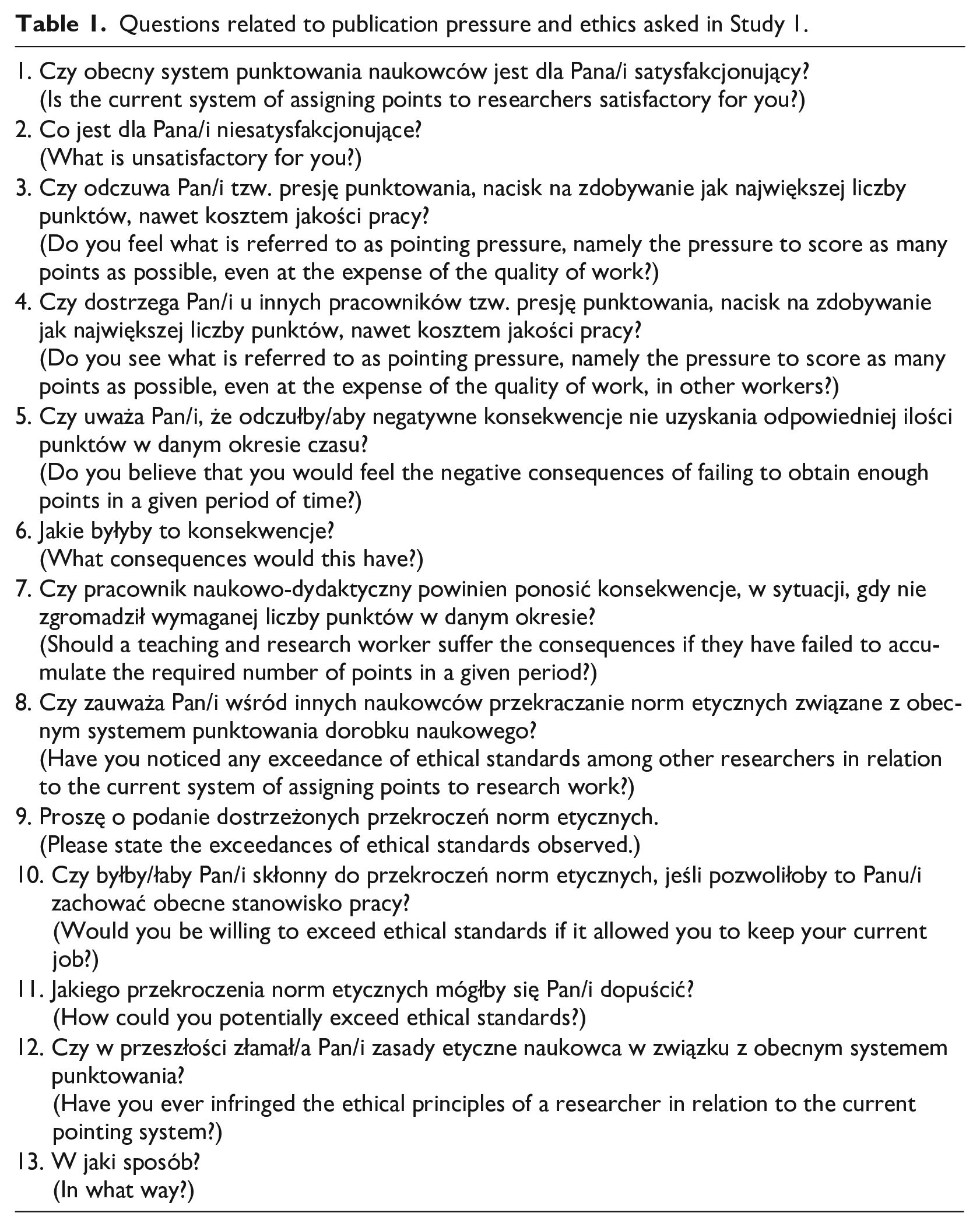
The respondents answered closed-ended questions (1, 3, 4, 5, 7, 8, 10, and 12) using a scale from 1 (definitely yes) to 5 (definitely not). For the semi-open questions (2, 6, 9, 11, and 13), the participants could choose from the set of answers presented to them and write their own answer in the other category. They began by answering general questions concerning the field of research (not shown in Table 1) and then they proceeded to answer questions concerning ethical issues and their own activities.
Results
Analyses were performed for all respondents; missing data did not exceed 2% for any of the questions. Answers included in the other responses were analyzed qualitatively using in vivo coding. Descriptive statistics and the frequencies of responses to the closed-ended questions are presented in Table 2.
Descriptive statistics and the frequency of responses to the closed-ended questions.
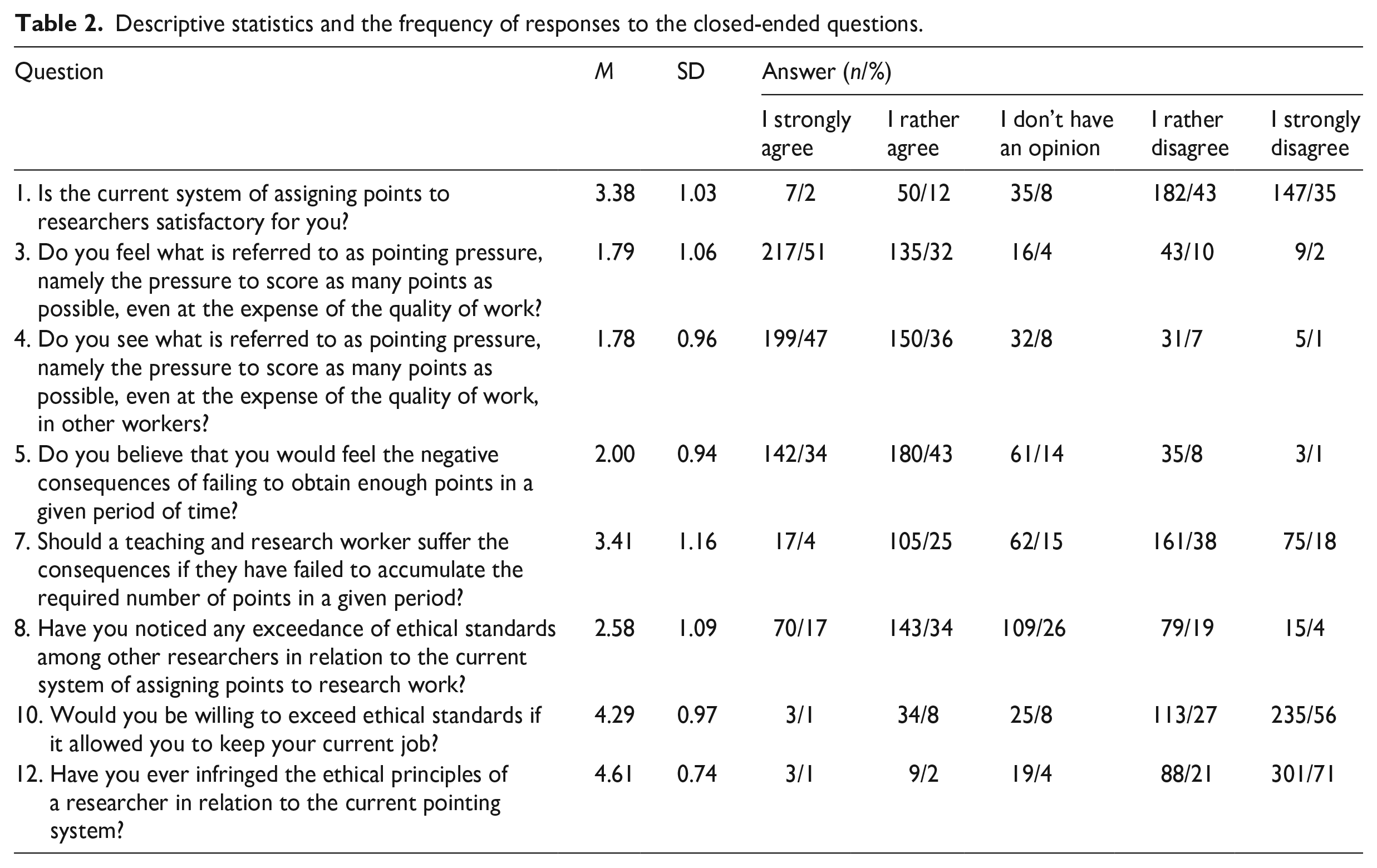
Responses to the semi-open questions are presented in the figures below. Figure 1 presents the types of scientific misconduct that respondents state they have committed. Answers given in the other category included self-plagiarism, expanding the paper to the size of one publisher’s sheet (40,000 characters, a Polish unit of text length) to qualify for points, and writing the paper in such a way as to win the favor of potential reviewers.
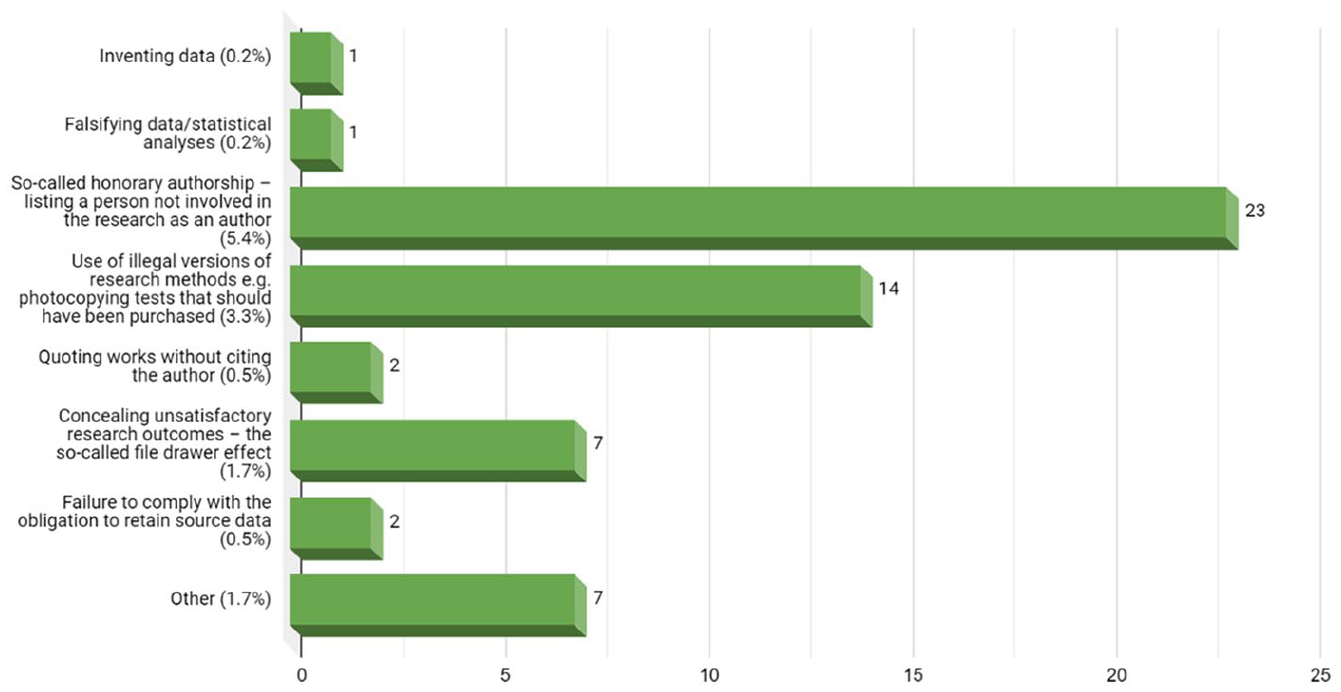
Ways in which respondents have infringed ethical principles (Question 13).
The violations of ethical norms observed in colleagues are presented in Figure 2. In the other category, the respondents mentioned practices such as self-plagiarism, publishing papers without acknowledging the co-authors, salami slicing, nepotism, dishonest reviewing practices, conducting research according to lower quality standards in order to gain points faster, overstating the number of characters in academic texts, using unlicensed software, or reluctance to share information that could be useful for other researchers.
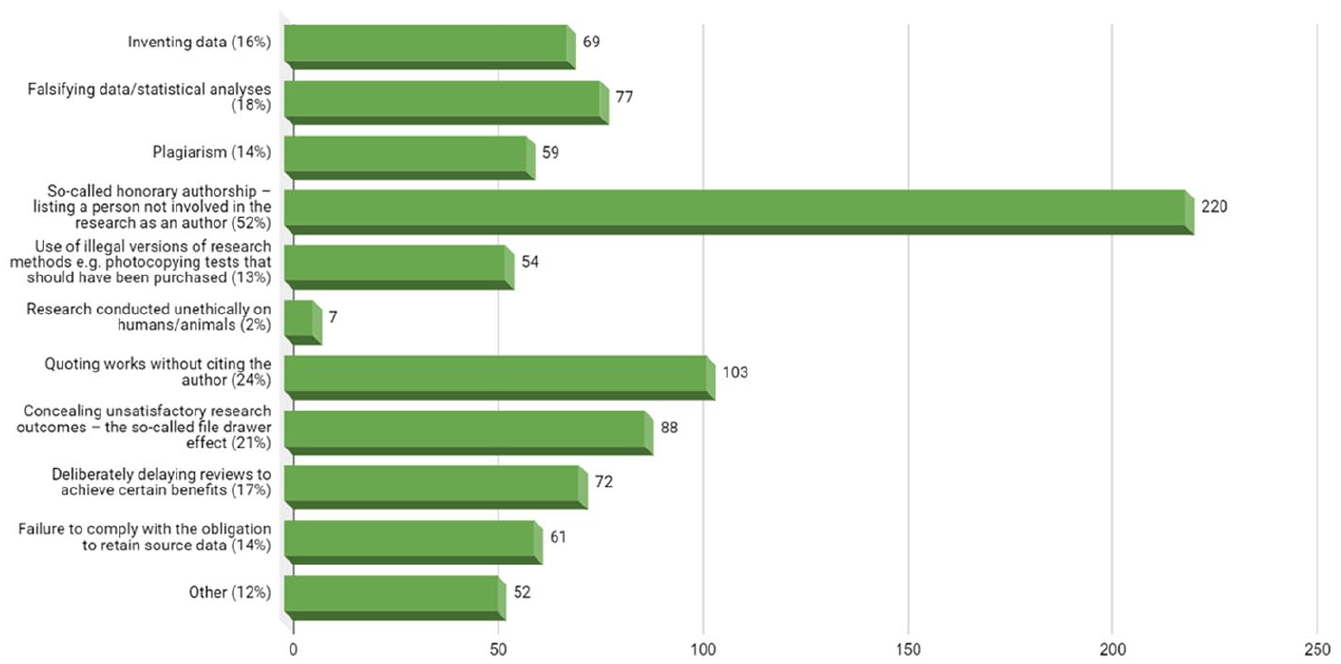
Types of scientific misconduct respondents have observed in other researchers (Question 9).
The elements in the current system of collecting points that participants regarded as unsatisfactory are presented in Figure 3. Other shortcomings of the current system mentioned by the respondents included: the very idea of collecting points, the existence of lists of journals, arbitrary evaluation criteria for specific activities, no points for research activity, researchers being overburdened with teaching duties, bureaucratization, and the underrating of Polish-language publications or accomplishments outside the domain of science.
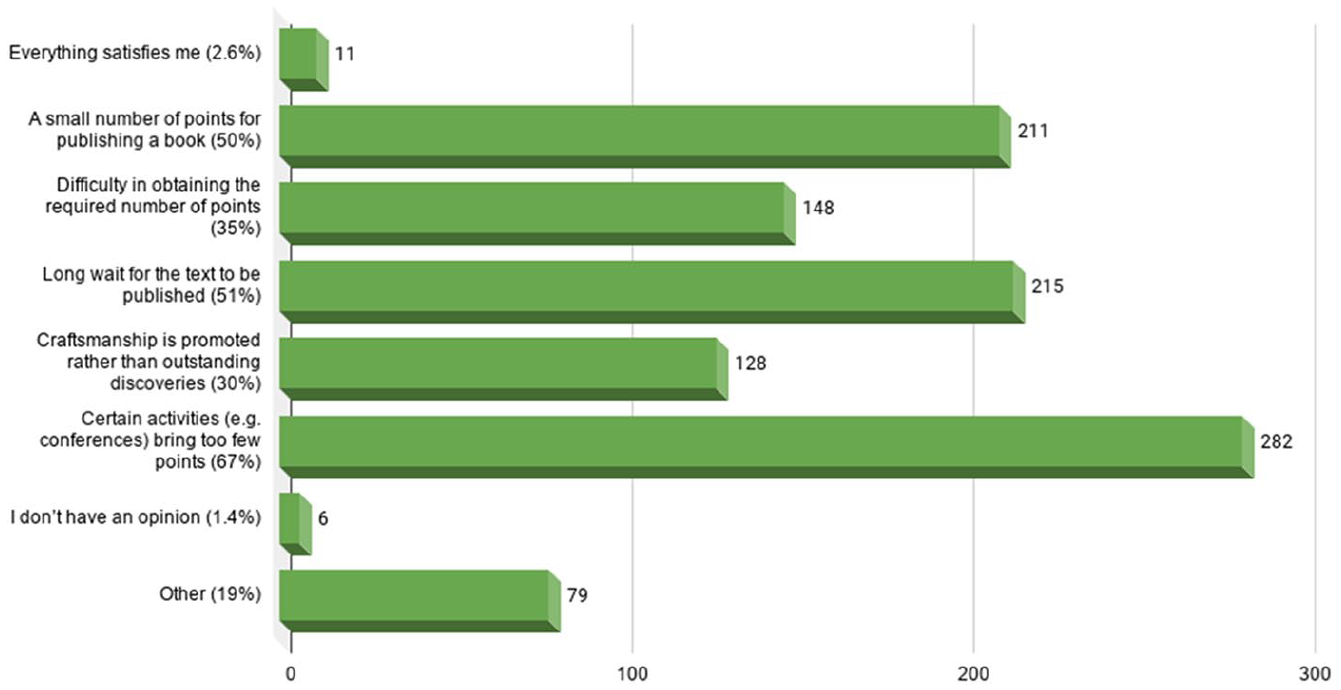
Unsatisfactory elements of the current system of assigning points (Question 2).
The negative consequences believed possible if respondents fail to obtain enough points in a given period of time are presented in Figure 4. In the other category they mentioned consequences such as difficulties with academic promotion, psychological costs (stress), and material losses (lack of income and funding for trips, research, equipment, etc.).
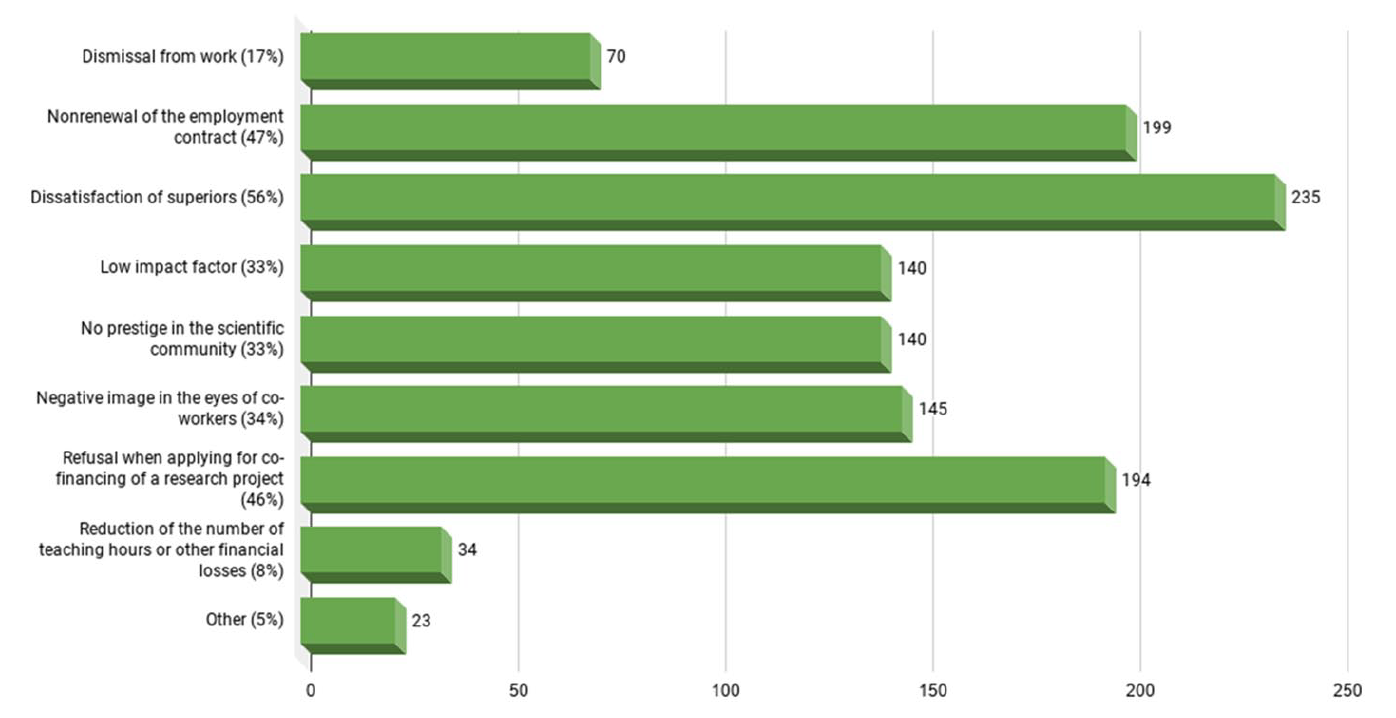
Possible negative consequences of failing to obtain enough points in a given period of time (Question 6).
To test the first hypothesis, we compared the answers given to the questions about the respondents’ own violations of ethical rules (Question 12) with the violations they observed in their colleagues (Question 8). The respondents noticed other peoples’ unethical practices (Mdn = 2.0) more than their own (Mdn = 5.00), T = 300, p < 0.001, r = −0.83.
Correlations (Spearman’s rho) between responses were investigated to test hypotheses 2a, 2b, 3a, 3b and 4 as shown in Table 3.
Correlations between answers to the closed-ended questions.
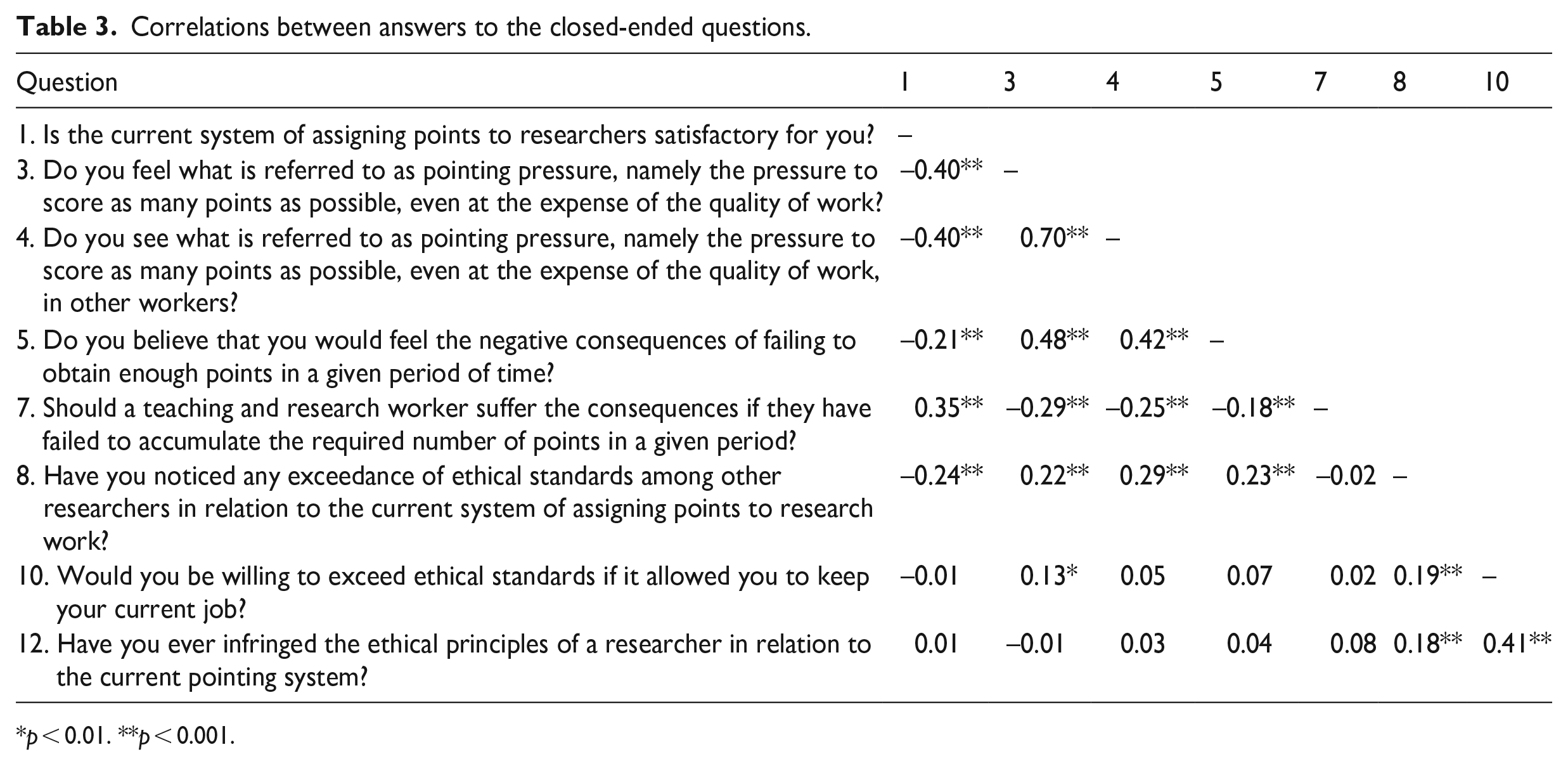
p < 0.01. **p < 0.001.
Negative coefficient indicates inversely proportional relationship, and positive coefficient indicates a directly proportional relationship. The higher the coefficient value, the stronger the relationship.
Perceived pressure to collect points correlated positively with willingness to exceed ethical standards in the future, but no correlation was found with having engaged in unethical practices in the past. Perceived satisfaction with the current system of collecting points was neither associated with the intention to engage in scientific misconduct in the future nor with having engaged in it in the past. Belief about negative consequences from failure to collect the required number of points and belief that researchers should bear these consequences were not found to be correlated with either the intention to engage in scientific misconduct in the future or with having engaged in it in the past. Awareness of publication pressure experienced by others correlated positively with awareness of other researchers violating ethical standards.
Study 2
In the second study, we wanted to check how the relationship between pressure to collect points and scientific misconduct was viewed by people in managerial positions. We were interested in whether they were aware of subordinate researchers’ unethical activities, whether they believed that their subordinates felt pressure to publish and were satisfied with the research evaluation system, and whether they believed their subordinates should bear the consequences of failure to meet the specified publication requirements in the designated time frames. We expected that the management perceptions of subordinate researcher pressure would be positively associated with management perceptions of their subordinates scientific misconduct (Hypothesis 1), and that the management evaluation of the current system of collecting points would be negatively correlated with their perceptions of their subordinates scientific misconduct (Hypothesis 2).
Method
Participants
The respondents (N = 42) in study 2 were also researchers, 31 of whom met criteria for being members of university management; the data presented here relates to these 31 university researcher managers (65% women, n = 20). The survey response rate was 29%. The participants represented the humanities (45.2%, n = 14), exact sciences (22.6%, n = 7), and social sciences (25.8%, n = 8); there were 2 cases of missing data. Of all participants, 48% (n = 15) had a DSc degree, 16% (n = 5) had a doctoral degree, 16% (n = 5) had the title of associate professor, 13% (n = 4) had the title of full professor, and 3% had a BEng, MSc degree (n = 1); data was missing for 1 respondent.
Measures
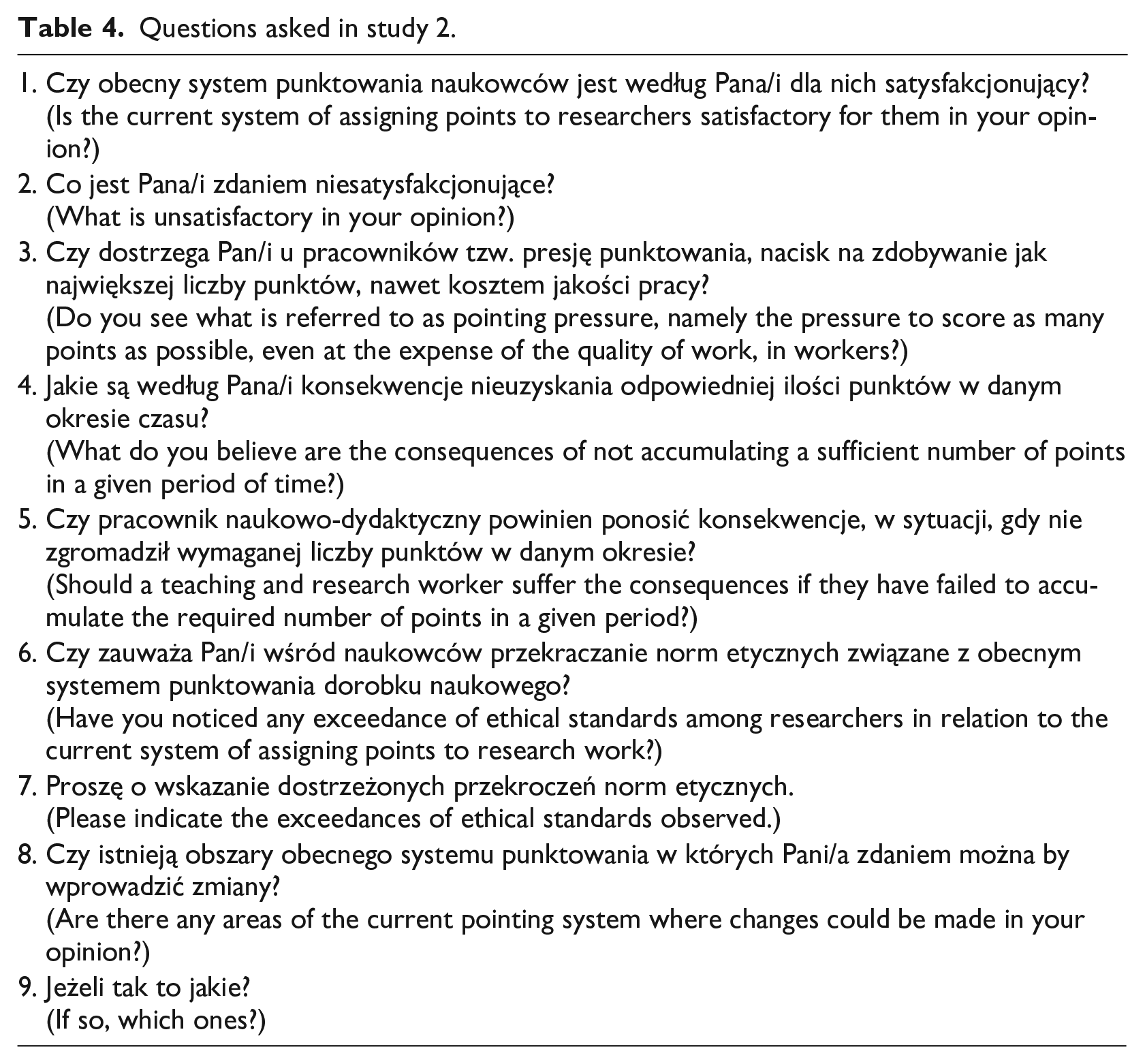
We used a modified version of the measure applied in Study 1 (cf. Table 4). The questions were rephrased in such a way that individuals in managerial positions could respond to the behavior and situations they observed in their subordinates. The participants responded to closed-ended questions (1, 3, 5, 6, and 8) using a scale from 1 (definitely yes) to 5 (definitely not). For the semi-open questions (2, 4, and 7), the participants could choose from the options provided and, additionally, write their own answers in the other category. The last question (Question 9) was an open-ended one: the respondents could only write their own answers.
Questions asked in study 2.
Results
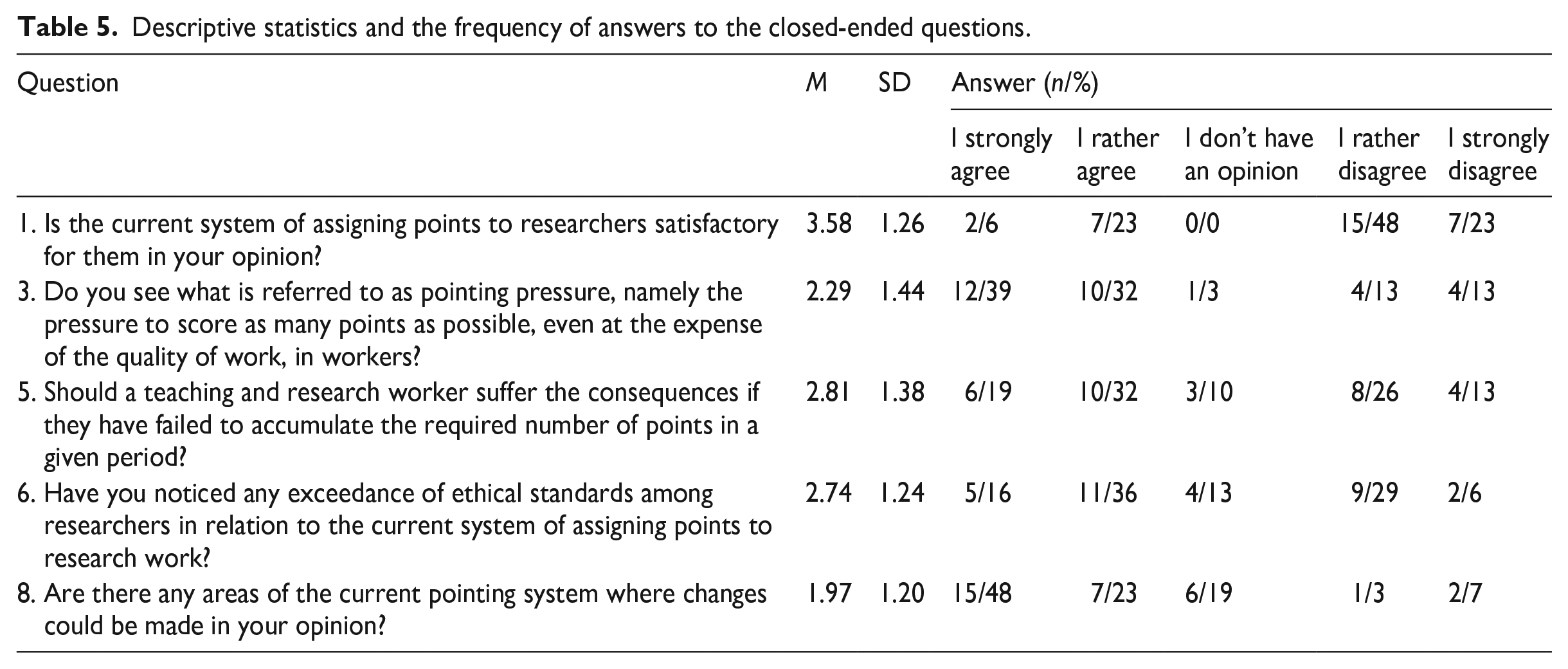
The analyses were performed on 31 sets of answers. Responses from the other category have been analyzed qualitatively by authors using in vivo coding. Descriptive statistics and frequencies of responses to the close-ended questions are presented in Table 5.
Descriptive statistics and the frequency of answers to the closed-ended questions.
Responses to the semi-open questions are presented in the figures below. Figure 5 presents the violations of ethical standards as observed by the managers. In the other category, responses included self-plagiarism, getting low quality books published by friendly publishers despite negative reviews, and betraying the mission of a researcher by writing texts aimed at meeting editors’ requirements rather than seeking the truth.
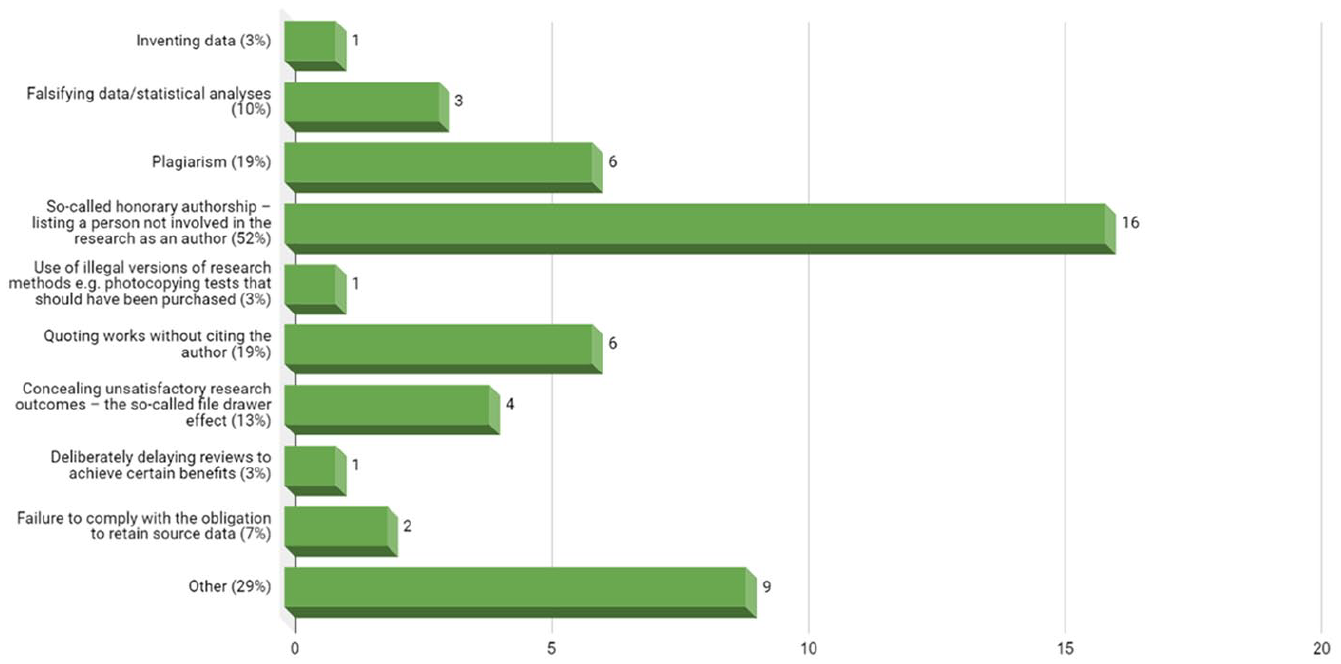
The types of scientific misconduct observed by managers (Question 7).
The elements of the current system of assigning points that the respondents regarded as unsatisfactory are presented in Figure 6. The participants also mentioned other shortcoming such as points being awarded retrospectively by the ministry, at the end of a given year; points not covering all research activities; points not being reliably awarded for cooperation with the economic environment, teaching activity, reviewing doctoral dissertations and postdoctoral theses, reviewing applications for the conferment of professorial titles, and editing multi-authored monographs; points being awarded mainly for publications in journals (the low value being attached to chapters in books); and arbitrary assessment of research accomplishments, including the unfair treatment of the humanities.
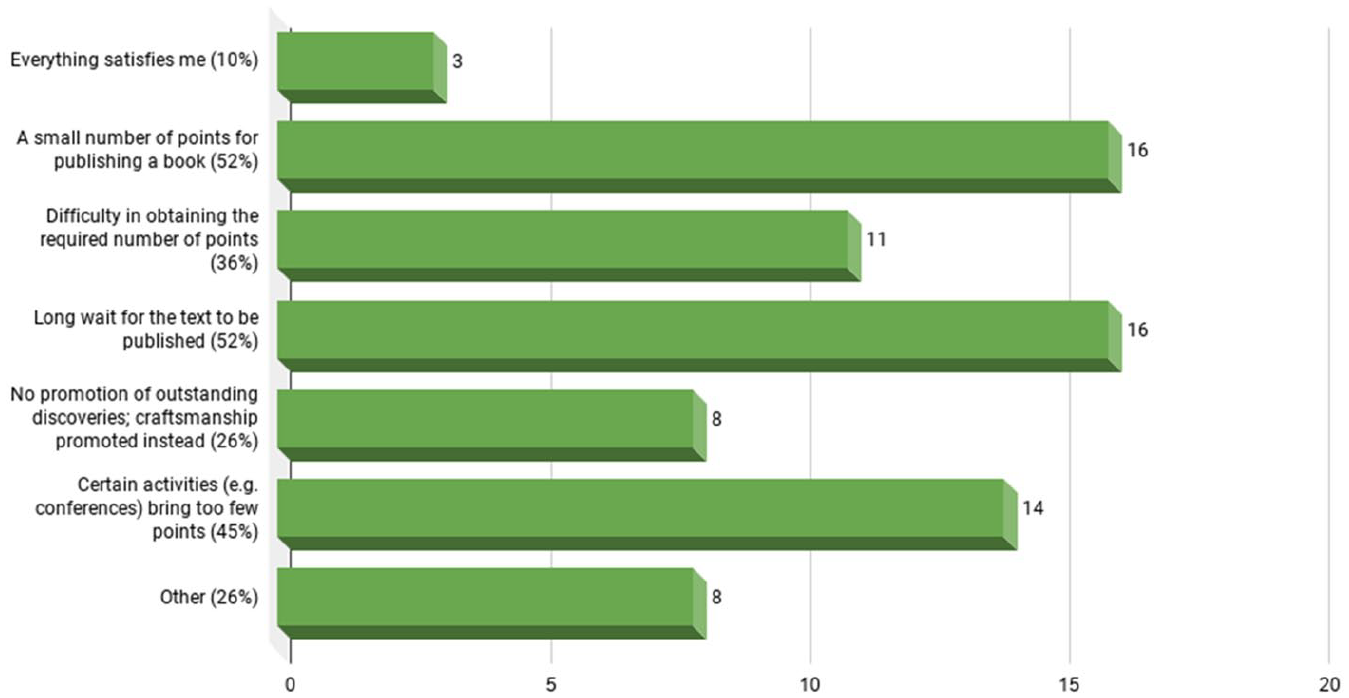
Manager perceptions of the unsatisfactory elements of the current system of assigning points (Question 2).
Opinions about the consequences of failing to collect the required number of points in a specified period of time are presented in Figure 7. In the other category, the consequences mentioned included lowered category of the Faculty, frustration, loss of the sense of the meaning of research work and seeking “peace and quiet”.
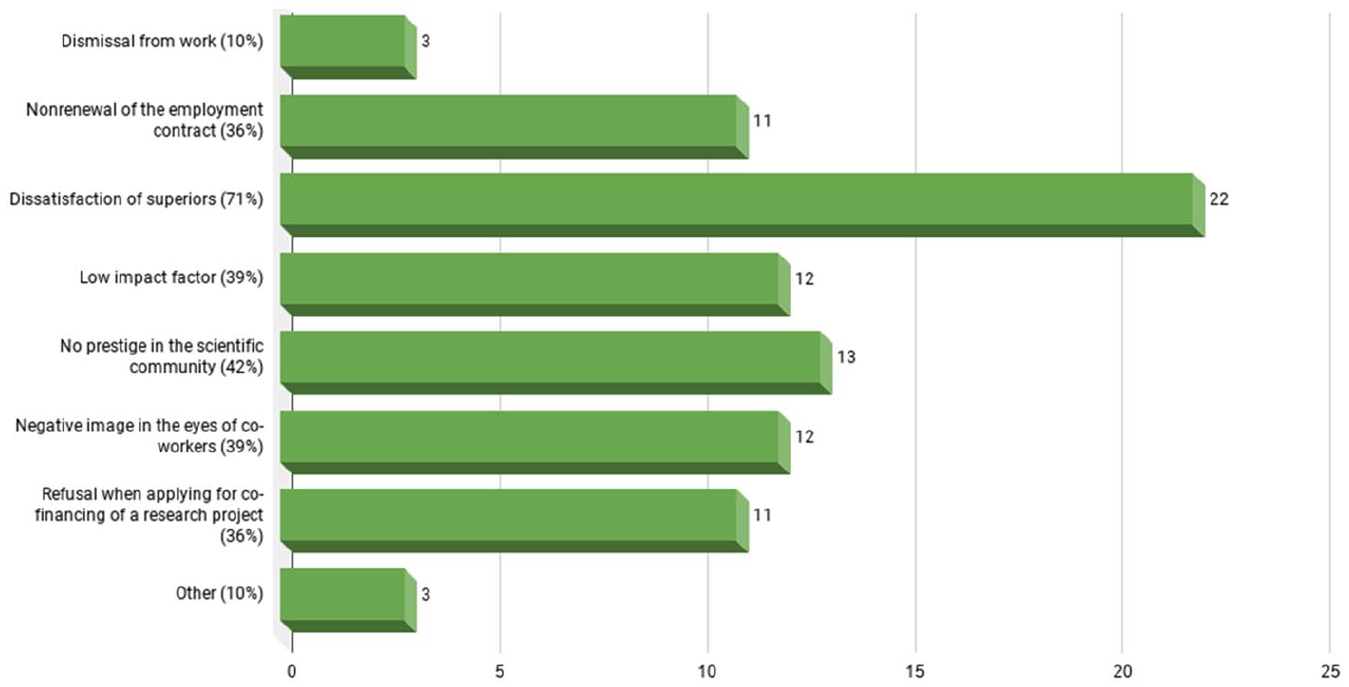
Manager perceptions of the consequences of failing to obtain a sufficient number of points in a given period of time (Question 4).
The possible changes to the current points system (Question 9) proposed by 68% of the respondents (n = 21) concerned rewarding researchers for additional activities (conferences, workshops, lectures, artistic initiatives, the publication of handbooks, reviews, translations, science popularization); increasing the reward for various activities (book chapters, articles, grants); focusing on the quality of work (citations or total output rather than arbitrary time periods); taking discipline into account in researcher evaluation (e.g. differentiating the requirements for exact sciences and humanities); setting unambiguous criteria for failure to meet the requirements and the possibility of dismissing a researcher.
To test hypotheses 1 and 2, concerning the relationship between scientific misconduct observed in subordinates and their observed satisfaction with the current evaluation system, and the perceived pressure to collect points, we performed an analysis of correlations (Spearman’s rho). The results are presented in Table 6. Observations of publication pressure in the subordinates correlated positively with their observations of violations of ethical standards. Opinions about whether the current system of collecting points is satisfactory and the necessity of bearing the negative consequences for failure to collect the required number of points in a given time period were not found to be correlated with observed violations of ethical standards.
Correlations between answers given in the closed-ended questions.
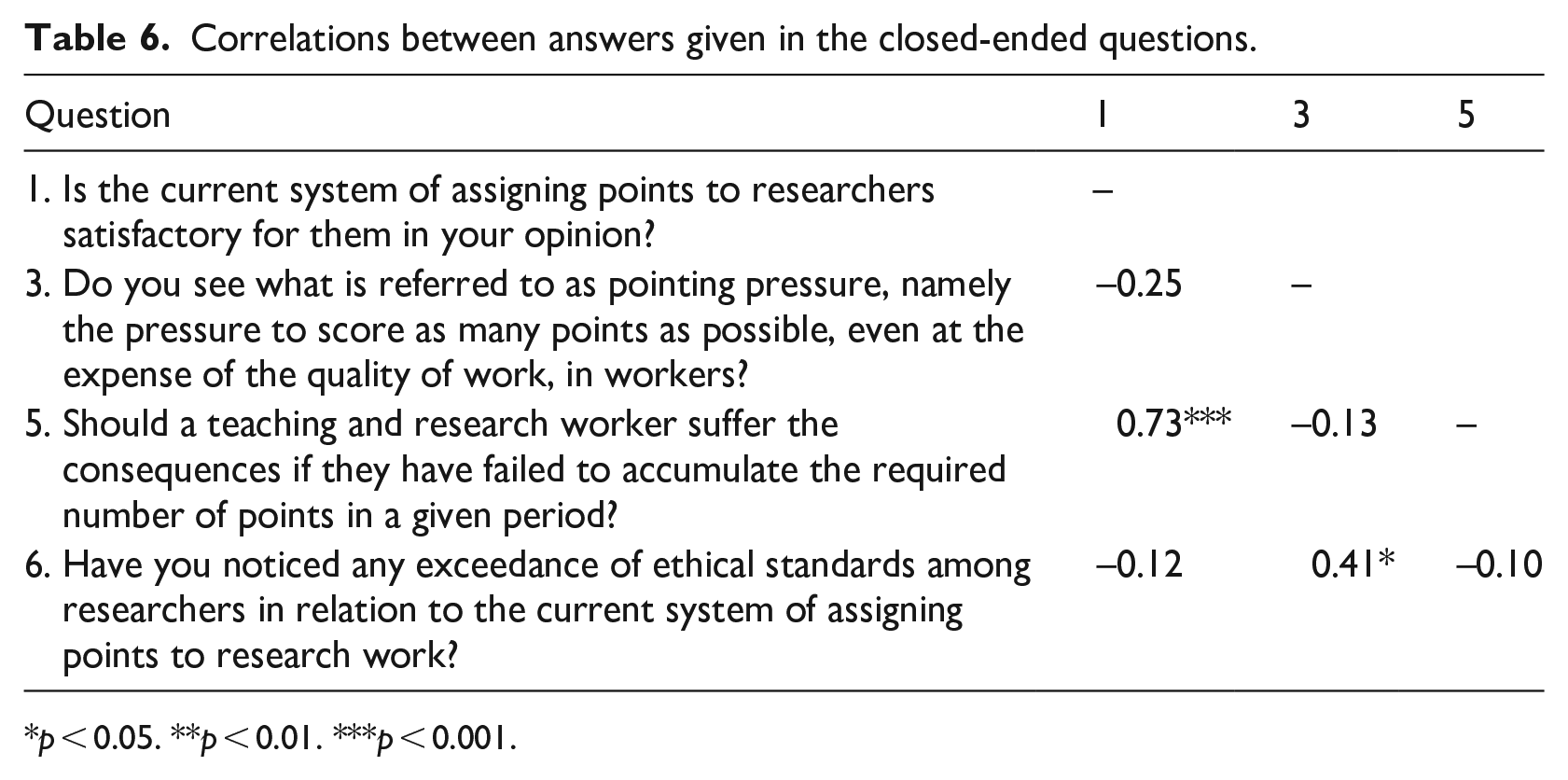
p < 0.05. **p < 0.01. ***p < 0.001.
Discussion
Researchers reported a significantly greater exceedance of ethical standards by their colleagues (51%) than for themselves (3%). They also provided far more examples of ethical violations committed by others than for themselves. These two findings confirm Hypothesis 1. It is worth highlighting that while 3% of researchers declared that they contravened ethical standards (1% choosing “I strongly agree” and 2% choosing “I rather agree”), only 71% reported that they had definitely not violated ethical standards in the past (choosing “I strongly disagree” option).
The stronger the pressure to collect points, the higher the reported intention to engage in dishonest practices in the future which confirms Hypothesis 2a. The pressure to collect points experienced by researchers was not related to the reported violation of ethical rules in the past, which means Hypothesis 2b was not confirmed. It is possible that researchers did not feel such strong publication pressure in the past and were, therefore, more ethical. Despite negative opinions about the current research evaluation system and its unsatisfactory nature, responses did not reveal high levels of intention to engage in dishonest practices in the future (Hypothesis 3a) or having engaged in dishonest activities in the past (Hypothesis 3b). Hence, Hypothesis 3 was not confirmed. However, Hypothesis 4, which postulated that individuals observing strong publication pressure in their colleagues were also aware of colleagues’ violations of ethical standards, has been confirmed.
Results from study 2 suggest that the higher the publication pressure observed by the management, the more frequent the violations of ethical standards in research among their subordinates. This supports the first hypothesis. However, the participants’ negative evaluation of the current system was not associated with observing a larger number of ethical violations committed by their subordinates. This is consistent with the results from Study 1 and means that the second hypothesis was not confirmed.
Both the majority of researchers and management considered the current system of collecting points unsatisfactory, although they point to somewhat different causes of this dissatisfaction. A considerable proportion of researchers reported that they felt publication pressure, which was also observed the management. Among the participants in managerial positions, more than a half indicated that they were aware of researchers violating ethical standards as a result of the current point-based system. However, only 3% of the researcher respondents admitted to violating ethical standards associated with the point-based system by engaging in practices such as conducting unethical research on humans or animals, or honorary authorship.
Several key conclusions can be drawn from our research into the relationship between self-reported scientific misconduct and subjectively perceived publication pressure. Firstly, most researchers are confident of their ethical compliance in research and predict that they will be comply with research ethics in the future. It is possible that just like ordinary people researchers can fall into the psychological traps of dishonesty: they are trying to maintain high self-esteem; they are confirming the idea of themselves as people who act in accordance with certain moral norms (Mazar et al., 2008; Vecina et al., 2015), and who expect to act ethically in future (Moore and Gino, 2015; Tenbrunsel et al., 2010).
Secondly, our findings suggest that high numbers of both researchers and managers have observed “minor” offenses such as honorary authorship and failure to attribute citations appropriately. Even though apparently minor, this raises concerns because reports from dishonest researchers themselves indicate that their first offenses were apparently harmless and innocuous (see Crocker, 2011; Kirchner, 2010; Maremont, 1996). Hence, it may be important to detect and deal with even petty offenses, which can be regarded as a warning signal that, if unchecked, could lead to more serious scientific misconduct.
Thirdly, our findings suggest that for researchers, perceived pressure to collect points is correlated positively with the intention to exceed ethical standards in the future, and managers reported exceedance of ethical standards as related to the system of assigning points to research work. In order to confirm causal relations between those elements and identify their underlying mechanism, it would be necessary to investigate the mediators of the relationship between publication pressure and scientific misconduct. Comparison of results from Study 1 and 2 showed a high discrepancy between misconduct observed by managers and researchers concerning violations of ethical standards and the current point-based system. These findings are consistent with studies that suggest that people tend to attribute “others” with a higher level of negatively evaluated actions (Jordan and Monin, 2008). However, as our study investigated perceptions rather than actual behavior, inferences should be treated with caution.
Fourthly, we found some evidence to support the notion that being in a position of power may be correlated with perception of both publication pressure and scientific misconduct. The aforementioned differences may stem from variations in perspective between managers who are responsible for evaluation and parametrization as well as their own research, and researchers, whose focus of responsibility lies with their own academic accomplishments. Researchers, who report high levels of frustration and dissatisfaction, may feel greater pressure to collect points, and believe that they should not bear unjust consequences of not meeting certain criteria. Individuals in managerial positions are obliged to enforce criteria for the assessment of their subordinates’ accomplishments believe that their subordinates should bear the consequences of failure. Failure to achieve has implications for the success and economic viability of a given unit; managers may be more inclined to consider implications for the loss of prestige in the academic community, and, due to their position, have a somewhat broader perspective on the pressure to collect points than their subordinates experience.
One of the limitations of our research results from the measurement of subjectively perceived pressure by means of a direct question. We believe that more elaborate measures could be used in future studies, such as the Publication Pressure Questionnaire (Haven et al., 2019b), which was not available at the time of our investigation. Another limitation stems from asking about perceptions or evaluations, which means we are presenting a subjective picture rather than actual data about the types and frequency of scientific misconduct in research. Given that people prefer not to see the unethical conduct of others, especially if they engage in similar practices themselves (Chugh et al., 2005; Moore et al., 2006), our results might be understated. This calls for caution in the interpretation of the findings. Furthermore, we collected data only from participants who accepted invitation and completed the questionnaire. Problems with representativity are a known challenge for investigations of socially sensitive issues (DuBois et al., 2013a), so the survey response rates of 21% and 29% we achieved can be regarded as relatively high. However, the subject of our surveys was undoubtedly of a sensitive nature and it is possible that researchers who were reluctant to share information about scientific misconduct chose not to participate. As our research was conducted with Polish scientists, it is also possible that the findings reflect the specificity of work at Polish universities. It was not the aim of our study to analyze cultural differences in scientific misconduct, but future studies could focus on that problem.
Conclusion
Our findings suggest that the notion of “publish or be ethical?” may constitute a real dilemma for the researchers. Although only 3% of our sample admitted to having engaged in scientific misconduct, 71% reported that they definitely had not violated ethical standards in the past. Furthermore, more than a half (51%) reported seeing scientific misconduct among their colleagues. We did not find a correlation between unsatisfactory work conditions and scientific misconduct, but we did find evidence to support the theory that perceived pressure to collect points is correlated with willingness to exceed ethical standards in the future.
Footnotes
Authors’ contributions
Conceptualization: Mariola Paruzel-Czachura, Zbigniew Spendel (Study 1), Mariola Paruzel-Czachura, Lidia Baran, Zbigniew Spendel (Study 2); Data collection: Mariola Paruzel-Czachura (Study 1), Mariola Paruzel-Czachura, Lidia Baran (Study 2); Data analyses: Lidia Baran; Data interpretation: Mariola Paruzel-Czachura, Lidia Baran; The first draft of the article: Mariola Paruzel-Czachura, Lidia Baran; Critical feedback on the article: Mariola Paruzel-Czachura, Lidia Baran, Zbigniew Spendel.
Funding
All articles in Research Ethics are published as open access. There are no submission charges and no Article Processing Charges as these are fully funded by institutions through Knowledge Unlatched, resulting in no direct charge to authors. For more information about Knowledge Unlatched please see here:  .
.
The current research was supported by Miniatura1 2017/01/X/HS6/01332 from the National Science Centre (NCN, Poland) to Mariola Paruzel-Czachura. Any opinions, findings, and conclusions or recommendations expressed in this material are those of them authors and do not necessarily reflect the views of the National Science Center. The funders had no role in study design, data collection and analysis, decision to publish, or preparation of the manuscript.