



Abstract
The present study was an attempt to shed light on the status of plagiarism in the Iranian academic context. It tried to survey the EFL learners’ perceptions of and reasons for different types of plagiarism. To this end, 132 EFL learners from different Iranian universities took part in the study. The data were collected through using a questionnaire specifically designed to gather information on plagiarism. The results indicated that plagiarism is quite common in the Iranian EFL context as different types of plagiarism are employed by the students. Many students were found not to have a negative attitude toward plagiarism. The results also indicated that gender, marital status and occupational status did not have a significant effect on plagiarism, whereas academic level, field of study, and age played a significant role in this regard.
Introduction
Academic misconduct (cheating and plagiarism) is of growing concern in the academic context all over the world (Jones et al., 2005). There is also accumulating evidence that it is on the increase in different contexts (Ahmadi, 2012; Diekhoff et al., 1996; Gill, 2008; McCabe, 2001; McCabe and Bowers, 1994; Tennant and Duggan, 2008). For example, Park (2003) has reported a range of 63 to 87 per cent of cheating by students of different disciplines. It has also been mentioned that such academic misconduct repeats itself; that is, those who cheat in the academic context may also cheat in their future occupations. Morgan and Foster (1992), for example, found that 87 per cent of American undergraduates had such an idea.
With the worldwide development of the internet and easy access to it, plagiarism has become an easy task (Ashworth et al., 1997; Park, 2003; Roberts, 2008). It has perhaps become the most common type of authorial offence (Sikes, 2009). This could be because the internet has provided the students with lots of opportunities for cheating (Baty, 2000) and has given them a unique attitude toward the information found on it. Wood (2004) states that the experience of getting materials from the internet may give students an ownership attitude toward the electronic material. As such, some plagiarism will no longer be deemed to be inappropriate in the eyes of certain students.
The internet has also facilitated plagiarism by giving students a chance to find or buy a full paper in what is known as “paper banks” or “paper mills”. “Some academic institutions are also party to the spread of plagiarism – albeit unknowingly – with their provision of both lecturer material and student work on University web-sites” (Jones et al., 2005: 3). Although the internet has received the lion's share blame for the increase of plagiarism, there are some other factors that have a powerful effect on plagiarism. Sikes (2009), for instance, speaks of two more factors in this regard: a shift in moral values on what constitutes plagiarism and a demanding pressure on academics to publish.
Other reasons mentioned for the increase of plagiarism include respecting authority and lack of critical thinking in Asian societies (Kumaravadivelu, 2003); limited language proficiency, text/task difficulty, lack of familiarity with the topic (Abasi and Graves, 2008; Campbell, 1990; Shi, 2004); limited training (Mu, 2010; Phan, 2006); and lack of understanding of accepted academic conduct (Mu, 2010; Wheeler, 2009). All of this indicates that the reasons behind plagiarism are multiple and complex (Dawson and Overfield, 2006; Park, 2003).
Most of the studies conducted on plagiarism have been related to medical sciences and fewer studies have been conducted in social sciences (Macnab and Thomas, 2007; Sikes, 2009). When it comes to fields like TEFL, Linguistics, and Language and Literature even fewer studies are found and the paucity of research is greatly felt. One of the studies specifically focusing on EFL students is by Mu (2010), who investigated Chinese EFL students’ perceptions of and reasons for plagiarism. Mu came to find that the following factors could explain the Chinese students’ plagiarism:
Little knowledge and instruction about academic writing conventions.
Teacher’s encouragement: Chinese teachers implicitly encourage their students to memorize and borrow good sentences from native speakers of English and to use them as their own in their writing. Gu (2003) also states that imitation is respected as one of the most important skills in Chinese writing.
Little emphasis on plagiarism in Chinese culture: Some students think that Chinese culture does not attach enough importance to plagiarism.
Psychological factor: Many students think that their teachers will not find the instances of plagiarism in their writings.
Incapability to complete the hard task: When the task is beyond their ability, students resort to copying from others.
The present study is aimed at investigating the instances of plagiarism among the Iranian language majors (TEFL; Language and Literature). It also tries to shed light on the students’ perceptions toward the reasons behind plagiarism. The third purpose of the study is to see how the attitude toward plagiarism and the reasons for it differ as far as factors like gender, field of study, academic level, marital status, occupational status, and age are concerned. As such, the study is specifically aimed at answering the following questions:
What are the instances of plagiarism among the Iranian language majors?
What are the Iranian language majors’ attitudes toward plagiarism?
What are the reasons for plagiarism as expressed by the Iranian language majors?
Do Iranian language majors’ attitude toward and reasons for plagiarism differ as far as their gender, field of study, academic level, occupational status, marital status, and age are concerned?
Method
Participants
One hundred and thirty two language majors took part in the present study. The participants, 52 males and 79 females, ranging in age from 18 to 36, were all selected based on their availability and willingness to participate in the study. They were all studying in one of the English majors, namely, TEFL, Language and Literature, or Linguistics. An attempt was made to include students of different academic levels; that is, BA, MA, and PhD from different universities across the country. However, PhD students were excluded from the study as only a few of them (only six) participated in the study. Similarly, students of Linguistics were also excluded from analysis as they formed a small sample (only seven). The low number of participants from the PhD level and Linguistics major may come from the fact that only those who were available and volunteered took part in the study.
Instruments
Plagiarism questionnaire
The only instrument used in the present study was a questionnaire specifically designed to collect information on plagiarism. This questionnaire had three parts. The first part included eight items (plus a filler item) that asked the respondents about their personal experiences of plagiarism. It aimed at gathering information about the types of plagiarism that students had used during their academic life. All the items were constructed in Likert format with five options running from never (1) to always (5). The second part of the questionnaire included seven items (plus a filler item) which aimed to explore students’ attitude toward plagiarism. The items of this section were also in Likert format running from Strongly Agree (1) to Strongly Disagree (5). The last part asked for the reasons why the students plagiarized. This part included nine possible reasons for plagiarism. Students were expected to select the ones they thought were the reasons for their plagiarism. They were also asked to add to the list if they thought their reason was not in the list. In developing the questionnaire, the literature was carefully scrutinized by the researcher and some items were extracted. Then a number of colleagues and students were consulted about plagiarism and their ideas were recorded. Finally, the researcher made use of his personal experience of dealing with students at different academic levels and in different contexts. The final questionnaire was checked by a couple of experts before application. The reliability of the questionnaire was also checked through Cronbach’s Alpha, which turned out to be satisfactorily high (.81). The questionnaire was written in students’ native language (Persian) to avoid any misunderstanding on their part. A translated copy of the questionnaire in English appears in the Appendix.
Data collection and analysis
Both direct and indirect procedures were used to distribute the questionnaires. While some students were given the questionnaire by the researcher in a face-to-face interaction, others received it through email. This was done because students from different universities were expected to take part in the study and it was very difficult for the researcher to be present in person to distribute and collect the questionnaires. However, as the questionnaire was given in students’ native language and the items were checked by several experts, misunderstanding was mostly unlikely and the dependability of the data was thus high.
The data collected were subjected to a series of statistical analysis. Descriptive statistics as well as correlational procedures and t-test were made use of to find out about students’ perceptions of and reasons for plagiarism and also to see how and to what extent plagiarism may be related to the factors of gender, age, field of study, academic level, marital status, and occupational status.
Results of the study
Results for the type of plagiarism, attitude toward plagiarism, and reasons for plagiarism
Table 1 depicts the descriptive statistics in terms of frequency and percentage for the first part of the questionnaire, i.e. types of plagiarism used by students. As shown, 13.6 per cent of students have stated that they copy a full paper and submit it to their professors as their own term project. A similar pattern is found concerning buying a paper. About 10 per cent state that they try to buy a full paper to be presented as their own. A higher percentage of plagiarism is found concerning the other items; that is, copying parts of a paper without giving appropriate citation (28.81%, 34.9%, and 40.95% for items 3, 4, and 5, respectively). Also 14.4 per cent have stated that they ask their friends to write a whole paper or parts of it for them. But a more interesting finding is the fact that 23.5 per cent have expressed that they turn in the same paper to different professors. Finally, 22 per cent have admitted to the fact that they copy the title of other articles or textbooks in selecting a title for their own paper. Overall, Table 1 indicates that all the different types of plagiarism are used by at least some students. Item 5 (only changing some words of a copied text) has the highest frequency of use and item 2 (buying a full paper) is the least common type of plagiarism.
Descriptive statistics for types of plagiarism.
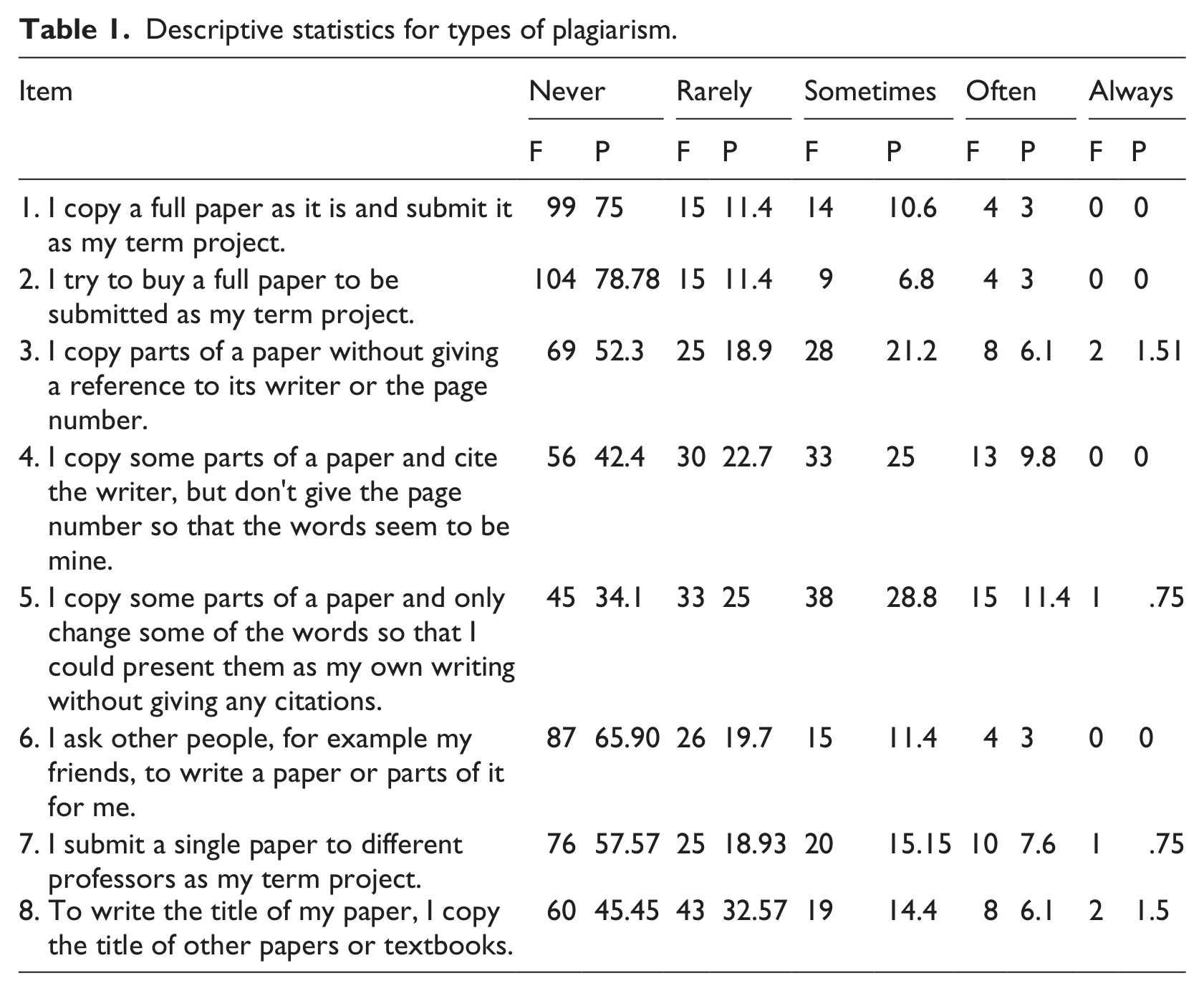
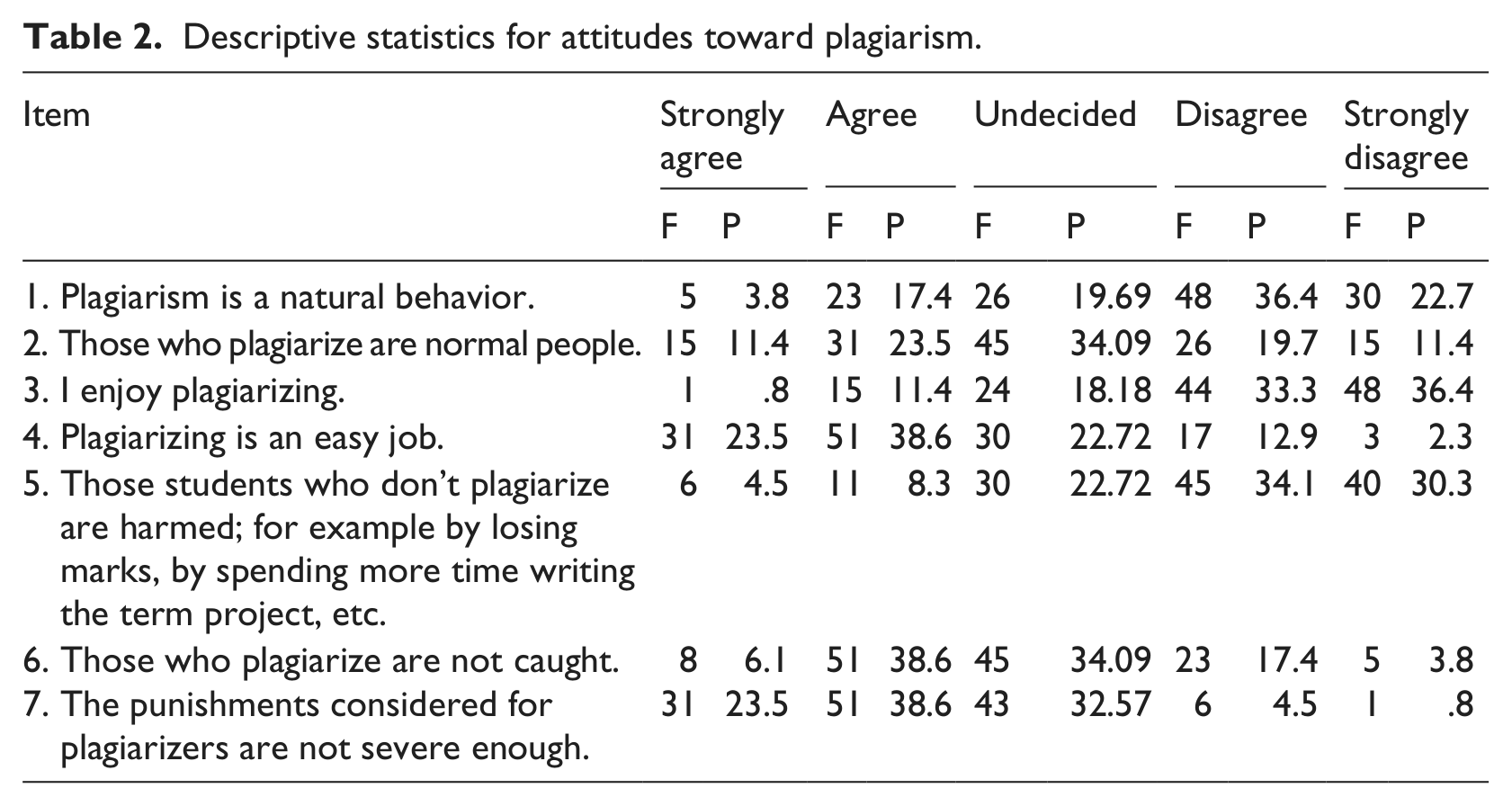
Table 2 gives the results for attitudes toward plagiarism. It can be seen that 21.2 per cent of the participants believe that plagiarism is a normal behavior and that 34.9 per cent consider plagiarizers as typical and normal students. It is also interesting to see that 12.2 per cent enjoy plagiarizing and 12.8 per cent believe that those who do not plagiarize are losers. But, perhaps the most interesting finding in Table 2 is related to items 4, 6, and 7. It is shown that 62.1 per cent of the students consider plagiarism to be an easy task; that those who plagiarize are not caught (44.7%) and that those who are caught, if at all, are not severely punished (62.1%).
Descriptive statistics for attitudes toward plagiarism.
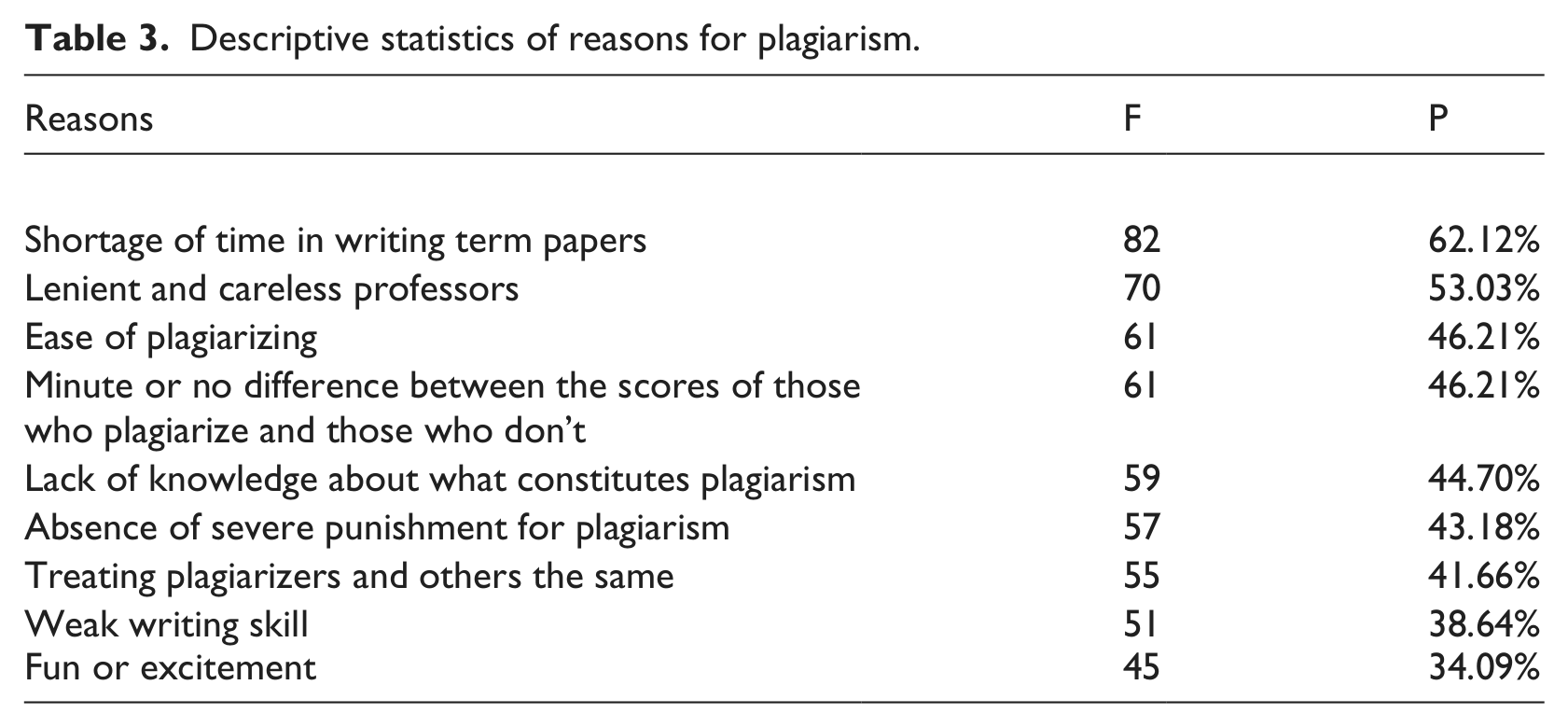
Concerning the reasons for plagiarism, Table 3 demonstrates the results. As indicated, "lack of time in writing term papers" is stated as the most important reason for plagiarism. Many students (62.12%) have mentioned this as the basic reason for their misconduct. The second reason for plagiarism is related to professors who are too busy to check the students’ papers carefully. At the lowest level, it is seen that 34.09 per cent of the students have mentioned that they plagiarize only for fun or excitement.
Descriptive statistics of reasons for plagiarism.
Results for the factors affecting the type of plagiarism
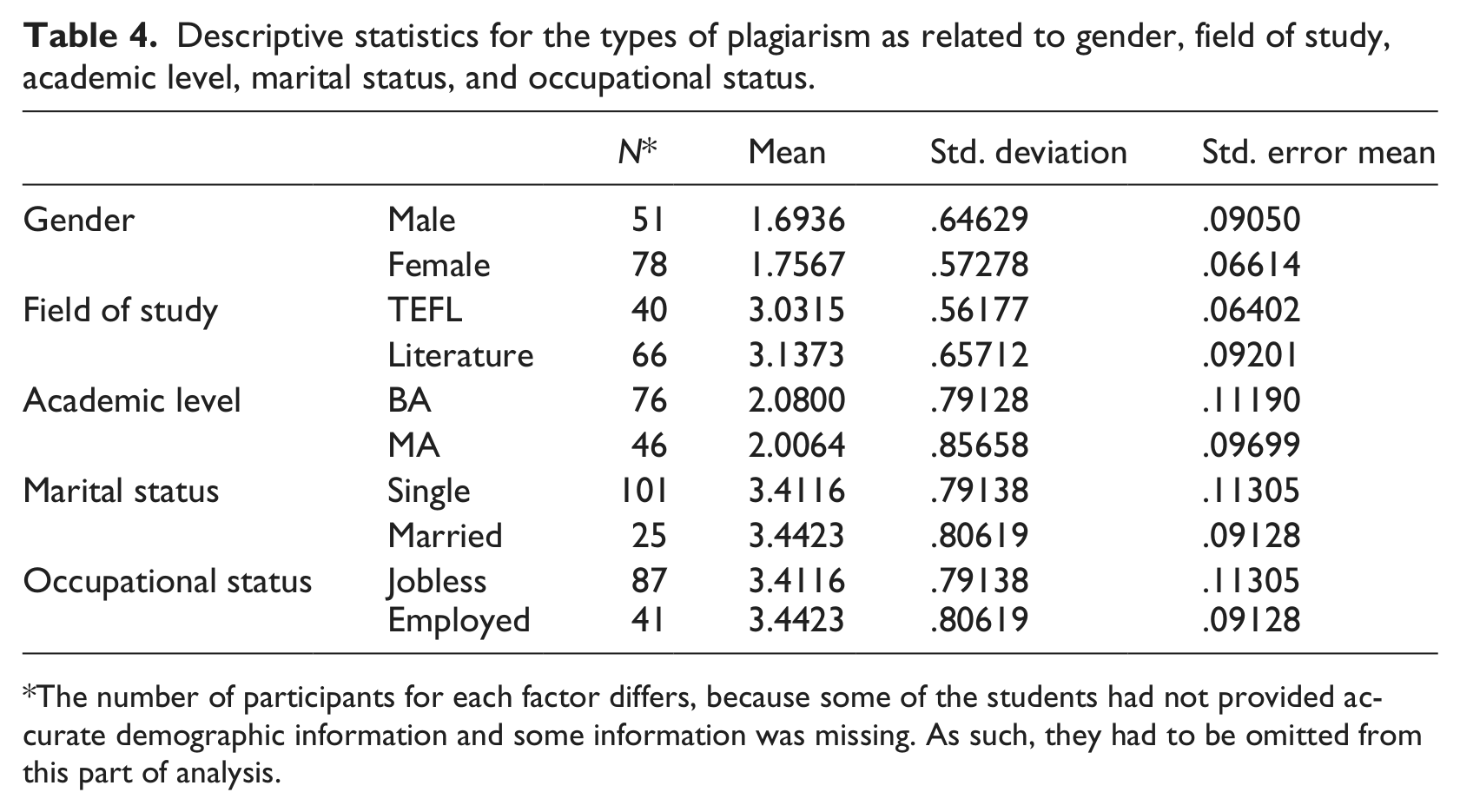
Table 4 presents the descriptive statistics for the factors affecting the type of plagiarism; that is, gender, field of study, academic level, marital status, and occupational status. It can be seen that in many cases students are similar concerning the type of plagiarism they use. However, to see whether there were any significant differences, a series of independent t-tests was run. Table 5 indicates the results in this regard.
Descriptive statistics for the types of plagiarism as related to gender, field of study, academic level, marital status, and occupational status.
The number of participants for each factor differs, because some of the students had not provided accurate demographic information and some information was missing. As such, they had to be omitted from this part of analysis.
The t-test results for the effect of gender, field of study, academic level, marital status, and occupational status on the use of plagiarism.
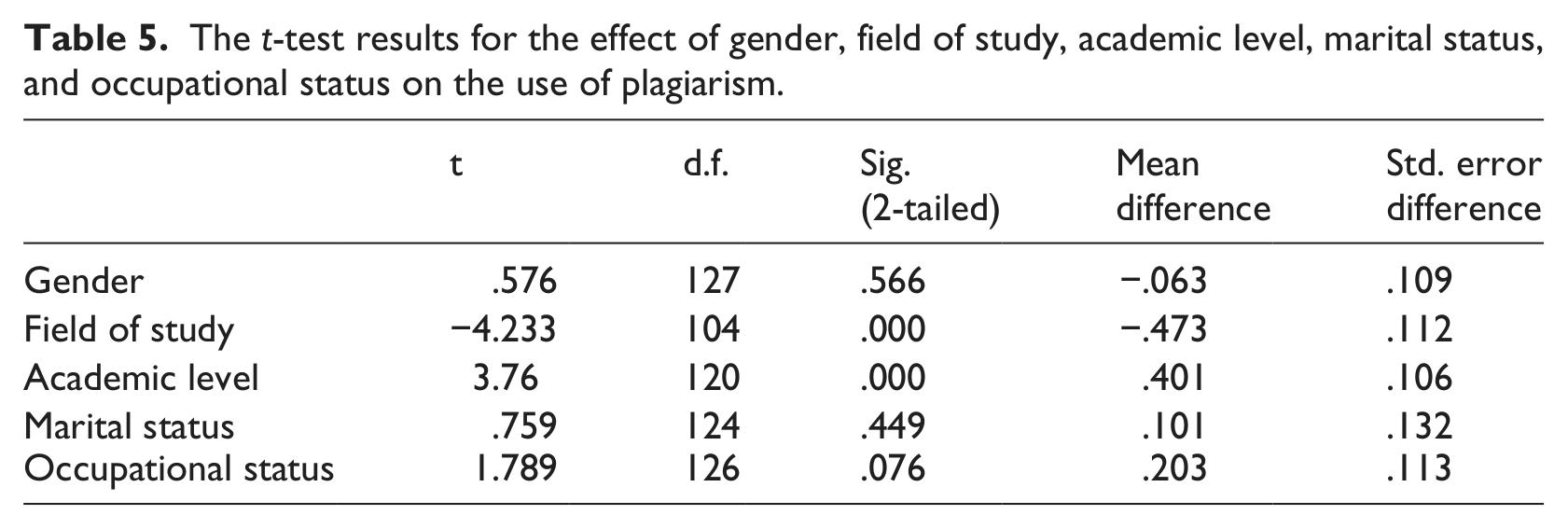
As depicted in Table 5, there are no significant differences between male and female students concerning the type of plagiarism they have used. Similar results are found for the effect of marital and occupational status; that is, no significant difference is found between single and married students, and also between jobless and employed students. The results, however, indicate that field of study and academic level play a significant role in plagiarizing. Looking back at Table 4, it can be seen that Literature students, overall, have a higher tendency for plagiarism than TEFL students. It also indicates that BA students tend to plagiarize more than MA students. The eta-squared value indicates large effects for both factors (field = .14; academic level = .11).
Another factor which was considered in the present study as to its relationship to plagiarism was age. The Pearson correlation coefficient was utilized to see how, if at all, age correlates with plagiarism. Table 6 below indicates that there exists a negative correlation between plagiarism and age; that is, as age increases, individuals have a lower tendency for plagiarism.
Correlation between age and plagiarism.
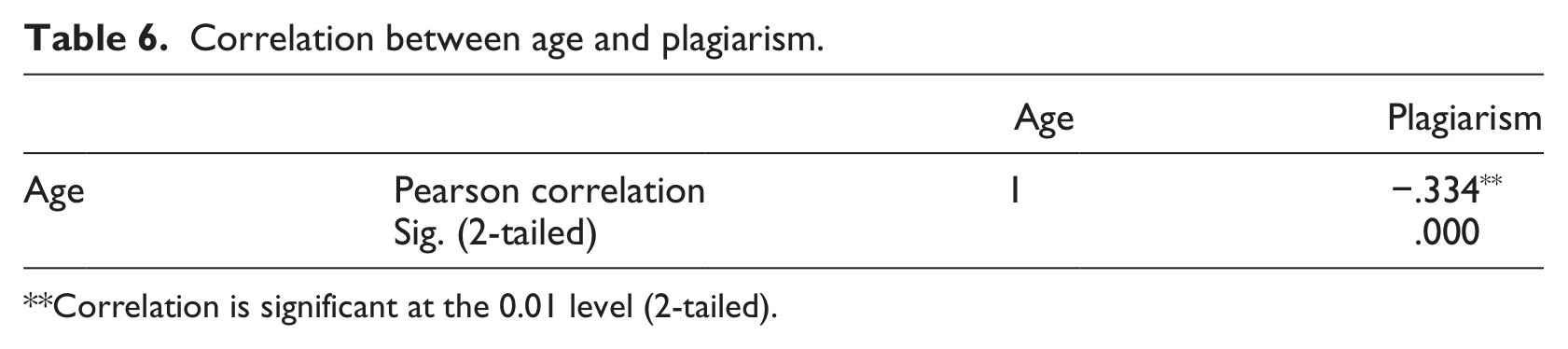
Correlation is significant at the 0.01 level (2-tailed).
Results for the factors affecting the attitude toward plagiarism
Table 7 below presents the results of the study for the attitude toward plagiarism based on the above-mentioned factors. The table demonstrates very similar results in all the categories. The mean scores look the same in all the cases, with no noticeable difference. However, to see whether the means are really similar or there exist statistically significant differences, the results of the independent t-test should be checked.
Descriptive statistics for the attitudes toward plagiarism based on gender, field of study, academic level, marital status, and occupational status.
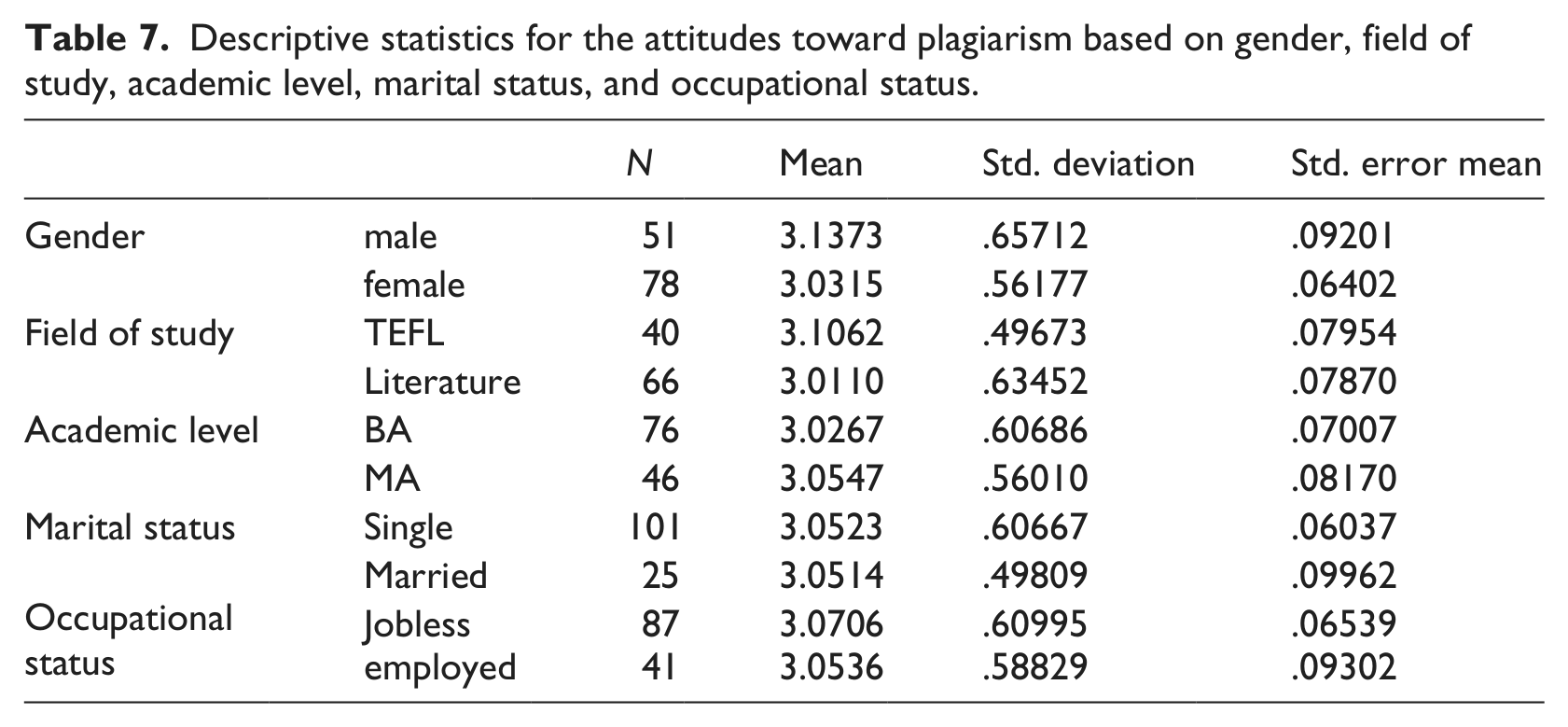
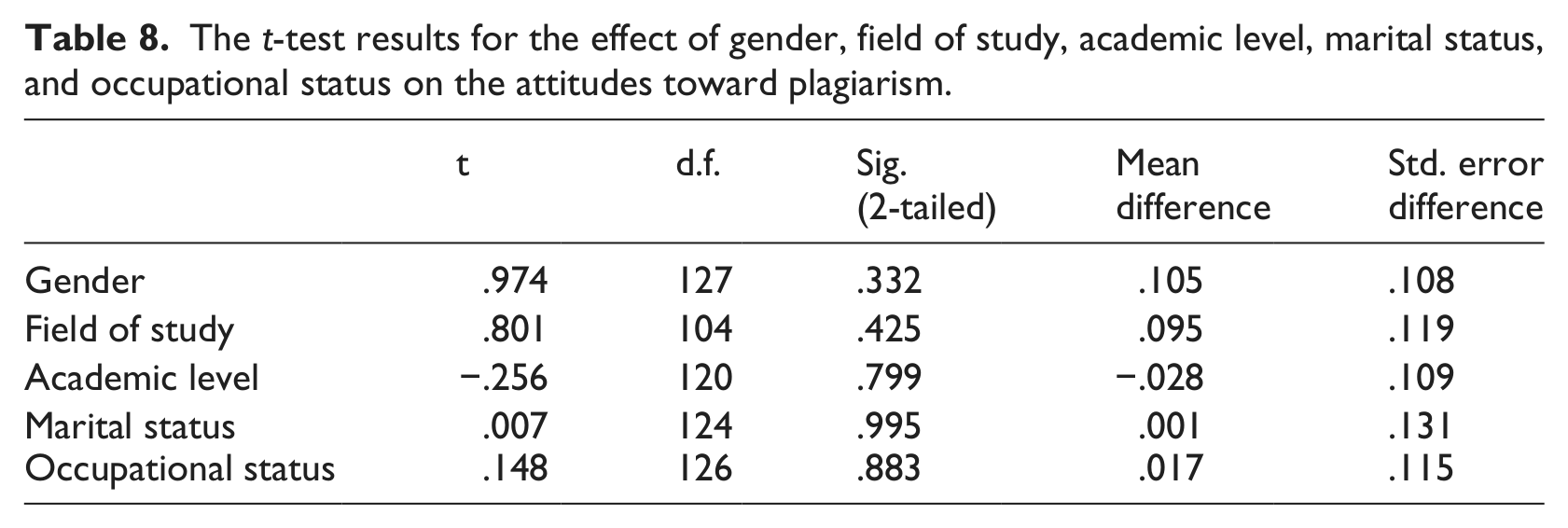
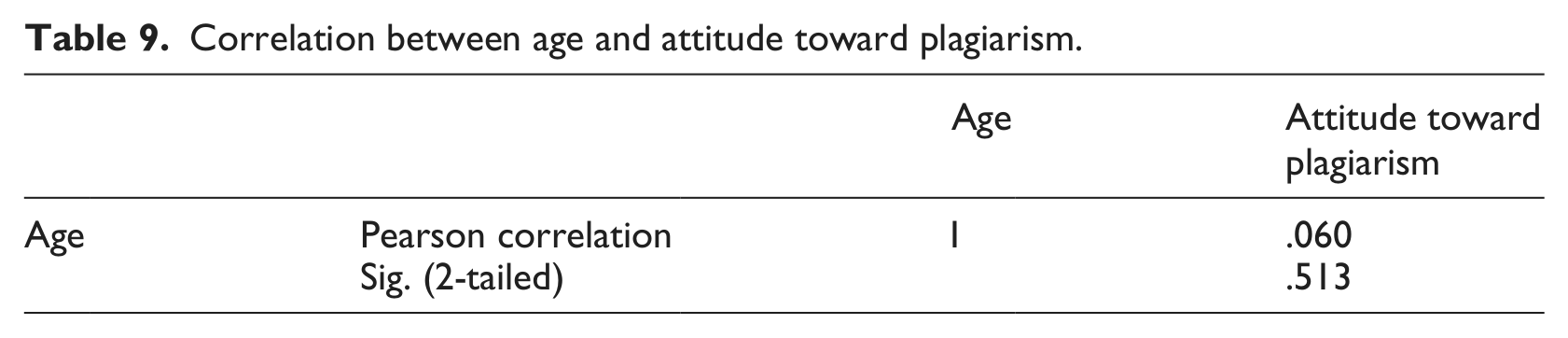
Table 8 confirms that the differences given are not statistically significant. It indicates that none of the factors has an influential effect on the students’ attitude toward plagiarism. In other words, students hold the same attitude toward plagiarism regardless of their gender, field of study, academic level, marital status, and occupational status. Similarly, the results found for the relationship between age and plagiarism was non-significant, meaning that students of different ages hold the same idea toward plagiarism. Table 9 shows the results of correlation in this regard.
The t-test results for the effect of gender, field of study, academic level, marital status, and occupational status on the attitudes toward plagiarism.
Correlation between age and attitude toward plagiarism.
Discussion and conclusion
This study investigated the status of plagiarism in the Iranian academic context. Language majors of different academic levels took part in the study. The study came up with some interesting findings in this regard.
It was found that all the different types of plagiarism were used to some degree by different students. The lowest percentage was related to buying a full paper (about 10%) and the highest was related to copying some parts of an article and changing only some words of it to make it look like one’s own writing (about 40%). This finding supports Jones et al.’s (2005) study. Thirty four percent of the students in their study said that they copied some parts of a paper without crediting the source. The fact that all the types of plagiarism were used by different students in the present study can be an indication of the status of plagiarism among the Iranian language majors and may mean that the tendency to plagiarize is high. This point calls for due attention, especially when we see that even extreme cases of this academic misconduct are used by university students; about 10 to 14 per cent of the participants in the present study expressed that they would buy or copy a full article to be submitted as their own term project. Using such extreme cases may mean that students feel quite safe in plagiarizing and are not at all worried about the consequences, or probably – in line with Mu (2010) and Wheeler (2009) – it means that they do not have a clear understanding of what plagiarism is or what the consequences may be. As indicated in the results, more than 60 per cent of the students believed that plagiarism is an easy task. This was also mentioned as the third main reason for plagiarism. Also, many believed that those who plagiarize are not usually caught (44.7%) and even if they are caught they are not severely punished (62%). Jones et al. (2005) had formerly reported that 43 per cent of the students in their study believed that most cases of plagiarism are not identified by their teachers. Mu (2010) also found that 68 per cent of the students in his study were of the opinion that they would not be punished severely if they were caught with plagiarism. He also found that some students were of the opinion that it is acceptable to plagiarize when completing an assignment for the teacher: “They believed that their teachers would excuse their wrongdoings” (Mu, 2010: 115). Similarly, Sikes (2009) reports that some people having confidence that they will get away with plagiarism have been encouraged to get engaged in plagiarism. Therefore, it is not surprising to find that many students are involved in this academic misconduct as they believe that the consequences of being caught are not serious.
That some students in the present study made use of extreme cases of plagiarism such as buying or copying a full paper is supported in the literature. For instance, Lancaster and Clarke (2008) stated that copy–paste is a risky option, so certain students resort to institutes that write papers and even theses and dissertations for their customers. Sikes (2009) using the search words “buy an essay” came up with 842,000 references in an internet search. Such a large number may indicate a trend toward the epidemicity of plagiarism as an academic misconduct. Even gloomier than this is the claim that some academics cooperate with or work for such institutes. Sikes mentions an example of his internet search for such institutes that claims experts from Oxford and Cambridge Universities work with them in writing papers for the customers.
Another explanation for such academic misconduct may be the leniency on the part of university professors. The results of the study indicated that "having lenient and careless professors" is the second main reason for engaging in plagiarism. That some professors are not careful enough in reading the students' papers or that they are lenient in dealing with plagiarism could have led some students to consider plagiarism a very easy task. In support of this and, surprisingly enough, 98 per cent of the students in Jones et al.’s (2005) study thought that academics do not know where to find the plagiarized matters, which could give students enough margin of security for their wrongdoing.
However, the results of the present study indicated that the most frequent reason for plagiarism is “shortage of time in writing papers”. If professors are to reduce plagiarism, the first step is probably to try to have a realistic and practical attitude toward assignments. When the students are overloaded with assignments, or when the assignments are beyond their level, they may have no choice but to resort to plagiarism to be able to cope with the required assignments in due time (Callahan, 2004).
A number of other reasons are also mentioned by students for their academic misconduct (Table 3), indicating that plagiarism is not a uni-dimensional factor. In fact, the story of plagiarism is a complex one to deal with as the reasons for it may come from different sources. This idea of complexity of the reasons behind plagiarism is also pinpointed by Abasi and Graves (2008) and DeVoss and Rosati (2002), among many others. Most of the reasons could be classified as follows:
Educational: The examples could be lack of severe punishment; inappropriate assignments; and lack of knowledge, basically owing to the failure of the educational system to emphasize the principles of academic writing. Having careless and lenient professors may also be a systemic fault as the undue pressure on the academics to get published prevents them from checking all the students' assignments carefully as they cannot allow enough time for it. The fact that many students are aware of this pressure on their professors gives them more courage to plagiarize.
Personal: For example, some students in the present study mentioned that they plagiarize just for the fun of it. Low level ability of writing in English also belongs to this category.
Attitudinal: Some students are very disappointed with their field of study and have no motivation in getting things done appropriately and efficiently, for example, so they are inclined towards easy options like plagiarism.
Socio-cultural: Mooney (2010, cited in Mu, 2010), relating plagiarism to culture, states that academic fraud is more common in China than in any other country, for example. Similar statements are also made by Deckert (1993) and Ford (2009). Also, Mu (2010) states that memorization is emphasized in Chinese culture and students are expected to memorize good expressions from native speakers’ writings to use in their own writing, and of course they believe they do not need to cite the original writings. However, some researchers reject the idea of plagiarism as being cultural. Pecorari (2003), for example, states that if plagiarism is considered as a culture-specific concept, then students’ failure to observe the principles of academic writing can easily be excused as a cultural difference and plagiarism is no longer a problem for the students of that culture. Similarly, Liu (2005) and Phan (2006) reject the idea of plagiarism as being cultural and believe that it is a universal concept.
The study also indicated that plagiarism remains constant in the Iranian EFL context as far as factors of gender, marital status and occupational status are concerned. In other words, such factors have no effect on the type or amount of plagiarism used by Iranian language majors. This means that Iranian language majors, regardless of being male or female, single or married, and employed or unemployed, have similar academic behavior in terms of plagiarism.
The study, however, found that field of study, academic level, and age had an influential role in plagiarism. First of all, it was found that BA students plagiarized more than MA students. This can be explained in the sense that MA students are more acquainted with the principles underlying good academic writing and as such they are expected to observe the principles more than BA students. This is because in the Iranian context MA students are involved in more academic writing. They are usually expected to write at least one academic paper for every course they take, whereas BA students in many courses do not have written assignments, especially in the form of academic papers. Hence, great involvement in writing academic papers has caused Iranian MA students to be more familiar with the proper ways of writing a paper and the ethical issues related to plagiarism. In line with this, about 45 per cent of the students in the present study believed that “lack of knowledge of plagiarism” is the reason for committing it. It is obvious that BA students can be expected to suffer more from this lack of knowledge.
A second explanation for more plagiarism on the part of BA students is related to the fact that Iranian BA classes are more crowded than MA classes. Normally, each MA class consists of about 10 to 15 students, whereas a BA class may include 30 to 40 students and sometimes even more. This makes it more difficult for the university professors to check BA assignments thoroughly. Therefore, professors may unwittingly seem to be more lenient and less careful in BA classes. This in turn can encourage more BA students to plagiarize as compared to MA students. This is supported by the finding of the present study as “having lenient and careless professors” was mentioned as the second main reason for plagiarism (about 53% of the students stated this as the reason for their plagiarism).
Still a third explanation may come from Sikes (2009), who states that because of the close relationship between the professors and students and also because of the supervisory role of the professors in MA classes, plagiarism is a riskier business for MA students and hence fewer of them may try it.
The present study also indicated that field of study had a role in plagiarizing. It was found that Literature students had a higher tendency toward plagiarism than TEFL students. However, careful analysis of the results indicated that this finding may be a by-product of the academic level. It seems that academic level plays a more important role in this regard. It should be mentioned that almost all the TEFL students who took part in the present study were MA students, whereas the Literature students were mixed: including both MA and BA students. This was for two reasons. First of all, the field of TEFL is basically offered at MA and PhD levels in Iran. There are few universities that offer TEFL at the level of BA. In contrast, Literature is offered at all the levels from BA to PhD. Furthermore, the present study employed convenient sampling through which only those available and who volunteered participated in the study. So these two reasons caused the TEFL sample to only include MA students and the Literature sample to include both BA and MA students. As a result, it seems that what is found as a difference between TEFL and Literature students (the effect of field of study) in the present study is more probably a reflection of the difference between MA and BA students (the effect of academic level), or at least the results are mixed (the effects of field and level are mixed).
Finally, the study found that age was also significantly related to plagiarism. This is in line with the literature (e.g. Diekhoff et al., 1996; Klein et al., 2007; Whitley, 1998). A negative correlation was found in this regard, meaning that as the age increases plagiarism decreases in the Iranian EFL context. This can be for a number of reasons. First of all, older students are usually more experienced than younger students and have more knowledge about the academic writing and plagiarism. Second, it seems that even with students of the same academic level, older students tend to be more obedient to academic principles and have more observance of the ethical issues. Younger students seem to be more risk-takers, have less respect for moral values and be less aware of the consequences of plagiarism that may lead to losing face in the case that they are caught with plagiarism. The complaints sometimes made by the Iranian professors that younger students have become more aggressive toward their professors and that they show less respect toward their professors’ or the university’s (ethical) principles could provide support for this. Sometimes professors are heard to say that in the past students were more obedient, less aggressive and more careful in observing the educational principles. They mention that older students are much better in this regard; they have fewer problems dealing with such students. This is also supported in the literature. For example, Borkowski and Ugras’s (1998) meta-analysis of several hundred studies concludes that students become more ethical with age.
Conclusion
The present study indicated that different types of plagiarism were used by the Iranian language majors. Different reasons were stated for this by students, including: lack of knowledge of plagiarism, shortage of time in writing academic assignments, and having lenient and careless professors. The findings highlighted the status of plagiarism in the Iranian EFL context and call for due attention to be paid to this issue. As such, different groups are to benefit from the findings and to take appropriate action. In line with Stefani and Carroll (2001), the first step is probably for the teachers to assess their students’ understanding of plagiarism and then to give them instruction on the subject. They will have to emphasize the value of ethics in research as well. Furthermore, students need to know that the consequences of committing such a wrongdoing are serious enough and there is no justification for it. Students should also be made aware of the fact that their plagiarism is easily detectable, e.g. through using special plagiarism-detection sites and that their professors are well aware of the ways of tracing their plagiarism. This awareness could be very effective in reducing the instances of plagiarism; however, without severe and clear penalties it will not go far enough in preventing certain students from plagiarizing. Finally, enough care should be taken in designing term papers and assignments. Undue pressure on students to write papers or assignments which are beyond their level or for which they have not sufficient time can encourage students to resort to plagiarism. Sikes (2009) states that undue pressure on academics [emphasis added] to get published makes them plagiarize the instances of which can be found in different academic contexts. When undue pressure encourages academics to plagiarize, is it not surprising to see more students plagiarizing while under pressure?
The findings of this study, though fruitful, need to be treated cautiously in terms of making generalizations. The present study made use of convenience sampling through which only those who were available and volunteered took part in the study. Probably a sample under a purposive or random procedure would have led to different results. Therefore, this limitation should be considered before generalizing the findings. Future research may, therefore, replicate the present study through purposive or random sampling. A more eye-opening study will probably add a second phase to such a study in order to compare the high and low cheaters. This comparison could help us to understand why and under what conditions certain students turn out to be high cheaters. Still further studies may focus on the issue of culture and how it is (not) related to plagiarism.
Footnotes
Appendix
This questionnaire is designed to collect information about cheating in the academic context (plagiarism). This survey is voluntary and completely anonymous and the results will be used for research purposes only. Please contact the researcher at
Acknowledgements
I would like to thank the Research Ethics reviewers for their insightful comments and suggestions. I am solely responsible for any remaining errors.