




Abstract
Virtual reality (VR) storytelling offers immersive experiences that engage viewers in unique and interactive ways. This study investigates the viewer’s role within animated narrative-based VR and explores strategies and techniques employed to facilitate this engagement. Using thematic analysis, the authors examined 22 animated VR experiences and identified six key themes: viewer interaction, virtual body, viewer’s spatial perspective, voice of the narrator, directed viewing and providing options. These themes encompass various strategies used to activate the viewer’s role and enhance their immersion in the narrative. The findings reveal that interactive elements, such as viewer interactions and decision-making opportunities, contribute to a heightened sense of agency and immersion. Additionally, the incorporation of a visible and functional virtual body, strategic placement of the viewer and guidance from a narrator potentially shape the viewer’s experience and understanding of the narrative. However, it is essential to strike a balance between directed viewing and viewer agency to ensure a satisfying and engaging storytelling encounter. The implications of these findings provide valuable insights for VR creators, highlighting the importance of considering these strategies when designing narrative-based VR experiences. By utilizing these techniques effectively, creators can craft immersive and engaging VR narratives that captivate and involve viewers in dynamic and meaningful ways.
Keywords
Introduction
Immersive storytelling in Virtual Reality (VR) offers unprecedented opportunities to engage viewers in narrative experiences where they do not merely observe but actively participate. Given the immersive and interactive nature of the VR medium, viewers can be assigned specific identities and roles within the narrative experience. This study investigates how viewers’ roles can be activated within narrative-based animated VR experiences, examining the strategies employed by creators to engage viewers in animated VR narratives. The aim of this study is to deepen the understanding of the role of the viewer within VR narratives, offering insights into how VR can be effectively used to craft compelling and immersive storytelling experiences. While previous research has explored various aspects of VR storytelling, there is a paucity of focused studies on the specific roles viewers assume in animated VR experiences and how these roles are activated through narrative techniques. This study builds on the foundational theories proposed by Bucher (2018) and Dooley (2021), who have examined the grammars of VR storytelling, by providing empirical insights into effective strategies for viewer engagement and role activation. The primary focus of this study is to identify the distinct types or categories of identities and roles that viewers can assume in animated VR experiences. Additionally, this study examines the strategies currently utilized by creators and explores potential additional strategies to effectively activate the role of the viewer in an animated VR experience. To achieve this, we use qualitative thematic analysis of 22 animated VR experiences to identify key themes and strategies for enhancing viewer engagement and role activation. The literature review provides context, highlighting existing research on VR storytelling and identifying gaps this study aims to fill.
Immersive storytelling in virtual reality
Animated virtual reality (VR) films, or VR animations, are immersive experiences featuring computer-generated images and animations. These can be categorized under the broader umbrella of narrative-based VR experiences that focus on delivering a story. With advancements in technology and VR headsets, creators now develop VR animations with more structured and complex narrative arcs, moving beyond the more entertainment focus of early immersive VR experiences in the 2010s. This shift highlights the need for a standardized production framework for narrative-based VR that incorporates viewer agency (Tong et al., 2021).
As a medium, VR has opened up new possibilities for storytelling. Unlike traditional screen-based media, such as cinema or television, VR narratives unfold within a 360-degree environment around the viewer, granting them agency in choosing their field of view. Additionally, in VR experiences that offer six degrees of freedom (6DoF), viewers can move freely in three-dimensional space. 1 This potentially enhances the sense of presence and immersion, granting the viewer a higher level of interactivity (Bye, 2017; Wang et al., 2021). This combination of agency, immersion and presence allows the creator to define an identity or role for the viewer within the story. For instance, in We Wait (dir. D Dubicki, 2017), an animated VR experience depicting the journey of refugees crossing the Mediterranean, the viewer is assigned the role of a refugee, thus experiencing the same challenges and circumstances as the other characters on the boat. The communication of the viewer’s identity and role in the story is achieved through specific strategies employed by VR creators. These strategies inform the viewer of aspects such as who they are, what actions they can undertake and what goals they should achieve in the VR narrative (Kim, 2023). This process of conveying the viewer’s role in a VR experience is referred to as ‘role activation’ within this article and is the main subject of this study.
As with any new medium, the grammar of how to tell a story in VR is still developing. Many researchers and practitioners have dedicated their efforts to advancing the grammar of VR through experimentation with the medium and by exploring principles from other storytelling media, such as film, theatre and video games. Their aim has been to identify effective principles for VR storytelling while discerning those that may not translate well to the VR medium (Bucher, 2018). For instance, Dooley (2021: 26) argues that elements of a good story – such as characters, point of view, causality, and expected viewer emotion and empathy – apply to VR narratives similarly to film. However, traditional film techniques such as close-ups and long shots lose their impact in VR.
VR introduces a distinct spatial experience wherein the traditional rectangular screen of conventional media is replaced by a 360-degree immersive environment. Within this new medium, viewers are no longer confined to a static frame but are instead immersed within the story’s unfolding space. The interactive nature of VR partly transfers the power of shaping the narrative from the creator to the viewer, who actively chooses their perspectives and navigates their own experiences within the narrative (Craig, 2016). As a result, storytelling in VR necessitates a departure from the conventions of traditional screen-based media. VR narrative creators must prioritize designing the viewer’s experience within the story rather than solely focusing on the visual imagery presented to them (Bucher, 2018). Unlike traditional filmmakers who guide viewers through the use of shot design and editing within a framed format, VR creators direct viewers’ attention along a predetermined path to ensure essential story elements are not missed (Dooley, 2017). To cater for this immersive medium, researchers have proposed specialized approaches. Brillhart (2019) introduced the idea of using ‘points of interest’ to guide viewers not only between scenes but also between different viewpoints, thus facilitating a more natural navigation of spatial narratives and minimizing the risk of disengagement. Furthermore, Vosmeer and Schouten (2017) argue that the fundamental filmmaking tools of cinematography (mise-en-scène, sound and editing) must be re-evaluated for spatial narratives in VR.
Hence, VR storytelling’s immersive nature requires reimagining narrative structures and audience engagement, embracing both new technologies and a paradigm shift in the narrative experience. VR storytelling is not confined by the linear progression of traditional narratives; instead, it offers a multidimensional space where stories can unfold in multiple directions, dictated by the viewer’s choices and interactions. This dimensionality introduces a unique challenge for creators: crafting narratives that are flexible yet cohesive, allowing for a personalized journey while maintaining narrative integrity. In fact, in VR, the role of the viewer transitions from a passive recipient of the story to an active participant, potentially influencing the story’s outcome based on their decisions and interactions within the virtual environment (Dooley, 2021). Placing viewers directly into the narrative, VR fosters a deeper connection with the story and characters, transcending traditional storytelling boundaries for an immersive experience.
The viewer’s role and identity in VR storytelling
Because VR is a viewer-centred storytelling medium, understanding and determining the viewer’s role in the experience becomes crucial. In traditional film, viewers watch the screen passively from a safe distance with no interaction, and their character and agency are hardly considered (Tong et al., 2021). In VR, however, viewers are situated within the story’s spatial environment and possess control over their viewing direction and experience, so their role profoundly influences other narrative elements (Bucher, 2018).
Attempts have been made to categorize viewer roles and perspectives in VR narratives. Mateer (2017) discusses two perspectives: first person, where the viewer is directly addressed by a story character and is present within the narrative, and third person, where the viewer purely observes the action as an unacknowledged observer. Dooley (2021) expands on these categories by identifying three types: silent witness, participant and protagonist. The silent witness aligns with Mateer’s third-person perspective, while the first-person perspective is divided into protagonist and participant based on the viewer’s social acknowledgement within the story and their level of importance. Bucher (2018) extends beyond Mateer by introducing subtypes within the first-person and third-person viewpoints. He further subdivides the first-person perspective into two subcategories: first-person point of view (POV) and first-person peripheral. These align with the protagonist and participant perspectives, corresponding to the roles of the main character and a supporting character, as suggested by Dooley (2021). Additionally, Bucher (2018) introduces a second-person POV, where the narrative unfolds from the perspective of ‘you’, commonly seen in gaming and interactive narratives but less so in narrative-based VR. For the third-person perspective, described as an observer or a ‘ghost’ within the scene, Bucher further subcategorizes it into three subtypes: third-person limited, third-person multiple and third-person omniscient (p. 97). This classification is based on the level of information available to the viewer. It ranges from the limited knowledge of a third-person observer following a specific character, to the all-encompassing perspective of an omniscient being.
Once the desired role of the viewer has been established, effectively communicating this becomes crucial for facilitating a successful immersive experience (Bucher, 2018). However, despite the significance of this process, there is a lack of comprehensive analysis and theoretical frameworks regarding strategies used to activate the viewer’s role in VR narratives. While efforts have been made to categorize viewer roles, further investigation and development of these strategies are needed to fully leverage the potential of immersive storytelling in VR.
The viewer’s role in crafting virtual stories: A methodological approach
This study used a qualitative approach to investigate viewer identities and roles in animated VR experiences. Researchers collected data through purposive sampling of 22 diverse animated VR narratives, observing and experiencing them to capture methods of activating viewer roles. Thematic analysis was employed, involving iterative phases of data immersion, code generation, theme organization and critical review to identify patterns and themes within the data.
For data collection, this research employed purposive sampling, a non-probability sampling technique that involves a researcher-influenced selection of samples. Purposive sampling was chosen due to its relevance and knowledge-based selection criteria (see Denscombe, 2017), which aligns with the research topic and questions of this investigation. This method is commonly used in qualitative research, allowing for a focused and in-depth examination of a relatively small number of samples (Schreier, 2018). These qualities make it appropriate for our investigation. The data sources for this study are derived from animated VR narratives, from which 22 samples were selected based on several criteria. Only publicly available VR experiences accessible on popular head-mounted displays (HMDs) such as Oculus Rift S, Meta Quest 2 and 3, and Meta Quest Pro were considered, prioritizing narrative-based VR experiences that offer 6 Degrees of Freedom (6DoF). This selection criterion aligns with current technological trends and ensures the analysis reflects the most advanced applications in VR storytelling, as 6DoF supports free movement in space and significantly enhances user immersion, becoming the industry standard for high-quality VR experiences (Kim et al., 2021).
In the early stage of data collection, after reviewing 38 animated VR narratives, two categories based on the viewer’s role were identified. The ‘typical’ category includes VR animations where the viewer maintains a single role throughout the narrative, either as the main character or an observer. Selected animations in this category were chosen for their positive reviews and effective storytelling strategies. Conversely, the ‘experimental’ category consists of animations that assign multiple roles or varying roles within a single narrative, selected to include projects that employ innovative storytelling techniques. For example, The Bond (dir. O Leid, 2018) utilizes forced camera angles and perspective shifts that alter the viewer’s perspective, immersing them in the experiences of different creatures. Similarly, Baba Yaga (dir. E Darnell and M Chelebourg, 2021) was chosen for its emphasis on viewer agency, allowing viewers to impact the narrative’s outcome significantly. These features set these VR animations apart from other animated VR experiences with more conventional attributes.
Based on the established criteria, a total of 22 animated VR experiences were selected as the primary source of data (see Table A1 in Appendix) from these two categories of typical and experimental. Qualitative data were gathered through direct engagement with selected animated VR experiences using VR headsets. The data were organized into textual accounts detailing the viewer’s role, the activation of the viewer’s virtual identity and the methods of these activations within the VR narratives. The qualitative data obtained from the observation of each of the 22 selected experiences required processing and preparation to ensure their usability for analysis. As stated by Denscombe (2017), qualitative data in their raw form are often a challenge to systematically and meaningfully examine. Hence, in this research, the collected data were prepared and organized before the thematic analysis.
Thematic analysis was employed as the method of data analysis in this research, enabling a systematic and comprehensive exploration of the collected qualitative data. Thematic analysis is a widely used approach within qualitative research that focuses on identifying and interpreting patterns or themes within data (Braun and Clarke, 2006). This method allows for the organization, analysis and interpretation of textual data with the aim of uncovering meaningful insights and generating rich descriptions of the phenomenon under investigation. The analysis process followed a six-step framework, as outlined by Braun and Clarke (2022), consisting of familiarization with the data, generation of initial codes, search for themes, review and refinement of themes, definition and naming of themes, and production of the final report.
Following this framework, the researchers familiarized themselves with the collected qualitative data by thoroughly reviewing the textual accounts of the observed information in the selected animated VR experiences. This immersion in the data enabled a deep understanding of the nuances and complexities inherent in the viewer’s identities and roles within the VR narratives. Following the familiarization process, the researchers engaged in the process of generating initial codes. Codes are labels or tags assigned to segments of data that capture relevant concepts or ideas within the dataset (Charmaz, 2006). The codes were generated inductively, allowing for an open and exploratory analysis that remained sensitive to the data’s unique characteristics (see Maxwell and Chmiel, 2017). Once the initial coding was completed, the researchers began searching for themes. Themes are patterns or clusters of codes that relate to significant aspects of the research topic. The researchers conducted a systematic review of the codes, comparing them to identify recurring patterns and connections within the data. Through iterative discussions and constant refinement, the researchers reviewed and refined the identified themes. This process involved examining relationships between codes and themes, thus ensuring the coherence and consistency of the emerging themes. The researchers critically evaluated the fit between the data and the themes, adjusting and revising where necessary.
Upon finalizing the themes, the researchers defined and named each theme, capturing their essence and significance in relation to the research question. The final stage of the analysis involved producing the final report (see Appendix), which presents a comprehensive and coherent account of the identified themes, their interpretations and their relevance to the research goals. Throughout the analysis process, the researchers maintained a reflexive stance, acknowledging their own biases and preconceptions, and employing techniques such as peer debriefing and member checking to enhance the credibility and trustworthiness of the findings.
Through the VR lenses: Activating the viewer’s role
The 22 animated VR experiences selected for the thematic analysis are listed in Table A1 in the Appendix. Following the six-phase approach proposed by Braun and Clarke (2006), the initial step in the thematic analysis involved familiarizing ourselves with the collected data to refine the data set for subsequent analysis. The primary data comprised concise observations recorded during the viewing of the 22 VR animations. These notes captured the viewer’s assigned role within the narrative and the corresponding activation of that role in the VR experience, aligning with the theoretical concepts explored in this study.
The data set comprised the notes taken during the viewing experiences, which provide brief descriptions of observed aspects related to the viewer’s given role and its activation in VR. To process the raw data, it was organized into concise lines, each addressing a specific aspect. Table 1 presents an example of the data collected from two VR animations, Bonfire (dir. E Darnell, 2019) and Allumette (dir. E Chung, 2016). The data captured key observations such as recorded voice interactions, spatial awareness, manipulative capabilities, character interactions and choices with story outcomes. Each line in the table represents a distinct aspect of the viewer’s experience within the VR narrative.
Example of data from Bonfire (dir. E Darnell, 2019) and Allumette (dir. E Chung, 2016).
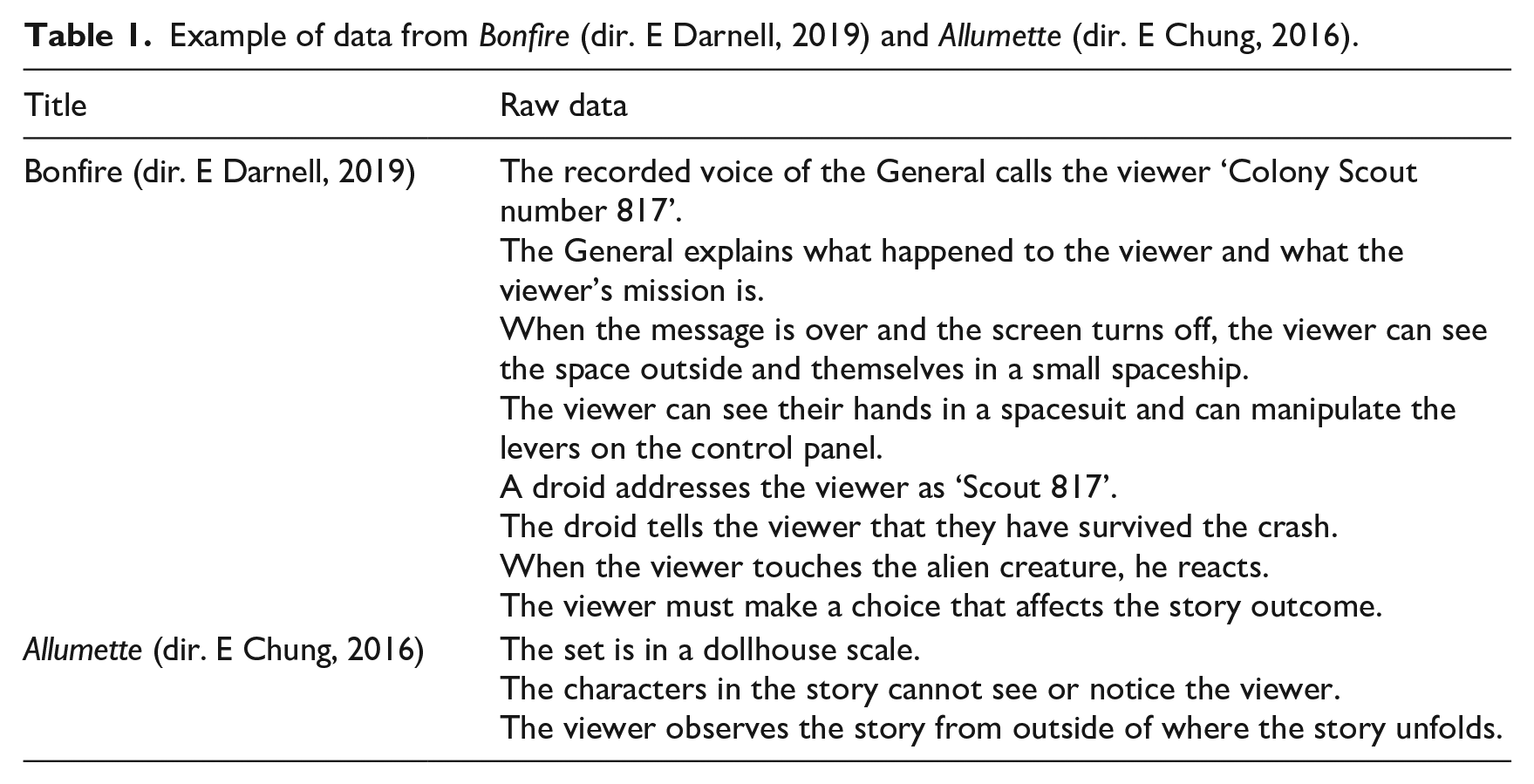
During the revision of the raw data, less relevant observations that did not directly contribute to the research questions were discarded. Through this data preparation phase, the collected data were refined, organized and simplified to facilitate subsequent thematic analysis. This process ensured that the dataset focused specifically on the viewer’s identities and roles in relation to the research questions, laying the groundwork for further analysis and the identification of meaningful themes within the data.
After thoroughly preparing and familiarizing ourselves with the data, we proceeded with the analysis and labelling process to generate initial codes for systematic analysis (see Table 2). These codes were developed in alignment with the main research goals and aimed to succinctly describe the content of the data (e.g. ‘addressing the viewer with a name’ and ‘being given a visible body’). However, some codes went beyond mere description and provided interpretive labels based on relevant concepts discussed earlier in the study, such as ‘viewer visibility’ and ‘directed viewing’. As Braun and Clarke (2022) note, codes typically comprise a combination of descriptive and interpretive elements.
Sample of the coding process for 2 of the animated VR experiences. For the full table, see Appendix. Please note that the final codes in the last column on the right were derived from the comprehensive analysis of all 22 VR animations. As a result, the final codes may not align directly with the rows containing the raw data or initial codes.
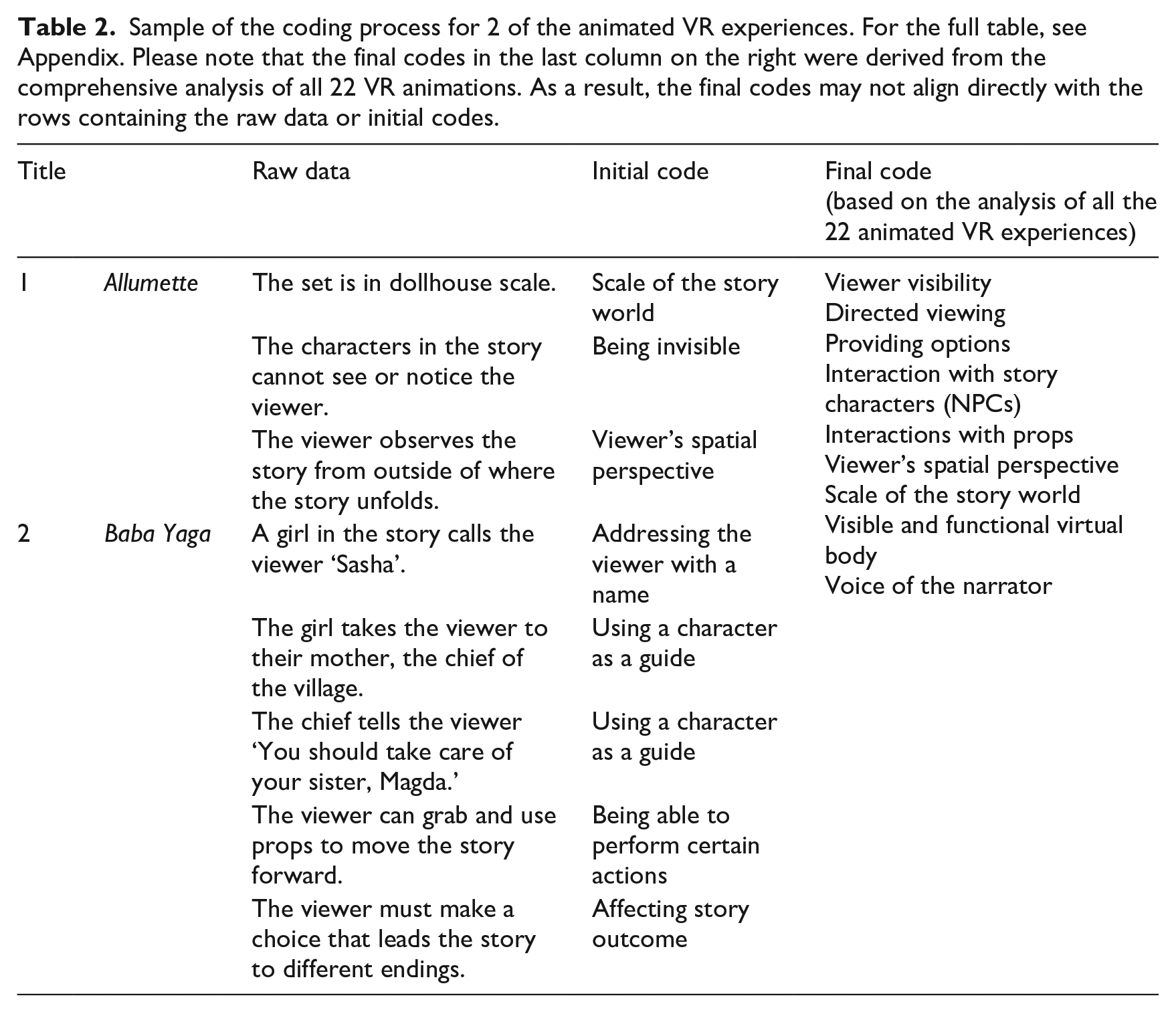
In our analysis, we conducted a detailed coding process to discern the underlying strategies and techniques employed in 22 animated VR experiences. However, as an example we have included the details of the coding process for only two of the animated VR experiences (Allumette and Baba Yaga) in Table 2. For a comprehensive overview of the coding process and additional examples, please refer to the complete table available in Appendix.
Employing a consistent coding approach, all collected data underwent the same coding process, resulting in the generation of nine potential codes from the dataset, as seen in the last column on the right on Table 2. Please note that the final codes, listed in the last column on the right in this table, were derived from the analysis of all 22 VR animations. As a result, individual final codes may not align directly with the raw data or initial codes in the same rows in Table 2. Following Braun and Clarke’s (2022) recommendation, we engaged in iterative reviews and modifications of the data and codes for each data item to ensure the development of clear and refined final codes. Consequently, certain initial codes were revised, eliminated, or amalgamated into new codes. For instance, the codes ‘making eye contact’, ‘interaction with characters’ and ‘using character as a guide’ were consolidated into the new code ‘interaction with characters’, which highlights the role of characters in helping viewers identify their roles within the VR narratives.
Once the dataset was fully coded, we sorted the data according to the final codes, as suggested by Braun and Clarke (2022). This sorting process allowed for a careful examination of code relevance and precision. The complete coding process can be observed in Table A1 in the Appendix, which demonstrates the initial codes, final codes and associated data segments.
Key findings and insights into viewer engagement
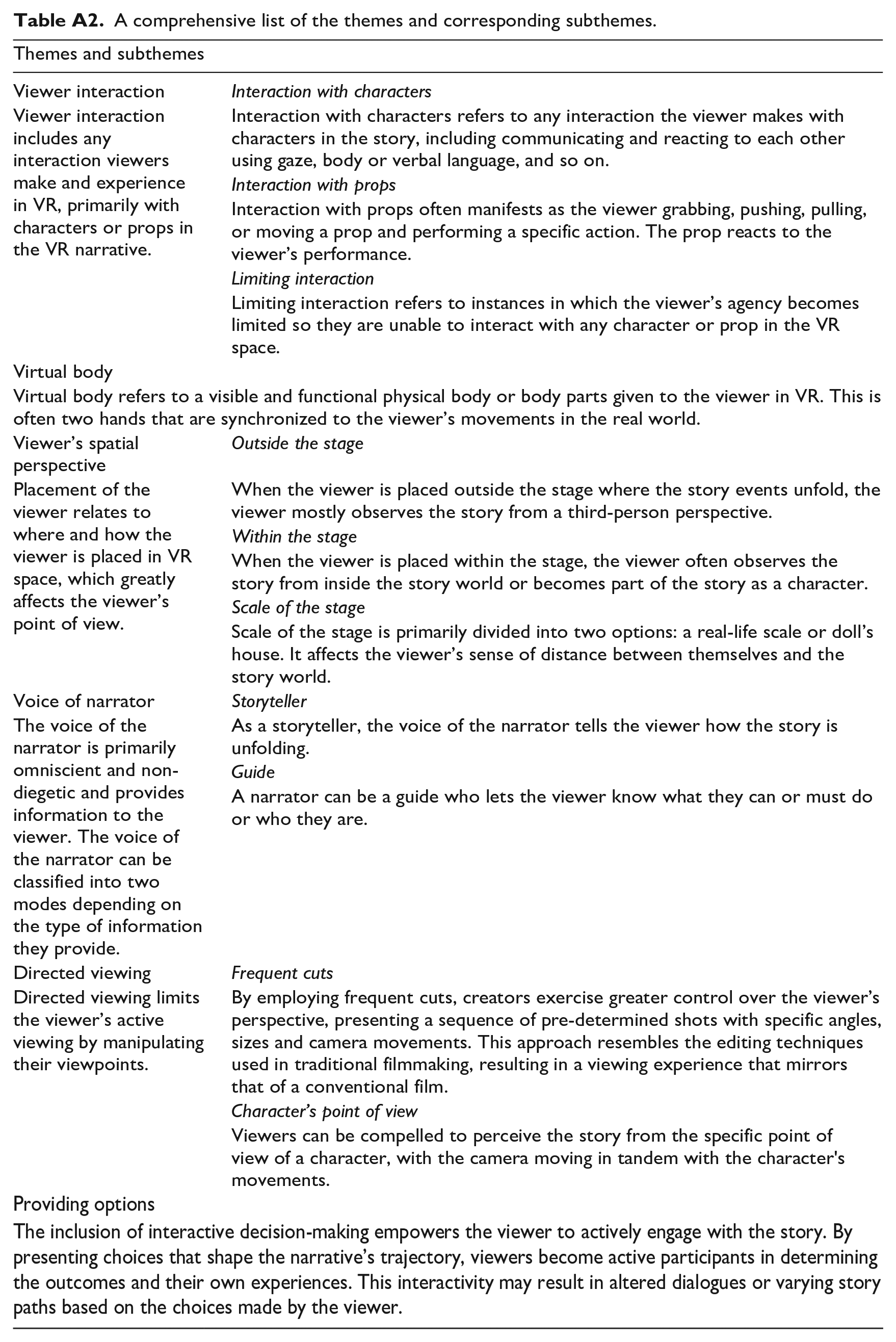
To generate meaningful themes, as suggested by Braun and Clarke (2022), the coded data were carefully examined to identify similarities and areas of overlap, thereby uncovering coherent and meaningful patterns within the data. In this study, subthemes, which represent subcomponents of the themes, were also derived and categorized. Considering the main research question of this study, the generated themes and subthemes were developed with a focus on strategies and techniques utilized in storytelling in animated VR narratives. These themes where labelled as follows: viewer interaction, virtual body, viewer’s spatial perspective, voice of narrator, directed viewing and providing options (for a comprehensive list of themes and subthemes, please see the Appendix). After labelling the themes and subthemes, concise definitions were formulated to capture their essence.
The first theme, ‘viewer interaction’, emerged as a fundamental aspect of viewer engagement within VR narratives. This theme encompasses various forms of interaction, including performing actions, making choices and engaging in meaningful exchanges with characters or objects within the virtual environment. The subthemes of viewer interaction include ‘interaction with characters’, which refers to any interaction the viewer makes with characters in the story, such as communicating and reacting to each other using gaze, body, or verbal language. They also include ‘interaction with props’ that often manifests in the viewer grabbing, pushing, pulling, or moving a prop and performing a specific action while the prop reacts to the viewer’s interaction. Moreover, the third subtheme under this category is ‘limiting interaction’, which refers to instances in which the viewer’s agency becomes limited, so they are unable to interact with any character or prop in the VR space.
Aylett and Louchart (2003) contend that interactivity is a key feature of VR narratives, setting them apart from traditional medium of film where the viewing experience is passive. In VR, the experience becomes actively engaging, allowing viewers to significantly shape the narrative and their own experiences through their actions and reactions within the virtual environment. Wang et al. (2021) suggest that interactivity and immersion in virtual reality are closely intertwined, with effective immersion requiring the integration of interaction with narratives. Interactivity empowers viewers to manipulate the VR environment, enabling active involvement in the virtual narrative (Aylett and Louchart, 2003).
The challenge of integrating user interaction with pre-defined narrative structures in VR storytelling is encapsulated in the concept of the ‘narrative paradox’, which was alluded to by Aylett and Louchart (2003). They highlight the difficulty of balancing the viewer’s agency with the need for narrative coherence. Traditional narrative theories often treat narrative as a static artefact, but VR requires a dynamic, process-oriented approach where the story potentially emerges from user interactions. Our study supports this process-oriented view by demonstrating that interactive elements enhance the viewer’s sense of agency and immersion. For example, in Baba Yaga (dir. E Darnell and M Chelebourg, 2021), viewers actively participate in the narrative by making choices that influence the story’s outcome. This aligns with Aylett and Louchart’s (2003) argument that VR narratives should be flexible and responsive to user input, allowing for a more personalized and immersive experience.
Interactive elements lead to a higher sense of immersion because they enable the viewer to have a direct impact on the unfolding of the narrative. This active participation makes the viewer feel more integrated into the virtual world, as their actions and decisions are acknowledged and have tangible consequences within the story. When viewers can see the effects of their interactions, it reinforces their presence in the virtual environment, making the experience more believable and engaging. This heightened sense of agency, where viewers perceive that they are not merely passive observers but active participants, deepens their emotional and cognitive involvement, thereby enhancing overall immersion.
Slater’s (2009) concepts of Place Illusion (Pi) and Plausibility Illusion (Psi) are useful in understanding the enhanced sense of immersion in VR as a result of viewer interaction. Pi refers to the sensation of being physically present in the virtual environment, a feeling that is significantly heightened when interactive elements allow the viewer to navigate and manipulate the VR space freely. For instance, in Wolves in the Walls (dir. P Billington, 2019), the viewer’s embodiment is reinforced by providing them with a virtual body, which creates a strong sense of Pi. This virtual embodiment enables viewers to interact with the environment and characters, solidifying their sense of presence and making the virtual experience more tangible and convincing. On the other hand, Psi pertains to the degree to which events in the virtual environment are perceived as plausible, achieved when the virtual world reacts to the viewer’s actions in a coherent and consistent manner. In Baba Yaga (dir. E Darnell and M Chelebourg, 2021), the viewer’s presence is acknowledged by the characters within the story and the choices made by the viewer influence the narrative’s outcome. This active acknowledgement and the consequential changes in the storyline enhance Psi, making the experience more engaging and believable. Together, Pi and Psi contribute to a deeply immersive VR experience by ensuring that viewers feel both physically present and influential within the virtual narrative, thereby heightening their overall engagement and emotional connection to the story. By embracing a user-centric approach and focusing on emergent narratives, VR creators can craft stories that are not only engaging but also deeply immersive, providing a unique and satisfying experience for each viewer.
The second theme, ‘virtual body’, explores the incorporation of a visible and functional virtual body for the viewer. This theme can be understood by linking it to the concept of embodiment or body transfer, as highlighted in previous VR studies. Embodiment in VR refers to the sense of presence within virtual environments, where individuals perceive their virtual bodies as extensions of their physical bodies (Kilteni et al., 2012). Slater et al. (2010a) describe embodiment as a critical element in creating a sense of presence or the feeling of ‘being there’ in the virtual world. Furthermore, Louie et al. (2018) suggest that the psychological mechanism of ‘body transfer’ or embodiment can enhance empathy in VR by using digital representations of the viewer’s body or body parts, enabling individuals to experience the virtual world through these representations. Our findings reveal that providing the viewer with a virtual representation enhances embodiment and spatial presence within the VR experience. By embodying an avatar or possessing virtual limbs, viewers are more likely to identify with their virtual counterparts and roles, fostering a heightened sense of presence and immersion.
The third theme, ‘viewer’s spatial perspective’, pertains to the positioning and perspective of the viewer within the virtual environment. We identified three subthemes in this category. The first subtheme, ‘outside the stage’, occurs when the viewer is placed outside the stage where the story events unfold, therefore the viewer mostly observes the story from a third-person perspective. The second subtheme, ‘within the stage’, occurs when the viewer is placed within the stage, thus the viewer often observes the story from inside the story world or becomes part of the story as a character. The third subtheme, which we call ‘scale of the stage’, refers to the use of the scale of the story environment to define viewer’s role and identity. Scale of the stage affects the viewer’s sense of distance between themselves and the story world and is primarily divided into two options: a real-life scale or doll’s house. For example, when viewers find themselves situated in a doll’s house-scale world, they might not anticipate being involved in the narrative as a character, especially if other characters exist at vastly different scales. Conversely, the situation could be reversed when viewers are immersed in a virtual world at real-life scale. Therefore, careful placement and perspective selection play a crucial role in shaping the viewer’s understanding of their role in the story. Through deliberate positioning, such as placing the viewer in a doll’s house scale or altering their perspective, creators can evoke specific emotional responses and reinforce the viewer’s role.
The fourth theme, ‘voice of narrator’, highlights the significance of narrative guidance provided by a narrator within VR storytelling. By leveraging the narrator’s voice and storytelling techniques, creators can immerse viewers in the narrative world, and guide their perceptions and interpretations. The narrator’s voice serves as a storytelling tool, providing context and emotional cues to enhance the viewer’s engagement with their role in the narrative. Two subthemes have been identified for this category: ‘storyteller’ and ‘guide’. As a storyteller, the voice of the narrator tells the viewer how the story is unfolding, whereas a guide informs the viewer of what they can or must do or who they are.
The fifth theme, ‘directed viewing’, which has been explored by researchers and practitioners such as Brillhart (2019) and Hodgkinson (2019), examines instances wherein the viewer’s perspective and attention are intentionally directed by strategies such as editing or camera movements, shaping their identity and role in the story. The concept of directed viewing in VR is crucial for maintaining narrative coherence while allowing viewer agency. Directed viewing involves techniques such as guiding the viewer’s focus through camera movements or narrative cues. This concept has been discussed in both general VR practice and academic analyses. For example, as discussed earlier, Brillhart (2019) introduced the idea of using ‘points of interest’ to guide viewers not only between scenes but also between different viewpoints, facilitating a more natural navigation of spatial narratives. In our study, we observed the use of directed viewing in several VR experiences. The findings indicate that controlled and directed viewing experiences allow creators to guide the viewer’s focus, ensuring that crucial story elements are conveyed effectively. These dynamic storytelling techniques can influence the viewer’s attention and emotional response to their role in the narrative. For example, the anchored placement of the viewer in Lost (dir. S Unseld, 2015), combined with the absence of cinematic cuts or rapid camera movements, signals to the viewer that their role is an active participant, physically placed within the jungle setting where the story unfolds, rather than a passive distant spectator.
As another example, Rebels (dir. FM Breser, 2021) employs frequent cuts to control the viewer’s perspective, similar to traditional film editing, not only ensuring essential narrative elements are conveyed effectively but also giving the viewer the role of a passive spectator. While the use of frequent cuts aligns with Dooley’s (2017) assertion that VR creators must guide viewers’ attention along a predetermined path to ensure crucial story elements are not missed, it also operates as a ‘role activation’ strategy. The subthemes or strategies identified under this category are ‘frequent cuts’ and ‘character’s point of view’. By employing frequent cuts, creators exercise greater control over the viewer’s perspective, presenting a sequence of pre-determined shots with specific angles, sizes and camera movements. This approach resembles the editing techniques used in traditional filmmaking, resulting in a viewing experience that mirrors that of a conventional film. On the other hand, using a character’s point of view, viewers can be compelled to perceive the story from the specific point of view of a character, with the camera moving in tandem with the character’s movements. This method ensures that the viewer’s attention is focused on key narrative elements while maintaining the immersive experience that VR offers. Balancing directed viewing with viewer agency is essential to avoid feelings of constraint or frustration. By combining these strategies, VR creators can maintain narrative coherence while allowing viewers to feel actively engaged and immersed in the story.
The sixth and final theme, ‘providing options’, explores the inclusion of decision-making opportunities within VR narratives. The findings indicate that providing viewers with meaningful choices and consequences not only enhances their engagement and sense of personal investment in the story but also effectively activates their role and identity in the VR experience. By allowing viewers to shape the narrative outcomes, creators can foster a sense of empowerment and ownership over the storytelling experience, which in turn helps the viewer assume their pre-defined role in the story. The researchers also noticed that decision-making moments provide viewers with a sense of agency and autonomy, making them active participants in the narrative progression, thereby emphasizing their identity and role within the narrative.
Translation of themes into strategies
Our thematic analysis reveals several key themes related to viewer engagement in VR narratives, which can be translated into actionable strategies for activating the identity and role of the viewer in creating VR narratives. Creators can further enhance the immersive experience by implementing specific strategies designed to engage the viewer more deeply and clarify their role within the narrative based on the themes and sub-themes presented in Table A2 in the Appendix. These strategies help viewers to understand and embody their identity in the story world.
Viewer interaction is a fundamental theme that encompasses various forms of interaction, including actions, choices and meaningful exchanges with characters and objects within the virtual environment. With careful implementation of viewer interaction, creators can make scenarios where characters directly address the viewer, prompting responses through gaze, gestures, or voice commands. For instance, in Wolves in the Walls (dir. P Billington, 2019), viewers interact with the environment and characters, as the imaginary friend of the protagonist. This level of interaction available to the viewer helps to activate their identity and role as a character that exists in the story world. Additionally, interactive props that react to the viewer’s actions further deepen the engagement, giving the viewer further hints on their identity and role within the VR narrative.
Providing a Virtual Body is another theme that enhances embodiment and spatial presence within VR and subsequently helps in defining the viewer’s identity and role in the story. For example, by offering viewers virtual limbs that they can see and use to interact with the environment, as in Wolves in the Walls (dir. P Billington, 2019), creators can signal the viewer about their identity and role in the VR narrative (see Figure 1). Moreover, interactive elements that allow the virtual world to respond coherently to the viewer’s actions, such as the acknowledgment of the viewer’s presence (which confirms that the viewer’s virtual body is visible to the story characters) in Baba Yaga (dir. E Darnell and M Chelebourg, 2021), not only makes the experience more believable and engaging through enhancing Psi, but also helps the viewer to understand their identity and role in the VR experience.
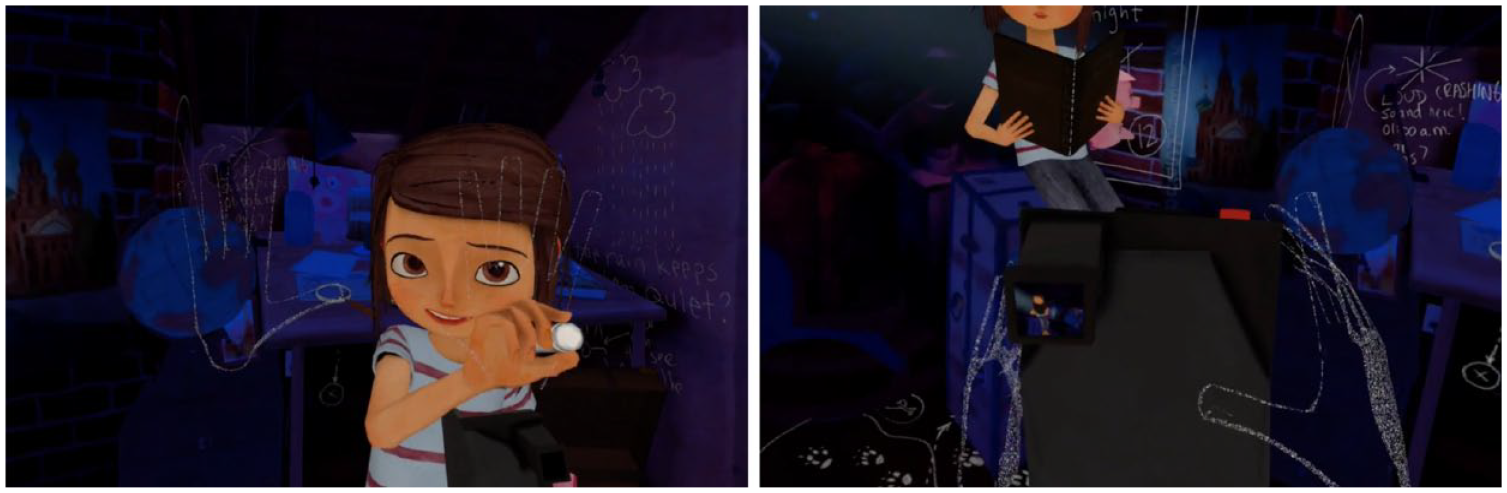
Screen grabs from screen casting of the VR experience Wolves in the Walls (dir. P Billington 2019). Left: the viewer obtains virtual body through an interaction with the character, which offers the viewer a new virtual identity as an imaginary friend of the main character. Right: the viewer can actively participate in the narrative with the functional virtual hands, that the main character of the story has given him/her. © Image reproduced courtesy of Fable Studio.
Similarly, Viewer’s Spatial Perspective plays a critical role in shaping their experience and identity. Strategic positioning, such as placing viewers in a doll’s house-scale world in Allumette (dir. E Chung, 2016), can reinforce the viewer’s role. This specific positioning of the viewer in the story world creates a sense of distance compared to when the viewer is placed within the same scale and setting as the characters. These distinct spatial perspectives emphasize different roles within the narrative. When viewers observe from a doll’s house-scale vantage point, they may feel like omniscient observers, detached from, yet deeply engaged in, the unfolding events. Conversely, positioning them at the same scale as the characters fosters a sense of involvement and direct participation somewhat like the other characters in the story world. When viewers are positioned within the narrative space in ways that emphasize their role, they potentially experience a more immersive and emotionally engaging story. So, through different approaches to Strategic Positioning, creators can create a sense of distance or involvement, depending on the narrative’s requirements.
Voice of Narrator serves as a guide and storyteller, providing context and instructions that help viewers navigate their role within the narrative. The narrator’s voice can be used to inform viewers of their role and guide their actions. In Crow: The Legend (dir. E Darnell, 2018), the narrator not only tells the story but also guides the viewer through the narrative, reinforcing their role as the spirit of the seasons. Strategies that thoughtfully utilize the narrator as both a storyteller and/or a guide can significantly enhance narrative engagement, providing a direct method for activating the viewer’s identity and role within the story.
Providing Options integrates decision-making points within the narrative where viewers can influence the story’s direction. Ensuring these choices have visible and meaningful consequences not only fosters a sense of ownership and investment in the story but also potentially gives the viewer hints as to their identity and role in the VR narrative. In Baba Yaga (dir. E Darnell and M Chelebourg, 2021), for instance, viewers make choices that impact the story’s outcome, thereby enhancing their involvement and emotional connection to the narrative. At the same time, providing these decision-making points helps to establish the identity and role of the viewer in the VR world of the story.
Implementation of role activation strategies
Drawing from our observations of the implementations of these strategies in current VR narratives, several key considerations arise for future VR creators. Our findings show that the viewer’s engagement and experience can vary greatly depending on their role within the narrative. For instance, in Baba Yaga (dir. E Darnell and M Chelebourg, 2021), the viewer assumes the role of the main character, the chief’s daughter, experiencing the narrative from a first-person POV. Similarly, in Wolves in the Walls (dir. P Billington, 2019), the viewer takes on the role of a supporting character, the protagonist’s imaginary friend, engaging in the narrative from a first-person peripheral perspective. In both cases, the viewer actively participates in the story by completing tasks and interacting with characters and environments. This active involvement and agency can lead to a higher sense of immersion. In contrast, in Crow: The Legend (dir. E Darnell, 2018), viewers primarily experience the story as ghostly observers through a third-person multiple perspective. They have access to all the information known to the characters but remain unseen and unacknowledged by them. The limited role of an observer allows the viewer to witness the hero’s journey with restricted agency and interactivity. However, the creators enhance viewer engagement by offering multiple perspectives. While most characters in the narrative do not recognize the viewer, the character ‘God’ and the narrator do acknowledge and interact with them, creating moments of connection and interaction. This limited role as an observer allows the viewer to witness the hero’s journey but provides less agency and interactivity. The role of the viewer as an observer with third-person omniscient perspective, as seen in Four Stories (dir. N Ladd 2020), creates further limitations, with the viewer mainly spectating the events from a set of selectable fixed perspectives. However, as noted by Dooley (2021), fully passive viewing does not exist in VR as viewers still actively choose their viewing angles and explore the environment.
The results of the thematic analysis also highlight the use of multiple roles within a single VR narrative. In animations such as Invasion! (dir. E Darnell, 2016) and Baba Yaga (dir. E Darnell and M Chelebourg, 2021), the viewer predominantly assumes the role of the main character in a first-person perspective. However, there are moments in which the viewer temporarily becomes an observer who receives important narrative information. This combination of roles allows creators to leverage the strengths of each role while compensating for their limitations. As such, it is important to consider that the strategies and themes mentioned in this section are not mutually exclusive. They can be used together in the same animated VR experience to effectively drive the narrative as an engaging experience for users.
The thematic analysis provides a classification of different strategies for activating the viewer’s role in VR narratives. These strategies involve the use of different elements and approaches. Most animations investigated in this study employ a combination of strategies. For example, in Invasion! (ed. P Darnell, 2016), the viewer’s activation as a rabbit character involves the elements of viewer interaction, virtual embodiment and strategic placement. These elements collectively contribute to the viewer’s identification as a character within the story. Allumette (dir. E Chung, 2016) positions the viewer as an observer through strategic placement outside the main stage, accompanied by limited interaction. Similar effects were observed in other animations, which establish the viewer as an observer while incorporating certain exceptions for the viewer in a supporting role or other roles. For instance, in Wolves in the Walls (dir. P Billington, 2019), the activation of the viewer’s role (as an imaginary friend of the main character) is achieved through a combination of viewer interaction, embodiment (see Figure 1) and strategic viewer placement. Drawing upon the perspectives of Slater et al. (2010b), Lindgren et al. (2016) and Ahn et al. (2016), one could argue that the creation of a realistic virtual body and the engagement in embodied interactions within the immersive virtual environment significantly impact viewer engagement and immersion. In essence, the activation of the viewer’s role through these layered techniques results in a profound sense of immersion and the ability to embody the narrative’s provided identity. These integrated elements collectively contribute to the viewer’s successful identification as a character within the narrative.
Furthermore, we observed that the activation of the viewer’s role typically occurs throughout the narrative. Initial activation may occur shortly after the story’s commencement, especially when considering the short duration of VR experiences (Dooley, 2021). However, activation continues throughout the narrative to ensure that the viewer maintains their role or to introduce new layers of the role. In Crow: The Legend (dir. E Darnell, 2018), for instance, the viewer’s role as ‘the spirit of the seasons’ is activated through the narrator’s voice and the provision of a virtual body. The limited interaction and the viewer’s position as an observer adds credibility to their identity as a spirit, although, in our assessment, it also creates a sense of distance from the story world. During crow’s journey in space, directed viewing techniques are employed to make the viewer feel disoriented and less present, reinforcing their role as an observer. However, interactions with a character, the god of the spirit, bring the viewer back into the story as the spirit of the seasons, with the character addressing the viewer by name, making eye contact and involving them in using their virtual hands to exercise their magical powers. In Baba Yaga (dir. E Darnell and M Chelebourg, 2021), an activation occurs in the middle of the narrative, adding another layer to the viewer’s role. The initial experience involves the viewer as the main character, perceiving the story from a first-person point of view. However, specific scenes place the viewer outside the story world, devoid of a virtual body, while listening to the omniscient voice of the narrator. These scenes provide essential information about the narrative setup, such as the history of the forests and the immigrant settlement. These third-person perspective scenes efficiently deliver crucial information while still pairing with the immersive experience of being the main character. The use of multiple roles within a single narrative compensates for the strengths and weaknesses associated with each role, thus enhancing the overall viewer experience.
This exploration into the implementation of role activation strategies in VR narratives reveals the dynamic and complex nature of viewer engagement in virtual environments. It underscores the importance of thoughtful design and the strategic use of interactive elements to craft experiences that are not only immersive but also deeply resonant with viewers. The ability to navigate between different roles within a single narrative highlights the versatility of VR as a storytelling medium, offering a spectrum of experiences from passive observation to active participation. Such diversity in engagement emphasizes the need for creators to be mindful of the balance between narrative guidance and viewer autonomy, ensuring a richly interactive experience that respects the viewer’s desire for exploration and discovery. By embracing these insights, VR creators can push the boundaries of traditional storytelling, offering narratives that are as diverse and multifaceted as the audiences that engage with them.
Beyond the virtual horizon: Conclusions and future pathways
This research aimed to explore the role of the viewer in narrative-based VR experiences and the techniques used to activate the viewer’s role within them. Using thematic analysis, we have identified various types of viewer roles as well as various strategies employed to guide viewers in identifying their roles within the narrative. This study contributes to the understanding of viewer engagement and immersion in narrative-based VR. The identified themes and strategies provide valuable guidance for VR creators in crafting compelling and immersive storytelling experiences. As VR continues to evolve as a medium, further research and experimentation can contribute to the ongoing development of VR storytelling techniques and the enhancement of viewer experiences.
This study has significant importance within the rapidly evolving landscape of VR. The fast evolution of VR hardware and software, substantial investments by industry leaders and the growing interest in VR experiences underscore the need to understand and leverage the potential of this immersive medium. This research contributes to the development and theorization of a new grammar for VR storytelling, aligning with the unique immersive qualities of VR. By exploring the identities and roles of viewers in animated VR experiences, this study advances our understanding of how to effectively engage audiences and optimize storytelling in VR. Furthermore, the findings of this research have practical implications for creators. By comprehending the diverse roles viewers can assume and the strategies employed to activate these roles, creators can enhance user engagement and craft more compelling VR experiences. This study provides valuable insights and recommendations to empower creators in leveraging the immersive potential of VR storytelling. In addition, this research holds significance because it bridges theory and practice in the field of animated VR experiences, contributing to the theoretical understanding and practical application of VR storytelling. By addressing the evolving VR landscape and providing insights for creators, this study facilitates the development of engaging, immersive and impactful VR narratives.
While this study aimed to explore the strategies and techniques employed to activate the viewer’s role in VR narratives, several limitations should be acknowledged. One notable limitation of this study is the restricted sample size of animated VR experiences. Due to the relatively nascent nature of VR as a storytelling medium, the availability of animated VR content was limited during the course of this research project. Consequently, the analysis was conducted on a relatively small number of VR narratives, potentially affecting the generalizability of the findings. Another limitation pertains to the subjective nature of coding and theme generation. Despite efforts to ensure rigour and objectivity, the process of coding and generating themes is inherently influenced by the researchers’ interpretation and biases. Alternative researchers or coding approaches may have yielded different themes or subthemes, introducing a degree of subjectivity in the analysis. Finally, this study primarily focused on an analysis of VR narratives from the perspective of the researcher. However, the exclusion of user perspectives and experiences represents a limitation. Incorporating user feedback, such as interviews or surveys, could have provided valuable insights into the immersive qualities and effectiveness of the identified strategies and techniques in activating the viewer’s role.
This study sheds light on the strategies and techniques utilized to activate the viewer’s role in VR storytelling. However, several avenues for further research can be pursued to enhance our understanding of this evolving field. Given the limited availability of animated VR experiences at the time of writing this article, future research should aim to increase the sample size to include a more diverse range of VR narratives. This expansion would enable a broader exploration of the strategies and techniques employed in activating the viewer’s role, leading to more comprehensive insights and potentially uncovering new patterns. To mitigate the inherent subjectivity in coding and theme generation, future studies could explore the use of alternative coding approaches and perspectives. Comparative analyses of different coding frameworks or the involvement of multiple researchers with varied backgrounds could provide valuable insights into the nuances and variations of viewer activation strategies in VR narratives. To bridge the gap between theoretical analysis and practical application, further research should incorporate user perspectives and experiences. Conducting studies that involve direct observation and investigation of viewers’ reactions and experiences with VR animations that employ the identified strategies could offer valuable insights into the effectiveness and impact of these techniques. User feedback, obtained through interviews, surveys, or user testing sessions, can also provide valuable data to validate and refine the findings of this study. By conducting research that expands the sample size, explores alternative coding approaches and incorporates user perspectives, future studies can contribute to the ongoing development of the grammar of VR storytelling. This, in turn, will provide a more robust foundation for creators seeking to employ these tools effectively in their VR narratives. Ultimately, the combination of practical experimentation and viewer-focused investigations will further advance our understanding of how strategies for role activation in VR can be refined and optimized.
As we stand on the brink of new narrative frontiers in virtual reality, this study underscores the critical role of viewer-centric design in shaping the future of storytelling. The insights garnered from our exploration into viewer roles and activation strategies illuminate a path forward where stories are not merely told but experienced in immersive, multifaceted worlds. This journey into VR storytelling reveals an exciting potential for narratives that adapt, respond and evolve with viewer interaction, suggesting a future where storytelling is as dynamic and varied as the audiences it seeks to engage.
Footnotes
Appendix
A comprehensive list of the themes and corresponding subthemes.
| Themes and subthemes | |
|---|---|
| Viewer interaction | Interaction with characters |
| Viewer interaction includes any interaction viewers make and experience in VR, primarily with characters or props in the VR narrative. | Interaction with characters refers to any interaction the viewer makes with characters in the story, including communicating and reacting to each other using gaze, body or verbal language, and so on. |
| Interaction with props | |
| Interaction with props often manifests as the viewer grabbing, pushing, pulling, or moving a prop and performing a specific action. The prop reacts to the viewer’s performance. | |
| Limiting interaction | |
| Limiting interaction refers to instances in which the viewer’s agency becomes limited so they are unable to interact with any character or prop in the VR space. | |
| Virtual body | |
| Virtual body refers to a visible and functional physical body or body parts given to the viewer in VR. This is often two hands that are synchronized to the viewer’s movements in the real world. | |
| Viewer’s spatial perspective | Outside the stage |
| Placement of the viewer relates to where and how the viewer is placed in VR space, which greatly affects the viewer’s point of view. | When the viewer is placed outside the stage where the story events unfold, the viewer mostly observes the story from a third-person perspective. |
| Within the stage | |
| When the viewer is placed within the stage, the viewer often observes the story from inside the story world or becomes part of the story as a character. | |
| Scale of the stage | |
| Scale of the stage is primarily divided into two options: a real-life scale or doll’s house. It affects the viewer’s sense of distance between themselves and the story world. | |
| Voice of narrator | Storyteller |
| The voice of the narrator is primarily omniscient and non-diegetic and provides information to the viewer. The voice of the narrator can be classified into two modes depending on the type of information they provide. | As a storyteller, the voice of the narrator tells the viewer how the story is unfolding. |
| Guide | |
| A narrator can be a guide who lets the viewer know what they can or must do or who they are. | |
| Directed viewing | Frequent cuts |
| Directed viewing limits the viewer’s active viewing by manipulating their viewpoints. | By employing frequent cuts, creators exercise greater control over the viewer’s perspective, presenting a sequence of pre-determined shots with specific angles, sizes and camera movements. This approach resembles the editing techniques used in traditional filmmaking, resulting in a viewing experience that mirrors that of a conventional film. |
| Character’s point of view | |
| Viewers can be compelled to perceive the story from the specific point of view of a character, with the camera moving in tandem with the character's movements. | |
| Providing options | |
| The inclusion of interactive decision-making empowers the viewer to actively engage with the story. By presenting choices that shape the narrative’s trajectory, viewers become active participants in determining the outcomes and their own experiences. This interactivity may result in altered dialogues or varying story paths based on the choices made by the viewer. | |
Declaration of conflicting interests
The authors declared no potential conflicts of interest with respect to the research, authorship and publication of this article.
Funding
The authors received no financial support for the research, authorship and publication of this article.
Notes
Author biographies
Email: