




Abstract
This qualitative study examined the perceptions of 42 fifth-grade students (ages 11–12) along with 8 staff members, 9 ornithologists, and 10 high-tech experts who participated in a hackathon event. This was the culmination of a learning process designed to find environmental, technological, and humane solutions to the competition between the Lesser Kestrel (native species) and the Myna (invasive species). Using three sources of data gathering—analyses of drawings, an open questionnaire, and focus group interviews—the study examined to what extent, if any, a hackathon, as a pedagogical tool, might promote environmental citizenship principles among fifth graders according to Berkowitz’s components of environmental citizenship. The findings show that the students expanded their ecological literacy, discussed civic literacy characteristics, adopted environmental values and their self-efficacy to act to find an environmental, technological, and human solution to the competition between the Lesser Kestrel-Myna interaction. Therefore, it can be said that the educational program and the hackathon succeeded in promoting environmental citizenship according to Berkowitz’s components.
Introduction
Environmental citizenship, a pivotal concept in addressing contemporary environmental challenges, denotes the active engagement of citizens in matters concerning the environment (Monte and Reis, 2021) in the realm of biodiversity conservation, among other things (de Freitas et al., 2023). This engagement is particularly crucial in elementary education, where a foundation for environmental citizenship can be laid, equipping students with the essential skills, knowledge, attitudes, values, and beliefs needed to confront environmental issues (Georgiou et al., 2021; Hadjichambis et al., 2020).
Recent literature highlights innovative trends in fostering environmental citizenship among elementary school students actively involved in biodiversity conservation (de Freitas et al., 2023; Pessoa et al., 2024). Inquiry-based learning and civic participation emerge as noteworthy pedagogical approaches employed to instill environmental citizenship (Avsar Erumit et al., 2023). Inquiry-based learning immerses students in real-world environmental issues, empowering them to explore and devise solutions. Concurrently, civic participation encourages students to take tangible actions for environmental change within their communities (Hadjichambis et al., 2020).
A key dimension in advancing environmental citizenship lies in integrating local and global scales, individual and collective dimensions, and public and private spheres (Georgiou et al., 2021; Hadjichambis & Reis, 2020). This holistic approach prompts students to consider the environmental ramifications of their personal choices and actions, as well as the collective impact of their local and global communities. It further encourages active participation in both public and private environmental initiatives (Hadjichambis et al., 2020). Additionally, an exploration into teachers’ perceptions and professional development regarding environmental citizenship underscores the pivotal role educators play in shaping students’ environmental consciousness (Georgiou et al., 2021).
Finally, the examination of factors influencing students’ conservation priorities and behaviors unveils the multifaceted nature of environmental citizenship. Shaped by past experiences and socio-economic and familial contexts, students’ perceptions and values regarding different aspects of biodiversity are critical. Understanding the motivations driving students to engage in conservation actions becomes paramount in tailoring effective strategies to nurture environmental citizenship among the younger generation (Monte and Reis, 2021; Rosalino et al., 2017).
Drawing from the nexus of nurturing environmental citizenship among fifth-grade students aged 11–12, with an emphasis on biodiversity conservation and the evolving landscape of environmental citizenship research, this study explores inquiry-based learning within the framework of a hackathon event. This educational approach seamlessly integrates global environmental issues while simultaneously addressing individual and collective perspectives. The central objective is to mitigate the competition between the Lesser Kestrel, a native species, and the Myna, an invasive species, through a collaborative, community-centered event. This hackathon engages students, parents, ornithologists, and high-tech professionals, fostering a holistic approach to problem-solving and environmental stewardship.
A hackathon serves as a pedagogical tool due to its unique ability to facilitate hands-on, collaborative learning experiences. Unlike traditional educational methods, hackathons provide an immersive environment where participants actively engage in problem-solving, innovation, and skill development. This format encourages experiential learning, allowing individuals to apply theoretical knowledge to real-world challenges. In educational settings, hackathons promote critical thinking, teamwork, and creativity, as participants work together to find solutions within a limited timeframe. Additionally, the interdisciplinary nature of hackathons fosters a holistic approach to problem-solving, integrating various perspectives and skills. The pedagogical value of hackathons lies in their capacity to bridge the gap between theory and practice, empowering participants with practical skills, a problem-solving mindset, and a collaborative spirit (Falk et al., 2022; Garcia, 2022; Granados and Pareja-Eastaway, 2019; Kangro and Katri-Liis, 2022; Wallwey et al., 2022).
Since deployment of hackathons in elementary schools is almost unrecognized in general (Garcia, 2022), and as a pedagogical tool to encourage environmental citizenship in particular, the innovation of the study is by examining the attempt to apply environmental citizenship principles via the hackathon among fifth graders. Therefore, the question posed in this study revolves around investigating the impact of a hackathon, employed as a pedagogical tool, on the promotion of environmental citizenship principles among fifth graders (age 11–12) according to Berkowitz’s components of environmental citizenship. Specifically, the study aims to ascertain the extent, if any, to which a hackathon contributes to fostering environmental citizenship values, attitudes, and behaviors within this particular educational context. By exploring the outcomes of the hackathon as a pedagogical intervention, the research seeks to provide insights into the effectiveness of this innovative approach in instilling a sense of environmental responsibility and engagement among fifth-grade students.
Conceptual framework
In accordance with the research question, the conceptual framework focuses on two main issues: The first is environmental citizenship and the second is the hackathon as a pedagogical tool.
Environmental citizenship
The concept of environmental citizenship is not new (Rosalino et al., 2017; Stern, 2000; van Harskamp et al., 2021). Despite this, and because for more than four decades, research has examined this concept (Ahmed and Mohammed, 2022), there are many interpretations of environmental citizenship (Ariza et al., 2021; Hadjichambis and Paraskeva-Hadjichambi, 2020; Idrissi et al., 2021; Rosalino et al., 2017). For example, there are those (European Commission/EACEA/Eurydice, 2017) who have felt that environmental education should assist knowledge acquisition, skills, approaches, and values in four main areas: effective and constructive interaction with others; critical thinking; social responsibility; and democratic activity. Others (Rosalino et al., 2017), claim that environmental citizenship should include ecological literacy, rights and obligations of citizens within the community, environmental values, skills that help make decisions in the environmental context and active involvement in the environment. The various definitions of environmental citizenship can be found in the knowledge, skills, positions, and values, as citizens and work for various environmental aspects in the private and public sphere while examining its influences at the local, national level, and international level (Obasi and Osah, 2022; Rosalino et al., 2017). To address present-day environmental, social, and economic crises expressed in social injustice, environmental injustice, and economic injustice, it is incumbent upon students to learn environmental citizenship. In fact, environmental citizenship is intended to increase citizens’ empowerment in their ability to influence and improve life’s welfare (European Commission/EACEA/Eurydice, 2017; Obasi and Osah, 2022).
When examining professional literature engaged in pedagogy to promote environmental citizenship, a variety of pedagogical approaches have been designed to promote this subject matter (Albanesi et al., 2023; Berkowitz et al., 2005; Hadjichambis and Paraskeva-Hadjichambi, 2020). These approaches focus, among others, on place-based learning, problem-based learning, civilian ecological education, ecological justice pedagogy, service learning, participation research, and social-scientific research (Rosalino et al., 2017).
Berkowitz’s approach to environmental citizenship is a possible theoretical framework to answer the research question because it provides a comprehensive and integrative perspective on the role of ecological literacy, civics literacy, and environmental citizenship in environmental education. According to this approach, environmental education should aim to develop students’ ecological knowledge, skills, attitudes, values, and beliefs, as well as their civic competences, such as critical thinking, communication, collaboration, and action-taking. These competences are essential for students to become active and responsible environmental citizens who can address environmental issues in their local and global contexts (Berkowitz et al., 2005).
The hackathon
A hackathon is a collaborative event where participants work in teams to solve a specific problem or challenge, usually related to technology, innovation, or social impact (Falk et al., 2022; Gama et al., 2022; Ghouila et al., 2018). Therefore, the hackathon can be seen as a pedagogy that embraces inquiry-based learning due to its fundamental structure and objectives. In a hackathon, participants are presented with real-world challenges or problems and are encouraged to explore, investigate, and innovate solutions independently or in teams. This process mirrors the inquiry-based learning approach, where learners actively engage in questioning, research, and problem-solving to construct their understanding of the topic. Throughout the hackathon, participants are encouraged to ask questions, seek information, experiment with different strategies, and collaborate with peers, fostering critical thinking, creativity, and teamwork skills. By adopting an inquiry-based approach, hackathons not only empower participants to take ownership of their learning but also cultivate a deeper understanding of the subject matter by actively engaging them in the learning process (Falk et al., 2022; Garcia, 2022; Granados and Pareja-Eastaway, 2019; Kangro and Katri-Liis, 2022; Wallwey et al., 2022).
Hackathon, as a pedagogical tool, can be aligned with Berkowitz’s approach (Berkowitz et al., 2005) to environmental citizenship, as it can foster students’ inquiry-based learning and civic participation. In the context of environmental citizenship, a hackathon can engage students in exploring real-world environmental problems and finding creative solutions, using digital tools and resources. A hackathon can also encourage students to take action for environmental change in their communities, by presenting and implementing their solutions to relevant stakeholders. Hackathon meetings, are designed to enable the activity of participants from different backgrounds, over a limited period of time as part of the attempt to find a creative solution to a problem in the real world, developed in the high-tech world (Falk et al., 2022; Garcia, 2022; Granados and Pareja-Eastaway, 2019; Kangro and Katri-Liis, 2022; Wallwey et al., 2022). In recent years, hackathons have gone beyond the boundaries of the high-tech world (Cwikel and Simhi, 2022; Falk et al., 2022; Garcia, 2022; Kangro and Katri-Liis, 2022). Hackathon sessions are designed to encourage creative thinking, innovation ‘thinking outside the box’ as part of prototyping a real-world problem (Cwikel and Simhi, 2022). The wisdom of the investors is the basis for hackathon activity. The participants who come from different backgrounds gather in small groups for a certain period of time (up to several days), while taking advantage of their personal experience and the process of dialogue (Cwikel and Simhi, 2022; Kienzler and Fontanesi, 2017). By engaging students in fun and relevant learning experiences, hackathons increase motivation and provide exposure to technology, while promoting digital literacy skills. In conclusion, hackathons offer a valuable educational tool that can contribute to the development of 21st-century skills in elementary-school students.
Methodology
Research approach
This chapter outlines the methodological framework adopted to investigate the efficacy of utilizing a hackathon as an educational tool to instill environmental citizenship principles among fifth-grade students. Embracing a qualitative approach, the research delves into the intricate dynamics and nuanced experiences of participants through the lens of a case study methodology. By employing this methodological design, the study aims to provide a rich and in-depth understanding of the phenomenon under investigation within its specific context. The qualitative paradigm was chosen for its suitability in exploring complex social phenomena, allowing for a holistic examination of the multifaceted interactions and perceptions inherent in the educational process (Hsieh and Shannon, 2005; Kinchin et al., 2000).
Within this qualitative framework, the case-study approach emerges as particularly apt, offering a focused examination of a specific group of participants—fifth-grade students engaging in a hackathon aimed at addressing environmental challenges. By adopting a case-study methodology, the research endeavors to capture the intricate interplay between individual experiences, group dynamics, and contextual factors shaping the outcomes of the hackathon. This approach facilitates the exploration of the unique perspectives, challenges, and successes encountered by participants throughout their engagement with the educational intervention (Alam, 2021; Mooijman et al., 2023; Sjoberg et al., 2020). A case study is based on the collection of data from several sources of information. The use of several sources of information, as was done in this study, enables the researcher to obtain a broader perspective of the case and to locate additional angles of investigation through the process of triangulation. The wealth of sources allows for the construction of a clearer picture of the phenomenon being studied through many examples (Brown, 2008; Stake, 2008; Yin, 2006; Zainal, 2007).
Research context
The Lesser Kestrel is a small raptor that nests inside the roofs of classrooms in a rural school in northern Israel. For more than three decades, a decline in the Lesser Kestrel’s population has been observed for a variety of reasons. One, is the lack of nesting sites. Since 1996, fifth graders have been studying in an environmental educational program with a focus on ecology. The program, written by a teacher from the same school, does not constitute any part of the national curriculum in Israel. The scientific basis of the program focuses on understanding the Lesser Kester’s life cycle and the factors that affect its survival. As part of the program, students constructed nest boxes designed for the Lesser Kestrel. Since 2015, the Myna, an invasive species, has led students to understand the existing competition between the Lesser Kestrel and the Myna. The competition constitutes the struggle over nesting in the nest boxes the students have built for the Lesser Kestrel, that were clearly not intended for the Myna. Interestingly, although the Lesser Kestrel is larger than Myna, the Lesser Kestrel fails to contest the Myna. When the Myna occupies the nest box and begins nesting, the Lesser Kestrel simply abandons the nest box area. The recognized ecological solution in Israel is killing, injuring, or diluting the Myna population, a solution that doesn’t coincide with an educational activity designed to foster environmental awareness among fifth graders (Gal, 2023). A question of ethics arises from this ecological approach. The Myna is not guilty of being an invasive species; only humanity is responsible for turning the Myna into an invasive species in Israel.
In the context of a fifth-grade activity aimed at addressing the issue of invasive species encroaching upon the nesting sites of a native species, the concept of Wicked Problems becomes evident (Agustian, 2023; Head, 2019). As the students engage with this challenge, they encounter its complexity, which extends beyond simple cause-and-effect relationships. The invasive-species dilemma intertwines economic considerations, such as the impact on local industries, with zoological concerns regarding biodiversity and ecosystem health. Moreover, cultural and ethical dimensions emerge as students grapple with questions of environmental stewardship and the rights of indigenous species. This multidimensional nature underscores the wickedness of the problem, requiring a nuanced understanding and collaborative effort to navigate toward a solution.
As part of an attempt to find a humanistic solution to the wicked problems between the Lesser Kestrel and the Myna, an educational program was written. The educational program, which concluded in a hackathon event is at the heart of this article. The new curriculum trains students for the hackathon event and encourages innovative entrepreneurship via group learning. This objective is in line with the need to reflect on the changing environmental reality such as the biodiversity crisis, the phenomenon of invasive species and climate change, in the curriculum (Obasi and Osah, 2022) with the intent to encourage environmental citizenship. The new curriculum in the school is based on the literary demand that in order to promote environmental citizenship one must ‘step out of the box’ as part of ‘adopting forward-looking teaching practices’ (Andersen, 2018: 1316) and adopt new pedagogies that better prepare students to actively contribute to a sustainable future (Hadjichambis et al., 2020). This endeavor includes developing creativity and creating a pedagogical innovation based on exploratory active learning that combines integrative thinking that creates a learning experience (Berkowitz et al., 2005; Hadjichambis et al., 2020; Lockhart, 2016), intended to nurture students of today and the citizens of tomorrow who can act to reduce the environmental crises (Andersen, 2018). Hence, the adoption of the hackathon in elementary schools can aid in the implementation of achieving the school’s goals, which is to develop in each child the skills that will allow them to function during their studies and within the surrounding community as part of taking an active part in encouraging environmental behavior (Obasi and Osah, 2022). Table 1 outlines the seven educational phases preceding the hackathon event (the eighth stage). It delineates the diverse participants involved, including students, teachers, ornithologists, and high-tech professionals, across each of the eight stages of the educational process.
The preparation stages for the hackathon.
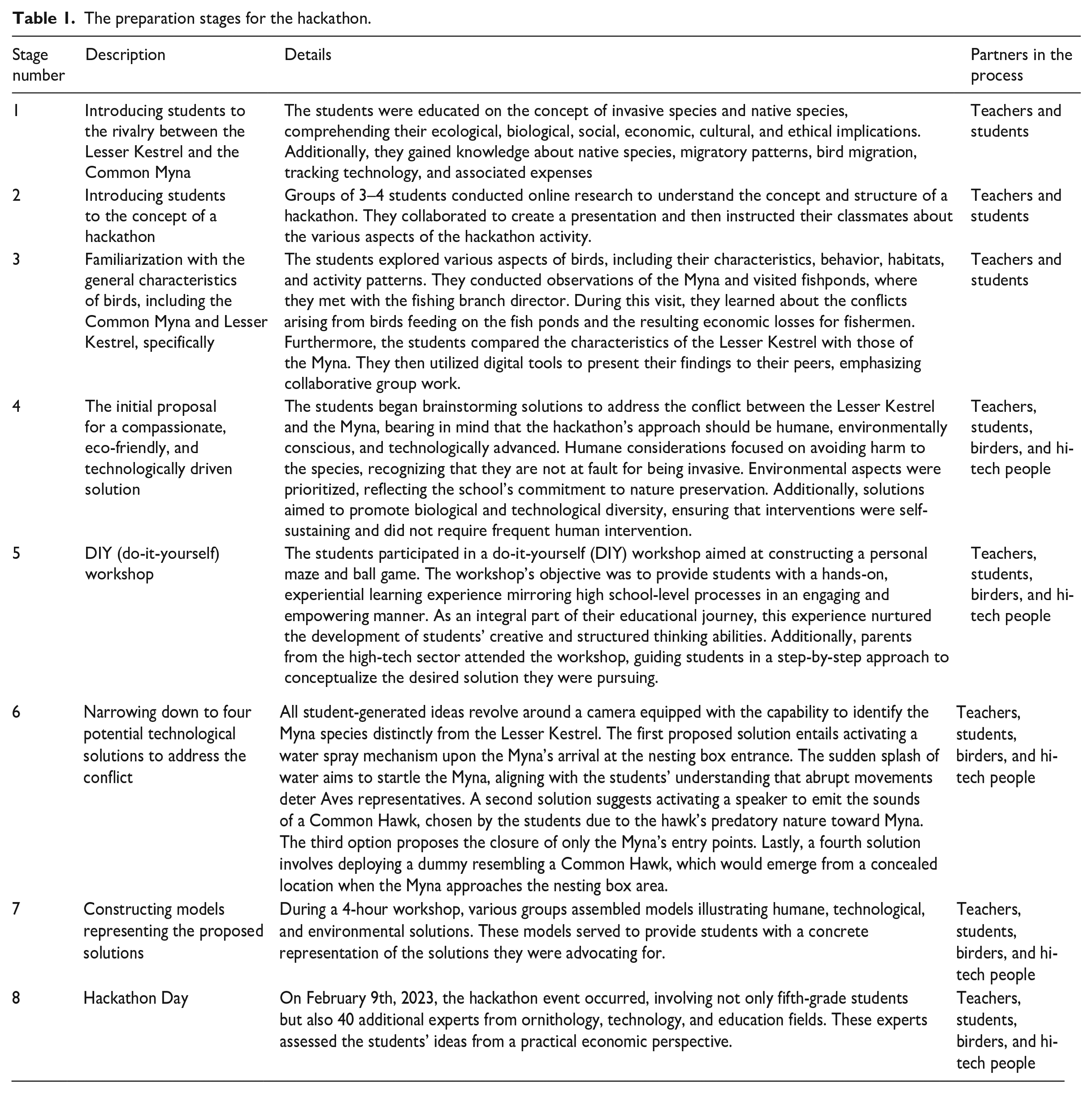
At the conclusion of the educational process, the fifth-grade students devised four potential solutions to mitigate the competition between the Lesser Kestrel and the Myna around the nesting boxes. All the proposed solutions relied on an automated image processing system capable of distinguishing between the Lesser Kestrel and the Myna. The first solution entailed incorporating a sound system that would activate when necessary. The second solution proposed a water sprinkler system. The third solution involved the closure of the nest opening. The fourth solution entailed the placement of a model of Accipiter nisus. All solutions were designed to startle, hence deter the Myna without causing harm.
Research tool
In this study, three research tools were used that allow for triangulation (Mostafavi, 2021). This triangulation makes it possible to seek a solution from several angles. The research tools were structured to provide a comprehensive overview and address the inquiry regarding the extent to which a hackathon, employed as an educational instrument, could foster environmental citizenship principles among fifth-grade students.
Open-ended questionnaire
An open-ended questionnaire consisting of four questions was administered to students upon completion of the hackathon:
How would you summarize your educational experience in the hackathon?
What were the challenges you encountered during the hackathon?
Would you recommend continuing the hackathon experience next year?
Do you believe a resolution to the competition between the LK and the Myna is achievable?
Drawings
Students engaged in drawing activities to depict their sentiments regarding the hackathon event, accompanied by written explanations for their artworks (Eldén, 2013; Flowers et al., 2015). Drawing activities were conducted before and after the hackathon, prompting students to visually express their emotions. The students were instructed to draw their educational journey throughout the instructional process aimed at mitigating the competition between the LK and the Myna.
Focus groups
Students participated in six focus groups, each session typically lasted approximately 50 minutes on average, with each group comprising 7–8 students. Discussion topics centered around the students’ activities prior to and during the hackathon. Questions included descriptions of their hackathon experience: To what extent the activity during the hackathon contributes to preserving nature? To what extent is the activity with the ornithologists and high-tech people important? How does the activity within the hackathon impact global aspects? Describe your educational experience. What challenges did you encounter throughout your academic pursuits? Have you highlighted any accomplishments attained during your learning journey?
Participants
Several populations took part in the study. The first group comprised 42 fifth graders enrolled in an environmental education program that focuses on the conservation of the Lesser Kestrel. The second committee comprised eight members of the school staff, including the administration team (the principal and the vice-principal), in addition to the three staff members who teach the fifth graders. Nine expert ornithologists and 10 individuals with expertise in high-tech fields were recruited via advertisements on social networks. A social media announcement clarified that volunteering for the hackathon activity required the ability to collaborate in mixed groups of students and adults.
Ethics
The study received approval from the ethics committee of the institution in which it was conducted. Additionally, it obtained approval from the chief scientist of the Ministry of Education. Consequently, data collection for this study proceeded only after obtaining parental consent from the fifth-grade students and ensuring that non-participation would not adversely affect the evaluation of students who chose not to participate. It is worth noting that the author of this article is one of the teachers of the fifth graders but did not collect the research materials and could not personally identify the students, parents, ornithologists, and hi-tech individuals who participated in the research.
Data analysis
The qualitative deductive analysis examined the basis of information obtained in this study in light of the four components of environmental citizenship described by Berkowitz et al. (2005: 230) in order to examine to what extent, if at all, the hackathon, as a pedagogical tool, can promote the application of the principles of environmental citizenship among fifth graders.
The analysis of the data collected in the open-ended questions and transcripts of the focus groups was conducted according to First Cycle coding methods and Second Cycle coding methods (Saldaña, 2009) as part of thematic analysis (Braun and Clarke, 2016, 2019, 2021, 2023; Finlay, 2021). The First and Second Cycle coding methods provide a systematic approach to analyzing qualitative data in academic writing and can support research findings and conclusions. First Cycle coding methods involve the initial coding of data, where the researcher examines the data and identifies and labels different concepts or the familiarization notes have been rephrased (Braun and Clarke, 2021). The Second Cycle of coding methods involves a more focused analysis of the data, building on the initial codes developed in the first cycle. In other words, the prosses included: (1) Becoming acquainted with data and composing familiarization notes; (2) Systematically coding data; (3) Creating initial themes from coded and organized data; (4) Formulating and assessing themes; (5) Clarifying, defining, and labeling themes (Braun and Clarke, 2021). The data analysis examined the presence of the components of environmental citizenship as described by Berkowitz et al. (2005: 230), similar to other studies that used these components (Olsen et al., 2020).
Findings
This chapter presents the findings of the study, which sought to explore the extent to which a hackathon, employed as an educational tool, promotes the development of environmental citizenship principles among fifth-grade students. Drawing upon Berkowitz’s conceptualization, the investigation focused on four key components of environmental citizenship. Through a qualitative analysis of participant experiences and perceptions, this chapter elucidates the outcomes observed within each of these components.
Ecological literacy
The participants frequently referred to various topics encompassing ecological literacy in a positive light, as noted by one of the ornithologists: ‘The solutions were definitely environmentally oriented and there was a lively discussion in the class about the environmental aspects of the solution. . . the children addressed the competition between the Lesser Kestrel and the Myna in an interesting way. . . in a way I had not thought of’. This statement by the ornithologists indicates the process that the students experienced in being able to explain the relationship between the Lesser Kestrel and the Myna as well as the ability of the fifth graders to allow the ornithologists to examine the relationship between the local species and the invasive species in a new way. The high-tech participants also requested the students to suggest a humane solution to the competition between the Lesser Kestrel and the Myna. For example: ‘I think there was a lot of emphasis at the hackathon on a humane solution, one that would keep the Mynas away without harming them physically’. It is evident that the explanation that the Myna is not to blame for being an invasive species and there is no need to harm it, was internalized by the majority of students. Even in the drawings, the students knew how to relate ethically and humanely to the competition between the Lesser Kestrel and the Myna to arrive at the desired solution (Figure 1).
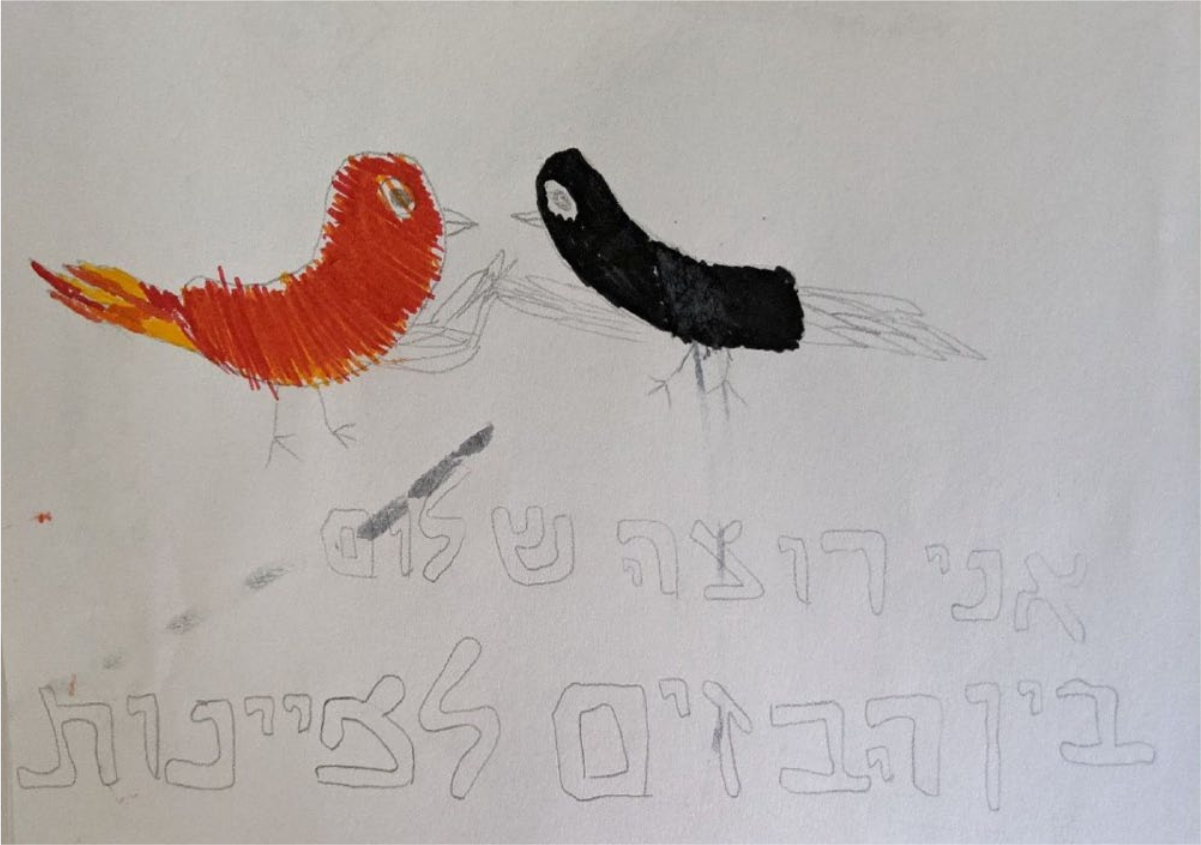
The Myna (in black) is on the right. The Lesser Kestrel (in red) is on the left [the literal Hebrew translation is Red Falcon]. It says, ‘I want peace between the Lesser Kestrel and Myna’.
These examples that indicate students’ attitudes toward the competition between the Lesser Kestrel and the Myna are not unique. Another high-tech participant noted: ‘From my impression, the percentage of children who will be involved or be aware of environmental issues is high’. It is evident that the educational process that the students experienced together with the hackathon event, was significant for knowledge construction and the involvement of the students in environmental issues. They were deeply involved in the competition between the Lesser Kestrel and the Myna surrounding the nest boxes. Other students explicitly stated the desired solution to the competition: ‘We need to find a solution for both the Lesser Kestrel and the Myna—both birds. . . The Myna should not be harmed. Only humans are to blame for the Myna being an invasive species. . . The Myna is doing what it must in order to survive’. This quote indicates the students’ understanding of the relationship between the Lesser Kestrel and the Myna and the new approach they adopted toward the species, as an invasive species.
The students knew how to address the relationship between the Lesser Kestrel and the Myna at the local level. They did not indicate that it is a projection of the connection between the Lesser Kestrel and the Myna on a national or international level. There is also no reference by the students to the solution they presented at the hackathon event at the end of the educational process to other parts of the world. Support for this statement can be found in the words of one of the staff members at the school: ‘I’m not sure that the children understood the connection between the Lesser Kestrel’s activity and actions in general for the environment. . . It’s a pity that they didn’t project this as a solution for Lesser Kestrel worldwide, or for other species’. In these explicit words, the staff member claims that the students were mainly focused on the solution related to the Lesser Kestrel nesting colony at the school; their point of view was local.
Value awareness
The environmental values referred to by the students, the educational staff, the ornithologists, and the high-tech participants can be attributed to four value systems. The first is the students’ relationship with their friends. The participants mentioned values such as cooperation, respect, listening, and inclusive openness they encountered during the educational process and the hackathon event. For example, one of the students wrote: ‘We talked about the idea. . . because everyone sat with each other and talked’, one of the high-tech participants wrote: ‘I saw very beautiful teamwork in groups, giving everyone a place’, and the vice principal added: ‘Children learned how to think together and how they can create new initiatives’. An example of what is being said can also be found in the students’ drawings (Figure 2).
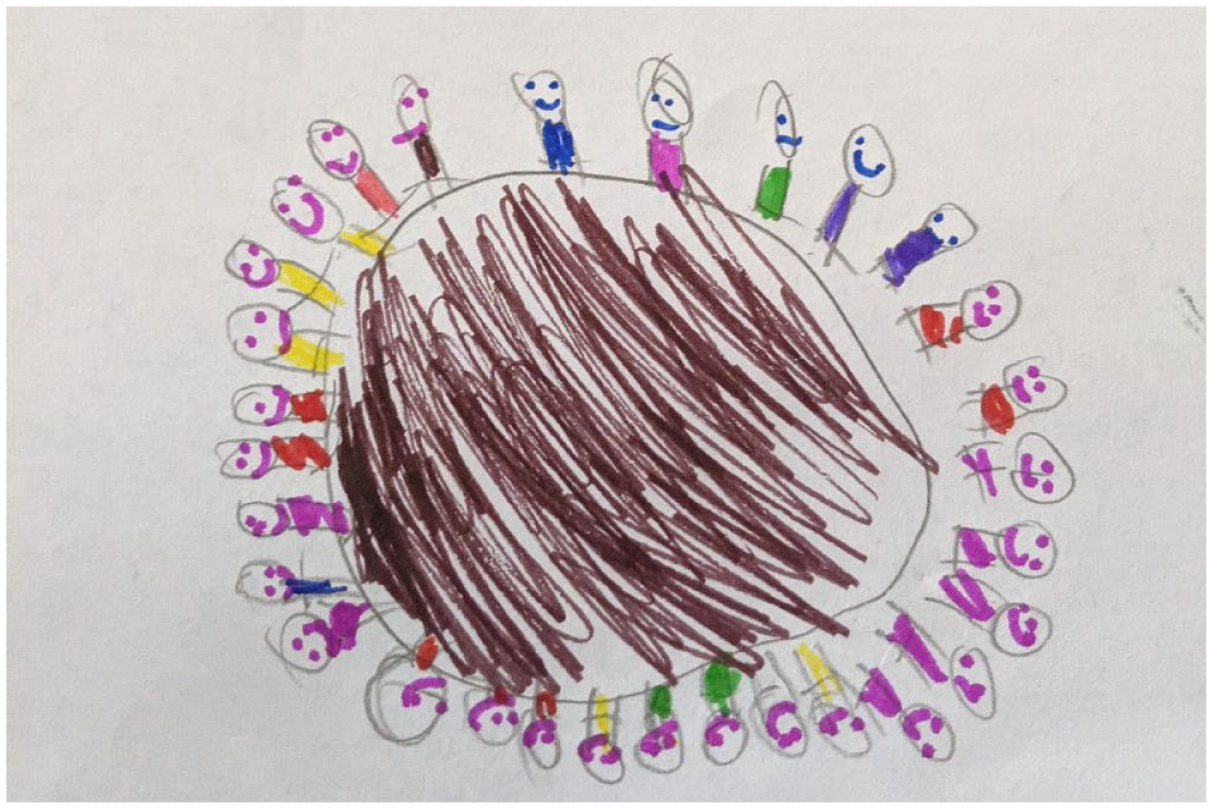
A drawing depicting the activity at the hackathon event. It shows smiles on the faces of all those sitting around the round table.
In Figure 2 it is impossible to distinguish the differences among all participants. This may indicate the value of sharing around the round table the student felt during their work at the hackathon event, and that everyone was equal in their contribution. The students also knew how to point out the difficulties of teamwork. One student said: ‘I had a hard time with teamwork. Not everyone listened to me. . . I didn’t feel like they wanted to hear my idea’. The student’s negative feeling was shared by another small number of students for whom group work was not easy. It was interesting to note that the teaching staff and professionals did not mention any negative aspects of the teamwork but emphasized the positive aspects that students experienced.
A second set of values is based on the relationship between students and professionals. The values mentioned included, among others, respect, appreciation, listening, and courtesy. For example, the principal noted this in the following words: ‘The students had a respectful conversation as equals with the experts’. On the other hand, some of the students pointed out in the discussion that developed in the focus group that some of the professionals did not always listen to them: ‘Sometimes the adults only talked among themselves and did not listen to what we had to say’. In this case, the negative reference to the value system between the students and the adults was made exclusively by the students. The attitude of the students to the value system between the students and themselves and between the students and the professionals was twofold. This shows that their attitude was formed during the studies leading up to the hackathon and on the day of the hackathon, which is evidence of the presence of critical thinking among these students.
A third set of values developed between the students and the Lesser Kestrel. These values are characterized by expressions of love, care, compassion, and nature preservation. These values were specified only by students. For example, one student wrote: ‘I feel that the Lesser Kestrel and I are the same. . . I love Lesser Kestrel . . ..’ This statement, which is not limited just to this student, is also supported by the student’s drawing (Figure 3).
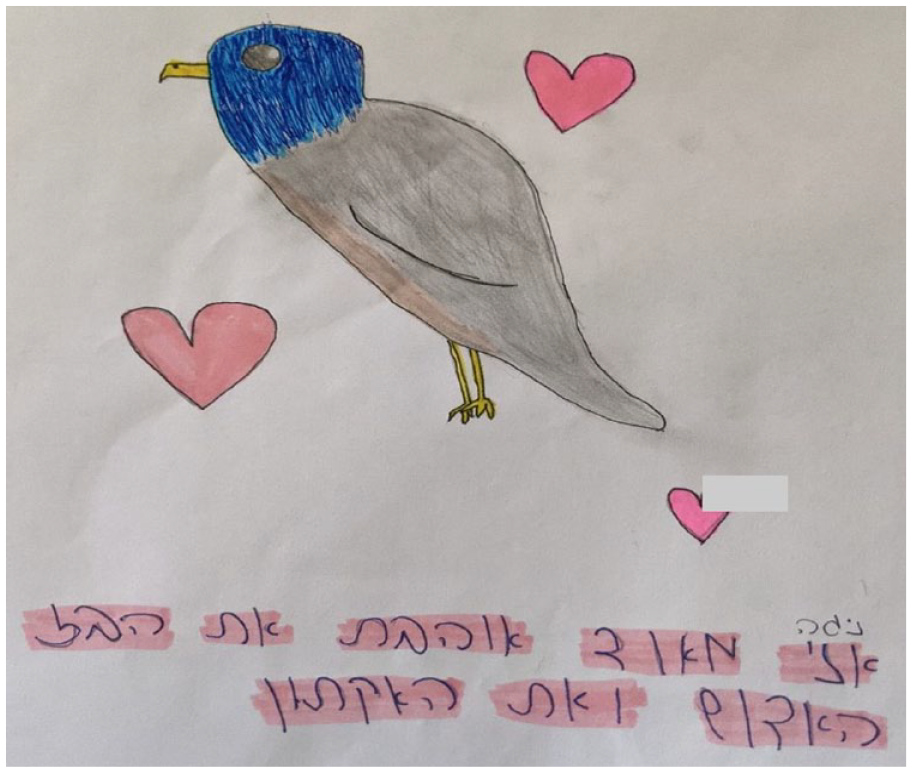
The student’s feelings towards the Lesser Kestrel and the love she has for it. At the bottom of the page, it says: ‘I really love the Lesser Kestrel and the hackathon’.
The value of giving is also reflected in the words of the children: ‘I am not thinking about the prize, whether my group wins or not; the prize is for the Lesser Kestrel and the Myna. . .we are all working to find a solution. . .even if our solution doesn’t win, it’s okay’. The student, like many others who mentioned similar sentiments, did not expect to win the first prize at the end of the hackathon. For them, the true winners of the educational process and hackathon are the Lesser Kestrel and the Myna.
The fourth set of values is based on the solutions proposed by the students for the competition between the Lesser Kestrel and the Myna, based on removal rather than harm to the invading species. This solution teaches values of compassion and empathy for all living creatures as one of the students said: ‘. . . Myna also deserves to live, it’s not her fault that she is an invasive species’. Values of preserving biodiversity as another student pointed out: ‘. . . all living things should be preserved . . . each one contributes something to the environment’. And finally, values promoting non-violent solutions as expressed in a dialogue between one of the ornithologists and a group of students.
‘Do you know that your solution contradicts the idea of the Nature and Parks Authority that the Myna should be killed?’
‘Why should the Myna be killed?’
‘Because it is an invasive species’.
‘True, but why kill? It’s not nice to kill birds’.
‘Because the Nature and Parks Authority claims that it harms the environment’.
‘We need to find another solution and not kill, killing is not nice; did they think of other ways to solve the problem?’
‘They are insistent that killing is the only solution that can help’.
‘It can’t be that just because they say it should be killed, we will kill the Myna; surely there are other people who think it should not be killed, who are also decision makers’.
This dialogue showcases the students’ dedication to exploring alternative, non-violent methods for tackling environmental challenges. They challenge conventional beliefs and advocate for solutions that are more compassionate and ethically grounded. Moreover, the dialogue between the ornithologist and the student reflects the principles of environmental citizenship. The student demonstrates ecological literacy by questioning the rationale behind the Nature and Parks Authority’s decision to kill the Myna, understanding the ecological implications of invasive species, and advocating for alternative solutions. The student also exhibits civilian literacy by critically evaluating the social, economic, and political factors influencing environmental decision-making. Moreover, the student shows awareness of values by expressing concern for the well-being of birds and advocating for ethical considerations in environmental management. Lastly, the student demonstrates self-efficacy by challenging the authority’s stance and suggesting that there may be alternative perspectives and decision-makers who oppose the killing of the Myna. Overall, the dialogue highlights the importance of critical thinking, ethical awareness, and advocacy for alternative solutions in environmental citizenship.
Self-efficacy
Self-efficacy in finding a solution to the competition between the Lesser Kestrel and the Myna constituting the nest boxes, motivation for action and the empowerment of the students as part of the educational process were expressed in a variety of phrases said and written by all the participants, and supported in the drawings (Figure 4).
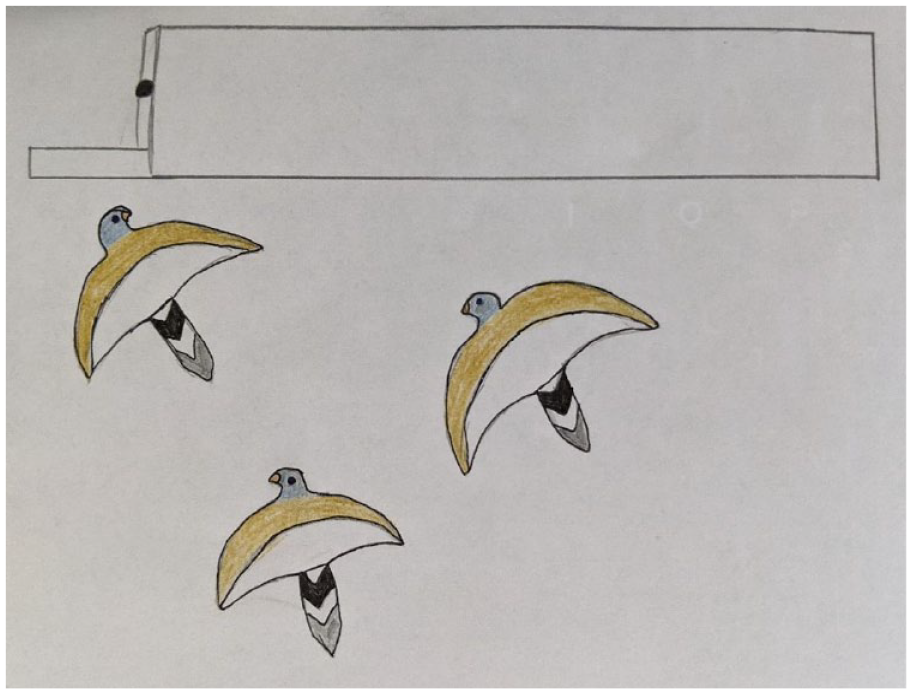
In the drawing, three Lesser Kestrels are flying near the nest box that the students built. In the text that explain in the drawing says: ‘I feel that we will be able to implement the ideas and find a solution to the conflict between the Lesser Kestrel and the Myna’.
An example of the students’ high self-efficacy to arrive at a solution for the competition between the Lesser Kestrel and the Myna can be found in the words of the following student: ‘I think we will succeed because our ideas are really amazing and creative’. The student is full of self-confidence that they will come up with solutions for the competition and s/he even gives them an ‘amazing’ status. The student also knows how to explain why their solutions are excellent. One of the ornithologists explained the students’ high self-efficacy: ‘I think that for them to see professionals from the field of nature and the environment come to school, invest time and are enthusiastic about their ideas, greatly enhances their desire to act for the environment and gives them the feeling that a solution can be found’.
A feedback process was conducted between the students and the experts who participated in the hackathon in which the experts were enthusiastic towards the students. As a result, the students felt empowered, that their activity for the environment is important and that a solution can be reached. Another example that includes the importance of an intergenerational meeting that creates motivation, empowerment, and a sense of competence can be found in the words of a high-tech participant: ‘When such a group of adults from different fields mobilizes and stands by the children—it gives the children strength, empowers them and motivates them to continue working for the environment. . . I saw how it happened during the hackathon’.
Ornithologists, who have educational experience, knew how to focus on the importance of the hackathon event to help increase the students’ motivation to act in the future and their self-efficacy: ‘I think [the hackathon] increased their motivation. . . the sharing showed them that if they think together, applicable solutions can be found even for very complicated problems—one part of the problems in environmental action is the despair of not being able to change something. . . I believe they received something that will help them in their environmental activities in the future’.
A small number of students did not express a high sense of competence. For example, the following quote from the focus group emphasized it: ‘I am not completely sure we will succeed in the end’. The student doubts their ability to resolve the competition between the Lesser Kestrel and the Myna.
Practical wisdom and skills
In the context of practical wisdom, most of the students argued that it is necessary to continue the hackathon activity in the years to come. The following is an example of how students justified their claims: ‘Learning was different, not just sitting in a chair. . .we went out. . .we studied alone or in groups. . . the teacher didn’t provide us with all the answers. . . she teacher assisted us in finding the correct answer. . . This isn’t something that occurs in other classes. . . It gave us a sense of accomplishment to find the answer independently. . . we thought about the solution. . .it helped us save the Lesser Kestrel’. This quote, which is similar to other quotes, teaches that even if the students did not specify it explicitly, they referred to the pedagogy used during the educational process, a pedagogy in which students do not receive all the answers from the teacher, but instead, the teacher guides them to seek out the answers themselves. This includes the way knowledge is acquired, the environmental action and the result of their collaboration. It can be understood that for them, the experience they underwent on the day of the hackathon was an appropriate process. This could lead to a positive result in their environmental work. Figure 5 supports a student’s position.
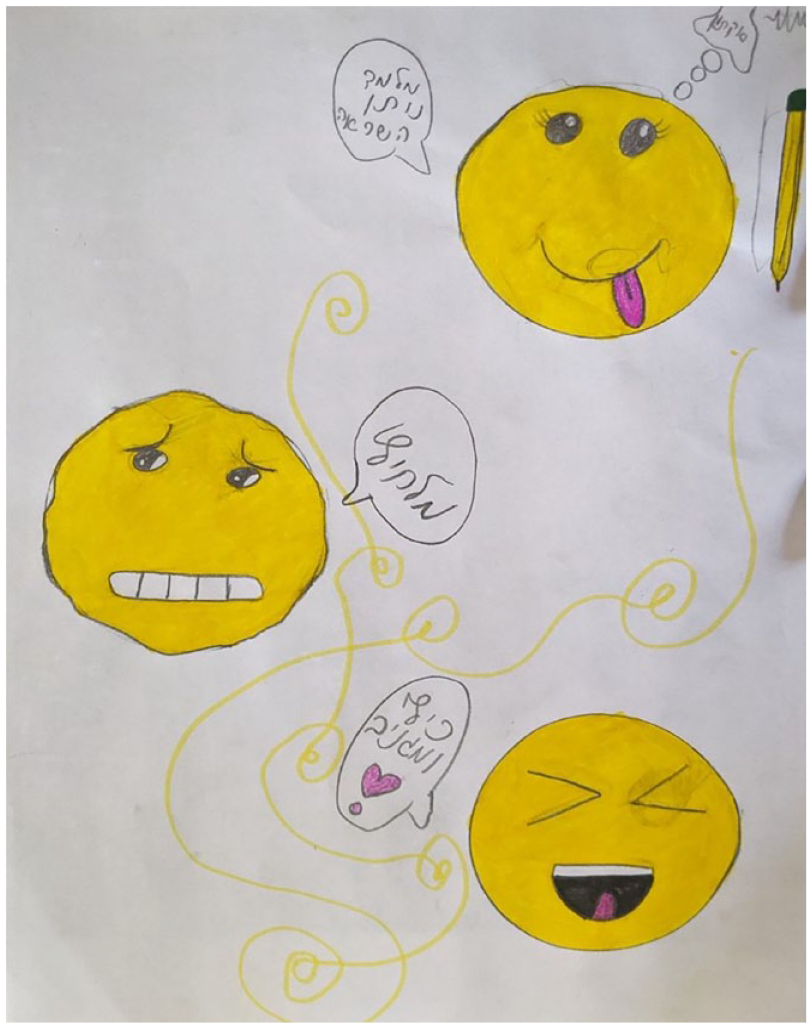
The three emojis describe a student’s process. The first emoji describes positivity: ‘Instructive and inspiring. . .there’s action’. The middle emoji depicts stress: ‘Stressful’. ‘Fun and cool’ are written in the emoji at the bottom. The three emojis are connected by a yellow line that illustrates the dramatic process the student experienced: from a feeling of pressure to a feeling of fun and learning.
Another example that is similar, but broadens the students’ point of view was presented by another student: ‘It was a different way of learning. . . we studied with adults, and it was rewarding . . . we worked in groups, we thought, we came up with ideas, we were not told what was right. . . the teacher didn’t have a solution either. . . it develops creativity and thinking. . . we had to decide on our own what was good for the Lesser Kestrel and what wasn’t’. This example of a hackathon includes intergenerational learning as well as dealing with a dilemma to determine the quality of the solution. The main challenge the students had to face, which was repeated several times, was the time constraint, as described by one of the students: ‘It was difficult to make a decision in a short time regarding which solution was better and what to look for on the internet to improve our idea’. The students were challenged with other aspects of the hackathon defined as a time-limited event.
To conclude the findings, it can be said that the hackathon, as a pedagogical tool in the formal education system, can promote environmental citizenship. By focusing on real-world environmental problems and engaging students in collaborative problem-solving, hackathons can aid students in developing a deeper understanding of environmental issues and a sense of responsibility for their local environment, though not for the global environment.
The hackathon approach promotes active and participatory learning, which is more effective than traditional teaching methods. This approach also encourages creativity, critical thinking, and teamwork, which are essential skills for success in many fields. By providing students with a hands-on experience, the hackathon approach can aid them in developing a deeper understanding of environmental issues and the importance of taking action to address them. Moreover, hackathons can inspire students to become environmentally conscious citizens by encouraging them to take action. The process of developing a solution to a real-world environmental problem can empower students to feel that they can make a positive impact on the world. By working together to develop solutions to environmental problems, students can gain a sense of community and social responsibility.
Consequently, it is possible to answer the research question: To what extent, if at all, can the hackathon as a pedagogical tool, enhance the application of environmental citizenship principles among fifth graders according to Berkowitz’s components of environmental citizenship? And to say that indeed, the hackathon succeeded in promoting environmental citizenship but only at the local level.
Discussion
The findings of this research highlight several points where there is a scientific discussion in the context of promoting environmental citizenship.
The hackathon as a promoter of teacher empowerment to teach environmental citizenship
The educational process culminating the hackathon event, which is based on an intergenerational meeting of professionals from different fields (Garcia, 2022; Granados and Pareja-Eastaway, 2019; Wallwey et al., 2022) changes the perception of teaching in the school and the position of the teacher in the educational process (Albanesi et al., 2023). In this way, it helps to prevent the failure of implementing environmental citizenship in the school. The teacher becomes a guide, a supervisor or a mentor (Iversen and Jónsdóttir, 2019; van Harskamp et al., 2021). The student is placed at the center of the learning process and acquires knowledge in a constructivist manner. This is based on action-based learning, task-based learning, intergenerational learning, multidisciplinary learning, self-learning, and peer learning. This method has been widely recognized as a valuable pedagogical approach to developing environmental citizenship (Andersen, 2018).
At the same time, in light of the fact that the students referred to their environmental action at the local level only, which is not consistent with what is known in the literature (Ahmed and Mohammed, 2022), it is recommended to strengthen among the teachers the effects of environmental citizenship in the national and international spheres of influence. For example, it could be expected that the school staff that led the educational process and hackathon event would contact academic institutions or other educational institutions in other countries where the Lesser Kestrel nests (Alcaide et al., 2008; Gal et al., 2019), as part of the attempt to expand the gamut of experts who follow the Lesser Kestrel in other parts of the world. In this way, the meaning of the wisdom of the crowd, on which the hackathon idea is based (Kienzler and Fontanesi, 2017), will adopt a wider meaning.
Finally, it’s important to highlight that the students had a positive experience throughout the entire educational process, culminating in the hackathon event. While no specific segment of the hackathon directly contributes to environmental citizenship, the series of preparatory activities leading up to the event, along with the hackathon itself, fostered an environment conducive to nurturing environmental citizenship among the fifth graders. Without the hackathon, within the curriculum as implemented in the described school, the exploration of wicked problems (Agustian, 2023; Head, 2019) involving the Lesser Kestrel and the Myna would have remained theoretical, lacking the practical engagement necessary to ignite the students’ enthusiasm for hands-on activities in the realm of environmental citizenship.
Invasive species and environmental politics
In most cases, environmental issues are complex and socially, scientifically, politically, and culturally controversial; students must learn how to approach them critically (Kocmanová and Dočekalová, 2012; Ojala et al., 2021) and to solve these wicked problems (Agustian, 2023; Head, 2019). Apparently, because no citations were found dealing with the understanding of political systems among other things, and because some researchers claim that environmental citizenship includes taking an active part in political processes (Iversen and Jónsdóttir, 2019), it could be thought that the students did not engage with political aspects and did not experience environmental citizenship. Though the participants did not explicitly use terminology that links the educational activity to the political field, on the other hand, it can be said that the children’s very environmental perception that invasive species should not be harmed, places the students in the ‘political field’, even if they are not aware of it. The students entered the political field because they were concerned about (in)justice between two species of birds. While they examined the historical and dominant ecological approaches to invasive species, they also explored new approaches that challenged ecological theory. These student struggles are part of environmental citizenship’s political dimension (Huckle, 2014). Moreover, addressing invasive species requires political will and action at different levels, including local, national, and international. Collaborative action involves developing policies and regulations to prevent the introduction and spread of invasive species. It also requires investing in research and management efforts to control or eradicate them. In addition, addressing invasive species may involve collaboration among various stakeholders, such as government agencies, industry, scientists, and local communities. Therefore, even if it is not explicitly stated, the approach to the treatment of invasive species involves complex, cross-border environmental politics (Cruz and Johnson, 2022). The depth of the students’ knowledge (Ariza et al., 2021), which surprised even professional ornithologists, allowed them to observe invasive species critically. Their humane approach to resolving the competition between the Lesser Kestrel and the Myna most likely raised their awareness and in the long run, made them more responsible citizens. This finding is similar to other studies that describe the relationship between scientific study, in the case of this study, invasive species, and responsible citizenship and between critical thinking and environmental citizenship (Iversen and Jónsdóttir, 2019). The knowledge demonstrated by the students of the issue of invasive species stems from the school’s concept based on the epistemological approach that believes that before taking action for the environment, a knowledge base must be created and scientific explanations revealed, even if they are complex (Ariza et al., 2021).
Significant collectives
Having the ability to communicate with their classmates, to communicate across generations, and to solve a real problem as central themes of the hackathon, facilitated the students’ ability to cope with the long educational process. In literature (Albanesi et al., 2023; Iversen and Jónsdóttir, 2019), this relationship, which includes multi-age cooperation and solutions to problems in students’ daily lives, is recognized as aiding students’ ability to cope with partaking in environmental activities. At the same time, the challenges that the students mentioned as a result of the need to collaborate are also known in literature (Levinson, 2010). While studying in preparation for the hackathon, students formed a collective action that emphasizes the common interest—finding a humane, environmental, and technological solution to the competition between the Lesser Kestrel and Myna. It is evident that identification with the group, as well as with the Lesser Kestrel, encouraged the students to act more passionately (Wright et al., 2022). It was interesting to see how the children prioritized the Lesser Kestrel’s good over their own good. In effect, the students exchanged their personal and immediate benefit of winning a prize for the benefit of the Lesser Kestrel and the Myna. This requires a long-term solution designed for the benefit of the environment and the collective. In this way it can be said that the students experienced significant environmental citizenship (Chua et al., 2020).
Biosphere values and altruistic values
Environmental citizenship that was promoted in the educational process and the hackathon event expanded beyond the few activities designed to promote environmental citizenship in elementary schools (Andersen, 2018) and allowed students to adopt individual values that have an environmental impact (Berkowitz et al., 2005). Often, environmental citizenship activities are focused on activities related to students’ personal lifestyles (Iversen and Jónsdóttir, 2019). In this study, environmental citizenship extended beyond students’ personal lifestyle values. Instead, it focused on values related to the activities surrounding the Lesser Kestrel and Myna’s lifestyle. The students expressed their desire for a humane, technological and environmental solution through bio-spheric or altruistic values and not through egoistic values (Chua et al., 2020). In fact, the educational process and the hackathon event enabled the development of the students in terms of values (Berkowitz et al., 2005) and to be aware of values linked to respect for adults and values relevant to respect for the creatures living in their environment. Therefore, it can be estimated that the students’ experience made it possible to equip themselves with a newfound set of values. This set of values may help them become more valuable and caring people toward their human and natural environment, as recognized in the literature (Chawla, 2020). At the same time, it is not clear as to what extent the students understood the valuable contribution of the educational activity they experienced. Therefore, teachers can, and need to emphasize this issue explicitly, as is required in the literature (Andersen, 2018).
Lastly, it can be said that the curriculum and, the hackathon event at its end, which was designed to encourage environmental citizenship and is considered bottom-up (Kovách et al., 2021) constituted a stimulus (Rao et al., 2022), which succeeded in promoting environmental citizenship. This echoes with prior studies (Idrissi et al., 2021). The hackathon event at the end of a teaching process can be employed as a pedagogy today in teaching environmental citizenship (Berkowitz et al., 2005) and open a window to adopting progressive teaching practices.
Limitation and further research
Though this study provides positive results, it has several limitations. The main one, is the small sample size that includes the examination of a single case in an environment with certain characteristics. Therefore, novel mediations are needed to provide a more complete picture of the relationship between the implementation of the hackathon as a pedagogical tool and the encouragement of environmental citizenship.
This empirical study is a starting point for environmental citizenship researchers who want to further develop this field of knowledge. Hence, the research has a scientific and practical contribution. From a scientific perspective, this approach can contribute to the development of a more innovative and sustainable educational system. The use of hackathons can promote active and participatory learning. Additionally, the use of real-world environmental problems as the focus of the hackathon can help students develop a deeper understanding of environmental issues and foster a sense of responsibility for their local and global environment.
From a practical perspective, this approach can help students develop critical skills for the 21st century. Hackathons promote teamwork, collaboration, creativity, and critical thinking, which are essential skills for success in many fields. Additionally, the focus on environmental problems can help students develop an appreciation for sustainability and acquire the skills necessary to address these issues in their future careers.
Follow-up studies can delve into various dimensions of hackathon events aimed at promoting environmental citizenship. These dimensions may include cultural adaptation to different contexts, examination of gender dynamics within hackathons to enhance inclusivity, exploration of inter-generational learning opportunities, and assessment of the scalability and transferability of hackathon models across global contexts. Additionally, it's crucial to acknowledge potential weaknesses in hackathon events, such as their short-term focus, lack of follow-up, and accountability. These limitations may constrain sustained engagement, overlook traditional knowledge, and perpetuate inequalities in participation, thereby hindering efforts to promote inclusive environmental citizenship. Addressing these challenges requires proactive measures to ensure that hackathons facilitate inclusive, sustainable, and effective environmental citizenship.
Conclusions
The education program that culminated in the hackathon event promotes environmental citizenship. It adopts more innovative methods of teaching, thinking, and functioning based on wisdom and practical skills. Through education that focuses on ecological literacy and critical thinking in the context of invasive species, students can be exposed to civic literacy that encompasses environmental politics. Moreover, the educational process allowed students to adopt bio-spheric and altruistic values and not just express personal values. During the hackathon event, the students expressed a high sense of ability to resolve the competition between the Lesser Kestrel and the Myna.
Footnotes
Acknowledgements
I give my great thanks to members of the Alona School, particularly the school’s principal, for their participation and openness.
Declaration of conflicting interests
The author declared no potential conflicts of interest with respect to the research, authorship, and/or publication of this article.
Funding
The author received no financial support for the research, authorship, and/or publication of this article.
Originality statement
This manuscript is an original work that has not been submitted nor published anywhere else.
