




Abstract
Peer victimization at school is a worldwide problem with profound implications for victims, bullies, and whole-school communities. Yet the 50-year quest to solve the problem has produced mostly disappointing results. A critical examination of current research reveals both pivotal limitations and potential solutions. Solutions include introducing psychometrically sound measures to assess the parallel components of bullying and victimization, analyzing cross-national data sets, and embracing a social-ecological perspective emphasizing the motivation of bullies, importance of bystanders, pro-defending and antibullying attitudes, classroom climate, and a multilevel perspective. These solutions have been integrated into a series of recent interventions. Teachers can be professionally trained to create a highly supportive climate that allows student-bystanders to overcome their otherwise normative tendency to reinforce bullies. Once established, this intervention-enabled classroom climate impedes bully-victim episodes. The take-home message is to work with teachers on how to develop an interpersonally supportive classroom climate at the beginning of the school year to catalyze student-bystanders’ volitional internalization of pro-defending and antibullying attitudes and social norms. Recommendations for future research include studying bullying and victimization simultaneously, testing multilevel models, targeting classroom climate and bystander roles as critical intervention outcomes, and integrating school-wide and individual student interventions only after improving social norms and the school climate.
Keywords
In school, a student can be chronically victimized by peer bullying in many ways—verbally (“I was called names I didn’t like”), physically (“I was pushed or shoved”), and relationally (“A student got their friends to turn against me”). 1 Such victimization occurs a lot (10%–33% of U.S. adolescents experience victimization; Dulmus et al., 2006; Perkins et al., 2011), and its adverse effects constitute a worldwide concern (Organisation for Economic Co-operation and Development [OECD], 2019). When it occurs, victimization produces profound negative effects for both victims and bullies, including psychological distress, severe depression, psychopathology, and deteriorating physical health (e.g., Juvonen & Graham, 2014; Marsh et al., 2011; Olweus, 2013; Rigby, 2007). Furthermore, there are implications for entire school communities because students who witness victimization are likely to become more aggressive and truant and less engaged with peers and school (e.g., Janosz et al., 2008; Kochenderfer & Ladd, 1996). Since recognizing the significance of this problem 50 years ago (Olweus, 1973), researchers and practitioners have rushed to develop and implement numerous interventions to reduce victimization at the school, regional, and national levels. Unfortunately, these efforts have borne little fruit, and intervention effects are disappointing (Juvonen & Graham, 2014; OECD, 2019). The prevalence of school-related victimization remains high (Harbin et al., 2019) and shows no sign of abating (Li et al., 2020).
In recent years, educators and researchers have begun to overcome many limitations that undermine victimization theory, research, and interventions. New advancements have introduced psychometrically sound measures to assess the parallel components of bullying and victimization, considered multinational data sets, and embraced a social-ecology perspective that emphasizes the motivation of bullies, importance of bystanders, pro-bullying and antibullying attitudes, the classroom climate, and a multilevel framework to highlight classroom- and school-level effects. Collectively, these advances provide new guidance to inform effective interventions. In this article, we aim to tell the story of how these recent insights have advanced the victimization literature and informed successful intervention.
Conceptualizing Peer Victimization
Peer victimization involves intentional, harmful acts of aggression perpetrated by a bully (e.g., Olweus, 1991; Smith et al., 2019). These hurtful acts (e.g., name-calling, physical assault, or social exclusion) can occur between individuals or groups, and they take place in the context of an imbalance of power between the bully and victim (e.g., Casper et al., 2020; Olweus, 1991; Rigby, 2007). Whereas aggression may involve a “one-off” or single event, victimization involves suffering sustained and repeated acts of aggression or intimidation.
Tripartite models: verbal, relational, physical victimization
Victimization is a multidimensional construct, so its understanding requires differentiation among its multiple components—physical, verbal, and relational. 2 However, many applied victimization investigations rely on a global measure, typically without empirical or theoretical justification. Because many individual studies do this, the resulting meta-analyses and systematic reviews also consider only a global measure of victimization (e.g., Hawker & Boulton, 2000; Walters, 2021; Zych et al., 2019; also see the Supplemental Material available online). In contrast, bipartite models recognize direct (physical and verbal victimization) and indirect (relational victimization) components. This distinction emerged because researchers associated each component with different antecedents and outcomes. For instance, compared with direct (physical and verbal) victimization, relational (indirect) victimization is linked more strongly to emotional maladjustment and internalizing problems (e.g., depression, anxiety, loneliness, sadness, worry, fear) and to low peer acceptance (Casper et al., 2020; L. Wu et al., 2015). Such bipartite conceptualizations have been the basis of widely cited meta-analyses (e.g., Casper & Card, 2017; Casper et al., 2020; Crick & Grotpeter, 1996; L. Wu et al., 2015). This rejection of a unidimensional approach is appropriate.
However, a tripartite model better fits theory and empirical evidence (e.g., Marengo et al., 2019; Marsh et al., 2011; L. Wu et al., 2015). Furthermore, multidimensional conceptualizations of bullying typically include three dimensions, so adopting a tripartite model of victimization contributes to better integrating bullying and victimization research. To address the question of “How many components?” research findings have shown how victimization’s three components (a) factor analyze separately and (b) relate differentially to key correlates.
Support for a three-factor tripartite model: factor analysis
Two interrelated limitations of victimization research are the lack of psychometrically sound instruments that can (a) differentiate the multiple dimensions of victimization (see reviews by Casper & Card, 2017; Gumpel, 2008; Marsh et al., 2011; Rigby, 2007) and (b) meet the standards of good measurement, such as goodness of fit, measurement invariance, lack of differential item functioning, well-differentiated factors that are not so highly correlated as to detract from their discriminant validity, and substantive usefulness in school settings (Marsh et al., 2011). Nevertheless, tripartite instruments that meet these requirements exist, such as the Adolescent Peer Relations Instrument (APRI; Marsh et al., 2004, 2011) and the Student Survey of Bullying Behavior (Varjas et al., 2009). However, these are rarely used in victimization research.
A related limitation of victimization research is the typical use of suboptimal statistical models. For instance, traditional confirmatory factor analysis (CFA) does not allow cross-loadings of items. Consequently, CFAs routinely provide a poor fit to the data and inflated factor correlations. Exploratory structural equation modeling (ESEM) is rarely used. However, it provides better goodness of fit, better differentiation among the factors, and more differentiated relations with antecedents and consequences of victimization and bullying (Marsh et al., 2011, 2014, 2021; for factor structure of APRI responses, see Table 1 and the Supplemental Material). For example, on the basis of adolescents’ APRI responses, CFA factor correlations tend to be very high and undifferentiated for physical, relational, and verbal factors (Marsh et al., 2011; see CFA factor correlations in Table 1; bullying: rs = .72–.83; victimization: rs = .81–.84). In contrast, on the basis of the same APRI responses, ESEM factors tend to be substantially less correlated and better differentiated (see ESEM factor correlations in Table 1; bullying: rs = .42–.53; victimization: rs = .43–.51). This same pattern of findings (better fit and better differentiation) also occurs with cross-national PISA2018 data (594,196 15-year-old students from 77 countries; Marsh et al., 2021).
Correlates for Three Components of Bullying and Victimization
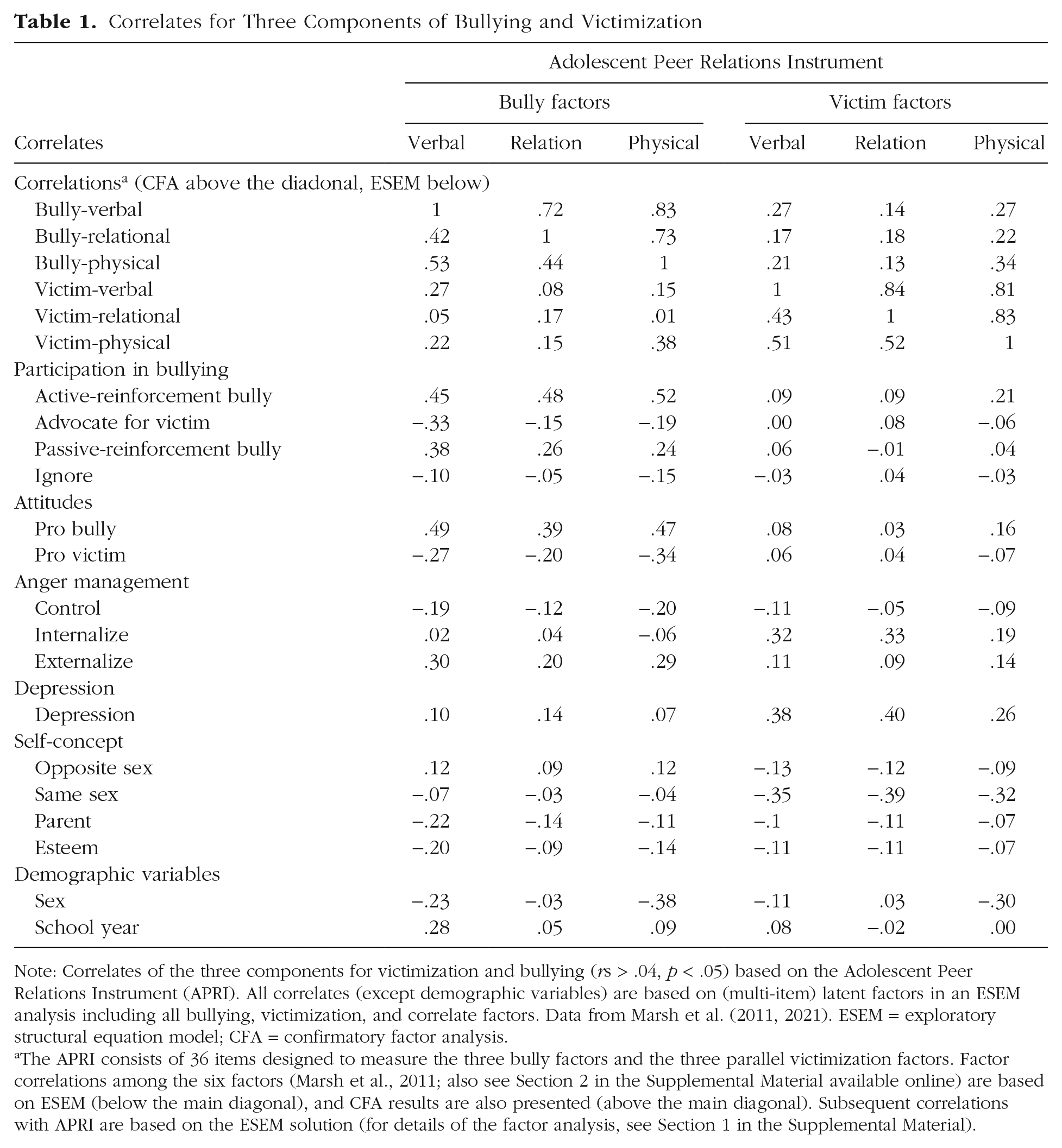
Note: Correlates of the three components for victimization and bullying (rs > .04, p < .05) based on the Adolescent Peer Relations Instrument (APRI). All correlates (except demographic variables) are based on (multi-item) latent factors in an ESEM analysis including all bullying, victimization, and correlate factors. Data from Marsh et al. (2011, 2021). ESEM = exploratory structural equation model; CFA = confirmatory factor analysis.
The APRI consists of 36 items designed to measure the three bully factors and the three parallel victimization factors. Factor correlations among the six factors (Marsh et al., 2011; also see Section 2 in the Supplemental Material available online) are based on ESEM (below the main diagonal), and CFA results are also presented (above the main diagonal). Subsequent correlations with APRI are based on the ESEM solution (for details of the factor analysis, see Section 1 in the Supplemental Material).
Support for a Tripartite Model: Differentiated Relations With Key Correlates
Table 1 summarizes past findings (data from Marsh et al., 2011, 2021) and shows that the three victimization factors and the three bullying factors have discriminant validity in relation to gender, psychosocial correlates (e.g., depression, anger management), and attitudes toward bullies and victims. This information shows a differential pattern of findings when tripartite models are used. So, for example, boys score much higher than girls for physical components (bully and victim) and, to a lesser extent, verbal components. However, for the relational factors, the gender differences were nonsignificant. For grade level, the general pattern is to rise in elementary school, peak in middle school, and somewhat decline in high school (Espelage & Swearer, 2003). However, verbal (but not physical or relational) victimization shows a rising linear trajectory in high school.
Depression is high for both victims and bullies. However, depression is more positively related to the relational and, to a lesser extent, verbal domains than to the physical domain. Anger management is low for bullies and victims, particularly in the verbal and physical domains. However, verbal and physical bullying correlate more with externalizing anger (e.g., “I let it all out”). In contrast, verbal and relational victimization correlate more with internalizing anger (e.g., “No one can tell I am furious inside”). Indeed, bully factors are almost unrelated to internalizing anger.
For pro-bully and pro-victim attitudes, bullying relates positively to pro-bully attitudes and negatively to pro-victim attitudes. Surprisingly, victimization (especially physical) also relates positively to pro-bully attitudes and negatively to pro-victim attitudes; victims of physical bullying have pro-bully attitudes. For bystander roles, the active- and passive-reinforcement roles relate positively to bullying, but advocating for the victim and ignoring roles relate negatively to bullying. The active-reinforcing role relates most strongly to physical bullying, whereas the passive and victim-advocate roles relate most strongly to verbal bullying. However, victimization (particularly physical) correlates positively with actively reinforcing the bully (while being essentially unrelated to passively reinforcing, ignoring, or advocating for the victim). These effects for physically victimized students—positive pro-bully attitudes, negative pro-victim attitudes, and adopting the active-reinforcing role for the bully—are so counterintuitive as to warrant the label “Victim Paradox” (Marsh et al., 2011), which generalizes to cross-national samples (PISA2018 data for 594,196 15-year-old students from 77 countries; see Marsh et al., 2021).
The victim paradox
The victim paradox highlights that physically victimized students tend to identify with and strive to be like bullies. This finding would be obscured by using only global measures of victimization, which has significant implications for interventions. When they encounter a bullying situation not involving themselves, victims tend to advocate more for the bully than for the victim. They also report that they might become actively involved as a bully in the future, suggesting that they aspire to become bullies themselves (i.e., bully-victims; Dulmus et al., 2006).
In support of this suggestion, longitudinal, causal-ordering models show that victimization and bullying are reciprocally related—each is a cause and an effect of the other, particularly for the physical components (Marsh et al., 2011; Walters, 2021). Furthermore, victims of physical bullying not only harbor negative attitudes toward victims, but they also show a similar pattern of results as bullies on a range of other attributes (e.g., lower levels of self-esteem and self-concept, higher levels of depression, and an external locus of control; Marsh et al., 2021).
Past research has largely overlooked the victim paradox. This reflects the tendency to classify students as either bullies or victims and to study victimization separately from bullying. However, the victim paradox has important implications for designing effective interventions to reduce victimization. Interventions must acknowledge the natural tendencies of all participants in a typical bully-victim episode (i.e., bullies, bystanders, and even previous victims) to (a) identify more strongly with bullies than with victims and (b) reinforce bullying behaviors rather than ignore the confrontation or advocate for the victim.
Cross-National Generalizability
Victimization is an international phenomenon. However, most published research comes from Western, educated, industrialized, rich, and democratic (WEIRD; see Hendriks et al., 2019) countries—particularly the United States and a few other OECD countries (Casper & Card, 2017; Casper et al., 2020; Smith et al., 1999, 2019). Thus, past research and meta-analyses based on this research provide weak and potentially biased tests of the cross-national generalizability of findings on bullying, victimization, and their correlates (for further discussion, see the Supplemental Material). In contrast to current meta-analyses and systematic reviews, the PISA2018 data set featuring large, nationally representative samples from 77 diverse countries provides more accurate and representative tests of cross-national generalizability.
Countries vary in mean levels of physical, verbal, and relational victimization and antibullying attitudes (for forest plots based on PISA2018 data for 77 OECD and non-OECD countries, see Fig. 1). Physical and relational victimization are much more prevalent in non-OECD than in OECD countries, and verbal victimization is roughly comparable. Antibullying attitudes are decidedly more prevalent in OECD than in non-OECD countries. These country-to-country differences are also related to important correlates of victimization, including country-level indices of human development, societal indices of good and bad behavior, and antibully national policies.
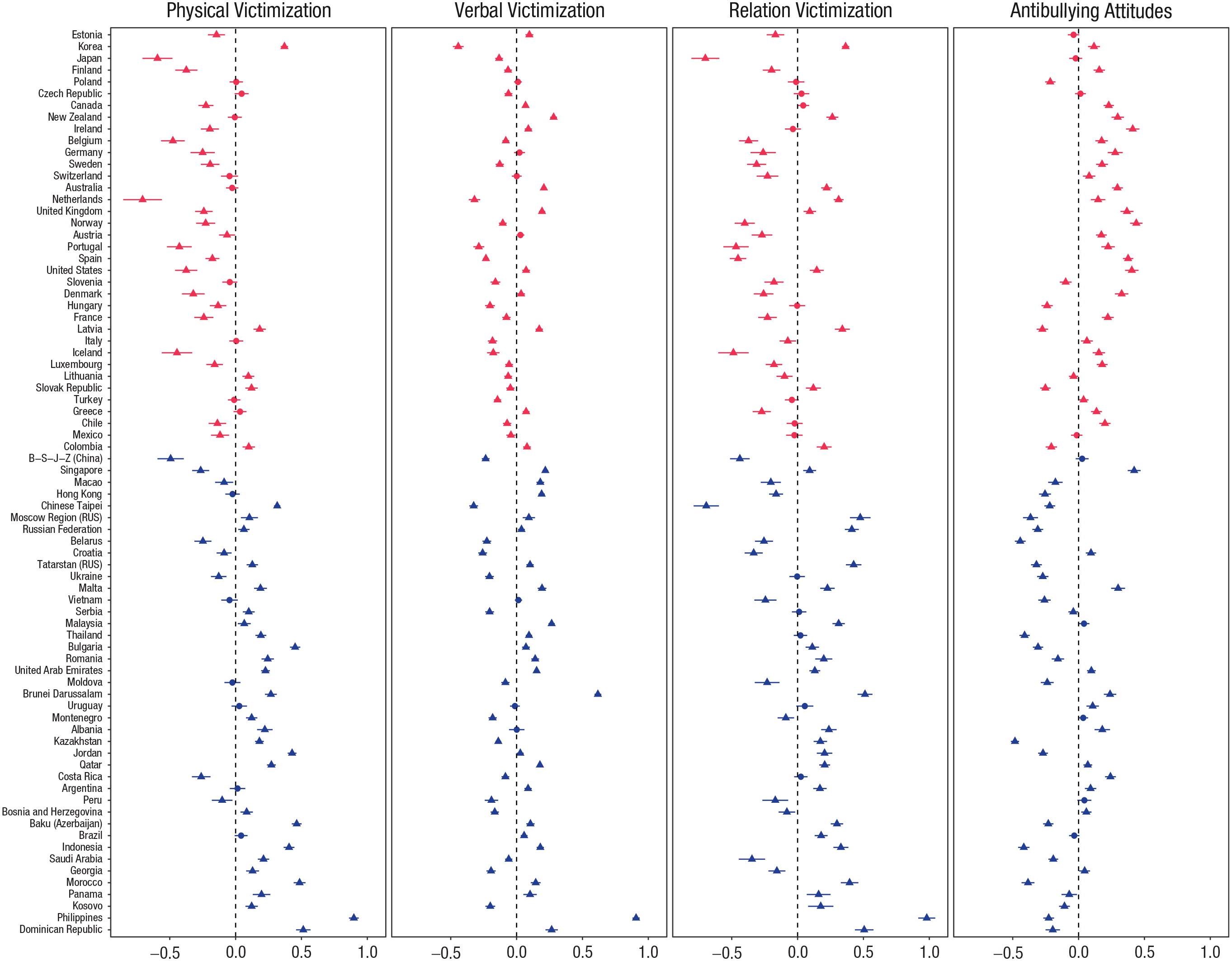
Country-level means of the three components of victimization and antibullying attitudes. Standardized measures of victimization for each country (high scores mean that a country is high relative to other countries). Shapes in red indicate Organisation for Economic Co-operation and Development (OECD) countries, and those in blue indicate non-OECD countries. Within the OECD and non-OECD countries, countries are ordered in relation to country-average achievement according to Programme for International Student Assessment test scores. Triangles indicate significant estimates (p < .05), and circles indicate estimates that are not statistically significant.
Researchers can assess national development in different ways, such as the four country-level indices that are related to victimization in Table 2: Human Development Index (HDI; also see Elgar et al., 2009), country-level socioeconomic status, country-level academic achievement, and OECD membership. High levels on all four indices are very strongly associated with antibullying attitudes; pro-bully attitudes are stronger in less developed countries.
Correlates of Country-Level Variation in the Three Victimization Components and Pro-Bully Attitudes
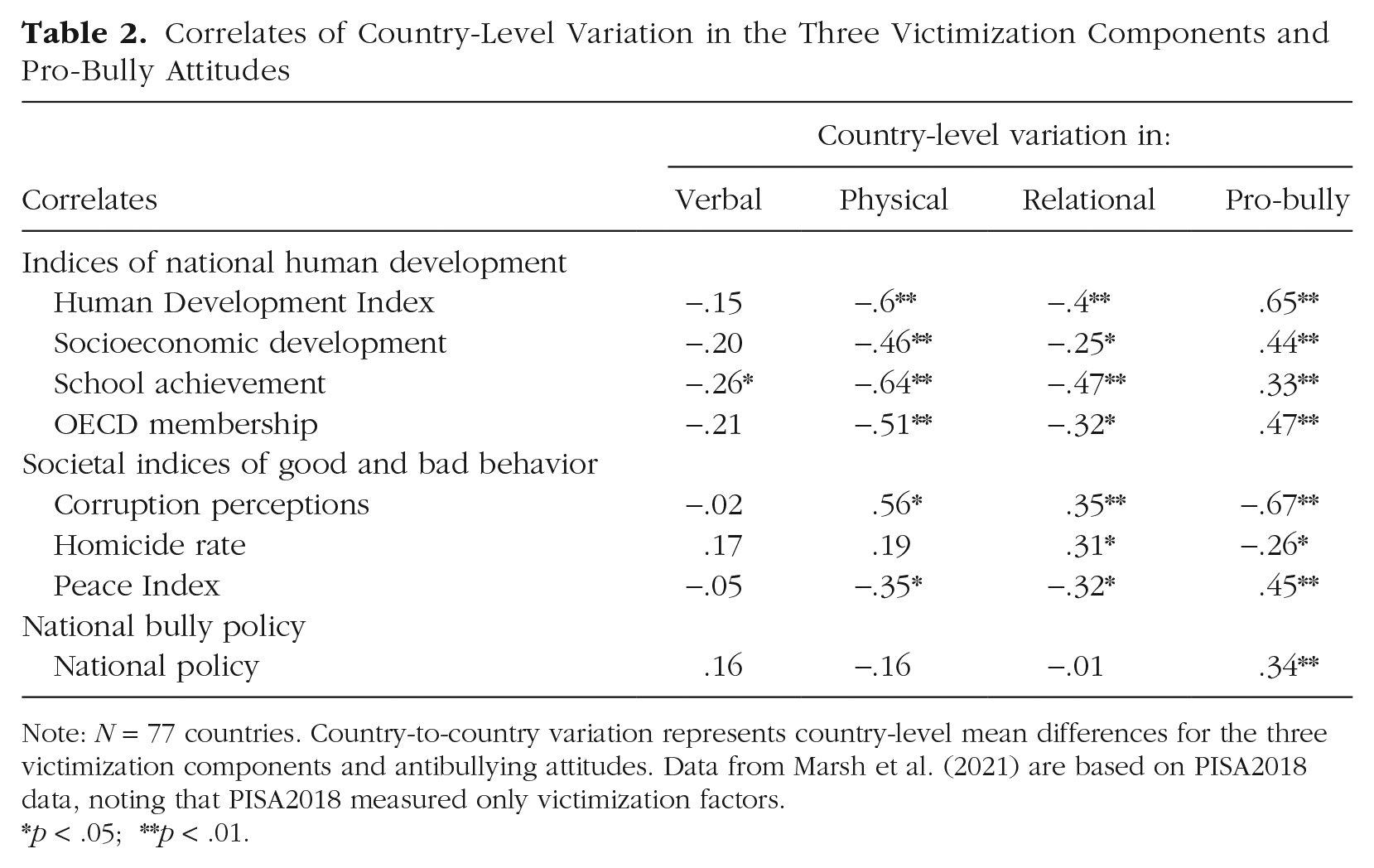
Note: N = 77 countries. Country-to-country variation represents country-level mean differences for the three victimization components and antibullying attitudes. Data from Marsh et al. (2021) are based on PISA2018 data, noting that PISA2018 measured only victimization factors.
p < .05; **p < .01.
Researchers can also assess societal indices of good and bad behavior in different ways, such as the three national indices that are related to victimization in Table 2: corruption perception (i.e., misuse of public power for private benefit), homicide rate, and country-level peace index (i.e., societal safety and security, domestic and international conflict, militarization). The two negative indices (corruption and homicide rates) correlate negatively with relational and physical (but not verbal) victimization and antibullying attitudes. The positive index (peace) correlates positively with relational and physical (but not verbal) victimization and antibullying attitudes.
For the first time, OECD (2019) collected country-level data on antibullying policies (i.e., national and school action plans to prevent bullying). The authors noted that policy development and implementation are critical ingredients to reducing victimization and a central component of many intervention programs (e.g., Smith et al., 2012; Sullivan, 2010). However, the national bully policy index derived from the data did not correlate significantly with any victimization component (Table 2), although it did correlate with antibullying attitudes. Because these results contradict widely endorsed strategies about the importance of antibullying policies, they need to be compared with other studies on antibullying policies (conducted in individual countries). One of the most important of these was the detailed content analysis of antibullying policies in 217 English schools (e.g., Smith et al., 2012; also see Llorent et al., 2021). For each school, antibullying policies were evaluated on a 34-point checklist. There was substantial school-to-school variation. However, contrary to expectations, the quality of the antibully policies was not significantly related to any student-reported measure of bullying or victimization. This led Smith et al. (2012) to conclude that “school policy in itself is unlikely to impact much on levels of bullying” (p. 68)—a finding consistent with the PISA2018 results. The results were subsequently replicated in Spanish schools (Llorent et al., 2021).
Country-to-country macrolevel differences are related to victimization. This suggests the need to incorporate models such as Bronfenbrenner’s (1994) ecological framework (e.g., individual, parent, school, neighborhood, regional, and national levels), as suggested by Hong and Espelage (2012). From this social-ecological perspective, country-level differences provide a distal contextual influence (Bronfenbrenner, 1994), whereas the classroom climate and one’s classmates as bystanders provide a proximal contextual influence. These contextual differences constitute both risk factors for victimization but also possible resources for interventions to reduce victimization.
The Importance of Bystanders
A social-ecology model stresses the importance of school climate, including students who are not bullies or victims but bystanders offering varying degrees of encouragement and discouragement to bullies and victims (Hong & Espelage, 2012; Salmivalli, 2010; Smith et al., 1999). Likewise, the widely endorsed KiVa intervention focuses on changing the role of the bystander in combination with changing the school climate (Salmivalli et al., 2005). However, the concern with any focus on bystanders is that although they are present 85% to 88% of the time during bully-victim episodes, they rarely intervene to support the victims (Hawkins et al., 2001).
The bystander effect
Considerable social-psychological research confirms the bystander-apathy effect, in which the presence of passive bystanders reduces the likelihood that an individual will help a victim (Fischer et al., 2011). The bystander-apathy effect increases with more bystanders, consistent with a diffusion-of-responsibility explanation. In nonschool settings, participant-witnesses are more likely to help the victim when alone than when in the presence of passive bystanders (effect size = −.35; Fischer et al., 2011). However, this bystander-apathy effect diminishes when the situation is seen as severe, bystanders are actual bystanders rather than confederates in a laboratory study, bystanders know each other, shared social norms are violated, and coordinated cooperation can resolve the emergency (Fischer & Greitemeyer, 2013).
Of particular relevance to victimization research, group cohesiveness moderates the typical bystander effect (Rutkowski et al., 1983). Bystander apathy tends to occur with low-cohesive groups, whereas bystander help becomes more likely with high-cohesion groups. Likewise, increasing group size inhibits intervention when the bystanders are strangers, but it facilitates intervention when the bystanders are friends (Levine & Crowther, 2008). These researchers concluded that if bystanders share group-level relationships, a sense of connectedness, and social norms, then group size facilitates helping behavior. Although not based on school settings, this research has implications for bullying-victimization interventions and suggests the importance of group cohesion, group-level processes, and social norms (e.g., antibully and pro-victim attitudes) in producing a bystander mobilization (empowerment and defending) effect.
In a school-based bully-victim episode, individual bystanders might be reluctant to intervene because they fear retaliation (Hazler & Hoover, 1996). This hesitancy suggests that bystanders need to be taught effective intervention strategies (Hawkins et al., 2001). However, bystanders who defend bullies tend to suffer negative consequences of postintervention social anxiety and depressive symptoms (W. C. Wu et al., 2016). W. C. Wu et al. (2016) suggested that bystanders sided with the bullies by default because of the power imbalance between bullies and victims and pro-bullying norms. Thus, bystanders who intervene might be socially isolated and suffer associated mental-health problems (Hinduja & Patchin, 2010). This bystander hesitancy might also suggest that social action, rather than individual action, is the way to intervene during a bully-victim episode.
Five possible bystander roles
During a bully-victim episode, bystanders offer varying degrees of encouragement or discouragement to bullies and victims (Cheon, Reeve, Marsh, & Jang, 2022; Hong & Espelage, 2012; Salmivalli et al., 2005). We propose that a bystander (or a group of bystanders) can adopt one of five different possible roles:
The bystander effects are not equally likely to occur in a typical classroom. If left to naturally occurring social processes (i.e., the absence of intervention), student-bystanders would be most likely to adopt the roles of bully empowerment or ignoring the situation and least likely to adopt the bully-disempowerment role. This is because it is socially difficult not to join in (reinforce) the bully in action, and it is even more challenging (even risky) to deter the bully (Garandeau et al., 2022). Furthermore, as discussed earlier (e.g., Marsh et al., 2011; W. C. Wu et al., 2016), bystanders who support victims may experience negative consequences.
A multilevel perspective
From social-ecological and multilevel perspectives, it is critical to distinguish between effects at the individual student level and effects at the classroom level. As long as there is a pro-bullying classroom culture, individual student-level interventions are unlikely to be effective. Indeed, support for victims might even be counterproductive from the defender’s perspective if there is a pro-bullying climate. Furthermore, the individual students who most need to participate in antibullying programming are typically the most difficult to reach, often responding with inattention, disruption, and even defiance (Cunningham et al., 2016). Indeed, the earlier discussion of the bystander effect suggests bystanders are more likely to intervene proactively when they know each other, when there is a violation of shared social norms, and when coordinated cooperation is likely to resolve the situation (Fischer & Greitemeyer, 2013). Hence, interventions to lessen peer victimization need to start at the classroom level by changing the norms shared in the classroom. Much of the disappointing results for victimization interventions might be due to insufficient attention to classroom climate. To support this claim, in the next section, we describe ongoing intervention research designed to lessen peer victimization by improving the classroom climate.
Interventions
A disappointing history of victimization interventions
Researchers and practitioners have designed and tested many interventions to reduce victimization. However, in their Annual Review of Psychology summary of this intervention research (individual studies, systematic reviews, and meta-analyses), Juvonen and Graham (2014) concluded that the results were “disappointing” (p. 172). They based their conclusion on results of pre-2014 studies, particularly those included in the classic Farrington and Ttofi (2009) meta-analysis. However, in updating their meta-analysis, these authors (Gaffney et al., 2019) again found only weak positive effects (odds ratio: M = 1.22, confidence interval = 95% [1.09, 1.38]). Indeed, their meta-analysis results were marginally weaker in 2019 than in 2009. Because their update included studies from their previous meta-analysis, the findings suggest that effects from more recent studies were even weaker—certainly not stronger than the earlier studies. Furthermore, only a minority of the intervention studies used appropriate randomized control trials (RCT) designs, and these RCT studies resulted in even smaller effects (also see Jiménez-Barbero et al., 2016). Furthermore, although most RCT studies used randomization at the school and class levels, few fully controlled for clustering effects with appropriate multilevel models.
Similarly, Ng et al.’s (2020) meta-analysis concluded that intervention effects were “very small to small” and that these “marginally effective” results were generally consistent with previous meta-analyses (e.g., Gaffney et al., 2019; Ttofi & Farrington, 2011). Despite this underwhelming track record, the need for effective (and alternative) interventions continues to be high given that the high worldwide prevalence of bullying and victimization persists (Harbin et al., 2019; OECD, 2019). As a case in point, in perhaps the most recent comprehensive large-scale analysis of bullying-victimization in U.S. high schools covering 2011 to 2019, there were no statistically significant changes in the prevalence of traditional bullying or cyberbullying (Li et al., 2020).
Ingredients for a successful intervention
Before successful interventions can be created, two fundamental questions need to be answered. First, why does one classmate victimize another? Some individual differences that contribute to aggression also contribute to bullying (e.g., callous traits, antisocial personality traits; Cook et al., 2010; Vaughn et al., 2010). However, bullying is distinct because of its sustained and repeated nature that detaches it from immediate situational or emotional provocations (Bosworth et al., 1999). Bullies want respect, elevated social status, an admired reputation, and a powerful, socially dominant position in the peer group (Ciarrochi et al., 2019) or, simply, status enhancement (Salmivalli, 2010) and an inflated self-view (Marsh et al., 2001, 2011). An encounter with a low-status classmate provides this opportunity.
The second question is why students do not stop the bully from victimizing others. Victims rarely stop bullies because they lack the social networks, peer popularity, and social status to overcome the bully-victim power imbalance. Likewise, individual bystanders rarely stop bullies because they fear retaliation, experience diffusion of responsibility, and are reluctant to face the social and emotional repercussions of trying to do so. So the effective agent to stop victimization is the group of peer bystanders (Polanin et al., 2012). When the audience of peer bystanders takes on the bully-empowerment role, the bully receives a metaphorical green light that bullying is a viable pathway to status enhancement. However, when the audience of peer bystanders takes on the bully-disempowerment role (especially when that audience is cohesive and united and communicates consensually), the would-be bully receives a metaphorical red light that bullying is not a viable pathway to status enhancement, at least in that setting.
Theoretical and empirical basis for intervention
New RCT autonomy-supportive teaching interventions to reduce victimization integrate perspectives from (a) a social-ecological framework that highlights the critical role of bystanders and the classroom climate (e.g., Hong & Espelage, 2012; Thornberg et al., 2018; Van Ryzin & Roseth, 2018), (b) the key role classmates-bystanders contribute to the escalation or de-escalation of bully-victim episodes (Kärnä et al., 2013; Salmivalli, 2014), and (c) self-determination theory to explain how teachers can create a socially cohesive and antibullying classroom climate (e.g., Assor et al., 2018; Cheon, Reeve, Marsh, & Song, 2022; Reeve et al., 2022). Many of these new investigations emphasize the teacher’s important preventive role in establishing a supportive classroom climate early in the school year (Assor et al., 2018; Cheon, Reeve, Marsh, & Song, 2022; Thornberg et al., 2018; Van Ryzin & Roseth, 2018).
Classroom climate has long been recognized as a potentially important variable in bully-reduction interventions (e.g., Di Stasio et al., 2016; Gregory et al., 2010; Jungert et al., 2016; Marsh et al., 2011; Van Ryzin & Roseth, 2018). Classroom climate represents the group consensus on what behaviors are acceptable and normative. It tends to take on a tone that ranges from supportive (egalitarian, cooperative, and caring) to hierarchical (conflictual, competitive; e.g., Garandeau et al., 2014; Ntoumanis & Vazou, 2005). Supportive climates cultivate a closely knit sense of community and the emergence of an egalitarian hierarchy. Such climates tend to preclude bullying, intimidation, and victimization (Assor et al., 2018; Van Ryzin & Roseth, 2018). Conflictual climates cultivate social comparisons and the emergence of a status-centric social-dominance hierarchy. Such climates leave students vulnerable to “me vs. you” peer-to-peer interactions that fertilize what Olweus (1973) referred to as antisocial “mobbing,” including bullying and victimization (Di Stasio et al., 2016; Garandeau et al., 2014).
Teachers become a critical social force in forming a supportive classroom climate when they engage in autonomy-supportive teaching (Assor et al., 2018; Cheon, Reeve, Marsh, & Song, 2022; Kaplan & Assor, 2012). Autonomy-supportive teaching adopts a student-focused attitude and an understanding interpersonal tone that enables the skillful enactment of autonomy-satisfying instructional behaviors. These include behaviors such as taking the students’ perspective and helping students work through the internalization process of taking in and volitionally accepting egalitarian and caring beliefs and behaviors as their own (e.g., Assor et al., 2018; Reeve & Cheon, 2021; Roth et al., 2010). These teacher–student interactions and communications (i.e., “autonomy-supportive dialogues”; Kaplan & Assor, 2012) typically revolve around classroom rules and practices, students’ concerns, feelings about classroom violence, and how responsive, emphatic, inclusive, and fair the teacher’s discipline and resource allocation practices are. When teachers are highly autonomy-supportive, the prevailing classroom climate tends to become rich in interpersonal support and low in interpersonal conflict (Cheon et al., 2019; Cheon, Reeve, Marsh, & Song, 2022; Gregory et al., 2010; Hendrickx et al., 2016; Konishi et al., 2010). Students of autonomy-supportive teachers are more likely to accept and internalize antibully and pro-victim attitudes and behaviors (Roth et al., 2010). The specific process through which this occurs appears in Figure 2.
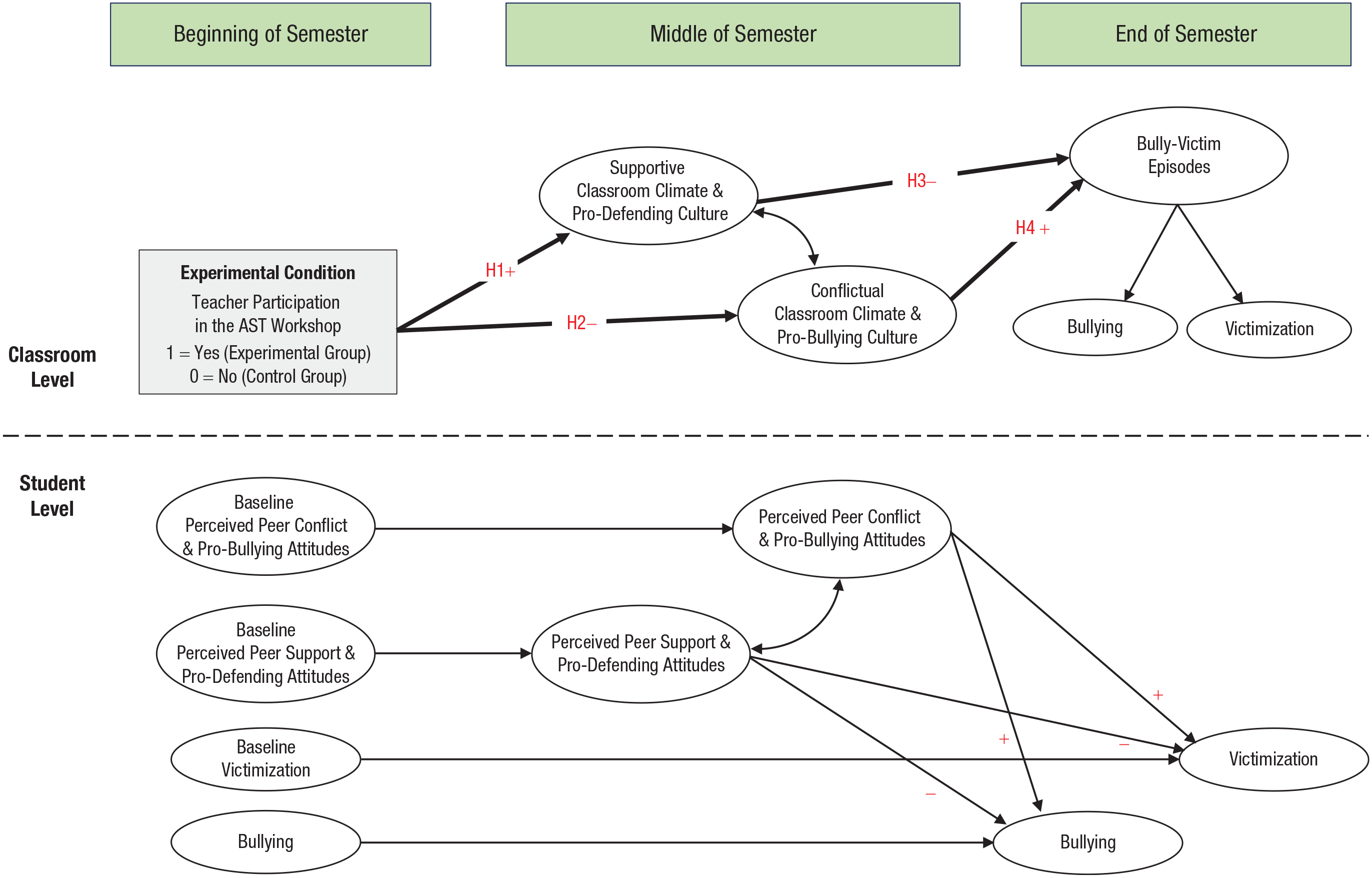
How autonomy-supportive teaching reduces bully-victim episodes. As teachers learn how to be more autonomy supportive at the beginning of the semester, they create classroom climates that are more supportive (H1+) and less conflictual (H2−) by midsemester. Supportive classroom climates then reduce bully-victim episodes (H3−), while conflictual classroom climates escalate bully-victim episodes (H4+). H = hypothesis; AST = autonomy-supportive teaching.
Teachers who participate in an autonomy-supportive teaching workshop at the beginning of a semester (i.e., experimental condition) gain the skill and relationships they need to cultivate a supportive, pro-defending climate (H1+) and to diminish a conflictual climate and a pro-bullying culture (H2–; Cheon et al., 2021; Cheon, Reeve, Marsh, & Jang, 2022; Cheon, Reeve, Marsh, & Song, 2022). These are classroom-level (L2) effects. The more students reach a consensus that they are surrounded by a highly supportive, pro-defending classroom climate, the fewer bully-victim episodes occur in that class (H3–); contrariwise, the more students reach a consensus that they are surrounded by a highly conflictual classroom climate and a pro-bullying culture, the more bully-victim episodes occur in that class (H4+). These variables also occur at the individual student level (depicted in the lower part of the Fig. 2), but the focus here is on the classroom level. Empirical analyses of this theoretical model are based on doubly latent multilevel structural equation modeling (e.g., Cheon, Reeve, Marsh, & Jang, 2022; Cheon, Reeve, Marsh, & Song, 2022; Marsh et al., 2012; see Fig. S1 in the Supplemental Material).
Implications
A key question arising from these new autonomy-supportive teaching interventions is why this intervention profoundly reduces classroom victimization when so many previous interventions failed to do so. Two reasons explain its effectiveness. The primary reason is the tried-and-true axiom, “Prevention works better than remediation.” Intervention-enabled autonomy-supportive teachers cultivate a highly supportive, egalitarian, and caring (and minimize a conflictual, hierarchical, and me-vs.-you competitive) classroom climate early in the school year. Therefore, these classrooms’ peer-to-peer interactions and relationships begin as interpersonally close and supportive. In such a climate, bullying (and hence bully-victim episodes) is largely eliminated. In contrast, an after-the-fact instructional effort to reverse an already high level of bullying and victimization (i.e., remediation) is more daunting.
A further reason for the autonomy-supportive teaching intervention’s success is that it helps teachers improve the quality of the classroom climate (i.e., peer-to-peer interactions and relationships) that builds a class-wide consensus around pro-defending and antibullying attitudes. Antibullying attitudes provide an index of the unacceptability of bullying behaviors, and they represent an important outcome in many intervention studies (e.g., Boulton et al., 1999; Cheon, Reeve, Marsh, & Jang, 2022; Hong & Espelage, 2012; Marsh et al., 2011; OECD, 2019; Salmivalli, 2010; van Verseveld et al., 2021). Therefore, the intervention focuses on removing the antecedents of bullying and victimization rather than on bullying and victimization per se. This is another way of saying that prevention works better than remediation.
Room for improvement remains in this autonomy-supportive teaching approach to intervention. So far, the focus has been on counteracting the bully-empowerment role. Future research needs to determine the merits of each of the five bystander roles as a separate intervention target, how synergistic these bystander effects might be, and whether they are naturally occurring manifestations that do or do not arise out of a highly supportive, minimally conflictual classroom climate. Interventions aimed at the whole school or individual students might be a valuable extension to teacher-based interventions. However, current research suggests that these supplements should be pursued cautiously and based on further research. Although stand-alone whole-school approaches are widely endorsed (Olweus & Limber, 2018; Salmivalli et al., 2005), meta-analytic findings suggest that a whole-school approach is not always the most effective approach (Gaffney et al., 2019). Likewise, interventions aimed at individual students (e.g., callous traits, conduct problems; Cook et al., 2010; Muñoz et al., 2011) are often unsuccessful (Jiménez-Barbero et al., 2020) and sometimes even counterproductive (W. C. Wu et al., 2016). Interventions aimed at the whole school (clear policy documentation and monitoring) or individual students (e.g., coping strategies, empathy training, psychological counseling) are unlikely to be effective without first changing pro-bully social norms and classroom climates.
Overarching Issues and Recommendations for Future Research
Simultaneous evaluation of multiple, parallel components of bullying and victimization
The simultaneous inclusion of bullying and victimization in the same study has important implications for theory, policy, practice, and intervention. However, there is an unfortunate tendency for victimization research and reviews to consider victimization separately from bullying. This is a mistake because both must be considered together to more fully understand either phenomenon (Juvonen & Graham, 2014) and their complex patterns of relations (e.g., Gumpel, 2008; Marsh et al., 2011). There are complex relations between specific components of bullying and victimization and their antecedents and consequences. As noted earlier, longitudinal data suggest that bullying and victimization are reciprocally related and that reciprocal relations are specific to particular components (e.g., Marsh et al., 2011; Walters, 2021). To develop policy and interventions to break these vicious cycles, it is essential to simultaneously evaluate parallel, multiple components of both bullying and victimization.
Studies of bullying and victimization have long argued that there are broadly four classifications; pure victims, pure bullies, bully-victims, and bystanders who are neither bullies nor victims (e.g., Haltigan & Vaillancourt, 2014; Salmivalli & Nieminen, 2002; Smith et al., 2019). However, this classification scheme, particularly the evaluation of bully-victims as a distinct group, requires that researchers assess both bullying and victimization.
Implicit in this classification scheme is an ongoing interest in the so-called bully-victim hypothesis—that bullying and victimization interact so that high levels of both have undesirable consequences beyond what could be explained by either considered in isolation. However, typical tests of this bully-victim interaction based on crude dichotomies (i.e., high/low splits of bullying and victimization measures according to global measures) are statistically and theoretically dubious (e.g., power, standardized effect sizes, reliability, model specification, and the interpretability of results; MacCallum et al., 2002). Appropriate statistical models should be based on latent, continuous measures of the multiple components of bullying and victimization and latent interactions between measures of bullying and victimization.
Bystanders, bystander effects, attitudes toward bullying and victimization, and the victim paradox
Bystanders, bystander effects, attitudes toward bullying and victimization, and the victim paradox are only loosely aligned in bullying and victimization research. Recent research clearly shows that these findings need to be integrated into bullying and victimization research. The empowering/disempowering effects of bystanders and the quality of the school ethos and classroom climates explain the rise and fall of bullying, victimization, and bully-victim episodes. The victim paradox shows the close developmental relation between being a victim and being a bully.
Also relevant are the bystander-apathy effect, its moderators (e.g., group cohesion and social norms), and group-level perspectives. Intervention work suggests that training (professionalizing) teachers to be autonomy-supportive changes the classroom climate to support pro-defending and antibullying attitudes and supportive classroom climates. In support of a mediational model, the teacher-based intervention significantly reduced bullying, victimization, and hence bully-victim episodes. Critically, as discussed earlier, much of this intervention effect was mediated by reducing bystander bully-empowerment effects (pro-bullying attitudes, pro-bullying reinforcement). However, the field needs further research to tease out the relations between bystander-empowerment effects, other possible bystander effects (victim empowerment/disempowerment, bullying disempowerment), the victim paradox, and the bystander-apathy effect. Although the teacher-based intervention significantly reduced bullying and victimization, more research is needed to evaluate the mediating mechanisms.
Intervention
Results from RCT interventions that capitalize on the recent advances identified in the present review (e.g., multidimensional measures, a social-ecological perspective to emphasize bystanders and the classroom climate, and a multilevel perspective to focus on classroom-level processes) confirm two findings (see earlier discussion). First, highly supportive, pro-defending and antibullying classroom climates can substantially reduce peer victimization. Second, professionally trained teachers can generate such a climate. The critical take-home message is to work with teachers (at the classroom level) to develop a supportive climate in which students (bystanders) can collectively overcome their otherwise normative tendency to reinforce bullies. Peer victimization declines when bullies cannot enhance their status by victimizing classmates.
Recommendations for future research
School victimization is a worldwide issue, but insufficient research has focused on its multiple components, cross-national generalizability, the role of bystanders in disempowering bullying and empowering victims, and multilevel RCT designs that focus on changing classroom climate rather than the behaviors of individual students. The following recommendations aim to advance theory; improve measurement, design, and analysis; and facilitate intervention success with implications for policy, practice, and future intervention research:
Measurement in victimization and bullying research has been weak. Researchers need to use psychometrically strong instruments that reliably assess and differentiate multiple parallel components of bullying and victimization. There is a clear theoretical rationale and strong empirical support for all three (relational, verbal, and physical) components.
There is a need to integrate bullying and victimization research more thoroughly. Particularly at the classroom level, these are two sides of the same coin (i.e., if there is bullying in the classroom, there must be victims). It makes no sense for these research literatures and reviews to develop independently of each other (and, perhaps, aggression research more generally). This integration should start by using survey instruments that assess the multiple, parallel components of both bullying and victimization.
Bullying and victimization routinely need to be considered in multilevel models that assess their effect at the classroom (and, perhaps, school) level. More robust statistical models are needed to differentiate individual student-level effects from group-level effects associated with classrooms, schools, communities, states, educational systems, and countries. In addition, contextual variables (e.g., values, ethos, antibullying attitudes, school type, organizational structure, instructional practices, resources, intervention, and antibullying policies) should be evaluated at the appropriate group level.
Better longitudinal data and appropriate statistical models are needed to evaluate trajectories of the multiple components of victimization and bullying and their causal ordering with other variables posited to be antecedents, consequences, mediators, and correlates of bullying and victimization.
Researchers are encouraged to measure bystander roles and classroom climates assessed at individual student and group (classroom and, perhaps, school) levels (see Fig. 2). Furthermore, more research is needed on the critical role of bystanders and their effects—particularly bullying disempowerment and victim empowerment—that are based substantially on attitudes. This research direction is essential to understanding bullying and victimization and designing and evaluating interventions.
Interventions need to focus particularly on the classroom (but, perhaps, also the school) ethos and on changing the attitudes of bystanders, the majority of students who are neither victims nor bullies. These require appropriate multilevel design and analysis. A focus on individual bullies and victims is unlikely to be successful unless there are changes in group-level constructs—the classroom ethos. What is most likely to be effective are bystander-focused group effects that collectively disempower bullying and empower victims—assessed at the classroom level.
A substantial body of existing research suggests that interventions that focus on the whole-school and individual-student levels are of limited effectiveness. In contrast, a smaller body of research suggests that interventions focusing on the classroom/teacher level are more effective. However, more research is needed on strategies for teachers to develop and implement.
Research is needed on the antecedent characteristics of victims and risk factors associated with multidimensional (social, verbal, physical) conceptualizations of victimization that can inform interventions. However, strategies aimed at individual students should be undertaken only in combination with classroom interventions that transform traditionally pro-bullying classroom climates into pro-victim climates. Hence, more appropriate multilevel models are needed to disentangle effects that occur at the individual student, classroom, and school levels.
Supplemental Material
sj-docx-1-pps-10.1177_17456916221112919 – Supplemental material for Overcoming Limitations in Peer-Victimization Research That Impede Successful Intervention: Challenges and New Directions
Supplemental material, sj-docx-1-pps-10.1177_17456916221112919 for Overcoming Limitations in Peer-Victimization Research That Impede Successful Intervention: Challenges and New Directions by Herbert W. Marsh, Johnmarshall Reeve, Jiesi Guo, Reinhard Pekrun, Roberto H. Parada, Philip D. Parker, Geetanjali Basarkod, Rhonda Craven, Hye-Ryen Jang, Theresa Dicke, Joseph Ciarrochi, Baljinder K. Sahdra, Emma K. Devine and Sung Hyeon Cheon in Perspectives on Psychological Science
Footnotes
Transparency
Action Editor: Laura A. King
Editor: Laura A. King
ORCID iDs

Notes
References
Supplementary Material
Please find the following supplemental material available below.
For Open Access articles published under a Creative Commons License, all supplemental material carries the same license as the article it is associated with.
For non-Open Access articles published, all supplemental material carries a non-exclusive license, and permission requests for re-use of supplemental material or any part of supplemental material shall be sent directly to the copyright owner as specified in the copyright notice associated with the article.
