



Abstract
Causal inference is a central goal of research. However, most psychologists refrain from explicitly addressing causal research questions and avoid drawing causal inference on the basis of nonexperimental evidence. We argue that this taboo against causal inference in nonexperimental psychology impairs study design and data analysis, holds back cumulative research, leads to a disconnect between original findings and how they are interpreted in subsequent work, and limits the relevance of nonexperimental psychology for policymaking. At the same time, the taboo does not prevent researchers from interpreting findings as causal effects—the inference is simply made implicitly, and assumptions remain unarticulated. Thus, we recommend that nonexperimental psychologists begin to talk openly about causal assumptions and causal effects. Only then can researchers take advantage of recent methodological advances in causal reasoning and analysis and develop a solid understanding of the underlying causal mechanisms that can inform future research, theory, and policymakers.
Correlation does not imply causation. This truism justifiably reminds researchers that they should not carelessly draw causal conclusions on the basis of nonexperimental evidence. However, instead of motivating psychologists to exercise due diligence and face the challenges of causal inference, it seems to have resulted in a widespread taboo against explicit causal inference in nonexperimental settings. This taboo has resulted in a dilemma in some fields of psychology. On the one hand, causal relationships are of central interest; on the other hand, they are “forbidden” when experiments are unfeasible or unethical. As a result, one might expect nonexperimental researchers to limit themselves to descriptive or predictive research questions. But nonexperimental researchers do not actually avoid asking causal research questions or drawing causal conclusions; it simply happens implicitly, opaquely, and without an articulation of the underlying assumptions.
Here, we argue that the taboo against explicit causal inference hinders nonexperimental psychology (for similar arguments, see Antonakis, Bendahan, Jacquart, & Lalive, 2010, and Hernán, 2018a). It impairs study design and data analysis. It slows the pace at which our understanding of underlying causal mechanisms grows. It leads to a disconnect between original studies and how they are integrated into subsequent work, and it limits the usefulness of nonexperimental psychology for policymaking. We elaborate on each of these points and suggest how nonexperimental psychologists can integrate causality into their work in a more productive manner.
Manifestation of the Taboo
To illustrate the taboo against causal inference, we annotated text passages from four nonexperimental articles in Table 1. In all four articles, causal inference seems to be intended but are not expressed in explicit and straightforward ways, which we interpret as signs of the taboo. The absence of explicit causal language thus obscured the research goals of the studies. The researchers ended up sending mixed messages. Some parts of the articles read as if the entire endeavor were noncausal; yet other parts make sense only in the context of trying to answer a causal research question. For example, two of the four examples (Table 1, Examples 1 and 3) included control variables to rule out confounding effects and estimate the unique effect of the independent variable. Although there might be instances in which a third variable adjustment is useful for descriptive purposes, the adjustment in these two studies suggests that their goal was not merely to describe or to predict. If description were the ultimate goal, then an unadjusted estimate could have been reported, potentially with some insightful graphical display. At the same time, prediction did not seem to be the goal either, given that attention was paid to the coefficients of particular predictors rather than to the overall accuracy and cross-validation of the prediction. If prediction were the ultimate goal, then techniques from the field of machine learning would have been more appropriate (Yarkoni & Westfall, 2017). Hence, it is plausible to assume that the two examples that used control variables and even the two examples without control variables (Table 1, Examples 2 and 4) intended to identify causal links, even though the results of the studies were interpreted with vague causal language (e.g., “predict,” “effect”) rather than explicit causal language (e.g., “causes,” “causal effect”; for a similar argument, see Rutter, 2007). We think that description and prediction are worthwhile research goals. Yet we believe they should be pursued for their own sake rather than serving as a cover for implicit causal questions and conclusions.
Manifestations of the Taboo Against Explicit Causal Inference in Four Nonexperimental Articles
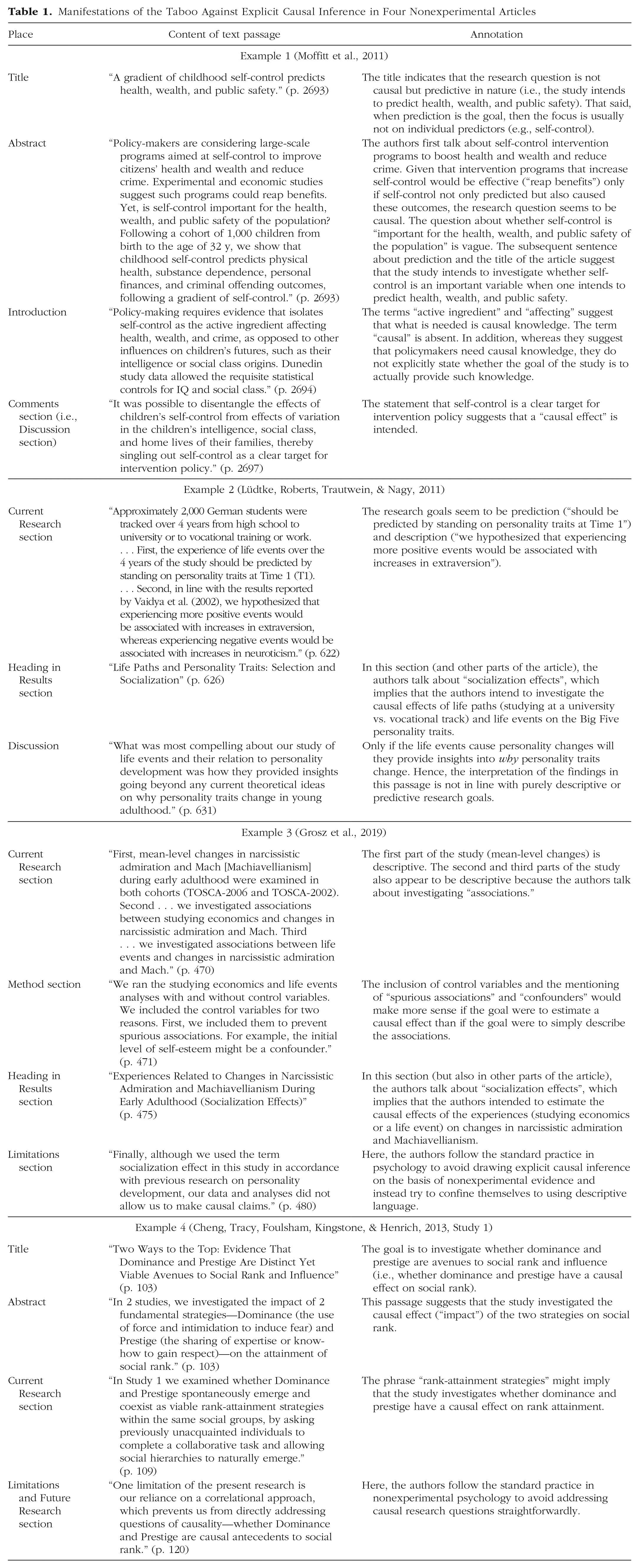
To be clear, we do not intend to criticize the authors or the quality of these four articles; our intention is instead to criticize the norms regarding causal inference that these authors and most other nonexperimental psychologists adhere to. These norms permeate many aspects of psychological science, from the education of psychological researchers (e.g., causal-effect estimation based on nonexperimental evidence plays only a minor role in the methods and statistics curricula in psychology) to the review process at scientific journals (e.g., author guidelines, editors, and reviewers asking for the removal of causal language).
Reasons Behind the Taboo
Why do psychologists think that it is legitimate to make explicit causal inferences on the basis of experimental evidence but not on the basis of nonexperimental evidence? Imagine that we wish to study the effect of a new therapy on the recovery of depressed people. In a purely observational study, we may observe that, relative to nontreated people, clients improve when undergoing treatment. Yet it is likely that people who underwent treatment differed from nontreated people with respect to background factors that determine recovery (e.g., age, education, financial resources, social support). Thus, we cannot directly infer that the therapy worked—changes in recovery rates might have been caused by the treatment or by other factors. In an experimental study, the randomized assignment to the treatment (i.e., therapy) and control conditions is intended to eliminate the causal link between the background factors and choice of treatment. Hence, the background factors cannot serve as an alternative explanation of a higher rate of recovery in the treatment group if the randomization is successful (e.g., Pearl, 2009).
However, the problems of multicausality that render nonexperimental evidence weak and potentially nondiagnostic are to some extent present in experimental research with randomized groups as well. This is because many treatment or experimental manipulations will affect not only the independent variable they are intended to affect. Even an obvious physical manipulation such as stimulus presentation time can have many causal effects at different levels of aggregation (e.g., by inducing time pressure or stress, undermining self-efficacy, inducing distinct cognitive strategies), and identifying the relevant mechanism might be challenging (Bullock, Green, & Ha, 2010). Hence, causal inference always goes beyond what is observed, and it always rests on assumptions (e.g., Waldmann, Hagmayer, & Blaisdell, 2006). Some philosophers have even argued that it is a top-down rather than a bottom-up endeavor that involves a priori world knowledge (e.g., Kant, 1781/2002). 1 Taken together, although experimental designs are the method of choice for blocking the effects of background factors, causal inferences are speculative inferences regardless of whether the study is conventionally classified as nonexperimental or experimental.
Consequences of the Taboo Against Explicit Causal Inference
Impairment of study design and data analysis
The ambiguity in the goals of nonexperimental studies (see Table 1) brings about a distinct lack of careful and explicit causal reasoning in study design and data analysis. Nonexperimental psychologists will usually have a coarse mental representation of the causal network in which their variables of interest are embedded. That is, they usually have some assumptions about the causes and consequences of the variables they are studying and about the causal mechanisms and mediating processes that lead from the independent variable(s) to the dependent variable(s). Yet these assumptions about the underlying causal network are hardly ever spelled out explicitly. For example, many nonexperimental psychologists do not explicitly justify why they include certain control variables, and hardly any of them use formalized frameworks developed to support causal reasoning such as the potential-outcome framework (e.g., Morgan & Winship, 2015; Rubin, 2005) or directed acyclic graphs (DAGs; e.g., Pearl, 2009). As a consequence of this unstructured approach, researchers may forget to assess and control important confounding variables, or they may erroneously control for mediators and collider variables, hence introducing bias (e.g., Elwert & Winship, 2014; Foster, 2010b; Rohrer, 2018). This state of affairs was bemoaned by Foster (2010b) after he had edited the journal Developmental Psychology for 5 years: “Currently, developmentalists conduct complex analyses that are not useful in pursuing either aim: The analyses are too complex to produce good description, and the complexity is not employed in a manner that facilitates causal inference” (p. 1760).
Furthermore, the causal assumptions encoded in structural equation models are often ignored or at least not discussed openly. For instance, by setting a coefficient to zero in a structural equation model, one is assuming that one variable does not have a causal effect on another variable. But structural equation models are frequently used in nonexperimental research without any explicit discussion or justification of such causal assumptions. This is problematic because the credibility of a structural equation model depends on the credibility of its causal assumptions (e.g., Bollen & Pearl, 2013).
The taboo holds back cumulative research
A further consequence of the reluctance to explicitly talk about causality is that our understanding of the underlying causal mechanisms progresses at a slow pace, if at all. This issue has been highlighted in the field of personality research, which, because of the nature of its research subject, relies heavily on nonexperimental data: During the past 50 years, personality psychology has made considerable progress concerning personality description, and prediction of and by personality. In contrast, explanation of personality development and personality effects has lagged far behind. In the coming decades, much more inspiration and transpiration are needed to change this unsatisfactory situation. (Asendorpf et al., 2016, p. 305)
We believe it is currently difficult for fields strongly characterized by nonexperimental research to accumulate causal knowledge because most previous studies have not explicitly stated the causal link they have identified or the assumptions under which this link should hold. These assumptions can often be reconstructed indirectly only on the basis of the analyses the authors chose to apply. For example, controlling for a third variable implies that it is understood as a confounder rather than as a mediator of the effect of interest. Still, the assumptions about the underlying causal network will often remain opaque, and thus, the conditions under which a coefficient can (or cannot) be interpreted as a causal effect remain unclear.
This opaqueness enables undesirable flexibility (e.g., Eisenberg, 1984; Smaldino, 2017), which discourages cumulative research. If researchers do not clearly specify the causal effect they think they have identified, a study’s findings are hardly falsifiable. Imagine, for example, that Researcher A publishes a nonexperimental study on subjective well-being and relationship satisfaction and concludes that a person’s low subjective well-being causes relationship dissatisfaction in a romantic partner. Researcher B might read the article and disagree with the conclusion because Researcher B thinks the health of the person confounds the relationship between subjective well-being and the partner’s relationship satisfaction. Researcher B might then write a comment and criticize Researcher A’s study for not assessing and controlling for health, or Researcher B could conduct a new study to investigate whether the relationship still holds when controlling for health. On the other hand, if Researcher A had not explicitly claimed that the effect of subjective well-being on the partner’s relationship satisfaction was causal, Researcher B would have had a hard time pinning down what exactly to say about Researcher A’s study: “The study did not correctly answer the question it did not explicitly try to answer” is not a compelling criticism. If confronted with criticism, Researcher A could retreat to the position that the finding was descriptive to begin with, even if this particular reading of the study is probably less interesting. Being unclear about the purpose of a study opens the door to such motte-and-bailey strategies in which researchers profit from the more interesting but difficult-to-defend causal interpretation of their effect (the bailey), but once challenged, they retreat to the almost trivial yet difficult to attack descriptive finding (the motte).
No single study can test all assumptions and rule out all potential alternative causal explanations. A variety of study designs, data sources, and methods are needed to attain confidence in estimates of causal effects (e.g., Briley, Livengood, & Derringer, 2018; Hernán, 2018b; Lawlor, Tilling, & Davey Smith, 2016). Such a cumulative endeavor needs to explicitly consider the assumptions that are involved. If not, research may simply go around in circles or end up in a futile back and forth when nobody notices that their discrepant conclusions hinge on certain assumptions about which one could argue in a more fertile manner.
Disconnect between original findings and their subsequent interpretation
The taboo against explicit causal reasoning and language has furthermore led to a disconnect between the original nonexperimental findings and their subsequent interpretation. Even if authors refrain from making causal interpretations in their original study, subsequent theoretical articles, reviews, or Introduction/Discussion sections will refer to the very same findings in a way that makes sense only if they were meant to be read as causal effects. The citing authors likely have no intention to mislead readers—they might simply have not considered the design of the respective study in great detail.
For example, the neosocioanalytic theory has posited, on the empirical basis of longitudinal research that did not explicitly estimate causal effects, that investments in age-graded social roles drive (i.e., cause) personality trait change (e.g., entering the workforce after education leads to increases in conscientiousness; e.g., Roberts & Wood, 2006). Theories are usually causal in nature because cause-and-effect relationships permeate the way we think and make sense of the world (e.g., Kant, 1781/2002; Waldmann et al., 2006). Hence, if empirical researchers in a field do not tackle causal questions explicitly and instead try to constrain themselves to descriptive or predictive statements and research questions, then a disconnect between empirical findings and theory is almost inevitable.
A similar disconnect can arise when nonexperimental studies are cited to make certain arguments in literature reviews and Introduction sections. For example, two recent reviews argued that intervention studies on how to change personality traits are vital and needed because personality traits predict important life outcomes in the domains of education, work, relationships, health, and well-being (Bleidorn et al., 2019; Roberts et al., 2017). The implicit assumption must be that personality traits cause the life outcomes; otherwise, changing the personality traits through interventions will not change the respective outcomes. It is possible that personality is indeed the cause; however, most previous empirical studies on the topic did not explicitly investigate these causal effects.
Engaging in “stealth causal inference” from a distance (i.e., assuming causal relationships on the basis of descriptive or predictive findings reported elsewhere) may be convenient for nonexperimental fields because it means that authors do not have to defend explicit causal claims, yet everybody gets to enjoy explanatory accounts and the impression of a deep understanding of the subject matter. However, the disconnect between original findings and subsequent causal interpretations renders arguments and theories—even those that seem to be supported by an impressive number of empirical studies—speculative, which limits their usefulness for researchers and policymakers alike.
For researchers, speculative arguments and theories are not very helpful for designing causally informative studies: Although speculation might stimulate new research ideas, it does not provide reliable information about which variables to assess and control for. Furthermore, the speculative nature of theories means that derived hypotheses have a lower prior probability of being true than the hypotheses derived from less speculative theories (i.e., theories with firmly established relationships and laws such as natural selection in Darwin’s theory of evolution). Their lower prior probability in turn results in more nonsignificant findings and more false-positive findings (Diekmann, 2011; Fiedler, 2017; Ioannidis, 2005). 2 Hence, theories without firmly established relationships and laws are not particularly useful, for example, for tackling the replication crisis in psychology (Fiedler, 2017; see also Muthukrishna & Henrich, 2019).
For policymakers, theories are useful if they contain firmly established causal relationships because only then can policymakers design interventions that successfully tackle pressing issues in the world. Although predictive findings might help to identify at-risk groups that might want to be targeted by interventions (e.g., adolescents with learning disabilities or self-control issues), predictive findings do not inform policymakers about how they can intervene. We can thus understand one reason for the lamented lack of interventions and policies targeting personality traits (e.g., Bleidorn et al., 2019)—unless we establish that personality traits are indeed meaningful causes, why would one want to target them?
Recommendations for Integrating Causality in a More Productive Manner
Steps of causal inference in nonexperimental studies
How can we do better? Nonexperimental researchers should openly admit when their goal is causal inference—and then ensure that their study pursues this goal in a rigorous and transparent manner. The following four steps of causal inference might help them do so.
In Step 1, researchers should articulate a clear causal question and state the precise definition of the causal effect of interest. Translating the causal question into a hypothetical experiment and counterfactual thinking can help researchers do so because the counterfactual question “What would happen to an individual if one changed the treatment?” lies at the heart of causal inference (e.g., Foster, 2010a; Hernán, 2018a; Morgan & Winship, 2015). That is, the causal effect of interest is the difference between the outcome if the individual had experienced the treatment and the outcome if the individual had not experienced the treatment. Thinking about how things are for an individual and how things would be different if the individual had not experienced the treatment can be formally expressed using the potential-outcomes framework (for an accessible introduction, see Foster, 2010a; see also, e.g., Holland, 1986; Rubin, 2005).
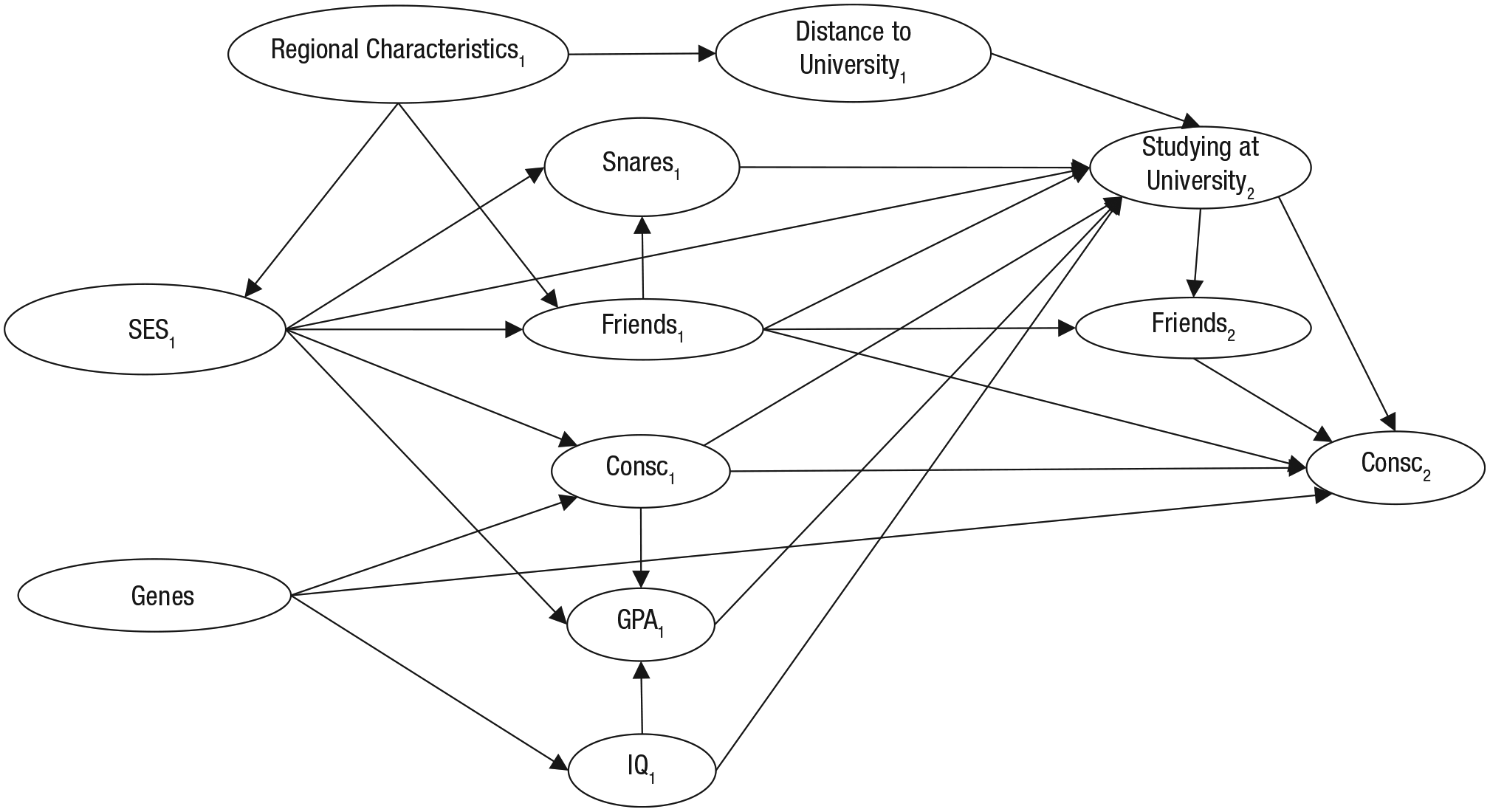
In Step 2, researchers might want to think carefully about how other variables relate to the putative causal variable (i.e., the treatment) and outcome variable to identify potential confounders, colliders, 3 mediators, and instrumental variables (see Box 1). The assumptions about this underlying causal web can be expressed in a DAG (e.g., Pearl, 2009). A DAG connects variables with arrows representing causal relationships. Note that the DAG should contain all relevant variables, not only the ones that are available, observable, or measurable. The DAG helps researchers align the study design and data analysis to the actual aim of the study (for accessible introductions to DAGs, see, e.g., Foster, 2010a; Rohrer, 2018). As a side note, whereas counterfactual thinking and DAGs may be new tools for many psychologists, they are in line with Campbell’s tradition of identifying plausible threats to internal validity (i.e., causal inference) and then including study design features and statistical adjustments that can potentially rule out those specific threats (e.g., Campbell, 1988; Matthay & Glymour, 2020; West & Thoemmes, 2010).
What Is Instrumental-Variable Estimation?
Instrumental-variable estimation is a method for estimating the causal effect of the treatment X on the outcome Y with the help of an instrumental variable Z. An instrumental variable Z is a variable that is associated with the treatment, and only because of its association with the treatment is it associated with the outcome. More specifically, an instrumental variable should fulfill the following four assumptions:
The relevance assumption: The instrument Z and treatment X are associated either because Z has a causal effect on X (left panel) or because X and Z share a common cause U* (right panel).
The exclusion restriction: Z affects the outcome Y only through X.
The exchangeability assumption (also called independence assumption): Z does not share common causes with Y (other than U*).
The monotonicity assumption: Z cannot increase X for some individuals and decrease it for others (e.g., Bollen, 2012; Labrecque & Swanson, 2018; Lousdal, 2018).
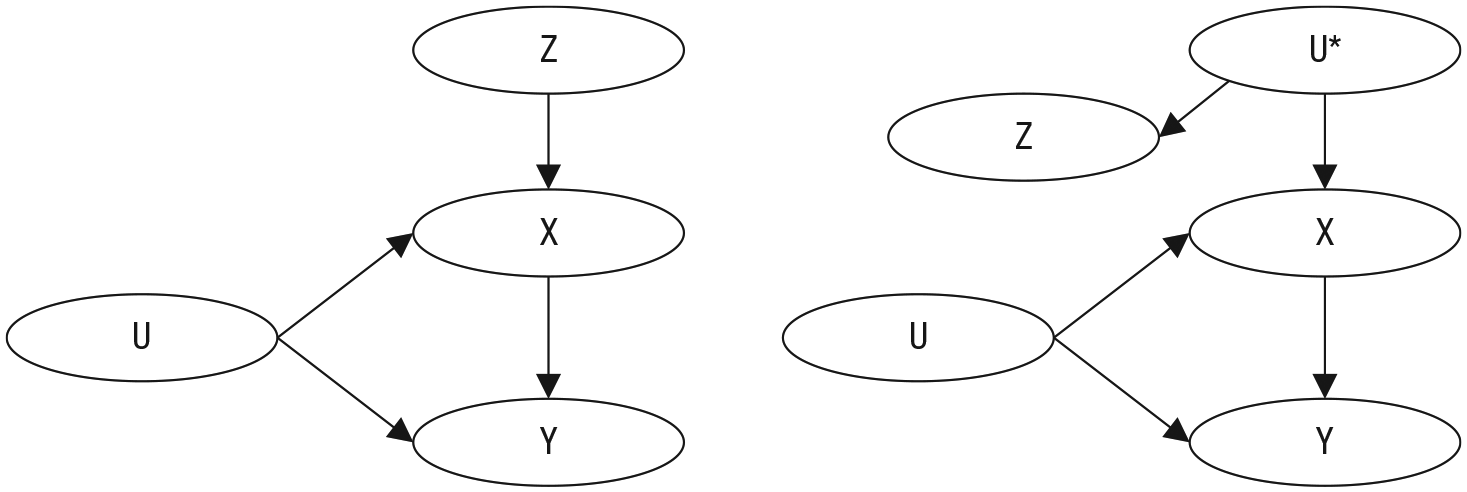
The assumptions can only partially be tested empirically and require theoretical justification (Labrecque & Swanson, 2018). If an instrument that meets these assumptions can be identified, the causal average effect of X on Y can be estimated even in the presence of unmeasured confounding U. A variable that does not fulfill the second and third assumptions can be transformed into a variable that fulfills these assumptions by adjusting for confounding variables.
For a continuous-treatment variable, the estimand for the instrumental variable is the ratio
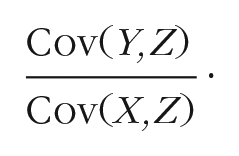
Different types of instruments have been proposed: researcher-induced randomization (e.g., a randomized antismoking intervention is the instrumental variable Z and smoking is the treatment variable X), natural randomization processes (e.g., Mendelian randomization, in which alleles are allocated at random in offspring), and natural variation (e.g., preference for treatment according to the availability of a facility or physician; e.g., Bollen, 2012; Lousdal, 2018).
Step 3 involves establishing an identification strategy and estimating the causal effect. That is, given the assumptions from the previous steps, researchers derive a way to estimate the causal effect without bias from the data at hand. For example, this could involve a multiple regression model if all relevant confounding variables are available in the data, or it could involve the use of instrumental-variable estimation if un-observed confounding is assumed (for introductions to and discussions of various identification strategies, see Box 1; also see Foster, 2010a; MacKinnon & Pirlott, 2015; Mõttus & Kandler, 2018; Pingault et al., 2018; Rutter, 2007). Further inspiration for methods that can be used to investigate causal relationships on the basis of nonexperimental data can be found in fields such as economics, political science, or sociology. Parts of economics, political science, and sociology have embraced the challenge of causal inference on the basis of nonexperimental evidence, for example, through the use of instrumental-variable estimation (see Box 1), regression-discontinuity designs, or fixed-effects models (e.g., Allison, 2009; Angrist & Pischke, 2008; Gangl, 2010; Morgan & Winship, 2015). All of these approaches have their own pitfalls, but psychologists are lucky that they can learn from critical discussions that have already transpired in other fields of research. Once the identification strategy is in place, it can be used to estimate the causal effect.
In the last step, Step 4, researchers test their identification strategy against violations of assumptions to see how much the effect estimate would change if certain assumptions were violated. For example, if the assumption is that all confounders have been observed, a researcher might want to compute what would happen if unobservable variables were to confound the effect (for more information on sensitivity analysis, see, e.g., Frank, Maroulis, Duong, & Kelcey, 2013; Greenland, 1996; Rosenbaum, 2005; Rosenberg, Xu, & Frank, 2019; VanderWeele & Ding, 2017). The last step should also involve a discussion of potential alternative explanations for the observed effect. This discussion, along with future directions for research, might be provided in the Discussion section.
In Boxes 2 and 3 and Figures S1 and S2 in the Supplemental Material available online, we briefly illustrate these four steps of causal inference with research questions from the four articles presented in Table 1. Please note that a detailed description and exemplification of all steps is beyond the scope of the current article (for more details on steps of causal inference, see Foster, 2010a).
Brief Illustration of the Steps of Causal Inference for Example 1 (Moffitt et al., 2011)
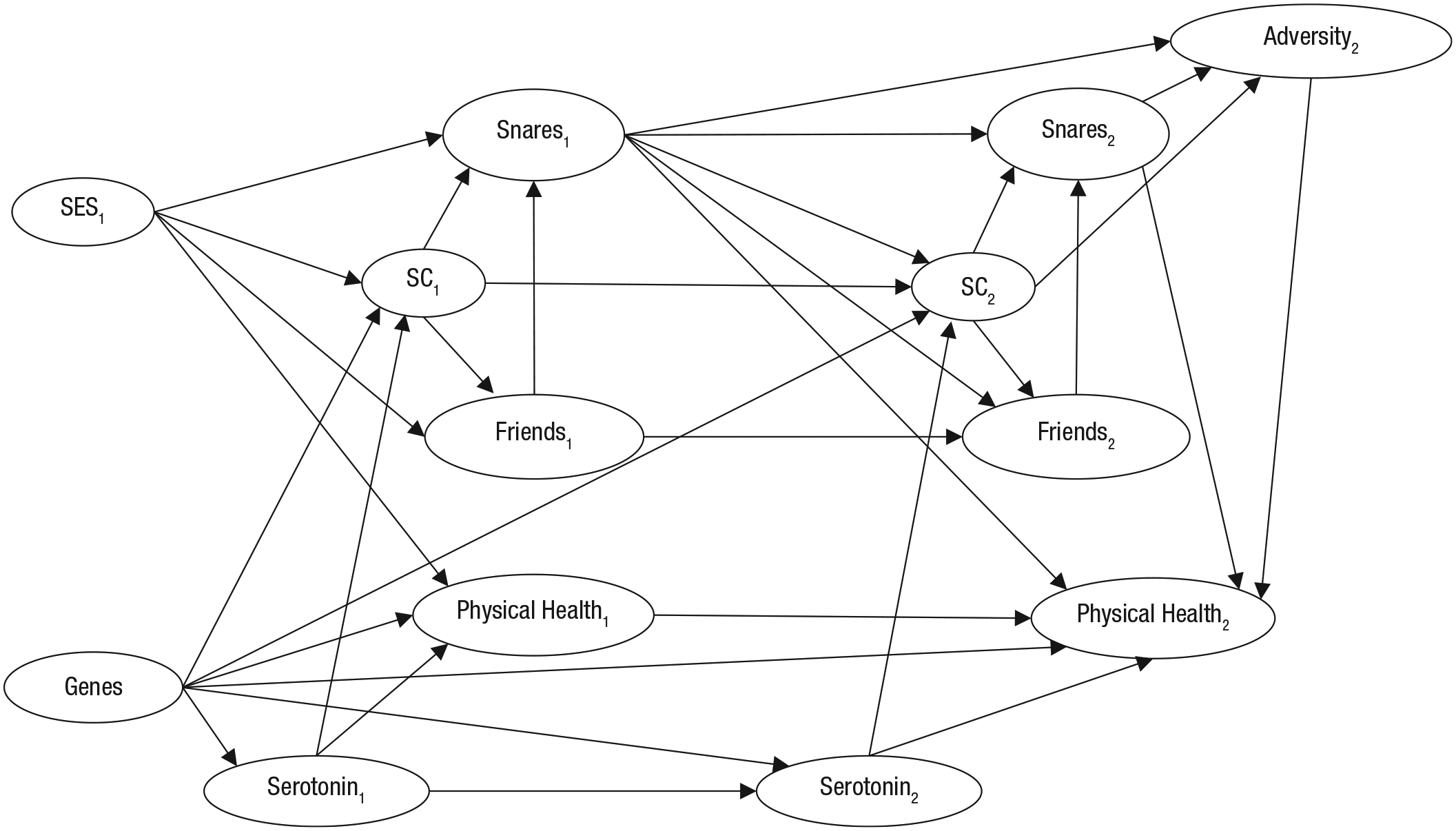
Brief Illustration of the Steps of Causal Inference for Example 2 (Lüdtke, Roberts, Trautwein, & Nagy, 2011)
Further recommendations
Whereas the details of every particular attempt of causal inference will necessarily vary, we advise psychologists to be explicit about the entire process. Researchers should state that they are trying to estimate a causal effect, and they should be clear about the assumptions underlying their analyses. Being open about causality invites more critical reflection about the underlying assumptions, which may also open the door for more refined and productive rebuttals as points of disagreement can be pinpointed. To cite Charles Darwin (1981/1871): False facts are highly injurious to the progress of science, for they often endure long; but false views, if supported by some evidence, do little harm, for everyone takes a salutary pleasure in proving their falseness; and when this is done, one path towards error is closed and the road to truth is often at the same time opened. (p. 385)
Likewise, we advise researchers to make explicit rather than implicit causal-inference statements in the arguments and theories they present in their Introduction and Discussion sections, reviews, and theoretical articles. This does not mean that they should make bold causal claims when there is substantial uncertainty. Instead, they should simply be more transparent about when an argument or theory depends on the existence of a particular causal effect (rather than just a correlation), and they should discuss the extent to which previous studies have provided compelling evidence for it. To do so, it might be helpful to state whether a causal effect in a theory or argument rests on previous experimental or nonexperimental evidence.
Finally, we suggest that the field as a whole should try to shift its norms toward a more productive engagement with causal inference on the basis of nonexperimental data. Statistics and methods teachers could dedicate some more time to the topic—it may be time well spent because a clearer framework for causal inference makes it easier to talk about a broad range of topics, such as missing data problems (Thoemmes & Mohan, 2015) and threats to validity, which affect most types of research (Matthay & Glymour, 2020). Editors and reviewers may also encourage a shift in thinking. By no means should they let their guard down and allow researchers to confuse correlation with causation. However, instead of simply policing language or requesting boilerplate statements about limitations, they might ask hard questions—about the actual goal of the study (e.g., asking for clarification about why mere prediction would be interesting or highlighting discrepancies between supposedly noncausal questions and the discussed implications), about the authors’ understanding of the underlying causal web (e.g., requesting that the authors provide a DAG to justify their choice of covariates), or about more specific recommendations for future studies (e.g., if an experimental clarification is suggested, there should be some discussion about what a feasible experiment could look like). In some cases, authors may actually feel confident enough to make a causal claim—if it is accompanied by a transparent discussion of the underlying assumptions, then readers are given the information they need to form their own opinions.
Conclusion
Causal inference on the basis of observational data is very difficult. However, this is not a good reason to render explicit causal inference taboo. Similar to when sex or drugs are made taboo, making explicit causal inference taboo does not stop people from doing it; they just do it in a less transparent, regulated, sophisticated, and informed way. Thus, we think it is about time that psychologists begin to talk openly about causality in nonexperimental research.
Supplemental Material
Grosz_Supplemental_Material – Supplemental material for The Taboo Against Explicit Causal Inference in Nonexperimental Psychology
Supplemental material, Grosz_Supplemental_Material for The Taboo Against Explicit Causal Inference in Nonexperimental Psychology by Michael P. Grosz, Julia M. Rohrer and Felix Thoemmes in Perspectives on Psychological Science
Footnotes
Acknowledgements
We thank Mitja D. Back, Steffen Nestler, and Ivan Flis for stimulating discussions and suggestions, Jane Zagorski for proofreading, and Hanna Krabbe and Christian Blötner for their help in preparing the manuscript.
Transparency
Action Editor: Laura A. King
Editor: Laura A. King

Notes
References
Supplementary Material
Please find the following supplemental material available below.
For Open Access articles published under a Creative Commons License, all supplemental material carries the same license as the article it is associated with.
For non-Open Access articles published, all supplemental material carries a non-exclusive license, and permission requests for re-use of supplemental material or any part of supplemental material shall be sent directly to the copyright owner as specified in the copyright notice associated with the article.
