



Abstract
Background:
Women’s health is all about managing conditions unique to females, such as polycystic ovary syndrome (PCOS). Here, a mixed-method approach was used to evaluate the knowledge of PCOS among Palestinian women and to elucidate gynecologists’ perspectives on its diagnosis and management.
Objectives:
The purpose of this mixed-method research was to assess knowledge of PCOS among Palestinian women and develop a greater understanding of gynecologists’ experiences treating PCOS.
Design:
A mixed-method study was used to evaluate the knowledge of PCOS among Palestinian women and to explore gynecologists’ perspectives on its diagnosis and management.
Methods:
The qualitative study involved semi-structured interviews with six experienced gynecologists and was reported according to the Standards for Reporting Qualitative Research. Thematic analysis was applied to analyze the data. A cross-sectional quantitative study was then introduced to validate the findings of the qualitative study. It utilized a validated questionnaire that was distributed to Palestinian women, with 584 respondents meeting the inclusion criteria.
Results:
The qualitative interviews revealed some important themes related to gynecologists’ experiences and perceptions of PCOS, particularly misconceptions and knowledge gaps among PCOS patients. The quantitative study indicated participants to have scant knowledge about PCOS, with an average of 9.6 correct answers out of 21 (45.7%). Participants’ main source of knowledge was websites (n = 138, 27%). More than half of the participating women believed that PCOS patients require social support (57.3%). Education and career field were associated with degree of knowledge about PCOS (p-value = 0.000 for each). In addition, diabetes history and PCOS history showed significant relation to PCOS knowledge (respective p-values = 0.046, 0.002).
Conclusion:
The results emphasize the importance of PCOS awareness among women and the difficulties gynecologists face during management of PCOS. There is a need to increase awareness of PCOS for women of all ages, standardize PCOS treatment among gynecologists, and encourage healthcare providers to educate women about PCOS.
Plain language summary
Focusing on polycystic ovary syndrome is important, is it is a common metabolic syndrome that affects various women in all ages. The knowledge about PCOS was insuffiecnet especially for women who are not highly educated. Moreover, increasing awareness is needed for both women and gynecologists.
Introduction
Polycystic ovary syndrome (PCOS) is one of the most prevalent endocrine disorders affecting women throughout the reproductive years. According to the World Health Organization, PCOS affects about 116 million women worldwide, or 3.4% of those of reproductive age. 1 Nonetheless, despite the disorder’s prevalence and implications for reproductive, metabolic, and psychological health, the National Institutes of Health considers PCOS to be “under-recognized, under-diagnosed, and under-studied.” 2 Underdiagnosis of PCOS can be partly attributed to the variety of phenotypes it can present. 3 In addition, the exact cause of PCOS is unknown, so it remains poorly understood compared to other disorders. 4
PCOS is a complex process with complicated features like menstrual dysfunction, hyperandrogenism, and anovulation. Other signs and symptoms that may appear include obesity, diabetes, obstructive sleep apnea, and infertility. 5 Accordingly, there is no one-size-fits-all solution when managing PCOS. However, the American College of Obstetricians and Gynecologists and the Society of Obstetricians and Gynecologists of Canada believe that lifestyle modifications like weight loss and exercise reduce the risk of diabetes. Such approaches have been proven effective compared to medication and are considered the first-line treatment for women with PCOS. 6
Globally and regionally, there are significant knowledge gaps about PCOS, that contribute to its underdiagnosis and underestimation. In King Valley, the level of knowledge and awareness about PCOS was less than half (47.30%). 7 Another study in Jordan found most participants to lack knowledge of PCOS complications. 8 In Sudan, more than 40% showed a low level of knowledge about PCOS. 9 Furthermore, lack of awareness about this condition and its symptoms could play a key role in its being understudied and underdiagnosed. Accordingly, this study was conducted to evaluate the level of knowledge of PCOS in Palestine.
Furthermore, the gaps in awareness, healthcare accessibility, and diagnosis play a key role in its being understudied and underdiagnosed. Accordingly, this study aims to evaluate PCOS awareness and perception among Palestinian women and explore gynecologists’ experiences in diagnosing and managing PCOS.
Methods
This research included both qualitative and quantitative methods.
Qualitative study methods
Study design and interview development
This qualitative study is reported according to the Standards for Reporting Qualitative Research, which provided a framework for conducting and reporting a high-quality and trustworthy qualitative research study. The study involved semi-structured interviews with six gynecologists experienced in reproductive health that collected their perceptions, diagnosis experiences, and management of PCOS. The research questions were designed to explore gynecologists’ experiences and perspectives on PCOS management and diagnosis, and were developed based on the study objective and previous literature.
The study was conducted across several clinics and hospitals in Bethlehem, Beit Jala, and Beit Sahour between November 2022 and January 2023. Recruitment of gynecologists was carried out by calling the gynecologists or visiting their clinics during non-busy hours. Data collection through semi-structured interviews with each interview lasting 10–15 min.
Sample size calculation
Purposive sampling was employed, and the requisite sample size was established using the saturation approach. The selection criteria included gynecologists having at least 3 years of experience in the reproductive system and working in a hospital or clinical setting. Saturation was considered reached when further data collection yielded no new information or topics, and was attained after interviewing four people. However, two more participants were recruited to validate the findings and ensure saturation. Thus, the final sample size was six gynecologists.
Data analysis
Thematic analysis was used to identify patterns and themes among gynecologists’ perspectives on PCOS diagnosis and management following the approach outlined by Braun and Clarke. 10 First, inductive coding was applied, allowing important concepts to emerge directly from the data. These initial codes were grouped into categories that reflected common patterns, leading to the identification of key themes such as “An elusive diagnosis” and “Patient misconceptions and knowledge gaps.” The themes were reviewed and refined to ensure accuracy and relevance to the study objectives. The final themes are presented in the qualitative results section, accompanied by supporting quotes. For more details on the thematic analysis process, refer to Braun and Clarke.
Quantitative study methods
Study design and questionnaire development
This descriptive, cross-sectional study assessed knowledge and perceptions about PCOS among women in Palestine. We aimed to recruit females aged 16–64 years. The study included peri- and postmenopausal women to assess their knowledge of PCOS and their role in increasing awareness among their young daughters and granddaughters. Even though these women are not of reproductive age, PCOS was defined based on their self-reported history of symptoms or previous diagnosis before menopause like hyperandrogenism, acne, and polycystic ovaries.
Any female who did not accept the electronic consent was excluded. The study was adapted from a validated version developed by Abu-Taha et al., 11 which was tested for face and content validity by six academics and six non-academic females. The questionnaire consisted of 51 questions divided into 4 sections: demographic information, female reproductive information, awareness and knowledge of PCOS, and statements assessing perceptions of PCOS. The questionnaire was published using Google Forms and distributed electronically between January 2023 and April 2023. Participants were recruited using social media platforms, including Facebook women communities, WhatsApp, and Instagram. In addition to distributing the QR codes linking to the survey among female students of universities and schools. A total of 548 women responded, with 521 meeting the inclusion criteria and included in the final analysis. The recruitment process, exclusion criteria, and final sample size are summarized as a flowchart in Figure 1.
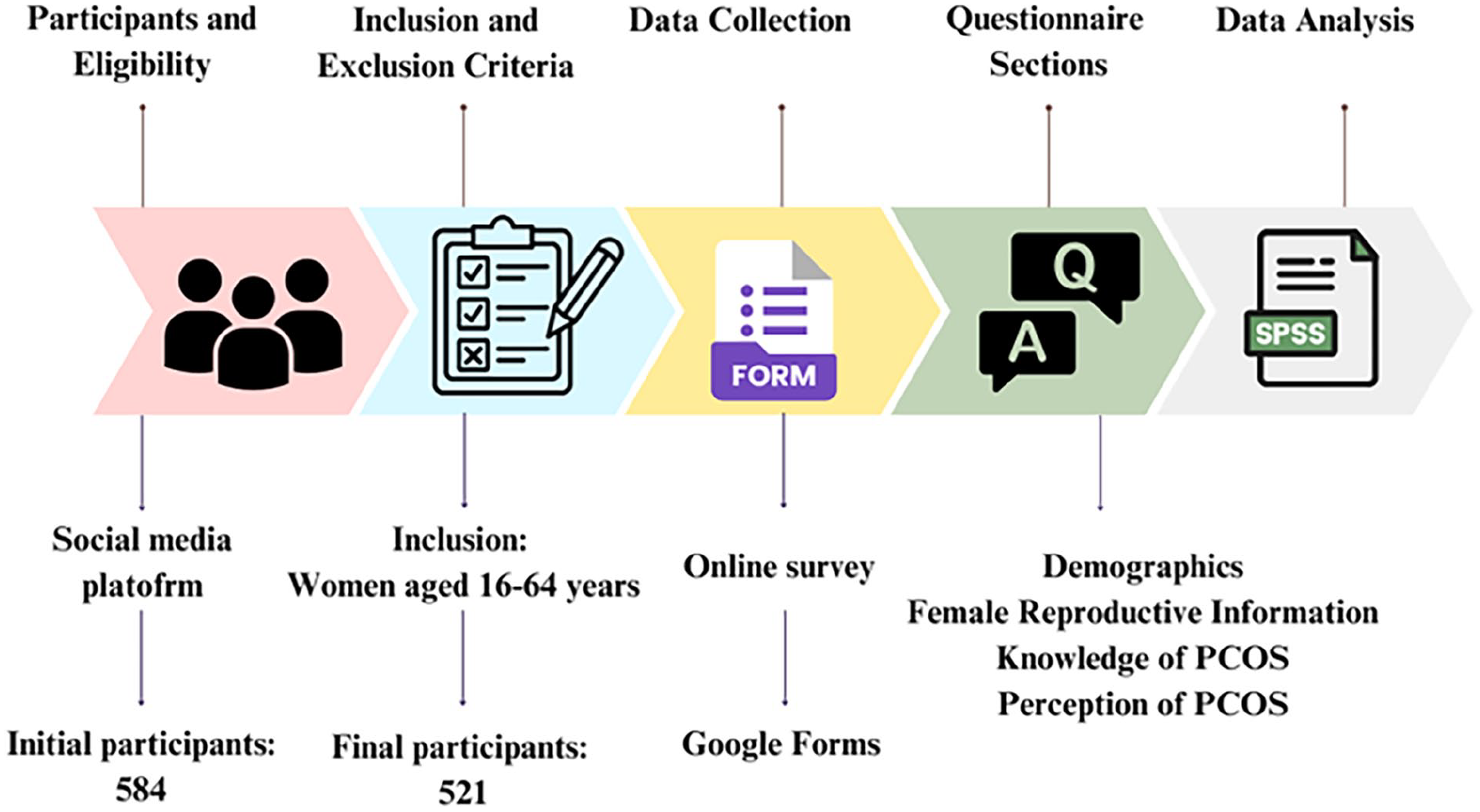
A flow diagram for cross-sectional study.
Sample size
The sample size was calculated using the “Minimum Sample Size Formula”:

where p represents the estimated prevalence, Z is the Z-score corresponding to a 95% confidence (1.96), and E is the margin of error (5%). A prevalence of 50% was used in the sample size calculation of this study due to the absence of reliable prevalence data of PCOS in Palestine, even though one of the studies showed that a local prevalence rate of PCOS is 7.3%. 12 However, the global prevalence of PCOS is estimated at 3.4% according to the WHO, 1 an assumption of 50% was used to ensure the sample size is adequate for this study.

Thus, a minimum sample of 384 or more was considered suitable for the purpose of this study. In total, 548 women participated in the study.
Statistical analysis
Data were analyzed using SPSS (Statistical Package for Social Sciences) version 25, manufactured by IBM Corporation. The relationship of knowledge with continuous variables was examined using the Pearson correlation coefficient, while differences in knowledge score in relation to categorical variables were analyzed using two independent sample tests or analysis of variance (ANOVA).
Ethical approval
Permission to carry out this study was obtained from the Faculty of Pharmacy, Al-Quds University. Ethical approval from the Research Ethics Committee (RCE) at Al-Quds University was obtained for the study protocol (Ref No: 288/REC/2023), and written informed consent was obtained from all individual participants (women and gynecologists) included in the study. The study protocol was conducted under ethical standards, and all participants were informed that anonymized data would be utilized for research and publication.
Results and discussion
Qualitative study results
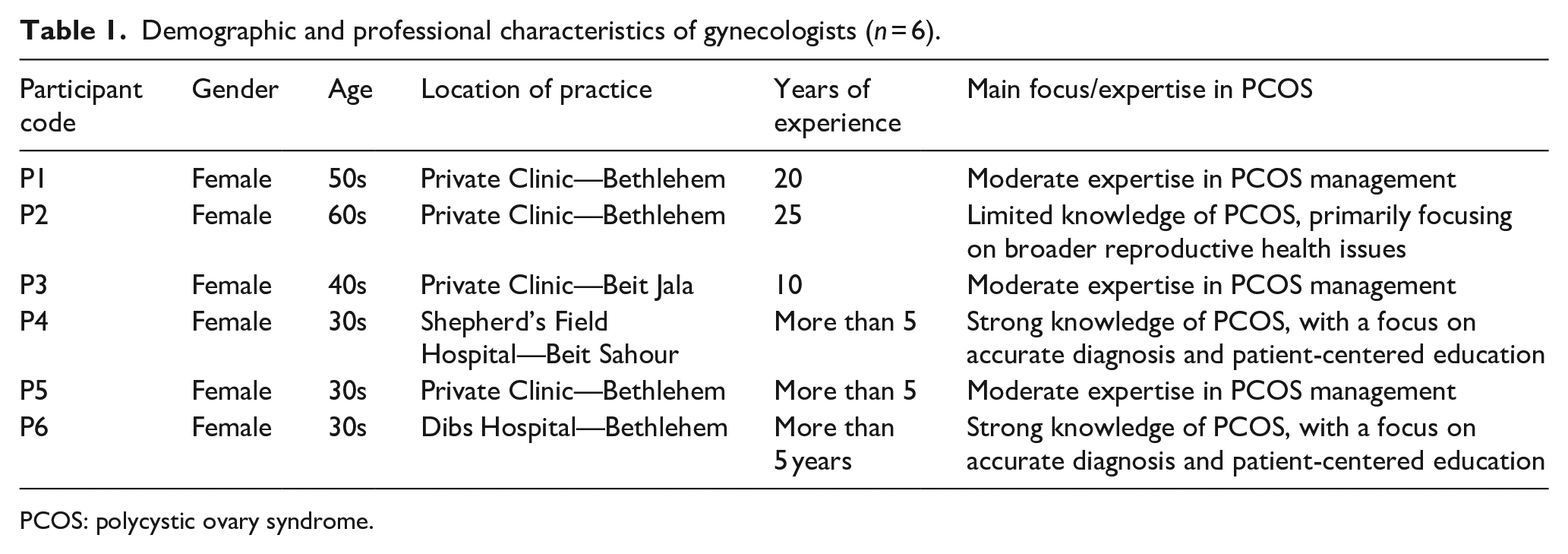
The qualitative data were collected from the diverse backgrounds and experiences of six gynecologists as summarized in Table 1.
Demographic and professional characteristics of gynecologists (n = 6).
PCOS: polycystic ovary syndrome.
Applying thematic analysis to the data revealed some key themes related to the experiences and perspectives of gynecologists concerning PCOS diagnosis and management.
Theme 1: disappointment in care provision
All gynecologists expressed an inability to give enough help to PCOS patients. In the words of one respondent: “When a woman with PCOS comes to my clinic, I cannot provide her with the relief and care she needs.”
Theme 2: an elusive diagnosis
Gynecologists face obstacles when diagnosing this disorder: the many nonspecific symptoms, the lack of a universal test, and the absence of diagnostic criteria. One gynecologist expressed her point of view: “I really cannot understand it when a woman appears with clear polycystic ovaries on ultrasound but lacking all other symptoms of PCOS, even blood tests are in normal ranges too.” Another one noted: “I am an old gynecologist and I can sense how the diagnosis criteria develop over the year. I will leave such disorders to the updated gynecologists other than me.”
Theme 3: the struggle to manage PCOS
All gynecologists reported patient unresponsiveness to treatment options; moreover, they indicated a tendency to use non-pharmacological interventions, as all the pharmacological treatments merely treat symptoms. As expressed by one respondent: “I will never give any pharmacological therapy for a woman who was early diagnosed with PCOS, I prefer lifestyle modifications in addition to physical exercises for at least 6 months. If the patient lost more than 10% of their weight, nevertheless if she was fat or skinny, it is going to be way more effective than any medication.”
Theme 4: patient misconceptions and knowledge gaps
All gynecologists also emphasized that their female patients lack education and knowledge about PCOS and other women’s disorders. As one gynecologist stated: “Many women come to my clinic saying they have PCOS (as they saw its symptoms on Instagram reels) after I check her nothing appears.” And that is the problem we do not want to reach the point where we know the disorder superficially but do not have the knowledge as a disorder itself.
To confirm this fourth theme among the gynecologists’ observations, we further conducted a quantitative study to evaluate the knowledge level of women among the general society of Palestine.
Quantitative study results
Demographics
Five hundred twenty-one females participated in the study and met the inclusion criteria.
The mean age of participants was ~25.8 ± 8.5 years. About half of the participants were single (55%), while about 43% were married. About 67% had a bachelor’s degree, while 19% were in secondary school, and about 55% lived in cities versus 43% in villages. Physical activity was self-reported and classified as seldom (less than once weekly), occasionally (one to two times weekly), or often (three or more times weekly). The full details of participants’ demographic characteristics are shown in Table 2.
Demographic characteristics of the participants (n = 521).

Female reproductive information
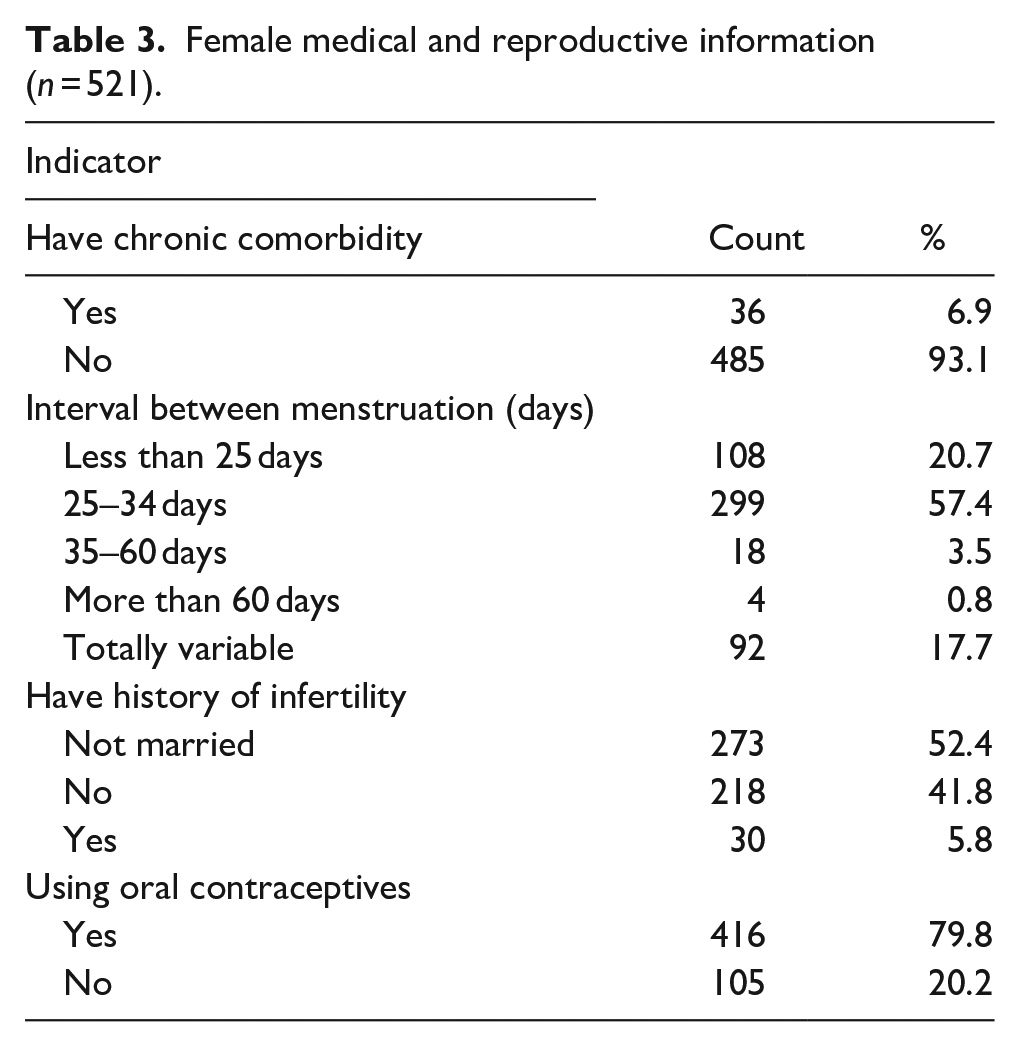
Regarding the reproductive health of participants, 93% reported they do not suffer from a chronic comorbidity (Table 3). While 6.9% of participants reported having chronic conditions, the study did not collect detailed information about participants’ specific comorbidities. However, the literature suggests that in Palestine, the most common chronic comorbidities include cardiovascular diseases like hypertension, endocrine diseases such diabetes mellitus (DM), and musculoskeletal conditions. 12 Additionally, studies showed that the most frequent comorbidities among women with PCOS are DM, cardiovascular diseases, and metabolic syndrome. 13 Moreover, about 57% menstruate at 25–34 days, while about 21% have less than 25 days between menstruation periods. With respect to fertility, about 42% of participants were married and had no history of infertility, while about 52% were single. Most participants reported not using contraceptives (80%).
Female medical and reproductive information (n = 521).
Concerning symptoms of PCOS, about 43% of participants reported having heavy periods, 47% acne problems during the menstrual cycle, and 40% unusual hair loss from the scalp. Regarding diabetes mellitus, only 2% of participants have the disease, but nearly half (49%) have a history of the disease. Although heavy periods are not a core diagnostic symptom, they were included to capture a broader assessment of menstrual disturbances commonly associated with PCOS.
Female knowledge about PCOS
The 548 participants were asked if they had ever heard about PCOS, to which 521 answered yes, while 27 were completely unfamiliar with it (Figure 2).
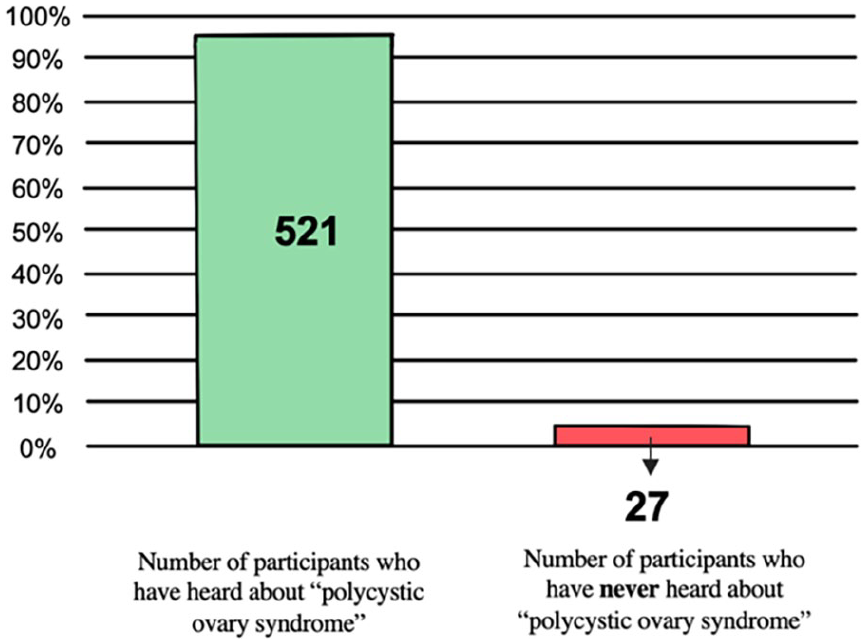
Female knowledge of PCOS.
Figure 3 illustrates where participants obtained information about PCOS. Websites were the primary source of information (27%), followed by physicians (21%), then family (19%), a university (13%), friends (10%), and finally pharmacists (2%) as the least utilized source.

Sources of medical information about PCOS that were used by participants (521).
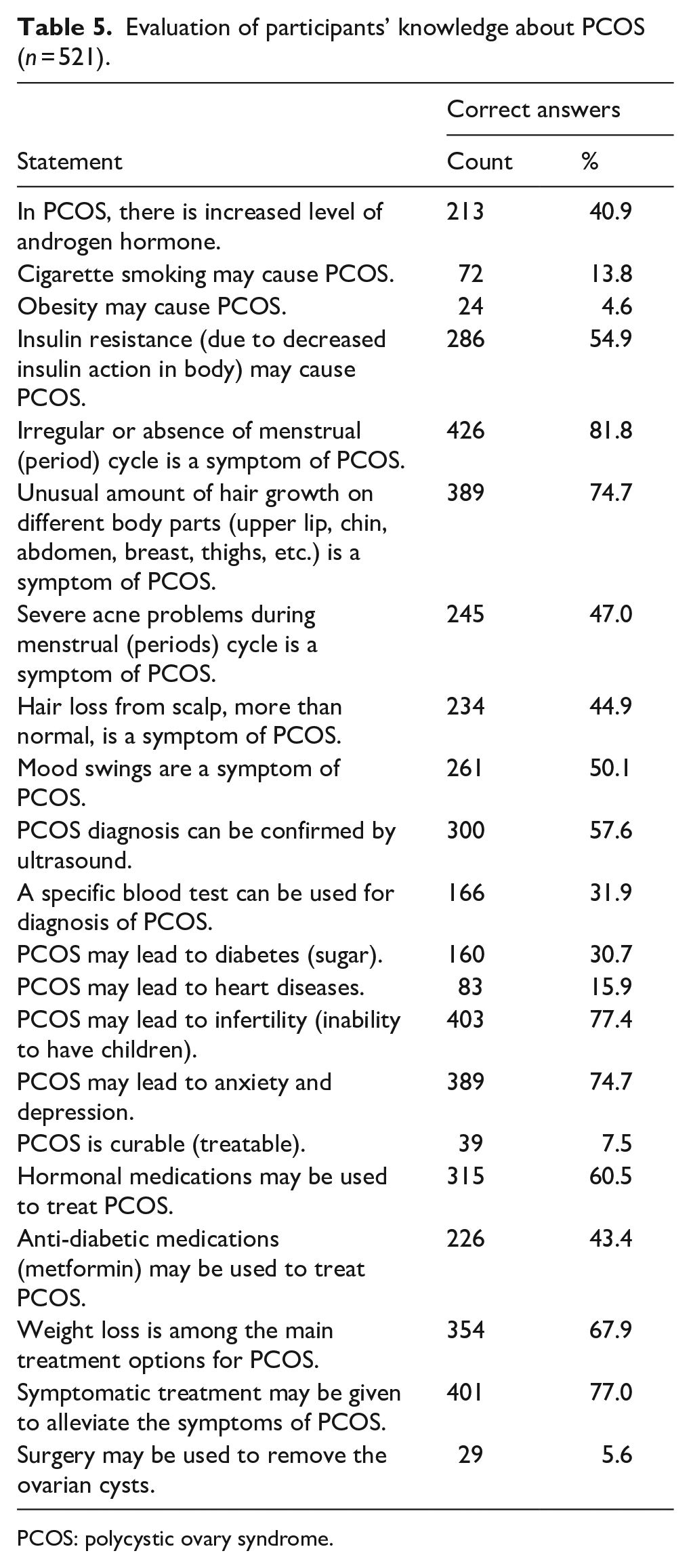
Participants were presented with 21 statements to evaluate their knowledge of PCOS; the percentages of correct responses are listed in Table 4. Most participants were aware that an irregular or absent menstrual (period) cycle is a symptom of PCOS (82%). A majority (77%) also believed that PCOS might lead to infertility, and a similar proportion (77%) that symptomatic treatment could treat PCOS. Three-quarters (75%) asserted that the syndrome accompanies unusual hair growth on different body parts (Table 5).
Symptoms of PCOS among participants (n = 521).

PCOS: polycystic ovary syndrome.
Evaluation of participants’ knowledge about PCOS (n = 521).
PCOS: polycystic ovary syndrome.
In terms of knowledge score, the mean across all participants was a score of 9.6 ± 5.0 out of 21. Other descriptive statistics are given in Table 6.
Descriptive statistics of the overall PCOS knowledge score.

PCOS: polycystic ovary syndrome.
Factors associated with participant knowledge of PCOS
Our analysis indicated knowledge score to have weak positive correlations with age and number of PCOS symptoms; however, the correlation with age was nonsignificant (coefficient 0.024, p = 0.587), while that with PCOS symptom number was significant (coefficient 0.157, p = 0.000).
Table 7 presents the ANOVA results concerning group differences in PCOS knowledge score in relation to several demographic variables. All variables exhibited non-significant differences except for educational level, where p = 0.0000; thus, there are significant differences in knowledge scores among participants based on academic level.
Relationship of knowledge score with categorical demographic variables.

Among undergraduates in the medical field, the mean score was 12.05, higher than for participants in non-medical career fields (mean 8.74), and this difference was significant (p = 0.000). Concerning education more broadly, participant having only secondary education or less exhibited significantly lower knowledge scores than participants of higher education levels. Similarly, participants with only diplomas showed significantly lower knowledge scores than did those of bachelor level. Table 8 details the different educational levels and corresponding differences in level of PCOS knowledge.
Pairwise comparison tests for knowledge score and educational level (LSD).

LSD: least significant difference.
Besides education level, females having a history of PCOS in their mother or sister showed significantly higher knowledge scores (mean = 10.90, p = 0.002) than those without such history (mean = 9.31). Likewise, participants with a family history of diabetes scored significantly higher (mean = 10.07, p = 0.046) than those with no such family history (mean = 9.19).
Female perception of PCOS
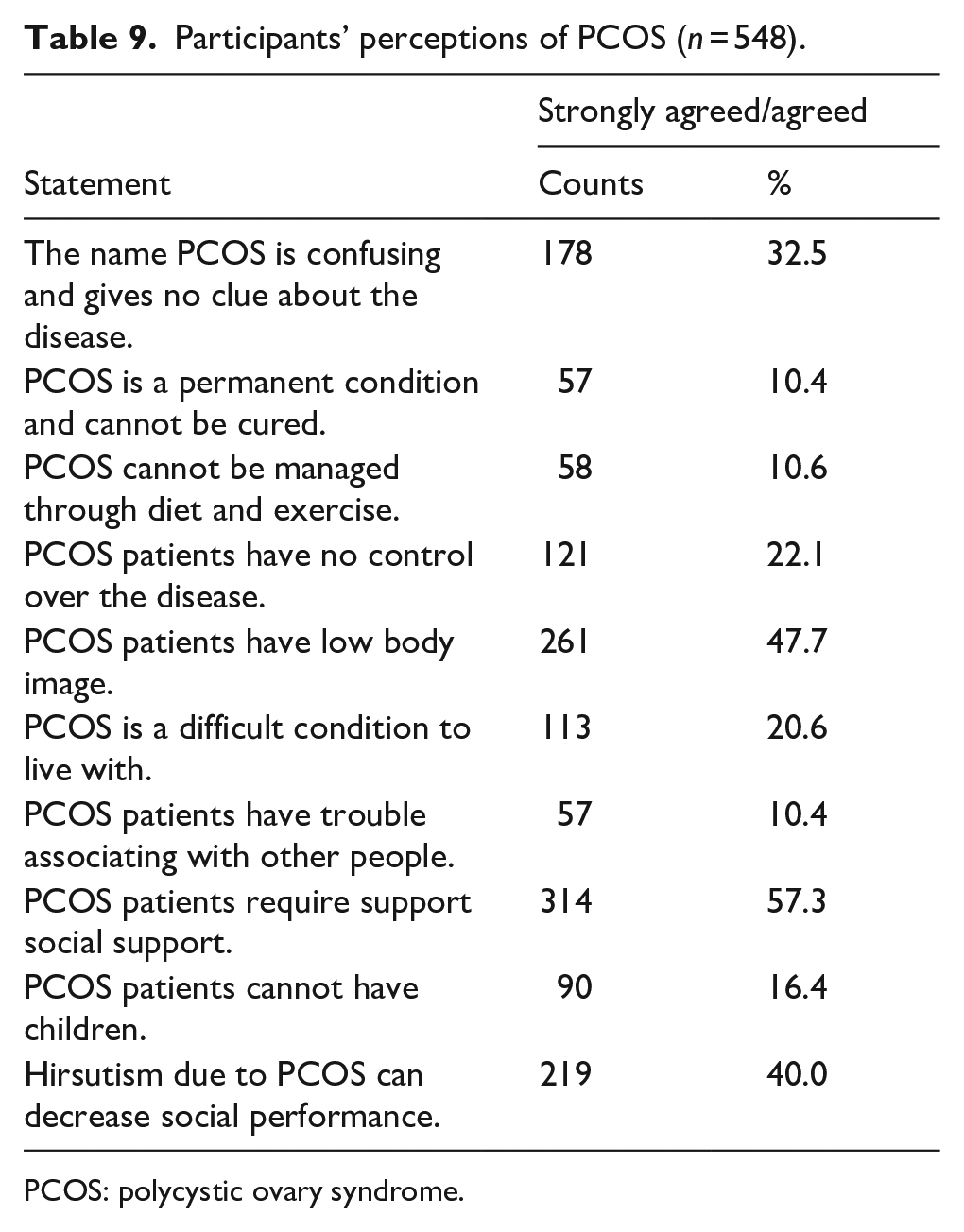
Table 9 details participant perceptions concerning PCOS. About 57% agreed that PCOS patients must receive social support. Slightly less than half (48%) agreed that PCOS patients have low body image regarding hirsutism due to PCOS, and 40% that such hirsutism can decrease social performance. One-third felt the name “PCOS” to be confusing and opaque. About 22% expressed that PCOS patients have no control over the disorder, 21% that it is a complex condition to live with, and 16% that PCOS patients could not have children. Finally, around 10% of participants each expressed agreement with the following: PCOS is a permanent condition and cannot be cured, PCOS cannot be managed through diet and exercise, and PCOS patients have trouble associating with other people.
Participants’ perceptions of PCOS (n = 548).
PCOS: polycystic ovary syndrome.
Discussion
PCOS is a common and prevalent disorder in Palestine, with a prevalence of 7.3% among females aged 18–24 according to a previous study. 12 The present work is the first to evaluate female knowledge and perception of PCOS among women in Palestine. Importantly, the results revealed that over half are unaware of PCOS (53.5% versus 46.5%). Additionally, the overall knowledge score was 9.6 out of 21, reflecting the inadequate knowledge of Palestinian women. These gaps are deeply influenced by cultural and societal factors, including the dependence on accessible non-clinical sources such as websites (27%) and family members (19%) for information gathering about PCOS (Figure 3). In Palestine, this reflects the stigma of discussion about reproductive health. Many cultural traditions view topics related to menstruation, fertility, and hormonal issues as sensitive content. As a result, women feel uncomfortable seeking medical advice and turn to non-clinical sources instead. This lack of open dialogue can lead to misinformation, delayed diagnoses, and inadequate PCOS management.
These overall findings match those of earlier studies conducted among Jordanian women. 11 A study that assessed the prevalence and knowledge of PCOS and health-related practices among women in Klang Valley similarly reported about half of the participants to have insufficient knowledge (47.30%) and poor practices (47.60%). 7 Furthermore, a study that assessed knowledge of PCOS among female medical students found that while most had some knowledge, only 66.1% were aware of long-term complications, and 76.2% of the role of lifestyle modification in PCOS prevention and treatment. 14 Finally, among women from Saudi Arabia, just over half (56.7%) are highly aware of PCOS. 15
This study found PCOS knowledge to have a statistically significant relationship with PCOS symptoms (p = 0.000). However, previous studies have shown that women can have signs and symptoms of PCOS but still not be aware of the disorder. 16 Other significant factors affecting PCOS knowledge were history of PCOS in the mother or sister (19.8%) and family history of diabetes (49.3%), with respective p-values of 0.002 and 0.046. Both of these factors correlated positively with greater knowledge. Regarding the sources of information, participants most commonly obtained information from websites (26.5%), perhaps especially social media, which provide venues where anyone can freely access medical information from reliable data provided by medical specialists. 17
Less than a third (31.9%) of participants recognized that a specific blood test could diagnose PCOS, while more than half (57.6%) knew that PCOS could be evaluated using ultrasound. However, participants had poor knowledge regarding the consequences of this disorder; a minority (30.7%) did not know that PCOS may lead to diabetes, and even fewer (15.9%) knew that it causes cardiovascular diseases. Most participants (81.8%) were aware of irregular menstrual cycles being a symptom of PCOS. At the same time, an overwhelming majority were not aware that obesity and cigarette smoking do not cause PCOS, with only 4.6% and 17.6%, respectively, responding correctly. Regarding education, most participants who knew about PCOS held a bachelor’s degree, and that group achieved a mean knowledge score of 10.76 out of 21. Those who had completed no more than secondary school showed the least knowledge, with a mean score of 5.74 out of 21; this emphasizes the need to increase education at schools.
This study is the first to evaluate PCOS diagnosis and management among gynecologists in Palestine. It explored the challenges faced by both gynecologists and women with PCOS, from disappointment in the help that can be given to the difficult challenges gynecologists face during the diagnosis and treatment journey. The findings highlight a need to increase healthcare providers’ awareness of PCOS and for providers to work together to improve the quality of PCOS diagnosis and management.
In order to overcome these challenges, specific interventions are required to improve the awareness of PCOS among Palestinian women and healthcare providers. Educational institutes, specifically schools, need to organize training courses to raise awareness in the early stage. Moreover, introducing public health campaigns that include medical workshops and social media advertisements can further combat misinformation regarding reproductive health. In addition to continuous medical training, standardizing gynecologists’ diagnosis and management procedures would improve clinical results. Another way to encourage women to seek medical guidance instead of non-clinical sources is to improve doctor–patient communication by introducing open days and online and offline workshops for women and young females with expert gynecologists, pharmacists, and PCOS nutritionists.
Strengths and limitations
This study had several noteworthy strengths. First, this was the first mixed-method study focusing on PCOS knowledge and awareness in Palestine. Second, we used a validated questionnaire for the quantitative part and conducted interviews with expert gynecologists in the qualitative part which made the data collection more reliable. Finally, the study considered an important topic tackling women of all ages which made the response rate very high in the quantitative part.
However, the following limitations should be underlined. Sampling bias could be present, as the sample has a wide age range of 16–64. For example, older women in their 60s may not have access to the internet like women in their middle age and adolescence. The study did not collect precise data regarding the number of participants diagnosed with PCOS. Instead, participants self-reported symptoms like acne, hirsutism, and irregular menstruation. However, the dependence on self-reports may have introduced variability, especially among peri- and postmenopausal women.
Also, the study relied on online surveys, strongly excluding women without internet access, especially those from rural or low-income areas around Palestine. This exclusion may have limited the involvement of women who might have lower levels of awareness of PCOS. However, the impact of this limitation was partially reduced due to the large sample size used in this survey and the diverse participation of women from all ages and different locations in Palestine.
Another limitation is that participants (especially those under the age of 20) may feel too embarrassed to answer some questions related to the reproductive system. Lastly, the small number of recruited gynecologists, despite saturation having been achieved, may affect the findings of the study. Moreover, the interview guide used in the qualitative part was not validated, even though it was checked by an expert gynecologist. Lastly, the study included general socioeconomic indicators like educational level, employment status, and location, as mentioned in Table 2. However, detailed information related to income, parental education, and healthcare accessibility was not collected from participants. These socioeconomic factors could influence PCOS’ level of knowledge and understanding. Future research could explore the relationship between PCOS awareness and socioeconomic factors more comprehensively.
Future directions
Based on the findings of our study, several future approaches can be used to improve PCOS awareness among women, young females, and healthcare providers in Palestine. Introducing community-based educational workshops in schools, summer camps, and universities could fill the knowledge gaps. Healthcare providers can also develop personalized awareness sessions during regular check-ups, especially for women at high risk and showing clear symptoms like obesity, insulin resistance, and hormonal acne.
Also, since many women find reproductive health a sensitive topic, developing digital platforms and applications with AI-based chatbots can be useful in preventing the spread of misinformation from non-clinical sources women used to look for, and help in offering on-demand advice and address typical PCOS problems.
Further studies will determine these interventions’ inclusivity and the need for regional guidelines for enhancing awareness and management of PCOS.
Conclusion
This study concluded that women in Palestine have insufficient knowledge about PCOS and its complications, the findings also highlighted that PCOS is a complicated disorder and that deep insight is necessary when deciding the diagnosis criteria, which are by necessity distinct for each individual patient. Disease management likewise requires individualized and unique care for each woman. Accordingly, we emphasize the importance of increasing awareness of PCOS by developing education programs including online meetings, in-person lectures with expert healthcare providers, and educational days.
Supplemental Material
sj-docx-1-whe-10.1177_17455057251333270 – Supplemental material for Knowledge, perception, and management of polycystic ovary syndrome among women in Palestine: A mixed-method study
Supplemental material, sj-docx-1-whe-10.1177_17455057251333270 for Knowledge, perception, and management of polycystic ovary syndrome among women in Palestine: A mixed-method study by Massa Zahdeh and Hussein Hallak in Women’s Health
Supplemental Material
sj-docx-2-whe-10.1177_17455057251333270 – Supplemental material for Knowledge, perception, and management of polycystic ovary syndrome among women in Palestine: A mixed-method study
Supplemental material, sj-docx-2-whe-10.1177_17455057251333270 for Knowledge, perception, and management of polycystic ovary syndrome among women in Palestine: A mixed-method study by Massa Zahdeh and Hussein Hallak in Women’s Health
Footnotes
Acknowledgements
We sincerely appreciate all the participating women, the statistician, and the gynecologists who shared their experiences and knowledge for this research.

Ethical considerations
Permission to carry out this study was obtained from the Faculty of Pharmacy, Al-Quds University. Ethical approval from the Research Ethics Committee (RCE) at Al-Quds University was obtained for the study protocol (Ref No: 288/REC/2023).
Consent to participate
Written informed consent was obtained from all individual participants included in the study. The study protocol was conducted under ethical standards, and all participants were informed that anonymized data would be utilized for research and publication.
Consent for publication
All participants were previously informed that the collected data would be used for publication and research, and no personal information would be shared.
Author contributions
Funding
The authors received no financial support for the research, authorship, and/or publication of this article.
Declaration of conflicting interests
The authors declared no potential conflicts of interest with respect to the research, authorship, and/or publication of this article.
Data availability statement
The questionnaire for the quantitative study and the interview guide for the qualitative study are available and submitted to the journal as Supplemental Material.
Supplemental material
Supplemental material for this article is available online.
References
Supplementary Material
Please find the following supplemental material available below.
For Open Access articles published under a Creative Commons License, all supplemental material carries the same license as the article it is associated with.
For non-Open Access articles published, all supplemental material carries a non-exclusive license, and permission requests for re-use of supplemental material or any part of supplemental material shall be sent directly to the copyright owner as specified in the copyright notice associated with the article.
