



Abstract
Background:
Science recognizes the anxieties, depression, stress, and “turbulences” that women face in doctoral studies, but women’s mental health in this context is still little addressed, even though it is a critical aspect for the well-being, persistence, and success of women doctoral candidates, who continue to be underrepresented in many professional fields.
Objectives:
The study aims to evaluate the relationship between academic motivation, psychological capital, and university academic performance (UAP) and to identify factors of female mental health success.
Design:
A cross-sectional, mixed-methods study was conducted with a sample of 108 female doctoral students from a university in Lima, during the first quarter of 2024.
Methods:
In the quantitative phase, three standardized scales were administered to assess academic motivation, psychological capital, and university academic performance (UAP). In the qualitative phase, interviews were conducted to gather relevant information on mental health.
Results:
The findings emphasize five important points: (1) levels and the relationship between psychological capital, academic motivation, and performance, (2) motivational behavior according to study cycles, (3) risk and protection profiles, (4) protective functions, and (5) mental health success factors. The results indicate that 36% of the women have a low level of psychological capital, 34% have a medium level of academic motivation, and 37% have a high level of UAP, likewise “Intrinsic Motivation toward Accomplishment” is the positive core where most of these women converge. Significant differences were found between the study cycles with academic motivation and “University Academic Performance,” and a significant gap between these variables. The risk profile (which limits performance) and the protective profile which allows high performance are determined; this positive profile is identified by women who present a high level of “Self-efficacy.” The study demonstrates that “Psychological Capital” and “Academic Motivation” along with the dimensions of “Self-efficacy” and “Intrinsic Motivation to Experience Stimulation” serve protective functions. Fourteen success factors for women’s mental health were identified and organized into four main approaches: Optimism, Hope, Resilience, and Self-efficacy.
Conclusion:
Limitations and future projections are discussed. The practical implications include implementing psychological support programs, fostering intrinsic motivation, integrating psychological assessments, establishing support networks, and making tailored curricular adjustments.
Keywords
Introduction
The World Health Organization strongly emphasizes the need for urgent action on mental health, as it has a fundamental intrinsic value, and is an integral part of overall well-being 1 ; in addition, as a previous study has shown, as far as gender is concerned, it has been found that women show greater emotional exhaustion and intentions to abandon their academic career. 2 In academia, women’s mental health is a critical pillar that influences their progress in doctoral programs. Prioritizing their mental well-being is an ethical responsibility and a strategic approach to fostering more inclusive, creative, and sustainable academic environments. Nevertheless, it remains underexplored, with a predominant focus on risk factors and limited progress in identifying protective and success factors. Systematizing protective or success factors for female mental health in doctoral programs offers significant advantages such as identifying patterns for effective interventions, identifying positive cores, and managing academic performance with a holistic approach, highlighting the crucial role of positive psychology and its potential for intervention in the classroom, to promote happiness and well-being.3 –5
In this regard, the experiences of women who obtained doctoral degrees after the age of 50 conclude with a positive message to women: “Pursue your dreams; invest in yourself; be a source of support and wisdom for each other; and contribute to the betterment of your community.” 6 If we look at this call, it is quite similar to the concept of mental health of the World Health Organization, when it states that “Mental health is a state of mental well-being that enables people to cope with the stresses of life, realize their abilities, learn well and work well, and contribute to their community.” 1 Therefore, the deficit-based discourse that usually appears associated with female mental health (stress, anguish, depression, discomfort) must change to a more positive discourse (resilience, self-efficacy, optimism, hope) that better represents that state of well-being that allows facing challenges and even helping others in that dimension of knowing how to be and knowing how to live together. This positive discourse can create a better world by amplifying strengths, as words shape realities and systems evolve toward what they learn. 7
Focusing attention on female mental health in the doctorate is an urgent and ethical issue, several studies recognize the associated dangers, such as a study examining subjective well-being and found that female PhD students experienced significantly higher levels of distress than their male peers, 8 several conflicts have also been identified between the female roles in the social and academic spheres, which are problematic for their development in the doctoral program. 9
Related to this, it is important to understand the personal and institutional characteristics that influence women’s persistence and degree attainment at the doctoral level, 10 recognizing your experiences and emotions, 11 your self-efficacy, 12 role negotiations, 13 and its identity. 14
It is also important to pay more attention to the role of mothers, and all that this identity implies in doctoral studies. 15 Female students, who are mothers, also must balance and reconcile their studies with the needs of their families, with varying degrees of success and with some “turbulence.” Examples of “turbulence” include relationship breakdown, ill health, and conflicts at work due to identity change. 16
A study at the Polytechnic University of Madrid found that women represented only 24% of the teaching and research staff, leading to their under-representation in international project coordination, decision-making roles, patents, collaborations, and doctoral supervision. 17 A common explanation for the underrepresentation of women in science, mathematics, and engineering faculty positions is that they often leave graduate programs without completing their degrees. 18 A 2011 study noted that women constitute at most 20% of PhD-level engineers in the United States. 19
Another set of studies reports an increase in the attainment of doctoral degrees by women; for example, the number of women with doctoral degrees is reported to have increased after 2000, and, in 2011, they constituted 31.8% of all new PhDs. However, women with doctoral degrees face disadvantages in terms of overall job opportunities and the type of jobs they hold compared to men with doctoral degrees, 20 Another study reports that U.S. women earned more doctorates at U.S. universities than U.S. men in 2002, 21 there has also been an increase in the number of women with doctorates in chemistry since 1960. 22 The results underscore the need to analyze women’s underrepresentation and mental health in doctoral programs, as gender disparities and job challenges persist despite progress in degree attainment.
Finally, an interesting study examining whether the mental health of a woman in midlife is affected by the degree to which her career aspirations have been fulfilled, the study considers two dimensions of mental health: depression (negative factor) and purpose in life (positive factor). Based on data from 3499 women surveyed, the results indicate that women who have not achieved their previous career goals have lower levels of life purpose and higher levels of depression, even after controlling for social background, human capital, family, and health characteristics. 23
The doctorate is a key professional aspiration for women, making it crucial to identify success factors for their mental health, as their performance can profoundly impact their sense of purpose and life direction. To aim for successful performance from a positive perspective, this research highlights two key psychosocial factors: psychological capital (PsyCap) and academic motivation. Especially considering that psychological capital plays a key role in the behaviors that lead to higher levels of academic performance, the present research has highlighted two positive psychosocial factors directly related to performance, namely psychological capital and academic motivation 24 and is also related to academic engagement and persistence, as well as performance, 25 and highlighting that high academic motivation is related to higher levels of learning effort, 26 having a positive impact on student’s academic achievement, 27
Certainly, few studies directly address psychological capital and academic motivation as psychosocial factors, which could contribute to this study. However, we acknowledge previous studies that have made valuable contributions in this field, such as a study that investigated the relationship between self-efficacy and resilience (components of psychological capital) and academic motivation of students in online education and revealed that self-efficacy and resilience can significantly predict academic motivation and that a higher level of academic motivation would improve students’ learning rates. 28 Finally, one of the most direct antecedents of our study states that psychological capital has been extensively researched in the organizational context.
However, limited attention has been paid to its role in the academic environment; hence, they investigated how psychological capital is associated with academic motivation, engagement, and academic achievement. They found that psychological capital was associated with higher autonomous motivation and controlled motivation even after controlling for relevant demographic variables and was also associated with lower levels of demotivation, being a concurrent and prospective predictor of autonomous motivation, controlled motivation, academic engagement, and academic achievement. 29
Based on the above, the objectives of this research are consolidated as follows:
To evaluate the relationship between psychological capital, academic motivation, and academic performance in women in a doctoral program.
To identify success factors of female mental health from the perspective of the women participating in the doctoral program.
Methods
The STROBE reporting guidelines were employed for this cross-sectional study.30,31 For this section, the methodological guidelines on how to write a good scientific article were considered, 32 based on the following subsections: (1) Methodological approach, (2) Variables, (3) Sample and sampling, (4) Instruments for obtaining information, (5) Field work, and (6) Data analysis.
Methodological approach
A mixed approach was used to address both quantitative and qualitative perspectives 33 to more comprehensively understand positive elements associated with women’s mental health in the Doctoral Program.
Variables
The present study considered three variables in the quantitative phase, psychological capital,34,35 academic motivation, 26 and university academic performance (UAP). 36 The breakdown of the variables and their respective dimensions is shown below (Table 1).
Study variables and their dimensions.

PsyCap: psychological capital; IMK: intrinsic motivation toward knowledge; IMA: intrinsic motivation toward achievement; IMS: intrinsic motivation to experience stimuli; IDR: identified regulation; IJR: introjected regulation; ER: external regulation; AM: amotivation.
Sample and sampling
A purposive sampling was used, 108 women who are currently active in the doctoral program participated. The distribution of the participants according to age, study cycle, and professional experience can be seen below (Table 2).
Sample according to age, education cycle, and professional experience.

Various strategies were implemented to mitigate sources of bias inherent to the cross-sectional design of the study. Sample selection was based on inclusion criteria that ensured methodological rigor and data relevance, while measurement validity and reliability were ensured using previously validated questionnaires. To minimize response bias and address social desirability, the questionnaires were completed anonymously and with a guarantee of confidentiality. Finally, the robustness of the findings was strengthened with complementary statistical techniques: normalization and standardization of the data eliminated biases derived from non-homogeneous distributions, cut-off points (33% and 67%) allowed objective categorization of the variables, and the combined use of correlation tests (Spearman and Pearson), the CHAID algorithm, and logistic regression models identified significant patterns and profiles, reducing misinterpretations and ensuring the validity of the conclusions.
The study population is constituted by students of the Doctorate in Education at a private university in Lima. We considered rigorous inclusion criteria to ensure the relevance and accuracy of the results on women’s mental health in the context of the doctorate, allowing for a comprehensive analysis of the variables at play.
Inclusion criteria
Be in the doctoral program in education
Description: Participants must be actively enrolled in the Doctorate in Education at the private university in Lima.
Justification: This ensures that the experiences and perceptions collected are relevant to the specific context of the study.
Voluntary disposition
Description: Participants must show a voluntary willingness to participate in the study, having given informed consent.
Justification: Voluntary participation is crucial to the ethics of the research and ensures that the data collected reflects authentic experiences.
Female gender
Description: Participants should identify themselves as female.
Rationale: Given the study’s focus on female mental health, data must come from women to specifically address gender dynamics in the doctoral context.
Relevant academic experience
Description: Participants should be at different stages of the doctoral program, providing a range of perspectives on academic motivation and psychological capital across different doctoral cycles.
Rationale: Include variability in academic experience to assess how the variables of interest change as a function of doctoral stages.
Willingness to complete scales and participate in interviews
Description: Participants must be willing and available to complete standardized scales and participate in interviews in both the quantitative and qualitative phases of the study.
Justification: Participation in both phases of the study is crucial for a complete understanding of the relationships between academic motivation, psychological capital, and academic performance.
In this study, the key outcomes are the mental health of female doctoral students, assessed through the variables of psychological capital, academic motivation, and UAP. The exposures include risk and protective factors. The predictors examined are psychological capital and academic motivation, which directly influence academic performance. Potential confounders include the academic cycle, which may alter the relationship between the studied variables. Furthermore, effect modifiers include the level of self-efficacy, which may modify how intrinsic motivation impacts mental health and performance. Finally, the diagnostic criteria refer to the success factors for mental health, classified into four approaches: Optimism, Hope, Resilience, and Self-efficacy, which serve as indicators of a healthy and successful mental state in the academic context.
Instruments for obtaining information
Quantitative phase
Three standardized scales were used, the original version of each instrument was respected, and they were distributed in Spanish via Google Form, achieving high internal consistency in all three instruments.
Psychological capital scale
The psychological capital scale consists of 12 items and 3 dimensions, divided into 3 items for each dimension: hope, optimism, resilience, and self-efficacy.34,35 An example item: “Right now, I see myself as quite successful” (Hope). Some recent studies have examined the psychometric properties of this scale in the student context37 –39 including a study of Latin American university students, specifically from Ecuador. 40
Academic motivation scale
For this study, we assume the current short version recently published 26 which consists of 14 items and 7 dimensions, 2 items for each factor, for intrinsic academic motivation, the factors of intrinsic motivation to knowledge (IMK), intrinsic motivation toward achievement, and intrinsic motivation to experience stimuli, for extrinsic achademic motivation the factors of identified regulation, introjected regulation, and external re-regulation, and finally the amotivation factor (negative factor) was measured. An example of items: “I am in the doctorate. . . for the pleasure I experience when I discover new things never seen before” (IMK). The academic motivation scale has been validated by multiple previous studies.41 –47
University academic performance scale
The adapted scale of UAP was used, 36 the final scale applied was of 14 items and 3 dimensions, distributed as follows: 7 items for the first dimension (contribution to academic activities), 4 items for the second dimension (dedication to study), and 3 items for the third dimension (lack of organization of didactic resources). An example of items: “In the doctorate. . . I organize myself to be efficient in all academic activities” (dedication to study).
Qualitative phase
An interview on women’s mental health was administered. The interview was guided in its general conception by the framework of positive psychology and education,4,5 specifically with appreciative inquiry tools, which allow for amplifying the positive core of human systems, prioritizing positive elements over deficit-based elements. 7 In this regard, the theoretical framework of mental health in women—life purpose versus depression—is assumed, 23 emphasizing the “purpose in life” dimension as a positive factor.
The interview gathered information to identify factors that contribute to female mental health from the perspectives and lived experiences of female doctoral students. It was administered in digital format through a Google form, developed during the first quarter of the year 2024. Participants answered (asynchronously) three open-ended questions about their personal experience of their mental health during their doctoral program. Participation was voluntary and all responses were treated with confidentiality. The questions were:
Could you mention between one and three aspects that you consider can contribute to improving your emotional and psychological well-being during the doctoral program?
What positive aspects of the doctoral program would you highlight from your experience in the program?
How do you think your sense of purpose, or your professional goals have contributed positively to your mental health while pursuing your doctoral degree?
Asynchronous digital interviewing via Google Forms allowed participants to answer open-ended questions about their mental health at their convenience, which facilitated detailed and thoughtful responses and minimized scheduling conflicts.
The constant comparison technique was used to reach theoretical saturation, ceasing data analysis when no new categories or relevant information emerged. A total of 108 interviews were conducted and the data were analyzed using thematic analysis. The research team carefully monitored and confirmed saturation, ensuring that the data collected were sufficient to comprehensively capture the diverse perspectives of the participants.
Fieldwork
The fieldwork was conducted during one academic semester, carrying out data collection to meet the objectives of the study. Objective 1 focused on evaluating the relationship between psychological capital, academic motivation, and academic performance in women pursuing a doctoral program. To this end, a quantitative methodology was employed that included the administration of standardized questionnaires to measure the variables of interest. On the other hand, Objective 2 sought to identify success factors related to female mental health from the perspective of the women participating in the doctoral program. To address this objective, a qualitative approach was chosen, using an open-ended interview to explore the experiences and perceptions of the participants. This mixed approach allowed for a comprehensive understanding of the quantitative and qualitative aspects related to mental health and academic achievement in this specific context.
Data analysis
Quantitative phase of data analysis
First, reliability was obtained using Cronbach’s alpha statistic, and the mean and standard deviation were obtained as descriptive measures. In addition, the Kolmogorov–Smirnov test for normality of data was performed because the sample size analyzed is considered large. Likewise, the data were standardized and normalized to obtain the 33% and 67% cut-off points for the scales used.
For the statistical analysis, the Spearman correlation test is presented (except for one case where the Pearson correlation test was used), the frequency of respondents according to the level in each variable, and the mean difference test for the characteristics of the sample studied (age, cycle, and professional experience).
Decision trees (predictive modeling technique) were constructed using the CHAID algorithm to identify the profiles associated with “university academic performance,” and finally, binary logistic regression models were estimated to determine the variables or dimensions of risk or protection to “university academic performance.”
Qualitative phase of data analysis
All responses from the women’s interviews were exported from the Google Form and then imported into ATLAS.TI version 8 software for qualitative data analysis and allowed for an in-depth exploration of response sets on women’s mental health. When loading the data into the program, codes were identified from relevant segments of the text, identifying recurring themes and emerging patterns. ATLAS.TI then facilitated the organization and grouping of these codes, allowing the identification of connections and relationships between them. Through these groupings, the software generated a semantic network that visualizes the conceptual interconnection between the different themes and sub-themes related to female mental health, providing a holistic and detailed understanding of the data analyzed.
Results
Quantitative phase
Table 3 shows that all the dimensions had a high internal consistency, except the “resilience” dimension of the “Psychological Capital” variable and the “Lack of organization of teaching resources (t)” dimension of the “University Academic Performance” variable, both of which have a low level of reliability. In addition, it is observed that all the dimensions and the variable “Academic Motivation” do not approximate a normal distribution of data, which involves the use of non-parametric statistical analysis; however, the data of the variables “Psychological Capital” and “University Academic Performance” present an approximation to the normal distribution, which involves only for this case a parametric correlation. The scales were obtained by normalizing and standardizing the data, taking the 33rd and 67th percentile as cut-off points.
Descriptive characteristics of the study variables.

PsyCap: psychological capital; SD: standard deviation.
Figure 1 shows that the internal correlations of the variables with the dimensions are acceptable, except for the variable UAP with the dimension Lack of organization of teaching resources (t), which presents a low correlation (0.466). On the other hand, the correlation between the variable UAP and the variables Academic Motivation and psychological capital is positive and significant but low (0.453 and 0.406, respectively).

Spearman’’s correlation test* between variables and dimensions.
From Table 4, it is observed that 36% of the female respondents present a low level of psychological capital, 34% of the respondents present a medium level of academic motivation and 37% of the respondents present a high level of university academic achievement. We would like to highlight a dimension that behaves singularly, it is “Intrinsic Motivation toward Accomplishment” where 0% is reported in the medium level, being the dimension with the highest score (64%). As more women are grouped at a high level, “Intrinsic Motivation toward Accomplishment” constitutes a positive core, directly aligned with the purpose in life (the positive pole of female mental health).
Frequency of occurrence of the variables and dimensions according to scales.
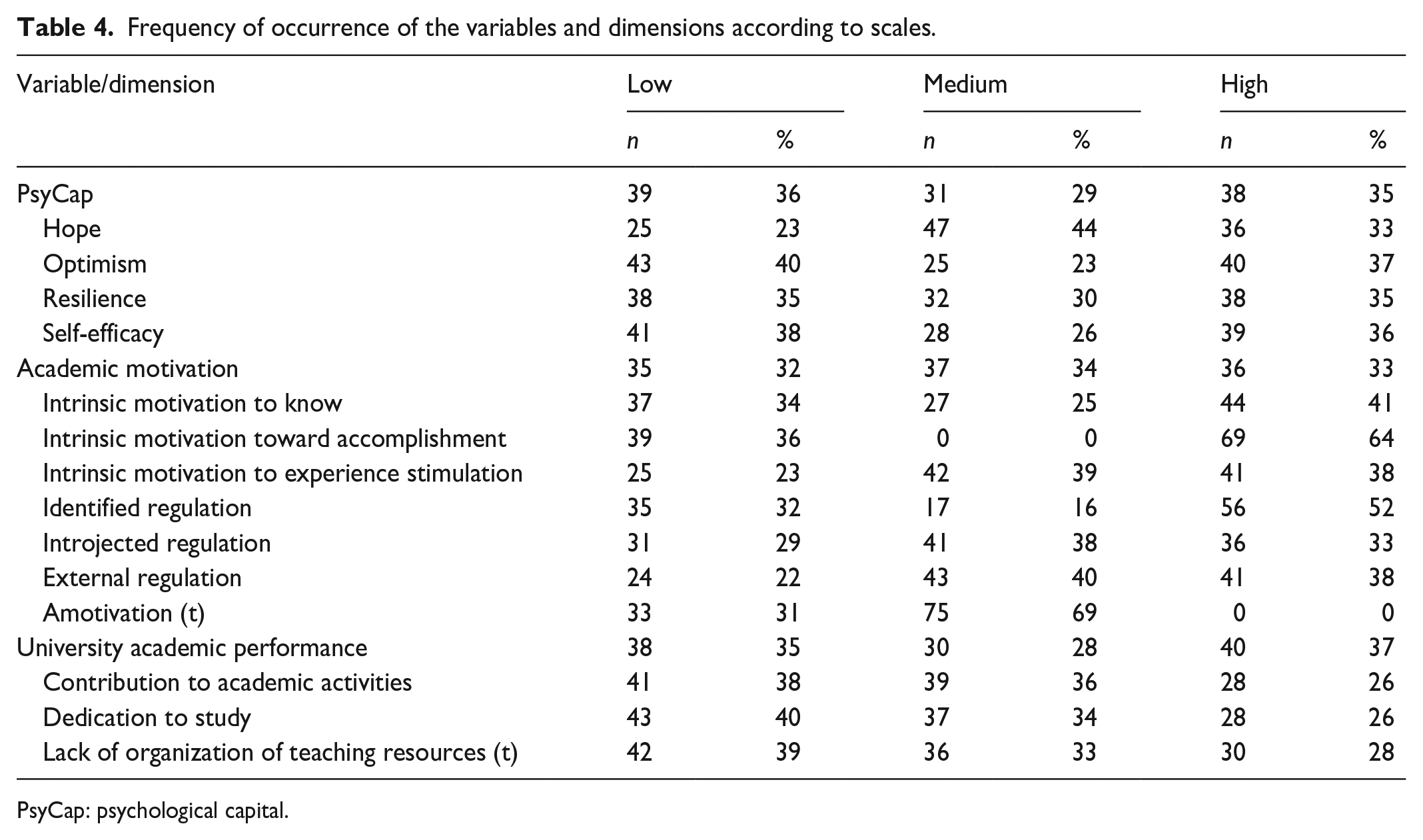
PsyCap: psychological capital.
Table 5 shows that there are significant differences between the study cycles with academic motivation (p-value = 0.008) and UAP (p-value = 0.001). Both variables reached their highest peaks at the beginning and the end of the doctoral career, evidence of a curve in their behavior.
Non-parametric tests for comparison between sample characteristics and study variables.

PsyCap: psychological capital.
Figure 2 shows a gap between “Academic Motivation” and “UAP,” with a higher rating for “Academic Motivation” and a lower rating for “UAP.”

Motivational curve.
Figure 3 shows the risk profile that leads to a low level of UAP, which is composed of women who present low or medium levels in the dimension of Intrinsic Motivation to experience academic motivation stimuli and low or medium levels in the self-efficacy of psychological capital. On the other hand, we observe the protection profile that contributes to obtaining a high level of UAP, which is identified by women who present a high level of self-efficacy of psychological capital.

Risk profile and protection profile of university academic performance.
In turn, Figure 4 shows the protective function of the “Psychological Capital” and “Academic Motivation” variables. This means that the probability of a “not high” level in the university’s academic performance decreases as both psychological capital and academic motivation variables increase in their assessment score.

General binary logistic regression model of university academic performance considering the variables.
Likewise, at the dimension level, Figure 5 shows that the self-efficacy dimensions of the PsyCap variable and the intrinsic motivation to experience stimulation dimension of the academic motivation variable are protective dimensions, since as both dimensions jointly or individually increase in their valuation score, they decrease the probability of a “not high” level in the UAP.

Specific binary logistic regression model of university academic performance considering the following dimensions.
Finally, Table 6 shows that the binary regression models are significant, and in both models the variables and dimensions are protective.
Binary regression models.

PC: psychological capital; AM: academic motivation; PC4: self-efficacy; AM3: intrinsic motivation to experience stimulation; CI: confidence interval.
Qualitative phase
The following is the semantic network extracted from ATLAS.TI contains the macro category “Women’s Mental Health,” and 14 emerging categories (success factors or protective factors), grouped into 4 clusters (Figure 6).

Success or protective factors of women’s mental health in doctoral studies.
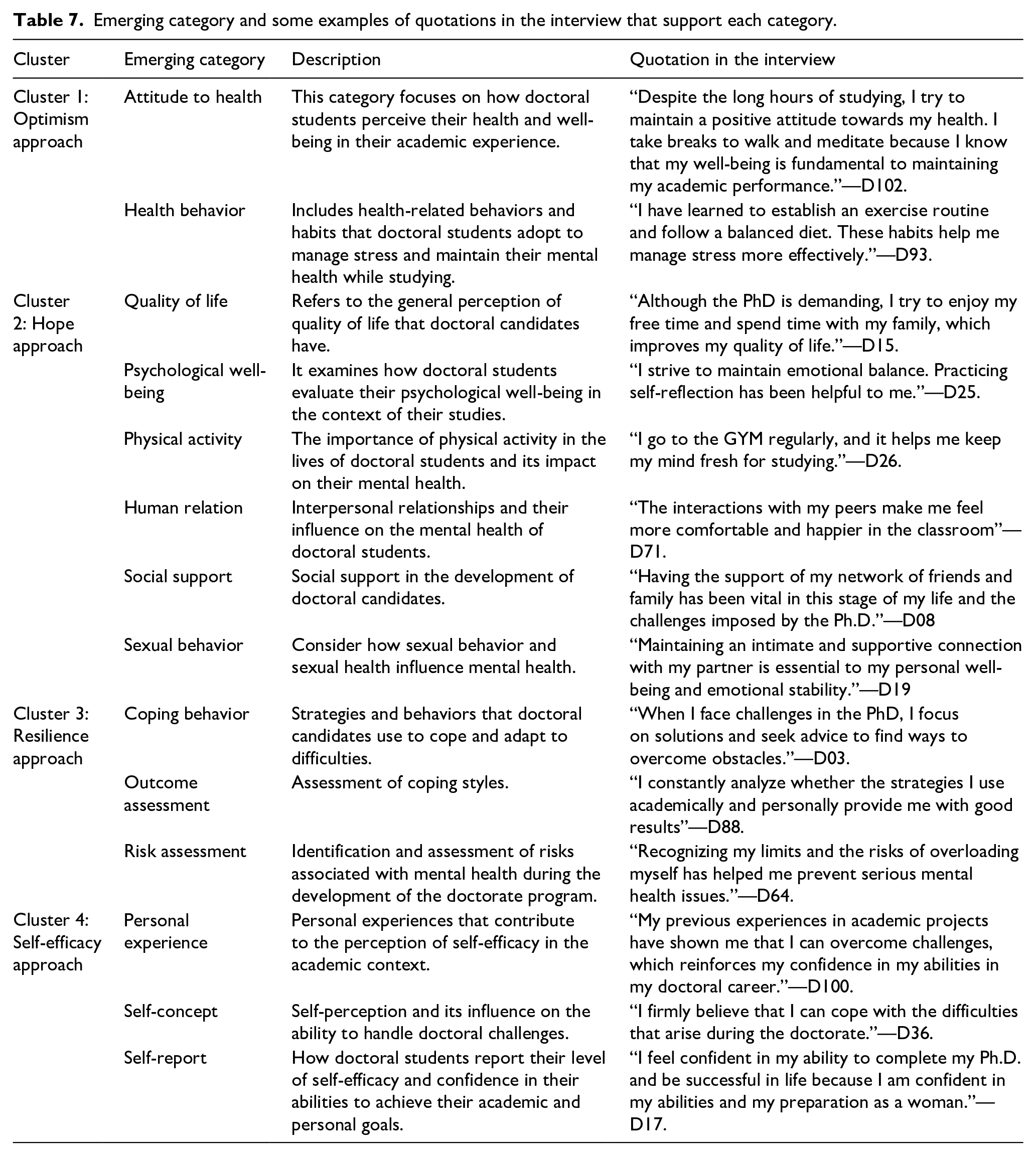
The emerging categories have been associated with the four dimensions of psychological capital (optimism, hope, resilience, and self-efficacy) because of how each dimension manifests itself in the doctoral candidates’ experiences and perceptions. For example, the categories “Attitude to Health” and “Health Behavior” reflect positive attitude and proactive health behaviors, which are key characteristics of optimism. Likewise, categories under the “Hope Approach,” such as “Quality of Life” and “Social Support,” highlight how doctoral candidates maintain a positive view of the future and seek resources and support to achieve their goals, essential for hope, while “Coping Behavior,” “Outcome Assessment,” and “Risk Assessment” relate to the ability to adapt and overcome adversity, which is at the core of resilience, and finally the categories “Personal Experience,” “Self-Concept,” and “Self-Report” are directly linked to confidence in one’s ability to handle challenges and achieve goals, central aspects of self-efficacy.
To offer a more detailed description of the results of the qualitative analyses and to provide concrete evidence, we present some quotes from the interviews conducted with the doctoral candidates (Table 7). These quotations not only illustrate the emerging categories but also provide a rich context for the interpretation of the qualitative data in the study.
Emerging category and some examples of quotations in the interview that support each category.
Discussion
Quantitative phase
For this section, we will establish a discussion of the main results found in this study about previous studies. We will emphasize the following results: the “Intrinsic Motivation toward Accomplishment” as a positive core of females in the doctorate, the significant differences between study cycles with academic motivation and performance, the gap between “Academic Motivation,” and “University Academic Performance,” the risk profile and the protective profile, the protective role of the variables “Psychological Capital” and “Academic Motivation,” as well as the protective role of the dimensions “Self-efficacy” and “Intrinsic Motivation to Experience Stimulation.”
Regarding the “Intrinsic Motivation toward Accomplishment” as a positive core of women in the doctorate, it has been found that it is important in university students since it correlates with higher academic performance (this study was developed with university students in the South African context), 48 It also confirms that intrinsic motivation has a stronger predictive value for academic success for women than for men at all educational levels. 49
Regarding significant differences between study cycles with academic motivation and UAP, a similar result is found in a study that found that doctoral students experience the highest well-being and motivation during coursework (which in our case would be the thesis), while the comprehensive examination phase is the most challenging for the majority—which is the same as during the midterm exams in our sample. 50
Regarding the gap between “Academic Motivation” and “University Academic Performance,” with academic motivation being rated higher and UAP lower, a study has also concluded that Intrinsic motivation is the strongest predictor of academic performance, followed by effort. 51
About the risk profile consolidated by women who present low or medium levels in the intrinsic motivation dimension to experience academic motivation stimuli and low or medium levels in the self-efficacy of psychological capital, previous studies also warn about the danger of demotivation, pointing out that one of the main risk factors for low academic performance in university women is the lack of motivation (although this research is developed in undergraduate students, it offers valuable results in the framework of our study), 52 it has also been found that low to medium levels of motivation in female students are associated with lower academic performance, 53 and that low self-confidence (translated into low self-efficacy) predicts the highest risk of decreased performance (a total of 1113 women participated in this voluntary online study among university students), 54 all these calls for activating female empowerment from this special intrinsic motivation, which is activated by stimulating sensations of recognition, cognitive stimulation, aesthetic experiences, and arousal. 26
On the other hand, we observe the protection profile that contributes to obtaining a high level of UAP, which is identified by women who present a high level of self-efficacy of psychological capital, in this regard a study states that academic self-qualifications positively predict confidence which in turn impacts on the persistence of women in doctoral programs, which denotes the strength of self-efficacy in women who pursue their doctoral studies (this study is very significant and revealing for us, as 328 women from a doctoral program participated in it), 55 in turn, intrinsic goal setting leads to deeper engagement, better conceptual learning, and greater persistence in learning activities. 56
The protective function of the variables “Psychological Capital” and “Academic Motivation” was statistically demonstrated in this study. Several studies emphasize the relationship between motivational aspects and students’ performance, highlighting the importance of intrinsic motivation and metacognitive strategies in students’ academic performance, 57 arguing that high metacognitive awareness and academic motivation have a positive impact on student’s academic performance. 27 PsyCap plays a key role in behaviors that lead to higher levels of academic achievement. 24 The results indicate that psychological capital is also related to academic engagement and persistence, in addition to performance. 25 Findings suggest that developing interventions that strengthen students’ resources by increasing their hope, resilience, self-efficacy, and optimism could foster their engagement in study and academic achievement and protect them from burnout and boredom, this study was developed with university students from India and Romania. 58 These findings underscore the relevance of implementing interventions aimed at enhancing students’ psychological resources, thus contributing to a healthier and more productive educational environment.
Finally, regarding the protective function of the self-efficacy dimensions of the psychological capital variable and the intrinsic motivation to experience stimulation dimension of the academic motivation variable, it has been found that academic self-efficacy is moderately correlated with academic performance, 59 that self-efficacy beliefs in academic settings are positively related to motivation and performance 60 and that academic self-efficacy in study-related skills and behaviors predicts better academic performance and more pleasant emotions related to learning, with reciprocal relationships between academic performance and emotions. 61 It also confirms that “Intrinsic Motivation to Experience Stimulation” is the strongest predictor of student performance, beyond achievement motivation. 62
About the importance of “Intrinsic Motivation towards Achievement” in women pursuing doctoral studies, we highlight three qualitative studies, each from unique but complementary perspectives, emphasizing this important aspect.
In the context of a doctoral degree in civil engineering, intrinsic achievement motivation manifests itself in the desire for professional development. Doctoral candidates find meaning in their academic and professional decisions, driven by the pursuit of personal growth and success in a field dominated by technical and competitive challenges. 63
Another study reveals that intrinsic motivation in women of color doctoral candidates is deeply tied to their commitment to social justice and community empowerment. Beyond personal achievement, these women are motivated by contributions to their communities, resistance to inequities, and social transformation, which provides them with a strong sense of purpose and perseverance. 64
In a PhD education such as the program in the present research, for women who start a PhD after age 45, intrinsic motivation toward achievement is centered on self-actualization and the fulfillment of meaningful personal goals. Despite challenges related to family roles and personal adjustments, doctoral attainment represents deep personal satisfaction and the culmination of a long-sought goal. 65
Taken together, these studies underscore that intrinsic motivation toward achievement in female doctoral candidates is anchored in personal development, social contribution, and personal satisfaction, reflecting the diversity of motivations that drive women to pursue advanced academic goals despite the multiple challenges they face.
In another set of results, the present study found that self-efficacy has a protective function for female doctoral candidates. This finding is consistent with a study that highlights self-efficacy as a useful framework for understanding the experiences and multiple variables that impact academic success in the context of doctoral studies, 12 in line with studies also carried out with women in the doctoral field, the importance of self-presentation strategies is emphasized 66 and creative metacognition. 67
Qualitative phase
In this phase, emphasis will be placed on the scientific discussion of the factors of female health success identified in the interview and grouped into four empirical clusters, associated with the construction of positive aspects embodied in psychological capital (optimism, hope, resilience, and self-efficacy). It specifies the psychological capital to be considered by universities in the development of positive wellness strategies. 68 In addition, a theoretical cluster found, which is the only one that does not coincide with the empirical data, is further discussed and its implications for female mental health are debated.
In recent years, psychological capital has emerged as a key concept, “recent studies have shifted attention on the beneficial role of psychological capital from the work context to the academic context.” 69 with a positive influence on student well-being and academic performance, however, although there is a significant increase in these studies in academia, studies in the doctoral context are still underrepresented, with even fewer studies on women doctoral students. Nevertheless, to reflect on the dynamics of psychological capital in academia, we have selected some relevant studies that allow us to build a more comprehensive view of this positive psychosocial factor in the academic context.
A recent study on doctoral students has found that psychological capital plays a mediating role in the relationship between sympathetic supervisor support and research productivity. 70 This highlights the importance of resilience, self-efficacy, optimism, and hope in a climate of affective support. The influence of positive psychological capital on the creativity of doctoral students (novelty and utility) has also been evidenced, the study found that self-efficacy, resilience, and optimism of doctoral students positively predicted the novelty dimension of creativity, and the four dimensions of academic psychological capital positively predicted the utility dimension of creativity, while dedication mediated the effects of hope and optimism on both novelty and utility. 71
Another interesting article explored well-being and authentic leadership among women academics and drew attention to the connotation of aspects related to the interpersonal area, such as community, relationships, mutual accountability, and well-being among women academics, with direct implications for psychological capital, 72 while in the same year, another study in higher education in Norway examined the relationship between students’ psychological capital, socio-contextual factors, and academic outcomes 73 ; both studies call us to understand psychological capital as an integration of human and social capital.74,75
Research in the academic context needs to continue to identify underlying mechanisms behind the relationship between psychological capital and well-being to help make informed decisions about psychoeducational interventions for students, 69 considering that PsyCap allows for improvement not only the student performance 76 but also other spheres; in this regard, a systematic literature review explored how PsyCap is described in an academic context and how it relates to academic outcomes, in the comprehensive review of 43 studies between 2012 and 2022 from 6 databases: Web of Science, Scopus, ERIC, PsycINFO (EBSCO), SpringerLink, and ScienceDirect, PsyCap was found to play a key role in academic outcomes, including academic performance, engagement, adaptation, and intrinsic motivation. 77
The analysis of psychological capital in the academic context legitimizes its mediating role between academic stress and the well-being of university students, 78 between supervisory support and research productivity, 70 between supportive study climate and academic performance, 79 between spiritual well-being and mental health, 80 between interpersonal relationships and subjective well-being of university students. 81 and between perceived stress and self-directed learning capability 82 ; its positive impact on the improvement of creativity is also noted, 83 in the professional adaptability of students, 84 and its positive predictive effect on the professional maturity and entrepreneurship of female undergraduate students. 85
In summary, the exploration of psychological capital in the academic environment has highlighted its value as a crucial resource for improving the well-being, performance, and adaptability of students, especially in highly demanding contexts such as doctoral studies. Although research on its influence at this academic level is still limited, available studies indicate that psychological capital acts as an important mediator between the support received, creativity, stress management, learning, and productivity, contributing significantly to academic success and mental health.
Future research should focus on deepening the analysis of psychological capital in doctoral students, with special attention to women, and on developing interventions to strengthen this resource. It would also be useful to explore its impact on other areas of academic and personal development, such as mental health, leadership, and stress management skills, to optimize the well-being and performance of female doctoral students in increasingly challenging environments.
Optimism approach
Cluster 1 of the qualitative data consisted of two associated categories, “Attitude to Health” and “Health Behavior.” Several studies have related healthy behavior to optimism.86 –89 There is a study that although it does not directly address the role of women in the doctorate, does highlight the differentiation between women’s health knowledge versus practice 90 which is directly associated with the differentiation found between Attitude To Health versus Health Behavior in the study sample.
The differentiation between attitude to health and healthy behavior is very interesting. In the data, the codes associated with the category “Attitude to Health” refer to knowledge of healthy habits, while healthy behavior refers to practice, to concrete action. In this sense “Attitude to Health” and “Health Behavior” are two interrelated but distinct concepts in the field of women’s mental health, according to the systematized data “Attitude to Health” refers to a person’s beliefs, values, and perceptions about health and healthy behaviors. It includes aspects such as awareness of the importance of health, appreciation of disease prevention, and willingness to adopt healthy behaviors. However, it does not necessarily translate into concrete actions. Still, it represents a mental predisposition toward health, while “Health Behavior” refers to the concrete actions that a person carries out to maintain or improve their health, including habits such as exercising regularly, following a balanced diet, getting enough sleep, avoiding tobacco and excessive alcohol consumption, among others. It is the tangible result of the attitude toward health since it implies putting into practice what is believed and valued in terms of health.
Hope approach
Cluster 2 is so named because of the close relationship between hope and quality of life, as evidenced in hundreds of studies in relevant databases such as Scopus and Web of Science; we were particularly struck by a study in women where it was found that participants with greater spirituality have more hope and higher levels of quality of life. 91
This cluster is made up of six emerging categories, “Quality of Life,” “Psychological Well-being,” “Physical Activity,” “Human Relation,” “Social Support,” and “Sexual Behavior.” A closer look at the analysis shows that it is closely related to the World Health Organization’s concept and domains of quality of life. “Physical health, Psychological, Social relationships, and Environment,”92,93 although the Environment was not explicitly stated.
It was a gratifying surprise when we realized that the empirical data for cluster 2 disaggregated the elements of human Relations, Social Support, and Sexual Behavior, which coincide exactly with the three aspects of the “Social relationships” domain (Personal relationships, Social support, Sexual activity), including, specifically, a study on women doctoral students highlights the importance of human relationships and social support, offering implications based on support systems and group counseling and their impact on the academic persistence and overall well-being of women doctoral students. 14 Another study in this area demonstrates the efficacy of a mental health program with a focus on positive activities, building social connections, and learning coping strategies for mood and the mind, 94 while social support, seeing the doctorate as a process, positive relationships with the supervisor, and self-care have been proven to be protective factors. 95 In this regard, female doctoral students attributed their success to the social support of their peers, family, professors, and participation in welcoming communities, 12 while a recent meta-analysis found that the model that best explained doctoral tenure was based on social support. 96 Undoubtedly, SOCIAL SUPPORT must be written with a capital letter in mental health programs for women doctoral candidates.
Finally, to rescue the power of hope, especially from evidence of significant relationships found between hope and mental health, 97 hope-oriented group counseling has also been found to be effective in reducing stress and depression and improving quality of life in women, 98 while other results confirm that the application of group hope therapy can improve women’s mental health. 99
Resilience approach
Cluster 3 is composed of “Coping Behavior,” “Outcome Assessment,” and “Risk Assessment,” with a special connection to the dimensions of resilience-well-being, coping strategies and self-efficacy, and social connections. 94 In this regard, several studies directly relate coping behavior and resilience,100 –103 although these studies are scarce in the context of women in doctoral careers, there is also a large and varied literature linking risk assessment and resilience.104,105 One study even proposes an interesting approach, moving from risk assessment to resilience assessment. 106
Although these studies are not conducted in the specific field of study of this research, they allow us to enter important reflections, for example, the transition from risk assessment to resilience assessment in the framework of women’s mental health implies shifting the focus from identifying and mitigating risk factors (deficit-based model of change) to recognizing and strengthening internal and external resources that promote resilience. This involves considering not only the challenges and adversities women face, such as gender-based violence or socioeconomic inequalities but also their adaptive capacities, support networks, coping skills, and other protective factors that contribute to their mental well-being and ability to recover from adverse experiences (positive change model).
Little is still known about resilience factors that support women’s mental health, a study argues, 107 and coupled with this another study claims that more research should be conducted to explore how to achieve sustained improvements in resilience. 108 At the same time, other authors suggest the importance of social interventions for resilience building in support of women’s mental health in conflict environments. 109
Resilience is recognized as a positive aspect of women’s mental health, 110 hence the importance of considering it in interventions to improve the mental health of college women. 111 Resilience training is effective in promoting mental health in women. 112 In turn, important steps have been taken in the development of resilience, and the effectiveness of strategies such as cognitive-behavioral therapy, mindfulness, and the treatment of socioeconomic factors is now recognized 113 ; social support is also a key resource for resilience. 114 It has even been found that the link between these two aspects, social support and resilience, can potentially mediate the negative consequences of perceived stress on women’s mental health. 115
Self-efficacy approach
Cluster 4 is made up of the following categories “Personal Experience,” “Self-Concept,” and “Self-Report.” The following study, which is closely related to self-efficacy, as evidenced in the scientific literature, in particular a study on female university students caught our attention. 116 In turn, in the specific field of personal experience in women in doctoral studies, several studies emphasize the importance of life experiences.11,13,15
Within the qualitative data, there was one special code, which had the highest density but was also repeated transversally in the three emerging categories, this aspect is emotional awareness. This is crucial in the framework of women’s mental health in the doctoral setting because it enables women to understand, recognize, and effectively manage their emotions, which in turn influences their psychological well-being and their ability to cope with academic and professional challenges. Being subjected to academic pressures, social expectations, and possibly additional challenges related to gender roles, women may experience a wide spectrum of emotions. Emotional awareness provides them with the tools to identify and address these emotions healthily, thus promoting self-acceptance, self-confidence, and resilience in the context of the demanding academic environment of the doctorate.
Hidden factors
The empirical results obtained through the participants’ responses have also been corroborated in the scientific literature, as all the emerging categories associated with female mental health at the level of the doctoral students’ responses are also theoretically associated with female health. It can be seen from the figure that, while the entire top plane coincides with the elements found at the empirical level, six interrelated factors are at the basis of female mental health and are part of a complex fabric (family, marriage, mother, employment, social status, socioeconomic factors, cultural factors), all these factors form an ellipse in the lower quadrant of the cooccurrence network, considered as hidden factors (see Figure 7).
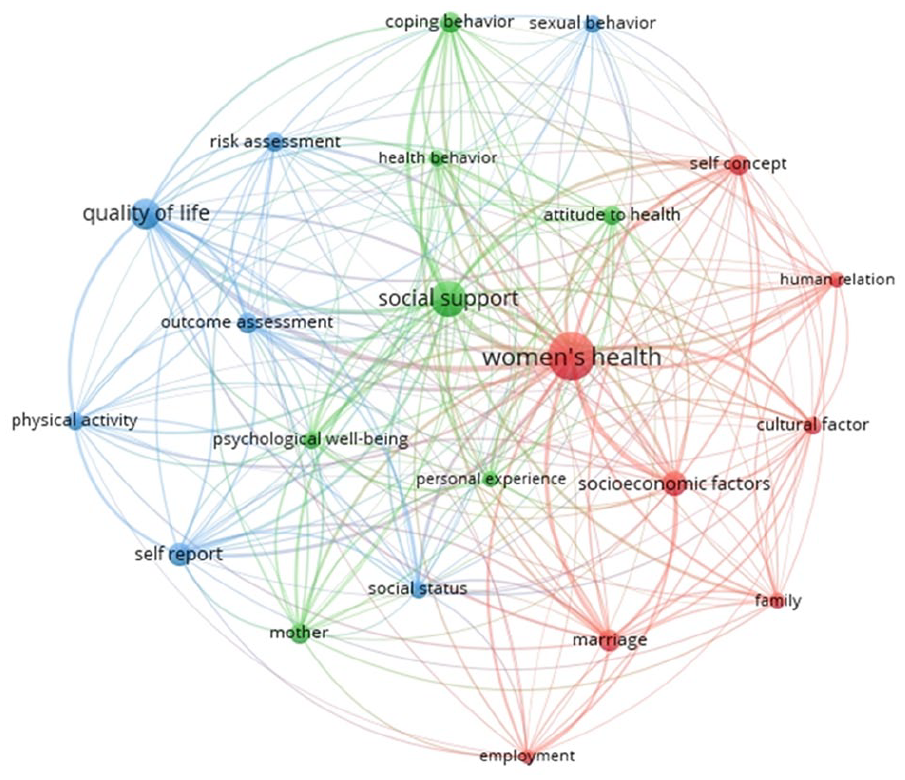
Cooccurrence network exported with VOSVIEWER software from studies extracted from the Scopus database.
While in the qualitative semantic network, four positive clusters were determined from the doctoral students’ answers that coincide with four clusters of the theoretical co-occurrence network, a fifth theoretical cluster was found in the latter network (family, marriage, mother, employment, social status, socioeconomic factors, cultural factors). This was not revealed in the empirical data, we think it may be a hidden factor, so we decided to bring it to the scientific discussion, for a critical analysis.
In this regard, a study reveals how women’s relationships in various settings (e.g., family, work, neighborhoods) are constructed and influence broader social opportunities 110 . It is also important to pay more attention to the role of mothers and all that this identity implies in doctoral studies,15,16 continue to explore the relationship between family status and the professional status and achievement of women doctorates, as discrepancies have been observed between the professional status and recognition and the productivity of doctorates of married and unmarried women, 117 and also put on the map the challenges of women re-entering the doctoral program after a break in their studies. 118
Cultural factors enter quite strongly into the debate, as it has been found that women’s careers are limited by traditional family roles in countries where a strong patriarchal culture prevails, so it is necessary to move toward policies that encourage the professional growth of women as a quality workforce for the sustainable development of a nation. 119 In addition, the university culture must move toward greater gender equality, and faculty involved in hiring must receive gender equality training. 20 So important is the cultural factor that the study findings also confirm the need to develop interventions and resources that improve acculturative stress and promote increased disclosure and reporting of mental health problems among women. 120 Women in a doctorate can experience acculturative stress due to the discrepancy between their beliefs and academic norms, as well as challenges such as patriarchal culture and gender discrimination, so there is a call to continue to delve deeper into the intersection of gender and culture to understand and support educational choices, persistence, and success. 19 Improving the academic system with a focus on gender equality can prevent organizational discomfort among female doctoral students. 121
Finally, to explicitly and directly address the racial issue, taking into account that “Gender discrimination exists in various settings globally and harms women’s mental health”(p. 1). 122 In this regard, a study states that even today the plight of black women in higher education saturates the literature, explaining that for decades, black women have been trying to find their place in academia, this brings up another cultural issue associated not only with gender but also with racism; in this regard, the study presents five important success factors for Black women’s doctoral careers. 123 Another study also illuminates experiences of racism and sexism among Black women with PhDs at a predominantly white institution. 124 This current scientific evidence calls for the continued development of policies and organizational strategies to prevent all types of discrimination, especially racial discrimination, which not only affects Black women but also Indian women. 125 This should therefore be explicitly placed on the agenda, especially since it has been shown that there is a significant positive association between gender discrimination and hopelessness and emotional vulnerability. 122
From the above analysis, we realize that these factors (family, marriage, mother, employment, social status, socioeconomic factors, cultural factors) are generally associated with negative aspects, with those “struggles” and “turbulences” that women face, perhaps for this reason they were not explicitly expressed; however, this research calls for these elements to be made explicit in the policies and interventions guided by psychology and positive education.4,5
Doing a study on psychological capital and its relationship with academic performance in women who decide to pursue a doctoral degree has a special added value as it allows identifying protective factors, identifying success factors to make informed decisions about intervention to improve female mental health, as well as addressing the gender gap in academia.
In addition to the above, considering a more explicit link between our findings and existing interventions that universities could use to support doctoral students, we considered relevant studies that shed light on mental health interventions in the doctoral context, which allowed us to establish more precise and contextualized recommendations.
First of all, to emphasize that “being a woman” is a sociodemographic variable identified as one of the significant predictors of negative mental health, and this should not be underestimated or hidden, together with academic, psychological, social, and organizational variables, so the study recommends interventions to remedy and prevent mental health problems based on improving self-care and emotion regulation, promoting social support at the university, 126 which is related to protective factors for mental health success such as healthy attitude and behavior, and social support, found in our study.
A recent study highlights that the increase in doctoral students has generated more research on their experience, revealing mental health concerns. To address them, five recommendations are proposed: clear signage to facilitate access to mental health resources, online self-help with digital wellness tools, group workshops to manage academic stress, parity of support that ensures equitable access to resources, and staff training to better respond to student needs. These measures strengthen institutional support and promote a healthy academic environment. 127
An interesting study examining important emotional health challenges faced by doctoral students, in its future directions, raises the need to use qualitative techniques (e.g., open-ended questions, individual and/or group interviews) that would allow researchers to derive salient themes and identify optimal points of intervention. 128 Hence, our study with the qualitative interviews conducted covers this space by identifying success or protective factors of women’s mental health in doctoral studies, which are key points of intervention.
The above study raises the need for interventions aimed at improving well-being and reducing burnout in doctoral students, developing systems to identify risk climates for mental health (associated with the resilience cluster of our results, especially the factors: risk assessment, coping behavior, and outcome assessment). 128 In this regard, a previous study showed that resilience is important to strengthen the mental health of doctoral students, 129 which legitimizes the results of our study and gives support and scientific evidence to these protective factors. At the same time, the study suggests implementing psychoeducation workshops, interventions to improve relationships, interventions to improve social support among students, and interventions to improve social support among students (this is directly associated with the social support and human relations factors of the hope cluster). 128
Another study reinforces that doctoral students around the world face varying degrees of mental health risks and highlights the importance of the right training environment for doctoral students by finding that it has a significant positive impact on their mental health; it also has a positive impact on student’s mental health, academic professional suitability, adequate organizational culture, and adequate financial support; the study concludes that the higher the degree of appropriateness of these four elements, the lower the likelihood of anxiety or depression among doctoral students, so universities should consider this in their interventions to improve the mental health of doctoral students and boost academic excellence, 130 which is directly associated with the quality of life of students.
Another study highlights the need to study early predictors of mental health and well-being in doctoral students. Regression analyses showed that mentoring in the second year of doctoral study, certainty of choice in the third year, and academic development and sense of belonging in the fourth year were positive predictors of membership in the highest mental well-being class. Unlike some previous studies, demographic variables were unrelated to the identified well-being classifications. Regression analyses further showed that mental well-being was negatively related to participants’ number of publications and research self-efficacy, indicating a problematic relationship between academic productivity and confidence and well-being. These findings can be used to identify and provide targeted support to students at risk of having or developing lower levels of mental well-being in their doctoral programs 131 while highlighting the power of psychological capital, as is the case in our study, specifically self-efficacy.
Another peculiar study emphasized organizational factors that predict the attrition of doctoral students’ experience of meaning and how meaningful experience and meaningless work affect doctoral students’ mental health and achievement. The study hypothesized that environmental sources of meaning (e.g., coherence, significance, purpose, and belonging) are subsumed under neoliberal principles of individualism, instrumentality, and competition. They found that the experience of meaningless work leads to the risk of suffering symptoms of mental illness and propose to improve the well-being of doctoral students with a multilevel interventions approach, emphasizing the managerial and organizational conditions of the academic environment that influence the basis of doctoral students’ experience of pursuing a doctoral degree. This study provides society with the importance of prioritizing the academic environment by looking at the meaning of work through the intersection of meaningful experiences and meaningless work for the mental health and achievement of doctoral students 132 this is directly associated with the cluster of self-efficacy approach, specifically personal experience, self-concept, self-report, and self-report.
Authors discovered something interesting, almost all doctoral students had experience with irreproducibility: 84% had been unable to replicate their results, 70% had been unable to replicate a colleague’s finding, and 58% had been unable to replicate a result from the published literature. Participants reported feelings of doubt, frustration, and depression while experiencing irreproducibility. 133 This is very striking and is closely related to the psychological well-being factor found in our study, personal experience, evaluation of results, and attitude toward health, which if we verify, we realize that these are factors associated with the four clusters of psychological capital.
We would also like to highlight the results of another study that shows that job resources are positively associated with mental health, while responsibility and loneliness negatively impact mental health 134 hence the importance of interventions emphasizing quality of life, psychological well-being, human relationships, and social support that are specified in the hope cluster of our findings. Finally, the need for greater mental health awareness and education within doctoral programs 135 are directly associated with the factors of attitude toward health, quality of life, coping behavior, and personal experience.
All of the above makes it possible to recognize, as evidenced by one study, that mental health in the context of doctoral studies is associated with multiple multifaceted aspects. 136 From this arises the need for a comprehensive intervention program that holistically considers the protective factors for success, applying multilevel interventions that address sociodemographic variables, especially “being a woman,” as well as academic, psychological, social, and organizational variables. Essential aspects for the success of such a program include organizational variables, accessible help systems, online self-help, equitable support, and psychoeducation workshops. In addition, it is essential to improve interpersonal relationships, social support, a positive training environment, academic professional suitability, and an appropriate organizational culture, as well as ensure adequate financial support and early predictors of mental health. The program should also consider mentoring, certainty of choice, sense of belonging, number of publications of the participants, academic productivity, and meaningful experience of doctoral students. Also relevant are the meaning of doctoral work, experience with irreproducibility, job resources, accountability, avoidance of loneliness, identification of mental health risk climates, and fostering greater mental health awareness and education within doctoral programs. Our findings and the results of these studies have allowed us to offer a specific program that we place for the consideration of the community in the Supplemental Material of this research.
Limitations and future perspectives
The main limitations of the study are the following: sample size, cultural bias, information bias, and reliance on self-reported data.
Sample size: The study’s data come from a single university in Lima, and a single doctoral program, which may not capture the full range of experiences among women in doctoral programs, potentially limiting the generalizability of the findings.
Cultural bias: The research was conducted at a private university with its own organizational culture, which may affect the applicability of the results to other universities or academic settings with different cultures.
Information bias: There is a risk that participants may provide responses they believe are socially acceptable or align with researcher expectations, rather than their true experiences.
Reliance on self-reported data: Participants’ responses might be influenced by their current mental state or perceptions, which could introduce bias into the study’s findings.
From future perspectives, the expansion of the sample is recommended, to improve the representativeness of the results, future studies could include a broader sample of female doctoral candidates from diverse universities and cultural backgrounds, and longitudinal studies are also encouraged as they could help to better understand how women’s mental health experiences change over time during the doctorate, as well as identify predictors of long-term well-being. Another important aspect is to move beyond diagnosis and project specific interventions, based on the success factors identified in this study, specific interventions could be designed to support the mental health of women in doctorate, such as coping skill development programs and social support networks. We also believe that future studies could be encouraged to take a comparative approach as comparing the mental health experiences of female doctoral students with those of other groups, doctoral graduates of various specialties, or master’s students, could provide a more complete understanding of the unique challenges faced by women in the doctoral context, and finally we call for interdisciplinary research, collaboration between researchers from different disciplines, such as psychology, education, and public health, could enrich the understanding of the determinants of women’s mental health in academia and promote more holistic approaches to intervention and support.
Conclusion
The study highlights the interaction between psychological capital, academic motivation, and academic performance of doctoral students. Quantitative analysis revealed remarkable relationships, with high self-efficacy and intrinsic achievement motivation identified as key protective factors enhancing academic outcomes. Qualitative results reinforced these findings, underscoring the role of optimism, hope, resilience, and self-efficacy in women’s mental health during doctoral studies. The practical implications of these results are as follows:
Implementation of psychological support programs: academic institutions should establish psychological support programs focused on enhancing self-efficacy and resilience among female doctoral students to improve both their academic performance and overall well-being.
Promotion of intrinsic motivation: Strategies should be developed to foster intrinsic motivation, particularly toward achievement, to increase student engagement and academic success.
Integration of psychological assessments: Periodic psychological assessments of capital and motivation should be incorporated into doctoral programs to identify and address potential challenges affecting academic performance.
Creation of support networks: Facilitating support networks among doctoral students can enhance resilience and emotional well-being by providing opportunities to share experiences and coping strategies.
Tailored curricular adjustments: Doctoral programs should be adapted to include modules that develop key psychological skills such as resilience and self-efficacy, aligning with students’ emotional and academic needs.
These practical implications provide a holistic approach to improving academic performance and emotional well-being, fostering a healthier and more effective academic environment for doctoral students.
To practically apply the success factors in women’s mental health within the doctoral context, it is crucial to implement concrete strategies that integrate the different components. First, training programs for women in academic settings should include workshops and seminars that promote a positive attitude toward health and healthy behavior, addressing topics such as stress management, nutrition, and the importance of physical activity. In addition, psychological counseling services could be offered, both face-to-face and online, allowing them to monitor their quality of life and psychological well-being, with a preventive rather than reactive approach.
The promotion of physical activity could be integrated into the daily routine of students, through the inclusion of active breaks, yoga classes, or group walks, encouraging collective participation to strengthen both body and mind. Likewise, building social support networks through discussion groups, peer mentoring, and spaces for open dialog about emotional and academic challenges would contribute to the development of a more resilient community.
At the individual level, it would be essential to carry out periodic evaluations of the results in terms of resilience and coping behaviors, through the implementation of self-reporting tools that allow the identification of early risks of mental health problems. This, together with a comprehensive assessment of psychological risk, will make it possible to tailor interventions to the needs of each woman. Finally, working on self-efficacy through the development of a personal action plan based on personal experience and self-concept, where each student can define achievable goals, reflect on her progress, and evaluate her well-being regularly, will contribute significantly to her academic and personal success.
Supplemental Material
sj-docx-1-whe-10.1177_17455057251315318 – Supplemental material for Women’s mental health in the doctoral context: Protective function of the psychological capital and academic motivation
Supplemental material, sj-docx-1-whe-10.1177_17455057251315318 for Women’s mental health in the doctoral context: Protective function of the psychological capital and academic motivation by Angel Deroncele-Acosta, Roger Pedro Norabuena-Figueroa and Emerson Damian Norabuena-Figueroa in Women’s Health
Supplemental Material
sj-docx-2-whe-10.1177_17455057251315318 – Supplemental material for Women’s mental health in the doctoral context: Protective function of the psychological capital and academic motivation
Supplemental material, sj-docx-2-whe-10.1177_17455057251315318 for Women’s mental health in the doctoral context: Protective function of the psychological capital and academic motivation by Angel Deroncele-Acosta, Roger Pedro Norabuena-Figueroa and Emerson Damian Norabuena-Figueroa in Women’s Health
Footnotes
Acknowledgements
We thank all the women who participated in this study for their valuable experiences and for opening the doors of their souls to tell us their success stories. We are grateful to Universidad San Ignacio de Loyola SRL for their constant support of the research, especially to the vice-rectorate for research.
Declarations

Supplemental material
Supplemental material for this article is available online.
References
Supplementary Material
Please find the following supplemental material available below.
For Open Access articles published under a Creative Commons License, all supplemental material carries the same license as the article it is associated with.
For non-Open Access articles published, all supplemental material carries a non-exclusive license, and permission requests for re-use of supplemental material or any part of supplemental material shall be sent directly to the copyright owner as specified in the copyright notice associated with the article.
