



Abstract
Background:
Previous research has identified treatment attributes and outcomes for endometriosis patients, highlighting the need for tailored interventions to improve patient care. These studies emphasize the need to understand patient experiences, focusing on pain symptoms and factors that impact quality of life.
Objectives:
This study aimed to provide an in-depth description of patient experiences with endometriosis related to treatment attributes and outcomes, including three key types of pain symptoms: Non-menstrual pelvic pain, dyspareunia, and dysmenorrhea, and non-pain factors such as out-of-pocket costs.
Design:
In this retrospective qualitative study, 47,745 public social media posts from the United States from December 2021 to December 2022 were analyzed.
Methods:
Boolean queries were created incorporating criteria to identify public posts referencing endometriosis and language indicative of patients expressed in the first-person point of view. Data were summarized via descriptive statistics.
Results:
Findings confirmed the relevance of non-menstrual pain, dyspareunia, and dysmenorrhea for treatment decision-making. Dysmenorrhea, described as excruciating and debilitating, was the most discussed symptom (10% of posts) followed by dyspareunia (3% of posts), with emotional and physical impacts detailed. Non-menstrual pain was specified in 1% of posts, including the follicular, ovulatory, and luteal phases of the menstrual cycle. Key themes that emerged organically included the impact of endometriosis on daily functioning, mental health, intimacy, fertility, and the role of online misinformation. Discussions detailed the struggle to balance symptom relief with long-term solutions, and frustration with diagnosis.
Conclusion:
The current study highlights the difficulties patients experience with dysmenorrhea, dyspareunia, and non-menstrual pain and the challenges to treatment decisions. The relevance of social media for patient expression of their disease experience, the importance of recognizing the individualized needs of patients necessitating their active involvement in treatment decision-making, and the need for education about treatment options beyond surgery also emerged in the findings.
Introduction
Endometriosis is a chronic, and often progressive, inflammatory disease defined as the abnormal presence of endometrial-like tissue outside the uterine cavity.1,2
The development and growth of endometriotic tissue depend on estrogen, making it prevalent among people of reproductive age.3,4 However, the clinical consequences of endometriosis and its management can also impact individuals after menopause. 4 Among individuals of reproductive age, prevalence of endometriosis is estimated to be 10%. 5 However, an accurate estimate of prevalence is challenging, as current practice standards rely primarily on a laparoscopic procedure for definitive diagnosis. 6
Endometriosis is most often characterized by dyspareunia, menstrual, and chronic non-menstrual pelvic pain, and can result in infertility. 7 Options for pain include nonsteroidal anti-inflammatory drugs, other pain medications, and procedures such as laparoscopy or laparotomy.4,8 Hormone therapy, including oral contraceptives, progestins, and gonadotropin-releasing hormone (GnRH) agonists and antagonists, is the most common primary treatment. 4
Endometriosis can have a profound impact on people’s lives, including decreased quality of life, and interference with daily life, relationships, and livelihood. 6 Based on the presentation, treatment choices, and nature of the disease, patient and provider shared decision-making conversations incorporating patient preferences are important. Recommended treatment for endometriosis may include a combination of medication, surgical, and other strategies (e.g., Chinese medicine, nutrition, electrotherapy, acupuncture, physiotherapy, exercise, and psychological interventions).
Research has highlighted the critical role of social media in raising awareness about endometriosis, demonstrating how individuals with the condition utilize social media platforms for information sharing, social support, and advocacy. 9 Similarly, patients increasingly rely on social media to educate themselves about their medical conditions, highlighting their active participation in the online health information environment. 10 Social media listening is a valuable technique for systematically reviewing data, offering a complementary approach to traditional methods of eliciting patient perspectives, such as interviews, surveys, focus groups, and feedback from advocacy groups. 11 This approach can help researchers overcome the limitations of traditional research approaches, including cost, recruitment, structural constraints, and potential biases. 12
Results of a cross-sectional study of gynecology units of a tertiary hospital in Melbourne, Australia demonstrated that 76% of diagnosed patients (n = 100) utilized social media for health-related purposes. Respondents reported overall positive impacts on psychological, social, and cognitive health outcomes as a result of their social media engagement. 13 In the context of endometriosis, substantial and valuable data signals can be extracted from content found on online platforms, where interactions occur outside the controlled environment of traditional research settings.
Recent studies on patient preferences for endometriosis treatments, including discrete choice experiments (DCEs), have highlighted key factors influencing treatment decisions among U.S. individuals with endometriosis. Studies have found that improvements in dysmenorrhea, non-menstrual pelvic pain, and dyspareunia are of primary importance.14,15 In addition, out-of-pocket costs were highlighted as a significant factor in treatment decisions, both by patients and healthcare providers, reflecting the financial burden of managing endometriosis.16,17 These findings suggest that, beyond symptom management, economic considerations play a key role in shaping treatment preferences.
As opposed to eliciting responses to a predefined set of treatment choice tasks, such as in DCEs, the present research seeks to listen to first-hand accounts of patient experiences publicly documented. Together with an understanding of patient preferences identified through traditional survey methods, insights from social media, which explore both preidentified treatment factors and themes that emerge organically from content, can provide a more comprehensive and multifaceted understanding of patient experience. This enhanced understanding can help optimize the approach to endometriosis care and subsequently inform the development of patient-centric interventions.
Objectives
This study sought to provide an in-depth description of the experiences of individuals with endometriosis related to the key treatment attributes and outcomes identified in prior research, including dyspareunia, dysmenorrhea, non-menstrual pelvic pain, and non-pain factors, such as out-of-pocket costs, using an observational approach to understand patients’ needs and preferences from social media platforms.14 –17
Materials and methods
The Standards for Reporting Qualitative Research were consulted when preparing this manuscript.
Study design
This retrospective study examined social media data relating to endometriosis from users based in the United States between December 2021 and December 2022. Only publicly available data were used for this study, and all data included in the final report were anonymized.
Posts mentioning endometriosis were collected. A keyword string was then applied to this data set to filter posts where individuals spoke in the first person, confirming they had endometriosis. From this refined data set, predefined categories (dyspareunia, dysmenorrhea, non-menstrual pain, and financial costs) were applied to enable a focused and in-depth analysis of these specific patient experiences.
In addition, the overall sample data were assessed to discern themes that emerged organically in data.
This three-step process is shown in (Figure 1).

Flow of data collection for study sample.
Data collection and filtering process
Brandwatch (Cision Ltd., Brighton, United Kingdom), a social media listening tool, was utilized to collect and filter data. Brandwatch was chosen for its extensive data coverage and flexible query customization. While not the main factor, its Natural Language Processing (NLP) feature enabled the analysis of keyword frequency.
Step 1: broad data collection
In the first step, 290,000 posts relating to endometriosis were collected from audiences who listed endometriosis in their public posts. Posts were included if the users identified themselves as U.S.-based, either through social media profiles or participation in global English-language forums. Duplicate posts and content from specific sites that lacked focus on first-hand experiences were excluded. Sites, such as 4chan.org, tattle.life, lipstickalley.com, kiwifarms.net, and democraticunderground.com were excluded from consideration due to their irrelevance to the study’s focus on patient narratives.
Step 2: first-person experience focus
Stringent criteria were applied to focus on posts reflecting first-hand experiences. A keyword string captured posts from individuals who shared personal experiences using phrases such as “I’m,” “I have,” “I live with,” in proximity to terms like #endo or #endometriosis. Accounts displaying behaviors like excessive reposting or unrealistic claims were automatically filtered out due to the applied criteria. An overview of the platforms used in the analysis with brief descriptions is provided in Table 1.
Description of social media platforms.

During this phase the dataset became dominated by Reddit posts, given the platform’s text-heavy format and alignment with the applied criteria. Instagram and Facebook were deprioritized, as they surfaced fewer first-person textual posts. Figure 2 below provides additional information regarding the distribution of data sources.

Breakdown of patient posts by social media platform. Chart created with Datawrapper – a visualization tool.
While Reddit data were overrepresented due to the platform’s text-heavy nature and alignment with our stringent Boolean queries, all data from the various platforms (X.com, forums, Instagram, Facebook) were analyzed uniformly within Brandwatch. This consistent approach helped mitigate potential biases from the varying data volumes and ensured that key themes and insights were derived using standardized metrics across all platforms.
Step 3: category creation and application
In the third step, categories based on key concepts in the dataset were created. Specifically, category inclusion criteria were used to identify and explore discussions in which individuals reported experiencing dyspareunia, non-menstrual pain, or dysmenorrhea, or discussed the financial costs associated with managing endometriosis. Table 2 provides an overview of the keywords included in keyword strings related to key concept categories. The most frequently used keywords were collected using Brandwatch’s NLP in-tool feature. These keywords underwent testing for relevance, accuracy, and an exploration of language variability. The insights gained from this process were then used to create category queries.
Overview of keywords included in categories.

These categories were applied to the patient sample of 47,745 posts.
Data analysis
The research team employed a combination of quantitative and qualitative methods to analyze the social media posts. This integrated approach allowed the research team to gain a holistic understanding of the social media discussions, facilitating the identification of trends, key conversation topics, communities, and content that attracted engagement within the patient audience.
NLP from Brandwatch provided keyword frequency. Analyzing the frequency of specific terms or phrases facilitated the identification of prevalent topics and overarching themes related to experiences, concerns, challenges, and preferences from the sample. Engagement metrics, which refer to forms of interaction, such as retweets/reposts, likes, and comments, aided in assessing the popularity of content and profiles, as well as trending and popular posts and conversation topics. Table 3 below lists the measures that characterize the distribution and frequency of posts in the data.
Social media metrics.

“Volume of posts” refers to the number of individual posts that have been created.
Quantitative insights were presented using descriptive statistics. Counts and percentages were provided to describe the data, where applicable.
While a qualitative approach was used to identify key themes outside of predefined categories and achieve thematic saturation, explicit keywords (e.g., “mood swings” and “PMS”) were quantified where appropriate to provide insight into their frequency. However, broader scenario-based themes were not quantified due to language variability and the need for contextual interpretation. This combined quantitative and qualitative analysis enabled a comprehensive understanding of both explicit and nuanced aspects of patient experiences.
The research team employed a systematic qualitative assessment, conducted by two researchers, to identify key themes. Thematic saturation was achieved, ensuring no new or significant insights were missed. 18 Cross-checking was implemented to enhance reliability and validity. Two researchers independently reviewed the findings and interpretations, comparing assessments to reach a consensus where discrepancies arose. A third team member oversaw the process to ensure methodological rigor, helping mitigate biases and enhance credibility.
This balanced approach—quantifying explicit terms while interpreting broader themes—allowed for deeper insights without overstating the weight of any particular theme. It also emphasized that quantifying keywords offers frequency data but does not always capture the overall complexity of the underlying patient experiences.
Results
Sample
A sample of 47,745 mentions was identified as data from U.S. individuals with endometriosis and analyzed.
Categories and themes
Predefined categories were established to examine symptoms such as dyspareunia, dysmenorrhea, and non-menstrual pain, as well as out-of-pocket costs.
Themes that emerged organically within the dataset encompassed the impact of endometriosis on daily functioning, mental health, intimacy, and fertility, along with diagnosis, treatment, and online misinformation.
Patient experiences related to endometriosis symptoms
The analysis focused on three types of pain symptoms: Dysmenorrhea, non-menstrual pain, and dyspareunia. The data analysis revealed that these three types of pain symptoms had a considerable impact on individuals with endometriosis. The most discussed endometriosis symptom was dysmenorrhea, with 10% of posts focusing on this symptom. Patients frequently described dysmenorrhea as “debilitating” (n = 267), “excruciating” (n = 227), or causing them to “pass out” (n = 122). Patients reported that pain was felt in the pelvic area, back, abdomen, and legs.
Dyspareunia, referring to pain during or after sexual intercourse, was another symptom highlighted by patients and was referenced in 3% of patient posts. Patients shared the emotional and physical impacts they experienced due to this pain. In some cases, the pain was severe enough to cause some patients to completely avoid sexual activity.
Overall, 1% of posts included descriptions of non-menstrual pain, which was described as occurring during different phases of the menstrual cycle, including the follicular, ovulation, and luteal phases. Pain during ovulation was the most frequently reported type of non-menstrual pain. Patients highlighted the variability in the intensity and characteristics of this pain, as well as the accompanying symptoms. They often discussed the impact of non-menstrual pain on their daily lives, including the impact of unexpected flare-ups of pain. Table 4 contains examples of verbatims describing non-menstrual pain.
Symptoms associated with endometriosis.

GI: gastrointestinal.
The term cul-de-sac is used specifically to refer to the rectouterine pouch (the pouch of Douglas), an extension of the peritoneal cavity between the rectum and back wall of the uterus.
Lower data.
Out-of-pocket costs and access to care
Online discussions revealed that access to endometriosis care is often limited by financial burdens, restricted insurance coverage, and a shortage of specialized healthcare providers. Access to surgical procedures presented significant cost-related obstacles for patients seeking care were most prevalent.
Concerns about costs emerged following negative experiences with payment processes and insurance appeals. The uncertainty surrounding out-of-pocket expenses, inadequate cost estimates that fail to include anesthesia and supplies, and restrictions on these procedures further compound patient frustration. Individuals also reported that limited availability of endometriosis specialists and insurance restrictions on out-of-network providers also impeded access to necessary care. Despite these financial burdens, some patients expressed determination in pursuing specialized surgical care, viewing it as a necessary means to alleviate symptoms, particularly after enduring prolonged suffering and inadequate relief from previous treatments they had tried.
Access to hormonal treatments, such as oral contraceptives, intrauterine devices (IUDs), GnRH agonists, and GnRH antagonists, varied according to patient accounts posted online. While some individuals reported positive outcomes with these treatments, others faced challenges in obtaining them. Issues with insurance coverage and high out-of-pocket costs hindered some patients from accessing these hormonal treatments consistently. Despite the existence of assistance programs to mitigate financial burdens, access barriers to these treatments persisted, affecting the overall management of endometriosis and potentially limiting patients’ options for effective care.
Impact of endometriosis on daily functioning, mental health, intimacy, and fertility
A summary of the most prevalent themes that were identified is presented below, with verbatim quotes to illustrate each theme provided in Figure 3.

Patient verbatims relating to the impact of endometriosis on daily functioning, mental health, intimacy, and fertility.
Work and school challenges
Absences or “days off” were explicitly referenced in 152 posts, where patients discussed the impact of their symptoms on their ability to attend work or school regularly due to pain and emotional symptoms. “Mood swings” or “PMS” were mentioned in 492 posts, where patients described emotional symptoms alongside physical pain that contributed to exhaustion and impacted their ability to function at work or school.
Mental health and emotional well-being
Patients expressed the emotional consequences of being unable to engage in everyday activities due to the unpredictable nature of their symptoms. Mental health was explicitly referenced in 706 posts. The deprivation of participating in “normal” activities negatively affected their overall well-being and hampered their daily functioning. The importance of having self-care strategies, including relaxation techniques, exercise routines, and healthy eating habits was discussed online by patients.
Challenges in intimate relationships
Endometriosis poses complex challenges to intimate relationships, as individuals described grappling with persistent pain and its multifaceted impact on their sexual well-being. Sex was referenced in 2489 posts across the dataset. Sexual arousal can trigger pain, and 158 posts specifically referenced orgasm, with some accounts discussing pain that persisted for weeks post orgasm. Many patients turned to online platforms to express their frustrations and challenges within a supportive environment.
Implications for fertility
Fertility was discussed in 1491 posts, reflecting a substantial concern for individuals with endometriosis. Patients expressed frustration over their inability to conceive and sought solace and advice from others who have experienced successful pregnancies despite similar disease severity, often turning to online platforms for support and information.
Social/everyday life
Social life or daily life was referenced in 107 posts and was further impacted by other themes such as pain, emotional well-being, and work-related challenges.
Diagnosis
Patients frequently described the process of achieving a diagnosis (n = 2800) as frustrating and lengthy. The diagnostic process includes multiple visits to several healthcare providers and trying many different treatment options, such as medications and/or surgery. As depicted in Figure 4, the journey begins when debilitating symptoms appear and can continue for years until patients find the appropriate healthcare professional. During this time, individuals often undergo various treatment options while managing the significant impact of the disease on their daily lives.
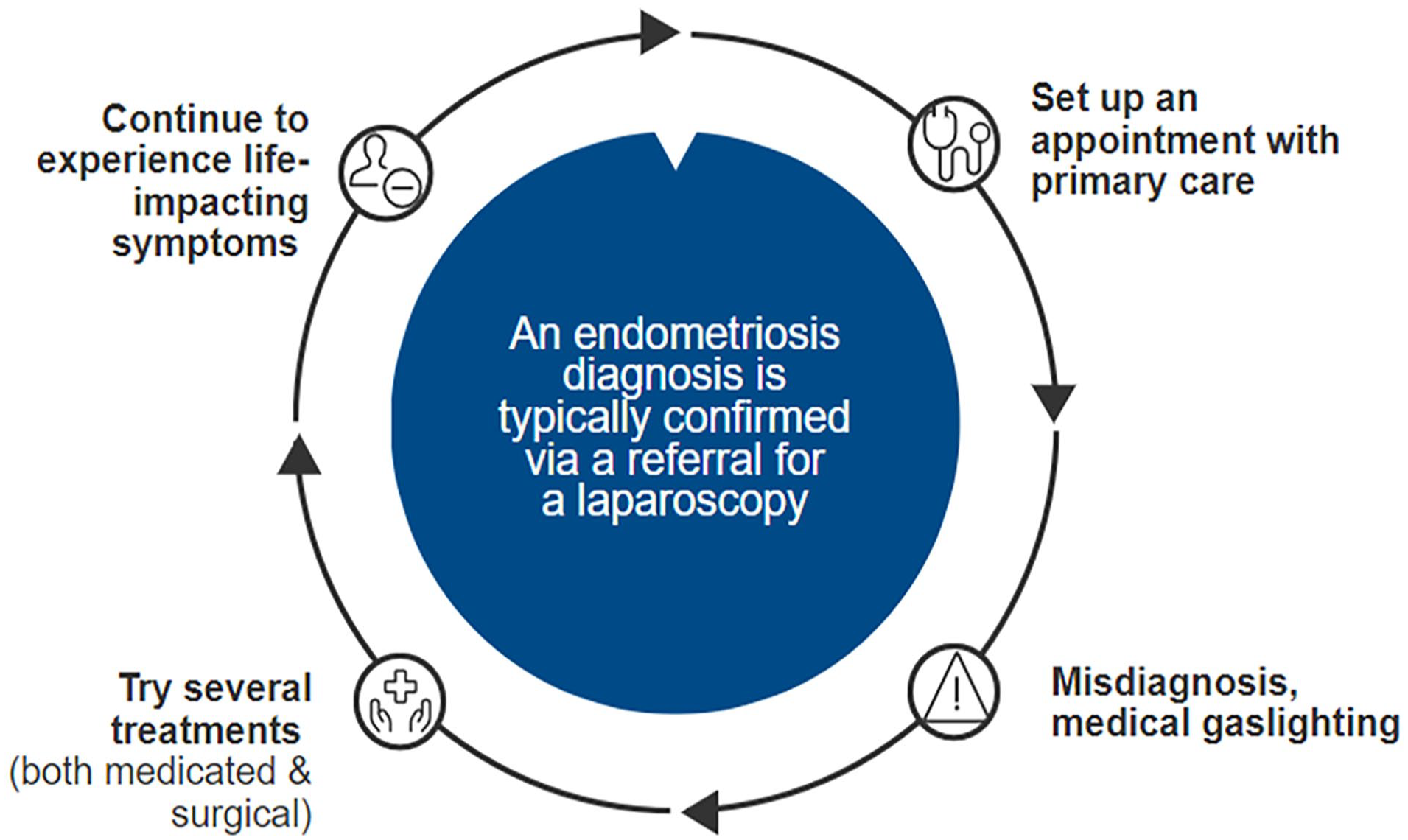
The diagnosis cycle as reported by patients.
Several consistent patterns that patients typically experienced were identified. The following patterns are presented in the order in which patients commonly recounted their experiences:
First, the journey often begins with patients experiencing endometriosis symptoms that substantially impact their quality of life. This includes pain that varies in intensity and can present in different physical areas of the body. In response, patients typically seek medical guidance by scheduling appointments with their primary healthcare provider. However, this step is frequently met with challenges, including the potential for misdiagnosis. It is common for patients’ symptoms to be deemed normal or disregarded, leading to a sense of invalidation and the absence of a definitive diagnosis.
Second, in the absence of a clear diagnosis, patients are often offered treatments aimed at addressing specific symptoms. These treatments might include hormonal birth control or pain medication. Accessing more comprehensive treatment options can be difficult, often due to various factors such as financial burdens or limitations in insurance coverage.
Third, patients reported frustration with the process of achieving a diagnosis, sharing instances of their pain being dismissed by multiple medical professionals, even when experiencing severe symptoms. Regardless of symptom severity, patients spoke of a perceived lack of seriousness on the part of healthcare professionals, particularly regarding the association of their pain with the menstrual cycle. They described being overlooked by multiple healthcare professionals and emphasized the importance of resilience and determination in advocating for proper medical attention.
Finally, patients actively turned to online platforms to share their experiences of overcoming symptom dismissal and their pursuit of finding the “right specialist” to confirm an endometriosis diagnosis. In addition, they openly shared lists of trusted medical professionals to support other patients with finding appropriate support and care.
Treatments
Patient discussions highlight the struggle to balance symptom relief with long-term solutions.
The challenge in finding the most effective treatment for managing endometriosis, as observed in this study, stems from the reality that there is no cure for the disease. Consequently, available treatment options are primarily focused on alleviating symptoms, rather than addressing the underlying cause. Patient content revealed awareness that there is no cure for endometriosis, but patients still struggled to accept that their only options are treatments that offer temporary symptom relief. Patients reported frustration with the trial-and-error approach to treatments, which exposes them to a wide range of interventions (including medications, natural remedies, and surgery), resulting in negative impacts on both their mental and physical health.
Across social media, surgery was discussed more than hormonal therapies as a treatment option for endometriosis. Based on the most frequently used keywords relating to treatments, online discussions about treatment options showed that surgery, including specific procedures such as “ablation surgery,” were more commonly discussed than hormone treatments (Figure 5). “Hysterectomy” was frequently discussed in relation to the drivers that prompt patients to undergo this procedure, such as the need to ease pain. Patients also frequently discussed “laparoscopy” and “excision” procedures, sharing their experiences and advice to support the online endometriosis community.

Frequency of keywords relating to treatments. Chart created with Datawrapper – a visualization tool.
Hormonal treatments were mentioned less often, with “birth control” being the most frequently cited term, followed by “IUD.” In reference to birth control pills, patients shared their positive and negative experiences, particularly their impact on pain (n = 781). Discussions reflected mixed experiences, with some patients noting a reduction in heavy periods (n = 577) as a positive outcome. However, side effects were commonly reported (n = 494), with spotting highlighted as a particular issue (n = 235).
Online misinformation
Misinformation regarding endometriosis is prevalent in online spaces, and patients themselves often play a key role in addressing and correcting these misconceptions. In our dataset, the term “misinformation” appeared in 91 posts, while “myth” was mentioned in 33 posts, where patients actively worked to dispel false beliefs. One of the most common topics tied to misinformation was the idea of a cure, which was mentioned in 1027 posts. A significant number of these discussions centered around the misconception that hysterectomy or other surgical procedures, serve as a definitive cure for endometriosis. Patients frequently shared their experiences, acknowledging that while hysterectomy can provide relief in some cases, it is not a cure, and many symptoms persist post-surgery.
Discussion
This study utilized social media data to gain insights into the experiences of patients with endometriosis. The findings confirmed that symptoms, such as dyspareunia, dysmenorrhea, and non-menstrual pain, are commonly experienced and patients emphasized the impact of these on their lives in their posts. The study also identified stigma and a need for education and awareness around treatment options beyond surgery. Social media was found to impact patient perceptions, identifying an opportunity to enhance patient-provider communication. Additionally, the findings confirmed that financial burdens and limited insurance coverage pose challenges to accessing care.
Social media platforms have emerged as a valuable tool for capturing real-time experiences and reactions, enabling the incorporation of the patient voice into research endeavors. Social media has the potential to provide valuable insights into real-world data and the patient perspective. 19 While routine collection and recording of patient-reported outcomes in clinical care are not widespread, the research community has increasingly turned to social media as an innovative means of capturing the patient perspective.
By analyzing a diverse range of viewpoints expressed publicly on social media, without imposing predefined decision choices, the current study was able to gain access to a collection of unfiltered patient needs and preferences. This allowed for a deeper understanding of patients’ perspectives, as it captured their thoughts, feelings, and opinions in their own words.
Consistent with the findings reported in previous research, physical symptoms, particularly pain, emerged as important drivers prompting individuals to seek care and treatment.14 –17 In the current social media study, dysmenorrhea specifically stood out as a prominently mentioned symptom, with individuals articulating their pain and expressing feelings of not being taken seriously, potentially due to the association of pain with their menstrual cycle. This indicates a strong perceived sense of stigma surrounding this particular symptom. Despite its limited attention in published literature on endometriosis, stigma represents an underlying social force that can profoundly impact the psychosocial well-being of individuals living with endometriosis. Stigma, whether internalized or experienced within the family, intimate relationships, work environments, or healthcare settings, has the potential to intensify the aforementioned adverse effects of endometriosis and perpetuate compromised psychosocial well-being. 20
The current research revealed that there is a myth that surgery is curative, along with other treatments, but patients themselves often play a key role in dispelling myths and misconceptions about endometriosis online. A recent study found considerable misinformation about endometriosis on TikTok, emphasizing the prevalence of inaccuracies in online content. 21 Although TikTok was not part of our study, this highlights broader challenges in addressing misinformation. While the aforementioned study focused on clinical validation, our research recognizes that patients are often left to try multiple treatments and coping strategies to find relief.
Analysis of social media content revealed that many patients were seeking advice on surgical options, with surgery-related keywords outweighing those for other treatments. Other studies have shown that shared discussions among patients help them feel more in control of their pain and strengthen the collective authority of patient communities, which suggests these dynamics may also influence how treatment options are perceived. 22 The predominance of surgery-related discussions highlights the need for broader dissemination of alternative treatment options, as surgery may be erroneously perceived as a more definitive solution. This study also illustrated that access to care for endometriosis is hindered by financial burdens, limited insurance coverage, and a shortage of specialist healthcare providers. Hormonal treatments and surgical procedures pose challenges due to varying effectiveness, insurance complications, and high costs. Patients often face barriers in pursuing specialized care, while the lack of coverage for specific treatments exacerbates the isolation of individuals and undervalues their needs. Improving access requires addressing these financial and insurance-related obstacles and ensuring comprehensive support for patients.
Another important finding of this study specifically was the role of the online information environment in shaping patient perceptions. Commonly observed behaviors, such as sharing healthcare provider information on websites and patient advocacy, indicate that the online information environment plays a major role in impacting treatment perceptions. Based on the pervasiveness of strong endometriosis patient communities online, there are indications that patients tend to be responsive to the advice of their peers and prioritize personal anecdotes and experiences shared by fellow patients, rather than actively seeking evidence-based treatment information from medical professionals.
Improved patient-provider communication is also essential in countering the influence of the online information environment. Open and transparent discussions between healthcare professionals and patients can help address misconceptions, correct misinformation, and provide guidance based on the best available evidence. This finding is in line with ESHRE guidelines that strongly encourage shared decision-making and incorporation of patient preference into the endometriosis treatment decision-making process. 4 Healthcare professionals should consider utilizing social media as a tool to better understand patient concerns and to disseminate clinically appropriate information to individuals living with endometriosis.
Future areas of study specific to endometriosis could include investigating the influence of social media on the dissemination of accurate information about the condition, as well as its impact on patient perceptions of symptoms, treatments, and healthcare providers. Examining the endometriosis-related stigma is a crucial area for further investigation, considering the limited number of qualitative studies that have delved into its phenomenology. 20 Understanding the role of patient-reported outcomes collected through social media platforms, assessing the support offered by online patient communities, and evaluating the influence of patient-provider communication on treatment outcomes can substantially contribute to the enhanced care and management of endometriosis. By addressing these research areas, valuable insights can be gained to help optimize interventions and support strategies for individuals with endometriosis.
Strengths and limitations
When interpreting the study’s results, it is important to consider the strengths and limitations of the chosen methodology. Data were collected from publicly available information on social media platforms. However, it is crucial to acknowledge that this approach may have been influenced by stigma, which could have restricted patients from openly sharing certain information they might feel more comfortable disclosing in private conversations or in an anonymous survey. Recognizing this distinction helps us to grasp the potential impact of stigma on the collected data and its implications for interpreting the findings.
The strengths of this study include the diverse viewpoints and audiences captured, thereby ensuring a more comprehensive understanding of patient communities, as well as the treatment landscape and influential voices/communities within it. The analysis of existing perceptions, trends, and themes of online conversations provided valuable insights into treatment perceptions and unmet needs outside of a controlled research environment. Through qualitative analysis techniques, such as content and thematic analysis, this study uncovered valuable insights and identified the factors that drive user engagement. By combining quantitative and qualitative methods in a rigorous way, the research approach ensured a robust analysis of the social media data to gain valuable insights into patient behavior and preferences.
Nevertheless, several limitations should also be kept in mind. Firstly, the inclusion of public information was limited to posts containing specific health-related terminology, potentially excluding relevant data that did not meet the predefined criteria. In addition, due to the reliance on self-identifiable information from public posts, detailed audience characteristics, such as demographics, could not be ascertained within the public online setting. It is worth noting that, despite diligent efforts to assess information quality, the possibility of irrelevant data being included in the analysis could not be completely eliminated.
The potential presence of participation bias must also be acknowledged, as this study captured individuals publicly vocal on social media regarding symptoms and treatments. While this may lead to limitations in achieving a representative sample, the study emphasizes the importance of the unmet need for expression and the desire to be heard among participants, based on a substantial amount of data. The study recognizes that forums, especially Reddit, provide a platform for extensive discussions regarding symptoms and treatment, as they allow for longer text posts. However, it is important to note that the heavy reliance on Reddit data may potentially restrict the generalizability of the results.
Consideration of motivations is crucial in understanding when and how individuals are prompted or inclined to post on social media. The patient community observed in the study benefited from peer support, advice, and the expression of their emotions online. Research is evolving when it comes to the impact of social media on patient behavior. Generally, there is evidence suggesting a tendency for people to share more negative content than positive content on social media platforms. For instance, the online disinhibition effect suggests that individuals may feel more comfortable expressing negative emotions and opinions online due to a reduced sense of accountability and face-to-face interaction. 23 It is important to also consider that this effect may vary depending on the specific platform, context, and demographic factors. Therefore, the study’s findings should be interpreted in light of these factors, acknowledging the comprehensive insights gained, while also considering the potential limitations inherent in the data collection process.
Conclusion
The current study highlights the impact of dysmenorrhea, dyspareunia, and non-menstrual pain on patients’ lives and treatment decisions. It emphasizes the frustration experienced by patients with healthcare providers and the broader medical community for not sufficiently listening to their needs and illuminates the diverse range of patient experiences. Among the symptoms assessed, dysmenorrhea emerged as the most prominent issue voiced by patients on social media, with many expressing the belief that their pain is often dismissed due to its association with their menstrual cycle. The study further reveals patients’ frustration during the diagnostic process, the trial-and-error nature of treatment, and the challenges they encounter in accessing proper care.
The findings of this research underscore the importance of recognizing the individualized needs of patients, necessitating their active involvement in treatment decision-making. Moreover, the study emphasizes the influential role of social media as a platform for patient expression and to consider multiple perspectives and information sources to better understand the complexities of endometriosis treatment. To enhance healthcare interventions, it is imperative to integrate these diverse data sources, leading to more patient-centered approaches that effectively address the unique needs and challenges faced by individuals with endometriosis. Ultimately, improved outcomes and a better quality of life for those living with this condition may be facilitated by fostering a collaborative approach between patients and healthcare providers.
Supplemental Material
sj-pdf-1-whe-10.1177_17455057241311765 – Supplemental material for Social media to understand the endometriosis patient journey: Listening to influences driving treatment choices
Supplemental material, sj-pdf-1-whe-10.1177_17455057241311765 for Social media to understand the endometriosis patient journey: Listening to influences driving treatment choices by Vicky Britton, Alexis Sohn, Nicole T Ansani, Brett Hauber, Michele Cole, Martine C Maculaitis and Ruth Kim in Women’s Health
Footnotes
Acknowledgements
The authors acknowledge Julien Goretti (former employee of Oracle Life Sciences) for their contributions to the study concept and design, as well as Sara Boretti (employee of Oracle Life Sciences), Mariam Dadabhoy (former employee of Oracle Life Sciences), and Ilia Triantafyllidi (former employee of Oracle Life Sciences) for their support with analysis.
Declarations

Supplemental material
Supplemental material for this article is available online.
References
Supplementary Material
Please find the following supplemental material available below.
For Open Access articles published under a Creative Commons License, all supplemental material carries the same license as the article it is associated with.
For non-Open Access articles published, all supplemental material carries a non-exclusive license, and permission requests for re-use of supplemental material or any part of supplemental material shall be sent directly to the copyright owner as specified in the copyright notice associated with the article.
