



Abstract
Scientific literacy (SL) has been recognized globally as the main goal of school science. Similarly, scientific inquiry (SI) is an established science procedure in learning. Science textbooks are major resources for learning, but the ways in which SL themes and SI-levels are presented to students in textbooks may vary between countries. This study aims to compare how the representations of SL themes and SI-levels in upper-secondary schools biology textbooks in Finland (BookF) and Nigeria (BookN) align with a competency-based approach focusing on scientific knowledge and competencies, the learning context, and attitudes towards science. A modified framework of the Programme for International Student Assessment 2015 (PISA 2015) and a deductive content analysis were used for data processing. The findings using χ2 tests indicate significant differences in the representations of SL themes and SI-levels. The books focused more on scientific knowledge and competencies than on learning contexts and attitudes. Moreover, BookF encourages structured inquiry, whereas BookN proposes confirmation inquiry levels.
Keywords
Introduction
The aim of science education, irrespective of the cultural contexts, is to produce reflective, competent, and scientifically literate citizens capable of living in and contributing positively to society (Semilarski et al., 2022). Biology as part of science education is one of the disciplines through which the aims related to scientific literacy (SL) competencies could be achieved through various levels of scientific inquiry (SI). According to Holbrook and Rannikmäe (2009), SL is an individual’s ability to use knowledge to identify problems, acquire new knowledge, explain scientific phenomena, and draw conclusions based on evidence related to scientific issues.
The emphasis of SL and SI in school science has been brought about by the curriculum reforms movement. During the last 50 years, there have been numerous reforms in science education, for example, the analyses showing the appearance of inquiry-based science education (IBSE) approaches in textbooks (Anderson, 2007; Yang and Liu, 2016). According to Linn et al. (2004), inquiry is an intentional process of diagnosing situations, formulating problems, critiquing experiments, planning investigations, searching for information, constructing models, debating with peers using evidence and representations and forming coherent arguments. Anderson (2002), added that inquiry refers to a learning process in which students are actively involved. Thus, inquiry approach in science education would refer to the inductive pedagogical approach in science teaching that gives space to observation, experimentation and the teacher-guided instruction for learners to construct their own knowledge (Rocard et al., 2007). Hence, inquiry approach in textbooks is the introduction and use of scientific practices. To support an inquiry-based approach, tasks such as investigation, exploration, and research should appear in science textbooks (Yang et al., 2019). Moreover, inquiry can be applied as guided or open inquiry (Bell et al., 2005). Nevertheless, STEM education (Kelley and Knowles, 2016) offers another approach. Meanwhile, two competencies of the Program for International Student Assessment (PISA)—identifying scientific issues and drawing evidence-based conclusions (Organization for Economic Co-operation and Development (OECD, 2007)—offer information about the influence of IBSE to textbooks.
However, science textbooks remain crucial educational learning materials around the world (UNESCO, 2014). The availability of well-designed textbook is important especially in developing countries with large class sizes, a high proportion of unqualified teachers, and a shortage of instructional time. Whereas textbooks are commonly used educational resource in the Western world, their availability in many sub-Saharan African countries is critical (UNESCO, 2014). For instance, while in Finland the schools and biology teachers can choose between several book series produced by different publishers, in Nigeria, several students share one textbook with other students due to delay in the production of learning materials (Read, 2015).
Comparative school textbook analysis is important to evaluate how key concepts or core ideas are introduced in the textbook and it helps educators, policymakers, and researchers gain insights into the quality, content, and effectiveness of educational materials and systems (Suter, 2011). According to Crossley and Murby (1994), comparative analysis helps to determine the quality of the content presented in different textbooks. For example, comparative analysis shows if key concepts or core ideas are missing or overrepresented in a book.
Although content analysis can be a powerful and effective approach to measure the design quality of textbooks (Yang et al., 2019), yet among the numerous comparative studies (e.g., Vojir and Rusek, 2019), few have offered a detailed comparison of the quality of science textbooks in developed and developing nations based on PISA competency approach. Hence, this study intend to fill this gap by comparing the representations of SL themes and inquiry levels in the Finnish and Nigerian upper-secondary school biology textbooks using scientific literacy framework (OECD, 2017) and content analysis of different levels of inquiry.
More importantly, this comparative study was carried out between the two countries due to the vital role of science textbooks in the teaching and learning process. Son and Diletti (2017) argue that textbooks have the potential to shape the way we teach and learn a subject and what kind of learning opportunities the textbooks allow for students. Textbooks present a framework, teachers employ while they teach the topics in the subject (Abd-El-Khalick et al., 2017; Aivelo and Uitto, 2019; Udeani, 2013). Equally, scientific literacy is one of the major goals of science education policy and practice globally (Roberts and Bybee, 2014), required by citizens for successful future living. Also, the impact of globalization has made the teaching and learning of the same science concepts possible in different classrooms around the world (Lyons, 2006). Hence, this comparative study can aid in the identification of features and traditions in the two countries, creating cross-national differences such as cultural influences, the needs of the people, the objectives of national education policies and practices, historical, religious, and socio-economic (Oladejo et al., 2025).
Background of the study
The importance of textbooks in science education
Globally, textbooks are essential pedagogical tools that enhance students’ understanding of the scientific enterprise (UNESCO, 2014). Thus, teachers and students assume the information contained in these books to be correct and useful for teaching and learning purposes (Binns, 2013). Textbooks help to promote a specific vision with respect to the curriculum, forming a link between how SL themes are presented and implemented in a classroom context (Okeeffe, 2013).
Textbooks could represent the learning goals and trajectory of the curriculum (McDonald, 2016) strongly influencing learners’ understanding of the subject matter. Textbooks are sources of ideas about scientific knowledge and experimental activity, playing a role in the acquisition of skills related to the science process and enabling students to consolidate their learning and develop problem-solving ability (Dunne et al., 2013). Hence, understanding aspects of the nature of scientific inquiry promotes both learning by inquiry and learning science as a form of inquiry (Penn et al., 2021).
Moreover, science textbooks provide students with visual representations such as diagrams, which are crucial teaching and learning tools that help them understand a wide range of scientific phenomena. They also facilitate student learning about various science concepts and fields, such as biology (Liu and Treagust, 2013; Postigo and Lopez-Manjon, 2019). Brandstetter et al. (2017) studied pictorial information in biology textbooks and found that pictorial and visual representations helped the cognitive process, leading to a better understanding of science concepts.
SL themes in science education
The concept “scientific literacy” has been used in curriculum documents and research papers in the field of science education since the 1950s (Roberts, 2007). The concept and its components have various meanings, which are portrayed in a variety of ways in descriptions of curriculum aims, objectives and contents, and subject matter (DeBoer, 2000; Holbrook and Rannikmae, 2009; Norris and Phillips, 2003).
Some scholars define SL as the means by which students gain rich scientific knowledge, such as an understanding of scientific concepts (Van Eijck, 2010), whereas others contend that the acquisition of science-process-related knowledge is important (Penn et al., 2021; Sideri and Skoumios, 2021; Yang et al., 2019). Moreover, an interest in science, a positive attitude towards science, and learning science in the contexts that students encounter in their daily lives as citizens (Kang et al., 2021) make it more meaningful to them.
Although there are numerous definitions of SL, but one major discussion concerns whether to analyze it in terms of knowledge of the subject matter or of skills and wider competencies. However, a well-known approach that emphasizes skills and competencies is the Scientific Literacy Framework (OECD, 2007) and revised in 2013 (OECD, 2013) which introduced conceptual, procedural, and epistemic knowledge. Both frameworks emphasize the concept of scientific literacy, which refers to knowledge of both science and science-based technology and the use of this knowledge in different situations, such as in looking for and interpreting information, explaining phenomena, and making informed choices in various personal, local, and global contexts.
Scientific inquiry levels in secondary biology education
Scientific inquiry is also gaining popularity in science curricula, international research and developmental projects as well as teaching, and it is a learning strategy in which students follow methods and practices in order to construct knowledge (Banchi and Bell, 2008). Inquiry remains an important part of science education, and it reflects how science proceeds. At the secondary school level, inquiry extends the image of science beyond the collection of facts to that of proposing ideas based on evidence emanating from active participation and thinking in the investigative process of solving problems (Yang et al., 2019). Inquiry-based science education has the power to promote students’ conceptual understanding, science engagement, and SL (Crawford, 2007). Meanwhile, inquiry-based science learning has been classified into different inquiry levels based on varied instructional conditions (Bell et al., 2005).
The lowest inquiry level is confirmation which requires students to verify concepts through a known answer and given procedure that students follow. Structured inquiry presents students with a problem in which they do not know the results but are given a procedure to follow. Guided inquiry provides students with a problem to investigate; students are given the opportunity to determine the procedure to use and the data to collect. Open-inquiry level allow students to formulate hypotheses or problems and the procedure for collecting data for interpretation and drawing conclusions (see Bell et al., 2005; Mumba et al., 2007).
Science education in the Finnish and Nigerian societies
The way in which SL themes and SI are introduced to students in most countries depends on the curriculum tradition and the needs of the society. Each country has its own cultural and educational content deemed valuable and transferable to the next generation, which are implemented through publishing the national curriculum and executing it via textbooks, lesson planning, implementation of plans, and assessment. In Finland, for instance, the value base of high school education is built on Finnish cultural history, which is part of the Nordic and European cultural heritage leading to the adoption of the European-Scandinavian Bildung-Didaktic curriculum tradition (Autio, 2014).
Finland has a population of about five million people and since the 1980s, the educational system has been decentralized, meaning that most decision-making concerning the organization and the content of general education are transferred to the municipalities, schools, and teachers (Niemi et al., 2016). Finnish teachers have the autonomy and freedom to organize classes as they want and to choose content and teaching materials like textbooks (Lavonen and Reinikainen, 2014). Hence, the pedagogical competencies of teachers are not in doubt (Wermke and Prɵitz, 2019). Due to the Bildung educational policy, Finland designed upper-secondary science education towards making the learner an autonomous individual (Westbury, 2000).
Nigeria, on the other hand, is a former British colony. The West African country has a population of about 200 million people and is a multi-cultural society. Nigeria copied its political and educational systems from the United States, as such the national curriculum design and implementation have been influenced by the Anglo-American tradition due to globalization (DeBoer, 2011; Koosimile and Suping, 2015) with the infusion of traditional education such as mother-tongue (Igwe, 2014).
The country’s education system is centralized and emphasizes performance measurement, that is, accountability that is highly dependent on student performance (Wermke and Prɵitz, 2019). The Nigerian Ministry of Education is the highest authority responsible for the design, planning, and implementation of the national curriculum with instructional material like the textbook and appoints inspectorate bodies to monitor curriculum implementation. However, Nigeria's education is besieged with numerous problems that impede curriculum implementation, which includes shortage of qualified science teachers, policy inconsistency, and inadequate and or delay in the production of learning materials like textbooks, causing textbooks roll-over from one curriculum reform to another as was noticed in the early 2000s (Badmus and Omosewo, 2018; Ige, 2013). For example, the 2008 curriculum reform which became effective in 2011 (Orij, 2011) is still in use, unlike in Finland where it is reviewed more frequently (Sahlberg, 2011).
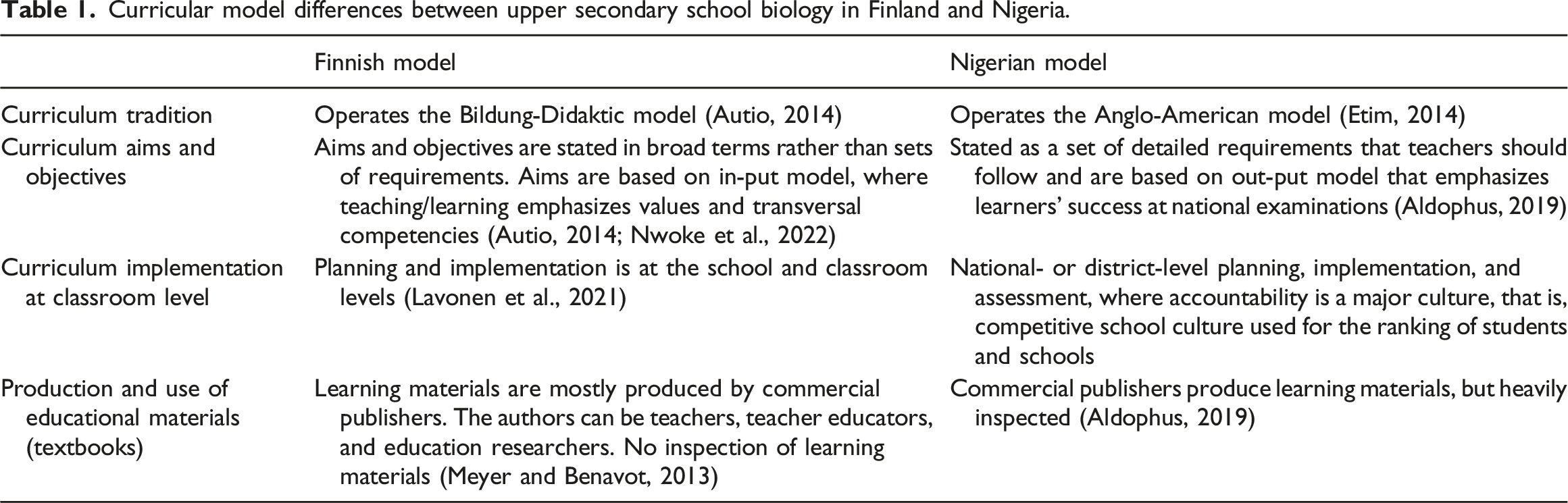
Curricular model differences between upper secondary school biology in Finland and Nigeria.
In an earlier comparative study, the Finnish (FNBE, 2003) and Nigerian biology curricula (NERDC, 2008) were compared (Nwoke et al., 2022). In this study, the textbooks associated with these curricula were compared. Therefore, to evaluate biology textbooks and their representations of SL themes and SI-levels in Finland and Nigeria, the following research questions were addressed:
Research method
Two biology textbooks for upper-secondary school were used as source materials for the data analysis reported in this study: a Finnish textbook (Happonen et al., 2004), translated by a research assistant into English (hereinafter called BookF). In Finland, the book Bios 2 “Solu ja perinnöllisyys [Cell and heredity]” was published by the publishing house WSOY, Helsinki. It has 141 pages, but 73 pages devoted to cell, 10 chapters, 33 subchapters, 176 pictures/drawings, and 58 inquiry tasks. Together there were five biology courses in Finnish upper secondary school in the beginning of the 20th century (FNBE, 2003). The textbook was used as learning material on the second biology course. In Nigeria, the essential biology for senior secondary schools (Michael, 2005) was published by the publishing house Tonad, Lagos. It has 545 pages, but 69 pages were assigned to cell, 43 chapters, 33 subchapters on cell, 123 pictures/drawings, and 13 explained experiments rather than inquiry tasks. The book is planned for 3 years course.
Both books were purposefully selected for this study based on the following criteria: (a) they were widely used in schools; (b) they were based on the respective national core curricula; (c) the author(s) of the books are Finnish and Nigerian, respectively, and neither book has been translated from another language; (d) the textbook had been in use for up to 10 years. The research focused on analyzing a section, “cell” of grade level (K-10) biology textbooks. The K-10 is the first grade level in the high school and is the beginning point for students when they enter the high school (upper-secondary school), from where they transition to the next grade level (K-11) and finally grade level K-12 which is the last level before graduation. The researchers recognized “cell” to be a similar topic for both countries, irrespective of whether it is in a book series as in Finland or in a book covering three grade levels (k10-12) as in Nigeria.
Conceptual framework
Aspects of the PISA framework for scientific literacy analysis used in the study.
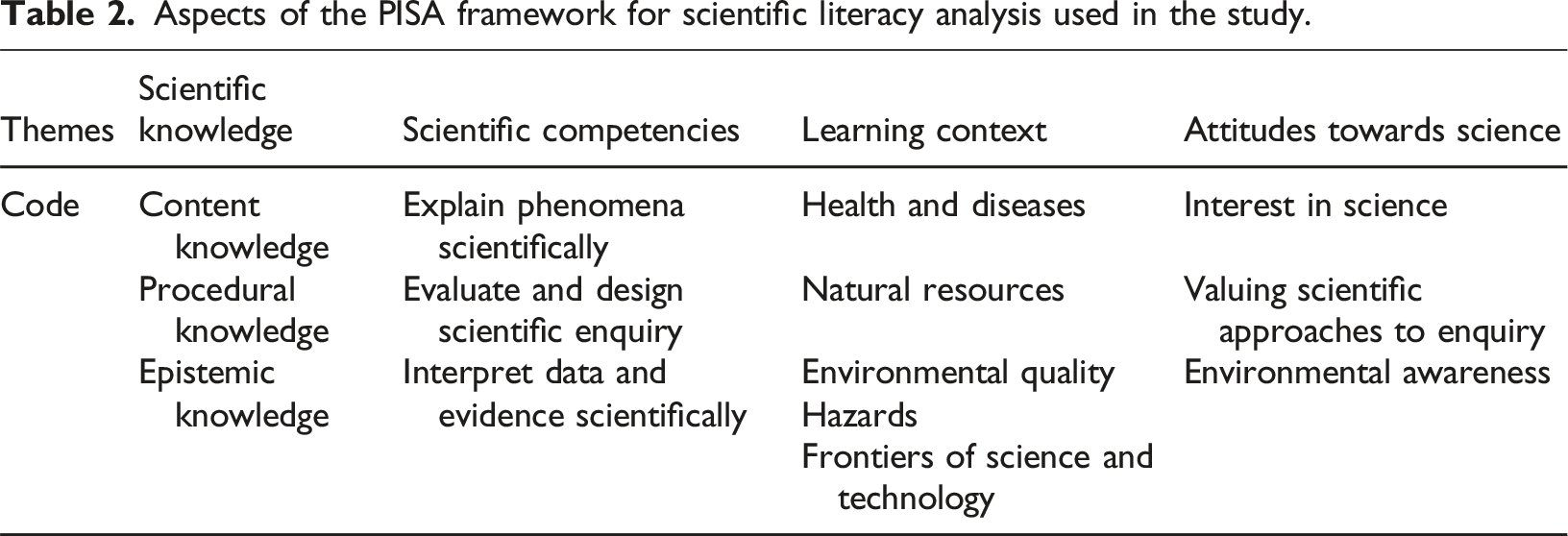
PISA is a widely used international SL model based on the expertise of science educators and researchers, which has enabled the comparison of two very different national education systems (Nwoke et al., 2022; Sahlberg, 2011; Sothayapetch et al., 2013; Wang et al., 2019). Below, therefore, we describe the functional roles of SL components as contained in the PISA framework.
Scientific knowledge or concepts constitute the links that foster the understanding of related phenomena. The concepts used in the tasks relate to physics, chemistry, the biological sciences, and the earth and space sciences, but they are applied to the content of the phenomena and not simply recalled.
Procedural knowledge is referring to how to do science, and this involved raising awareness of the methods used by scientists to establish what is known and of the procedures that technologist and engineers use to design machines and tools. Epistemic knowledge is defined as “knowledge of the constructs and defining features essential to the process of knowledge building in science” and includes justifying the knowledge produced by science and its role in contributing to how “we know what we know.”
Scientific processes (scientific inquiry) reflect the ability to acquire, interpret, and act upon evidence. Three such processes present in PISA are related to (i) describing, explaining, and predicting scientific phenomena, (ii) evaluating and identifying scientific issues, such as asking questions, planning and conducting investigations, and understanding scientific investigation, and (iii) interpreting data and evidence scientifically as well as drawing evidence-based conclusions. However, there was a second round of analysis on the scientific processes—inquiry tasks and experiments to determine how inquiry levels were emphasized in the books.
Attitudes are a key component of an individual’s scientific competence and include values, motivational orientations, interest in science, and a sense of self-efficacy. Whereas contexts refers to real-life issues that include but are not limited to health and diseases, natural resources, environmental quality, hazards, and frontiers of science and technology (OECD, 2017). It has been argued that contextualizing science makes it meaningful to citizens and motivates them to engage in science-related discussions (Okafor, 2021).
Procedure for the data analysis
Within a modified PISA 2015 Framework for scientific literacy, this study examines how SL themes and SI-levels are presented in content related to cell biology in textbooks for upper-secondary school based on the biology curriculum used in Finland (Finnish National Board of Education [FNBE], 2003) and Nigeria (Nigerian Educational Research and Development Council [NERDC], 2008).
Examples of coding on SL themes in biology textbooks.
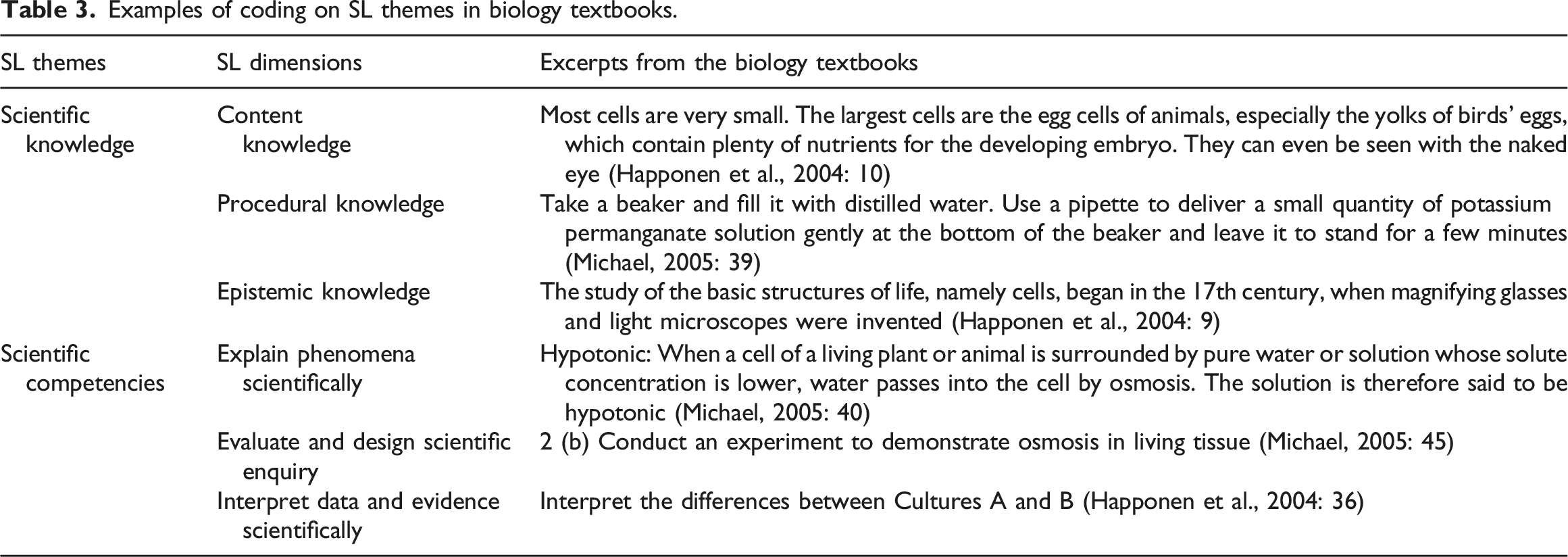
Altogether, we identified 51 dimensions pertaining to a discussion about cells. The units of analysis included all chapters focusing on cells. Other units of analysis included captioned diagrams, photos, pictures, tables, graphs and charts, inquiry activities, and guiding questions. This process was facilitated by content analysis, which Krippendorff (2004) describes as a systematic replicable technique for compressing many words of text into fewer categories based on explicit rules of coding. We employed the ideas of deductive content analysis (Elo and Kyngäs, 2008), where the textbooks texts, pictures/photos, diagrams, and tables were analyzed in detail using sentence by sentence or phrase by phrase step, broken into smaller units to allow for thorough and effective analysis, which is a common procedure in the analysis of texts, interviews, and other similar sources in educational sciences (e.g., Szabó et al., 2023).
The following steps were followed: (a) the first author familiar with the Nigerian context identified and defined the main components and subcomponents based on the PISA 2015 scientific literacy framework following a literature review, but the second and third authors who are experts in science education and familiar with Finnish context recommended some changes; (b) after the changes, the coding procedure was made, which clearly defined the codes and coding rules (Table 2 and Appendix I); (c) a pilot test was carried out by the three researchers using a little portion of the document materials, which served as a formative check of reliability; (d) then the components and coding procedure were revised after discussions among the researchers; (e) finally, the texts, pictures, and tables were analyzed.
To ensure inter-coder reliability, percentage agreement and Cohen’s kappa values were calculated for the analyzed textbooks with respect to the four SL themes. Inter-rater agreement for BookF was 96%, with a corresponding Cohen’s kappa of 0.96, and for BookN it was 76%, with a corresponding Cohen’s kappa of 0.68. Cohen’s kappa values between 0.61 and 0.80 indicate substantial or good agreement, and values between 0.81 and 1.00 indicate very good to perfect agreement. The inter-coder agreement and Cohen’s kappa values in the two textbooks indicate at least a good level of reliability. Equally, the steps above helped in confirming the results of the study and prevented it from bias. Moreover, we calculated an inter-rater agreement (reliability), which was 86%.
In the second round of the analysis a similar approach was used, but we adopted a framework revised by Bell et al. (2005) that was first described by Schwab (1962) which focused on four different levels of inquiry (Appendix II). Finally, the cumulative frequency count for each textbook was derived by counting the frequencies of each SL dimension and SI-levels to obtain the number of occurrences for each of them.
Research findings
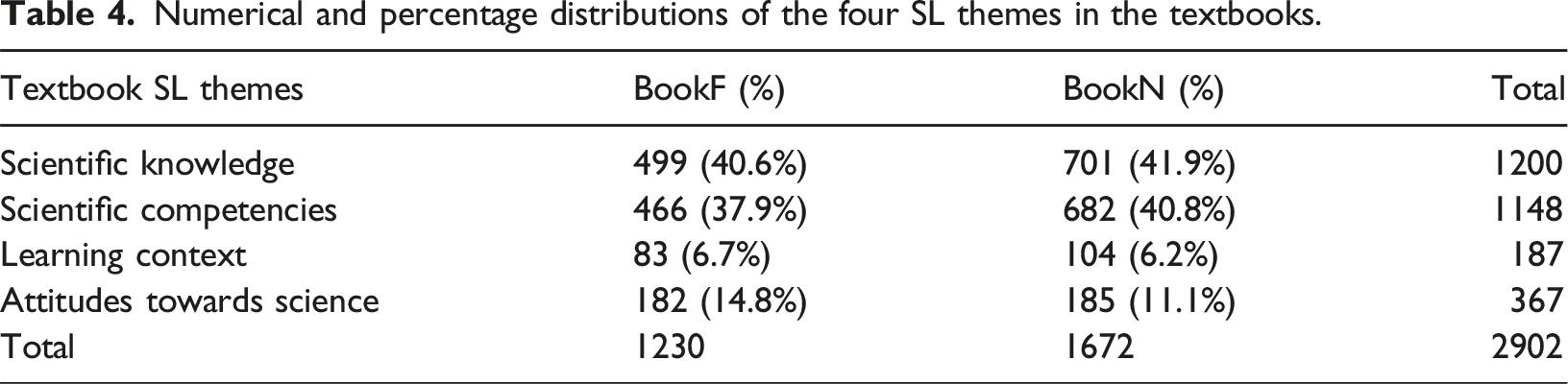
Numerical and percentage distributions of the four SL themes in the textbooks.
Numerical and percentage distributions of scientific knowledge dimensions in the textbooks.
Numerical and percentage distributions of scientific competencies dimensions in the textbooks.
Numerical and percentage distributions of learning-context dimensions in the textbooks.
Numerical and percentage distributions of attitude-towards-science dimensions in the textbooks.
\
Scientific literacy themes in the biology textbooks
As entities, scientific knowledge, competencies, learning contexts, and attitudes towards science (Table 4) summarize the results concerning how the textbooks presented SL themes in the framework of cell biology. With regard to the RQ1, it can be inferred from the results that BookF places greater emphasis on “Scientific knowledge” than “Scientific competencies,” followed by “Attitudes towards science” and, lastly, “Learning contexts.” These findings are in accordance with those presented by Upahi et al. (2017), who studied SL themes in Nigeria’s chemistry curriculum, and Wang et al. (2019), who studied primary science curricula in Finland and China; the SL themes of scientific knowledge and competencies were the most heavily emphasized in both studies.
When we compared the frequency distributions by means of a Chi-square test, a statistically significant difference between the two textbooks emerged (χ2 [3, N = 2902] = 9.9, ρ < .05). There is greater emphasis on “Scientific knowledge” and “Scientific competencies” in BookN than in BookF. On the other hand, both books emphasize learning contexts almost equally. However, BookF focuses more strongly on “Attitudes towards science” than BookN. Consequently, none of the SL themes analyzed were represented in a balanced manner.
Dimensions of the scientific literacy themes
Scientific knowledge
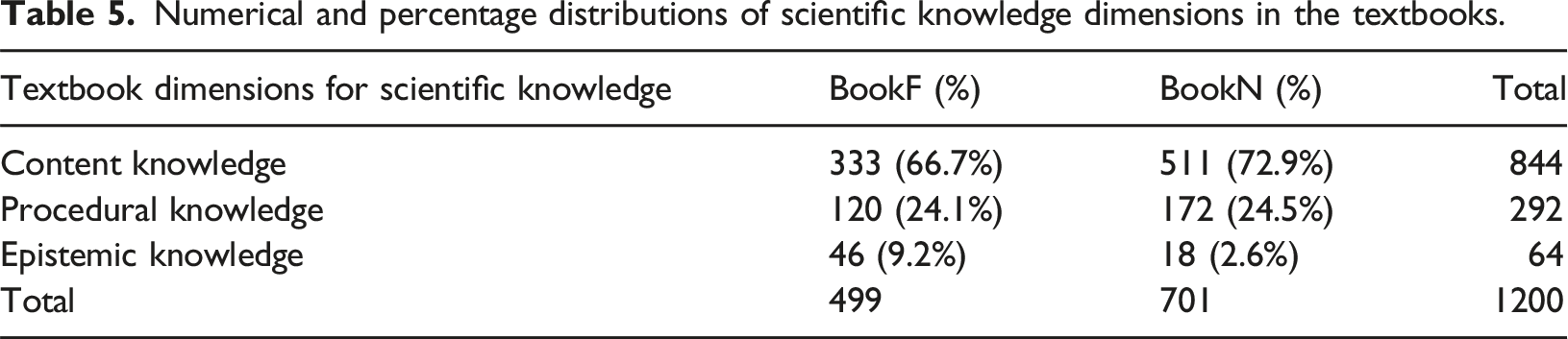
When we examined the three SL knowledge dimensions further to find the balance among them (Table 5), we found a high representation of Content knowledge in both BookF and BookN, followed by Procedural knowledge and then Epistemic knowledge. However, the results revealed a statistically significant difference between the two textbooks (χ2 [2, N = 1200] = 25.8, ρ < .05), showing a lack of balance in terms of the extent to which they focus on a particular type of SL knowledge.
In both textbooks, scientific knowledge mostly concerns the structure and function of the cell. Similarly, procedural knowledge concerns the main research practices in biology, that is, how to make observations using a microscope, how to answer data-based questions, and how to carry out small-scale biological enquiries and interpret the experimental data at the end of each chapter. Epistemic knowledge referring on the Nature of Science, that can help students to understand the role of biological research as scientific endeavour, received little attention.
Scientific competencies
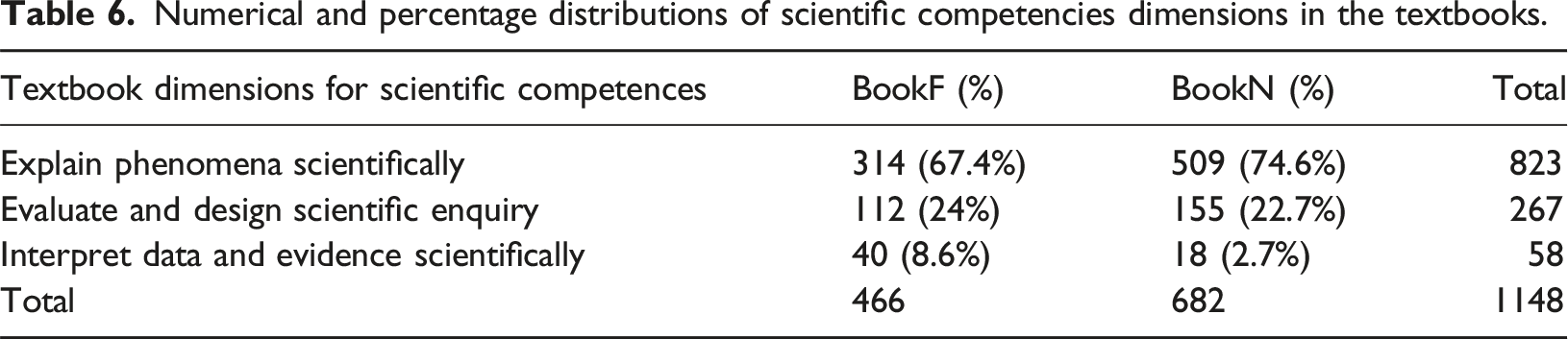
Table 6 compares the extent to which scientific competencies are discussed in the textbooks. Both books show a similar trend: the most heavily emphasized competence dimension is “Explain phenomena scientifically,” followed by “Evaluate and design scientific enquiry” and “Interpreting data and evidence scientifically.”
The Chi-square calculation revealed a statistically significant difference in scientific competencies between BookF and BookN (χ2 [2, N = 1148] = 21.6, ρ < .05), indicating a difference in emphasis on the competencies dimensions between the textbooks. In many cases, units coded as enhancing student's competence in explaining phenomena scientifically are linked with units coded as content knowledge. Competence in evaluating and designing scientific inquiry appeared in combination with procedural knowledge, whereas competence in interpreting data and evidence scientifically tended to link with units related to procedural knowledge in tasks requiring students to conduct their own small-scale experiments or interpret a given dataset presented in graphs or photos.
Learning context
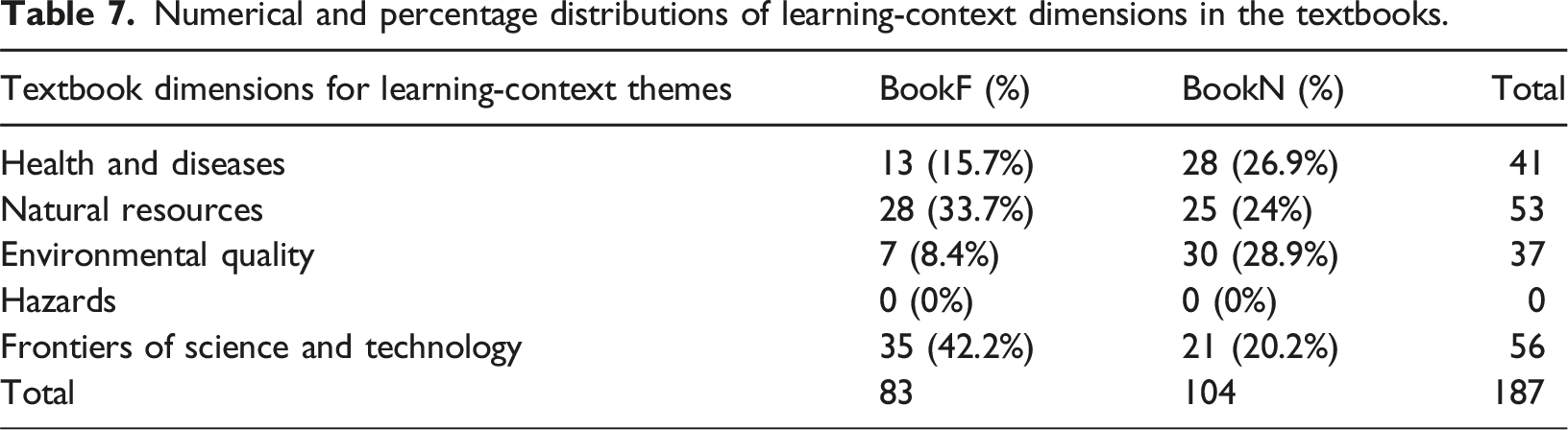
The results of the analysis (Table 7) of the distribution of the learning-context dimensions showed a similar orientation in both textbooks. Both fail to emphasize the “Hazards” dimension, for example, which resulted in its elimination from the statistical test due to its zero value. BookF contains fewer statements falling within the dimensions “Health and diseases” and “Environmental quality” than BookN but places greater emphasis on “Natural resources” and “Frontiers of science and technology,” again yielding statistically significant differences between the two books (χ2 [3, N = 187] = 21.4, ρ < .05).
Attitudes towards science
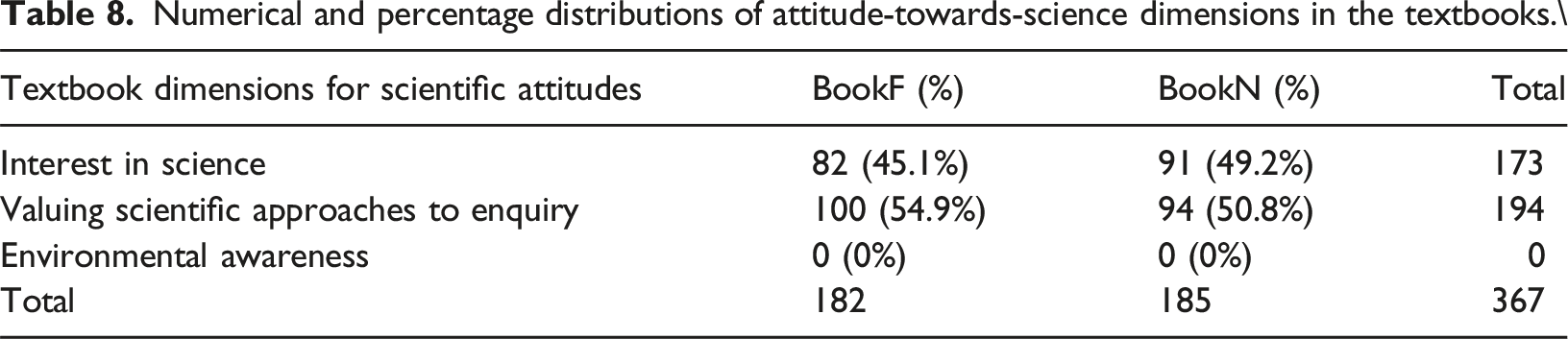
It can be inferred from the general results (Table 4) that BookF and BookN place almost equal emphasis on attitudes towards science theme. However, according to the Chi-square test (Table 8), BookN contains more statements pertaining to the attitude dimension “Interest in science.” On the other hand, BookF has a higher percentage of texts focusing on “Valuing scientific approaches to enquiry” except for “Environmental awareness,” for which neither of the textbooks show any concern: as such this was excluded from the statistical test, and the overall result was statistically significant (χ2 [1, N = 367] = 0.6, ρ < .05). Due to the small test quantity, the difference between the two books is very low and no clear conclusion established.
Scientific inquiry levels
Numerical and percentage distributions of inquiry levels in biology textbooks.
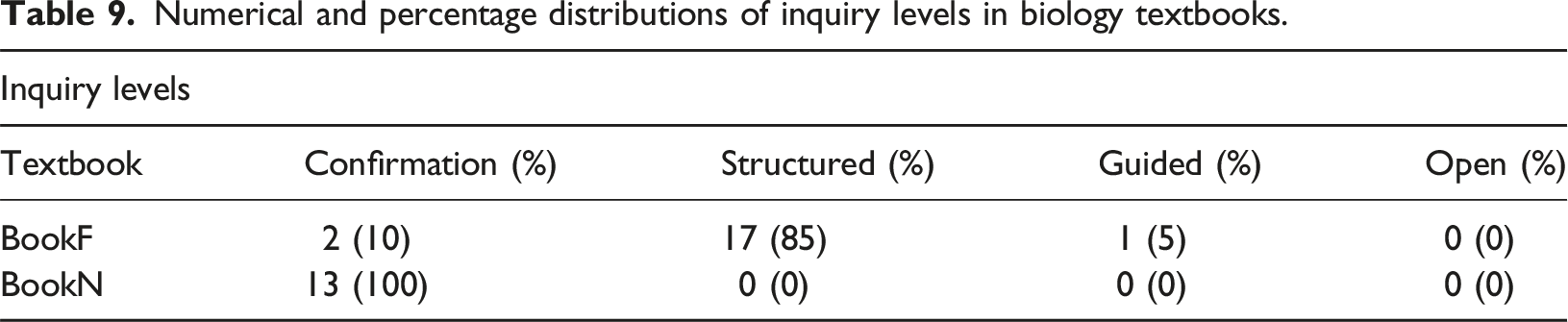
Also, the styles of presentation of the inquiry levels were examined: inquiry tasks, explained experiments, and data-based questions. Inquiry tasks present a challenging situation where students are actively engaged in the inquiry process. The explained experiments style made students passive such that memorization was encouraged. The data-based question is a situation where data is presented in a table or graph and students apply critical thinking to interpret, explain, or transform the data as evidence to explain a phenomenon.
However, the revision questions in BookN were based on content knowledge using verbs such as define, describe, explain, what, list, and state.
Discussion
The role of curriculum materials in science education is not solely to produce more scientists and technologists, but it is also to fulfill social goals such as supplying scientifically qualified workforce. SL is important for everybody, both for those that have passed through the school system and those still in school. Hence, the study of SL representations in various educational systems is essential.
SL themes in the Finnish and Nigerian textbooks
As our results show, both BookF and BookN emphasize the four PISA SL themes in similar ways in relation to cell biology in upper-secondary school. Predominant themes in both textbooks are scientific knowledge and competencies, followed by attitudes towards science and, lastly, the learning context. The major difference between the two books lies in the degree of focus on SL themes. However, a higher percentage of texts in the BookN relate to scientific knowledge and competencies.
According to the study of Zetterqvist and Bach (2023), the acquisition of procedural and epistemic knowledge and competencies are related to evaluating and designing scientific inquiry, or interpreting data and evidence scientifically. Yet, these same SL themes were the least considered dimensions in both textbooks. The result suggests that stakeholders in science education should more carefully consider including these SL themes in biology textbooks to improve their quality. Also, our findings suggest that textbooks should distinguish more explicitly between the different dimensions of scientific knowledge. This is important because as Lavonen (2021) found for physics textbooks, also the representations of concepts in biology textbooks may affect both teaching and learning and evoke misconceptions.
SL dimensions: The learning context and attitudes towards science
With regard to the learning context, the results show that both textbooks represent the SL themes in diverse ways, each one de-emphasizing the hazards dimension. Frontiers of science and technology as a dimension is best represented in BookF, followed by natural resources, whereas environmental quality is not well represented. On the other hand, BookN emphasizes environmental quality, followed by health and diseases, giving less attention to frontiers of science and technology.
Overall, the results revealed that the learning context is the least-represented dimension in both textbooks—a finding that questions the benefits of contextual science education emphasized by some scholars (e.g., Bulte et al., 2007; Okafor, 2021). Faced with science textbooks that do not adequately introduce concepts in a familiar context, learners tend to lose interest in science and may resort to alternative explanations, which could be considered a missed opportunity to build positive attitudes among learners (Kang et al., 2021). However, BookF places more emphasis on the learning context. This corroborates other research findings on various contexts of teaching and learning (Lavonen et al., 2021; Lavonen and Laaksonen, 2009). Hence, contextualized science education, where the content consists of everyday events, achieves better learning results, improves students’ motivation to learn, and increases their interest in science (Bennett and Lubben, 2006; Gilbert, 2006).
SL dimensions: A lack of balance in the dimension of scientific competencies and inquiry levels
The results of the analysis also showed a lack of balance in the textbooks with respect to scientific competencies, which is consistent with previous findings on school science textbooks in different countries (Abd-El-Khalick et al., 2008; Chiappetta and Fillman, 2007; Irez, 2009; Udeani, 2013; Upahi et al., 2017; Vesterinen et al., 2013). Upahi et al., for example, based their investigations on the analytical method focusing on the four scientific-literacy themes developed by Chiappetta et al. (1991b) and found that scientific knowledge predominated in school science textbooks. Others have identified a similar trend in curriculum studies (e.g., Boujaoude, 2002; Nwoke et al., 2022).
Nevertheless, BookN places more emphasis than BookF on explaining phenomena scientifically, followed by evaluating and designing scientific inquiry, whereas BookF gives a little more attention to the scientific interpretation of data and evidence than BookN. However, both books fail to emphasize all the dimensions of scientific competencies; this suggests that students in the two education systems may be deficient in certain aspects of literacy in the field of biology (Uno and Bybee, 1994). Equally, the lowest levels of inquiry (confirmation and structured) dominated the textbooks, while the other levels received little or no attention, and may not support the acquisition and transfer of concepts, which support the finding of Kim and Liu (2012).
Hence, analyzing textbooks as curriculum materials can reveal some characteristics that can improve learning. For example, well-designed textbooks present different inquiry strategies that motivate students’ to learn, and learning through inquiry has been shown to have a positive effect on students’ achievements (Dunne et al., 2013). Therefore, high-quality textbooks support inquiry teaching by offering teachers easily accessible suggestions for practical and inquiry activities in accordance with the curriculum to be implemented in science lessons, to enhance learners understanding (Isaksen et al., 2024). Also, structured content presentation in textbooks can reduce cognitive load and improve learning outcomes by helping students make meaningful connections between concepts (Sweller et al., 2011).
Consequently, our study is essential for school administrators, for example, policymakers use textbook analysis to inform decisions related to curriculum development, textbook selection, and education policy. Comparative analysis can guide the creation of policies that enhance the overall quality of education. Based on the outcomes of this study, educators can emphasize more IBSE focused on contexts that students’ are familiar with, which is capable of increasing their engagement with science and building interest with the subject. Therefore, comparative school textbook analysis is essential for promoting educational excellence, improving educational materials, ensuring inclusivity, and supporting effective teaching and learning practices.
The link between scientific inquiry and SL
Challenges of the 21st century place heavy demands on students such that they must have extensive scientific knowledge and inquiry skills to be successful. Accordingly, students must possess several skills like critical thinking, collaboration, communication, and creativity, for them to be ready and able to keep up with the demands of the society. However, to achieve this, curricular materials ought to adequately represent both scientific knowledge and practices used by scientists to create and transform knowledge needed to deal with every aspect of global life in the 21st century.
According to Isaksen et al. (2024), the training of scientifically literate persons can be done through inquiry-based textbooks that provide guidelines for what information is processed by students and how they work with it. For example, research has reported that structured inquiry improves students’ conceptual knowledge (Kapon, 2016), while guided inquiry learning model can improve students’ inquiry and science literacy skills by equipping them with experimental abilities (e.g., Banchi and Bell, 2008). Guided inquiry can also help students to carry out extensive independent experiments to observe, explore, ask questions, find answers, and connect one discovery to another (Banchi and Bell, 2008).
However, the results of our study show that BookF and BookN differ in how they present science-processing skills or inquiry within the competencies theme in cell biology. BookF encourages the adoption of structured experimentation strategies with a very small percentage of guided inquiry, whereas BookN proposes confirmation inquiry experiments to verify existing knowledge. This supports findings claiming that majority of tasks in science textbooks invite students to participate in low levels of inquiry (Sideri and Skoumios, 2021; Yang et al., 2019).
Numerical and percentage distributions of styles of texts presentation in biology textbooks.
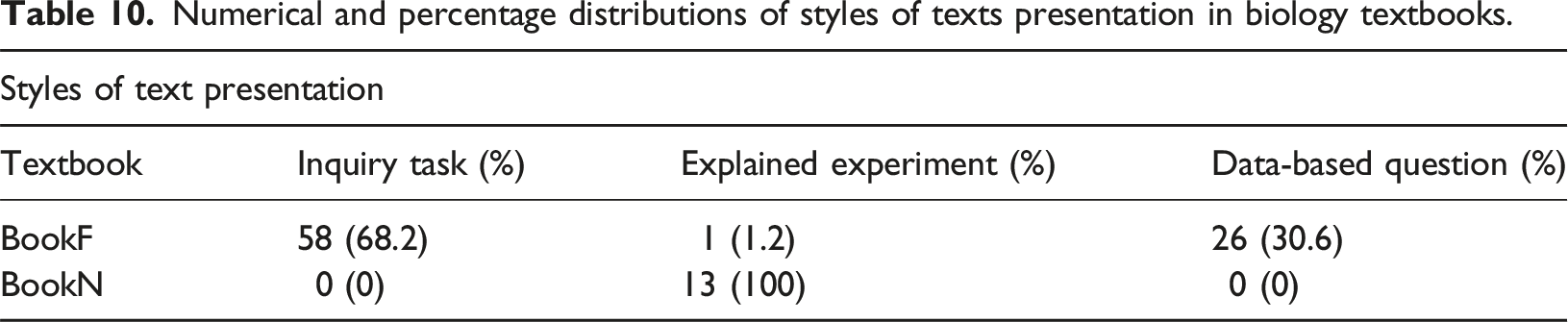
Since both books did not show any balance among the inquiry levels, we identified the need to enrich biology textbooks with higher levels of inquiry—guided and open. Hence, the incorporation of learner-centered inquiry activities, where teachers can employ the guided discovery method, is essential. For example, if inquiry tasks are presented in a textbook so as to involve learners in all steps of the process, learners can become more active participants engaged in the process of thinking out the solution to any question and may be less inclined on the memorization of scientific facts.
Impacts on learning outcomes
Based on the results of this study, the differences between the two textbooks may be partly attributed to the curricular models in Table 1 and cultural differences. Although, we have not researched the correlations existing between the characteristics of textbooks and learning outcomes; nevertheless, we are able to discuss about the characteristics of a textbook that can influence the learning of biological concepts.
According to the literature, the following characteristics of a textbook have the potentials to influence students learning: organization of content, especially concepts; content that triggers interest; visual elements; and interactive elements. Sweller et al. (2011) and Mayer (2009) summarize how organization of content, especially concepts, influences learning based on several learning material studies. They emphasize that the influence of well-organized content, especially how key concepts are introduced in a textbook, helps students connect new concepts to previous ones and supports the meaning-making process.
Research on engaging content in textbooks has proved that interesting examples or contexts, stories, and real-life applications can make learning more engaging and relatable for students (Alexander and Jetton, 2000; Guthrie et al., 2004). Visual elements, such as diagrams, charts, and images, could help students to construct meaning to biology concepts (Mayer, 2009; Schnotz and Bannert, 2003). Visual aids can break down information into more digestible parts. Interactive elements, like questions and exercises, could encourage active learning. For example, questions can guide students to recall their previous experiences and conceptions.
Conclusion and educational implications
As emphasized in the introductory section, in addition to guidelines in national-level curriculum, teachers need an intended curriculum for recognizing and implementing curricula core aims. A textbook has been recognized as an important starting point for the intended curriculum (Halawa et al., 2023). Therefore, our findings have some direct implications for science teaching and learning. First, teachers can introduce inquiry-based learning approach through textbook examples and assignments to help students to utilize scientific reasoning and argumentative skills.
Inquiry-based science in the textbooks can help learners act autonomously and improve their abilities to think for themselves and to take responsibility for their own learning and actions. Such teaching approach is important, given that current educational approach focuses on involving students in finding solutions to real-life problems, by allowing them to ask questions or thoughtfully construct answers, work on them, design and conduct investigations, collect, analyze, and interpret data, draw conclusions, and share their findings (Dogan, 2021; Dunne et al., 2013; Okafor, 2021). Inquiry-based approach ensures that science learning does not consist only of acquiring scientific knowledge but also facilitate students’ competency in scientific reasoning, critical thinking, making discoveries, and drawing conclusions from experiments (She et al., 2019).
Secondly, in promoting students’ scientific competencies, textbooks should recognize how scientific knowledge is related to competencies: content knowledge mainly supports one to explain phenomena scientifically, while procedural and epistemic knowledge aids in designing scientific inquiry and interpreting data, supporting the transfer of knowledge and skill to a new context (Bulte et al., 2007; Lau and Lam, 2017). Also, our study aligns with global movement of competency approach advocated by organizations like the OECD through PISA evaluation programs. Hence, the PISA framework based on SL dimensions used in this study could be utilized to analyze the quality of secondary school science textbooks elsewhere.
Finally, the educational and societal challenges, such as the availability of textbooks and other teaching materials, unqualified teachers, and students who are left outside education in sub-Saharan countries (Read, 2015; UNESCO, 2014), are serious societal issues which also need to be considered in research and development of science education. We recommend that the generalization of the results of this study must be done with caution because they are based on a relatively small sample size of two biology textbooks at the upper-secondary school level. Another limitation might be restricting the analysis to textbook edition of the early year 2000s and limiting the topic to contents of cell, while the biology curriculum includes structures and functions on other levels, biodiversity, evolution, ecology, and sustainability issues (FBE, 2003; NERDC, 2008). Based on the outcomes and limitations of this study, we recommend a complementary study to analyze the later editions of biology textbooks in both countries, particularly on the attitudes towards science to see how the curriculum thinking on SL has changed.
Moreover, classroom teaching and learning of biology (implemented curriculum) should be investigated to give a better understanding of educational approaches of the two nations. We hope that, in the light of the findings of this study, the imbalanced coverage of SL themes and inquiry levels in biology textbooks used in the past will inform curriculum planners, authors of science textbooks, administrators in science education, and publishers about the state of biology textbooks in relation to SL themes and SI-levels to improve subsequent editions.
Footnotes
Acknowledgments
We express our thanks to the publishers of the biology textbooks used in this study for making them available to us and the Finnish authors for allowing it to be translated to English. Equally, we thank Suvi Martilla (MSc) for translatting a portion of the Finnish biology textbook to English. Also Jari Lavonen wish to acknowledge the support received from the University of Johannesburg, South Africa.
Author contributions
Emeka Nwoke contributed on the conception and design of the study, data collection and analysis, interpretation, drafting and revising the article. Anna Uitto and Jari Lavonen contributed on the supervision of theoretical and methodological issues and revising the article. All authors approved the final version and agreed to be accountable for the work.
Funding
The author(s) received no financial support for the research, authorship, and/or publication of this article.
Declaration of conflicting interests
The author(s) declared no potential conflicts of interest with respect to the research, authorship, and/or publication of this article.
Data Availability Statement
Data generated or analyzed during this study are available from the authors on request.
Author biographies
 .
.
Appendix I
The following table describes the dimensions used for coding the themes of scientific literacy (SL) in this study. Some of the descriptors were used by Chiappetta and Fillman (2007) to analyze themes of scientific literacy in biology textbooks. However, “science as a way of investigating” and “science as a way of thinking” were integrated into a single (procedural knowledge) descriptor for the purposes of this study. The authors also generated some descriptors to suit the PISA (2015) science framework operationalized in the study.
SL themes
Dimensions and codes
Sentences/phrases and words to guide the coding process
The analysis checked whether each of the dimensions in the textbook presents or does the following
Scientific knowledge constitutes the links that aid students in understanding biological phenomena
Content knowledge (K1)
• Facts, concepts, principles, and laws
• Hypotheses, theories, models, and structures
• Asks students to recall knowledge or information
• Asks students to discuss biological phenomena
• Labels diagrams and pictures
Procedural knowledge (K2)
• Questions/statements that challenge students’ manipulative skills
• Learning to use various materials
• Experiments showing inquiry as a good way to acquire new knowledge
• Learning to use tables, graphs, and charts
• Learning by making calculations
• Statements that ask students to use reason to reach an answer
• Makes students participate in a thought experiment
• Statements that ask students to obtain information from different sources, for example, the internet
• Statements/activities illustrating the empirical basis of science
• Activities that give evidence and proof of scientific investigation
• Statements/activities showing cause-and-effect relationships
• Statements and activities that present methods of science and problem solving
Epistemic knowledge (K3)
• Statements showing the role of the nature of science (e.g., tentativeness) in scientific discoveries/knowledge
• Statements showing the functions of different forms of empirical inquiry and objectivity as a good way of acquiring new knowledge
• Statements showing the role of data in justifying the many claims/reasoning in science, for example, deductive and inductive reasoning
• Statements showing the role of argumentation in scientific knowledge
• Statements showing the importance of how scientists discovered or experimented with the historical development of ideas
Science competencies are more than just knowledge or skills; they include the ability to acquire and apply biological knowledge in novel situations, interpret data, and act on evidence in a particular context
Explain phenomena scientifically (C1)
• Describe natural events, that is, offer explanatory hypotheses
• Use of appropriate biological knowledge/models to explain natural phenomena in evaluating information and solving problems
• Statements describing a simple biological process via diagrams/models and experiments
• Explain the potential implications of scientific knowledge for society
Evaluate and design scientific enquiry (C2)
• Activities encouraging hands-on exercises/asking questions
• Diagrams, pictures, and drawings/statements showing how scientists experimented in the past and propose a way to explore a given question scientifically
• Activities that encourage both individual and group discoveries
• Activities that encourage the documentation of experimental procedures and the dissemination of information
• Activities that help students engage in thought experiments and problem-solving techniques
• Plan for conducting simple biology experiments and ensuring the reliability and objectivity of data
Interpret data and evidence scientifically (C3)
• Activities that encourage students to develop the necessary skills to analyze and evaluate claims, arguments, and evidence from different sources, for example, newspapers, journals, and the internet
• Activities that encourage students to develop models to analyze and interpret data and draw appropriate scientific conclusions
• Activities that encourage students to develop the skills to appropriately interpret a graphical representation or charts/transform data from one representation to another
Contexts
Health and diseases (CT1)
• Discusses the health and diseases of animals and plants
This is the application of science knowledge and skills to address real-life problems relating to personal, local, and global issues
• Discusses issues pertinent to maintaining good health
• Discusses accidents
• Discusses nutrition and food choices
• Emphasizes disease control
• Emphasizes the social transmission of diseases
• Emphasizes safety measures
Natural resources (CT2)
• Emphasizes how to maintain ecology/the consumption of materials and energy
• Emphasizes the maintenance of human populations
• Emphasizes the security of the species
• Discusses the effects of food production, distribution, and energy supply in the ecosystem/helps students understand the ecosystem
• Emphasizes renewable and non-renewable natural systems
Environmental quality (CT3)
• Emphasizes environmentally friendly actions, such as the use and disposal of materials (human activities)
• Discusses air, water, and land pollution
• Emphasizes the effects of population distribution on the environment and species relationships
• Discusses the impact of environmental factors on the health of species
• Discusses biodiversity, variation, ecological sustainability, and pollution control
Hazards (CT4)
• Emphasizes risk assessment
• Impacts of climate change, for example, earthquakes, severe weather, and erosion
• Impacts of biological and chemical hazards on the environment
• Impacts of modern communication on the environment
Frontiers of science and technology (CT5)
• Discusses the interrelationship between science, technology, and society
• Applications of science and technology
• Discusses genetic issues and genetic modification
• The extinction of species
• Advantages and disadvantages of science and technology for society
• Ethics guiding scientists
Attitudes
Interest in science (A1)
• Statements encouraging students to show curiosity in biology/science-related issues and endeavors
This defines an individual’s values, motivational orientations, and sense of self-efficacy in studying science
• A willingness to acquire additional biological knowledge and skills using a variety of resources and methods
• Motivational statements/activities encouraging students to consider biology-related careers
• Activities that will increase students’ self-efficacy, such as frequently planning and carrying out experiments/field work
• Statements encouraging an appreciation of biology and science products
Valuing scientific approaches to science (A2)
• Emphasizes engaging in enquiry-based scientific activities (generating evidence) for explaining the natural world
• Emphasizes a scientific approach, that is, data generation (problem solving)
• Activities leading students to engage in critical thinking, that is, valuing criticism
• Seeking scientific information using various sources, for example, the internet and libraries
• The documentation and publication of scientific findings
Environmental awareness (A3)
• Statements showing the need for environmental protection/the effects of human activities on the ecosystem
• Discusses environmental-protection practices
• Discusses how climate change affects living organisms
• Emphasizes concern for the environment and sustainable living
• Promotes environmentally sustainable behaviors
• Awareness of environmental issues
Appendix II
Note. The * marks what the level of openness provided by the texts of the books and BB means the name of the biology book.
Levels of inquiry
Question/biological problem to solve
Method
Solution
Code
Confirmation—Students confirm a principle through an activity in which the results are known in advance
*BB
*BB
*BB
C
Structured—Students investigate a textual question/concept through a prescribed procedure
*BB
*BB
S
Guided—Students investigate a textual question/concept using student-designed/selected procedures
*BB
G
Open—Students investigate topic-related questions/concepts that are student formulated through student-designed/selected procedures
O