



Abstract
This study examines variations in student perceptions of teaching behaviour in secondary education across three countries: the Netherlands, Spain, and South Korea. A multilevel framework (students nested within classes, and classes within schools) is used to investigate the role of student- (student gender, age, impression management) and classroom-level factors (class size) in explaining variations in perceptions of teaching behaviour. Results show that gender, age, and class size have different relationships with perceived teaching behaviour in three countries. Impression management is positively related to perceived teaching behaviour in three countries, and its role is most salient in South Korea. The findings significantly contribute to comparative education by elucidating the complex dynamics between student- and classroom-level factors and perceived teaching behaviour in three different national contexts.
Keywords
Introduction
Student perceptions are important for measuring teaching behaviours (Den Brok et al., 2006a) and for predicting students’ learning outcomes (Maulana et al., 2015a; Maulana and Helms-Lorenz, 2016). Student perceptions provide rich information about how students experience their teachers’ teaching behaviour. If student perceptions are fed back to teachers, teachers can obtain insight into their behaviours from their students’ points of view. This feedback can be used to improve professional competencies, teacher-student relationships, and the quality of teaching (Gaertner, 2014).
Understanding student perceptions of teaching behaviour remains a challenge as they vary at multiple levels. Student perceptions of the same teacher’s teaching behaviour vary within a class (Maulana et al., 2015b). This suggests that there may be systematic individual factors affecting student perceptions, besides measurement errors. Student perceptions also vary between classes, schools, and regions not captured in aggregated national figures and cross-national comparative research. Also, student perceptions of teaching behaviour vary across countries (André et al., 2020), suggesting that they may be influenced by cultural orientations (Gencoglu et al., 2021). Research shows that student perceptions are influenced by cultural background (Den Brok et al., 2003). Countrywide values may influence how students express their attitudes toward learning and teaching as there is a relationship between values, learning style, and learning outcomes (Chuang, 2012; Donohue, 2020). This leads to the assumption that cultural settings can explain some disparities in student perceptions of teaching behaviour across countries (den Brok et al., 2003; Gencoglu et al., 2021; Liu and Meng, 2009). These variations in student perceptions can be understood through Bronfenbrenner’s ecological systems theory (1979, 2000), which posits that human development is shaped by multiple interacting environmental systems. Student perceptions of teaching behaviour are influenced not only by individual characteristics (microsystem) but also by interactions within the classroom (mesosystem), school-wide norms and policies (exosystem), and broader sociocultural factors such as national education systems and cultural values (macrosystem). Accordingly, student, classroom, school, and sociocultural context characteristics are assumed to link to student perceptions of teaching behaviour. To understand what is measured in student perception surveys, examining the relationship between these characteristics and student perceptions of teaching behaviour is crucial.
Additionally, the student-, classroom-, school-, and sociocultural context-level characteristics could have different ways and levels of influence on student perceptions of teaching behaviour across countries. While single-country studies have provided valuable insights into student perceptions of teaching behaviour, they often fall short in capturing the rich diversity and complexities inherent in a cross-national context. This study, therefore, by using cross-national comparisons, explores student perceptions of teaching behaviour in three distinct educational and cultural systems: the Netherlands, Spain, and South Korea. Using a multilevel framework (student-, class/teacher-, and school-levels), we explore the variations in student perceptions of teaching behaviour. We investigate the relationships between four factors and student perceptions of teaching behaviour: student gender, age, impression management (as a dimension of socially desirable responding), and class size. This study helps better understand how the relationships between student- and classroom-level factors and perceived teaching behaviour differ across the Netherlands, Spain, and South Korea.
Conceptualizing teaching behaviour
Teaching behaviour is a multidimensional and complex concept (Shuell, 1996). It has received great attention internationally and has been addressed in different ways from different theoretical angles. Various constructs of teaching behaviour have been developed, such as effective teaching behaviours, teaching quality, and interpersonal teaching behaviours. These constructs are based on different frameworks and theoretical models, varying in their aims, the types of instructional practice they cover, and the teaching behaviour domains. Teaching quality is a broader concept, encompassing both processes and outcomes that occur before, during, and after teaching (Maruli, 2014; Scheerens, 2016). Effective teaching behaviours emphasize specific and observable actions or practices by teachers, such as clarity of instruction or efficient classroom management, that are linked to student learning outcomes (Maulana and Helms-Lorenz, 2016). Despite the differences in conceptualizations, they underscore the critical role of teaching behaviour in fostering student learning and outcomes, including cognitive and non-cognitive outcomes (Muijs et al., 2014).
This study focuses on teachers’ teaching behaviours as perceived by students. The conceptualization of teaching quality used in the current study is based on teacher effectiveness (Van de Grift, 2007, 2014) and learning environments research (Fraser, 2023) strands. The teacher effectiveness research strand aims to explain why and how some teachers are more effective than others in promoting better learning outcomes for students (Opdenakker, 2020). Effective teaching behaviours are grouped in the most parsimonious way into three domains: (1) how a classroom is managed, (2) the socio-emotional support of students in the classroom, and (3) teaching that is clear and cognitively challenging (Klieme et al., 2001; Pianta and Hamre, 2009; Praetorius et al., 2018). The learning environments research strand considers teaching behaviours as a psychosocial component of the learning environment, influencing student learning and outcomes (Fraser, 2023; Maulana and Helms-Lorenz, 2016).
These two research strands provide a broad and systematic framework to study various aspects of teaching behaviours represented by teaching behaviour domains. Synthesizing research on teacher effectiveness and learning environments, Van de Grift (2007, 2014) identifies six observable effective teaching behaviour domains that influence students’ learning and outcomes. A safe and stimulating learning climate fosters an inclusive and respectful environment that enhances students’ confidence and engagement and facilitates good teacher-student (interpersonal) relationships. Efficient classroom management ensures smooth lesson transitions, effective time use, and minimal disruptions. Clarity of instruction emphasizes structured lessons, clear explanations, and regular checks for understanding. Activating teaching involves engaging students through interactive and active learning strategies, maximizing their involvement and learning. Differentiation addresses diverse student needs by tailoring methods and resources to optimize individual learning. Finally, teaching learning strategies aim to equip students with metacognitive strategies like scaffolding to enhance their academic performance and independence in their learning process (see Maulana et al., 2015 for a more detailed review).
These domains appear in various research traditions on teaching quality, including that of teacher effectiveness (Scheerens and Bosker, 1997), learning environments (Maulana and Helms-Lorenz, 2016) and teacher support (Klem and Connell, 2004). They were conceptualized within the framework of International Comparative Analysis of Learning and Teaching (ICALT; Van de Grift, 2007, 2014), and operationalized into the ICALT observation instrument (Van de Grift, 2007), which later was used as the base to create a student perception in teaching behaviour instrument (Maulana and Helms-Lorenz, 2016), and cross-validated across various education systems (André et al., 2020; van de Grift, 2007; van der Lans et al., 2021). The ICALT framework is well suited for this study due to its more comprehensive coverage of teaching behaviour domains frequently included in studying teaching quality across various research traditions, not limited to school subject-specific behaviours and its proven validity across diverse cultural contexts.
Variables affecting differences in student perceptions of teaching behaviour
Student perceptions of teaching behaviours can be affected by a variety of student-, classroom-, school-, and sociocultural-level characteristics (Bijlsma, 2022; Rollett et al., 2021), which aligns with Bronfenbrenner’s ecological systems theory (1979, 2000). To provide a few examples, high-performing students rate their teachers’ teaching behaviour significantly higher and perceive fewer classroom management-related problems compared to low- and average-performing students (Atlay et al., 2019a; Fauth et al., 2021). Students from socio-economically or educationally more privileged families tend to be more critical of teaching behaviours (Atlay et al., 2019b). Students who feel more affiliated with their teachers tend to evaluate these teachers’ teaching quality in a more positive manner (Fauth et al., 2014). Additionally, student perceptions of teaching behaviours may vary by gender and age (Göllner et al., 2021; Kuhfeld, 2017). Collectively, these findings suggest that student perceptions are shaped by a complex interplay of individual, classroom, and contextual factors.
Building on these findings, this study focuses on both student- and classroom-level characteristics that are known to be related to student perceptions of teaching behaviours. Additionally, we examine the relationships between student- and classroom-level characteristics and perceived teaching behaviours across the three countries. By exploring these relationships in a cross-national context, this study aims to provide a better understanding of whether and how the role of these factors varies in relation to student perceptions across the three countries.
At the student level, we specifically examine three student-level variables: gender, age and positive impression management. First, gender socialization processes, which are often influenced culturally, may lead to differences in how male and female students perceive their teachers’ teaching behaviours (Kogan et al., 2010; Weisgram et al., 2010). In the context of this cross-national study, examining the role of gender for explaining variation in perceived teaching behaviour allows us to explore whether and how the relationship between gender and perceptions of teaching behaviour varies across countries. Although gender effects tend to appear small statistically, they may have meaningful practical implications for tailoring teaching behaviours to better meet the needs of diverse student groups and ultimately create a more inclusive and responsive learning environment (Den Brok et al., 2006b; Kuhfeld, 2017).
Second, we examine student age because developmental stages might play a role in shaping how students perceive and respond to teaching behaviours (Gollner et al., 2021). As students mature, their cognitive, emotional, and social development can influence their expectations of teachers and classroom interactions (Jules and Kutnick, 1997; Liu et al., 2018; Tosolt, 2010). Additionally, the literature presents mixed findings regarding the relationship between student age and perceptions of teaching behaviours, highlighting the need for further research to clarify these associations (Bijlsma et al., 2022; Levy et al., 2003).
Third, we examine the relationship between impression management (IM) and student perceptions of teaching behaviour since it can influence how they evaluate their teachers (Gencoglu et al., 2021). IM reflects students’ tendency to present themselves in a socially desirable manner (Paulhus, 1991). Studies examining students’ IM are mostly limited to higher education (e.g. Khizar et al., 2021), or investigate students’ employment of IM strategies to convey a positive image for the teacher (Forster-Heinzer et al., 2020). Students’ IM and its link with perceived teaching behaviour in secondary education have been scarcely examined across countries. By exploring this relationship cross-nationally, this study aims to investigate whether and how the relationship between IM and student perceptions of teaching behaviour varies across countries.
At the classroom-level, we focus on class size, a factor closely related to the teacher-student interaction dynamic, opportunities for group work, classroom management, and the amount of individual attention students receive (Blatchford and Russell, 2019; Den Brok et al., 2006b). Although existing literature suggests that the effect of class size in student perceptions of teaching behaviour tend to not be large, the mixed and contradictory findings highlight the need for further research (Bijlsma et al., 2022; Fisher et al., 2006; Levy et al., 2003). By including class size, this study aims to provide more insights into whether and how class size is related to student perceptions of teaching behaviours across countries.
Student-level characteristics
Previous research attributes much of the variance in student ratings of teaching behaviour to differences within classrooms than to differences between classrooms (Kunter et al., 2008; Wagner et al., 2013). This implies that students agree in their perceptions of teaching behaviour to some extent but there is also variability within each class when the same teacher is evaluated. Individual-level measurements of student perceptions of teaching behaviour may reflect not only the perceived teaching behaviour but also students’ background characteristics.
Research on gender-related perceptions of teachers’ interpersonal behaviour revealed that teachers are viewed significantly differently by girls and boys (Den Brok et al., 2005, 2006b; Fisher et al., 2006; Levy et al., 2003). For example, boys in Australia perceived their secondary education science teachers as less dominant and less cooperative than girls (Fisher et al., 2006). Similarly, in the USA, boys perceived their secondary education teachers as more uncertain, dissatisfied, admonishing, and strict, while girls viewed their teachers as more helpful/friendly, and understanding (Levy et al., 2003). Boys in the USA seem to be more critical than girls in their perceptions of teaching behaviours (Den Brok et al., 2006b; Kuhfeld, 2017). On the other hand, Bijlsma et al. (2022) found no association between gender and student perceptions of teaching behaviour in Dutch secondary education.
Furthermore, the relationship between student age and perceptions of teachers in secondary education has yielded diverse findings. Older students perceived their teachers in secondary education as more dominant and strict than their younger peers (Levy et al., 1997). A similar relationship was found in a later study among secondary education students in the USA (Levy et al., 2003). However, Levy et al. (1992) found no relationship between student age and perception of teaching quality. Similarly, a recent study in the Netherlands found no association between student age and student perceptions of teaching quality (Bijlsma et al., 2022). Overall, while some studies found a relationship between student age and student perceptions of teachers, others did not.
In addition, bias indicating systematic cross-national differences that are embedded in student characteristics can be categorized into three types (Van de Vijver and Leung, 1997, 2021): construct bias, method bias, and item bias. Construct bias arises when the construct varies or its defining behaviours differ across cultures. Method bias relates to study conduct, including sample, instrument, and response bias. Item bias occurs when item meanings differ across cultures, caused by issues like poor translation or lack of cultural applicability.
When relying on surveys, it is important to consider social desirability, which can introduce method bias by influencing self-reported outcomes (King and Bruner, 2000). Socially desirable responding (SDR) involves giving positive self-descriptions for social approval, not reflecting true selves (Crowne and Marlowe, 1960; Paulhus, 1991). Students evaluating teaching behaviour may opt for response categories that reflect agreement, disagreement, or the midpoint to avoid standing out (Gencoglu et al., 2021). For example, two students might be equally satisfied with their teachers’ classroom management skills during lessons but differ in their tendency to agree with items on a scale. As a consequence, some students systematically assign higher ratings than others, which can increase variability in teaching behaviour ratings within a class or even reduce variability if students with similar rating tendencies are grouped in the same classroom (Marder et al., 2021). Hence, SDR may represent an important source of (lack of) variability in student evaluations of teaching behaviour (Gencoglu et al., 2021). For using student ratings as a reliable and valid method of assessing teaching behaviour, it is crucial to disentangle the relationship between SDR and student perceptions of teaching behaviour.
Paulhus (1991) divides two distinct dimensions of SDR. The first dimension, impression management (IM), reflects the desire for and conscious representation of a positive public image. Being favourably viewed by others and avoiding being seen negatively are the main concerns here, such that individuals with higher scores on IM tend to be more sensitive to social influence. The second dimension, self-deceptive enhancement (SDE) reflects a favourable self-presentation, highly characterized by a focus on the self.
One factor consistently identified as being related to the SDR bias is the cultural background of respondents (Van Herk et al., 2004; Zax and Takahashi, 1967). Schwartz (2013, 2014) proposed a framework for cultural grouping based on value orientations. This grouping replaces the traditional broad cultural differentiations (e.g. West as individualistic vs East as collectivistic) by introducing a fine-grained concept of culture. Cultural value orientations provide a higher-order frame that shapes daily behaviour. Individuals develop, adopt, and/or internalize modes of thoughts, behaviours, attitudes, and personal value priorities that make them function effectively and feel at ease in societal situations. Culture can be conceptualized as an external press (i.e. a set of primes and demands) to which each individual is exposed (Schwartz, 2014).
Previous research found that IM is more related to values highlighting the importance of social harmony (i.e. conservation and self-transcendence) rather than to those characterized by a personal focus (i.e. openness to change and self-enhancement) (Danioni and Barni 2020). From a cross-national perspective, it was shown that Hong Kong respondents scored higher on IM than US participants, whereas respondents from the US scored higher on SDE and lower on IM than those from Singapore or Hong Kong (Lalwani et al., 2006). As proposed by Gencoglu et al. (2021), in certain cultures (e.g. South Korea) where the pole of hierarchy and embeddedness is emphasized, students would be more likely to engage in IM to maintain good relationships with others, compared to the opposite pole. In contrast, in certain cultures (e.g. the Netherlands and Spain) where the pole of egalitarianism is emphasized, it is less likely that students engage in IM. Given that student evaluation of teachers can be influenced by the student’s desire to be seen favourably by the teacher and peers, and the three countries examined in this study have been characterized by different value orientations, we focus on IM across three countries, as a proxy for culture at individual-level differences.
Classroom-level characteristics
As class size increases, teachers might have less time to help students on an individual basis, meaning students have to find things out more by themselves (Den Brok et al., 2006b). Previous research found that class size works through the many ongoing difficult decisions teachers have to make about managing the classroom and teaching students in groups (Blatchford and Russell, 2019). The larger the class, the less dominant the teacher is perceived by students in Australia (Fisher et al., 2006). Levy et al. (2003) revealed a negative relation between class size and student perceptions of teacher friendliness and no relation with their perceptions of teacher dominance. Bijlsma et al. (2022) similarly found that class size did not matter for the student perceptions of teaching behaviour in Dutch secondary education.
Cross-national comparability of student perceptions of teaching behaviour
Student perceptions of teaching behaviour can be highly specific to culture and context (He and Van de Vijver, 2013), making cross-national comparisons valuable for several reasons. First, similarities/differences in perceived teaching behaviours across countries could be detected and compared (Adamson, 2012). This can contribute to the increment of knowledge regarding effective teaching behaviour across national contexts from the lens of students. Additionally, because classrooms are becoming increasingly culturally diverse, teachers should better understand and cope with heterogeneity within classrooms embracing different cultural backgrounds. Also, variations in student survey responses may contain additional information beyond the ‘true’ (actual) variations in teaching behaviour. More research is required to understand what is being measured in student perception surveys before the findings can be used for school- and policy-relevant decisions.
Prior research showed that student perceptions of teaching behaviour vary across countries (André et al., 2020). Across six cultural contexts (the Netherlands, Spain, Turkey, South Africa, South Korea, and Indonesia), Dutch teachers were perceived as the second highest quality in classroom management and instruction clarity, after the South Korean teachers, while the S. Korean students perceived their teachers the most favourable in all teaching domains, except on learning climate (third highest after Turkey and the Netherlands) (André et al., 2020; Senden et al., 2023). Spanish students rated their teachers higher on safe and stimulating learning climate, efficient classroom management, and clarity of instruction, and lower on activating teaching, differentiation, and teaching learning strategies compared to Dutch students (André et al., 2020).
We examine student perceptions of teaching behaviour across the Netherlands, Spain, and South Korea. These countries were chosen for their unique educational systems, cultural contexts, differing approaches to secondary education, teaching and learning, and their varying education system rankings in international comparisons such as TIMSS and PISA. Each of these factors contributes to a broader understanding of how teaching behaviours and student perceptions can vary across different settings. The Netherlands is recognized for its student-centred approach to learning which promotes independent thinking and student engagement (Veugelers, 2004). Compared to the other two countries, Spain has a distinctive approach, with particular attention to a globally coherent education system and equity of all Spanish citizens in the educational field (Ries et al., 2014). South Korea, on the other hand, represents an academically driven context where teacher authority is often emphasized and there is societal pressure for academic success (Chun et al., 2023).
Comparing these three countries is an interesting endeavour in several ways. From an educational standpoint, the Netherlands and South Korea stand out as top-performing educational systems in international comparisons (OECD, 2016). Their educational outcomes have been consistently recognized for excellence. Spain’s performance in international assessments like PISA and TIMMS has been average. Beyond the educational perspective, this comparison offers rich insights into cultural differences. The Netherlands and Spain have different cultural settings and socialization practices from South Korea. The former were grouped as Western European cultures (Schwartz, 2013), high on egalitarianism, intellectual autonomy, and harmony but low on hierarchy and embeddedness. These values reflect a cultural orientation that prioritizes equality, individual thinking, and peaceful coexistence. On the other hand, South Korea is clustered under Confucian cultures, emphasizing embeddedness, hierarchy, and mastery in contrast to egalitarianism and harmony (Schwartz, 2014).
The present study
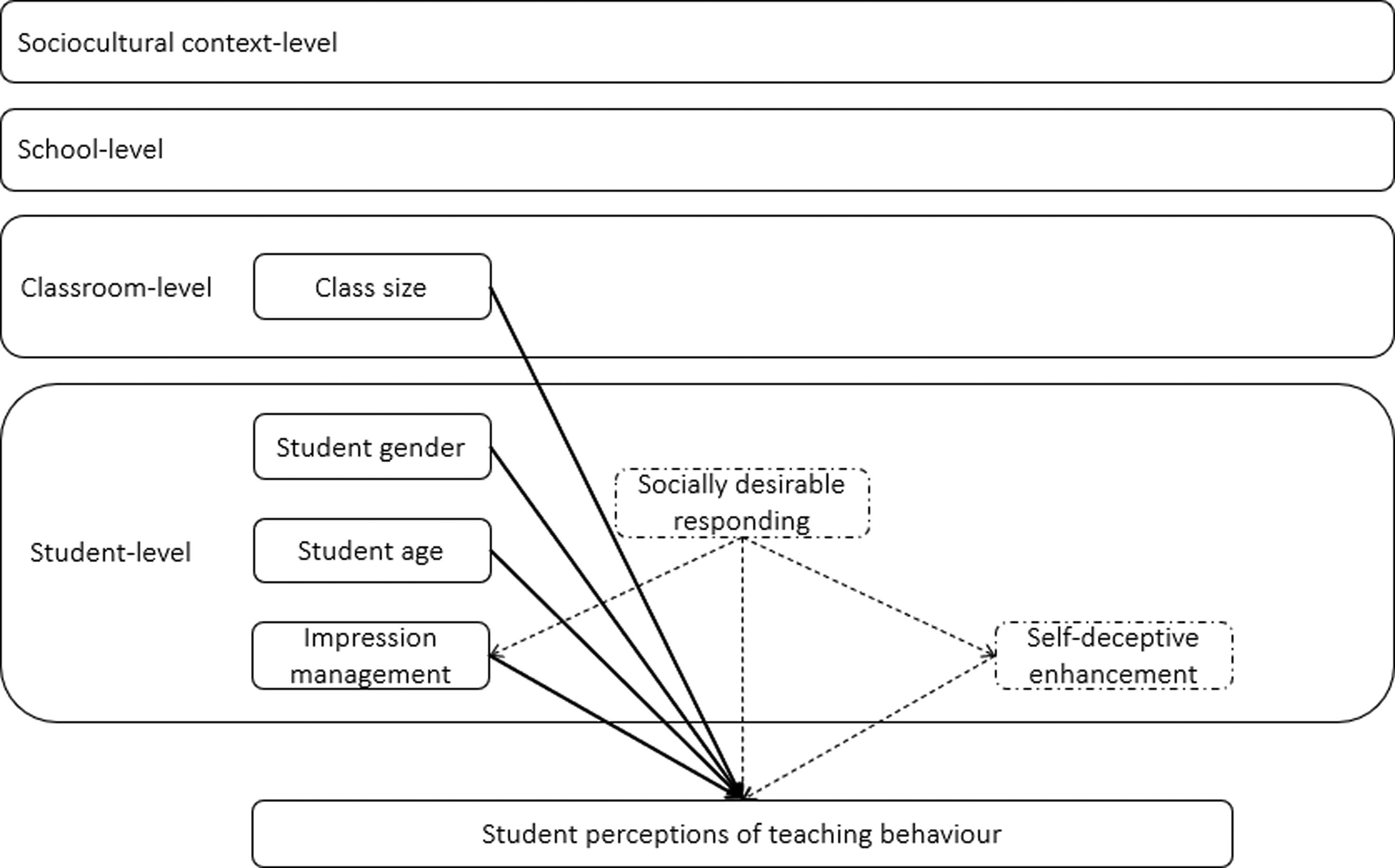
Teaching is nested within schools and sociocultural contexts. Classroom practices are thus deeply rooted in wider cultural values, with certain practices profoundly embedded in the societal fabric (Herbert et al., 2022). Student perceptions of teaching behaviour may reflect not only genuine variations in teaching behaviour but also variations partially caused by (unintended) systematic cultural variations. The present study contributes to understanding the extent to which variations are ‘true’ (actual variations) and to what extent it is a reflection of the sociocultural context. It examines whether or not the student- (student gender, age, and IM), and classroom-level characteristics (class size) are associated with teaching behaviours as perceived by students. We compare the model shown in Figure 1 across three countries, and consider the nested structure possibly influencing the student perceptions of teaching behaviour: students nested within classes/teachers and schools. To better understand how factors at different levels contribute to explaining differences in student perceptions of teaching behaviour, we address the following research questions (RQs): (1) How much variation in student perceptions of teaching behaviours is explained at student-, class-, and school-levels across the three national contexts? (2) To what extent do student-level characteristics (gender, age, and impression management) explain differences in student perceptions of teaching behaviour across the three national contexts? (3) To what extent does a classroom-level characteristic (class size) explain differences in student perceptions of teaching behaviour across the three national contexts? (4) Do student- and classroom-level characteristics explain differences in student perceptions of teaching behaviour between the Netherlands, Spain, and South Korea? Nested Structure Student Perceptions of Teaching Behaviour and the Tested Model. Note. Black lines indicate empirically tested relationships.
Methods
Sample
This study uses data gathered for a larger international project aiming to compare teaching behaviour internationally. The data was collected from secondary education schools using convenience sampling in each country. Initially, random sampling procedure was employed to select school across the three countries. Due to low response rates, a convenient sampling procedure was further applied. Schools participated on a voluntary basis and were selected based on their willingness and availability to participate in the larger international project (Maulana et al., 2023), facilitated through existing networks or collaborations between the researchers with local educational institutions having direct access to schools.
In the Netherlands, all novice teachers at the participating schools were invited to take part in the study. Participation was voluntary and encouraged by the school-based educator. Data collection was conducted by a fellow teacher, primarily through online questionnaires, with some instances of paper-based responses. Data was collected in 2014–2018 in six waves. After each data collection timepoint, teachers received a report summarizing student perceptions of teaching behaviours, which they could use for reflection and professional development.
In Spain, data collection was carried out either by teachers from participating schools or by member of the ASOCED (Sociological and Cultural Analysis of Educational and Scholar Processes) research team, using exclusively paper-based questionnaires. Prior to data collection, approval from the school management team was obtained. Once approved, all teachers were invited to participate after receiving detailed information about the study’s objectives and procedure. Participation was entirely voluntary. Data was collected in 2016. Upon completion of the data collection process, all participating schools received a report summarizing student perceptions of teaching behaviours, intended to support reflection and professional development.
In South Korea, data was collected by a trained ICALT observer who conducted classroom observations of the same teacher’s teaching behaviour. Following the observation, the observer distributed paper-based questionnaire to the students in the classroom and collected responses immediately after completion. Data was collected in 2014.
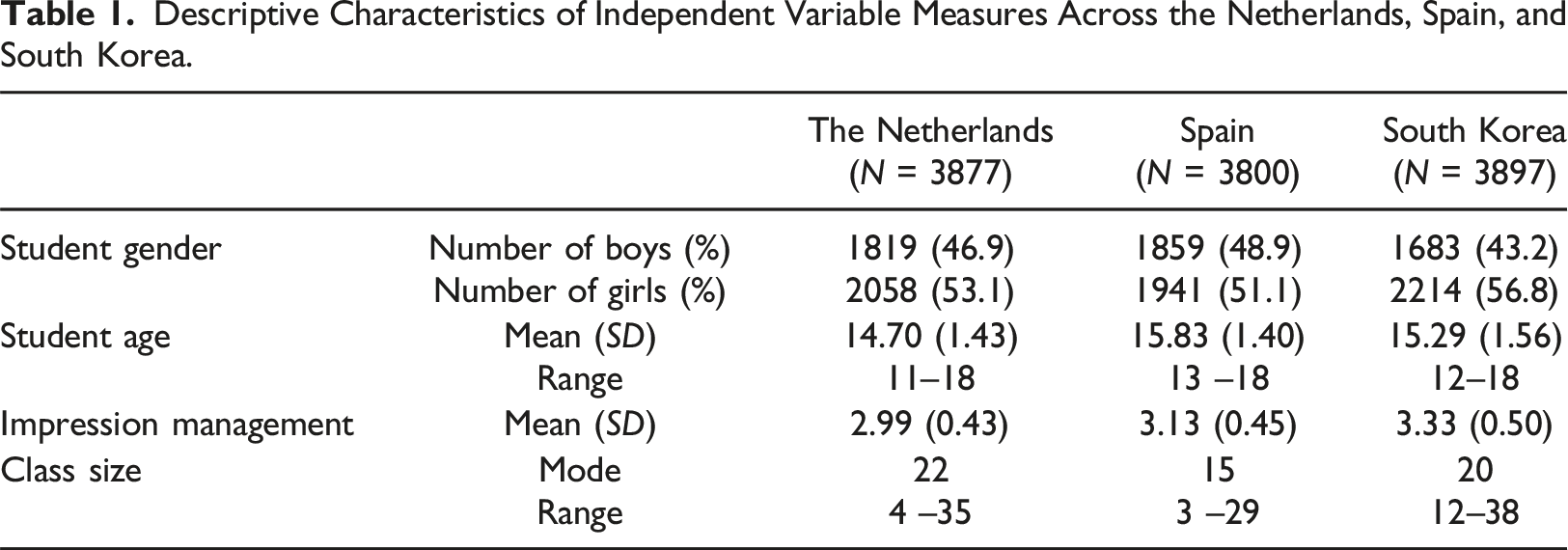
Descriptive Characteristics of Independent Variable Measures Across the Netherlands, Spain, and South Korea.
In the Netherlands, students evaluated 195 teachers in 116 schools. The data was gathered from public schools across the country. The majority (88%) of the student sample was from general secondary education and 12% in vocational education. 31.5% rated math and natural sciences teachers, and 68.5% rated social sciences and languages.
In Spain, students evaluated 265 teachers in 46 schools. Schools were from three Autonomous Communities: Asturias (85.9%), Andalucia (13.3%), and Galicia (0.8%). 63.5% of the schools were public schools. The schools offer general, vocational, and a combination of both educational settings: 52.1% of students attended schools that offer general education, 0.4% schools that offer vocational education, and 47.6% which offer both options. The majority of the teachers (74.7%) are social science and language teachers.
In South Korea, students evaluated 195 teachers in 24 schools. More than half of the schools (59%) were public, and the rest (41%) were private schools. 95.8% of the students were in general education. The majority of the teachers (61.1%) are social science and language teachers.
Measures
Table 1 shows the characteristics of independent measures (student gender, age, IM, and class size) across the three countries.
Student gender and age
The dichotomous variable student gender was represented by being male and female (0 = boy, 1 = girl). The variable student age was used as a continuous variable.
Impression management
The impression management scale (He and Van de Vijver, 2013) was used (based on the Marlowe-Crowne social desirability scale, Crowne and Marlowe, 1960). Five items were adapted for students to assess the extent to which students were concerned with social approval in the classroom. An example item is ‘I always listen carefully to teachers’. The questionnaire could be scored on a four-point Likert scale (1 = completely disagree, 4 = completely agree). Cronbach’s alphas for the five items were 0.59 in the Netherlands, 0.61 in Spain, and 0.85 in South Korea.
Before comparing students’ IM scores across countries, the validity of how we interpret and use ratings obtained by the IM instrument (i.e. measurement invariance, Meredith, 1993) was tested. We tested the fit of the model in each country separately using categorical confirmatory factor analyses (CFA). After the measurement model in each country was confirmed, multi-group confirmatory factor analysis (MGCFA) combining all country data was performed. Configural measurement invariance implies that the same factor structure of perceived teaching behaviour can be applied to the scores in each country (in all countries all items load on the same factor). Metric invariance implies that factor loadings can be compared across countries. When we obtain metric invariance, it becomes possible to assess relationships between latent variables and exogenous factors in the model. Scalar measurement invariance implies, besides factor structure and factor loadings, that the intercepts of the items are equal across countries.
The common goodness of fit indices for categorical CFA and MGCFA models include the root mean square error of approximation (RMSEA), the comparative fit index (CFI), the Tucker–Lewis index (TLI) and the standardized root mean squared residual (SRMR), and adhere to common guidelines (i.e. RMSEA <0.08; CFI >0.90; TLI >0.90, and SRMR< 0.09 are used) (Brown, 2015; Hu and Bentler, 1999). A second approach to assess the measurement invariance is to test the deterioration of the model fit between the configural, metric, and scalar models. Changes in RMSEA (ΔRMSEA), CFI (ΔCFI), and TLI (ΔTLI) of <0.01 are deemed acceptable (Cheung and Rensvold, 2002). For relatively large sample sizes, a more liberal ΔRMSEA value of 0.03 and ΔCFI value of 0.02 are used to evaluate metric invariance (Rutkowski and Svetina, 2014).
First, results of CFAs for each country shows that RMSEA (0.076–0.078) values in the Netherlands and Spain, and CFI (0.962–0.994), TLI (0.924–0.988), and SRMR (0.015–0.027) values indicate acceptable fit in all the three countries. We conclude that these findings provide a good precondition for the subsequent MGCFA analysis for the Netherlands and Spain. However, the RMSEA value (0.085) for South Korea is slightly above the cut-off criteria. The RMSEA value does not improve even after minor modifications (e.g. correlated errors). Nevertheless, other fit indices indicators (CFI, TLI, and SRMR) were acceptable. This means that the measurement model for South Korea is not perfect and room for improvement is anticipated, but the overall model fit is deemed acceptable. Hence, we decided to include South Korea in the subsequent MGCFA analysis.
Second, we tested for configural, metric, and scalar invariance, respectively. Regarding full metric invariance, ΔRMSEA (0.029) and ΔCFI (0.021), and ΔTLI (0.019) values did not show a good fit. We tested for partial metric invariance by doing two minor modifications (i.e. correlating two items in Spain and South Korea) which resulted in increased and acceptable model fit (ΔRMSEA = 0.005; ΔCFI = 0.019; and ΔTLI = 0.007). Full scalar invariance was not evident either. Hence, we tested for partial scalar invariance by doing seven modifications (i.e. allowing correlations between two items in the Netherlands and Spain and five items in South Korea), which resulted in improved model fit (from ΔRMSEA = 0.019 to 0.010). Previous research has also highlighted the challenges of achieving full metric and scalar invariance for all items in cross-national studies (Byrne and Van de Vijver, 2010), particularly for the impression management scale (Van de Vijver and He, 2014). In line with these findings, we conclude the IM scale shows partial metric and partial scalar invariance in the countries examined in this study. This suggests that while the relationships between items and underlying IM construct are comparable to some extent across countries, the comparisons should be made with caution. The detailed results of CFA and MGCFA are available on the paper page of the Open Science Framework (Tables 1 and 2). 1 The measurement invariance analysis was conducted in MPlus version 8.8 (Muthén and Muthén, 2017).
Class size
The class size represents the number of students who filled in the questionnaire for one teacher. 2 Because the range of class sizes differs across the three countries, we used the standardized class size variables in the analyses.
Student perceptions of teaching behaviours
Descriptive Statistics and Correlations of Six Teaching Behaviour Domains Across the Netherlands, Spain, and South Korea.
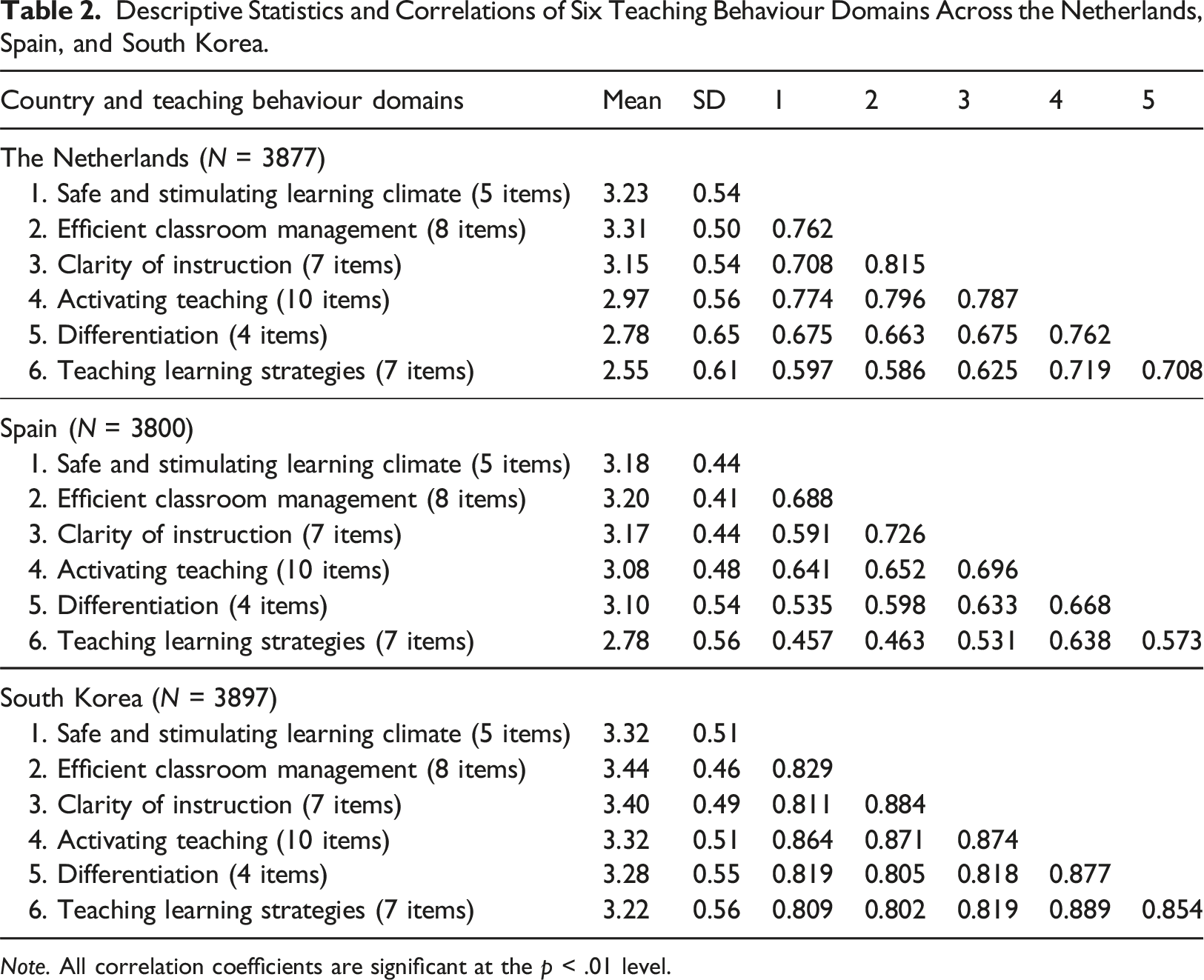
Note. All correlation coefficients are significant at the p < .01 level.
Results From the Multilevel Analyses of Six Teaching Behaviour Domains for the Netherlands (N = 3877).
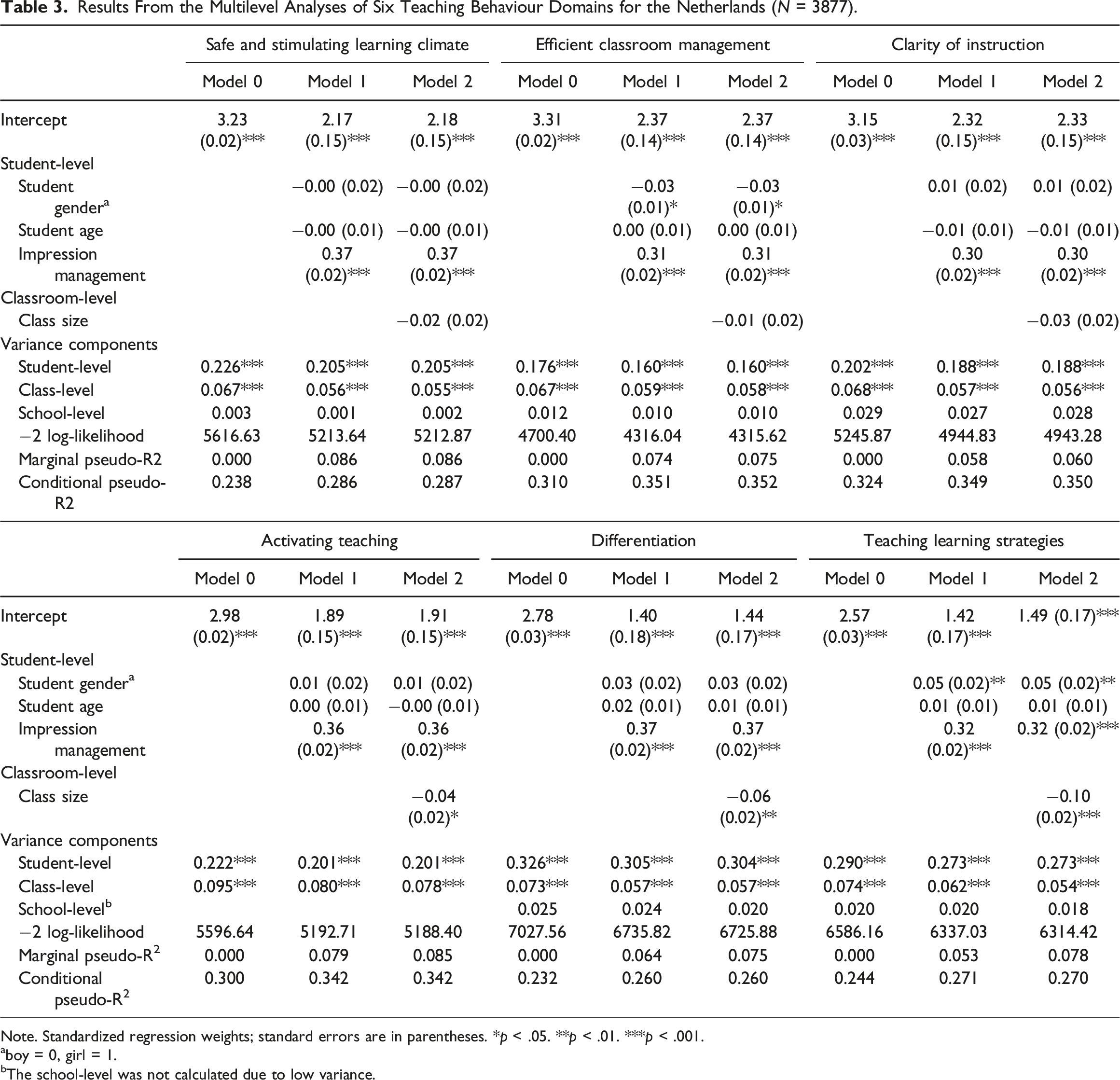
Note. Standardized regression weights; standard errors are in parentheses. *p < .05. **p < .01. ***p < .001.
aboy = 0, girl = 1.
bThe school-level was not calculated due to low variance.
Analytic strategy
We conducted multilevel analyses to examine student perceptions of teaching behaviour. For hierarchically nested data like ours (students nested within classes/teachers and schools), this statistical technique is the most appropriate because it estimates the effects of independent measures on dependent measures taking into account the nested structure of the data (Snijders and Bosker, 1999). We performed three-level multilevel modelling, with school at level 3, class/teacher at level 2, and students at level 1. First, we estimated an empty model for each teaching behaviour domain (Model 0). Then, we included student gender, age, and IM in Model 1, and class size in Model 2. We repeated the same procedure for each country and used SPSS 28.
Results
RQ1. Variations in student perceptions of teaching behaviour
In the Netherlands, variance decomposition revealed that 68–80% of the variance is attributed to the student-level and 15–30% to the class/teacher-level, both of which are statistically significant. In contrast, the school-level variance is low (i.e. 5–6%) and statistically significant only for differentiation and teaching learning strategies. The school-level variance is not statistically significant for domains such as safe and stimulating learning climate, efficient classroom management, and clarity of instruction. For activating teaching, school-level variance could not be calculated due to insufficient variance (Table 3).
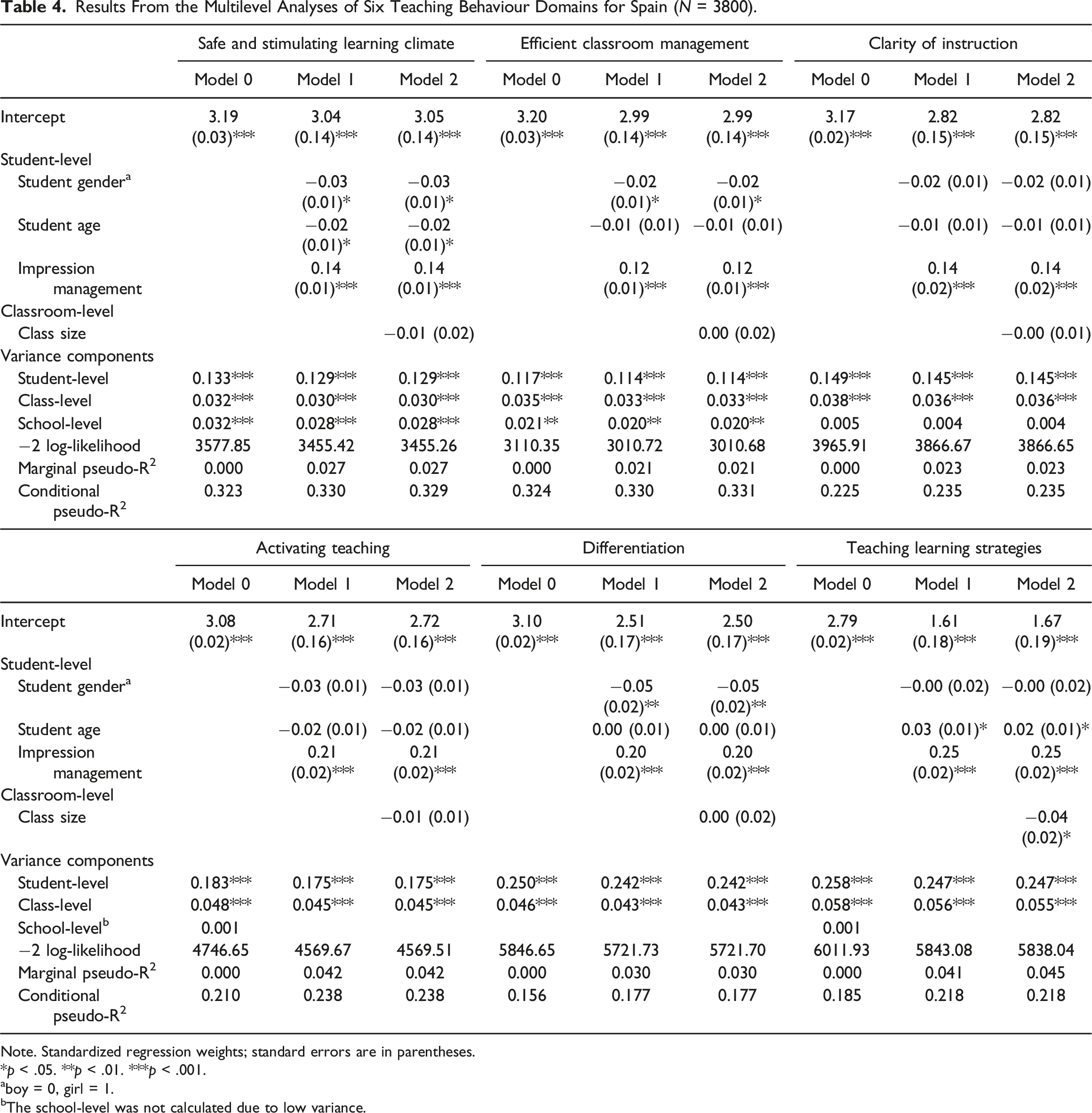
Results From the Multilevel Analyses of Six Teaching Behaviour Domains for Spain (N = 3800).
Note. Standardized regression weights; standard errors are in parentheses.
*p < .05. **p < .01. ***p < .001.
aboy = 0, girl = 1.
bThe school-level was not calculated due to low variance.
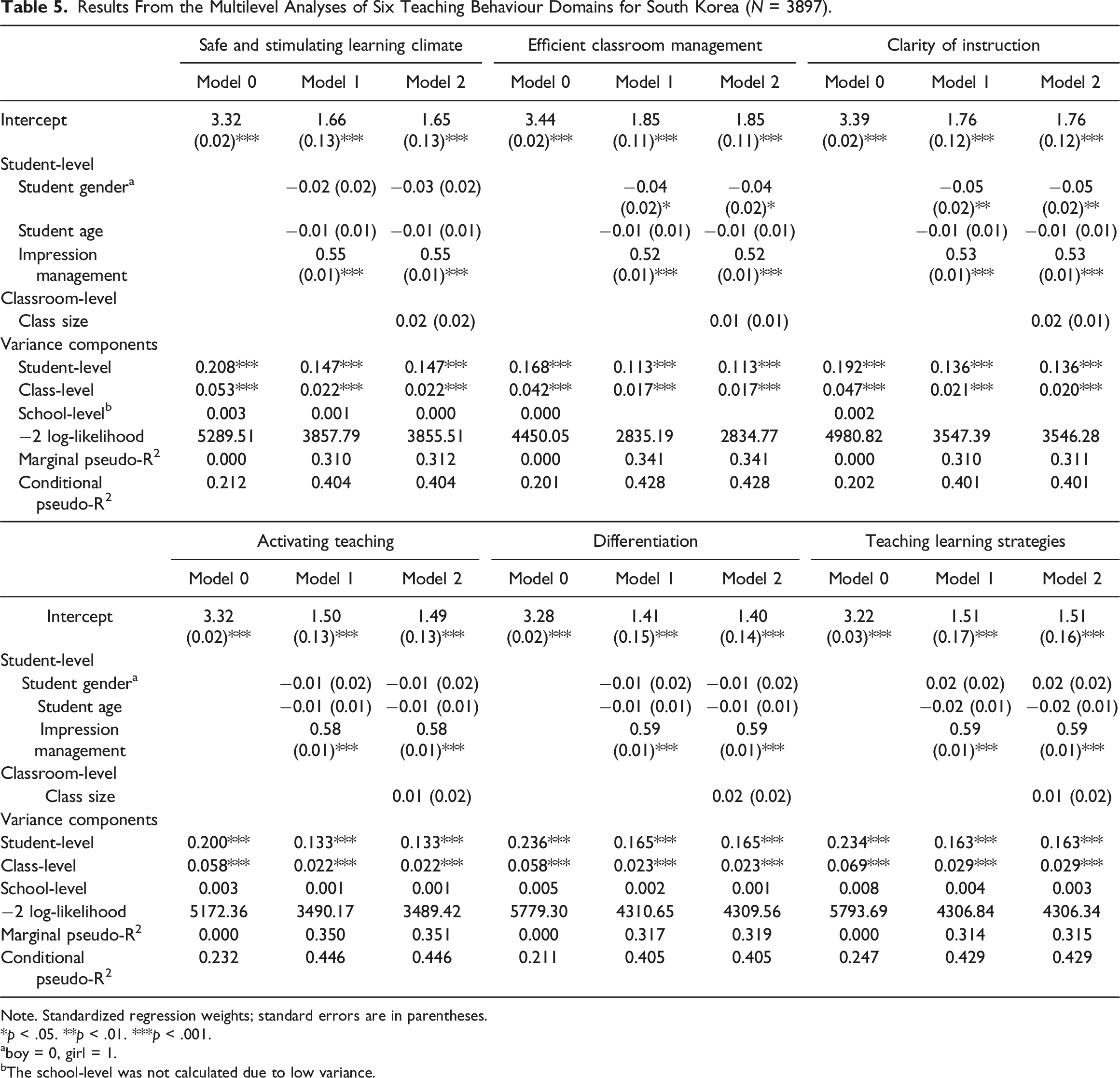
Results From the Multilevel Analyses of Six Teaching Behaviour Domains for South Korea (N = 3897).
Note. Standardized regression weights; standard errors are in parentheses.
*p < .05. **p < .01. ***p < .001.
aboy = 0, girl = 1.
bThe school-level was not calculated due to low variance.
The results of intra-level correlation coefficients (ICC) for each domain in each country are available on the on the paper page of the Open Science Framework, Tables 4-6. 1
RQ2. Student gender, age, and impression management
In the Netherlands, we found that students’ gender is significantly related to perceived efficient classroom management and teaching learning strategies (Table 3, Model 1). Boys are more likely to perceive efficient classroom management higher than girls (βs = −0.03, p < .05). In contrast, boys are more likely to perceive teaching learning strategies lower than girls (βs = 0.05, p < .01). In Spain, we found that students’ gender is significantly related to perceived safe and stimulating learning environment, efficient classroom management, and differentiation (Table 4, Model 1). Boys are more likely to perceive these three teaching behaviour domains higher than girls (βs = −0.03, −0.02, ps < 0.05, βs = −0.05, p < .01, respectively). In South Korea, we found that students’ gender is significantly related to perceived efficient classroom management and clarity of instruction (Table 5, Model 1). Boys are more likely to perceive these two teaching behaviour domains higher than girls (βs = −0.04, p < .05 and βs = −0.05, p < .01, respectively).
In the Netherlands and South Korea, we did not find significant relationships between students’ age and perceived teaching behaviour domains (Tables 3 and 5, Model 1). In Spain, we found that students’ age is significantly related to safe and stimulating learning environment and teaching learning strategies (Table 4, Model 1). As student age increases, safe and stimulating learning environment is likely to be perceived as lower (βs = −0.02, p < .05). In contrast, as student age increases, teaching learning strategies is likely to be perceived higher (βs = 0.03, p < .05).
In all three countries, we found that students’ IM is significantly and positively related to all domains of perceived teaching behaviour (Model 1 in Tables 3–5). Students who report higher IM are likely to perceive higher quality teaching behaviours compared to students who report lower IM. Results suggest that students’ IM significantly relates to all domains of teaching behaviour (βs range from 0.30 to 0.37, ps < 0.001 in the Netherlands, 0.12 and 0.25, ps < 0.001 in Spain, and 0.52 and 0.59, ps < 0.001 in South Korea).
RQ3. Class size
In the Netherlands, we found that class size is significantly and negatively related to activating teaching, differentiation, and teaching learning strategies (Table 3, Model 2). The larger the class size gets, these three domains are perceived to be lower (β = −0.04, p < .05; β = −0.06, p < .01; and β = −0.10, p < .001, respectively). In Spain, we found that class size is significantly and negatively related to teaching learning strategies (Table 4, Model 2). The larger the class size gets, teaching learning strategies is perceived to be lower (β = −0.04, p < .05). In South Korea, we did not find significant relationships between class size and teaching behaviour domains (Table 5, Model 3).
RQ4. Cross-country findings
Regarding the variance components, differences between students and classes in perceived teaching behaviour are visible and have similar patterns in all three countries. Compared to differences between classes and schools, differences between students in perceived teaching behaviour are estimated to be far larger. The differences between schools are estimated to be low and mostly not significant.
When comparing the changes between Model 0 and Model 1, in all three countries, the largest contribution to the change among the three student-level characteristics is attributed to IM, while the contributions of gender and age are relatively smaller. Although gender and age are statistically significant in some cases, their effects remain relatively modest across all three countries.
Although the analysis revealed the largest contribution to the change is attributed to IM in all three countries, we observe that its effect varies across countries. Specifically, the largest change is observed in South Korea, followed by the Netherlands and Spain. Consistently, we found a statistically significant difference in the mean IM scores across three countries, F (2, 11,571) = 536.47, p < .001. A Tukey post-hoc test revealed that the mean score of IM in the Netherlands (M = 2.99, SD = 0.43) was lower than the mean score of IM in Spain (M = 3.13, SD = 0.45), and South Korea (M = 3.33, SD = 0.50). Also, the mean score of IM in Spain was lower than the mean score of IM in South Korea, although these are statistical differences, not theoretical or causal differences. Also, since we found partial scalar invariance, the comparison can be made to some extent, but should be interpreted with cautions.
Although class size is significant for some domains in both the Netherlands and Spain, its effect is small. In South Korea, class size does not show a significant relationship with teaching behaviour domains.
Discussion
Understanding student perceptions of teaching behaviour is challenging due to differences in student responses at various levels. Despite the importance of student perceptions for measuring teaching behaviours and predicting learning outcomes, there has been limited focus on explaining cross-national variations in these perceptions. This study addresses this gap by conducting a cross-national comparison of student perceptions of teaching behaviour in the Netherlands, Spain, and South Korea. Using the multilevel framework, it explores the relationships between four factors (student gender and age, IM and class size) and student perceptions of teaching behaviour. The main aim was to investigate student perceptions of teaching behaviour and the relationship with potential factors that might influence these perceptions across the Netherlands, Spain, and South Korea.
The largest proportion of the variation in student perceptions of teaching behaviour was attributed to differences between students, followed by the proportion of variance explained between classes, and schools. This pattern was consistent across the three national contexts and in line with previous research showing that students differ in their individual perceptions of the same teacher’s behaviour (Kunter et al., 2008; Wagner et al., 2013). Although there is limited research on the consensus of student perceptions of teachers’ teaching behaviour, existing research demonstrates that incorporating measures of within-classroom consensus and student’s idiosyncratic perceptions of teaching behaviours has the potential to improve our understanding of the nature of the information inherent in student perceptions as reflected in their ratings (Griffith, 2000; Lüdtke et al., 2006). This information may contain insights into subgroups or subclimates that exist within a larger group, as well as the quality of the relationship between this specific student and the teacher (Göllner et al., 2018; Schweig, 2016; Schweig et al., 2022). More qualitative research or day-to-day student-teacher interaction research is needed to deepen our understanding of student-teacher perceptions (Gencoglu et al., 2023; Schweig et al., 2020).
Perceived teaching behaviours relate to student-level characteristics. Student gender, while showing relatively modest relationships with certain teaching behaviour domains and no significant relationships with others, exhibits a consistent pattern when significant: boys generally rate teaching behaviour domains higher than girls. However, an exception to this pattern was observed in the Netherlands for teaching learning strategies domain, where boys tended to rate this domain lower than girls. This could be influenced by differences in how boys and girls engage with or value learning strategies aimed at fostering deeper learning and problem-solving (Good et al., 2019; Rowe et al., 2011). These differences highlight the importance of considering gender as an individual factor in understanding student perceptions of teaching behaviours. Teachers could benefit from reflecting on how their teaching is perceived by students of different genders and adjusting their practices to create more inclusive and supportive learning environments (Tennant et al., 2015). Further research, particularly qualitative studies, could delve deeper into the reasons behind these patterns (Gencoglu et al., 2023).
Moreover, the findings highlight interesting patterns in how student age relates to perceptions of teaching behaviours, with notable cross-national differences. In the Netherlands and South Korea, the absence of significant relationships between age and teaching behaviour domains suggests that student age may not play a substantial role in shaping perceptions of teaching behaviours in these contexts. In Spain, however, student age was significantly related to specific teaching behaviour domains, indicating that perceptions shift as students grow older. The negative relationship between age and the safe and stimulating learning climate suggests that older students might perceive their classroom environments as less engaging or supportive. Conversely, the positive relationship between age and teaching learning strategies suggests that older students may better appreciate or recognize teaching methods aimed at fostering deeper understanding and critical thinking. This might reflect their increased cognitive maturity or greater exposure to advanced teaching strategies as they progress through their education (Steinberg, 2005; Steinberg and Morris, 2001). These findings emphasize the importance of considering age as an individual factor when interpreting student perceptions (Jules and Kutnick, 1997). They suggest that as students age, their expectations and evaluations of teaching behaviours evolve, highlighting the need for teachers to adapt their approaches to meet the changing needs and perspectives of students at different stages of their educational journey (Košir and Tement, 2014).
Notably, a positive relationship between students’ IM and perceived teaching behaviour domains was found across the three contexts with the strongest relationship in South Korea. Given that IM is related to the cultural context, this finding suggests that countries’ cultural context may be reflected in cultural value orientations. Schwartz’s value orientations provide a valuable lens for interpreting our findings (Schwartz, 2014). According to Schwartz (2006), cultural values influence individual behaviour and perceptions, including in educational settings. The values prevalent in a society can shape how students perceive and respond to teaching behaviours. According to the country groupings based on cultural value orientations (Schwartz, 2014), South Korea falls within Confucian cultures. In this cultural group, intergroup relationships, including those between teachers and students, are rooted in group harmony and authority, as demonstrated by respectful and obedient behaviour and attitude (Novin et al., 2010). Korean-American teachers encourage group harmony, awareness, and self-control above emphasizing individual concerns, whereas European-American teachers foster individual achievements and self-expression more than other values (Farver et al., 2000). The higher South Korean ratings on students’ IM may reflect avoiding being seen negatively and the tendency to be more sensitive to social cues to align with societal expectations of respect and conformity towards authority figures like teachers. It is also important to mention that the differences in IM scores can essentially be a result of response styles since IM cannot be excluded from the effects of response styles when measured in a student questionnaire. Future research is needed to confirm these and other macro-level context factors that might impact student perceptions of their teachers.
At the classroom-level, class size shows dissimilar patterns in student perceptions of teaching behaviour across countries. In the Netherlands, larger class sizes are associated with lower perceptions of activating teaching, differentiation, and teaching learning strategies. In Spain, a significant negative relationship was observed only for teaching learning strategies. These findings may be attributed to the fact that these three domains are often considered as complex teaching behaviour domains that require more time, effort, and resources to implement effectively (Van der Lans et al., 2018, 2019). These negative relationships suggest that as class sizes increase, teachers may face greater challenges in tailoring instruction to individual students or employing interactive teaching methods (Blatchford and Russell, 2019). Interestingly, in South Korea, no significant relationships were found between class size and any teaching behaviour domains. The important issue here is that class size may interact with other contextual features in the learning environment (Blatchford and Russell, 2019). For example, as class size increases, the differences in student perceptions may diminish, leading to more homogeneous ratings (Schenke et al., 2017). We suggest future research to examine the interaction between contextual features and class size.
Limitations
Limitations regarding data and methodology need consideration when evaluating the findings of the current study. Because the data was gathered mostly through convenience sampling, generalizations of findings to the country level are limited. We recommend enhanced sampling techniques, such as stratified sampling, in order to capture more accurate descriptions of student perceptions of teaching behaviour across countries. Relatedly, schools were sampled only from specific regions in Spain and South Korea which might differ from the rest of the country. Also, the cross-sectional design hinders establishing causal relationships and capturing changes over time, emphasizing the importance of longitudinal designs that could provide a more nuanced understanding of the factors related to student perceptions over time. Additionally, we only investigated the relationship between student perceptions and IM as a dimension of SDR but did not examine self-deceptive enhancement (SDE) as the second dimension. Future research will benefit from exploring both dimensions’ links with student perceptions of teaching behaviour. Also, the results should be interpreted with caution, as partial metric and scalar invariance were found for IM. We used self-report surveys and did not directly measure values in our study. Self-report surveys may not always accurately capture the true value that is intended to be measured (Podsakoff et al., 2012). This can limit the generalizability and validity of the results to some extent. Future research should include other methods to assess teaching behaviours such as observers’ observation (Maulana et al., 2020; Maulana and Helms-Lorenz, 2016).
Significance and implications
This study has practical significance for informing and improving the interpretation of student perceptions of teaching behaviour in the field of comparative education. Our findings demonstrate that student perceptions, influenced by factors such as gender, age, IM, and class size, vary notably across countries. This variation underscores the importance of utilizing student feedback in teacher development programs, highlighting that strategies effective in one country may not be universally applicable. In other words, by shedding light on the complex nature of student perceptions of teaching behaviour across countries, this study shows that student perception is not equally useful for guiding teacher improvement across countries. It is possible to enhance the understanding of student perceptions in different contexts by acknowledging and considering that student gender, age, IM, and class size are related to the perceptions of teaching behaviour.
Another contribution of this study lies in uncovering method bias through the strong positive relationship between students’ IM and the survey variable at stake. This finding is critical for the field of comparative education, as it emphasizes the need for more nuanced and culturally sensitive approaches to educational research, acknowledging diverse perspectives and experiences of students across cultural contexts. Podsakoff et al. (2012) provide ways to manage method bias.
In conclusion, this study highlights the complexity of student perceptions of teaching behaviour, which is linked to a range of factors at different levels. Understanding these factors and their relationship is crucial for improving teaching quality and strengthening teacher-student relationships. Emphasizing the importance of cultural sensitivity and contextual relevance, this research paves the way for more effective and inclusive educational strategies that are responsive to the unique needs of diverse student populations as globalization brings diversity into many classrooms around the world. Future research should explore cultural and societal differences shaping perceptions, and how feedback can be tailored to address these differences.
Footnotes
Acknowledgements
We thank all participants for their valuable contributions.
Declaration of conflicting interests
The author(s) declared no potential conflicts of interest with respect to the research, authorship, and/or publication of this article.
Funding
The author(s) disclosed receipt of the following financial support for the research, authorship, and/or publication of this article: This study is supported by The Netherlands: Ministerie van OC&W: OND/ODB-2013/45916 under Grant number 804A0-45835. Spain: The Institute of Educational Research and Innovation of the University of Oviedo (INIE) under Grant number INIE-19- MOD C-1. South Korea: The Ministry of Education of the Republic of Korea and the National Research Foundation of Korea under Grant number NRF-2017S1A5A2A03067650.
