



Abstract
This ecologically framed study highlights the complexities of English language education (ELE) policy making in Indonesia, Spain, and Thailand. The primary objectives are, first, to disentangle the complex influences that may have shaped the English language policies in the three contexts through an ecological lens, and second, to compare the crucial elements in their ELE policy making. Using an analytical model consisting of global, supranational, national, sub-national, and pedagogical influences, we conducted a thematic analysis on 18 documents selected for the purpose. The results identified both similarities and differences in the shaping influences of the ELE policies in the three contexts. This demonstrates that ELE policy is shaped by the nation’s unique characteristics. To improve the applicability of ELE policies, therefore, policymakers need to address the influences particular to the context and to be cautious when adopting or adapting policies deriving from other contexts, as there will never be a one-fit-for-all ELE policy.
Introduction
Language education policy does not only frame and regulate language use in the educational domains but is also a reflection of the linguistic culture of a speech community, which includes ‘the set of behaviours, assumptions, cultural forms, prejudices, folk belief systems, attitudes, stereotypes, ways of thinking about language, and religio-historical circumstances associated with a particular language’ (Schiffman, 2002: 5). Language policy is, arguably, significantly shaped by political, social, cultural, and economic factors, as well as the agency and interpretation of various entities (Lau, 2020). Exploring the policy for English language education mirrors contemporary language ideologies and the interplay between language policy and its implementation (Baker & Jarunthawatchai, 2017). This paper aims to explore the possible influences that may have shaped the English language education (ELE) policies in three Expanding circle, the outermost circle of Kachru’s (Kachru, 1990, 1992, 1996, 2009) three concentric circles (Inner, Outer, Expanding), countries– namely, Indonesia, Spain, and Thailand – which exhibit similarities as well as marked differences. First, all of the three contexts can be classified as belonging to the Expanding Circle where English does not have any formal status (e.g. as an official language and as the main language of education). English is a foreign language, which means none of these three contexts has a relationship with English as associated with native-speakers or colonial history by English-speaking nations. Even so, English is taught largely using norms derived from native-speaker contexts in Kachru’s Inner Circle such as the UK and the USA (Davies, 2003; Holliday, 2018; Llurda, 2009). This is the case of our three contexts (Indonesia, e.g., Fitriyah (2014, 2018); Spain, e.g. Llurda (2004); and Thailand, e.g. Boonsuk and Ambele (2021); Prabjandee (2020); Tantiniranat (2017)).
Another similarity is that English provides an inter-state lingua franca for the supra organizations to which all these three countries belong: Spain belongs to the European Union (EU), while Indonesia and Thailand belong to the Association of Southeast Asian Nations (ASEAN). Both EU and ASEAN are geo-political groupings in which the language situation in each country varies considerably. For instance, most Indonesians are bilingual or multilingual as they speak at least two of the 704 living indigenous languages (Ethnologue, 2023a), along with Bahasa Indonesia, the national and official language (Law No. 24, 2009) and possibly a language with external roots such as Arabic or English. For Thailand, on the contrary, despite having 51 living languages spoken (Ethnologue, 2023b), the country ‘gives outsiders and even many of its own people the impression of being almost monolingual’ (Smalley, 1994: 1) with Thai (central Thai or Bangkok Thai) being the only real contender as a medium of instruction. Meanwhile, Spanish is the statutory national language of Spain (Spanish Constitution III, p. 1), spoken by approximately 89% of Spaniards as the mother tongue, and is the language used by the central government. In addition, there are four co-official languages, namely, Catalan, Galician, Aranese, and Basque. These snippets of the linguistic landscape of the three countries show that despite the similarities, these countries differ significantly, thus providing an interesting context for us to explore their ELE policies.
Our approach to this endeavour is informed by ecological perspectives on language education (e.g., Kramsch and Steffensen, 2008) and more broadly on TESOL (Teaching English to Speakers of Other Languages) (e.g. Stelma et al., 2015). We employed a mapping device adapted from Holliday’s (1994) Host Culture Complex (HCC) to explore the possible shaping influences.
Ecologies in ELE policy planning
The term ‘ecology’ used in this paper signifies the recognition of the relationship between human beings and their environments, and how these elements constantly shape each other. This study was apprised by Haugen’s Ecology of Language (1972 as cited in Zhang, 2022) particularly the ‘metaphorical model’ of language ecology which implies that language and context are related to each other as what happens between the living being and its environment in the nature. According to Kramsch and Steffensen (2008: 18), ecology is holistic, and it: implies that language is not studied as an isolated, self-contained system, but rather in its natural surroundings, i.e., in relation to the personal, situational, cultural, and societal factors that collectively shape the production and evolution of language, ontogenetically as well as phylogenetically.
Language policy planning can be seen as an ecological system (Stelma et al., 2015) in which all the elements are mutually related and interdependent. Considering language policies from an ecological perspective enables an understanding of how policies might have emerged ‘out of a multiplicity of interconnected components or resources and their mutual relationships and dependencies’ (Pennington and Hoekje, 2010: 214).
Host Culture Complex
To understand the elements underlying ELE policy in this study, we adapted Holidays’ (1994) Host Culture Complex (HCC), part of Holliday (1994)’s work of Appropriate Methodology. Holliday (1994) problematises the adoption of imported or prescribed teaching methodology without attending to the particularities of the context. Thus, teachers are required to understand the diverse influences shaping their ‘classroom culture’, which involves a mix of multifaceted elements, enabling them to make context-based decisions for their classes. To help teachers, as ethnographers, explore such complexities, Holliday proposes HCC as a mapping device (Figure 1) that consists of the following influences: student culture (i.e. student’s role and influences), host institution culture, professional-academic culture (i.e. the culture linked to professional affiliations, academic perspectives and professional practices), international education-related cultures (i.e. the broader essence of what defines education, an educational institution, a department, a discipline, a teacher, and similar entities), and national culture (i.e. a combination of cultures associated with regions, urban areas, and rural settings, as well as various activity cultures linked to family, organizations, institutions, and the like) (Holiday, 1994: 28–31). Host Culture Complex (Adapted from Holliday, 1994: 29).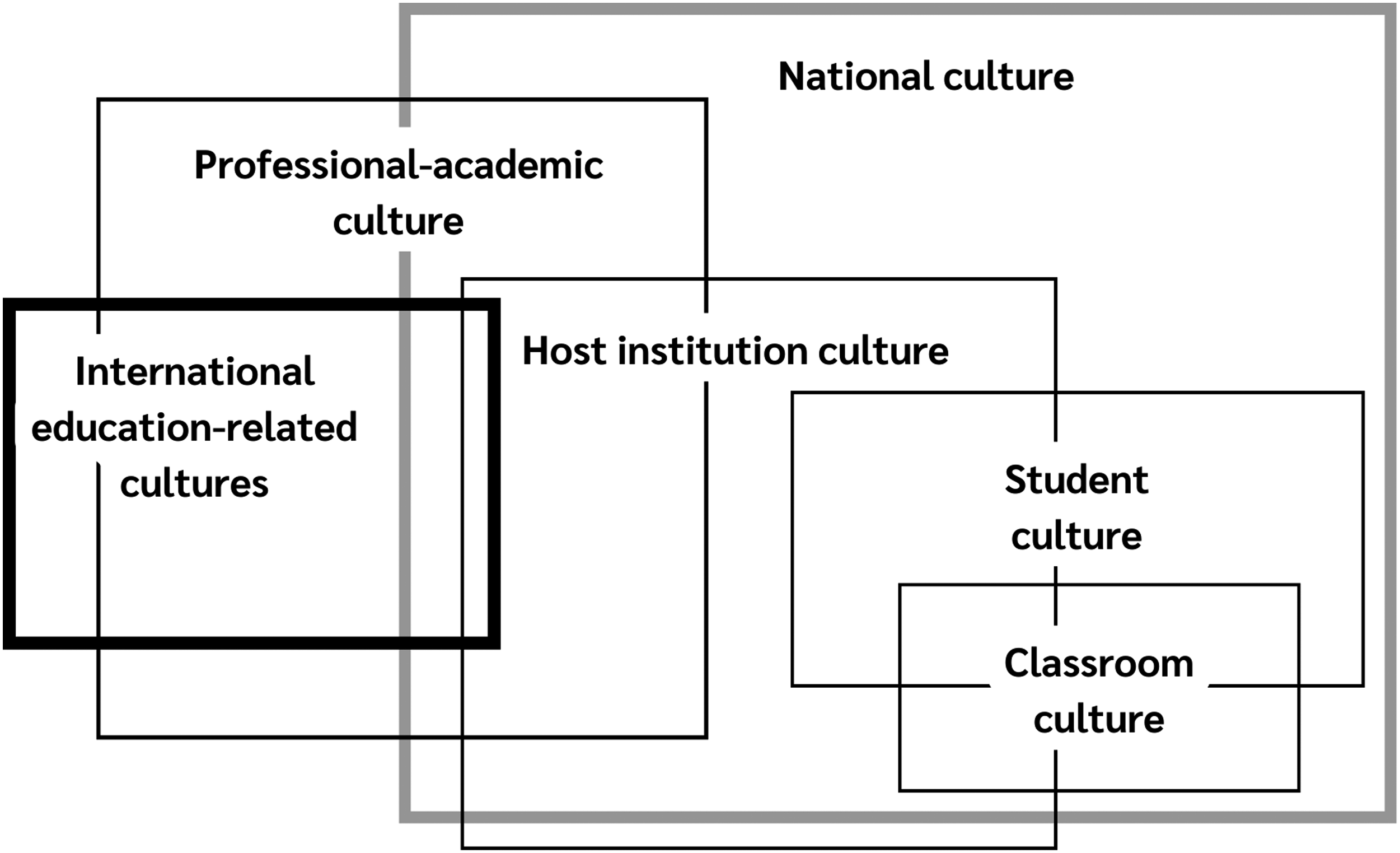
Possible shaping influences of ELE policies
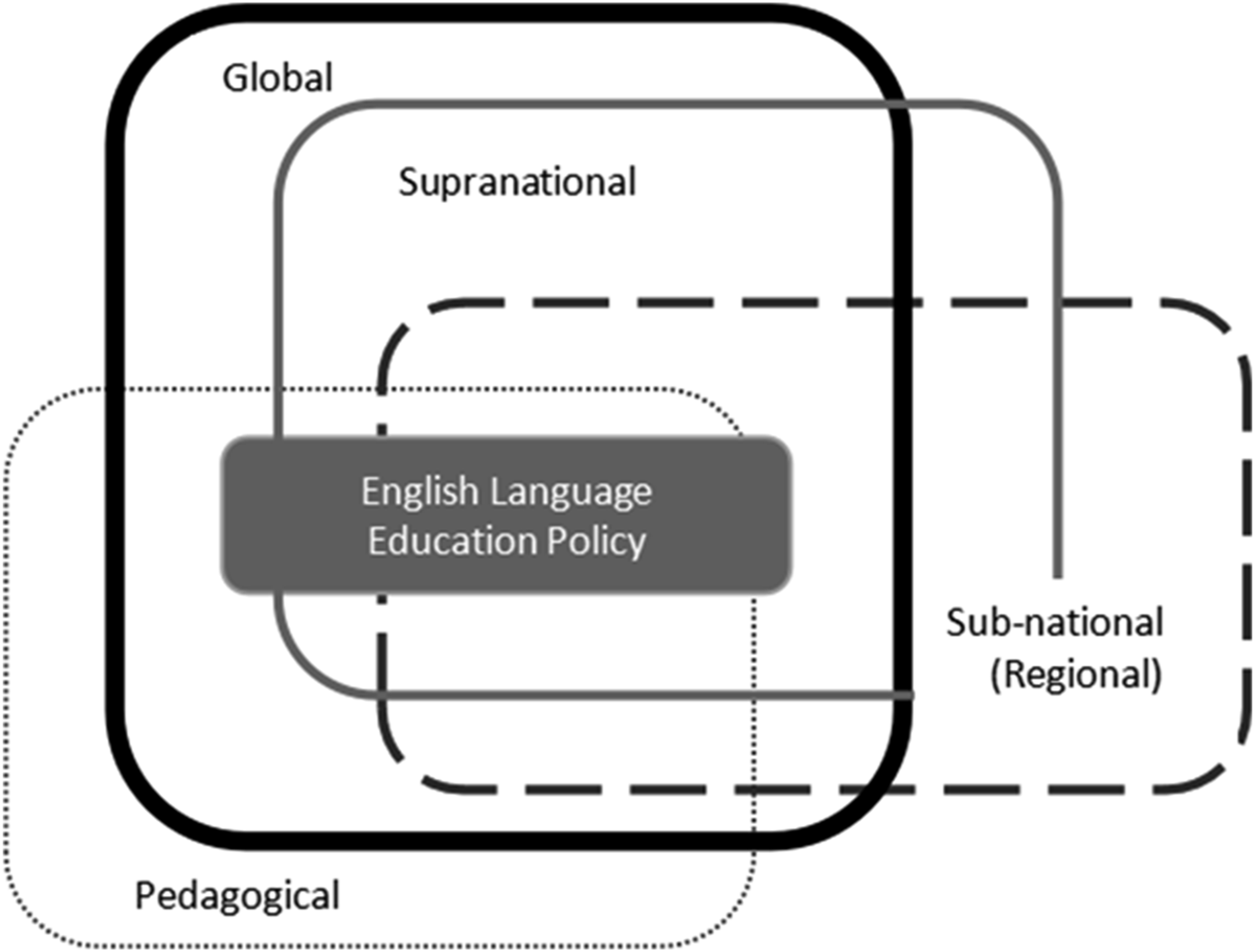
Informed by the literature on possible shaping influences, as will be discussed below, we replaced classroom culture in Holliday’s HCC (1994) with English Language Education Policy and included the elements ranging from global, supranational, national, sub-national (regional), and pedagogical influences (Figure 2). Mapping the ecologies of the English language education policy (Inspired by Holliday, 1994).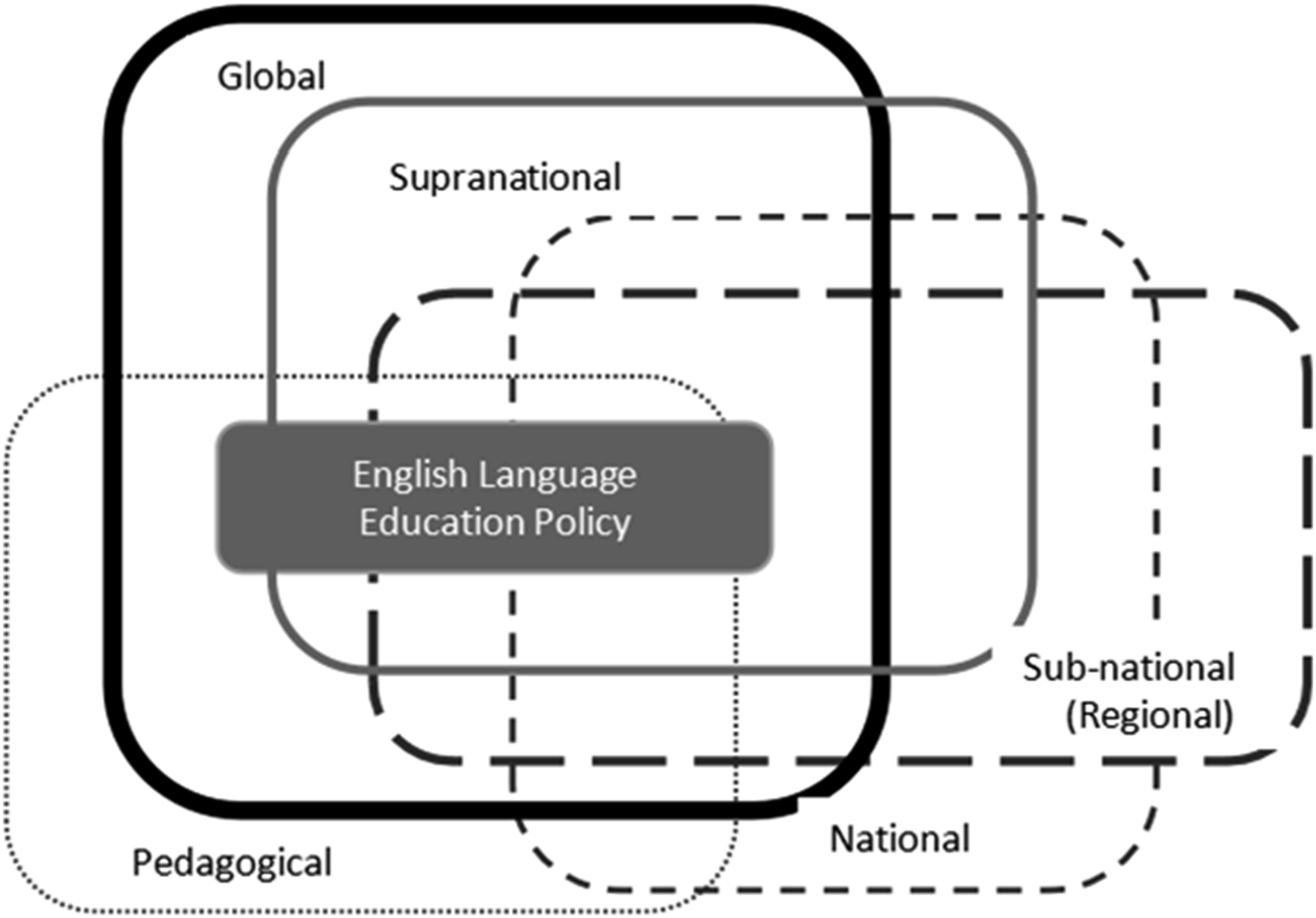
Global issues have become an influence that shapes a nation’s policy for their ELE. They have encouraged ‘polities’ to intensify the use of English, ‘the global language’ especially in education such as through the use of English as the medium of instruction (Nunan, 2003). An investigation by Nunan (2003) on the impacts of ‘the globalization of English’ on the Asia-Pacific region identifies a similar trend and that the countries ‘are investing considerable resources in providing English, often at the expense of other aspects of the curriculum’.
National educational policies are not only affected by global influences but also by supranational, national, regional (henceforth, ‘sub-national’) to the micro-ones such as teachers’ perspective and examination culture (Priestley, 2002) which are part of the pedagogy. Teachers, for instance, play a crucial role in the implementation of the policy and they are those at the ‘street level’ (Lipsky, 2010: xi).) of the policy implementation. Teachers are those who decide to implement or not implement or to partially implement the policy as influenced by their perceived ability and belief (Tantiniranat, 2017), and the educational policies are often ‘reconstructed’ at the school level (Cushing, 2021: 321).
Supranational powers, along with global organisations worldwide, have observed and controlled the economic and social movement of their member states (Duobliene, 2014). The Organisation for Economic Cooperation and Development (OECD), for instance, ‘has strongly influenced European education policy and the entire global neo-liberally toned discourse that nowadays prevails in the implementation of national education policy and educational reforms’ (Rinne et al., 2004: 454).
At the supranational level, the EU and ASEAN are the organisations of reference for this study. The EU when it first started, aimed at the economic collaboration of the member countries which resulted in the European Economic Community (EEC) in 1958. The EEC was transformed into the European Union in 1993 to reflect the expansion of the organisation’s functions into the political areas. The EU has provided recommendations to member states regarding language education, for instance, the mother tongue plus two policy (Hériard, 2021; Kirkpatrick, 2020); bilingual education (Riagáin and Lúdi, 2003); and CLIL or Content and Language Integrated Learning (Eurydice, 2017).
The ASEAN was founded in 1967 to establish a peaceful and prosperous community of Southeast Asian countries. ASEAN has envisaged ‘outward looking, living in peace, stability, and prosperity, bonded together in partnership in dynamic development and in a community of caring societies’ (ASEAN Secretariat, 1997). However, the main force that has driven ASEAN seems to be the economy as at the end of 2015, ASEAN launched the ASEAN Economic Community (AEC) to turn the whole region into a single market enabling citizens of the ASEAN to work, travel, trade or have education within the ASEAN region freely and much easier than before. ASEAN does not produce regional language education policies. Nevertheless, the privileged status of English as the only working language of the organisation (ASEAN, 2008: 29; Tantiniranat, 2017: 29) compared to 24 working languages of the EU, has definitely influenced ASEAN’s member states’ national education policies. English is considered a lingua franca of ASEAN (Kirkpatrick, 2020).
National issues such as national interests, sense of nationalism, and preservation of the national and vernacular languages may become a consideration for designing the English language policies. Shohamy (2006: xv) proposes that ‘language is used to create group membership (‘us/them’), to demonstrate inclusion and exclusion, to determine loyalty or patriotism’, and that ‘language policy falls in the midst of these manipulations and battles between language ideology and practice’. The choice of whether to preserve the national identity or to pursue national interests through the nation’s participation in the international community which requires the intensive use of English has often been a dilemma (Le Ha, 2013).
Policies in the different regions within a nation (i.e. sub-national) may also influence the shaping of language policies. This is the case in Spain where educational competences are delegated to the regional government. Despite having to abide by the national educational law, they can adapt the curriculum to the particularities and special needs of each region. This decentralised system responds to the aim of reinforcing the cultural and linguistic diversity as well as the educational identity of each region, giving a place from the system to bilingualism and to the inclusion of matters specific to its culture (Álvarez Vélez and Alcón Yustas, 2012).
Another important force that may have shaped the ELE policies is the pedagogical influence. Pedagogy refers to the overall teaching situation and its process in the practical and particular situation (Tochon & Munby, 1993: 207). This term is often confused with the other closely related term ‘education’. However, these two terms differ in that pedagogy involves the multifaceted and dynamic process of teaching and learning, while education is more ‘descriptive and normative’ (Leach & Moon, 2008: 4). Pedagogy constitutes a broad range of elements in curriculum, assessment and instruction that teachers orchestrate and use to promote student learning (Armour-Thomas and Gordon, 2013).
Materials and methods
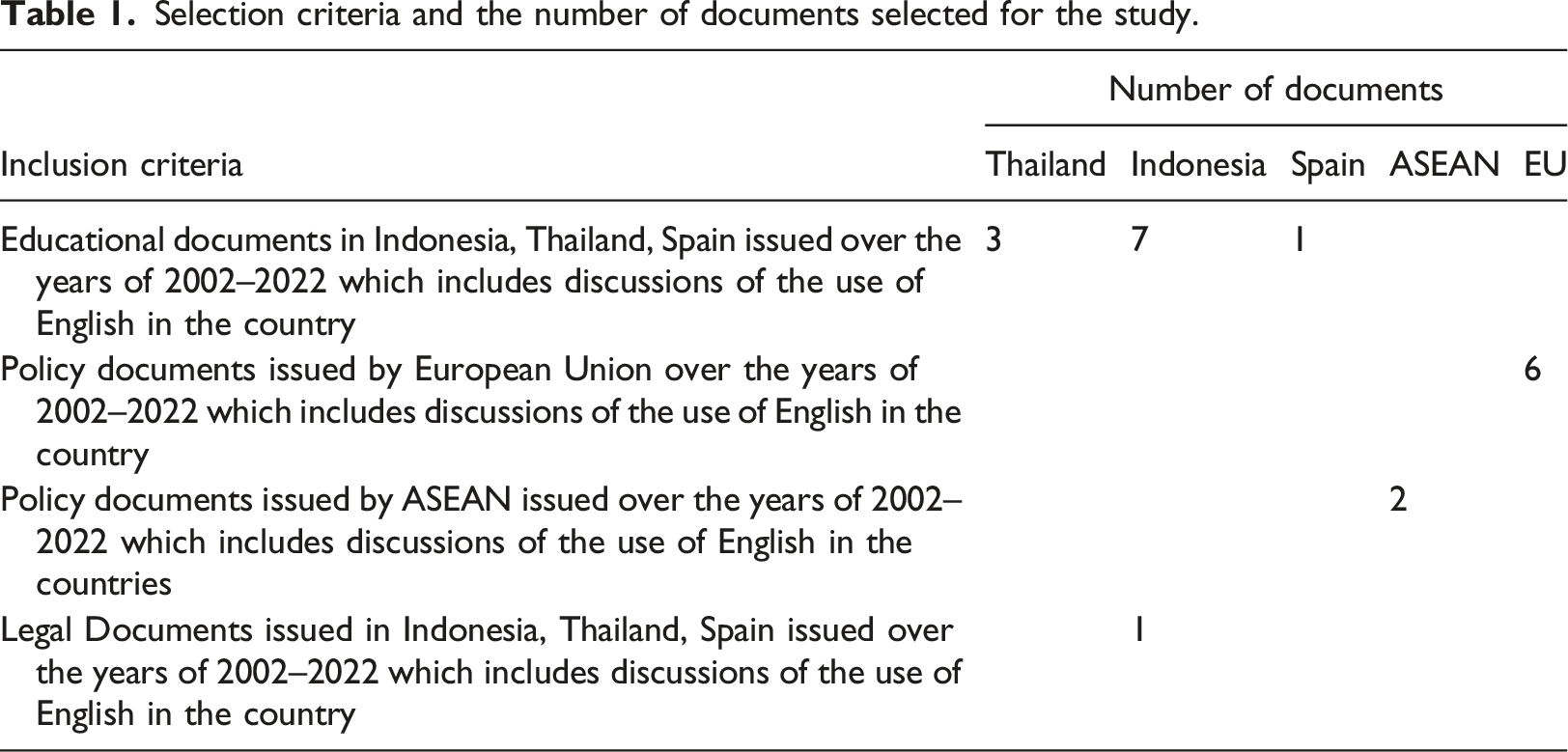
Selection criteria and the number of documents selected for the study.
Findings
By utilising our mapping device, we coded the instances and categorised them into themes of shaping influences of global, supranational, national, sub-national (regional), pedagogical influences.
Theme 1: Global shaping influences
The global shaping influence refers to how the global phenomena influenced the making of English language education policies. This global shaping influence seems to be prominent in all three contexts, and we identified five sub-themes.
The first sub-theme is globalisation. The documents under investigation mention globalisation as a dominant reason for developing education. To begin with, Indonesia recognised that ‘the globalisation era is marked by the intense competition in technology, management, and human resources…’ (IDNE, 2009: 1). In response to this, the government initiated International Standard School [ISS] aiming to prepare Indonesian young people to be more competitive globally, with English as the medium of instruction for the core subjects and quite an emphasis on the mastery of science and technology (IDNE, 2009: 1). These schools were required to refer to or adapt the curriculum of a developed country with particular mention of OECD countries ‘…the (ISS) school develop school-based curriculum in Bahasa Indonesian and English, and adapt a curriculum of a school in one of the OECD countries or other developed countries depending upon the school situation and readiness’ (IDNE, 2009: 62). However, this particular stream of schools was cancelled as the Constitutional Court approved the appeal by an Indonesian teacher group supported by a community that disapproved of its existence (Indonesian Constitutional Court, 2012).
The main reasons for the cancellation were that the use of English was considered excessive in the schools and the appellants believed that it may endanger students’ sense of nationalism and the love of the national Language Bahasa Indonesia (Indonesian Constitutional Court, 2012). Another reason was that the schools were considered a symbol of commercialisation of Education (Indonesian Constitutional Court, 2012). There were actually other reasons for the cancellation such as teachers’ inability to cope with the demand to teach their subject through English and that many of them would teach their students through Bahasa Indonesia behind the closed doors of their supposedly EMI classes (Fitriyah, 2018).
After the cancellation of this type of school, as stated in the new curricular document, the Indonesian government still seemed to correlate their educational policy making with the strong influence of globalisation. One of the rationales for the need to develop a later curriculum, called Curriculum 2013, was the existence of the external challenges related to globalisation. Globalisation will change society’s living pattern from agricultural and traditional trading into industrial society and modern trade as reflected by the World Trade Organization (WTO), Association of Southeast Asian Nations (ASEAN) Community, Asia-Pacific Economic Cooperation (APEC), and ASEAN Free Trade Area (AFTA) (Ministry of Education, Culture, Research and Technology of RI [MECRT], 2013: 5). Meanwhile, the most current Indonesian ‘Emancipated Curriculum’ focuses more on English as the global language and its intercultural aspect of using the language (MECRT, 2022).
In the EU, globalisation requires increasing demand for foreign language skills so as to enhance communication and mobility among a wide variety of regions. Therefore, one of the main challenges that this fact brings about has to do with language education at all educational levels. Despite the fact that there are 24 different first languages among the EU member states, it is English that gains more relevance. ‘The increased diversity of languages within the EU has been accompanied by the growing prevalence of English, which has become – for better or for worse – the predominant language in globalised business, science and entertainment’ (European Commission, 2012: 46). Actually, it seems to remain this way even after Brexit for the reason that the practical reality is that the English language has become so embedded in business, social, and diplomatic interactions that the everyday call for its continued use is likely to hold out. As a consequence, the English language has acquired the status of a language of global communication, and English as the Global Lingua Franca (EGLF) has gained importance within the European context so foreign language education is being reorganised considering this transition (Smokotin et al., 2014).
The second sub-theme we identified was the increasing prominence of English at the international level. Indonesian government regulated that ‘the graduates [of ISS] have to be above the national standard and are excellent in the use of English…’ (Depdiknas, 2009: 4). The Office of Higher Education Commission of Thailand (OHEC) announced in 2016 the necessity to raise English standard in Thai higher education because ‘English knowledge and skills can be used as a tool for accessing international body of knowledge’ (OHEC, 2016, as cited in Tantiniranat, 2020: 254).
The third sub-theme involves participation in the global community, either academically, socially, and professionally. The governments’ endeavour to encourage their citizens to participate more in the global community and to improve their competitiveness to make the most of their involvement is evident from the analysis. In Indonesia, this was addressed in one of the documents that ‘the graduates …have achievements in the international level competitions, collaborate and continue their education in international standard universities’ (Depdiknas, 2009: 4) with ‘the ability to compete in various international competitions and/or work overseas; the ability to speak in English or other foreign languages; the ability to actively involved in the international level to protect the sustainability of life and the development of the world; (Indonesian Constitutional Court, 2012: 191)’. Spain also emphasised this underlying reason for their ELC, that is, ‘Language competences should be useful in real life and match, in particular, labour market needs. … Poor language skills are a serious obstacle to seizing professional opportunities abroad and in enterprises or organisations active at international level’ (European Commission, 2012: 1). Another document from Spain also highlights that foreign language (English as the most prominent) requirements are not only applied within mobility programs to study abroad (e.g. Erasmus+), which promote the internationalisation of education, but they are also a demand to gain access to today’s labour market and to prosper (Lopez et al., 2017).
In Thai policies, English is usually mentioned in relation to 21st-century skills (Tantiniranat, 2020: 255). As mentioned earlier, English is regarded as an enabling tool for Thais to access wider knowledge and thus, knowing English allows Thais to keep pace with the changing world (OHEC, 2016). In addition, the development of English language skills and a third language are important in creating ‘new species of graduates’ (Ministry of Higher Education, Science, Research and Innovation of Thailand [MHESI], 2020: 29), which refers to graduates with qualities and skills required for the country’s development. Meanwhile, the Indonesian policy highlights the development of noble character and scientific attitude including being honest, objective, critical, creative, independent, innovative, collaborative, and having the trait of embracing the global diversity (MECRT, 2022) which refers to having a great sense of nationalism, but eager to participate in the global world.
The final sub-theme we identified was regarding cross-cultural or intercultural communication in this increasingly interconnected world This situation alleviates the importance of English in the three contexts, as can be seen from Indonesia that One of the characteristics of ISS students is their understanding of the culture of other nations (cross national culture) (Depdiknas, 2009: 106). Thailand’s MHESI states that it is essential to establish knowledge and understanding of customs, traditions and cultures of neighbouring countries (of Thailand). This will be possible through supporting foreign [i.e. ASEAN and English] languages education (MHESI, 2020: 29).
In Spain, since the Bologna Process was launched, the curricula of all education levels are competence-based so teachers are being trained to be able to teach competences so as to prepare future citizens (Davies, 2017). Among the most relevant competences, linguistic and intercultural communication competences, cultural expression and awareness as well as social and civic competences play a key role in becoming qualified enough to coexist in such a globalised world (De-Juanas Oliva, Martín del Pozo & Pesquero Franco, 2016).
Supranational
The EU and ASEAN both play a role in the planning of language education in the three countries to varying extents. A sub-theme emerging is the importance of language education, specifically the importance of ELE, bilingual education and the learning of regional languages, that is, ASEAN/European languages concerning supranational community development. The Council of Europe underscores the importance of linguistic diversity as can be seen in the following excerpt: ‘the impetus toward political and economic integration, the free movement of population, and the expansion of European institutions is generating the need and demand for the teaching of foreign languages at all levels of educational systems’ (Riagáin and Lúdi, 2003: 7). The 1995 White Paper on Education and Training recommended that the learning of community languages should be developed as early as possible, so by the end of Secondary Education, every citizen of the EU should be proficient in, at least, three of them (mother tongue plus two). The main objective is therefore ‘to raise awareness of the value and opportunities of the EU’s linguistic diversity and encourage the removal of barriers to intercultural dialogue’ (European Commission, 2008).
English appears to be more emphasised than other languages in ASEAN. Although ASEAN has not launched any regional language education policy, it has provided the member states with some recommendations for developing education within ASEAN, especially the English language. For instance, the ASEAN 5-Year Work Plan on Education 2016–2020 identifies that enhancing teacher’s competencies for 21st-century skills is a priority area. One of the proposed activities to promote such competencies is developing teachers’ and academics’ English language and other ASEAN languages communication skills along with other skills (p. 20). An Indonesian document states that ‘When AFTA era starts, English will become an essential means of communication in the working world’ (Depdiknas, 2008: 97). In the Thai context, English is regarded as one of the essential skills for Thai graduates as ‘The future employment in ASEAN will require the graduates to have additional skills apart from their professional skill such as English and other languages used in ASEAN…’ (Tantiniranat, 2015: 162). To turn the vision of producing ‘graduates of international quality’ into reality, the first aim of OHEC is that Thai graduates’ English ability or proficiency must equal or rival those of graduates in other ASEAN countries (OHEC, 2010: 67).
Bilingual education has also been increasingly promoted in both ASEAN and EU, especially in tertiary education and increasingly in schools. The OHEC of Thailand has encouraged tertiary education institutions to offer bilingual curricula, that is, Thai and English (OHEC, 2010: d). Bilingual education has also been regarded as part of a great mechanism for preparing Thai graduates for the increasingly multicultural world: Prepare graduates and open their world views for the language and cultural globalisation phenomenon. Equip them to know and to be aware of the value of multiple identity, multiculturalism and diversity… Exchange programmes and bilingual education will be great mechanism [for such aims] (Commission on Higher Education, 2008: 17, emphasis added).
Bilingual education in Europe is regarded to lead to: demonstrably better outcomes in academic achievement than submersion programmes … Bilingual Education may be defined as educational programmes which (a) include some degree of teaching non-language subjects through the medium of the child’s second and/or third languages and (b) which aim, in accordance with principles set out in Council of Europe policy statements, at the development of some degree of additive bilingualism among the school population (Riagáin and Lúdi, 2003: 10).
Also, CLIL or Content and Language Integrated Learning has been promoted in schools ‘in which the teaching of certain subjects in the curriculum may be offered in a foreign, regional or minority language have existed in Europe for several decades […]’ (Eurydice, 2006: 7).
National
The national shaping influence concerns how national interests such as the conservation of national and/or vernacular language and the promotion of the tourism industry in the country may have shaped the policy for ELE. This shaping influence seems to be dominant in Indonesia, and quite subtle in Thailand where there is only one national language spoken with some varieties and absent in Spain where national language policy does not exist.
The national language plays a very important role in Indonesia. The diversity of Indonesian vernacular languages and culture raises the importance of nationalism issues such as through the promotion of the national and unifying language, Bahasa Indonesia. This language plays an important role for Indonesian to show their national identity and has a special role in history. The third line in the Youth Pledge 1928, ‘We, sons and daughters of Indonesia, uphold (revere) the language of unity, the Indonesian Language [Bahasa Indonesia]’ (Foulcher, 2000: 380), reflects this prominence. Therefore, when a foreign language gained its imminence such as when English was used as the medium of instruction, many Indonesian people reacted against this policy although many others were in favour of English-medium Instruction (EMI) (Fitriyah, 2014). For the supporters, the use of English as the language of instruction would help Indonesians become more involved in the international community and more competitive globally and to even introduce the local culture to the world. One of the ISS principals mentions that ‘We also introduce Bahasa Indonesia to overseas communities. We have sister schools in Australia …We have to teach [the students and teachers] Indonesian culture at these schools.’ (Indonesian Constitutional Court, 2012: 170). In addition, a judge with a dissenting opinion argued that ‘People learn a foreign language not to get rid of Bahasa Indonesia, but because they need the language for a better life’ (Indonesian Constitutional Court, 2012).
Meanwhile, the critics suggested that not only was this level of English use a threat towards students’ national identity as Indonesians. An expert witness against ISS testified that ‘I once heard a story, a mother was startled when her child said ‘I hate Bahasa’, which she meant Bahasa Indonesia.’ (Indonesian Constitutional Court, 2012: 77), but that it also encouraged social divide ‘...in the long run, Bahasa Indonesia which is the unifying language of Indonesians will be the language of the low-class people which will differ them from the elites [who speak English]’ (Indonesian Constitutional Court, 2012: 74). Due to these conflicts, EMI policy in Indonesia, which was introduced as a response toward globalisation, was then cancelled (Fitriyah, 2018).
An Indonesian policy document published after the EMI era provided an example of how the national interest to develop tourism of the area may have shaped the English language policies: With regard to type of text, for instance descriptive text, students who live in the tourists’ areas need to be directed to learn to describe and promote the local natural environment, tourist objects, special culinary, crops, and handicrafts of the area (Kemdiknas, 2016: 11).
Sub-national
The sub-national dimension refers to how language policy can influence the design of the English language curricula in different regions within a nation. This shaping influence does not seem to be prominent in Indonesia and Thailand. Even though Indonesia counts a large number of vernacular languages in every region, language policy is decided by the central government, and it is applicable to all schools throughout the nation. Thailand’s situation is similar to that of Indonesia, with the central government via the Ministry of Education and/or MHESI governing the national educational policies in which language policies are embedded.
Sub-national influence is decisive in Spain since its educational system is based on a decentralised model in which the central government, autonomous communities, local administrations and schools play a key role respectively (Alarcón Pérez, et al., 2010). The Ministry of Education of each Autonomous Community designs the language policy so it brings about the possibility of adapting them to the context’s particularities and goals such as the maintenance of the co-official language or plurilingualism.
The case of Andalusia clearly somehow reflects the influence of the supranational level since the main goal of its language policy is to improve the language skills of Andalusian people in their mother tongue and provide them with plurilingual and pluricultural skills (de Educación, 2006).
Pedagogical
Pedagogical influence seems to be prominent in the making of the ELE in the three contexts. The first related pedagogical influence that we found was the examination framework. This refers to the prevalence of emphasis on exam-driven teaching due to the key role of national and international exams that students should take.
In Indonesia, the government believes that examinations are related to the achievement of excellence in education: Schools need to develop an instrument for authentic assessment which is acquired from the learning process measuring three domains of assessment i.e. cognitive, psychomotor, and affective, including portfolio. Students’ learning outcome is measured through school exam, national exam, and international exam enriched with an assessment model of an excellent school from a developed country with a particular excellence in education (Depdiknas, 2009: 31).
In the Thai context, with reference to the vision of ‘international quality’ and the objective of Thai graduates reaching ASEAN fellow countries standard of English mentioned earlier, the OHEC states that an indicator of such vision and objective is the average international English test scores (such as TOEFL or IELTS) of Thai graduates are approximately equal to those of ASEAN countries (OHEC, 2010: 67).
In Spain, foreign language curricula are, at some point, exam-driven because it is designed according to the language activities described in the Common European Framework of Reference for Languages (CEFR). It explicitly defines which content should be taught, the assessment criteria to follow, and the learning evaluable standards. Not only is it a helpful guide and proof of the strong supranational influence, but it also gives some homogeneity among regions. This framework, at the same time, describes the achievements of learners of foreign languages across Europe. It is applicable to all languages in Europe and is recommended to set up a system of validation of language ability. It establishes six references (A1, A2, B1, B2, C1, C2) levels and is used by recognising institutions that assess and certify these levels. Consequently, external exams influence not only the teaching but also the assessment practices. Indonesia is similar in this regard. This framework is apparently also adopted by Indonesia, despite its status as a non-member of the EU. Indonesian Ministry of Education, Culture, Research and Technology stipulated that the learning outcomes of the four language skills of listening, speaking, reading, viewing, and to present all these integrated in different types of texts are required to refer to the Common European Framework of Reference for Languages: Learning, Teaching, Assessment (CEFR) equivalent to B1 by the end of their High School level (MECRT, 2022).
The next pedagogical influence that may have shaped the ELE policy is the technological transfer in a sense proposed by Holiday (1994). For instance, in Indonesia, it relates to the methods and techniques that the educational stakeholders are required to adopt. Indonesian ELE policy stipulates that to teach English, teachers are required to adopt genre-based approach focussing on the different types of texts in different modes of oral, written, visual, audio, or multimodal (MECRT, 2022). This policy was issued on the basis of Halliday and Matthiessen’s (2014: 3) proposition that ‘When people speak or write, they produce text, and text is what listeners and readers engage with and interpret’ (MECRT, 2022). In addition, the teaching and learning process of English lessons needs to be learner-centred (Tyler, 1949, 1990 as cited in MECRT, 2022).
Discussion
The possible shaping influences on ELE policies in Indonesia and Thailand (Figure 3) and Spain (Figure 4) as discussed above reflect the complexities in language planning situations in our similar yet different contexts. In this section, we discuss five main insights gained from our exploration of the ecologies of emerging English language curricula in our contexts. The shaping influences of ELE policy in Thailand and Indonesia. The shaping influences of ELE policy in Spain.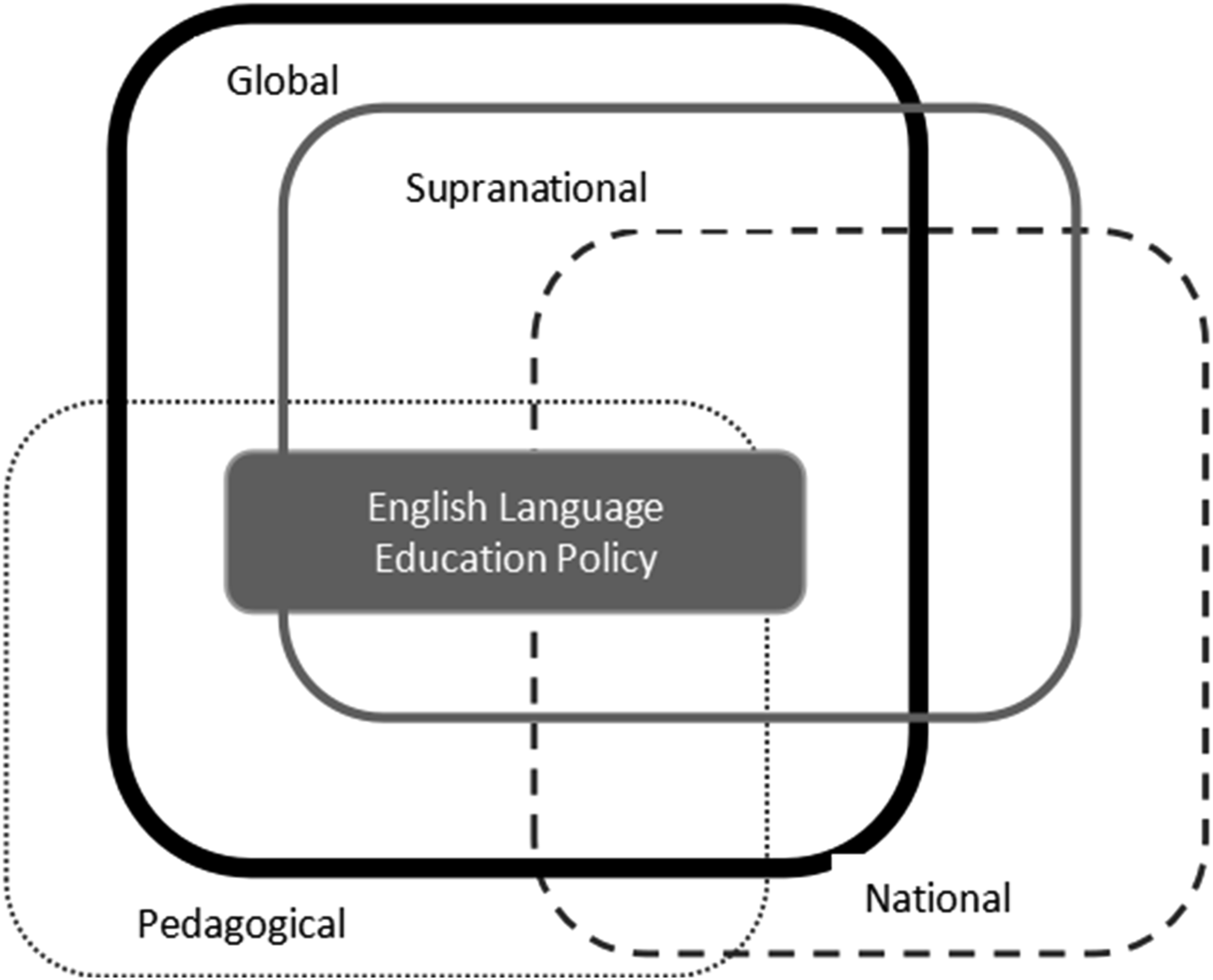
First, the major shaping influences of the ecologies feature global influences such as globalisation and the internationalisation of education and supranational influences, that is, ASEAN and EU. At this macro level, external influences highlight the increasing global interconnectivity and the economic development drives. Global competitiveness tends to be a powerful factor to be considered when planning language education (Frey & Whitehead, 2009; Sönmez & Köksal, 2022). Due to the trend of international education enterprise, educational sectors, especially at the tertiary level, have been trying to become ‘internationalised’ with the ‘world standard’ education to attract international students (Lau, 2020).
Second, the supranational influences from ASEAN and EU are also evident in the selected documents. These are reflected through, for instance, the preparation of graduates in the three contexts for future employability and for living and working in a plurilingual/cultural environment. In this regard, the documents highlight essential skills such as intercultural and foreign language skills, especially English. This supranational influence is mostly prominent in Thai documents. This is probably due to the serious concern that Thailand pays attention to the supranational organisation, mainly to support the development of Thai economic development (Fitriyah, 2014).
Third, pedagogical influence especially regarding examination was extensively addressed in the documents in these three contexts. Indonesia, in the context of ISS schools, focuses on the excellence in education with the indicators of the achievements in the school, national and international exams. Examination culture in Thai documents reflects through the discussion of international English language proficiency tests such as TOEFL and IELTS. For Spain, the aim of the exams was the standardisation of the quality of education in all its regions using as a reference the Common European Framework of Reference for Languages (2001) and its Companion Volume (2018).
Fourth, in a complex multilingual landscape such as Indonesia, where more than 704 indigenous languages coexist with the national and foreign languages (Ethnologue, 2023a), the dominant presence of foreign language(s) at the pedagogic landscape was often considered as a ‘threat’ to national identity, especially, when that foreign language(s), in this case English, is considered the language of the ‘elites’ and more prestigious than the national language (Indonesian Constitutional Court, 2012: 74). Back in the early 19th century, despite the fact that it was spoken by only about 4 million of the 80 million Indonesian population at that time (Unesco, 1953), Malay, which is then known as Bahasa Indonesia after the Youth Pledge in 1928 (Foulcher, 2000), was chosen as the language of instruction and then the national language over Javanese which was spoken by 50% of the population. The reason was that ‘Javanese was handicapped by its complexity’ (Unesco, 1953: 57). After the youth pledge 1928, Bahasa Indonesia gained its reputation as the unifying national language of the multilingual nation (Foulcher, 2000). Hence, the use of a foreign language at schools to replace the national language, the unifying language and the ‘symbol of Indonesian nationhood’ (Foulcher, 2000: 377), as the language of instruction was considered a serious threat, and English in this instance becomes the metaphorical ‘naga’ (Coleman, 2016) devouring the national and indigenous languages.
Similarly, in Spain, English was seen as a dominant foreign language which was also considered as the ‘barriers’, not for the national and regional languages. However, it has a function to promote other foreign languages to encourage the appreciation of linguistic and cultural diversities. Therefore, it hinders the main goal of the EU’s multilingual policy which aims to increase awareness of the EU’s linguistic diversity and ensure all citizens have equal access to resources to learn at least two additional foreign languages.
The findings in this study exemplify how ELE policy emerges ‘out of a multiplicity of interconnected components or resources and their mutual relationships and dependencies’ (Pennington and Hoekje, 2010: 214), in which all those components are interrelated and interdependent (Stelma et al., 2015). Therefore, there can never be a one fit-for-all language policy. Each context needs a different set of policies to ‘keep the water calm’ or not to cause any stir in the environment. An instance of this situation is the Indonesian EMI policy, inspired by the European CLIL, the American CBI, and EMI in Asia regions, which proved to be not a good fit for Indonesia which has a complex linguistics landscape and strong patriotic history of the national language (Fitriyah, 2018). This similar phenomenon also happens in other South East Asian contexts such as Malaysia (Gill, 2012).
Conclusions
Through the analysis of the policy documents regarding the possible shaping influences on ELE curricula from Indonesia, Thailand, and Spain, this study offers the insights into what policy makers tend to consider in the making and planning of language curricula. We utilised the mapping device we developed based on the HCC, which comprises five shaping influences, that is, global, supranational, national, sub-national, and pedagogical. Our analysis revealed that the making of English language curricula in the three contexts shares some similarities as well as marks with differences. Global and supranational elements seemed to be prevalent in all three contexts under study. Meanwhile, the national element was dominant in Indonesia, which has a strong linguistic diversity feature, and was faint in the other two contexts where language diversity was not a main concern. The sub-national (regional) element was only prevalent in Spain where the educational system was decentralised and was not apparent in Thailand and Indonesia where the central government plays an essential role in the educational system. Finally, the pedagogical influence especially the examination culture was significantly addressed in the documents in all contexts with different foci: Indonesia focused on the excellence of education, Thailand on the international test score, and Spain on the standardisation of educational quality of its regions. The results see that the sub-national influence was specific to Spain, national influence to Indonesia, a country with a complex linguistic background, and supranational to Thailand, despite being a member of the same supranational organisation, ASEAN, as Indonesia.
Our mapping device which was inspired by Holliday’s HCC (1994) has enabled us to disentangle the complexities of the ELE policy making in our contexts. By this, we were able to draw and then compare the significant shaping influences of ELE policy making these contexts to then highlight what were more significant in each context. The findings of study show that Indonesian ELE planning, driven by its long patriotic history of language use and complex facet of linguistics landscape, is more sensitive to the nationalism issue of the language use. Thailand pays more attention to their participation and ability to survive in the supranational and global community engagement. Meanwhile, the ELE policy in Spain is more likely to be shaped by the desire to implement the plurilingualism policy of the EU by introducing more diverse languages recognised by the EU and the realisation that English still plays a crucial role at the international level. Therefore, we believe that this mapping device can be useful to map the complexities of ELE policies in other contexts to then compare and learn from the findings.
After synthesising the findings of this study and taking into account our exploration of each shaping influence, we conclude with some suggestions on what policy makers need to consider in the process of ELE planning. Policy makers could (and should) consider all the macro and micro factors in curricula planning and implementation including the educational cultures prevalent in the contexts, and need to be cautious when considering to adopt or adapt ELE from different contexts, as what might work well in other contexts may not be suitable in our context.
Footnotes
Acknowledgements
We would like to extend our utmost gratitude to Dr Richard Fay for his invaluable feedback for this paper and his support for us, KEF (Khwan, Elisa, Fitri). We would also like to thank Dr Juup Stelma, Dr Gary Motteram, and LANTERN (Language Teacher Education Researcher Network at the University of Manchester) community for their insights for this paper.
Declaration of conflicting interests
The author(s) declared no potential conflicts of interest with respect to the research, authorship, and/or publication of this article.
Funding
The author(s) received no financial support for the research, authorship, and/or publication of this article.
