



Abstract
This study explores and compares the ways in which indigenous peoples are depicted in current secondary school history textbooks in Brazil and Norway. This study seeks to show both convergence and divergence in narrative patterns by employing qualitative data analysis. Convergence is found, in particular, in: the mandatory inclusion of the topic of indigenous peoples in national curricula; school textbooks describe these groups as homogeneous groups and ethnic minorities that still suffer discrimination and exclusion. Regarding divergence, we highlight that: the definition of indigenous peoples is context dependent. In Brazil, textbooks are explicit regarding violence, while the Norwegian ones provide minimal descriptions of it; in Brazilian textbooks, indigenous peoples are depicted as part of the Brazilian society, both victims and agents of their destiny, while the Norwegian ones depicted them as “the other” and focused on their victimization. The article reflects on the social implications of these narrative patterns for these groups.
Introduction
This study explores and compares the ways in which indigenous peoples are depicted in current secondary school history textbooks in Brazil and Norway. It addresses narrative patterns as a curricular focus and history textbooks as a curricular manifestation (Adamson and Morris, 2014). In addition, this study seeks to show both convergence and divergence in narrative patterns. Here, narrative patterns refer to the ideas, values, and beliefs of a society that influence and are perpetuated by curricula (Van der Vlies, 2022).
Both countries in this study incorporated indigenous history and culture as mandatory topics into their national curricula in the 2000s. In Brazil, the teaching of indigenous history became mandatory in 2008 with Law 11, 645 (Brazil Congresso Nacional, 2008). This law sought to promote teaching that the political, social, economic, and cultural contributions of Afro-Brazilians and indigenous peoples shaped the formation of Brazilian society. Brazil is a former colony of Portugal, and both indigenous peoples and Afro-Brazilians suffered the cruelty of the Portuguese settlers. Nevertheless, these two ethnic minorities do not share the same history. For example, indigenous peoples have lived in Brazil since 20 to 40 thousand years ago, long before the territory was invaded and colonized by Portuguese settlers. Africans, in contrast, were brought as slaves to work on the cattle farms and sugar-cane plantations of the Brazilian colony between 1500 and 1822.
As for Norway, the country was under Danish rule from 1380 to 1814 and Swedish rule from 1814 to 1905, but it did not experience slavery like Brazil. Still, its indigenous peoples (known as Sámi) also suffered oppression from the Norwegian state. In 2017, the Norwegian government decided to set up a truth commission to investigate the country’s assimilation policy towards indigenous peoples. In June 2023, the government published the results of this work in a report of over 700 pages. The report described the oppression, discrimination, and marginalization that these groups have suffered throughout history. The last curriculum reform in 2020 made it mandatory to teach all students about indigenous peoples’ history, culture, societal life, and rights (Norway Department of Education, 2017).
This article focuses on two countries that have experienced colonization and the use of violence against indigenous peoples in different ways. This topic is interesting because it allows to understand how national contexts influence the ways indigenous peoples are presented in school history textbooks, which can have implications for the social recognition and rights of these groups. Using qualitative data analysis, we seek to answer the following research questions: • How are indigenous peoples depicted in secondary school history textbooks in Brazil and Norway? • What are the social implications of how indigenous peoples are depicted in these textbooks?
As in world culture theory, we argue that including the topic of indigenous peoples in school curricula represents a global movement that can be attributed to several factors. These include growing recognition of the importance of indigenous knowledge and history, efforts to promote diversity and inclusion in education, and the acknowledgment of past injustices towards indigenous communities (Skinner and Bromley, 2023). However, we do not see differences in how indigenous peoples are depicted in school history textbooks as “loose coupling” mechanisms that explain the mismatch between global ideas and national contexts (Ramirez, 2012). Rather, we see differences as products of national and local traditions and processes involving social actors and political contexts (Mohammad, 2017).
Accordingly, history textbook research also shows the perpetuation of national narratives and clear references to nation-states, including the state’s common language, national borders, particular historical events, and cultural traditions (Grever and Van der Vlies, 2017; Van der Vlies, 2022). For example, in both Brazil and Norway, research indicates that national narratives were perpetuated in the 1990s as responses to globalization and the increasing dissemination of international knowledge and media (Gundem, 1998; Macedo, 2011, 2019). Furthermore, Karseth and Sivesind (2010) observe that Norwegian curriculum policy responds to global demands by articulating its own national demands in response to external demands.
We conducted a rapid literature review (Sutton et al., 2019) with the aim of finding similar studies. 1 We found very few studies that compared the topic of indigenous peoples in school history textbooks in different contexts. The study by Khan (2021) compares the topic of slavery in secondary school history textbooks from the United States and Brazil, two countries with a colonial past that includes slavery. Khan found that both Brazilian and U.S. textbooks published between 2006 and 2009 concentrated on the slavery of Africans and gave minimal attention to the unique experiences of enslaved indigenous peoples. Another study, by Manning and Harrison (2018), compares narratives of place and land used in teacher education in the neighboring countries of Australia and New Zealand. These authors criticize the use of school history textbooks for applying decontextualized narratives about indigenous peoples. They propose alternative ways of teaching about, and with, indigenous peoples. Their proposed methods rely on partnership with indigenous communities and student engagement. A study by Pahl (1996) compares eight themes in Chinese and U.S. history texts. These themes include how the books depict British colonialism in North America and how they depict native Americans. Both books focus on the slavery of Africans during the colonial period. Regarding native Americans, they describe their massacre, the usurpation of lands, and the confinement of survivors in reserves. The U.S. text briefly mentions the enslavement of the indigenous peoples.
Demonstrably, very few studies compare history textbooks in different countries. This article contributes to such research by contrasting two very different countries to gain insights into the interactions between a country’s background and the ways its school textbooks depict indigenous peoples. In addition, we reflect on how these depictions may have social implications for these groups.
The reminder of this article is as follows: the next section provides background information regarding the subject history in both countries. Then, we describe the selected data sources, analytical steps, and questions regarding reliability, validity, and the researchers’ positionality. We then present the study’s findings. Finally, we discuss our findings and conclude our article with final remarks.
Background information regarding the subject of history
Brazil was a colony of Portugal for more than three centuries. The colonization of Brazil by the Portuguese began in the early 16th century and ended in 1822, when it became independent from Portugal. In the wake of its independence, the Brazilian government aimed to consolidate its exporting tradition and align the country with Europe’s social and economic achievements (Bittencourt, 2018: 136). In the 19th century, the subject of history was associated with a sense of progress, and its teaching content included modern history and national history. History was primarily concerned with describing important occidental characters and events in chronological order and relating these characters and events to each other (Bittencourt, 2018: 130). In the period after the Second World War, the subject of history moved its attention towards democratic ideas, pedagogical theories, and teaching methods that promoted student participation, as in many European countries (Bittencourt, 2018: 140).
Still, the development of history as a subject in Brazilian schools has had its own particularities due to the country’s colonial past, including slavery. For example, many teachers in the country’s first schools were priests teaching history according to Christian doctrine and values. In addition, many students were sons from the well-born classes who were taught to believe that gender, ethnic, and economic differences were natural and unquestionable phenomena in Brazilian society (Bittencourt, 2018). This colonial and religious past existed alongside the modern and scientific character of history as a subject, which created tensions and ambiguities in the teaching of the subject throughout the 20th century (Bittencourt, 2018: 135).
Another important time was Brazil’s dictatorship period, from 1964 to 1985, which stifled democratic ideas linked to the subject of history. During this time, history was merged with the subject of geography and named “social studies.” In Brazil, this subject was aimed at disseminating knowledge and values to maintain order and preserve the dictatorial regime. After the dictatorship ended, history returned as a school subject. New topics were included, such as the history of indigenous peoples and the history of African and Afro-Brazilian cultures. Law No 9394 of 1996 included the history of African and Afro-Brazilian cultures as obligatory content in all Brazilian schools (Brazil Ministério da Educação, 1996); Law No 10,639 of 2003 approved national guidelines for education on ethno-racial relations in schools; and Law No 11,645 of 2008 made the teaching of indigenous history and culture in schools mandatory (Brazil Congresso Nacional, 2003).
In Norway, the purpose of the subject of history is linked to a sense of nation-building and democratic values. Norway was under Danish rule from 1380 to 1814. Following the Napoleonic Wars, Norway was transferred from Danish to Swedish rule as part of the Treaty of Kiel in 1814. Consequently, Norway entered a personal union with Sweden, which meant that they shared a monarch but maintained separate institutions and administrations. During the union with Sweden, tensions arose as Norwegians sought to assert their national identity and gain more autonomy. Many school staff and politicians argued that the study of history should make students aware of contemporary democratic challenges, such as the fact that the Swedish king still had authority over the Norwegian government and parliament (Koritzinsky, 2020: 36–37). In 1890, the Norwegian parliament passed a law that placed great emphasis on modern history and social studies. The 1890s were an important period of reform for social studies in Norwegian schools. This period was both influenced by, and it contributed to, reinforcing the democratic and national values in Norwegian society. This continued to 1905, when the union with Sweden was dissolved, and into the decades after (Koritzinsky, 2020: 37).
From 1946 to 1964, several changes took place in Norwegian schools. After the worldwide rise of dictatorships in the 1930s, occupations (Norway was occupied by Germany from 1940 to 1945), and destruction during the Second World War, many politicians and school staff believed that schools had to take greater responsibility for raising students to become democratic citizens. The introduction of “social studies” as a separate school subject was considered a contribution in this respect. In 1946, the subject of social studies was separated from the subject of history in primary school. The same happened for secondary schools in 1964 (Koritzinsky, 2020: 38).
With the introduction of Norway’s national curriculum in 1973, history, geography, and social studies were treated separately and equally as subjects in Norwegian schools. The curriculum identified several themes, such as the environment, globalization, ethnicity, and gender. The Norwegian government described these themes as guiding teaching, and in 1987 they became compulsory. Further, the educational rights of the indigenous peoples in the country (the Sámi) were formalized in the national curriculum of 1973 and expanded in the national curriculum of 1987. This was done by granting them the right to education in their mother tongue, together with instruction in Norwegian as a second language, and bilingual teaching (Engen, 2018). The 1997 curriculum continued along these lines.
The subsequent school reform in 2006, called “Knowledge Promotion,” brought a less detailed curriculum based on competence goals and basic skills. The last curriculum reform of 2020, known as the “New Knowledge Promotion,” was a continuation of the 2006 reform, accentuating teachers’ freedom to choose curriculum content with the aim of meeting competence goals and developing their pupils’ basic skills (Koritzinsky, 2020: 39). This reform clarified the values of education and included the interdisciplinary subjects of sustainable development, democracy, citizenship, life management, and public health. It also mentioned the need to respect and teach a common cultural heritage to present and future generations. This heritage includes Christian, humanist, and Sámi values and traditions. According to the new curriculum, all schools in Norway must provide education about Sámi and Sámi relations (Norway Department of Education, 2017). This is present both in the overall part of the curriculum and in the specific curricula for various subjects, including history.
Methods: Research design and data
In this article, we examine the relationship between the content of school history textbooks and national contexts. We also look into the most recent versions of these textbooks. We do not discuss the pedagogical theories or ontological and epistemological processes that could influence the content of textbooks. 2 Rather, this study draws attention to the content of school history textbooks to understand variations and common points in how they depict indigenous peoples.
Selected data sources
Before presenting the selected history textbooks, we describe the textbook procurement systems in each country.
The textbook procurement system: Brazil
Discussions about the use of textbooks have always been controversial topics in Brazil (Di Giorgi et al., 2014). On the one hand, some groups criticize the use of textbooks as restricting teacher autonomy and disseminating conceptual errors and ideological biases (Bittencourt, 2018; Oliveira and Caimi, 2021). On the other hand, groups defend the use of textbooks as a means of accessing information, especially for students with few economic and cultural resources (Di Giorgi et al., 2014). In any case, textbooks and the system for procuring them are integral parts of the Brazilian educational system.
Currently, this program is systematized in four phases. First, publishers apply to participate in an assessment by the Ministry of Education. Second, the received textbooks are selected according to their technical and didactic features. In this phase, teachers and researchers from public universities are invited to analyze the quality of the textbooks according to the area of knowledge and the level of school education. Third, the Ministry of Education publishes its assessment of these textbooks and provides written and digital material to help schools in the selection process. Fourth, this material is sent to schools so that the pedagogical staff can indicate their three favorite textbooks. After that, the Ministry of Education quotes prices for the selected textbooks and enters negotiations with the publishers. It may happen that schools are not served their first choice for financial reasons. It is also worth noting that as of 2012, the textbook procurement system began incorporating the assessment of digital resources. However, these were not accessed in the last assessment of history textbooks carried out in 2018. In that assessment, 13 textbooks were approved of the 19 that applied to be assessed. This means that schools could choose three textbooks from these 13. With the aim of selecting two textbooks for our analysis, we asked experienced history teachers about their preferred textbooks. We decided to analyze the following: • Azevedo and Seriacopi, (2016). História: Passado e presente [History: Past and present]. (1st ed.). São Paulo: Ática. (3 volumes, 848 pages); hereafter referred to as Brazilian Textbook 1 or BT1. • Dos Santos et al., (2016). História [History] (3rd ed.). São Paulo: Saraiva Educação. (3 volumes, 848 pages); hereafter referred to as Brazilian Textbook 2 or BT2.
These two textbooks are, not surprisingly, produced by the main textbook publishers in the country. Regarding digital solutions, these textbooks offer assignments and teaching materials via their digital platforms. However, because Brazilian public schools are not yet fully equipped with access to the internet and digital media resources, it is difficult to say anything about the use of these digital materials in schools.
The textbook procurement system: Norway
The textbook procurement system in Norway ceased in 2000 after having been a public guideline for more than 100 years. With the implementation of the “Knowledge Promotion” school reform in 2006, several new textbooks and other teaching materials were published without the public interfering. In 2009, it was also decided that textbooks and teaching materials should be free for students in secondary school (Christiansen, 2021). The changes in the curriculum for history after the 2006 school reform were so extensive that all publishers had to revise their textbooks (Justvik, 2012: 8). With the introduction of this school reform, it was up to each individual school and teacher to choose which textbooks to buy. A possibly unfortunate choice of textbook in a subject had to be tolerated by teachers and pupils for several years (Justvik, 2012: 8).
With the introduction of the new comprehensive education reform in Norway in 2020, history textbooks were revised according to the new curriculum guidelines. The question of which textbooks are used the most in Norwegian secondary schools today is difficult to answer because it is no longer a legal requirement for publishers in Norway to state sales figures for their textbooks. However, after talking to several experienced history teachers in Norwegian schools, they stated that the most used textbooks today are All Time’s History (Alle Tiders Historie, Cappelen Damm) and Perspectives (Perspektiver, Gyldendal). There are two new textbooks on the market: Basic Book in History (Grunnbok i historie, Aschehoug) and History Across (Historie på Tvers), published by Nils Håkon Nordberg’s own publisher. It is difficult to say how much the latter two textbooks are in use. In this study, based on conversations with experienced history schoolteachers, we chose to analyze the following two textbooks: • Heum et al., (2020). Alle tiders historie. [All time’s history] (2nd ed.). Oslo: Cappelen Damm. (631 pages); hereafter referred to as Norwegian Textbook 1 or NT1. • Madsen et al., (2022). Perspektiver – Vg2-Vg3 [Perspectives, secondary education years 2 and 3] (2nd ed.). Oslo: Gyldendal. (523 pages); hereafter referred to as Norwegian Textbook 2 or NT2.
In today’s digital age, it is interesting to note that Norwegian publishers are investing heavily in offering textbooks as digital solutions. Both of the textbooks chosen for this study are available as fully digital books. In addition to digital textbooks, both major publishers offer assignments and teaching materials via digital platforms. Schools in Norway must purchase licenses to gain access to these platforms. The textbook from Cappelen Damm is available in two digital editions: Alle tiders historie Unibok and Brettbok (ebook). The Alle tiders historie Unibok comes loaded with textbook text, a digital dictionary, and reading tools. The license for the digital textbook is valid for 2 years so that students have access to the learning material until their final exam in the subject.
Coding and categorization of the data material
To code the data material, we chose an approach that Tjora (2012: 174) described as a “step-by-step deductive inductive method.” This method involves inductively developing empirical codes based on the data. The number of different codes developed will depend on how detailed they are made to be. The goal is to generate text-based codes; that is, codes that have only been developed from data (Tjora, 2012: 174–179). In his study, Vestby (2017: 111) operates a two-part coding of the text material: (1) quotation code and (2) variable code. A quotation code is empirical and includes direct quotations from the textbooks analyzed. Examples of a quotation code in our material are: The result of nation-building was therefore a Norwegianization policy towards the country’s minorities, where training in the Norwegian language and adaptation to Norwegian culture were central ingredients. The aim was to get people from minority communities to speak, write, and live as most Norwegians did. The Norwegianization policy primarily affected the Sami, Kven, Forest Finns, Romani, and Roma people. (Alle tiders historie, 2020: 390, translation by the present study’s authors.)
A variable code is also empirical but refers to different themes that emerge as a pattern in the data material. From the above quotation, for example, the following themes could be identified: Norwegianization policy, minority communities, Norwegians, and Sámi people. We have allowed the two different code types to be equal in the coding work. We coded the content of each textbook according to the two code types mentioned above. Each textbook was coded in its own file. We then added the number of variable codes and quotation codes for each textbook. We obtained the following number of codes for each book: BT1: 191 codes; BT2: 159 codes; NT1: 100 codes; and NT2: 61 codes.
Based on these quotation and variable codes, we chose to prepare a set of main categories for the material in each file (i.e., for each textbook). Dividing the main categories as such allows a statement or an observation to be represented in several categories. We argue that this is a necessary methodological choice, as quotes can have an ambiguous meaning that does not always fit into one category, as explained by Vestby (2017: 112).
About reading images
The textbooks selected for this study contain several pictures and illustrations. As part of the text analysis, we operated with an extended text concept and analyzed parts of the visual material in the textbooks. We did this to gain insight into which visual means are used to emphasize the content of the texts (Kress and Van Leeuwen, 1996, 2006). Skrede (2021: 15) and Machin and Mayer (2012: 9) point out that images can represent what cannot be said (or can hardly be said) in words. This is because images and texts have different “epistemological obligations” (Kress, 2010: 16–17; Machin, 2013: 350; Skrede, 2017: 93–94). We argue that images and texts act together and fulfil different functions. For this reason, we have decided to incorporate images into this article. We chose to analyze five images: two from the Norwegian textbooks and three from the Brazilian textbooks. The selected images are used in the respective textbooks to illustrate either the situation of indigenous peoples or to illustrate nation-building and the majority population in Brazil or Norway.
Inspired by Mohamad Subakir (2012), we looked at the following three categories when analyzing the images: (1) participant type or characters, (2) representational meaning, and (3) setting (Mohamad Subakir, 2012: 1874–1876). The category “participant type/characters” can be analyzed by participant type and gender. Participant type may be humans or non-humans. Within the non-human type, there is a distinction of whether the depiction of participants or characters are animals or objects. The category “representational meaning” can be defined as: (1) fine arts depicting or attempting to depict objects, scenes, or figures directly as seen; naturalistic and (2) of or relating to representation (Mohamad Subakir, 2012: 1874). This second point refers to the representational meaning of actions; that is, what participants are doing and where the illustrated action is taking place. The “setting” category refers to the setting or context in which the participants are depicted (Mohamad Subakir, 2012: 1874–1878).
Reliability, validity, and researchers’ positionality
We posit that the description of the analyses and the criteria for selecting the data sources contribute to the reliability of this study. Accordingly, other researchers who have these descriptions at hand can decide whether and how the findings of this study can apply to the same or other data sources and selected groups of participants and contexts. It is important to note that differences in the years of publication of the selected textbooks, as well as differences in their length (number of pages), may affect the inclusion of the topic of indigenous peoples in these textbooks.
Regarding validity, one of the authors presented the ideas of this article at a conference about curriculum studies and another conference about indigenous peoples in the Nordic context. The audience at both conferences provided fruitful insights and corroborated the study’s findings.
Regarding the researchers’ positionality, we defend that well-grounded textbook research is only possible if one understands the context in which textbooks are produced; this aligns with Heinze (2010). One of the authors of the present study is a Brazilian national educated in the Brazilian educational system and who worked as a teacher in Brazilian secondary education for 3 years. Another author is a Norwegian national educated in the Norwegian educational system and who worked as a teacher in secondary education for 4 years. Currently, both work as teacher educators in higher education, respectively, for 12 and 3 years. It is important to emphasize that none of the authors belong to any indigenous group. The authors’ positionality influences what they see and how they interpret the data material. However, we argue that the systematic work with the data material counterbalances this positionality and provides new insights to the study. The next section presents the study’s findings.
Findings
The findings are presented in three categories based on the qualitative data analysis of history textbooks used in secondary education, as described in the Methods section. These categories are: ethnic minority groups, nation and national identity, and indigenous peoples.
Ethnic groups: Two national ethnic minorities in Brazil and six national ethnic minorities in Norway
In this section, we present indigenous peoples together with other ethnic minorities, 3 since this was one pattern that emerged from the analysis of the data material. Both BT1 and BT2 present two ethnic minorities in Brazil’s colonial past: the indigenous peoples who already lived in the country before the arrival of Europeans, and the African slaves brought by settlers to work on the cattle farms and sugar cane plantations of the Brazilian colony. BT2 (vol.1, p. 131) focuses on the indigenous peoples of the Tupi linguistic branch, who lived on the coast, while BT1 describes indigenous peoples in a homogeneous way.
The ethnic minorities that receive more attention from the Brazilian history textbooks are the Afro-Brazilians and the indigenous peoples. The words “Africans” and “slaves” (Africanos and escravos) are mentioned 769 times in BT1 and 455 times in BT2. The word “indigenous” (Índios and Indígenas) is mentioned 357 times in BT1 and 495 times in BT2. Moreover, BT2 dedicates an entire chapter to the Africans in Portuguese America and two others to the indigenous peoples before and after the colonization of the Americas. The front cover of BT2 (vol.1) is an indigenous young woman from the Barasano and Tuyuka groups, in Manaus, Amazonas Figure 1. Young indigenous woman from the Barasano and Tuyuka group. Rouxinol Village, Igarapé Tarumã-Açu, Manaus-AM, 2008 (photo: Fabio Colombini).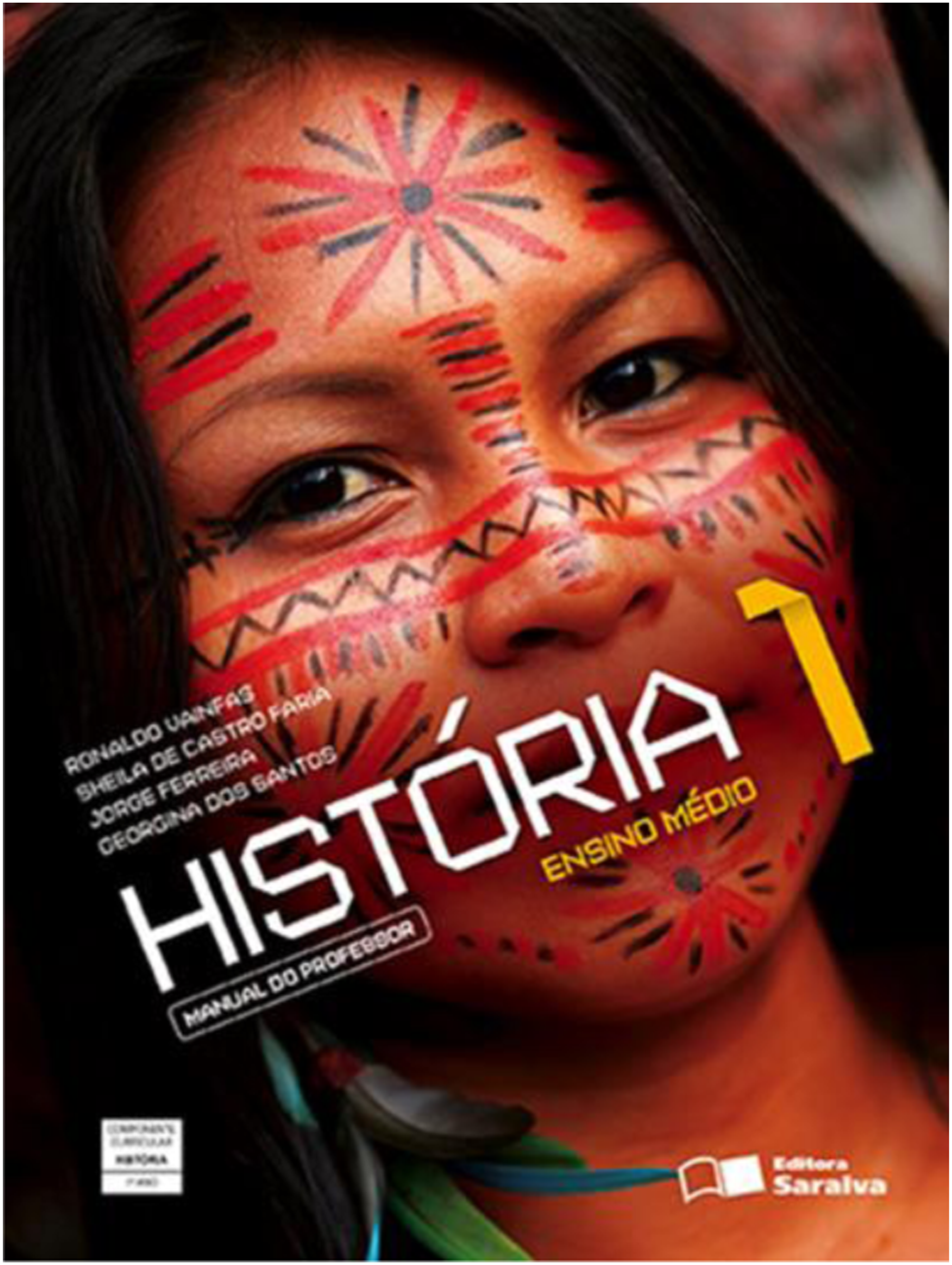
The indigenous young woman is expressed directly as seen in a naturalistic way. The setting is the indigenous community of which she is a member (Mohamad Subakir, 2012). According to information provided in BT2, the picture was taken in 2008.
The Norwegian textbooks describe as ethnic minorities Norwegian Jews (Norske Jøder), Romani people (Romanifolk and Tatere), Roma people (Rom and Sigøynere), Kvens (Kvener), Forest Finns (Skogfinner), and Sámi (Samer). Sámi is the group that receives the most space in both history textbooks. Norwegian Textbook 1 (NT1) mentions the word Sámi (“same,” “samer,” and “samene”) 95 times (in its 631 pages), which is over five times more than Norwegian Textbook 2 (NT2), which mentions this group 17 times (in its 523 pages). The front cover of both NT1 and NT2 do not have any representation of indigenous peoples or other national ethnic minority groups.
Where the Norwegian textbooks address ethnic minorities, they describe that not all ethnic minorities have received the same treatment. NT1 (p. 392) states that the Norwegian authorities did not perceive Jews as an ethnic minority like the other ethnic minorities. NT1 concludes that Jews were not affected in the same way by Norway’s assimilation policy as were other groups. In contrast, according to the same textbook, Roma people received extra tough treatment, subjected to both lobotomy and sterilization (p. 457). According to NT2, Norwegian Jews lived well in Norway before the Second World War, at which point discrimination against them began. NT1 draws attention to the fact that 46,000 Norwegians were sentenced for national crimes after the Second World War for being pro-Nazi (p. 408).
Nation and national identity: The typical Brazilian and the typical Norwegian from the past and the present
BT1 presents a painting called Moema, which is associated with the valorization of national identity in the middle of the 19th century Figure 2. Moema (Painting by Victor Meirelles, 1866, São Paulo Museum of Art).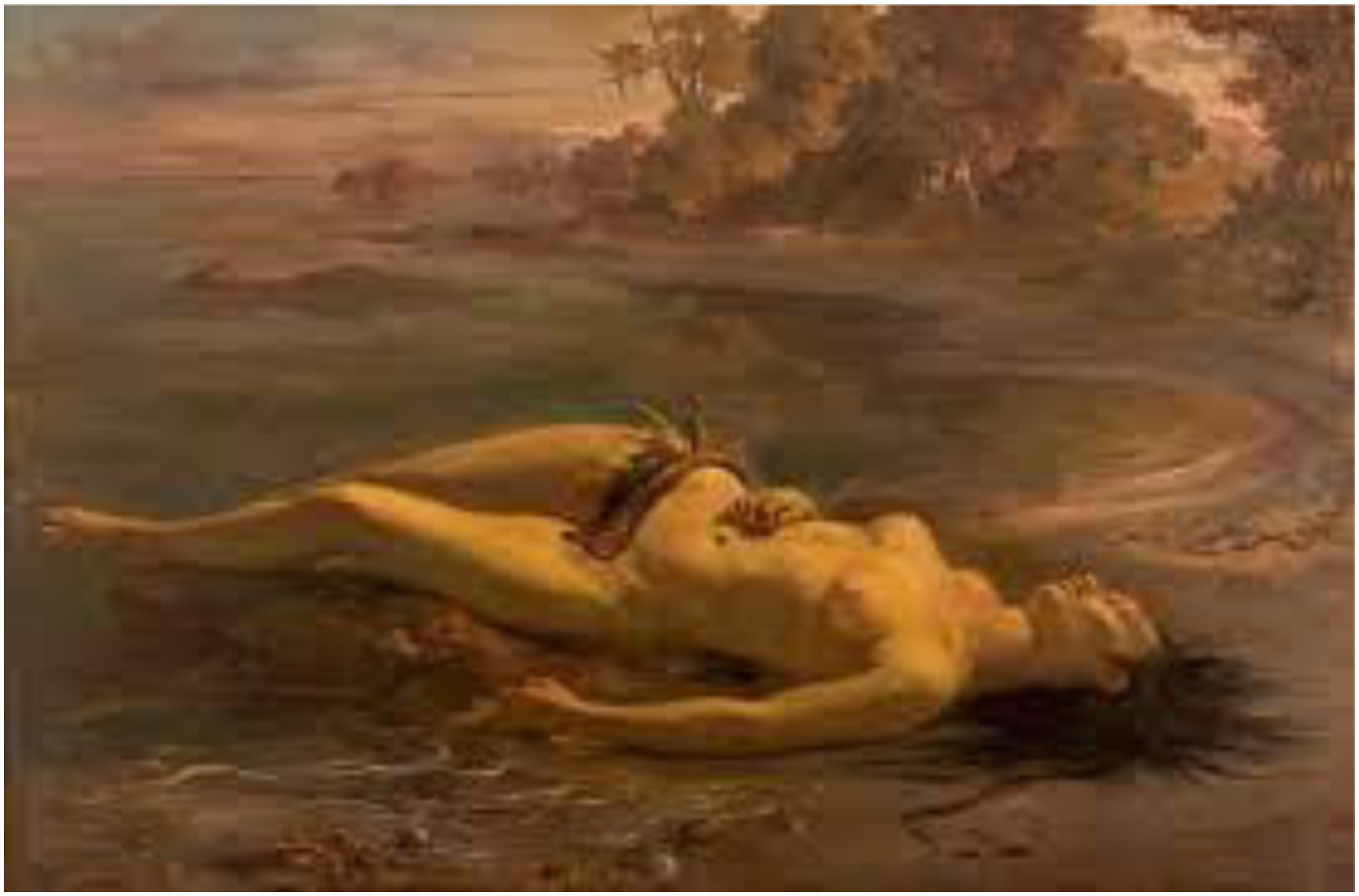
This painting illustrates the romantic and idealized view of the indigenous peoples and is inspired by an indigenist Brazilian poem called “Caramuru” (the name given to a Portuguese settler by Brazilian natives). According to the participant type or characters (cf. Mohamad Subakir, 2012), in this poem, Moema, an indigenous woman, falls in love with a Portuguese settler. She drowns while trying to swim after his departing ship. Regarding the relationship between the Portuguese settlers and the indigenous peoples in the country, both Brazilian history textbooks describe attempts to completely assimilate the indigenous peoples during the colonial and imperial periods. According to the selected Brazilian textbooks, the Portuguese settlers created boarding schools to separate indigenous children from their families to learn Christian values and traditions (BT1, vol. 2, p. 67; BT2, vol. 1, p. 255–256, vol. 2, p. 207).
BT1 describes the Brazilian imperial period as marked by disputes between elites with the goal of controlling the commercialization of products internally, within different regions, and externally to other countries. This textbook makes the point that the definition of a Brazilian citizen was inserted into this field of dispute. According to BT1, the groups considered citizens in the Brazilian Constitution of 1824 were the Portuguese and other Europeans living in Brazil who supported Brazilian independence, freemen, and ex-slaves born in Brazil. Those cast aside were the Portuguese against independence, slaves, freemen born in Africa, indigenous people, and women. These groups had no political rights. They could neither be elected nor participate in elections (BT2, vol. 2, p. 152). Hence, BT2 addresses the complexities involving indigenous peoples at that time. BT2 mentions on the one hand the romantic and idealized view illustrated by the image of Moema, and on the other hand it shows that indigenous peoples were not considered Brazilian citizens.
In Norway, expectations regarding a national identity developed after the country got a constitution in 1814 (see section “Background information regarding the subject of history”). According to NT1, the aspirations of nation-building were nourished through literature, art, folk music, linguistics, and historical research (p. 389). The image below, called “The Bridal Journey in Hardanger,” relates to the period of nation-building and shows who was valued as the typical Norwegian at that time Figure 3. Brudeferd i Hadanger (Painting by Adolph Tidemand and Hans Gude, 1848, The National Museum of Art, Architecture, and Design, Norway).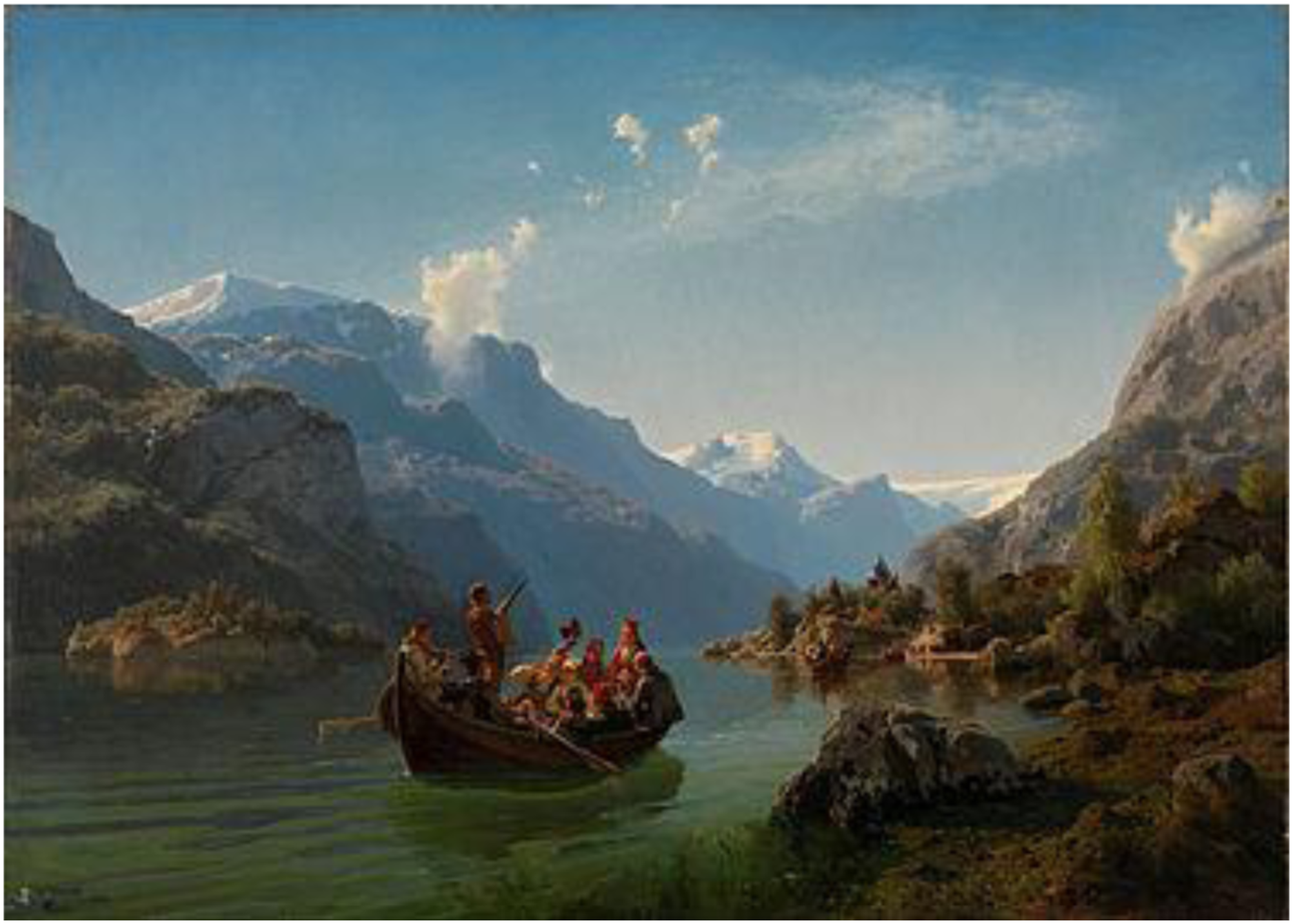
Regarding the representational meaning of this painting (i.e., what the participants are doing and where the illustrated action is taking place) (cf. Mohamad Subakir, 2012), one sees that the image illustrates a bridal party on its way across a fjord by boat after a wedding. The bride and groom are sitting in the front boat, and the wedding guests are in other boats farther behind. Regarding the participant type or characters (cf. Mohamad Subakir, 2012), the bride and groom, and most of the guests, are dressed in Norwegian folk costumes. The setting (cf. Mohamad Subakir, 2012) shows the surrounding landscape and highlights the idyllic and lyrical aspects of Norwegian nature, depicting a fine summer day under towering mountains with green trees and a mirror-like fjord. This image shows the strong sense of nationalism present during the period. According to NT1, the Norwegian authorities expected that all ethnic groups, including the Sámi, should speak, write, and live as most Norwegians did.
Both NT1 and NT2 mention the assimilation policy that lasted about 150 years, from 1815 to 1970. According to NT1, many children from ethnic minorities (including the Sámi) were forcibly taken from their parents and placed in orphanages or homes with ethnically Norwegian families. NT2 describes that the Norwegian authorities believed that this would break the parents’ life patterns, allowing the children to become like the majority population (p. 234–235).
In the most recent period, NT2 (p. 408) mentions a speech from King Harald, pronounced in 2016, to illustrate the typical Norwegian of today. We present an excerpt of the speech as follows: A warm welcome to us, everyone! You who are gathered here make up the breadth of what Norway is today. So, what is Norway? (…) Norway is above all people. Norwegians are northerners, people from Trondheim, southerners – and people from all the other regions. Norwegians have also immigrated from Afghanistan, Pakistan and Poland, Sweden, Somalia, and Syria. My grandparents immigrated from Denmark and England 110 years ago. It is not always so easy to say where we are from, which nationality we belong to. What we call home is where our heart is – and that cannot always be located within national borders. Norwegians are young and old, tall, and short, able-bodied and wheelchair users. (…) Norwegians are engaged youth and experienced old people. Norwegians are single, divorced, families with children and old married couples. Norwegians are girls who like girls, boys who like boys, and girls and boys who like each other. Norwegians believe in God, Allah, Everything and Nothing. (Translation by the present study’s authors.)
It is interesting to note that in this speech, the king does not mention indigenous peoples but rather refers to all citizens in Norway as “Norwegians.” In the following section, we show how Brazilian and Norwegian history textbooks depict indigenous peoples.
Indigenous peoples: Agents and victims
The Brazilian textbooks describe indigenous peoples as both victims and agents of their own destiny, having resisted and allied with the Portuguese settlers (BT1 vol. 2, p. 65–66; BT2 vol. 1, p. 259). According to the selected textbooks, the majority of the indigenous peoples were decimated either by the violence committed by the Portuguese settlers or by the diseases they brought (BT1 vol.2, p.241; BT2, vol.1, p.237). The textbooks also present indigenous peoples as diverse groups that had alliances or rivalries with other indigenous groups. BT2 provides an example of a leader of an indigenous group fighting together with Portuguese settlers to enslave rival groups (vol. 1, p. 250). Further, BT2 provides the names of descendants of European settlers with indigenous peoples who learned how to navigate Brazilian society to obtain privileges (vol. 1, p. 259). According to BT2, indigenous peoples had relationships with Europeans, resulting in ethnic and cultural admixture (vol.1, p.267).
BT2 addresses the mixed-race nature of indigenous culture as a result of the resignification of indigenous traditions following their encounter with European culture and Christianity. The painting below, from 1928, is called “Abaporu,” which in a Brazilian native language means “a man who eats.” According to BT2 (vol.3, p.29), this painting illustrates the valued Brazilian national of the 20th century: a mestizo
4
with a big foot in his Brazilian roots and who eats varied cultures. The representational meaning is, in this context, illustrated through a piece of fine art (cf. Mohamad Subakir, 2012) Figure 4. Abaporu (Painting by Tarsila do Amaral, 1928, Museum of Latin American Art of Buenos Aires, Fundation Constantini, Buenos Aires, Argentina).
The Brazilian textbooks describe in detail the pasts of the country’s indigenous groups and how their history negatively affected the groups’ inclusion in present Brazilian society. According to the textbooks, indigenous peoples in Brazil often experience discrimination, prejudice, and social disadvantages due to their minority status. They also face challenges in accessing resources, opportunities, and decision-making processes, resulting in inequalities and marginalization (BT1, vol.2, p.259, 283; BT1 vol.3, p. 269). Thus, they are pictured by the Brazilian history textbooks both as agents of their destiny and victims of an unequal society.
The Norwegian textbooks describe the ways of life of the Sámi. NT1 describes how, during the Middle Ages in Norway, a “Siida system” was developed for the Sámi. The Siida were small local communities attached to land. The Siida community would coordinate hunting and trapping activities, among other things, by distributing hunting areas among their members. It was also common to collaborate on larger tasks, such as catching reindeer in the winter. Further, a Siida could cooperate with other nearby Siidas (NT1, p. 234).
The selected textbooks describe how indigenous peoples were administered by the Norwegian state. For example, after 1600, Denmark-Norway wanted to consolidate its position in Finnmark and prevent Sweden and Russia from taking control there. The authorities therefore called for increased Norwegian settlement in the north. The Sámi who lived along the coast—the so-called Sea Sámi—now had to pay taxes and submit to the rule of the Danish-Norwegian officials. Great resources were invested in missions to convert the Sámi from their shamanistic religion. At the same time, many of the mountain Sámi switched from being hunters to raising domestic reindeer (NT1, p. 234).
NT1 describes an agreement concluded in 1751 between Denmark-Norway and Sweden that divided the northern region between the two countries; this division made it impossible to control the borders for reindeer-herding. This led to the so-called “Lappe Codicil” addendum, which allowed the Sámi to move with reindeer herds across the border (NT1, p. 234).
In general, the textbooks depict the Sámi as obeying and respecting the orders of the Norwegian state. However, there were a few occasions when they rebelled against the state’s oppression. NT1 describes a Sámi and Kautokeino rebellion in 1852. This textbook points to religious, social, economic, and political reasons for the Kautokeino rebellion. According to NT1, the trigger may have been a religious disagreement between the Sámi and the Norwegian authorities. The climax of this disagreement happened on the 8th of November, 1852, when a group of Sámi beat up the parish priest and killed the sheriff and the merchant of Kautokeino. The Norwegian authorities, who feared a major rebellion, reacted with very severe punishments. Several Sámi received life imprisonment, and two were beheaded. NT1 argues that the Kautokeino rebellion led to an even harsher assimilation policy toward the Sámi. Among other things, the Norwegian authorities decided that all teaching should be carried out in Norwegian from the end of the 19th century (NT1, p. 392). This was reversed by the curriculum reform of 1987. NT1 draws attention to the fact that the rebellion can be seen as a result of social problems, such as the Sámi’s experiences of being treated as inferior in Norwegian society (NT1, p. 392).
The picture below shows a group of Sámi in front of a church in Kautokeino. The participant type and characters in the picture are representatives of the local Sámi population in Kautokeino in 1882. The representational meaning in this photo shows what the participants are doing and where the illustrated action is taking place (cf. Mohamad Subakir, 2012). The participants are gathered in front of the local church for a group photo. This setting refers to the context in which the participants are depicted. The photo shows that the church was an important place for the local Sámi population in Kautokeino at the time (cf. Mohamad Subakir, 2012). However, the photo says nothing about whether the Sámi population experienced the church as a voluntary gathering place or whether church visits were seen as part of the Norwegian state’s Norwegianization policy Figure 5. Kautokeino church, 1882. Image of the local population (photo: Sophus Tromholt/The Norwegian folk museum).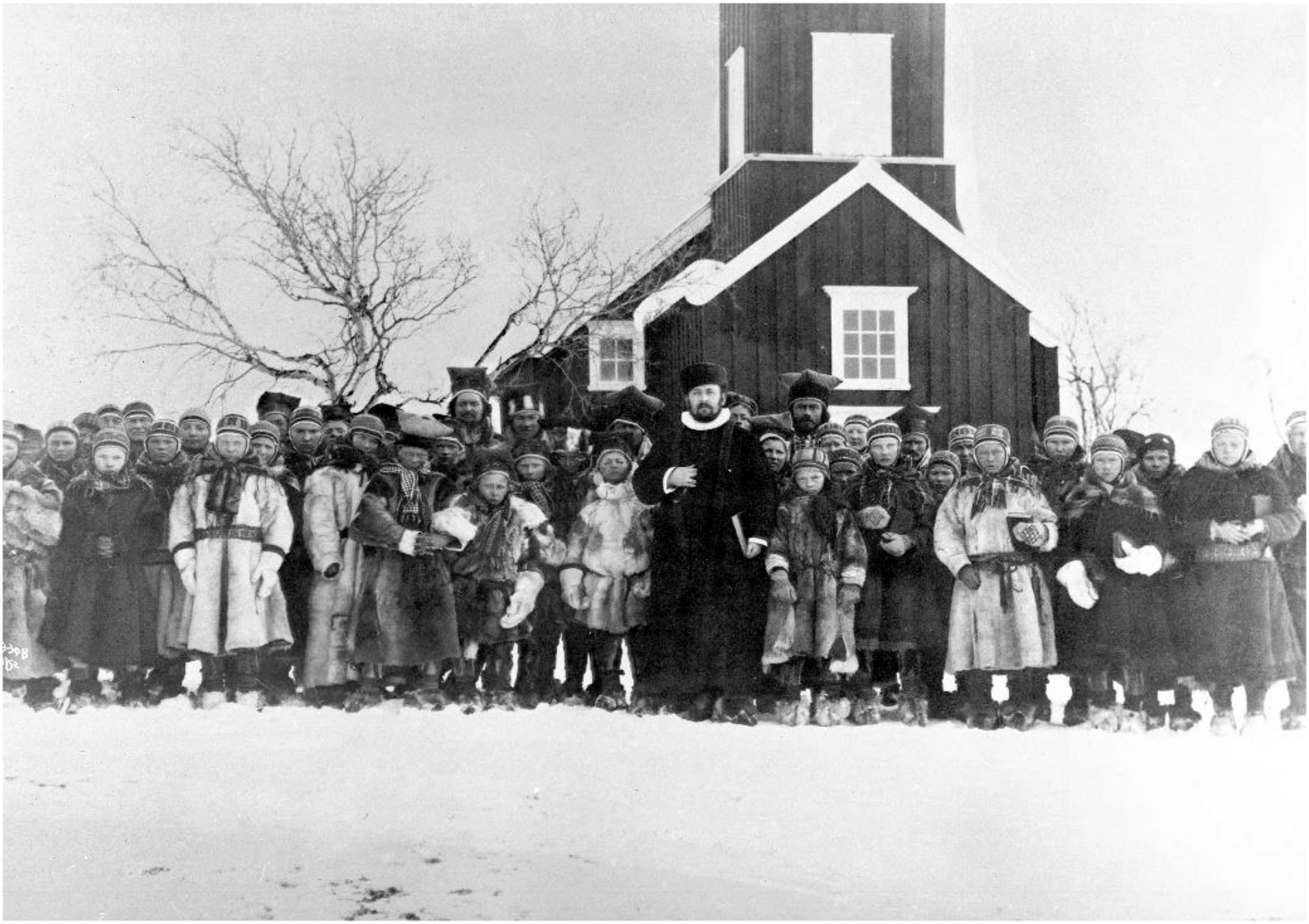
NT1 also describes the Alta controversy, from 1970 to 1982, which refers to the decision by the Norwegian government to build a hydroelectric power plant in the Alta River. The Norwegian authorities planned to build a dam that would put Sámi villages under water and make reindeer husbandry difficult. The Sámi managed to mobilize societal support, including support from the environmental movement. However, despite this strong mobilization, they lost their cause, and the hydroelectric power plant was built (NT1, p. 551–552).
In the examined textbooks, the Sámi are depicted as victims of Norwegian society in the sense that they suffered long-term assimilation policies that aimed to suppress their languages, traditions, and ways of life. Furthermore, the textbooks show that the few times the Sámi rebelled against the oppression of the Norwegian state, they lost.
Discussion
This section starts by describing convergence and divergence in the ways indigenous peoples are depicted by the selected textbooks. It then reflects on the social implications of these findings.
Convergence and divergence
Including the topic of indigenous peoples in Brazil’s and Norway’s recent curricula can be seen as part of a global movement to pay attention to the rights of indigenous peoples and minorities. These countries are engaged in international relations and have participated as members of international organizations, such as the United Nations and the International Labour Organization, which promote the rights of ethnic, religious, and linguistic minorities. Their respective choices to include indigenous topics in their national curricula reflects their recognition of multiculturalism and the rights of indigenous peoples, who can also be considered ethnic minorities, as it aligns with the study by Skinner and Bromley (2023).
One important finding is how indigenous peoples are depicted as a homogenous group in the history textbooks of both countries. This resonates with what was reported by Manning and Harrison (2018), who pointed to the decontextualization of narratives about indigenous peoples. In the present study there was a convergence in how the history textbooks of both countries mentioned diversity among indigenous peoples. These textbooks did not give a complete or in-depth representation of who indigenous peoples are (or were in the past), nor what their varied cultures, histories, and ways of life entail (ed). Hence, the narratives of indigenous peoples are decontextualized and do not include these groups as authors of their own narratives.
The selected history textbooks depict indigenous peoples as ethnic minorities because they have suffered physical violence, discrimination, and depreciative attitudes related to their languages, cultural traditions, and ways of life—both in the past and in the present. In the textbooks from both countries, indigenous peoples are depicted as ethnic minorities and grouped together with other ethnic minorities. In the case of Brazil, the textbooks depict the indigenous people and the Afro-Brazilian descendants of the African slaves who were brought by European settlers to work in the colony as the main ethnic minority groups. In Norway, the ethnic minorities are the indigenous peoples together with another five ethnic minority groups: Norwegian Jews, Roma people, Romani people, Kvens, and Forest Finns.
Interestingly, how the history textbooks depict indigenous peoples varies from one context to another. In Brazil, the definition relates to the country’s colonial past, including slavery. The indigenous peoples were those who occupied the country before it was colonized by European settlers. Brazilian secondary school history textbooks clearly state that the indigenous peoples suffered the oppression of the settlers, having been violently killed directly or decimated by diseases brought by the settlers. The textbooks also mention that attempts were made to convert the indigenous peoples to the majority culture by religious missionaries. Violence is explicitly described in the selected Brazilian history textbooks. For example, these textbooks describe indigenous peoples both fighting against Portuguese domination and allying with the Portuguese settlers to defeat rival minority groups.
In the Norwegian history textbooks, the definition of indigenous groups relates to the definition of national borders. Here, the Sámi were those inhabiting the country before the formation of the Norwegian state. The Norwegian textbooks depict the oppression of this group by the Norwegian state, whereby they were forbidden to speak their language or use their traditional knowledge. The selected textbooks also mention the indigenous peoples being displaced or expelled from their territories in the interests of national policy. On only one occasion do the Norwegian textbooks explicitly mention violence against the Sámi. This occasion relates to the Kautokeino rebellion in 1852. The Norwegian textbooks also mention that the Kautokeino rebellion resulted in a harsher assimilation policy in the country, with, among other things, children being separated from their parents and placed in orphanages and the homes of ethnic Norwegians to become like the majority population.
There are differences in how the Brazilian and Norwegian history textbooks present the agency of indigenous peoples and the initiatives taken by them to counterbalance power. The indigenous peoples from Brazil are depicted as heroes, resisting Portuguese domination and finding strategies to obtain privileges in Brazilian society. However, these Brazilian history textbooks also depict the indigenous peoples as traitors, aligning with the Portuguese settlers to enslave rival groups, and as victims suffering violence and being decimated by disease.
In contrast, the Norwegian history textbooks mainly picture indigenous peoples as victims of the oppression of the Norwegian state. For example, these textbooks discuss the Alta controversy, from 1970 to 1982. In summary, this study found both convergence and divergence in how indigenous peoples are depicted by secondary school history textbooks in Brazil and Norway. Regarding convergence, this study found: • the mandatory inclusion of the topic of indigenous peoples in national curricula; • school textbooks describe these groups as homogeneous groups despite their cultural diversity; • indigenous peoples are depicted as ethnic minorities together with other ethnic minorities; • indigenous peoples are described as having suffered acts of assimilation and the suppression of their languages and cultures in the past; and • indigenous peoples still suffer discrimination and exclusion.
Regarding divergence, this study found: • the definition of indigenous peoples in Brazil relates to colonization and in Norway to the existence of national borders; • Brazilian history textbooks are explicit regarding violence, while the Norwegian ones provide very few descriptions of the use of violence; • in Brazilian history textbooks, indigenous peoples are depicted as both agents and victims, while the Norwegian ones focus on the victimization of these groups; and • Brazilian history textbooks depict indigenous peoples as being assimilated into Brazilian society, while the Norwegian ones depict them as “the other.”
Unlike in world culture theory, we do not see differences in the ways indigenous peoples are depicted by school history textbooks as a failure or mismatch between global ideas and national contexts. As Mohammad (2017) explained, we see these differences as products of national traditions and processes involving social actors and political contexts.
Furthermore, we suggest that history textbooks should reflect both global trends and national traits by articulating their own national demands in response to external demands, as indicated by Karseth and Sivesind (2010). We observe that the perpetuation of underlying narrative patterns connected to national identity are still present in the curricula of the 2000s, as predicted by researchers in the 1990s (Gundem, 1998; Macedo, 2011, 2019). In the examined textbooks, the indigenous peoples and their pasts are not depicted in the same way. Rather, these groups are presented as having suffered different types of violence and discrimination by the majority population and national governments in the past and present. These narrative patterns have social implications for these groups, which is the topic of the next section.
Social implications
According to Van der Vlies (2022), narratives and images may have a significant impact on a group’s social memory and identity. As such, the ways indigenous peoples are depicted in history textbooks may influence their perceptions about themselves and the perceptions of others about them. These narratives and images may contribute to continuing social inequalities by erasing cultural differences and picturing the fusion of different cultures, as has occurred in Brazil. Examples of this include the image of the mestizo who engaged with different cultures in the 20th century, and the image of Moema representing the affective relationships between indigenous peoples and the European settlers in the 19th century. The examined Brazilian history textbooks did not highlight the enslavement of the indigenous peoples, which is in line with findings by Khan (2021) and Pahl (1996). Rather, the textbooks emphasized the indigenous people’s assimilation into Brazilian society.
Narratives and images of indigenous peoples may also contribute to discrimination by picturing them as “the other,” as in the case of Norway. For example, the examined 19th-century artwork depicts the typical Norwegian through the image of a bridal party. Similarly, the king’s speech in 2016 does not mention the Sámi as being part of a diverse Norwegian population. These narrative patterns of the victimization and standardization of indigenous peoples without regard for their cultural differences, as well as the narrative patterns of assimilation and othering, can be counterproductive to the valorization and cultivation of indigenous peoples and their cultures.
We argue that the selected textbooks (especially the Norwegian ones) continue to focus on historical events and homogenous descriptions of indigenous groups. The result is that indigenous peoples and their cultures are presented as static and without agency. However, one could assume that actors always have agency, even in the most severe situations, which is addressed to some extent by the selected Brazilian textbooks.
Final remarks
We end this article by presenting the study’s contributions, limitations, and possibilities for further research. We believe this study will increase understandings of how indigenous peoples are depicted in school history textbooks as manifestations of the curricula. In addition, our contrast of the two countries made it easier to see the potentialities and shortcomings of how these textbooks depict indigenous peoples, which relates intrinsically to each country’s contextual background.
One limitation of the study is that we only analyzed recent (2016–2022) secondary education history textbooks in Brazil and Norway. This study did not include a temporal dimension in the textbook analysis, which would compare changes through time as responses to national and global societal changes. It is also undetermined whether the content of these textbooks adequately represents how indigenous peoples and ethnic minorities are presented in other textbooks in Brazil and Norway and other countries. Finally, our analysis of the textbooks did not yield information on how teachers and students engage with the contents of these textbooks in practice.
We propose that there are possibilities for further research. Selecting another theoretical framework to analyze the textbooks might promote a more critical reflection on the topic and a greater sensitivity to the way in which school textbooks address it. It would also be productive to investigate in more detail how history textbooks depict the relationships between indigenous peoples, other ethnic and cultural minorities, and the majority groups in these countries. Future research might also consider the features of the subject history in these two countries: on the one hand, perpetuating national narrative patterns, and on the other hand, disseminating global ideas and values, such as democracy and the inclusion of the topic of indigenous peoples in curricula.
Footnotes
Declaration of conflicting interests
The author(s) declared no potential conflicts of interest with respect to the research, authorship, and/or publication of this article.
Funding
The author(s) received no financial support for the research, authorship, and/or publication of this article.
Notes
Author biographies
 .
.
.