



Abstract
International student mobility (ISM) is often perceived to enhance career prospects. Surprisingly, the role of personality traits in explaining why students go abroad and relationships between ISM and labour market outcomes have received scant scholarly attention. Based on survey data from Norwegian graduates, we found that degree and credit mobility graduates were significantly more extraverted and open than non-mobile peers and that degree mobiles were more agreeable than both credit and non-mobiles. Furthermore, results revealed that whereas degree mobility is related to both wage and Occupational self-efficiacy (OSE), this was not the case for credit mobility. However, personality did affect the associations between degree mobility and labour market outcomes. In sum, our study suggests that the distinction between degree and credit mobility is important when considering the labour market outcomes of ISM and that personality does play a role in the links between degree mobility and labour market outcomes.
Keywords
Introduction
International student mobility (ISM) is often perceived to enhance career prospects. By studying abroad, students are exposed to a range of challenges and opportunities that may enhance their skills and employability. In addition to formal education, students develop language skills, intercultural understanding, social networks and more (Murphy-Lejeune, 2003; Potts, 2015; European Commission, 2016; Roy et al., 2019). Such skills and competences may strengthen the human, social and cultural capital of graduates. Policy makers and practitioners in the field of higher education have tended to take for granted that skills acquired abroad are rewarded in the labour market (Netz and Cordua, 2021).
Nevertheless, to what extent education from abroad actually pays off in the labour market, is increasingly questioned by researchers (Waibel et al., 2017; Wiers-Jenssen et al., 2021; Netz and Codua, 2021; Di Pietro 2022). Asking graduates with ISM experiences themselves, they tend to report that ISM have had a positive effect on their employability (Potts, 2015; Bryla, 2015; Cleak et al. 2016). However, research comparing labour market outcomes of graduates with and without ISM experience do not always point in the same direction. Positive associations between ISM and labour market outcomes are demonstrated in several studies (see e.g. Teichler and Jahnson, 2007; Wiers-Jenssen, 2011; Liwiński, 2019) but it is also shown that impacts of ISM tend to be reduced when controlling for various forms of selectivity, such as social origin, academic performance or job changes (Waibel et al., 2017; van Mol et al., 2020; Wiers-Jenssen and Støren, 2020; Netz and Cordua, 2021).
A form of selectivity that is rarely taken into account are non-cognitive skills such as personality traits. To fill this gap, the principal aim of this article is to shed light on how personality traits are linked to ISM and how they influence the relationships between ISM experiences and the labour market outcomes wages and Occupational self-efficacy (OSE). In addition, as most quantitative research on ISM addresses graduates who have spent a few months abroad as exchange students, an important contribution of this paper is that it also includes graduates who have undertaken a full degree abroad. Assuming potential effect heterogeneities might be at play, we attempt to remedy this issue by distinguishing between credit mobility (short-term study exchange) and degree mobility (undertaking a full degree abroad).
More specifically, we first ask whether graduates with various ISM experiences (full degree mobility, credit mobility or no mobility) display differing personality profiles in accordance with the five-factor personality model (McCrae & Costa, 2008). Further, we explore the links between types of ISM and two aspects of labour market outcomes assumed to be central outcomes of ISM experiences; wage (Netz and Grüttner, 2021; Kratz and Netz, 2018) and OSE (Petersdotter et al., 2017; Diego-Lazaro et al., 2020). Finally, we investigate whether personality influences the relationship between the types of ISM experiences (degree mobility and credit mobility), wage and OSE. Thus, the study at hand adds to the existing literature by linking personality to different types of ISM and labour market outcomes.
ISM and labour market outcomes
ISM and wage
International student mobility has become more widespread during the last decades and is seen as an educational option that can positively influence students’ labour market outcomes (Netz and Grüttner, 2021; Kratz and Netz, 2018; van Mol et al., 2020). From a student perspective, given the additional expenditures studying abroad often necessitates, one important labour market outcome is wage. The question is, does studying abroad pay off? Theoretically, it is indeed plausible to expect a positive effect of ISM on wages. Following human capital theory, ISM can augment desirable skills and competencies valued in a globalised labour market and in turn allow them to receive higher wages. Also, from the perspective of signalling teory, studying abroad can be regarded as a signal of possession of certain skills, both cognitive and non-cognitive, and traits valuable in the labour market that employers reward in terms of higher wages (Weiss, 1995; Hilmer, 2002).
Several empirical studies and review articles investigating the link between ISM and wages do find that formerly mobile graduates receive higher wages when compared to their non-mobile counterparts (Roy et al., 2019; Kratz and Netz, 2018; Netz and Cordua, 2021; Di Pietro 2022). For example, in a German study, Kratz and Netz (2018) demonstrated that graduates with ISM experience obtained higher salaries and experienced steeper wage growth than their non-mobile peers. Likewise, a study undertaken in Netherlands revealed that MA graduates that were mobile at some point during their education had a significantly higher monthly salary than non-mobile graduates (van Mol et al., 2020). Wage rewards have also been identified among Norwegian graduates with ISM experience. For example, Wiers-Jenssen (2011) found that Norwegian graduates who completed their degree abroad achieved higher wages than graduates without ISM experience. Review studies pinpoint that that positive effects of ISM on wages are often reduced or disappear when factors like social origin, grades and labour market sector are taken into account (Waibel et al. 2017, Netz and Codua 2021). Hence, differences in labour market returns are partly explained by selectivity; students who go abroad diverge from those who do not in the first place. Mobile students tend to be of higher social origin than non-mobile students (King et al., 2010; Netz et al., 2021; d’Hombres and Schnepf, 2021) and have better grades from upper secondary school (d’Hombres and Schnepf, 2021). There are also indications that ISM students diverge from other students regarding personality (Zimmermann and Neyer, 2013) and motivation (Hovdhaugen et al., 2021). However, the relation between such features and labour market outcomes are rarely investigated. The inconclusiveness of findings regarding outcomes of ISM warrants new evidence taking personal characteristics such as personality profiles into account.
ISM and occupational self-efficacy
Originating from the social cognitive theory, self-efficacy is most commonly defined as the belief in one’s capabilities to cope with difficult tasks and problems (Bandura, 1997). Following the notion of specificity matching (predictor and criterion should have the same level of specificity), concepts and measures have been developed addressing and assessing specific domains of self-efficacy (Paunonen and Hong, 2010; You et al., 2016). Occupational self-efficacy (OSE) is one such domain specific construct defined as ‘the competence that a person feels concerning the ability to successfully fulfil the tasks involved in his or her job’ (Rigotti et al., 2008, p.240). Arguably, OSE is a key resource for individuals in organisations and has been found to predict work performance, satisfaction, work engagement and work-related learning (Cherian and Jacob, 2013; Mustafa et al., 2019; Moe et al., 2010; Çetin & Aşkun, 2018; Paggi & Jobb, 2015; Chaudhary et al., 2012; Van Hootegem et al., 2021).
Most studies investigating the relationship between ISM experiences and self-efficacy demonstrate positive associations between the two variables (Petersdotter et al., 2017; Diego-Lazaro et al., 2020). For example, in a recent study undertaken among Turkish graduates, it was found that those who had participated in an Erasmus Plus program reported higher levels of general self-efficacy when compared to their non-mobile peers (Emirza et al., 2021). Likewise, in another recent study focussing on graduates from the USA, students with ISM experience displayed significant increase in self-efficacy than students without such experiences (Diego-Lazaro et al., 2020). In a similar vein, Roy and colleagues’ systematic review of outcomes of ISM from 2019 revealed beneficial effects on self-efficacy (Petersdotter et al., 2017; Norris and Gillespie, 2009).
As shown, the links between ISM and self-efficacy have received some scholarly attention. However, as the focus in these studies have been on general self-efficacy or other domain specific self-efficacy constructs, the issue of OSE, representing a specific work-related concept as defined above has, to the best of our knowledge, gone unnoticed. In addition, most previous studies investigating associations between ISM and self-efficacy has not distinguished between various types of mobility, although there are grounds for assuming that various types might potentially cultivate differential dimensions and degrees of outcomes (Van Mol et al., 2020; Riaño & Piguet, 2016). The study at hand seeks to fill these knowledge gaps by specifically focussing on OSE and by making an analytical distinction between exchange students and those who have undertaken a full degree abroad.
The brief outline above shows intricate interrelations between personality and the other major variables included in the current study (ISM, wage and OSE). On these grounds, it is plausible to assume that personality could have an impact on the relationship between ISM and labour market outcomes. The issue has hardly been addressed in previous studies exploring various aspects of ISM. The current study thus represents an attempt to fill this knowledge gap.
The role of personality
Personality traits have been conceptualised as non-cognitive skills (Pedersen, 2020; Hoeschler et al., 2018) broadly recognised as important predictors for labour market outcomes (Brunello and Schlotter, 2011). Previous studies have demonstrated that employers highly value workers’ non-cognitive skills such as communication skills, teamwork skills and flexibility/adaptability (Kuhn and Weinberger, 2005; Kassenboehmer et al., 2018; Pedersen, 2020). These non-cognitive skills reflect certain personality traits (Brunello and Schlotter, 2011).
The five-factor model
In modern psychology, the five-factor model is one of the most comprehensive personality models, widely accepted for its high reliability and temporal stability (McCrae & Costa, 2008; Specht et al., 2014). The five factors usually labelled openness, conscientiousness, extraversion, agreeableness and neuroticism 1 are considered patterns of behavioural, temperamental, emotional and mental traits of an individual (Kandler et al., 2014). Openness refers to preferences for a variety of experiences, curiosity and the willingness to try new things. Conscientiousness describes a person’s tendency to be organised and careful. Agreeableness pertains an individual’s tendency to get along with other individuals, friendliness and generosity. Extraversion refers to the preference for human contact and gregariousness. Finally, neuroticism refers to emotional instability and is interlinked with low tolerance for aversive stimuli and stress (Soto and John, 2017).
How stable a person’s personality is has been a central topic for psychological research for decades. Pioneering the five factor model in the 1980’s, Costa and McCrae assumed personality to be rather stable over time and have stated that by age 30, personality is ‘set like plaster’ (Costa and McCrae,1994). The validity of this particular statement and the stability of personality in general have been subjects for ongoing academic debates. Nonetheless, despite the evidently enduring nature of personality traits, most researchers today agree that young adulthood, the typical life phase for higher education, represents a highly dynamic period of personality development (Bleidorn et al., 2018; Zimmermann and Neyer, 2013). Major life events, such as unemployment, marriage and parenthood, are among the numerous possible accounts for personality developments because they can redirect or modify life trajectories and as such alter a person’s thoughts and behaviours (Denissen et al., 2019). International student mobility is believed to be one such formative life event with the potential of changing personality traits (Zimmermann and Neyer, 2013).
To our knowledge, there are to date at best few studies investigating the role of personality traits in explaining the relationships between ISM and labour market returns (Zimmermann and Neyer, 2013; Martinsen, 2010). However, there is relatively ample research exploring the links between personality and the major variables in focus of the current study. The following sections provide a brief review of these studies.
Personality and mobility
Despite the lack of extant research regarding personality and ISM specifically, relations between personality and migration in general have received some scientific attention. For example, in a study located in New Zealand, Tabor and colleagues (2015) found evidence that while the openness dimension increased the odds for planning to move abroad, agreeableness and conscientiousness decreased the propensity to migrate. In another study, investigating the role of personality in predicting migration in a North-American context, the author found that high scores on openness and extraversion increased chances for migration, with the former predicting international migration, and the latter forecasting domestic migration (Jokela, 2009). In a more recent publication, researchers demonstrated that German students high on extraversion and openness, and low on agreeableness, conscientiousness and neuroticism were more likely to form migration intentions than those displaying opposite personality scores (Fouarge, Özer & Seegers, 2019).
A key question arising from investigations of the relationship between mobility and personality is whether initial differences between people make them choose migration, or whether mobility itself changes them, also referred to as the self-selection/socialisation issue. Self-selection refers to the notion that people might be inclined to choose life events that are congruent with their personality and thereby accounting for the observation of systematic differences between individuals with respect to the occurrence of various life events (Holland, 1997). Alternatively, socialisation refers to the subsequent personality development due to mobility experiences (Löckenhoff et al., 2009). Assuming interrelations between self-selection and socialisation, scholars have suggested that ‘the most likely effect of life experience on personality development is to deepen the characteristics that lead people to those experiences’ (Roberts et al., 2003, p. 583). In other words, a possible self-reinforcing mechanism might be at play in which those who display certain personality profiles might chose certain life events that in turn reinforce the traits involved.
Among the few studies linking personality traits to ISM specifically, and at the same time addressing the selection/socialisation issue, Zimmermann and Neyer’s (2013) longitudinal study compared personality profiles of mobile and non-mobile students, and found profiles were different prior to studies (self-selection), and that they developed in a (Larson and Borgen, 2006) different way during their studies (socialisation). More specifically, the authors demonstrated that while extraversion and conscientiousness was associated with short-term sojourning, extraversion and openness yielded significant links to long-term sojourning. Moreover, both short-term and long-term sojourners displayed higher levels of openness and agreeableness after their study abroad period, indicating socialisation effects.
Regardless of the self-selection/socialisation issue, and despite the somewhat inconclusiveness of research results related to the links between personality and mobility, the above literature review of both theory and previous research provides some grounds for expectations with respect to the present study. High levels of extroversion and openness are expected to be related to both credit and degree mobility in comparison with non-mobility. However, given that degree mobility involves a greater change in life and inevitably a longer period of potential gregariousness, it is also expected that both extroversion and openness are closer linked to degree mobility than credit mobility.
Personality and wage
In addition, there is a rather vast body of literature shedding light on the links between personality and wage. Most studies support the assumption that whereas some personality dimensions are rewarded in the labour market, others are penalised. Although higher levels of the dimensions openness and extraversion and emotional stability have mostly been found to correlate positively with wage, individuals high on agreeableness consistently earn less than their peers (Maczulskij and Viinikainen, 2018; Jonason et al., 2018; Heineck, 2011; Mueller and Plug, 2006; Nyhus and Pons, 2005). It should be noted though that these findings, although statistically significant, are rather small in effect size. Beyond these findings, influences of the conscientiousness dimension on wage are inconclusive.
There have been attempts to explain the mechanisms underlying these findings. For example, the openness dimension is considered advantageous because it is related to being creative, flexible and intellectually oriented (Heineck, 2011). Likewise, extraverted individuals tend to be socially oriented, which is arguably an advantage in team-based job environments (Mueller and Plug, 2006). Emotional stability is rewarded in terms of wage because individuals high on this dimension are typically better at coping with stress and hence more suitable to higher level jobs demanding to handle stressful and complex tasks (Lee and Ohtake, 2012). In contrast, agreeableness may be considered a disadvantage because agreeable people are less likely to claim higher wages. In addition, it has been theorised that low scores on agreeableness may be related to the so called ‘Machiavellian intelligence’, prone to manipulate others for their own gain (Nyhus and Pons, 2005).
Personality and self-efficacy
Research exploring possible links between personality and OSE is even more scarce than the one investigating the role of personality on wage. The few existing studies on these matters usually adopt other personality models than the five-factor model, making them less comparable to studies based on the five-factor model. The rather limited empirical research on the relationships between the five factor model and OSE suggest that while neuroticism represents a consistent predictor of inefficacy (low OSE), both conscientiousness and extraversion are robust positive predictors of OSE (Hartman and Betz, 2007; Nauta, 2004; Schaub and Tokar, 2005; Stajkovic et al., 2018). Individuals low on emotional stability are assumed to exhibit less self-efficacy due to elevated anxiety levels (Stajkovic et al., 2018). In contrast, conciousness and extraversion facilitate efforts and task engagement, and in turn foster higher levels of self-efficacy (Brown et al., 2011).
Materials and methods
This study was conducted as a cross-sectional study among Norwegian master graduates who graduated in 2015 and 2016, and who were surveyed approximately three years later.
Data collection and sample
Characteristics of the study sample.
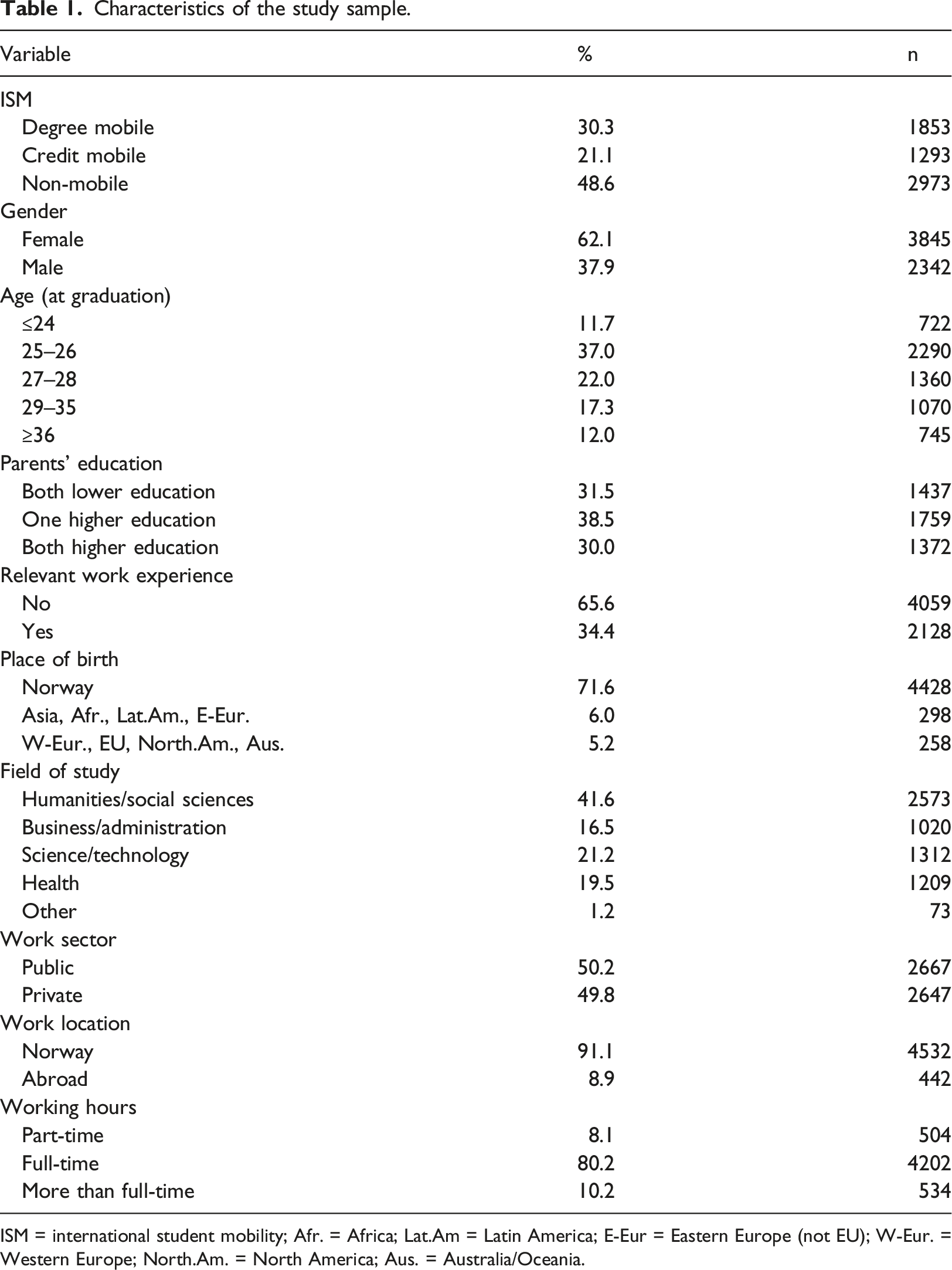
ISM = international student mobility; Afr. = Africa; Lat.Am = Latin America; E-Eur = Eastern Europe (not EU); W-Eur. = Western Europe; North.Am. = North America; Aus. = Australia/Oceania.
As shown in Table 1, approximately half of the sample had diplomas from Norwegian HEIs without international study experience, while the remaining half had completed some of their higher education or their entire higher education abroad. Females constituted the majority, and more than half of the sample were aged between 25 and 28 years. Humanities/social sciences and science/technology constituted the most prevalent fields of study.
Variables and measures
International student mobility (ISM)
Graduates were classified into three categories, based on type of ISM: (1) Graduates with a diploma from Norwegian HEIs, without international study experience (non-mobile); (2) graduates with a diploma from Norwegian HEIs, who had undertaken parts of their higher education abroad (credit mobile); and (3) graduates with a diploma from abroad (degree mobile). International student mobility was dummy coded for inclusion in regression analyses.
Personality
The five factor model personality domains were measured with a Norwegian version of the Ten-Item Personality Inventory (TIPI; Gosling et al., 2003; Thørrisen et al., 2021). The TIPI is a brief instrument that measures the five personality domains (extraversion (E), agreeableness (A), conscientiousness (C), emotional stability (ES) and openness (O)), each domain with two items. Respondents were asked to indicate, on a seven-point Likert scale (1 = disagree strongly; 2 = disagree moderately; 3 = disagree a little; 4 = neither agree nor disagree; 5 = agree a little; 6 = agree moderately; 7 = agree strongly), the extent to which they agreed that a set of ten descriptive statements applied to them (E = ‘extraverted, enthusiastic’, ‘reserved, quiet’; A = ‘critical, quarrelsome’, ‘sympathetic, warm’; C = ‘dependable, self-disciplined’, ‘disorganized, careless’; ES = ‘anxious, easily upset’, ‘calm, emotionally stable’; O = ‘open to new experiences, complex’, ‘conventional, uncreative’). Negatively worded items were reversed and a mean score for each domain was calculated (range 1–7; higher scores indicated higher domain values).
Wage
Wage was measured as gross monthly income (before taxes) in Norwegian Kroner (NOK), excluding overtime, bonuses or other additional income. Preliminary analyses revealed that some respondents appeared to have reported yearly salaries in the survey. These observations were excluded by including only gross monthly wages in the range 20000–200000 NOK. Wage was log transformed (lg10) for inclusion in regression analysis, in order to get a measure of percentage change in wage rather than absolute change in NOK.
Occupational self-efficacy (OSE)
Occupational self-efficiency was measured with a Norwegian translation of the short version of the Occupational Self-Efficacy Scale (Rigotti et al., 2008). On a numerical scale ranging from 0 (not at all true) to 5 (completely true), respondents were asked to indicate the degree to which they agreed with six statements regarding OSE, such as ‘I can remain calm when facing difficulties in my job because I can rely on my abilities’, and ‘when I am confronted with a problem in my job, I can usually find several solutions’. A mean score for the six items was calculated (range 0–5; higher scores indicated higher OSE).
Covariates
A set of variables that could affect the relationships between major study variables are adjusted for in the models. Background characteristics include age (≤27; 28–30; 31–35; ≥36), gender (female; male), parents’ education (both lower education; one higher education; both higher education) and place of birth (Norway; Asia, Africa, Latin America, Eastern Europe (not EU); Western Europe, EU, North America, Australia/Oceania). The latter two variables are included due to previous research showing that parents’ socioeconomic status and immigrant background can play a role in selectivity into mobility (Støren and Wiers-Jenssen, 2010; Prazeres, 2013; Middendorf et al., 2013).
In addition, several study characteristics were adjusted for. These include field of study (humanities/social sciences; business/administration; science/technology; health; other) because research has demonstrated different labour market outcomes depending on field of study (Waibel et al., 2017); scholastic performance (average grade from upper secondary school: <3; 3.0–3.4; 3.5–3.9; 4.0–4.4; 4.5–4.9; 5.0–5.4; ≥5.5) and academic performance (average grade from higher education: D/some Es; C; B; A) due to studies showing their impact on employability and skills (Ng et al., 2010; van der Velden & Allen, 2011); and HEI ranking (Times higher education world university ranking, coded in 20 ordinal categories) because previous research has shown that it may affect employers’ recruitment practices (Souto-Otero & Enders, 2017). As the sample for the present study includes both respondents graduating in 2015 and 2016, we adjusted for year of graduation (2015; 2016).
Also, current work-related variables were adjusted for, including work sector (public, private) and work location (Norway; abroad), justified due to previous research indicating that work sector can affect wages (Støren and Arnesen, 2011); and working hours (part-time; full-time; more than full-time) for obvious reasons. In addition, relevant work experience (no; yes) was adjusted for as this can have an impact on current labour market outcomes.
Analysis
Correlation analyses (Spearman rho) were conducted to get an overview of bivariate associations between all study variables. Analyses of covariance (ANCOVAs) were utilised for exploring whether the three ISM groups differed on the five personality domains, adjusted for the covariates. An ANCOVA estimates and compares adjusted mean scores (Madj) for independent groups on a continuous dependent variable. International student mobility was entered as the independent grouping variable, and the personality domains constituted the continuous dependent outcomes.
Mean scores on the labour market outcomes (wage and OSE) across ISM groups were calculated with descriptive statistics. Multiple linear regression analyses were conducted to analyse associations between ISM, personality domains and labour market outcomes (wage and OSE). International student mobility was dummy coded, and regression analyses were performed in three steps. ISM was entered in model 1. The five personality domains were entered in model 2, in order to explore the extent to which personality influenced the associations between ISM and the labour market outcomes. The covariates were entered in model 3, rendering it possible to explore the associations between ISM and the labour market outcomes, adjusted for personality and a range of covariates which earlier research has demonstrated to be relevant. For dummy coded covariates (place of birth and field of study), k - 1 variables were included. Unstandardised (b) and standardised (β) regression coefficients were calculated. For the wage regression, expected percentage change in the dependent variable (log transformed wage) associated with a one-unit increase in the independent variable (dummy coded ISM) was calculated with the formula
All analyses were performed with IBM SPSS version 27. Significant results were defined as p < 0.05.
Ethics
Participants were informed that participation was voluntary, they were assured confidentiality, and they all provided written informed consent to participate (see Skjelbred et al., 2019 for more details).
Results
ISM and personality domains
Analyses of covariance (ANCOVA): Adjusted means and standard deviations on personlity domains by ISM group.
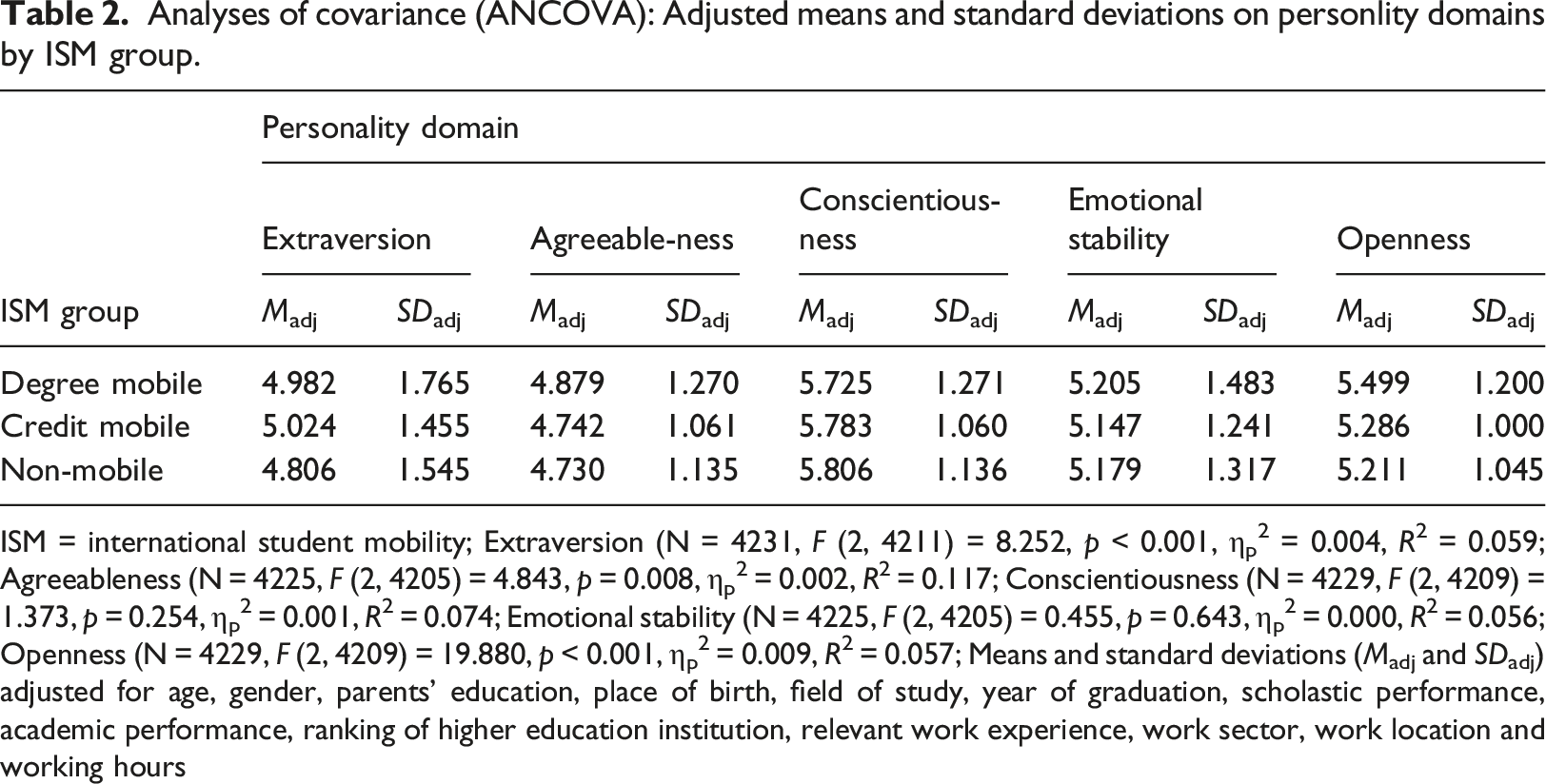
ISM = international student mobility; Extraversion (N = 4231, F (2, 4211) = 8.252, p < 0.001, ηp2 = 0.004, R2 = 0.059; Agreeableness (N = 4225, F (2, 4205) = 4.843, p = 0.008, ηp2 = 0.002, R2 = 0.117; Conscientiousness (N = 4229, F (2, 4209) = 1.373, p = 0.254, ηp2 = 0.001, R2 = 0.074; Emotional stability (N = 4225, F (2, 4205) = 0.455, p = 0.643, ηp2 = 0.000, R2 = 0.056; Openness (N = 4229, F (2, 4209) = 19.880, p < 0.001, ηp2 = 0.009, R2 = 0.057; Means and standard deviations (Madj and SDadj) adjusted for age, gender, parents' education, place of birth, field of study, year of graduation, scholastic performance, academic performance, ranking of higher education institution, relevant work experience, work sector, work location and working hours
Analyses of covariance (ANCOVA): Pairwise comparisons between ISM groups on personality domains.
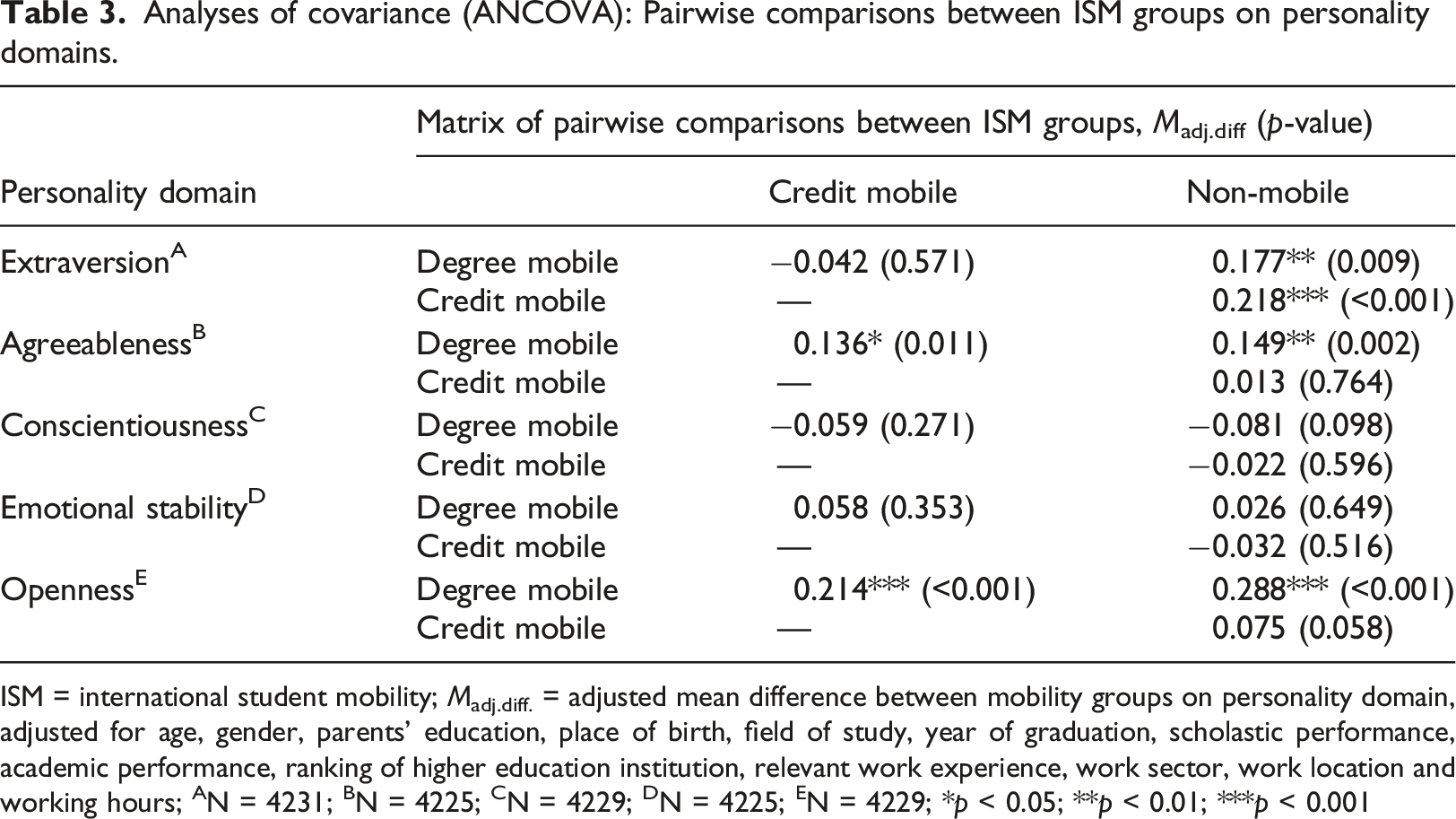
ISM = international student mobility; Madj.diff. = adjusted mean difference between mobility groups on personality domain, adjusted for age, gender, parents' education, place of birth, field of study, year of graduation, scholastic performance, academic performance, ranking of higher education institution, relevant work experience, work sector, work location and working hours; AN = 4231; BN = 4225; CN = 4229; DN = 4225; EN = 4229; *p < 0.05; **p < 0.01; ***p < 0.001
A visual depiction of adjusted mean scale scores for the three ISM groups on the five personality domains is presented in Figure 1. Adjusted mean scale scores for the three ISM (international student mobility) groups on the five personality domains. E = extraversion; A = agreeableness; C = conscientiousness; ES = emotional stability; O = openness. Note that the scaling of the Y-axis (0.2 units) indicates rather small differences between the ISM groups.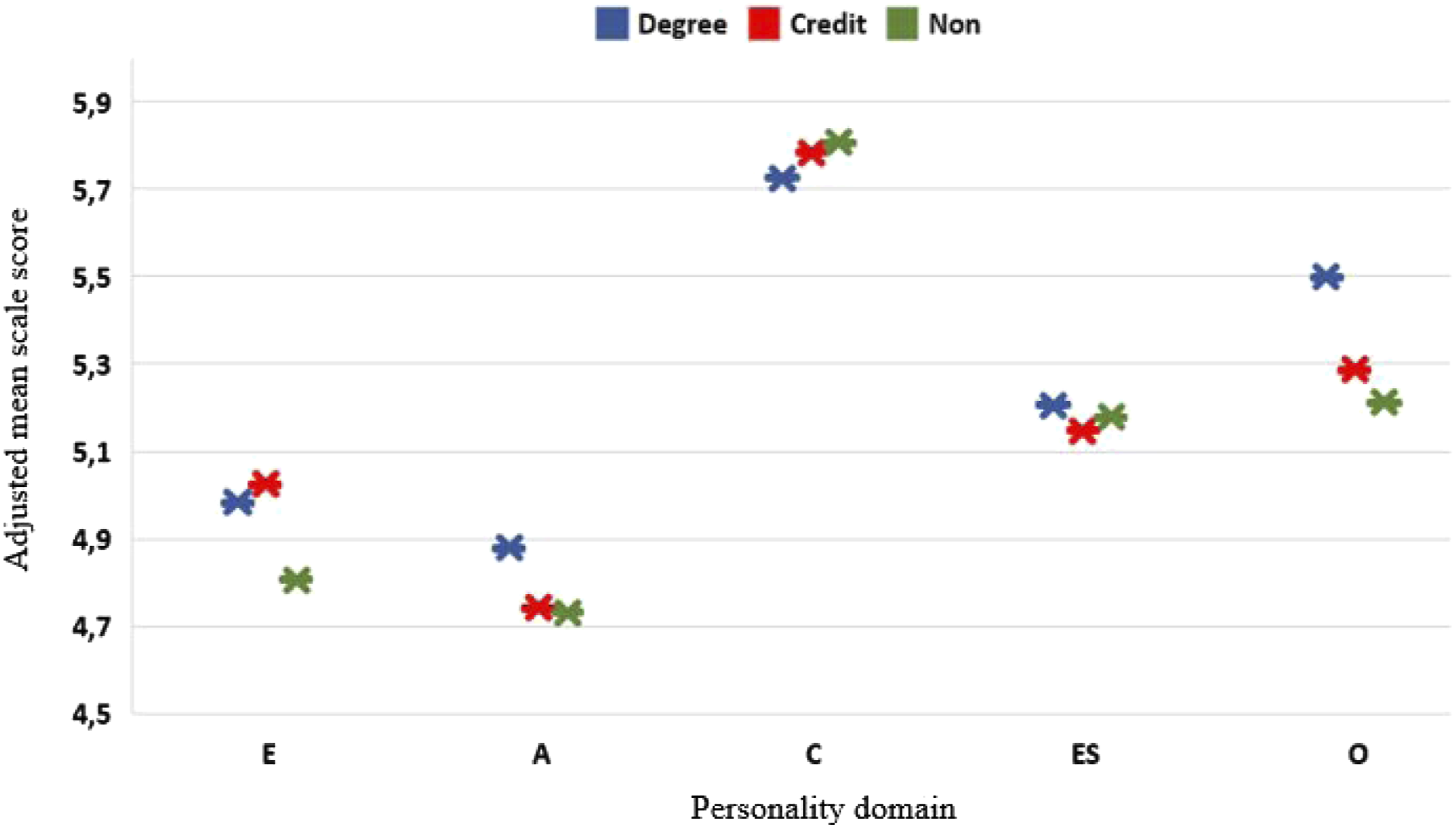
ISM, personality and wage
Descriptively, mean monthly wages were highest among degree mobile (47684 NOK), followed by non-mobile (44122 NOK) and credit mobile (44093 NOK).
Degree mobile, personality and wage
Linear regression of wage (log transformed): Degree mobile compared to non-mobile.
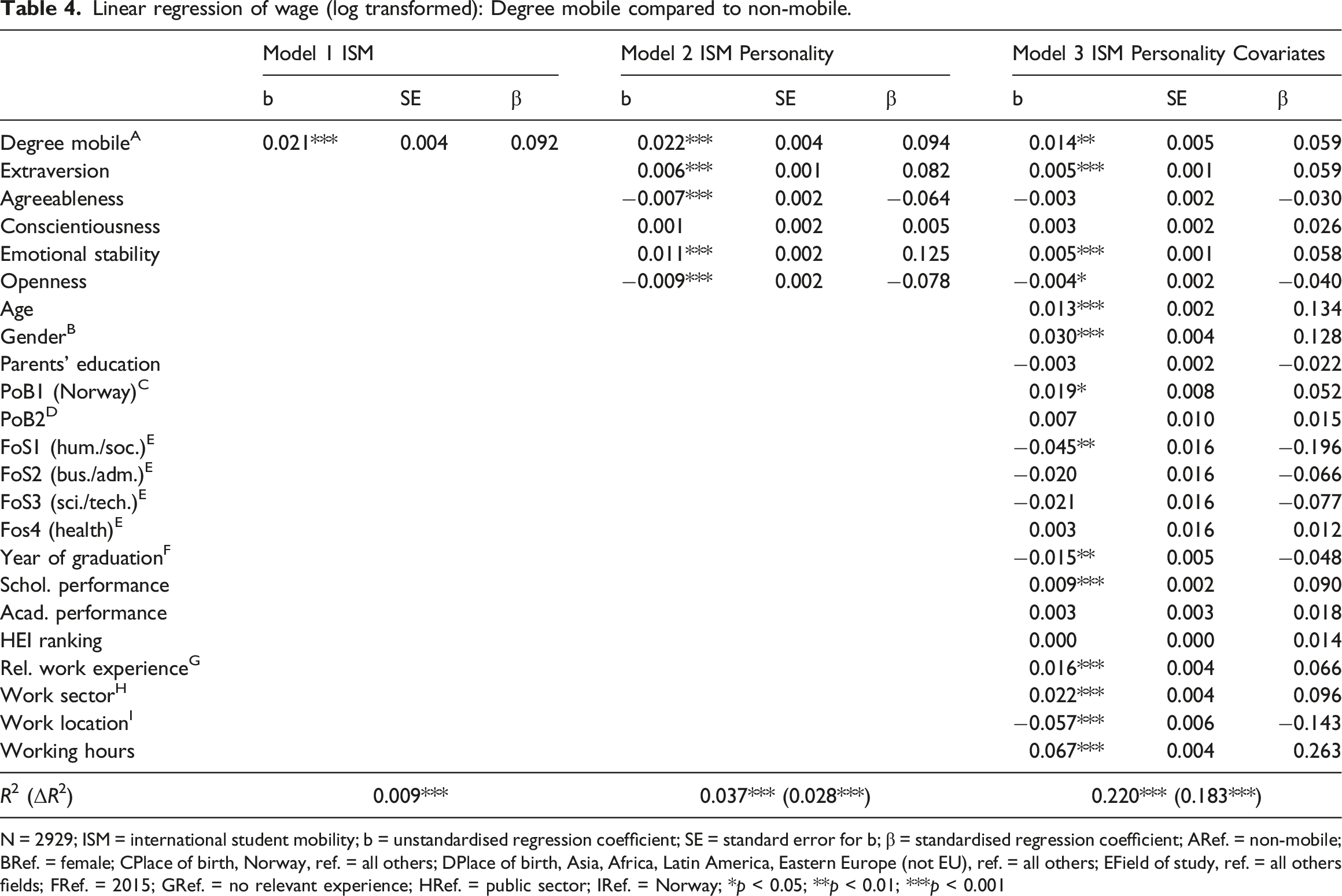
N = 2929; ISM = international student mobility; b = unstandardised regression coefficient; SE = standard error for b; β = standardised regression coefficient; ARef. = non-mobile; BRef. = female; CPlace of birth, Norway, ref. = all others; DPlace of birth, Asia, Africa, Latin America, Eastern Europe (not EU), ref. = all others; EField of study, ref. = all others fields; FRef. = 2015; GRef. = no relevant experience; HRef. = public sector; IRef. = Norway; *p < 0.05; **p < 0.01; ***p < 0.001
As evident in the unadjusted model (Table 4, Model 1), degree mobile received significantly higher wages than non-mobile. The proportion of explained variance in wage increased significantly when personality was included in the analysis (Table 4, Model 2), but the association between ISMDegree and wage remained substantially unchanged. Hence, there was little or no evidence indicating that personlity affected the relationship between ISMDegree and wage. However, four out five personality domains were significantly associated with wage. Higher wages were associated with higher scores on extraversion and emotional stability, and lower scores on agreeableness and openness. The association between ISMDegree and wage remained statistically significant, but was reduced in strength, when the covariates were entered into the model (Table 4, Model 3). Thus, degree mobile graduates received significantly higher wages than non-mobile, even when taking personality and covariates into consideration. 3
Several covariates were significantly associated with wage in the fully adjusted model (Table 4, Model 3). Higher monthly wages were associated with older age, being male (versus female), being born in Norway (versus abroad), having graduated in 2015 (versus 2016), having relevant work experience, higher scholastic performance, working in Norway (versus abroad), being employed in private sector (versus public sector), and having longer working hours. Having studied within humanities/social sciences was associated with lower wages.
Linear regression of wage (log transformed): Credit mobile compared to non-mobile.
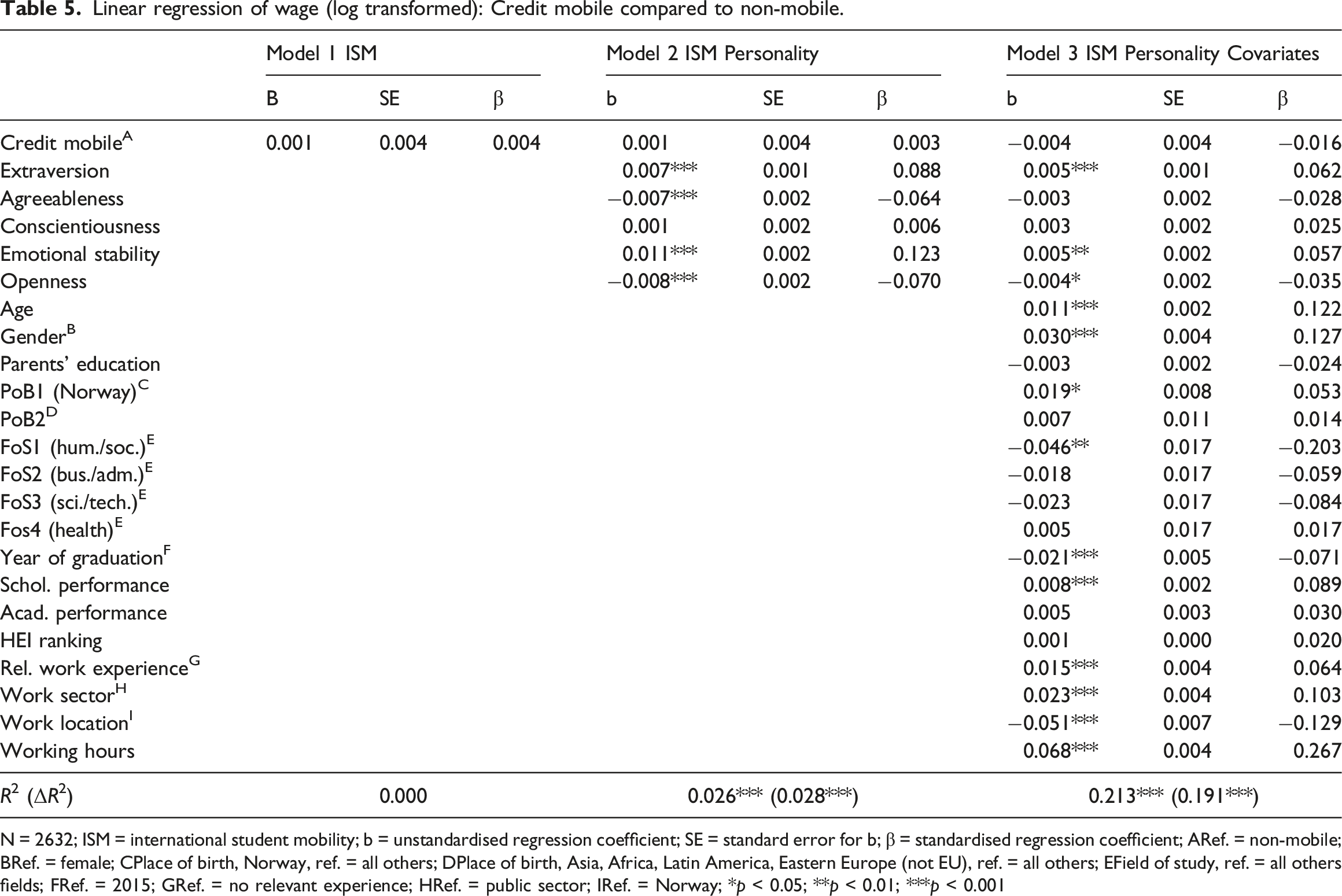
N = 2632; ISM = international student mobility; b = unstandardised regression coefficient; SE = standard error for b; β = standardised regression coefficient; ARef. = non-mobile; BRef. = female; CPlace of birth, Norway, ref. = all others; DPlace of birth, Asia, Africa, Latin America, Eastern Europe (not EU), ref. = all others; EField of study, ref. = all others fields; FRef. = 2015; GRef. = no relevant experience; HRef. = public sector; IRef. = Norway; *p < 0.05; **p < 0.01; ***p < 0.001
ISM, personality and occupational self-efficacy
Mean scores on OSE were highest among degree mobile (4.22). Credit mobile and non-mobile scored almost identical (4.075 versus 4.078).
Degree mobile, personality and occupational self-efficacy
Linear regression of OSE: Degree mobile compared to non-mobile.
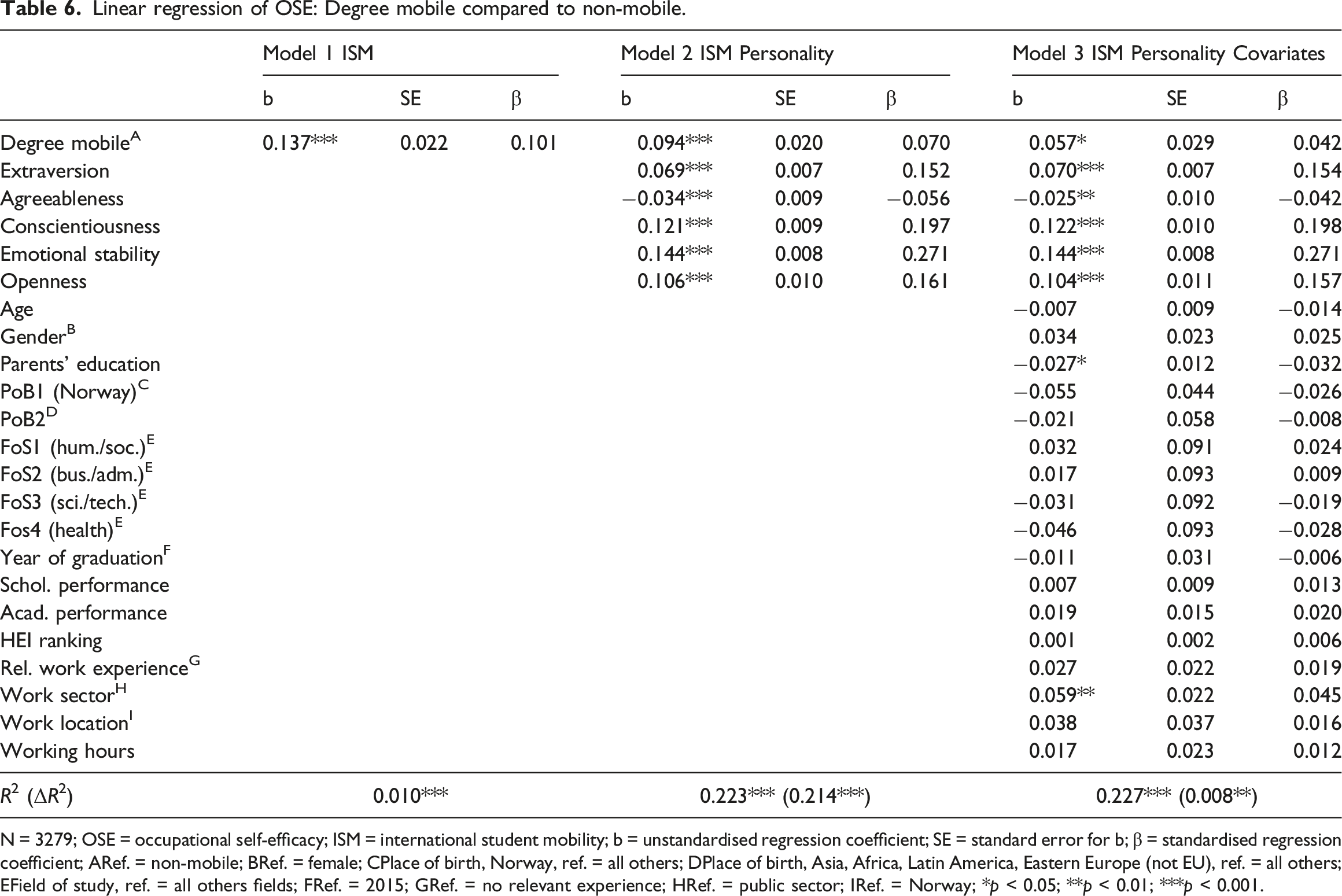
N = 3279; OSE = occupational self-efficacy; ISM = international student mobility; b = unstandardised regression coefficient; SE = standard error for b; β = standardised regression coefficient; ARef. = non-mobile; BRef. = female; CPlace of birth, Norway, ref. = all others; DPlace of birth, Asia, Africa, Latin America, Eastern Europe (not EU), ref. = all others; EField of study, ref. = all others fields; FRef. = 2015; GRef. = no relevant experience; HRef. = public sector; IRef. = Norway; *p < 0.05; **p < 0.01; ***p < 0.001.
In the unadjusted model (Table 6, Model 1), ISMDegree was significantly associated with higher OSE (compared to non-mobile). All five personality domains demonstrated significant relationships with OSE (Table 6, Model 2). Higher OSE was associated with higher scores on extraversion, conscientiousness, emotional stability and openness, and lower scores on agreeableness. The influence of ISMDegree on OSE decreased with 31.4 % when the personality domains were entered into the analysis (change in bISM_Degree from Model 1 to Model 2). Hence, personality affected the relationship between ISMDegree and OSE. However, the association between ISMDegree and OSE remained statistically significant when adjusting for personality.
Inclusion of covariates in the analysis weakened the association between ISMDegree and OSE somewhat further (Table 6, Model 3). Still, ISMDegree remained statistically significant. In this fully adjusted model, degree mobile (compared to non-mobile) was associated with an increase of 0.06 units on the OSE scale (ranging from 0 to 5). Two covariates demonstrated significant relationships with OSE. Higher OSE was associated with being employed in private sector (versus public), and having parents with lower education.
Credit mobile, personality and occupational self-efficacy
Linear regression of OSE: Credit mobile compared to non-mobile.
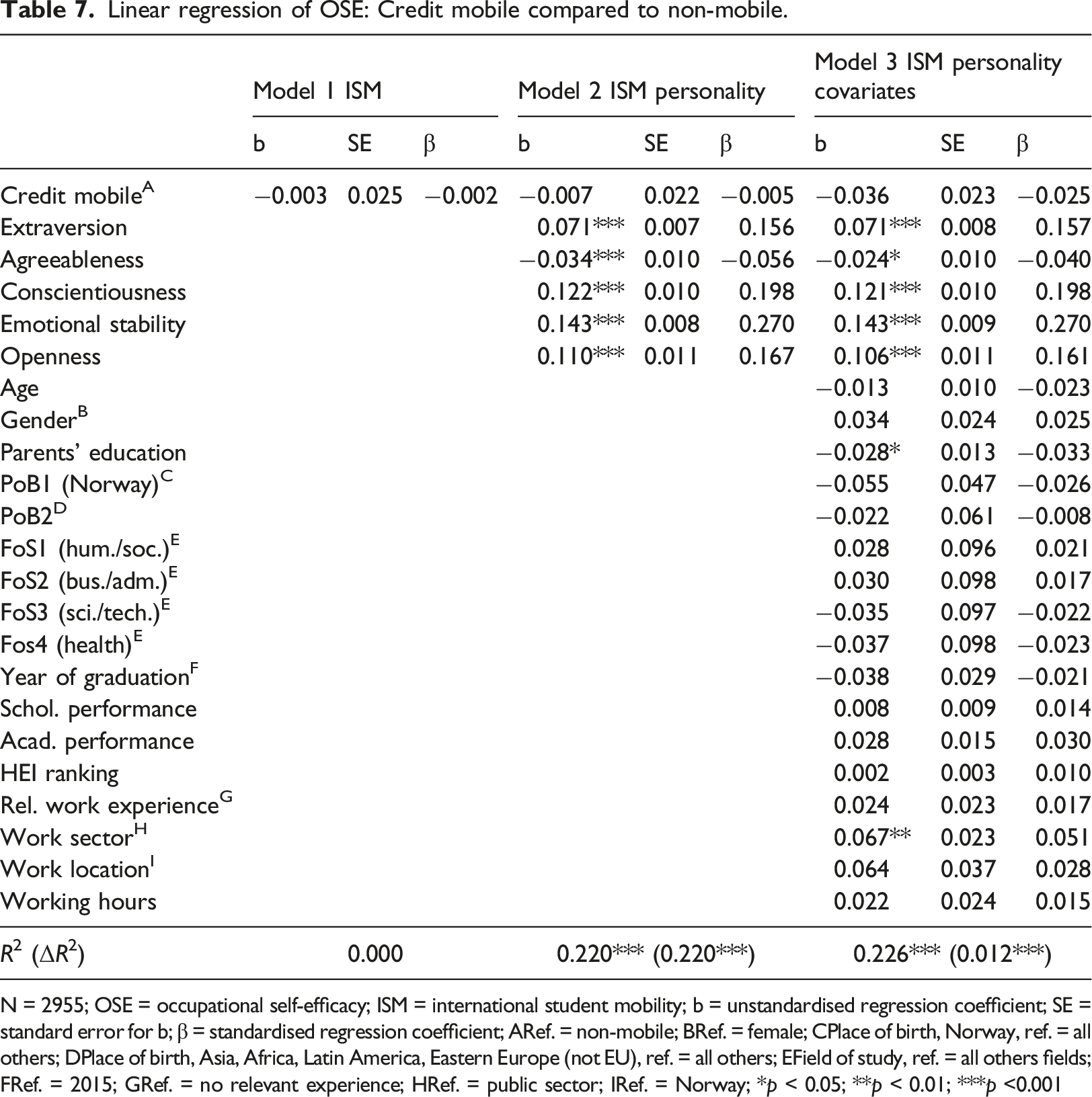
N = 2955; OSE = occupational self-efficacy; ISM = international student mobility; b = unstandardised regression coefficient; SE = standard error for b; β = standardised regression coefficient; ARef. = non-mobile; BRef. = female; CPlace of birth, Norway, ref. = all others; DPlace of birth, Asia, Africa, Latin America, Eastern Europe (not EU), ref. = all others; EField of study, ref. = all others fields; FRef. = 2015; GRef. = no relevant experience; HRef. = public sector; IRef. = Norway; *p < 0.05; **p < 0.01; ***p <0.001
Discussion
The study at hand represents one of few contributions in the field of labour market outcomes of ISM that takes personality dimensions into account and at the same time distinguishes between degree and credit mobility. The next sections offer some discussion points on the following main findings: (1) Graduates within both types of ISM are more extraverted and open than non-mobile peers; (2) Degree mobility results in better labour market outcomes than credit mobility; (3) Personality dimensions affect the relationship between degree mobility and labour market outcomes.
Graduates within both types of ISM are more extraverted and open than non-mobile peers
One of the main findings of this study was that, despite the similarities across ISM groups, both degree and credit mobiles displayed higher scores on the personality domains extraversion and openness. This is noticeably an intuitive finding and in accordance with several previous research findings (Zimmermann and Neyer, 2013; Fourage, Özer & Seegers, 2019; Tabor et al., 2015). Individuals high on extraversion are likely to be more ambitious, energetic, assertive and more positive towards new networks of friends and acquaintances. In a similar vein, those with elevated values on the openness dimension of the five factor model usually face a lower ‘psychic cost’ of mobility (Crown et al., 2020) and are thus more likely to move abroad to study. In other words, for these individuals, a novel culture and language, new circumstances and institutional settings all represent sources of benefits and excitements, rather than stress and hazard. Alternatively, in accordance with the socialisation hypothesis (Löckenhoff et al., 2009), it is also possible that those students who gain ISM experience become more extraverted and open than their non-mobile peers. Either way, it is by no means surprising that extraversion and openness are related to ISM.
The design of our study does not permit inferences regarding causal directions. Accordingly, we cannot assess whether graduates with ISM experiences differ from peers personality wise and are therefore more likely to embark on moving abroad for educational purposes (self-selection) or rather change due to and during their stay abroad (socialisation). The key query here is then whether personality is a determinant or a consequence of ISM. As outlined in the introductory sections, previous research provides grounds for assuming both effects (Holland, 1997; Löckenhoff et al., 2009) and probably in a reinforcing manner (Roberts et al., 2003). In other words and in line with Zimmerman &Neyer (2013), it could very well be the case that those with elevated values on extraversion and openness are more likely to opt to study abroad in the first place, and become even more extraverted and open as a result of their sojourning experiences.
Degree mobility results in better labour market outcomes than credit mobility
Overall, the results demonstrated that degree mobility leads to somewhat greater labour market outcomes than credit mobility, both with regards to wages and OSE. As opposed to degree mobility, credit mobility was not significantly associated with neither wages, nor OSE. The differences between the two groups are however rather small. One possible explanation for the detected differences could be due to the differential durations of the two types of ISM. Insofar higher degrees of OSE and wages represent outcomes resulting partly from ISM experiences, it is plausible to assume that lengthy sojourns (degree mobility) to a higher extent leads to such outcomes in comparison to shorter sojourns (credit mobility).
With respect to personality traits, credit mobile and degree mobile graduates are more alike than graduates without ISM experience. Nonetheless, given the finding that degree mobiles are even significantly higher on the openness scale than credit mobiles, one could suspect that the relationship between ISM and personality is of an incremental nature. In other words, the more ISM experience, the greater of a gap to those without ISM experience. In sum, regardless of the self-selection or socialisation hypothesis, our study suggests that duration of study abroad makes a difference. These findings emphasise the importance of distinguishing between types (length) of ISM in future research, perhaps even more fine-grained than the current study.
Personality dimensions affect the relationship between degree mobility and labour market outcomes
Our findings suggest that undertaking a master’s degree abroad is associated with higher wages, indicating that ISM does pay off. Due to the inconclusiveness of the empirical evidence regarding ISM and wages, this finding coincides with some previous research (Roy et al., 2019; Kratz and Netz, 2018; Netz and Cordua, 2021) and at the same time diverge from others (Van Ophem et al., 2011; Messer and Wolter, 2007). Regarding effect sizes, there is not a large gap between our findings with respect to wage and others who have found significant links between ISM and wage. These studies often find rather small influences of ISM on wage after statistical adjustments (Waibel et al., 2017). It is also debated whether the links between ISM and wage found in some studies, as well as the study at hand, are causally attributable to ISM or resulting from self-selection mechanisms (Messer and Wolter, 2007; Kratz & Netz, 2016).
The bivariate connection between degree mobility and wage was somewhat influenced by the inclusion of personality dimensions in terms of a slight increase in the regression coefficient, indicating a possible suppressor effect might be at play. This suggests that personality, as non-cognitive skills, have some importance and should therefore be taken into account when investigating the relationship between ISM and wage. With the exception of conscientiousness, all personality traits seem to display an independent role in the association between degree mobility and wage. The lack of connection between conscientiousness and wage is in line with previous research (Maczulskij and Viinikainen, 2018). It is also noteworthy that, in contrast to most previous research (Jonason et al., 2018; Maczulskij and Viinikainen, 2018), our results yielded a negative connection between openness and wage. One possible explanation could be that individuals high on the openness dimension tend to be less conform than their peers, which may hinder success and in turn result in lower wages (Heineck, 2011).
Also, the relationship between degree mobility and OSE was to some extent affected by personality in terms of a decrease in effect size when the five personality traits were included in the model. Although emotional stability displayed the strongest association with OSE, agreeableness played a rather minor role. International student mobility is thus evidently not powerfully linked to OSE. Rather, personality traits, particularly emotional stability, serve as underlying variables either influencing both the inclination to embark on ISM, and the tendency to report high degrees of OSE (self-selection), or influenced by ISM and in turn affecting OSE (socialisation). Given the close links between personality and self-efficacy on the one hand (Nauta, 2004; Ebstrup et al., 2011), and between personality and mobility on the other (Tabor et al., 2015; Jokela, 2009; Zimmermann and Neyer, 2013) as demonstrated in previous studies, the confounding (self-selection), or alternatively mediating (socialisation) role of personality in this respect is a rather intuitive and highly anticipated finding. This suggests that personality does indeed play a role in the interplay between types of ISM and certain labour market outcomes and should therefore be included in future investigations in the field of ISM. An avenue for future research could be to determine more specifically how personality dimensions influence the relationship between ISM and OSE. The question is whether personality dimensions confound this relationship (self-selection), mediate the relationship (socialisation) or serve as a moderator (potential effects of ISM on outcomes would be different for various personality profiles)? Or perhaps personality dimensions play moderated mediation roles in the relationship between ISM and labour market outcomes.
Methodological issues
The present study has the obvious strength in a rather large sample size, making a wide range of analytical arrangements not only feasible but also highly meaningful. For example, the many subgroups included as control variables (i.e. study field, work sector and work location) in the models do indeed increase the external validity of the study. In addition, the survey data are supplemented by and linked to reliable registry data with respect to a wide range of items such as field of study and country of study.
Like all research, the present study also has several limitations. First, the cross-sectional design makes it rather challenging to infer causal directions between study variables with high degree of certainty. Thus, for the purposes of causal inferences, for example, in the assessment of the relationship between ISM and personality, future research should adopt other more adequate designs such as panel data analysis. Nevertheless, the survey design does indeed serve the purposes of the current study which was mainly to explore any role of personality in the interplay between ISM and labour market outcomes.
Second, although including personality traits is certainly one of the strengths of the study at hand, the rather short N-Tipi represents some shortcomings. Despite satisfactory psychometric properties (Thørrisen et al., 2021), other more conventional measures such as the Big Five Intentory (BFI), previously found to display more optimal properties (Soto and John, 2017), would enhance the reliability and internal validity of the study. Although long scales like BFI are hazardous for respondents and increases the likelihood of participant dropout, future research should nevertheless preferably also consider including other, more reliable measures of personality traits for the purposes similar to ours.
Finally, despite the strength regarding the distinction between credit and degree mobility, the material underlying this paper does not allow a finer division of ISM length. Preferably, future research should strive to collect data from which a more nuanced typology of ISM can be extracted.
Conclusions
This study aimed to explore how personality domains differed according to type of ISM, and the relationships between ISM, personality domains and labour market outcomes (wage and OSE). Our findings demonstrated that it is indeed important to distinguish between credit and degree mobility, as different types of ISM could result in differential outcomes. Moreover, personality yielded a certain significant influence on the relationship between ISM and certain outcomes and should therefore at the very least be included as control variables in future research.
Footnotes
Declaration of conflicting interests
The author(s) declared no potential conflicts of interest with respect to the research, authorship, and/or publication of this article.
Funding
The author(s) received no financial support for the research, authorship, and/or publication of this article.
