



Abstract
Countries increasingly compete for global talent in the education sector to facilitate the transfer of knowledge. This research examines the extent to which the larger, national context, that is, satisfaction with the country, impacts job satisfaction and organizational commitment in a sample of teachers from the UAE and Bahrain. Survey data was collected from 92 teachers. MANOVA was used to compare mean responses between groups and estimate confidence intervals. Hierarchical regression and modeling were used to examine the mediation effect of job satisfaction between country satisfaction and commitment, estimate path coefficients and arrive at a bootstrap confidence interval for the model. The results provide insights into improving individual and organizational outcomes that are important to a nation. This research expands the framework within which job satisfaction and commitment are studied to include the influence of country satisfaction on choices teachers make about where to live and work in a global context.
Introduction
Individuals, organizations, and countries are labor market participants in global human capital markets; that is, organizations compete to attract and maintain qualified individuals and individuals compete to obtain attractive posts (Dineen and Allen, 2016; Larson and Pearson, 2012; Malecki and Ewers, 2007). While most world cities have grown through advanced producer services, the economies in the Arab Gulf region have grown as a result of oil and gas wealth that stimulated large labor flows of highly skilled western professionals (Malecki and Ewers, 2007) in the banking, tourism and education sectors. In the education sector, expatriate teachers have facilitated the transfer of knowledge and modernization of pedagogy in a process of academic acculturation (Antoniadou and Quinlan, 2018; Austin, Chapman, Farah, Wilson and Ridge, 2014; Jiang, Di Napoli, Borg, Maunder, Fry and Walsh, 2010).
Academics are an important labor flow to Malecki and Ewers’ (2007) world cities that are encouraged by (1) the local government’s favorable immigration policies, (2) the demand for specialized knowledge, (3) higher wages, and (4) better living standards. From a macro perspective, due to increased international competition for talent, countries are increasingly recognizing that they must strategically position their “brand” by creating differences between countries that endow that country with elements that consumers or job seekers care about (Fetscherin, 2010; Kleppe et al., 2002; Silvanto et al., 2015). Initially conceptualized by Kotler et al. (1994), effective “nation branding” can differentiate a country on the global stage by establishing a competitive edge that contributes to sustainable development (Fetscherin, 2010; Silvanto et al., 2015; Kotler and Gertner, 2002). Expatriate teachers are professionals who self-initiate and pursue employment contracts in a different country. These individuals have a global mindset defined as the willingness to work across country boundaries, that is, global careerists (Suutari et al., 2012).
Drawing from several research streams, that is, labor market economics and world rankings, job satisfaction, organizational commitment and cross-cultural adjustment, we develop and test a conceptual model that examines the direct and indirect effects of contextual factors about the country the respondent lives in on job satisfaction and organizational commitment in a sample of teachers in grades K-12. While substantial research exists on the links between job satisfaction and commitment, the current research adds to existing research in several ways. First, the influence of host country satisfaction, for both expatriates and nationals, has not been factored into the extant research. In addition, this study investigates differences due to variation between countries, that is, Bahrain and the UAE, thus, adding to our understanding of exogeneous factors that impact teacher success in strategically located countries who for decades have invested significant resources from the oil and gas sector into their infrastructure and educational system (Ewers, 2016; Malecki and Ewers, 2007). As both countries have relied on Western education models through employment of professionals and teachers (Malecki and Ewers, 2007), this research provides the opportunity to ascertain if empirical findings from other developed and high-income countries applies to this important region of the world. This contextual framework offers a more comprehensive understanding of the processes involved in employment decisions.
Based on the analysis of secondary data research from the World Bank, (2018) and United Nations, (2017) as well as the theoretical overview of national branding as applied to countries in the global labor market, cross-cultural adjustment, and person-environment fit theory (PEFT), the premise of this paper is that country brands signal meaningful differences on criteria that are important to job incumbents. The use of secondary data to study a nation’s brand was used in Fetscherin’s (2010) research and based on these country statistics, we develop the following research questions about teacher ratings of satisfaction and commitment in Bahrain and the UAE. 1. Have investments in infrastructure, institutions and economies resulted in high levels of satisfaction with the country on contextual dimensions as rated by teachers in both countries? 2. How and to what extent do teachers in the UAE and Bahrain differ in country satisfaction, job satisfaction and organizational commitment? 3. How do higher levels of country satisfaction affect job satisfaction and organizational commitment, that is, does country satisfaction have a direct effect on organizational commitment or is the relationship mediated by job satisfaction?
This paper is organized as follows. First, the similarities and differences in Bahrain and the UAE are examined and compared to other Western and oil abundant Arab Gulf countries on macro level economic indicators. Then we examine cross-cultural adjustment, a meso-level theory, that influences teacher outcomes that are important to education and examine the interconnections among these variables. Limitations and implications for future research, policy, and practice are discussed.
Review of related literature
Country comparisons, branding and global labor markets
Bahrain and the UAE are part of the Gulf Cooperation Council (GCC) countries which also includes Saudi Arabia, Kuwait, Oman, and Qatar. Together, these resource rich countries own a significant portion of the world’s oil and gas reserves. For decades, they have invested their oil rents to develop their native human capital to compete successfully in a global economy (Austin, et al., 2014; Ewers, 2016; Gonzalez et al., 2008). Central to creating more diverse economies is an educational system that provides the knowledge, skills, and competencies required to support aggressive national agendas. This section examines the investments in infrastructure, human development, institutions, and education with an eye to their impact on teacher satisfaction and commitment.
Country demographics and world rankings.
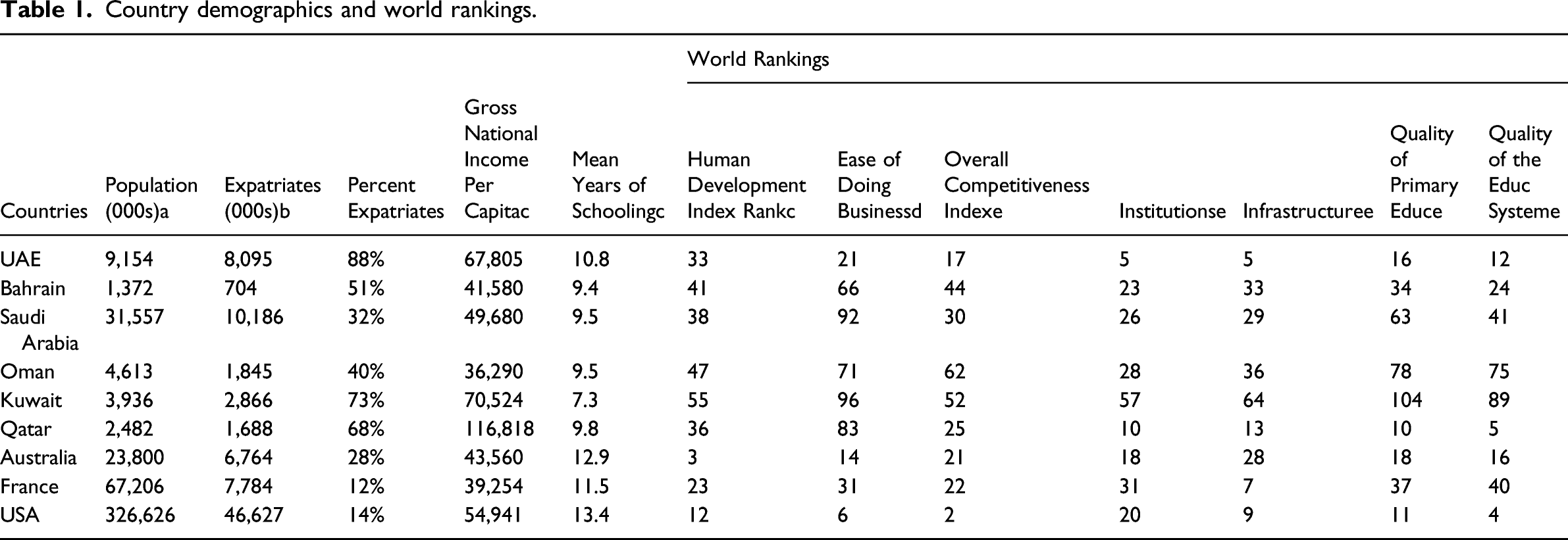
The high gross income per capita and average years of schooling for the countries in Table 1 is reflected in the United Nations (2018) overall ranking of these countries as very high in income and human development. In 2018, the World Economic Forum reported that the UAE and Bahrain led the region on quantitative indicators of economic performance (World Bank, 2018c). Comparing 190 economies on the ease of doing business, the UAE and Bahrain were ranked 21 and 22, respectively, compared to the USA, Australia, and France who were ranked 6, 14, and 31, respectively.
In addition, the UAE leads the Arab world in overall competitiveness with a rank of 17 compared to the USA, Australia and France at 6, 14, and 31, respectively. Over the last decade, the UAE has experienced progress in developing a stronger institutional framework and a modern infrastructure, that is, ranked 5th in the world ahead of all countries in the comparison group. Bahrain’s rankings were lower at 23 on institutions and 33 on infrastructure. The institution pillar captures a myriad of dimensions including the legal system, ethical behavior of business and government, and safety whereas infrastructure encompasses transportation, electricity and telephone services. Together, these two categories reflect a range of country characteristics that are hypothesized to impact general living conditions and, therefore, country satisfaction among expatriates and locals.
Improvements in education have been slightly slower to materialize as indicated in the quality of primary education and quality of the education system categories where the UAE, is ranked at 16 and 12, respectively compared to Bahrain’s rankings of 34 and 24, respectively. The primary education category captures the quality of basic education while higher education taps into secondary and tertiary education quality. The impact of the investments in the educational system is demonstrated by the world rankings on the quality of the educational institutions.
Among the oil economies, the UAE has implemented unparalleled strategic initiatives by investing in infrastructure and education to create new sources of economic growth based on knowledge development (Buckley and Hanieh, 2014; Ewers, 2016). Challenges remain, for example, sustainability of diversification efforts in the non-oil private sector by the national labor force (Ewers, 2016). At the same time, the resultant impact on teacher satisfaction of the broad range of exogenous variables identified in the world rankings is the focus of the present study.
Education context in the UAE and Bahrain
In order to modernize and compete in quality and international prestige, the UAE and other Gulf countries have sought to develop their educational system by academic standards and norms in well-established schools in western nations (Austin, et al., 2014). However, compared to western educational contexts, education in the GCC countries is more centralized and regulated by policies controlled by the respective government ministries. In both countries, education is overseen by a ministry of education (Al-Adel, 2016; UAE MOE, 2020) and the K-12 education system is generally divided into primary, middle, and secondary schools. There are both public and private schools, and the UAE private school market is the largest in the world with 639 public and 580 private schools (Bardsley, 2021). The language of instruction in public schools is Arabic and in most private schools, English.
While both countries rely on professional, expatriate teachers, they also have national agendas to reduce their dependence on expatriate teachers with locals (Austin, et al., 2014). Work arrangements, contracts, and benefits are often more attractive to nationals, for example, expatriate teachers are on short term contracts, but there are benefits to expatriates such as tax-free compensation and housing allowances.
Cross-cultural adjustment and PEFT
We first review the literature on job satisfaction and organizational commitment; then we connect the concepts with country satisfaction based on cross-cultural adjustment and PEFT.
Job satisfaction has been defined as a positive emotional state that results from an appraisal of one’s job (Locke, 1976) and as such, relates to an individual’s affective response to the job (Hackman and Oldham, 1975). Job satisfaction has been shown to correlate with performance across a wide range of studies (e.g., Judge et al., 2001). At the same time, most empirical research on teacher motivation originates in the United States even though educational contexts, cultures, and labor market conditions vary across countries (Heinz, 2015). A gap in the literature calls for research to investigate the broader context and extent to which non-school related factors impact teacher satisfaction. An international comparative study is especially meaningful as it can reveal cross-national variation.
Organizational commitment has been conceptualized as a psychological state that involves three parts: an affective attachment and identification with the organization, a continuance aspect that recognizes the costs of leaving the organization and an obligation or normative component (Allen and Meyer, 1990). More recently, organizational commitment has been defined as an individual’s psychosocial attachment to an organization, that is, loyalty and willingness to exert extra effort and his or her acceptance of work relations (Aboramadan et al., 2020). Studied extensively in academics and behavioral science, commitment plays an important role in predicting school effectiveness and other important educational outcomes such as teaching quality, student academic achievement, absenteeism, turnover, as well as teaching and administrative performance (Finnigan, 2010; Ostroff, 1992; Khasawneh et al., 2012; Liu and Bellibas, 2018).
The relationship between job satisfaction and commitment has been investigated widely in organizational behavior and psychology research (Culibrk et al., 2018). With the application of more complex statistical analysis, that is structural equation modeling, the results indicate a complex interplay between the variables which includes reciprocal causation. In general, the stronger relationship appears to be that job satisfaction influences commitment (e.g., Shin and Reyes, 1995; Mathieu, 1991; Williams and Hazer, 1986; Falkenberg and Schyns, 2007).
Theoretical models of organizational commitment point to person, job, and organizational factors and to a lesser extent, nonjob related predictors (e.g., Glisson and Durrick, 1988). The importance of some contextual variables, that is, nonjob related variables, has been examined by research in the investigation into the antecedents to job satisfaction and commitment in multinational organizations (Black and Mendenhall, 1990; Gregersen and Black, 1992; Kim and Froese, 2012). Gregersen and Black (1992) examined nonjob variables in a sample of managers on international assignments which included both the environment of the country as well as interaction with country nationals. In Kim and Froese’s (2012) research on multinationals, favorable host country characteristics, such as those with higher levels of economic development, influenced willingness to expatriate.
An international position places an individual in a new and unfamiliar organization and societal context. Individuals on international assignments attempt to reduce uncertainty through cross-cultural adjustment—defined as the degree of psychological comfort an expatriate has with the various aspects in a host culture (Black et al., 1991). The adjustment can be daunting as studies show that over 70% of expatriates are considered failures due to cross-cultural adjustment problems (Black, 1988; Peltokorpi, 2008; Roskell, 2013). Drawing from social psychology research, an individual’s cross-cultural adaptation is generally theorized to occur in stages (Black et al., 1991; Firth et al., 2014; Oberg, 1960; Zhou et al., 2008). In their seminal research, Black et al. (1991) identify three areas of sociocultural adjustment: the general environment (degree of comfort with general living conditions); interactions with host country nationals (communication and interpersonal styles); and work (performance standards, job, and supervisory responsibilities). In a meta-analysis of Black, Mendenhall and Oddou’s (1991) model, Bhaskar-Shrinivas et al. (2005) demonstrated support for the model with managers in international assignments. In addition, Bhaskar-Shrinivas, et al. (2005) extended the research model by showing that cross-cultural adjustment influenced job satisfaction.
In addressing the predictors of commitment in international teaching assignments, it seems essential to include the fit between nonjob related variables and the job given the substantial changes that most teachers and their families experience. Teachers in international assignments are more likely to be what Collings et al. (2007) refer to as self-initiated expatriates. Initially, expatriate teaching assignments may be fraught with negative aspects that create anxiety and stress (Antoniadou and Quinlan, 2018) as one’s routines are disrupted (Brett, 1980).
Defined broadly as satisfaction with general safety, benefits, living conditions, healthcare, food, recreation, and interacting with locals, research on country satisfaction in academics is scant. Recognizing that motivation is influenced by the national context, Austin, et al. (2014) expanded the view of teachers’ work experience to include specific benefits that accompany international assignments such as the opportunity to travel. However, while the opportunity to travel may motivate academics to take an international position, adjustment to the country’s culture and living conditions may influence whether they stay. In a sample of expatriate teachers in the UAE, Yang et al. (2018) found that the social and organizational work climate predicted commitment. Noting the higher turnover in international schools, Chandler (2010) investigated teacher ratings of the importance of the country location to the decision to work at the school. While concluding that location satisfaction was important, only one item was used to measure location importance in a sample of 26 respondents.
PEFT refers to a person’s perceived compatibility with various aspects of the work environment, primarily the degree of fit between a person’s individual characteristics and the environment (Edwards, 2008; Schneider, 2001). PEFT suggests that a greater congruence between an individual’s own values and characteristics and those emanating from the work setting leads to better cultural adjustment and thus better job outcomes (Lauring and Selmer, 2018; Oh et al., 2014; Stoermer et al., 2018). Thus, congruence between personal attributes, such as attitudes, emotional controls, and perceptions, and the workplace may be especially important for self-initiated expatriates (e.g., Lauring and Selmer, 2018; Makkonen, 2015; Nolan and Morley, 2014; Zhang et al., 2021). Cultural congruence is a complimentary fit when individuals match their strengths to the needs of the environment (Muchinsky and Monahan, 1987). Increased satisfaction helps them to meet their psychological need for commitment and fit into a new cultural setting.
Extending these findings to the present study, country satisfaction is posited to influence job satisfaction in two ways. First, the broader contextual aspect, for example, general living conditions, is predicted to impact job satisfaction because dissatisfaction with safety, living conditions, healthcare, etc., will reflect anxiety and adjustment problems (Zhou, et al., 2008). Second, international assignments impose new rules, behaviors, and expectations about communication and teaching effectiveness. Intercultural contact will facilitate culture-specific skills acquisition (Ward et al., 2001; Zhou, et al., 2008). Interactions between expatriate teachers and host nationals, will increase their capacity to acquire knowledge about the culture, knowledge that will make cross-cultural adjustment more readily. The social nature of teaching means that an understanding of sociocultural norms is important to pedagogical adaptation.
Method
Sample
The sample consisted of 92 full time teachers in 8 public schools. Of these, 51 teachers were from 5 schools in Abu Dhabi, UAE and 41 teachers were from 3 schools in Manama, Bahrain. A total of 72% were expatriates. The majority of the participants were female (85%) and working in public schools (89%). Regarding educational background, most of the respondents, 69%, had a bachelor’s degree, 20% had a masters, 1% had a PhD, and 10% had less than a bachelor’s degree. The average age was 38.2 years and the average annual income US was almost $60,000 (tax free). A representative range of teaching levels was evident from K-12 with 59% from K-6 and 41% from 7–12.
Data collection
Graduate research students at Zayed University administered the surveys. The school principal was contacted at each school and the date and time coordinated for the distribution of the survey. The surveys were handed out during teachers’ meetings and collected immediately thereafter. Additional surveys were provided for teachers who were absent, and arrangements made to return the survey to the research assistant later. Respondents were informed that completion of the survey was voluntary and that they could discontinue its completion at any time. The response rate was 72%.
Research instruments
The survey items were developed from previous research as indicated in the discussions which follow. Unless otherwise stated, the survey items used a 5-scale format. The list of items was reviewed by a class of 25 graduate students and teachers/principals as well as 3 academic faculties in higher education at Zayed University. This resulted in some of the survey items being eliminated based on the criteria of relevance to the sample group. The surveys were translated from English to Arabic and then back-translated from Arabic into English.
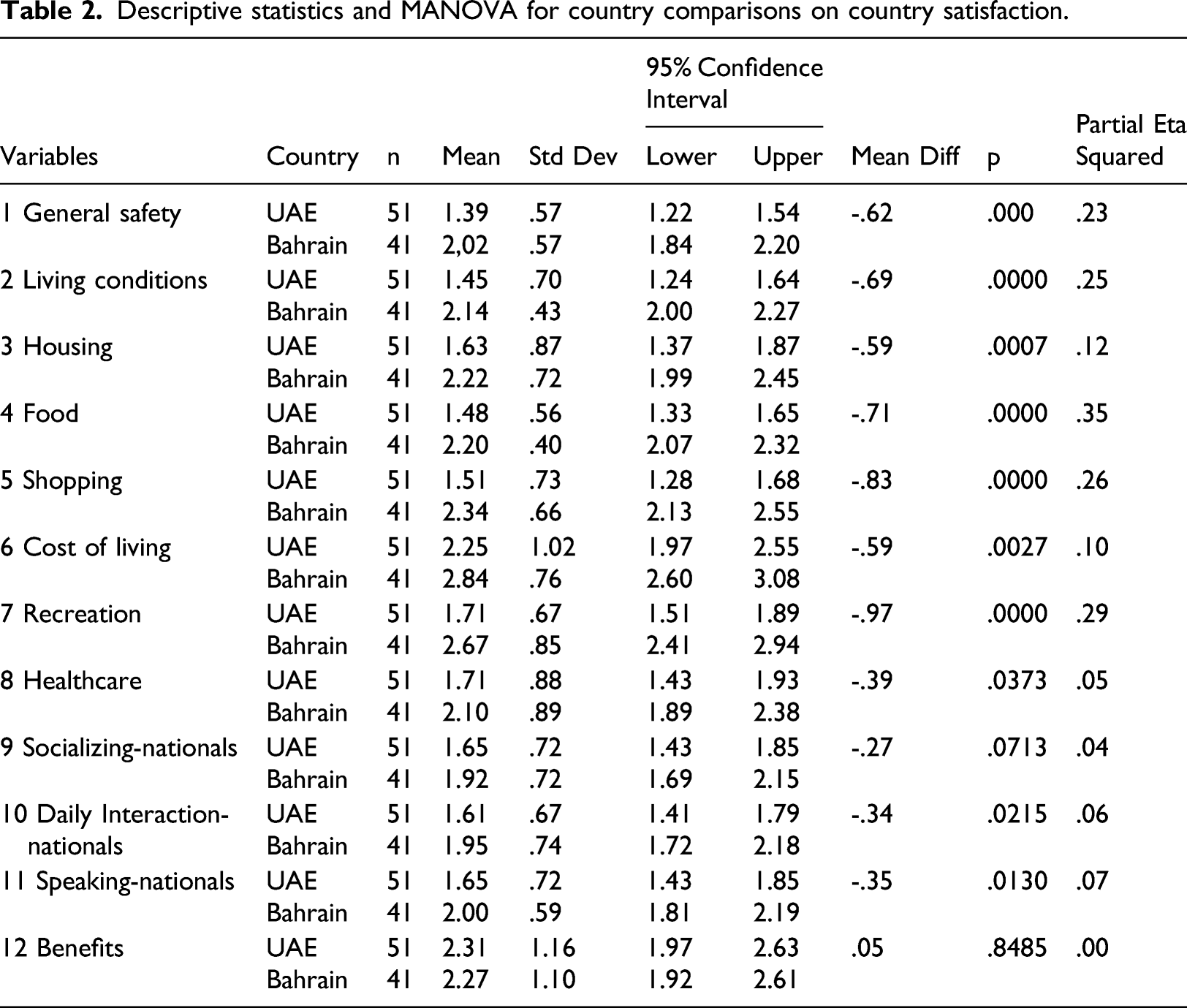
Descriptive statistics and MANOVA for country comparisons on country satisfaction.
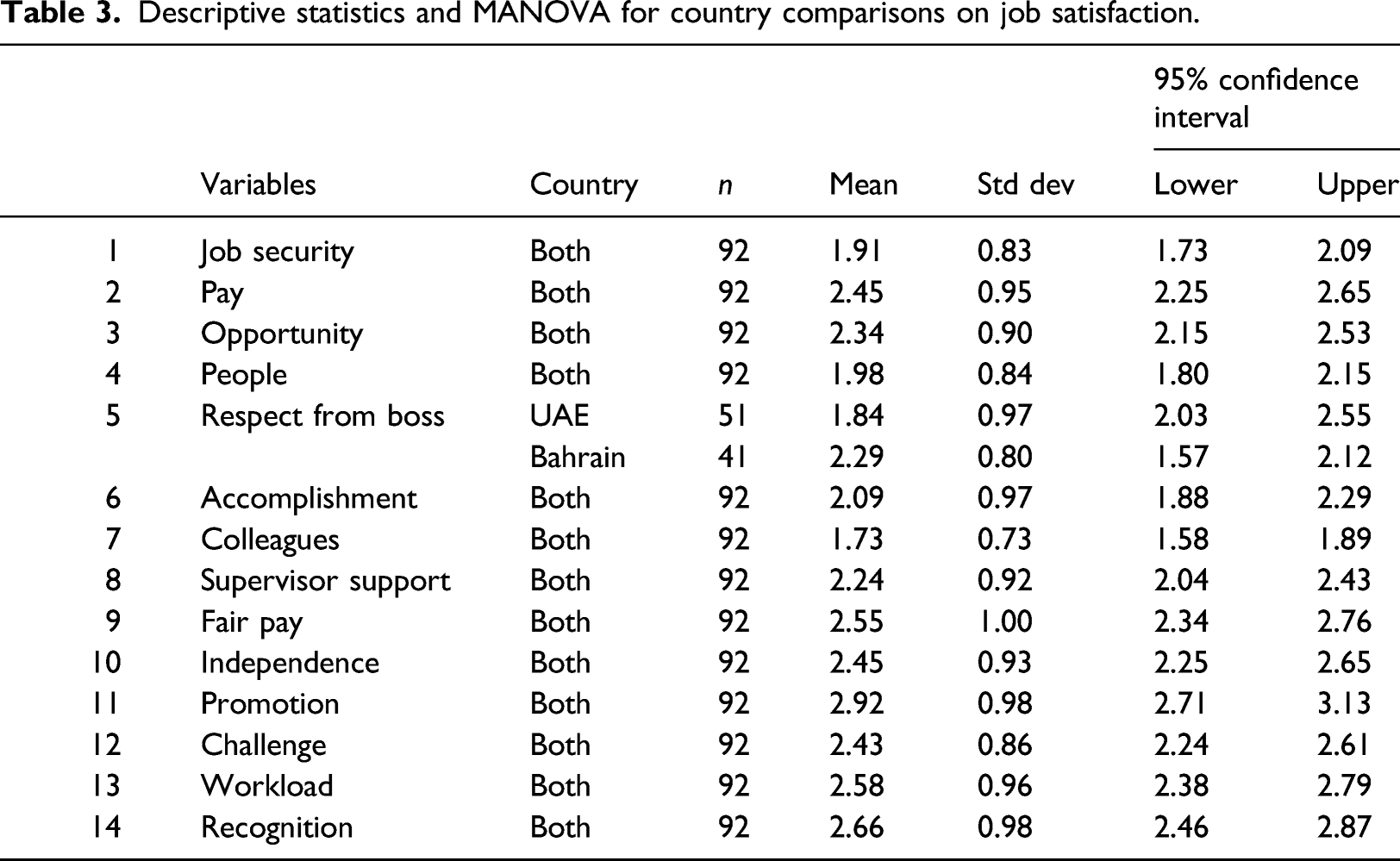
Descriptive statistics and MANOVA for country comparisons on job satisfaction.
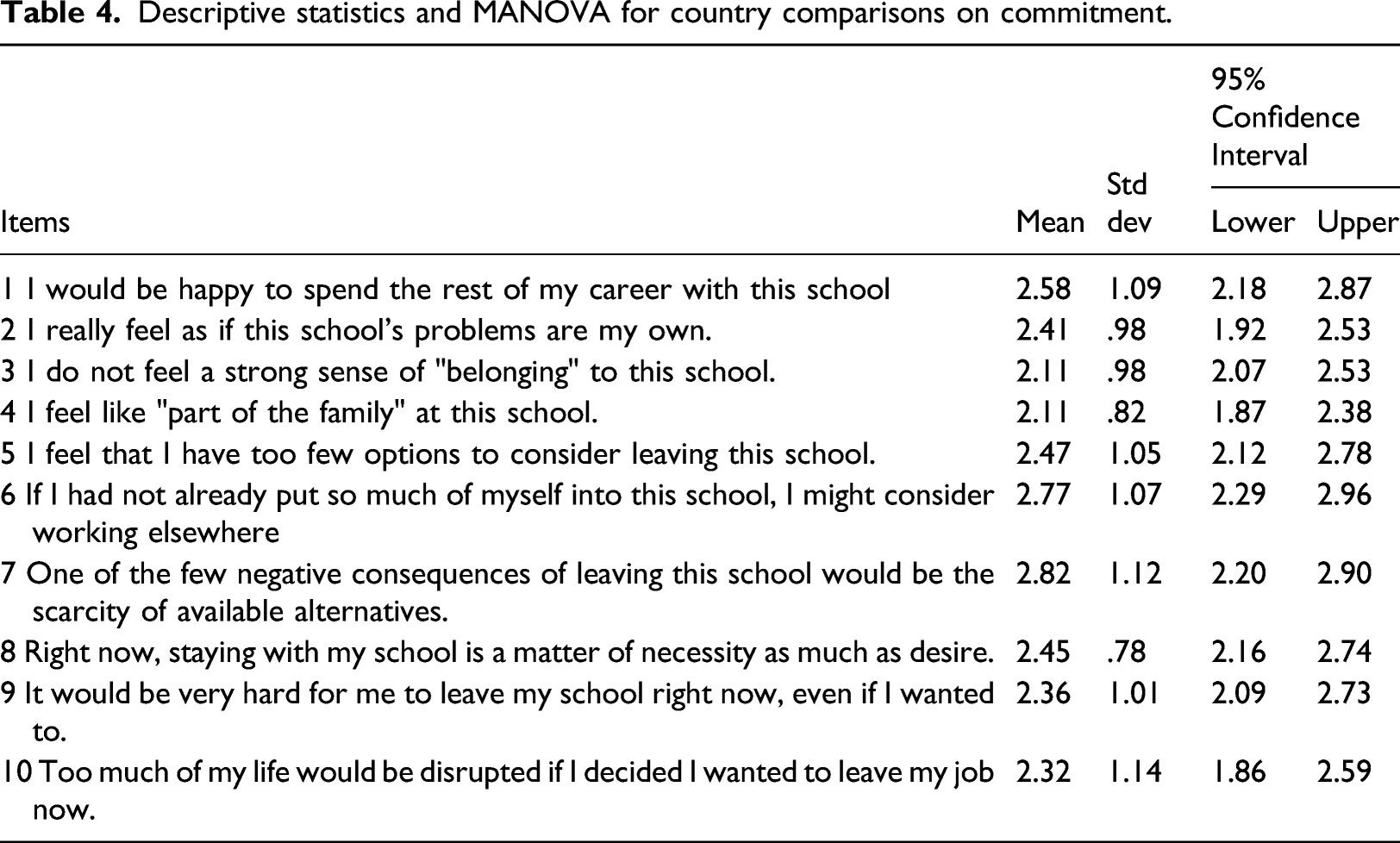
Descriptive statistics and MANOVA for country comparisons on commitment.
Results
To perform multiple t tests and confidence intervals, and control for Type 1 errors, a one-way between groups MANOVA for multiple dependent variables was used. There was a statistically significant difference in country satisfaction ratings based on country, F (12, 79) = 7.3, p < .0000; Wilk’s Λ = .47, partial η2 = .53. Table 2 shows the results for the descriptive statistics and MANOVA analysis for country satisfaction. An examination of the confidence intervals that encompass the scale midpoint, 3, indicates whether respondent ratings tend to be satisfied or highly satisfied versus neutral. All the variables in Table 2 are significant at a 95% confidence interval except cost of living for Bahrain indicating an overall high satisfaction rating on the country variables for both countries. The average rating from respondents in the UAE were higher (more satisfied) than Bahrain for all variables except benefits. The partial eta squared column indicates that the proportion of the total variance in a dependent variable that is associated with country is highest for food, shopping, living conditions, and general safety.
There was an overall statistically significant difference in job satisfaction ratings by country, F (14, 74) = 2.2, p < .0172; Wilk’s Λ = .77, partial η2 = .29. Table 3 shows the results for job satisfaction ratings between countries. Except for respect from boss, there were no differences in job satisfaction between countries. The UAE average rating was 1.84 compared to Bahrain’s rating of 2.29, which was significantly different at p < .0231, η2 = .06.
An inspection of the confidence intervals for each item shows that there is a positive mean rating on all items in both countries. Table 4 does not show a significant difference in commitment ratings by country, F (10, 80) = 1.7, p < .1070; Wilk’s Λ = .83, partial η2 = .29. An inspection of the confidence intervals for each item shows that both countries received a positive mean rating on all items.
Means, standard deviations, coefficient alphas and correlations.
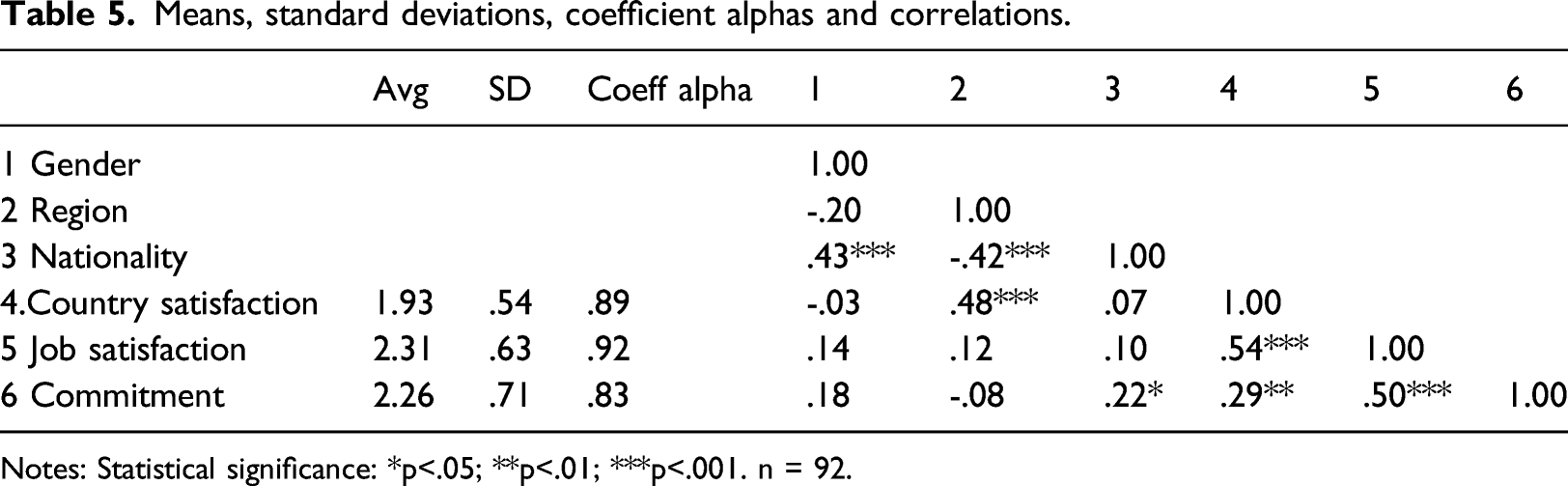
Notes: Statistical significance: *p<.05; **p<.01; ***p<.001. n = 92.
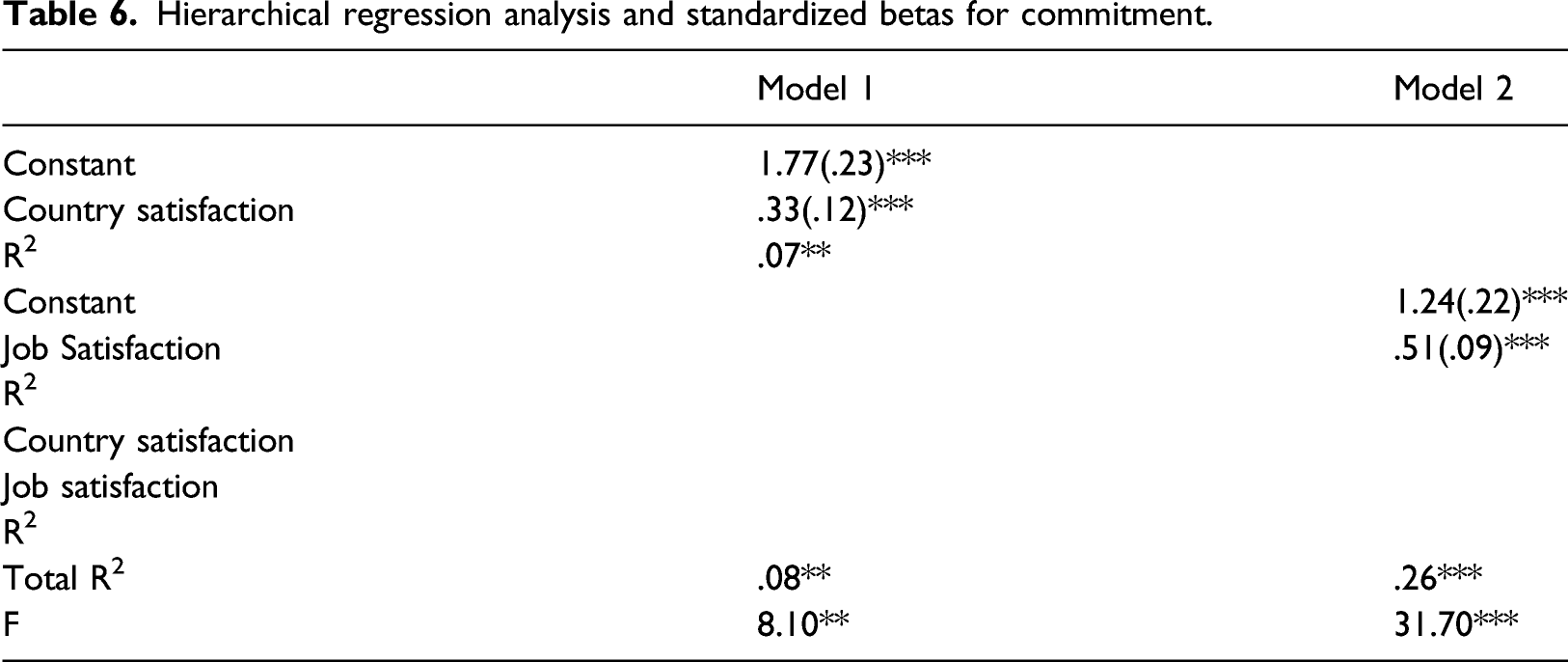
Hierarchical regression analysis and standardized betas for commitment.
Process results for mediation.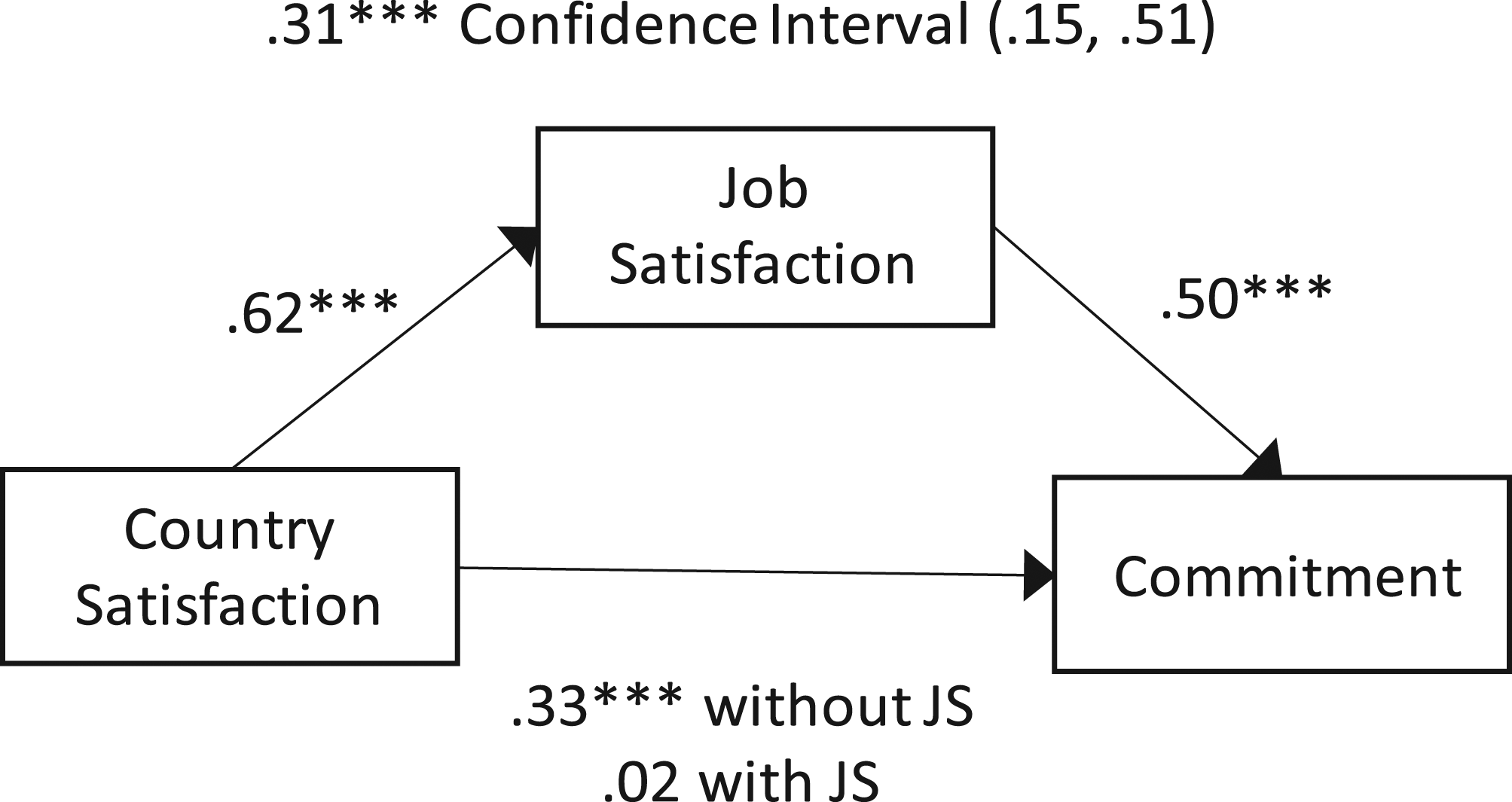
As shown in Table 6, when country satisfaction is entered into the regression model, the β coefficient is significant, but when job satisfaction is then added, the direct relationship between country satisfaction and commitment disappears (.16, p=.294). In Figure 1, the confidence interval (CI), .15, .51, for the indirect effect from country satisfaction to job satisfaction to commitment is statistically significant as it does not include zero and the significance level for the effect size coefficient, .31, is p < .001, indicating that job satisfaction is a significant mediator. Therefore, both the hierarchical regression analysis and process path results provide support for full mediation, that is, the relationship between country satisfaction and commitment is mediated by job satisfaction. In other words, the relationship between country satisfaction and commitment is indirect as country satisfaction affects job satisfaction which in turn affects commitment. Teachers who differ by one scale point in country satisfaction are estimated to differ by .31 in commitment because of the influence of country satisfaction on job satisfaction which in turn is translates to higher commitment.
Discussion
The practice of assigning rankings to countries by the United Nations and World Economic Forum gives an idea of where a country stands vis-à-vis other countries that is reflected in teachers’ ratings of country satisfaction, job satisfaction, and commitment. Abu Dhabi and Manama are classified as a new type of world city by Malecki and Ewers (2007), and as such have established a competitive advantage in attracting and retaining skilled academics. Teachers from both cities gave high ratings across a range of country factors including safety, cost of living, healthcare, and opportunities to interact with host country nationals. For most country ratings, Abu Dhabi was rated significantly higher than Manama. Job satisfaction and commitment were high, and generally equal, in both sample groups. These cities act as transmission points for economic, political, social, and cultural flows (Taylor, 2005) where specialized knowledge and global best practices in academics are an important transnational flow in the formation of global cities.
Theoretical implications
The present study examined the relationship between country satisfaction, job satisfaction and teacher commitment. Several theoretical implications are suggested by the results. First, we extend cross-cultural adjustment theory to include macro and micro level analyses, that is, at country and individual levels. Country satisfaction is related to better non-workplace adjustment; job satisfaction is related to workplace adjustment; and these adjustments promote teachers’ commitment. We recognized the vital role that government leaders play by investments in education and a wide range of factors that make a country an attractive place to live. Country satisfaction makes an important contribution to teacher commitment through the full mediating effect of job satisfaction. There were no direct effects of country satisfaction to commitment. At the nexus of the relationship among the variables is job satisfaction as the results show full mediation between country satisfaction and commitment through job satisfaction. We add research richness in understanding important antecedents to satisfaction and commitment.
Second, we have extended PEFT to a comparative study of two cultural contexts in the education sector, namely the UAE and Bahrain. While commitment is extensively studied in the context of organizations, the current study compares two countries and validates that country satisfaction at a macro level influences teachers’ job commitment. PEFT is strengthened by the mediating relationships observed in our study which supports the theory of person-society cultural fit. This contributes to the psychology of human behavior in a broad way.
Third, the present study increases our understanding of job satisfaction and commitment by more broadly defining the work experience of teachers in international positions to include a complex range of host country characteristics, for example, Kim and Froese (2012). Self-initiated expatriates in the international work force comprise an important trend in the current globalization movement. Last, while Ewers’ (2016) study notes an inverse relationship between oil rich countries such as the UAE and education development, our study suggests that improvements have materialized as evidenced by the World Bank (2018b) data.
Implications for management
The findings of this paper have implications for recruitment campaigns, retention efforts, orientation programs for new staff, and employer-country dialogues among organizations. Too often, schools do not provide assistance with acculturation and simply leave teachers to succeed or fail on their own (Mizzi, 2013). When a school employs numerous expatriate teachers, these findings suggest that it is important for administrators to improve teacher commitment by stimulating opportunities for expatriate teachers to interact with locals thus strengthening interactive opportunities. More interactions have the potential to increase country satisfaction and therefore, job satisfaction. In countries with a favorable contextual environment, such as the UAE and Bahrain, the results of this study highlight the importance of recruitment and management strategies that leverage the significant investments governments have made to make their country attractive to global labor markets (Silvanto and Ryan, 2014).
This study carries an important message to government policy makers and human resource professionals who have a significant role in promoting knowledge sharing through the attraction of talented academics. International teaching assignments are influenced by attractive national contexts and cultural norms within which academic work is performed. Taking into account what academics value most has the potential to improve individual and organizational outcomes that are important to the educational institution and the nation.
Limitations and future research
This study has limitations. The exploratory nature and cross-sectional methodology makes it difficult to infer causality. Research on organizational commitment and job satisfaction indicates that the relationship is complex (Mathieu, 1991; Williams and Hazer, 1986). This study assumed that country satisfaction influenced job satisfaction and future studies should investigate dual causality, for example, does job satisfaction affect country satisfaction? Future research would benefit from a larger sample size to adequately test additional antecedent and outcome variables such as individual characteristics related to cultural adaptation and performance outcomes. While the country differences reflected the different contexts reported in the international rankings, for example, United Nations (2018), the study sample included teachers primarily from public schools which limits the generalizability of the findings. Similarly, a larger sample size would allow for more sophisticated statistical analyses such as factor analysis and structural equation modeling. The reliance on a single source of data for measurement suggests the possibility of method bias. However, since the mediation model was fully supported the findings cannot be attributed to method bias.
Among countries relying on local and foreign teachers, attending to exogenous, that is, host country, variables that relate to job satisfaction are particularly salient, as high job satisfaction mediates the relationship between country satisfaction and organizational commitment. Future research should extend these findings by investigating the adjustment process of expatriates through longitudinal studies and collect repeated measures of the study variables. Moreover, work is needed on the role of motivational processes, such as effort, goal setting, and self-efficacy, which could be central to the adjustment process. Measuring teacher adjustment from multiple sources, for example, students, principals, coworkers, and spouses, would validate and enrich understanding about expatriate assignments.
Footnotes
Declaration of conflicting interests
The author(s) declared no potential conflicts of interest with respect to the research, authorship, and/or publication of this article.
Funding
The author(s) received no financial support for the research, authorship, and/or publication of this article.