



Abstract
This study compares teaching and learning in German and Chinese vocational education and training (VET) schools. The adoption of teaching methods and instructional media are used as two descriptive dimensions. Relevant data on these factors were collected through systematic classroom observation. Generally, both similarities and differences can be noted between German and Chinese VET schools. The results concerning adoption of teaching methods and instructional media are discussed in the context of two factors: teacher education; and curriculum.
Introduction
Since the end of the 20th century, several international assessment-based comparative studies have been carried out. The Trends in International Mathematics and Science Study (TIMSS) and the Program for International Student Assessment can be seen as the most important and influential research projects worldwide.
However, why the students’ achievement from different countries vary needs further investigation (Elliott et al., 2019). And focusing on pedagogical practice is beneficial for understanding the validity and policy relevance of findings from international surveys. Fundamentally, the purpose of comparing pedagogical practice is to improve the quality of teaching and learning (Organisation for Economic Co-operation and Development, 2017); at the same time, comparing pedagogical practice is particularly important for deepening understanding of the contextual differences between the countries being compared (Aldridge et al., 1999; Organisation for Economic Co-operation and Development, 2017).
Against this background, some large-scale video studies comparing pedagogical practice have been conducted. Two TIMSS video studies may be regarded as the pioneers in this field (e.g., Roth et al., 2006; Stigler et al., 1999). Recently, a new project, the Teaching and Learning International Survey-video study, was launched (Organisation for Economic Co-operation and Development, 2017, 2018). Some similar studies have been carried out but on a comparatively smaller scale (e.g., Cai and Lester, 2007; Liu and Neuhaus, 2017; Tao et al., 2013).
In all of these studies, the disciplines in general education, such as mathematics, science and biology, have been considered. In contrast, in the field of vocational education and training (VET), comparing pedagogical practice is rare.
The aim of this preliminary study is to fill this research gap. In other words, the objective of this study is to compare teaching and learning in German and Chinese VET schools, by describing the adoption of different teaching methods and different instructional media. Systematic classroom observation was utilized to collect the data and these data were subsequently analyzed. In addition, based on the comparative outcomes derived from this study, deeper interpretation of the outcomes was conducted by examining the findings according to two contextual factors: teacher education; and curriculum.
Definition of and reflection on teaching and learning in this study
The term “teaching and learning” is utilized throughout this paper. First and foremost, it should be noted that this does not equal the concept of a lesson, but rather is one important component of a lesson.
A lesson is composed of sequences of segments or blocks of time (Burns and Anderson, 1987). These segments might be further categorized into three groups according to the function reflected in each segment. These are: non-teaching-and-learning related segment group; teaching-and-learning supportive segment group; and teaching-and-learning segment group. The relationship between the three segment groups and time spent in a lesson is presented in Figure 1. In the current study, the teaching-and-learning segment group is of interest. The teaching and learning investigated here are the activities that take place in the engaged time 1 .
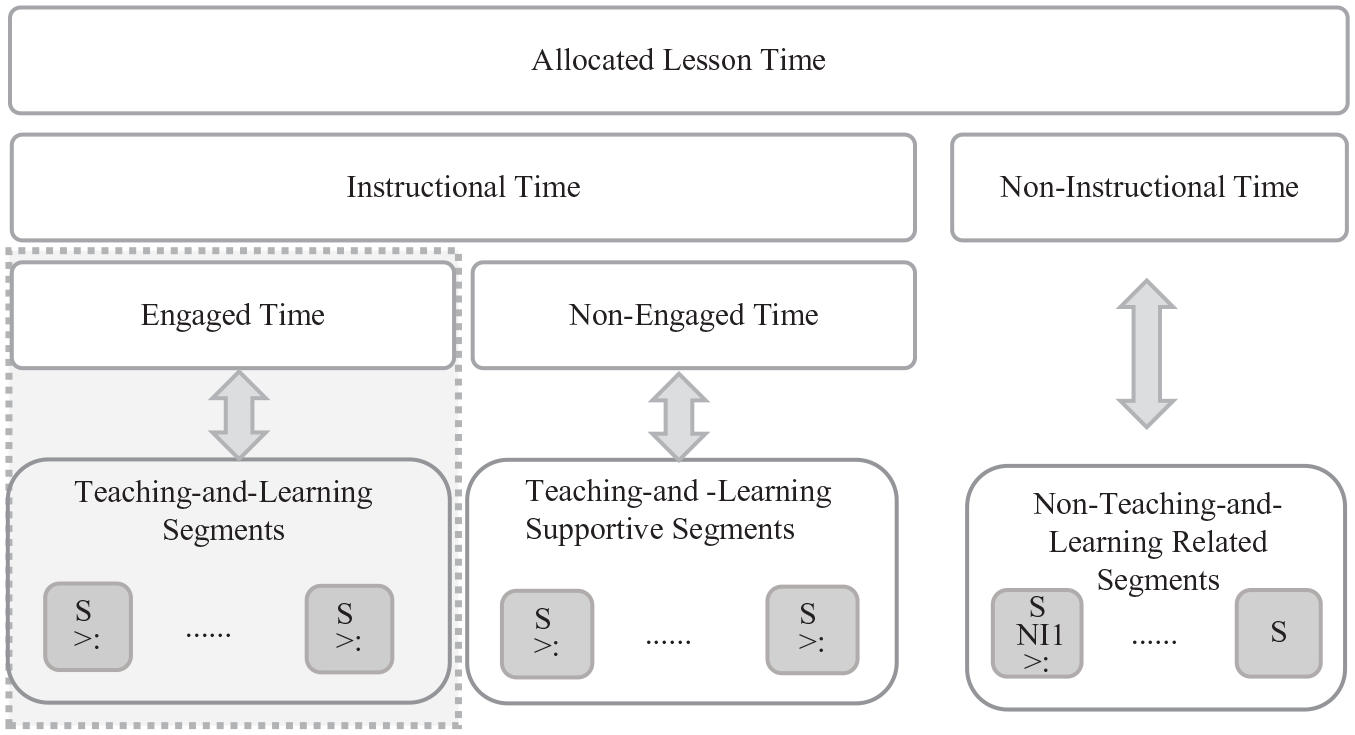
Teaching and learning in a lesson.
Another question needing to be answered here concerns the reflection on teaching and learning in this study. Classroom life poses a complex research subject, which has both visible structure and invisible structure 2 (Kunter and Trautwein, 2013; Oser and Baeriswyl, 2001). Though it was widely accepted that invisible structure has a closer relationship with teaching effectiveness (e.g., Fischer et al., 2005; Hattie, 2009; Helmke, 2012; Klieme, 2006; Seidel and Shavelson, 2007), visible structure is still important and is the focus of this study because the aim here is to describe rather than evaluate.
Among the various aspects of visible structure, the adoption of teaching methods and instructional media are used as the descriptive dimensions. Apart from the reason that they are a significant component of VET pedagogy, another consideration lies in the discussion of adapting teaching and learning to a different approach (e.g., Pilz and Fürstenau, 2019).
Similar to international developments in general education, also in VET pedagogy great value has been attached to learner-centered discovering (e.g. Schweisfurth, 2011), as well as action-orientated teaching and learning (e.g. Fürstenau et al., 2014; Pilz and Fürstenau, 2019), and the competence-based VET (e.g. Mulder, 2017). Although these concepts have different orientations in detail, all these approaches have in common that learning should be more learner-centered and reflective, to impart comprehensive professional competencies. And it is believed that examining the adoption of teaching methods in reality is a proper approach to reflect the pedagogical practice (Cedefop (European Centre for the Development of Vocational Training), 2015).
In the compared countries, this approach was widely adopted by German scholars, by calculating the time allocation to different teaching methods (e.g., Götzl et al., 2013; Jahn and Götzl, 2014; Kozina and Pilz, 2018; Pätzold et al., 2003; Pilz and Gronowski, 2020; Seifried, 2008; Seifried et al., 2006; ). In China, the teaching and learning situation in VET schools is mostly generalized qualitatively (e.g., Cheng, 2015; He and Liu, 2016).
Though the results derived from the German quantified approach and Chinese qualified approach are the same, which is that the teacher still dominates the classroom, from a comparative perspective, it cannot be concluded that they are the same, just based on these studies. First of all, most of the data in these studies are not up to date. Additionally, due to the comparative low quality of the results from Chinese studies, as well as the region-confined characteristic of German studies, the data from these studies cannot be compared. So, it is worthwhile to compare the adoption of teaching methods from an international comparative perspective.
In addition, another trend that might be witnessed in the field of VET is the discussion around digitalization in schools. In the last few years, the concepts of Industry 4.0 and Economy 4.0 3 have been put forward. The influence brought by this transformation was not confined to the working environment but also extended to teaching and learning in schools. Specifically, students nowadays should be equipped with digital skills (Bates, 2015). It was also believed that the integration of digital media in pedagogical practice is beneficial for students’ learning (see Eder, 2009; Pfeiffer, 2015). As a result, it has been advocated to include digital media in the teaching and learning process in schools, especially in VET schools (e.g., Padur and Zinke, 2015). It is therefore worthwhile to be familiar with the actual use of digital media in schools and the extent to which the use of digital media has been adopted.
Design of this study
In a comparative study, a series of selections have to be made. These should not be confined to the selection of the countries to be compared, but also relate to some more concrete, pragmatic dimensions (Pilz, 2012). Having this in mind, for the sake of guaranteeing the validity and comparability of the data, three main selections were involved: of country; of educational level; and of discipline.
First of all, Germany and China were selected as the countries to be compared due to their close cooperation in the field of VET (Liu, 2017), the accessibility for authors, and because they present the most different case design (see Seawright and Gerring, 2008). It is worthwhile to investigate whether teaching and learning are similar between these countries considering their different cultural, political, and economic backgrounds, and different VET systems (see Green, 1995; Pilz, 2016). And from this down-to-up approach, it is beneficial for mutual understanding and for deepening the further cooperation, especially on the macro and meso levels.
It is well-known that both Germany and China differ significantly by region (Pilz and Li, 2012) and, in this pilot study, it is not possible to select observation samples from all of the regions within each country. Considering the accessibility of schools, Cologne, the fourth largest city in Germany, and Beijing, the capital city in China, were selected as the cities from which the observation samples were selected.
Secondly, the comparison in this study was made considering the upper secondary VET level, which is equivalent to education level 3 (United Nations Educational, Scientific and Cultural Organization, 2011). In Germany and China various VET programs are provided on this level. In China 4 , only full-time programs are provided. The three school types are specialized secondary school, vocational high school, and artisan schools. In fact, the main difference among them lies in the historical background, instead of the education objective, curriculum, and other aspects (Shi, 2012; Zhao, 2003). So, for data collection, no difference was made between them. In the end, taking the accessibility in to consideration, two of them—vocational high school and specialized secondary school—were selected. To guarantee data comparability, also the full-time programs in Germany 5 —full-time vocational school (Berufsfachschule)—that were selected, as these have the most similar characteristics with their compared counterparts, such as the educational objectives, enrolment requirements, and the teaching model. At the same time, it is also due to their significant role in German VET system.
Finally, selecting the discipline to be focused on is also important, as the compared subject is teaching and learning, and this is likely to be different in different disciplines. For this study, accounting was selected due to international similarities and standards. It is set up differently in each of the countries being compared. In German schools accounting is one part of the business administration majors within the business administration course. In China, accounting is provided as a major in the schools. In this major, various courses related to accounting are taught. Among them, three courses—basic knowledge of accounting, accounting of tax and other fees, and accounting of financial results—were selected as the target courses.
Data collection method: systematic classroom observation
In this study, structured observation with a category system—also known as “systematic classroom observation”—was adopted for data collection. With this method, “the frequency with which specific behaviors occur in the classroom and the length of time they occur” can be collected (Hilberg et al., 2004: 2). Pfau believed that it is “potentially more suitable for gathering data to be used for making cross-cultural comparison”, in that “precise and valid cross-national comparison could be made” (Pfau, 1980: 404).
For conducting this systematic classroom observation, a detailed observation instrument was constructed (Table 1). As shown, Table 1 is composed of three parts. In the first part, basic information related to the research subject should be recorded. The second part is the recording field, in which three aspects of information, namely activity types, teaching methods and instructional media, are recorded. In the third part, the category system of these three aspects, or the concrete indicator with the corresponding codes, are listed.
Standardized observation table.
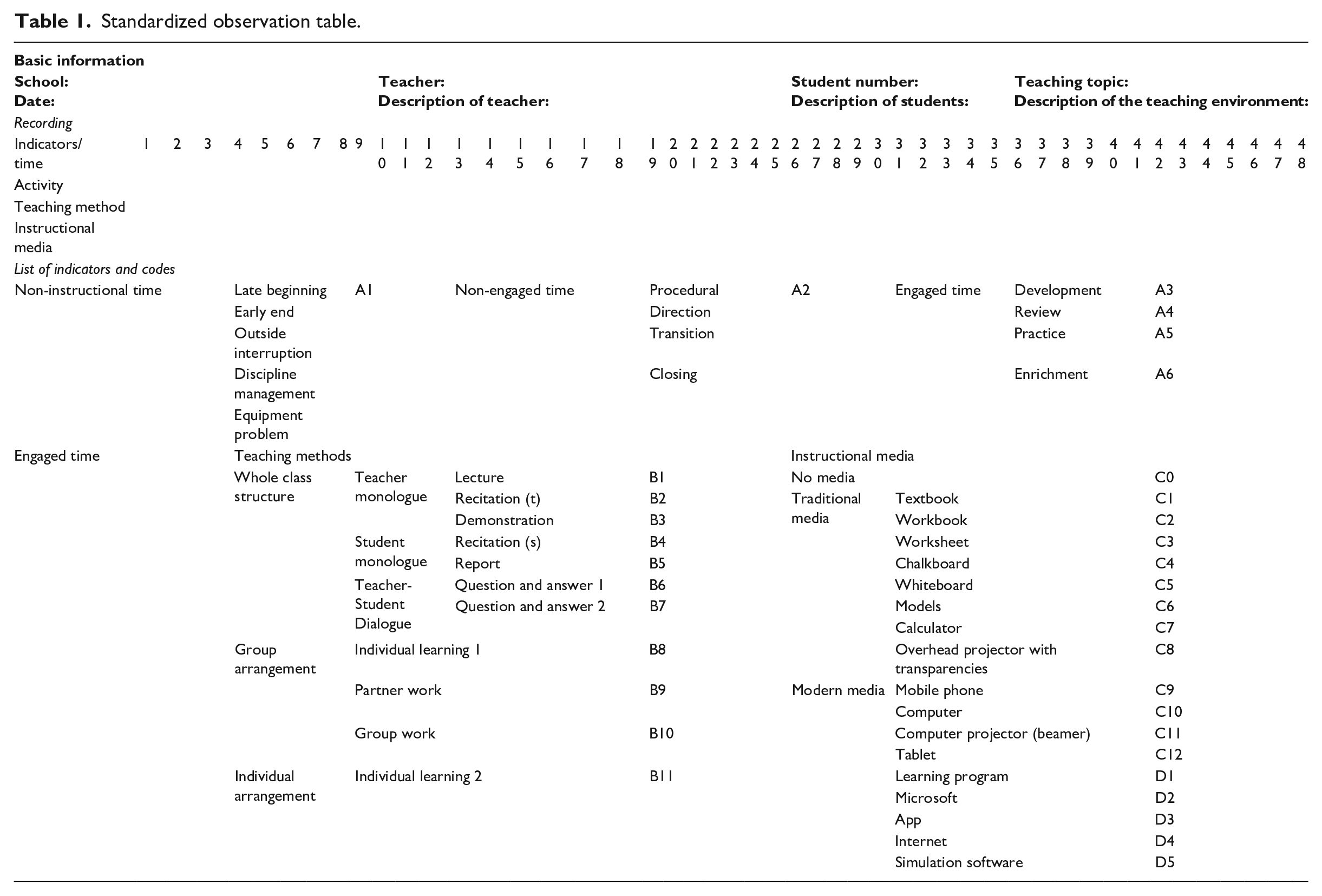
As noted, teaching and learning here refers to activities that take place in the engaged time. Within this, a distinction was made between development, review, practice, and enrichment. It was expected that conclusions could be drawn about how each individual method or media is used for different purposes. In the development segment, new knowledge or skill is introduced. In the review segment, topics previously presented are reviewed. In the practice segment, students practice the newly acquired knowledge around a skill. Finally, in the enrichment segment, knowledge or skill is expanded through the use of games and films. Additionally, the activities that take place in non-instructional time and non-engaged time were given separate codes (A1 and A2, respectively; see Table 1).
The three sub-categories (or organizational structures) of teaching methods are: the whole class arrangement; the group arrangement; and the individual arrangement. Within each organizational structure, concrete teaching methods were coded.
Within the category of the whole class arrangement, further distinction was made between teacher-monologue, student-monologue and teacher–student dialogue. The methods lecture (teacher teaching by interpretation), teacher-recitation (teacher teaching by reading the contents from the instructional media), and demonstration (teacher teaching by showing how to do) were categorized as teacher-monologue. Student-monologue includes student-recitation (students reading the contents from the instructional media) and report (students standing in front of other to make a presentation). Two indicators of teacher–student monologue is when students answer the question one by one (question and answer 1), and when some students answer the question together (question and answer 2).
The concrete methods within the group arrangement are partner study and group study. When students are grouped but cooperative learning does not take place, it is considered to be individual learning with the group arrangement, which is coded as individual learning 1.
The only indicator for the individual arrangement is the situation when individual learning takes place within the individual arrangement (coded as individual learning 2; see Table 1).
With respect to instructional media, four sub-categories are identified: no media; traditional media; modern (digital) media; and mixed use of traditional and modern media. No media means that the teacher presents teaching content without any other physical or digital tools. Traditional media refers to blackboard, textbook, calculator, and so forth. Modern media are regarded as a combined use of hardware and software. The hardware might be a computer, tablet, mobile phone, etc.. The software might be the Internet, an app, learning software, etc. (Almås and Krumsvik, 2008).
Description of the observation samples
In both Germany and China 100 teaching hours were observed, from which 96 teaching hours could be analyzed per country. In each country, three schools were involved. Apart from the accessibility, another significant criterion for selecting sample schools is that they should be average schools reflecting the general situation. This criterion was also applied for selecting the sample teachers.
In China, the sample teaching hours were taught by seven teachers (six female and one male), each with different teaching experience. Four of the teachers had been teaching for more than 20 years, one had ten years teaching experience, and the remaining two had less than ten years teaching experience each. In Germany, four female and two male teachers were involved in this study. Similarly, they had different teaching experience: two had been teaching for more than 20 years; two for ten years; and the other two less than ten years each.
With respect to the sample classes, a common characteristic in the countries compared is that the average student number in the classes being attended is almost the same: 22 in German schools; and 23 in Chinese schools.
Comparison of results
In both German and Chinese schools, time for teaching and learning activities (or engaged time) accounted for around 80% of the allocated lesson time. With respect to the use of teaching methods and instructional media, a difference was observed within seven indicators: lecture; question and answer; cooperative learning method (partner study and group study); individual learning; project media; calculators; and computers. The following subsection elaborates on these findings.
Comparing the use of teaching methods in German and Chinese schools
A comparison of the average time for each method shows that the methods of recitation by teacher, demonstration, recitation by student, report by student, as well as group study and partner study are seldom used in either German or Chinese schools. As shown in Figure 2, on average, time spent in each of these methods is less than two minutes in every teaching hour. In contrast, individual learning is very popular in both countries. On average, around 13 minutes in every teaching hour are dedicated to individual learning. At the same time, the t-test result indicated that there is no significant difference of the average time to these methods above.
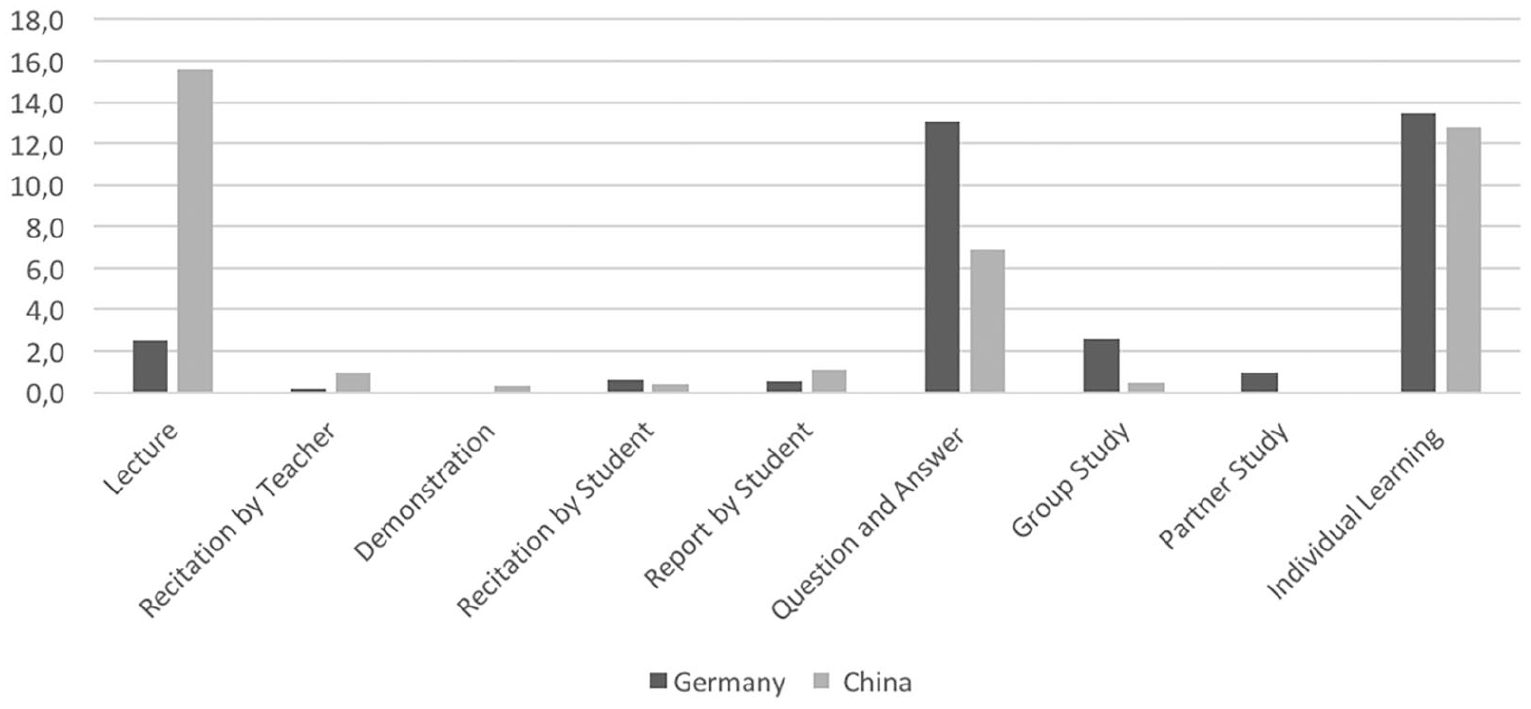
Comparison of the average time for the concrete teaching methods (minutes/teaching hours).
Outcome 1 and Outcome 2: quantified difference in the usage of lecturing, as well as question and answer
Apart from these similarities, the main quantified difference reflected by Figure 2 is in the use of the method of lecturing, as well as question and answer. Specifically, there was a significant difference in the average time spent lecturing in Chinese schools and in German schools. In contrast, question and answer is more often used in German schools than in Chinese schools. Furthermore, some other more subtle differences have also been summarized.
Outcome 2a: question and answer is more often used for development purpose in German schools
As mentioned previously in the data collection method section, teaching methods might be used for four different purposes. In both the countries, question and answer are mainly used for the purpose of development and review. In German schools, it is more often used for imparting new knowledge or skill-development, which accounts for 65% of the total time allocated for the method of question and answer. In China on the other hand it is more often used for review, that is almost 60% of the time for question and answer.
Outcome 2b: questions are usually answered by some students together in Chinese schools
In the category system, question and answer 1 and question and answer 2 are two sub-indicators of question and answer (for explanation of these two indicators see the data collection method section). Obvious differences were witnessed between German and Chinese schools in terms of these two indicators.
In German schools, question and answer 2 was seldomly recorded, while in Chinese schools, these two indicators shared similar frequency (i.e., 55% of the time for question and answer was coded as question and answer 1, and the rest for question and answer 2).
Outcome 3a: diversified use of group study and partner study in German schools
As mentioned previously, partner study and group study are seldomly used in German and Chinese schools. However, having a closer look at how they are used, another aspect was identified.
In German schools, group study and partner study were sometimes imbedded in other teaching concepts, such as group puzzles and station learning 6 . Time spent in this kind of activity accounts for almost 30% of the total time for partner study and group study. In contrast, in Chinese schools group study and partner study were used in the traditional way by which students were grouped arbitrarily to complete a shared assignment.
Outcome 4a: individual learning with group arrangement is more often used in Chinese schools
A similar pattern was witnessed in the use of individual learning in both German and Chinese schools. Apart from this similarity, differences were found in the use of this method with two organizational structures, namely individual learning with the group arrangement (individual learning 1) and with individual arrangement (individual learning 2; for an explanation of these two indicators see the data collection method section).
In the two countries compared, time allocated to these two indicators differed in terms of the time percentage: in Chinese schools, time for individual learning 1 accounts for 30% of the time for individual learning, while in German schools it occupies only 10%.
Outcome 4b: individual learning is more often used for development purposes in German schools
When considering how individual learning is used for different segment purposes, another interesting finding can be noted. Generally speaking, this method is mainly used for two purposes: development; and practice.
In Chinese schools, individual learning is only used for students doing exercises. In other words, individual learning with the purpose of development was not observed. In contrast, in German schools the majority of the time for individual learning was used for students learning new knowledge by themselves. It accounts for almost 70% of the time for individual learning.
Comparing the use of instructional media in German and Chinese schools
In both German and Chinese schools, time allocated to teaching with no media and mixed use of modern and traditional media accounts for only a small part of the engaged time (no media: 11% in Germany and 18% in China; mixed use: 5% in Germany and 3% in China). In contrast, significant difference can be seen with the other two sub-categories. Specifically, the results indicated that modern media are more often used in Chinese schools than in German schools. Moreover, traditional media are more often adopted in German schools than in Chinese schools. At the same time, some other meaningful results were noted when comparing on the indicator level.
Comparing the use of traditional media
With respect to the use of traditional media in the classrooms, no significant difference was found. Chalkboards, whiteboards, textbooks, worksheets, models, project media, and calculators are used in both German and Chinese schools. Apart from these, the workbook is the only media type that was recorded in China. In fact, it has a similar function to the worksheet that is widely used in German schools, in which various simulation-practice exercises are listed for students to complete. Additionally, the model used in Chinese schools refers to the original documents for accounting which was printed out. It could also be seen as a kind of worksheet. As such, they are seen as a comparable unit. Similarly, chalkboards and whiteboards were regarded as a comparable unit.
The average time for each comparison unit is presented in Figure 3. As shown, time allocated to unit 1 (blackboard and whiteboard) and unit 2 (textbook) and unit 3 (worksheet, workbook and model in Chinese schools) are almost the same.
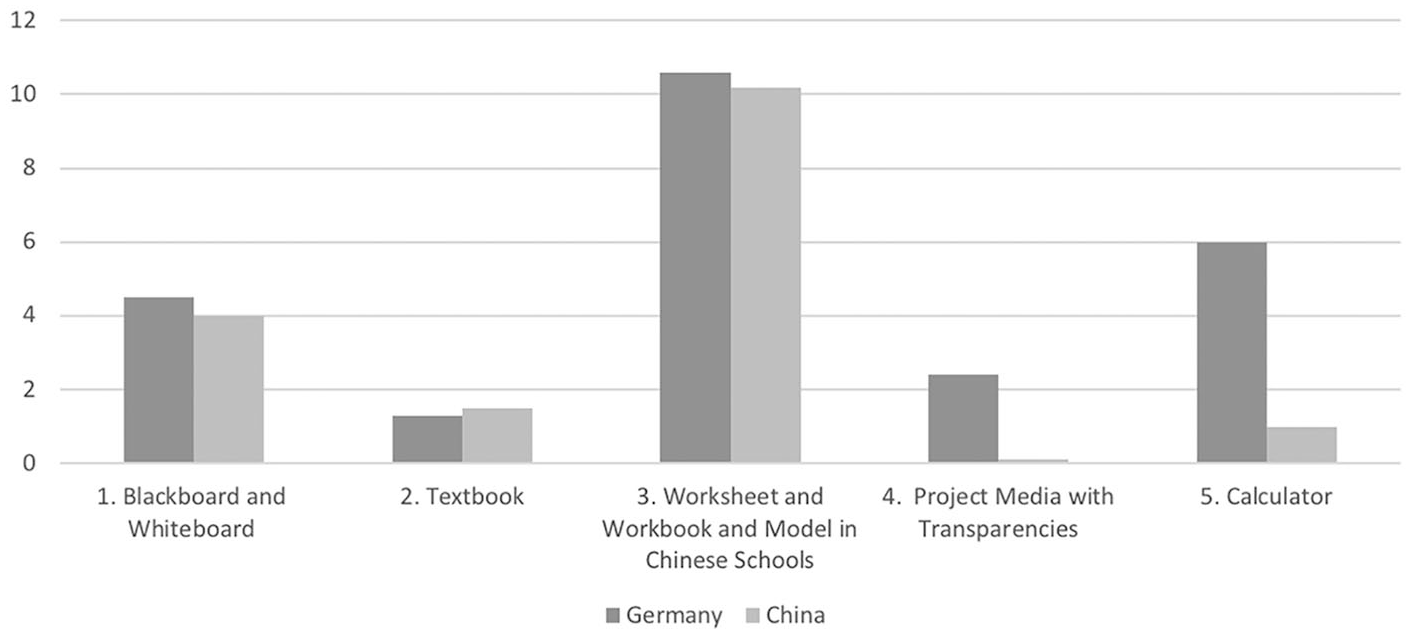
Comparison of the use of traditional media (minutes/teaching hours).
And the results from t-test indicated that no significant difference could be determined. However, there was a significant difference in the average time for unit 4 (project media) between German schools and Chinese schools (Outcome 5). The same was true for unit 5 (calculator), which was more often used in German schools than in Chinese schools (Outcome 6).
Comparing the use of modern instructional media. 7
In all the classrooms attended, one computer for teacher’s use and a digital projector were available both in Germany and China. In some classrooms, computers for students’ use were installed (one classroom in Germany and one classroom in China). In addition, some other modern media tools were also noted, specifically a tablet (iPad) and mobile phone. The projector is usually used together with other media. The three units compared are thus computer, tablet (iPad), and mobile phone.
In Figure 4, a comparison of the average time each tool is used in every teaching hour is shown. Apparent differences can be seen in the use of the computer, specifically it is more often used in Chinese schools than in German schools. Regarding the tablet (iPad) and mobile phone, no significant difference was found and both of them are seldomly used in German and Chinese schools.
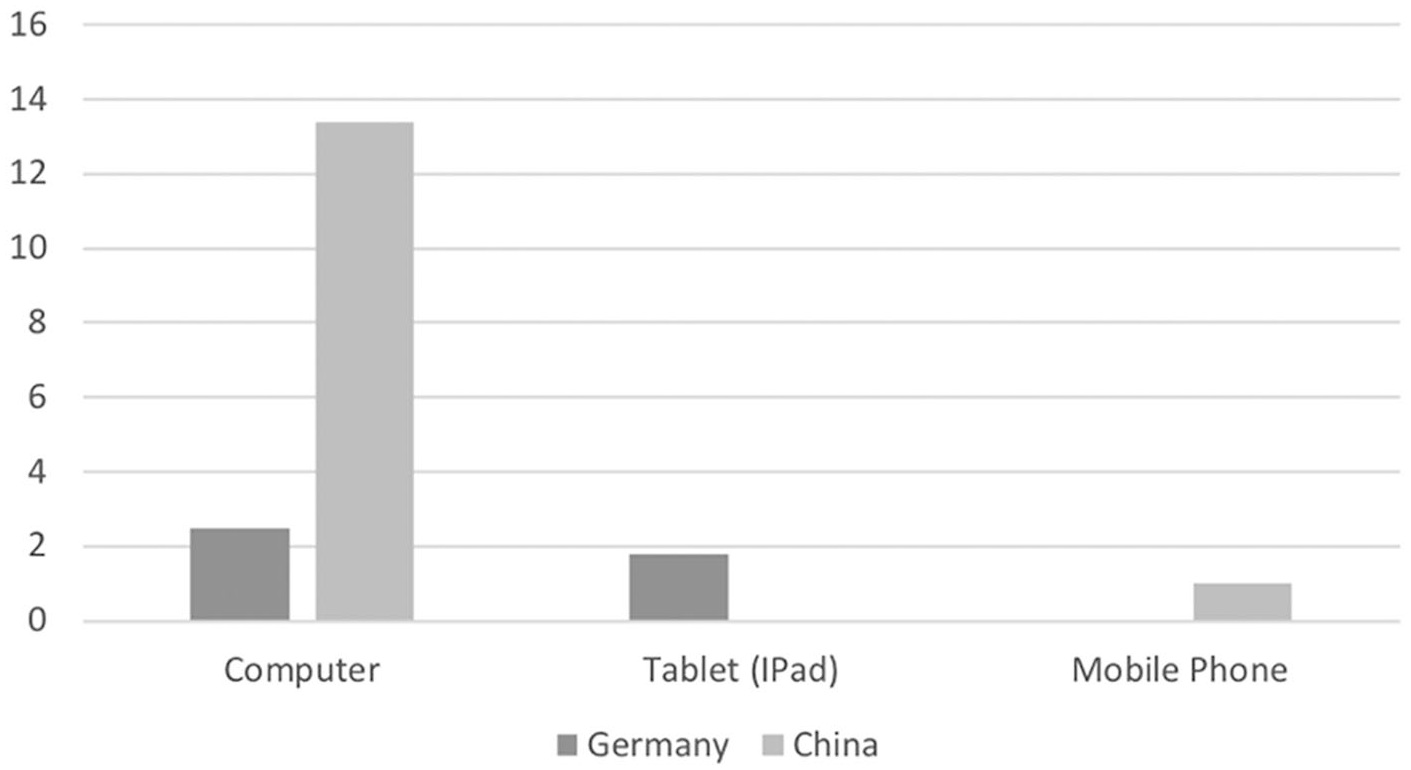
Comparison of the use of the modern media (minutes/teaching hours).
In addition, time used for running different software on the hardware mentioned above is compared. The five software types recorded were: learning software; Microsoft Office (Word and PowerPoint); simulation software; the Internet; and apps. As presented in Figure 5, time used with learning software, simulation software, the Internet, and apps are all on a small scale and the t-test results indicated that no significant difference exists between the countries. In contrast, differences are seen with Microsoft Office use with more time in Chinese schools than in German schools.
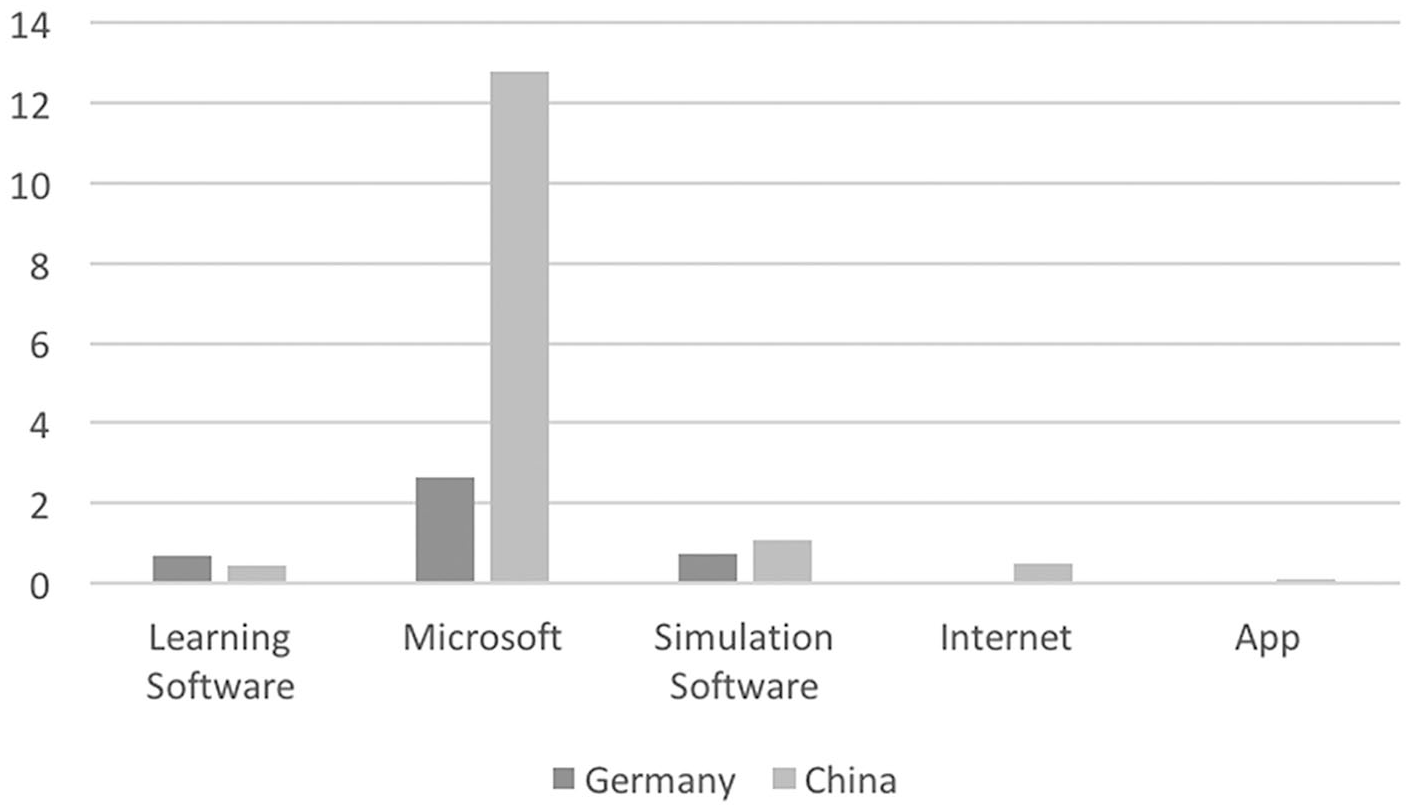
Comparison of the use of software (minutes/teaching hours).
In most cases, when one device is used with Microsoft Office (Word and PowerPoint), its function is to present information, as with other traditional media. Following from this, it can be assumed that the computer is more often used in Chinese schools (Outcome 7), but merely used for presenting information.
Conclusions drawn from the observation results
The observation results are consistent with the pedagogical tradition in both Germany and China
A Socratic or constructivist dialogue model is usually seen as the pedagogical tradition in Germany (Hammond and Gao, 2002; Holmes, 2004). The results derived from this observation study indicate that this tradition still influences the classroom teaching and learning in commercial VET schools. This is evident in that question and answer is more prevalent in German schools (Outcome 2) and is more often used for students to construct knowledge by themselves (Outcome 2a). For its constructivist characteristics, individual learning (Outcome 4b) being more often used for development is another reflection of this.
In China, it was found that “teaching and learning practices have continued to reflect what Confucian scholars have persistently advocated” in general education (You, 2019: 1). In VET, it is the same situation. Education influenced by Confucian philosophy is usually based on the dialectic model or traditional learning model (Hammond and Gao, 2002). With respect to its characteristics, it has been summarized as students expecting that the teacher can provide a lot of information and knowledge via the lecturing approach. Afterwards, question and answer are used for consolidating what has been learned (Pratt et al., 1999). These statements are also consistent with the observation results: lecturing is particularly popular in Chinese schools (Outcome 1) and question and answer is mainly used for the purpose of practice (Outcome 2a).
In summary, the observation results derived from this study are consistent with the characteristics of the pedagogical tradition in Germany and China.
Teacher-dominance in Chinese schools and student-dominance in German schools
In the relevant literature it is a common practice to judge whether a classroom is teacher-dominant or not, based on analysis of time allocated to the whole-classroom arrangement or group arrangement. In practice, larger time allocation to whole-classroom arrangement and less time for group arrangement is seen as characteristic of a teacher-dominant classroom (e.g., Götzl et al., 2013; Kozina and Pilz 2018; Pilz and Gronowski, 2020; Seifried et al., 2006).
Based on this criterion, the results indicated that both in German and Chinese schools, the approach is teacher-dominant, as a larger amount of time was allocated to the whole class arrangement (50% in German schools and 66% in Chinese schools), and a lesser amount of time allocated for the group arrangement (15% in German schools and 12% in Chinese schools).
It was found however, that in German schools, students are more often encouraged to involve themselves in the process of knowledge construction, together with teachers, either by question and answer (Outcome 2b) or through individual learning (Outcome 4b). In contrast, in China, students are seldomly provided with this kind of opportunity. In other words, they are passive and mainly listen to teachers lecturing (Outcome 1). Taking this into account, the approach to differentiating whether the classroom is teacher-dominant or student-dominant merely based on the time allocated to the different organizational structures is questionable.
Based on the results from this study, it can be concluded that teaching and learning in German schools is more student-dominant, though partner and group study are seldom utilized. In contrast, in Chinese schools, the set-up is much more teacher-dominant.
No essential difference in the use of modern media
As mentioned previously, when traditional media and modern media are seen as two units for comparison, the results indicated that modern or digital media are more often utilized in Chinese schools. However, when taking a closer look at how each medium is utilized in detail, then no essential difference in modern media utilized has been noted.
Among the three modern media tools (computer, mobile phone, and tablet (iPad)) being utilized, the computer is the only digital medium with which a quantifiable difference was identified. It is utilized much more often in Chinese schools (Outcome 7). However, the computer is habitually utilized to present teaching content and thus to some extent it fulfilled the same function as other traditional media tools, rather than promoting students’ active learning.
A similar situation was found with other types of modern media tools being recorded. Though in German schools some of the sample classes are specifically iPad classes (i.e., iPad usage was written into the curriculum), the iPad was not widely utilized in general and also limited to the function of simply presenting information.
In Chinese schools, the use of mobile phone depended to a large extent on the teachers’ preference and it was utilized infrequently. Taking all of these items into consideration, it can be concluded that there is no essential difference regarding the use of digital media in the classroom. In other words, apart from the computer, not many other types of digital media have been adopted in either German or Chinese schools. Additionally, the function of digital media that were adopted in the classroom was mostly confined to the function of information presentation.
Discussion
In reality, many factors might affect teaching and learning (Helmke, 2012; Wang, 2009). Not all of these were regarded as dimensions for interpretation in this study. Instead, two factors—teacher education and curriculum—on the macro level, were selected.
This was firstly due to their close relationship to the adoption of teaching method and instructional media in the classroom (cf. Akbulut, 2009; Aldridge et al., 1999; Kunter and Trautwein, 2013). In addition, as VET teacher education and curriculum in China is still in its exploration stage (Shi, 2013; Tang, 2016), it is more meaningful to draw lessons from Germany.
In the following subsections, how pedagogy-related knowledge is regulated in teacher education and curriculum is of interest, rather than the overall structure.
The influence of VET teacher education
In Germany, VET teacher education has been given great emphasis (Fürstenau et al., 2014) and is standardized through bachelor and master study and a preparatory service 8 (Krüger, 2014). Within teacher education, pedagogy-related knowledge is an essential part. Specifically, in the guidelines for teacher education, it is clearly noted that the teacher should be familiar with different teaching methods and media tools and should use them in different situations (KMK (The Standing Conference of the Ministers of Education and Cultural Affairs of the Länder in the Federal Republic of Germany), 2004). In the curriculum guidance for educating teachers in commercial vocational schools, it was advised that 25% of the total European Credit Transfer System 9 points should be acquired by studying the pedagogical knowledge, with 6% for bachelor study and 19% for master study (DGfE (German Educational Research Association), 2014).
Although the efficacy of teacher training at university level is sometimes questioned (Seifried and Wuttke, 2010, 2015; Türling, 2014; Wuttke and Seifried, 2013), teachers’ pedagogy-related knowledge will improve once they enter schools and start teaching by themselves (Seifried and Wuttke, 2015).
In China, teacher education is rather disorganized for historical reasons (Li, 2017; Liu and Shen, 2013). Currently, the development of a formal VET teacher education system is still in the exploratory stage (Tang, 2016) and it is a common practice to draw lessons from other countries (e.g., Gao, 2014; Gao and Yuan, 2017; Shen, 2017; Tang, 2016). Due to the instability of this system, the in-service teachers have different educational backgrounds (Shi and Fu, 2018) and most of them (80%) did not receive pedagogy-related knowledge before they became VET teachers (Zhang, 2012).
In the last few decades this problem has attracted policy-makers’ attention, and the in-service teachers are being provided with more opportunities for on-the-job training. For example, in 2006, the Ministry of Education and the Ministry of Finance issued “The Opinions on the Quality Improvement Plan for Teachers in Upper Secondary VET Schools” (MoE and MoF (Ministry of Education of the People’s Republic of China and Ministry of Finance of the People’s Republic of China), 2006). In one of the three programs mentioned in this document—training of the professional mainstay teachers—it was planned that by 2020, 150,000 professional teachers should be trained, financed jointly by the central and provincial governments.
In spite of this, evidence from some empirical studies has indicated that VET teachers’ pedagogy-related knowledge is still at low level (Pilz and Li, 2012). For example, in He’s (2010) study, it was concluded that VET teachers had insufficient pedagogy-related knowledge for teaching. Similarly, Zhao et al. (2017) assessed VET teachers’ competence and found that nearly half of the teachers from upper secondary VET schools possessed only nominal competence, which is the lowest of the four levels which are nominal, functional, processual, and shaping.
In summary, comparing the pedagogy-related knowledge included in VET teacher education in both countries shows that obvious differences exist. Some of the comparative outcomes in this study may be attributed to such differences.
Firstly, this difference might be the reason why lecturing is so frequently utilized in Chinese schools (Outcome 1). Chinese VET teachers do not receive sufficient knowledge of teaching and learning and, as a result, they know little about other methods. In addition, influenced by Chinese traditions, they teach via the traditional approach (Li, 2017). Outcomes 3a and 4a may lead to this assumption.
It was found that partner study or group study is more often integrated into the other teaching concepts in German schools (Outcome 3a). However, this was not recorded in Chinese schools. It was assumed that this kind of application was based on a solid knowledge about cooperative learning, which might be further attributed to the standardized teacher education in Germany.
Further evidence lies in that individual learning is more often adopted with an individual arrangement in Chinese schools (Outcome 4a). Two situations recorded in Chinese schools were:
Example 1: Before the teaching hour began, the teacher asked students to change their seat arrangement into groups. The teacher said, “We are going to do group study.” However, this method was usually utilized for students doing exercises or calculations.
Example 2: In the training room, students sat in a group at the same round table. During the observation process, the students’ task was to document materials like a bookkeeper in a company and each student had the same task. During this “group study”, students might talk with each other.
In these two situations the method of cooperative learning was not adopted. In reality, students merely work as individuals while sitting in a group. Thus, in a so-called cooperative learning environment that the teacher intended to construct, no real cooperative learning took place but the teacher indicated that it was utilized. This also leads to the assumption that Chinese teachers have insufficient knowledge about other methods. Similarly, this can be traced back to their insufficient teacher education.
The influence of curriculum
In Germany, the curriculum for full-time vocational schools is regulated by The Ministry of Education and Cultural Affairs of the State (Hippach-Schneider et al., 2007). In this study, all the target schools were selected from the North-Rhein-Westfalen (NRW) which is one of the federal states in Germany.
This study analyzed the major “business administration”. Generally speaking, the main characteristic of this curriculum is that it is competence-orientated. The school year 2013/2014 was a strategic point in the calendar for the curriculum development in NRW, as a series of curricula for different majors in vocational colleges came into force (Buschfeld et al., 2014). The concept behind the newly-developed curricula is that they are competence-orientated (Buschfeld et al. 2014: 131).
On the basis of this concept, a guideline for using teaching methods is included in the curriculum. Self-organized learning and working in a team are specifically required to be utilized in the process of teaching and learning (Ministerium für Schule und Bildung des Landes Nordrhein-Westfalen, 2018). Self-organized learning is a way of acquiring knowledge and competencies in which learners set goals independently and in a self-motivated way, autonomously choosing strategies to achieve goals, and making assessment (Götz and Nett, 2017). Practically, this means that students learn together in the classroom setting, or working in a team (Sembil and Seifried, 2007). Overall, the official curriculum advocates for cooperative learning.
The official curriculum does not have specific prescriptions for the use of media tools; however, some schools require the use of a tablet (iPad). For example, three of the German classes observed were iPad classes, which means the use of a tablet is written into the curriculum at the school level.
In contrast, in secondary VET schools in China a unified curriculum for the target major as well as for the target course (accounting) did not exist. As a result, in the same province, schools may have different curricula, as was the case in the three Chinese schools involved in this study.
However, all of these schools have a common objective: preparing students for the accounting certification examination 10 . This was regarded as the primary task for teaching because the students’ achievement rate of this certification is regarded as one reflection of teaching quality (Cheng, 2015; Gou, 2016). It was also believed that students achieving this certification would have an advantage in the job market. Teachers often stressed the importance of the contents that might appear in the test. Preparing students for skill competitions is another common objective among these schools. Since 2008, various skill competitions at national, local, and school levels have been organized. These are related to a school’s reputation, and therefore it seems that every school puts great effort into preparing students for these competitions. Taking this into consideration, it was assumed that the curriculum in Chinese schools is examination-orientated, though an official curriculum did not exist. Analyzing the teaching content showed that students are expected to be practical bookkeepers, who have not only sufficient theoretical knowledge about bookkeeping but can also apply their theoretical knowledge to actual practice as a bookkeeper.
Information relating to the adoption of teaching methods and instructional media in Chinese schools could not be derived due to the absence of a unified curriculum.
The difference reflected in the curricula may be utilized to explain some of the comparative outcomes derived from the observational study. Firstly, the different concepts behind the curricula can be utilized to explain Outcome 1. In China, the curriculum is examination-orientated, and it is the theoretical knowledge that is emphasized as it is to be tested in the examination (Pilz and Li, 2012). This might be one reason why lecturing, as an effective method for imparting theoretical knowledge, is so prevalent in Chinese schools (Outcome 1).
In the German curriculum, students are required to have the ability to make decisions on the basis of calculated results. In other words, calculation is a significant part of the lesson. In contrast, calculations are not given much emphasis in Chinese schools, in that students are required to know how to keep records on the basis of the original documents, instead of calculating. This is reflected in Outcome 6, which showed that the calculator is more often utilized in German schools.
Regarding the adoption of teaching methods, it is clear that cooperative learning and self-regulated learning is prescribed in the German curriculum. In China however, a unified curriculum did not exist and most of the discussion on the topic of curriculum is still on the macro level. The adoption of different teaching methods on a practical level has received little attention. In fact, regarding this aspect, the comparative outcomes from both Chinese and German schools reflect little difference. Specifically, while the German curriculum prescribes partner study and group study, there was no difference in the time allocated to these activities between the countries and neither method is utilized frequently.
The outcome that group study and partner study are more often imbedded into some teaching concepts, such as group puzzle and station learning (Outcome 3a) can partly be attributed to the difference in curriculum. Usually, group puzzle and station learning are regarded as part of the self-regulated concept (Herold and Landherr, 2003). It might thus be assumed that it was utilized more often due to its presence in the German curriculum.
Outlook
In the previous two sections, the relationship between the contextual factors (i.e., teacher education and curriculum) and the observation results has been partly confirmed. This allows for making suggestions for future developments in VET schools in both countries.
It should be noted that our intention is by no means the transfer of concepts or methods without reflection on them (Pilz and Li, 2020). Thus, it must certainly be fundamentally questioned whether the concept of learner-centered teaching and learning has the same relevance for all countries (Steiner-Khamsi, 2016). Therefore, we want to address only a few aspects directly related to our findings and thus give reasons for country-specific innovations.
In China, most of the in-service teachers did not receive the pedagogical knowledge systematically in their initial teacher education. For this group then, emphasis should be placed on those on-job-training programs which particularly aim to broaden teachers’ pedagogical knowledge. If possible, these programs should also be provided online, in order to ensure that all VET teachers could make use of them. Practical examples concerning how different teaching methods are embedded in teaching and learning should be given, and teachers should be given opportunity to practice these methods in the training process. For those pre-service teachers, if possible, a credit allocation ratio for the course teaching pedagogical knowledge should also be advised in the Chinese standards. And a practical semester during which teaching students could apply the theoretical knowledge in VET schools should be included.
Besides, proposals for improving VET teacher education in China were issued in 2013 (MoE (Ministry of Education of the People’s Republic of China), 2013). In this standard, pedagogy-related knowledge is indeed included, however, it is not as specific as that in the teacher training standards from Germany. In the authors’ view, the key issue lies in the absence of a principle for discussion. Specifically speaking, in Germany, it was clearly pointed out that teaching and learning should be competence- and learner-centered (KMK (The Standing Conference of the Ministers of Education and Cultural Affairs of the Länder in the Federal Republic of Germany), 2008). By contrast, this was not mentioned in the standards of Chinese VET teacher education. As a result, it is not possible to approach the problem on a more practical level.
With respect to curriculum reform in China, the first suggestion is to change its examination-orientated characteristic to a curriculum that stresses the learner-centered characteristic. In fact, a suggestion concerning to reform the curriculum to a competence-oriented one has already appeared in government documents (e.g., MoE (Ministry of Education of the People’s Republic of China), 2008) and research papers (e.g., Tang, 2007). However, the discussion is still on the concept level. By contrast, in Germany, the competence-oriented curriculum has been consistently geared towards a stronger learner-centerred approach (Pilz and Fürstenau, 2019), which might be beneficial for carrying out the competence-oriented concept in reality.
Another suggestion is that teaching methods and instructional media should also be emphasized in the curriculum, both in German and Chinese VET curriculum. In the current German VET curriculum, the adoption of teaching methods and instructional media are described rudimentarily (Pilz and Fürstenau, 2019). In the Chinese VET curriculum, more stress is given to the teaching contents—the adoption of teaching methods and instructional media are not taken into consideration.
It should also be noticed here that in the process of policy borrowing between Germany and China, all the borrowings should be based on the understanding of the cultural scripts of another culture (Tan, 2015), in order to avoid the borrowing at a superficial level (Huang and Leung, 2004; Li and Pilz, 2019; Schweisfurth, 2013). At the same time, it should be borne in mind that all reforms in the education system, including the teacher education and curriculum reform, always take a long time before the effect can be seen (Li and Pilz, 2017).
The limitations of this pilot study should not be overlooked. Firstly, caution must be applied when the findings are applied to other sample groups, as this study utilized a comparatively small sample that was only from one area of the compared countries. In other words, the region difference, especially in China (cf. Hansen and Woronov, 2012), was not taken into consideration. Concerning the comparison outcomes, they are rather selective and due to the small sample number, some different aspects are rather subtle. In addition, due to time limitations, the relationship between the comparative outcomes and the contextual factors are assumptions. These are based on observations and results from other studies, instead of being based on empirical data such as interviews. Lastly, we have only observed some facets of the pedagogy concepts in the classroom, such as competence-oriented, action-oriented, etc., instead of analyzing them individually and deeply.
So, in the future, it is worthwhile to describe the overall learning approaches and philosophies in the individual country. And there are rich possibilities for further research in the field of comparative pedagogy in VET, not only to answer the how-question from a larger scale, but also to answer the why-question by means of a more complex and in-depth research approach.
Footnotes
Declaration of conflicting interests
The authors declared no potential conflicts of interest with respect to the research, authorship, and/or publication of this article.
Funding
The authors disclosed receipt of the following financial support for the research, authorship, and/or publication of this article: This work was supported by the China Scholarship Council under Grant Number: 201306040005.
