



Abstract
This study aims to explore the social and ethnic background of pupils admitted to private schools at the compulsory level in Iceland so as to identify possible social class segregation between public and private schools. Additionally, we examine how parents reason their choice of private education for their children. Bourdieu’s concepts of capital, symbolic power and distinction are used to think through our findings. Data consist of descriptive statistics and interviews with parents. Our findings show that many of the private schools attract privileged parents, but that this is contingent upon the schools’ geographical location. Parental discourse links good behaviour and ambition with the private schools, while simultaneously labelling the public schools as failing. Parents who align with the intellectual fraction show signs of experiencing a moral dilemma over their choice. Overall, our findings suggest that to some extent, private schools serve as a tool for educational distinction.
Introduction
In Iceland, compulsory education has generally been perceived as egalitarian, with a strong public-school system (Jónasson, 2008; Sigurðardóttir et al., 2014). In an international context, the difference in performance among Icelandic schools has been minimal (Organisation for Economic Co-operation and Development, 2016), and most children attend their neighbourhood public schools. Furthermore, an emphasis on schools’ profiling or streaming (with optional courses or emphasis on, for example, music or mathematics) is less present in Iceland than it is in Finland, for example (Kosunen et al., 2016). At the same time, the marketisation, deregulation and privatisation of compulsory education seems to be a global phenomenon (Lubienski and Ndimande, 2017) that has profoundly influenced educational systems. This also applies to the Nordic countries (Dovemark et al., 2018; Lundahl, 2016; Poikolainen, 2012). Iceland has seen its share of deregulation, and the ideology of market solutions in public service, including education, has been on the rise since the 1980s (Kjartansson, 2008). However, privatisation, here referring to the private sector or volunteer organisations running compulsory schools, is still marginal (Dovemark et al., 2018; Kjartansson, 2008).
Nevertheless, the number of private schools 1 has gradually increased since the first privately run compulsory school was established in 1985, and private institutions are now quite common in early childhood education (Dýrfjörð and Magnúsdóttir, 2016; Sigurðardóttir et al., 2014). Today, there are 12 private compulsory schools operated in the Reykjavik metropolitan area, but these schools are very heterogeneous in terms of financing and pupil admission. Around 5% of homes with compulsory school-age children in the Reykjavik metropolitan area have at least one child who attends a private school. The phenomenon is thereby somewhat marginal, but given that the educational choice of some families influences the whole age cohort, as some are opting out of the local public school, the group investigated in this study is of particular interest. Little is known about the background of these children or why some parents choose private schools in a country with a strong tradition of neighbourhood schools. This article contributes to our knowledge about this aspect of marketisation of education in Iceland. Firstly, we strive to examine the socioeconomic profiles of the private schools with descriptive statistics. Secondly, we analyse 15 interviews with parents from higher social class background in terms of education and/or income to draw out their reasoning for choosing private education. To protect the anonymity of our participants, we will not disclose to which schools they are referring in their comments. We recognise that this approach might blur the different organisational and pedagogical approaches of the schools and give the impression that they are homogeneous, which they are not. Nonetheless, for the purpose of this article, it is also important to note the similar features of the parents’ approach to decision-making.
School choice, distinction and symbolic power
This study uses Bourdieu’s interconnected concepts of economic, cultural and social capital (Bourdieu, 1986), as well as his concept of class fractions (Weininger, 2005), to address educational distinction. Bourdieu underlined the fact that class is not only a status, but a process; in other words, class is continuously shaped and reproduced through actions and choices. The upper classes seek to distinguish themselves from the lower classes by defining what constitutes good taste and what it means to live a good and worthy lifestyle, and school choice is one important consideration (Bourdieu, 1984). Parents who hold relatively more capital that is valued by other agents within a space hold symbolic capital that translates to symbolic power (Bourdieu and Wacquant, 1992) and are thus able to shape and reproduce hierarchies of, in this case, schools and parental practices. These are also the parents who pursue distinction for their families; distinction from families they perceive to be lower class. In line with the theoretical foundation of this study, we specifically examine the actions of parents who hold symbolic capital and choose to privately educate their children. The focus is on whether these choices operate as socially distinctive choices, and if so, how. We draw out how parents with symbolic power reason their choices, how they are able to label public/private schools (Bunar and Ambrose, 2016) and reproduce hierarchies through distinction.
Responsible and rational parents are constructed discursively as conscious choosers within an educational market in different local contexts (Olmedo and Wilkins, 2017; Oría et al., 2007). They choose the “right” school, neighbourhood and extracurricular activities in order to improve their children’s position in society, as well as their own (Ball et al., 1996; Butler et al., 2007; Olmedo and Wilkins, 2017; ). Parents, however, have very different capacities to obtain the right information and ability to use it in the educational market (see e.g. Kosunen and Carrasco, 2016). This scenario favours parents who have symbolic capital that is recognised, respected and validated within a given social space. In the context of school choice, they are able to utilise choice to gain even more privilege for themselves and their children (Ball et al., 1996; Olmedo and Wilkins, 2017; Pattillo et al., 2014). Those parents hold accumulative economic, social and cultural capital that can be used to gain further validation and distinction and to reproduce their own, and their children’s, dominant class status (Bourdieu, 1986, 2002), while lower-class parents do not have the capital to “play the game” in the same manner (Brantlinger, 2004; Griffith and Smith, 2005; Reay, 2005). These trends are highly gendered and intimately connected to the social construction of the responsible mother (Vincent, 2010, 2017). Thus, they disproportionately increase the workload of middle-class mothers and add to their anxiety on the social reproduction of the family (Reay et al., 2008). There are indications that intensification of motherly duties in Iceland is underway in a similar way it has been in other Western countries (Símonardóttir, 2016).
In many contexts, for example in the UK, private schools have historically been linked to educational distinction and class segregation (Forbes and Weiner, 2016; Maxwell and Aggleton, 2016; Reay, 2017) and have served as a way for those with symbolic power to “work the system” and reproduce class hierarchies (Ball et al., 1996). There is empirical evidence that privatisation and school choice in compulsory education have had detrimental effects on educational equity by fuelling increased ethnic, racial, socioeconomic and/or special needs segregation (Lubienski and Weitzel, 2009; Rotberg, 2014). This also applies to Denmark (Rangvid, 2007) and Sweden (Dovemark et al., 2018; Magnússon, 2020), where privatisation at the compulsory school level is more common than in Iceland. As such, educational choice serves not only as a means of increasing knowledge, but also as a tool for class distinction and reproduction (Kosunen and Carrasco, 2016), and thereby the enhancement of class inequalities (Butler and Hamnett, 2007).
In countries where school choice and school segregation have become more evident than in Iceland, researchers have noted a tendency among a fraction of the upper classes to resist the segregation to a certain degree and/or to experience a moral dilemma over their privileged school choice while also trying to stay true to “the good/ethical self” (Crozier et al., 2008; Posey-Maddox et al., 2016; Reay et al., 2008). The idea of school choice and education as a private good is something that at least some upper-class parents would prefer not to engage with (Oría et al., 2007). The moral dilemma then stems from a clash between a commitment to equity and an accessible, affordable public school system (impersonal standpoint) and the idea of education as a private good to enhance the situation of a specific child and family (personal standpoint) (Oría et al., 2007).
Given the low numbers of private schools in Iceland, educational distinction functions within the public school market, that is, between the public neighbourhood schools. We are aware of this fact and do not wish to create a false dichotomy between public and private schools. However, given the international literature cited above, there is reason to suspect that private schools in Iceland can play a role in educational distinction as a way of opting out of the public school system. Possible manifestations of this will be explored in this article.
Private schools in Iceland
Children in Iceland generally attend their neighbourhood schools (compulsory school level). In the Reykjavik municipality, for example, 72% of children were enrolled in their local public schools in 2016. A majority of the rest went to other public schools, typically also in proximity to their homes, with 4–5% attending private schools (Borgarfulltrúar Sjálfstæðisflokksins [City council members for the Independence Party], 2018). All municipalities have defined school catchment areas, but parents can apply for their children to attend other schools 2 . Garðabær, one of the municipalities making up the Reykjavik metropolitan area 3 , is an exception. In Garðabær, there are no catchment zones, and families can choose freely from the eight compulsory schools located in the municipality.
Prior to 1985, three schools run by non-profit organisations were operated in Iceland, two of them religious. In 1985, the fourth non-public compulsory school was established, and this was the first one run by the private sector. The new school caused quite a stir, as people wondered if it would be the first step toward a class-divided school system in Iceland (Ásgeirsson and Viggósson, 1985; Gísladóttir, 1987). The Teachers’ Union in Reykjavik and teachers’ representatives on the City of Reykjavik Education Committee were highly critical of the school and claimed it would be “only for the few selected” and that parents could now buy privileges for their children (Bókun kennara í Fræðsluráði Reykjavíkur [Booking of teachers in the Reykjavik Education Council], 1985 ; Kennarafélag Reykjavíkur [Teachers’ Association of Reykjavik], 1985). Since then, nine more private schools have been established, all within the Reykjavik metropolitan area, with a total of 12 private schools operating in 2019 (see Table 1). Three of the schools that are run by the private sector are a part of the only school chain in Iceland, which currently operates 15 pre-schools and three compulsory schools in Iceland as well as one pre-school in Scotland. In 2005, private schools in Iceland formed a coalition that advocates for increased opportunities for private and voluntary enterprises to run schools and for free school choice (Coalition of Indepented Schools, 2015).
Overview of privately run compulsory schools in Iceland operating in 2019.
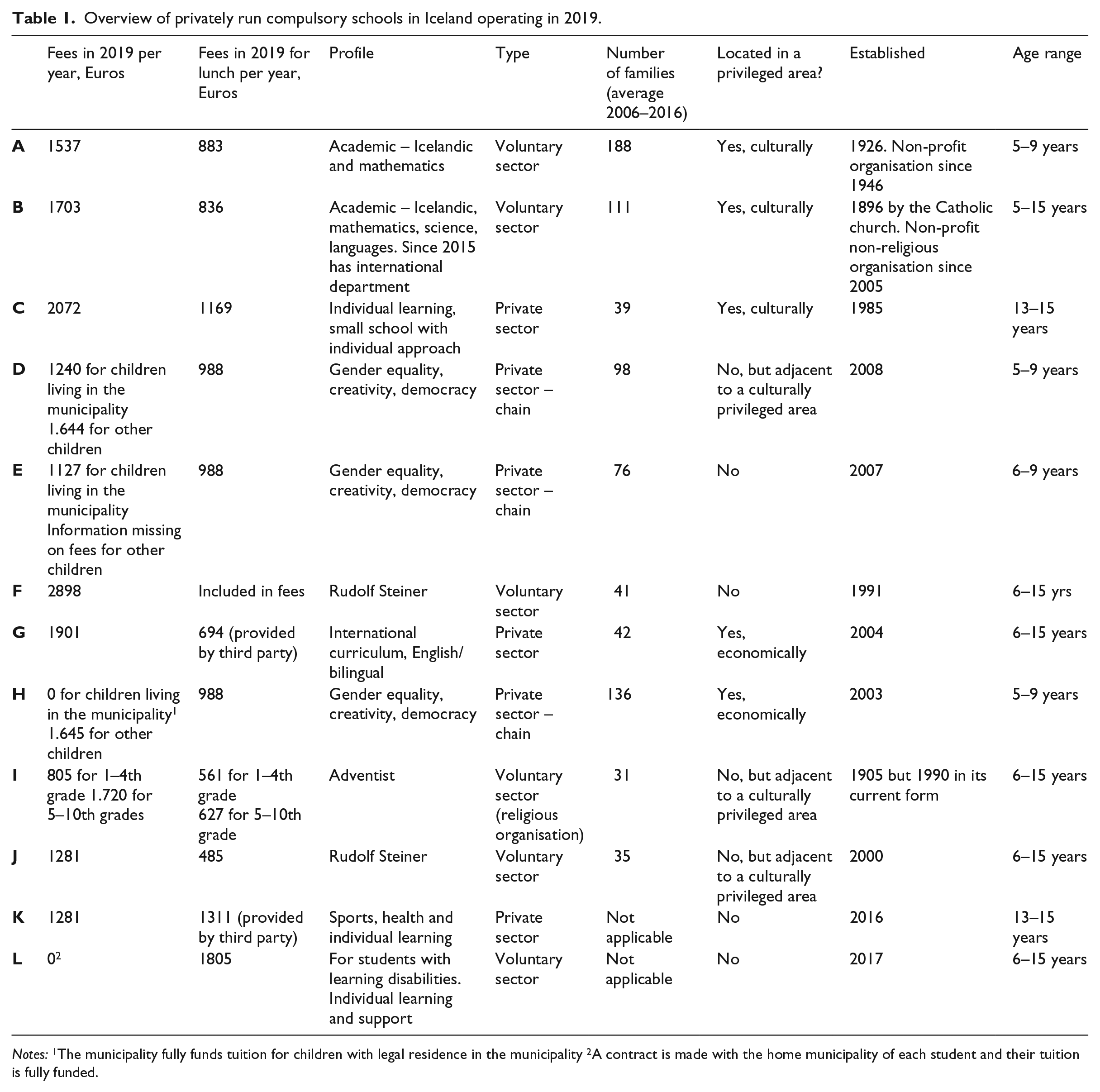
Notes: 1The municipality fully funds tuition for children with legal residence in the municipality 2A contract is made with the home municipality of each student and their tuition is fully funded.
Table 1 provides a profile of the 12 private schools operating at the compulsory school level in Iceland. We gathered the information from a questionnaire 4 that was sent to the schools in May 2019, from the schools’ websites and from the website of the Coalition of Independent Schools (https://svth.is/samtok-sjalfstaedra-skola-2/).
Private schools in Iceland can only make a profit from non-public funding (e.g. tuition), but none of the privately run compulsory schools in Iceland have paid dividends to their shareholders or owners. All privately run schools include a non-profit statement in their policy, although in one case (School C in Table 1) this statement only refers to public funding. The term “non-profit” is a fuzzy one, for as Dýrfjörð and Magnúsdóttir (2016) describe, the only school chain in Iceland has engaged in some some financial acrobatics in terms of profit spending on “school developments”. Dýrfjörð and Magnúsdóttir (2016) claim that these acrobatics call into question the school chain’s statement of not being for profit.
Private schools receive 75% of the average cost for each student in public schools and thus are primarily, but not fully, publicly funded (Ministry of Education, Science and Culture, 2018). Some municipalities make exceptions to this rule and offer full public funding for private schools. The schools are allowed to charge tuition fees, and there is no legally mandated tuition fees limit, though each municipality can set such a limit if they so wish (Compulsory School Act Iceland, 2008). Two schools are fully funded by the municipalities where they are located (one being a special education school for disabled children). The rest of them charge tuition fees, on average 1294 Euros per school year (Table 1). In most cases, parents are also charged for lunch, often by the school but sometimes by a third-party service provider. The average monthly lunch cost is 99 Euros, compared to 60–73 Euros in Reykjavik-area public schools, depending on the municipality.
There are several indicators that the ideas of choice and marketisation in education have reached Iceland. As stated earlier, fewer children now attend their assigned neighbourhood schools, and as the number of private schools grows, so does the number of children attending those schools. Private schools have formed a coalition advocating for free school choice and full public funding of private schools. Furthermore, one municipality has abolished catchment areas, and right-wing politicians, alongside the Confederation of Icelandic Enterprise and Iceland Chambers of Commerce, have started publicly advocating for free school choice and privatisation (Björnsdóttir, 2018; Icelandic Chamber of Commerce and Confederation of Icelandic Enterprise, 2014; Borgarfulltrúar Sjálfstæðisflokksins [City council members for the Independence Party], 2018). Moreover, the uproar caused by the first privately run private school in 1985 seems quite far from the current public discourse, or as the founder and principal of the school notes: “the negative voices of the past have become silent” (Theodórsdóttir, 2015: 58).
Data and methods
In order to examine the socioeconomic profiles of the private schools, we used background information on homes where at least one school-age child attends a private school. For 10 out of the country’s 12 schools, we derived the relevant information from Statistics Iceland for each year from 2006–2016. Two of the schools (Schools K and L in Table 1) were established after 2016 and were therefore not included in our analysis. Since many of the schools have few students, the numbers presented in this article are averages for the 10-year period from 2006–2016. This is to ensure a more valid profile of the schools in question, to eliminate fluctuation caused by low numbers of students in each school year and to protect the families’ privacy. We included four variables in the analysis: equivalised income quintiles 5 ; level of education; 6 field of education; and familial connection to Iceland 7 . Two variables refer to cultural capital and social class fraction: firstly, education level, and secondly, field of study, where we have identified homes with at least one parent holding a university degree in the humanities, social sciences or arts. The aim of this twofold outlook on cultural capital is to shed light on class fractions by looking specifically at university degrees in fields of study such as the humanities, arts, languages or social sciences, for example, sociology or political science 8 . In this way, the data analysis was influenced by Bourdieu’s theories on class fractions (Van Zanten, 2009; Weininger, 2005), where the dominant class is divided into the economic fraction (holding vast amounts of economic capital) and the intellectual fraction (holding primarily institutionalised and presumably embodied cultural capital, of which we consider a higher education degree in certain disciplines to be an indicator). This allowed us to analyse not only whether there is an economic divide between public and private schools, but also if there are indications that the cultural upper-middle class is choosing certain private education options.
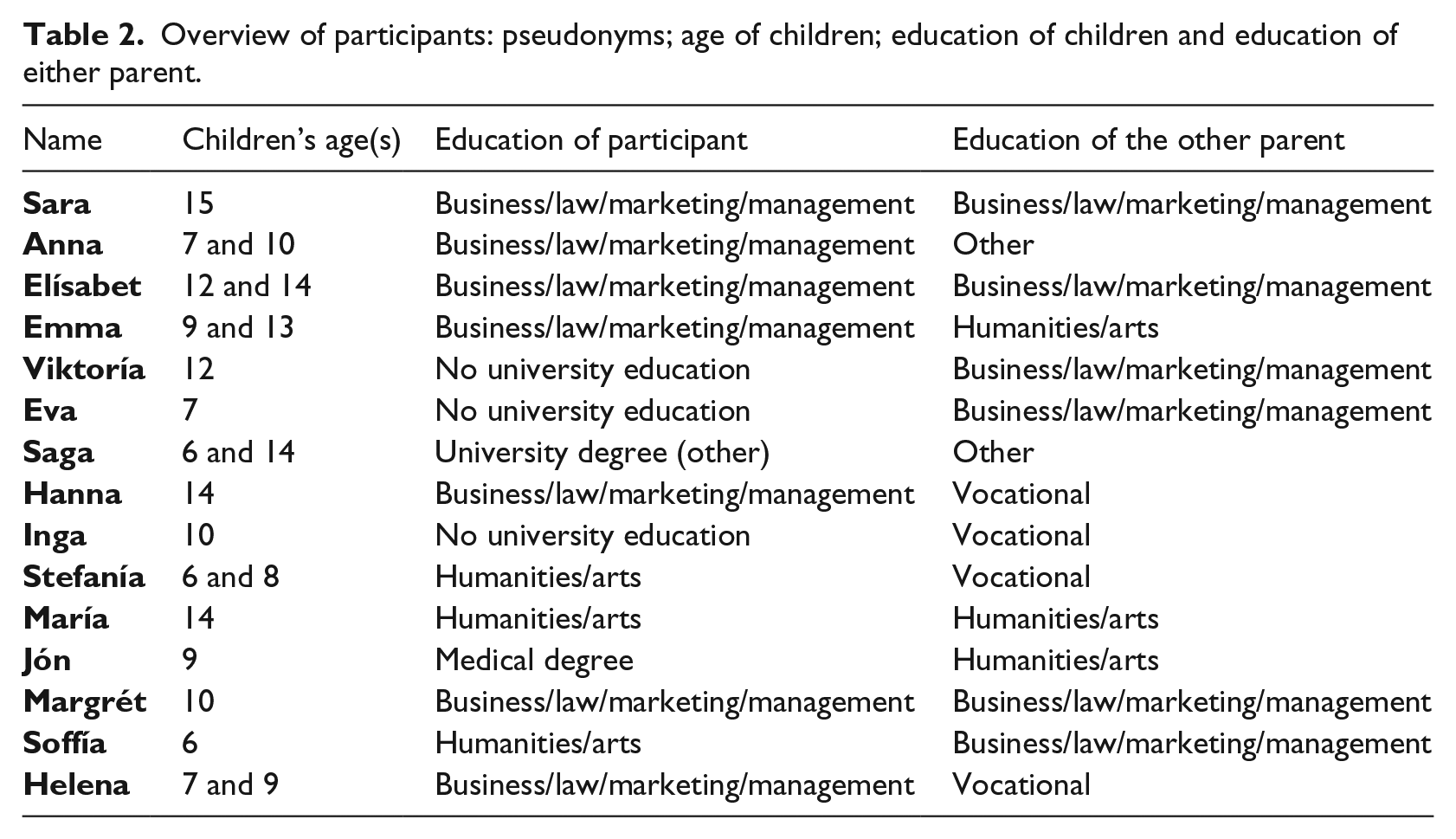
To analyse parents’ reasons for choosing private education, we interviewed 14 middle-class parents, 13 mothers and one father, who have chosen private school for their children. The sample was self-selected, as advertisements were placed in Facebook groups for almost all neighbourhoods and towns belonging to the Reykjavik metropolitan area 9 . Snowballing was also used, as parents suggested fellow parents to be interviewed. In the advertisements, parents of compulsory school-age children who had chosen not to send them to the neighbourhood school were asked to participate in an interview on parental practices and school choice. The advertisement specifically mentioned that we were not seeking parents who had opted out of the neighbourhood school because of the child’s disability, special needs, bullying or the family’s recent relocation, as the focus of this analysis was on families seeking options outside the public system for other reasons. All participants came from homes where at least one parent had a university degree, except one home where both parents had a degree from a secondary school. All were white and of Icelandic origin. These parents (see Table 2) have the symbolic capital to be active choosers on the local educational market, rather than those who make a constrained choice to send their child to a private school due to problems in the neighbourhood school, for example. The parents have children in eight out of the 10 schools that are included in the quantitative analysis.
Overview of participants: pseudonyms; age of children; education of children and education of either parent.
The interviews were analysed using thematic analysis (Braun and Clarke, 2013) where the data were selectively coded as to best answer the research questions. The Atlas.ti program was used to carry out the coding and the subsequent thematic analysis. Originally, there were 34 codes, such as school lunch as a tool for distinction, unambitious parents in public schools and more discipline in private schools, which were then reduced to larger thematic categories such as public schools as failing and distinction through private school choice.
The next sub-sections will explore the findings of our analysis. Firstly, we examine the quantitative data with descriptive statistics on the background of families in the 10 private schools, using the 10-year average for each variable. Thereafter, we turn to the qualitative data, where participants’ reasons for choosing private school for their children will be explored and analysed.
Neighbourhood characteristics reflected in private school student bodies
Figure 1 shows that eight out of the ten private schools attract pupils who are privileged in some way as compared to the general homes of compulsory school-age children in the Reykjavik metropolitan area. Those eight all have an above-average proportion of university-educated parents.
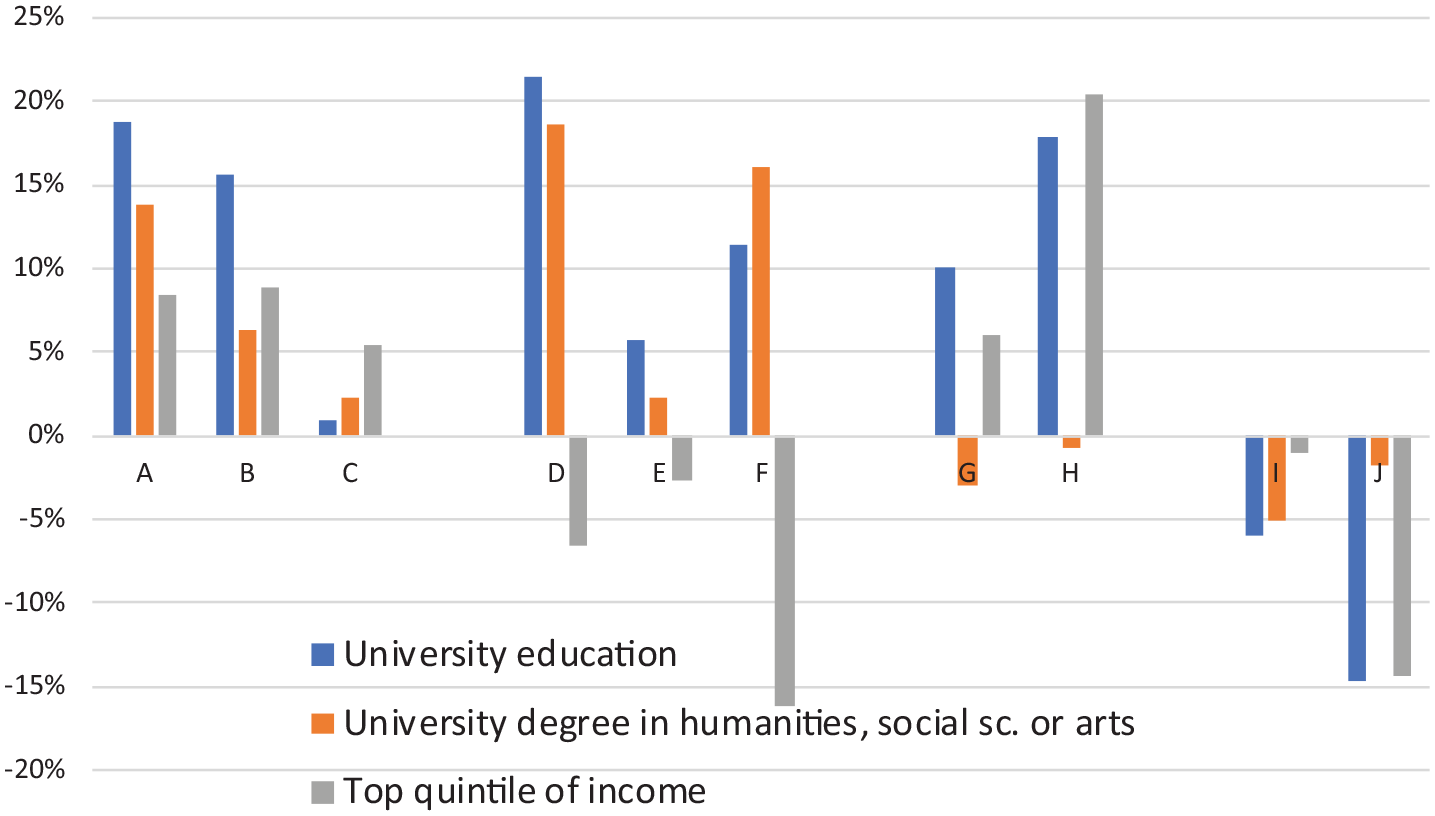
Difference in percentage points between the general home with school-age children in Reykjavik and homes where at least one child attends a private school. A–J refer to the 10 private schools. University education, university degree in the humanities, social sciences or arts and top quintile of income.
Schools G and H are located in an economically privileged area and, accordingly, attract students who are more economically privileged than the average student in the Reykjavik metropolitan area. These seem to be the schools/areas to which the economic fraction of the upper classes is attracted. Schools D, E and F attract university-educated parents and are particularly popular with parents who have university degrees in the humanities, arts or social sciences, that is, the intellectual fraction of the middle classes. Schools A, B and C attract parents who are privileged both in terms of economic capital and cultural capital, although school C is similar to the average school in the Reykjavik metropolitan area. These are all situated in culturally privileged zones 10 . The link between the characteristics of the catchment areas where the schools are situated and the profile of the schools is important to explore, as eight of them are situated in or adjacent to a privileged zone (see Table 1). Figure 2 shows a comparison between a private school and the closest public school and the homes with at least one compulsory school-age child in the metropolitan area as a whole for a reference point.
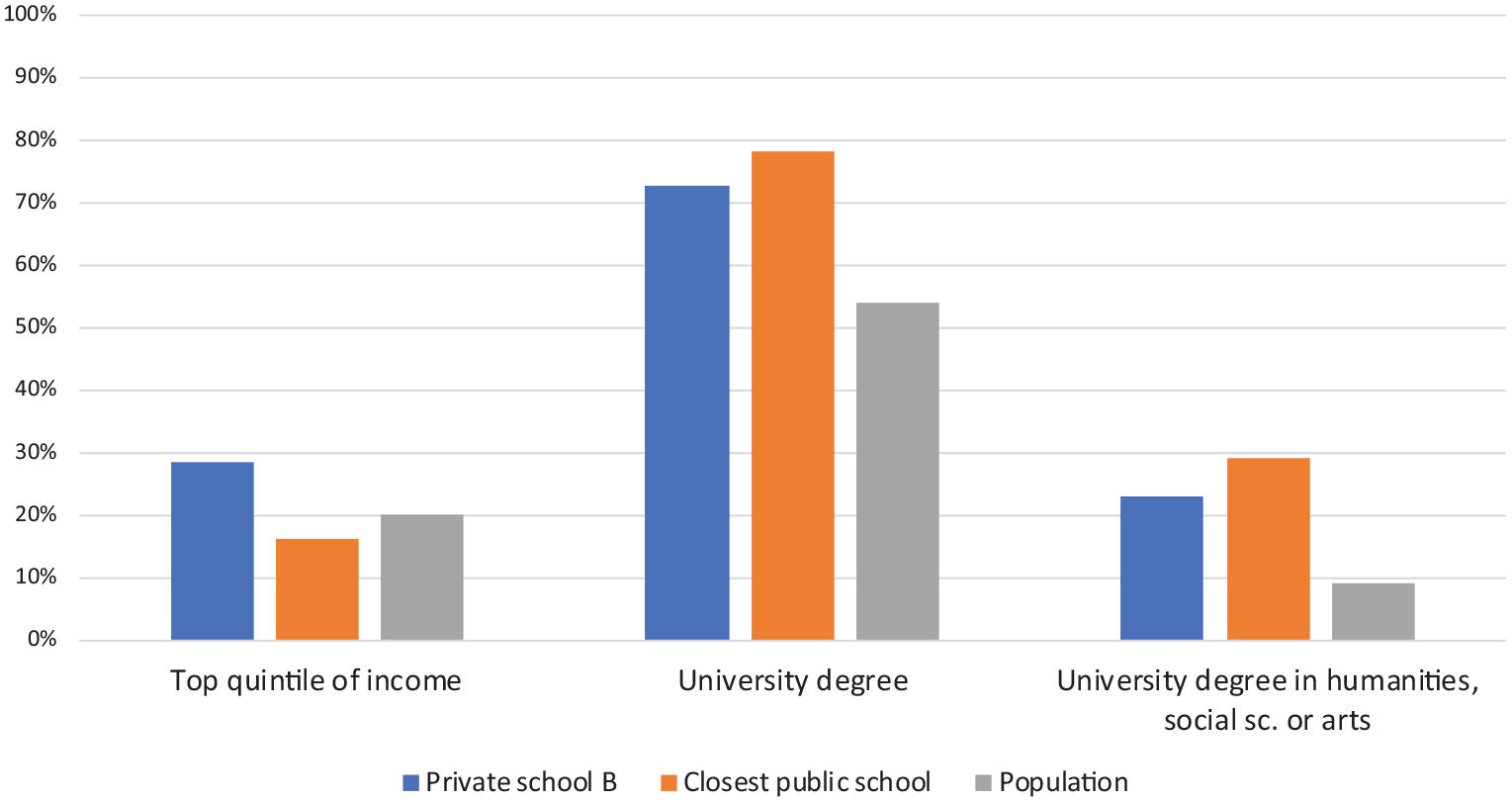
Percentage of homes with at least one university-educated parent, with at least one parent with a university degree in the humanities, social sciences or arts and belonging to the top income quintile. Private school B (n = 10 years’ average is 111) compared to the nearest public school (n = 238) and general population of homes with school-age children in Reykjavik.
Private school B is situated in a culturally privileged zone, that is, one of the three catchment areas in the Reykjavik metropolitan area with the highest proportion of homes in which at least one parent has a university degree in humanities, social sciences or arts (typical for the intellectual fraction). Private school B is quite privileged in terms of economic and cultural capital, compared to the average home of a compulsory school-age child in the Reykjavik metropolitan area. When compared to the closest public school, which is only 500 metres away in this case, we see that the closest school is also quite privileged as compared to the average home, in particular when it comes to the proportion of university-educated parents and cultural capital. The neighbourhood school thus seems to be quite popular with the intellectual fraction, whereas higher economic capital is more dominant in the private school. The similarities between the neighbourhood school and the private school situated in the neighbourhood point to the fact that the privileged profile of the private school is probably mostly due to its location in a privileged neighbourhood rather than the school cream-skimming from the surrounding zone.
Figure 3 shows that five schools have above-average numbers of families in which both parents have a migrant background. Of these five schools, two are Rudolf Steiner schools, one is an Adventist school and one is an international school. The fifth school has, since 2015, offered international studies with the purpose of, among other things, serving Iceland’s expatriate academic, business and diplomatic community; indeed, 10 of the 14 embassies in Iceland are situated near this school. The high proportion of parents with migrant backgrounds can be explained by the schools’ international profile. The four schools with the lowest proportion of parents with migrant backgrounds are all run by private entities. In fact, four out of five schools that are run by private entities have below-average numbers of migrant parents. Only the international school has, naturally, an above-average proportion of migrant parents.
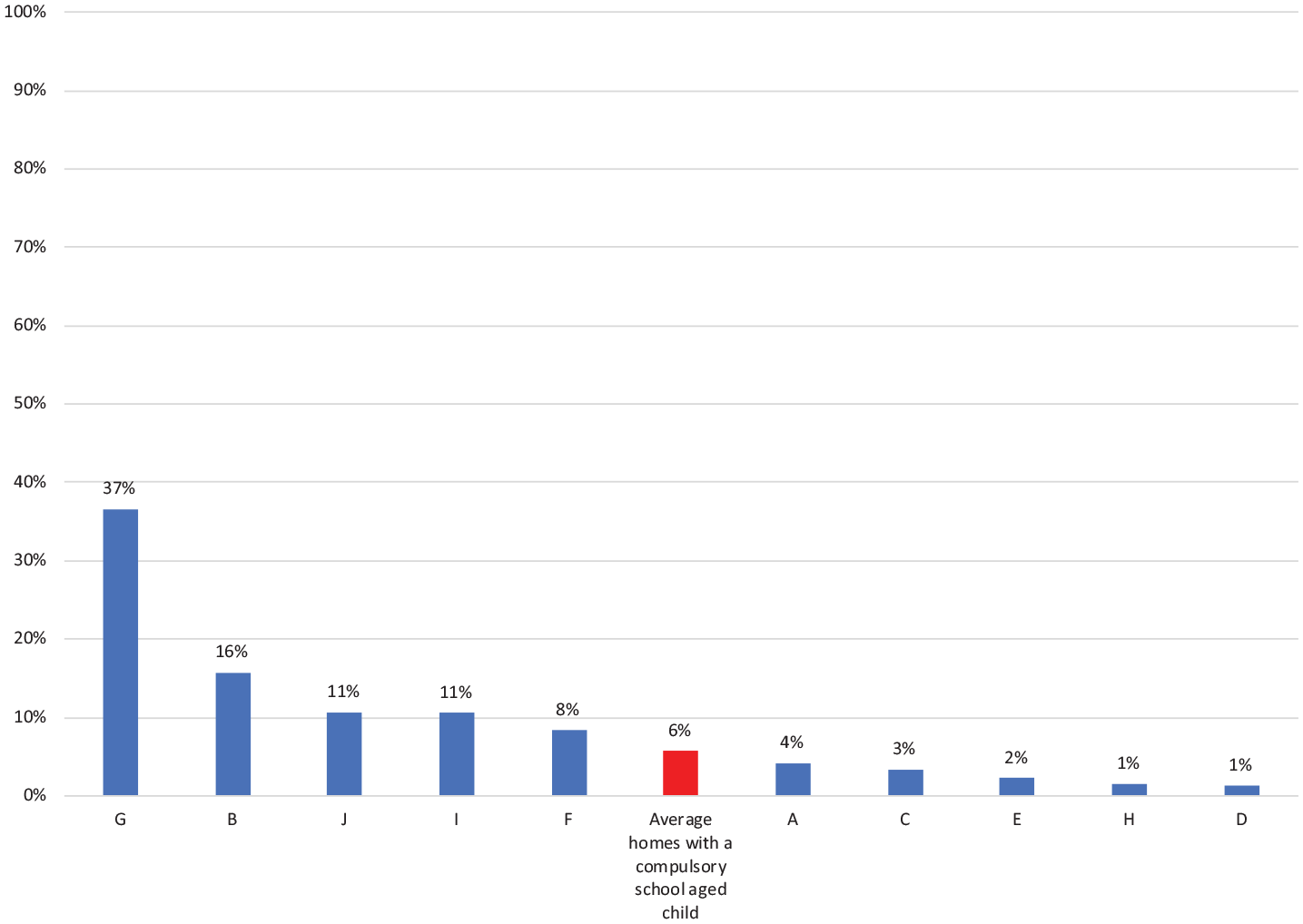
Percentage of homes in which both parents have a migrant background. Private schools are compared to homes of compulsory school-age children in the Reykjavik metropolitan area.
We will now turn to the analysis of the qualitative data as to further shed light on private school choice in Iceland. This will be done in two sections. Firstly, we explore the participants’ constructions of public and private schools. Secondly, we turn our focus to the participants’ moral view of the choice they have made, paying special attention to differences between class fractions.
Private schools as an answer to a failing system
The parents construct the public school system as failing in many respects. According to the parents’ discourse, the public school system is full of unambitious teachers and unruly kids who lack discipline; class sizes are too big; the schools do not foster a good environment for children to learn and they lack diverse teaching methods and learning opportunities; the individual gets lost both educationally and socially; the system is a “dinosaur” and a “monolith”, and there is no hope for change. This is how the parents describe the neighbourhood schools their children would have gone to had they not opted out of the public system. They are seen as very unattractive places: I had of course heard stories about the unruly kids in the neighbourhood school. [. . .] and I shuddered at the thought of sending my Karl to a monster-pit like that. (Elísabet) [Our neighbourhood school is] a vast, grey void. (Stefanía)
Elísabet makes a reference to “hearing stories” and gives insight into how knowledge about schools is typically spread “through the grapevine” (Ball and Vincent, 1998).
It is not just individual schools that are constructed as failing, but the public-school system as a whole: The public-school system is such a monolith, so big and complicated . . . and lacks funding, obviously. (Soffía) The conventional schools [public schools] are aimed at what teachers need, rather than what children need (Margrét) Everything is so carefree in the public schools. They don’t really . . . there are fewer rules and they are not enforced. (Emma)
Private schools are then presented as answers to the problem that the public schools embody. Private schools are seen as the complete opposite of the failing public schools. They are described as places with well behaved kids, interested parents, ambitious teachers, professional curriculum, diverse learning opportunities and healthy food, and as a place where each individual reaches their full potential. There is a national curriculum guide in Iceland, issued by the Ministry of Education, Science and Culture, but all schools set their own curriculum within that framework, a fact to which some of the mothers refer in their comments: I think [the private school] has given them a sense of planning ahead, peaceful working conditions and discipline. There isn’t this bloody ruckus, pardon my French, as there seems to be in [the neighbourhood school]. In the parent–teacher conference there was just ambition, ambition, ambition all through it. (Elísabet) Not only is there great curriculum but also there is better food, the school yard is better and there are fewer kids in each group. (Inga) Their after-school curriculum is very ambitious. They have music classes. My son is learning chess and Chinese. He is studying French and there are a lot of art-related activities [. . .] each individual is better taken care of. (Stefanía)
Thus, children educated in private schools are well-behaved, disciplined, ambitious, creative and yet retain a sense of individualism. Parents who choose to send their children to private schools are also more ambitious. Stefanía provided a strong example of how parents of children in private schools were contrasted to parents of children in public schools. After describing how involved the parents of children in private schools are, she says she knows parents of children in public schools are different and concludes: I am so relieved that I do not have to interact with parents who just don’t give a shit and mouth off to the teachers. (Stefanía)
There was a strong coherence on this in the data as well as the construction of the public schools as failing and the private schools as safe havens, with most of the participants adding to this theme. This did not seem to vary according to the parents’ background. For example, a difference in views according to the alignment of the parent with the economic/intellectual fraction was not to be found. The construction of the public schools as failing with a solution in the form of marketisation of education is, of course, resoundingly close to discourses in other countries as well as within Iceland (Icelandic Chamber of Commerce and Confederation of Icelandic Enterprise, 2014). The discourse is eerily similar to those decoded by Sharon Gewirtz (2002) in the United Kingdom in the 1980s and 1990s, where teachers and the public-school system were systematically depicted as inadequate, lacking ambition, having discipline problems and not being fit for children to fulfil their potential. Gewirtz (2002) goes on to show how market-based solutions were seen as the only answer to this situation, both by strengthening private schools but also by the marketisation of management and running of public schools. Thus, the parents draw from international discourses on the failings of the state to provide satisfactory education for children. In the United Kingdom, those discourses have, as Gewirtz (2002) argues, strongly impacted the transformation of the educational system from welfarist to post-welfarist.
“It goes against my personal view”
Discussions about the failing public school system and private school choice take place within a society in which private schools are few and most parents prefer a publicly run neighbourhood school. Previous studies have noted that some parents become stuck in a moral dilemma between choosing “what’s best” for their child and their political belief in a public school system (Crozier et al., 2008; Oría et al., 2007). This seemed to be the case with the parents who align with the intellectual fraction, that is, María, Soffía, Stefanía, and, to a lesser extent, Inga
11
: If the public schools had more freedom and would offer what I am looking for, I would prefer that over the private system. [. . .] This [private schools] is not my first choice, but you are not allowed to do anything [in the public schools] so okay, I am just forced to be over there since this is what is best for the children. (Soffía) Well, of course I think there should only be one school system where everybody’s needs are met, and everybody gets an equally good education and there is funding and resources to tackle all issues that come up in a professional manner. This is what I think. It goes against my personal view to have my child in a private school. It is almost similar to a privately run healthcare system, which, of course, I am totally against. (Stefanía)
These mothers construct a discourse that considers private schools as elitist and contrary to welfarist ideas of education as a public good. Soffía even refers to two sides and states that she is forced to be “over there”, situating the private school metaphorically on another side than public schools. This further emphasises a dichotomy between private and public. In order to reason their choice, they construct the notion that the public school system does not meet their needs and aspirations for their children, so they are forced to make the choice of a private education. This choice, however, goes against their political views, but they are willing to do this for the child’s sake, echoing the findings of Crozier et al. (2008) and Oría et al. (2007). Interestingly, three out of these four mothers had chosen a school chain that emphasises gender equality. This choice might represent a reconciliation on their part between a personal standpoint, where they act in what they feel is the best interest of the individual child, and an impersonal standpoint, where they act in the best interest of the greater good (Oría et al., 2007). The mothers believe they are paying for their children to get higher quality lunches, more dedicated teachers and a better outdoor area, but at the same time they are staying true to their “good/ethical self” (Crozier et al., 2008) by committing to the school’s equality profile. Paradoxically, the school chain therefore offers the parents an opportunity to commit to the greater good through education on equality, while at the same time giving the upper classes means for educational distinction (perceived better curriculum, better food, better outdoor area, etc.) and a distinction from families with migrant backgrounds (see Figure 3): Of course, my children go to [name of school], as I really care about their feminist upbringing. (Soffía)
Other participants generally did not show signs of facing a moral dilemma over their choice. On the contrary, many of them, in particular those who are aligned with the economic fraction
12
, felt quite strongly that having the choice between private and public education was necessary. Eva was outspoken about this: I feel that being able to choose is a part of human rights and a freedom we should have. I don’t see anything, nothing wrong with that. [. . .] If you get cancer or have to go for an operation, then you have to go to the public hospital and wait for two years to get service. But if you have the money, or get a donation, you can go to a private clinic and get the cancer operated on tomorrow. Of course you would! This is just the way life is. I think it is difficult to allow it in some cases and not others just because we are trying to keep everybody equal. When having equality diminishes our standard of living, I think we really need to examine things. I feel the same way about the school system. I don’t see anything wrong with being able to choose [a private school]. (Eva)
Eva likens education to another field, healthcare. Both fields have been under public provision in the Nordic countries, although both systems have had their share of privatisation. A consumerist discourse is present in Eva’s words and she emphasises the right to a personal choice, which indicates a pattern of endogenous privatisation (Ball and Youdell, 2007), where the manner of talking about education uses concepts and content derived from the private sector. A common theme among participants who did not show signs of experiencing a moral dilemma was the view that private schools increase competition, which in turn creates better schools and more ambition in the school system: Researcher: In general, there is an increased choice in schooling and there are more private schools now than before, how do you feel about this development? Hanna: It’s great. R. Okay, why? H. Just because, then there is more competition and more blossoming. (Hanna)
These parents are committed to the idea of being conscious consumers on the education market and are happy to assert their ability to choose. Other parents, in particular those who align with the intellectual fraction, experience at least some level of anxiety or a moral dilemma over their choice. This suggests that the parents who hold symbolic power and are able to “work the system” by choosing a private school are not a homogeneous group in this regard.
Conclusion
The descriptive statistics on the background of children in private schools in Iceland show that many of the schools do attract and admit privileged students, in terms of economic capital and/or cultural capital. Some of the schools seem to be more attractive to the intellectual fraction of the upper classes, while others have a much higher proportion of economically privileged students than the average school in the Reykjavik metropolitan area. This follows the internationally recognised pattern of higher social classes and their different fractions using their school choice possibilities in the private and public spheres (Van Zanten, 2009). The private schools in our study on the whole do not operate as magnet schools by attracting affluent children in relatively under-privileged areas (Saporito, 2003). However, when we look at the characteristics of the neighbourhoods or municipalities where the schools are situated, we see that they bear strong resemblance to the nearest public schools, indicating that they do not function as cream-skimmers in their respective neighbourhoods by attracting the highest social groups out of the local public school. It could, however, be argued that by being situated in generally privileged areas, they indirectly skim more privileged students when we look at the Reykjavik metropolitan area as a whole and the fact that none of the private schools are situated in underprivileged areas (Böhlmark et al., 2016). In that sense, choosing a private school serves as a form of educational distinction in the Reykjavik metropolitan area. Furthermore, some of the private schools do not admit migrant pupils at the same rate as other schools, indicating that there might be a barrier in the selection process, as private schools can choose which pupils they admit without supervision from the municipalities. A nuanced discussion is beyond the scope of this paper and further research is warranted to address the question of private school choice as a form of distinction for white, native, middle-class Icelanders from families with migrant backgrounds.
The middle-class parents who were interviewed for this study demonstrate an aversion to their neighbourhood public schools, which they construct as failing and even dangerous institutions. This resembles speech patterns recognised in other contexts (see Gewirtz, 2002). The parents feel that these schools are not safe for their children socially and/or academically. This anxiety is similar across class fractions and is also internationally documented as a result of increased individualism and a widening gap between the rich and the poor (Reay et al., 2008), heightening the stakes for middle-class cultural reproduction. Class fractions become a dividing factor when the parents reason their private education choice and the heterogeneity of the middle class becomes evident. Those who align more with the intellectual fraction show signs of moral dilemma (Oría et al., 2007), which some perhaps partially resolve by choosing a school chain with a gender equality profile. At the same time, however, this school chain serves as a tool for distinction for native Icelanders from children with migrant backgrounds, which problematises the choice. Other parents fully buy into the individualism of school choice, painting a picture of themselves as conscious consumers (Olmedo and Wilkins, 2017) who are obliged and happy to make full use of the emerging educational market in the Reykjavik metropolitan area. Some go so far as to describe school choice as their human right.
The findings of our analysis suggest that a discourse on the failing public school system, in which private schools are presented as the solution, is emerging in Iceland. Systemic changes that facilitate this shift have already taken place, for example, with more private schools and, in some cases, abandonment of catchment zones. This is a cause for concern for several reasons. We know from the literature, for example from the United Kingdom, that this discourse can have detrimental implications for social justice through education. This includes but is not limited to increased inequality when it comes to access to schooling, as well as intensification of class disparities (Gewirtz, 2002). This happens not least through free school choice, which allows privileged parents to reproduce their cultural, social and economic advantages (Ball et al., 1996). Similar repercussions have been documented in other Nordic countries, most notably in Sweden and in Denmark (Dovemark et al., 2018). Furthermore, we know from the existing literature that consumer cultures and market solutions in compulsory schooling for children have highly gendered ramifications with increased workload for mothers (Reay, 2005; Vincent, 2017). Therefore, our findings are important for a country that prides itself on being at the forefront of the fight for gender equality, and we stress the need to further analyse gendered dimensions of parental work in Iceland. All in all, although patterns of privatisation, marketisation and free school choice are still relatively subtle in Iceland, our findings reveal several indications that these trends are picking up.
Footnotes
Funding
The author(s) disclosed receipt of the following financial support for the research, authorship, and/or publication of this article: This research was funded by the Icelandic Research Fund. Grant no. 184857-053.
