



Abstract
This article explores the implementation of Kenyan secondary education in rural Western Kenya, focusing on learners’ experiences. One of the key challenges to educational quality is shown to be the size and breadth of the secondary education curriculum. Learners are in school 12 hours a day with those approaching their final exams working three to five additional hours at home, often with little access to light sources. In school, there are also pedagogical implications with a reliance on rote learning as teachers ‘rush through the syllabus’. It is suggested that this is part of the continued legacy of the 8-4-4 system, introduced in 1984 with one aim of widening the curriculum to prepare learners for formal and informal post-education employment opportunities. Conclusions suggest a review of the 8-4-4 structure and greater attention in discussions of education quality of learners’ lived experiences in socio-economically disadvantaged communities.
Introduction
In recent years, concerns with education quality have been central to debates around Education for All (EFA). While the focus of the Millennium Development Goals had been access to primary education, it has been widely noted that this tended to neglect what children were actually learning while in school (Alexander, 2008; Barrett, 2011; Cunningham, 2012; Sifuna, 2007). This has been termed by the United Nations Educational, Scientific and Cultural Organization (UNESCO, 2004, 2013, 2014) ‘the quality imperative’ in the face of ‘the learning crisis’. National curricula define what is meant to be learnt and so is a key component to be considered and analysed as the focus shifts to the processes of quality learning. Here, there is a call for curricula that are more relevant with clearer links to the learning outcomes expected at different levels of education (Cuadro and Moreno, 2005). Of particular significance for this study are those authors that have considered the extent to which curricula are ‘overambitious’ (Pritchett and Beatty, 2015) or ‘overloaded’ (Clegg et al., 2008).
This article contributes to this literature by considering how the curriculum impacts on learners’ access to quality secondary education in Kenya. This is undertaken through a focus on the secondary level of the Kenyan 8-4-4 curriculum, whereby learners undertake eight years of primary education and four of secondary and tertiary respectively. This curriculum has been in place for 30 years despite substantial critique of its purpose and relevance during this time period (Amutabi, 2003; Sifuna, 1990). With only four years of secondary school, assessed through a single set of examinations at the end of Form 4, it represents a very different secondary schooling experience to other countries in East Africa. Uganda, for example, has the more common six years of secondary school split across lower and upper levels with only the lower secondary phase included in their basic offering. Since the introduction of Free Day Secondary Education (FDSE), Kenyan learners can access 12 years of schooling, nominally for ‘free’. While this suggests greater equality in access to education, this article considers the quality of the curriculum through an exploration of secondary education in practice in two schools in rural Kisii, Western Kenya.
The article has been developed from a study which explored local and national conceptualisations of educational quality in Kenyan secondary education in the light of the introduction of FDSE in 2008 (Milligan, 2014a). By drawing on the social justice and capabilities approach to educational quality put forward by Tikly and Barrett (2011), the article focuses on curricular implementation in the different learning contexts of the school and home. By focusing on the lived experiences of learners, the article calls for greater attention to policy implementation and the challenges facing learners and teachers in socio-economically disadvantaged communities. The article is split into four parts. The first considers different approaches to educational quality and the curriculum, with reference to the 8-4-4 curriculum. The second section provides an overview of the research methodology. The third section presents the research findings, particularly focused on learners’ experiences of secondary education. In the final section, considerations are made for curricular reform to a system than can better suit the needs of all learners and future research priorities.
Education quality and the 8-4-4 curriculum
Westbrook et al. (2013) have put forward useful definitions for the four main models that shape curricula globally. These are content-driven, process-driven, competences-based and objectives-driven. In content-driven curricula, each subject is taught methodically with very clear directives in the curriculum about what is taught. This predicates classroom practice with the teacher in control and leading learners through the content that needs to be covered. This maps only Bernstein’s collection code, whereby there is strong classification of the content to be taught and very specific performance criteria for assessment (Bernstein, 1971). Bernstein’s second curricular coding is ‘integrated’ where there is weaker classification of content delivery and subject demarcation. The process-driven and competences-based in different ways reflect this ‘integrated’ code (Bernstein, 1971). Process-driven curricula exemplify thematic or interdisciplinary approaches where the barriers are removed between subjects. Here, learners have more control over what they learn. Competence-based curricula focus on key learning outcomes and ‘curriculum, instruction, and assessment are organised in a way that makes sure that this learning ultimately happens’ (Westbrook et al., 2013: 14). The final model – objectives-driven – emphasises expected learning outcomes and is most often where there is a definitive set of skills to be developed, for example in the workplace.
These differentiations are useful as they show how curriculum defines many different aspects of the education system and highlight the relationship between curriculum, pedagogy and assessment. Since independence, across Sub-Saharan Africa there has been significant curricular reform with many countries switching between these models of curriculum (Altinyenken, 2010; Chisholm and Leyendecker, 2008; Pillai, 2001). These studies provide evidence of the barriers encountered in curricular reform when there is not clear coherence across curriculum, pedagogy and assessment. For example, Chisholm and Leyendecker (2008) give a convincing account of the pedagogic challenges involved in moving from content-driven to outcomes-based curriculum in Southern Africa. Schweisfurth (2013) has similarly shown the difficulties associated with the implementation of learner-centred pedagogy when it is often at odds with the curriculum and assessment demands.
Another significant body of literature has considered the extent to which curricula are aligned with learners’ needs and development. Pritchett and Beatty (2015) have shown that in India there is a significant relationship between an overambitious curriculum and poor learning outcomes. They highlight that the curricular pace moves faster than students are able to learn: If the official school curriculum covers too much, goes too fast and is too hard compared to the initial skill of the students and the ability of the schools to teach this can produce disastrous results. An overambitious curriculum causes more and more students get left behind early and stay behind forever.
This disconnect between the demands of the curriculum and the cognitive development of learners has also been widely explored across Sub-Saharan Africa, although with an emphasis on pre-secondary schooling (Crouch and Korda, 2009; Dubek et al., 2012; Piper, 2009). These authors highlight the importance of coherence across curricula, teaching methodologies and materials to effectively support student learning. Glewwe et al. (2009), in a study of the use of textbooks in rural primary schools in Kenya, argue convincingly that the Kenya primary curriculum is designed for learners that are both more academically able and proficient in English. This literature points to significant equity issues related to overambitious curricula and suggests the importance of more in-depth understanding of how curriculum design impacts on the learners who struggle to keep up with the curricular pace.
The 8-4-4 curriculum has been in place since 1984. When it was originally designed, the purpose was to promote self-reliance and widen the range of employment potential for graduates from both primary and secondary level (Bogonko, 1992). To achieve this goal, it was stated that there was a need for a more relevant and practical-oriented curriculum with more technical and vocational training and equitable distribution of educational resources (Sifuna, 1990). Drawing on Nyerere’s theory of Education for Self-Reliance, the emphasis on practical and vocational subjects was intended to ‘instil realistic attitudes and aspirations regarding employment in both parents and school leavers’ (Republic of Kenya, 1989: 212). This focus on practical work was also shown in assessment criteria which were closely linked to the world of work. In the four years of secondary schooling, learners were expected to cover a minimum core of subjects which would provide them with a firm foundation for future education, training and work across the informal and formal sectors. Table 1 shows the subjects that were meant to be offered in all public secondary schools.
The 8-4-4 subjects chosen for KCSE exams in 1986 (in Bogonko, 1992: 135).
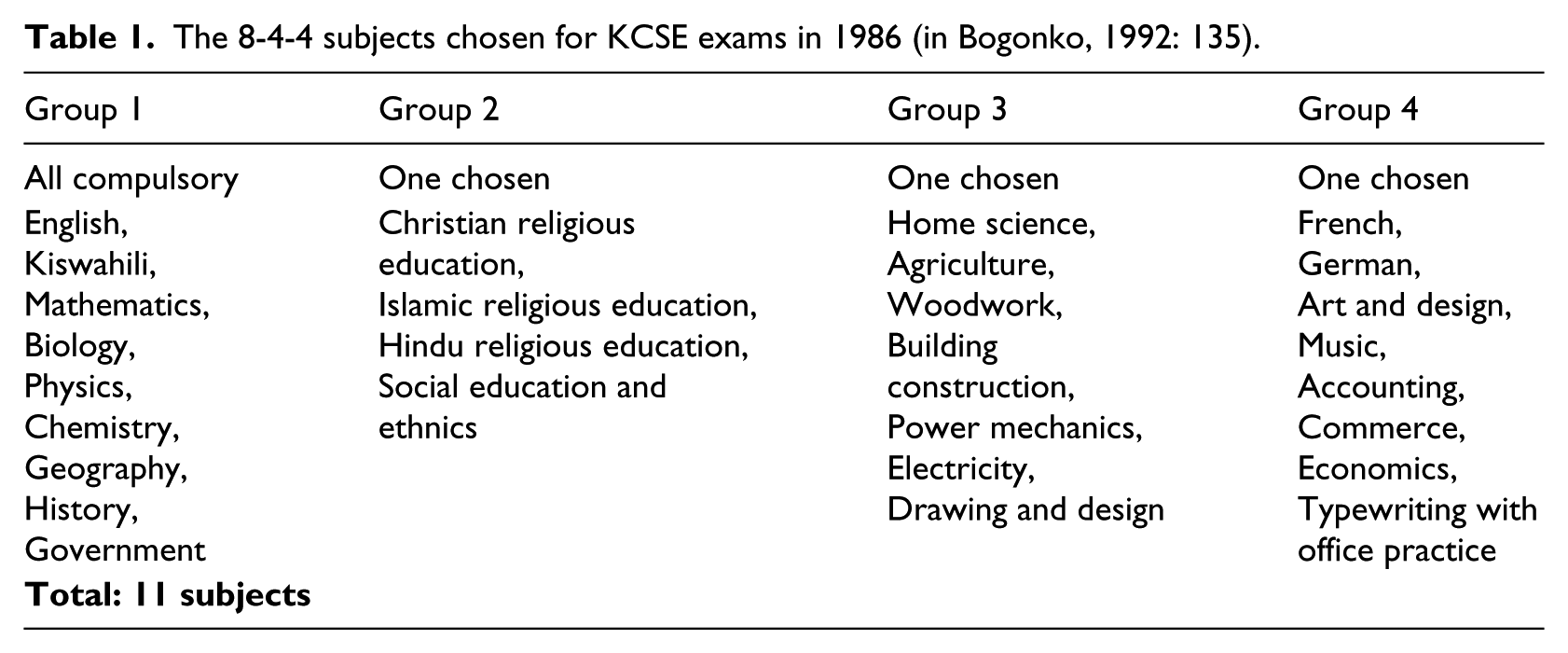
In this way, it was primarily an objectives-driven curriculum, although there were also some wider outcomes that were expected of the four years of secondary education. These were ‘to prepare the learner to make a positive contribution to the development of society, to choose with confidence vocational education after school and to acquire attitudes of national patriotism, self-respect, self-reliance, cooperation, adaptability and a sense of purpose, integrity and self-discipline’ (Sifuna, 1990: 160).
As early as 1988, however, the 8-4-4 system began to be critiqued for being only practically oriented on paper since the government did not put up workshops in every district, instead relying on parents and communities to construct workshops and laboratories as well as equip and replenish them (Sifuna, 1990). In the years since then, there has been a move away from a curriculum which is closely relevant to job opportunities. The 8-4-4 education system remains in place despite the fact that the secondary school curriculum contains very little practical, technical or vocational training. Subjects such as music, art and technology are available at most provincial schools but district schools do not have the teachers, workshops or resources to be able to offer such subjects. 1 The curriculum also reflects recent government priorities such as increasing the science base of secondary school graduates for future involvement in the knowledge economy. Table 2 shows the subjects that all Form 3 and 4 learners chose for the Kenya Certificate of Secondary Education (KCSE) exam in 2011.
The 8-4-4 subjects chosen for KCSE exams in 2011 (from discussions with head teachers of case study schools).
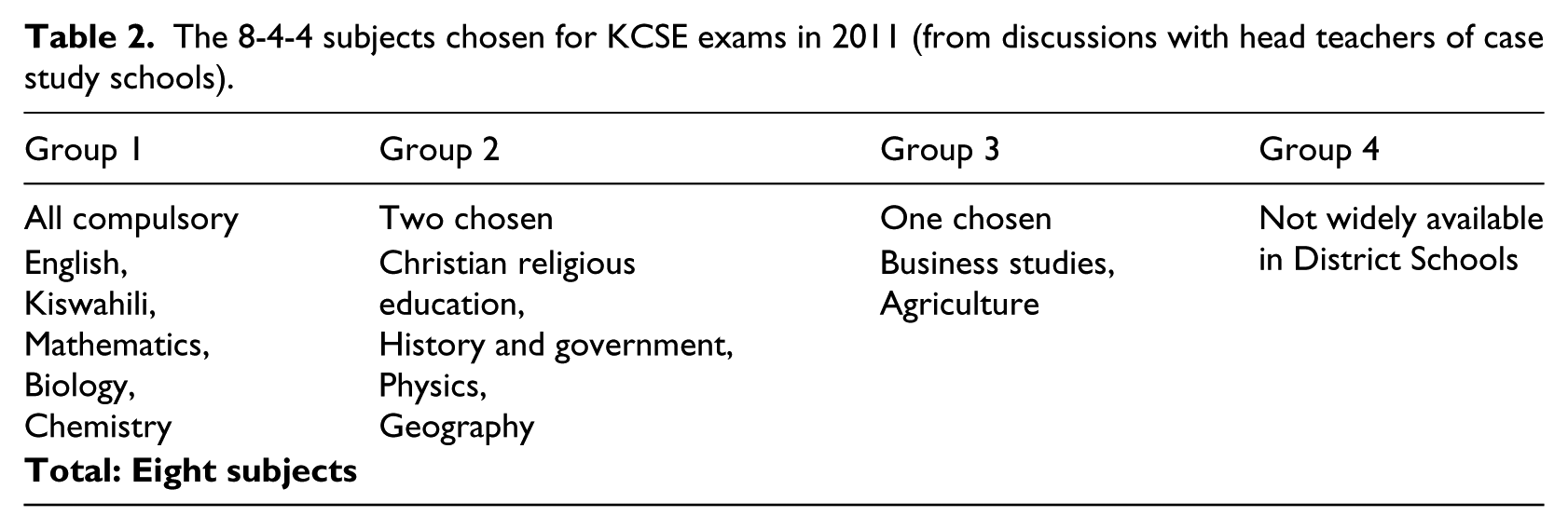
There has been significant criticism within the literature about the pedagogical and assessment implications of this move towards a more content-based curriculum. It has been critiqued as a system which accentuates breadth over depth with a wealth of information that learners were expected to learn and remember (Amutabi, 2003; Sifuna, 2007). These authors suggest that this has led to performance-based pedagogic practice. Pontefract and Hardman (2005), in a study of classroom discourse in Kenyan primary schools, showed that all lessons taught by the 27 teachers in the sample were characterised by teacher-led recitation. Ngware et al. (2014) built upon this evidence base by exploring how far teaching practice can explain differences in learning outcomes by subject and across high and low performing primary schools. Their findings similarly found that the pedagogy was predominantly teacher-centred across the school types with significant learner recitation.
Amutabi (2003: 137) has suggested that ‘the most professionally hurting, harmful and devastating’ legacy of the 8-4-4 system is rote learning ‘characterised by unhealthy competition and regurgitation of facts in exams by learners rather than digesting them’. When the 8-4-4 curriculum was first introduced, learners were expected to score a minimum of a B- in each of the 10 subjects they took at KCSE. However, this was quickly reduced to C+ after the first results revealed that only 4000 of 132,000 in 1990 were able to achieve this (Bogonko, 1992). In the current day, public university admissions regulations state an average of a C+ across all eight subjects is required but to guarantee a government-aided place, a learner is expected to score a B+ average.
From this review, it can be argued that very little of the objectives-driven curriculum based on preparation for both the informal and formal economies can be seen in the current education system. While the studies reviewed have highlighted some of the issues of the size and breadth of the existing curriculum, they suggest that there is still much to be explored about curriculum implementation and the relationship between curriculum, classroom practice and assessment.
Research findings
Theoretical framework
The social justice and capabilities-based framework put forward by Tikly and Barrett (2011) highlights the importance of looking at educational quality at the different levels of the education system and crucially the ways in which these levels interact to enable a coherent system. A good quality education is defined as one that ‘provides all learners with the capabilities they require to become economically productive, develop sustainable livelihoods, contribute to peaceful and democratic societies and enhance individual well-beings’ (Tikly and Barrett, 2011: 9). The framework is based on three key principles of inclusion, relevance and democratic participation. The first draws on Fraser (2008) and her concepts of redistribution and recognition in ensuring that quality education is inclusive of a range of learners. For example, Tikly (2011: 9) highlights the importance of materials for all learners which are ‘appropriate to the curriculum, environment, learners’ cognitive level, their language proficiency(ies) and multiple social identities’. A quality education is identified as needing to be relevant so that learning outcomes are useful to graduates and their community and are those which they value. The focus on inclusion also highlights the importance of equity in discussions of quality education. I have shown the challenges specifically for girls in accessing a quality education elsewhere (Milligan, 2014b). Here, the focus is the ways that curriculum enables or acts as a barrier for all learners in one socio-economically disadvantaged community.
As a study that is highlighting how socio-economic factors impact on education, the EdQual framework is particularly relevant in its recognition of the interlinking environments of the policy, school and home as compared with other models which have prioritised the school context over the others. Sayed and Ahmed (2011: 105) similarly argue for the importance of context in understanding educational quality by conceptualising it as: the interaction between what learners bring to learning (learner characteristics), what happens in the learning space such as school/classroom setting (enabling inputs), what happens to individuals as a consequence of education (outcomes) and the context within which the activity takes place.
This argument is important since it first highlights the need to understand the local community within which education takes place. It is not enough to make a school effective if no attention is paid to the out-of-school factors which impact on learner learning both at home and in school. For example, EdQual analysis of Southern and East African Consortium for Monitoring Education Quality (SACMEQ) data highlights the importance of the home environment in determining education quality for grade 6 learners in Southern and East Africa (Smith, 2011; Smith and Barrett, 2011). The analysis indicates that the home environment is a particularly significant factor for the most socio-economically disadvantaged learners who are more likely to lack basic resources and be exposed to diseases – two of the predictors for low level literacy and numeracy. This is just one example of how looking across the different levels of the education system represents a more holistic understanding of educational quality and how it is a useful framework for analysing the Kenyan secondary education curriculum in practice.
Methodology
This article draws on qualitative research undertaken in Western Kenya between 2011 and 2012. The wider study explored contextualised understandings of educational quality in Kenyan secondary education in the context of related global agendas and an analysis of the Free Secondary Education policy in Kenya. A comparative methodology was used to draw out similarities and differences between the ways in which quality is defined and espoused in national policy documentation and the perspectives of a range of local stakeholders. Data presented here focus on what emerged within the ‘curriculum’ theme of the study. The study utilised case study design situated in one rural community, and two of its secondary schools, in the Kisii region of Western Kenya (Yin, 2013). This approach was used to provide a rich dataset of stakeholders’ daily experiences of educational practice. Therefore, although it is not possible to generalise from this single case study, the findings presented in this article reveal some important features of how the 8-4-4 curriculum impacts on learners’ educational experiences both at school and home.
Across the two case study schools, semi-structured interviews were conducted with 16 teachers and 10 board of governor (BoG) members. Participative methods were introduced for learner participation. Twenty Form 4 (final year) learners were given either a camera or diary to document their educational realities before these texts were used as the basis for a narrative interview. Younger learners were also included through essay writing (20) and poster drawing (eight groups). These participative methods allowed for greater insight into the lived experiences of learners with the photos and diaries, in particular, introducing data from the home environment and spaces which an outside researcher could not normally access (Karlsson, 2001; Milligan, 2016). In the wider community, semi-structured interviews were conducted with local dignitaries and unstructured interviews with parents, with the assistance of a translator. I also drew upon observation and my experiential knowledge of having previously worked in similar schools in the Kisii region. Data collected at the local level were analysed using thematic analysis and categorised into the cross-cutting themes of contextual challenges, policy enablers, school priorities and the purposes of secondary education (Braun and Clarke, 2006). The project gained institutional ethical clearance and I drew on British Education Research Association (BERA) ethical guidelines and critical friends to support good ethical practice in cross-cultural research. The names of the schools (Omwana and Eskuru secondary schools) and participants given in the following section are pseudonyms.
The school level
The size and demands of the secondary school curriculum were shown to have a significant impact on the way that education was delivered in the two schools. At both schools, the school day officially starts between 7am and 7.30am but morning prep in which revision or extra syllabus work is covered begins at 6.30am for most learners. The school day runs to 6pm with short breaks including lunch and sports. In each subject, there is a substantial range of topics included in the syllabus; often not covered to sufficient depth by teachers who are under pressure to keep up with the demands of simply covering the basic facts. The challenging size of the syllabus was discussed at length by teachers and the school management. This was usually discussed in relation to teaching demands rather than a challenge impacting on learners and their well-being. Very few pointed to curriculum developers and policymakers; rather the fact that the syllabus was not being covered was due to either the deficiencies of teachers or the perceived low ability of the learner intake. For example, one Eskuru BoG member (2) put the responsibility on individual teachers stating ‘there are some classes where the [teachers] are so much behind so they are not covering the syllabus as expected’.
There was a clear sense among learners that teachers are always rushing through the syllabus. The following quote is from a Form 4 learner who had achieved a B+ in his end of year Maths test in Form 3 but shared that he is now struggling to understand the topics that they are covering in Form 4: Interviewer: You’ve said here moving faster to get through the syllabus, do you feel that sometimes you are running to keep up with the syllabus because you say it a few different times? Thomas: You know there was a time that I was sick and it took almost 3 weeks until I was back in school … it was malaria but when I recovered and I came back to school, I discovered that they have gone ahead and you know the teacher cannot go back for the sake of only one person. (Thomas, Eskuru)
Teachers are not able to return to such key concepts as they ‘move faster to get through the syllabus’; this had implications for Thomas and other learners who are not able to keep up with the cognitive demands of the rapidly moving instruction. There are clear links here to examinations with learners at both schools performing poorly in Maths KCSE exams. Thomas’ experience is a pertinent example of how the size of syllabus, and the need to keep up with it, leads to learners missing key concepts and scoring poorly in their examination results.
The size of the syllabus and the length of the school day were shown to impact on learners at both schools, particularly among the Form 4 cohort who were approaching their final examination. For example, Duncan (Omwana), an industrious Form 4 learner, wrote in his diary everyday about the length of his school day in which he takes every opportunity he can to take up private studies despite challenges that he faces in finding the time and peace to do this because of the disturbances he says he experiences from his family and fellow learners. Geoffrey (Owmana), another Form 4 learner, similarly wrote about the difficulties he faced in the length of his school day using particularly emotive language which emphasises the negative effect that the prescriptive and long timetable has on this learner’s desire to learn: As you can see, each time you see we are forced to follow all of the timetable which is a bit difficult because each and every time we are supposed to change this to this, if you are not doing this, there is a punishment, you are punished, if you try to come late, you are given a punishment, generally in school, it’s a bit, actually it is like a punishment.
Geoffrey uses words such as forced and repeats punishment three times in one sentence, indicating that this is what he associates with schooling. Given that learners tend to be in school for more hours of the day than not, it could be posited that the burden has a real emotive impact on the learner.
There was evidence to suggest that the size and range of the syllabus has an impact on the pedagogical approach that can be taken in the classroom. The example of Mr David here supports the argument of Amutabi (2003) that the 8-4-4 system has led to a reliance on rote learning. Mr David (Eskuru) is a teacher with more than 20 years’ experience but little overt enthusiasm for his role. Observation of his lessons revealed a teacher who was following very strict guidelines for what he needed to cover. He copied word-for-word from a textbook onto the blackboard the key facts on a certain topic, learners in turn copied the words into their exercise books. Through what he learnt in his teacher training, he is aware that this is not ‘the various methods that are supposed to be used in teaching’. In our interview, he relayed to me that the major challenge that he faced was rushing to complete the prescribed syllabus: ‘the problem that is there is the content – it has to be completed in a very short time’. This is just one example of how teachers are simply not able to cover the syllabus at the rate that is expected of them and using the range of teaching methods that they feel they should be using; and for those that do, I would argue that the learners are not able to fully digest the sheer amount of ‘knowledge’ that they are supposed to learn on a daily basis. As one teacher at Omwana observed, there is the first challenge of covering the whole syllabus and then the next challenge is ‘ensuring that they have understood the content which is in that syllabus’ (Mr Joshua, Omwana).
Learners’ perspectives of this teacher-centred pedagogic practice were mixed. Some were in favour of the approach as the best way for the main concepts to be relayed to them. For example, two learners took photos of the English teacher at Omwana Secondary School writing notes on the blackboard with both noting in their interviews that they liked this teacher because he was helping them to move through the syllabus at pace. In contrast, many learners discussed the importance of learner-centred and participatory teaching methods in their learning. However, this was not regularly discussed in the context of lessons but rather in relation to being allowed space for independent learning and group discussion, both of which were integral to their conceptualisations of quality education. Fifteen of the Form 4 learners whom I interviewed spoke about their support for group discussion and peer learning; many specifically mentioned that they would like more time to be able to revise, work independently and discuss their work with other learners. The current timetable is too busy to allow for in-depth discussion and peer learning. I could choose a quote from any of the interviews with the Form 4 learners, but the following is most indicative of how learners feel about working both independently and with other learners.
Why do you like doing group discussion? I like it because through group discussion, I believe I have made it…in group work, they will elaborate more than the teacher. He or she talks for 25% and 75% are part of my own work. So during group discussion, I am able to grasp something new.
Many learners, particularly the more committed, tend to use their extra-time, for example during lunch hour, games time and after school, to engage in this type of learning. The lack of time for discussion was also noted by some teachers. Madame Faith (Omwana) reflected that there was not time in class for learners to do ‘practical work and give them problems to answer, you should give them group work and discussions’ but that there is ‘not enough time for discussions’ both in and out of class. Great importance was also placed by the Form 4 learners on being able to revise independently. Learners’ desire to have more time and space to revise key concepts is particularly pertinent when considered within the context of the size of the content that can be included in the KCSE examinations. In the KCSE examinations, in the space of two weeks, learners sit exams in eight subjects in which questions can be asked that relate to topics from throughout the four-year secondary school period. Ruth (Eskuru) wrote in her diary that she felt ‘successful to learn chemistry notes of form one because they are easy to understand them’. Ruth explained this further in her follow-up interview: On that day, I think the teachers had a meeting and when they had the meeting, this encouraged me to go through my notes and go over where I had some difficulties rather than wait for the teacher to come. You write regularly that you are happy when you are able to revise and go over what you have learnt before. Yes, I am happy because it makes it easier to understand.
The school management at Eskuru had introduced a peer learning scheme to support revision in maths which was very well received by learners and teachers alike. This is an excellent example of how one head teacher has taken initiative outside the tight prescriptions from government guidelines in order to support learners in an area which they find particularly difficult. However, it should be noted that this scheme is compulsory and takes place during the lunch hour; the only time when learners could relax and/or conduct personal study. Therefore, despite its merits as discussed here it is important to reiterate that it is forced into a slot in an already overburdened timetable. Later in the same interview with Ruth, she explained why she liked these peer learning sessions: You say many times in your diary that you enjoy the peer teaching. Why? Most of the topics backwards from Form 1, Form 2, Form 3, there are some topics that I didn’t get it clear and now when the learners explain it, they explain better than the teachers did before. Somehow when they are explaining, this makes me to get more clear and into deeper.
Maths results in both internal and national exams had improved at Eskuru and teachers cited that they saw a difference in both learner engagement and their achievement. This could, then, be an important lesson for allowing some room in the timetable for school-level initiatives; particularly those which are seen by learners and teachers alike to improve outcomes. However, it highlights the importance of coherence across pedagogy, assessment and curriculum since the syllabus size is making it difficult for there to be space for the types of learning that may lead to more effective learner outcomes (Westbrook et al., 2013).
Home level
One of the consequences of the size of the curriculum and the pressure of examinations is that all the young people who participated in my research felt the need to study for three to six hours every day outside of their long school day. This had the consequence that all 20 Form 4 learners involved in the study were sleeping between four and five hours per night on a regular basis. Although both the case study schools have electricity, it continues to be rare for homesteads to have electricity; a challenge to home learning that has also been noted for primary school learners in Kenya (Smith and Barrett, 2011). Learners are, therefore, dependent upon lighting paraffin lamps or candles to work at home; or else walk at 4.00 am to school in the dark. One Form 4 learner at Omwana took the photo shown in Figure 1 and explained that she had chosen to take it because ‘it had no paraffin to use…this one makes us fail, when we want to study we find that we can’t because there is no paraffin to provide light’ (Damaris, Omwana). Three other learners also took photos of their lighting situation at home, each one indicating that they struggle to complete their homework and revision because of this factor.
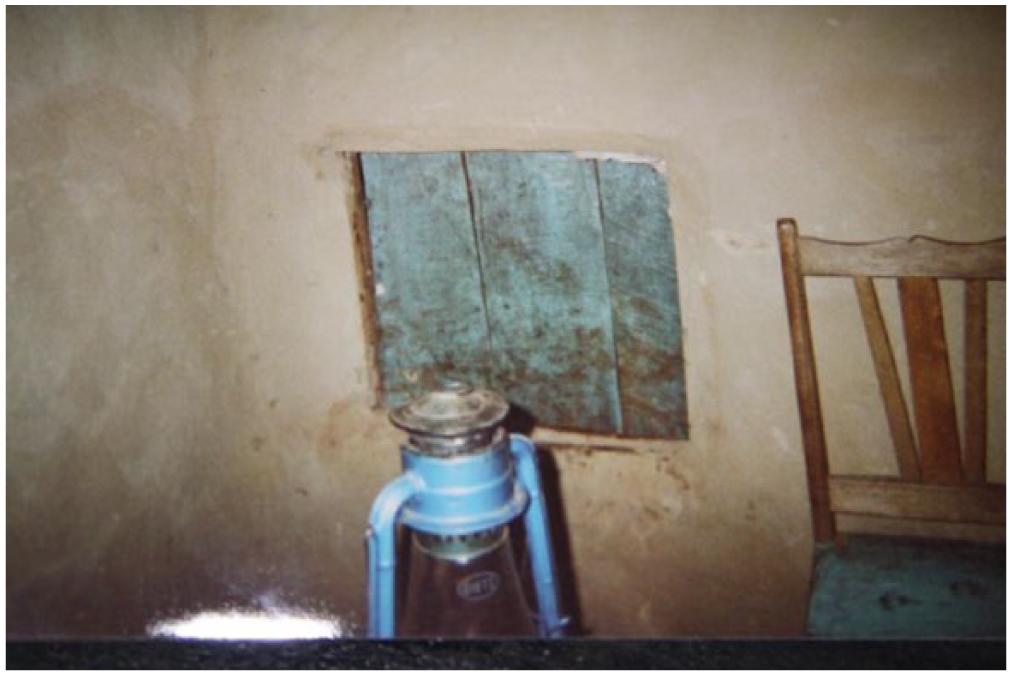
Kerosene lamp as a light source (taken by Damaris, Omwana).
Two of the Form 4 learners at Omwana were visually impaired; one took the photo shown in Figure 2. The photo shows his mathematics revision book and calculator ready for him to do his six calculations that he told me he does every day to ‘achieve high’ and the ‘small lamp which hurts [his] eyes’ (Alfred, Omwana). Teachers corroborated the fact that this very able learner has an undiagnosed problem with his eyes and is long-sighted. He lives alone in a single hut with his grandmother who is not able to afford to buy him glasses. This offers a stark example of the educational and health implications for socio-economically disadvantaged learners.
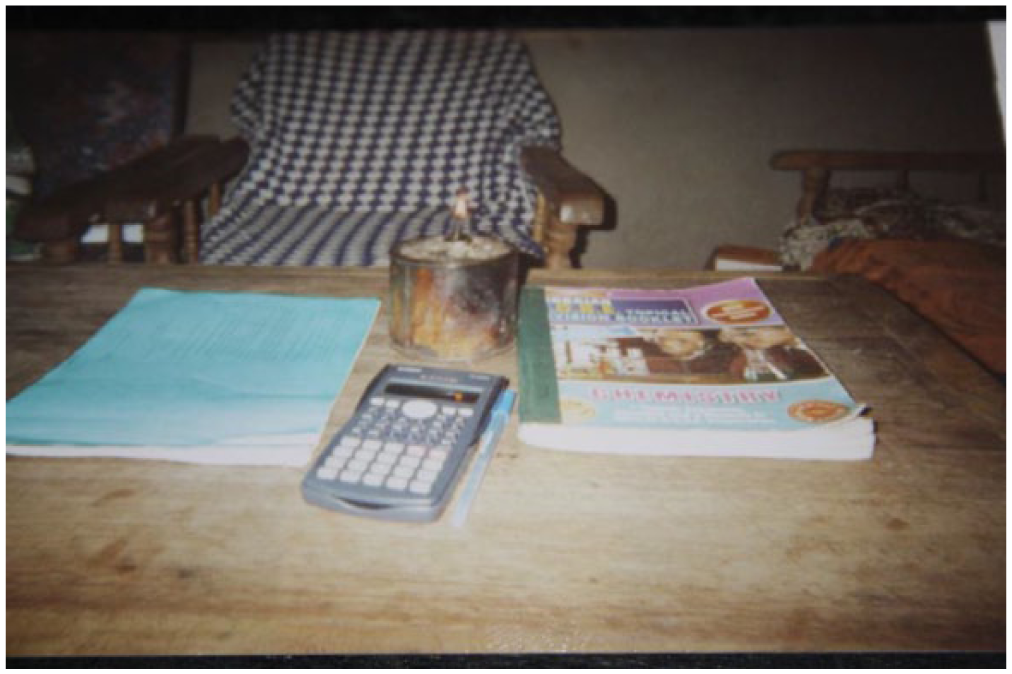
Working at home by candlelight (taken by Alfred, Omwana).
Another challenge that faces learners in studying in their home environments is the need to do home chores, both within the house and on the shamba. Many learners raised this as a challenge they faced. One example was Hannah (Omwana) who helped her grandparents with chores because they were elderly and relied on her assistance. She took three photos related to home chores describing these as a challenge to her being able to do schoolwork at home including Figure 3 which shows her helping her grandmother cook dinner.
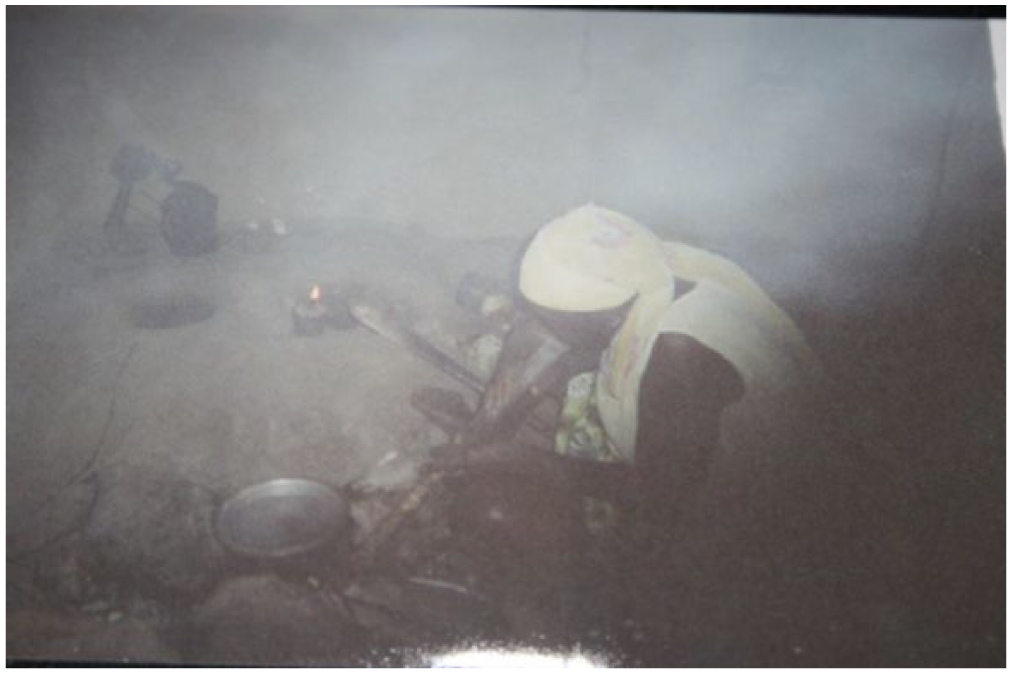
Helping with chores at home (taken by Hannah, Omwana).
Some learners reported that they spent two or three hours every evening doing household chores; however, there was one learner who only spent half an hour each evening. This accentuates the problem of little or no light by which to work since priority will be given to finishing home chores during daylight hours.
It is clear that learners, particularly those preparing for the final KCSE exams, feel pressure to spend significant time revising or catching up with school work while at home. There was evidence from across the learner data that many learners live in households where there are disruptions to their ability to work. One example discussed by learners was the impact of parents drinking home brew alcohol (chang’aa) in the home environment. All three of the Form 1 poster groups independently included pictures of family members drinking and/or the subsequent acts of domestic abuse as perceived challenges to their education. Figure 4 shows a mother and father who are partaking in a range of drug abuse, including bhang (marijuana), busaa (locally brewed beer) and chang’aa (spelt janga by the students). The text which accompanied the drawing is particularly telling of the personal impact that alcoholism has on either themselves or what they have witnessed in their surrounding community.
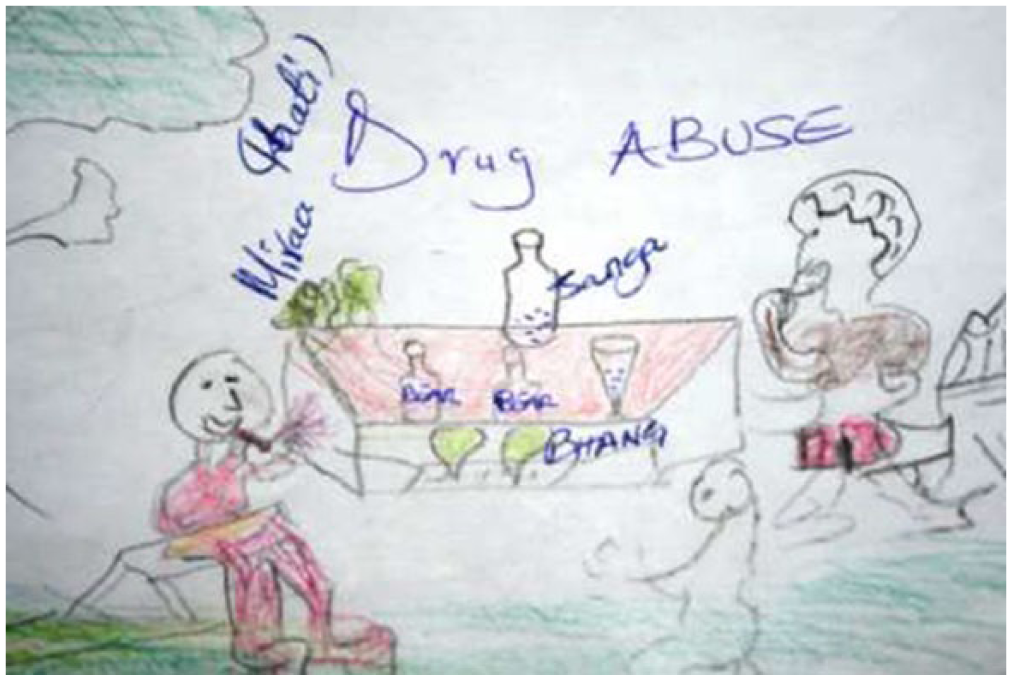
Drug abuse (drawn by Poster group 2, Form 1, Omwana).
One of the Form 3 learners wrote about the difficulties he faced in completing his homework and revision because of the disruptions he encountered when he reached home. Richard (essay, Form 3) spoke eloquently about when his father ‘is drinking, there is a lot of noise in the house; it is very hard to do work with all that noise’. Teachers and BoG members corroborated the impact of alcohol on learners’ home environments. For example, BoG member 1 from Omwana shared the following story: Some mothers come and they say that their husbands harass them, beat them up, make noise all night. In fact, there is a girl in form 4 who tells me that when the father is drunk, he makes noise the whole night. She can’t read, she can’t sleep, he makes noise the whole night long. When he is not drunk, he is good. When he is drunk, he makes noise from 7 o’clock. (BoG 1, Omwana)
This highlights the level of disruption that having an alcoholic parent has on an individual’s ability to study at home. The second extract refers to a specific case of a Form 4 student who it is insinuated is neglected by his parents: There are some students whose parents are drunkards so when these students are back at home, they are always fighting. Or sometimes they are not at home, no one is worrying about what this young man is going to take for supper. It is a real concern. And they are not interested in how the boy is performing. (BoG 2, Eskuru)
The relationship between consumption of home brew alcohol, domestic abuse and poverty needs further research, particularly in the ways in which it impacts on education. However, this evidence suggests that alcohol is one way in which the socio-economic context impacts on learners’ ability to conduct school work outside of school hours. The relationship between space and time to work at home and learner outcomes has been highlighted quantitatively by Smith and Barrett (2011). However, these qualitative data provide rich evidence of learners’ challenges and concerns about engaging in out-of-school learning.
Conclusions
The qualitative findings presented in this article have revealed significant challenges that learners face in keeping up with the ‘overambitious’ and ‘overloaded’ secondary curriculum (Clegg et al., 2008; Pritchett and Beatty, 2015). Of the 20 Form 4 learners involved in the study, only one achieved above a B in their KCSE results. The focus on breadth over depth in the 8-4-4 curriculum means that there is a huge amount for learners to learn and remember in time for their KCSE exams. This content-driven curriculum predicates rote learning for the majority of the time learners are in school (Amutabi, 2003). The findings have revealed that, while teachers and learners are often blamed for not covering the syllabus and subsequent poor exam results, it is the size of the syllabus which is the greatest perceived challenge among teachers and learners. There are also clear health implications for learners with evidence that learners are sleeping as little as four hours a night to allow for extra schoolwork, often by minimal light. It is recommended that the secondary school curriculum should be revisited and the syllabus should be condensed, either within or across the subjects. This would also allow more time and space for learners to engage in discussion groups and more participatory approaches to learning which were promoted by learners as elements of a quality education.
Given the critiques highlighted of the 8-4-4 system related to secondary education, it is suggested that the sheer size of the syllabus across the curriculum is part of the legacy of the system from its introduction 30 years ago (Amutabi, 2003; Bogonko, 1992; Sifuna, 1990). At that time, the breadth of subjects included a number of vocational subjects but the focus has narrowed to almost exclusively traditionally academic subjects in day secondary schools while remaining wide in number. Given the lack of correlation with the original aims of 8-4-4, it is argued that the system needs review with particular focus on the expectations of learners at secondary level. More research is needed which explores the ways in which the curriculum negatively impacts on learners from socio-economically disadvantaged backgrounds.
The findings also have wider implications as they highlight the importance of coherence across curriculum, pedagogy and assessment (Westbrook et al., 2013) while also putting forward out-of-school learning as an additional factor with the home context a key place of learning. Here, the size of the syllabus and highly structured nature of learning while in school were shown to impact on expectations of learning outside of school. A clear finding was that all learners felt that doing work at home was essential if they wanted to achieve in their final exams. These conclusions suggest the applicability of Tikly and Barrett’s (2011) policy–school–community framework for exploring educational quality to contribute to more equitable education systems in Kenya, and further afield. However, this article has added to this framework through the argument for greater recognition of these out-of-school factors which could lead to a more nuanced understanding of the ways that unequal access to quality learning at home impacts on equitable education. The findings have also demonstrated the richness of evidence that can be provided through in-depth case studies of the experiences of learners in their engagement with the curriculum and calls for more consideration of their perspectives in policymaking.
Footnotes
Declaration of Conflicting Interests
The author(s) declared no potential conflicts of interest with respect to the research, authorship, and/or publication of this article.
Funding
The author(s) disclosed receipt of the following financial support for the research, authorship, and/or publication of this article: This research was undertaken with the support of a 1+3 ESRC doctoral grant.