




Abstract
Governments in sub-Saharan Africa have made marked efforts to increase school enrollment. Yet attendance and completion rates remain low, particularly for girls. This study examines the reasons that school children do not attend school in a sample of Ghanaian students. Girls were more likely to miss school because a family member was sick, whereas boys were more likely to miss school due to work. Caregivers’ inability to pay school fees and belief that it is better to educate boys than girls were related to lower school attendance for girls but not for boys. Implications of the findings to inform efforts to improve educational access for all children are discussed.
Introduction
At the United Nations Millennium Summit and the World Forum of Education in 2000, world leaders committed to ensuring that by 2015 all children would be able to complete primary school (UN, 2000; UNESCO, 2000). Over the past decade, nations across sub-Saharan Africa have made significant strides toward fulfilling these objectives. From 1999 to 2010, the number of children in sub-Saharan Africa enrolled in primary school increased from 58% to 76% (UN, 2012) – a remarkable rate of progress. Yet obstacles still exist. Many children enrolled in school are unable to attend regularly and/or drop out before completing their primary education (Dei, 2007). In addition, girls disproportionately face obstacles to accessing education. In sub-Saharan Africa, the proportion of primary school-aged children out of school that were girls remained stagnant at 54% from 1999 to 2008 (UNGEI, 2010).
There is a need to engage schools, children, and caregivers directly to gain a greater understanding of the reasons why children do not attend school regularly, and under what circumstances girls are less likely to attend than boys. The present study assessed a sample of schoolchildren and their caregivers to identify the reasons why students missed school, and examined the consequences of different types of barriers in predicting school-reported attendance rates for boys and girls. The findings describe which types of barriers pose the largest threat to school access for children, and for girls specifically, and further knowledge about how to improve educational access for all children.
Education, learning, and human development
There is nearly universal consensus that completion of primary school is of fundamental importance for basic human development. In most countries in sub-Saharan Africa, education often presents a marked path out of poverty and to a healthier life. Completion of primary and secondary school has been shown to predict higher earnings in adulthood (Anderson et al., 2001) and, in some studies, to decrease HIV prevalence (De Walque, 2007). In light of Education for All and the Millennium Development Goals, governments have made increased efforts to improve educational access, resulting in dramatic increases in primary education enrollment in sub-Saharan Africa (UN, 2012).
Although progress towards primary school enrollment has been quite positive, attendance and completion rates remain relatively low. A significant portion of children who begin school do not complete their primary education or continue to secondary school (Sabates et al., 2011). Accessing education remains difficult for many children due to issues of health and nutrition, concerns about safety, and limited economic resources of families and governments (Akyeampong, 2003; Dei, 2007). In addition, many children have competing family and work commitments that may inhibit them from attending school regularly, even if they are enrolled (Sakurai, 2013; UNICEF, 2013). Furthermore, traditional sociocultural beliefs about gender roles continue to affect families’ decisions about who to send to school (Iverson, 2012; Tanye, 2008).
Given the barriers children face to school attendance, completion, and attainment, merely increasing enrollment numbers is not sufficient to ensuring that every child receives an education. Indeed, many children leave school without acquiring the most basic skills (Duflo et al., 2010). Although there is a relatively large amount of anecdotal evidence, much less empirical research exists on the prevalence of barriers to school attendance and which types of barriers are the most disruptive to attendance for children already enrolled in school. In addition, progress towards achieving the goal of Education for All by 2015 and eliminating gender disparities in basic education has been slow (UNESCO, 2008). Girls continue to fare much worse than boys in terms of school retention, completion, and performance (Sabates et al., 2011; The State of the World’s Children, 2007). In order to best design policies that promote gender equality in education, it is critical to understand empirically if and how different types of barriers predict school attendance for girls compared to boys.
The present study aims to fill some of these knowledge gaps about barriers to school attendance by directly surveying a “case study” sample of students and caregivers in Ghana. Ghana, like many other nations in recent years, has made education a top priority for national development. The government’s continued efforts to make primary education accessible to a larger number of children has raised the net primary school enrollment rate from an estimated 64% in 2000 to an estimated 82% in 2012 (UNICEF, 2013; World Bank, 2013). Despite these successes, like other nations in sub-Saharan Africa, Ghana’s schoolchildren face many barriers to accessing education (Adamu-Issah et al., 2007). Notably, although overall enrollment rates are on the rise, attendance rates suggest that only about 56% of children actually come to school on a daily basis (UNICEF, 2013). By the end of primary school, only 26% of Ghanaian schoolchildren are officially literate and only 10% attain proficiency in mathematics (Ministry of Education, 2007; UNICEF, 2007). By delving deeper into the practical and psychosocial barriers to education within a relatively specific setting, this study serves as a step to developing more nuanced hypotheses about school attendance that can be adapted and tested across developing nations.
Policy efforts to improve access to education in Ghana
Efforts to increase access to education began as early as Ghana’s independence in 1957. Since then, several iterations of policies have been enacted in an attempt to make education accessible to more children. In 1992, the new constitution included a provision that children have a right to free and compulsory education, and in 1995 the government established the “Free, Compulsory and Universal Education by 2005 Programme” (fCUBE) (Little, 2010). fCUBE aimed to expand education to all children by 2005 by making policy and management changes including decentralizing education, increasing instructional time, reducing school fees, improving educational quality, and increasing investment in physical infrastructure (World Bank, 2004). Although Ghanaians commended the intent of these reforms, in reality the rushed implementation resulted in many new problems such as surges in class size, lack of classroom resources, additional indirect school fees, and lack of teacher training and support (Agbemabiese, 2009; Dei, 2007).
In 2005, the government implemented the Ghana School Feeding Program (GSFP) to provide daily meals at school as one way to increase school enrollment, attendance, and retention in primary schools. A recent study showed that GSFP was associated with increases in enrollment and attendance in the short-term, but not in long-term retention rates (Abotsi, 2013). In 2006, a “capitation grant” to schools was introduced to financially support primary schools and reduce their need to charge school fees to students. Similarly, the grant increased enrollment rates initially but this effect was not sustained, as the amount provided to schools was not enough to eliminate all school fees (Akyeampong et al., 2007; Little, 2010). Most recently in 2007, the “New Education Reform” was launched, which proposed new efforts to attain free compulsory universal basic education, and added an initiative to provide four tuition-free years of Senior High School. The initiative also aimed to change the curricula to be more inclusive and appropriate to meet the needs of young people and the demands of the Ghanaian economy (Adamu-Issah et al., 2007). Thus, the aim was also to improve learning outcomes in addition to school enrollment (Agbemabiese, 2009).
Barriers to accessing education
The initiatives set forth by the Ghanaian government have led to great strides in increasing school enrollment rates. Yet once children are enrolled, many struggle to attend regularly. Malnutrition and food security continue to be a critical risk factor for many children (WHO, 2013). Child illness and poor nutrition are generally associated with delayed entry to school, as well as with increased school absences (Del Rosso, 1999). This has been found to be the case in Ghana, specifically (Glewwe and Jacoby, 1994). In addition to physical health, research indicates that safety concerns can prevent children from attending school, particularly for girls (Colclough et al., 2000; Iverson, 2012). Research in Western contexts has shown that perceptions of safety in school predict children’s school attendance and behaviors (Benbenishty et al., 2002; Bowen and Bowen, 1999; Gottfredson et al., 2005; Noguera, 2003). Concern about school safety has been documented across sub-Saharan Africa as well (UNESCO, 2011; Wilson, 2008), though fewer studies have empirically tested its relationship with schooling outcomes.
Additionally, children in sub-Saharan Africa also work at higher rates than children in any other continent (Sakurai, 2013). High rates of child labor can keep children from attending school even if they are already enrolled (Ainsworth et al., 2005). It has been estimated that nearly 40% of Ghanaian children aged seven to 14 engaged in work that may be considered harmful to their well-being. Twenty percent of children engaged in work while also attending school, and another 18% worked and did not attend school (UNICEF, 2013). Importantly, these statistics likely represent an underestimate of children’s actual experiences as they focus only on formal labor and do not include household work or chores.
Finally, it is undeniable that caregivers are influential in their children’s educational attainment. A plethora of research in Western countries has shown the importance of characteristics like parent education (Magnuson, 2007), parents’ values of education (Davis-Kean, 2005), and parent involvement (Barnard, 2004; Lee and Bowen, 2006; McNeal, 1999) in predicting a range of children’s educational outcomes. Research in developing countries has shown that caregivers’ perceptions of the utility of education may influence their decision to send children to school (Amin and Sedgh, 1998; Jao and McKeever, 2006; Tansel, 1997; Walters and Briggs, 1993). For example, it is common for children who show academic promise to move into households of relatives in order to gain access to better-quality schools (Bledsoe, 1990; Isiugo-Abanihe, 1985; Page, 1989). Education may be less of a priority for caregivers who expect low returns and little value from schooling (Amin and Sedgh, 1998). Using data from 12 African countries, Handa (2002) used simulation models and found that the best way to gain community support of primary education was to raise adult literacy rates, indicating that literacy may increase perceptions of the utility of education.
Educational access and gender inequality
Over the past two decades, girls’ participation in school has increased dramatically in most low-income countries (Grant and Behrman, 2010; UN, 2012). Yet this progress does not necessarily mean that girls and boys are afforded the same chances to access school (Chisamya et al., 2012). Girls continue to fare much worse than boys in terms of school retention, completion, and performance rates (Sabates et al., 2011; The State of the World’s Children, 2007). Girls drop out of school at higher rates than boys in nearly every country in sub-Saharan Africa (Sabates et al., 2011), and in 47 of the 54 countries in the region, girls have a less than 50% chance of completing primary school (Iverson, 2012).
Despite the increased efforts internationally and locally to close the education gender gap by increasing school enrollment rates, many contributing factors lie outside of schools themselves. Sociocultural and economic factors can impede access to basic education for girls, as traditional perceptions on the expected roles of girls to be at home and do household chores persist (Adadevoh, 1999; Amoah-Bentil and Kebede, 2010; Tansel, 1997; Tanye, 2008). A great deal of discussion and literature has outlined the challenges that schoolchildren, and girls in particular, face in attending school, which include costs, distance, safety, cultural constraints, and labor. Yet most of the data on the causes of school nonparticipation are “notoriously soft and unreliable” (Rugh, 2000) and have been mostly perceptual and anecdotal. As a result, it is known that girls are at a disadvantage but the pathways through which this disadvantage affects actual daily school attendance is less understood. This gap can be filled by surveying children, caregivers, and schools directly to help policymakers draw sound conclusions about what interventions would work and why (Kane, 2004).
The present study
The present study assessed the prevalence of different types of barriers and the risks they pose to school attendance for a group of Ghanaian schoolchildren, and considered how these experiences differ for boys and girls. Data on school attendance was collected from school records and barriers to school attendance were reported by schoolchildren and caregivers, providing a firsthand account of the reasons children miss school. This sample provides a unique opportunity to gather information directly from children and their caregivers and incorporates multiple sources of data. Although this study provides important insight into the nuances of both practical and psychosocial barriers to school attendance and gender equality, given its small sample size, it should be considered primarily exploratory and hypothesis generating.
This study contributes to the literature on international education in several ways. First, by surveying a sample of children who are already enrolled in school, this study provides information gained directly from children about the barriers they face to attending school. This is a critical area to comprehend in order to improve current education policy. Second, few studies have considered empirically how caregiver perceptions of education and gender relate directly to their children’s school attendance rates in sub-Saharan Africa. Assessing caregivers directly and linking their responses to children’s school records increases understanding of how wider cultural beliefs directly affect schoolchildren’s access to education. Third, multiple sources of data are used (child, caregiver, and school records) to link several salient types of barriers to children’s actual school attendance rates. Finally, the way these relationships differ for boys and girls is examined. This study addresses the following research questions:
(1a) At what rates does a sample of Ghanaian schoolchildren report being absent from school for reasons of health and safety, work, or inability to pay school fees? And at what rates do their caregivers believe that it is better to educate boys than girls?
(1b) Do rates of reported barriers differ for boys and girls?
(2a) Do different types of barriers differentially predict school attendance, such that some types of barriers are more disruptive to school attendance than others?
(2b) Are relationships between different types of barriers and school attendance rates different for boys and girls?
Methods
Sample and procedure
Participants in the present study were recruited from a privately funded primary and junior high school in peri-urban Ghana. Private schools in Ghana account for approximately 18.6% of primary school enrollment nationwide (GPE and GDPG, 2012) and differ from government schools in that they are funded through private donations or student fees and are not subject to particular governmental standards (e.g., teacher qualifications, curricula requirements). Although the school in the present study was privately funded, the population of children served and the financial barriers they faced were likely similar to those of the government-funded schools in the area. Because the school was located in a rapidly developing area in which few government-funded schools were located, it served a large number of local children who were unable to pay school fees. It is important to note that despite any similarities, the generalizability of this school and its students to the local and national context is largely unknown.
For data collection, caregivers attended one of two sessions held at the school. After providing consent for their and their children’s participation, caregivers chose to either complete a written English survey or an interview conducted in either English or a local language (Twi) by a trained, local interviewer. In total, 26% of caregivers completed written surveys, and the remainder were interviewed in English, Twi, or a combination. Caregivers were provided a small meal to thank them for their participation. All child surveys took place at school during normal school hours during the school’s exam week, when attendance is typically higher than average. After providing consent/assent, children answered questions using a written English survey, which was also read out loud in English for children in grade 5 and below. Additional assistance and clarification was provided to children by trained interviewers as needed.
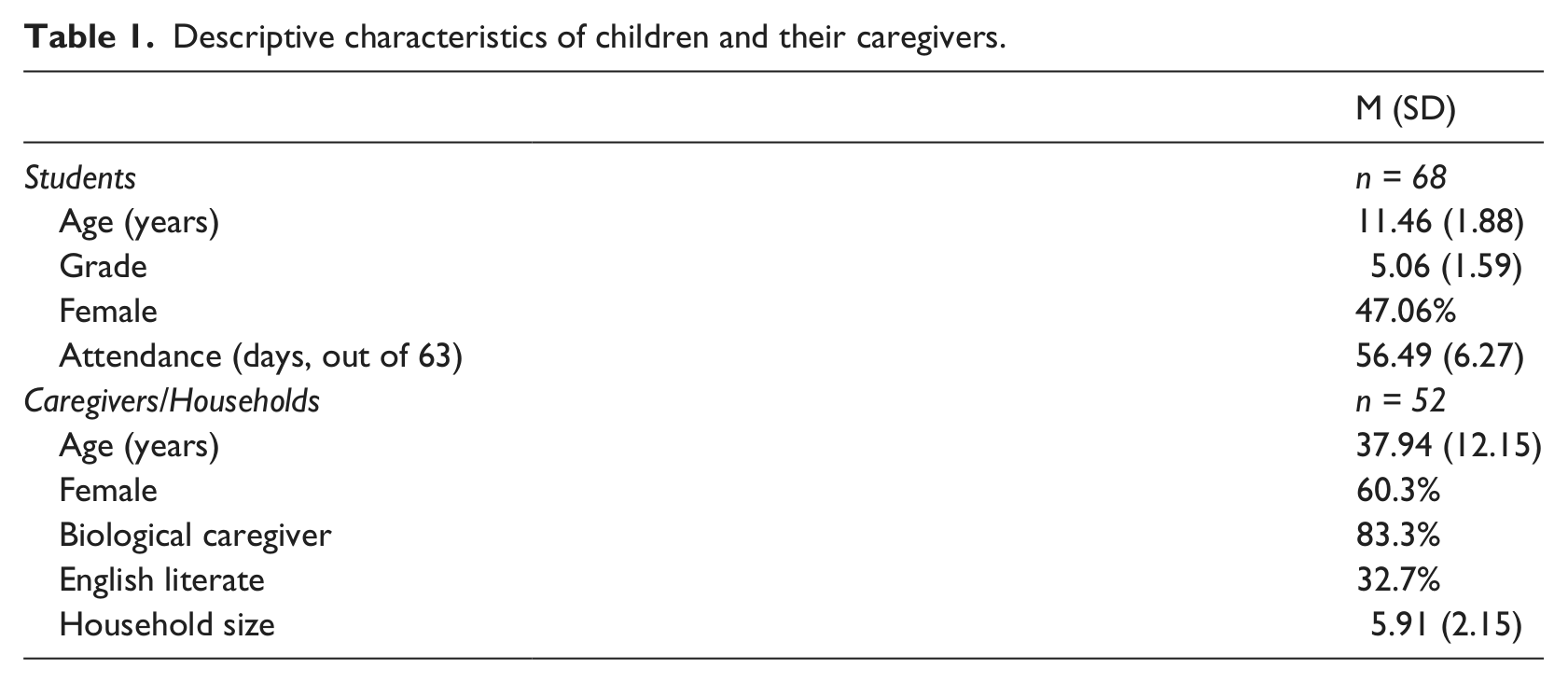
In total, 68 schoolchildren in grades 3 through 8 and their 52 caregivers participated in the study. The 68 schoolchildren represented approximately 45% of the eligible population at the school and represented 100% of schoolchildren whose caregivers had provided consent. The average age was 11.5 years (SD = 1.9), the median class was 5th grade, and 47% were female. Of the caregivers, 60.3% were female, 83% were biological parents, 9% were older siblings, and the remainder were “other relatives” (aunt, grandmother). Student and caregiver characteristics are presented in Table 1.
Descriptive characteristics of children and their caregivers.
Measures
Child-reported barriers to school attendance
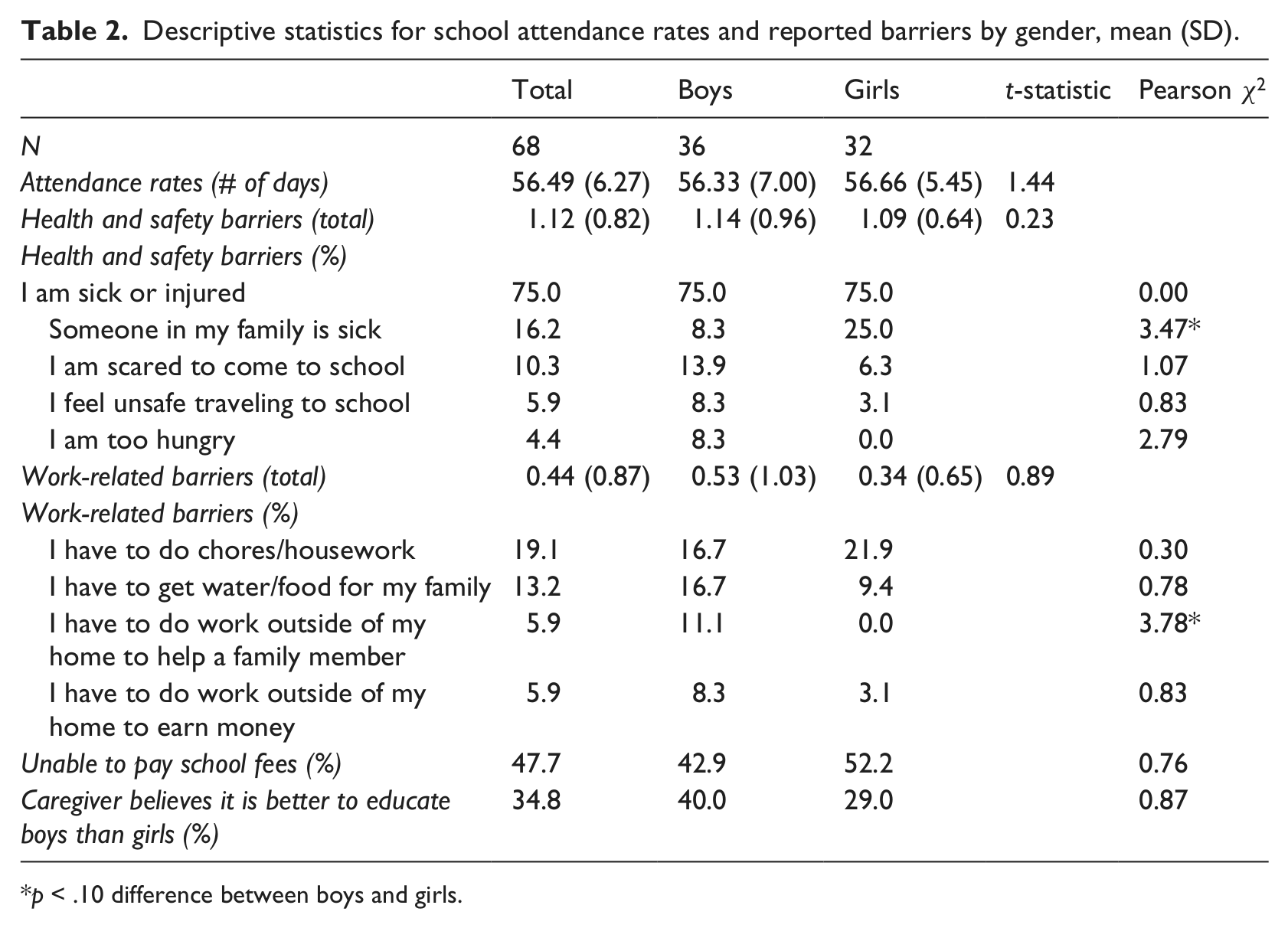
Children were prompted with nine items and asked to circle all of the answers that were true about them. The items were prompted as follows: “Sometimes students don’t come to school. What are some reasons why YOU don’t come to school? Please circle all of the answers that are true about you.” Five items consisted of health and safety barriers (e.g., “I am sick” and “I feel unsafe traveling to school”) and four items consisted of work-related barriers (e.g., “I have to do chores/housework” and “I have to do work outside of my home to help a family member”). In addition, a single item was included about missing school due to being unable to afford school fees (i.e., “I have been sacked because my parents could not afford school fees”). On average, children circled approximately 2.0 (SD = 1.8, range = 0–9) of the 10 items. Health and safety items were summed to create a cumulative index for the number of items selected (M = 1.12, SD = 0.82, range = 0–4), as were work-related items (M = 0.44, SD = 0.87, range = 0–4). Table 2 provides descriptive statistics for the full set of items for the full sample and broken down by gender.
Descriptive statistics for school attendance rates and reported barriers by gender, mean (SD).
p < .10 difference between boys and girls.
Caregiver beliefs about gender and education
As part of a larger survey about attitudes towards education, caregivers reported on their opinions about privileging education for boys with one true/false item: “It is better to educate boys than girls.” (34.8% of caregivers reported this to be true.)
School attendance rate
School record data was collected for all schoolchildren indicating the number of days the student was present in the past term out of 63 possible days (M = 56.5 days, SD = 6.3, range = 36–63 days).
Covariates
Child and caregiver covariates included student gender and age, caregiver gender, age and English proficiency, and an indicator for whether the caregiver was the biological parent of the child. Household covariates included the number of children living in the home and number of adults living in the home. These covariates were included based on previous research that indicates that certain family and caregiver characteristics affect student school attendance (Bledsoe, 1990; Isiugo-Abanihe, 1985; Lloyd and Blanc, 1996; Page, 1989). Seven cases were missing on the indicator of whether or not the caregiver was the biological parent of the child. For these cases, the mean value of this indicator was imputed. In addition, a variable that indicated missingness on this covariate was included in the model.
Results
Descriptive analyses, t-tests and Pearson χ2 tests were used to assess the rates of schoolchildren’s reported barriers for the full sample as well as mean differences by gender. We examined the relationship between experiences of health and safety barriers, work-related barriers, being unable to afford school fees, and caregiver beliefs about gender and education with school attendance using a series of Ordinary Least Squares (OLS) regression models. We then examined differences in these relationships by gender using interaction terms included in the original regression models. All regressions controlled for covariates and used Huber–White standard errors to adjust for clustering of children within families (on average, 1.09 children per caregiver, range = 1–3). First, we assessed the independent relationship between each of the four types of barriers with school attendance by running four separate regression models (Models 1a–1d). Second, we assessed the relationship of each type of barrier with attendance controlling for all other barriers by including all in one model (Model 2). Finally, we added four interaction terms of each type of barrier with gender to assess if there was a differential relationship between type of barrier and student gender in predicting school attendance. Due to the small sample size, we interpret a level of significance of p < .10 for all analyses.
Descriptive results
Children in the sample had relatively high average attendance rates, with a mean number of days attended in the term of 56.5 (out of 63 possible days; 90.0%). There were no statistically significant differences for boys versus girls in school reported attendance rates. Children reported missing school at the highest rate due to being sick or injured (75.0%). Almost one-fifth (19.1%) of children reported missing school because they had to do chores or housework. Relatively low rates were reported of missing school due to safety concerns (5.9%–10.3%) and working outside of the home (5.9%). Nearly half (47.7%) of the sample reported missing school due to their caregivers’ inability to afford school fees. Finally, over one-third of caregivers (34.8%) agreed that it was better to educate boys than girls. See Table 1 for the full set of descriptives.
Next, we examined the relationship between the type of reported barriers and gender using independent samples t-tests and Pearson χ2 tests. Although attendance rates for boys and girls were relatively similar in this sample, the reasons each group reported missing school differed. Because this study is one of the first that examines Ghanaian schoolchildren’s direct reports of why they miss school, we also report notable qualitative differences that weren’t statistically significantly different. (The lack of statistical significance is likely due to the small cell sizes in many of the chi-square difference tests.) There were no significant or practical gender differences in the amount of health and safety barriers reported (M = 1.12 for boys and 1.14 for girls, t = 0.23, p = 0.819) or the amount of work barriers reported (M = 0.44 for boys and 0.53 for girls, t = 0.89, p = 0.377). However, girls were nearly twice as likely as boys to report missing school because someone in their family is sick (16.2% compared to 8.3%, χ2 (1, 68) = 3.47, p < .10). On the other hand, boys were more likely than girls to report missing school because they had to do work outside of the home to help a family member (11.1% compared to 0.0%, χ2 (1, 68) = 3.78, p < .10). With the exception of missing school due to housework/chores, boys reported missing school due to work-related barriers at higher rates than girls, though these differences were not statistically significant. In addition, although not statistically significantly different, boys were more likely than girls to report being scared to come to school (13.9% versus 6.3%), to feel unsafe traveling to school (8.3% versus 3.1%), and to miss school due to being hungry (8.3% versus 0.0%). Additionally, although not statistically significant, girls reported missing school due to their caregiver’s inability to afford school fees at qualitatively higher rates than boys (52.2% versus 42.9%). Finally, although also not statistically significantly different, caregivers of boys were more likely to report they believe it was better to educate boys than girls (40% versus 29%).
Barriers and school attendance
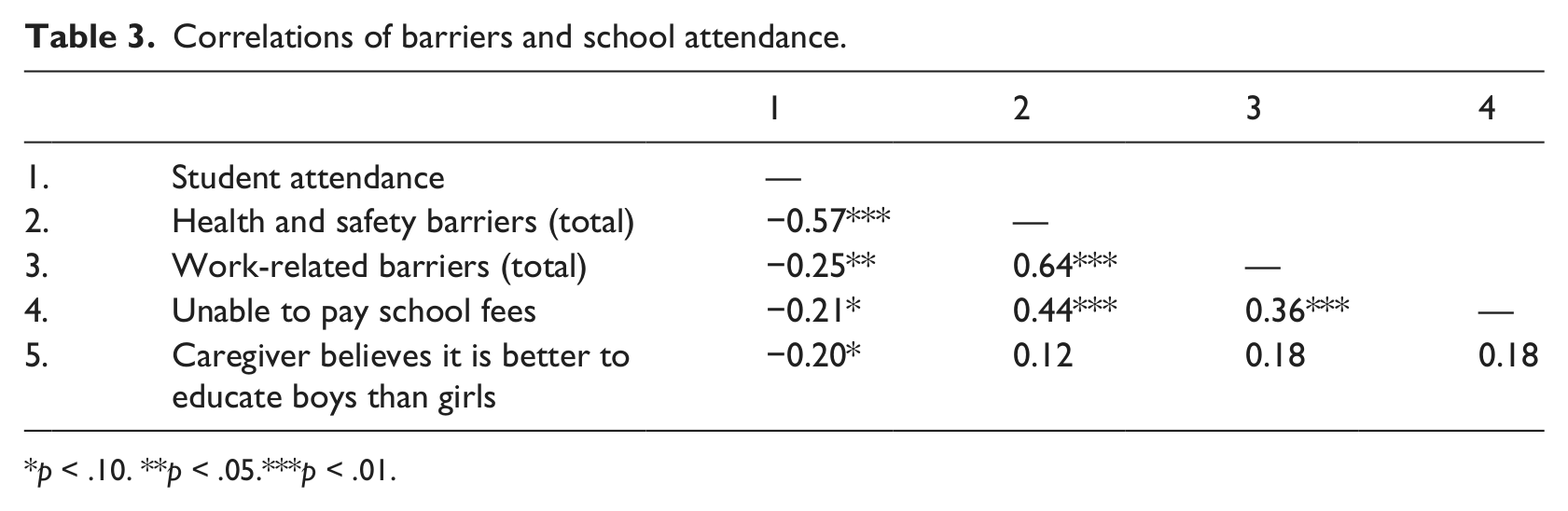
As shown in Table 3, the number of health and safety barriers reported by children was negatively correlated with attendance (r = –.57, p < .001), as was the number of work-related barriers (r = –.25, p < .05), inability to afford school fees (r = –.21, p < .10), and caregivers’ opinion that it is better to educate boys than girls (r = –.20, p < .10). Regression analysis was used to assess how the number of reported health and safety barriers, the number of work-related barriers, missing school due to the inability to pay school fees, and caregivers’ perception that it is better to educate boys than girls predicted attendance rates. The unique contribution of each of these types of barriers was examined (Models 1a–1d and Model 2), as well as their interaction with student gender (Model 3) to inhibiting attendance rates. The full set of covariates was included in each analysis.
Correlations of barriers and school attendance.
p < .10. **p < .05.***p < .01.
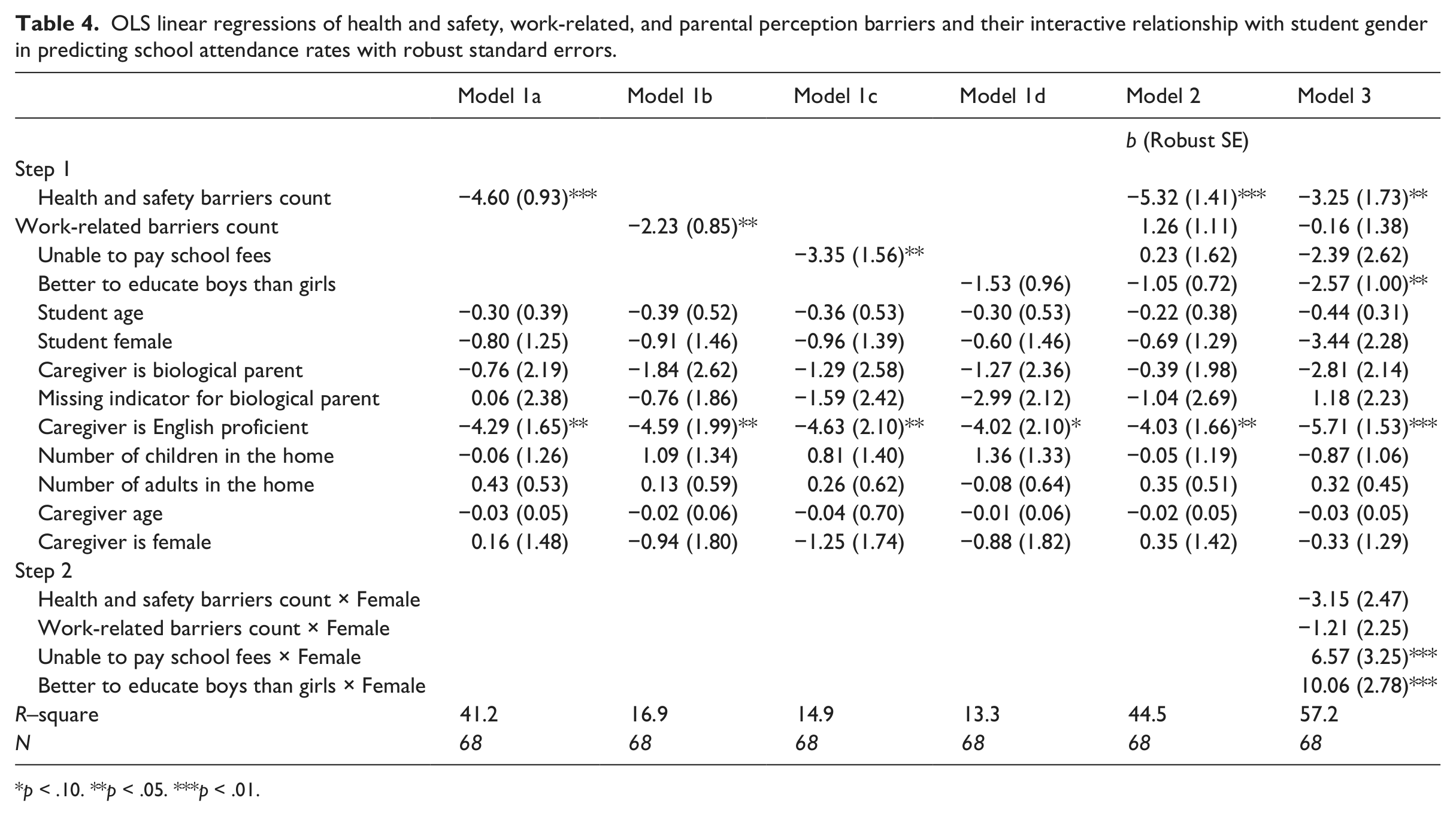
Models 1a–1d revealed that there were significant negative main effects on attendance rates when individually considering the number of health and safety barriers (b = −4.60, p < .001), the number of work-related barriers (b = −2.23, p < .05), and the inability to afford school fees (b = −3.35, p < .05; see Table 4). These results indicate that for each added health and safety barrier reported, children were absent an additional 4.6 days of school during the term; for each added work-related barrier, children were absent an additional 2.2 days of school during the term; and children who reported missing school due to an inability to afford school fees missed an average of 3.4 days more of school during the term. Caregiver beliefs about gender and education also negatively predicted children’s attendance (b = −1.53), but this coefficient was not statistically significant. When all four types of barriers were included in the model simultaneously (Model 2), the number of health and safety barriers was the only significant predictor of attendance (b = −5.32, p < .001). Notably, health and safety barriers was correlated with work-related barriers at r = .64 and with being unable to pay for school fees at r = .44, indicating that multicolinearity may suppress the relationships with attendance in this model (see Table 3 for the full set of correlations).
OLS linear regressions of health and safety, work-related, and parental perception barriers and their interactive relationship with student gender in predicting school attendance rates with robust standard errors.
p < .10. **p < .05. ***p < .01.
Finally, when considering the interactive relationship between the different types of barriers and student gender, significant interaction terms were found for missing school due to being unable to afford school fees (b = 6.54, p < .001) and for caregivers’ beliefs about gender and education (b = 10.06, p < .001). No gender-based interaction effects were found for the number of health and safety barriers or number of work-related barriers. Figure 1 depicts the interaction between missing school due to being unable to afford school fees with child gender in predicting school attendance. Girls attend school at significantly lower rates when caregivers are unable to afford school fees (simple slope: t = 2.22, p < .05), whereas boys attendance rates do not differ under the conditions of caregivers being able or unable to afford school fees (simple slope: t = −0.29, p = 0.37). Figure 2 depicts the interaction between caregiver beliefs about gender and education with child gender in predicting school attendance. When caregivers endorse the statement that it is better to educate boys than girls, girls attend school at significantly lower rates than when caregivers do not endorse this statement (simple slope: t = 3.41, p < .01). For boys this relationship is reversed: when caregivers endorse the statement that it is better to educate boys than girls, boys attend school at significantly higher rates than when caregivers do not endorse this statement (simple slope: t = −2.58, p < .05).
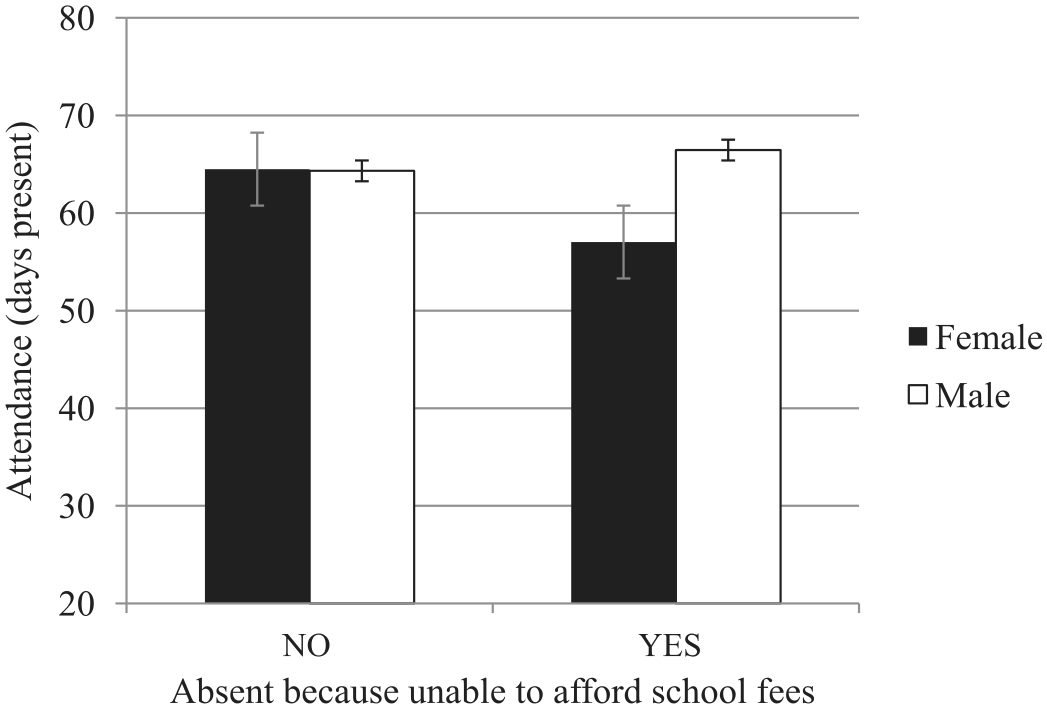
Statistical interaction between missing school due to being unable to pay school fees and student gender in predicting school attendance.
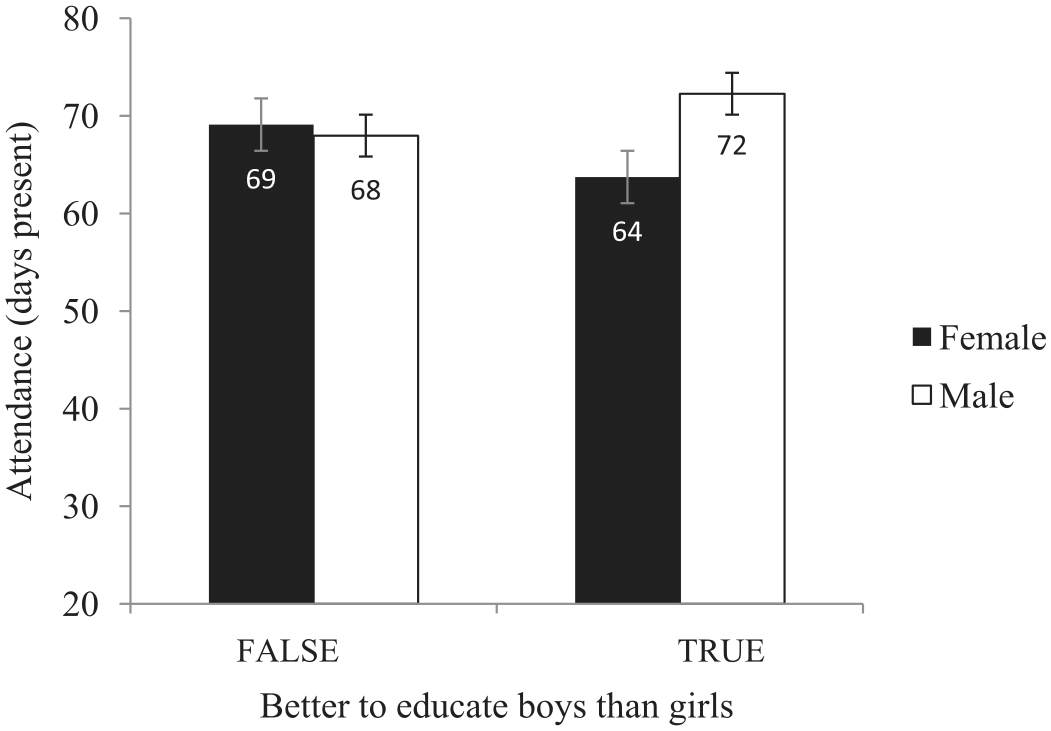
Statistical interaction between caregiver belief that it is better to educate boys than girls and student gender in predicting school attendance.
Discussion
A “rights-based approach” to education (Sen, 1999, 2004) stipulates that children have a fundamental right to receive an education and that it is governments’ moral obligation to provide one. If children are excluded from accessing education, they are prevented from developing their talents and interests to achieve their full potential. This study provides empirical evidence that schoolchildren still face obstacles that prevent them from attending school and actualizing their fundamental right to an education. This study adds the voices of a small group of Ghanaian children and families to the discussion of education for all and illuminate how wider societal beliefs disproportionately hinder girls’ access to school.
The findings suggest that many efforts to improve access to school, such as reducing school fees, have not yet eliminated barriers to attendance. To continue to increase educational access for all children, efforts must reach beyond schools. Outreach efforts must extend to communities and caregivers who still hold traditional sociocultural perceptions that prevent them from prioritizing schooling girls at the same level as boys. In addition, economic policies aimed broadly at poverty reduction may have important implications for increasing school access through reducing child labor and providing supplementary income and assistance to families. More broadly, efforts to improve educational access must not only focus on efforts to increase school enrollment, but also to promote increased school attendance for all children, especially girls. In particular, researchers and practitioners must look beyond the raw rates of school attendance (which, in this study, were found to be equal across genders) to understand the patterns of barriers that may uniquely limit access to school for boys versus girls. Targeting the specific types of barriers faced by different groups of children from different contexts may provide the most efficient way to improving overall access and parity.
This descriptive study adds to the policy discussion of improving educational access to children in developing countries in several ways. Empirically assessing the barriers children experience to attending school is crucial to improve education and ultimately children’s ability to learn in diverse settings. By surveying schoolchildren and their caregivers directly, this study provides input from important stakeholders to the analysis of school access. Such perspectives are indispensable but often unheard. We found that in addition to reporting absence due to work-related factors or because of an inability to pay school fees, children reported missing school at the highest rates as a result of personal illness. These findings suggest several potential targets for intervention, ranging from broad-scale efforts to alleviate poverty to making school attendance more affordable to improving children’s health and physical wellbeing. Finally, this is one of a very small number of studies that surveys caregivers directly about their perceptions of gender and education and that considers the consequences for children’s school attendance in sub-Saharan Africa. Future work should conceptualize and measure caregivers’ attitudes towards education in order to more fully understand the ways in which traditional sociocultural beliefs continue to interfere with children’s ability to access school. Using such information, future interventions can effectively target attitudes to increase awareness of the fundamental importance of education for all citizens, as well as the utility of educating girls.
Limitations
This study has several limitations that are important to note. First, the sample was a convenience sample of children from one peri-urban private school and the sample size was small. This limits any ability to make inferences about the broader population of Ghanaian school children, and particularly those enrolled in public government schools. For example, it is likely that relevant types of barriers vary by locale (e.g., rural versus urban, north versus south; GLSS, 2008). Second, there is likely selection bias in the sample given that the children whose caregivers consented to them being in the study (and who agreed to be in the study themselves) are likely different than caregivers who did not. Third, the data are cross-sectional, making it difficult to infer how the relationship between barriers and school attendance rates may operate over time and to consider any causal relationship between barriers and attendance. Fourth, this study does not consider any school-level factors that may inhibit school attendance. Once a child is in school, the school environment becomes an important context to consider (Duncan and Raudenbush, 1999). Many studies have identified that in sub-Saharan Africa (as well as other regions around the world) girls experience violence and discriminatory gender norms and expectations in school that keep them from attending school regularly (Chisamya et al., 2012; Iverson, 2012; UNESCO, 2011). Future research should consider how the school context plays a role in predicting children’s attendance rates and may itself serve as a barrier to school attendance. Finally, the children who face the most barriers to school attendance are likely not in school. By sampling only children who were enrolled and were present in school on the day of the survey, a very important segment of the population is missed. Future studies should collect data that is representative of the children of Ghana to consider the types of barriers children experience in various settings so that efforts can be tailored to meet the needs of children in different communities (e.g., UNESCO, 2005). In addition, future studies should develop, test, and validate a more extensive measure of caregiver perceptions of education and gender, and of other potential barriers that may be experienced differently by different children (e.g., chronically ill, physically stunted, or disabled children).
Conclusions
Although the Ghanaian government has made evident and successful efforts to increase school enrollment, progress towards increasing school attendance and retention has been less emphasized. In 2008, the primary school drop-out rate in Ghana was 28% of students, and was disproportionally higher for girls (UN, 2013). Efforts to increase enrollment need to be coupled with efforts to keep children in school. Good examples include the GSFP and the capitation grant to reduce school fees, but further efforts must be made. In addition, although there has been progress in closing the gender gap in education, girls continue to face greater barriers in accessing school than boys. Policy interventions such as conditional cash transfer programs have proven successful in encouraging caregivers to send girls to school and furthering gender equality in school enrollment and attendance rates (Fiszbein and Schady, 2009). Such broad-scale interventions that target caregivers and communities directly are a necessary step toward successfully closing the gender gap.
Footnotes
Acknowledgements
The authors would like to thank World Partners in Education for their assistance in making this research possible.
Declaration of Conflicting Interests
The author(s) declared no potential conflicts of interest with respect to the research, authorship, and/or publication of this article.
Funding
The author(s) disclosed receipt of the following financial support for the research, authorship, and/or publication of this article: This research was supported by New York University’s Dean’s Grant for Student Research and the Institute of Education Sciences, US Department of Education (grant number R305B080019), to New York University.