



Abstract
This paper outlines a praxiological perspective on classroom practice with the subject matter music, in order to understand two music lessons that were recorded on video, one in Sweden and one in Germany. It introduces a procedure and its methodological implications, in order to reconstruct and compare the characteristics of and the cultural differences between the lessons. The focus of this research was on the teaching structures used along with non-verbal and verbal teacher and pupil actions and interactions. As a first step, the cases were reconstructed by combining thick description, the documentary method and videography analysis. After identifying both cases as a certain type of a music educational practice (making music in the classroom), the teaching structures were compared as a second step. The process was guided by contrasting different practices and forms of interaction, and examining certain aims and functions of the lessons. Both these interests served as a basis for a comparative discussion. The results of the study (1) are derived from the compressed teaching structures in both the cases based on the thick descriptions, and through the comparison (2) of a hypothesis relating to a pattern of teaching ‘musics’, which involves (3) a hypothesis of the aim and function of these lessons. The study concludes with considerations relating to the re-interpretation of the results in the context of specific pedagogical cultural traditions.
Keywords
Introduction
The author’s experience of participating in a music education programme whilst studying in Malmö, Sweden, for a year formed the starting point and motivation for this study. While getting to know fellow students and teachers and becoming familiar with classroom practice, the author gradually gained the impression that music pedagogical issues, the way of talking about them and music pedagogical practice itself, were somehow different to his previous experiences. This led the author to question what these cultural differences entailed.
This study examined two music lessons in order to observe cultural differences in action. The assumption that they are based on implicit and explicit knowledge within observable practices opens up the possibility of understanding the ‘other’ culture. It was decided to focus on the practices used in two music lessons in order to discern differences in educational and musical cultures that are embodied in certain formal and informal situations. 1 This study focused on the following research question: What is the teaching structure of the lessons? 2 Even if the focus is on what the teacher is doing, it is necessary to reflect on the non-verbal and verbal actions of the teacher and the pupils, which co-construct the meaning of the teaching within this the subject matter itself. If certain actions (in this case in the teaching) appear repetitive over time, they can be described and compressed into structures (Reckwitz, 2002: 255).
Hence, two music lessons, recorded on video from different angles were selected for this study. The first lesson from Germany (Hamburg) was taken from Wallbaum (2010a). The second lesson from Sweden was produced by a German and Swedish research team in 2012 3 following the setting of the lesson from Germany. In addition to the audio-visual material, the setting also includes pupil and teacher interviews; this characterizes the study as an intercultural and international one.
The field of research may be defined as ‘inter-cultural’ in two ways, which creates a number of challenges. Firstly, the relationship between the experiences of the researcher and the specific research object is intercultural. An explicit theoretical perspective on the research object and an appropriate research procedure must therefore control the process of understanding each case. The reconstruction of each case includes the comparison of the research objects in order to offer the opportunity for more in-depth understanding, which is a systematic means of examining areas of which the researcher lacked knowledge. Secondly, the units of comparison, namely two music lessons on video, where making music is the central activity, may be described as pieces of different cultures, which makes it necessary to choose a suitable ‘tertium comparationis’; this leads to the results of the study. Finally, a contextualization of the results opens up possibilities for further research.
A theoretical perspective on a music lesson
Culture as practice
With reference to Max Weber, Geertz (1973: 5) stated that, ‘man is an animal suspended in webs of significance he himself has spun, I take culture to be those webs, and the analysis to be therefore not an experimental science in search of law but an interpretative one in search of meaning’. The understanding of these webs is not similar to reading a text. Rather, an understanding is possible by examining cultural meanings in use. This is reflected in the expression used by Hörning and Reuter (2004) – ‘Doing culture’ – which leads to practice theory (Schatzki et al., 2001) and the praxiological perspective on culture described by Reckwitz (2002) (culture as practice). Social practices are the core of this perspective. By reflecting and reconceptualizing the fields of body, mind, ‘things’, knowledge, discourse/language, structure/process and the agent/individual, Reckwitz (2002) describes the main characteristics of a practice theory:
‘First of all, it is necessary to distinguish between ‘practice’ and ‘practices’ (in German there is the useful difference between Praxis and Praktiken). “Practice” (Praxis) in the singular represents merely an emphatic term to describe the whole of human action (in contrast to “theory” and mere thinking). “Practices” in the sense of the theory of social practices, however, is something else. A “practice” (Praktik) is a routinized type of behaviour which consists of several elements, interconnected to one other: forms of bodily activities, forms of mental activities, “things” and their use, a background knowledge in the form of understanding, know-how, states of emotion and motivational knowledge’ (Reckwitz, 2002: 249).
Because social practices include bodily and mental activities, ‘the agents are body/minds who “carry” and “carry out” social practices’ (Reckwitz, 2002: 256); the carrying out does not necessarily mean the reproduction of the social practice; it can also be performed or embodied subversively. 4 The appearance of different forms of visible and invisible activities and their inherent patterns of knowing how to perform and understand certain social practices differ, for example in terms of time, locations and institutions. This embodied knowledge is mainly implicit, tacit knowledge, which leads to an implicit, informal logic of practices (Reckwitz, 2003: 291–293). Furthermore, while embodying social practices of distinct origins, different cultural elements are combined whilst using and carrying them out, and hybrid forms appear (Reckwitz, 2005). This study focuses on the implicit logic of teaching music. It is a result of routinized social practices of the agents in a classroom, which were first described and compressed to structures based on thick descriptions (Geertz, 1973), and then compared with each other in order to explore cultural differences. The intercultural and international context of the study reflects the need to be aware of hybrid forms of educational and musical practices.
Classroom practice
The teacher and pupils as the agents of practice in a classroom constitute classroom practice and co-construct an educational culture. The school as an institution and a national education system frame this practice. Within an international comparative study, this raises the issue of similarities and differences between classroom practices in different countries. Givvin et al. (2005: 311) describe ‘the physical environment, the social dynamics of classrooms, and the content to be learned’ as cross-cultural and cross-national elements that shape the practices of the agents in classrooms. LeTendre et al. (2001: 5) even highlight the forces of a ‘global cultural environment’ and of ‘institutional isomorphism’.
A range of practices used by a teacher in a classroom constitute institutionalized practices, which are determined by, for example, rules and laws set by the national educational system that determine the social functions of a school and its organization: the curriculum determines what contents should be taught and learned, and sometimes even specifies the manner in which this should be done. Furthermore, the task of assessing the pupils is (in most subjects) evident. These aspects define a frame for action in a lesson. Other aspects of teaching include the contents and structure of teacher education, along with embodied pedagogical values and beliefs in how to teach a ‘good’ lesson. Hopmann and Riquarts (1995) outline cultures of teaching, which are characterized by different practices concerning the instruction, the planning and execution of a lesson. 5 These aspects (and much more) together constitute teaching and differ from culture to culture (a culture could, for example, coincide with a nation, with local traditions or the tradition of a whole region).
Pupils are grouped together in a class according to their age. They are supposed to attend lessons, learn what they are taught and be shown what to do. The relationship between the teacher and pupils appears to be asymmetrical (Luhmann in Lenzen, 2002: 108). The role of a teacher is empowered and made up of different non-verbal and verbal acts that ‘allow’ him or her to judge the pupils and make decisions. From a pupil’s point of view, the teacher decides how their time during the lesson is spent, which is based upon the teacher’s belief in what is ‘good’ for the pupils during the lesson. Furthermore, the teacher assesses the pupils’ actions, often decides the content of the lessons, and plans and executes the lessons. As a reaction, certain teaching practices may lead to specific learning cultures or pupil cultures. 6
Classroom practice with the subject matter music
When classroom practice concerns a certain subject matter, in this case music, an explicit concept is needed. 7 The music educational concept of ‘ästhetische Praxis’ (aesthetic practice) described by Rolle (1999) and Wallbaum (2000), offers the language and vocabulary to describe phenomena, practices and forms of interaction of music and in the teaching of music from a praxiological point of view.
Music is a phenomenon that appears in fulfilled musical aesthetic practice. 8 Referring to the aesthetic theory of the German philosopher Martin Seel, Rolle (1999) and Wallbaum (2000) define what is aesthetic in musical aesthetic practices. A distinction is made between a sensory-contemplative, comprehending-imaginative and an atmospheric-corresponsive mode of aesthetic perception. Furthermore, aesthetic arguments and aesthetic judgements about the perceived object are forms of aesthetic practice (Rolle, 2010). 9 A successful aesthetic argument can therefore be an indication of fulfilled aesthetic perceptions. However, the non-existence of this social phenomenon does not mean that music did not appear. These assumptions shift the question from what is music to when music happens. In searching for a universal aspect of music, Wallbaum (2000) concludes that nothing universal can be said about what is musical in aesthetic practice except that acoustical events or sounds are often the relevant meaningful objects in aesthetic practice (Wallbaum, 2000: 248). The processes of perception, different means of production, and the reception of sounds are carried out using certain routinized social practices as musical culture techniques (Wallbaum, 2010b). In the context of these reflections, it is necessary to refrain from using the word music, as it leads to an understanding of music as a thing or object. The terms ‘musics’, musical cultures or musical practices have been suggested as suitable for describing complexes of certain musical culture techniques. 10 Green (2002) describes the typical learning practices of popular musicians, as an example for a particular musical practice.
If this perspective on music constitutes the premise for the planning and the execution of a lesson, teaching musics means offering pupils situations that enable them to gain experience of different musical aesthetic practices. The implementation of the above argument within the subject matter music leads to the formation of a model or a didactic concept for arranging the interaction, and for making decisions in the classroom. This goal leads to the production of an aesthetic object, for example the composition of a song that pupils can experience within the process of composing and which preserves the aesthetic experiences within the product (Wallbaum, 2000).
In the context of these reflections, a next step is to ask for different types of music educational practices in the classroom. When focusing on the actions of the pupils relating to sounds, if the whole class is producing sounds, this can be seen as a particular type; with that in mind, Wallbaum (2012) reconceptualizes the German music educational term ‘Klassenmusizieren’. He proposes three different aims and functions of making musics in the classroom: (1) building up musical faculties; (2) offering situations of musical practice for aesthetic experiences; or (3) illustrating technical musical terms, facts and contexts. These can be presented explicitly or implicitly by the execution of the lesson and logic of the practice.
A procedure to understand classroom practice on video
A combination of methods to reconstruct music lessons
Firstly, in order to reconstruct both music lessons on video, different methods were combined in order to describe and portray the ‘social discourse’ using thick descriptions (Geertz, 1973: 19). This leads to an ethnographic attitude and a specific research strategy. It requires awareness of an individual’s own implicit cultural specific knowledge of understanding something as ‘something’, of perceiving a phenomenon and using a certain word or expression to describe it. When reflecting on this, an ethnographer should try to empathize with the field mostly through participative observation in order to understand the social practices from an emic point of view (Breidenstein et al., 2013; Tobin, 1999). A similar attitude to the field of research – when the researcher attempts to distance himself/herself from the analysis of video-data – offers a more detailed perspective due to the ability to slow down and repeat sequences of interaction. This guarantees the ability to comprehend and criticize the interpretation of the researcher’s cultural-bounded point of view, as each researcher can refer his or her description to pictures and sequences of the video. On a macro level, the simultaneity of interactions and practices and the positions of the agents in the room become observable, and it becomes possible to examine the implicit logic within the practice. The use of video thus offers a number of advantages as a research instrument to explore educational and musical cultural differences within music lessons. At the same time, however, it reduces the complexity of reality on an audio-visual document, partially portrays the interactions and situations, and produces a certain perspective on the interaction through the way of recording (Reh, 2012).
The lesson from Germany (Hamburg) and the lesson from Sweden were recorded from five video angles. The aim of the research was to capture as much as was technically possible of the whole interaction. The cameras were therefore placed on tripods at fixed positions in the classrooms and adjacent rooms, which were also in use. During the lesson, the recording team stayed behind the camera or left the room. 11 The audio-visual material and the subtitles follow the setting of Wallbaum (2010a), which the lesson recorded in Sweden also refers to, and include interviews with the teacher before and after the lesson as well as interviews with the pupils after the lesson. 12 This additional information was necessary to understand the lessons, and enabled the researcher to assume a closer perspective to the agents. The thick descriptions alongside those of the classroom practices include a summary of the lesson planning based on the interviews.
The theoretical perspective on a music lesson shows the need to understand culture as practice, rather than as a text, which leads to a shift from the question of what is reality to the question of how reality is constructed and produced. The use of video in particular reflects the treatment of pictures ’as self-contained, autonomous domains’ (Bohnsack, 2008: 2). Here, implicit and embodied knowledge can be seen in action. A major advantage of the use of videos as audio-visual material within the field of music education is that they show practices in relation to sounds, musical cultural techniques, and specific forms of how (possibly fulfilled) perceptions proceed and are supported by bodily actions, for example through certain mimics and gestures, postures and attitudes 13 . In order to reconstruct the videos, the documentary method of Bohnsack (2011) differentiates between communicative-general knowledge and conjunctive knowledge, which is more culture-specific. This is reflected by two steps in the procedure.
On the first level (the formulated description-level), the challenge is to put the audio-visual material into words, which means translating meaningful body-movements as forms of actions and interactions into the medium of language. 14 This responds to the question of what happens (Bohnsack, 2011). In addition to a description of the non-verbal actions, verbal acts were also given. This step is interpretative in two ways. On the one hand, the detection of meaning is interpretative and, on the other hand, putting something into words is a constructive process. Actions and interactions should not be attributed to the intentions, purposes and motives of the agents. The attempt to translate non-verbal musical cultural techniques into words often appears impossible. Although different and meaningful practices can be perceived and identified, there is almost no vocabulary to describe visible practices in relation to sounds. The vocabulary used does not often describe them from a cross-musical-cultural point of view. Another question is the reach of the concept of communicative-general knowledge in the context of an international study. Whilst the German language has a word to describe the mere meaning of teaching (‘lehren’) and another to describe learning (‘lernen’), the Swedish word ‘laere’ includes both meanings and describes more lively interaction. The concept seems to be almost untranslatable (Hopmann and Riquarts: 1995: 11).
The description of the lesson was reformulated on the second level of description (the reflective description-level), which was based on the explicit theoretical background. Here, the question arises of how structures and their meaning for the agents involved were produced. In the reformulation, intentions and motives were added to the practices and interactions of the agents. Through this procedure, the formulated description-level validates the reflective description-level, as the question of how the reality on video is reconstructed by the researcher becomes comprehensible and criticizable (Bohnsack, 2011). Furthermore, the second description-level reflects two videography methods described by Dinkelaker and Herrle (2009). The specific form of classroom practice led Dinkelaker and Herrle to attribute certain characterizations to a description of a classroom practice, and to highlight implicit categories for it on video. The segment-analysis asks for distinctive phases and a structure of the lesson, whilst the configuration-analysis asks for the positions of the interaction of the agents in the classroom. This also included an analysis of the ‘things’ in the room before the beginning of the lesson based on video-stills, which points to tacit practices. The segments on the macro-level of the lessons were extracted by the different non-verbal or verbal forms of interaction between the teacher and the students, often underlined by a characteristic constellation of the positions in the classroom. Furthermore, parts of the interviews and descriptions of the worksheets used were added. This offered the chance to achieve an in-depth understanding and thick description by connecting the differently generated data, and by carving out relationships and structures of the practices.
Comparison of the music lessons
After combining an ethnographic attitude with the documentary method as a controlled and systematic way ‘to make the strange familiar’ (Tobin, 1999: 124) as a second step, the thick descriptions of both music lessons were compared with each other, in order to show the characteristics of each case and to reflect the researcher’s cultural viewpoint. This raised the question of what makes the cases comparable and what would be a suitable tertium comparationis. A similar horizon for comparison involves the institutional context of the lessons, and used the same procedure to produce the material and had the same focus on the main activity of the lessons.
In both countries, it is necessary to study for several years to become a music teacher. Regarding classroom practice, curricula prescribe the topics and activities that must be learned. Additionally, the music lessons were recorded in compulsory schools with pupils of similar ages. 15 Furthermore, because the categories of comparison needed to be appropriate to the characteristics of the objects, they were chosen in order to reflect the type of music lesson, which constituted the main activity of the pupils. 16 After compressing the practices and identifying segments within the lessons, this therefore also opened up the possibility to obtain a more general structure. Certain phases of the lessons describe a similar pattern of actions in both cases.
In order to refrain from measuring unalterable categories of comparison, and in order to not examine them in an isolated way that would neglect the web of meanings of the practices, a tertium comparationis was defined as room for discussion (a ‘Denkraum’) to model the comparison (Matthes, 1992). On the one hand, the different forms of practices, both within the more general structure and compressed phases (consisting of one or more segments) of the teaching, were the subject of discussion. On the other hand, comparative discussion of the different forms of practices and interactions was guided by the three different aims and functions, and the implicit logic of teaching music-making in the classroom: do and if so, how do the phases possibly: (1) build up musical faculties; (2) offer situations of musical practice for aesthetic experiences; or/and (3) illustrate technical musical terms, facts and contexts? Looking through the model for the comparative discussion, similarities within the phases of both cases generated suitable categories of comparison (for example the role of the teacher, the musical material and the ensemble playing). At the same time, the empirical reach and the way in which these categories are produced within each case is discussed in the context of the different aims and functions. This also leads to a discussion of the differences and specific characteristics of each case, and allows a hypothesis of an implicit logic of the lessons. Additionally, this lets ‘the practice speak’, and makes it possible to reflect and discuss the similarities and differences between the lead categories in the context of and linked to both cases.
At the same time, the comparison was a systematic way to shed light on previous blind spots within the thick descriptions made by the researcher (Bohnsack, 2011: 21; Fritzsche, 2012). When comparing the descriptions of the Figures from different cultures and examining the practices and forms of interaction from the perspective of each case, the implicit patterns of understanding, which may identify certain practices within the lessons as something usual and ordinary, as scenes from daily life, may need to be reformulated. Previous familiarity may therefore become strange (Tobin, 1999). This opens up the necessary space in which to explore cultural differences; 17 in the context of these reflections, the comparison has an idiographic function and pursues the objective of showing the characteristics of a certain type of teaching musics on video. 18
Results of the study
The teaching structure of the music lessons
The first results from the study were thick descriptions based on a praxiological perspective on music lessons. On the one hand, this demonstrated the reach of the selected theoretical concepts and perspective, whilst on the other it offered the opportunity to differentiate the terms on the basis of the non-verbal and verbal actions and interactions. A very short version is presented here to describe the teaching structures used.
The lesson from Sweden
First phase – interim between pause and the beginning of musical actions
The teacher meets the pupils at the door. They follow him into the room, take off their shoes and sit down in a prepared half-circle of chairs (see Figure 1). The teacher then checks attendance (see Figure 2).
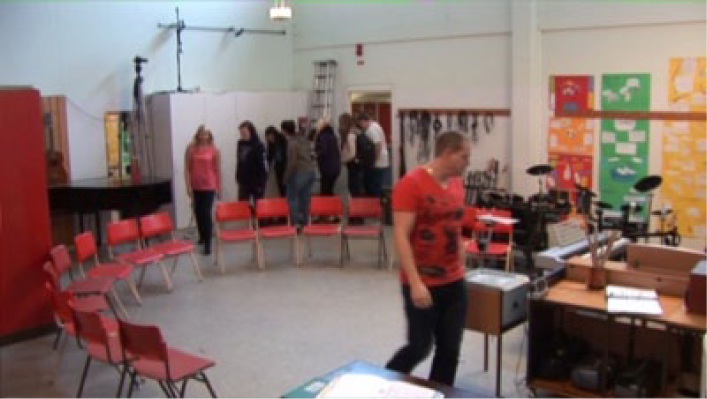
Entering the music room.
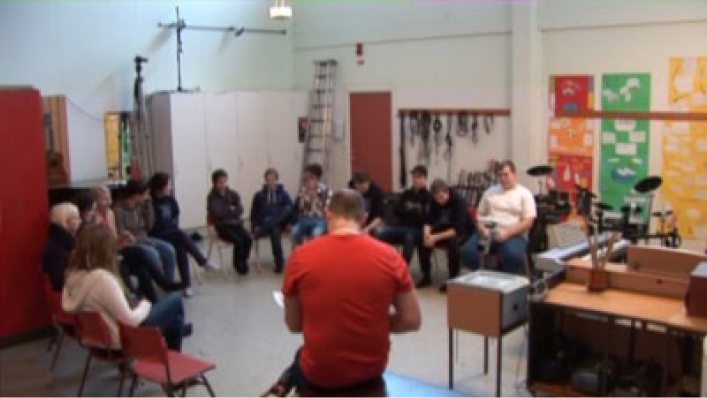
Attendance check.
Second phase – embodying musical cultural techniques
After reminding pupils of the task (see Figure 3), they start to practise the instruments (see Figures 4a-4d). The musical material (rock/pop songs) used in the lesson had been chosen by the teacher and thoroughly prepared. Each pupil is supposed to develop instrumental skills on four instruments for four songs, which differ in the level of difficulty. The pupils are therefore acculturated in rock/pop music; during the lesson the pupils mostly organize their learning in groups or work on their own in the main room (see Figures 4b and 4c) and two adjacent rooms (see Figures 4a and 4d). This individual learning is supported through four differently coloured worksheets (see Figures 4b-4d) that show how to use typical band instruments and how to authentically reproduce the patterns and voices. The teacher walks through the classroom assisting all pupils both non-verbally and verbally. He shows pupils how to play the instrument properly, and from the pupils’ point of view, he is mostly present in the background. He appears to be an advanced band musician able to play all instruments, and with a particular idea of the qualities of band-practice (see Figure 4d).
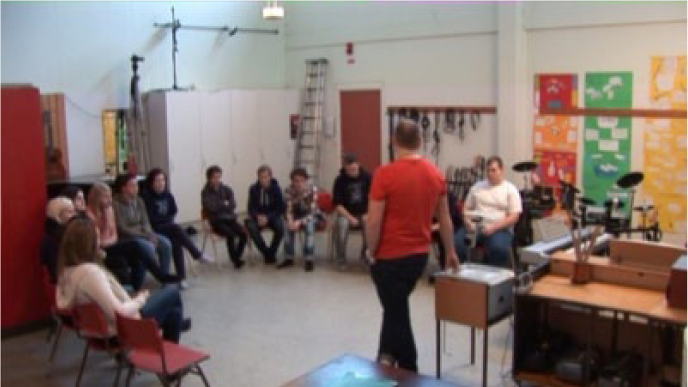
Announcement of the task.
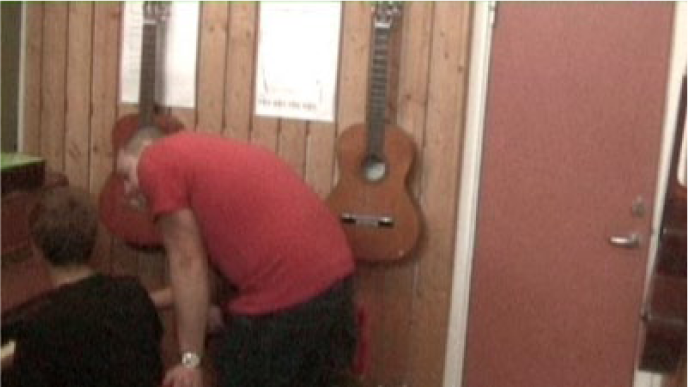
Practising alone or in groups.
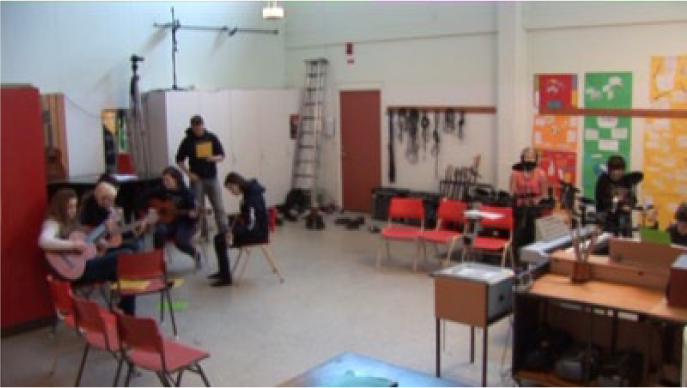
Practising alone or in groups.
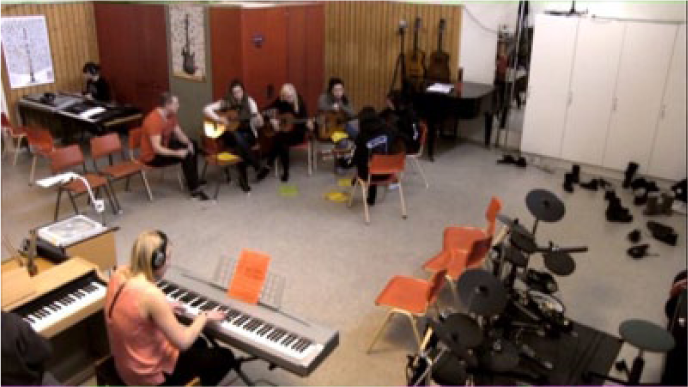
Practising alone or in groups.
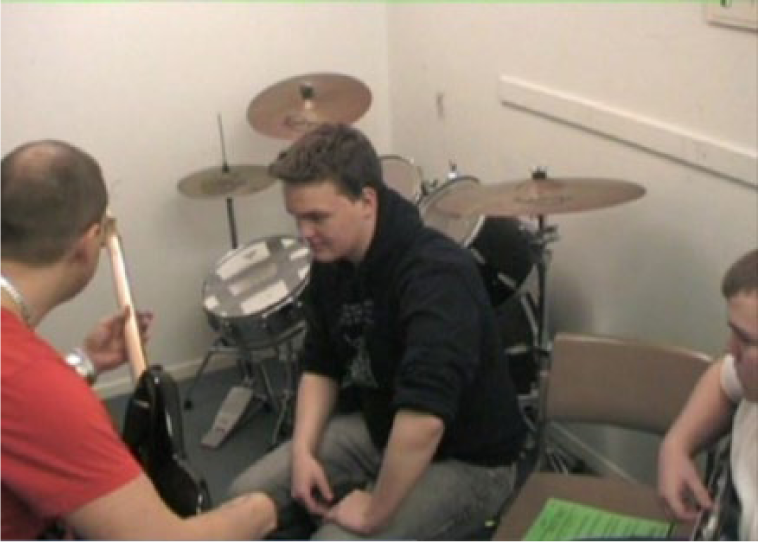
Practising alone or in groups.
Third phase – band performance
The reproduction of instrumental skills, namely a performance by a band of pupils (described by the teacher as a ‘concert’) was the focus of the last part of the lesson. During this part of the lesson, pupils were able to decide when to perform (see Figure 5) and, after having performed, which pattern they would learn next. Two songs were performed with different ensembles of players, while the other students sat in a circle and were supposed to sing the lyrics (see Figure 6). The teacher stands in front of the band, sings the lyrics, taps a beat on the body and stamps with the feet to show the rhythm and the drum part, in order to guide the pupils through the song (see Figure 6). While the majority of the pupils left the room, the teacher told some of the band players how they would be assessed and described the reasons for this (see Figure 7).
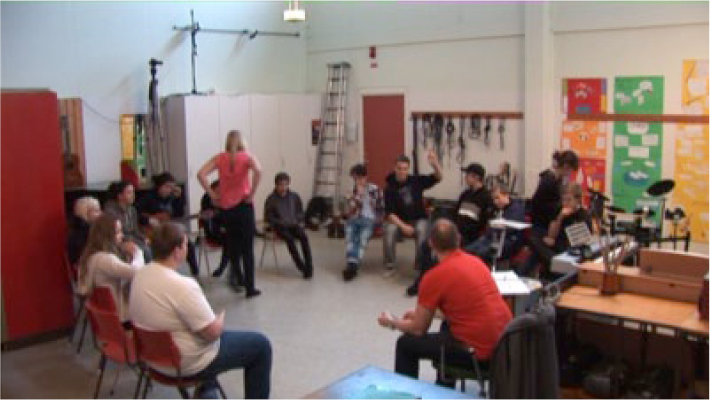
Looking for willing band members.
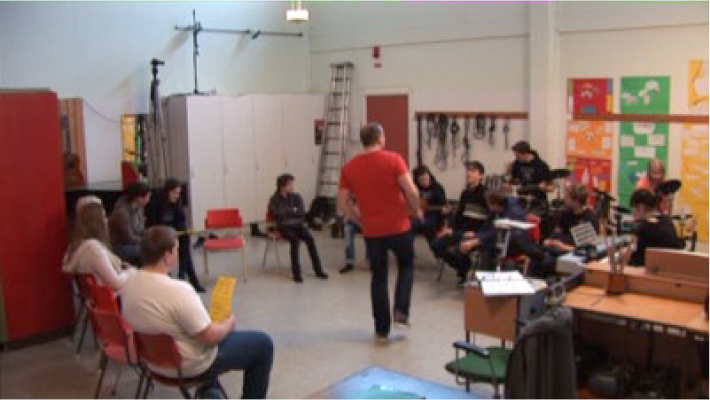
Performance.
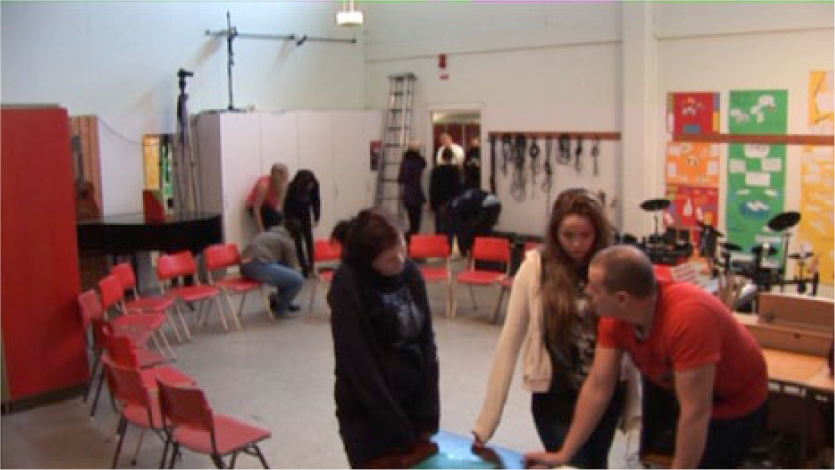
Assessment.
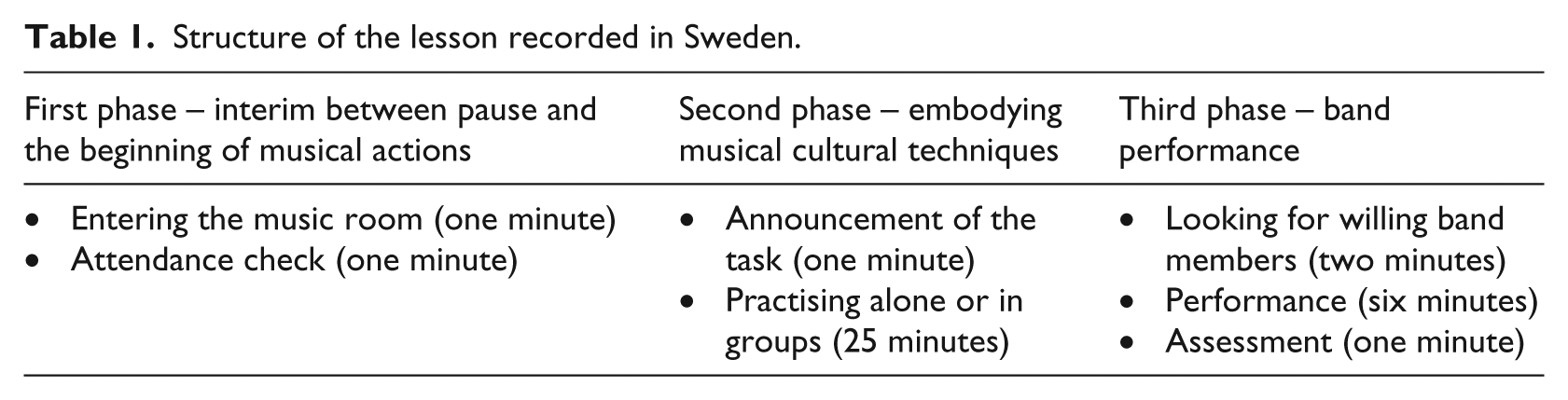
Examination of the macro-level of the lesson shows that the different segments (with an approximate length) can be summarized into three phases (see Table 1). The first phase includes the interim between the pause and actual beginning of musical actions in the lesson. The second phase focuses on learning the instrumental skills and the topic of the lesson. The band performance occurred in the middle of the third phase, which was connected to the other segments and forms of interaction.
Structure of the lesson recorded in Sweden.
The lesson from Germany (Hamburg)
First phase – link to the past and forthcoming musical actions
After giving some organizational information, the teacher reminds the pupils of the agreement (the chosen song) of the last lesson and introduces the task for this lesson (see Figure 8). The lesson begins with a warm-up using voices and musical excerpts from the song to work on (see Figure 9) and listening to this song itself (from the musical The Lion King) (see Figures 10a and 10b).
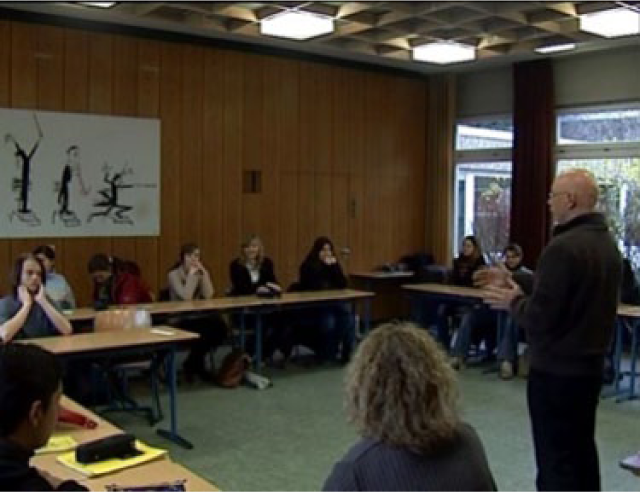
Remembering the task.
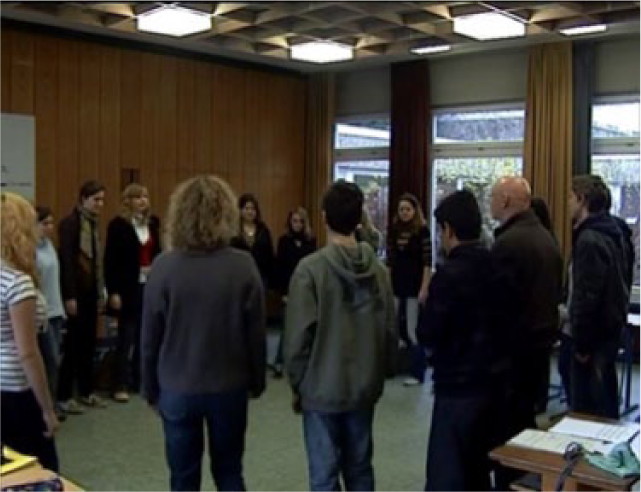
Warm-up.
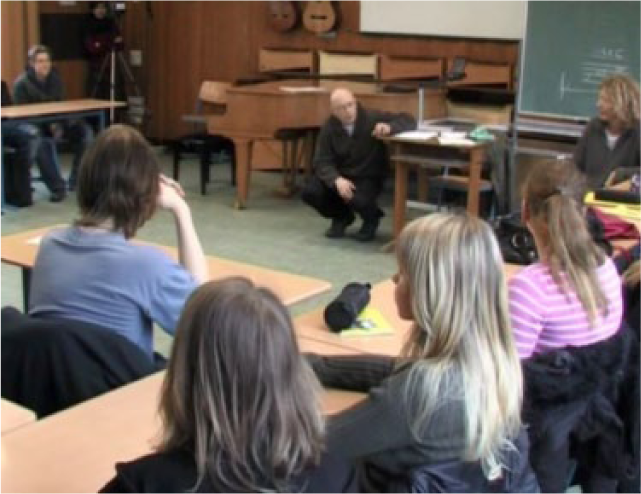
Listening to the song to work on.
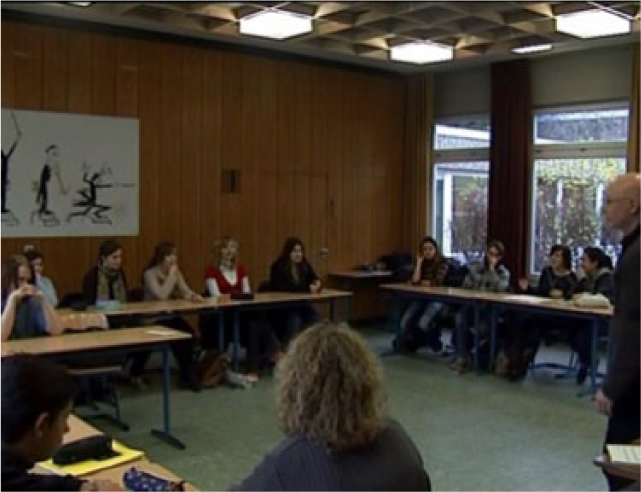
Listening to the song to work on.
Second phase – embodying musical cultural techniques
This segued into a period of self-organized learning and rehearsing the musical material in one singing group (in the main room) (see Figures 12b-12d) and two instrumental groups (in an adjacent room) (see Figures 12e and 12f). A social education worker practised with the two pupils in need of special help and with another voluntary pupil of the class in another room (see Figure 12a). Pupils were free to choose the activity when assembling the groups (see Figure 11). Here, the singing group imitated an audio-example, and all groups played and sang from prepared scores. The task was not to reproduce the musical material, but rather to let the musical practice and the way to rehearse be led by pupils’ own ideas. This context is necessary in order to understand the meaning of the way of teaching. The teacher appears as somebody who watches (see Figure 12c), helps and moderates (see Figure 12f) and takes over the process (see Figure 12d) to show pupils how to rehearse and how to produce the requested sounds. If such teaching is successful, the result is a process-product-orientated lesson.
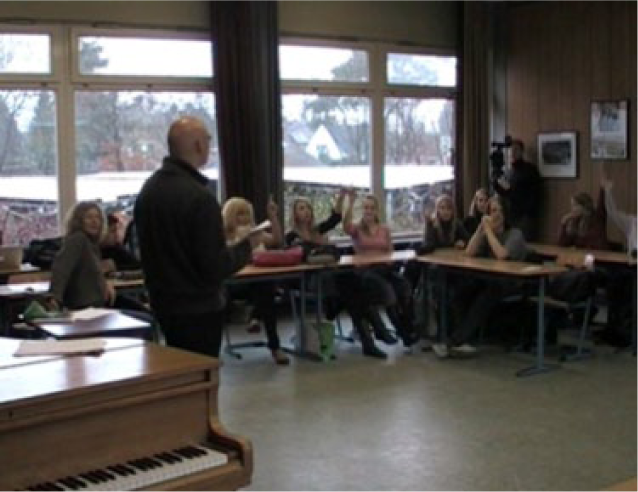
Finding groups.
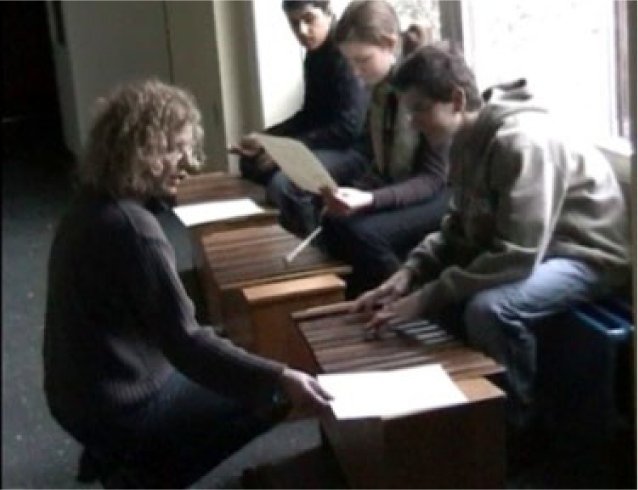
Working on and rehearsing the song in groups.
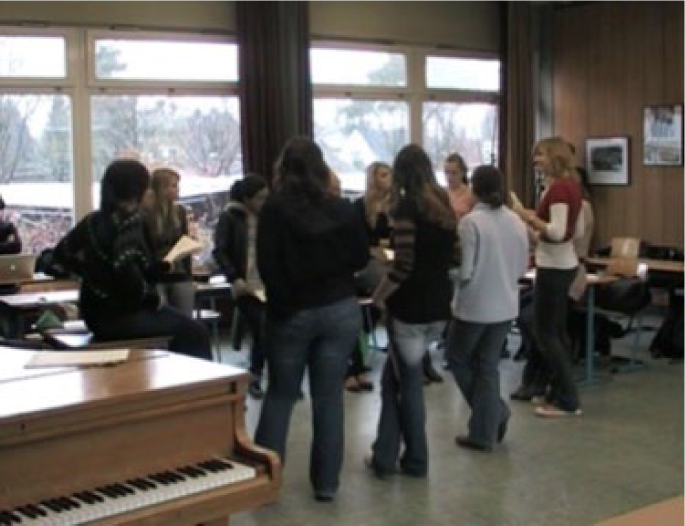
Working on and rehearsing the song in groups.
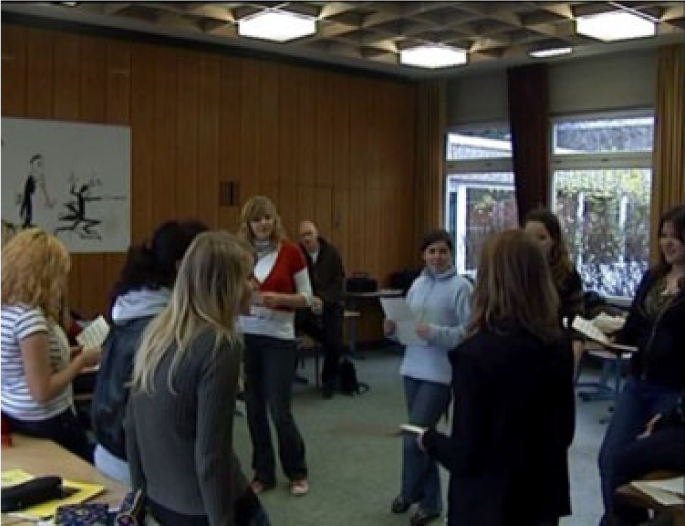
Working on and rehearsing the song in groups.
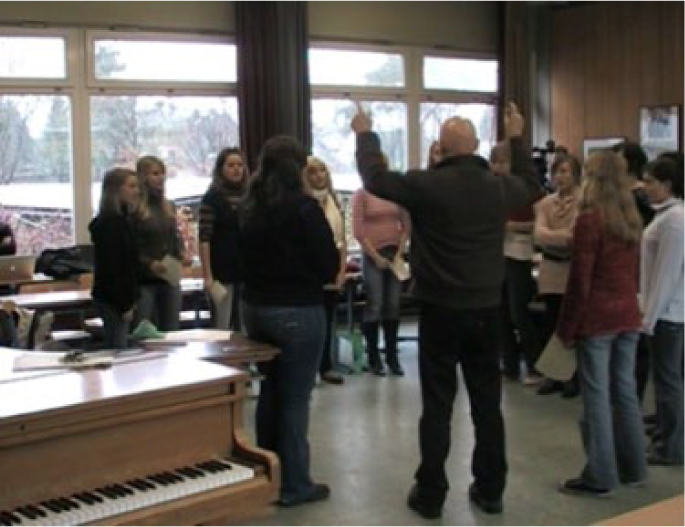
Working on and rehearsing the song in groups.
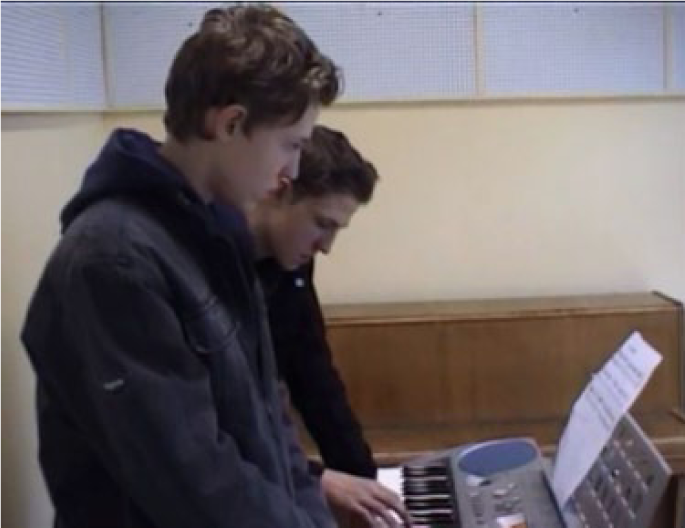
Working on and rehearsing the song in groups.
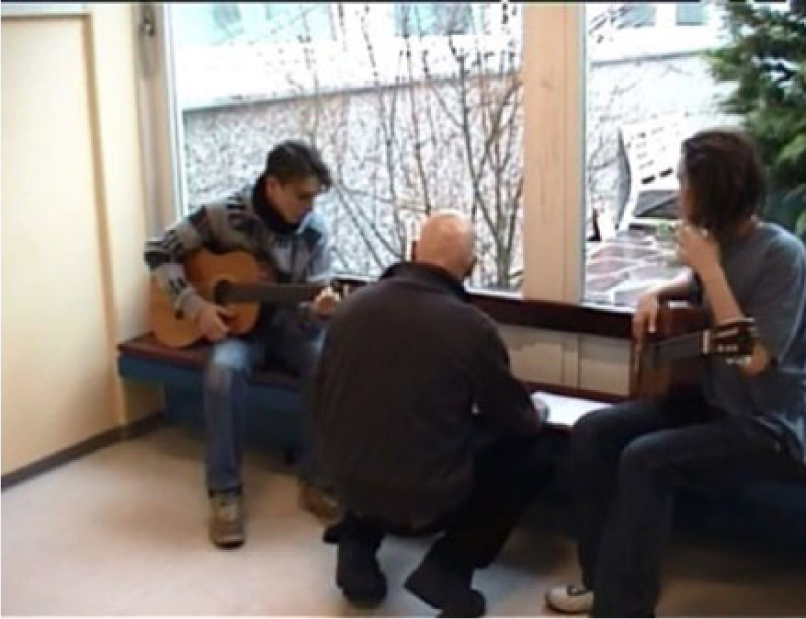
Working on and rehearsing the song in groups.
Third phase – rehearsal
Afterwards, a conducted rehearsal brings all voices together and tries to organize the musical practice of the chosen song (see Figures 13a and 13b).
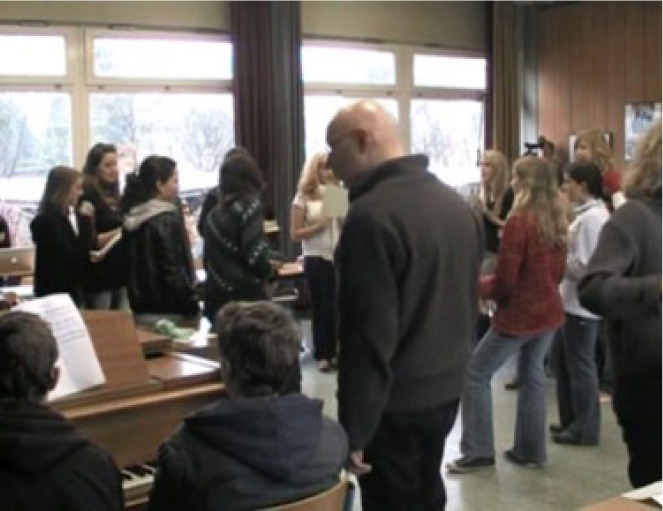
Rehearsing the song with all pupils.
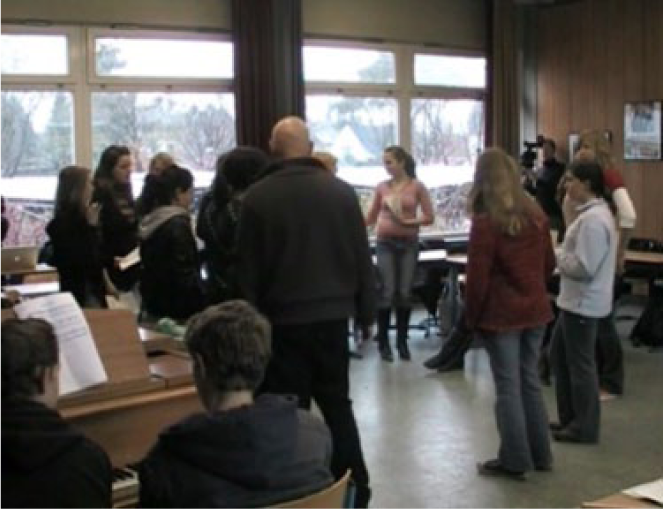
Rehearsing the song with all pupils.
Fourth phase – reflection
At the end of the lesson, the teacher again assumes the role of a moderator or someone offering reflection, which gives the opportunity to discuss together on the reached quality, and on how to continue the next lesson (see Figures 14a and 14b). To summarize, the pupils get the chance to develop aesthetic judgements and arguments.
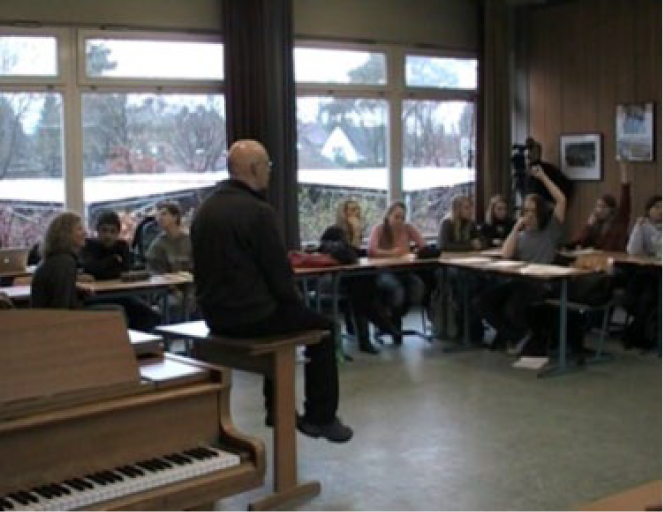
Reflecting in plenum as a chance for aesthetic judgements and arguments.
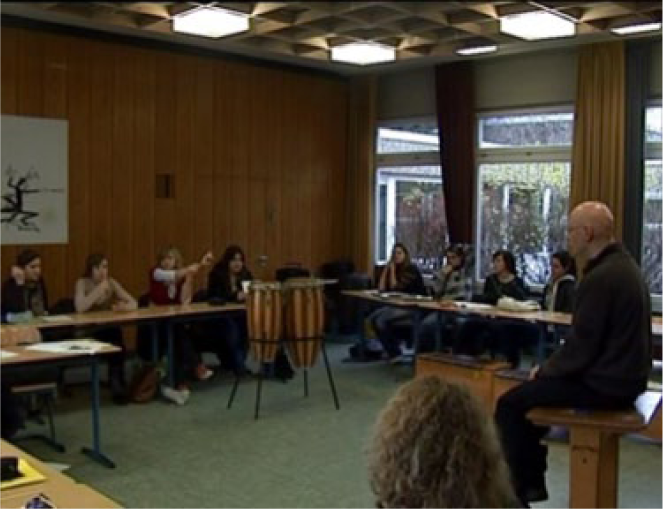
Reflecting in plenum as a chance for aesthetic judgements and arguments.
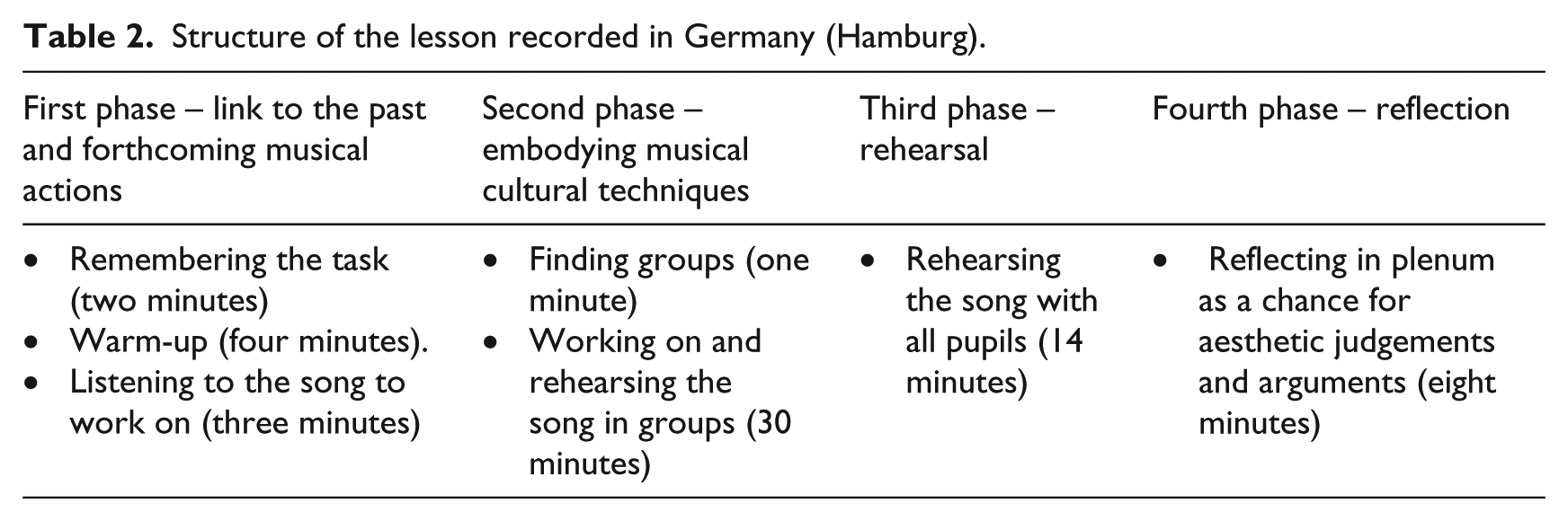
In this case, a macro-level structure can be summarized in four phases (see Table 2). The first phase should put the pupils into the appropriate mood, whilst in the second phase they work in groups to learn the song. The third phase tries to bring the voices together, which then leads to the reflection in the last phase. This part is also the bridge into the next lesson.
Structure of the lesson recorded in Germany (Hamburg).
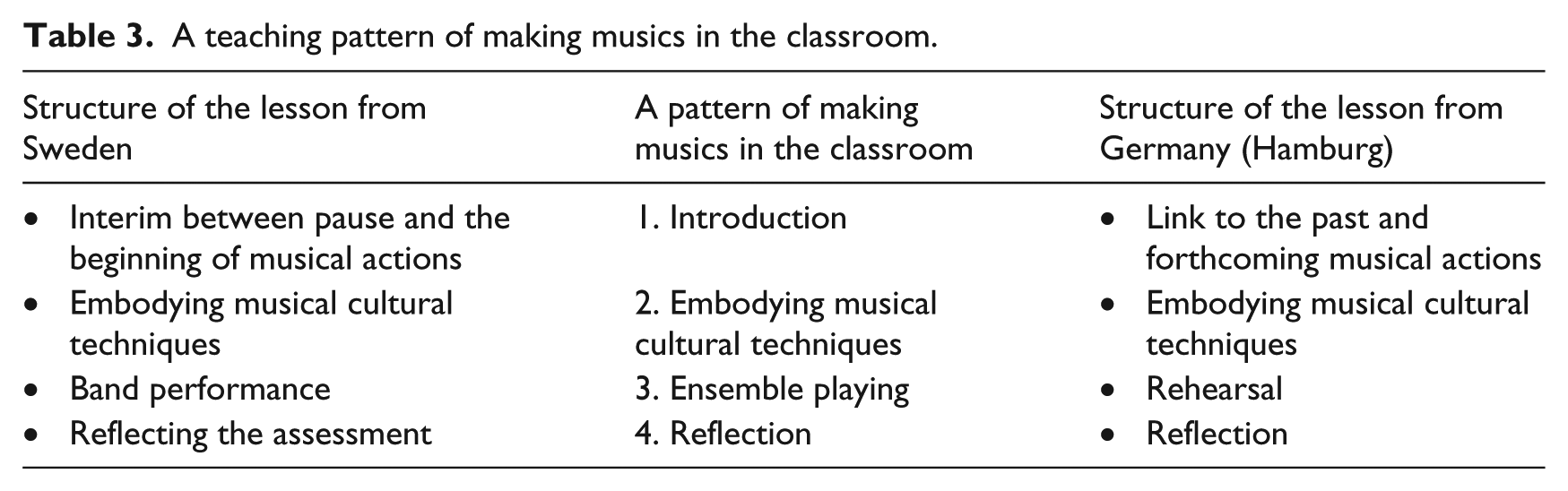
A pattern of making musics in the classroom
Comparison of both teaching structures enables a hypothesis about a teaching pattern to be generated. It consists of four steps and could be understood as a pattern of making musics in the classroom (‘Klassenmusizieren’). This refers to a simplification of the practice, although the phases are similar rather than equivalent. It is necessary to reflect the differences that exist in the context of how they are produced.
The (1)introduction of the lesson from Germany (Hamburg) represents a link to the past and the forthcoming musical actions. Other than the fact that the pupils take off their shoes (which could be interpreted as an act of bringing them into an aesthetic mode), the introduction of the lesson in Sweden seems to be more like an interim between a pause and the beginning of the musical actions in the music lesson. The goal of the second phase in both cases seems to be (2) to embody musical cultural techniques. The way of reaching that goal differs. Although the pupils work in self-organized groups or alone, the room for the pupils in the lesson in Sweden appeared to be narrow. They were supposed to reproduce the musical material on instruments chosen by the teacher. The teacher went around the room and offered his help as a music expert to everyone. The pupils in the lesson from Germany (Hamburg) were asked to try and arrange the self-chosen song and to bring in their own ideas where applicable. Here, the teacher watched, helped and sometimes took over the rehearsing to push their work. The (3) ensemble playing differs regarding function in the context of the lesson. The pupils in the lesson recorded in Sweden came together and played in an ensemble/band of four pupils, whilst the others listened. The main purpose of this musical practice appeared to be assessing the pupils, to enable them to start a new instrumental voice in order to reach the ‘instrumental driver’s licence’ (the name given to the method by the teacher). The ensemble playing in the lesson from Germany (Hamburg) rehearsed the musical piece together. In order to organize the process, the teacher issued instructions based on his expertise. The last phase – (4) a reflection – was only mentioned in the structure of the lesson recorded in Germany (Hamburg) (see Tables 1 and 2). It appeared not to be of sufficient meaning and importance to be described as a single phase in the lesson in Sweden. In the lesson in Germany (Hamburg), all pupils were invited to give an aesthetic judgement and argument during the reflection phase, whereas in Sweden the teacher announced and explained the grades. At the same time the non-playing pupils were leaving the room. The theoretical perspective leads to the generation of a fourth phase in the teaching pattern, because it highlights the meaning of a reflection about musical practice. That conclusion is underlined by the ways of reflection, because they exemplify and could possibly work as an indication for a hypothesis about the different aims and functions of these lessons.
The comparison generated the hypothesis of a teaching pattern consisting of four steps, which describe the type of music-making in more detail. The context and way in which the patterns are produced leads to a hypothesis of the logic of the practice. Although the order of the phases was similar in both cases, other sequences are possible. Further studies would be necessary to prove the hypothesis. In the ‘Five Cultures Study’, Alexander (2000: 304) proposes three or four main stages within the examined lessons: ‘introduction, development (sometimes subdivided) and conclusion’. They fall together or reflect the proposed pattern of making musics described above, with differed accentuation. The proposed characteristics of these main stages, for example ‘procedural’ or ‘instructional’, ‘unitary’ (a single task) or ‘episodic’ (a sequence of several tasks), ‘closed’ and ‘open ended’ (Alexander, 2000: 304–306) seem to be suitable here, and highlight classroom practice without distorting their inherent logic. However, it appears that a distinguishing feature of a music lesson is missing. In addition, the subject matter of musics may also need a set of personal descriptions and categories for comparison.
The aims and functions of the music lessons
Revisiting the description of the lesson in Sweden through comparative discussion led to the hypothesis that the lesson’s aim and function was to develop pupils’ musical abilities and to improve the pupils’ familiarity with pop/rock music. This was even reflected in the name of the method (‘instrumental driver’s licence’). This conclusion was reached after characterizing the introduction as a short ritual and instructional interim and the embodying of musical culture techniques as a reproduction of typical instrumental voices and skills in pop/rock. This was underlined by the ensemble playing in which the inherent skills were performed and assessed after a short reflection. This does not exclude the opportunity for aesthetic experiences, particularly because music-making is the main activity. In the interview, the teacher expresses music-making as an explicit goal, and explicit goal, and in the lesson he appears to show himself carrying out fulfilled practices within musical actions – or situations which illustrate technical musical terms, facts and contexts – for example through use of the worksheets. However, this seems to be the determining aim and function and praxiologic of phases two, three and four (see Table 3).
A teaching pattern of making musics in the classroom.
The lesson recorded in Germany (Hamburg), leads to the hypothesis that the aim and function of the lesson is to try explicitly to offer situations of musical practice for aesthetic experiences. 19 Statements by the teacher in the interview reflect this. He explicitly states that the aim is the production of an aesthetic object. Additionally, the aim of the lesson is not to make the pupils learn skills, but rather to offer them the ability to express themselves. In the lesson, the introduction was characterized by musical actions to link the past and forthcoming topic of the lesson, which should remind the pupils that the song was chosen by them and the teacher. The way of embodying musical culture techniques offers a process-product-orientation by working in groups, whilst the rehearsal organizes the musical practice to let them play and make sounds together, which is then reflected in the plenum as a chance for aesthetic judgements and arguments. The teacher acts as a guide during all of this. At the same time, no hypothesis can be formulated as to whether the pupils gained aesthetic experiences. This would need to be examined in another study. Furthermore, the explicit aim and function of the lesson does not preclude the existence of other aims. For example, musical faculties were also developed during the process of embodying musical culture techniques and rehearsing in an ensemble.
Wallbaum’s (2012) proposed categories refer to possible aims and functions for making musics in the classroom; these were appropriate to the practices and offered a suitable description of the cases. The reasons discussed for the hypothesis about the logic of practice give rise to the question as to whether they are explicitly or implicitly presented by the teaching. A contextualization of this could lead to a re-interpretation and a better understanding regarding the pedagogical cultural tradition of each case, and could open up a field for further research.
Further perspectives – an interpretation regarding the context of the pedagogical cultural tradition of the music lessons
There appears to be a fundamental difference between the planning and the execution of both lessons. When comparing the explicit goal of planning and the interpreted logic of the practice, the aim and function of the lesson in Sweden seems presented implicitly through the practice. The teacher does not verbalize it explicitly in the interview. He speaks about the importance of making music and the use of a new method (called the ‘instrumental driver’s licence’). In the lesson from Germany (Hamburg), the statements in the interview and the decisions made concerning arranging and acting during the lesson seem to be to explicitly offer musical practice for aesthetic experiences. The teacher of the lesson from Sweden therefore planned and executed the lesson on the basis of his implicit and embodied musical and pedagogical cultural knowledge. The planning and execution of the lesson from Germany (Hamburg) seems to have mainly been led through an explicit music educational concept. Some additional details would help support this argument, although this was not explicitly addressed in this research. Furthermore, the use of a case study limits the reach of assumptions, and makes it difficult to make more general statements about the teaching of the examined agents.
In the interview, the teacher of the lesson in Sweden stated that he invented the method as a necessary development following experience gained in his first years of teaching. This implies that he transformed his teaching to something better, which provides implicit pedagogical values. Prior to this, he transcribed the latest songs from the radio and let the pupils play them in class. However, he regrets the fact that the pupils did not have the chance to play all instruments, and did not gain a new experience. The new method shows the pedagogical values of equality, a way of self-organized learning and the idea of treating every pupil in the same way, helping to enable pupils to do it by themselves. Additionally, typical practices of the pop/rock musical culture, such as the informal character of the lesson, the focus on imitation, the non-verbal musical gestures to help the pupils, learning by heart for the performance and the teacher’s own musical cultural expertise seem to determine how the lesson is executed. These forms of practices from educational and musical cultures seem to come together to create hybrid forms and interferences within the teaching of musics (Wallbaum, 2013b, c; Wallbaum and Stich, In press).
Both the planning and execution of the lesson from Germany (Hamburg) seem to be shaped by a theoretical music educational concept; 20 in the interviews, the teacher also speaks about the aim and function of teaching, which should offer experiences and produce an aesthetic object. The consequences for the execution of the lesson are the negotiation of the musical material, musical practice as making musics, and the offer to create something individual, the way of teaching, the role of the teacher and reflection on the musical practice of the lesson. 21
A short study of the international literature suggests that these cases show examples of the two different traditions in northern and central Europe. Hopmann and Riquarts (1995) describe types that partly coincide with national borders. On the one hand, the authors describe the Anglo-Saxon tradition of curriculum studies; on the other hand they name the didactic tradition. This is manifested mainly in teacher training through the antinomy of method orientation versus didactic orientation. The authors describe Scandinavia and later Sweden as a special case, where both types exist alongside each other (Hopmann and Riquarts: 1995: 9, 19). Kertz-Welzel (2013) notes that cultural traditions exist in Germany and the United States within the field of international comparative music education: ‘While the Northern European concept aims more towards the ideal of Bildung as a formation and cultivation of the entire person, therefore preferring general music education, the American approach is traditionally more interested in specific musical competencies and skills that can be evaluated through successful performances’ (Kertz-Welzel, 2013: 54–55). The American approach described comes together with the aim of developing musical faculties while making musics in the classroom.
This study suggests that further research could explore cultural differences in teaching musics and provides some ideas for further research. The concept of culture and the music educational concept of ‘ästethische Praxis’ offer a theoretical perspective on classroom practices with the subject matter musics, where musical and educational practices are the focus and point of reference for the reconstruction and understanding of another culture. Regarding the proposed procedure, as a further step, thick descriptions of music lessons can be contextualized by specific regional, national or local traditions and by their institutional context. This could enable elements of different levels of analysis to be linked and referenced to each other as shown in Alexander (2000). The theoretical perspective on the research field of music lessons could also offer a different point of view on the discussion of how global similarities and national differences shape teaching (LeTendre et al., 2001). It focuses on the exploration of cultural differences within and between nations. The theoretical approach and procedure used to reconstruct music lessons on video could also lead to the exploration of further patterns and forms of teaching musics. The description and generation of patterns in music lessons need to be suitable to the varied forms of practices for the subject matter, which is inseparably interweaved within practice of a lesson. Methodological problems should therefore be addressed in order to be able to reconstruct and understand classroom practices of relevance to musics. Subsequently, in order to reflect the international and intercultural character of a study, an intercultural research team could also validate the thick description of classroom practice. Questions relating to the conceptual equivalent and meaning of the main musical and educational terms, and the interpretation itself could be answered. This would help to ensure a controlled approach in order to understand the ‘other’ culture (Fritzsche, 2012). Furthermore, by taking two cases, the categories of comparison are more likely to appear either similar or different as they appear in a certain range of distinctness (Fritzsche, 2012; Tobin 1999). Hence, more cases would be necessary to use a comparison as grounds for comparative discussion in order to describe the characteristics in more detail through contrasting. All this opens up and allows the possibility for international and intercultural understanding and the successful exchange of experience.
Footnotes
Funding
For the production of the multiangle DVD of the lesson from Sweden, the research team were supported from the Musicacademy in Malmö and the University of Music and Theatre in Leipzig.