




Abstract
Background
Refugee parents who fled conflicts suffered violence and traumas and face huge challenges in supporting the health and welfare of their children while in transit.
Aims
To describe the development of a culturally competent and compassionate training and support package (TSP) for nurses, social and health care workers and volunteers, with a focus on parenting needs among unsettled refugees fleeing conflict.
Methods
The multi-method approach included: a scoping review covering parenting needs of refugees fleeing conflict zones; collection of stories from refugee parents, healthcare workers and volunteers via a mobile application; discussions between team members; a piloted and evaluated curriculum.
Results
High levels of family distress and deterioration of parental identity were identified. Informed by these results, the curriculum is articulated along 20 bite-sized learning units, covering four age stages of childhood as well as targeting adults’ well-being. Pilot training was evaluated positively, confirming feasibility and usefulness of the TSP.
Conclusions
Unsettled refugee parents fleeing conflicts face psycho-social and practical difficulties negatively affecting their parenting skills. The care workforce should be trained in order to provide culturally competent and compassionate support to help these families. Open access digital platforms are promising as autodidactic and self-help tools among hard-to-reach populations.
Keywords
Introduction
The role of nurses and other health and social care practitioners is crucial for the well-being of refugee families, who often have specific unmet health needs (Bartelson & Sutherland, 2018; Sackey et al., 2021). Nurses are key because they carry out the first assessment, screening and referrals procedures for services (Crowley, 2009), if these are available, and, more broadly, they occupy a unique position not only in improving understanding and practice in the care of vulnerable migrants, but also in the promotion of their rights (Shaffer et al., 2019). However, both nursing research and practice with unsettled families fleeing conflict is hampered by several practical difficulties, such as doing research through camps, building acceptance and maintaining privacy (Halabi, 2005; Ogunsiji et al., 2018). In with findings of a recent systematic review (Robertshaw et al., 2017), the International Council of Nurses found that “numerous barriers to access to healthcare have been identified and include legal, health system resource constraints, discrimination, bureaucracy, fear of deportation, inability to communicate, lack of financial resources, shame/stigma, and difficulty navigating the healthcare system” (International Council of Nurses, 2018, p. 1). The same document underlines the “significant role” played by nurses to better help migrants and refugees. Nevertheless, it is also pointed out that caring for these populations is “complex, and nurses must be supported through education, ongoing training and with adequate resources in order to provide high-quality, culturally-competent care” (International Council of Nurses, 2018, p. 1; Papadopoulos & Shea, 2018). This is an emergent speciality and education and training in refugee nursing are still developing (Evgin & Muz, 2020; Sackey et al., 2021), with promising experimental projects, such as the creation of the first nursing school in a refugee camp hosting families fleeing long-term conflict (Martínez-Linares et al., 2019). Overall, many questions are left unanswered around, for example, how health practitioners can better meet the parenting support needs of unsettled refugee children and parents.
Refugee parents are central to supporting the health and care needs of their children (Bryant et al., 2018). Having fled conflicts where they suffered different types of violence and traumas, both self- and child-care can be unimaginably hard for refugee parents during the phases leading to resettlement. Post-flight parents’ poor well-being, impaired parenting and unhappy family environments are high risk factors for developing family conflict, insecure attachments and mental health distress in children, at least as strongly as pre-departure and journey-related traumatic events (Miller & Jordans, 2016). Evidence is available on the negative health consequences of war-related violence and migration hardship in survivors, in both children and parents (Browne et al., 2017; Charlson et al., 2019; Dimitry, 2012). The role of post-migration social determinants of conflict-affected refugees has been shown to have an impact on their mental health (Hou et al., 2020; Hynie, 2018). Studies have concentrated on the parenting needs among refugee families while re-settling, for example, on the conflicting tension between refugees own parenting styles and those of the host country (Deng & Marlowe, 2013). In contrast, there is not an abundance of evidence around parenting support needs during pre-settlement phases. Those studies of refugee families fleeing the atrocities of the Syrian conflict found that children present trauma symptoms, such as bed wetting, fear of loud noises and bright lights, in addition to increased regressive and violent behaviours and bad parent-child communication, anxiety and fear (Cartwright et al., 2015; El-Khani et al., 2016).
Advancement in interventions is occurring, and pioneering programmes have been delivered, which account for the relevance of cultural beliefs and peer support in parenting (Weine, 2011), maternity (Sioti et al., 2018), and unaccompanied minors (Sarkadi et al., 2018), and all are yielding promising results. Similarly, interventions for re-settling war-affected refugee children (e.g., the establishment of child friendly spaces, Metzler et al., 2019) generally register improvement in behavioural and emotional symptoms (Pacione et al., 2013). However, interventions with a narrower focus on refugee parenting support needs during pre-settlement phases remain scant. An exception is the project in which routine humanitarian deliveries of bread were utilised to distribute parenting information leaflets and questionnaires to adults looking after children in conflict zones inside Syria; overall rating of the leaflet was positive in nearly 70% of responses, indicating the need for immediate parenting support (El-Khani et al., 2016). Another pilot intervention assessed the feasibility of delivering and evaluating the “Caring for Children Through Conflict and Displacement” intervention with caregivers in the West Bank, and preliminary outcome data indicated the potential to both improve family functioning and reduce children's problem behaviour (El-Khani et al., 2019). Finally, the development of the mobile application Vroom is a strategic intervention using digital media to offer hard-to-reach pre-settled families a self-help tool. Vroom is a parenting mobile application originally developed by the Centre of the Developing Child at Harvard University, and recently adapted and piloted with Syrian refugee families in cooperation with International Rescue Committee. This case study has shown the effectiveness of using low-cost and easily scalable mobile technology to support hard-to-reach populations (Wilton et al., 2017).
Study and aims
This paper discusses the work of the IENE8 Empowering Migrants and Refugee Families with Parenting Skills project within the framework of the Intercultural Education for Nurses in Europe (IENE) programme. The IENE8 was funded by the EU ERASMUS+ programme. The main objective of the project has been to develop a comprehensive training and support package (TSP). The target populations of the TSP are frontline nurses and other socio-health professionals and volunteers with the aim of improving their knowledge and skills in the care of pre-settled refugee parents and children. The educational resource is also intended as an autodidactic, self-help and interactive tool for refugees themselves, and other users. The TSP has fully open access online via the IENE Knowledge Hub (KHub) for IENE8 (https://ienerefugeehub.eu/iene8/) which is conceived as a focal point for the exchange of knowledge and support primarily in relation to vulnerable migrants who arrive in Greece through Turkey from Syria, Iraq and Afghanistan. Six European countries participated in the IENE8 project: Cyprus (coordinator), Germany, Greece, Italy, Romania and the UK.
Methodology
The research questions used as a basis for the development of the TSP were: What are the basic parenting support needs of refugee families in transit? What are the basic training needs of nurses and other socio-health professionals and volunteers working with this population?
A multi-method research approach was used to answer these questions, which included the following seven actions.
Scoping review
A scoping review was undertaken between 15 November and 15 December 2018 to map the parenting needs of refugee families with children regarding (a) parenting skills and (b) factors that provide resilience, empowering parents and children. Inspired by the framework by Arksey and O’Malley (2005), the review was conducted using the following keywords: migrant/refugee/asylum seekers, parents/parenting skills, refugee children, child health, health/healthcare needs, psychological support, psychotherapy, mental health, psychological trauma, well-being, health promotion, psycho-social, cultural identity, separation, diversity, resilience, empowerment, inequality, education. Four categories of evidence sources were included, and for each one different data sources were used: for scientific peer-reviewed literature, we searched EBSCO (CINAHL, MEDLINE, Pubmed), Google Scholar, Cochrane, PsycINFO, and ScienceDirect; for grey literature, WorldCat, Bielefeld Academic Engine (BASE), Open Grey, and other national databases and official websites were interrogated; in relation to mass media and third sector reports, the search engine Google was employed, in addition to websites of media and third-sector organisations identified via opportunistic and snowball sampling. Each partner used these keywords both in English and in their own language, meaning that sources in Greek, German, Italian and Romanian were also searched. For those included sources in these languages, partners produced a short summary in English. Only sources dated between 2010 and 2018 were included, given that the Syrian Civil War began in March 2011.
Refugee parents’ and care workers’ stories
Each project partner collected three to five testimonies of refugee parents’ stories, based on a template developed by the project partners (https://ienerefugeehub.eu/stories/). The stories could come from social and health care workers, or from refugee parents themselves, and were translated in all partners’ languages, plus in Arabic and Farsi. However, two methods were used for the collection of stories: (a) contacting social and health care workers and refugee parents to provide their stories using the IENE8 mobile application; (b) the Greek partners interviewed refugee parents and added their stories through the mobile application. Team members reviewed the stories for any sensitive information before uploading stories onto the KHub.
This study only required ethical approval for the conduct of interviews with refugee parents in Greece (Ethics Committee of Doctors of the World/Médecins du Monde – Greece-MdM-Greece, Ref.255, and endorsed by the MdM Board of Directors). All refugees interviewed were given, and/or read in their native language, an information sheet and a consent form to sign or approve verbally. These documents explained the study’s details, gave the ethical approval information and specified that the participation in the study was totally anonymous and voluntary. The stories independently uploaded by participants onto the project website were automatically anonymised by the mobile application, and the research team ensured, before approval, that no personal data were contained in the stories.
Data analysis and identification of themes
Thematic analysis was conducted for both the evidence gathered by the scoping review and the stories collected (Braun & Clarke, 2006). The process of analysis entailed a familiarisation with the data, followed by an extrapolation of key concepts and topics to identify patterns leading to the establishment of themes. Two team members independently conducted the analysis and frequently had meetings to reach consensus, until thematic saturation was reached, and final themes defined.
Curriculum model and contents
The curriculum was informed by the following: (a) the original Papadopoulos, Tilki and Taylor model of cultural competence in nursing (Papadopoulos, 2006; Papadopoulos et al., 1998), and the more recently developed Papadopoulos Model for Culturally Competent and Compassionate Care (Papadopoulos, 2018); (b) findings of the aforementioned scoping review; (c) findings from the stories; (d) pre-existing knowledge and expertise of the team in child development and parent-child relationships.
The development of the curriculum occurred between January and May 2019 and entailed three consecutive steps:
(a) development of the IENE8 European Model for the Caregivers of Migrant and Refugee Families in Transit (see Figure 1);
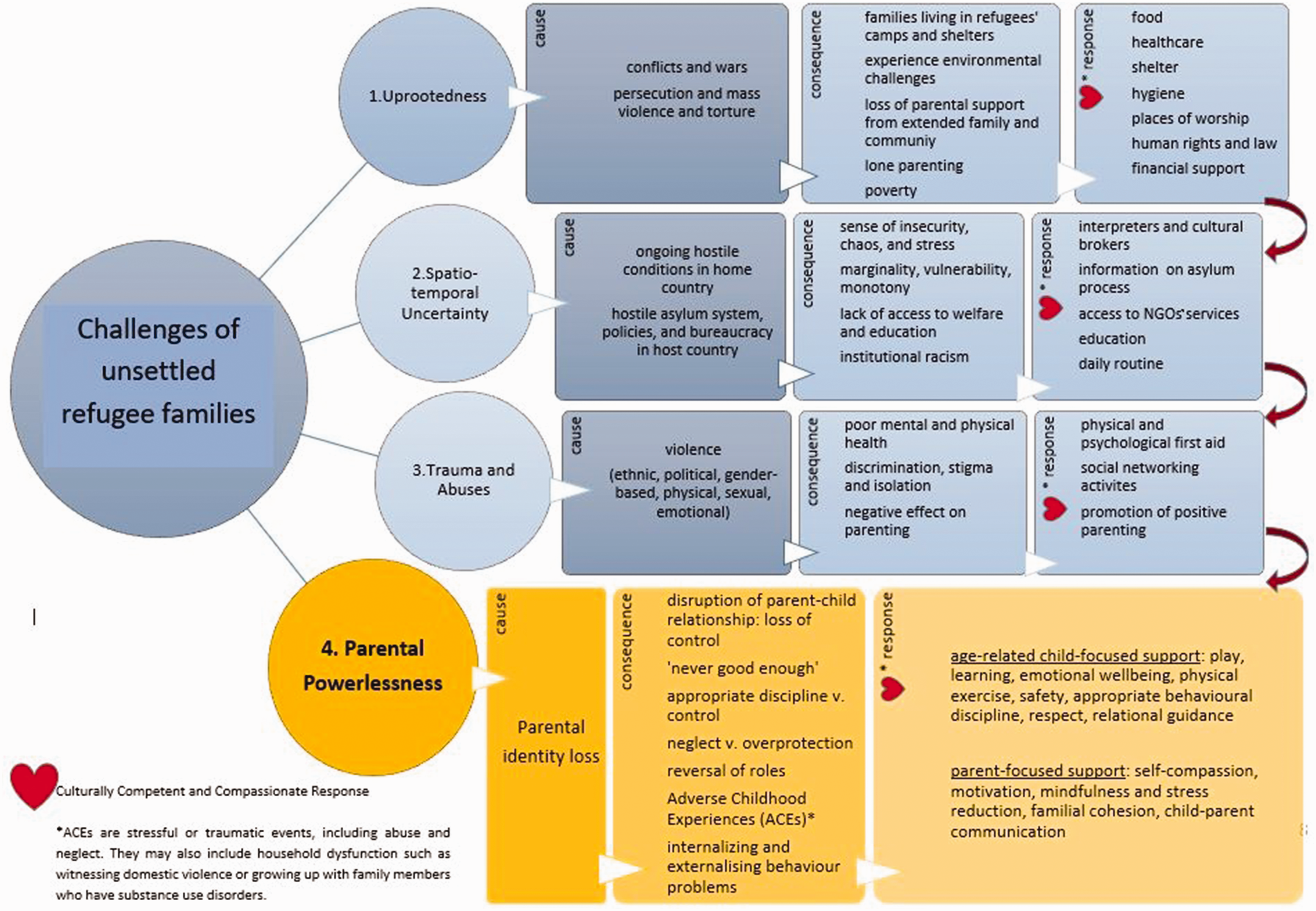
(b) visual systematisation of results of the thematic analysis into a diagram offering a meaningful and practical synopsis of the main challenges of unsettled refugee families (see Figure 2);
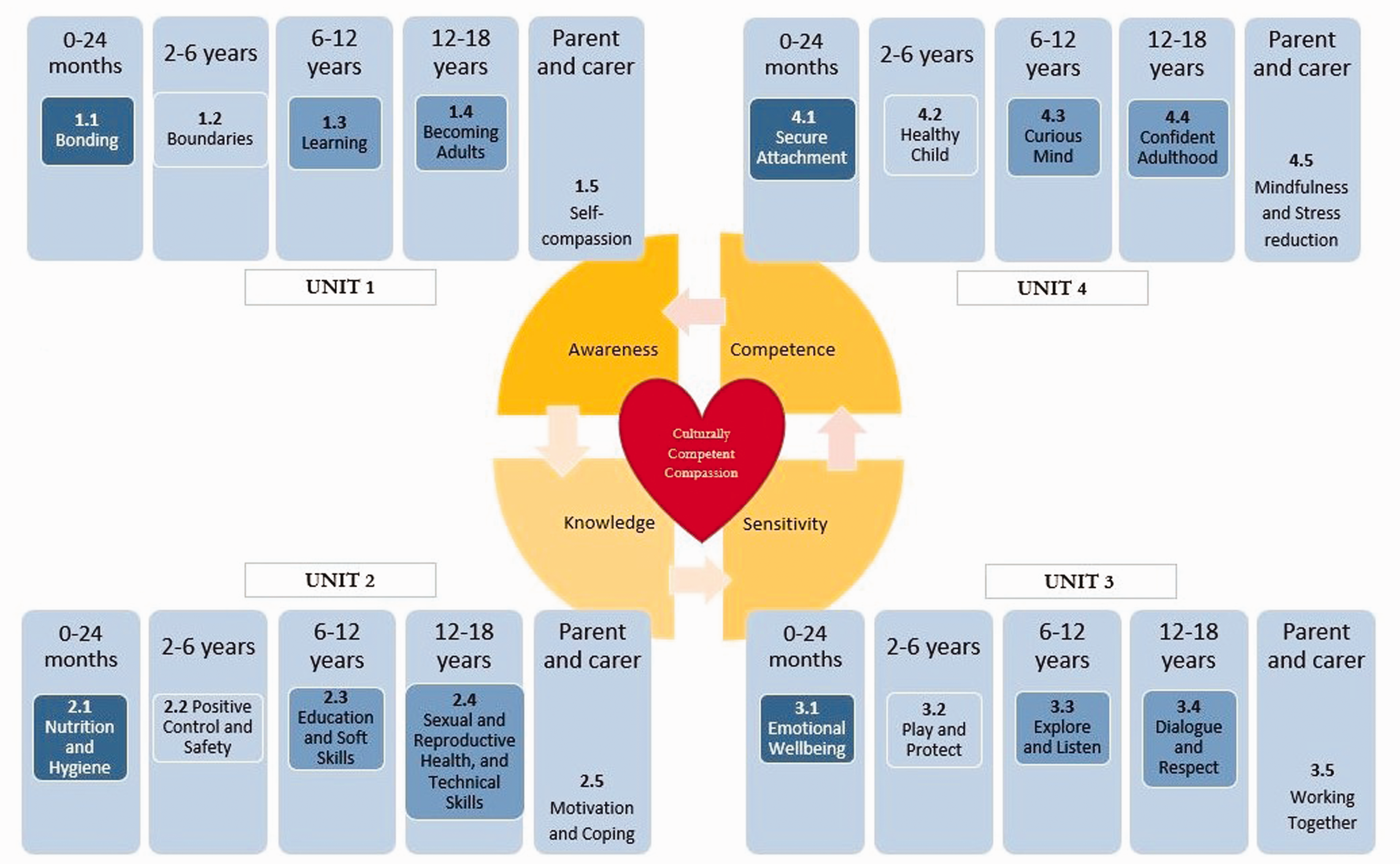
(c) design of a detailed curriculum content map condensed in an infographic (see Figure 3), which illustrates the topics of the final 20 sub-units of the curriculum.
In line with the curriculum model and themes, contents followed four main age phases of child development (i.e., 0–24 months, 2–6 years, 6–12 years and 12–18 years), with the addition of a stream dedicated to adults, both parents and practitioners. During a transnational meeting in May 2019 in London, themes, curriculum model, content and structure were discussed and approved by all partners.
Bite-sized learning units
Based on their stronger competences, each partner chose three sub-units to develop into bite-sized learning units (BSLUs), to be made available on the KHub and to be used during the pilot training workshop. The creation of BSLUs is based on a template developed and tested during previous IENE projects, and combines theory with activities, reflexivity and extra resources. All BSLUs drafts were shared with the project partners, revisions were undertaken where needed and subsequently approved by all partners (http://ienerefugeehub.eu/parenting/bite-sized-learning-units-for-parents).
Guide and pilot training
The seventh and last action entailed: a) the compilation of a training guide, enriched with good practices' example; b) the delivery of the pilot training to test and evaluate the TSP developed. For this project, two new evaluation tools were developed http://ienerefugeehub.eu/parenting/training-workshops-for-nurses-and-other-health-professionals-and-volunteers: (a) a good practice activity using a given template, that all partners deliver so to assemble a practical compendium of effective training activities; (b) a post-course reflection activity using a given scenario (Amira’s Story), where participants provide a self-reflection on their learning and produce an action plan.
Team expertise and discussions
Importantly, frequent international and national team discussions constituted a relevant methodological tool. Some partners are frontline practitioners, working with refugee families in camps and shelters, others have long-term experience in culturally competent and compassionate nursing, also in relation to migrants and refugees, and others are specialised in education and training. The challenges experienced by the IENE8 team primarily had to do with the number of translations, assuring its authenticity and accuracy.
Trustworthiness
Rigour and trustworthiness were ensured by the combination of methodologies and data sources, and the involvement of an international multi-disciplinary research team. This study design entailed a robust triangulation, covering the four main types of: method, data source, investigator and theory triangulation (Carter et al., 2014). Furthermore, the quality of the TSP’s delivery was ensured by the production of a training guide, informed both by innovative educational approaches and the team’s long-term experience. The TSP was piloted and the evaluation kit consisted of a comprehensive set of tools. All through the project, recurrent meetings resolved uncertainties and discrepancies to reach consensual decisions.
Results
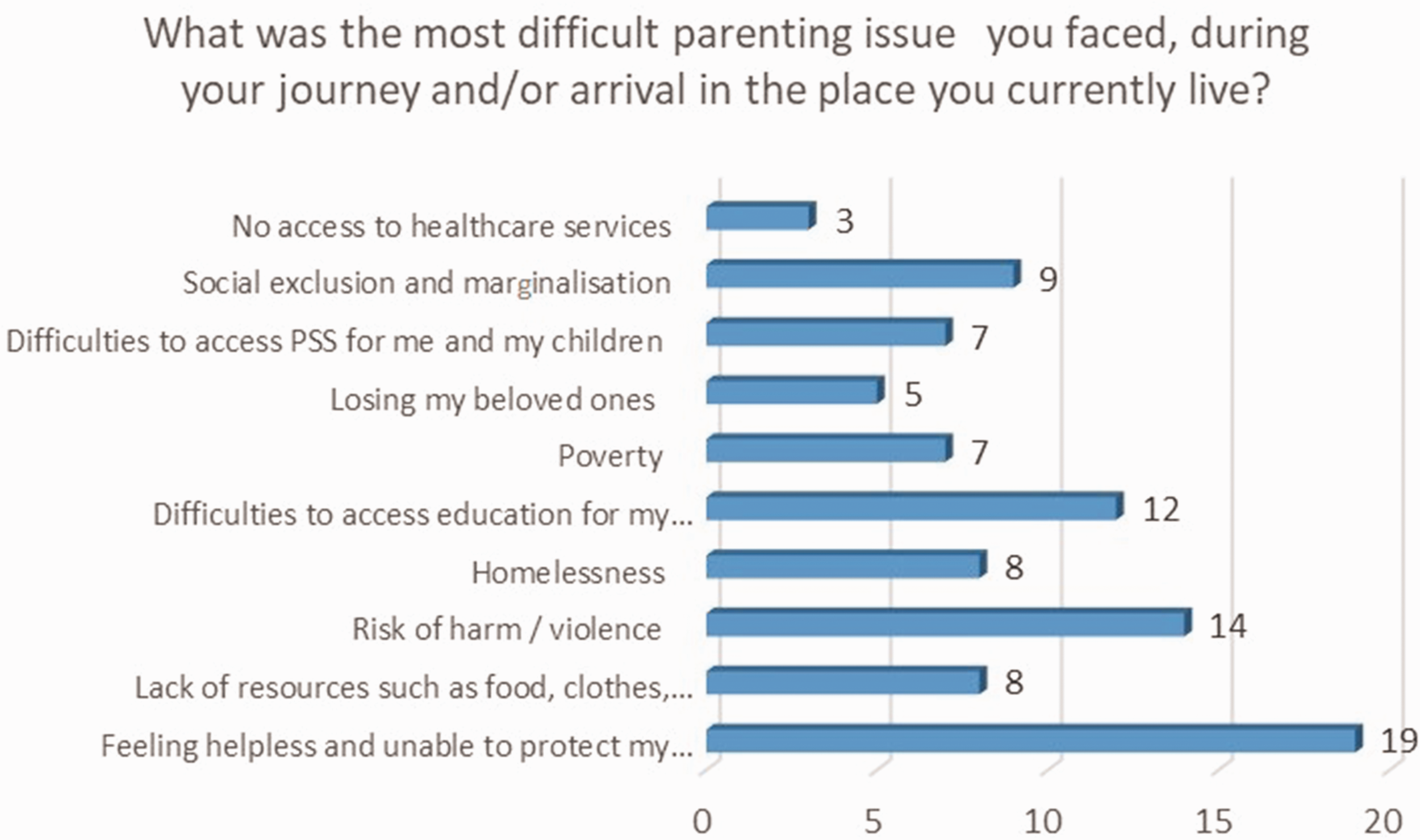
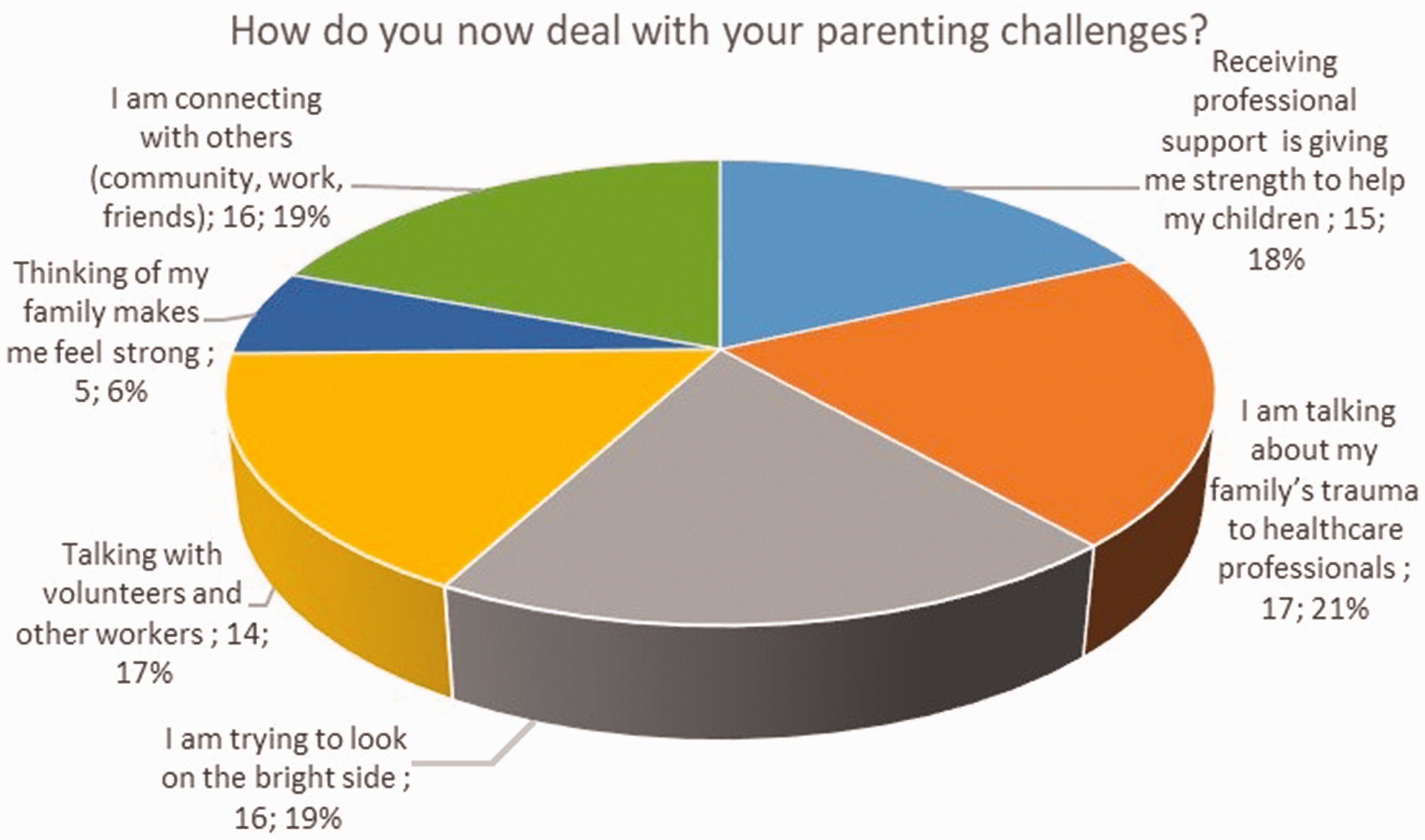
In total, 124 evidence sources were included in the scoping review and 27 testimonies of refugee parents’ stories were collected. Detailed documents reporting on the scoping exercise and the stories collected are available from the project KHub (i.e., IO 1 Mapping National and International Literature and IO 5 Introduction to KHub Stories, http://ienerefugeehub.eu/iene8/results/). The thematic analysis of the two pieces of research for this publication led to the identification of four macro-themes, capturing the key challenges of unsettled refugee families and how to best respond to them. These are presented in Figure 2. The last one, “Parental Powerlessness”, results from all the causes of the traumas in the previous three challenges and contributes to increased risks of self-conflict and loss of identity as parents. Parents can feel helpless and unable to protect their children during the journey, when they faced risk of harm or violence at some point (see Figure 4). Similarities in coping strategies could be identified: mostly seeking services to share concerns and support their children, trying to be positive and connecting with the community (see Figure 5). These findings have informed the development of the curriculum model and its content map, which is detailed in Figure 3. European training model for the caregivers of migrant and refugee families in transit. The development of the curriculum occurred between January and May 2019 and entailed, as a first step, the development of the IENE8 European model for the caregivers of migrant and refugee families in transit. Challenges for refugee families in transit. The second step for the development of the curriculum consisted of the visual systematisation of results of thematic analysis into a diagram offering a meaningful and practical synopsis of the main challenges of unsettled refugee families. Curriculum content map. The second step for the development of the curriculum consisted of the creation of a detailed curriculum content map condensed in an infographic. Challenges during the journey. From the analysis of the parenting stories collected, it has emerged that parents can feel helpless and unable to protect their children during the journey, when they faced risk of harm or violence at some point. PSS: Psycho-Social Support. Coping strategies. From the analysis of the parenting stories collected, similarities in coping strategies could be identified: mostly seeking services to share concerns and support their children, trying to be positive, and connecting with the community.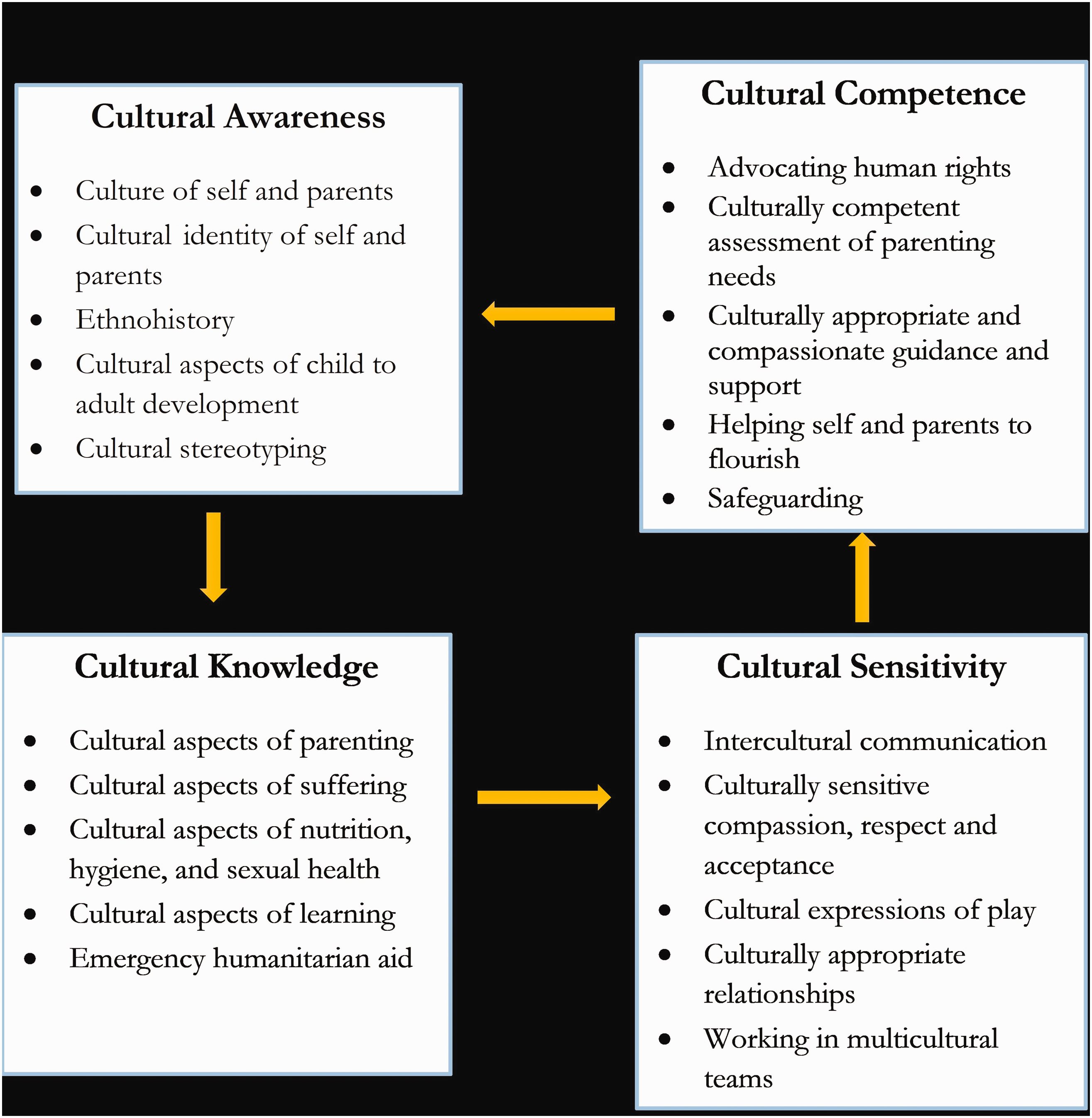
Each project partner chose three sub-units from the list of 20 to develop into BSLUs. Due to the COVID-19 pandemic, only one training could be delivered in time to be reported in this publication, the other seven were postponed. The workshop took place in Limassol, Cyprus, on 27 February and 5 March 2020 and was attended by 68 undergraduate, senior year student nurses. For the pre-course self-directed learning, participants were asked to read and reflect on three BSLUs. The classroom learning agenda revolved around an overview of IENE projects; the development of the IENE8 curriculum and its KHub; the presentation of two BSLUs; a workshop on mindfulness and on working together; and a role play. In the workshop evaluation questionnaire, participants reported that the training, the material used, the information and knowledge gained were all very helpful and up to date; they also reported that the workshop improved their skills to understand and empower unsettled migrant/refugee families on parenting and child-family healthcare needs. In the impact evaluation questionnaire, participants declared that it was something different from what they usually do, and they appreciated that it was not only about theory, but it entailed the acquisition of skills that can be applied in practice. The activities and presentations broadened their perception and understanding regarding refugee families, and they asked for more similar events to be organised.
Discussion
According to the last report of the United Nations High Commissioner for Refugees, 79.5 million people were forcibly displaced in 2019. Of these, only 107,800 were admitted for resettlement and 40% were minors (UNHCR, 2020). This implies that the number of unsettled refugee families around the world is high, yet little research has been conducted around their parenting support needs, with far more attention given to re-settling contexts. This study is therefore contributing to filling a considerable gap in refugee studies. It constitutes an impact-oriented project advancing both knowledge and intervention programmes in relation to some of the most severe conflict-related refugee crises of our times (Abbas, 2019), which are having a considerable impact on the humanitarian and healthcare systems of several host countries (Dumit & Honein-AbouHaidar, 2019).
Our results are in line with available evidence suggesting that the basic parenting support needs of refugee families in transit are different from those in resettlement contexts, particularly due to key protective factors lacking for re-settling refugee children. For example, a stable context with social and parental support, and family cohesion and friends (Fazel et al. 2012) are not at hand for pre-settling families. Furthermore, as our study suggests, living in temporary camps and shelters poses specific challenges, such as environmental and sanitary threats, dearth of services and the sense of an abrupt discontinuation with socio-cultural practices and network. Among the few studies available around unsettled families, one showed that disruptions of family structure and parenting roles, values and practices occur as early as during pre-flight stages, and result in a sense of parental powerlessness (Williams, 2010). Another study conducted among refugee families living in caravans in Mexico highlighted how parents’ emotionally distraught state can lead to over-protectiveness, harshness and reversal of parent-child roles (Browne, 2018). These parental behaviours can result in both internalising and externalising behaviour problems in children, as a study pointed out in relation to young refugees from Syria and Iraq re-settling in Germany (Buchmüller et al., 2018). Evidence is therefore growing around the importance of understanding and meeting the family and parenting needs of unsettled refugees fleeing conflict. The development of the IENE8 TSP has responded to these findings, which suggest that an adequate response should foster resilience and heal distress in children and parents, while also aiming at improving the family environment as a whole, targeting environmental, daily stressors, as others have also recommended (Miller & Jordans, 2016).
The IENE8 TSP advances the limited research on interventions to address refugees’ parenting needs, making the case for the need to embed socio-cultural and psychological first aid into programmes in primary health and education for conflict-related displaced families (Fazel & Betancourt, 2018; Peltonen & Punamäki, 2010). As in other pioneering projects (Wilton et al., 2017), our study is making use of information and communication technology (ICT), so that it stands as an open access, self-help tool, which is also interactive, empowering and ultimately peer-led. This support format can be particularly effective in reaching populations who are on the move, difficult to access and assist otherwise, and is a promising step in the use of ICT in post-conflict refugeedom (Bock et al., 2020; Taftaf & Williams, 2020).
The role of frontline nurses and other health and social care professionals is pivotal during emergencies and crises (Magnaye et al., 2011). As a training tool, the IENE8 TSP can be used by nurses, healthcare professionals and volunteers, as an autodidactic and train-the-trainers instrument, to be better equipped to empower the numerous refugee families in transit around the world. However, preparedness in this sense, and specifically in relation to parenting needs among refugees in transit, appears to need advancement. The engagement of this project with nurses advanced awareness on this topic through meetings, newsletters and social media dissemination. The stories provided by the nurses and other healthcare workers, as well as the refugee parents, offered a rich source of the knowledge which helped achieve some useful skills to support parenting under extreme and unpredictable conditions. This was corroborated by the participants in the training who expressed that the TSP was both timely and innovative and of direct practical use responding to their evolving training needs (Willey et al., 2018).
Furthermore, the TSP is fundamentally informed by the constructs of culturally competent and compassionate care (Papadopoulos, 2018), which is increasingly established as a necessary approach to all service users, and arguably even more necessary when assisting refugee populations (Brennan et al., 2017; Chau, 2020; Mechili et al., 2018). As also described by the International Council of Nurses (2018), culturally competent care is essential when caring for refugees, and nurses are called to enhance their cultural competence to provide “ethical, respectful, culturally-sensitive” and holistic care to displaced people and their families; (International Council of Nurses, 2018, p. 3).
Limitations
This study has occurred during the COVID-19 pandemic when in-person meetings were prevented, while the funding body did not allow the delivery of online training at the time of writing. This situation resulted in the main limitation of this study, that is that the TSP could be only partially tested and evaluated, with a reduced sample size of nursing students only. Additionally, standard limitations of scoping reviews (Sucharew & Sucharew, 2019) and qualitative research (Doyle et al., 2020) are also present, yet these are outbalanced by the solid triangulation of the multiple methods employed.
Conclusions
Unsettled refugee families fleeing conflicts face specific psycho-social and practical difficulties that negatively affect their parenting skills. Nurses, social and healthcare workforces should be trained in culturally competent and compassionate support, to better help this population in their unsettled circumstances and make the most of available resources, thereby maintaining their children’s and their own health and welfare. The use of ICT both for (self-)training and (self-)support purposes is promising for this hard-to-reach population, and their health and social care professionals and volunteers.
Key points for policy, practice and/or research
Innovative research is needed to better understand the training needs of nurses, health and social care professionals and volunteers in order to better prepare them for the care of refugee families, while also being able to boost their self-care under extreme and unique circumstances. Evidence-based interventions catering for the specific needs of this population, and which take into account the family as a whole, as well as the specific needs of parents and children are necessary; the use of ICT is highly promising as a flexible and empowering tool among these hard-to-reach groups. In front of the ongoing conflict-related ‘refugee crisis’, both in Europe and elsewhere, policy makers should increase their effort to support rigorous, open-access and self-directed training for nurses and other healthcare professionals, which is also culturally competent and compassionate. Appropriate national and international policies should also facilitate the establishment of standards of nursing care for refugee families.
Footnotes
Acknowledgements
We would like to thank all the refugee families, all the nurses, the health and social care professionals and volunteers who took part in this study, and shared their/a story of refugee parenting on the move. We would also like to acknowledge the following colleagues for their contribution to this study: Athena Kalokairinou, Orazio Licciardello, Elena Rousou, Christina Tsorou.
Declaration of conflicting interests
The author(s) declared no potential conflicts of interest with respect to the research, authorship and/or publication of this article.
Ethics Statement
Approval was granted from the Ethics Committee of Doctors of the World/Médecins du Monde – Greece-MdM-Greece, Ref.255, and endorsed by the MdM Board of Directors.
Funding
The author(s) disclosed receipt of the following financial support for the research, authorship, and/or publication of this article: This work was supported by the Erasmus+ Programme of the European Commission [agreement number 2018-1-CY01-KA202-046848].
