




Abstract
This scoping review examined available scientific evidence according to the PRISMA-ScR guideline on the subject of treatment interventions by speech and language therapists of speech, language, and communication needs in people with Down syndrome. A literature search in PubMed, Embase, Cinahl, Cochrane, and Web of Science yielded 41 studies suitable for inclusion. All studies examined the effect of an intervention in speech, language or communicative behaviour, alone or in combination. Most studies were conducted among children, only four were conducted among adults. Twenty-three studies (49%) found statistically significant results. This review may encourage speech and language therapists to incorporate scientific evidence in making their treatment choices. Furthermore, it may inform health care professionals about potential speech and language treatments that can help people with Down syndrome in developing and maintaining their communicative skills. However, future research is needed because little research has been done in this area so far.
Introduction
As a result of a third copy of chromosome 21, people with Down syndrome have characteristic - particularly facial - physical features, and - varying degrees of - a disorder of intellectual development, as well as an increased incidence of comorbidities such as congenital heart disease and immunological abnormalities (Chapman and Hesketh, 2000; Verstegen and Kusters, 2020). Due to these disabilities, they are followed by paediatricians from birth to puberty, thereafter by, for example, physicians specialised in disorders of intellectual development, as can be the case in the country where the authors come from.
In addition to their specific physical disabilities, people with Down syndrome have difficulties in their speech and language. These difficulties are often greater than to be expected on their level of intelligence (Naess et al., 2011) which has a wide range, from an intelligence quotient of 20 to 69 (Chapman and Hesketh, 2000; van Gameren-Oosterom et al., 2014). Difficulties in speech and language have a substantial and lifelong negative impact on the communicative abilities of people with Down syndrome. As a consequence, people with Down syndrome need to rely on speech and language therapy services throughout their lives (Meyer et al., 2017).
The speech and language development of people with Down syndrome does not proceed differently from typically developing children, but more slowly, and they do not reach full development, although there also are large differences between individuals (Chapman and Hesketh, 2000; Martin et al., 2009). People with Down syndrome usually have more difficulty with expressing themselves (language production) than with understanding (language perception). Regarding language production, their use of vocabulary is relatively better than their use of morphological and syntactic rules (Chapman et al., 2002). Their speech is often marked by specific articulatory problems such as anatomic differences, motor-speech disorders, sensorimotor disorders, and attention-deficit disorders that impede their intelligibility, despite having achieved full speech sound acquisition (Cleland et al., 2010; Kent et al., 2021).
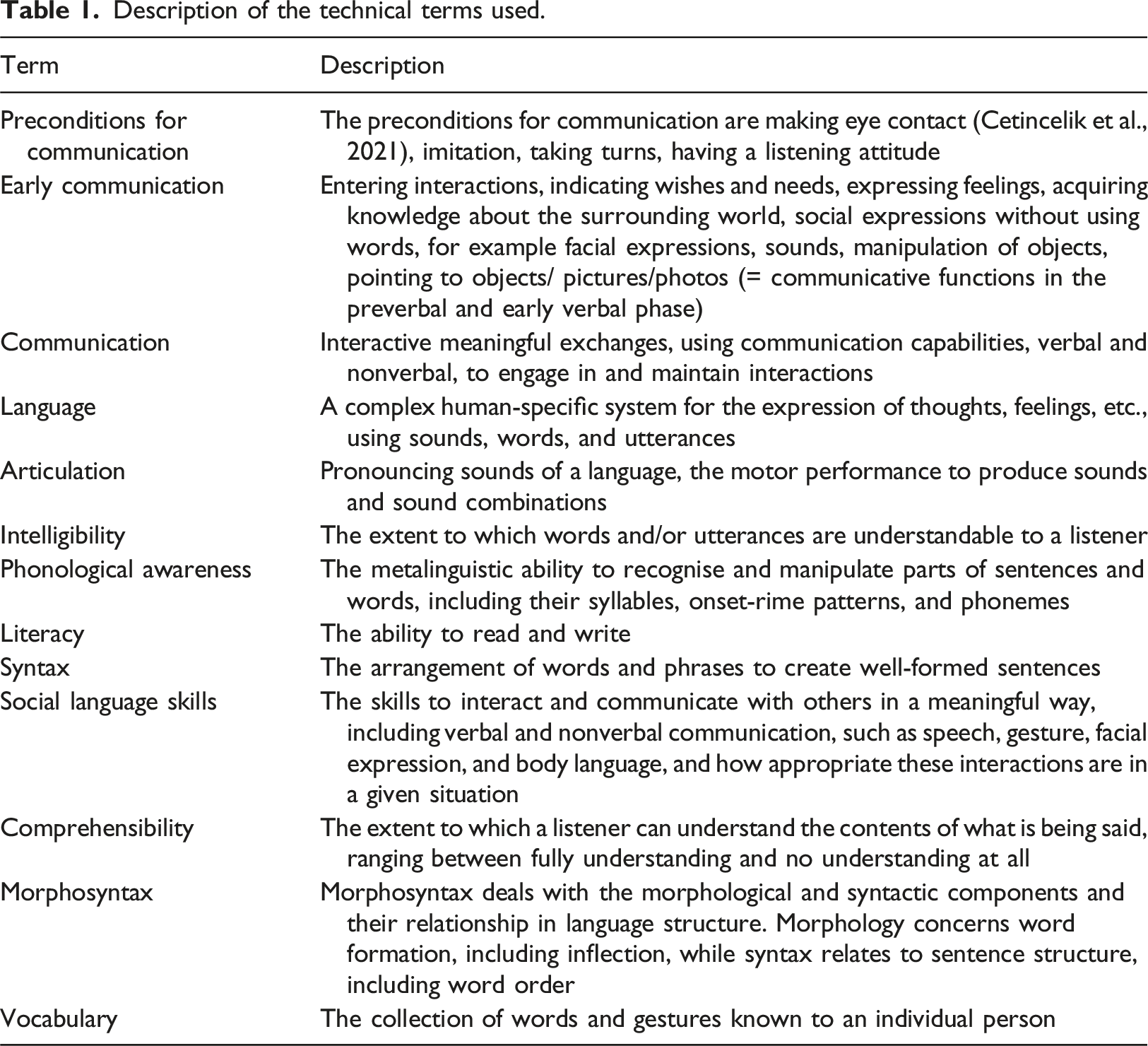
Speech and language therapy aims to address these difficulties, but the focus differs per age category. In 0–3-year-olds, problems in feeding and swallowing, preconditions for communication, and early communication are areas of concern. The focus on speech is marginal in this age category. In 4–6-year-olds, speech, both articulation and intelligibility, gradually becomes more central in addition to language processing, verbal production, and nonverbal expressive skills as age advances. These domains remain important in 7–18-year-olds, but then also phonological awareness and literacy become crucial, particularly at school age (7-12- year-olds). The therapy for adults with Down syndrome concentrates, in addition, on swallowing and on specific language skills such as proper syntax, storytelling, and social interaction (Meyer et al., 2017; Buckley and Prèvost Le, 2002).
Description of the technical terms used.
Speech and language therapy services for people with Down syndrome can be delivered in extramural (for example speech therapy practices, day care centres) and intramural care (for example residential communities, twenty-four-hour care), as well as in schools for mainstream and special education. A specific group of healthcare professionals, mostly general practitioners, paediatricians, ear-nose-throat-specialists, and neurologists are generally referring for speech and language treatment. Other allied professionals may be involved in the referral as well, such as specialised nurses and educational teams, depending on the regulations and practices of the country involved. For this reason, it is important that these professionals are well informed regarding the possibilities of speech and language interventions that can be applied in the treatment of speech, language, and communication needs (SLCN) of people with Down syndrome. This is of particular interest to paediatricians who intensively guide children with Down syndrome throughout their childhood while often having day-to-day supervision within a team of healthcare professionals (Peters, 2023).
Evidence-based practice is important to implement effective treatment (Michie et al., 2005). Evidence-based practice has three elements: 1. External clinical evidence (Research evidence), 2. Individual clinical expertise, and 3. Patients’ values and preferences (Sackett et al., 1996). Unfortunately, research evidence regarding effective speech and language therapy is limited. Nevertheless, speech and language therapists should be aware of those research evidence based interventions that are currently available, to support their decision-making in the choice of treatment options.
Many interventions focusing on speech, language, and communication training are available. In their study on intervention for children with developmental language disorder, Forsythe et al. (2021) listed 360 different interventions, whether or not evidence-based, among practitioners responsible for the management and decision-making regarding the treatment of children in 39 (mostly European) countries. Speech and language therapists will have to make careful considerations in choosing the most appropriate and effective intervention tailored to each individual, especially when a specific additional distinctive factor is involved like Down syndrome. The choice of interventions applied is generally personalised based on the professional expertise of the therapist, and determined by the specific needs, motivation, age, and behaviour of the client. Therefore, in addition to client characteristics also therapist characteristics influence this decision-making; education, experience, ease of use, time spent, what is deemed best for the client and what is considered most efficient, all play a role (Forsythe et al., 2021). Whether a treatment is research evidence based is not often used as a criterium in the choice of an intervention, although therapists with a master-level qualification are more likely to do so (Forsythe et al., 2021). Furthermore, there is a lack of easily accessible and comprehensible information about effective intervention approaches in the treatment of speech and language difficulties in Down syndrome; sources are not always accessible for free and in many countries many speech and language therapists are not affiliated with an organisation that facilitates the use of scientific sources. In addition, many speech and language therapists are still unaccustomed to, unsure of, or do not have sufficient knowledge of how to interpret scientific data (Dodd, 2007; Forsythe et al., 2021; Frizelle et al., 2021). An easily accessible comprehensive overview of the available evidence for such interventions could encourage speech and language therapists to take the aspect of research evidence based more into account when determining their treatment strategy for speech, language, and communication needs of people with Down syndrome. This might facilitate the choice of the most appropriate treatment and provide more positive outcomes (Seager et al., 2022; Dodd, 2007).
Therefore, the aim of this study is to give such an overview and to fill that gap by answering the following research question: Which research evidence based interventions in the treatment of speech, language, and communication difficulties in people with Down syndrome are available that can be used by speech and language therapists? This can also give referring physicians insight into the possibilities of speech and language therapy for the development and maintenance of capabilities in people with Down syndrome. A scoping review is particularly suited to answer this research question because of its broad and heterogeneous nature, as it summarises the available knowledge and gives the possibility to map and examine all published interventions as mentioned in the research question, including information on their level of evidence (Peters et al., 2015; Tricco et al., 2018).
Method
The checklist Preferred Reporting Items for Systematic Reviews and Meta-Analyses extension for Scoping Reviews (PRISMA-ScR) (Tricco et al., 2018) was used in drafting this review. (Appendix A).
Articles had to meet the following six criteria to be included: (1) focusing on people with Down syndrome; (2) investigating the effect of treatment of speech, language, and communication disorders; (3) the treatment in question is or can be used by speech and language therapists; (4) being written in English; (5) being published in a peer-reviewed journal; (6) being an empirical quantitative, qualitative, or mixed-method study. Studies that did not meet these criteria and were aimed at difficulties as primary oral motor dysfunction, stuttering, aphasia, voice disorders and reading disabilities were excluded. As the aim was to identify research evidence based scientific interventions, grey literature was not included in our search.
PubMed, Embase (OVID), Cinahl, Cochrane and Web of Science were searched up to October 2022. No date limit for publishing was used because few articles have been published on this subject. The search strategies were drawn up by authors one and two, and then discussed with the last author. Three search blocks were drafted: for the domain Down syndrome, for the domain speech, language, and communication disorders, and for the domain speech and language therapy. These were combined in the final search strings, one for each database, which can be found in Appendix B.
The search results were imported in Rayyan QCRI for Systematic Reviews (Ouzzani et al., 2016). Duplicates were removed. Authors one and two first screened the titles and afterwards the abstracts of all publications independently as ‘include’, ‘maybe’ or ‘exclude’. Articles scored as ‘include’ and/or ‘maybe’ by both were included in the next step. Differences in scoring between authors one and two were discussed among authors one, two and five until consensus was reached. The same procedure was thereafter used for the full text selection. There were no key changes made during the selection process. A flow chart of the selection is shown in Figure 1. The citations of all included full text studies were checked for their possible relevance to the purpose of the study by the first author. The same procedure as described above was applied to the cited articles in the included full text studies. Flow diagram of the selection process. Based on source: Moher E., Liberati A, Atlman DG, The PRISMA Group (2009) Preferred Reporting Items for Systematic Reviews and Meta-Analysis. The PRISMA Statement PLoS Med 6(7). Flow diagram for the scoping reviewing process.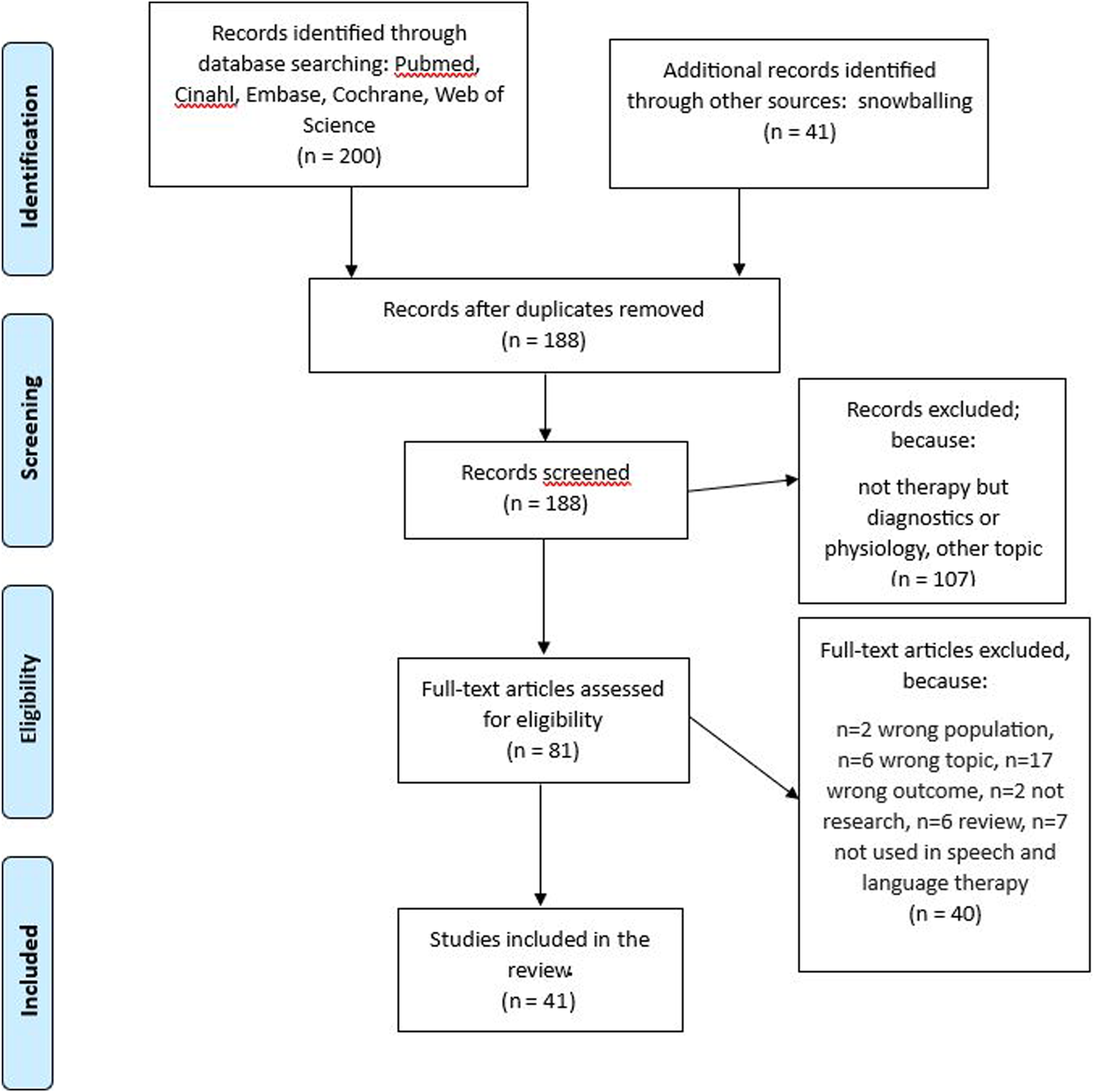
The database format was jointly developed by authors one, two and five. The variables chosen were related to the included articles (e.g., country of origin, date of publishing) and the key study characteristics. Speech, language, and communication were divided into commonly used general areas (Bishop et al., 2017). The data of three articles were independently extracted by authors one and two. Uncertainties about definitions of the variables were discussed and refined. Variables were added or split in subcategories in consultation with the last author. The final data extraction table and the description of the variables can be found in Appendices C and D. The data extraction was completed by the first author. Halfway through and at the end of the data extraction process uncertainties encountered by this author were discussed with the last author. From studies with a mixed cohort only data relating to people with Down syndrome have been used. The studies included in the four systematic reviews obtained in the search (Barton-Hulsey et al., 2021; Moraleda-Sepúlva et al., 2022; Seager et al., 2022; Smith et al., 2020) were all independently checked by two authors and discussed in a subsequent consensus meeting; when these articles potentially met the inclusion criteria of the current review and had not been obtained in the search they were full text assessed by authors one and five, and if suitable, included for data extraction.
Results
Forty-one studies were included (Figure 1). In the selection process, 27 conflicts were noted during the title/abstract selection phase related to initial differences in interpretation of the focus of the interventions and the composition of the target population. During the full text phase, 15 conflicts were discussed related to the target of the intervention (e.g., is the paper focused on phonological awareness training with an effect to articulation) and the applicability of the intervention to day-to-day practice by speech and language therapists. All conflicts were resolved by consensus agreement.
Main characteristics of the included studies presented alphabetically within descending order of year of publication.

Experiment = it is investigated what influence a factor (i.e., intervention) manipulated by the researcher has in a certain situation; RCT = randomised controlled trial; y = years of age.
1All study designs contain a pre-measurement and one or more post-measurements. Type of design as described by the authors. When missing, type was determined in consultation by authors one, two, and five of the current study.
2Participants fall in the age categories according to Meyer et al. (2017) (this is not the exact age range of the participants in the study).
3Single case multiple baseline study = multiple sets of data, before/during/after the intervention, is collected on each subject, or participant, and individually analysed.
4Repeated measures design = multiple measures of the same variable taken on the same subjects or matched subjects or over two or more periods.
5Repeated acquisition design = a single-case research design that organises the rapid and repeated acquisition of non-reversible behaviours in relation to a recursively implemented intervention. Repeated and rapid measurement of irreversible discrete skills or behaviours through pre-and postintervention probes across different sets of stimuli.
6A multiple probe design = an analysis of the relationship between an independent variable and the acquisition of a successive-approximation or chain sequence; preintervention data are collected intermittently rather than continuously on each behaviour. The preintervention condition is referred to as a probe condition rather than as a baseline condition. Once the intervention is introduced, data are collected continuously.
7Single object randomisation design = a form of single case research in which sessions are randomly allocated to treatment conditions within subjects.
8Randomised controlled trial = the research population is randomly divided into an intervention and a control group to distribute external variables equally and counteract systematic differences. All variables, except the independent variable are controlled or held constant as much as possible so that they do not influence the dependent variable.
9Alternating treatment design = rapid and random or semirandom alteration of two or more conditions (interventions), approximately equal probability of being present during each measurement opportunity.
10Multivariate between groups design = compares the means of more than one variable (at the same time) between groups. The intervention has an effect on more than one variable.
11Case study research design = a detailed examination of a particular case or cases within a real-world context. Pre- and posttreatment assessment.
12Single case experimental design = repeated measurements to test the effect of an intervention using a small number of patients (typically one to three), method-specific data analysis, including visual analysis and specific statistics.
13Pretest-posttest control group design with random assignment (pretest-posttest randomised experimental design) = participants randomly assigned to treatment or control group. The outcome of interest is measured before the treatment group gets the intervention (pretest) and after the intervention (posttest).
Synthesis of the results.
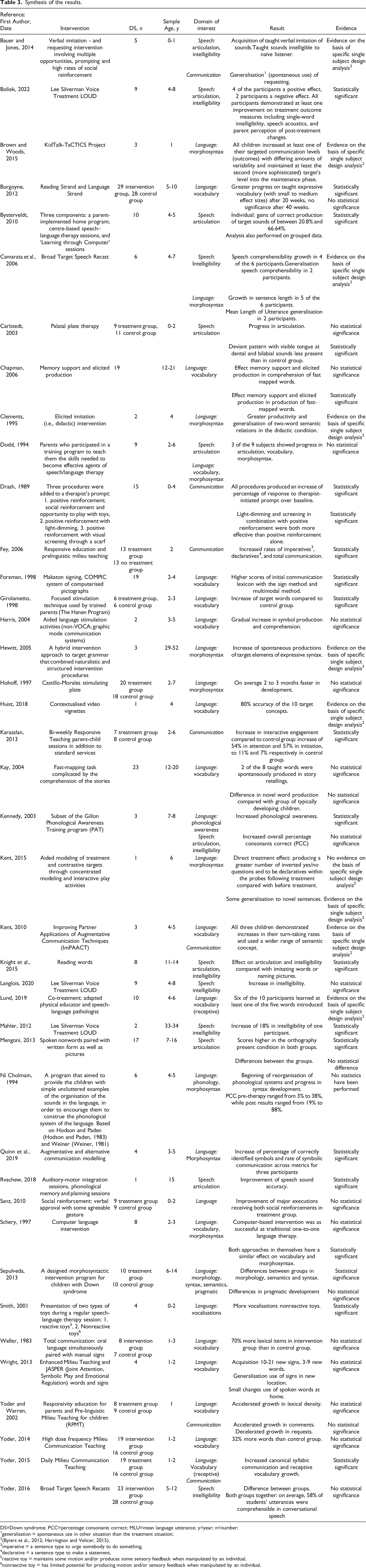
DS=Down syndrome; PCC=percentage consonants correct; MLU=mean language utterance; y=year; n=number;
1generalisation = spontaneous use in other situation than the treatment situation;
3imperative = a sentence type to urge somebody to do something,
declarative = a sentence type to make a statement,
reactive toy = maintains some motion and/or produces some sensory feedback when manipulated by an individual,
nonreactive toy = has limited potential for producing motion and/or sensory feedback when manipulated by an individual.
All included studies examined the effect of an intervention in language (n = 22), speech (n = 9), communication (n = 3), or some combination of these three, being language and speech (n = 3), speech and communication (n = 1), and language and communication (n = 3) (Figure 2). The intensity of the intervention, for example once a week or daily, was investigated by two studies (Yoder et al., 2014; Karaaslan and Mahoney, 2013). Most studies were conducted among children (n = 39), of whom twenty were under three years of age. Only four studies were conducted in adults (Mahler and Jones, 2012; Chapman et al., 2006; Hewitt et al., 2005; Kay-Raining Bird et al., 2004). Twenty-one studies have been carried out in the USA, eight in Canada, both high-income countries, one in a middle-income country, the remaining studies (n = 11) in other high-income countries. The number of studies per intervention varied from one study to seven: Parent mediated training (n = 7), Milieu Training (n = 5), Lee Silverman Voice Treatment (n = 3), other interventions (<3). Of the 41 included studies, 20 (49%) found a statistically significant effect of the applied intervention. Furthermore, nine studies (22%) (Hewitt et al., 2005; Lund et al., 2019; Brown and Woods, 2015; Clements-Baartman and Girolametto, 1995; Huist et al., 2018; Bauer and Jones, 2014; Camarata et al., 2006; Kent-Walsh et al., 2015; Kent-Walsh et al., 2010) determined evidence by applying an analysis method focused on single subject experimental design (Byiers et al., 2012; Harrington and Velicer, 2015). The remaining 12 studies (29%) all mentioned a non-statistical improvement of the target behaviour in the domain of interest due to the intervention used. Graphical representation of five relevant features of the 41 studies.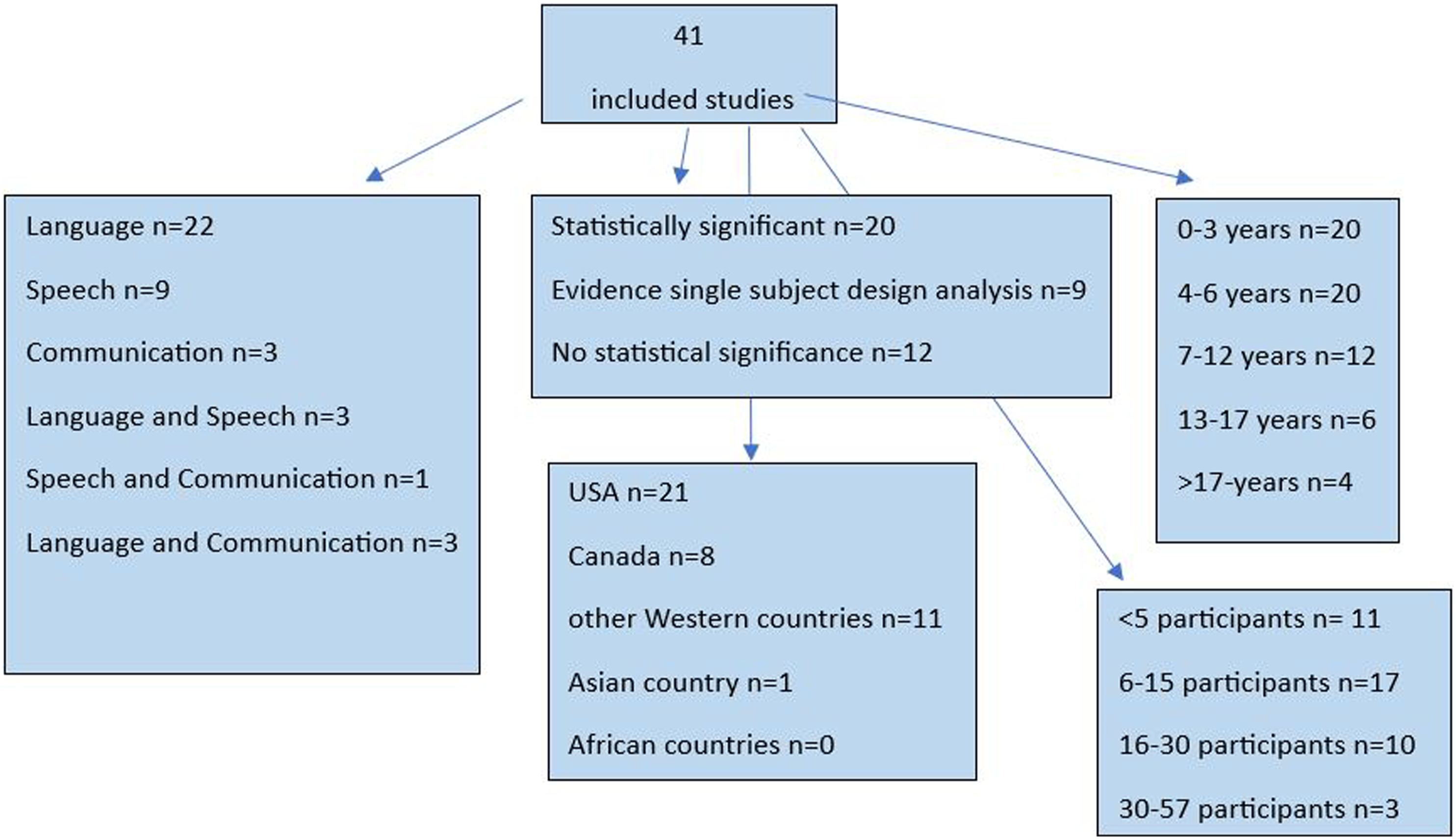
Discussion
This scoping review resulted in an overview of 41 studies related to interventions which are applicable to the treatment of speech, language, and communication disorders by speech and language therapists in people with Down syndrome. This number of studies is low given the high treatment rate of especially children with Down syndrome as advised in guidelines (e.g., Peters, 2023). Besides, only one paper (Sepulveda et al., 2013) described an intervention specifically developed for people with Down syndrome. Reasons for this low number of research based studies could be related to the fact that people with Down syndrome form a relatively small group within the total population treated by speech and language therapists. Also, only a limited group of speech and language therapists actually work with this specific group. Furthermore, speech and language therapists commonly mainly work with individual clinical expertise (Forsythe et al., 2021; Greenwell and Walsh, 2021) as part of evidence-based practice. Moreover, for other groups the number of available research evidence based interventions is limited. This indicates that the proportion of speech and language therapists who are engaged in research activities is relatively low, and that there is a lack of incentive for them to engage in research. Finally, experiences and findings about interventions using case reports are often only described in professional journals; this is considered a lower level of evidence and therefore was not included in our study which focused on research based evidence. Interestingly, we also found interventions in our literature search that are not directly or commonly used by speech and language therapists, such as electropalatographic therapy (Page and Johnson, 2021; Wood et al., 2019; Cleland et al., 2009; Gibbon et al., 2003), orthodontic palatal plate therapy (Javed et al., 2018), stay-play-talk intervention (Severini et al., 2018), and hippotherapy (Jackson-Maldonado, 2019). These too could be a valuable addition to the treatment plan because of their proven effectiveness on speech and language skills. However, in practice these interventions are generally not easily accessible to speech and language therapists in practice e.g. due to barriers in acquiring the necessary equipment and resources. Nevertheless, speech and language therapists should consider discussing these treatments.
Twenty of these 41 studies reported a statistically significant effect; they described a large variety of interventions, only three statistically significant interventions were investigated in three or more studies. The sample sizes of the intervention group with Down syndrome were small in most of the 41 studies (see Figure 2), this could have negatively influenced the outcome of statistical analyses (resulting in ‘no significance’ because of a small sample size). The variety of the interventions and the small sample sizes limit generalisation to the entire population of people with Down syndrome. Nevertheless, this overview of interventions will hopefully encourage speech and language therapists to start taking the factor “research evidence” into account when setting up a tailored treatment plan (next to client and practitioner factors). It also provides information for paediatricians and other healthcare professionals about what speech and language therapy can offer people with Down syndrome in the development and maintenance of their communication abilities. In addition, we hope that the limited number of studies, the wide variety in interventions, and the small sample sizes may be an incentive to perform more research on therapeutic speech and language interventions in people with Down syndrome.
Most of the included studies in this review focused on children; only four studies focused on adults. This suggests that speech and language therapy for children with Down syndrome may have been given more attention by practitioners as well. The latter is confirmed by a study of Frizelle et al. (2021) in which they observed a strong relationship between the number of treatments and age in people with Down syndrome, with adults receiving fewer treatments than children. Previously, Meyer et al. (2017) also found an influence of age by showing an overview of the number of treatments correlated with age groups in Down syndrome: the younger the age, the higher the number of treatments. The underlying reason for this could be the presumption that there will be no further development of speech and language skills at a later age (Chapman et al., 2002). However, several studies (Frizelle et al., 2021; Chapman et al., 2002; van Gameren-Oosterom et al., 2014; Murphy et al., 2018; Coppens-Hofman et al., 2012) come up with strong arguments why speech and language therapy in adults and adolescents with Down syndrome is useful and important: continuing therapy will maintain and even improve expressive language skills in adolescence. This is important because speech and language abilities are necessary for the development of social skills to build relationships and because they facilitate self-advocacy when making life choices and improve opportunities for open employment and education through better communication.
Another relevant outcome of the included studies is the imbalance in the domain of interest. The vast majority, 28 studies, are related to language, 13 studies to speech and 7 studies to communication. A reason for this imbalance could be related to the therapeutic focus on language in the earliest years of children to promote and trigger language development and interaction. Speech, on the other hand, becomes a therapeutic focus in later years. Moreover, moderate intelligibility is considered to be a characteristic of people with Down syndrome which is therefore not regarded as a priority for treatment, especially at an older age (Meyer et al., 2017; Buckley and Prèvost Le, 2002; Chapman et al., 2002). Another reason is inherent to the classification that has been applied in this review (Bishop et al., 2017): phonology is considered as part of language development and is essential in pronouncing words with the correct sounds. As a consequence, studies specifically mentioning phonology as their topic are classified under language, unlike other studies reporting articulation, speech, or intelligibility. The latter are grouped under speech.
Various studies emphasized the direct importance of treatment of the speech, language, and communication needs in people with Down syndrome (Moraleda-Sepúlva et al., 2022; Smith et al., 2020; Murphy et al., 2018). However, there is little evidence on the effects of the ‘dosage’, i.e., frequency and duration, of interventions. Only two studies included in this review, Yoder et al. (2014) and Karaaslan & Mahoney (2013), examined the effect of a low dose compared to a high dose of the same treatment approach. A larger effect was found at a higher dose. McDaniel and Yoder (2016) mentioned this severely limited empirical evidence related to treatment dose as an impediment to evidence-based treatment decisions. This gap between research results and practice needs to be urgently filled. More research is needed to substantiate the research evidence of treatment intensity of people with Down syndrome for the benefit of practitioners but also to inform national healthcare policy makers. As Murphy et al.(2018) stated: “Targeted, strategic investment is needed to allow practice to be aligned with best evidence, to support and treat people with DS [Down syndrome] effectively, to allow them to reach their maximum potential, and to exercise their rights to communicate as a basic human right. The right to communicate is enshrined in Article 21 of the UNCRPD (Convention on the Rights of Persons with a Disability, United Nations, 2006), and it includes the responsibility of the government to ensure all appropriate supports to develop communication skills, are put in place.”
This study has some limitations. The data extraction was performed by one author; however, the results were discussed afterwards until consensus was reached. Since this was a scoping review, no explicit quality rating of the included studies was performed.
This review has focused on treatments by speech and language therapists for general speech, language and communication needs in people with Down syndrome. Interventions for specific difficulties such as primary oral motor dysfunction, stuttering, aphasia, and reading disabilities were excluded. However, the authors believe that a similar review exploring those difficulties would be an important topic for future research and could be informative as well for speech and language therapists in choosing the most effective and appropriate treatment of these disorders in people with Down syndrome.
The overall conclusion is that more research on interventions in general is necessary, preferably with larger sample sizes of the target group, the people with Down syndrome. Specific themes that need extra attention are treatment intensity, adult intervention, and studies in low- and middle-income countries.
This review is one part of aiming to support speech and language therapists to take ‘research evidence’ into practice by providing a comprehensible summary of the current research-base. Future work could investigate other barriers to implementing research evidence and how research studies can improve this within their designs. This can move the field of speech and language therapists forward.
Supplemental Material
Supplemental Material - Evidence-based decision-making in the treatment of speech, language, and communication disorders in Down syndrome; a scoping review
Supplemental Material for Evidence-based decision-making in the treatment of speech, language, and communication disorders in Down syndrome; a scoping review by Annemieke de Groot, Noortje Eijsvoogel, Gijs van Well, Roeland van Hout and Esther de Vries in Journal of Intellectual Disabilities.
Supplemental Material
Supplemental Material - Evidence-based decision-making in the treatment of speech, language, and communication disorders in Down syndrome; a scoping review
Supplemental Material for Evidence-based decision-making in the treatment of speech, language, and communication disorders in Down syndrome; a scoping review by Annemieke de Groot, Noortje Eijsvoogel, Gijs van Well, Roeland van Hout and Esther de Vries in Journal of Intellectual Disabilities.
Supplemental Material
Supplemental Material - Evidence-based decision-making in the treatment of speech, language, and communication disorders in Down syndrome; a scoping review
Supplemental Material for Evidence-based decision-making in the treatment of speech, language, and communication disorders in Down syndrome; a scoping review by Annemieke de Groot, Noortje Eijsvoogel, Gijs van Well, Roeland van Hout and Esther de Vries in Journal of Intellectual Disabilities.
Supplemental Material
Supplemental Material - Evidence-based decision-making in the treatment of speech, language, and communication disorders in Down syndrome; a scoping review
Supplemental Material for Evidence-based decision-making in the treatment of speech, language, and communication disorders in Down syndrome; a scoping review by Annemieke de Groot, Noortje Eijsvoogel, Gijs van Well and Roeland van Hout and Esther de Vries in Journal of Intellectual Disabilities.
Footnotes
Declaration of conflicting interests
The authors declare that there is no conflict of interest with respect to this research, authorship and/or publication of this article.
Funding
The author(s) disclosed receipt of the following financial support for the research, authorship, and/or publication of this article: The university appointment of the first author is financially supported by a grant from ZonMW (nr. 10430072010004; PRIDE study).

Supplemental Material
Supplemental material for this article is available online.
References
Supplementary Material
Please find the following supplemental material available below.
For Open Access articles published under a Creative Commons License, all supplemental material carries the same license as the article it is associated with.
For non-Open Access articles published, all supplemental material carries a non-exclusive license, and permission requests for re-use of supplemental material or any part of supplemental material shall be sent directly to the copyright owner as specified in the copyright notice associated with the article.
