



Abstract
All people have the right to learn reading. Understanding the factors influencing reading proficiency among students with intellectual disabilities is important for developing effective instructions. To accurately assess reading, suitable assessments that can effectively differentiate between low performance levels are necessary. We analyse results of 400 students (43 students with intellectual disabilities) in a digital reading screening and investigate the influence of disability severity, grade level and special educational needs status on the reading abilities of students with intellectual disabilities. The results indicate that the screening is suitable for assessing students with intellectual disabilities. A newly developed digital screening test for flash reading measures reliably. All presumed factors significantly impact the reading proficiency. However, substantial overlap exists between students with intellectual disabilities and those with other special needs. The necessity for structured reading interventions, irrespective of the disability label, and the importance of appropriate assessments for all students are discussed.
Introduction
Chances of reading instruction for students with intellectual disabilities
Reading is an important cultural competence that students with intellectual disabilities need to develop more intensively in the context of inclusion. However, students with intellectual disabilities face significant challenges in developing reading skills (Di Blasi et al., 2019) and require intensive reading instruction and support in school (Allor et al., 2010). They often do not receive this necessary intensive instruction, particularly in self-contained schools and classes: Dessemontet et al. (2021) found that students with intellectual disabilities are less likely to receive comprehensive reading instruction and that advanced reading is taught less frequently than phonics and phonological awareness. Lindström and Lemons (2021) showed that the intended reading instruction time is often used for other contexts, like e.g. behavior management.
Long-term, intensive, and comprehensive reading instruction is crucial, as students with intellectual disabilities can particularly benefit from it in both special and general classrooms (e.g., Allor et al., 2010, Conner et al., 2024, Hunt et al., 2020). In terms of reading instruction approaches for students with intellectual disabilities, research emphasizes the importance of explicit, systematic, intensive, and consistent instruction (Alnahdi, 2015; Dessemontet et al., 2021). Systematic reading approaches have been shown to increase phonological awareness, letter-sound knowledge, decoding skills, and letter-sound correspondence, thereby improving the ability to read and spell words (Ahlgrim-Delzell et al., 2016; NICHHD, 2000). Students with mild and moderate intellectual disabilities can benefit greatly from multicomponent reading instruction. Therefore, it is necessary not only to practice individual skills but also to include comprehensive areas in the instruction for appropriate reading training. Afacan et al. (2018) highlight that students with intellectual disabilities who were exposed to multicomponent reading programs showed significant improvements in their reading skills compared to those who received traditional sight word instruction or their previous reading program. From a systematic review, Alnahdi (2015) also concludes that students with mild intellectual disabilities can benefit from comprehensive reading approaches that focus on multiple areas of reading simultaneously and holistically, thus promoting, for example, phonological awareness, word recognition, text comprehension, and critical thinking. This method has been successfully applied to persons with intellectual disabilities by e.g., Allor et al. (2010, 2018, 2020), Browder et al. (2008, 2012) and Samuelsson et al. (2024), among others.
Reading abilities of students with intellectual disabilities
Students with intellectual disabilities exhibit a wide range of reading abilities, from being unable to read at all to reading fluently at an orthographic level (Ratz & Lenhard, 2012). Therefore, indicators are needed to select appropriate instruction. Due to the significant heterogeneity, the mere label of intellectual disabilities is not sufficient. There are significant differences, especially in sentence and text reading, between students with intellectual disabilities, students with IQ scores in the lower average range but not low enough to indicate intellectual disabilities, and no disabilities (Cornoldi et al., 2014; Di Blasi et al., 2019). Within the group of students with intellectual disabilities, the degree of intellectual disabilities, often measured by the IQ of students with intellectual disabilities, is hardly a reliable basis for deciding whether and how intensively reading should be taught (Euker, 2018; Conners et al., 2006). Grade level, and therefore student age, has also been shown to be a less meaningful indicator of reading performance for students with intellectual disabilities. Wilkerson and Afacan (2022) examined the reading achievement of fifth and eighth grade students with intellectual disabilities on state-wide assessments. There was little difference in the performance of these students across grade levels, with students remaining at the lowest levels of reading proficiency for the most part. Tindal et al. (2016) examined the reading achievement of students with intellectual disabilities in elementary level over several years. Again, there was little to no growth in reading achievement between grade levels. Di Blasi et al. (2019) compared the performance of students with mild intellectual disabilities in Italy from second to eighth grade. Reading performance at the primary level (second to fifth grade) was stronger than reading performance in the higher grades. This was particularly true for text reading accuracy and text reading speed. In the area of text comprehension, the differences were smaller, but still negative. A similar picture emerged for word reading, with scores more often stagnating across grade levels.
Standardized assessment for reading instruction
To select fitting instructions, teachers instead need to assess each student's performance individually and choose instructions based on this assessment (Filderman et al., 2018). Accurate assessment is crucial for ensuring that students receive the appropriate support. However, the accuracy of the student's assessment depends heavily on the teacher. While teachers are generally capable of accurately judging the performance of their students, their judgment accuracy is lower for low-performing students than for high-performing students (Begeny et al., 2008; Coladarci, 1986, p. 144). The use of standardized tests specifically for educational assessment in the context of data-based decision making (DBDM) may support teachers in their assessment. Also, the use of DBDM can lead to increased learning progress for students with academic learning difficulties (Filderman et al., 2018).
To assess the performance of an entire class or group in a relatively short time, screening measures, a type of test for educational assessment, can be used (Hasbrouck & Tindal, 2006). They are typically used at the beginning of the school year to broadly measure, predict, and identify the reading skills students already have and the areas where instruction needs to focus. Due to their relatively short administration time, they can be easily integrated into the school routine. Especially in inclusive classes, where the heterogeneity of students' learning conditions is very high, the use of screenings is helpful for assessing the skills of students with and without disabilities. The goal of such measurements is not to label students, but to provide appropriate and ideally preventive support and instruction in the school context. Therefore, the tasks of a reading screening should align with the areas where students will be supported in reading and common instructional practices to provide a foundation for informed decisions on assigning suitable reading instructions.
Research Questions
Standardized screenings that are easy to apply and give information regarding instruction and support offer great advantages for students with disabilities in order to provide tailored reading support. This study investigates whether a digital screening tool developed for students with learning disabilities is also suitable and psychometrically appropriate for students with mild and moderate intellectual disabilities. The goal is to obtain a screening instrument that can be effectively utilized in heterogeneous learning groups that are characterized by the different learning prerequisites of the students. To understand the impact of students' personal prerequisites on their performance in the reading screening, we address the following research questions: 1. Can the screening tests measure the reading skills of students with intellectual disabilities differentiated without bottom effect? 2. Can the screening measure significant differences in reading skills between students with intellectual disabilities and students with other disabilities? 3. Does the grade of intellectual disabilities influence the reading performance of students with intellectual disabilities? 4. Does the grade level influence the reading performance of students with intellectual disabilities?
Materials and methods
Sample
We conducted a digital reading screening as part of a larger study, involving a sample of 400 German students. This sample included 357 students in grades 2 to 4 attending inclusive primary schools, with an average age of 8.43 years (SD = 1.07); 55 of these students had special educational needs in learning or speech impairment. Additionally, 43 students with intellectual disabilities attended a School for Students with Intellectual Disabilities (SSID). Of these, 13 were in primary level, and 30 were in secondary level, with an average age of 11.57 years (SD = 1.91). The students with intellectual disabilities were selected for testing based on their class teachers’ assessments of their reading abilities, focusing on those who received reading instruction and had achieved letter knowledge. The class teachers also provided information on the severity of the disability and background information from school record. Among the students with intellectual disabilities, 19 were classified as having mild intellectual disabilities, 12 with moderate intellectual disabilities, and 4 with IQ scores in the lower average range but not low enough to indicate intellectual disabilities. Regarding gender distribution in the total sample, 42.75 % were female, 34.75 % were male, and gender information was unavailable for 22.5 % of the students. No students of the sample used augmentative or alternative communication.
Instrument
The digital reading screening is part of the online test platform Levumi.de (Jungjohann et al., 2018, Mühling et al., 2019) and includes four tests: phonological awareness (Test 1), vocabulary (Test 2), flash reading (Test 3), and sentence comprehension (Test 4) (Figure 1, Ebenbeck et al., 2023). The screening was developed in several steps. First, the tests were developed as a paper-pencil version, administered to students in inclusive primary schools and psychometrically analysed (Jungjohann et al., 2023). In the second step, the tests were digitised and adapted where necessary, e.g. by expanding the item pools or adding additional difficulty-generating features. This second version of the test, which was also used for this study, was published on Levumi.de. A digital implementation of the screening was planned from the outset. However, for reasons of practicability and due to the long digitization period, the first version was developed as a paper-pencil version. Tests of the digital screening measure LES-IN-DIG: English translation of the example instructions and items.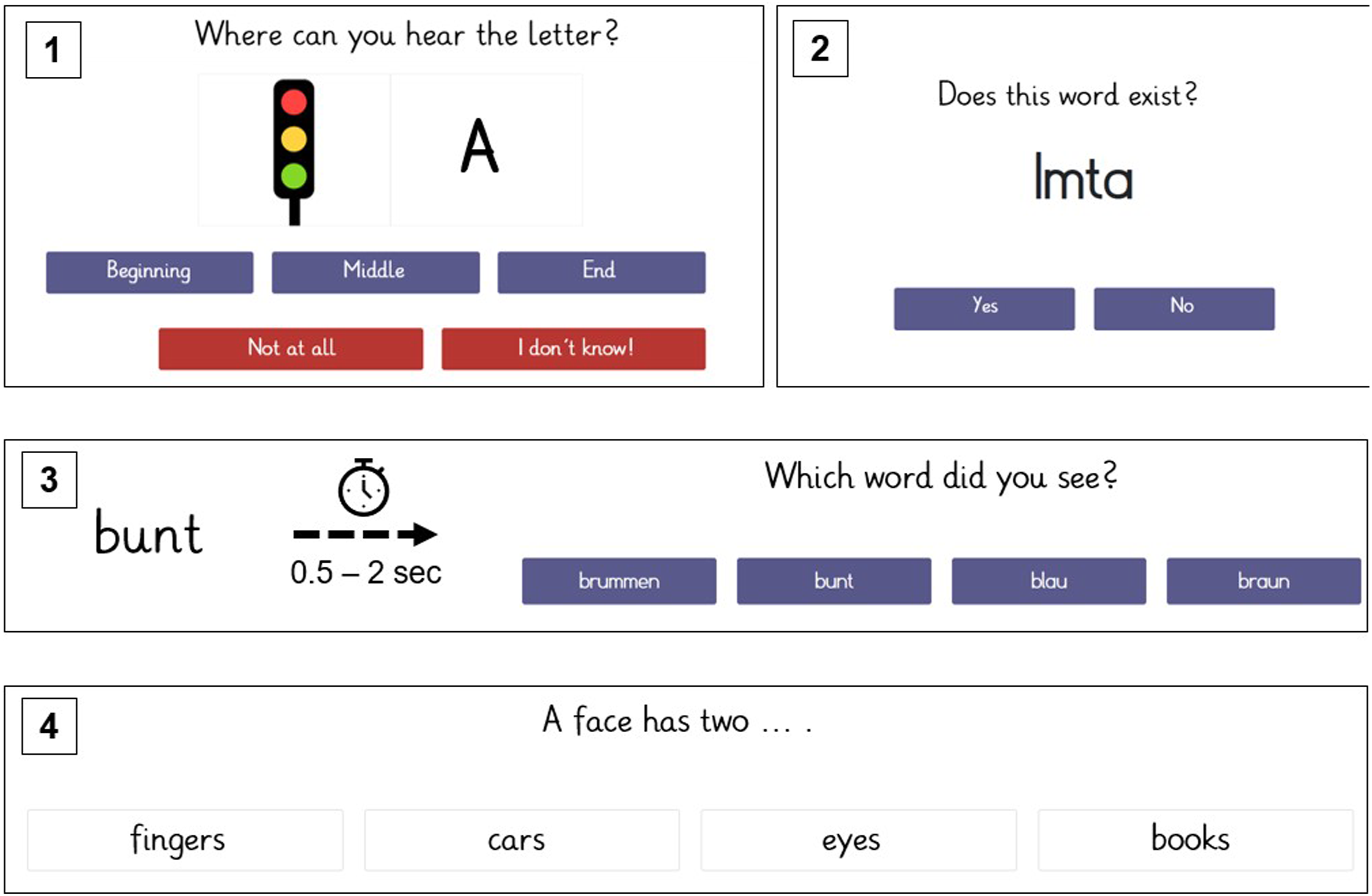
Test 1 evaluates students' phonological awareness, a crucial skill for processing phonological information in the German language (Wagner and Torgesen, 1987). It consists of 35 items, where students identify whether a sound occurs at the beginning, middle, end or not at all in a word represented by a graphic. Test 2 measures students' ability to recall words from their mental lexicon. Vocabulary recall is vital for reading acquisition and comprehension (Röthlisberger et al., 2021). The test includes 52 items, where students determine whether a word presented is real or a pseudoword. Test 3 evaluates the speed of lexical recall from the mental lexicon, an essential factor in reading speed (Ennemoser et al., 2012). Students view words briefly, lasting between 0.5 and 2 seconds, on the screen and identify them from a list of four possible words. This test comprises 30 items. Test 4 assesses sentence comprehension through a gap-filling task, with 35 items containing sentences with gaps to be filled by one of four answer choices.
Each of tests 1, 2, and 4 has a maximum working time of five minutes, while subtest 3 is unlimited, stopping after administering all items. The entire screening takes approximately 20 minutes. All tests of the screening conform to the unidimensional Rasch model. This allows for flexibility in administration and separate assessment of each test, resulting in individual scores without an overall screening score (Jungjohann et al., 2023).
The reading screening is designed for use in inclusive classrooms and heterogeneous learning groups, focusing on students with lower reading abilities. The test was originally developed to measure the reading abilities of students in inclusive classes, including primarily students without disabilities, as well as students with learning disabilities, language impairments, or problems in emotional and social development. It targets third-grade students attending inclusive primary schools or special schools, but since all subtests are skill based, they can be administered once students acquire the necessary prerequisites, such as letter acquisition for subtest 1 and synthetic reading for the other three subtests. All subtests are user-friendly, requiring no special motor skills and use a single-choice format for presenting items.
Setting
All students completed the tests independently on a tablet in the class setting. Two educators or more were present during the assessment to provide assistance if needed. The assessment occurred in a quiet and familiar environment, usually in the students’ classrooms.
Data Analysis
The analysis was conducted using the R programming language within the RStudio environment. A psychometric analysis examined measurement invariance between students without special educational needs, with special educational needs and with intellectual disabilities. Andersen's likelihood ratio test with a random split, a median split and the student’s special educational needs status as split was used to identify items that didn't meet the test model assumptions. Unsuitable items were excluded based on graphical model tests and a Wald test. Unidimensional Rasch models (Rasch, 1960) were calculated per subtest. All psychometric analyses were conducted with the R package pairwise (Heine, 2023).
For the performance analysis, the number of correctly answered items per person was calculated for each subtest. Correlations between the subtests were computed for all students and each group. The groups were categorized into three: those without special educational needs, those with intellectual disabilities and those with other special educational needs (students with learning disabilities or speech impairment). ANOVA was used to examine total scores across all subtests, considering students' special educational needs status, disability severity, and grade level for students with intellectual disabilities. Pairwise t-tests were performed to explore the significance of the variance between groups. Reading speed and accuracy was separately analyzed for students with intellectual disabilities, other special educational needs and students with IQ scores in the lower average range but not low enough to indicate intellectual disabilities using the flash reading test for group comparisons.
Results
The four tests fit the Rasch model. Individual items that showed significant deviations were excluded to ensure measurement invariance between students with and without special educational needs. The tests exhibit significant correlation with each other. For the entire sample, the tests exhibit an average correlation of .51 (p < .01). However, the correlations vary within each group, where the tests for students without special educational needs demonstrate weaker correlations compared to those for students with intellectual disabilities or special educational needs. Specifically, the tests have an average correlation of .38 (p < .01) for students without special educational needs, .68 (p < .01) for students with intellectual disabilities and .54 (p < .01) for students with other special educational needs.
The results of the statistical analyses indicate that there are significant differences in reading ability among students based on their special educational needs status, as shown by the F-tests in tests 1 through 4 (test 1: F(1) = 28.48, p < .001; test 2: F(1) = 67.24, p < .001; test 3: F(1) = 59.00, p < .001; test 4: F(1) = 27.44, p < .001). In pairwise comparisons, all three student groups were found to differ significantly from each other (Figure 2). Specifically, students without special educational needs demonstrated the highest average performance across all subtests, while students with intellectual disabilities demonstrated the lowest average performance. As expected, there was a wide range of reading ability across all student groups. For example, among students with intellectual disabilities, some were able to read at the same level as students without special educational needs, while others struggled to correctly answer any items. Across all subtests, students with intellectual disabilities demonstrated that they are capable of reading at an expected level for regular primary school. However, in test 4, nine students could not solve any items due to their lack of sentence reading skills. On average, students with intellectual disabilities scored only a few items correctly in the given time in test 4. Nevertheless, in all other subtests, all students with intellectual disabilities were able to complete the tasks under the same conditions as other students and sometimes even achieved the same scores. Number of correct answers per disability status in all four reading screening tests.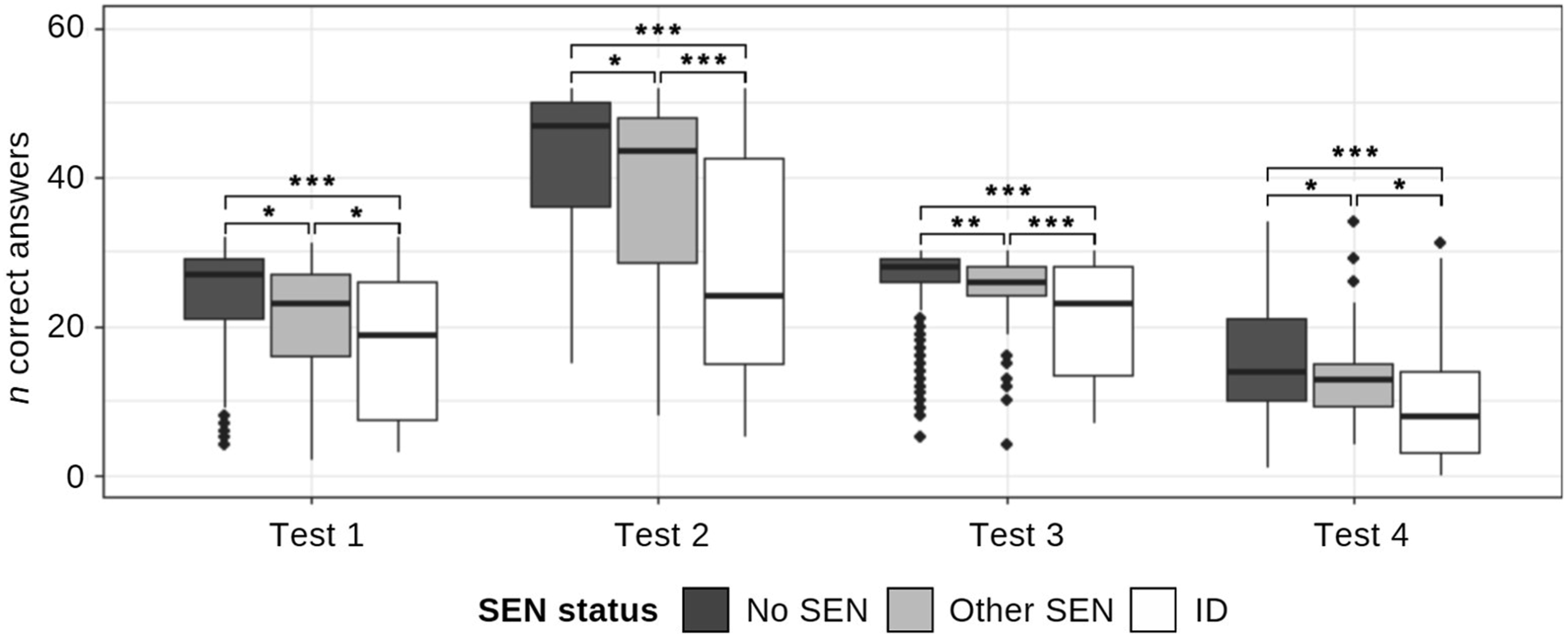
When considering the reading performances of students with intellectual disabilities, a more nuanced picture emerges when dividing them by the grade of their intellectual disabilities (Figure 3). ANOVA reveals that only test 2 shows significant differences (F(1) = 5.533, p < .05). In pairwise comparisons, there are particularly strong differences between students with special educational needs and students with moderate intellectual disabilities in all subtests, as well as differences between the reading performances of students with mild and moderate intellectual disabilities. Notably, students with special educational needs and students with mild intellectual disabilities do not significantly differ in their reading performances. Students with mild intellectual disabilities achieve nearly the same sum scores as students without intellectual disabilities, as both the median and distribution hardly differ. Conversely, students with moderate intellectual disabilities significantly differ both in their mean and distribution of sum scores from these student groups. The few students with IQ scores in the lower average range but not low enough to indicate intellectual disabilities intelligence present a differentiated picture. They perform better in test 1 than the other student groups, but weaker in all other subtests. In test 4, their performance is almost at the level of students with moderate intellectual disabilities. Number of correct answers per disability status in all four reading screening tests.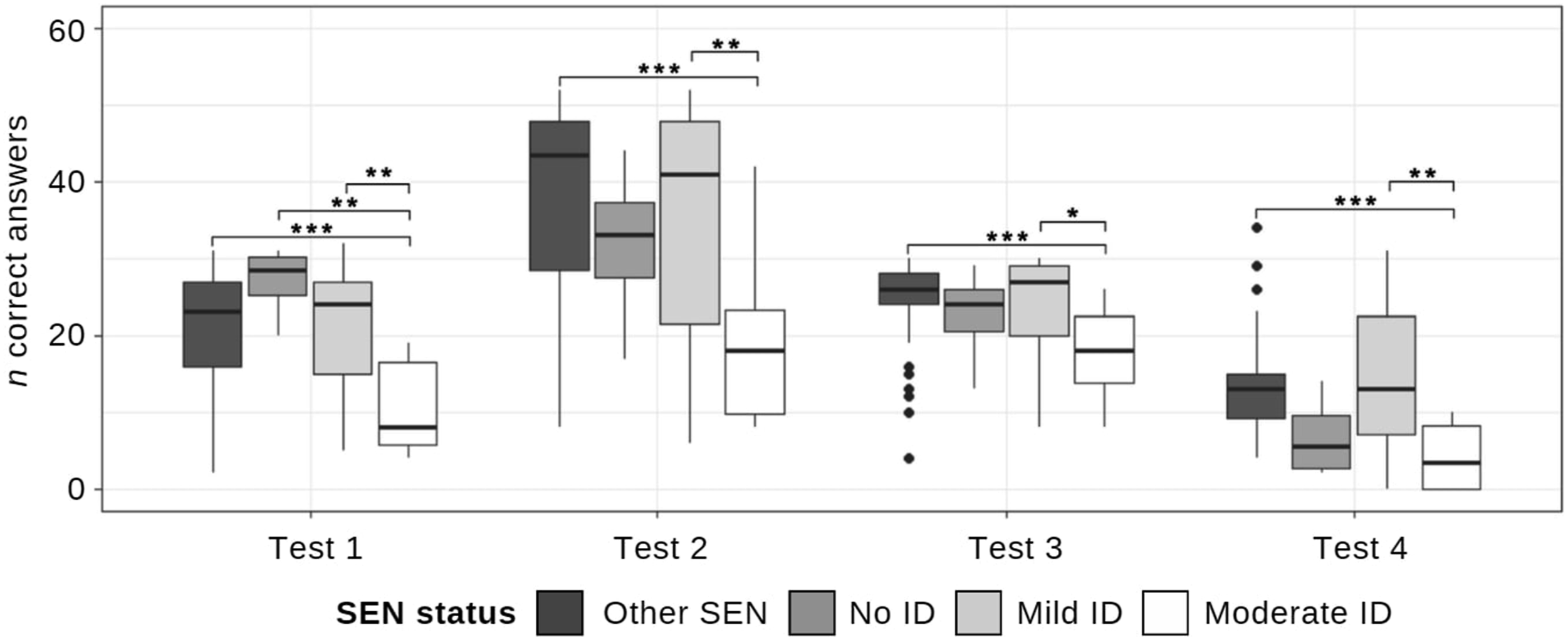
In the Flash Reading test, words are displayed for varying durations (Figure 4). Words displayed for less than one second are solved correctly less frequently than words displayed for longer than one second. This suggests that the display duration has an influence on the difficulty of these items. Overall, the Flash Reading test exhibits a ceiling effect, which becomes particularly evident with easier items. Students with intellectual disabilities or other special educational needs perform similarly well in both item groups, with little difference between these groups, as all of them achieve high scores. However, students with moderate intellectual disabilities do not exhibit a ceiling effect, and items with longer display durations are significantly easier for these students. Therefore, the test is particularly suitable for accurately assessing reading abilities in this lower performance range. It also indicates that students with moderate intellectual disabilities perform significantly weaker compared to other students. Number of correct answers in fast (< 1 sec) and slow (> 1 sec) flashed items in test 3 (flash reading) per disability status.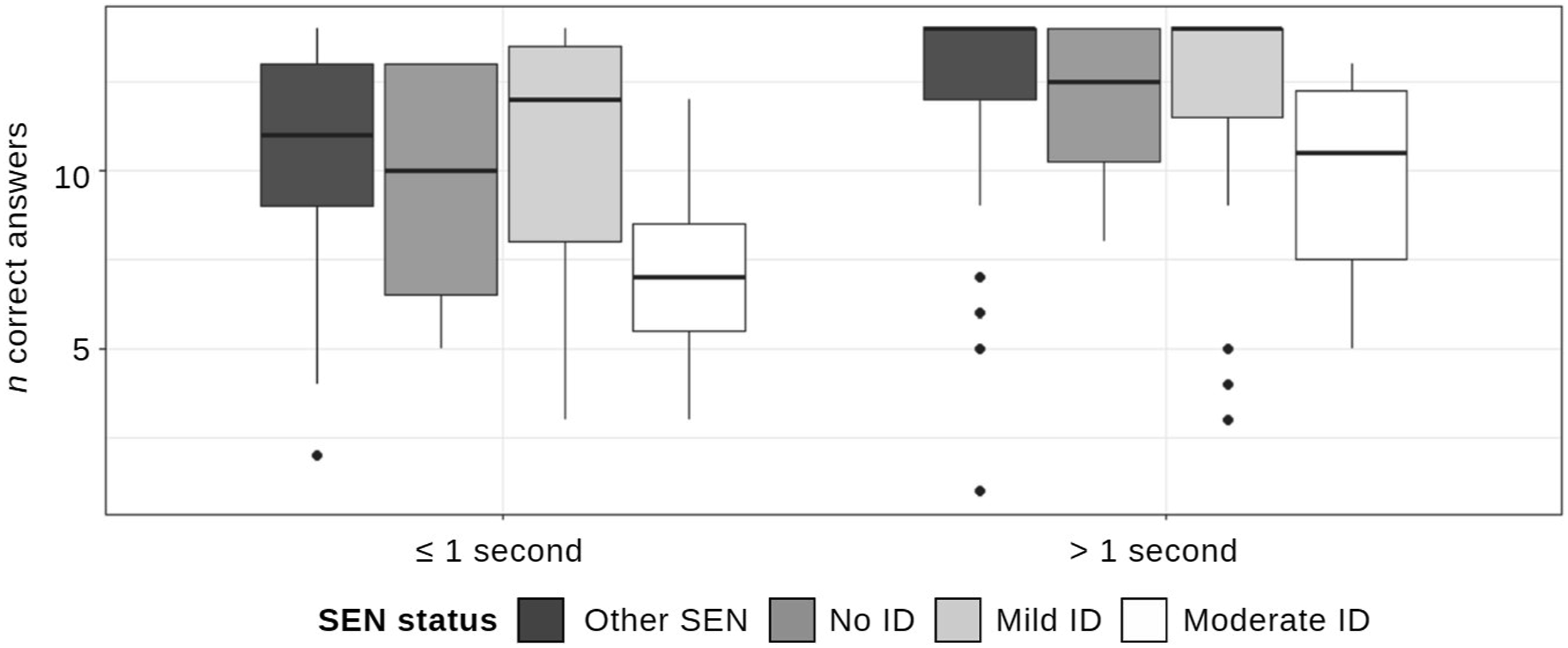
On average, third-grade students exhibit weaker reading skills than fourth-grade students. Furthermore, a rise in reading abilities can be observed when transitioning to secondary school, with students from the fifth to ninth year of schooling being evaluated together (Figure 5). Significant differences are only present in test 4, which involves sentence reading (F(2) = 7.218, p < .01). Even in pairwise comparisons, the grade levels only show differences in test 4. However, regardless of statistical significance, improvements in reading performance can be observed across grade levels. While test 1 shows a significant jump from third to fourth grade, the results in the other subtests consistently demonstrate an increase in performance on average across all grade levels. In particular, sentence reading, and vocabulary skills demonstrate a significant increase from primary to secondary school. Nonetheless, there are still students in each grade level who exhibit very weak reading performance. Number of correct answers per grade level of students with intellectual disabilities in every reading screening test.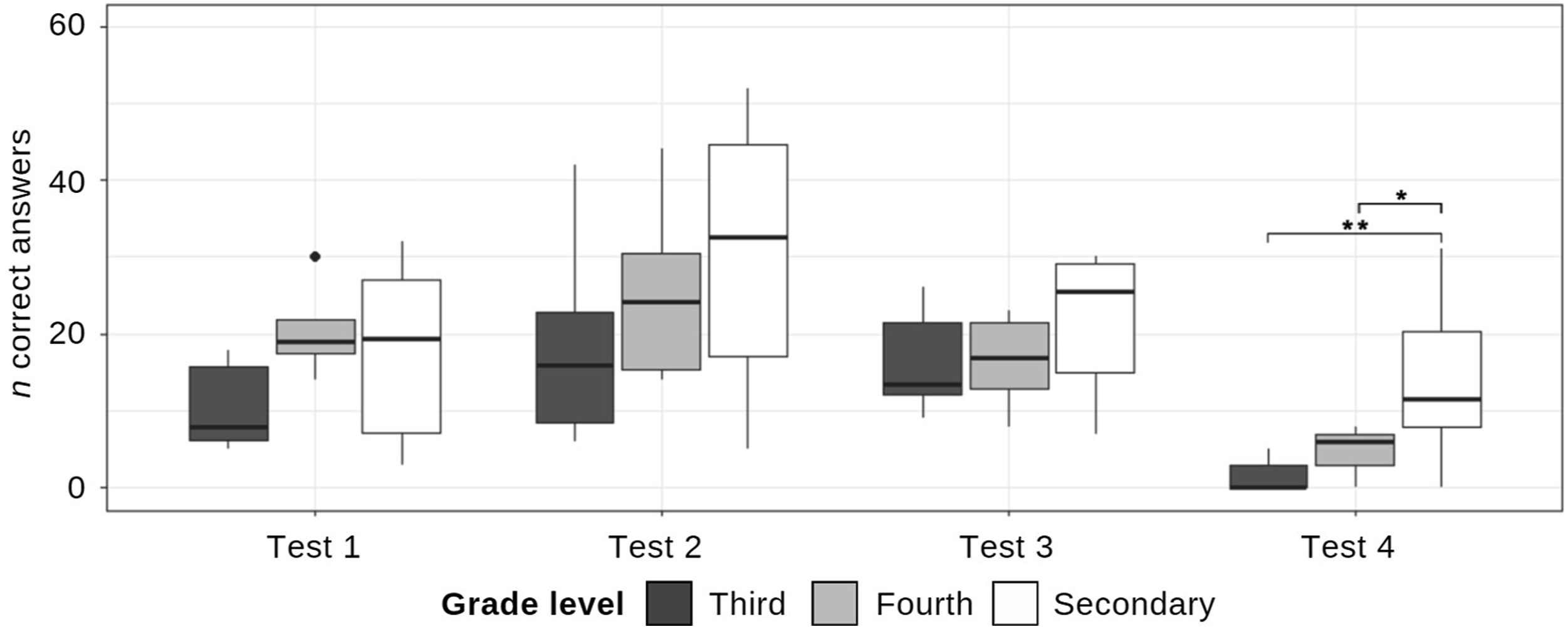
Discussion
This study investigated the extent to which a digital reading screening for inclusive classrooms can be used with students with intellectual disabilities. Psychometric, educational and practical implications and limitations are discussed in the following.
Suitability of the digital screening instrument
The inclusive reading screening used in this study is suitable for assessing the reading skills of students with intellectual disabilities. This is indicated by the absence of floor effects in any of the screening tests, which suggests that the individual tests include sufficiently easy items. Ceiling effects are observed for higher-performing students. However, since the main focus of the screening is to identify students with reading difficulties at an early stage, particularly in the lower performance range, the instrument does not prioritize capturing high levels of performance. Therefore, the screening tool demonstrates sensitivity even in the lower performance range and can be used for research purposes as well as making data-driven decisions regarding reading interventions for students with intellectual disabilities. However, the difficulty structure of the screening is interesting. In a screening that measures sub-areas of reading that build on each other, it would have been expected that the individual tests would be of varying difficulty for the students. Instead, there are no significant differences in difficulty between test 1, 2, and 3. This is particularly interesting in test 1, which assesses phonological awareness, often considered a precursor skill. Test 2, however, can be explained by the higher guessing probability, which is 50 % compared to the other tests' 25 %. Especially test 3 (Flash Reading) has the ability to measure weaker areas of performance, as it uses different display times of words timing down to milliseconds in combination with words of different lengths. This demonstrates the value of innovative and technology-based assessments for this student population. Even students with very low reading abilities do not exhibit floor or ceiling effects, and their performances are well represented in this test. The format of this test is newly developed and could not be implemented without technical devices in the past. However, with computer-based administration, different display times in the milliseconds area are easily achievable. Despite being a new format, this test is a valuable addition to a comprehensive screening and should be further analyzed and examined in future studies, particularly in terms of its difficulty level and item structure.
Measured reading performances of students with intellectual disabilities
The reading screening measures significant differences in reading skills between students with and without special educational needs, primarily occurring between students with moderate intellectual disabilities and their counterparts. The reading performances of students with mild intellectual disabilities and other special educational needs, on the other hand, show only little difference. Students with mild intellectual disabilities do not exhibit a significantly different reading profile compared to students with other special educational needs. Instead, significant differences could only be found for student with moderate intellectual disabilities, what aligns with the findings of previous studies (e.g., Cohen et al., 2001, Di Blasi et al., 2019, Levy, 2011). Reading intervention for students with mild intellectual disabilities therefore should align with the standards set for these students and encompass all aspects of reading competence, including sentence and text comprehension, instead of only focusing some areas of reading (Allor et al. 2010). For students with moderate intellectual disabilities, the focus of their intervention could be on improving reading speed, as those students performed weaker in the rapid reading test. Digital tools, like the used instrument, can be utilized to accurately measure and track improvements in reading fluency within seconds. Fluent reading of words and short sentences can be considered relevant for practical everyday life and should thus be emphasized in a structured reading intervention for this group of students. Overall, the goal should be to offer evidence-based structured reading instruction and high-quality practice to all children with the aim of fostering proficient reading skills that are applicable in their everyday lives (Allor et al., 2014). As expected from the literature, the grade level and grade of intellectual disabilities both are no significant factors for the screening outcome. This shows the importance of individualized and student-centered approaches to reading instruction regardless of such factors to maximize their reading potential (Alexander and Reynolds, 2020, Tassé et al., 2016).
Using screening results for data-based decisions on reading instruction
The screening tool measures a wide range of skills, resulting in low correlations between the different tests. As an educator or teacher, this provides the opportunity to select tests that assess specific areas requiring improvement or topics currently covered in school. The screening tool also allows educators and teachers to initiate the necessary timely reading interventions for students with intellectual disabilities (Kuhl, 2018). For example, the students’ results show that deficits in phonological awareness may persist even in later stages of reading development. Therefore, targeted interventions focusing on these precursor skills are still recommended in higher grades to establish a strong foundation for further reading skills (NICHHD, 2000, Dessemontet et al., 2021). Also, analyzing the grade level and grade of disability of students in the sample show considerable overlaps in reading performance between students without special educational needs, students with special educational needs, and students with mild intellectual disabilities over multiple grade levels. Therefore, it is necessary to establish a structured and strategic reading intervention for all students (Alnahdi, 2015, Kuhl, 2018, Shelton et al. 2019).
Prioritizing evidence-based instructional materials is crucial to effectively optimize the intervention time. A structured approach offers particular advantages to students with special educational needs, as they greatly benefit from clearly defined learning objectives and direct instructions (Zentel & Gebhardt, 2024). The primary focus of such a reading intervention should be on early identification of reading difficulties, to enable early preventive support. For students with intellectual disabilities, it is furthermore essential to ensure that reading intervention is sustained throughout the entire schooling period. This allows students to systematically learn and practice even basic reading skills in secondary level. The data presented indicates that there is potential for improvement in basic skills such as vocabulary and reading speed in those higher grade levels. Consequently, it is crucial to emphasize that reading intervention should not be limited solely to the primary school level. Nevertheless, this does not mean that only basic reading skills continue to be practiced in secondary school. Instead, the combination of structured and intensive reading instruction and more complex literacy instruction (e.g., focusing on writing, comprehension and reflection or the integration of more complex literature) could be combined in lessons in order to integrate age-appropriate reading instruction in the classroom.
It would therefore be fatal to encourage or not encourage students in reading based on categorisations such as age, grade level or grade of disability, as these indicators are not sufficient and students can exhibit various strengths and difficulties in reading regardless. This act of labeling students in a systematic manner may fail to capture the complexity of their individual learning profiles. Therefore, it is crucial to consider the unique learning needs of each student based on standardized assessments, like the screening in this study, and prioritize personalized approaches rather than relying solely on diagnostic labels. This is especially important, as students with intellectual disabilities often do not have the same opportunities to receive frequent, intensive and comprehensive reading instruction and support, especially in segregated special education schools or self-contained classes (Dessemontet et al., 2021, Lindström & Lemons, 2021). This may hinder students who have higher potential strengths in reading, as they may not receive adequate support to fully develop their academic abilities. Therefore, it is necessary to ensure that reading support is provided across multiple grade levels according to the students' reading levels in these settings and not reduced due to the disability. Alternatively, appropriate support should be provided in inclusive settings.
Possible adaptations of the screening instrument
Although no accessibility issues were identified when using the screening, the participating students only had learning or cognitive disabilities. No student used alternative communication or had motor or visual problems, which are common in the target group. Due to the design of the screening, however, we assume that the use of alternative communication would not be a limitation, as students only process the items non-verbally by typing. If, for example, motor disabilities require assistance from another person, it may make sense to extend or remove the time limit and to base the scoring on a maximum number of tasks rather than on the number of tasks completed within the maximum time. Such changes would have to be examined in a further study in order to achieve optimal and fair scoring for all students. Further adjustments could be considered for Test 4 measuring sentence comprehension. Due to the maximum testing time of five minutes, students with intellectual disabilities tend to respond to only a few items, which limits their opportunity to solve more items. This issue can be addressed by either extending the testing time or further developing the test as an adaptive assessment. Adaptive testing enables fair and accurate measurement of students within a short time frame without time constraints, making it a suitable approach for inclusive and special schools (Ebenbeck, 2023).
Limitations and need for further research
Limitations of this study arise from the small sample size of students with intellectual disabilities and the assessment of their cognitive and adaptive abilities. Students were chosen based on the personal assessment of their teachers, but no intelligence testing or adaptive behavior testing was done to confirm this assessment in a standardized manner. Also, due to the limited number of students across different grade levels or with mild to moderate intellectual disabilities, it becomes challenging to establish significant group comparisons. While the descriptive analyses provide strong indications of associations, these associations, particularly regarding grade levels and severity of disability, cannot be adequately supported with sufficient statistical power. Therefore, it is recommended to re-examine the reading abilities of students with a larger sample size and ideally through longitudinal studies to make valid statements about the influence of grade levels and severity of disability on reading performance.
Footnotes
Declaration of conflicting interests
The author(s) declared no potential conflicts of interest with respect to the research, authorship, and/or publication of this article.
Funding
The author(s) disclosed receipt of the following financial support for the research, authorship, and/or publication of this article: This research was funded by the German Federal Ministry of Education and Research, 01NV2116D.
