



Abstract
Direct support professionals (DSPs) are critical to the quality of life of people with intellectual and developmental disabilities, yet high turnover rates significantly affect the quality and consistency of their services. A qualitative meta-synthesis could help understand how organizational culture shapes the experiences of DSPs. A systematic search found six articles that met all inclusion criteria. The initial findings show that although DSPs perceived their work as worthy and rewarding, they did not feel valued or supported by management either monetarily or professionally. The analysis revealed an overarching theme with elements congruent with the organizational justice literature. Findings suggest that cultivating a culture of justice and fairness is vital to retaining quality DSPs, promoting organizational outcomes, and improving the quality of life of people with intellectual and developmental disabilities.
Keywords
Introduction
According to the most recent data, there are approximately 7.39 million people with intellectual and developmental disabilities in the United States, of which roughly 70% of this population are children and 30% are adults (Residential Information Systems Project, 2023). People with intellectual and developmental disabilities typically require support from others due to their presenting conditions that often begin at birth and continue to affect their physical, intellectual, and/or emotional developmental trajectories (National Institute of Child Health and Human Development, 2021). Direct support professionals (DSPs) are staff members who provide direct care and support to a diverse population, including people with intellectual and developmental disabilities (Bogenschutz et al., 2014; Hewitt and Larson, 2007). DSPs have many interchangeable titles, including personal assistants, direct care workers, and personal care aides, and can work in personal homes, group homes, nursing homes, residential facilities, or day activity centers (Bogenschutz et al., 2014; Espinoza, 2017; Friedman, 2018; Johnson et al., 2021; Keesler and Troxel, 2020). DSPs provide essential support and services to people with intellectual and developmental disabilities, including assisting with and promoting health and safety, personal development, self-determination, relationships, communication, community access and integration, transportation, finances, and household tasks (Bogenschutz et al., 2014; Friedman, 2018).
According to the best estimates, approximately 4.6 million DSPs work across all settings and populations in the United States, more than 1 million of whom provide services to people with intellectual and developmental disabilities (Bogenschutz et al., 2014; Paraprofessional Healthcare Institute, 2021). Particularly in the field of disability, the deinstitutionalization movement led to a dramatic increase in the demand for DSPs in community-based and individualized services, which often require more staff members than institutional services (Espinoza, 2017). However, community organizations struggle to meet these high demands of DSPs due to recruitment challenges (Bogenschutz et al., 2014; Johnson et al., 2021). Although entry requirements are not stringent, low wages, fringe benefits, and heavy workloads have deterred professionals from seeking work in this field (Marquand and Chapman, 2014). After years of advocacy, DSPs continue to receive the same low wages after adjusting for inflation (Campbell, 2018; Friedman, 2018). In addition, limited access to health insurance, insufficient training, and a lack of career advancement opportunities have also affected job retention, satisfaction, and levels of stress and burnout in the workforce (Gray-Stanley and Muramatsu, 2011; Johnson et al., 2021; Pettingell et al., 2022). Research has consistently found that DSP turnover rates are increasing (Houseworth et al., 2020; Pettingell et al., 2022). A recent study analyzed 2,608 surveys that were completed by provider agencies for people with intellectual and developmental disabilities across the United States and found that the average DSP turnover rate was 46% in 2018 (Pettingell et al., 2022). Experts have stated that the dire workforce situation is not only a crisis but also a “systemic and pervasive failure in the long-term service and supports system” (Hewitt et al., 2018, p. 1).
DSP turnover creates myriad problems, particularly among people with intellectual and developmental disabilities whose quality of life is dependent on the continuity of DSPs (Friedman, 2018; Pettingell et al., 2022). A recent study analyzed 1,341 interviews with people with intellectual and developmental disabilities and found that a DSP change predicted lower quality of life in areas such as natural support networks, intimate relationships, safety, health, rights, fair treatment, continuity and security, self-determination, and community participation (Friedman, 2018). Moreover, persistent turnover leads to staffing shortages and skills gaps, often forcing full-time DSPs to work overtime and compromising their abilities and willingness to provide person-centered support (Johnson et al., 2021). This problem is exacerbated as the demand for DSPs increase rapidly across populations (McCall and Scales, 2022).
DSP turnover and its contributing factors have been well documented. Studies have commonly found that DSPs experience low wages, inadequate training, and poor management and organizational culture, which contribute to high levels of stress and burnout (Disley et al., 2012; Friedman, 2018; Gillett and Stenfert-Kroese, 2003). As such, most studies on DSPs have highlighted the importance of healthy management and organizational culture as key to job retention and satisfaction. Particularly, qualitative studies have depicted this social phenomenon by illuminating the lived experience of DSPs. Although these studies are essential additions to the literature, they are often conducted in isolation (Zimmer, 2006). Therefore, integrating findings across individual studies and developing an overarching interpretation would help us gain a more comprehensive understanding of the phenomenon and identify research gaps (Lachal et al., 2017; Sandelowski and Barroso, 2007).
Within the body of management and organization literature, organizations are often depicted as an integration of social and structural components that are congruent with the conceptual dimensions such as shared meanings and values, and systems of knowledge and beliefs (Allaire and Firsirotu, 1984). Organizational culture, therefore, is the sociocultural system of shared beliefs and norms among employees of a professional work setting and a reflection of the values and culture of society (Aarons and Sawitzky, 2006; Allaire and Firsirotu, 1984; Conceicao and Altman, 2011; Hofstede, 2001). In organizations that provide services for people with intellectual and developmental disabilities, organizational culture impacts DSPs performance and psychological wellbeing (Broadhurst and Mansell, 2007; Disley et al., 2012; Gillett and Stenfert-Kroese, 2003). Given that the quality of the DSP workforce significantly affects the quality of life of people with intellectual and developmental disabilities, further investigation into how organizational culture shapes the experiences of DSPs is warranted.
The present study synthesized findings of qualitative studies with primary data that captured the lived experience of DSPs and developed higher-level abstraction emerging from the joint interpretation of the individual studies. The findings can form the basis of and justification for practice and policy. This qualitative meta-synthesis addressed the following research question: How does organizational culture shape the experiences of DSPs who provide services to people with intellectual and developmental disabilities in community settings? The findings are used to build on and explicate existing organizational culture theories in the context of the direct support workforce.
Methods
This study used a qualitative meta-synthesis to understand how organizational culture shapes the experiences of DSPs who provide services to people with intellectual and developmental disabilities. A meta-synthesis is “an interpretative integration of qualitative findings that are themselves interpretive syntheses of data” (Sandelowski and Barroso, 2007, p. 60). It is a process that systematically reviews, integrates, and compares completed qualitative findings to offer a fully integrated explanation of an experience (Sandelowski and Barroso, 2007). Grounded in the framework first proposed by Noblit and Hare (1988) and more recently adapted by Sandelowski and Barroso (2007), this meta-synthesis included the following key components: (a) developing a research question or problem, (b) systematically identifying and extracting articles for data analysis, (c) appraising articles, (d) abstracting, and (e) synthesizing data.
Instrumentation
In a qualitative meta-synthesis, the author is the chief instrument for identifying relevant articles and conducting the subsequent synthesis. Patton (2002) recommended that the author should acknowledge any personal bias that could affect the findings. I approach this work as a nondisabled doctoral student of color who has worked as a DSP, DSP supervisor, and more recently as a researcher in community-based organizations that serve people with intellectual and developmental disabilities. I have witnessed the DSP crisis and its significant impacts on people with intellectual and developmental disabilities and related service organizations. My prior experience inevitably influences how I perceive direct support organizations and how they work as a whole and DSPs as individuals. Therefore, there is a need to bracket my biases throughout the research process. To do so, I have continuously worked with a group of diverse colleagues to balance my intrinsic biases.
Search strategy
This study adapted the Principles of the Preferred Reporting Items for Systematic Reviews and Meta-Analysis (PRISMA) guidelines for data retrieval and reporting in a qualitative synthesis (Page et al., 2021). This framework was used to document the extraction process. Based on consultation with a librarian and an expert in qualitative methods, a comprehensive systematic review was performed in the following social science databases: Academic Search Complete, APA PsycInfo, Business Source Complete, CINAHL, Health Source – Nursing/Academic Edition, MEDLINE, and SocINDEX. The key terms were: (“intellectual disability” OR “mental retardation” OR “learning disability” OR “developmental disability” OR “learning disabilities”) AND (“direct support professional” OR “DSP” OR “personal care aides” OR “personal assistan*” OR “direct care” OR “frontline care” OR “paid carers” OR “paid support staff” OR “residential care” OR “disability support” OR “staff” OR “support worker”) AND (“qualitative” OR “perspective” OR “qualitative methods” OR “interview” OR “grounded theory” OR “phenomenology” OR “narrative” OR “thematic analysis”). This preceded a hand search of the Qualitative Health Research and Social Science and Medicine journal websites.
Inclusion criteria and article extraction
The inclusion criteria were: (a) all published articles in peer-reviewed journals between 2010 to 2024 that were written in English; (b) DSPs who work with people with intellectual and developmental disabilities in community settings; (c) qualitative or mixed-methods research studies with primary data that used any interpretive analysis method, including phenomenologies, ethnographies, narratives, grounded theories, and thematic analyses; and (d) studies that reported DSPs’ experiences about the workplace. To capture the DSP experience across countries, no geographical criteria were applied. Articles were only included if the results section reported a substantial number of primary quotes from the original study. All unpublished articles, dissertations, and literature reviews were excluded. Notably, one recent article that explored the experiences of DSPs during COVID-19 (Embregts et al., 2021) was not included because such an event would likely create different environmental stressors and organizational culture compared to those reported in studies that did not focus on the experiences during COVID-19. The Rayyan platform (Ouzzani et al., 2016), an intelligent research collaboration platform for systematic reviews, was used to import articles, remove duplicate studies, and perform screening.
The initial search identified 2,123 articles with 1,002 duplicates, leaving 1,121 articles. After importing 1,121 articles to Rayyan, more duplicates were found and only 756 articles remained for title and abstract screening. After this process, 16 relevant articles were selected for full-text review. Six articles met all inclusion criteria. These studies described the lived experience of DSPs working with people with intellectual and developmental disabilities and included a substantial number of direct quotes from participants in the results section. The final search result fell within the range of an optimal number of studies for a meta-synthesis, as recommended by Major and Savin-Baden (2010). The first search was conducted in February 2023, and a second search occurred on January 22, 2024. No new articles were found. Figure 1 shows the flowchart of the article extraction process. Flowchart of article extraction process.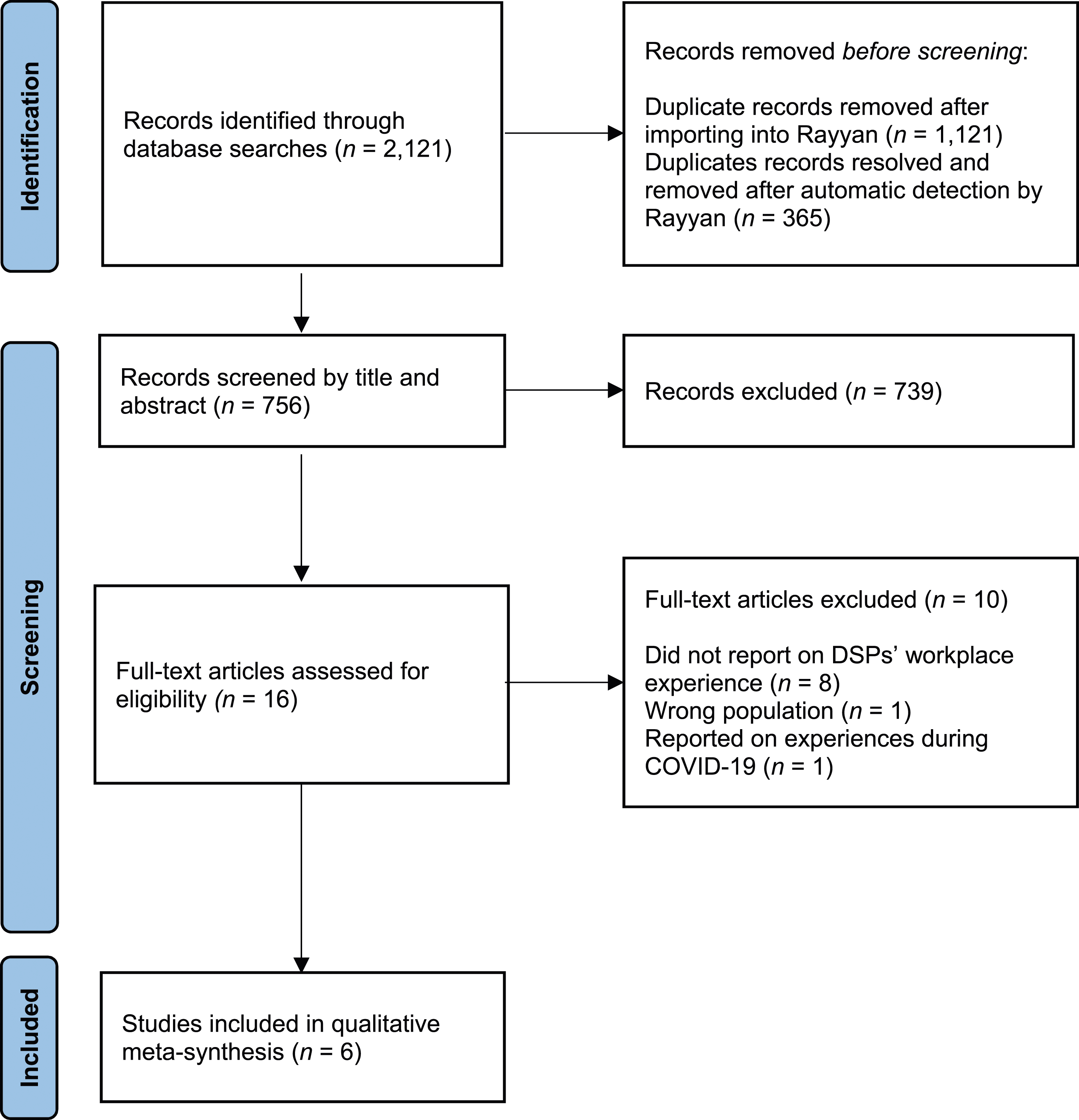
Article appraisal
Details about included studies.
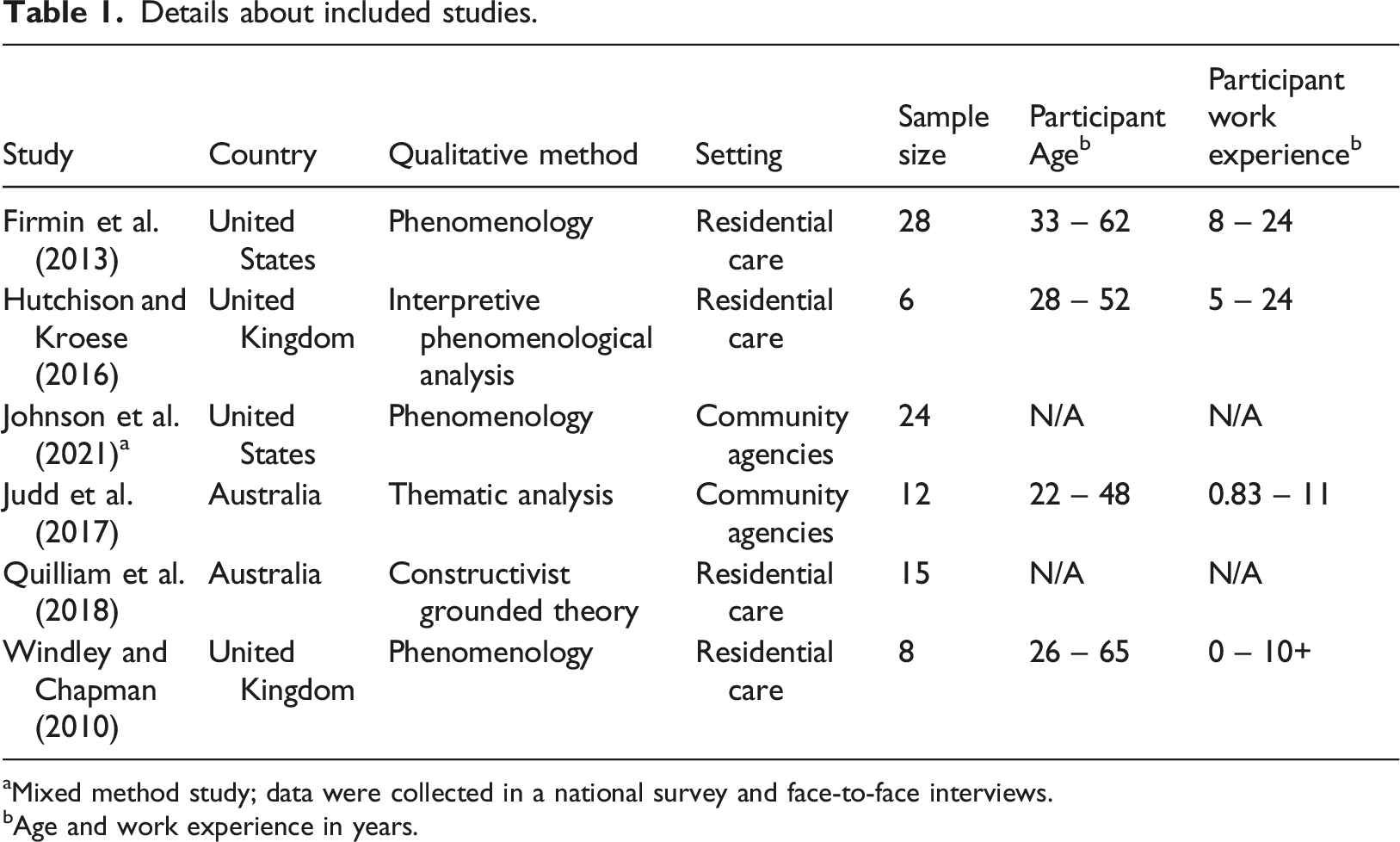
aMixed method study; data were collected in a national survey and face-to-face interviews.
bAge and work experience in years.
Data abstraction
To maintain the integrity of this study, this study used Braun and Clarke’s (2006) six-phase method of thematic analysis to prepare and analyze the data: (a) becoming familiar with the data, (b) generating initial codes, (c) searching for themes, (d) reviewing themes, (e) defining and naming themes, and (f) producing the report.
First, the included articles were read several times to gain an overall understanding. Once the first step was completed, the articles were prepared for analysis by copying and pasting the results section of each article individually into a word-processing document. All findings, including tables, were counted as data. Information such as country of origin, study design, number of samples, and sample characteristics were also noted and compiled in the comparative appraisal table. The abstracted data from each article were edited for accessibility so they were easier to read (Sandelowski and Barroso, 2007). Using inductive thematic analysis, the codes and themes were allowed to emerge during the integration and synthesis phases without preconceptions (Braun and Clarke, 2006). Notes were taken during this process, after which the data were reviewed again and initial codes were identified. Initial codes that fell under the same thematic category were identified and visually mapped on paper based on the construct of organizational culture as described previously. This process was repeated for the six included articles and all codes were thematically categorized.
Data synthesis
Constant comparative method was utilized throughout the entire data synthesis process. Once all articles had been assessed for initial codes, the first article’s data were transformed into a codebook format in a word-processing document. The second article’s data were then added to this codebook and categorized based on similar content and meaning (Silverman, 2006). This process was iterative in that it involved multiple cycles of analysis. The codebook was refined based on previous versions of the codebook, and some themes were revised to capture the meanings of the newly added codes. This process was repeated for all six articles. Each article led to a newer version of the codebook, with additions and consolidation of existing codes. During this process, subcodes also emerged. Notes were made on the recurring content, meaning, and patterns. Colors were used to differentiate which article the data came from. The final version of the draft codebook was transposed onto an Excel spreadsheet for a final round of review and analysis and reorganized into a logically coherent codebook with codes and themes that comprehensively illustrated all findings (Sandelowski and Barroso, 2007).
Rigor and validity
To establish rigor and validity, the findings were presented to a group of colleagues from diverse disciplines (i.e., social work, anthropology, nursing, special education, and higher education) at multiple points during the study. The team collaboratively revised the research question, reviewed the codebook, reflected on the coding schemes and interpretations, and discussed ways to improve the study (Lee et al., 2015). The team also discussed the emergent themes and relevant theories, which contributed to greater understanding of the combined results from the individual studies (Sandelowski and Barroso, 2007). To reduce the risk of bias, an audit trail indicated all research decisions, which were discussed with the team regularly (Maxwell, 2012). An external methodologist with extensive qualitative research expertise was consulted throughout the process, including conceptualization of the research question and search strategy and discussions on data analysis, data synthesis, and theory.
Characteristics of the selected studies
The six studies included in this meta-synthesis were conducted between 2010 and 2021 in English-speaking countries. Two studies were conducted in the United States, two in the United Kingdom, and two in Australia. Four studies used a phenomenological approach (Firmin et al., 2013; Hutchison and Kroese, 2016; Johnson et al., 2021; Windley and Chapman, 2010), one used thematic analysis (Judd et al., 2017), and one used a constructivist grounded theory approach (Quilliam et al., 2018). Five studies were original qualitative studies, and one study was a mixed-methods study that had qualitative findings focused on the perspectives of DSPs. All studies derived their data from semi-structured interviews, and one study involved focus groups alongside individual interviews. The six studies featured 93 participants. Five studies reported that their participants worked in either residential facilities, group homes, or support employment settings (Firmin et al., 2013; Hutchison and Kroese, 2016; Judd et al., 2017; Quilliam et al., 2018; Windley and Chapman, 2010). One study did not specify the participants’ work settings (Johnson et al., 2021). See Table 1 for more details.
Results
Synthesis framework
Strong resonance emerged among the data, emergent themes, and the constructs of the organizational justice within organizational culture literature. Organizational justice, developed from applied research in organizational settings, focuses on how people perceive events, actions, or organizational decisions as fair or unfair (Colquitt and Zipay, 2015; Greenberg and Colquitt, 2005). The purpose of this framework is to measure, analyze, and evaluate employees’ perceptions of their workplace (Greenberg and Colquitt, 2005). The meaning of justice is subjective at the individual level, but it can also be socially constructed as a shared perception at the group level (Poole, 2007). Over time, group norms may develop and conflict with perceptions of other individuals or groups (Poole, 2007). With this in mind, organizational justice constructs were used as a conceptual framework to map this study’s emergent themes and codes with the goal of understanding how perceptions of the workplace may predict work attitudes, job performance, and counterproductive work behaviors (Colquitt et al., 2001). The process was dynamic and iterative, with movement back and forth between the emergent themes and organizational justice constructs (MacFarlane and O’Reilly-de Brún, 2012).
Synthesis findings
Themes and representative quotes.
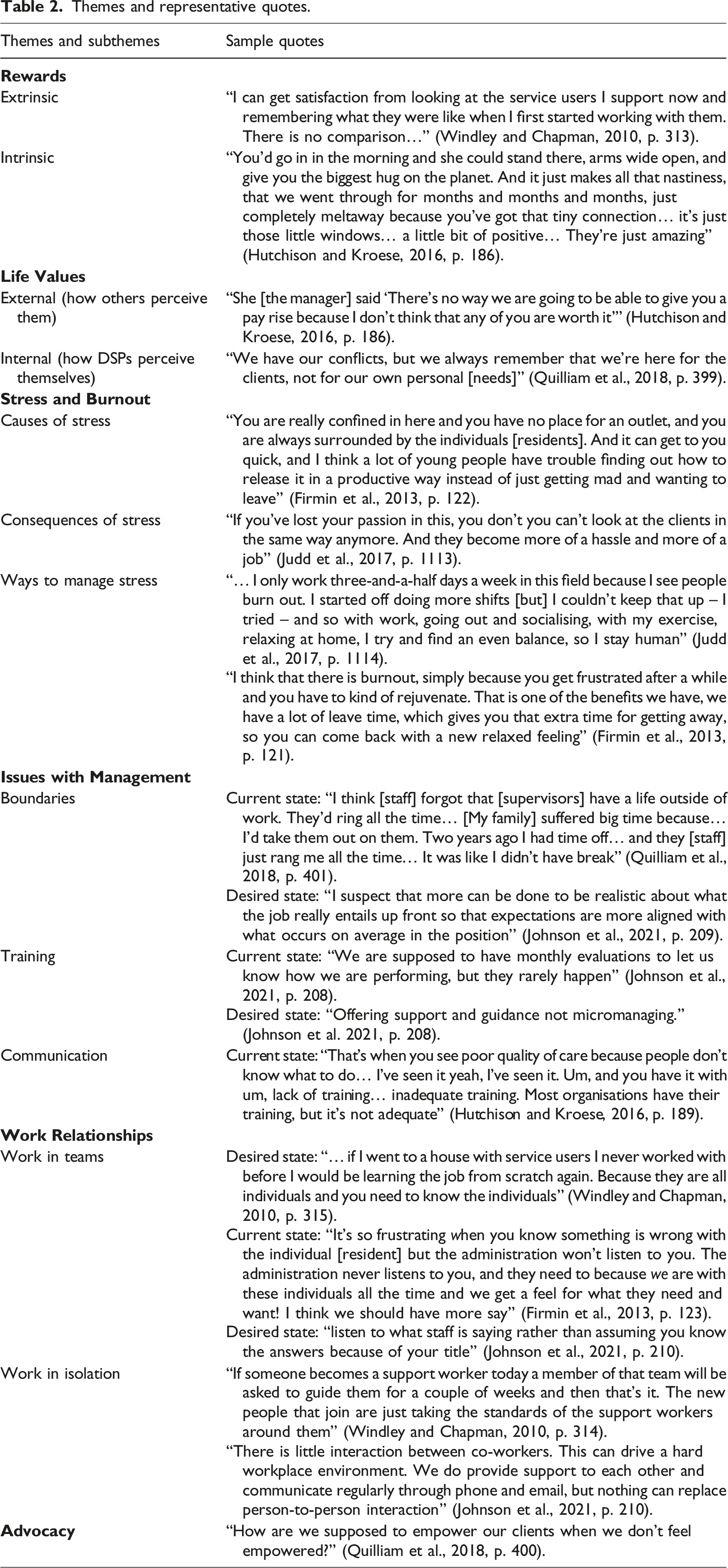
After inductive thematic analysis, the data revealed an overarching theme with elements that resonate with constructs of organizational justice. Consequently, it made sense to explain DSPs’ paradoxical experiences through justice-related events, actions, or decisions. Justice is defined as “the perceived adherence to rules that reflect appropriateness in decision contexts” (Colquitt and Zipay, 2015, p. 76). The findings suggest that DSPs reacted to fairness and justice perceptions through four aspects of organizational justice: distributive, procedural, interactional, and relational justice. These aspects have been developed chronologically in the literature, with distributive justice being the earliest aspect identified and examined, followed by procedural, interactional, and relational justice. As such, this study contextualized and presents the findings in this sequence. Notably, although the theme advocacy did not fit the organizational justice framework, this theme was present in five of the six included articles. Thus, advocacy was included in the summary of themes and representative quotes (Table 2).
Distributive justice
Distributive justice was based on Adams’ (1965) equity theory or principle. This theory posits that a transactional relationship occurs between employers and employees and that whether these transactions (e.g., wages, social approval, job security, and career opportunities) are perceived by the employees as fair or unfair can affect their social behaviors (Baldwin, 2006; Poole, 2007). Grounded in equity theory, distributive justice refers to the appropriateness and fairness in decision outcomes and resource allocation (Colquitt and Zipay, 2015). The findings from this synthesis suggest a lack of distributive justice among DSPs who provide services to people with intellectual and developmental disabilities. Overall, DSPs reported that they were poorly compensated (e.g., low wages, fringe benefits, few vacation days) for their heavy workload, despite the amount of required training and certifications (Hutchison and Kroese, 2016; Johnson et al., 2021; Judd et al., 2017). Many also expressed that they had limited or no opportunities for career advancement (Johnson et al., 2021; Quilliam et al., 2018). DSPs often reported being overworked with little support from management and senior colleagues (Firmin et al., 2013; Johnson et al., 2021; Judd et al., 2017; Quilliam et al., 2018). They also struggled with little appropriate training and insufficient resources such as other quality staff members, standardized procedures, and necessities for clients (Hutchison and Kroese, 2016; Johnson et al., 2021; Windley and Chapman, 2010).
Procedural justice
To complement distributive justice, researchers began examining procedural justice, defined as the perceived fairness of allocation procedures or how decisions are made and by which authorities (Cropanzano and Rupp, 2003; Poole, 2007). Research on procedural justice has shown that the process of decision control is a stronger factor in determining justice and fairness than outcomes (Poole, 2007). People are more likely to perceive a decision as fair if they feel they can contribute to the process (Cropanzano and Greenberg, 1997; Folger and Cropanzano, 1998, 2001). One prominent theme across the articles was the unfairness of decision-making procedures across organizations. DSPs said they often felt they had no voice or opinions about their work, even when they wanted to build deeper communication and relationships with the management. They reported feeling excluded from all decision-making processes, including decisions that pertained to their clients. This made them feel powerless and worthless (Firmin et al., 2013; Johnson et al., 2021; Judd et al., 2017; Quilliam et al., 2018; Windley and Chapman, 2010).
Interactional justice
Following procedural justice is interactional justice. This type of justice refers to the quality of interpersonal treatment from others (Bies, 2015; Folger and Cropanzano, 1998). Explaining how decisions are made can improve interactions and mitigate feelings of injustice (Bies, 1987). However, across the included studies, the divide between the DSPs and other members of the organization was evident, which was likely caused by poor communication and a lack of meaningful interactions (e.g., providing constructive feedback, solving problems, processing work-related stress, sharing information; Johnson et al., 2021; Judd et al., 2017; Quilliam et al., 2018). Some DSPs reported that they were often perceived as having lower status in the organizational hierarchy and had to endure the demeaning nature of the administrative staff (Firmin et al., 2013; Johnson et al., 2021; Quilliam et al., 2018). In addition, many DSPs worked in isolation (due to the unique nature of working in group homes) and said they felt socially isolated due to little interaction or support from their coworkers (Hutchison and Kroese, 2016; Quilliam et al., 2018).
Relational justice
A more recent view of justice extends beyond the person to focus on the behavior of groups. Relational justice can be seen as an extention of distributive, procedural, and interactional justice. It refers to the interpersonal dynamics within an organization and the psychological need for belongingness (Tyler and Lind, 1992). In this context, employers are seen as fair when they show neutrality and trust toward the employee and when their behaviors grant the employee the rights and respect of being part of the group (Rupp, 2011). From this perspective, justice refers to the extent to which they are valued by the organization (Rupp, 2011). In this synthesis, DSPs consistently mentioned feelings of disconnection and rejection from management and in some instances, the rest of the organization. This feeling was salient across all themes. Some examples are not being recognized at appreciative awards dinners, being belittled for their knowledge and opinions, being restricted from interacting more frequently with clients, working mostly alone, having no support, and not feeling connected with the rest of the organization (Firmin et al., 2013; Johnson et al., 2021; Judd et al., 2017; Quilliam et al., 2018; Windley and Chapman, 2010).
Discussion
Despite a wealth of literature on DSP burnout and turnover, we know relatively little about the collective experience of DSPs from the perspective of organizational justice. Research has shown that organizational justice is associated with positive individual and organizational outcomes such as positive work behaviors, job performance, collaboration, job satisfaction, and overall well-being (Demirkiran et al., 2016; Gilliland, 1993; Pan et al., 2018; Wang et al., 2010; Wiseman and Stillwell, 2022). Therefore, understanding the shared experience of DSPs could help employers understand DSPs’ work attitudes and behaviors, and possible reasons for employee turnover. Based on inductive analysis, the data echoed the four constructs in organizational justice literature. Notably, consistent with previous research, the findings revealed that despite differences in local culture and policies, cross-cultural DSPs tended to react to fairness and justice-related events similarly (James, 2015).
Overall, it is evident that DSPs across all included studies experienced different aspects of unfairness and injustice in their work environment. Furthermore, many DSPs identified with multiple minoritized groups (i.e., immigrants, women, and people from racially and ethnically diverse backgrounds), which may have exacerbated their situations (Campbell, 2017; McCall and Scales, 2022). Consistent with previous research on how aspects of justice impacts an employee, DSPs in this synthesis also reported greater stress, increased frustration, and reduced self-esteem, leading to lower trust in the management, less commitment to clients, less motivation to work toward shared goals, and more likely to leave their job (Gilliland, 1993; Kim and Park, 2017; McFarlin and Sweeney, 1992; Wiseman and Stillwell, 2022). Because these internalized and externalized behaviors can lead to serious consequences for the organization (e.g., increased turnover and reduced quality of life for people with intellectual and developmental disabilities), commitment to creating a justice-oriented organization should be a top priority for the leadership team. Findings suggest that fostering a culture of justice and fairness is vital to retaining DSPs, promoting organizational outcomes, and improving the quality of life of people with intellectual and developmental disabilities. As such, it is crucial that direct support organizations purposively create justice-oriented beliefs, values, procedures, and outcomes (Colquitt and Zipay, 2015) as means to foster a just organizational culture.
At the organizational level, organizations should consider justice in every decision, including DSP recruitment and selection, hiring procedures, published documents, reporting systems, performance appraisals, employee trainings, evaluations, and compensation and reward systems (Colquitt and Zipay, 2015). Most importantly, justice principles (i.e., distributive, procedural, interactional, relational) should be included in all communications between DSPs and management. At the policy level, individuals and organizations should advocate for distributive justice regarding pay equity and equitable distribution of resources. Through a justice lens, we can understand the current challenges in direct support work and find appropriate ways to restore fairness, prevent injustice, and consider and respect individual differences, which will in turn, create a transparent and trusting organizational culture.
There are some important limitations to note. First, only six studies pertaining to this topic met the inclusion criteria, representing a relatively small synthesis. Although small samples are common in qualitative studies, this study would have benefited from a larger sample size and more variance. Only articles written in English were included, and there are likely other articles related to understanding the DSP experience in other languages, given that this is a global phenomenon. Second, because the process of meta-synthesis is inherently “an act of representing representations” (Sandelowski and Barroso, 2007, p. 19), this study featured certain assumptions, biases, and gaps between the lived experience reported in the individual studies and the interpretation of findings. Last, although most studies highlighted contextual elements that contributed to the negative experience of working as a DSP, the narratives of these articles varied greatly. Furthermore, the intensity of the individual experiences varied. This may be explained by differences in the authors’ epistemological background and its influences on their interpretation of findings. As such, how they shaped individual DSP experiences could have shaped the understanding that emerged from this synthesis.
Conclusion
DSPs are key to the quality of life of people with intellectual and developmental disabilities (Friedman, 2018). It is important that we continue to find ways to improve their work conditions and retention, not only to minimize costs for organizations but also to bring stability to the people they serve. While it is well-established that the DSP workforce is in crisis, this qualitative meta-synthesis provided a unique perspective on the collective experience of DSPs using an organizational justice framework and highlighted the call for social justice in the profession. The findings suggest that perceived unfairness and injustice among DSPs could explain the persistently high turnover rates in direct support organizations. As such, researchers may consider validating the organizational justice framework through qualitative or mixed-methods intervention studies.
Footnotes
Declaration of conflicting interests
The author(s) declared no potential conflicts of interest with respect to the research, authorship, and/or publication of this article.
Funding
The author received no financial support for the research, authorship, and/or publication of this article.
