




Abstract
The study explored the effects of two combined training (Strength-Proprioceptive versus Cognitive-Balance) programs on postural balance during single-task and dual-task conditions in children with intellectual disability. The postural balance and the second cognitive-task performances were evaluated before and after 8-week of training in two groups: Strength-Proprioceptive Group (n = 12) and Cognitive-Balance Group (n = 10). Results showed that, in both groups and regardless of the training effect, the postural balance performance was significantly (p < 0.05) altered in the dual-task condition compared to the single-task one. After-training session, postural balance performance was improved significantly (p < 0.001) for all task conditions. After training session, the second cognitive-task performance was improved in the Strength-Proprioceptive Group (p < 0.001) and Cognitive-Balance Groupe (p < 0.05). In conclusion, the combined training programs, Strength-Proprioceptive and Cognitive-Balance, improved postural balance performance in single-task and dual-task conditions in children with intellectual disability.
Intellectual Disability is a complex dysfunction characterized by significant limitations in intellectual functioning (reasoning, learning, problem-solving) and in adaptive behavior, which covers a range of everyday social and practical skills (American Psychiatric Association, 2013). This disability originates before the age of 18 (Patikas, 2015). Children with intellectual disability are known to present a greater risk for a variety of health concerns, such as greater levels of difficulties with motor development and fundamental movement skills, compared with their counterparts without intellectual disability (Lloyd, 2016). More specifically, several studies showed that children with intellectual disability tend to be characterized by a significantly lower postural balance than their typical development peers (Salaun and Berthouze-Aranda, 2012; Adamović and Stosljevic, 2013). This postural balance deficit is a serious concern for children with intellectual disability, given that it represents an important risk factor for falling (Sherrard et al., 2001). Therefore, the improvement of postural balance among children with intellectual disability represents a critical issue to prevent falls. Exercise interventions are recognized as an efficient way to improve postural balance in individuals with intellectual disability (Borji et al., 2018; Fotiadou et al 2017). Between many studies, Kachouri et al. (2016) demonstrated that combined Strength-Proprioceptive training is one of the effective training programs to enhance postural balance in children with intellectual disability. Nevertheless, in this study, postural balance was assessed only in the single-task situation (standing in upright position). While performing multiple tasks simultaneously (i.e., dual-tasks) is a frequent situation in children’s daily life, therefore, it is interesting to know if the combined Strength- Proprioceptive training program affects postural balance in the dual-task situation.
As most daily activities require the performance of various situations in which a postural task is performed concurrently with a second task (motor or cognitive), assessing postural balance in dual-task situations received recently a special attention especially in individuals with postural or cognitive alterations (Goulème et al., 2017; Manicolo et al., 2017; Abbruzzese et al., 2016; Jacobi et al., 2015). The interaction between the motor or cognitive processes and postural control has been studied through the dual-task paradigm (Boisgontier et al., 2011). This paradigm consists to perform two tasks separately, to measure the performance of each task, then perform them simultaneously (Boisgontier et al., 2011). In fact, a deteriorating effect of the dual-task was previously observed in adults with Down Syndrome (Horvat et al., 2013) and with intellectual disability (Oppewal and Hilgenkamp, 2019). Furthermore, a recent study showed that the dual-task situation deteriorate the postural balance performance in children with and without intellectual disability but this disturbing effect was more pronounced in children with intellectual disability (Kachouri et al., 2020). Similarly, several studies affirmed that even the execution of a simple postural task (standing position) requires attentional resources (Woollacott and Shumway-Cook, 2002), which compete with other functions to adapt to available cognitive resources (Suarez et al., 2015) especially in individuals with intellectual disability compared to without intellectual disability (Almuhtaseb et al., 2014).
Considering the importance of cognitive resources in the postural control process (Shumway-Cook and Woollacott, 2007), several researches have been focused on the effect of combined (simultaneously) Cognitive-Balance training on postural balance in the general population (Varela-Vásquez et al., 2020). To enhance both postural balance and cognitive performances, previous studies have been carried out mainly in individuals having postural or/and cognitive impairment such as the elderly (Laatar et al., 2018) or neurologic patients (Kim et al., 2014; Choi et al., 2015). Indeed, it has been demonstrated that such training program facilitate the learning of new motor tasks (Li et al., 2010). Previous study showed that, the combined Cognitive-Balance training is more effective than traditional training (based only on balance exercises) in improving postural balance performance in the elderly (Pellecchia, 2005).
Given that the combined Cognitive-Balance training has been shown to be one of the most effective training programs for improving postural balance in the general population (Silsupadol et al., 2009; Laatar et al., 2018); and the combined Strength-Proprioceptive training has been proved to enhance postural balance in children with intellectual disability only in the single-task situation (Kachouri et al., 2016), it seems for interest to explore the effect of such training programs on postural balance in the dual-task situation in children with intellectual disability. In this regard, this study aims to explore the effects of two combined training programs, Strength-Proprioceptive and Cognitive-Balance, on postural balance performance in single-task and dual-task situations in children with intellectual disability. Such an exploration could help special educators to include the most effective training program for improving postural balance performance in single and dual tasks situations and preventing the risk of falls. In this respect, we hypothesize that the two combined training programs offered would be likely to improve the postural balance performance of children with intellectual disability.
Methods
Participants
The simple size was calculated using procedures suggested by Beck (Beck, 2013) and the software G*Power (Faul et al., 2007). Values for α were set at 0.05 and for power at 0.80. Based on the results of Bahiraei et al., (2017) and discussion between authors, effect size was estimated to be 0.14. To reach the desired power, data from at least 12 participants in each group seemed to be sufficient.
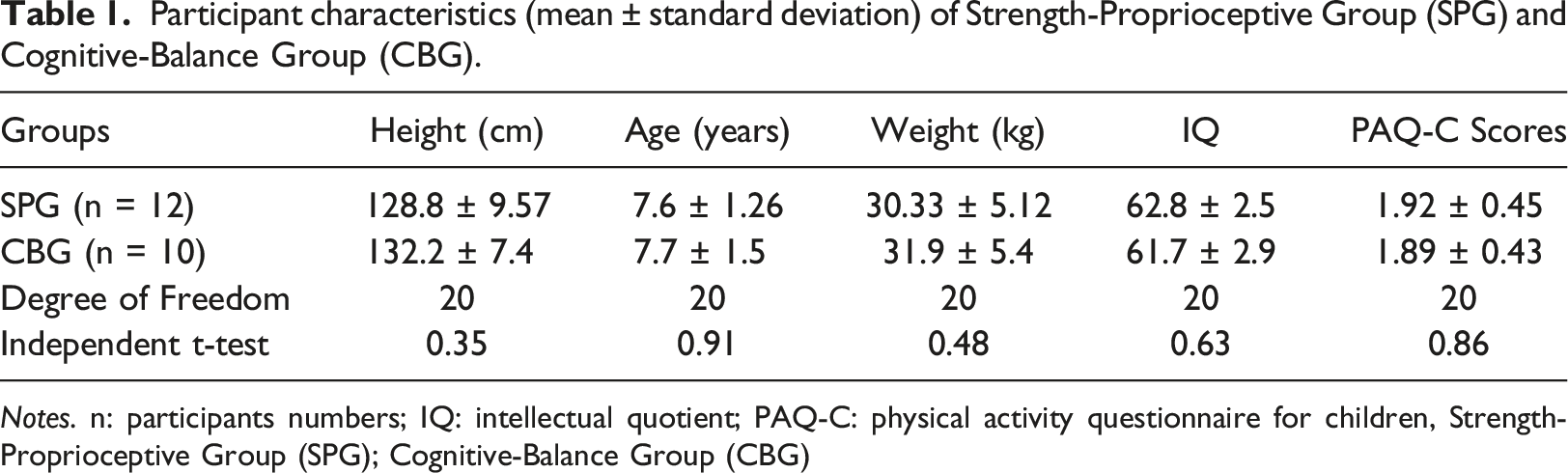
The sample consisted of healthy children with intellectual disability aged between 8 and 10 years who were enrolled in public special educational center. These children were classified as pre-pubertal (stage 1), according to Tanner's (1962) criteria. The invitation to participate in the study was sent to all parents of children. Approximately 41 parents gave consent to participate in the study. The inclusion criteria were: a mild intellectual disability with an intelligence quotient between 50 and 70 (reported in their medical files and determined by a psychologist using the “Wechsler Intelligence Scale for Children | Fourth Edition” test (Wechsler, 2003)), a middle socio-economic status (based on parents' income, education level and occupation) and a 1st class adapted education (aimed to develop as far as possible the academic knowledge necessary for having an independent life including reading, writing and counting money). All participants were not engaged in any other physical activity or exercise program and all of them reported a low physical activity level (based on their responses to 9 questionnaire items from Physical Activity Questionnaire for children that cover questions about sports, games, and physical activity at the educational center and during leisure, including weekends) (Wyszyńska et al., 2017) and had no hypermobility or any orthopedic lower extremity problems. All these information were collected from their medical files. Nineteen children were excluded from the study due to their: visual and/or vestibular disorders or diseases (n =7), absence from educational center on testing session (n = 4) and failure to return or to complete the experimental protocol (n = 8). Ultimately, only 22 children that were randomly assigned either to a Strength-Proprioceptive Group (n = 12) and a Cognitive-Balance Group (n = 10) participated in the current study (Figure1). Independent sample t-test results showed no significant difference in terms of age, weight, height, intelligence quotient and Physical Activity Questionnaire for children scores between the two groups (Table 1). The experimental protocol was explained to all children, their parents, and their caregivers. Written consent was signed by the parents before testing. This study was conducted according to the Declaration of Helsinki and the protocol was fully approved by the local Ethics Committee. Flow diagram of the sample selection procedure. Participant characteristics (mean ± standard deviation) of Strength-Proprioceptive Group (SPG) and Cognitive-Balance Group (CBG). Notes. n: participants numbers; IQ: intellectual quotient; PAQ-C: physical activity questionnaire for children, Strength-Proprioceptive Group (SPG); Cognitive-Balance Group (CBG)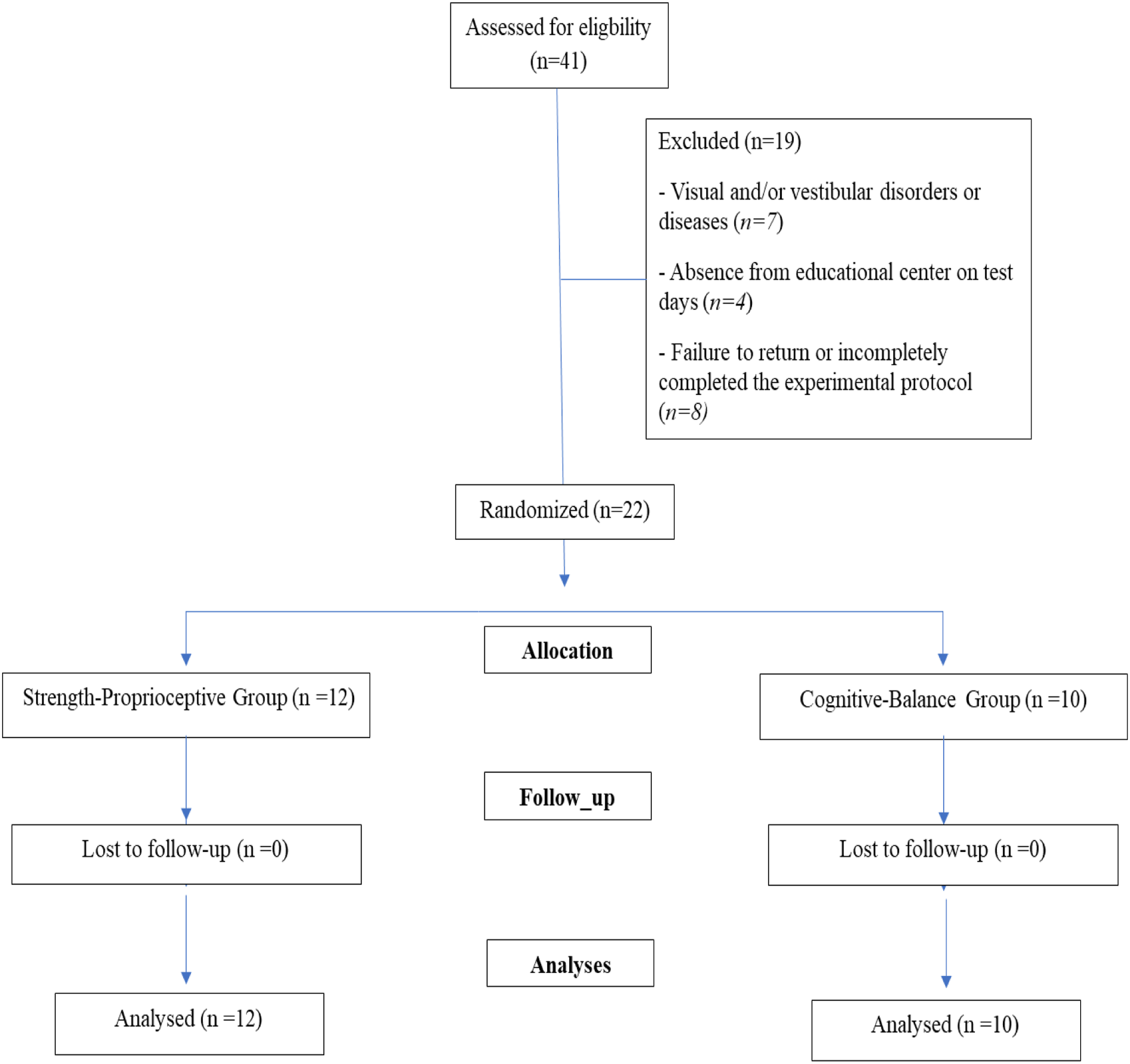
Study design
The study design was a randomized controlled training program in which each participant was randomly assigned to either Strength-Proprioceptive Group or Cognitive-Balance Group. The training program period of both groups was identical, 8 consecutive weeks, two sessions per week, 45-60 min per session. The postural balance assessments and the second cognitive-task performance were collected upon initiation of the training programs and after the termination of the 8-week training period, [Before-Training / After-Training]. All measurements were performed in the morning, two days before and then two days after the 8-week training period and were completed by the same evaluator (experienced in stabilometric evaluation) who was blinded to group allocation. A research coordinator documented all training and examination sessions. This protocol was initiated by a familiarization session in order to reduce the learning effect and to correctly respect the experimental procedures.
Testing procedures
Participants were asked to maintain bipedal standing posture on the stabilometric platform (PostureWin©, Techno Concept ®, Cereste, France; 12-bits A/D conversion) during 25s following the French Posturology Association norms (AFP, 1985). The following parameters were selected to evaluate the participants’ postural balance: The CoParea corresponding to the area of the confidence ellipse measured statistically from 90% of the successive positions of the pedal CoP noted during the acquisition, expressed in mm2. The most extreme 10% of points, resulting from poorly controlled swerves, have been eliminated. This parameter is considered as an index of overall postural performance (Schubert and Kirchner, 2014), and the CoP length corresponding to the sum of CoP displacement in the Medio-lateral (CoPLengthX) and in antero-posterior (CoPLengthY) directions.
The postural balance assessments were conducted in three conditions: - Single-task: maintaining standing posture on the stabilometric platform and looking straight ahead at a cross marked at approximately eye level on a black board 3 m away. - Motor dual-task: maintaining standing posture on the stabilometric platform while holding a glass of water. - Cognitive dual-task: maintaining standing posture on the stabilometric platform while citing animal names in a screen.
The performance of the second cognitive-task was counted in terms of the correct animal names number, visualized for 25s in a sitting position (single-task) as well as on the stabilometric platform (dual-task). All these evaluations were carried out for the two groups (Strength-Proprioceptive Group and Cognitive-Balance Group). Three trials for each condition with 1-2 min resting period were permitted between trials to cancel fatigue effect. The mean trials were considered for analysis.
Training programs
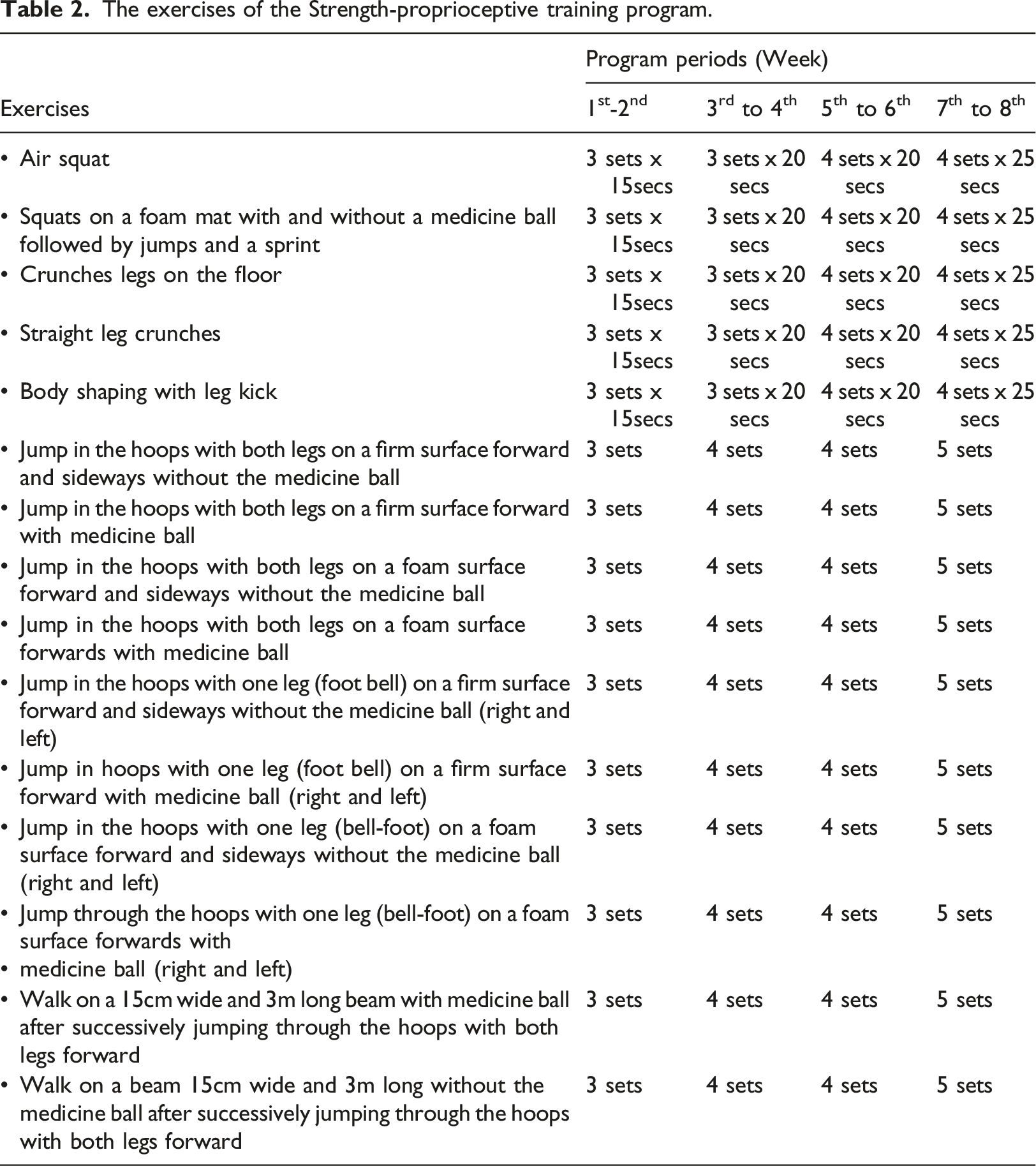
The exercises of the Strength-proprioceptive training program.
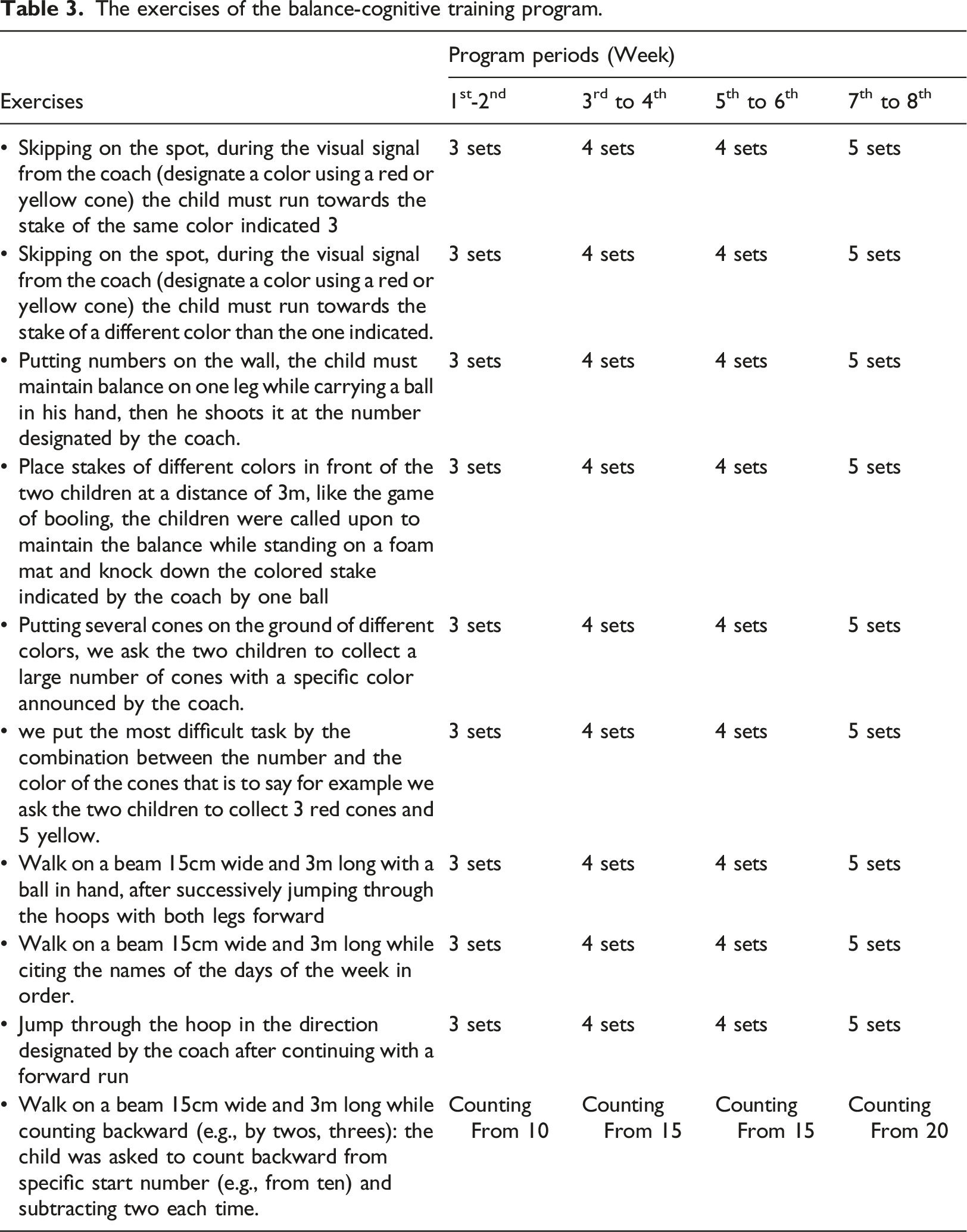
The exercises of the balance-cognitive training program.
Statistical analysis
The statistical analysis of the results was carried out using STATISTICA for Windows software (version 10.0; StatSoft, Inc., Tulsa, OK). The values are expressed as mean ± standard deviation (M ± SD). Statistical analysis of the variables CoParea, CoPlengthX, and CoPlengthY was performed using a 3-way ANOVA [2 groups (Strength-Proprioceptive Group vs Cognitive-Balance Groupe) × 2 sessions (Before-Training vs After-Training) × 3 task conditions (single-task vs motor dual-task vs cognitive dual-task)]. The statistical analysis of the second cognitive-task performance was carried out with a 3-way ANOVA [2 groups (Strength-Proprioceptive Group vs Cognitive-Balance Group) × 2 sessions (Before-Training vs After-Training) × 2 tasks (single-task vs dual-task cognitive)]. For each main factor and interaction effect, a Bonferroni post-hoc was tested. The effect size of each outcome measure was calculated using partial eta squared η2p formula. According to guideline by Cohen (1988), interpretations of η2p values was performed (Cohen, 1988), small effect: 0.01 <η2p< 0.06; medium effect: 0.06 < η2p < 0.14; and large effect: η2p> 0.14). The level of significance for all statistical analyses was set at p < 0.05.
Results
Postural parameters (CoParea, CoPlengthX, CoPlengthY)
The 3-way ANOVA showed significant main effects of the session ((CoParea: F (1.9) = 29.73, p < 0.001, η2p= 0.59); (CoPlengthX: F (1.9) = 17.81, p < 0.001, η2p = 0.47); (CoPlengthY: (F (1.9) = 23.19, p < 0.001, η2p = 0.54)] and the task conditions ((CoParea: F (1.9) = 18.97, p < 0.001, η2p = 0.48); (CoPlengthX: F (1.9) = 10.51, p < 0.001, η2p = 0.34); (CoPlengthY: F (1.9) = 29.53, p < 0.001, η2p = 0.60)) factors, as well as, a significant session × task conditions interaction ((CoParea: F (1.9) = 6.25, p < 0.01, η2p = 0.23); (CoPlengthX: F (1.9) = 4.93, p<0.05, η2p= 0.19); (CoPlengthY: F (1.9) = 4.01, p < 0.05, η2p= 0.17)) on the CoP values. No significant group factor effect, group× task conditions and group ×session × task conditions interactions were observed on these values.
Concerning the task condition factor, the post hoc analysis revealed that, in both groups and in the Before-Training session, the CoParea, CoPlengthX and CoPlengthY values were significantly higher in the cognitive dual-task condition compared to the single-task (p < 0.001; p < 0.05; p < 0.001) and to the motor dual-task (p < 0.001) (Figure 2, Figure 3 and Figure 4). Likewise, in the After-Training session, the CoParea and CoPlengthY values were significantly (p < 0.05) higher in the cognitive dual-task condition compared to the single-task one in both groups (Figure 2, Figure 3 and Figure 4). Mean ± SD values of the CoParea before (BT) and after (AT) training sessions in the Strength-Proprioceptive Group (SPG) and the Balance-Cognitive Group (BCG), under the single-task (ST), Motor dual-task (DT) and Cognitive DT conditions. *** and * Significant difference between task conditions at p < 0.001 and p < 0.05, respectively. $$$ Significant difference between sessions at p < 0.001. Mean ± SD values of the CoPlengthX before (BT) and after (AT) training sessions in the Strength-Proprioceptive Group (SPG) and the Balance-Cognitive Group (BCG), under the single-task (ST), Motor dual-task (DT) and Cognitive DT conditions. *** and * Significant difference between task conditions at p < 0.001 and p < 0.05, respectively. $$$ Significant difference between sessions at p < 0.001. Mean ± SD values of the CoPlengthY before (BT) and after (AT) training sessions in the Strength-Proprioceptive Group (SPG) and the Balance-Cognitive Group (BCG), under the single-task (ST), Motor dual-task (DT) and Cognitive DT conditions. *** and * Significant difference between task conditions at p < 0.001 and p < 0.05, respectively. $$$ Significant difference between sessions at p < 0.001.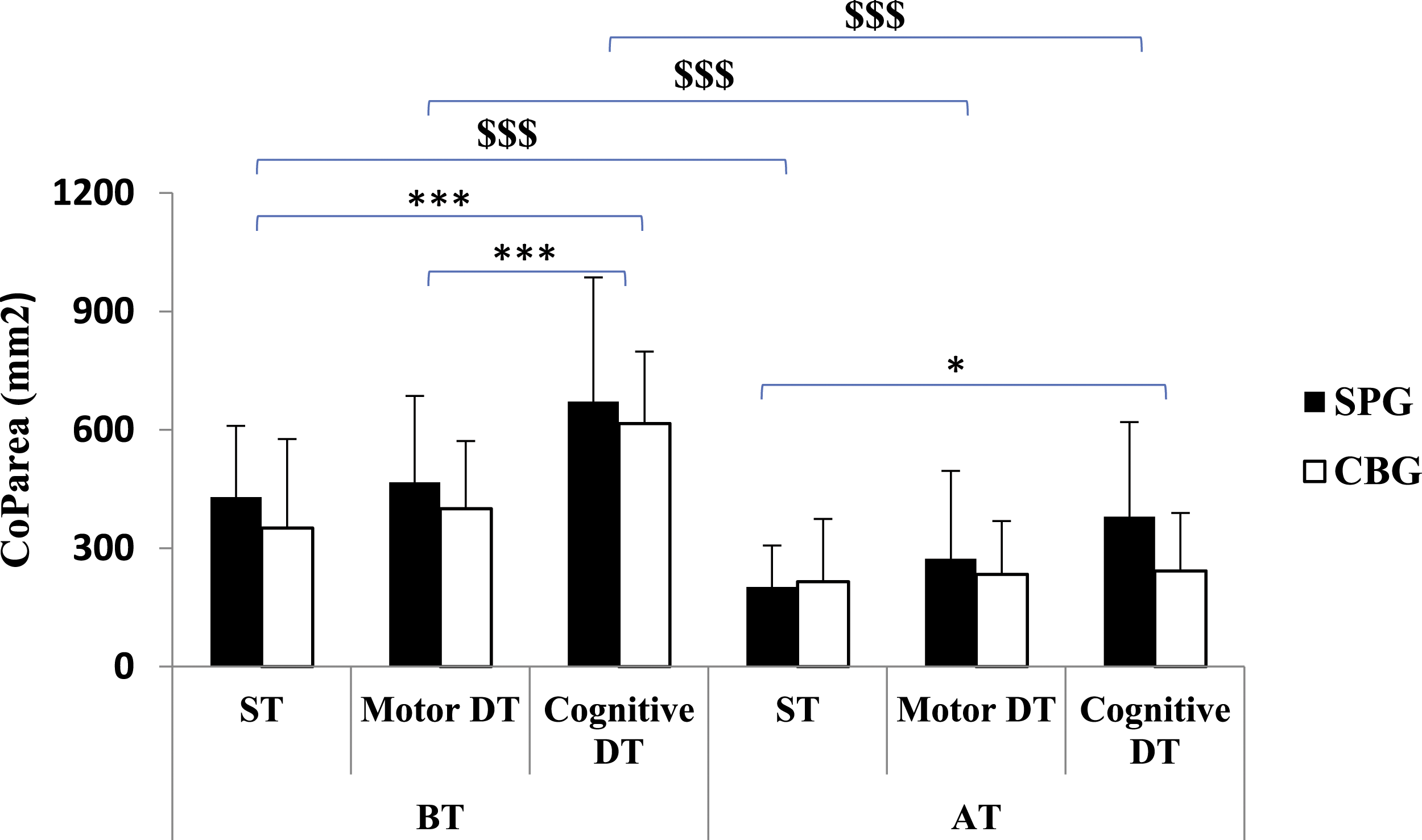
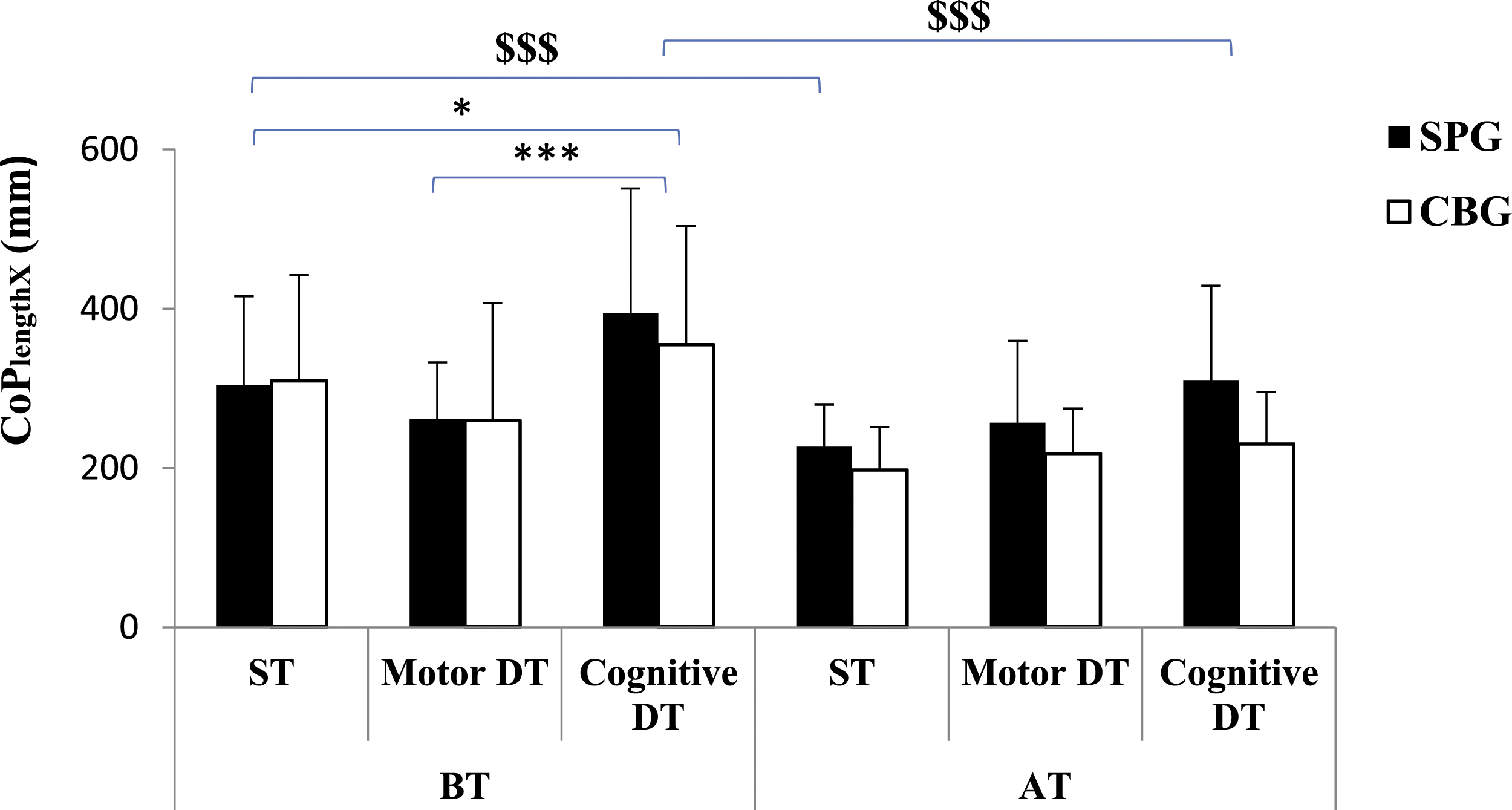
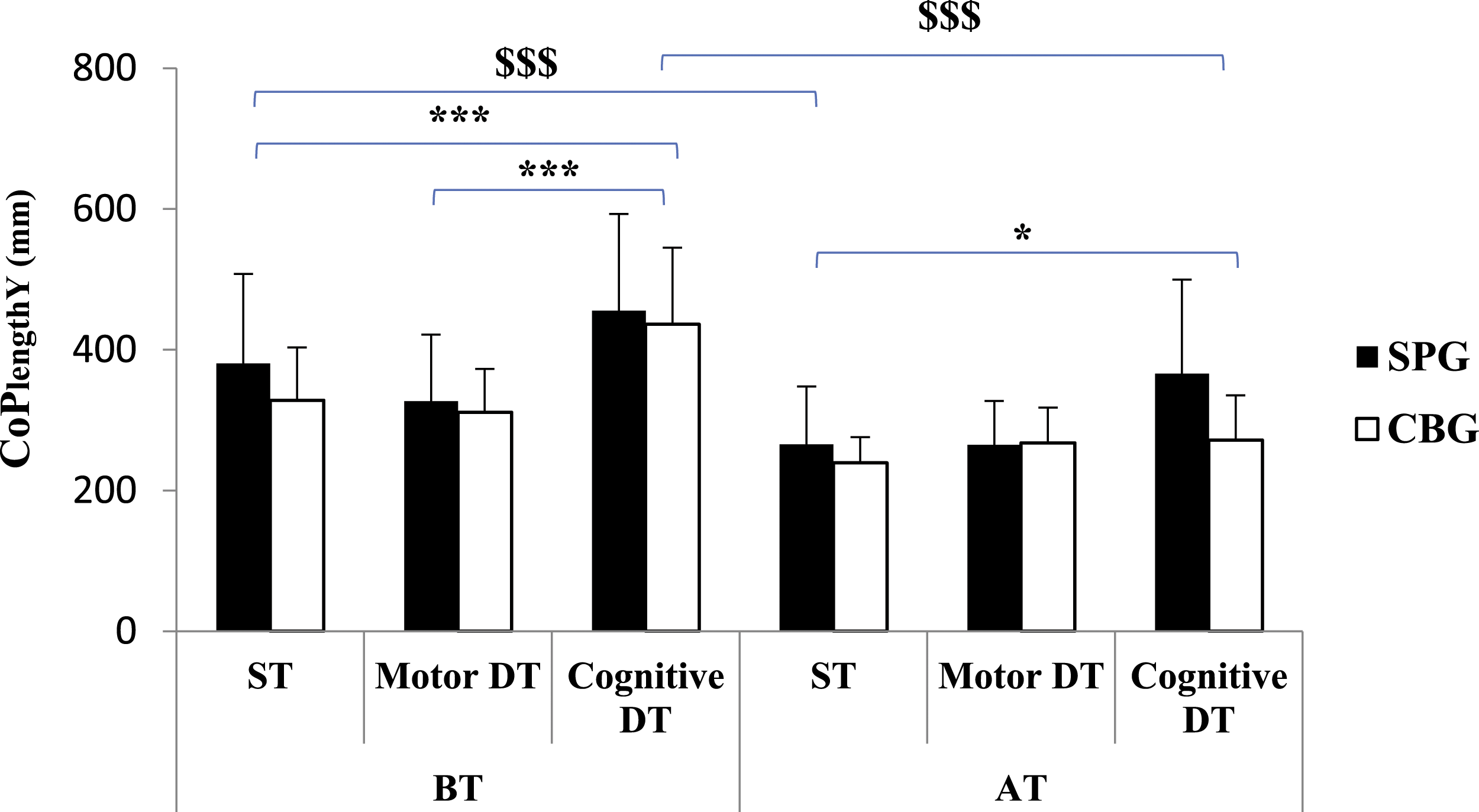
Regarding the session factor, the CoParea values decreased significantly (p < 0.001) at the After-Training session compared to the Before-Training one, for the three task conditions in both groups. The significant decrease (p < 0.001) in the CoPlengthX and CoPlengthY values, between the Before-Training and After-Training sessions, was observed only under single-task and cognitive dual-task conditions in the two groups (Figure 2, Figure 3 and Figure 4).
Performance of the second cognitive-task
The 3-way ANOVA showed significant main effects of group (F (1.9) = 5.22; p < 0.05; η2p= 0.20), session (F (1.9) = 101.50; p < 0.001; η2p = 0.84) and the task conditions (F (1.9) = 14.68; p < 0.01; η2p= 0.42) factors, as well as, a significant session × group interaction (F (1.9) = 30.11; p < 0.001; η2p = 0.60) on the achievement of the second cognitive-task. No significant group× task conditions, session × task conditions and group ×session × task conditions interactions were observed on these values. The post hoc analysis showed that the second cognitive-task performance was improved in the After-Training session compared to the Before-Training one, in the Strength-Proprioceptive Group (p < 0.001) and Cognitive-Balance Group (p < 0.05) (Figure 5). Mean values ± SD of the number of correct names (the second cognitive-task) before (BT) and after (AT) training sessions in the Strength-Proprioceptive Group (SPG) and the Balance-Cognitive Group (BCG), under the single-task (ST) and Cognitive dual-task (DT) conditions. *** and * Significant difference between task conditions at p < 0.001 and p < 0.05, respectively. $$ Significant difference between sessions at p < 0.01.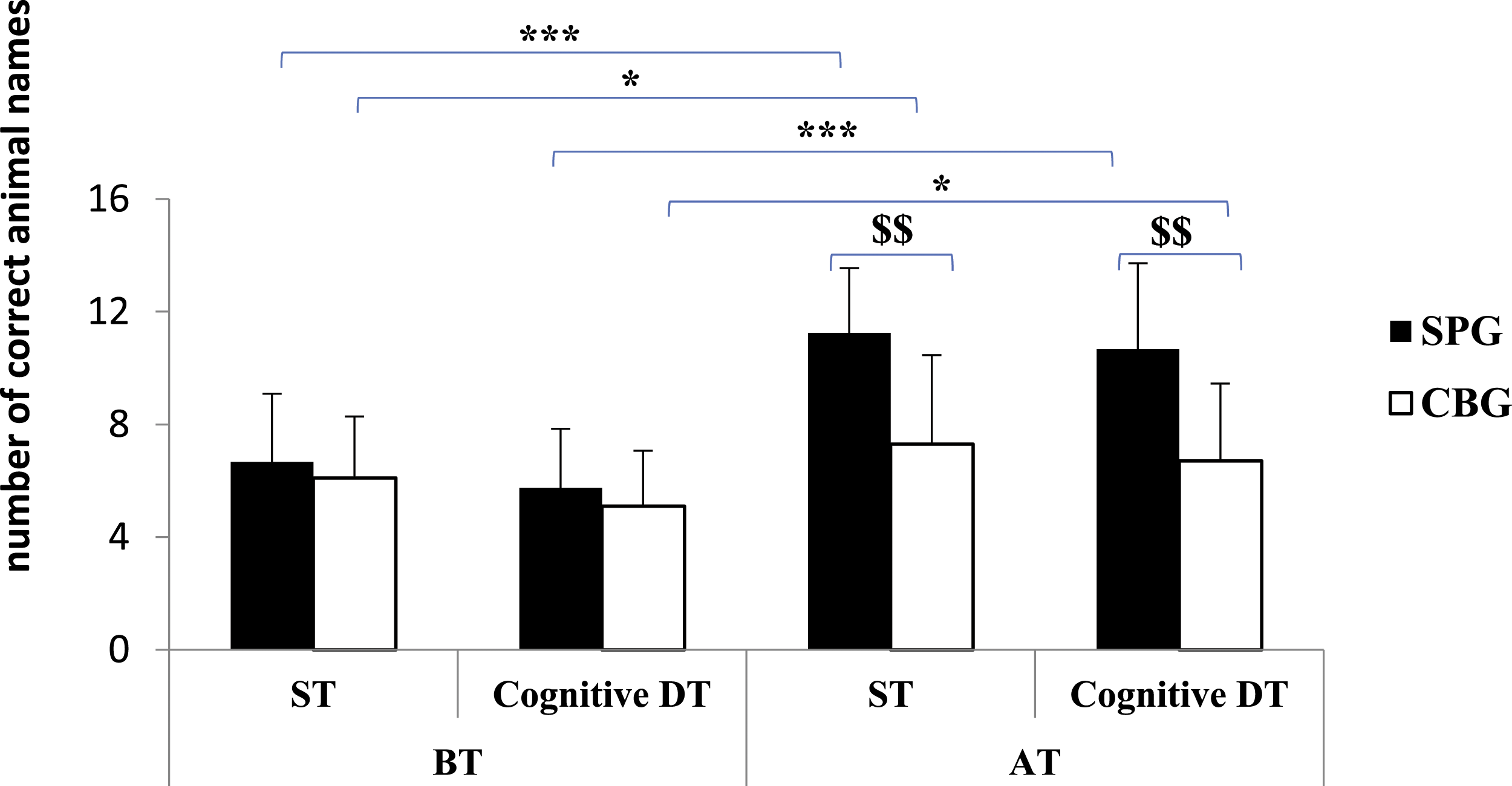
Discussion
The objective of the current study was to explore the effects of two combined training programs, Strength-Proprioceptive and Cognitive-Balance, on postural balance performance in single-task and dual-task situations in children with intellectual disability.
As expected, the combined Cognitive-Balance training resulted in significantly improved overall postural balance performance under single-task and dual-task conditions after 8-week training period. Previous studies proved that Cognitive-Balance training improves postural balance in the dual-task condition in patients with subacute post-stroke (Choi et al., 2015) and in children with infantile hemiparesis (Elhinidi et al., 2016). Postural balance improvement could be due to the improved sensory integration that was stimulated by the Cognitive-Balance training program, whether visual, proprioceptive or vestibular input. Indeed, postural balance depends on the appropriate integration of visual, proprioceptive and vestibular signals, by the central nervous system, to generate an optimal motor response so as to minimize postural disturbances (Bäumer et al., 2007). Besides, this training modality consisted on physical exercises combined with cognitive tasks based on visual and auditory signals. Such exercises are close to daily life activities through the interaction between motor, sensory and cognitive functions as well as the use of new attention strategies (Choi et al., 2015; Elhinidi et al., 2016). This type of training seems to trigger conscious control mechanisms and attention strategies by reducing automatic control of movement during activities (Wulf et al., 2009). Moreover, Cognitive-Balance training program has been reported to stimulate participants to focus on stability and cognitive tasks, which subsequently causes an enhancement in the quality of complex tasks execution (Silsupadol et al., 2009). As suggesting by Elhinidi et al. (2016), postural balance improvement following a 6-week of Cognitive-Balance training program may probably be explained by the activation of an alternative pathway containing the cerebellum, the sensorimotor cortex and the lateral pre-motor cortex. Recently, Parvin et al. (2020) proved that 12-week of Cognitive-Balance (Dual-Task) training was effective in involving and activating neurophysiological mechanisms, which are associated with increased cognitive function in patients with Alzheimer’s disease. However, we did not explore this in our study and suggest it for further investigation in this area.
Likewise, the results showed that Strength-Proprioceptive training improved postural balance under single-task and dual-task conditions in children with intellectual disability. This improvement could be due to an increase in the lower limbs muscle strength, which is strongly correlated with postural balance (Kachouri et al., 2016). Indeed, the Strength-Proprioceptive training program is based on performing balance and strength exercises requiring attention that could apparently stimulate the executive function in children with intellectual disability. Besides, previous studies showed a strong relationship between physical activity, in general, and executive function (Eggermont et al., 2009; Gapin and Etnier, 2010). These studies suggested that postural balance and cognitive performances, could be improved by a regular physical exercise in individuals with and without intellectual disability (Snowden et al., 2011). This beneficial effect of physical activity, specifically training combining strength and balance exercises, on cognitive performance has been widely reported in the elderly (Cassilhas et al., 2007; Kwak et al., 2008; Lachman et al., 2006) as well as in individuals with intellectual disability (Pastula et al., 2012). Importantly, a previous study examined the effect of physical activity on cognitive function in individuals with intellectual disability and confirmed an increase in their intelligence quotient by 8.5 points (Pastula et al., 2012). According to these authors, 8-week of combined training based on endurance and strength exercises improve not only the physical capacities but also the cognitive ones. Specifically, they recorded, following this training, an enhancement in the making decision speed, the perception and the integration of information from sensory inputs. In this context, the current study results showed that the performance of the second cognitive-task is improved in both groups of children (Cognitive-Balance Group and Strength-Proprioceptive Group) following the training period in single and dual task conditions. This enhancement could be due to the correction at the central nervous system (Elhinidi et al., 2016; Pastula et al., 2012), which causes improvements in cognitive capacities such as attentional resources (Snowden et al., 2011; Agmon et al., 2015).
This study has a number of limitations that warrant discussion. Children with severe and profound intellectual disability were excluded from the study due to difficulty in understanding the tests. It would be interesting, in future studies, to adopt certain methods and tests to examine the effects of such training programs (Strength-Proprioceptive and Cognitive-Balance) on the postural capacities among children with severe and profound intellectual disability. Besides, we didn’t assess the muscle strength of the lower limbs of our participants in order to verified the possible existence of hypotonia. Moreover, the training programs, included in the current study, were performed only for 8-week. In fact, these children were available only for a maximum of two months; they were involved in an educational center where they had vacations every two months. Even it has been documented that 8-week of strength training is sufficient to produce neural and muscle adaptations (Moritani, 1979), it would be preferable if these training programs were longer to achieve more improvement. As well, the effects of training programs were investigated only in static balance. It would be important to assess dynamic balance since it is related to daily life activities. Unfortunately, in the present study, evaluation of postural balance in situations that close with the daily live (i.e., maintaining balance while talking on a phone) was not evaluated. It is interesting to take into account such evaluation in future studies. Moreover, it is important to consider the electroencephalography evaluation in order to provide more explanation about mechanisms explaining the Cognitive-Balance training effects.
Conclusion
The current study successfully demonstrated that the combined training programs, Strength-Proprioceptive and Cognitive-Balance, improved postural balance performance in single and dual tasks. Such tasks generally involve the recruitment of multiple abilities and resources. In addition, it seems plausible to support the importance of functional measures relating to daily living when planning a training program. These programs aimed to improve children’s autonomy in their daily tasks. Such initiative can provide additional information for public health practitioners and specialist rehabilitators, interested in fall prevention, in individuals with intellectual disability and in children with intellectual disability, specifically.
Footnotes
Acknowledgments
The authors would like to thank all participants for their understanding and availability. Warm gratitude is due to all collaboration of the intellectual disability centers for their contribution.
Declaration of Conflicting Interests
The author(s) declared no potential conflicts of interest with respect to the research, authorship, and/or publication of this article.
Funding
The author(s) received no financial support for the research, authorship, and/or publication of this article.
